At the Stedelijk Museum Amsterdam, Camillo Fiorito reopens a long-closed space as Sandberg — a restaurant that extends Museumplein into the museum, where the paving of the square continues indoors.
Sandberg is the new restaurant of the Stedelijk Museum Amsterdam, located directly on Museumplein. For years the space remained disconnected from city life, accessible only through the museum. Its potential as a public place went unused. The project reopens it: a new entrance on Van Baerlestraat makes the restaurant independently accessible for the first time, and the facade was adapted to accommodate a terrace, turning what was an internal canteen into a fully public place on one of Amsterdam's most prominent squares.
The restaurant is located on the site of the former Sandberg Wing, a 1960s extension led by Willem Sandberg, the museum's former director. His vision of art as open, experimental and socially engaged was expressed in a transparent and flexible building. That approach forms the starting point for the new design. The restaurant is conceived as an extension of the street, a place where public life naturally flows into the museum. The paving of Museumplein continues into the interior, grounding that connection in the most literal way.
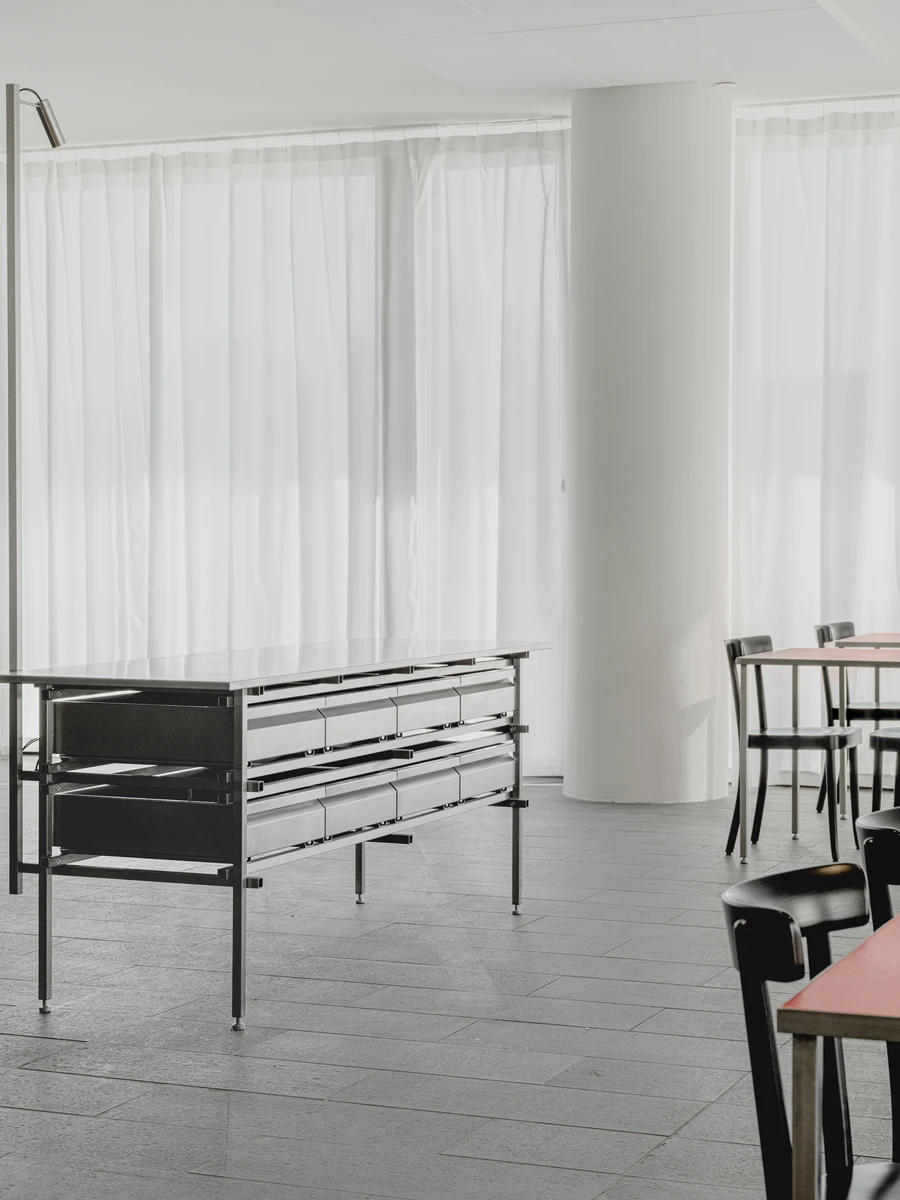
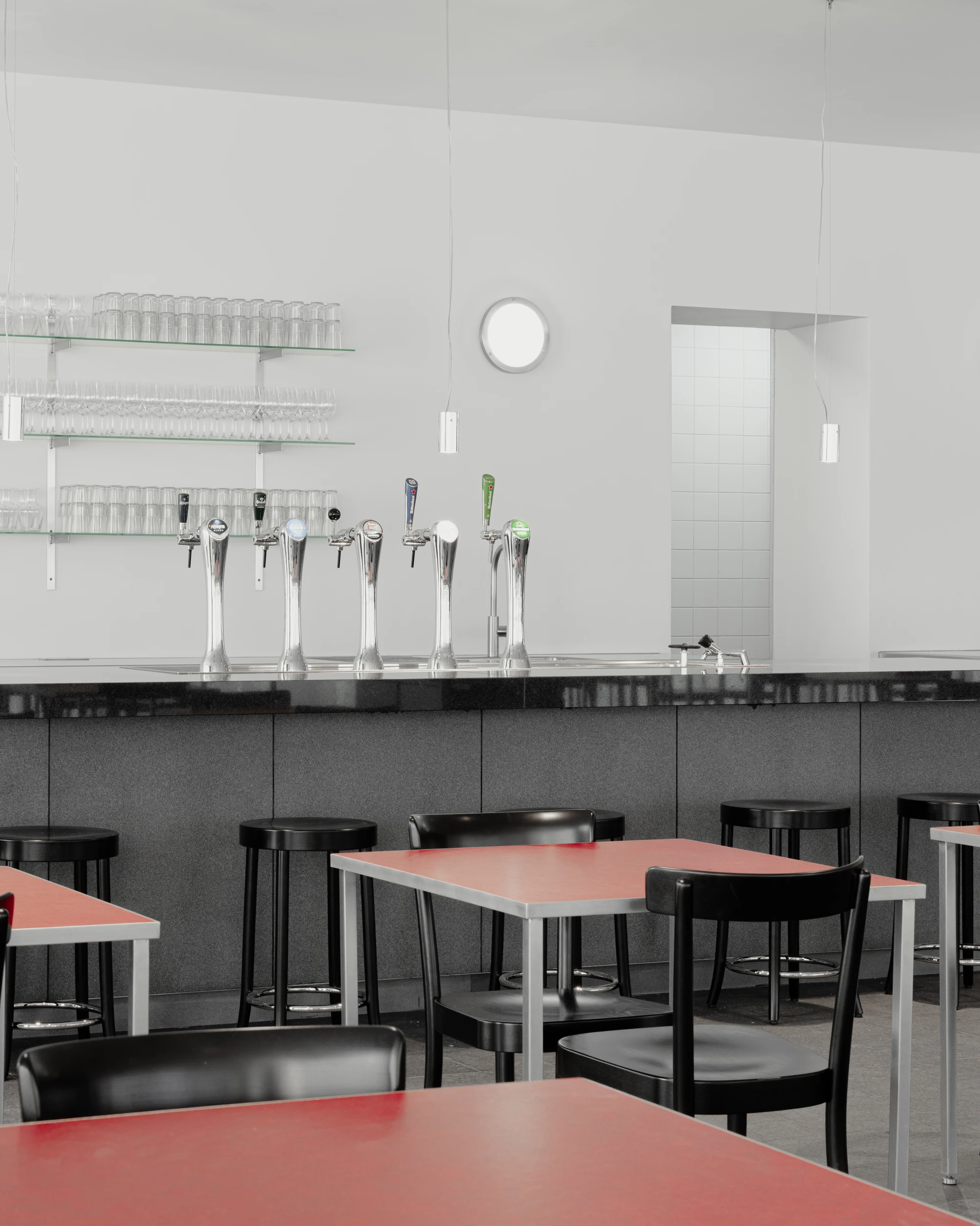
The interventions are precise and restrained. A long, low bar runs the full length of the space, connecting the street side with the museum's central hall. Made from a single type of granite in three finishes — sawn, bush-hammered and polished — it creates subtle variations in colour and texture. Along the glazed facade hangs a full-height curtain in lightweight fabric, shifting the atmosphere between openness and intimacy as light and time of day change.
A family of freestanding furniture elements in stainless steel populates the space. The service units are four open constructions, each configured for its own purpose: a lectern, a wine rack, a drawer unit, a bread counter. The tables pair a stainless steel base with a linoleum top. Because open flame is not permitted in the museum, small cordless table lamps were developed especially for the project, designed with the atmosphere and scale of candlelight in mind.
The interior is composed of robust materials with refined detailing. The textures of natural stone and stainless steel are derived from the streetscape outside, carefully applied on a smaller, more tactile scale. The former canteen in the old museum wing, where the restaurant and library once came together, long served as a natural social space on Museumplein. With Sandberg, such a place re-emerges — not merely a restaurant, but a room where museum, city and neighbourhood meet, in openness and exchange, and in the spirit of Sandberg's belief that art and daily life should remain inseparably connected.