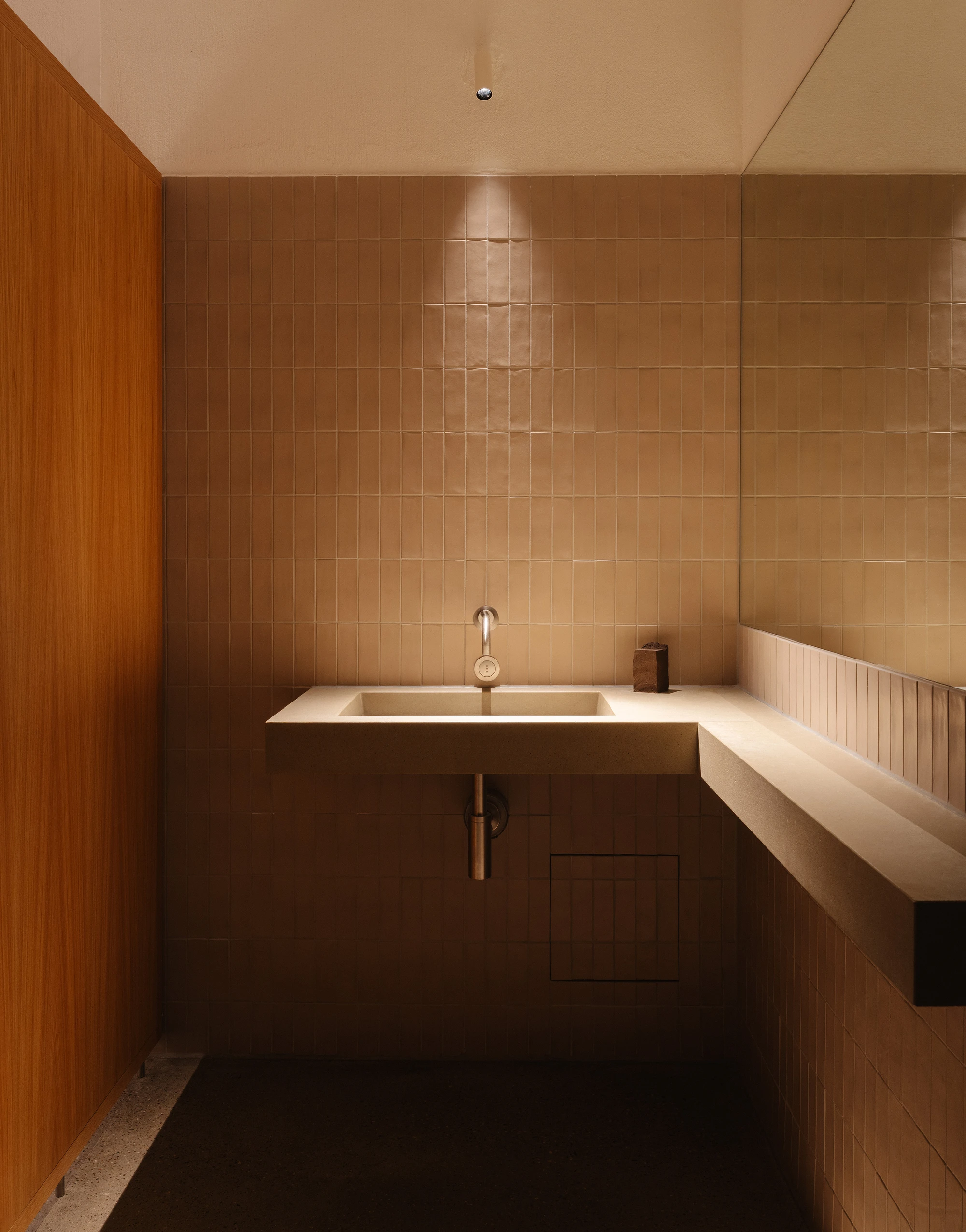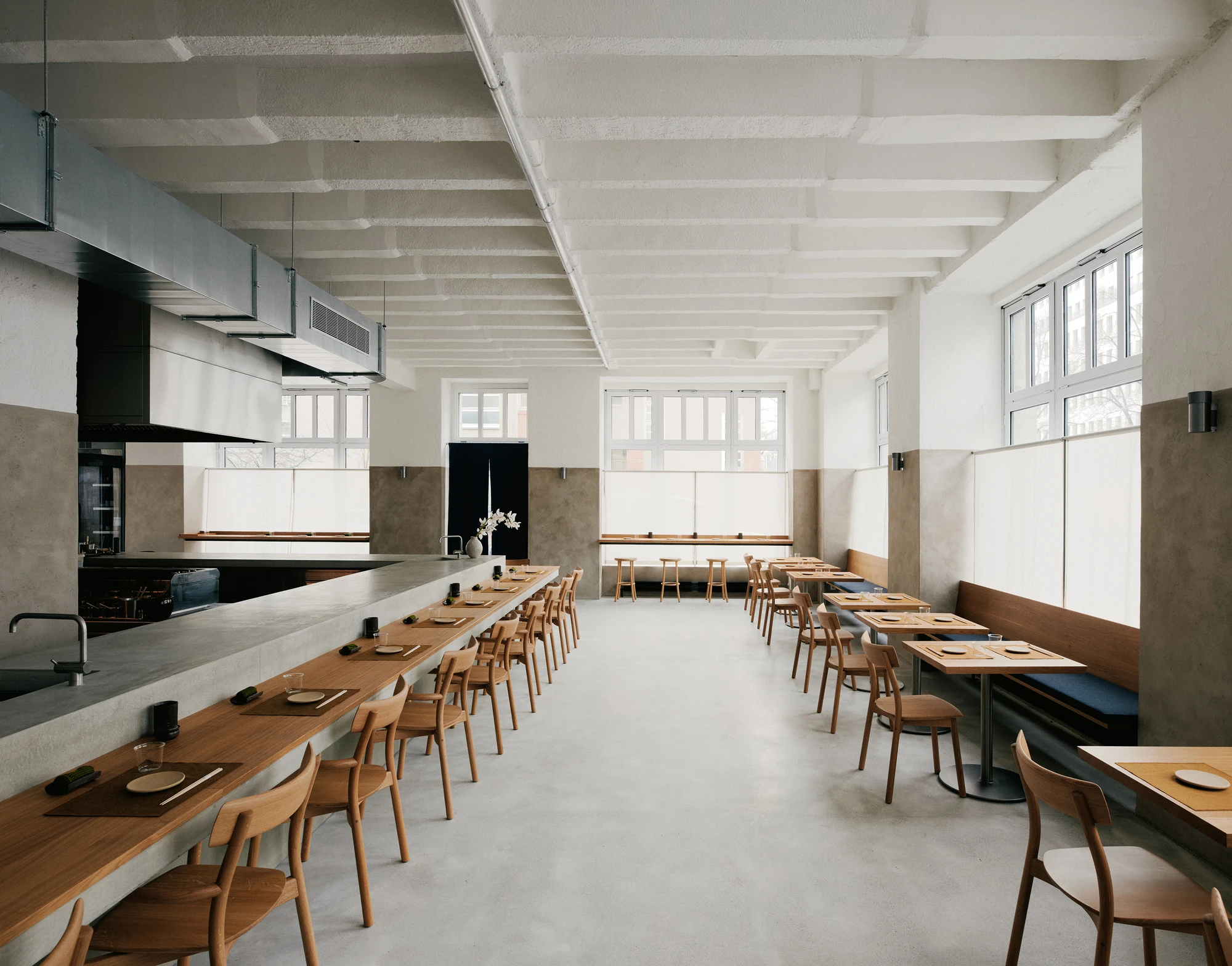
Stoke Restaurant by Studio Mark Randel in Berlin installs Japanese charcoal grilling inside a war-scarred 1911 landmark—smoke and soot joining decades of accumulated patina.
The building at Stoke's address in Kreuzberg has witnessed a century of Berlin history, and its surfaces bear witness. Bullet holes remain visible in the concrete shell, neither repaired nor emphasized—simply present, as architecture tends to be when left alone long enough. Into this space of accumulated damage, Studio Mark Randel introduced another form of controlled destruction: fire.
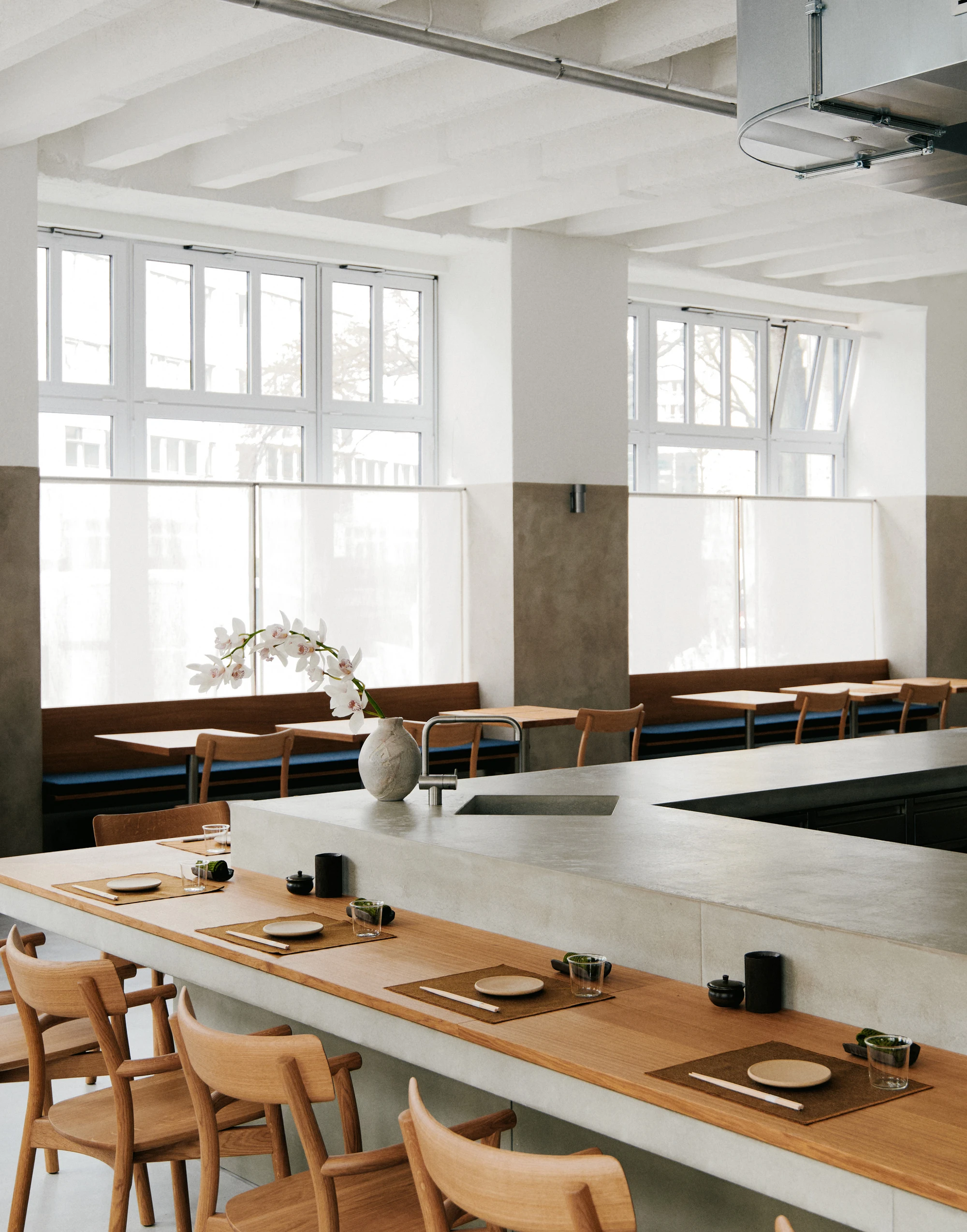
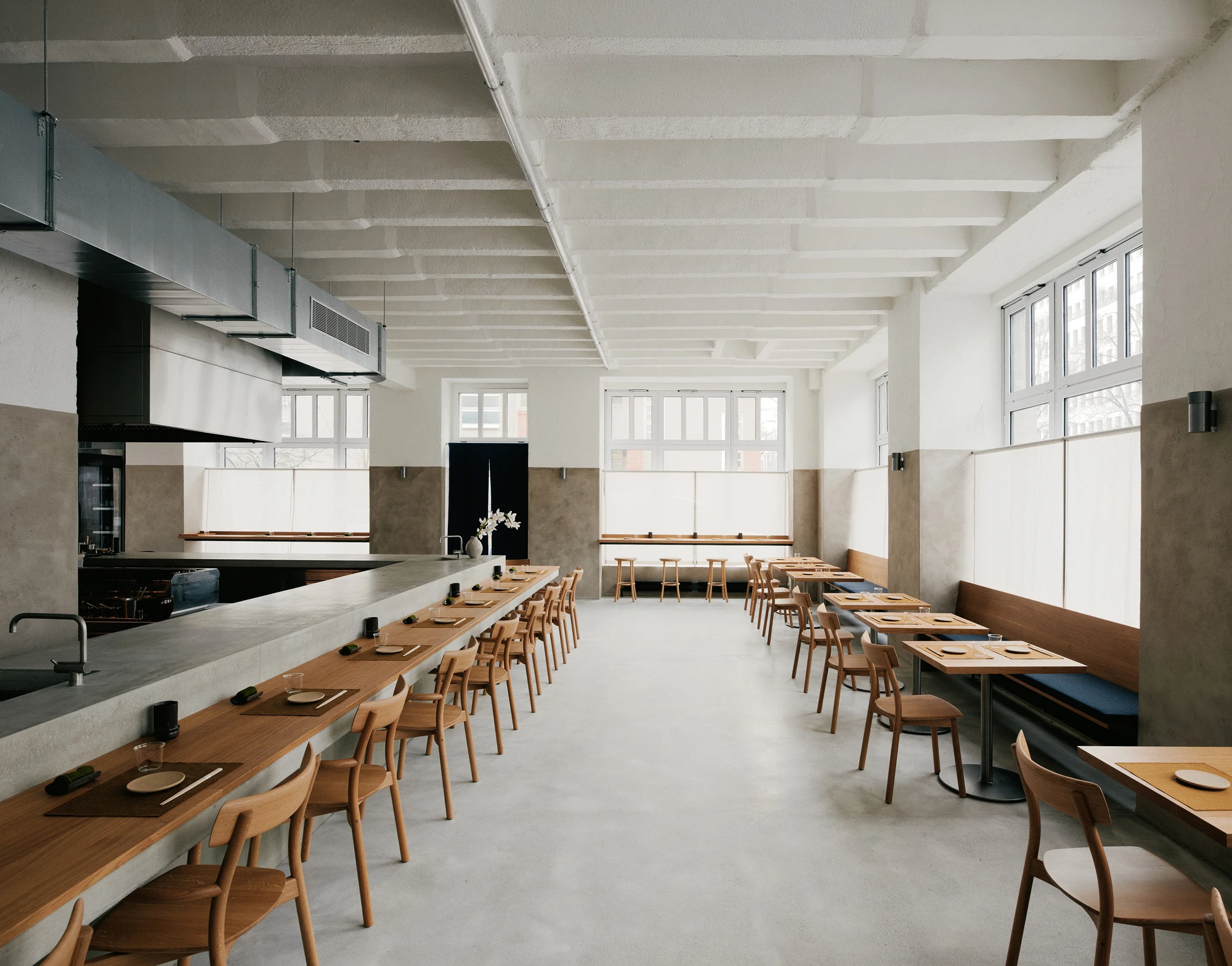
Yakitori—the Japanese art of grilling skewered chicken over charcoal—requires proximity between cook and diner. The traditional counter arrangement places guests within conversation distance of the flames, watching as smoke rises from Binchotan charcoal that burns at temperatures conventional briquettes cannot match. Stoke inherits this format, its poured concrete counter facing the open grill like a secular altar.
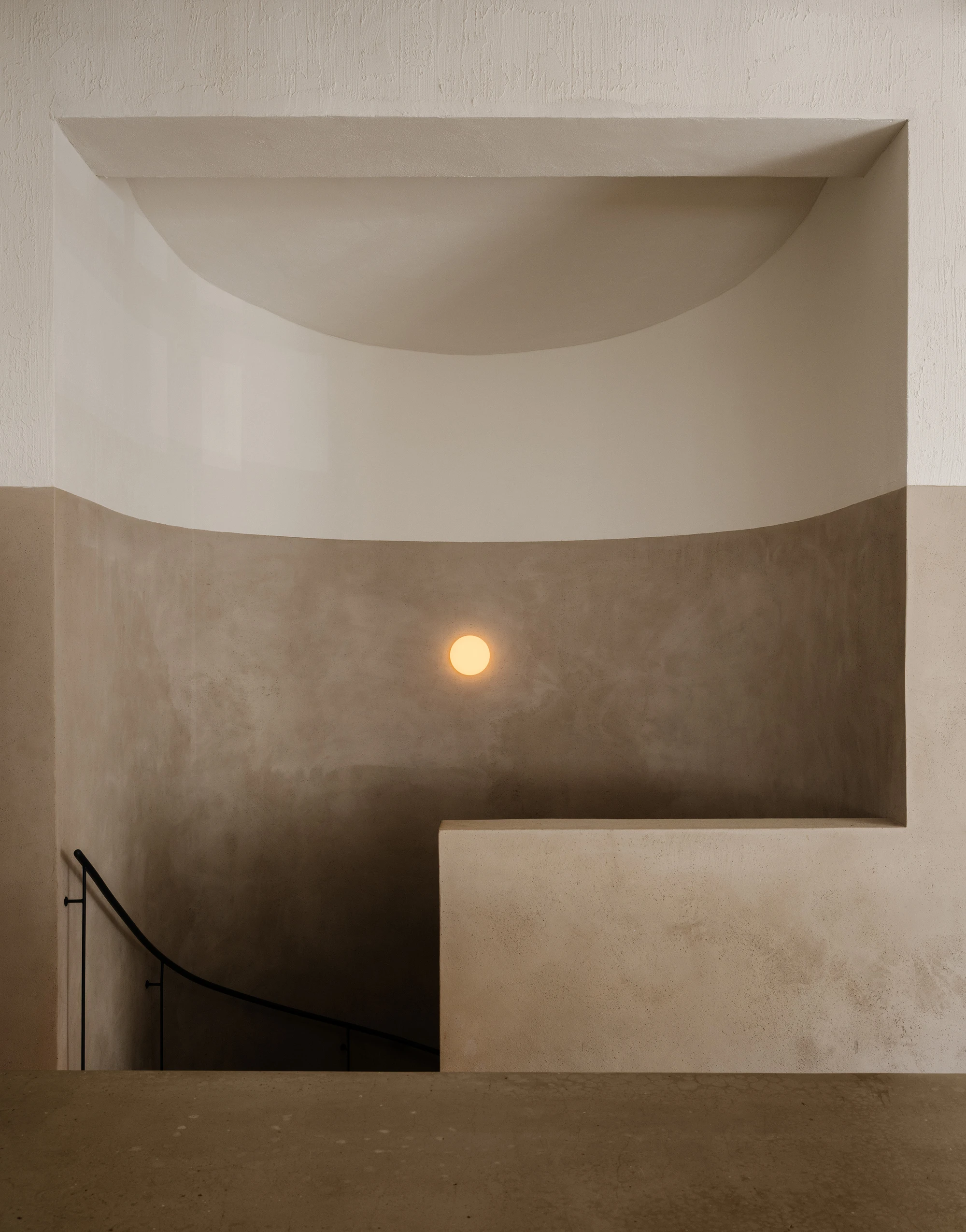
The design intervenes minimally in a building that resists intervention. Original concrete floors were sanded to reveal their aggregate. The ribbed ceiling, a distinctive feature of early twentieth-century industrial construction, remains exposed. Lime plaster walls accept the gradual accumulation of cooking residue—the restaurant will grow darker as it ages, absorbing the product of its own activity.
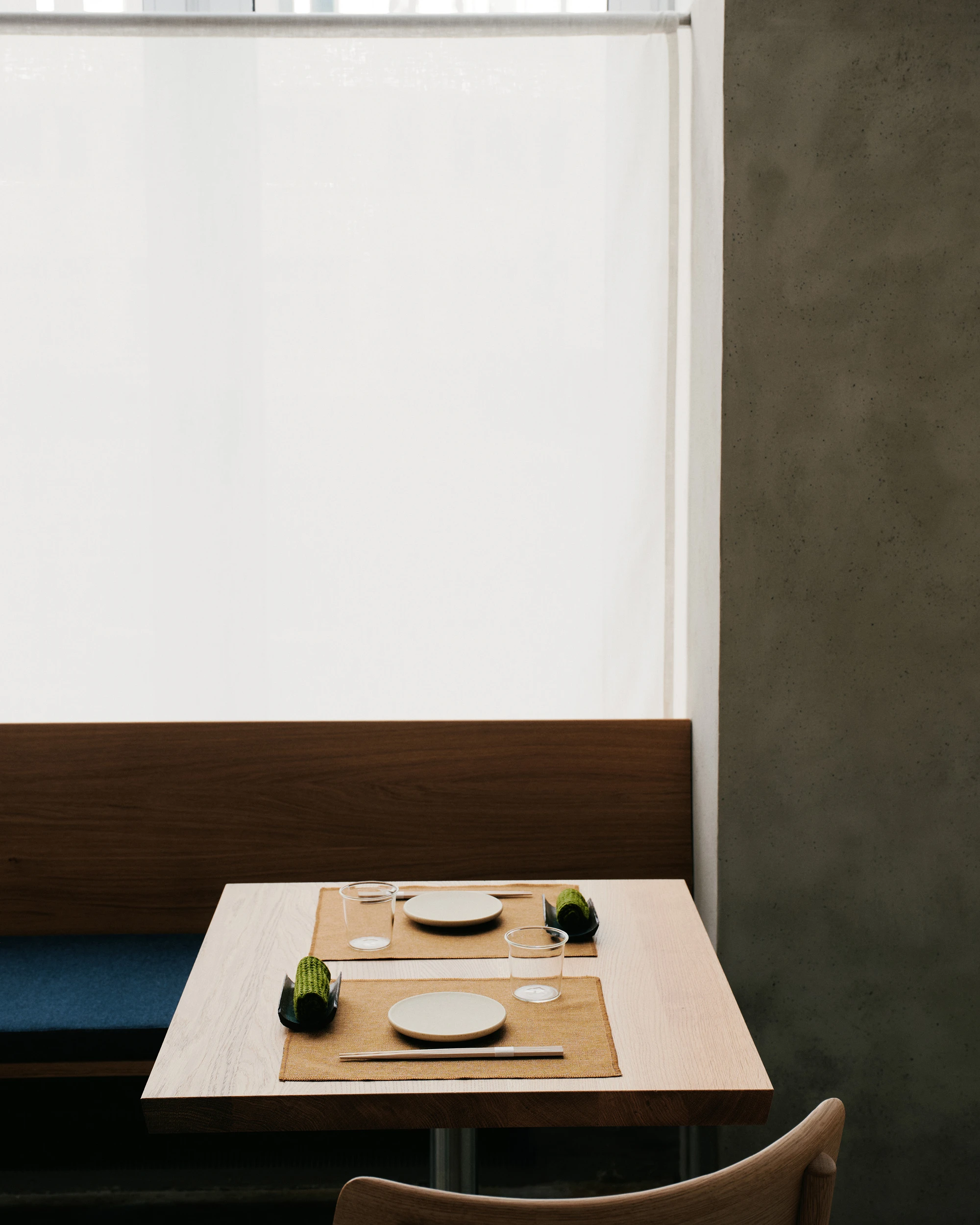
Softer elements arrive through fabric and furniture. Linen curtains filter light and sound; oak chairs provide warmth against the prevailing grey. The acoustic environment received particular attention—in a space defined by hard surfaces, conversation could easily become cacophony. Strategic absorption keeps the roar of a full service at manageable levels.
What Studio Mark Randel has achieved is a kind of temporal alignment. The building's 1911 origins, its wartime damage, its post-reunification limbo, and its current incarnation as restaurant all coexist without hierarchy. The fire at the center—new yet ancient, Japanese yet now also Berlin—provides a focal point around which these histories can organize themselves. You come to eat chicken; you stay because the room has stories.