.webp)
In London, Mark Tamer builds Everything is Wrong from analogue diptychs that pair signal against noise, drawing on years of living with chronic vestibular migraine and chance-driven darkroom prints.
London-based photographer Mark Tamer has lived for years with chronic vestibular migraine, a condition that scrambles balance and floods the senses with more information than the body can sort. Everything is Wrong is his attempt to put that experience on film. The series gathers analogue diptychs, each one a pair of frames set side by side, that treat photography less as a record of the world than as a measure of how unreliable seeing can become.
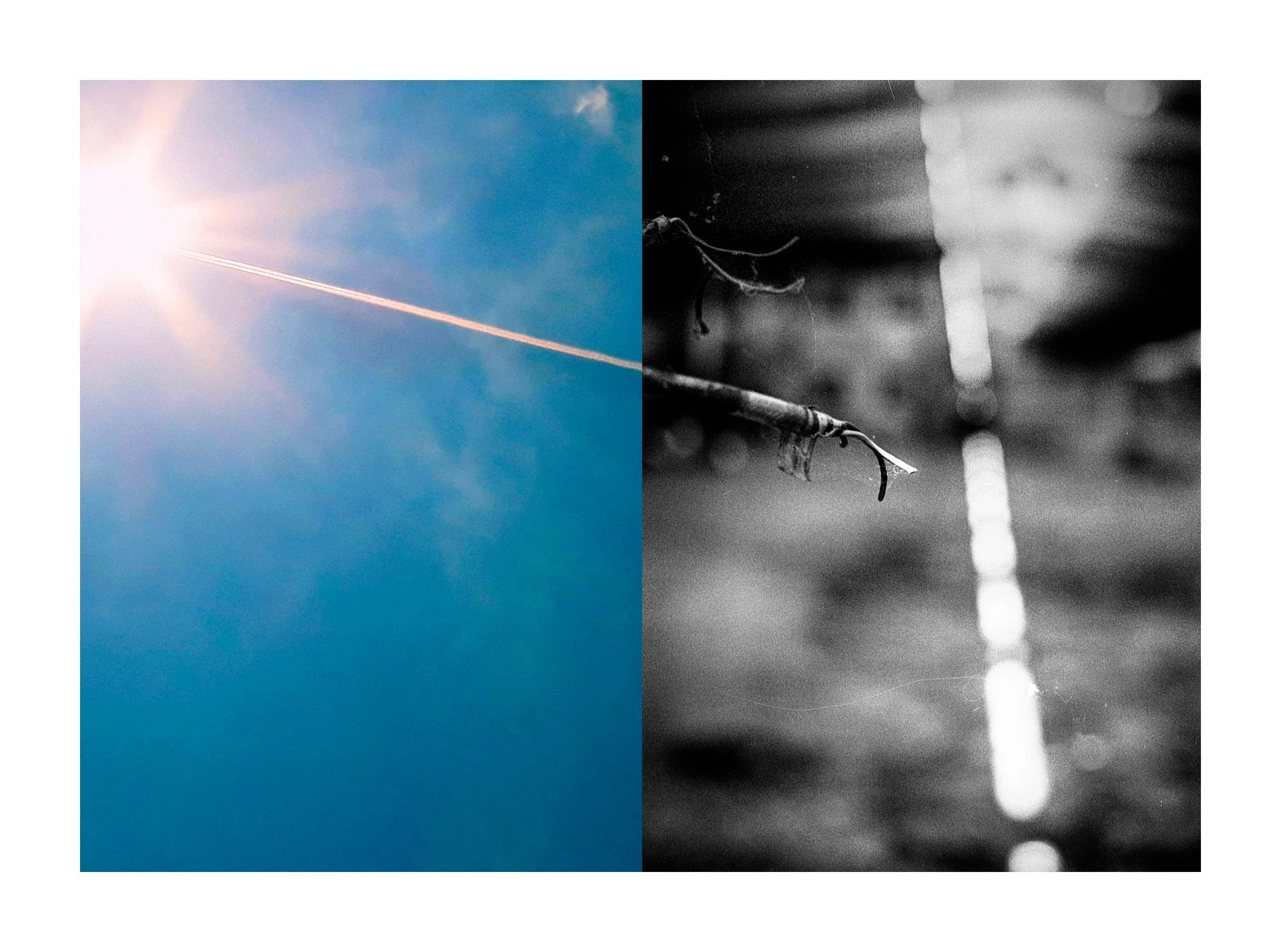
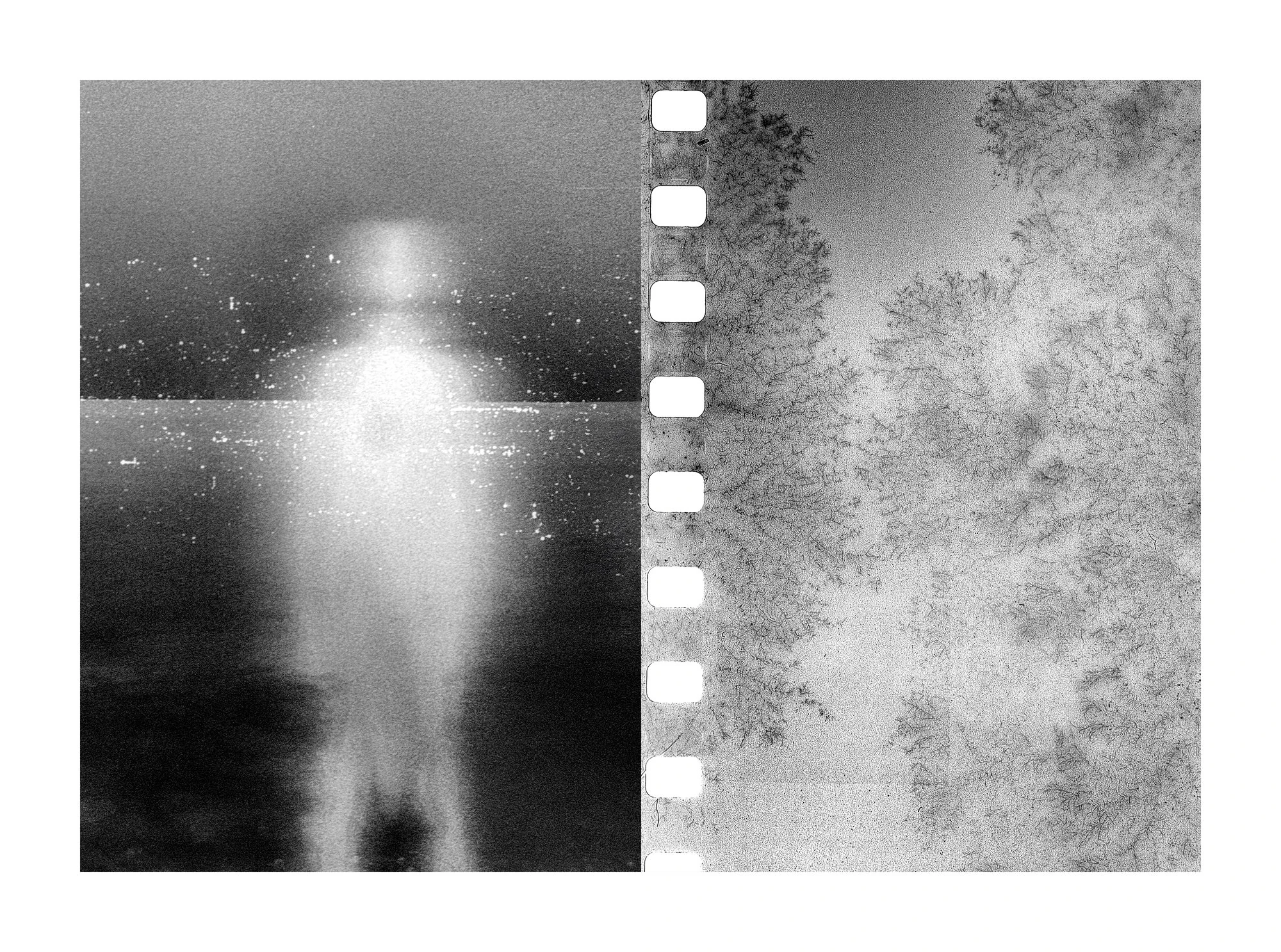
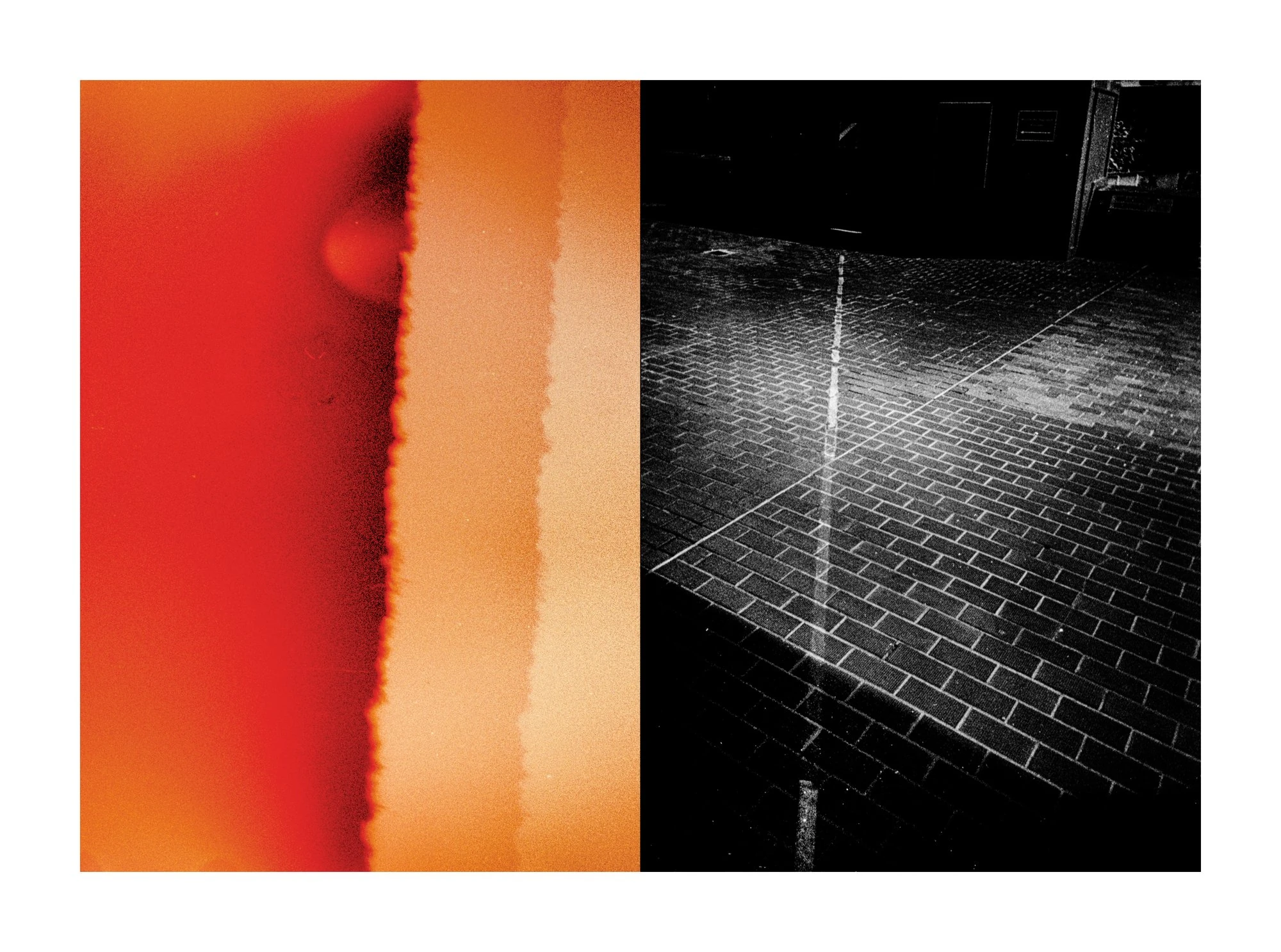
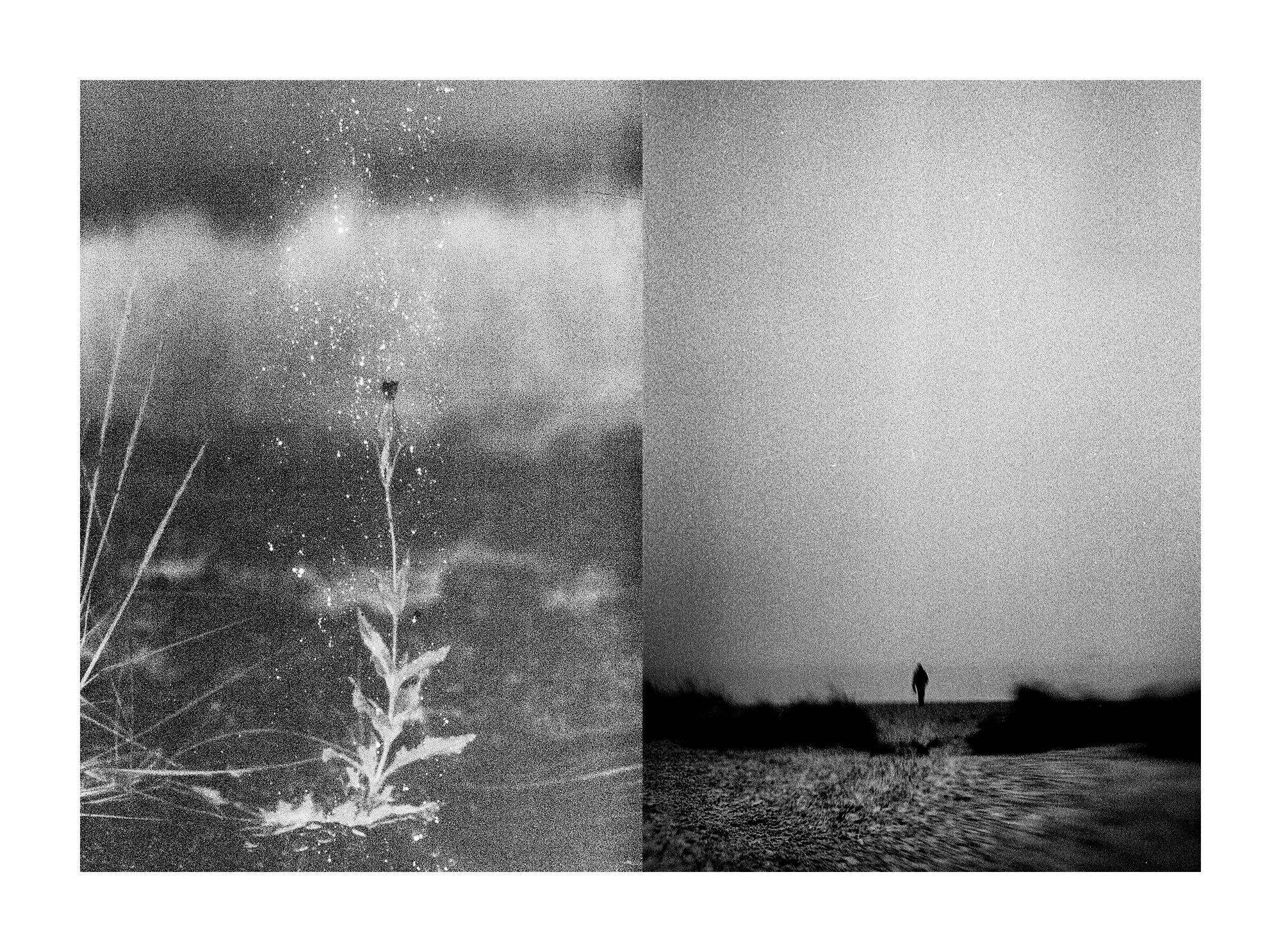
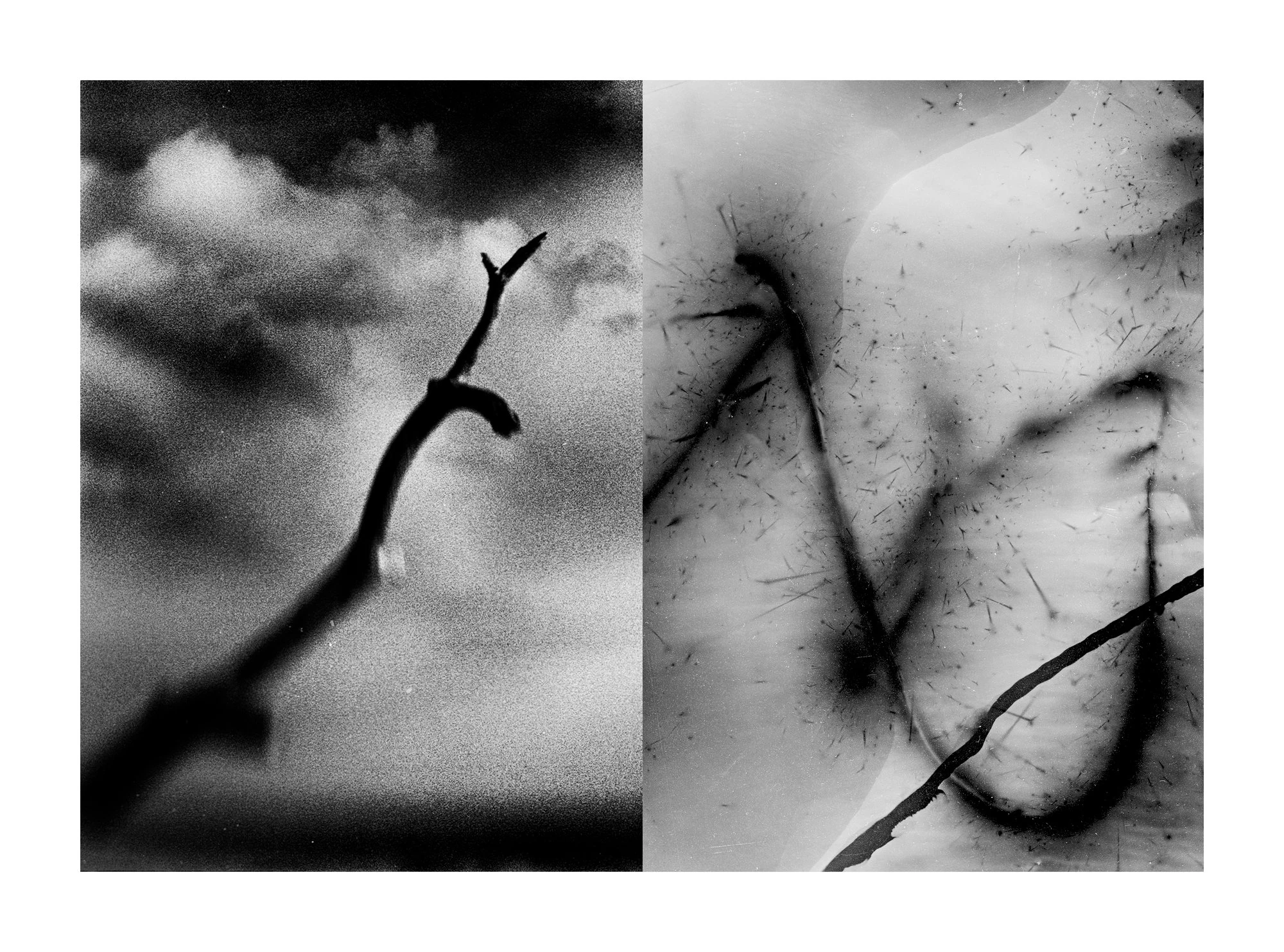
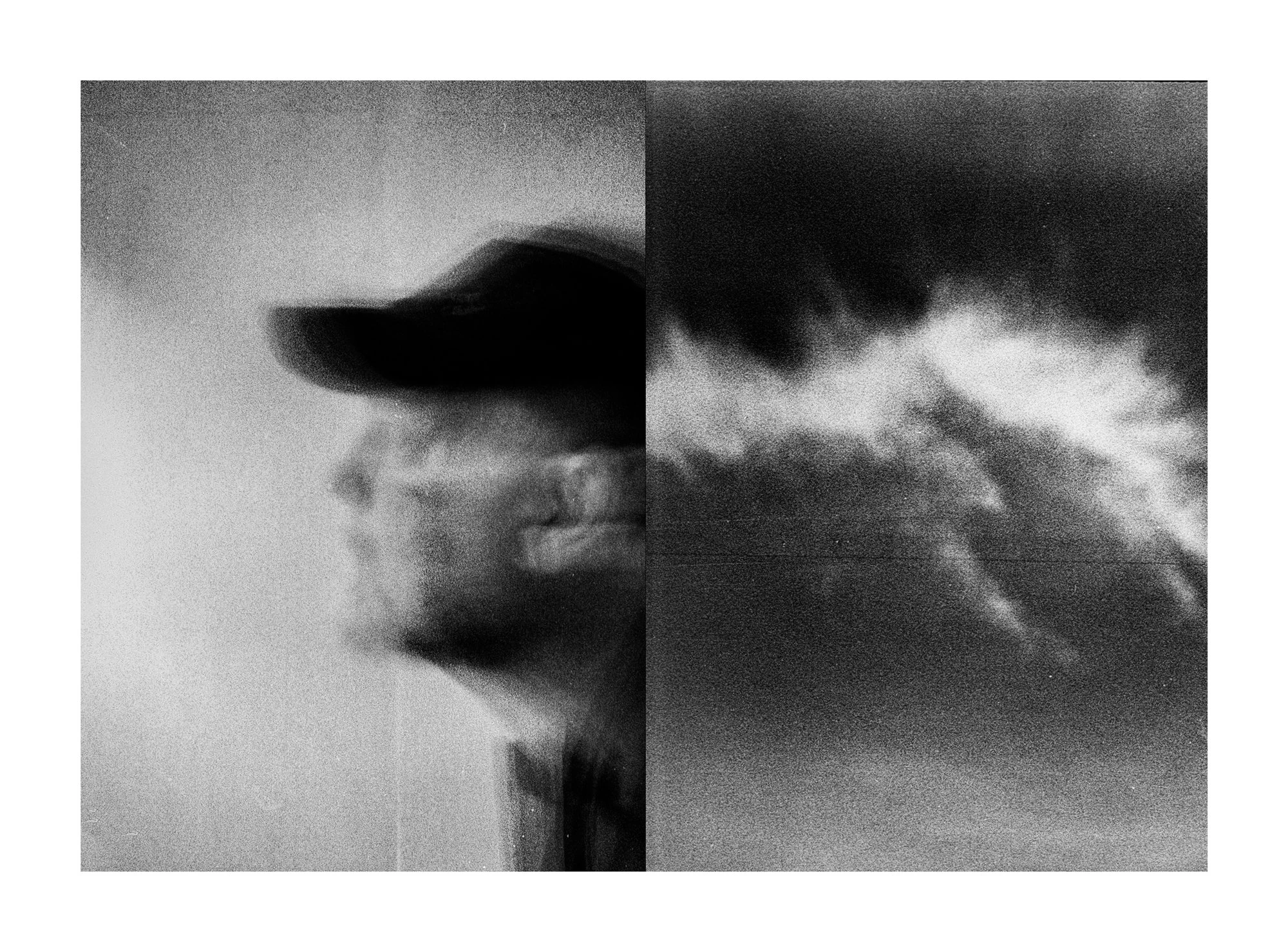
The working method leans hard on chance. Tamer pushes film and chemistry past their intended limits in the darkroom, letting accident, light leak and chemical stain do work he could never plan. He sets signal against noise, the legible against the corrupted, then waits to see what the process returns. A recognizable subject on one side answers a field of pure grain or colour on the other, so neither half settles into a single, stable reading.
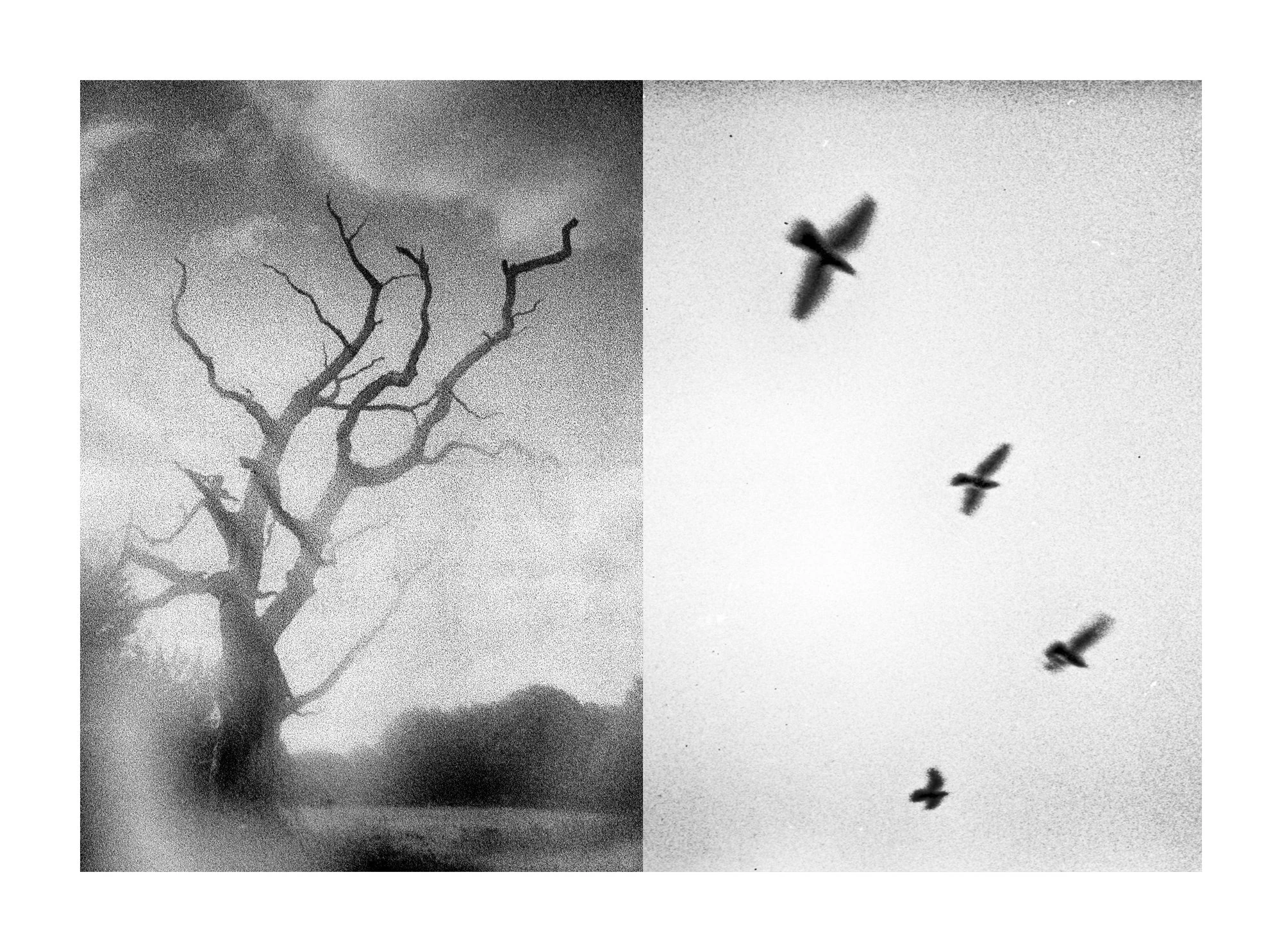
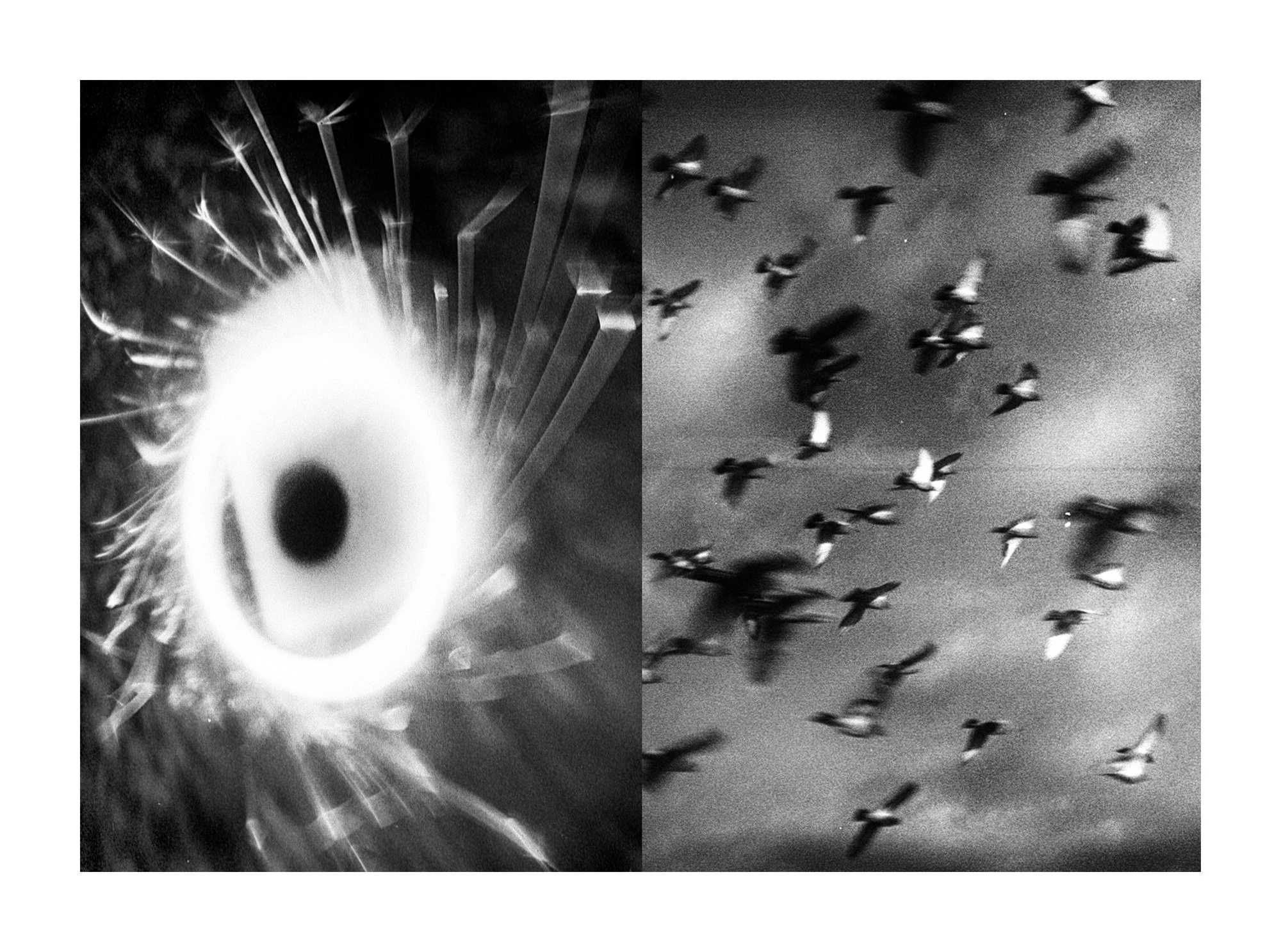
What surfaces is a vocabulary of interference. Sprocket holes run down a frame of frost-white trees; an orange band of overexposed film bleeds against a monochrome streetlamp; a solarised halo burns at the centre of one panel while blurred birds scatter across its partner. Faces smear into motion, a figure stands half-dissolved beside black water, a bare branch hardens into a scratch against the sky. The damage is the picture.
Tamer's subjects stay ordinary, birds, branches, a man in a cap, wet cobblestones at night, but the migraine logic warps them before they can settle. Edges double. Light arrives where it should not. The eye keeps reaching for a clear image and the print keeps withholding it, which is close to what living inside the condition feels like.
The result holds two things at once: the disorientation of a body that cannot trust its own senses, and the accidental beauty that turns up when control is surrendered. Everything is Wrong makes a case for photography as a way to picture what cannot otherwise be shown, and for the flawed print as the most honest version of a flawed perception.