Thisispaper Community
Join today.
Enter your email address to receive the latest news on emerging art, design, lifestyle and tech from Thisispaper, delivered straight to your inbox.
Oops! Something went wrong while submitting the form.
Instant access to new channels
The top stories curated daily
Weekly roundups of what's important
Original features and deep dives
Exclusive community features
Hitoshi Arato
Apr 24, 2026

Between the checkpoints and apartment blocks of the occupied West Bank, Maen Hammad photographs Landing, a seven-year record of Palestinian skateboarders turning occupied ground into their own.

Shot between 2015 and 2022, Landing gathers the lives of Palestinian skateboarders as they move through the layered realities of Israeli settler-colonial rule. Hammad, who grew up between Detroit and Palestine, returns with a camera and a 7-ply deck. The resulting book, published by Kehrer Verlag, reads less like reportage than like a held breath: an argument, image by image, that skateboarding here is neither sport nor subculture but a way of claiming space that the structures of occupation were built to deny.

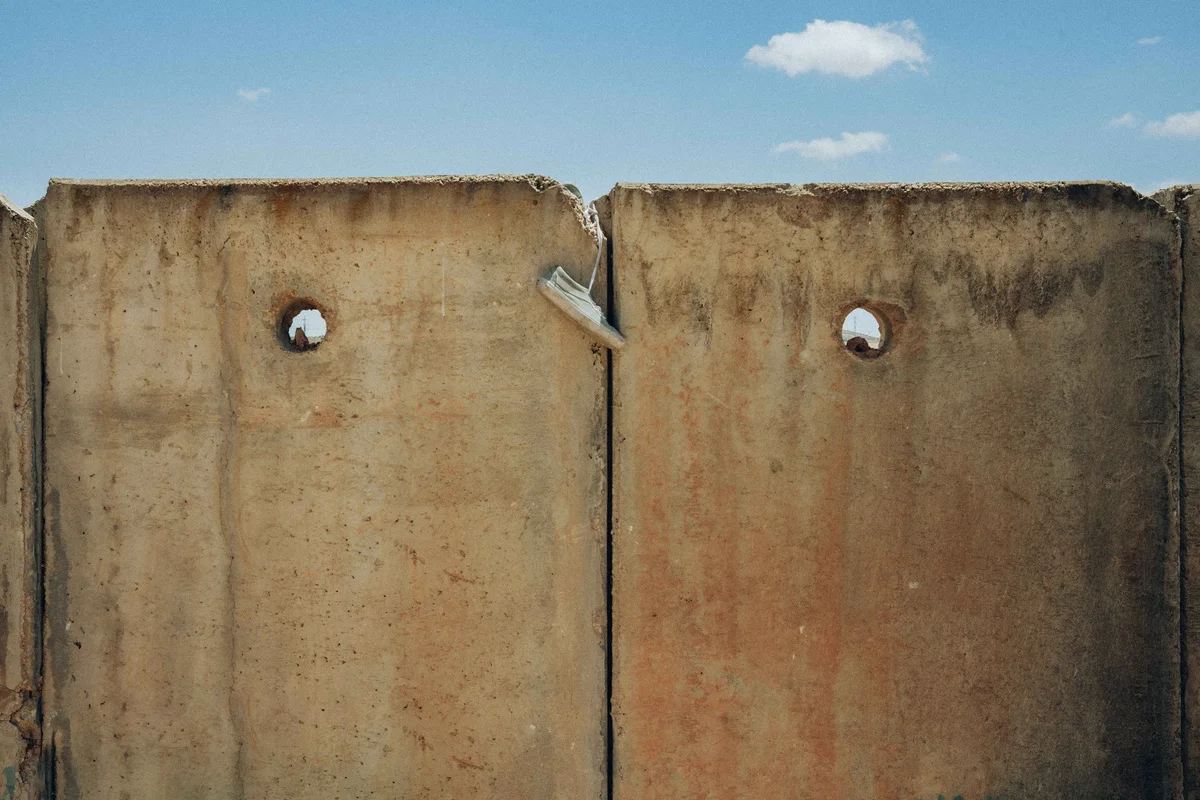
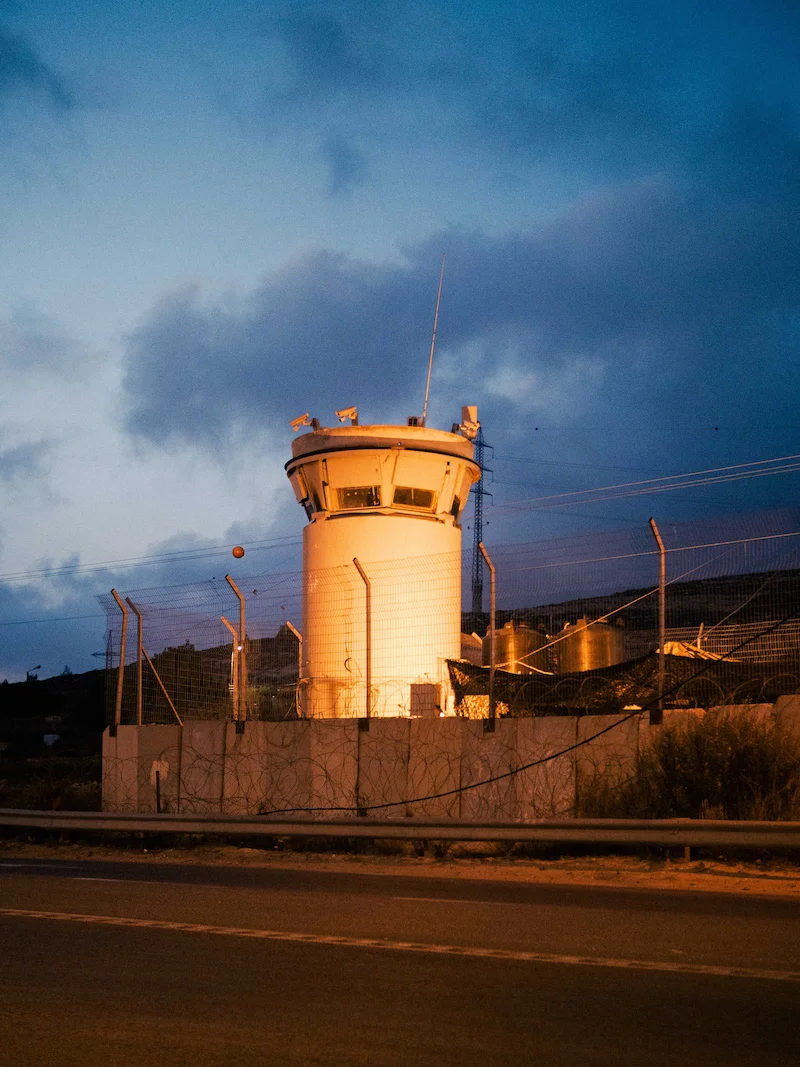
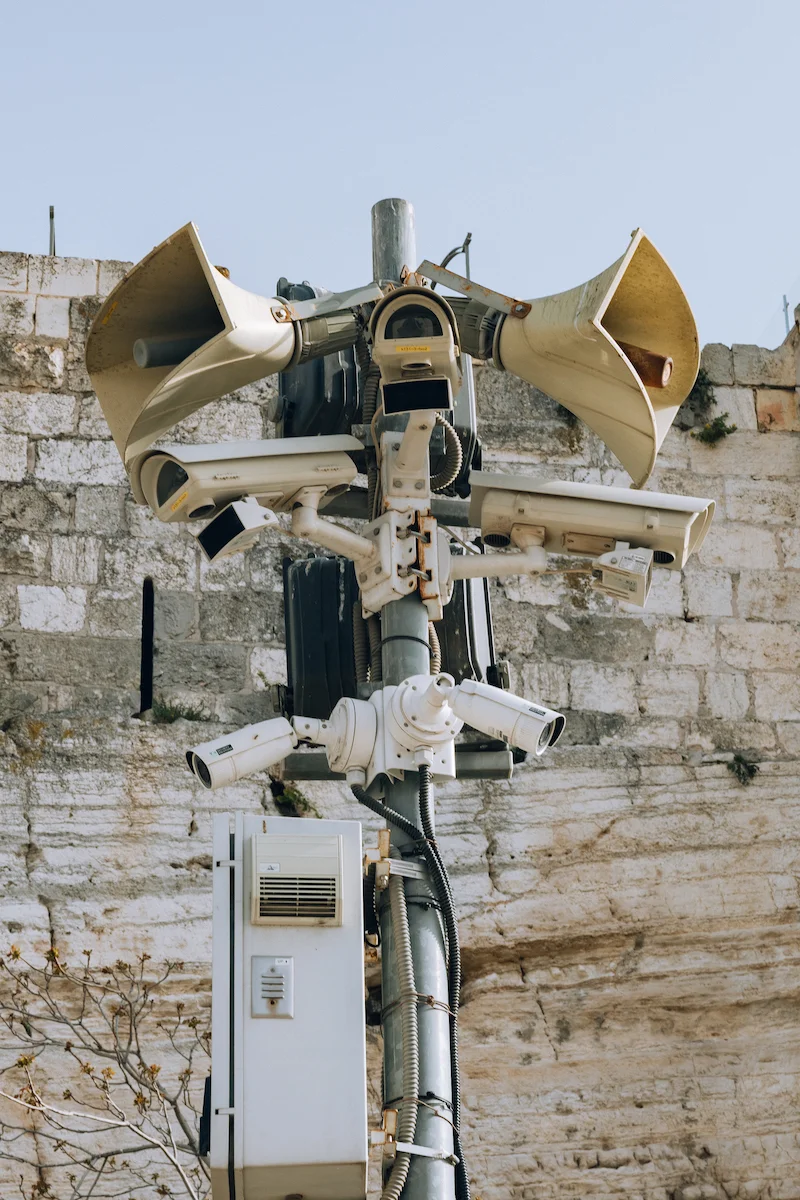
The infrastructure of that occupation sits inside the frame without commentary. A precast concrete panel of the separation barrier, rust-bloomed and punched with two drainage holes, holds a single discarded sneaker balanced on its seam. A cylindrical watchtower rises from razor wire at dusk, its antenna red against the bruised sky. A pole bristles with brass loudspeakers, pan-tilt cameras and climate boxes, fastened to weathered Jerusalem limestone. Hammad photographs these objects the way a landscape photographer might photograph mountains, letting their weight register before a figure ever enters.

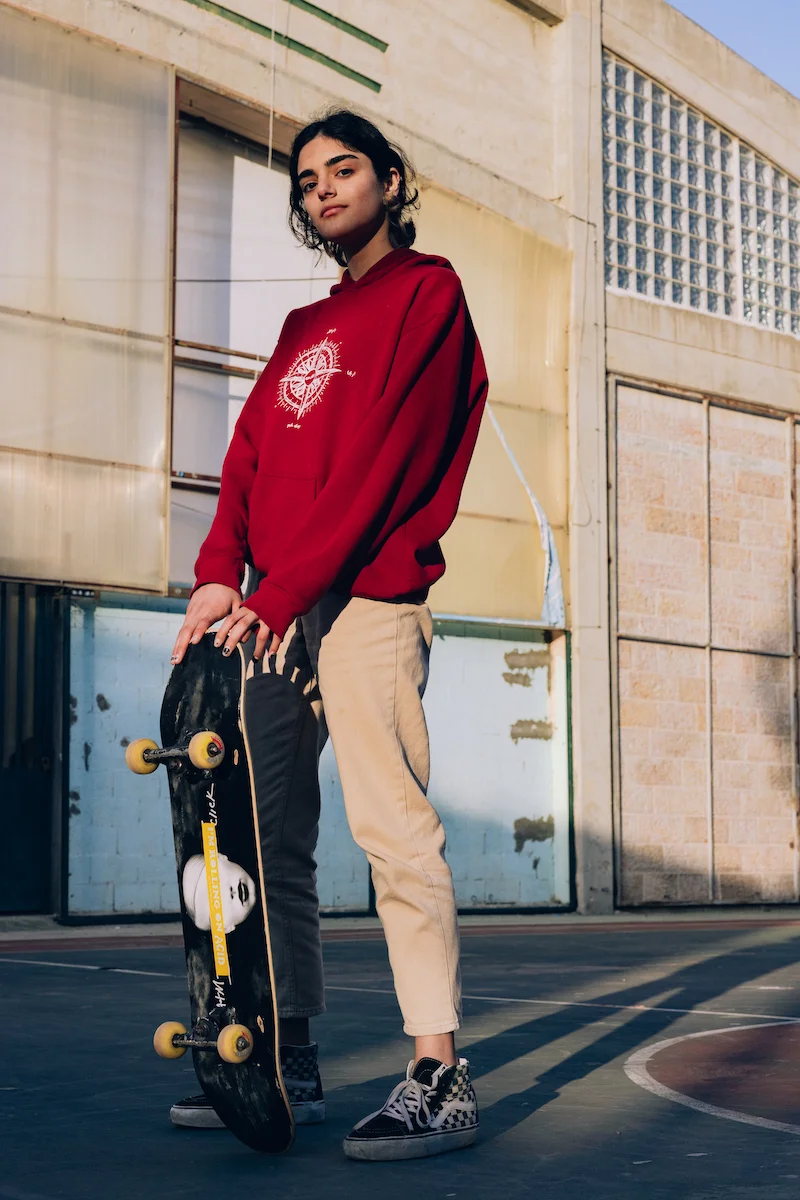
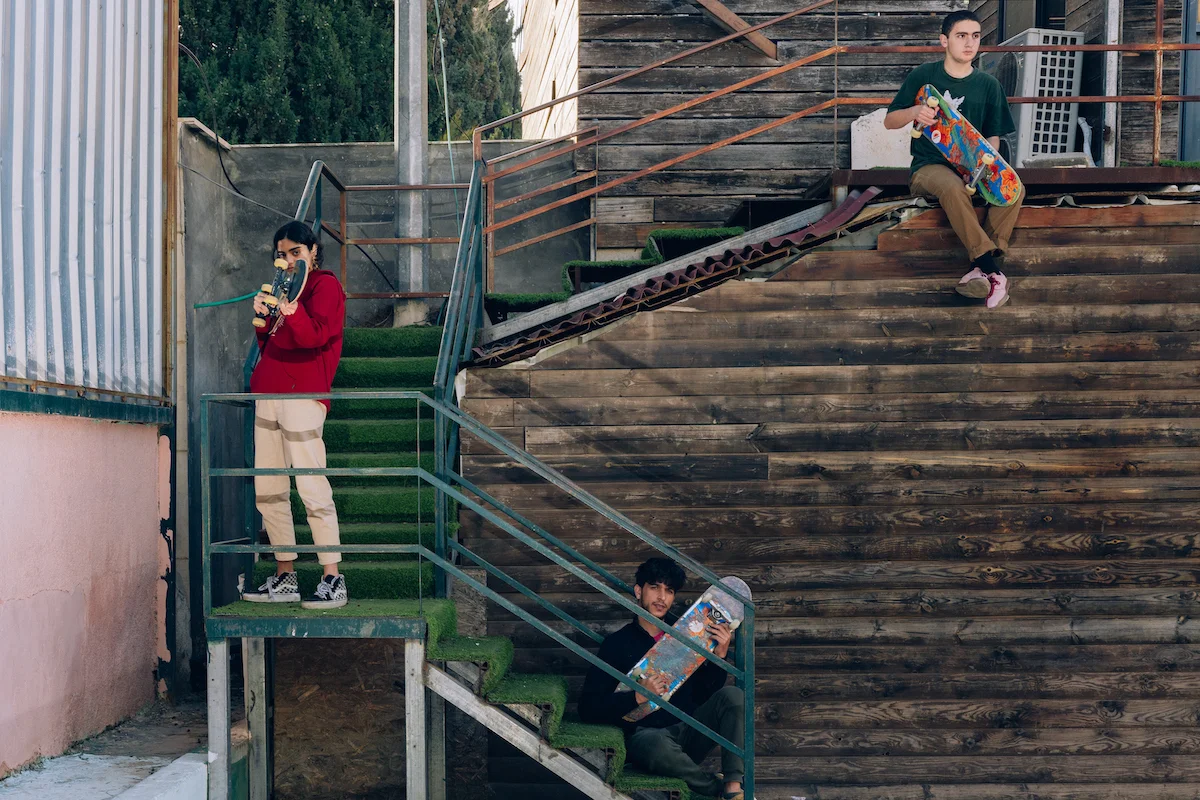
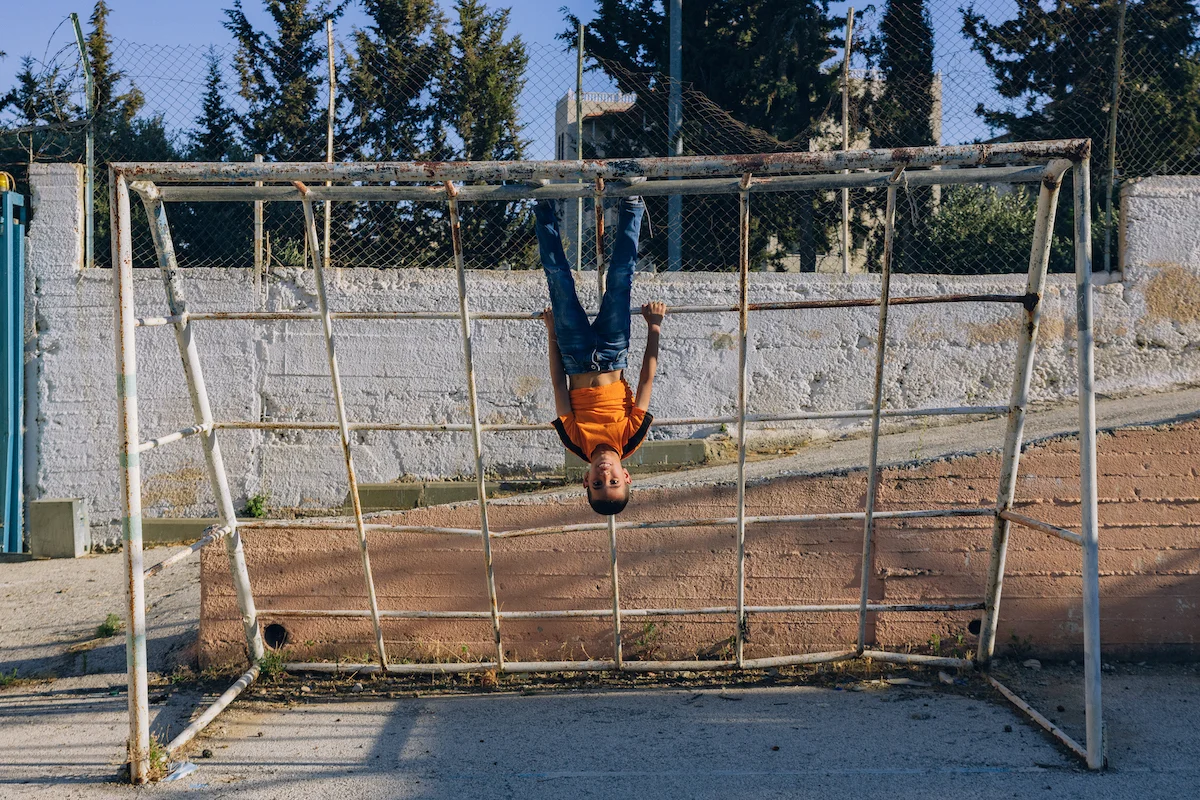
And then the skaters arrive. A young woman in a burgundy hoodie stands on a faded basketball court in Ramallah, one palm resting on the grip tape of her deck, her cream trousers catching the late light. A boy hangs upside down from the crossbar of a rusted goalpost, improvising a training rig out of what the yard offers. Three friends hold their boards on a timber ramp built from scaffold planks and steel pipe, one eating a sandwich, one mid-drop, one watching from the top of green-carpeted stairs. The apparatus is never purpose-built; it is found, lashed, painted over, reused.

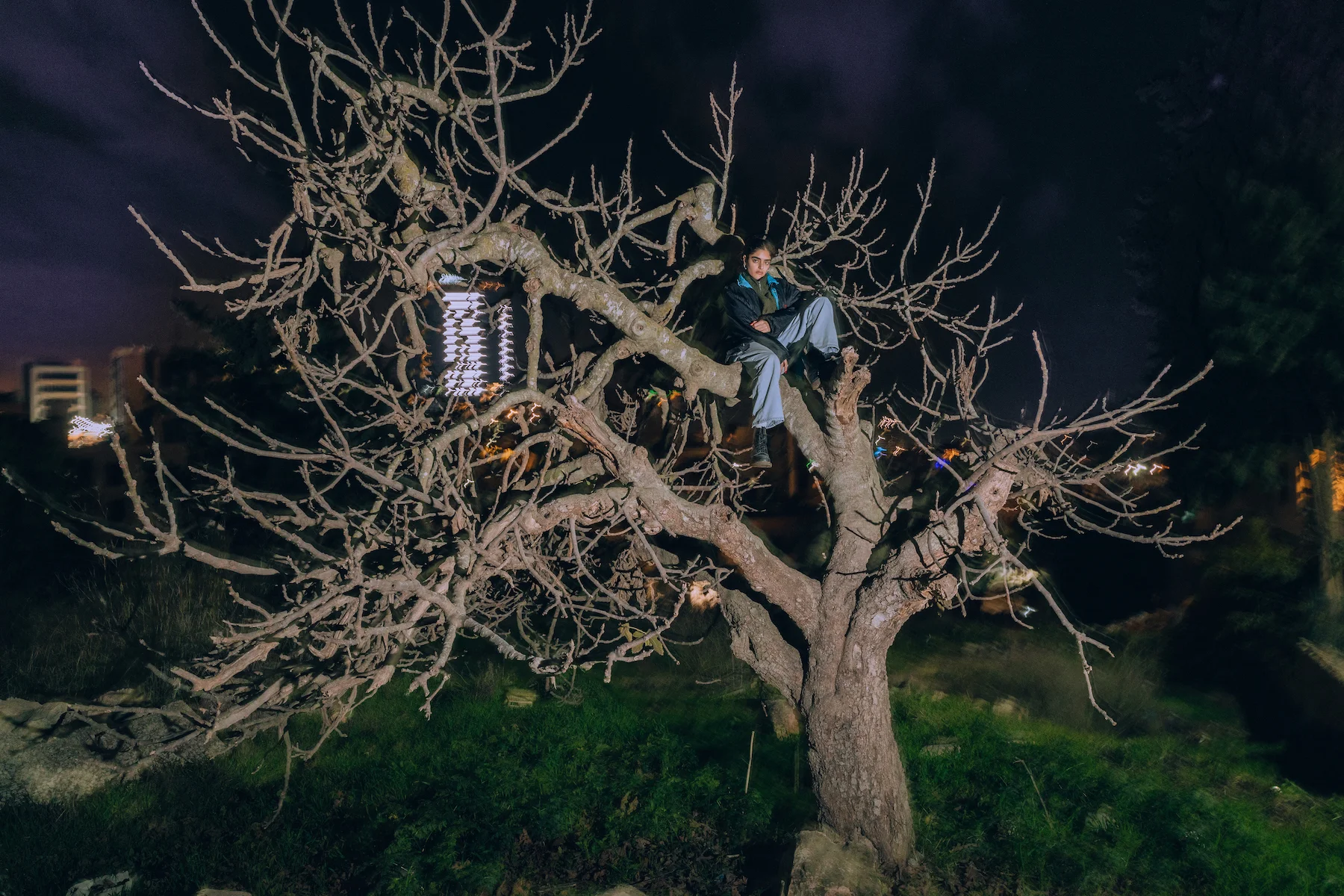
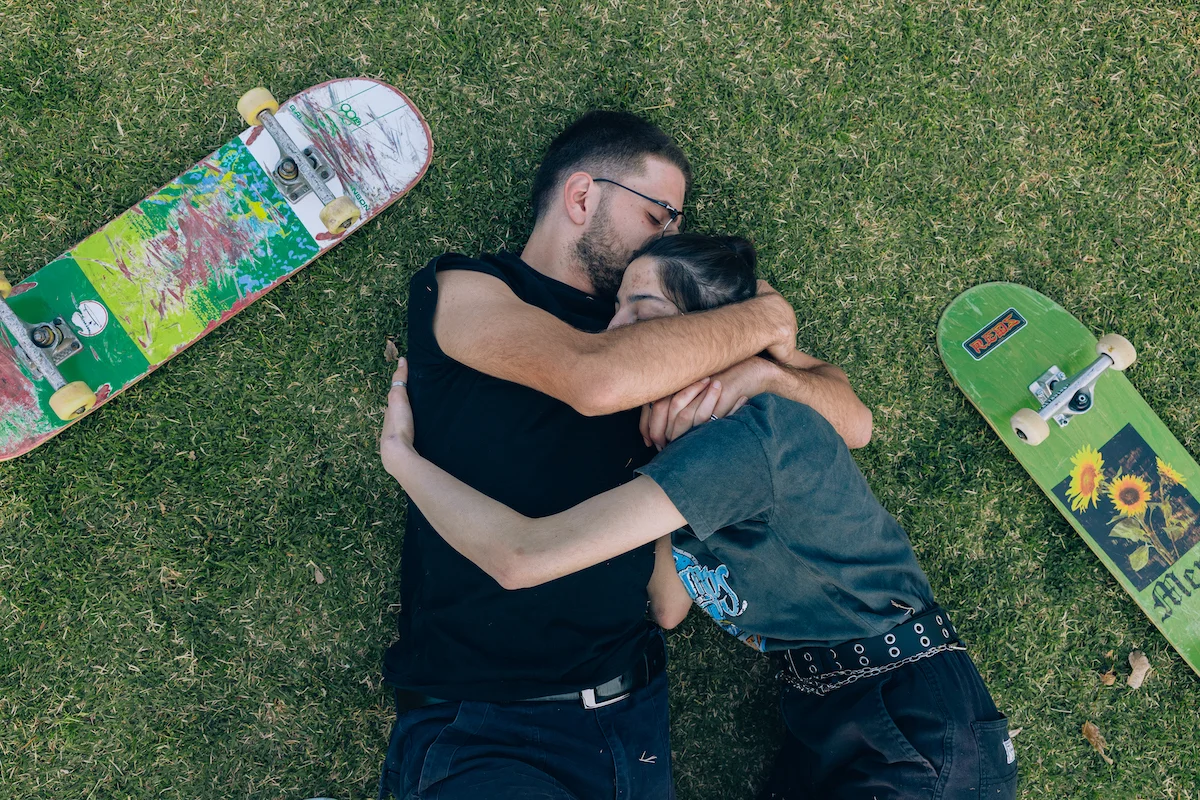
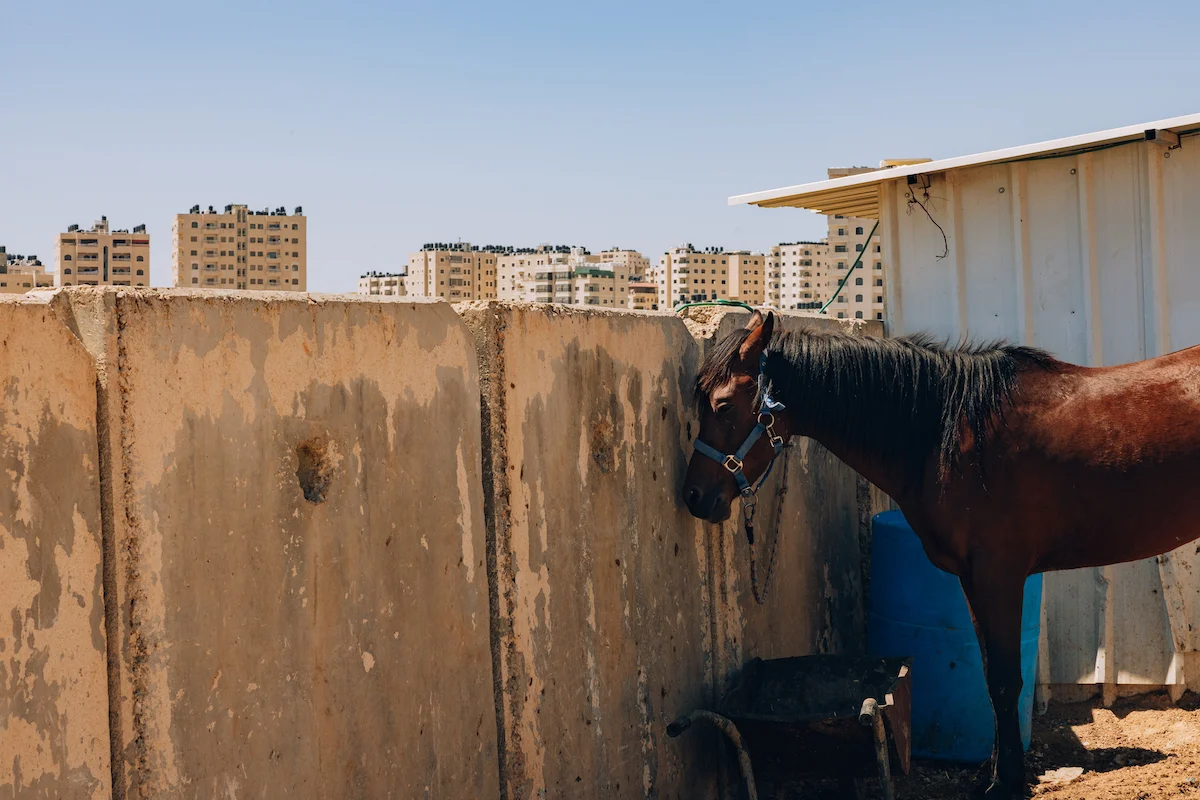
Hammad's frames refuse the two stock images Palestine is usually allowed. There is no stone-thrower silhouette, no picturesque old city. Instead: a tethered horse nosing a concrete blast wall while tower blocks rise behind it, a couple asleep in the grass between two boards stickered with sunflowers and graffiti, a bare fig tree strung with fairy lights at night with a boy seated in its branches like a domestic deity. The pictures insist on a full life, lived in the open.

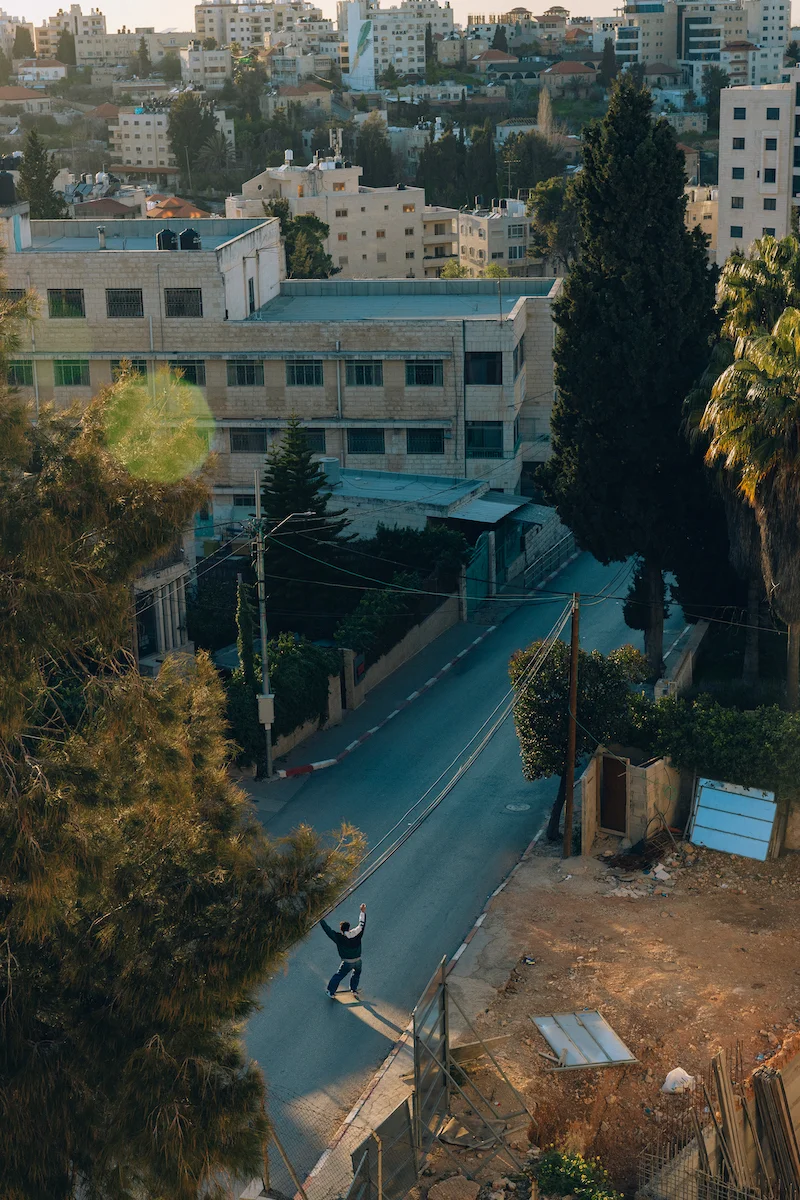
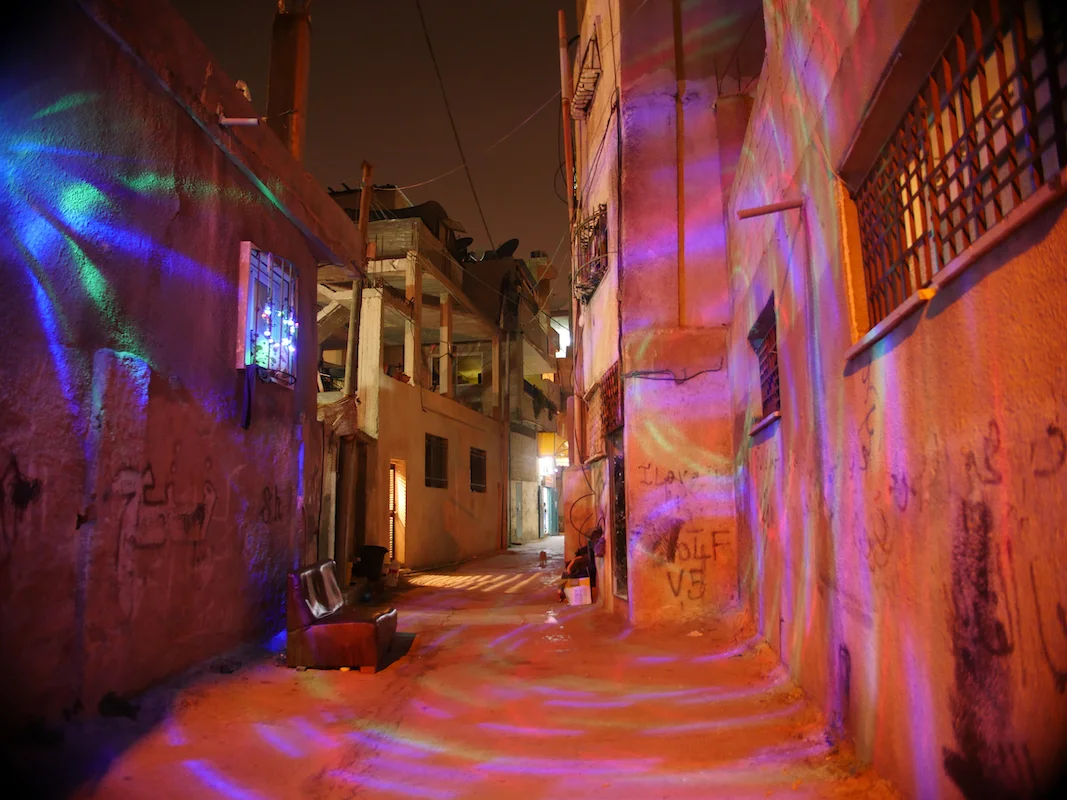
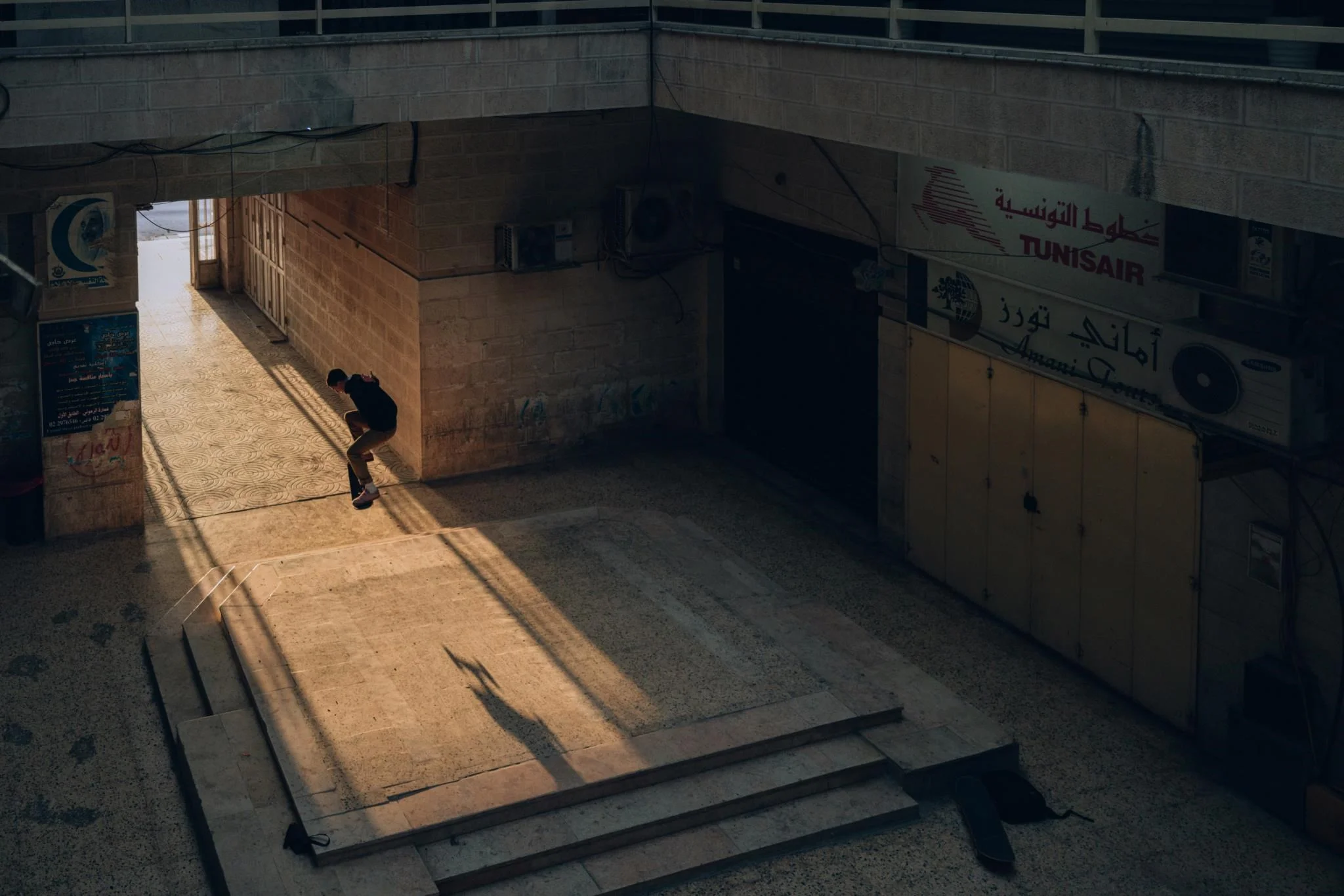
Colour does work here that language cannot. The long shadow of a skater carving down an empty Ramallah street pools into golden dust. Magenta and green disco projections wash across the rendered walls of a refugee-camp alleyway, graffiti-scored and hung with power lines, turning a corridor of daily surveillance into something briefly unreckonable. A skateboarder drops into a concrete underpass beneath Arabic shopfront signage for TUNISAIR, their shadow stretched long across polished terrazzo. Ordinary places, refused as ordinary.

Landing is Hammad's thesis on what he calls a Palestinian refusal to succumb. The book does not argue that a skateboard is a weapon, or a substitute for one. It argues, more precisely, that the body learning a trick on occupied ground is already doing political work: taking measurement of a place, claiming its surfaces, returning the next day. The photographs hold that argument without raising their voice.
Interested in Showcasing Your Work?

If you would like to feature your works on Thisispaper, please visit our Submission page and sign up to Thisispaper+ to submit your work. Once your submission is approved, your work will be showcased to our global audience of 2 million art, architecture, and design professionals and enthusiasts.
No items found.
We love less
but there is more.
Become a Thisispaper+ member today to unlock full access to our magazine, advanced tools, and support our work.
Get two months FREE
with annual subscription
We love less
but there is more.
Become a Thisispaper+ member today to unlock full access to our magazine, advanced tools, and support our work.
Get two months FREE
with annual subscription
No items found.
Hitoshi Arato
Apr 24, 2026

Between the checkpoints and apartment blocks of the occupied West Bank, Maen Hammad photographs Landing, a seven-year record of Palestinian skateboarders turning occupied ground into their own.

Shot between 2015 and 2022, Landing gathers the lives of Palestinian skateboarders as they move through the layered realities of Israeli settler-colonial rule. Hammad, who grew up between Detroit and Palestine, returns with a camera and a 7-ply deck. The resulting book, published by Kehrer Verlag, reads less like reportage than like a held breath: an argument, image by image, that skateboarding here is neither sport nor subculture but a way of claiming space that the structures of occupation were built to deny.

The infrastructure of that occupation sits inside the frame without commentary. A precast concrete panel of the separation barrier, rust-bloomed and punched with two drainage holes, holds a single discarded sneaker balanced on its seam. A cylindrical watchtower rises from razor wire at dusk, its antenna red against the bruised sky. A pole bristles with brass loudspeakers, pan-tilt cameras and climate boxes, fastened to weathered Jerusalem limestone. Hammad photographs these objects the way a landscape photographer might photograph mountains, letting their weight register before a figure ever enters.

And then the skaters arrive. A young woman in a burgundy hoodie stands on a faded basketball court in Ramallah, one palm resting on the grip tape of her deck, her cream trousers catching the late light. A boy hangs upside down from the crossbar of a rusted goalpost, improvising a training rig out of what the yard offers. Three friends hold their boards on a timber ramp built from scaffold planks and steel pipe, one eating a sandwich, one mid-drop, one watching from the top of green-carpeted stairs. The apparatus is never purpose-built; it is found, lashed, painted over, reused.

Hammad's frames refuse the two stock images Palestine is usually allowed. There is no stone-thrower silhouette, no picturesque old city. Instead: a tethered horse nosing a concrete blast wall while tower blocks rise behind it, a couple asleep in the grass between two boards stickered with sunflowers and graffiti, a bare fig tree strung with fairy lights at night with a boy seated in its branches like a domestic deity. The pictures insist on a full life, lived in the open.

Colour does work here that language cannot. The long shadow of a skater carving down an empty Ramallah street pools into golden dust. Magenta and green disco projections wash across the rendered walls of a refugee-camp alleyway, graffiti-scored and hung with power lines, turning a corridor of daily surveillance into something briefly unreckonable. A skateboarder drops into a concrete underpass beneath Arabic shopfront signage for TUNISAIR, their shadow stretched long across polished terrazzo. Ordinary places, refused as ordinary.

Landing is Hammad's thesis on what he calls a Palestinian refusal to succumb. The book does not argue that a skateboard is a weapon, or a substitute for one. It argues, more precisely, that the body learning a trick on occupied ground is already doing political work: taking measurement of a place, claiming its surfaces, returning the next day. The photographs hold that argument without raising their voice.
Interested in Showcasing Your Work?

If you would like to feature your works on Thisispaper, please visit our Submission page and subscribe to Thisispaper+. Once your submission is approved, your work will be showcased to our global audience of 2 million art, architecture, and design professionals and enthusiasts.
No items found.

Join Thisispaper+
Unlock access to 2500 stories, curated guides + editions, and share your work with a global network of architects, artists, writers and designers who are shaping the future.
Get two months FREE
with annual subscription
Travel Guides
Immerse yourself in timeless destinations, hidden gems, and creative spaces—curated by humans, not algorithms.
Explore All Guides +
Submission Module
Submit your project and gain the chance to showcase your work to our worldwide audience of over 2M architects, designers, artists, and curious minds.
Learn More+
Curated Editions
Dive deeper into carefully curated editions, designed to feed your curiosity and foster exploration.
Off-the-Grid
Jutaku
Sacral Journey
minimum
The New Chair
Explore All Editions +
Atlas
A new and interactive way to explore the most inspiring places around the world.
Interactive map
Linked to articles
300+ curated locations
Google + Apple directions
Smart filters
Subscribe to Explore+
Become a Thisispaper+ member today to unlock full access to our magazine, submit your project and support our work.
Join Thisispaper+Join Thisispaper+
€ 9 EUR
/month
Cancel anytime
Get two months FREE
with annual subscription