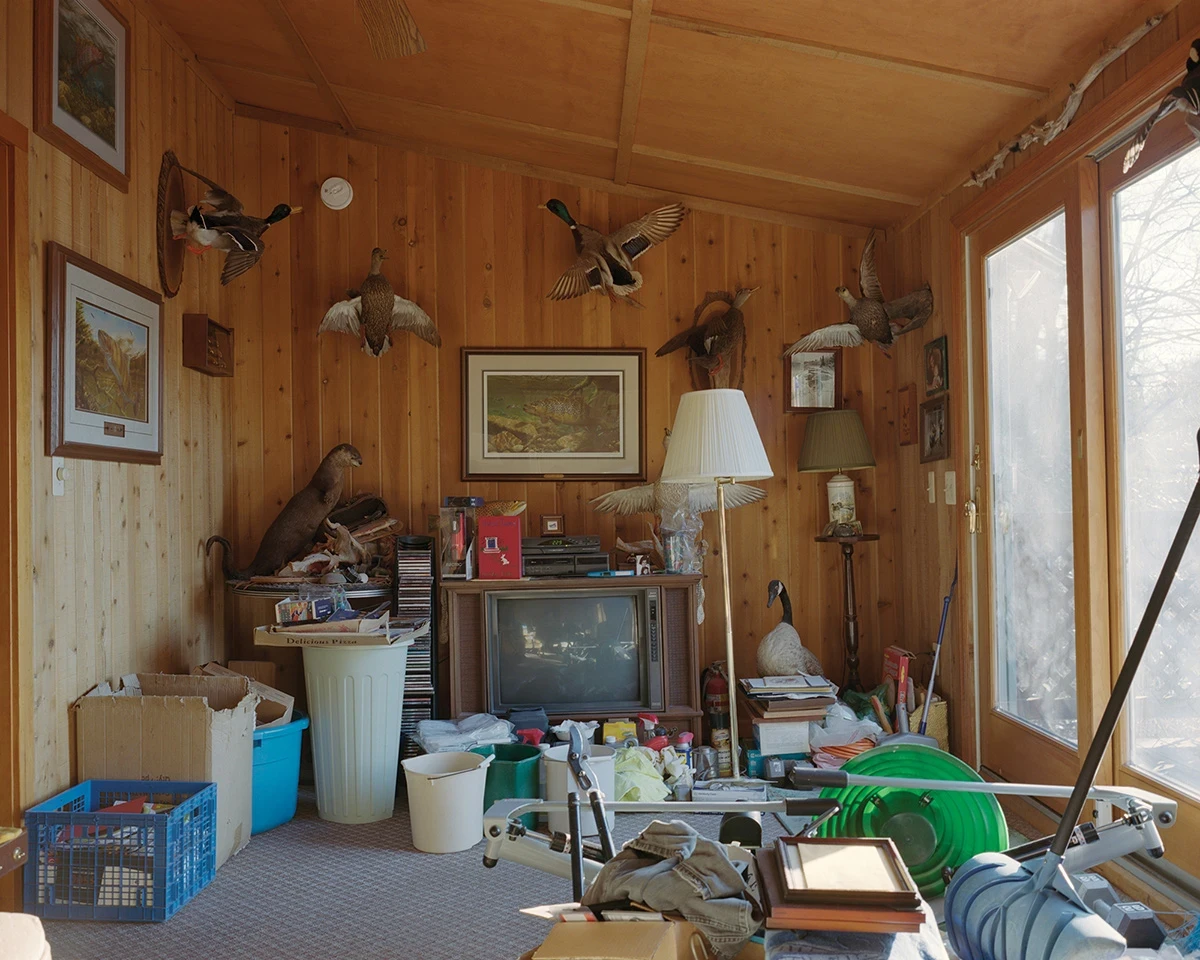
The rooms in Wading, the series by Burlington-based photographer Jon Testa, are paneled in the same knotted pine and slowly emptying of the two people who filled them.
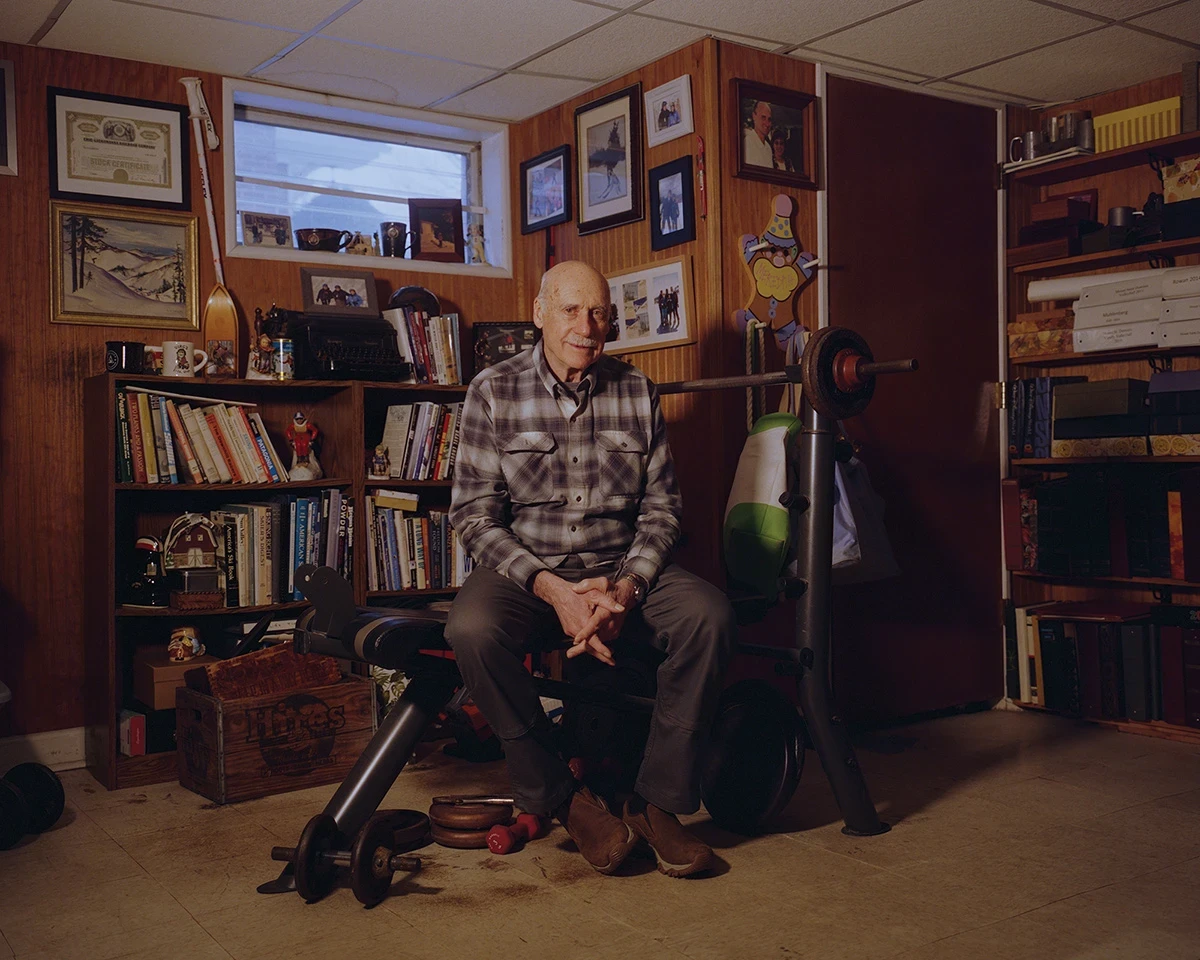
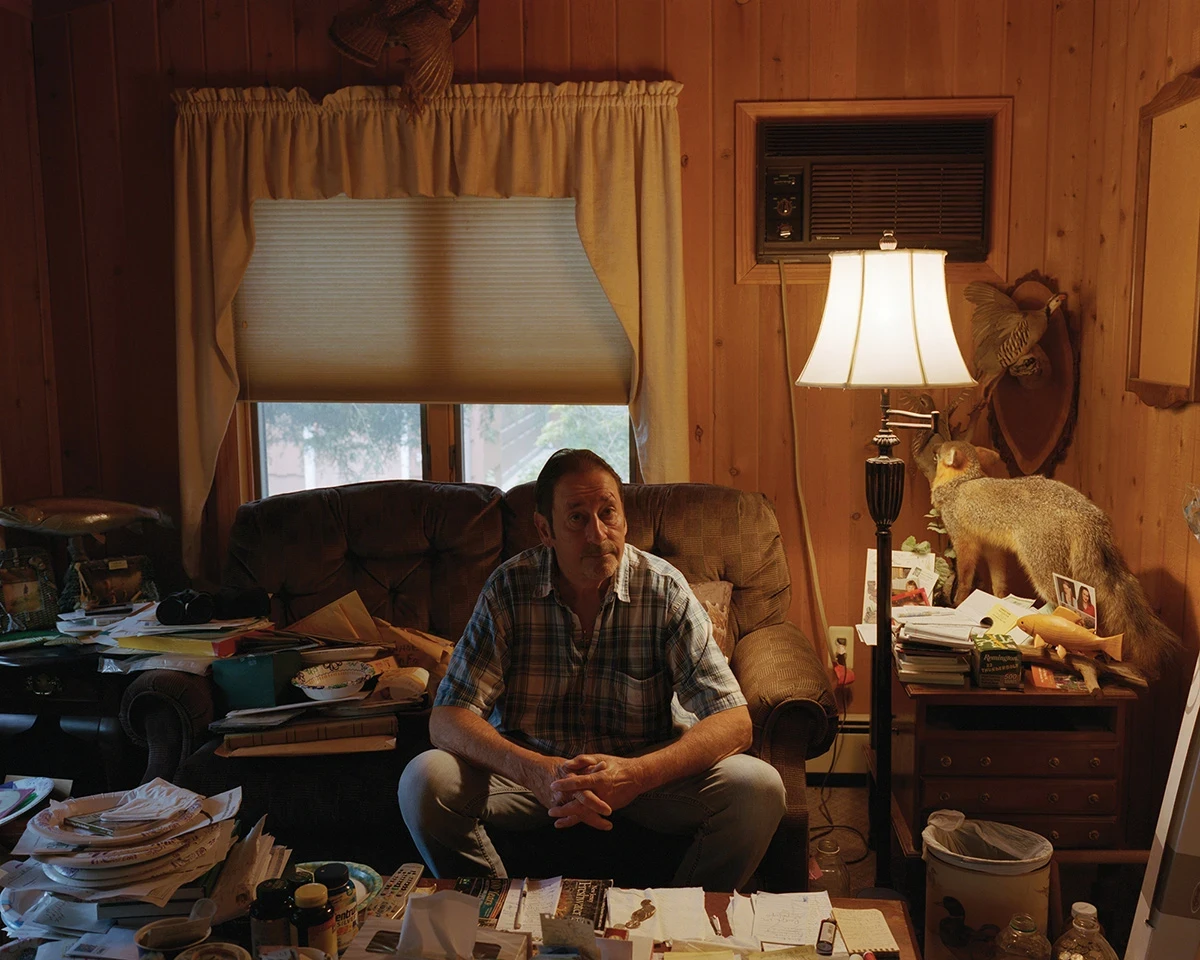
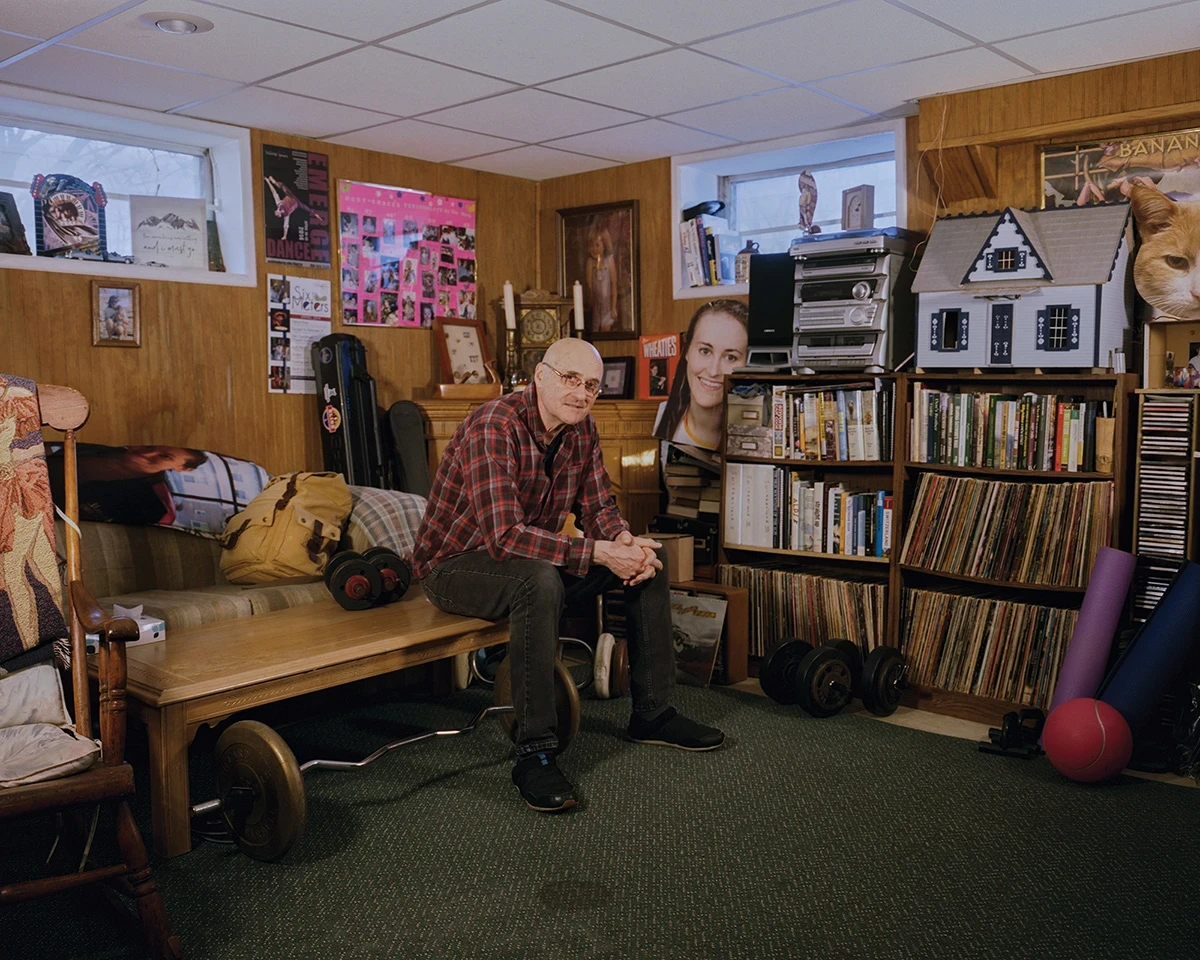
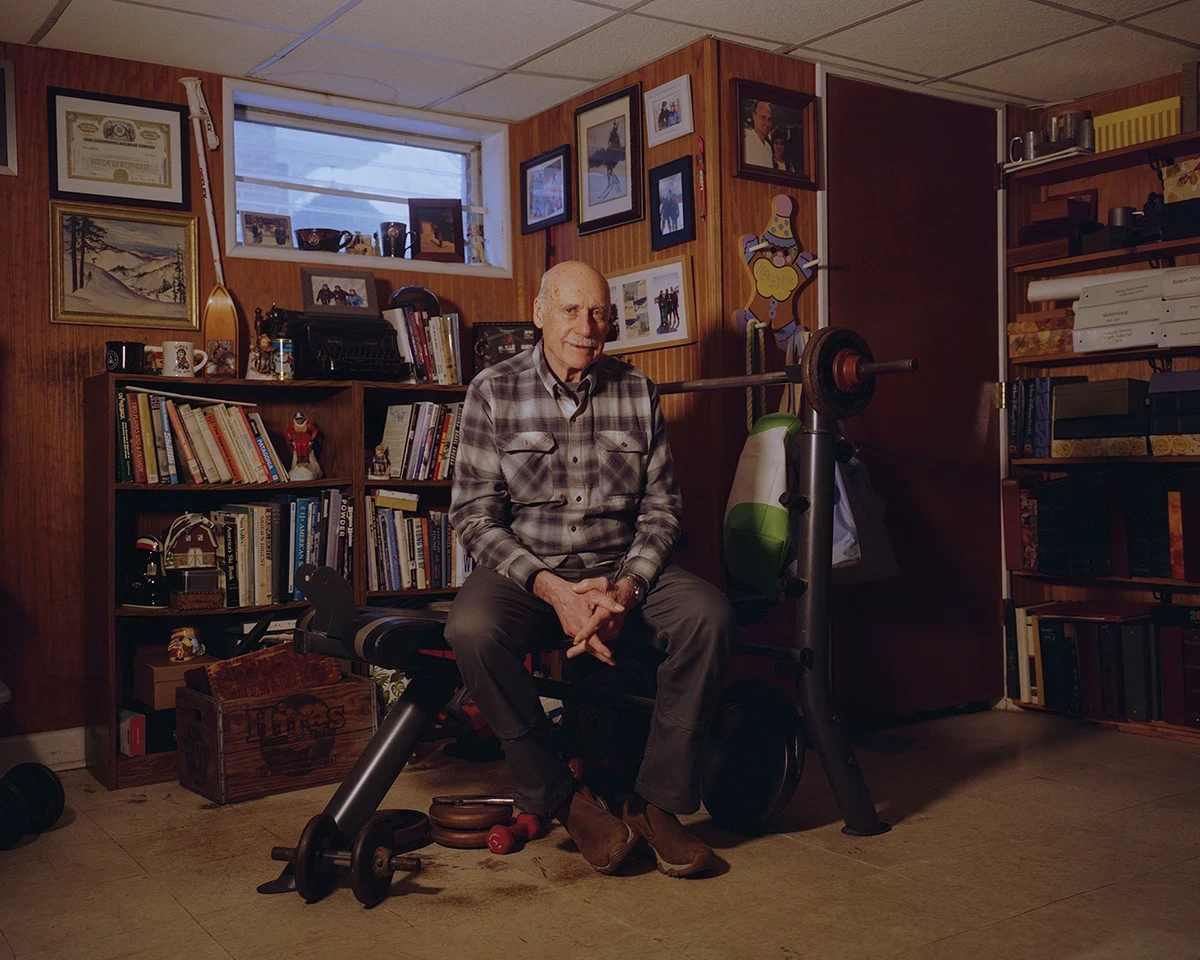
Testa built the project across the bookends of his parents' lives, following the sudden passing of his mother in the fall of 2017 and his father in the summer of 2025. His own large-format photographs carry the load: an older man seated on a weight bench in a basement, ringed by mounted certificates, a wooden canoe paddle, and a shelf of paperbacks; another man in a plaid shirt marooned in a recliner behind a table buried in mail, pill bottles, and unopened envelopes. The clutter is not incidental. It is the record of a house still being lived in by one person after two.
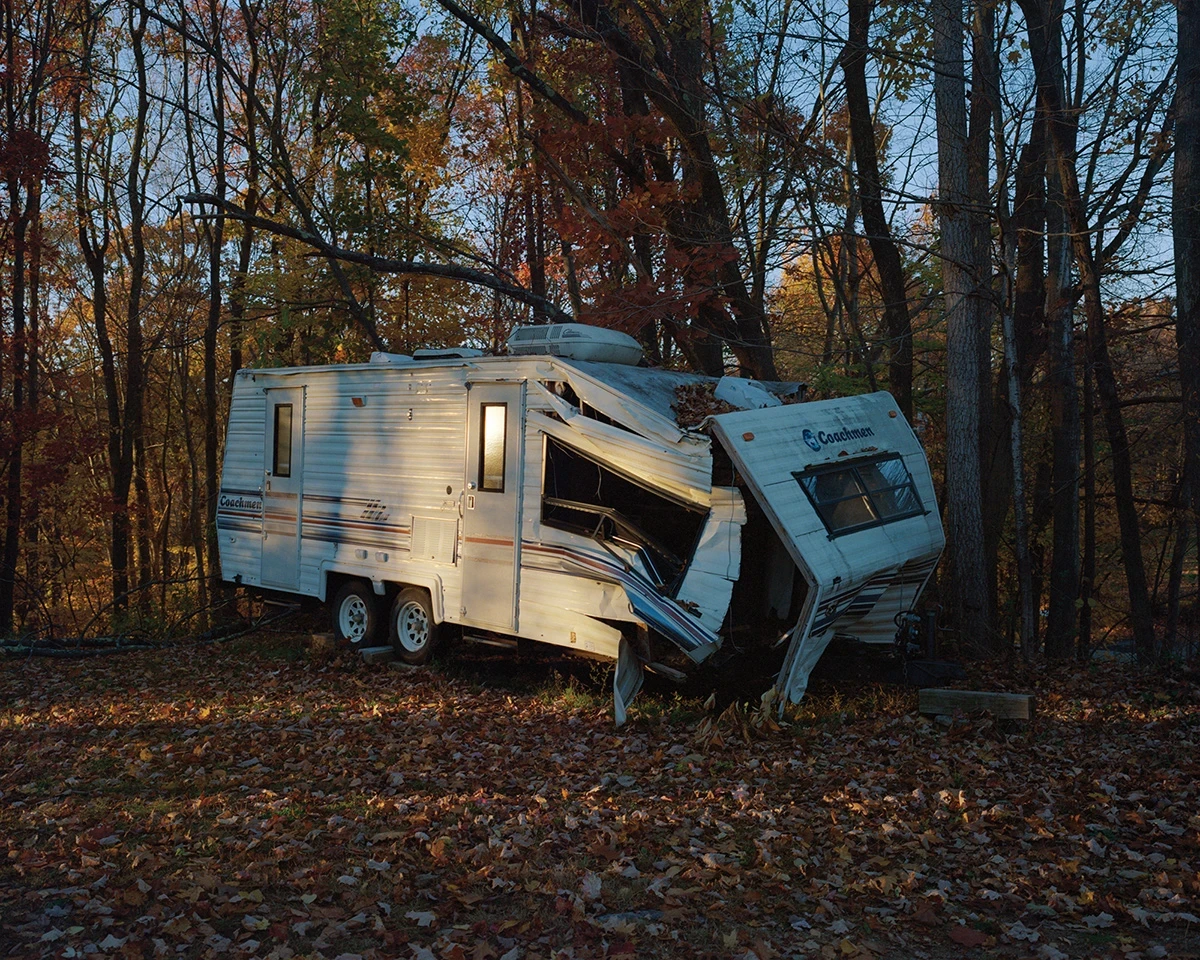
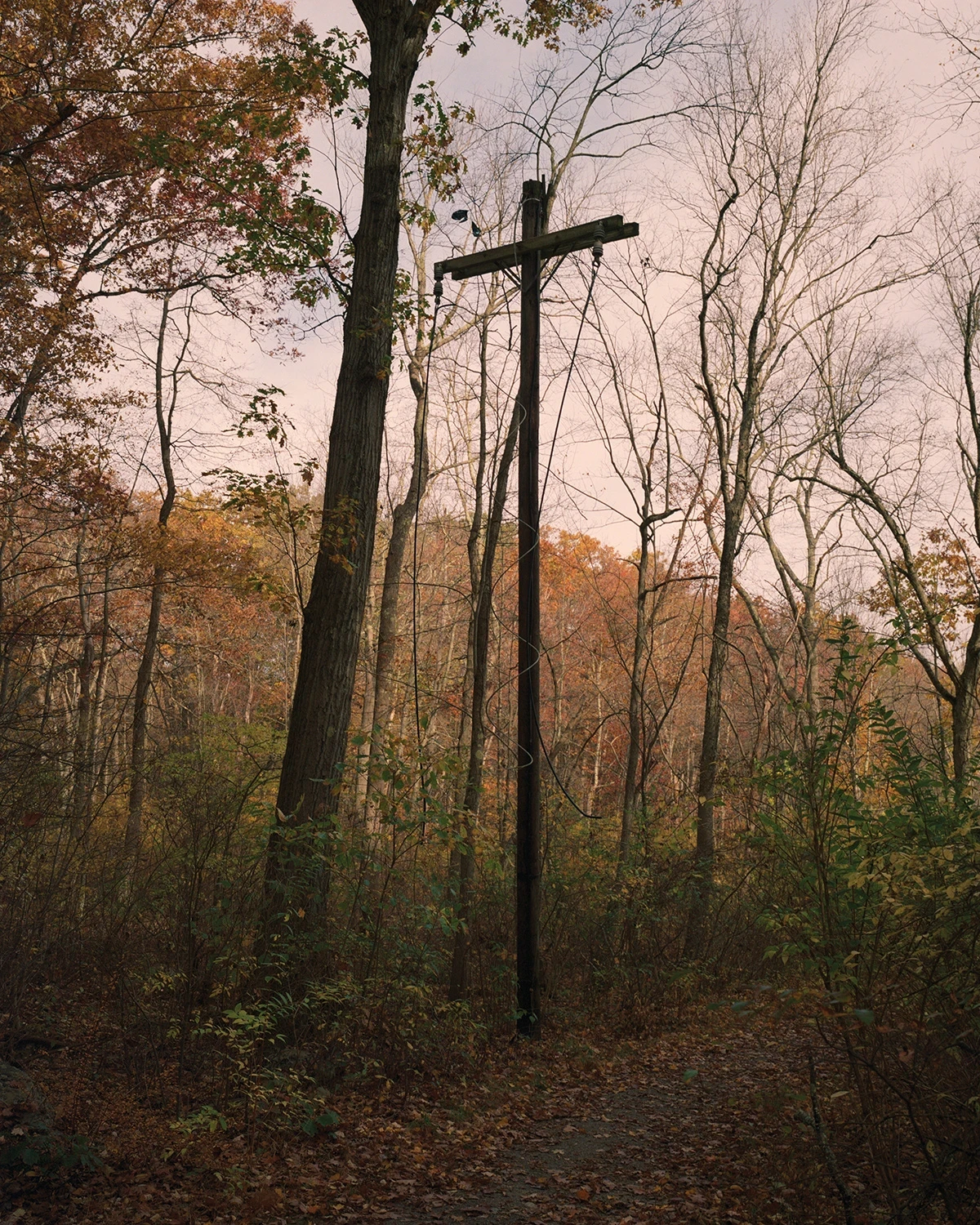
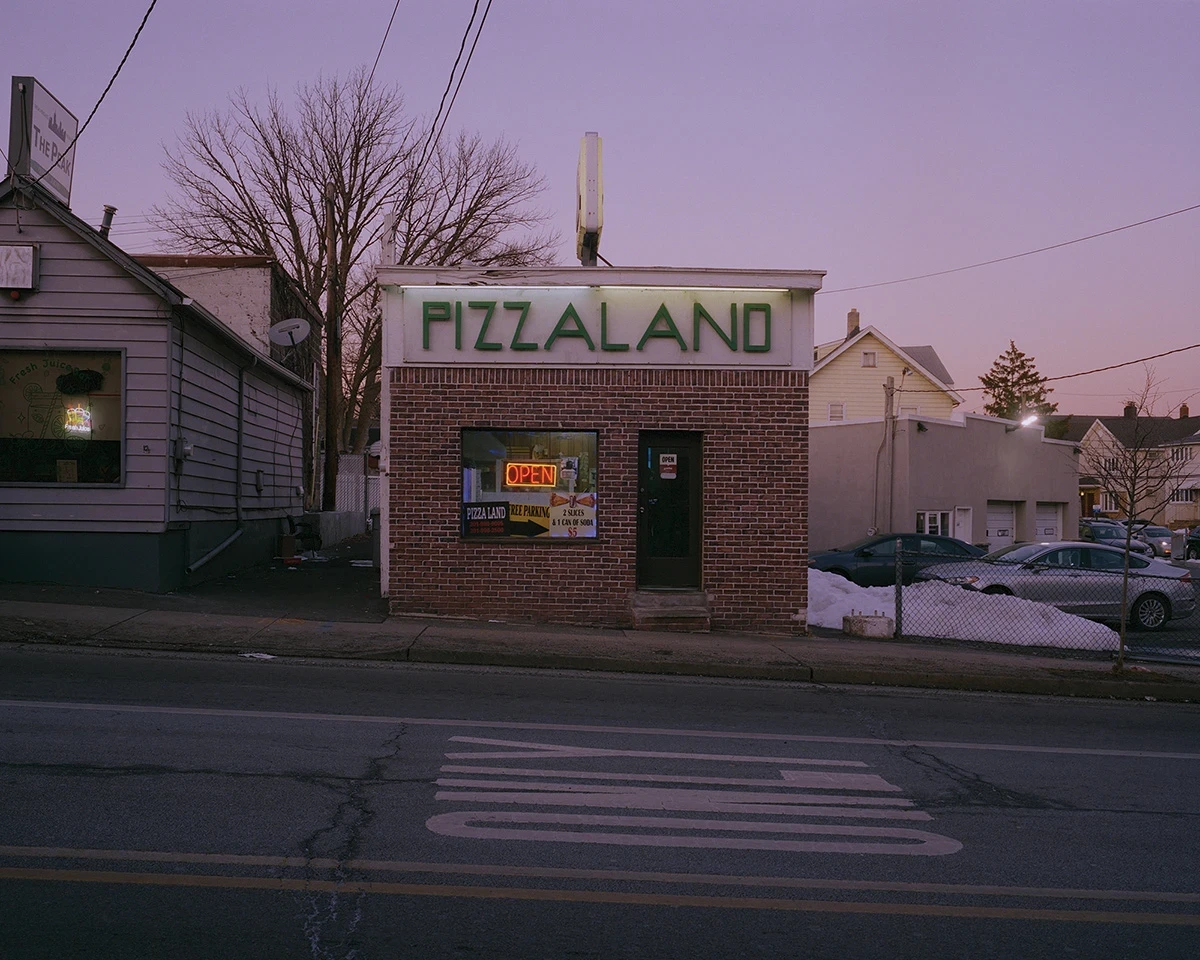
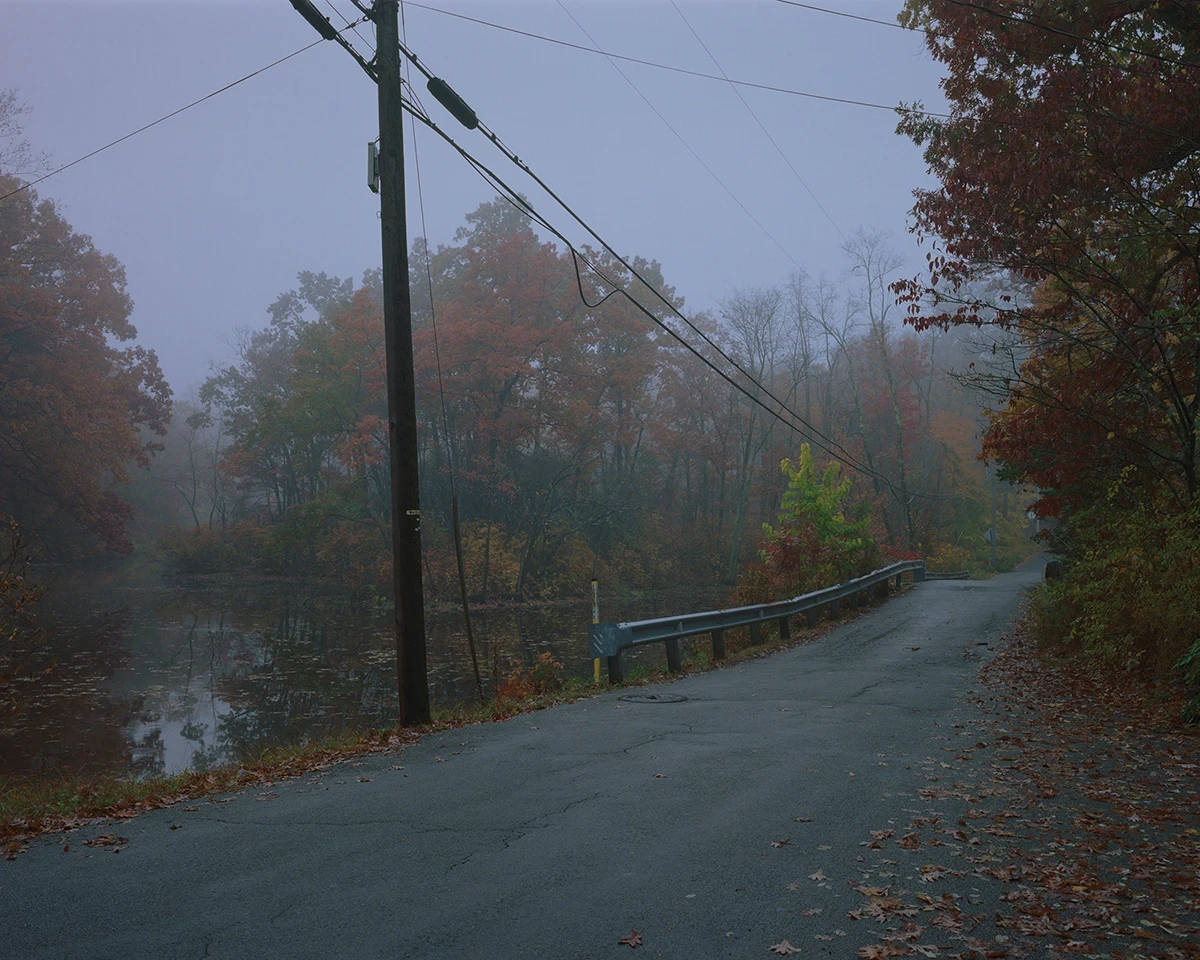
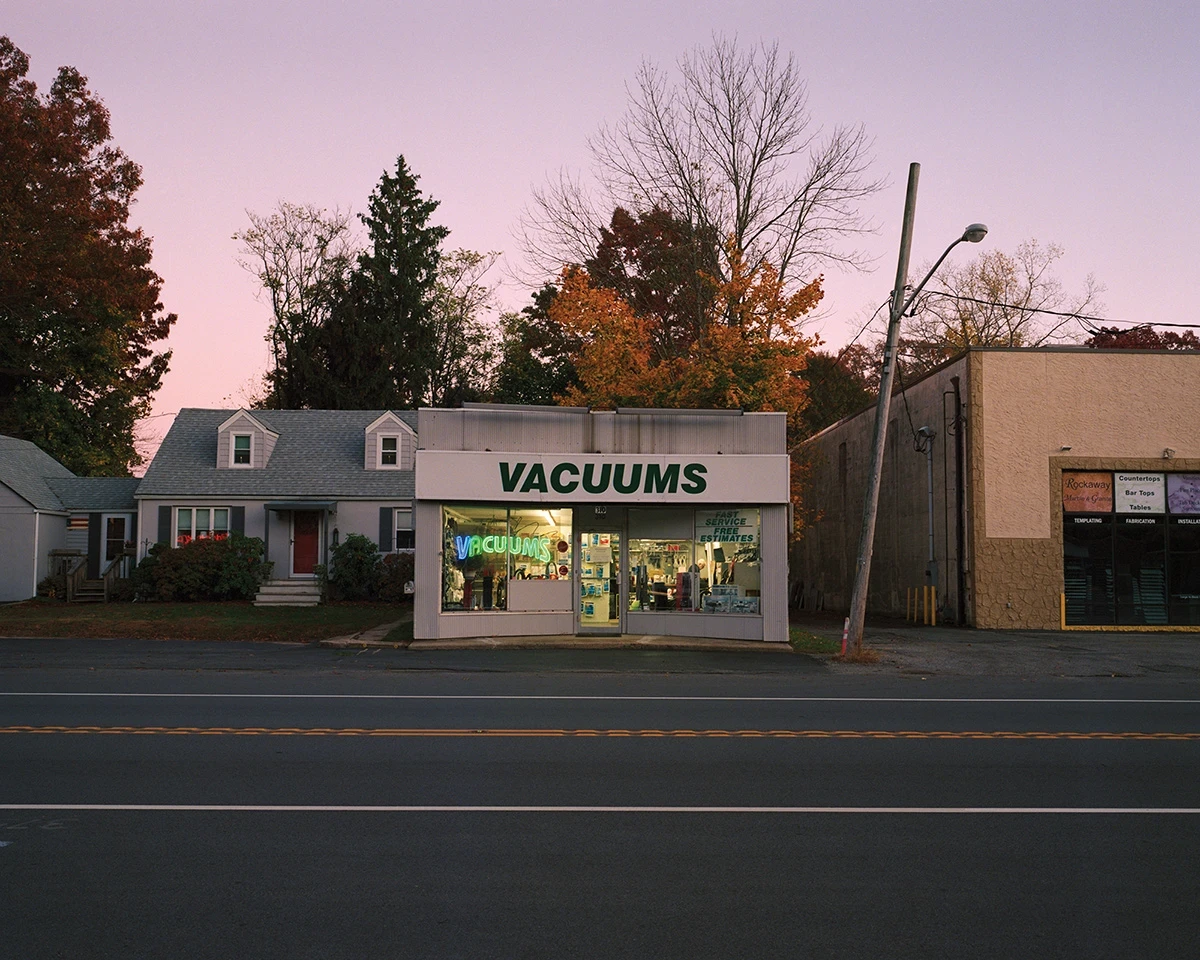
His work moves between the documentary and the narrative. Suburban New Jersey appears at dusk, a storefront reading VACUUMS under a pink sky, a brick Pizzaland glowing green against snowmelt, a Coachman camper split open and rusting at the edge of a leaf-strewn lot. These are the well-lived-in spaces and neglected structures Testa returns to, the places where people leave a mark and then stop tending it. A roadside cross stands in bare autumn woods. A pond road dissolves into fog.
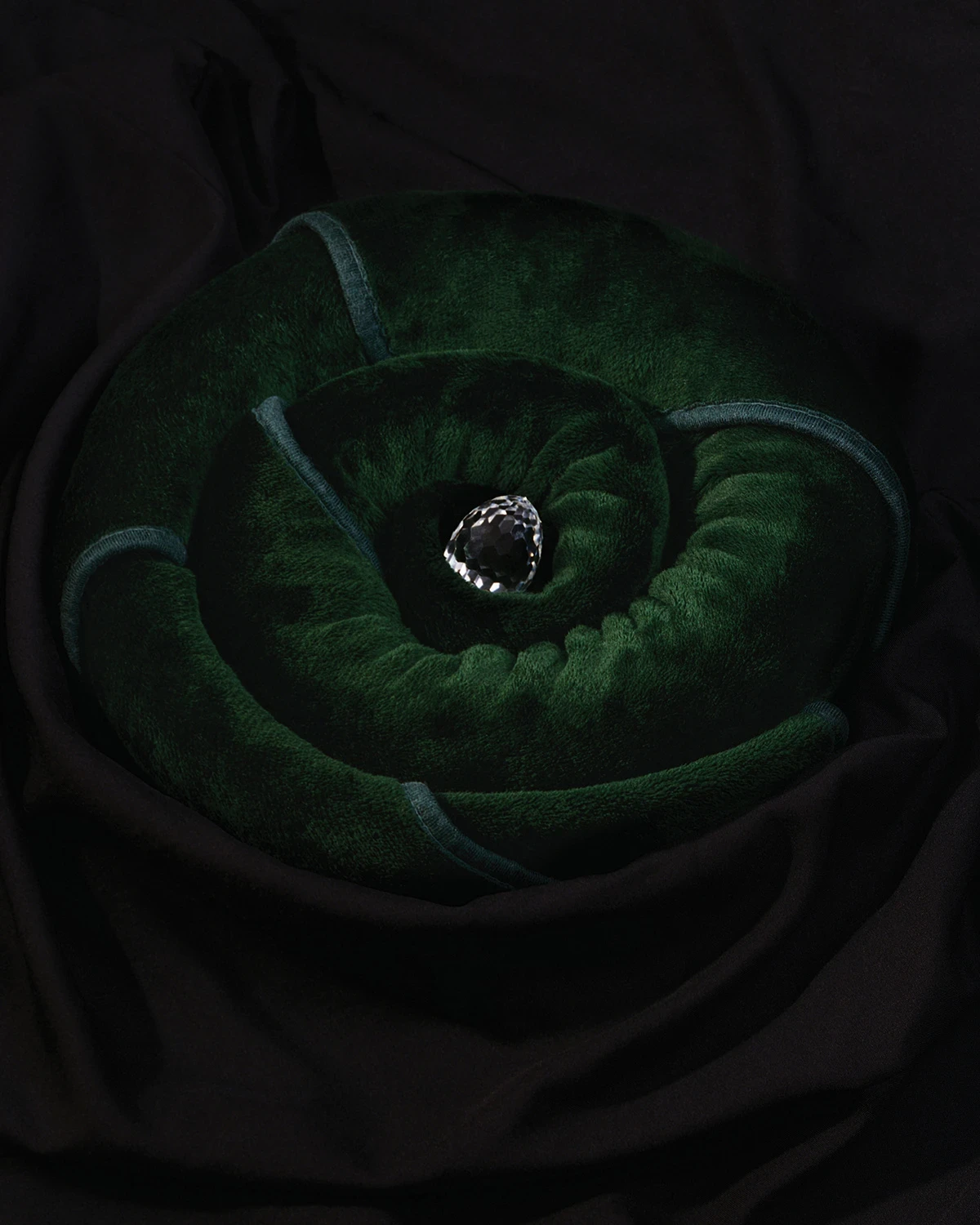
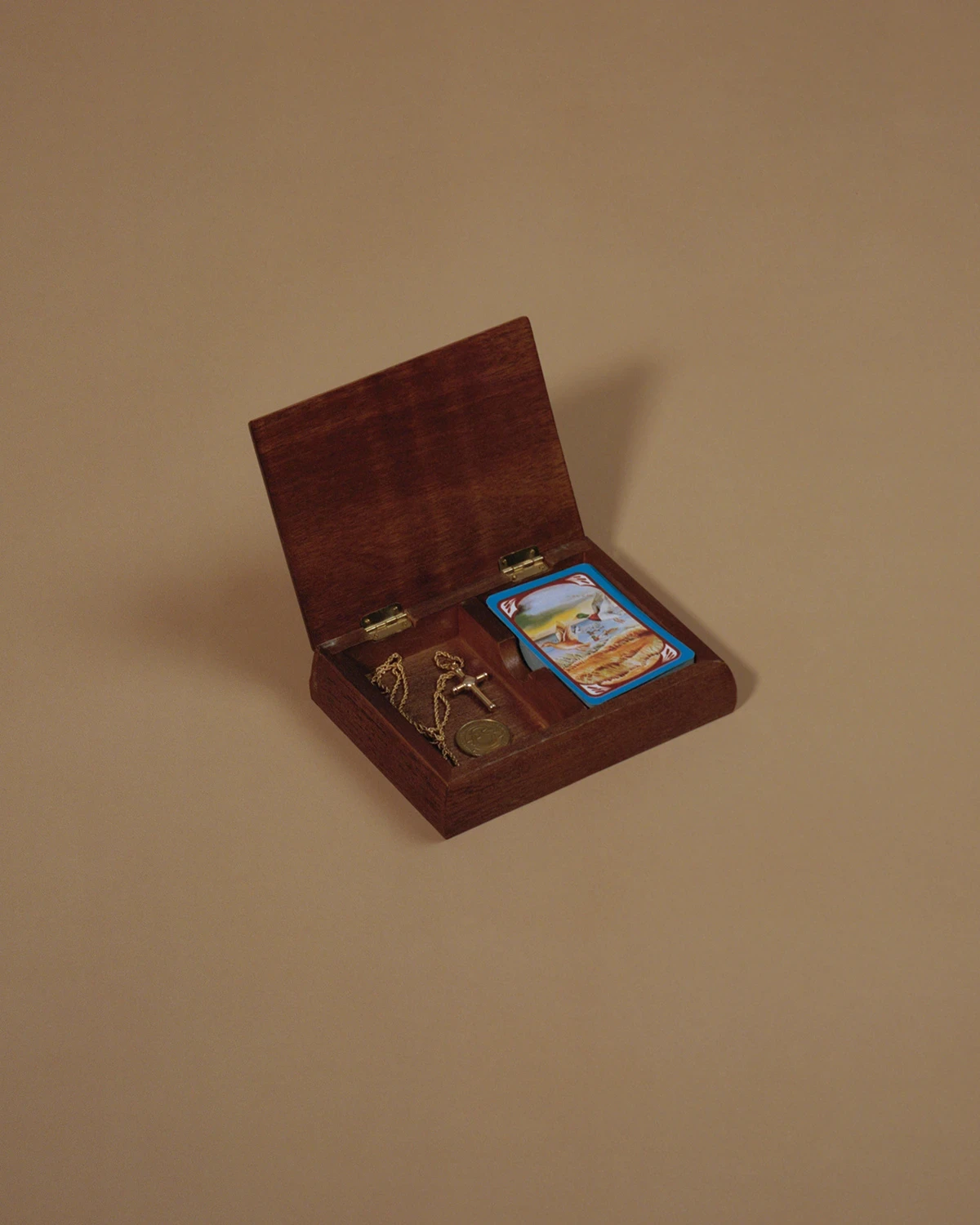
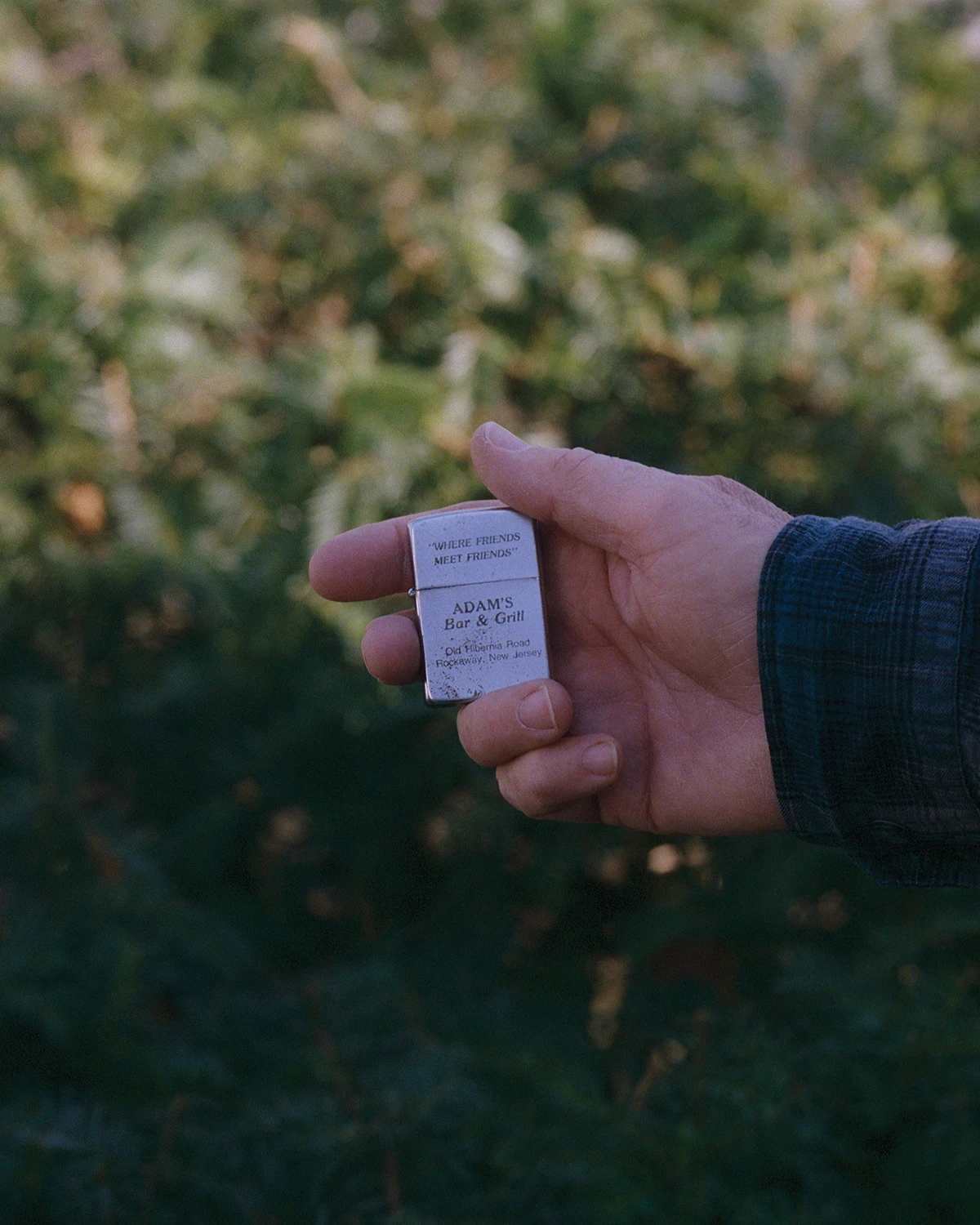
Then there are the objects, lifted out of the house and set against seamless paper: a Zippo engraved for Adam's Bar & Grill in a weathered hand, a wooden box holding a gold cross on a chain and a stack of prayer cards, a cut gem resting in the coil of a green velvet cushion. Photographed like relics, they carry the weight of things kept without a reason anyone remembers.
After his father's death, Testa found a multi-decade archive of his negatives and began sequencing them into the series, the faded color and softer grain sitting beside his own sharper frames. He describes the impulse plainly: to construct a portrait of his parents' lives in the absence of firsthand stories, and to pair those photographs with his own to show how a home changes, physically and emotionally, when one partner passes before the other.
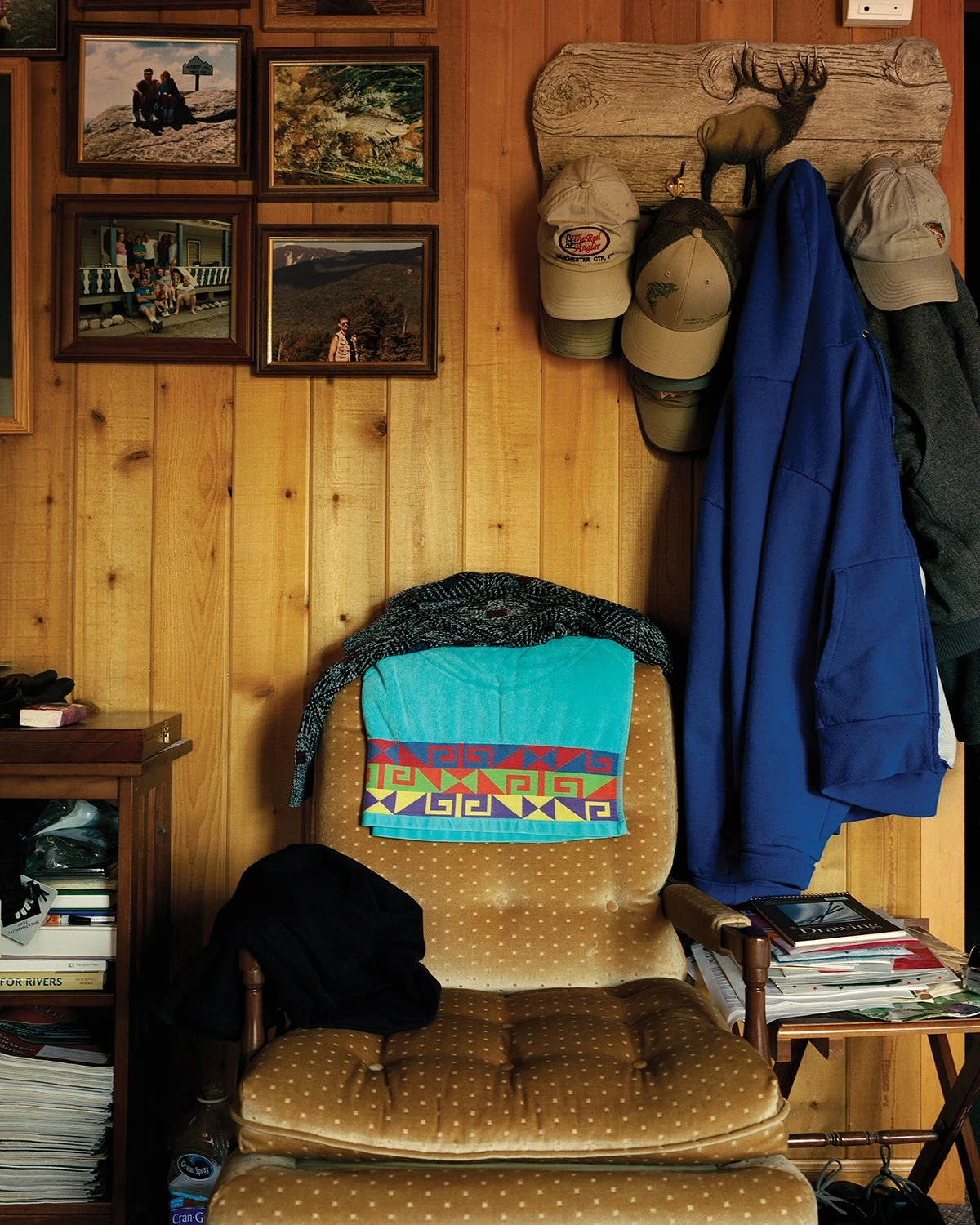
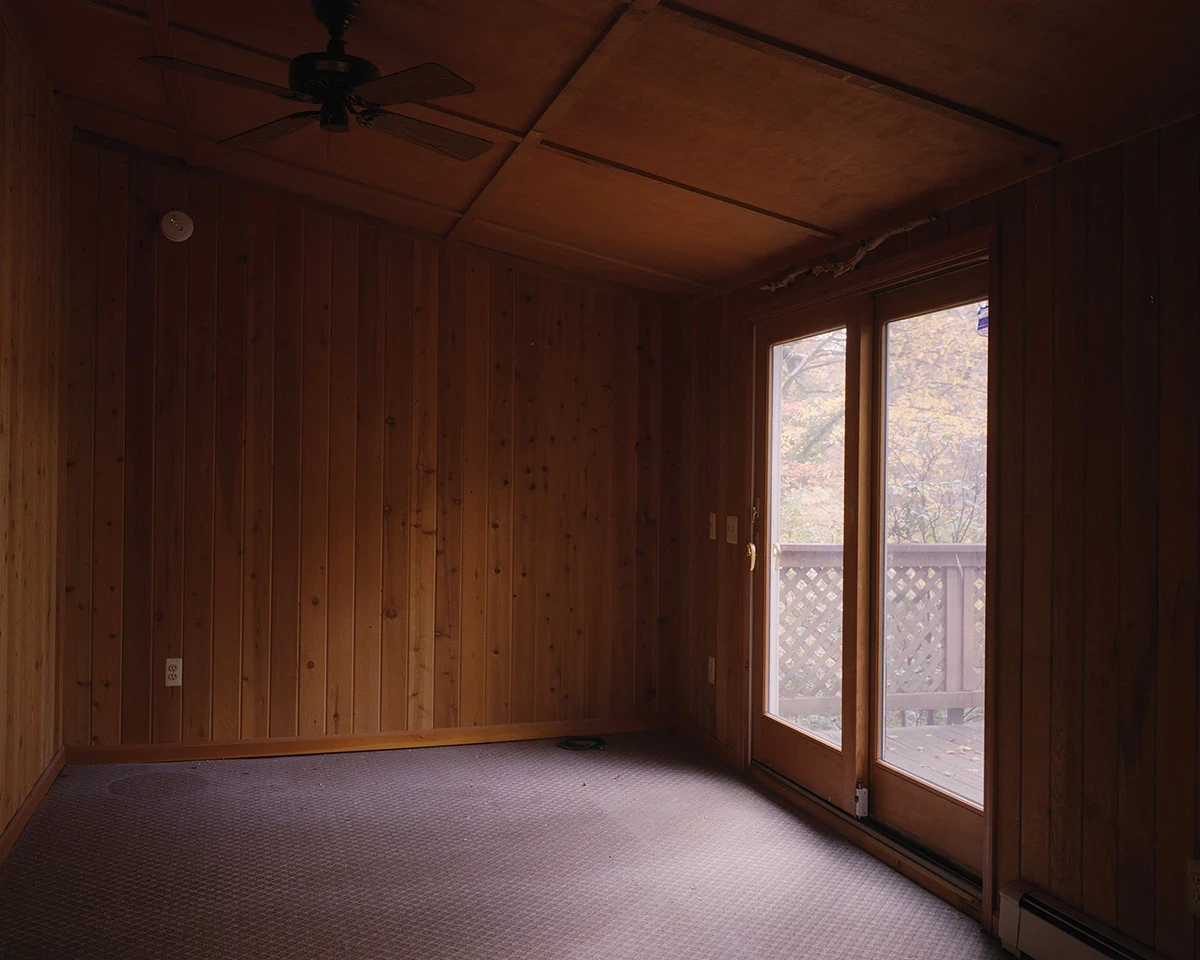
What holds Wading together is the paneling itself, that warm tungsten-lit pine repeating from basement to sunroom to the mudroom where ball caps hang beneath a plastic elk. It is the surface a family accretes against, then leaves behind. The last frame is an empty wood-lined room, carpet dented where furniture stood, a sliding door open onto yellowing trees. Nothing is left to hold, which is the point.