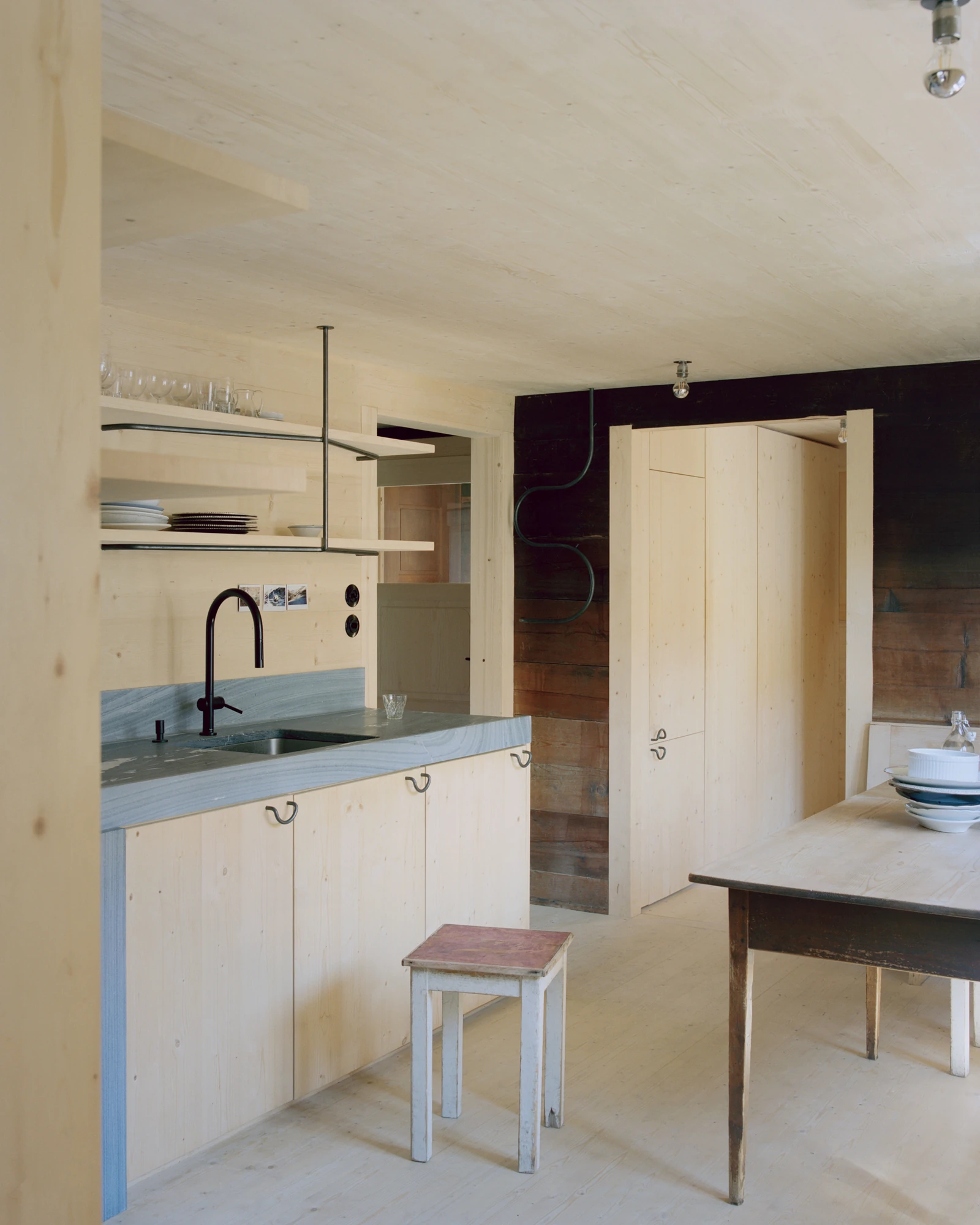
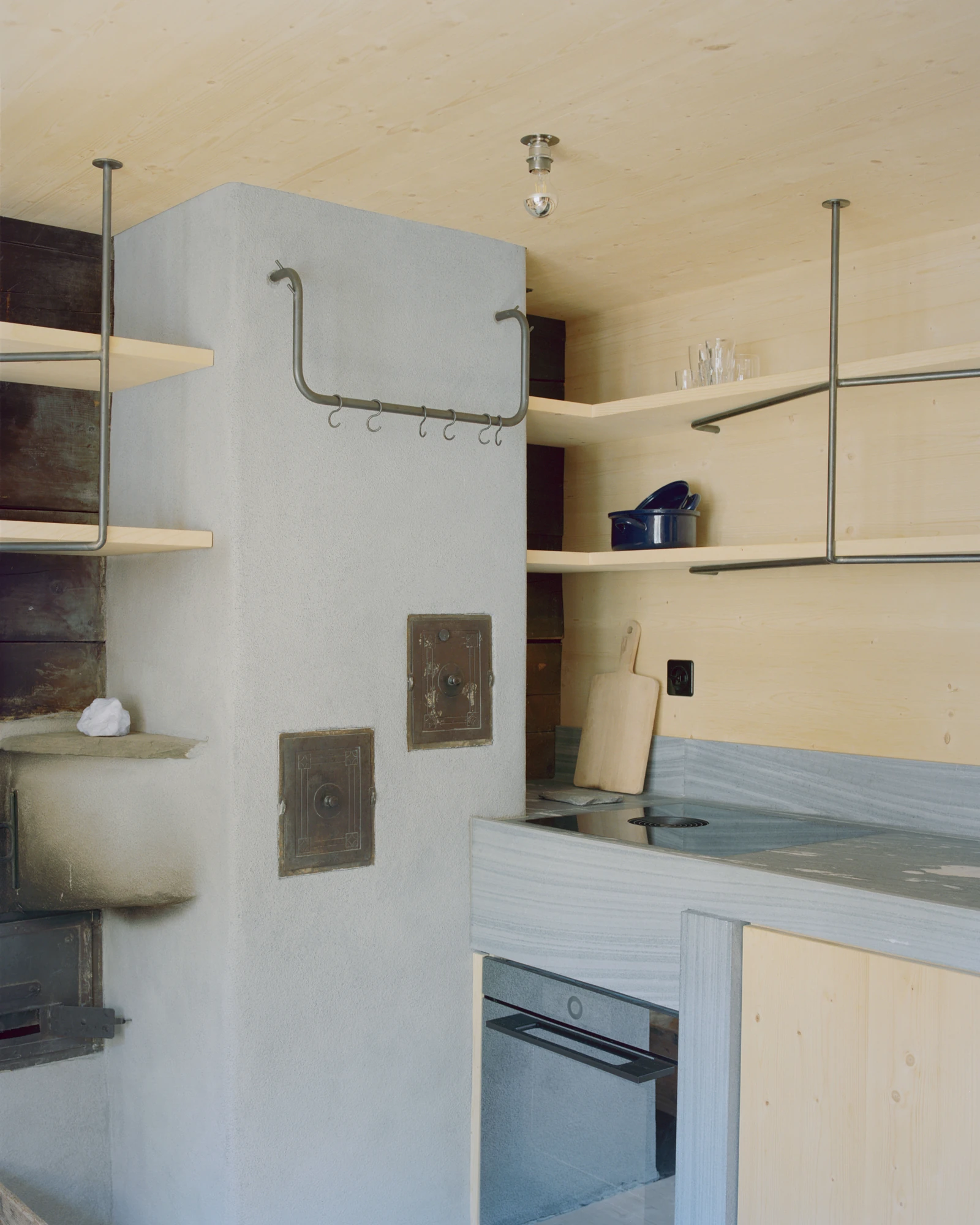
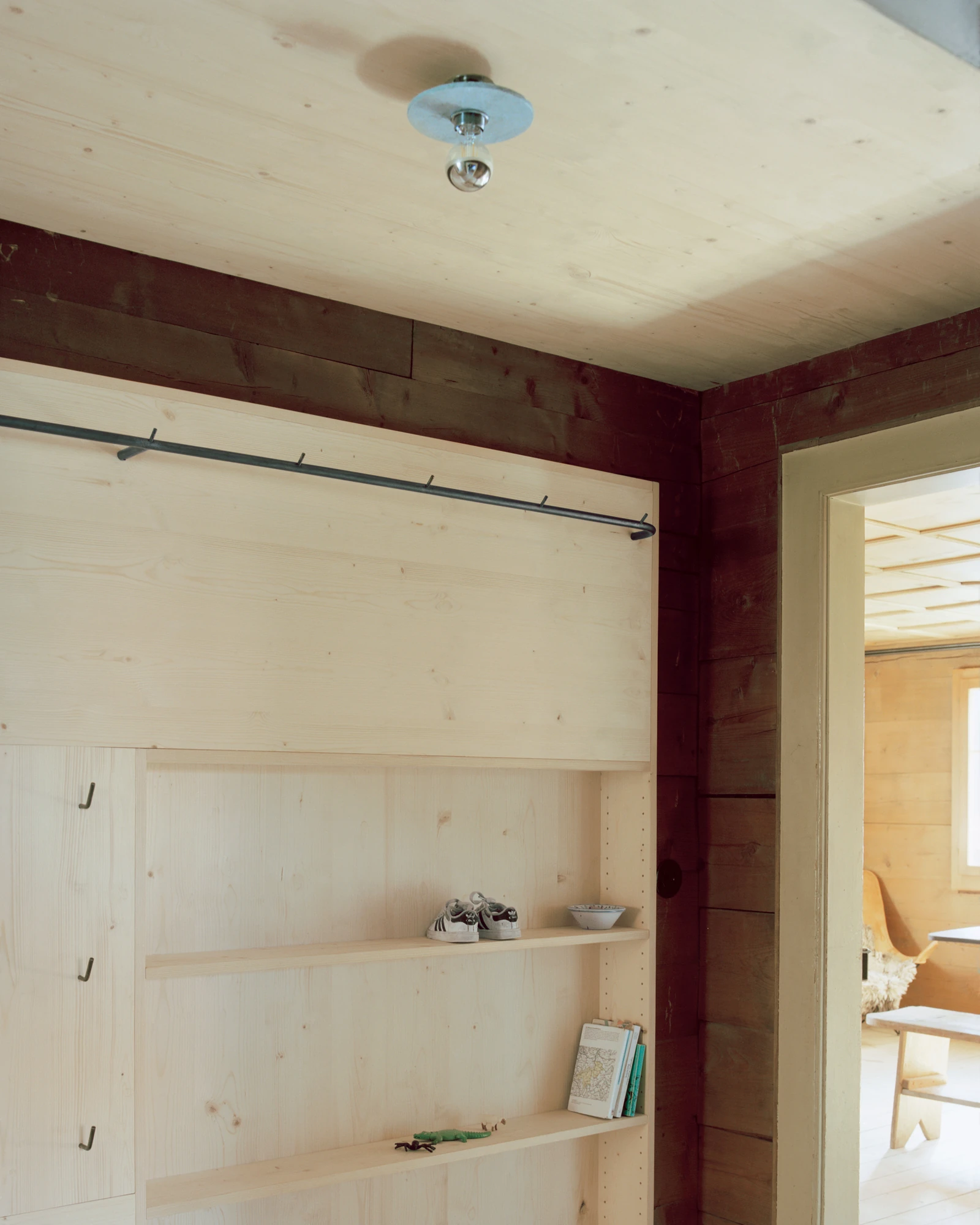
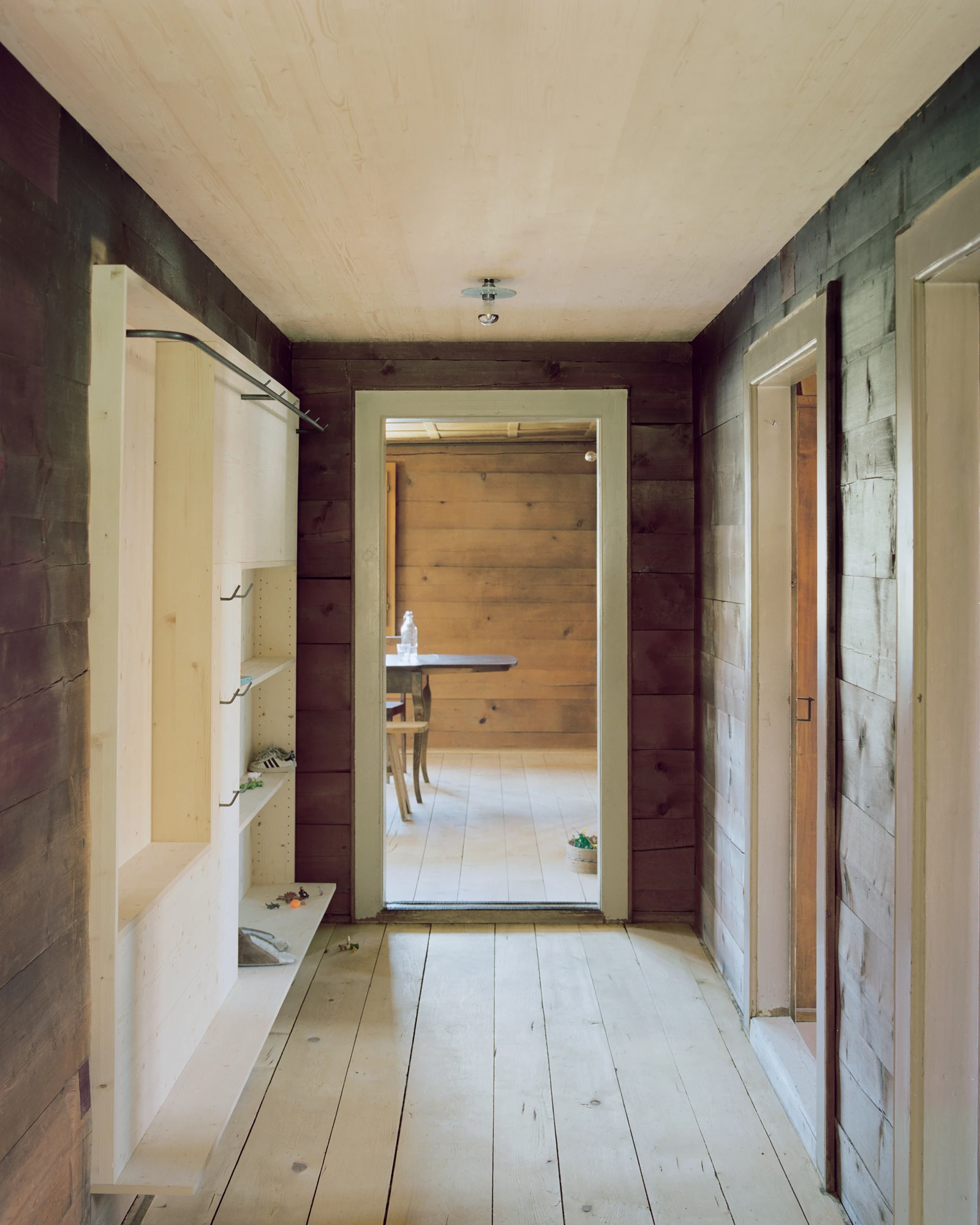
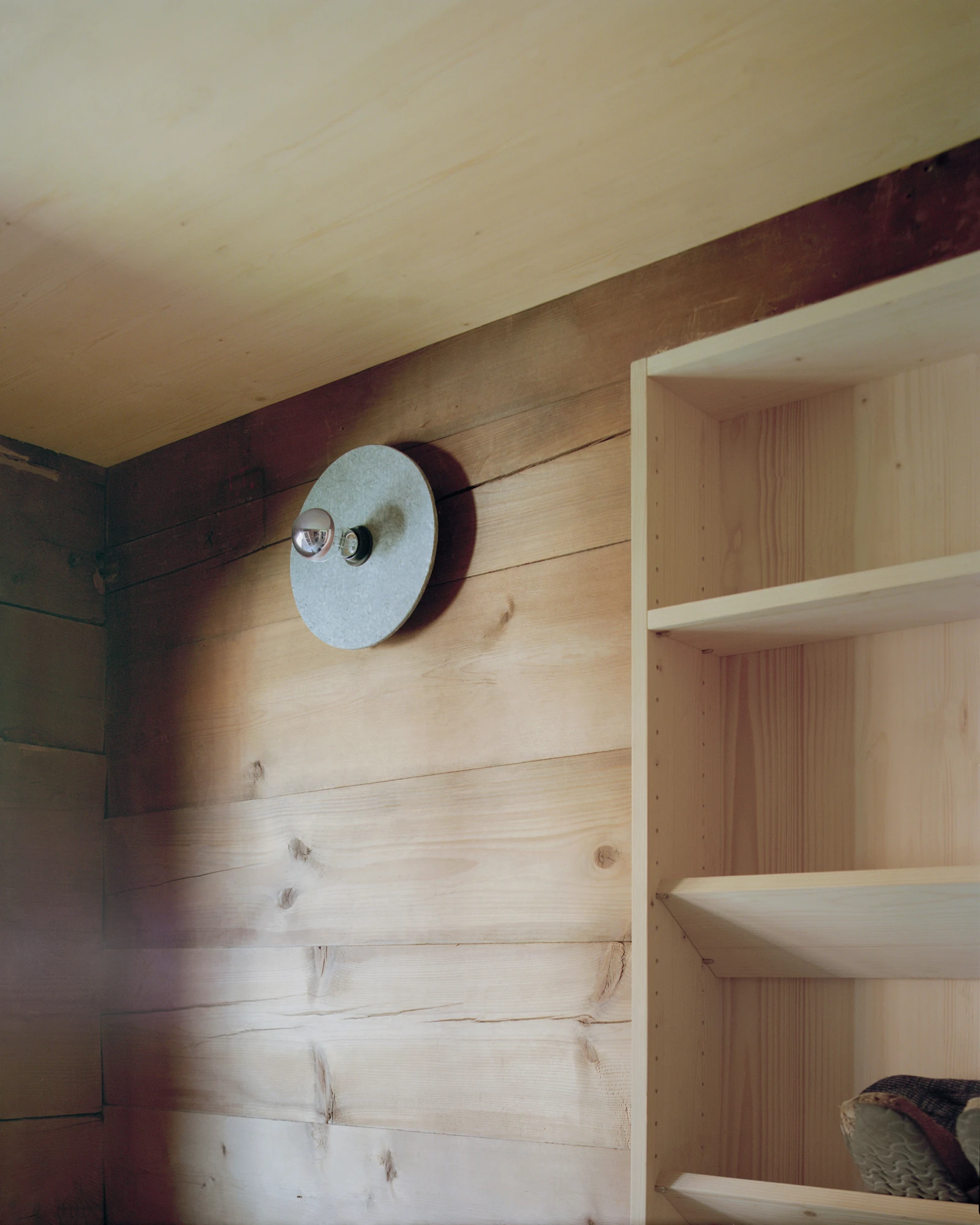
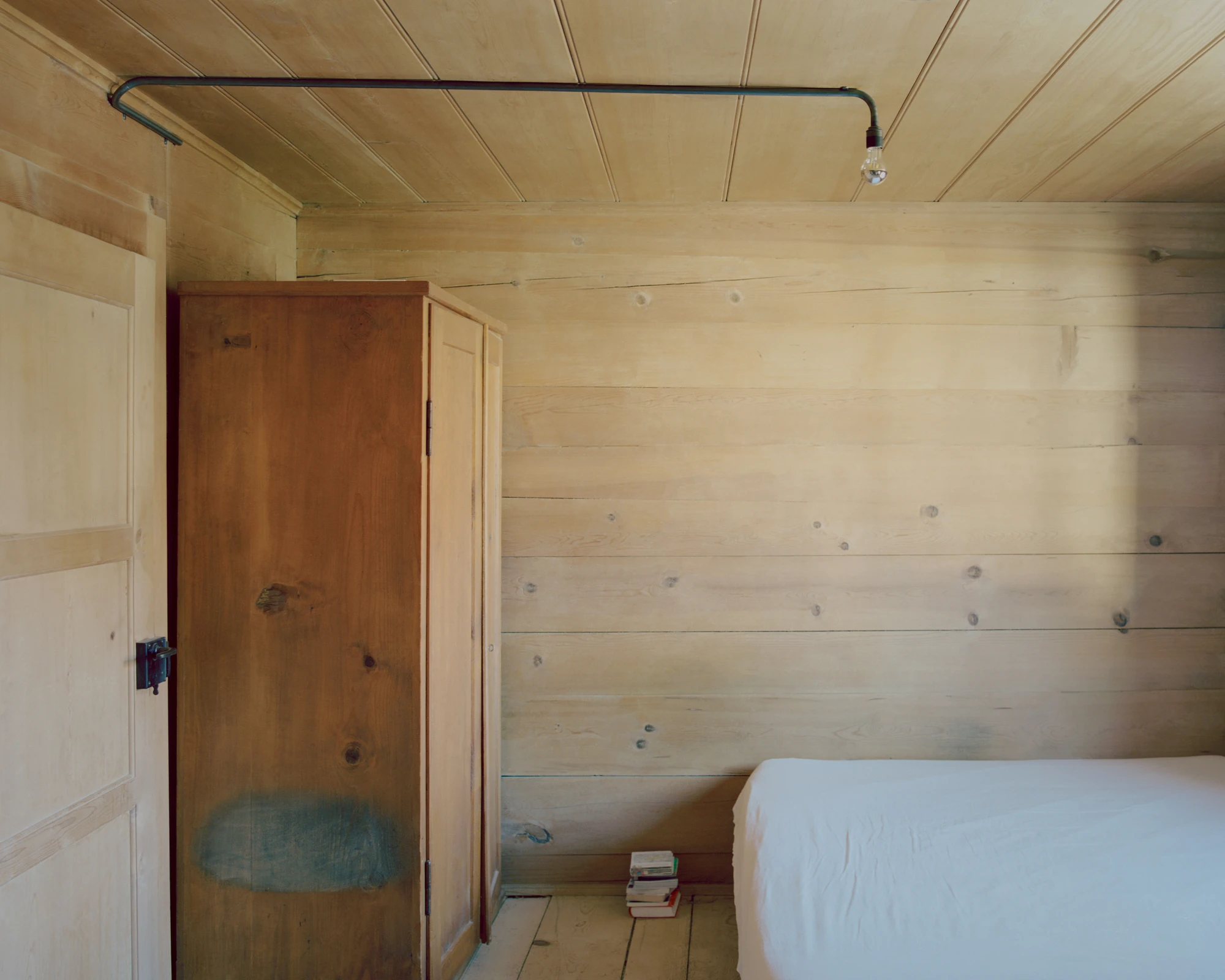
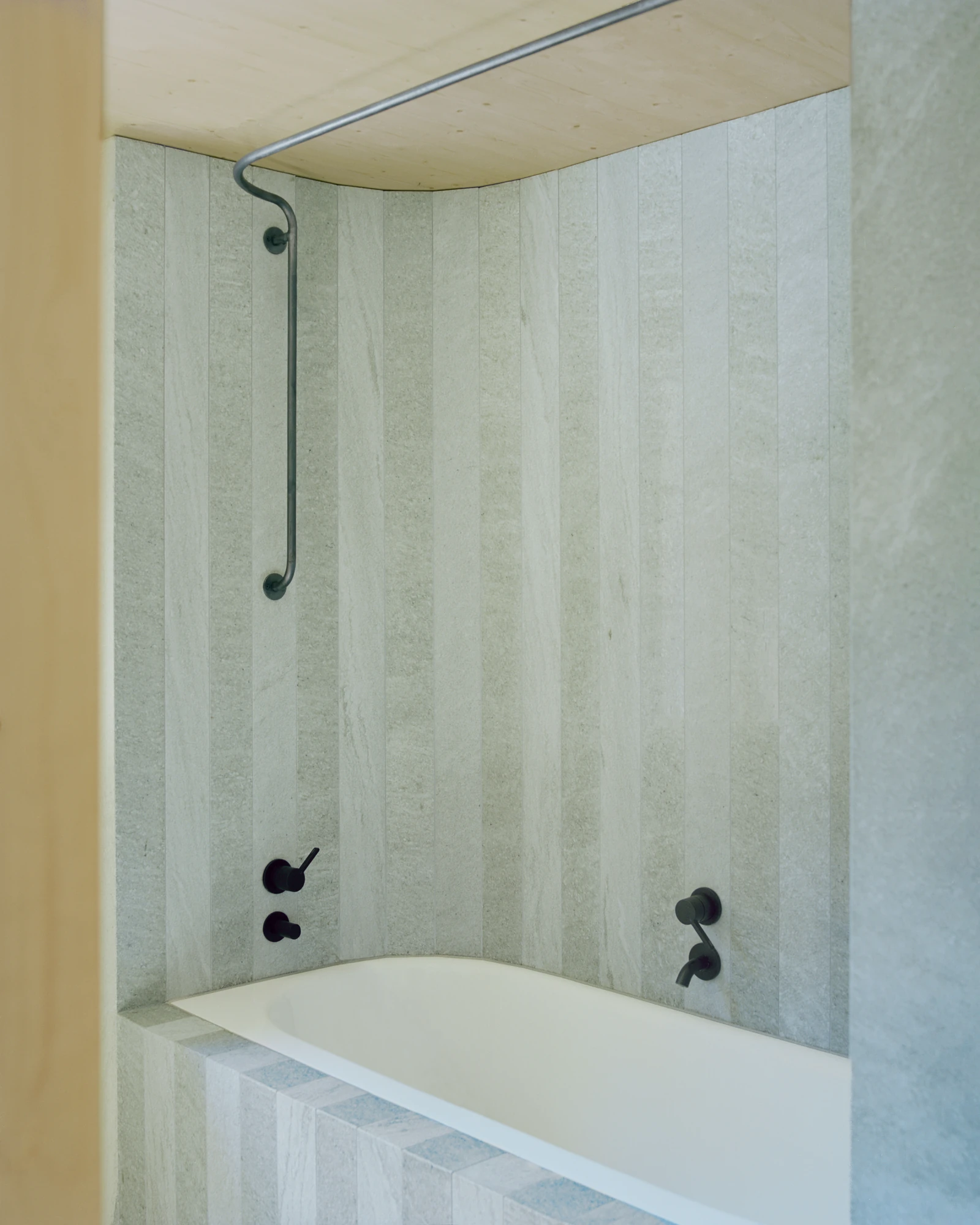
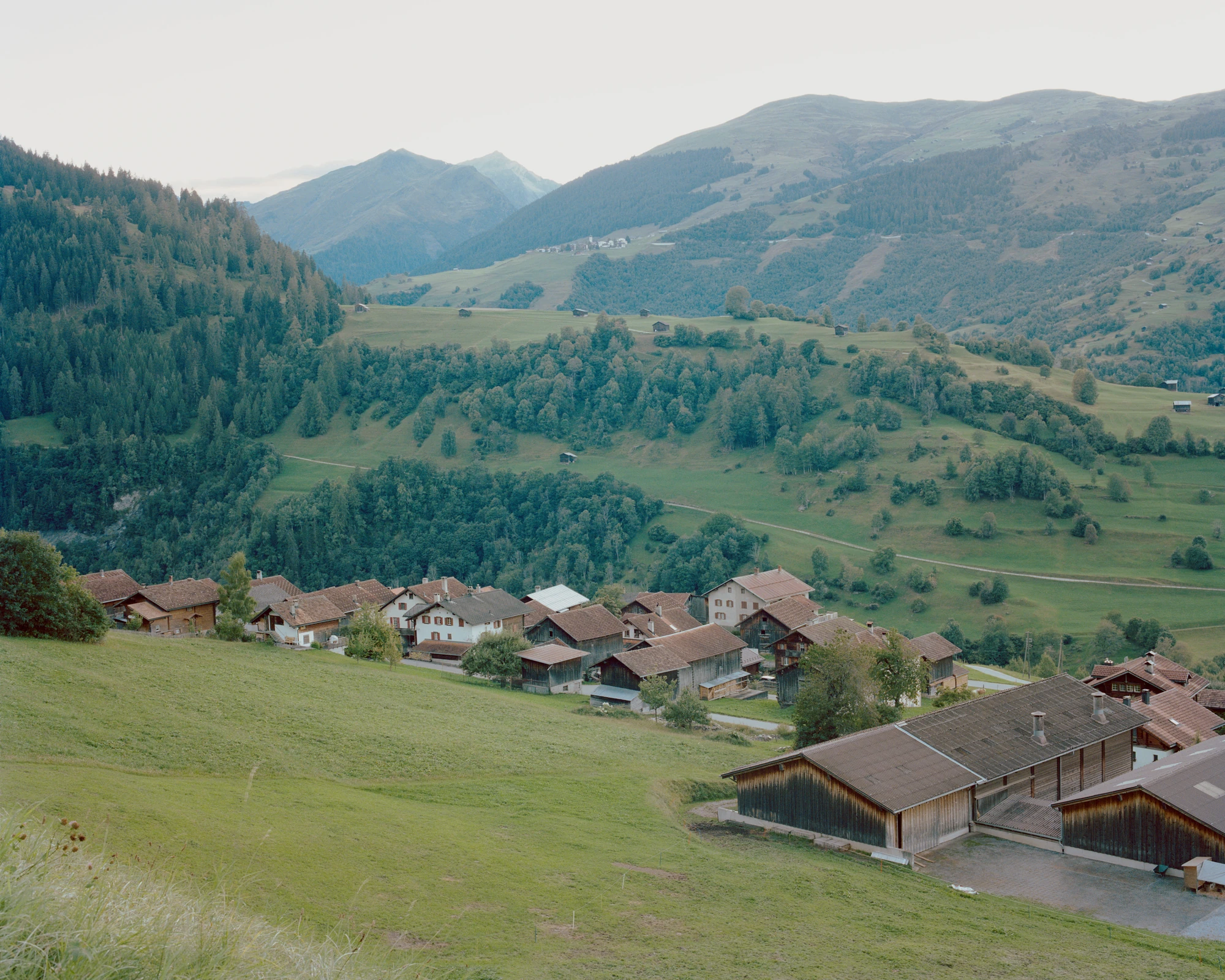
In Tersnaus, a village in the Val Lumnezia of Switzerland’s canton of Graubünden, Dario Wohler renovates Via Seneria, a listed historic farmhouse built in the log-stacked Strickbau tradition.
Tersnaus is a small village in the Val Lumnezia, a side valley of the Surselva that runs south from the Rhine in the canton of Graubünden. The valley’s name carries the Latin root for light, and it has long been known as the Valley of Light. Here, in a Romansh-speaking corner of the eastern Alps, Dario Wohler has renovated Via Seneria, a listed historic wooden farmhouse.
The house belongs to the Strickbau tradition, the log construction that shaped the built landscape of Graubünden for centuries. Squared timbers are laid horizontally and notched where they meet at the corners, so that each course locks into the one below, a method the German name likens to knitting. Walls rise this way without nails, and the stacked timber does the work of structure, insulation and finished surface at once.
To renovate a listed building in Switzerland is to work under the cantonal heritage authorities, who guard the historic substance and weigh every alteration against it. Wohler, whose studio is based in Zurich, led the design, planning and execution together with Oscar Jobin, for a private client. Planning ran from 2021 to 2024, and construction was completed the same year.
Across Graubünden, farming has been receding from the high valleys for generations, and the timber houses it built now outlast the way of life that raised them. At the head of this same valley, in Vrin, Gion Caminada’s log buildings have argued that the tradition can still carry new life. Keeping a farmhouse like Via Seneria in use, rather than letting it fall or clearing it for new construction, joins that argument about what a mountain village is for.