Thisispaper Community
Join today.
Enter your email address to receive the latest news on emerging art, design, lifestyle and tech from Thisispaper, delivered straight to your inbox.
Oops! Something went wrong while submitting the form.
Instant access to new channels
The top stories curated daily
Weekly roundups of what's important
Original features and deep dives
Exclusive community features
May 20, 2026

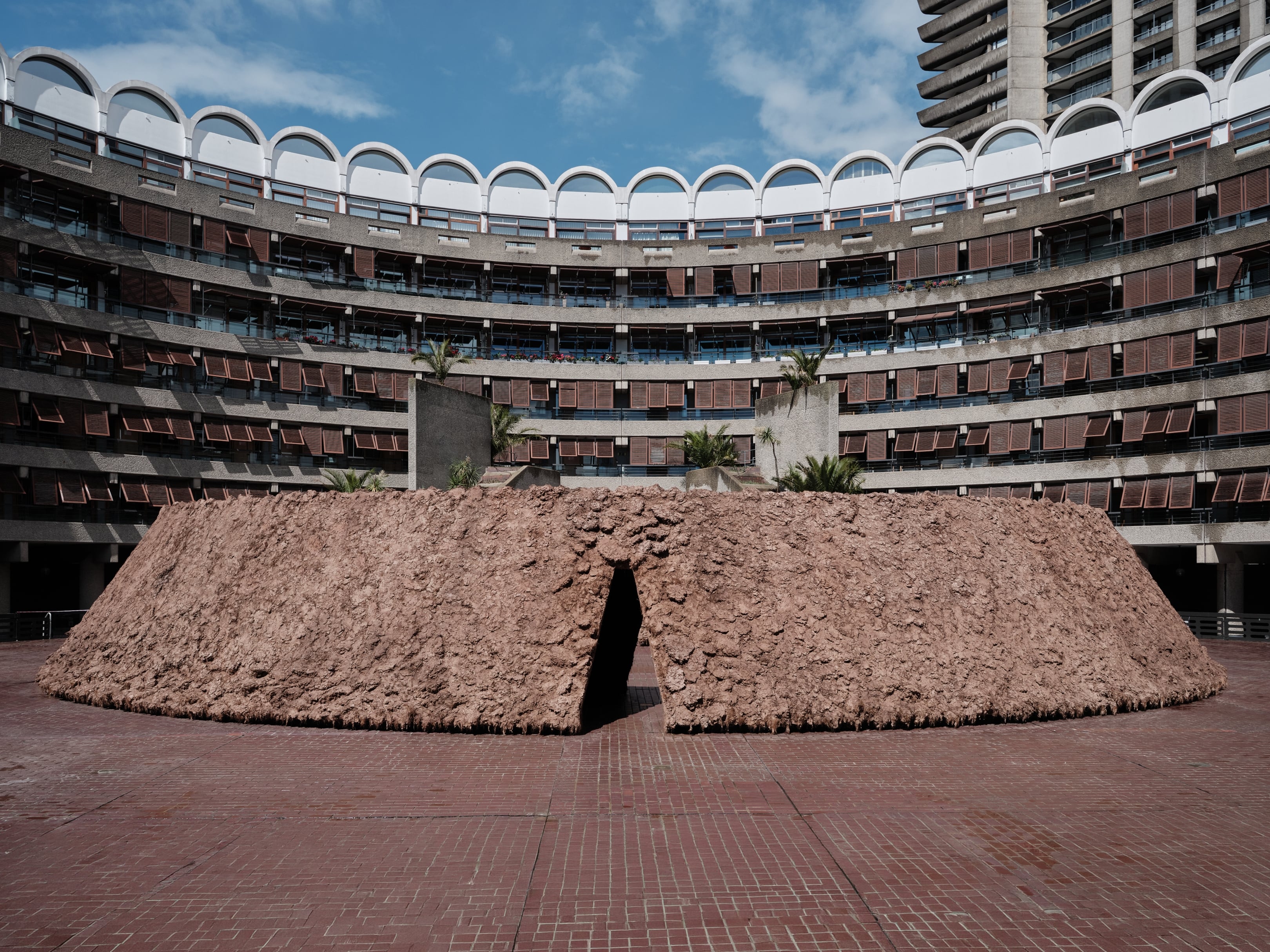
Soil, cinnamon, and cloves fill the Barbican Sculpture Court in London, where Delcy Morelos has built origo, a 24-meter earth pavilion set against the brutalist concrete of Chamberlin, Powell and Bon.

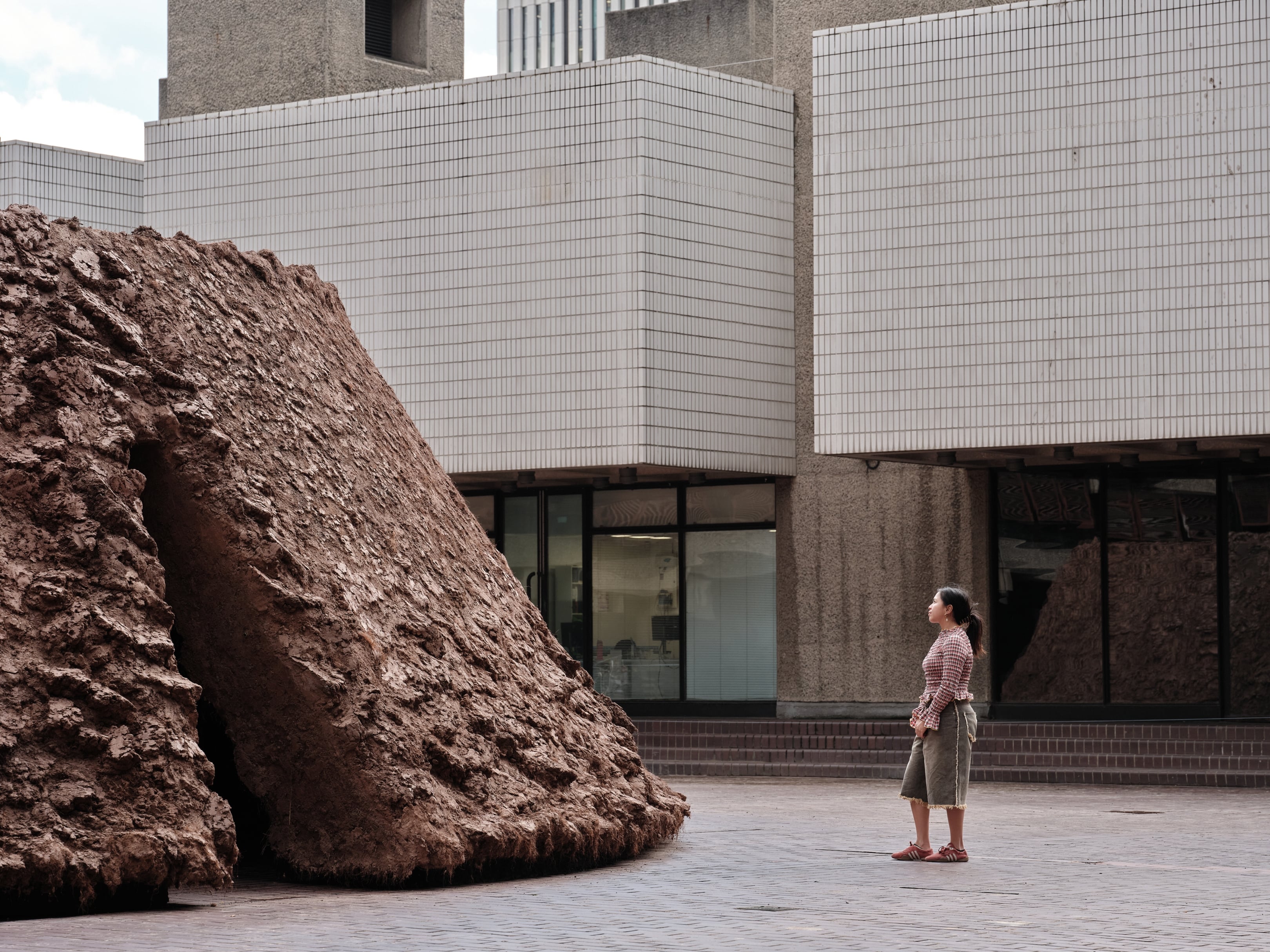
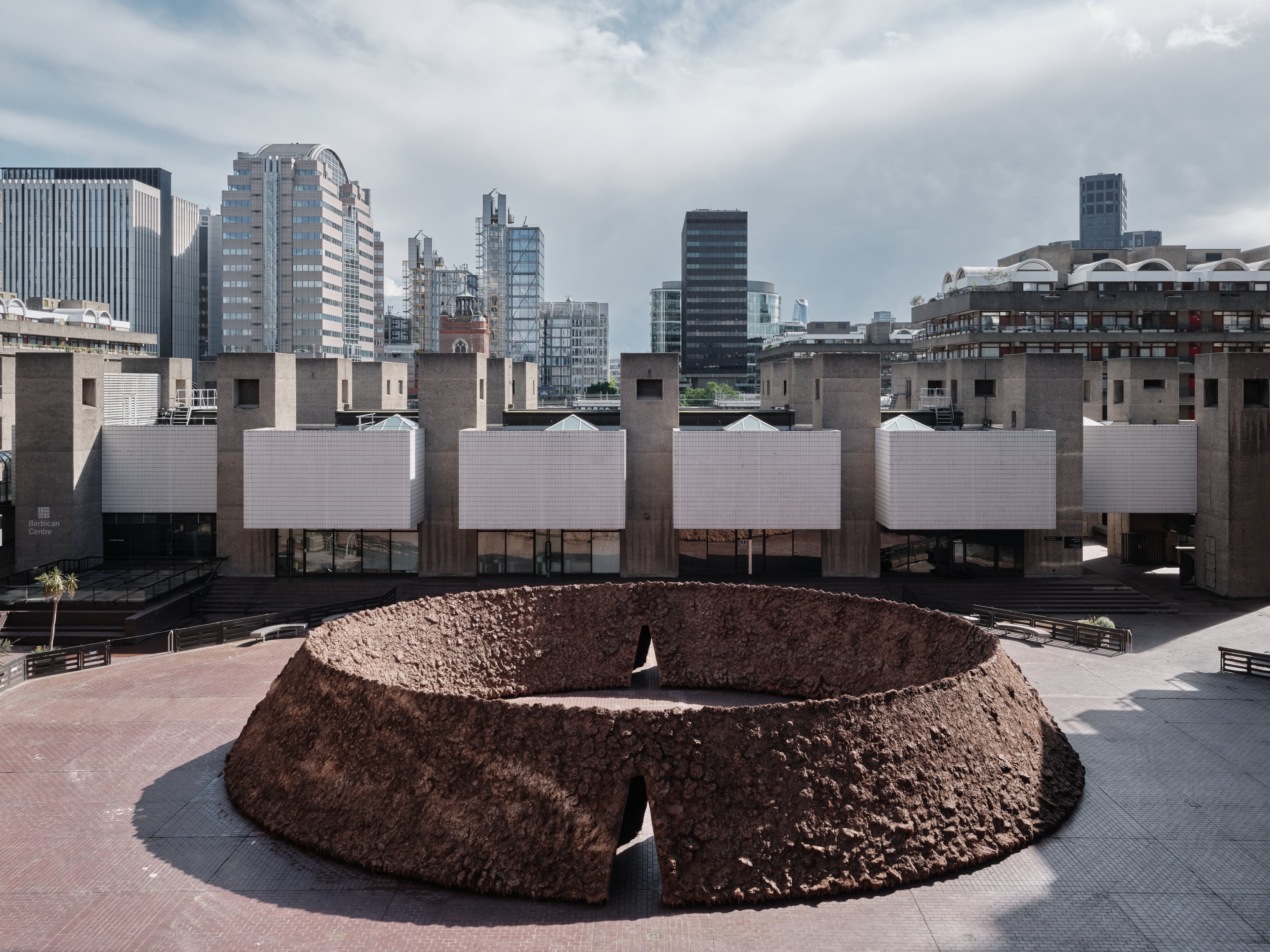
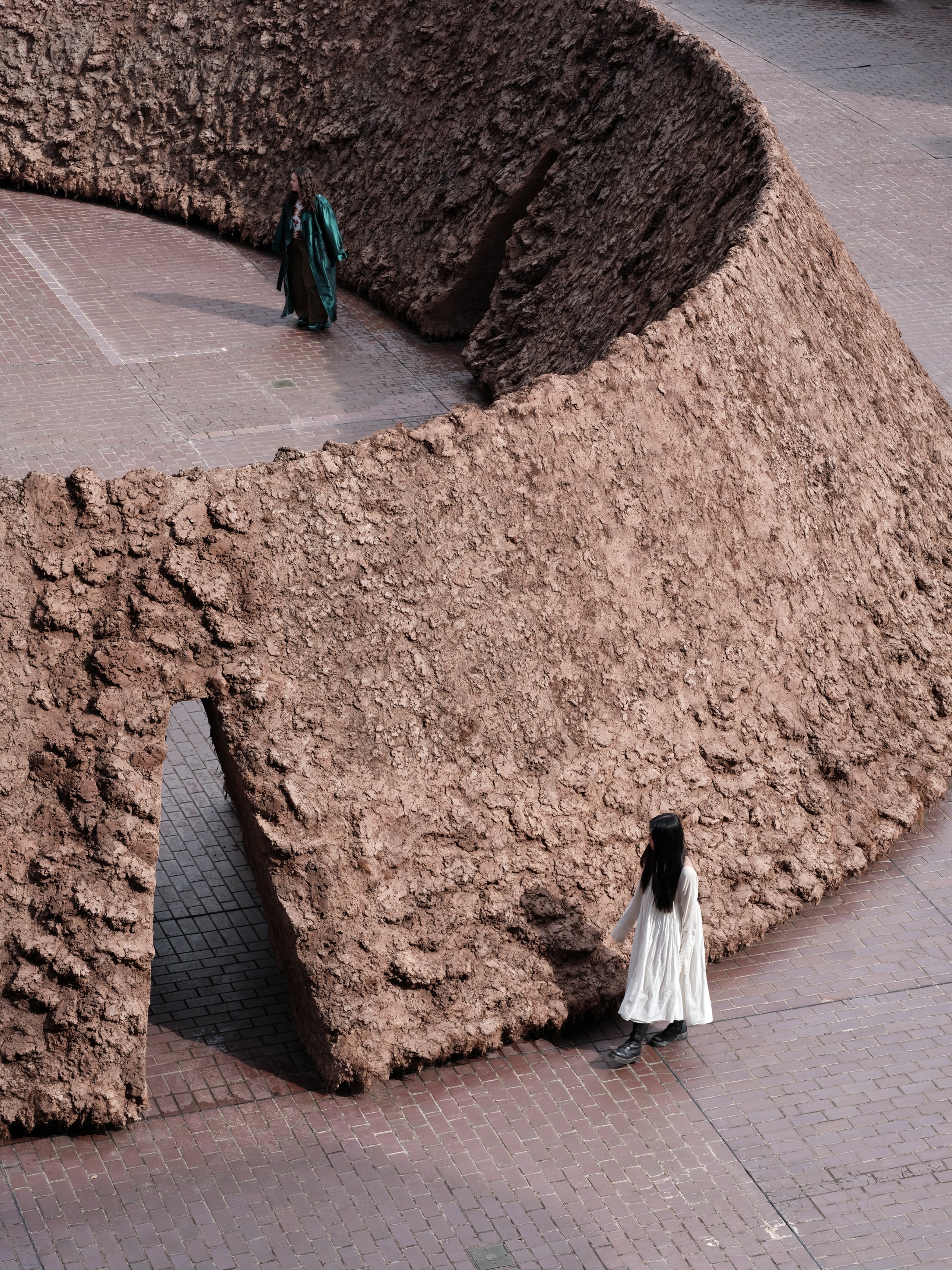
The Barbican Centre has not activated its Sculpture Court in nearly a decade. That changes with origo, a 24-meter by 18-meter earth pavilion that rises more than three meters above the brick-paved plaza. The structure takes the form of an ovular mass with multiple triangular entrances cut into its perimeter, each leading into tunnels that wind toward a central enclosure. From the residential towers above, the installation reads as a dark ring against the geometry of the courtyard. At ground level, it becomes something else entirely: a threshold between the city and something older.

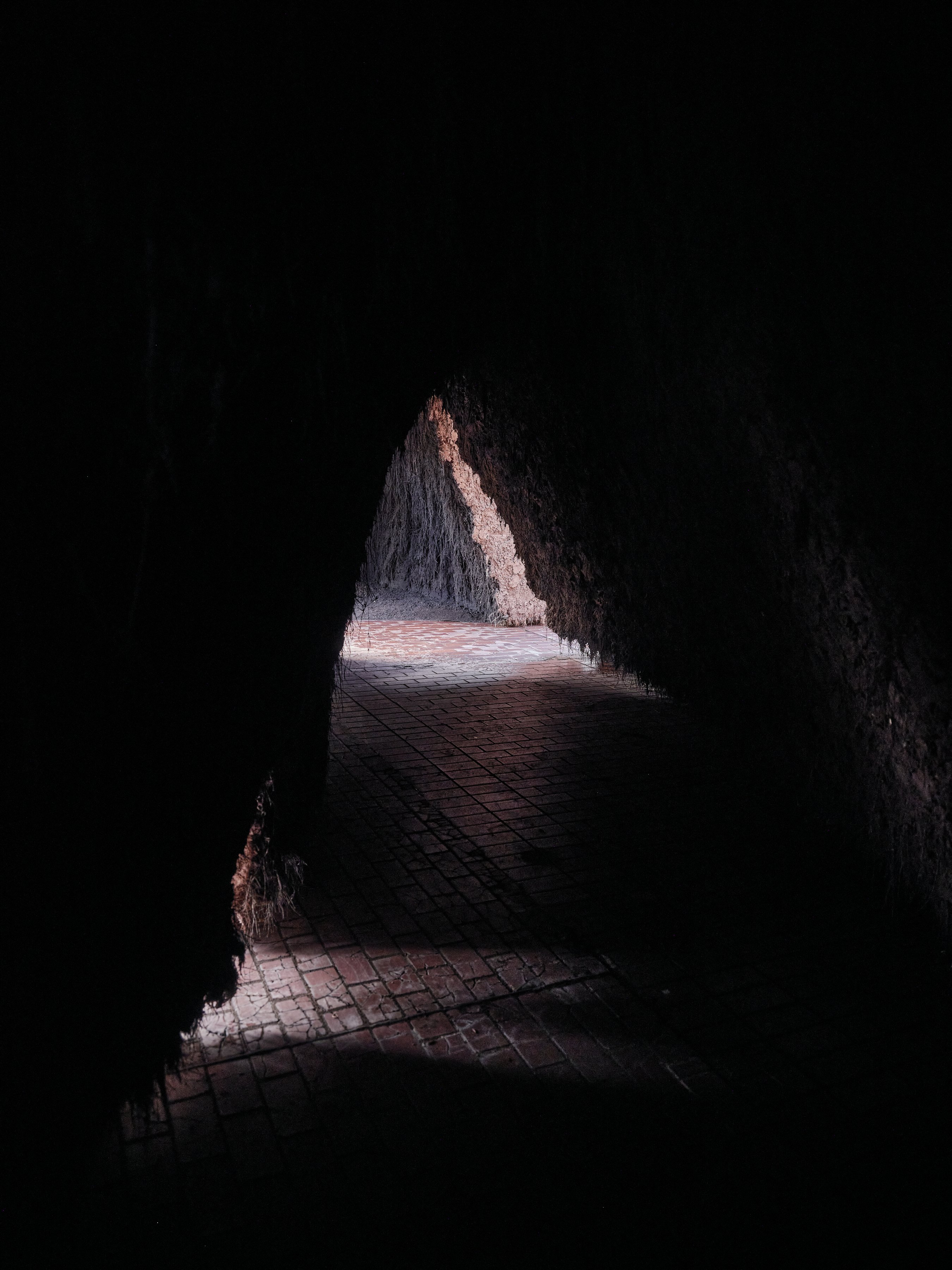
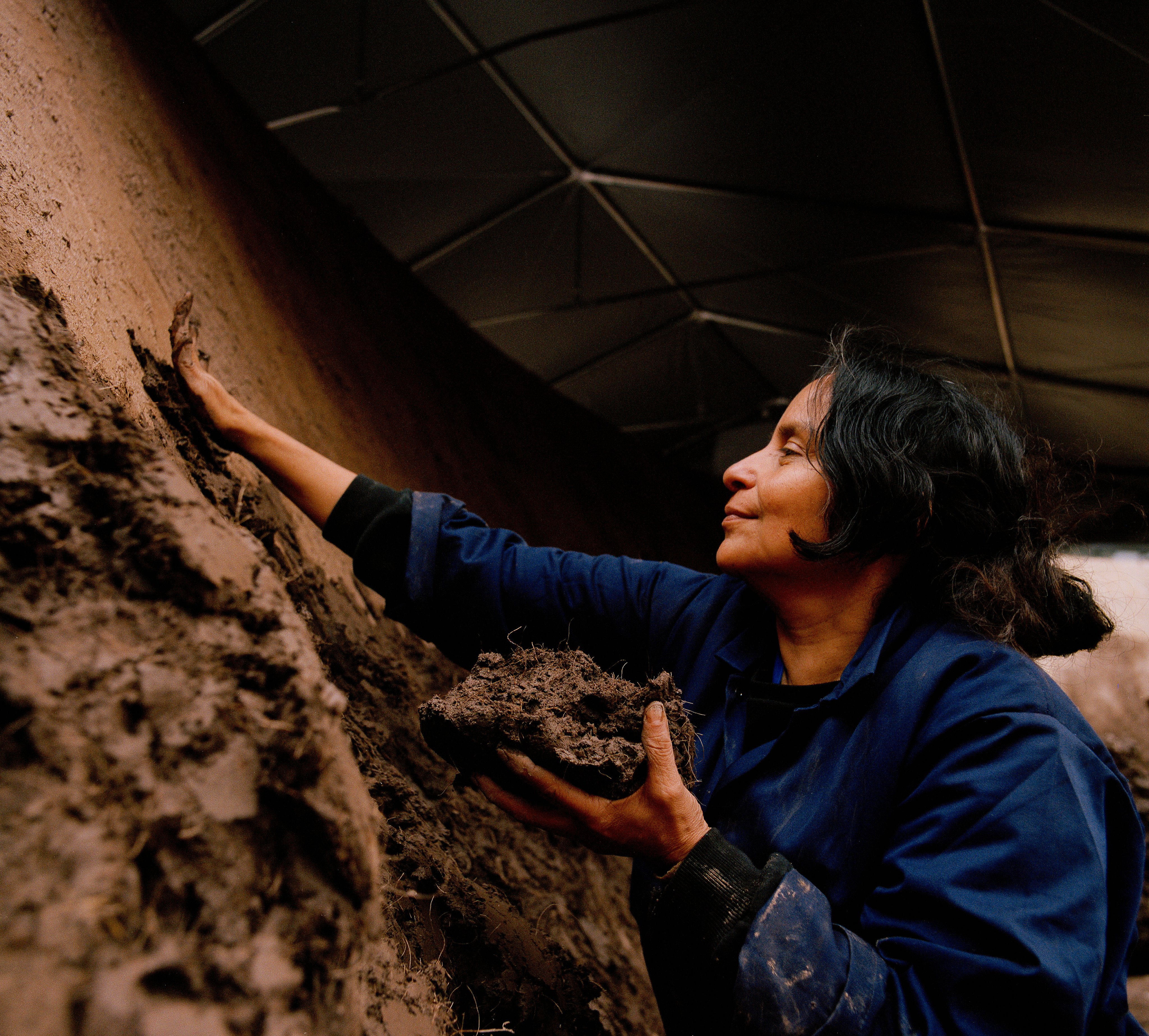
Delcy Morelos built the work by hand over several weeks, pressing clay mixed with hay and seeds into the curved walls layer by layer. The surface texture that results is rough and fibrous, visibly handmade, holding the impression of her labor. Cinnamon and cloves are mixed throughout the material. The spices serve a practical function, their antifungal properties protecting the soil from decay, but they also fill the tunnels with a scent that intensifies as visitors move deeper inside. The smell of earth and spice replaces the ambient noise of the city.

Born in Tierralta, Colombia, in a region marked by armed conflict and land extraction, Morelos has spent decades working with earth as a living presence rather than inert material. Her installations draw from ancestral Andean and Amazonian understandings of land as something interconnected with human existence, carrying memory and labor and care. At the Barbican, this philosophy meets one of the most recognized brutalist complexes in the world, designed by Chamberlin, Powell and Bon as a utopian vision for postwar communal life. The contrast is deliberate: poured concrete against hand-worked clay, permanence against porosity, the civic ambition of the postwar welfare state against an older relationship to the ground.

Inside origo, light drops away. The triangular openings frame distant views of the courtyard and the towers beyond, but the interior absorbs nearly everything. Sound becomes muted. The temperature shifts. Visitors moving through the tunnels find themselves aware of their own breath, their own proximity to the earth walls, the way their bodies occupy space differently when surrounded by soil. The central enclosure offers a moment of stillness before the return to the outside.

The Barbican's Sculpture Court was originally conceived as a shared public space where art could become part of daily life. Morelos returns it to that purpose while reframing what public art might mean. Her work proposes that living together extends beyond the human, that community includes the soil and microorganisms and material systems that cities are built upon and often ignore. In the middle of the City of London, three meters of earth rise to make that claim visible.
Interested in Showcasing Your Work?

If you would like to feature your works on Thisispaper, please visit our Submission page and sign up to Thisispaper+ to submit your work. Once your submission is approved, your work will be showcased to our global audience of 2 million art, architecture, and design professionals and enthusiasts.
No items found.
We love less
but there is more.
Become a Thisispaper+ member today to unlock full access to our magazine, advanced tools, and support our work.
Get two months FREE
with annual subscription
We love less
but there is more.
Become a Thisispaper+ member today to unlock full access to our magazine, advanced tools, and support our work.
Get two months FREE
with annual subscription
No items found.
May 20, 2026

Soil, cinnamon, and cloves fill the Barbican Sculpture Court in London, where Delcy Morelos has built origo, a 24-meter earth pavilion set against the brutalist concrete of Chamberlin, Powell and Bon.

The Barbican Centre has not activated its Sculpture Court in nearly a decade. That changes with origo, a 24-meter by 18-meter earth pavilion that rises more than three meters above the brick-paved plaza. The structure takes the form of an ovular mass with multiple triangular entrances cut into its perimeter, each leading into tunnels that wind toward a central enclosure. From the residential towers above, the installation reads as a dark ring against the geometry of the courtyard. At ground level, it becomes something else entirely: a threshold between the city and something older.

Delcy Morelos built the work by hand over several weeks, pressing clay mixed with hay and seeds into the curved walls layer by layer. The surface texture that results is rough and fibrous, visibly handmade, holding the impression of her labor. Cinnamon and cloves are mixed throughout the material. The spices serve a practical function, their antifungal properties protecting the soil from decay, but they also fill the tunnels with a scent that intensifies as visitors move deeper inside. The smell of earth and spice replaces the ambient noise of the city.

Born in Tierralta, Colombia, in a region marked by armed conflict and land extraction, Morelos has spent decades working with earth as a living presence rather than inert material. Her installations draw from ancestral Andean and Amazonian understandings of land as something interconnected with human existence, carrying memory and labor and care. At the Barbican, this philosophy meets one of the most recognized brutalist complexes in the world, designed by Chamberlin, Powell and Bon as a utopian vision for postwar communal life. The contrast is deliberate: poured concrete against hand-worked clay, permanence against porosity, the civic ambition of the postwar welfare state against an older relationship to the ground.

Inside origo, light drops away. The triangular openings frame distant views of the courtyard and the towers beyond, but the interior absorbs nearly everything. Sound becomes muted. The temperature shifts. Visitors moving through the tunnels find themselves aware of their own breath, their own proximity to the earth walls, the way their bodies occupy space differently when surrounded by soil. The central enclosure offers a moment of stillness before the return to the outside.

The Barbican's Sculpture Court was originally conceived as a shared public space where art could become part of daily life. Morelos returns it to that purpose while reframing what public art might mean. Her work proposes that living together extends beyond the human, that community includes the soil and microorganisms and material systems that cities are built upon and often ignore. In the middle of the City of London, three meters of earth rise to make that claim visible.
Interested in Showcasing Your Work?

If you would like to feature your works on Thisispaper, please visit our Submission page and subscribe to Thisispaper+. Once your submission is approved, your work will be showcased to our global audience of 2 million art, architecture, and design professionals and enthusiasts.
Thisispaper+
London Guide
30+ Locations
Web Access
Link to Maps
Architecture in London — from Georgian terraces and Victorian warehouses to Brutalist estates and contemporary pavilions. A city that builds by layering the new onto the old, where every extension, conversion, and new-build negotiates heritage, density, and light.
Explore
London Guide

Join Thisispaper+
Unlock access to 2500 stories, curated guides + editions, and share your work with a global network of architects, artists, writers and designers who are shaping the future.
Get two months FREE
with annual subscription
Travel Guides
Immerse yourself in timeless destinations, hidden gems, and creative spaces—curated by humans, not algorithms.
Explore All Guides +
Submission Module
Submit your project and gain the chance to showcase your work to our worldwide audience of over 2M architects, designers, artists, and curious minds.
Learn More+
Curated Editions
Dive deeper into carefully curated editions, designed to feed your curiosity and foster exploration.
Off-the-Grid
Jutaku
Sacral Journey
minimum
The New Chair
Explore All Editions +
Atlas
A new and interactive way to explore the most inspiring places around the world.
Interactive map
Linked to articles
300+ curated locations
Google + Apple directions
Smart filters
Subscribe to Explore+
Become a Thisispaper+ member today to unlock full access to our magazine, submit your project and support our work.
Join Thisispaper+Join Thisispaper+
€ 9 EUR
/month
Cancel anytime
Get two months FREE
with annual subscription