In a former lamp factory on Rotherstraße in Friedrichshain, Berlin, Studio Inhalt_ builds Nichigetsu, a sushi counter where light maple dissolves the line between furniture and room.
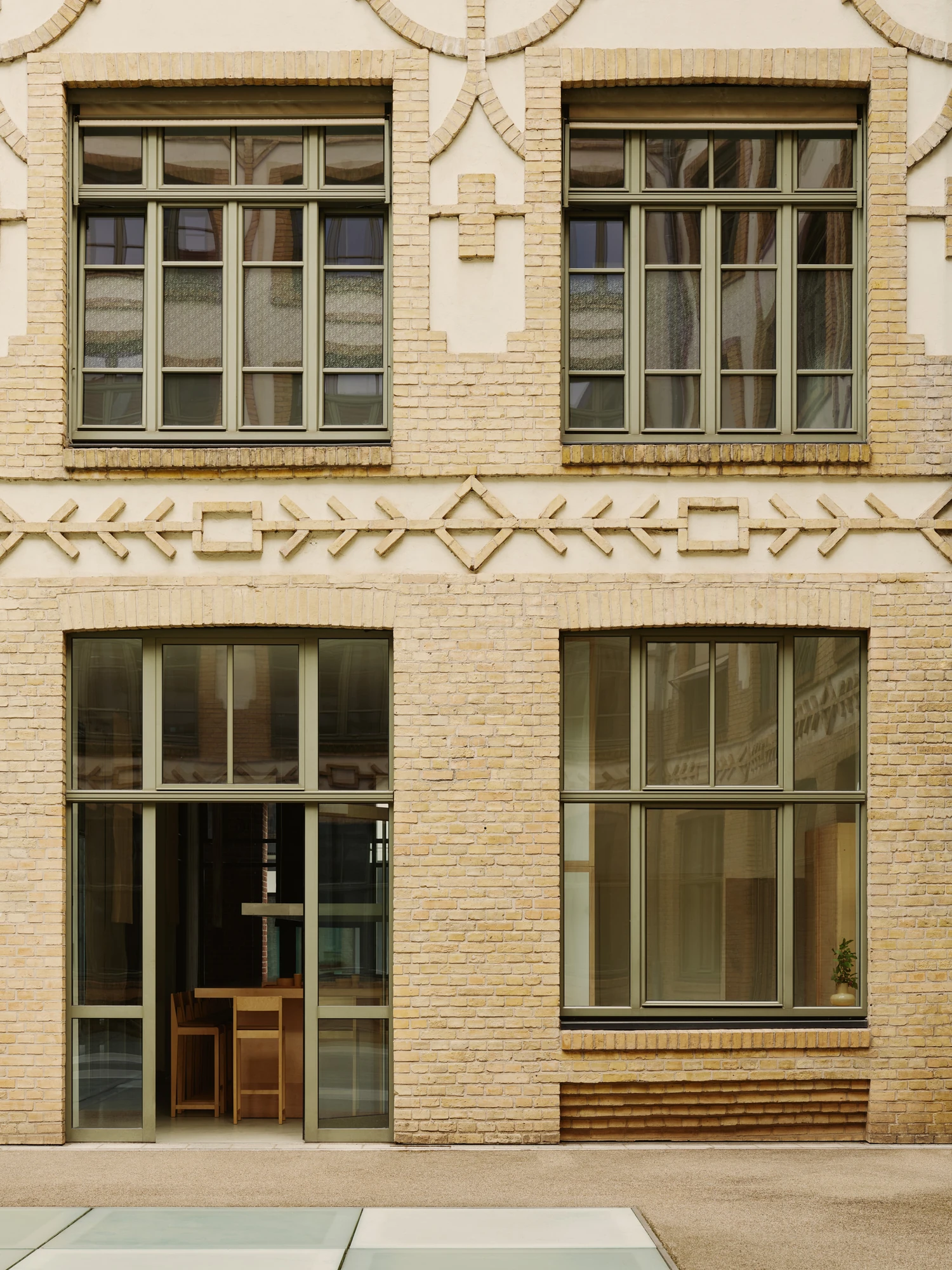
The name splits into two characters. Nichi is the day, clear and present; Getsu is the evening, given over to Edomae sushi. At midday the room serves nigiri as an everyday meal. After dark, as Friedrichshain settles, it slows to the rhythm of a nineteenth-century Edo tradition, where each piece reaches the guest the moment it is ready. Studio Inhalt_ has set that rhythm inside a former lamp factory on Rotherstraße, a building that still carries traces of its industrial past behind an ornamental yellow-brick facade.
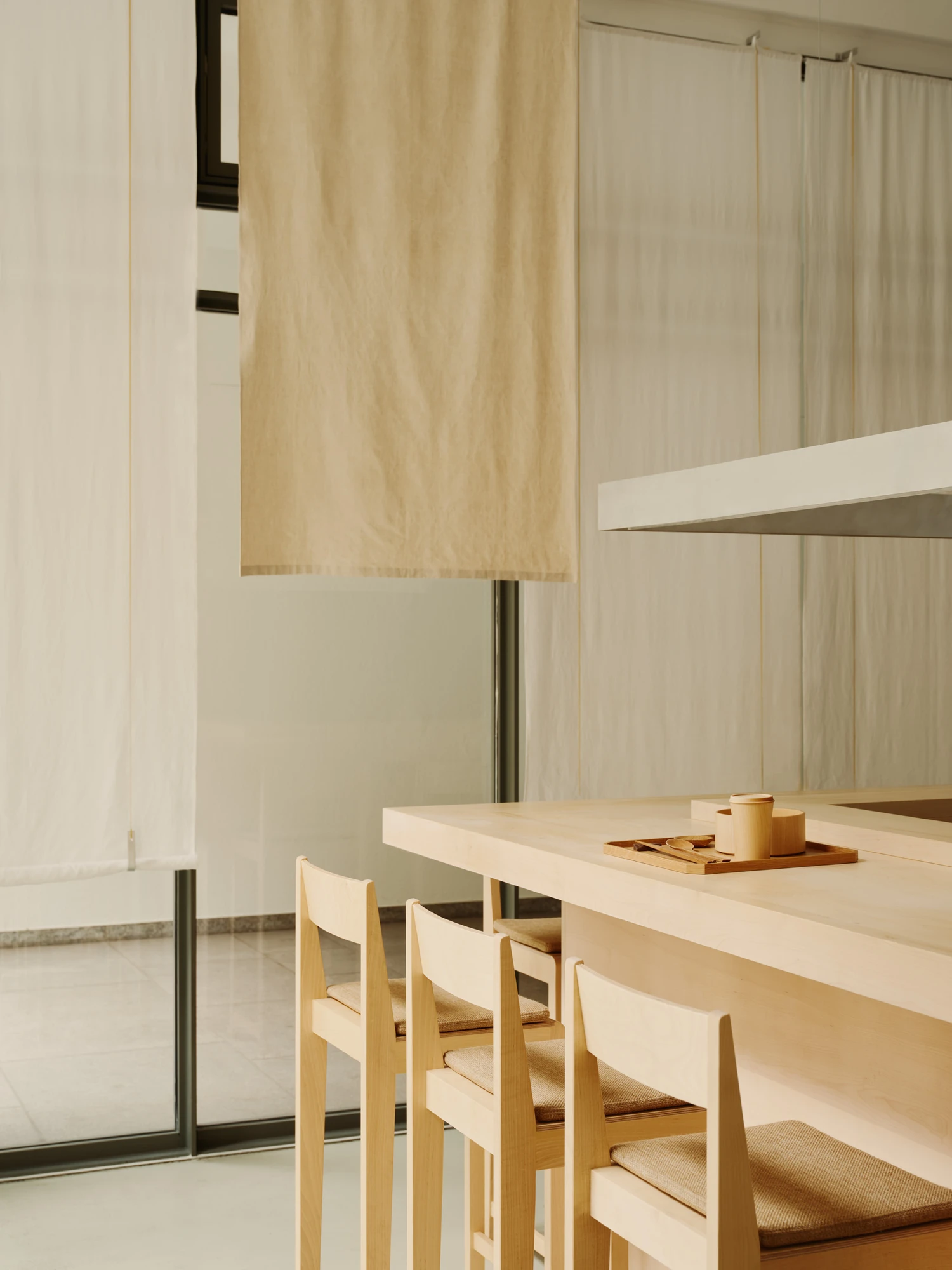
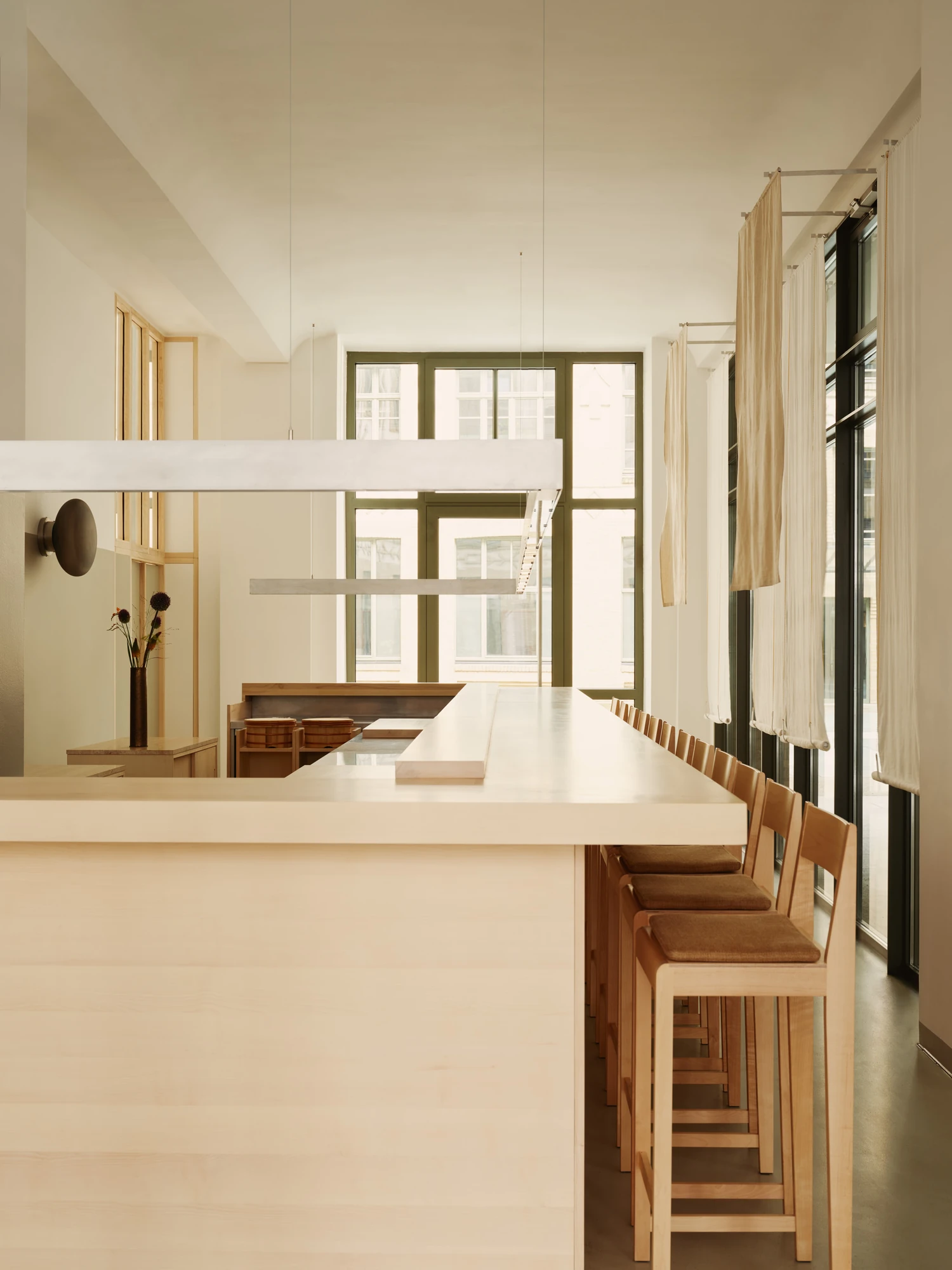
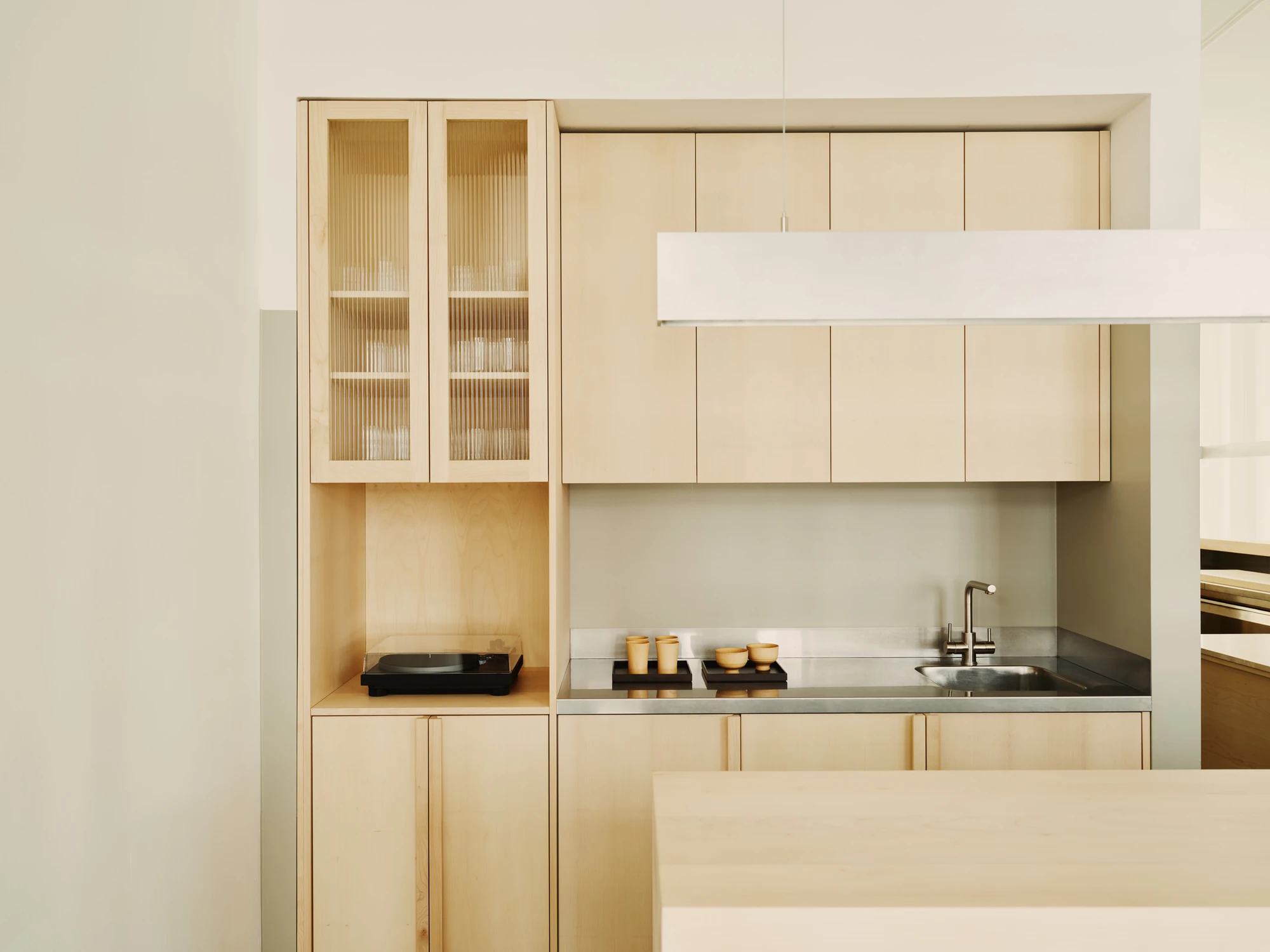
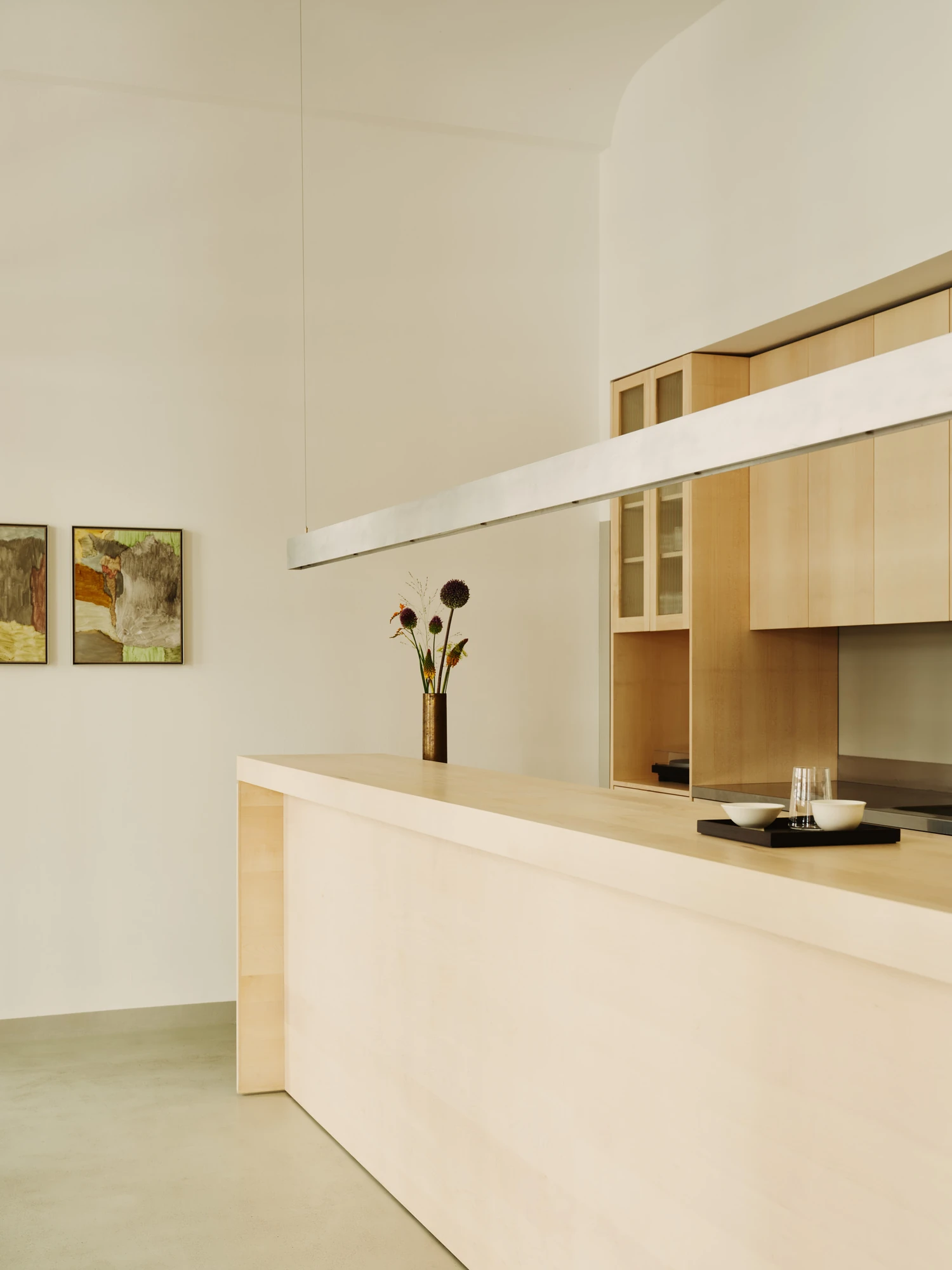
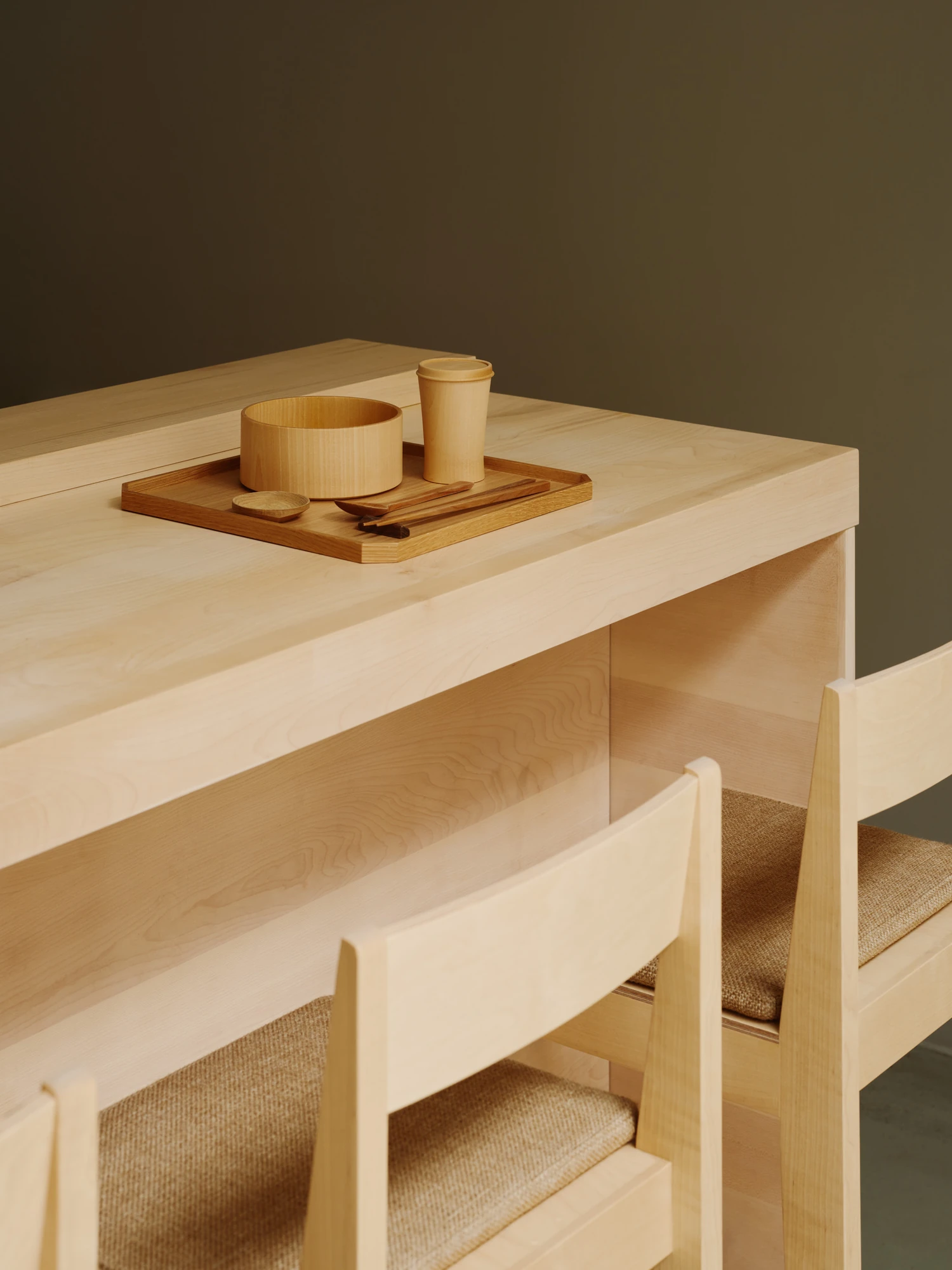
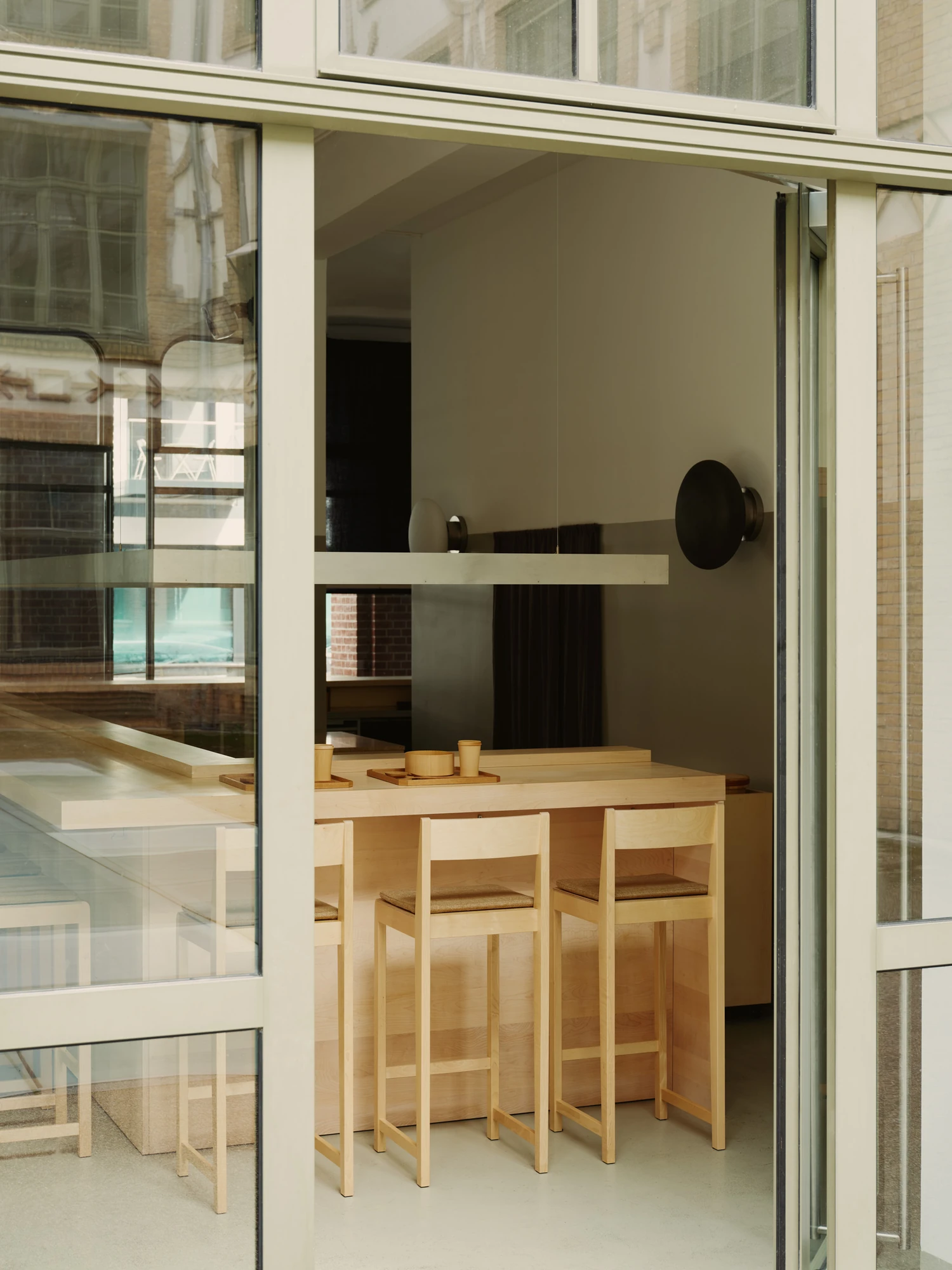
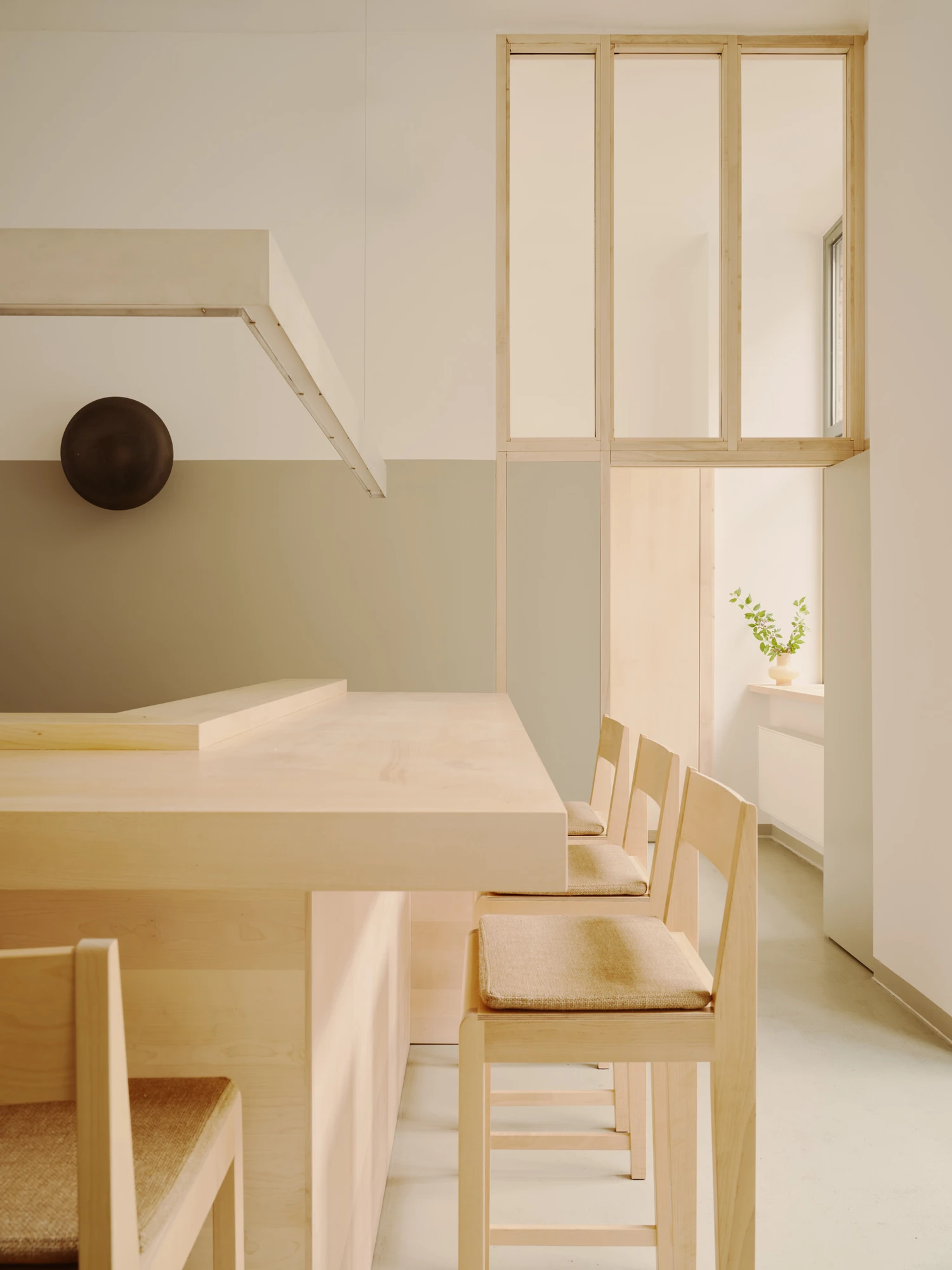
The counter is the argument of the project. It runs the length of the room in pale, light-coloured maple, thick enough to read as a single carved mass, and holds the whole meal: a close view of the chef's hands, the food set down without fuss, the line between the person making and the person eating. The same wood climbs the kitchen fronts, the worktops, the tables and the seating, until the distinction between furniture and room falls away. Studio Inhalt_ works as both designer and maker, and that dual role shows in the joinery, the woven seat cushions and the reeded-glass cabinet above a stainless-steel bench.
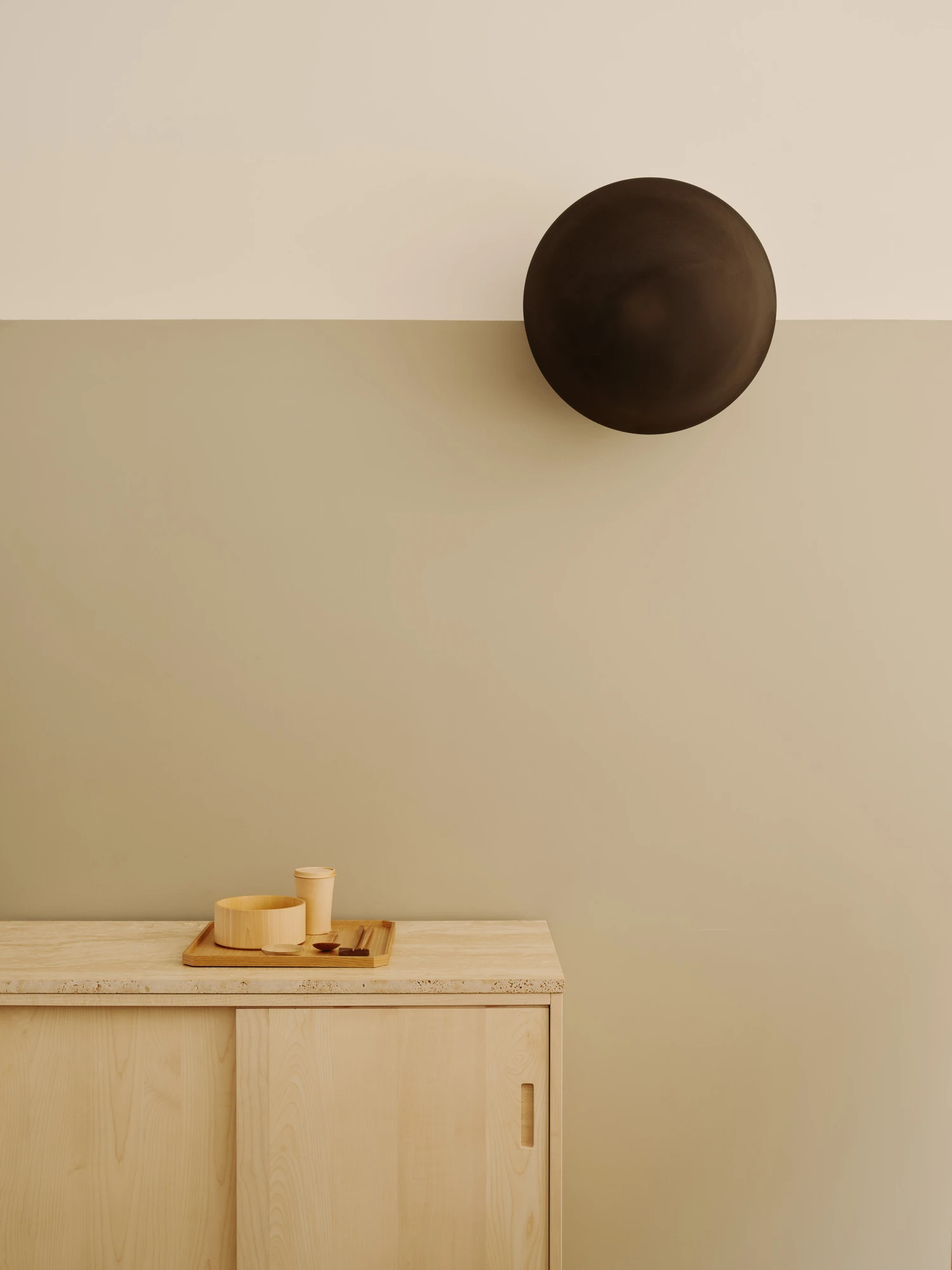
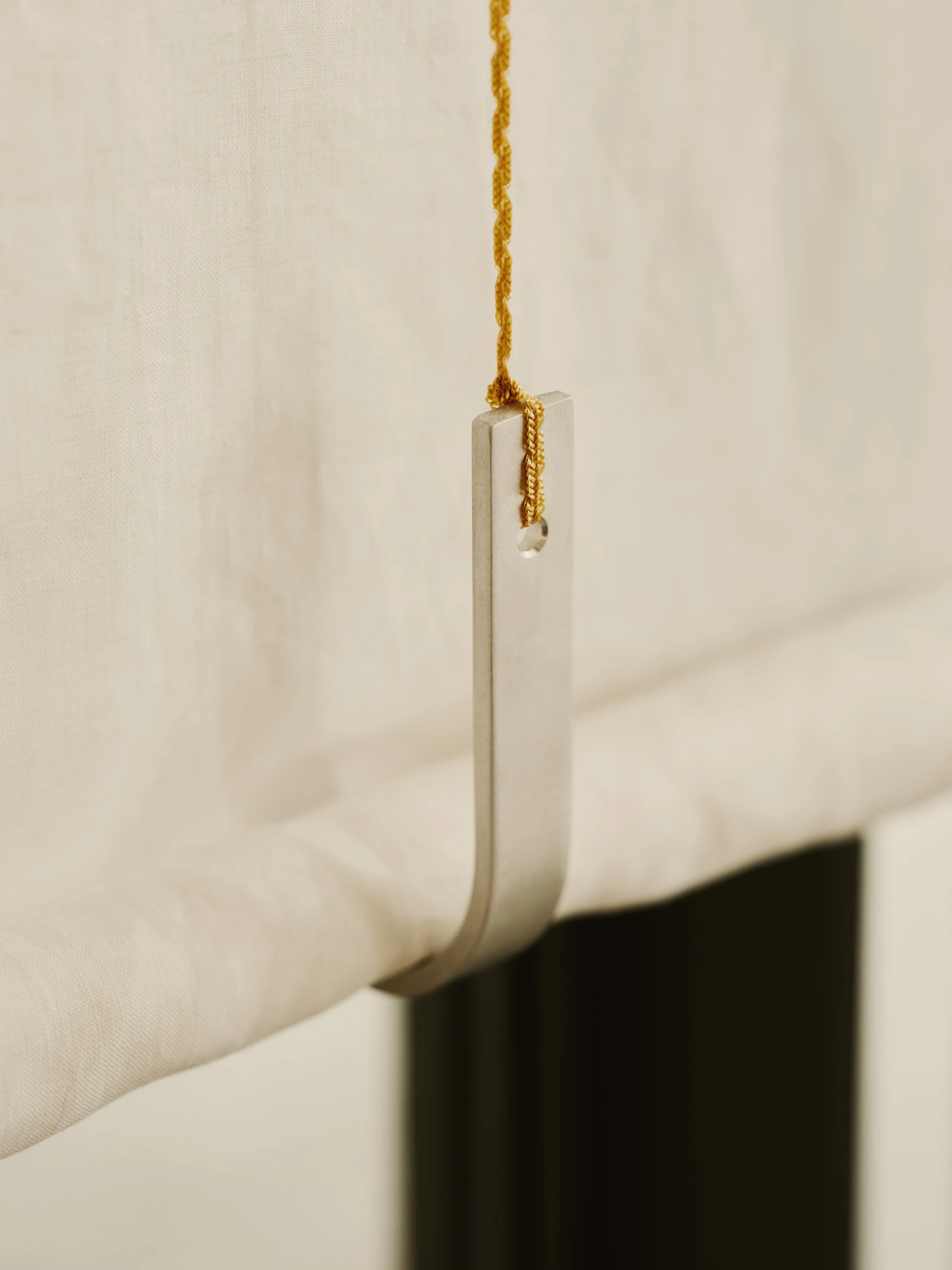
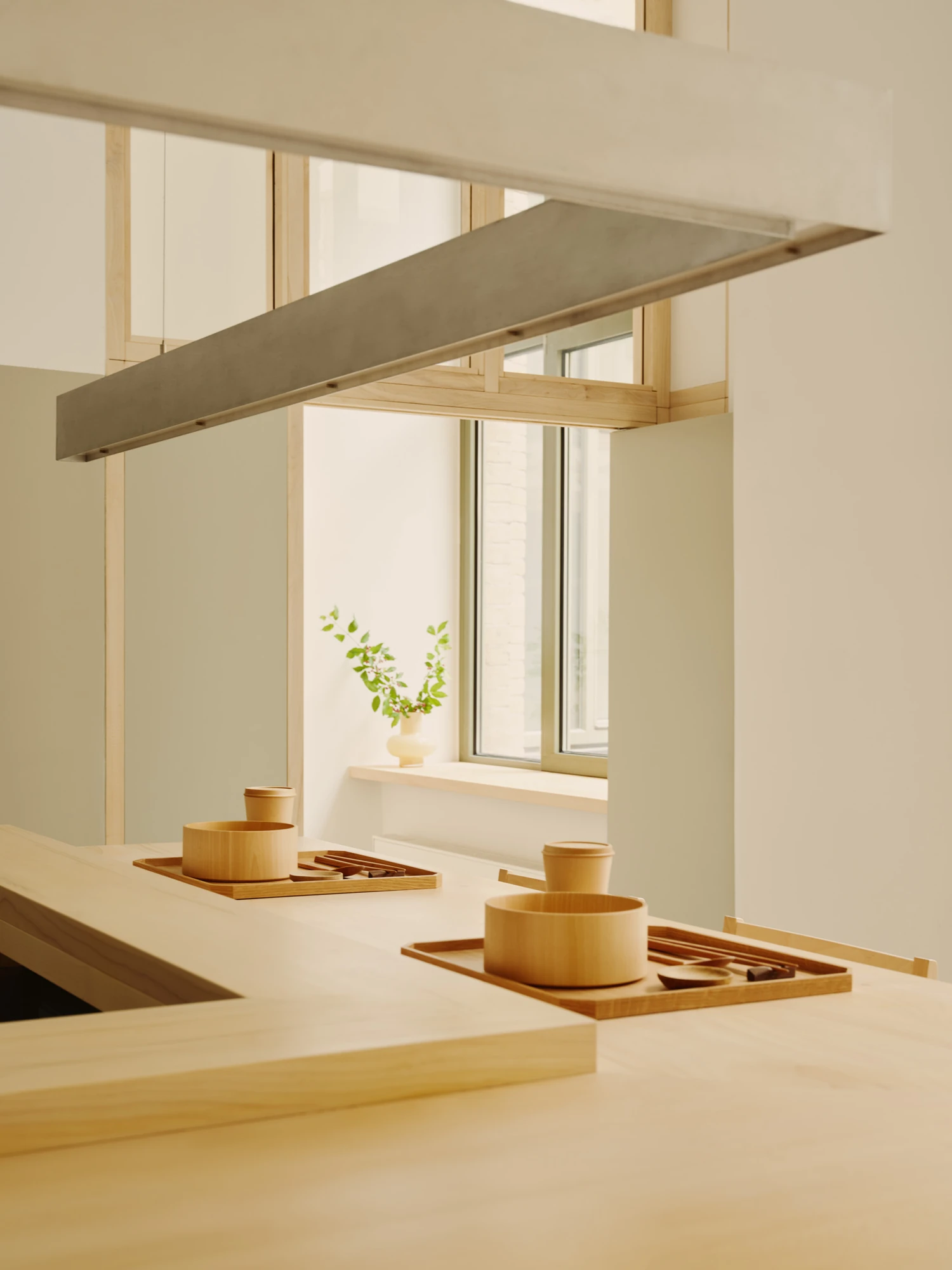
Light does the rest. Large glazed openings pull the courtyard indoors; where the sun turns direct, hanging linen curtains filter it, weighted by slim metal bars on gold cord. In the evening a long, linear pendant draws the room down onto the counter. On the opposite wall, two bronze disc fittings by Yasuma Hida read as the sun and the moon, day and night held in balance, the concept handed back as an object.
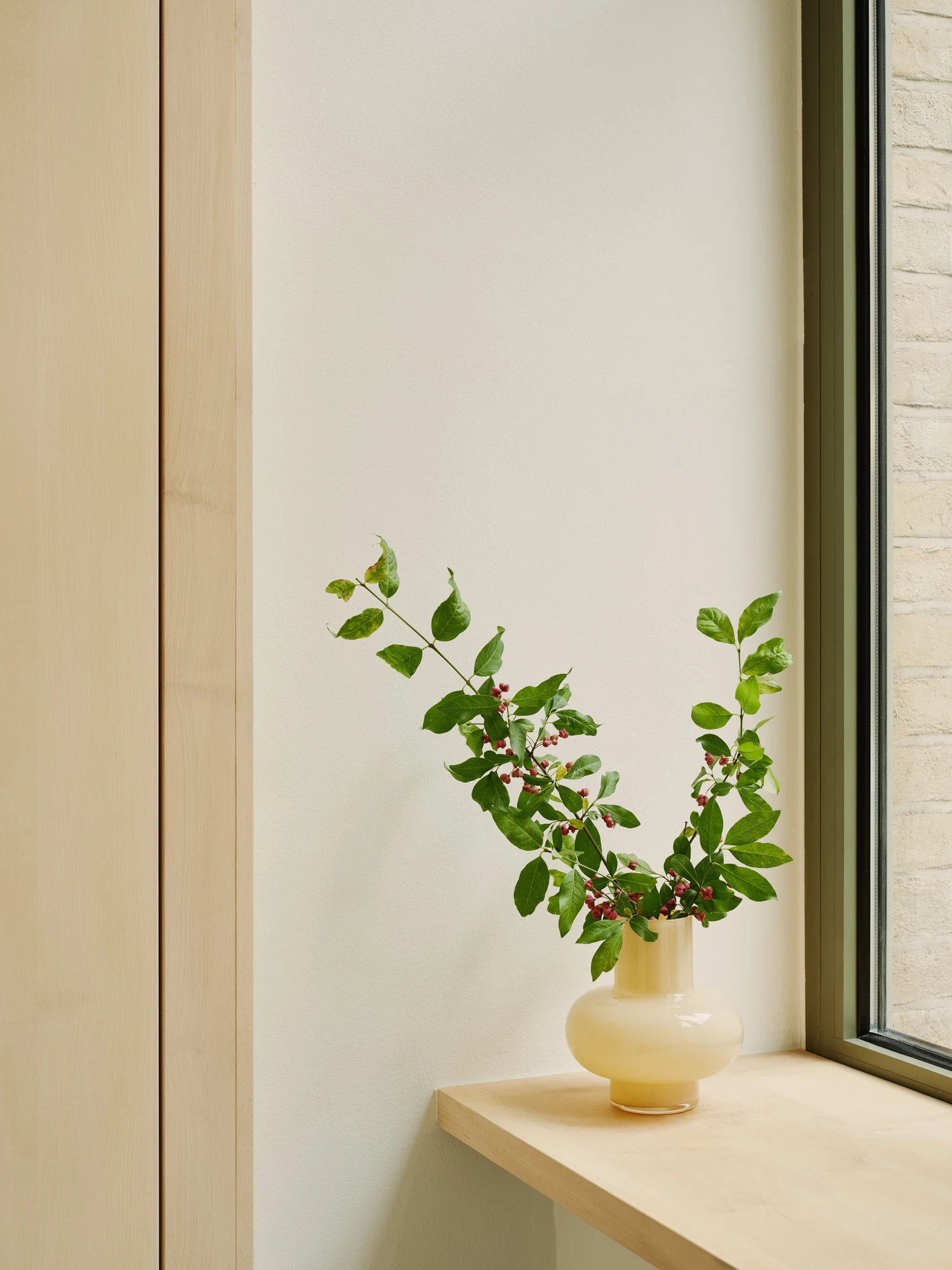
Details are stripped to what each element must do. A travertine-topped cabinet, an ikebana stem in a dark vessel, a record player set into a niche: nothing competes with the food. What is left is a room that treats restraint as the point, its value sitting in the maple, the textiles and the way the eye travels layer by layer toward the kitchen. Nichigetsu makes the case that the counter, more than any wall, is where a restaurant is truly built.