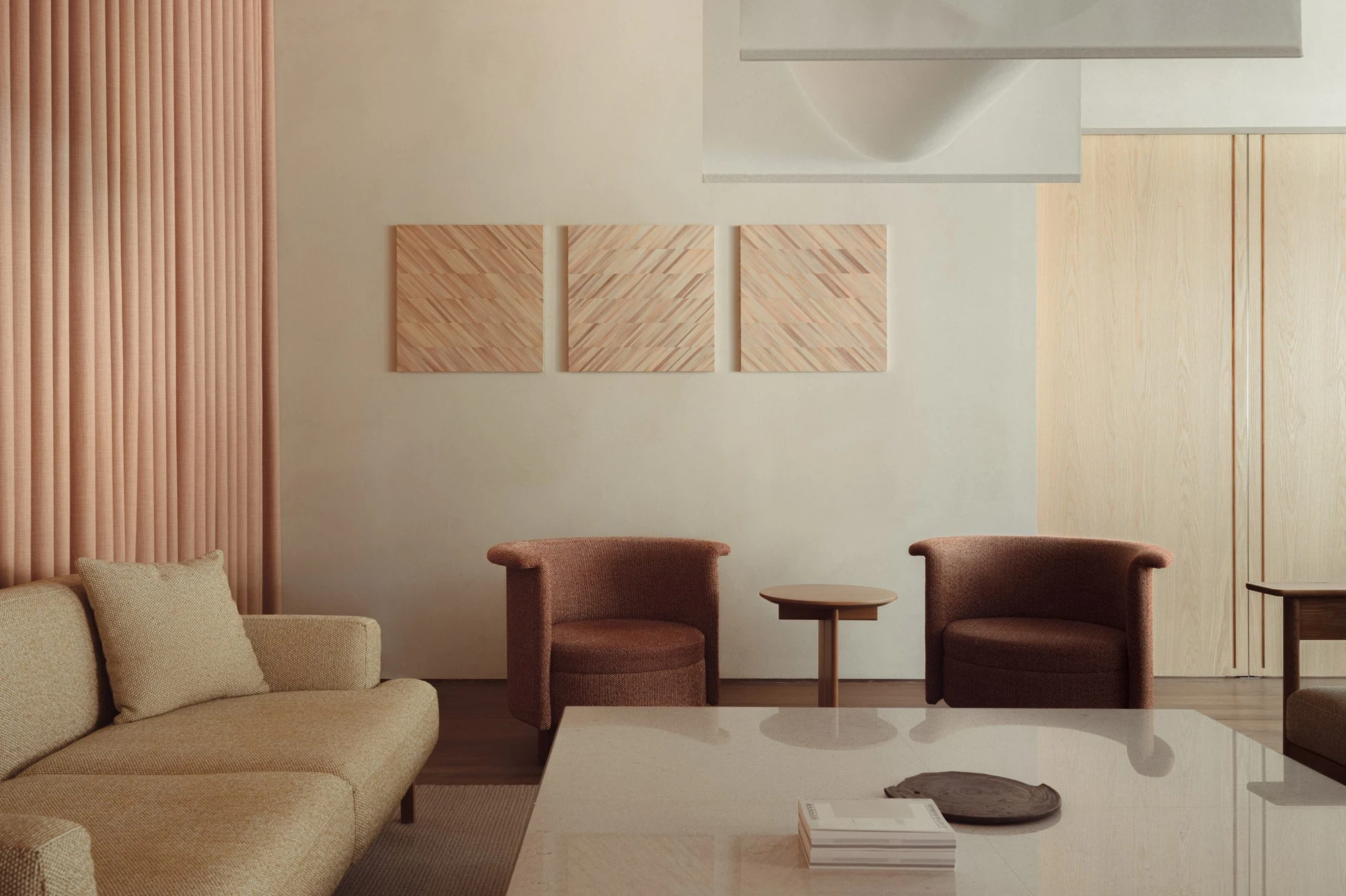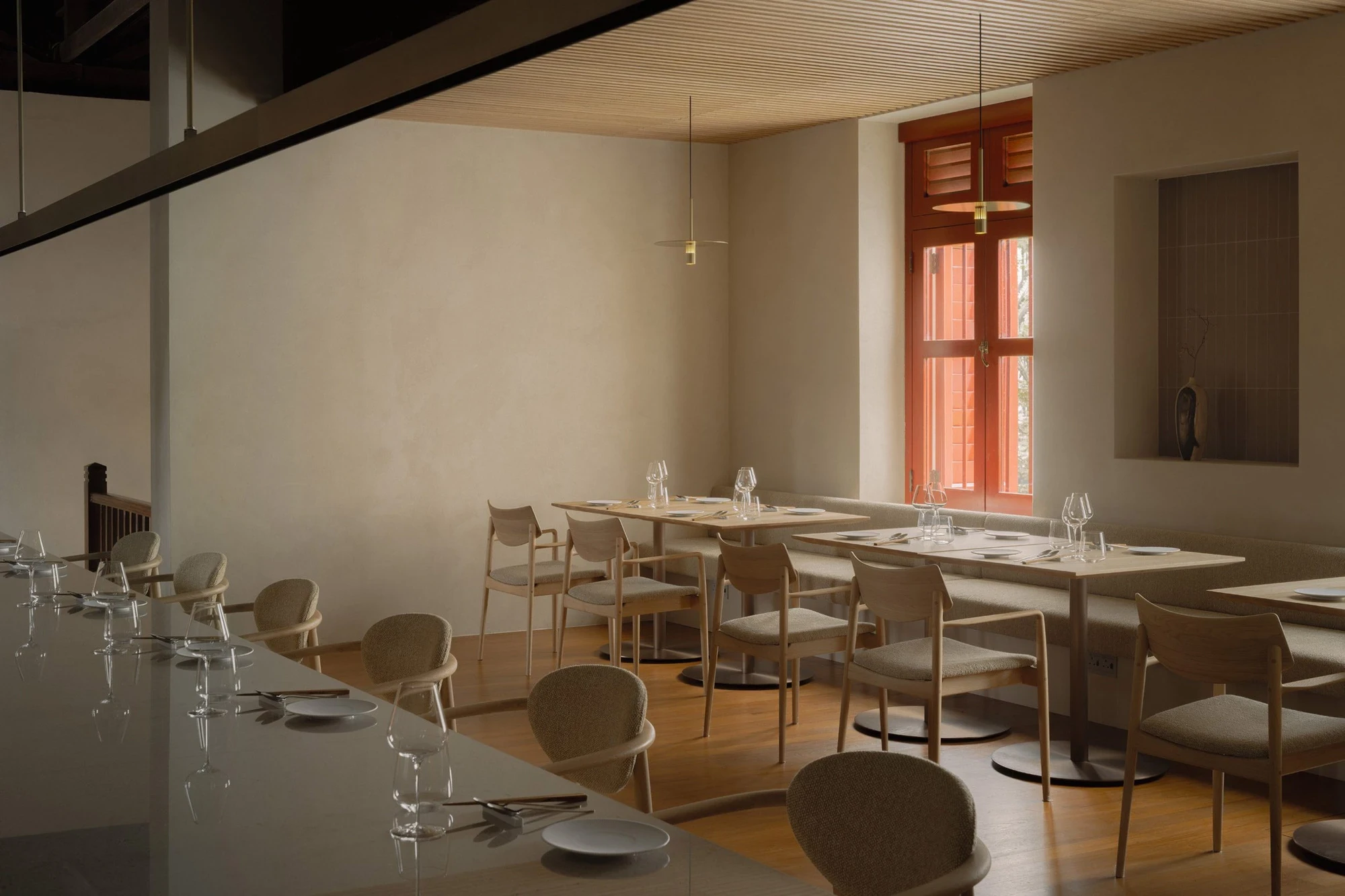
Inside the House of Tan Yeok Nee — a National Monument of Singapore built in the 1880s — Keiji Ashizawa Design creates a pared-back interior for restaurant Loca Niru, where Japanese material restraint meets Teochew ornament in a considered dialogue across time.
The building itself is the brief. Its exterior features an ornately decorated roof and wooden shutters with flower motifs, richly coloured and highly layered. Ashizawa's response was subtraction: working with wood, stone, and Echizen washi paper, he produced an interior that is soft in tone and clear in geometry, deliberately restrained so that the building's historic presence can come forward without competition. "Rather than designing a space that asserts itself," the architect explains, "we sought to create an environment that quietly frames human activity — where architecture recedes and experience comes forward."
The name of the restaurant draws on two Zen concepts — loca and niru — and this duality inflects the spatial logic of the project. Simple, geometric washi paper lamps designed in collaboration with Karimoku provide a warm, diffused light that softens the contrast between old walls and new insertions. Artworks by Japanese artists and woven textile hangings decorate the interior with restraint, anchoring specific moments without overloading the senses.
The colour palette — greige, natural wood, grey — creates a neutral envelope that absorbs the energy of the existing building rather than competing with it. "We approached the project as a dialogue across time, allowing new elements to be clearly contemporary, yet respectful in scale, proportion and presence," Ashizawa writes. The furniture, developed with Karimoku Case, follows the same logic: coherent, durable, and calibrated to the formality of the space.
What Ashizawa achieves in Loca Niru is a kind of hospitality that begins with the architecture: the room prepares the guest for the act of dining by quieting everything around them. "Ultimately, the space is designed to create a sense of stillness — where guests become more aware of time, presence and the act of dining itself." In a heritage building that has accumulated 140 years of layers, stillness is not absence but the highest form of attention.