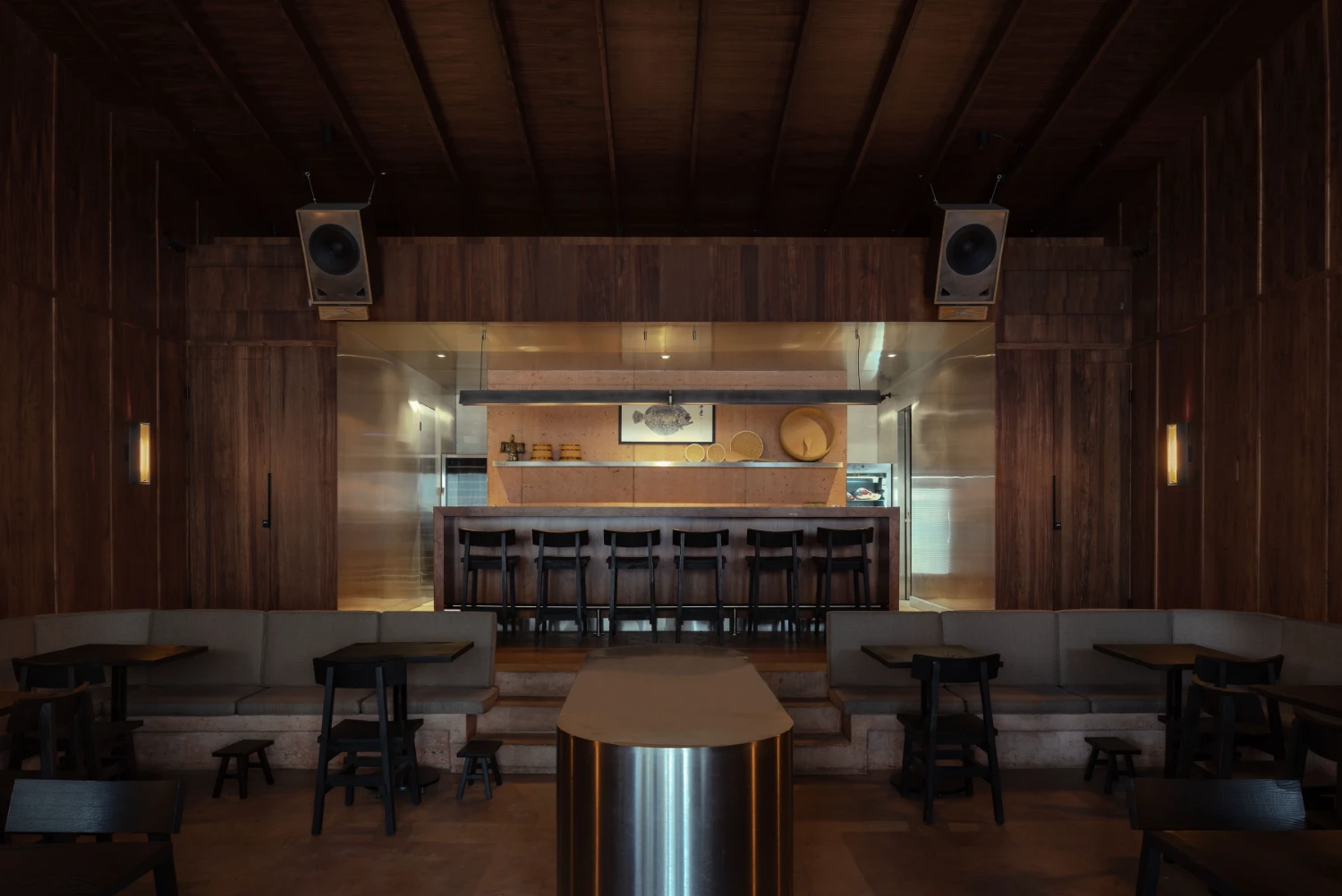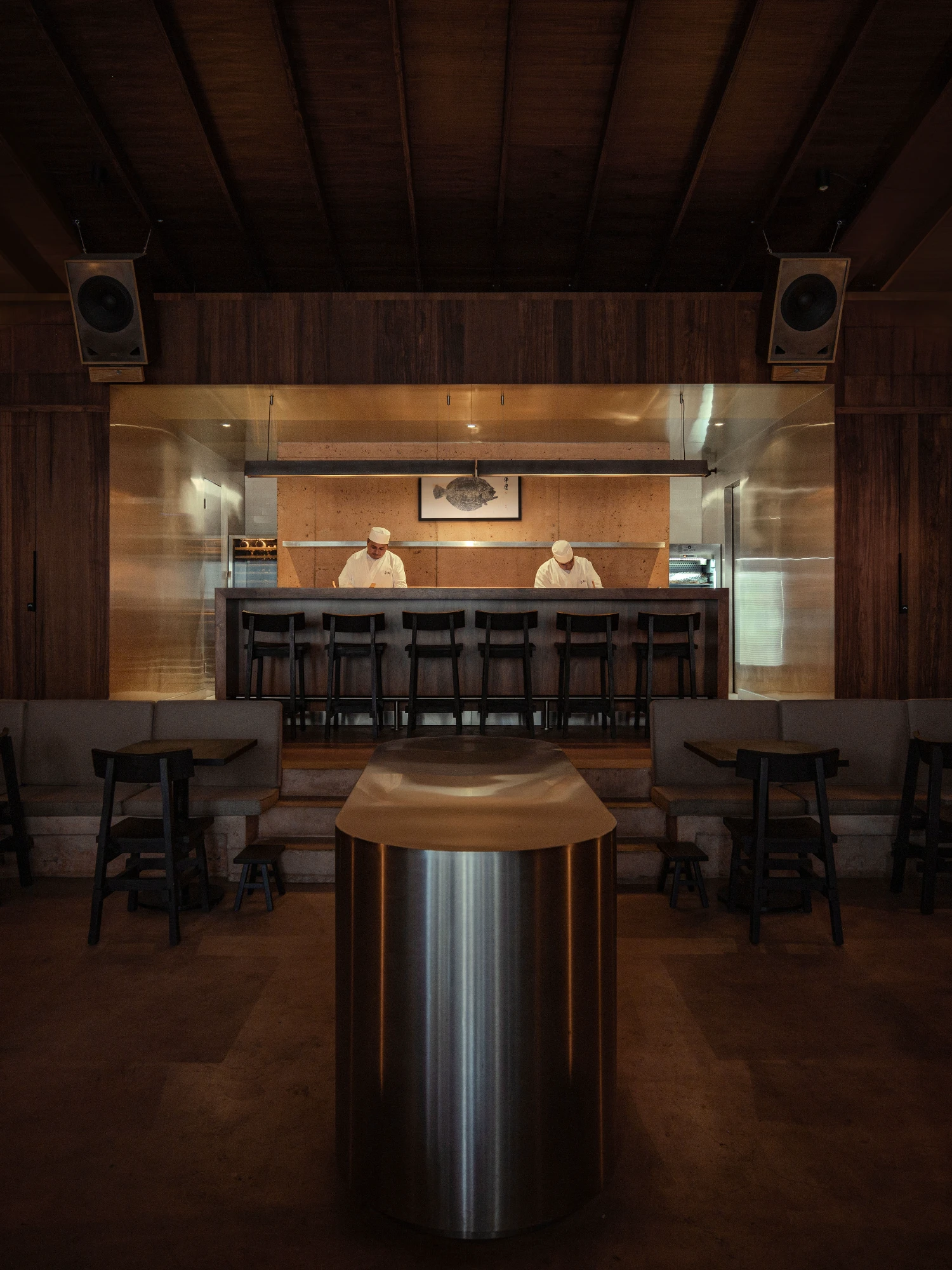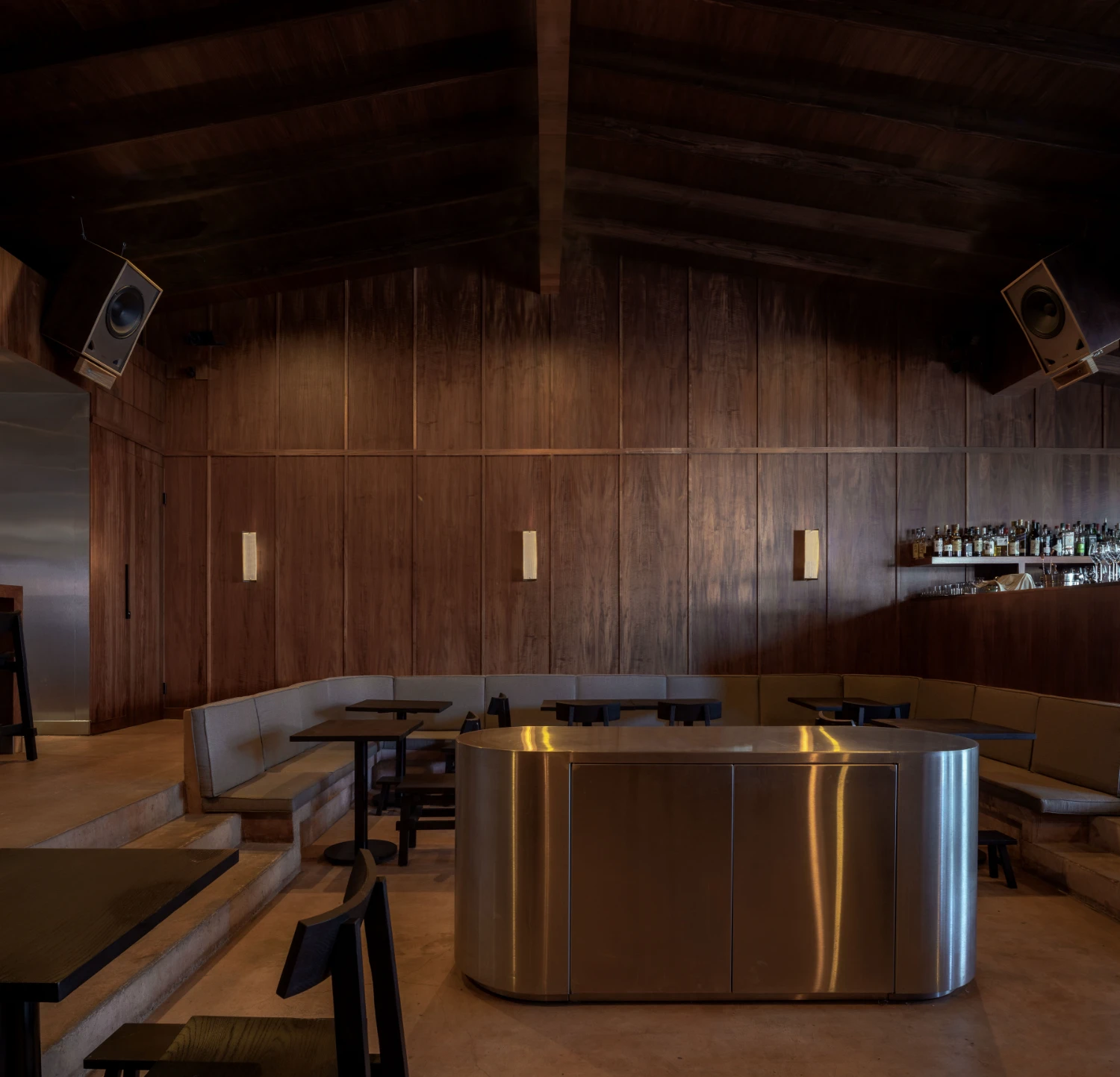
ZUKE Restaurant designed by Sofía Betancur + Taller Nacional in Tijuana unfolds like a quiet compression chamber: a space where the Pacific’s shared cultural undercurrents between Mexico and Japan are distilled into architecture.
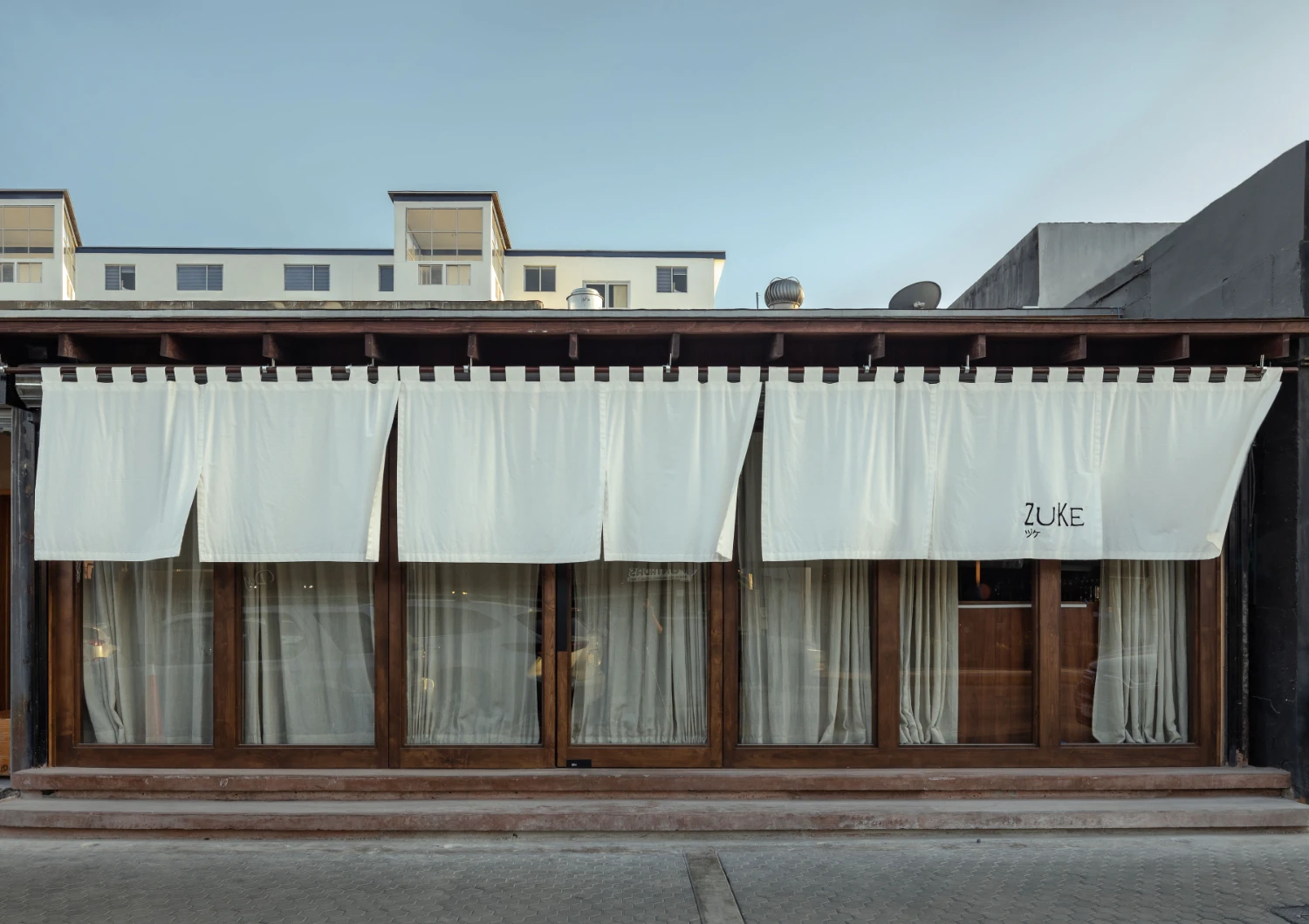
Rather than gesturing toward fusion in a superficial sense, the restaurant expresses it spatially, through an atmosphere of studied restraint. The exterior, veiled by oversized noren-like curtains, suppresses the noise of the street and signals a transition into ritual. Inside, the air feels thick with intention; light is absorbed by deep tzalam surfaces and released only in narrow, amber strokes along the walls.
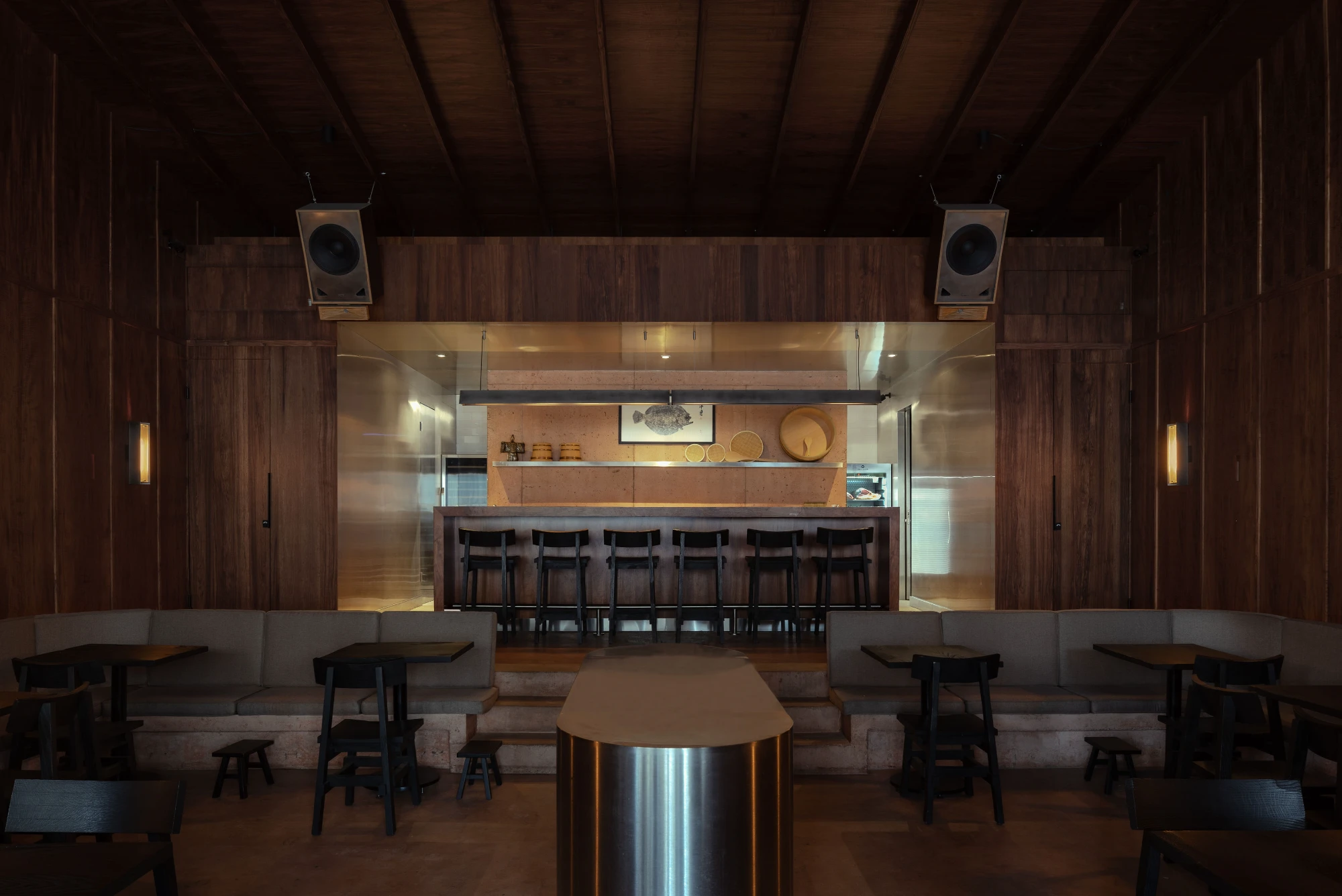
At the heart of the project lies the “Californian irori,” a contemporary reimagining of the Japanese sunken hearth reframed through the mid-century optimism of the West Coast conversation pit. This central element anchors the room not as a performative centerpiece but as a spatial void—an architectural negative that organizes social gravity. Here, sitting becomes choreography. The irori’s brushed steel perimeter and low upholstered edge lend it the ambiguous presence of both altar and instrument, a place where communal ritual is refracted through 2025’s renewed appetite for embodied spaces.
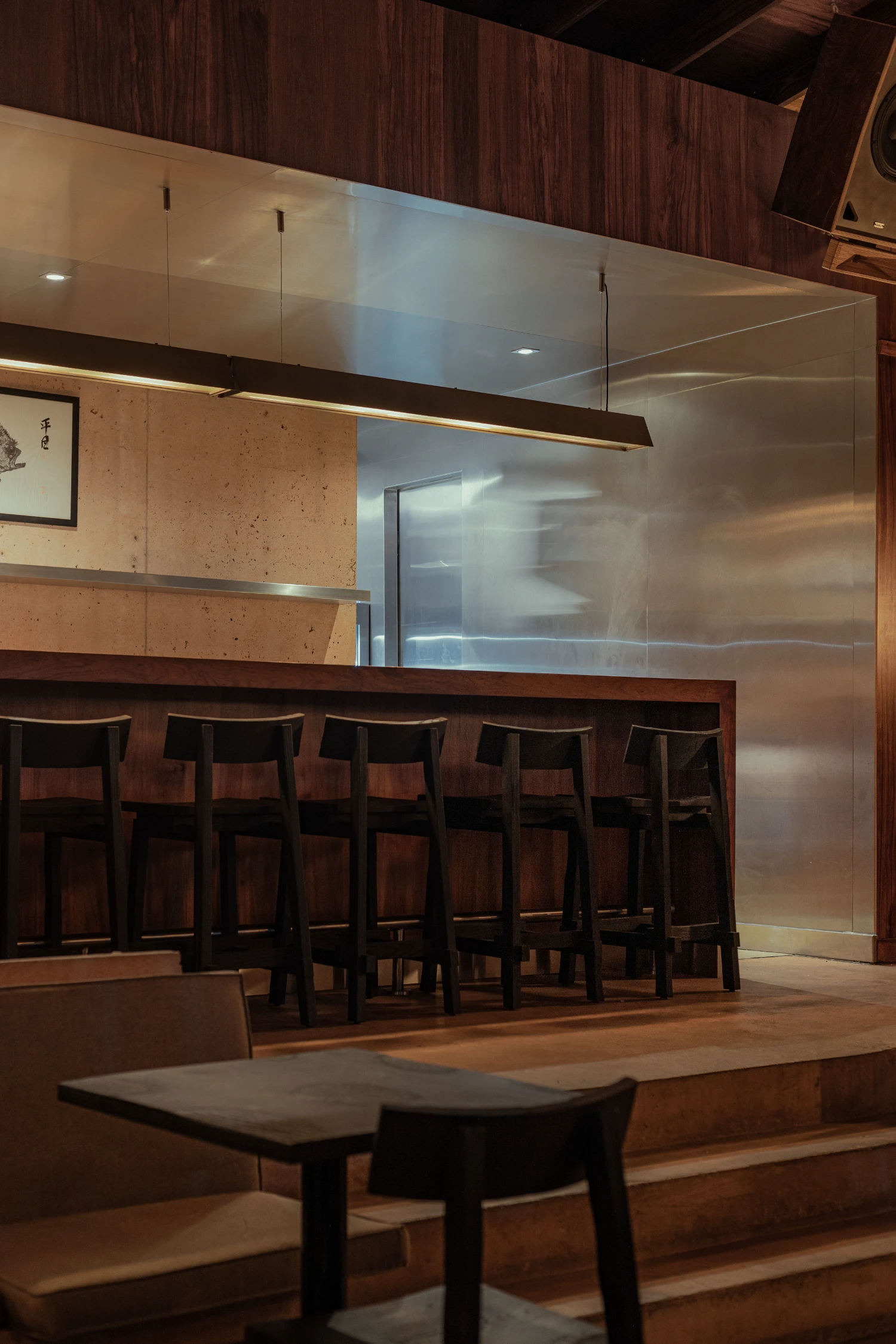
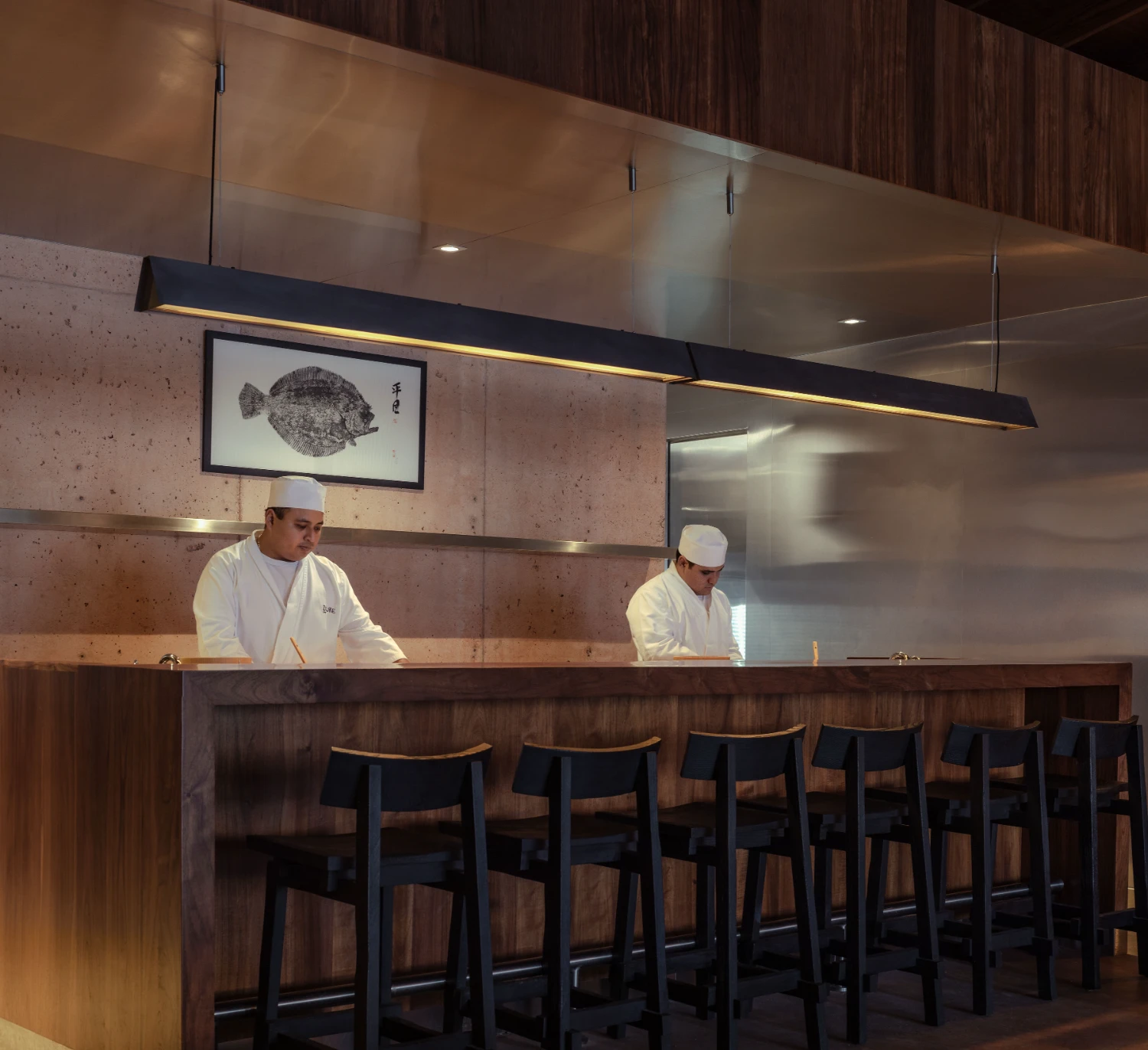
The composition relies on symmetry and vertical hierarchy, but the geometry never feels doctrinal. Instead, the exposed beams and double-height volume create a compression–release rhythm that guides the eye toward the sushi counter, where the chefs’ movements read as a kind of micro-theatre. The line between architecture and furniture dissolves in quiet increments: the bar appears grown rather than constructed; the seating feels embedded rather than placed. Tzalam’s grain, warm and absorbent, stages a dialogue with the cooler reflectivity of concrete and steel.
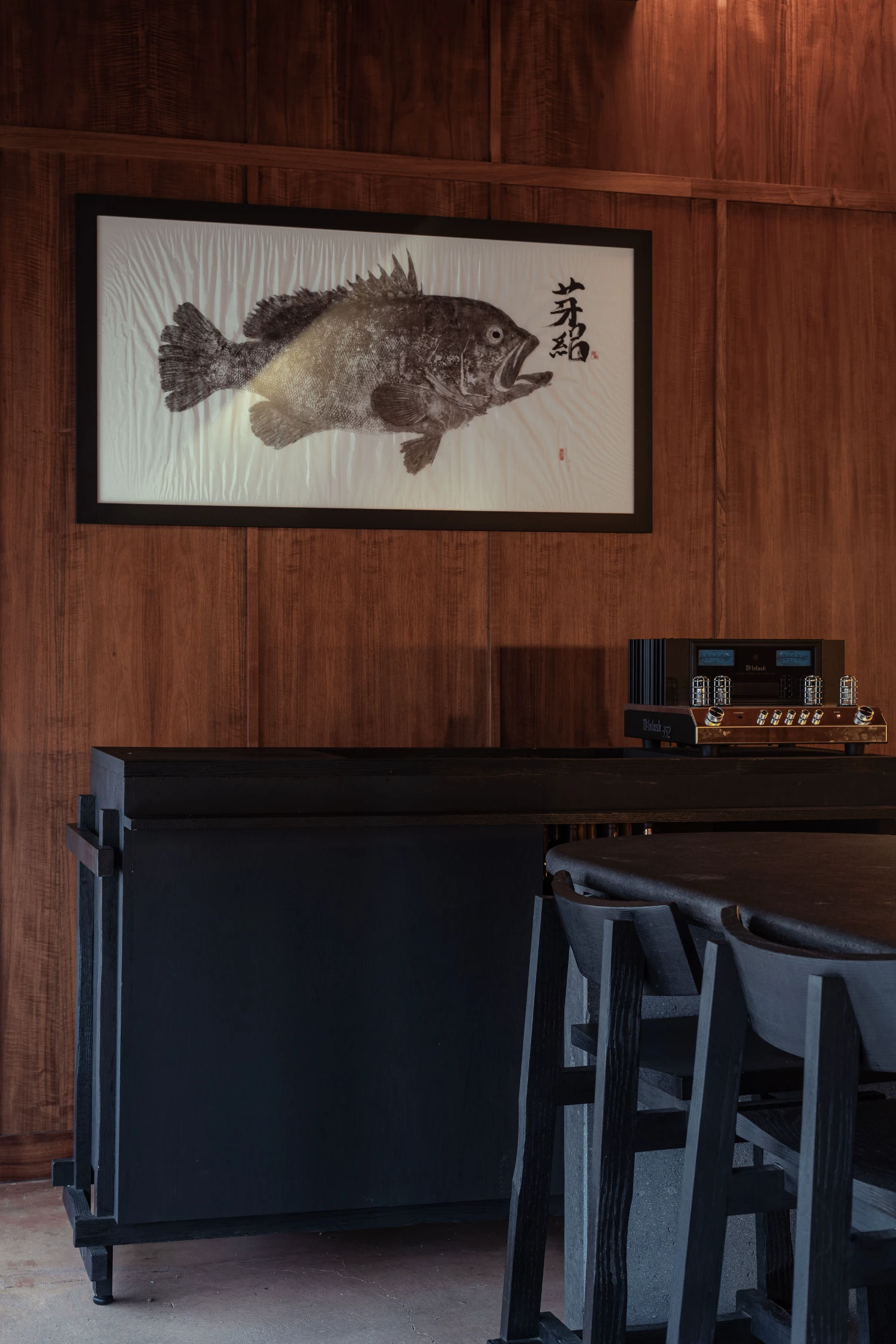
Material treatment intensifies this interplay. The darkened chairs, finished with a method inspired by shou sugi ban, carry a charred matte presence that converses with the concrete plinths and muted textiles. This chromatic restraint situates the room somewhere between the ceremonial austerity of Kyoto villas and the sensorial density of Tokyo’s listening bars—places where attention is cultivated through darkness. Even the gyotaku-style fish prints act not as décor but as punctuation marks, reminders of the oceanic lineage that threads Mexico to Japan.
The overall effect is one of gravitational calm, as though the architecture were tuned to a low, steady frequency. ZUKE is not simply a restaurant; it is an acoustic chamber for intimacy, where the Pacific’s cross-cultural resonance becomes spatial practice. In Tijuana’s restless urban fabric, Betancur + Taller Nacional have carved out a pocket of stillness—a place where craft, ritual, and the quiet drama of making food converge in a single architectural breath.