A map is the first act of possession, and at Vienna's Gianni Manhattan, Zishi Han and Laurence Sturla test that claim in NADIR, where London Plane wood and graphite-blackened ceramic redraw the world's axis.
At Gianni Manhattan in Vienna, Zishi Han and Laurence Sturla meet at a threshold where cartography stops being reliable. NADIR takes as its premise that reality, or an imagined one, can be modelled in ways that do more than report spatial information. The show opens on a line about Echo, the nymph reduced to repetition: where there is no echo, it argues, there is no description of space or love, only silence. Both artists work from that gap between a thing and its account, the distance a map is supposed to close and never quite does.
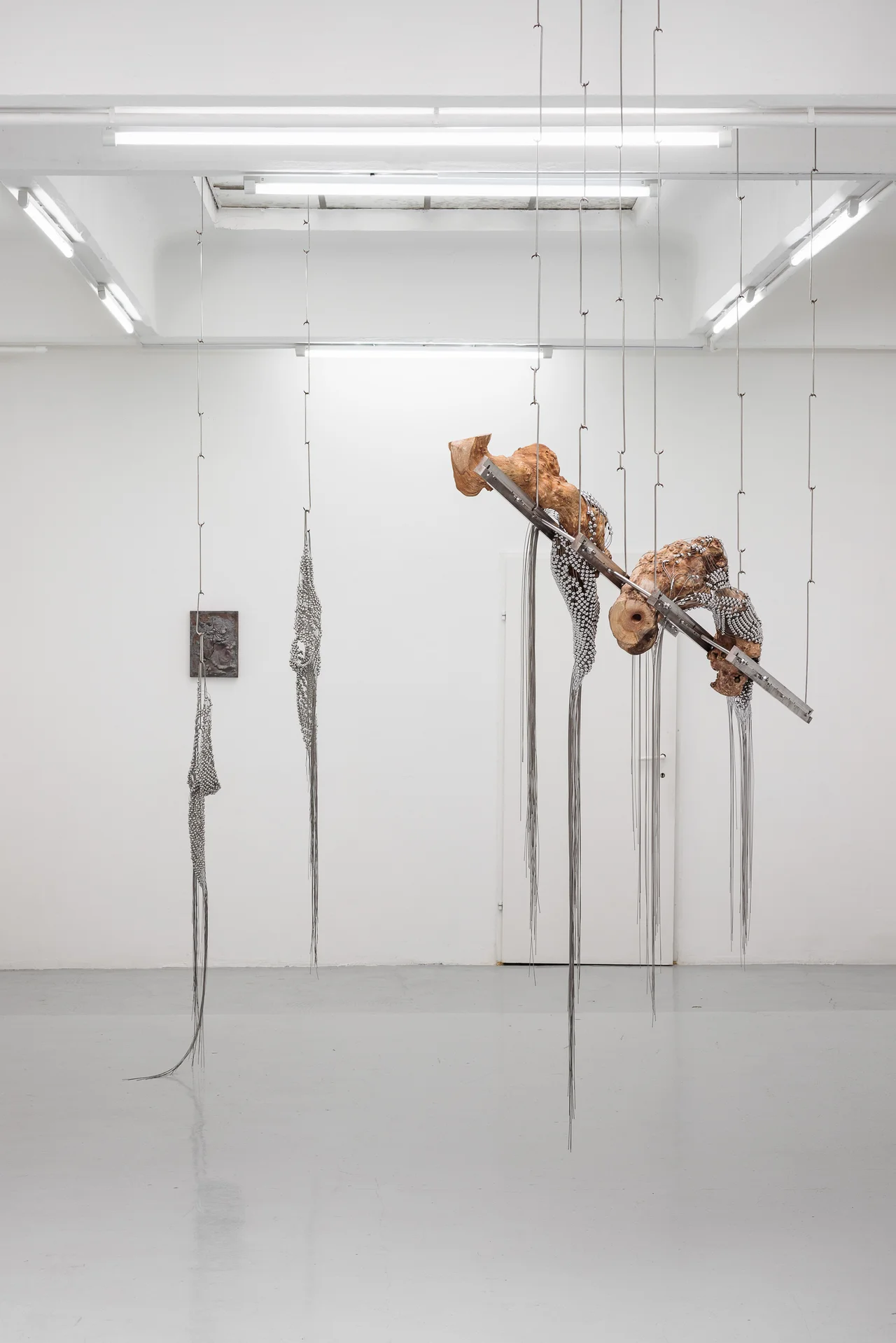
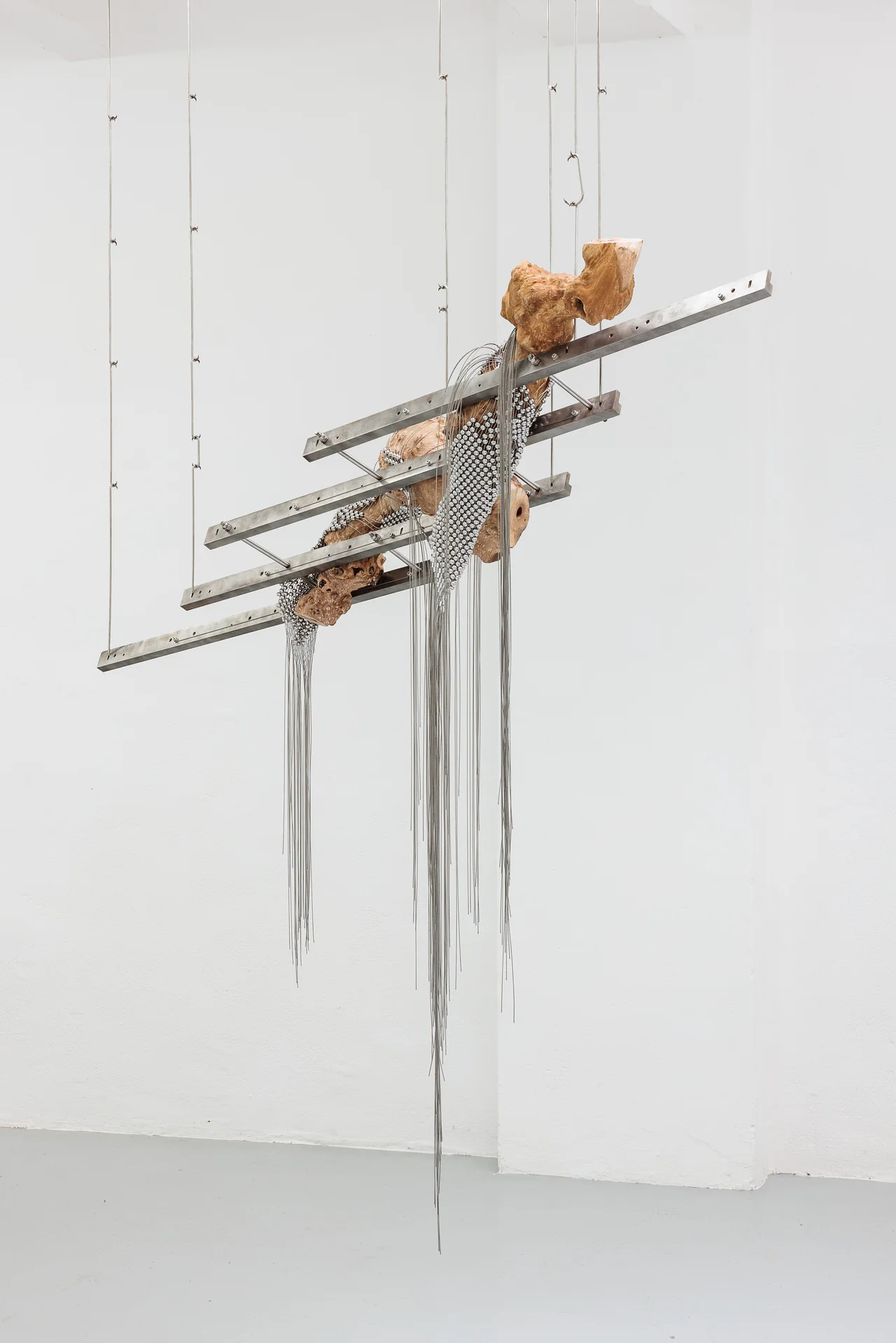
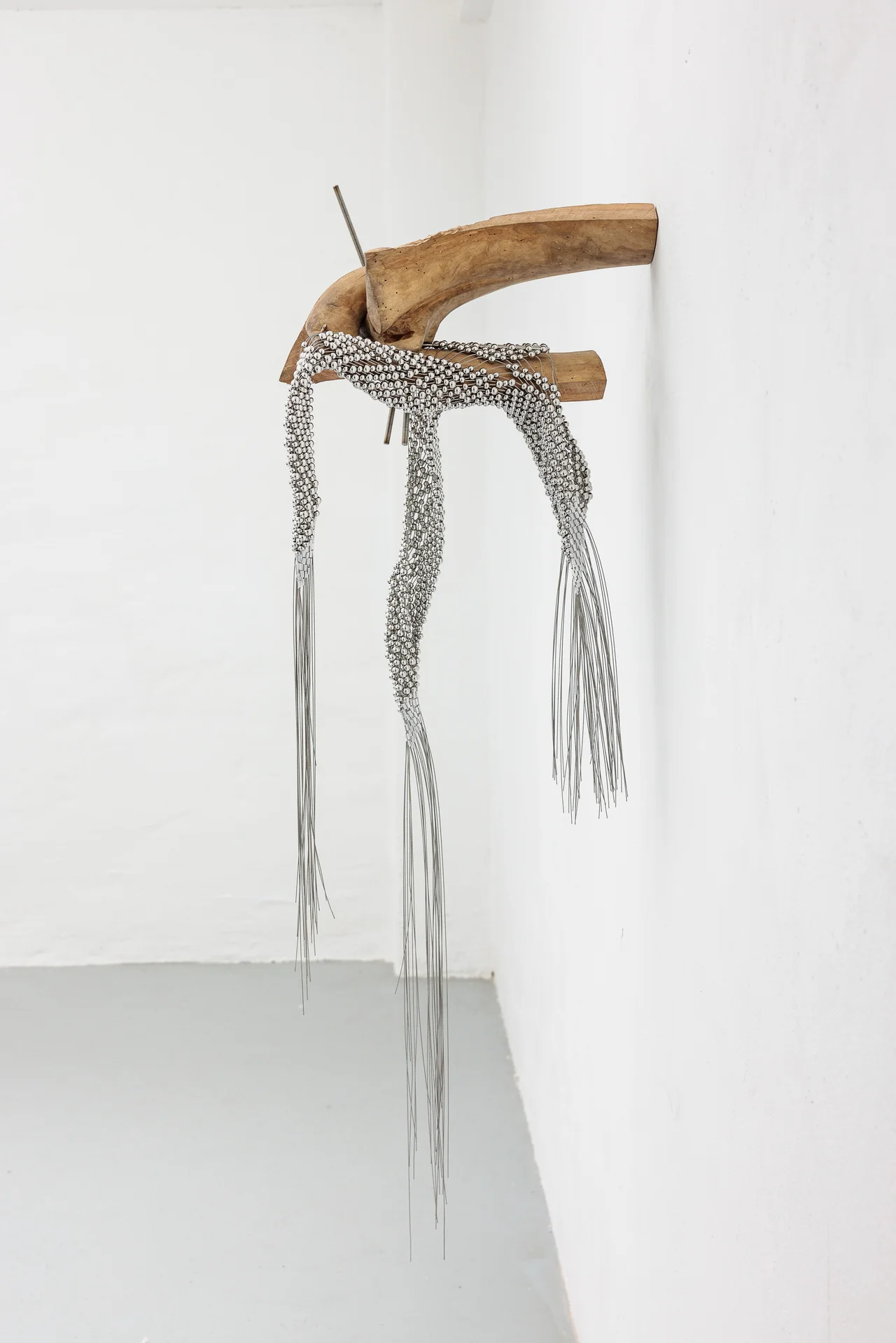
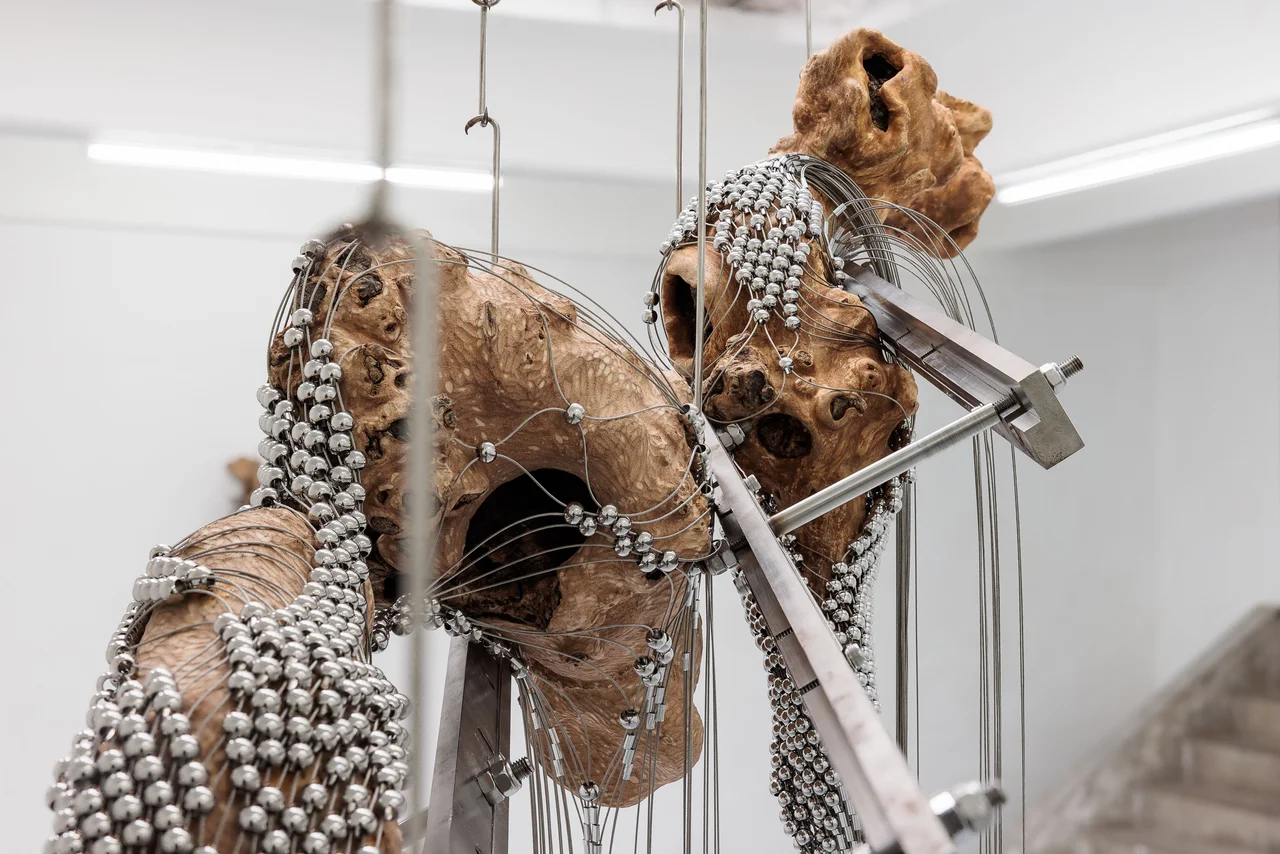
Han's series xoxo takes found pieces of London Plane as its bodily nucleus. Often called the ultimate city tree, the London Plane thrives in polluted air where other species fail, which is why it lines streets across continental Europe. It is also a product of early globalisation. Arriving in Shanghai in 1902 with the French authorities, it became central to the French Concession, and by the 1950s the species accounted for the overwhelming majority of the city's street trees. The tree carries a colonial history in its bark.
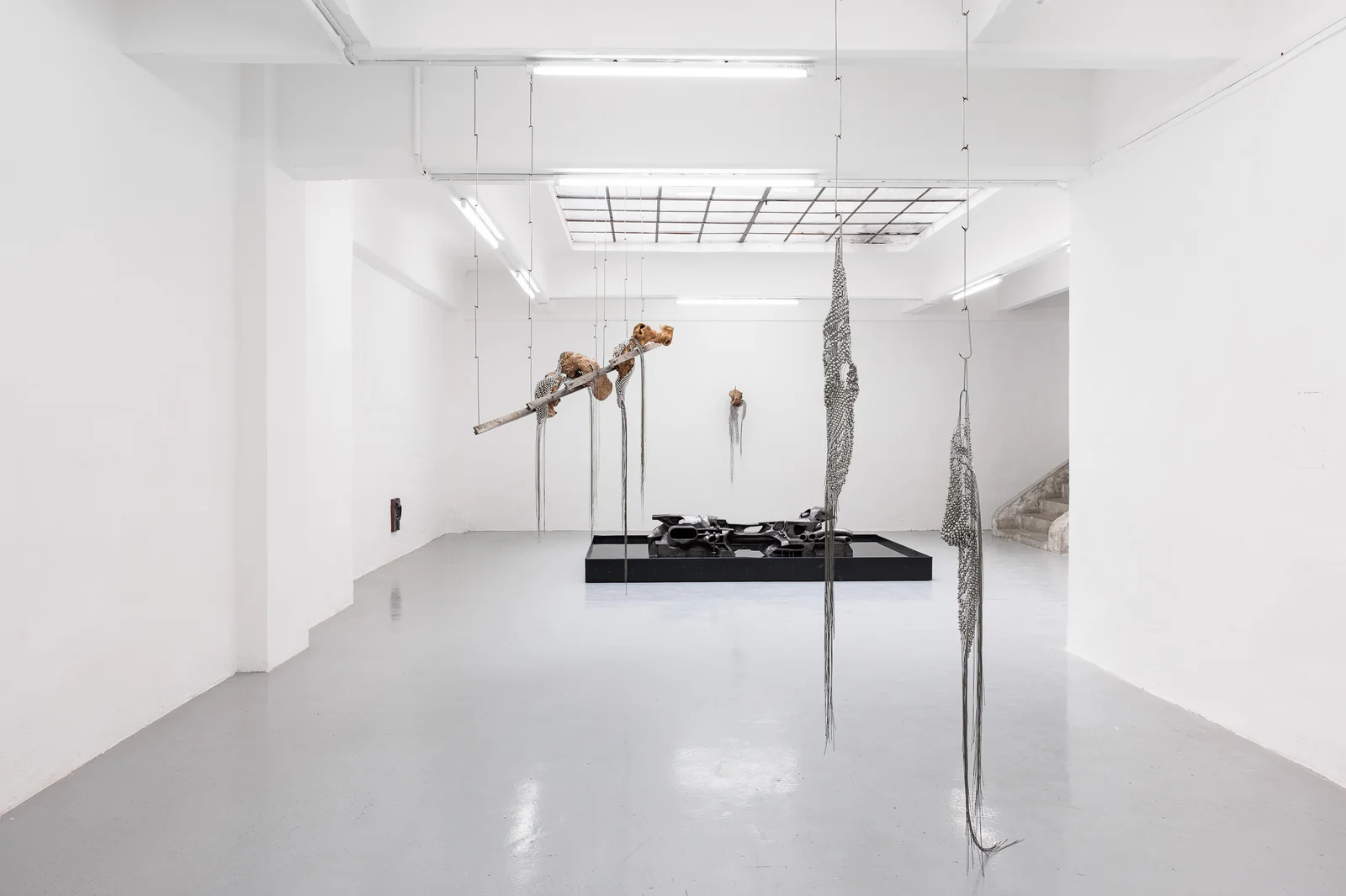
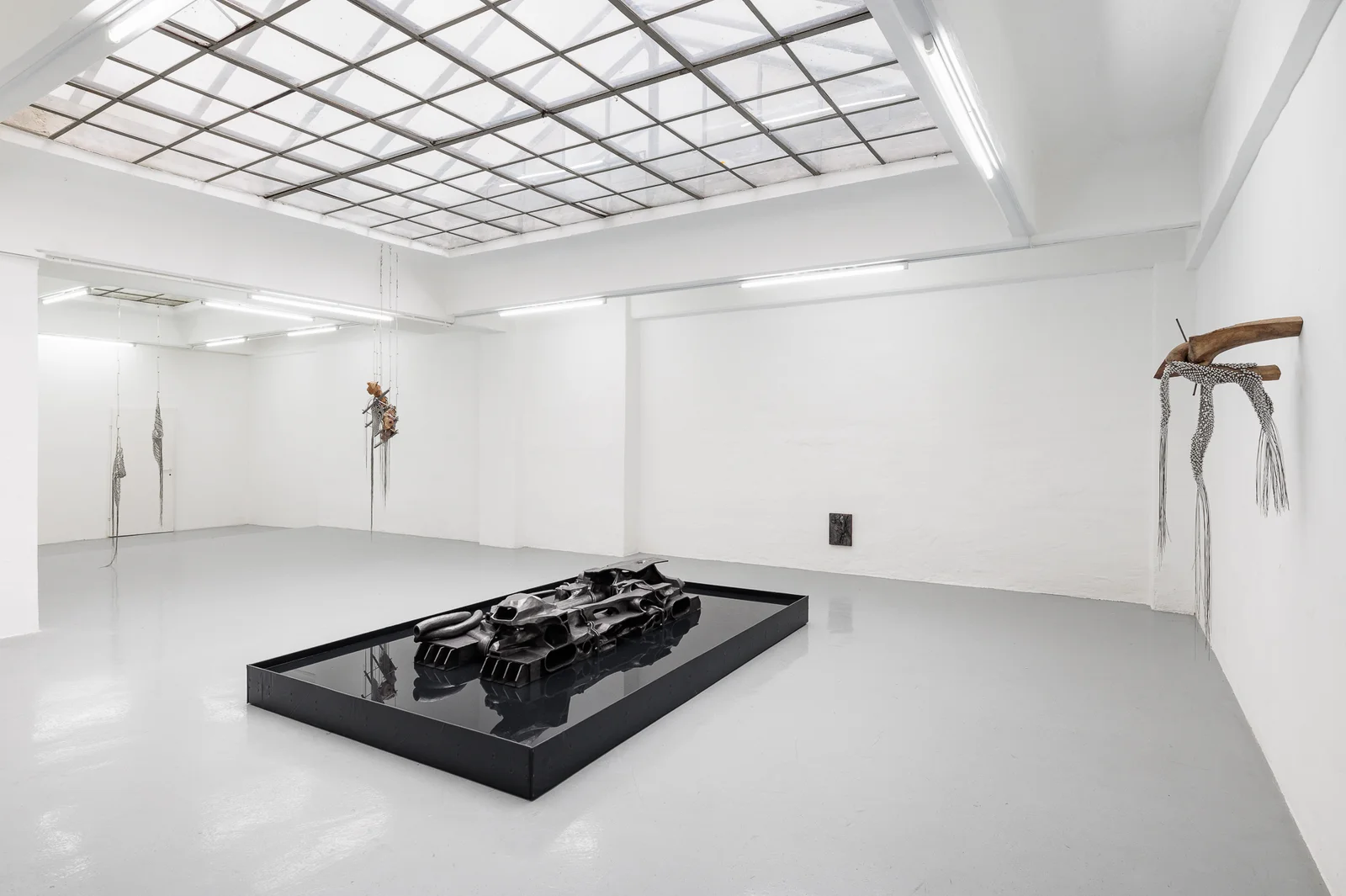
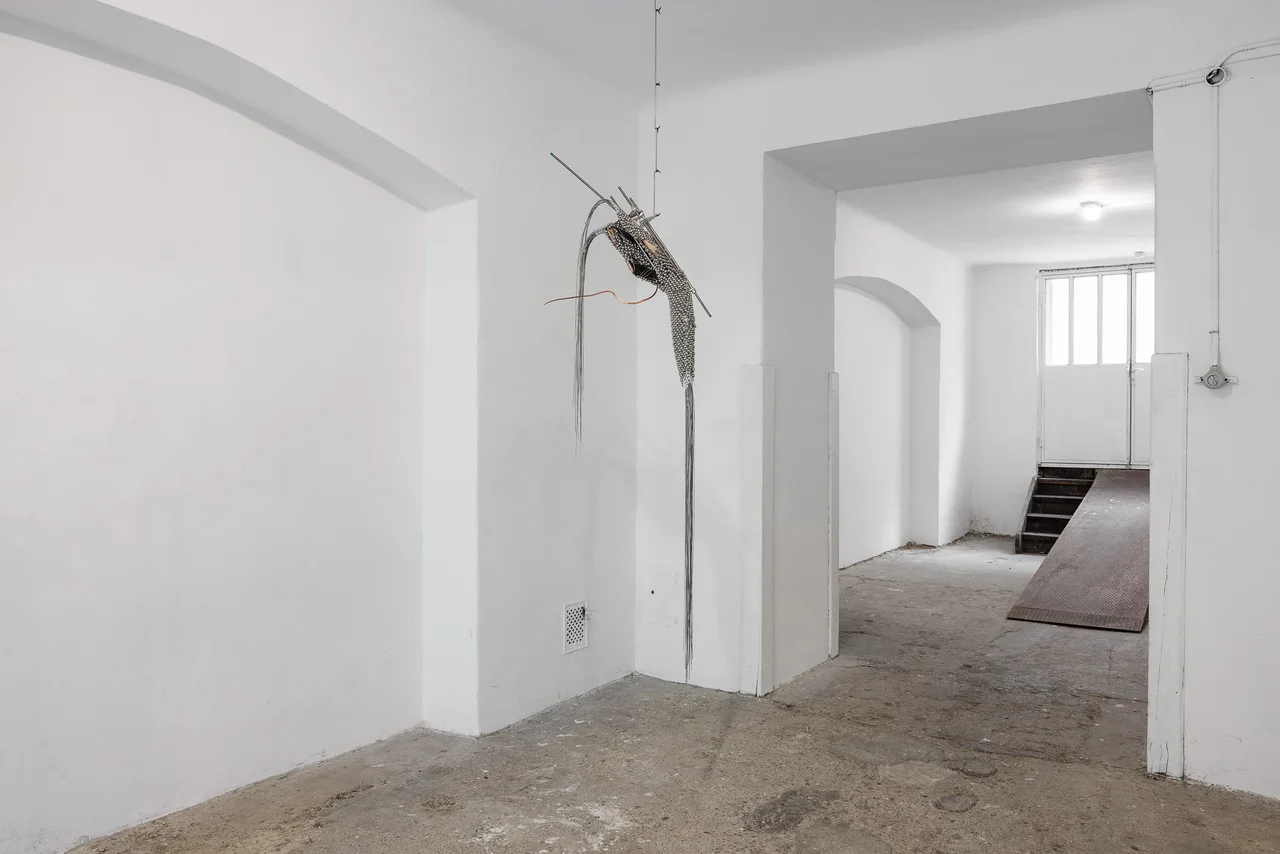
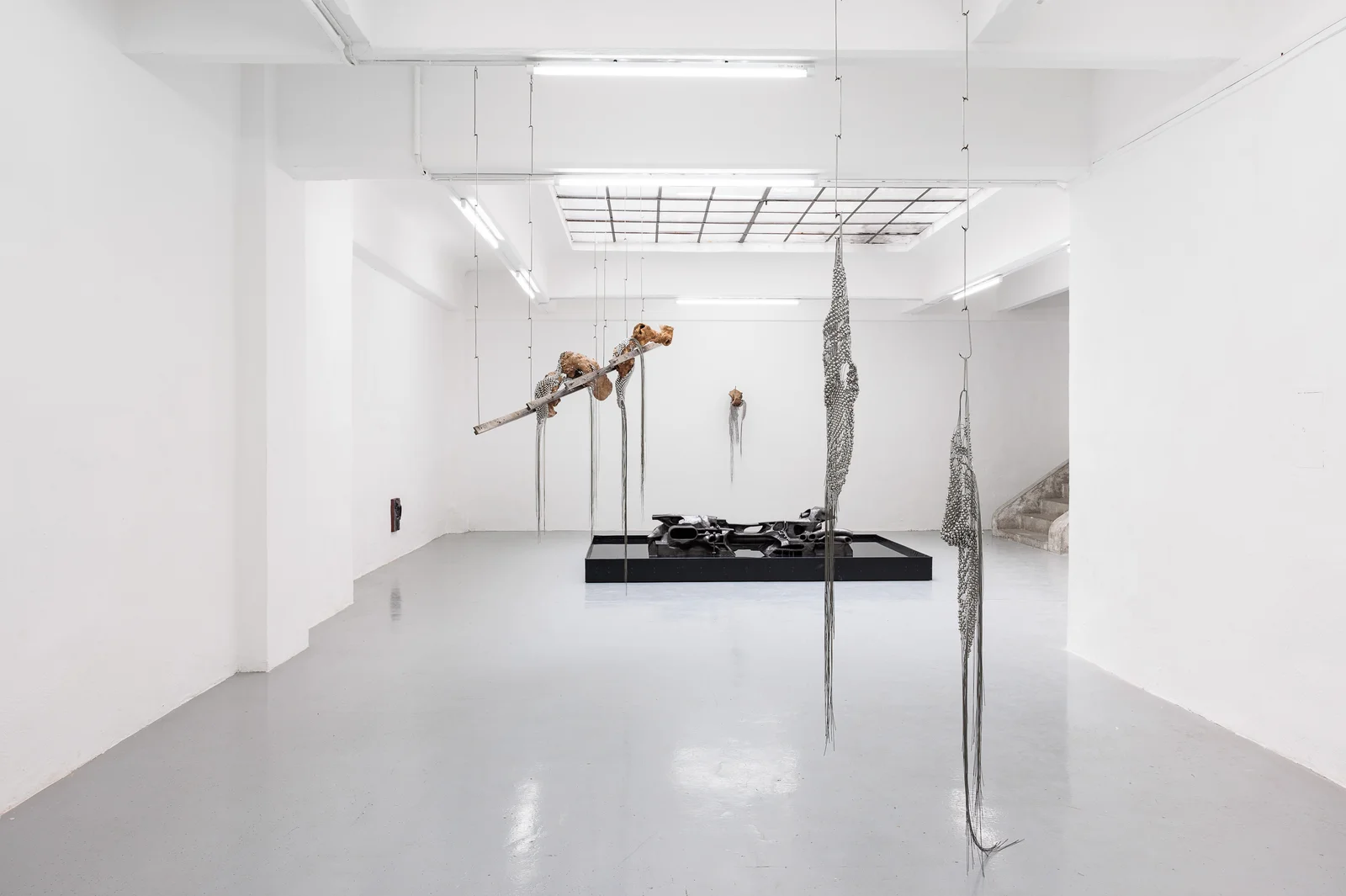
Around these knotted offcuts Han weaves a net of steel wire, its intersections pinned with small stainless steel beads that catch the light. The net follows the grain and swelling of the wood like an osteotomy, tracing forces rather than describing surfaces. Suspended from ceiling wires or slung over a raw branch bracketed to the wall, each piece reads as a diagram of its own pressures, vectors and tension extruded into three dimensions. Loose wire falls in long silver tails toward the floor, and the works fold in on themselves, reorganising the room around them.
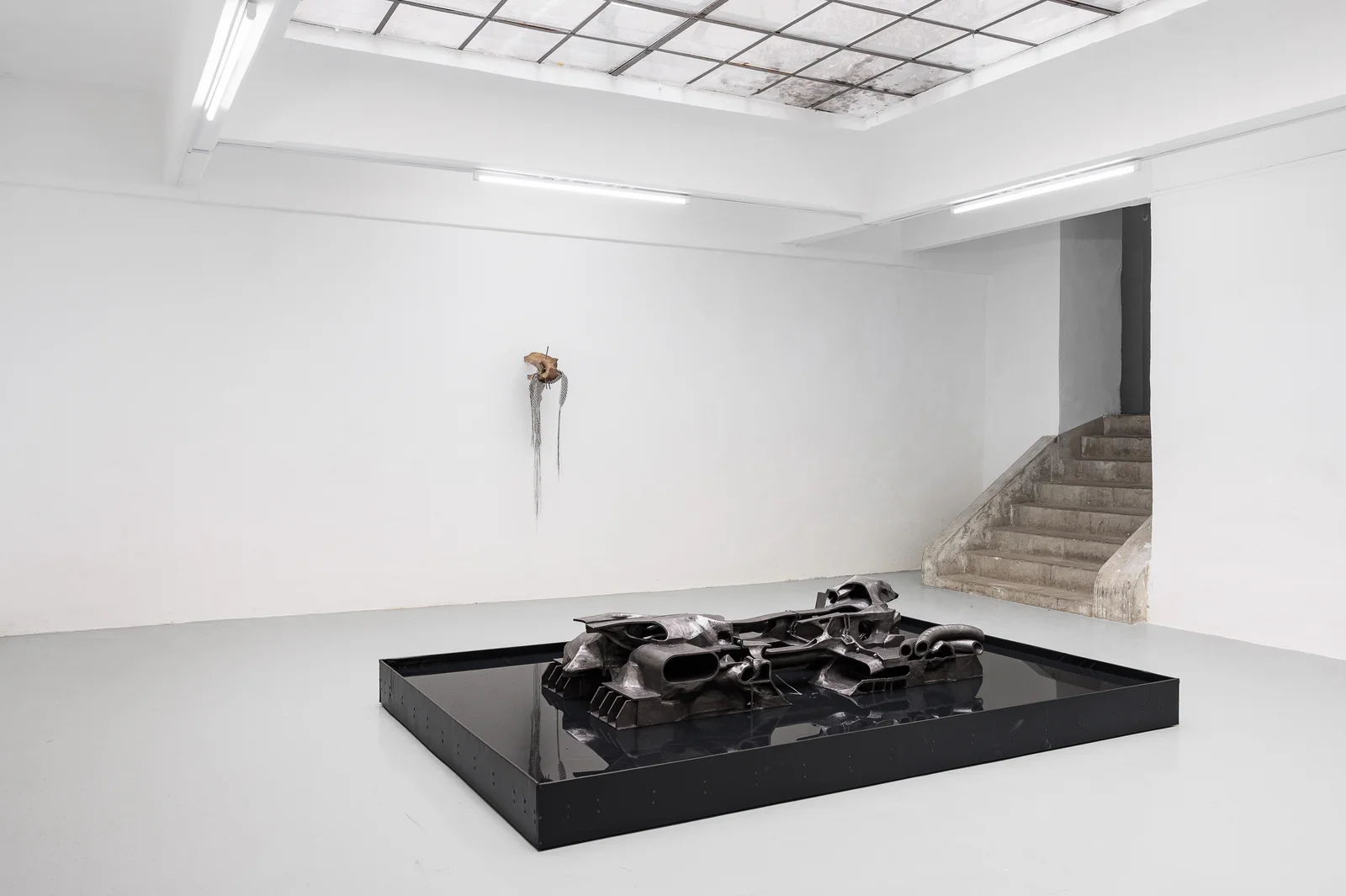
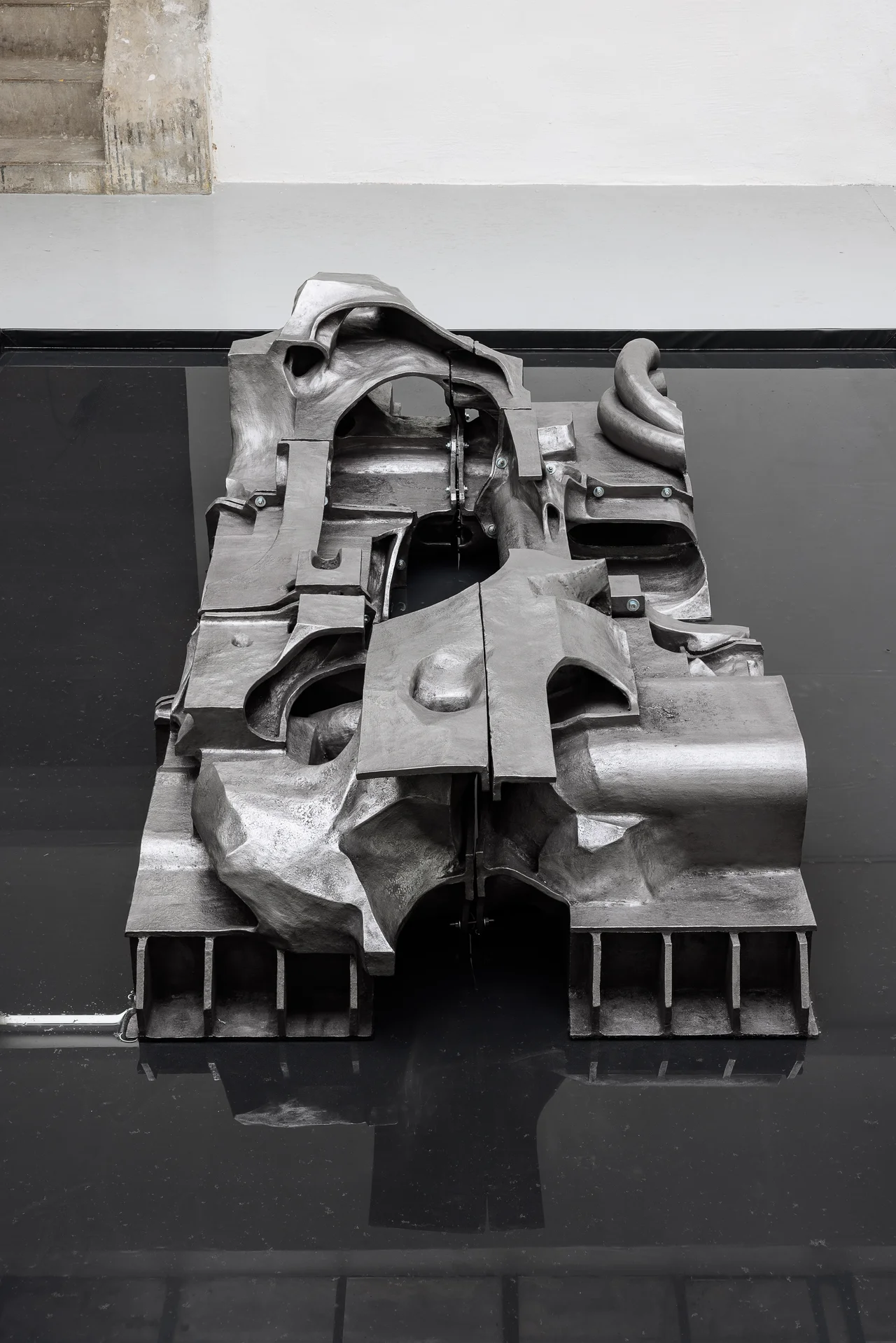
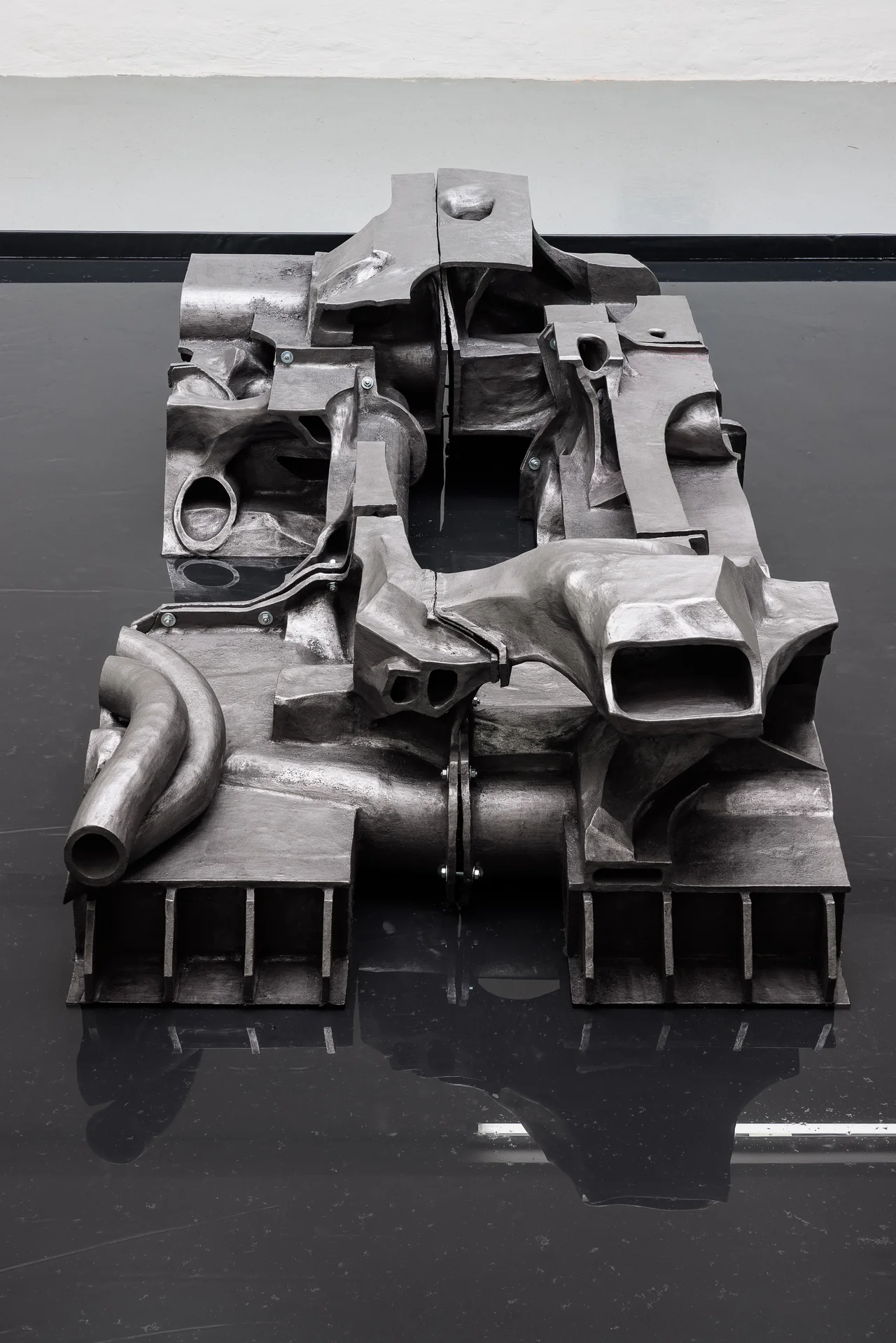
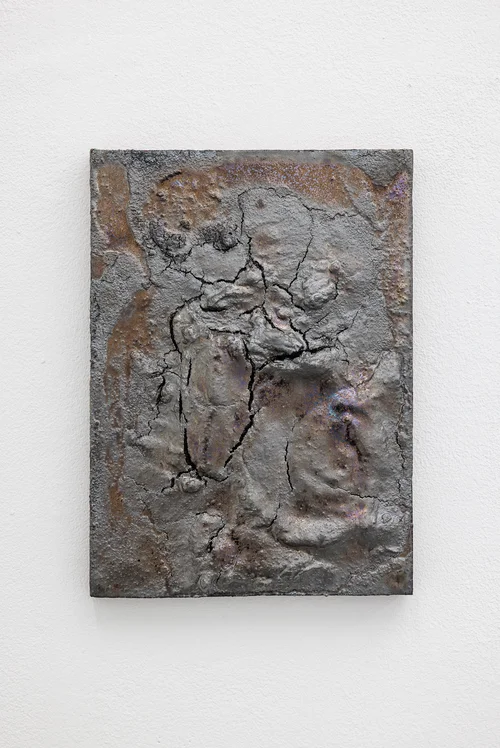
Sturla grew up in Swindon, once a node of England's industrial revolution, now a town of emptied and repurposed factories. He treats landscape as something marked, annotated, endlessly cross-referenced against the real, and his interest lies in what post-industrial production does to ecological systems. Fieldnotes (Plant Theatre) borrows the logic of J.A. Baker's The Peregrine: the viewer looks down onto the ceramic form, circling it like a bird reading terrain. Patinated with graphite powder, part engine, part building, part landscape, it sits in a shallow black pool that folds the sky back into the work and reflects the surrounding room.
Read together, the two propositions argue that mapping is never neutral, that it carries the weight of what has been extracted, displaced and lost. To grasp how the world has been altered, Han and Sturla suggest, the axis of looking has to change first. The map, they hold, has always been the first act of possession, and to remake it is to ask whether the world can be held without being owned.