Lopota Gift Shop by Studio Gypsandconcrete in Kakheti, Georgia transforms forty-eight square meters into liquid architecture—green glass and mirrored surfaces channeling the lake beyond.
The hotel complex at Lopota organizes itself around a central lake, its various structures oriented toward the water like pilgrims facing a shrine. When Studio Gypsandconcrete received the commission for a gift shop within this ensemble, the conceptual direction arrived immediately: the interior should somehow contain what lay outside, bringing the lake's presence into a space that could not offer direct views.
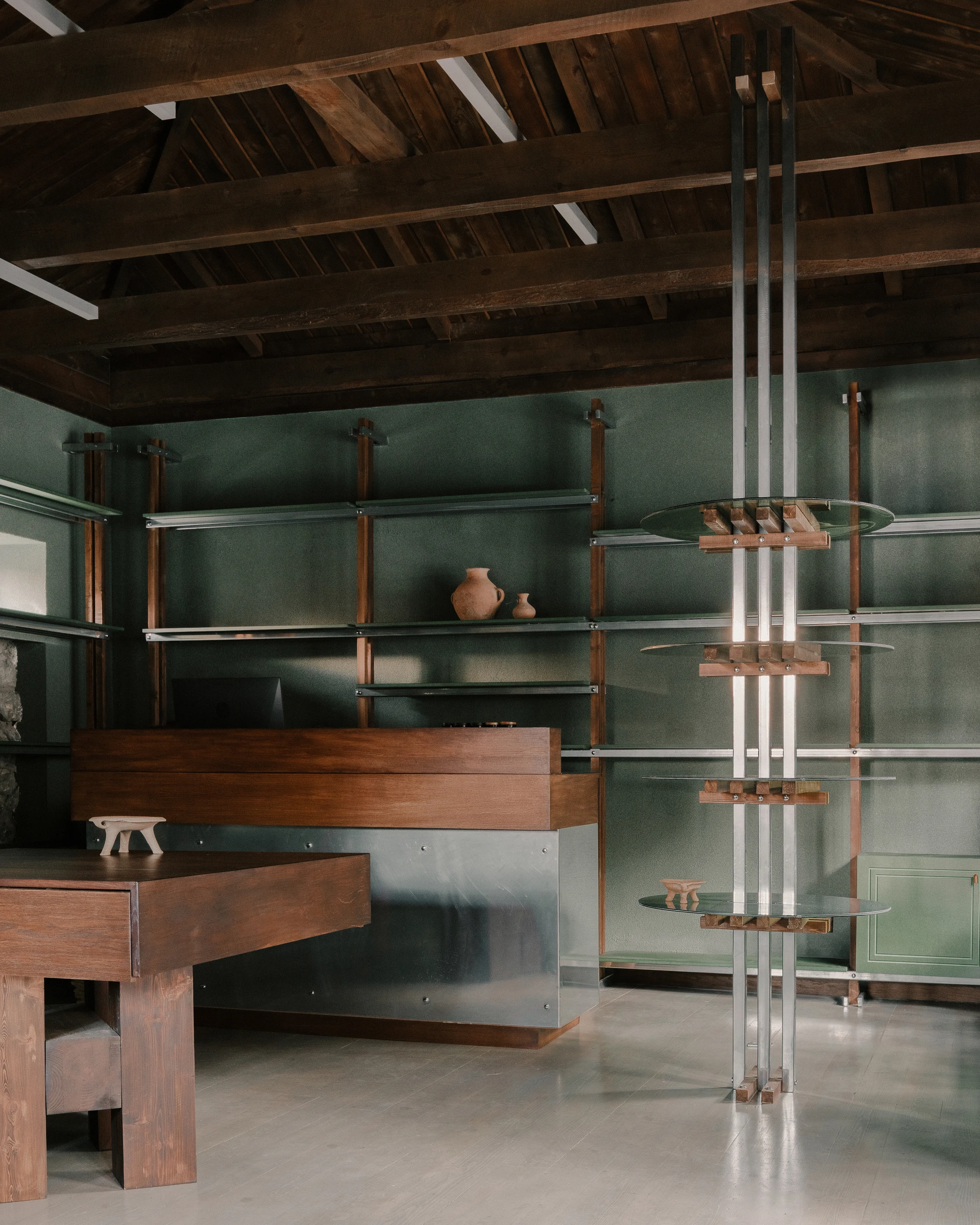
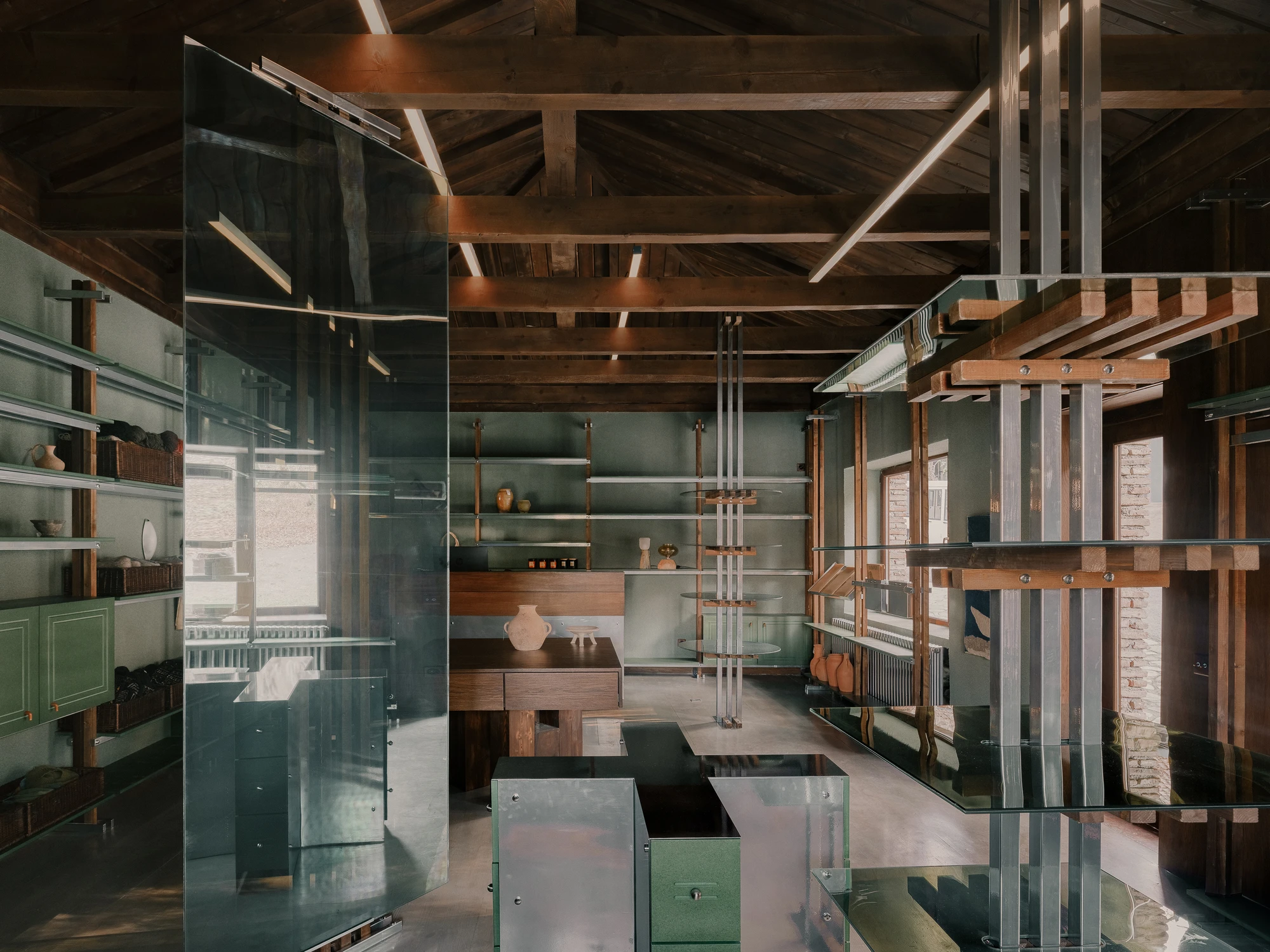
Green glass became the primary material—its color matching the water's particular tint, its reflective surface multiplying space and light. The architects specified panels mirrored on one side, creating zones of opacity and transparency that shift as visitors move through the small footprint. What appears solid from one angle dissolves into reflection from another; the walls seem to breathe.
The stone aggregate covering non-glass surfaces reinforces the aquatic atmosphere. Greenish-grey gravel, pressed into plaster, suggests lakebed sediment brought indoors. Sections of exposed local stone interrupt this texture, their rougher presence grounding the otherwise ethereal palette. The floor continues the mineral logic, its surface reading as dried shallows.
Lighting operates at two registers. Wall sconces—their spherical forms referencing fishing floats—provide ambient illumination with a playful undertone. More dramatically, a two-way mirror at the space's center maintains sightlines toward the actual lake while creating the impression of infinite recession. Visitors glimpse water through glass that also shows their own reflection; inside and outside collapse into a single visual field.
Within forty-eight square meters, Studio Gypsandconcrete achieved something closer to environment than interior. The gift shop sells objects, but its real inventory is atmosphere—a portable version of the lake that guests can inhabit briefly before returning to the larger landscape from which it derives.