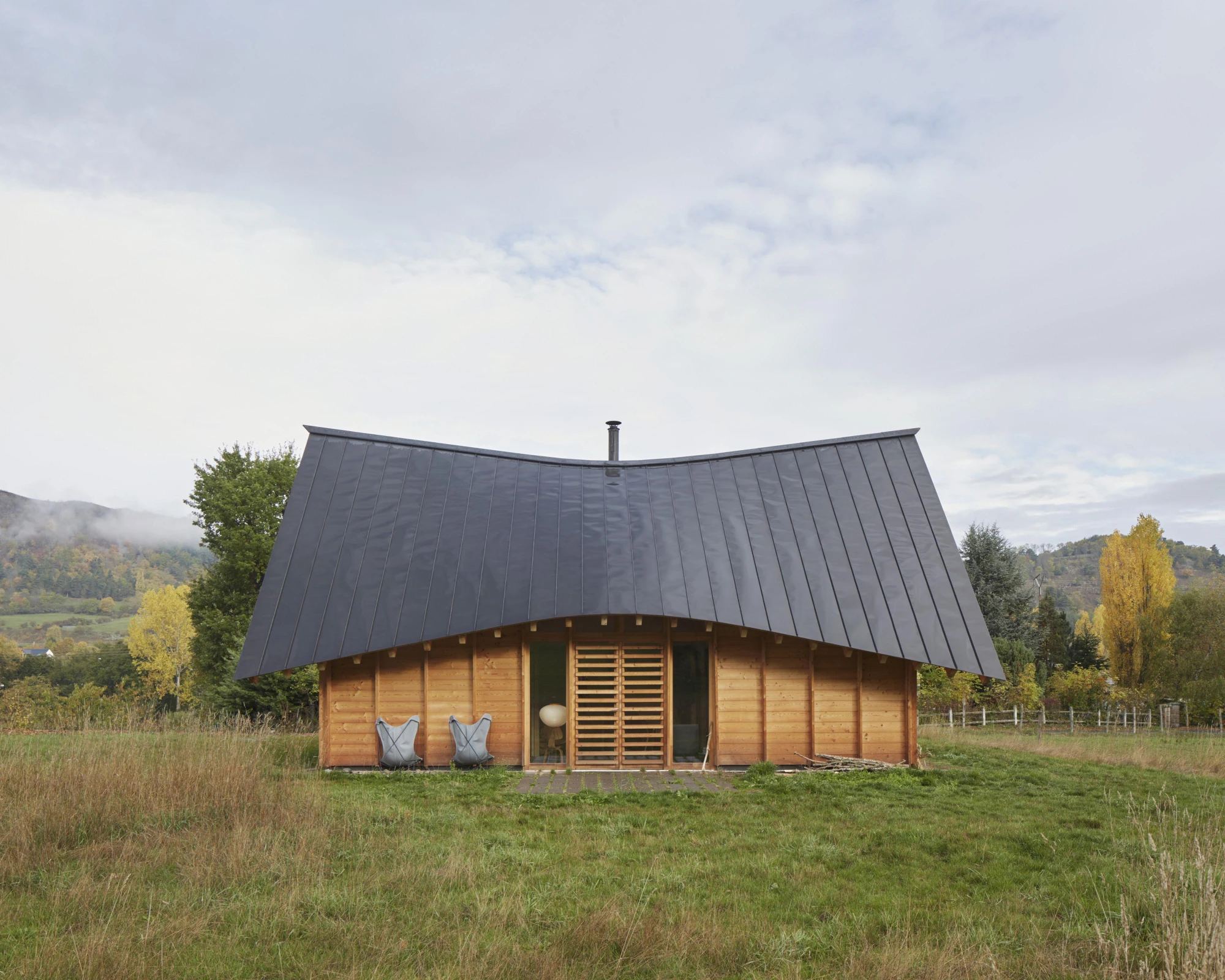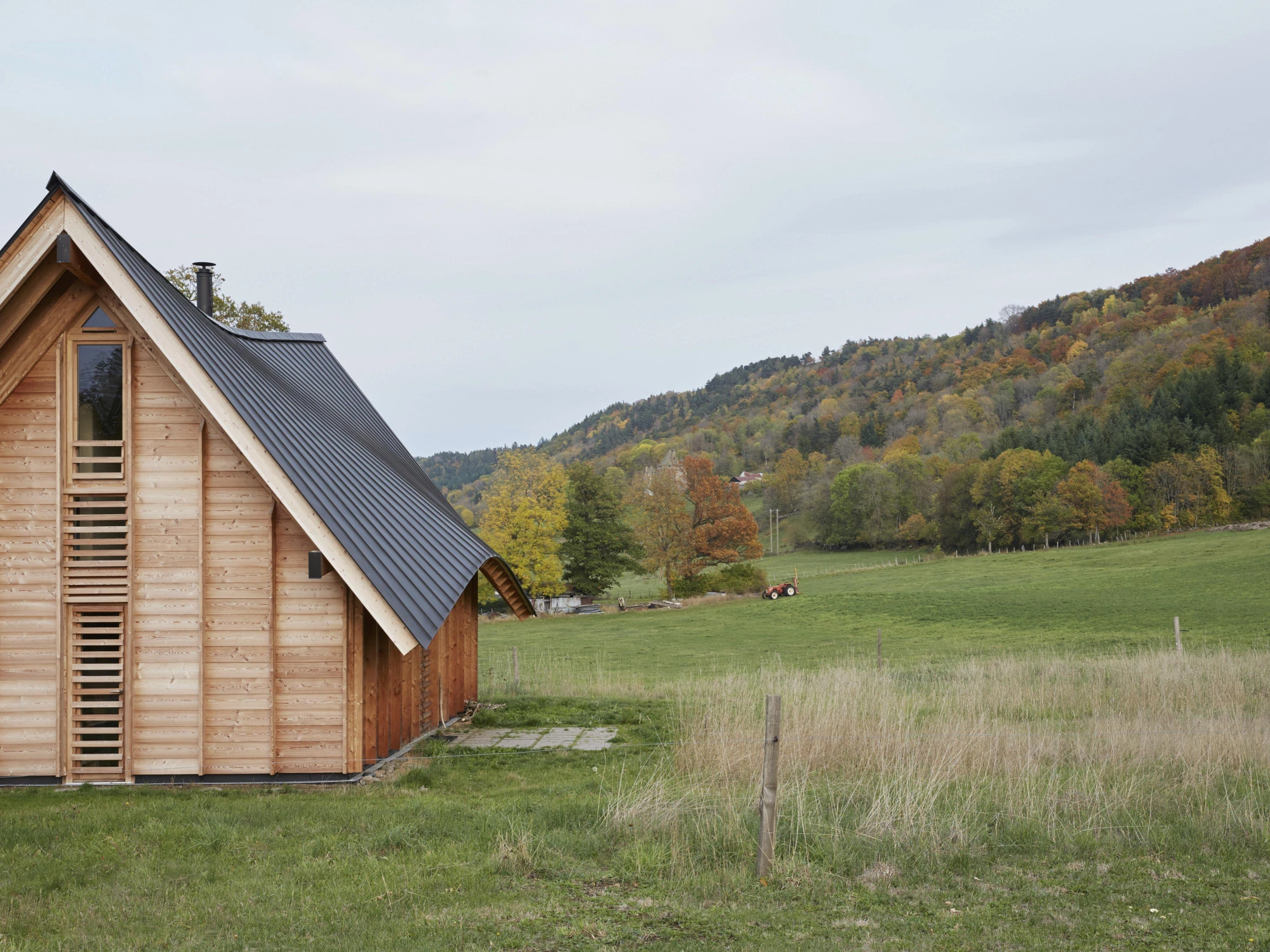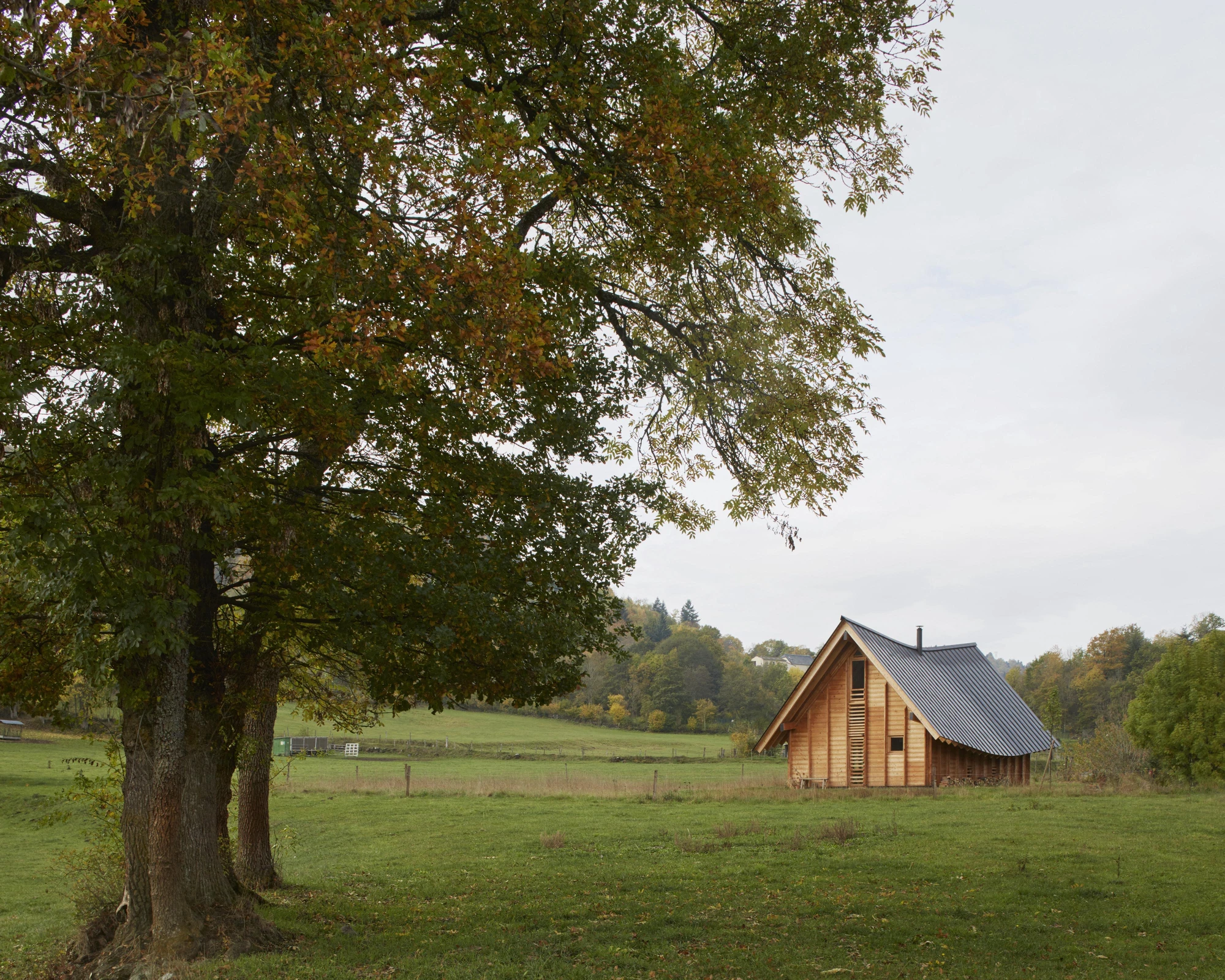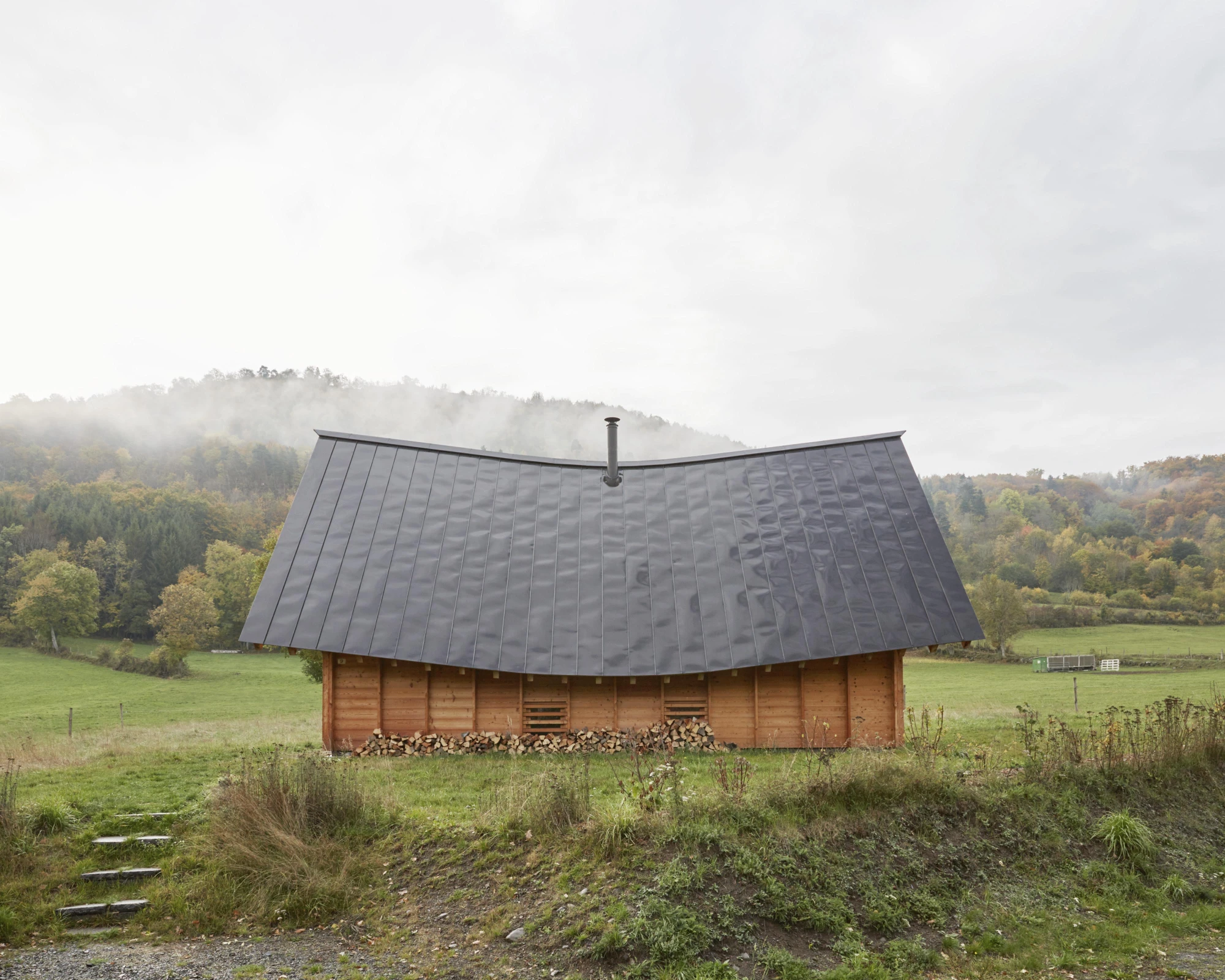
On the outskirts of Murat, in France's Cantal, arba places a small larch-clad house in open pasture — its pre-patinated zinc roof lifting to the south for winter light and dipping to the north to take the wind.
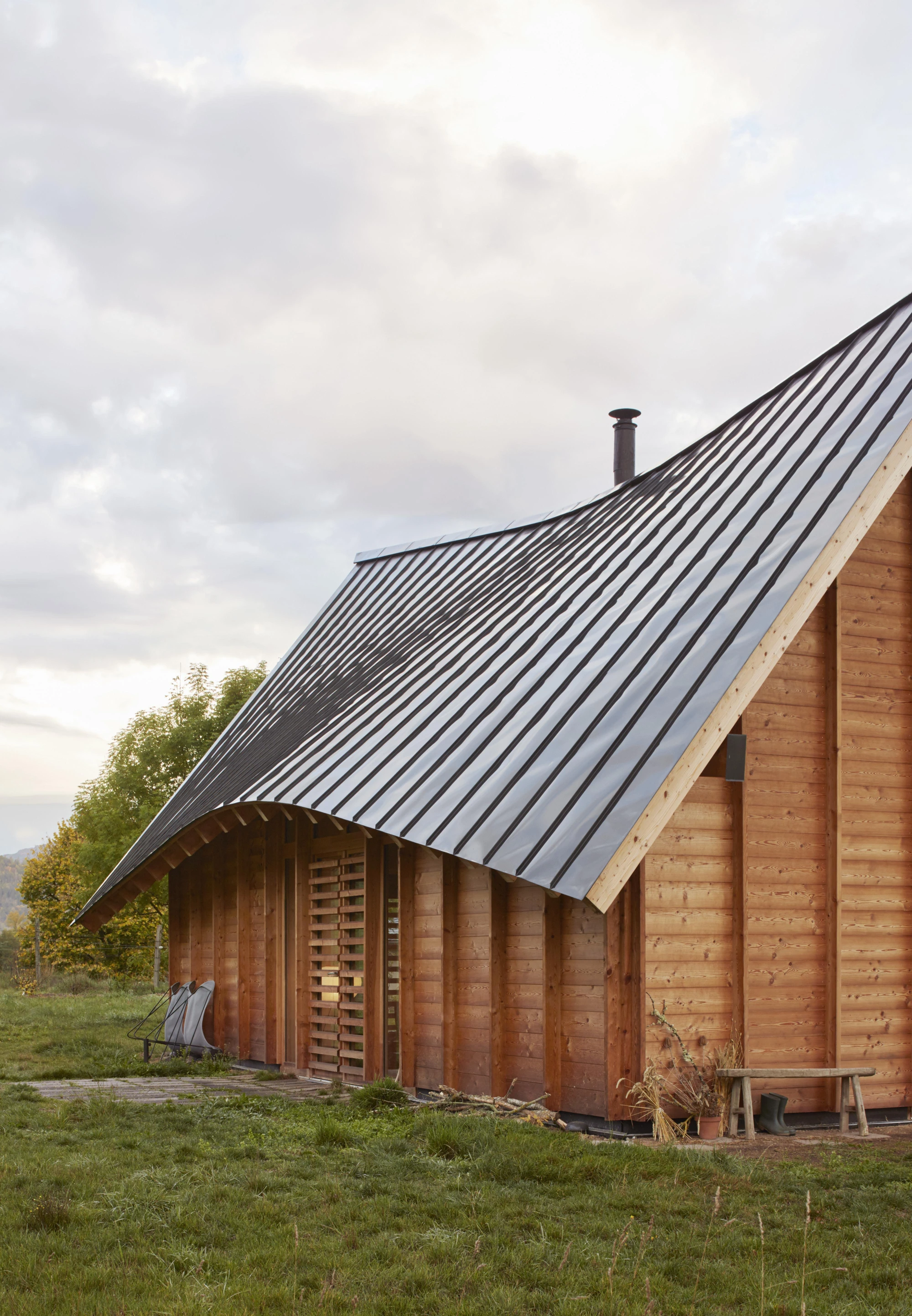
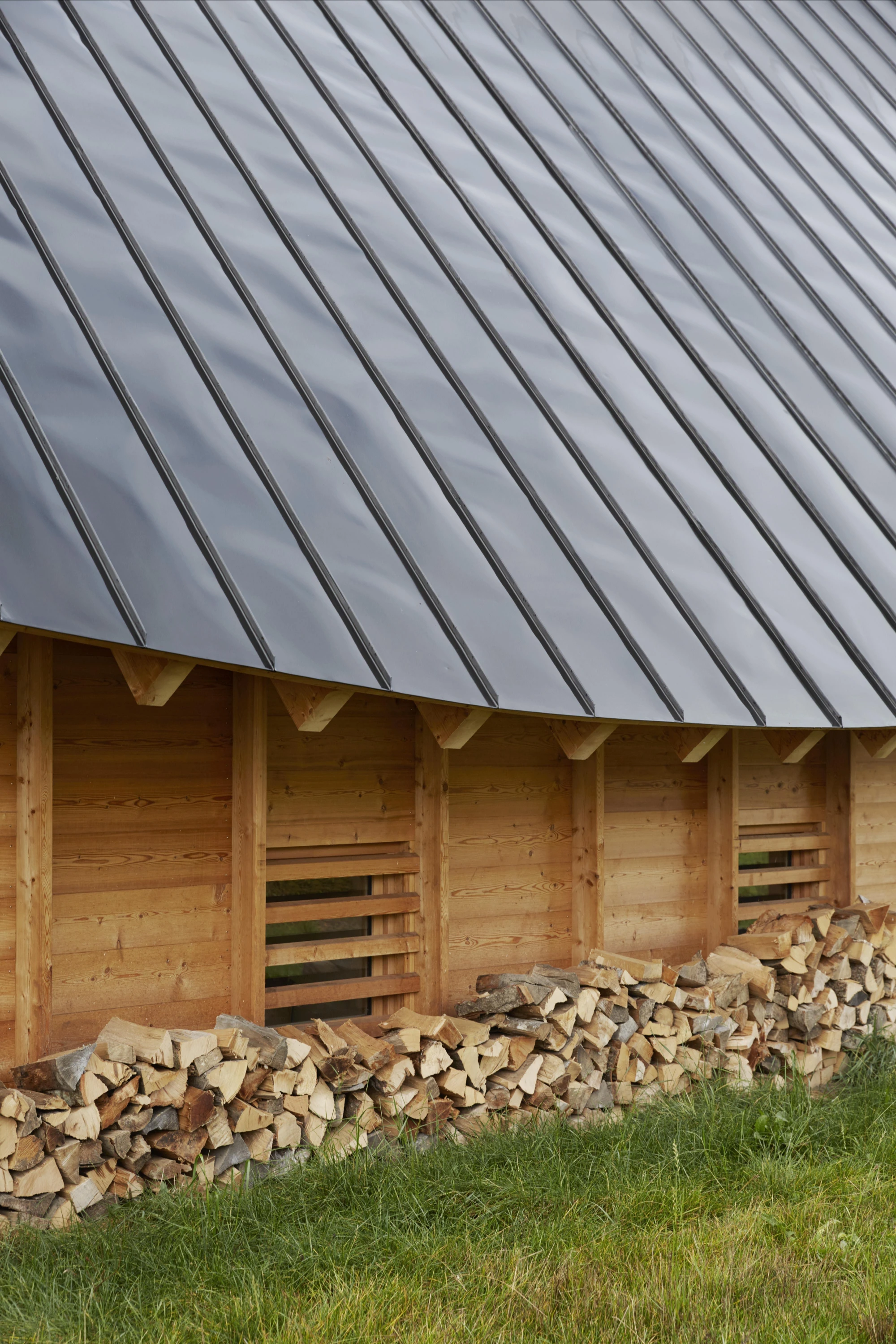
The architects Jean-Baptiste Barache and Sihem Lamine — partners at the Paris studio arba — looked to the region's older slate roofs, where heavy stone and slightly irregular framing often left a soft curve over time. L'Onde translates that familiar sag into standing-seam zinc, folded and pulled wide at the eaves. The result is a roofline that reads as both homage and departure: recognisably local in its gesture, quietly contemporary in its execution.
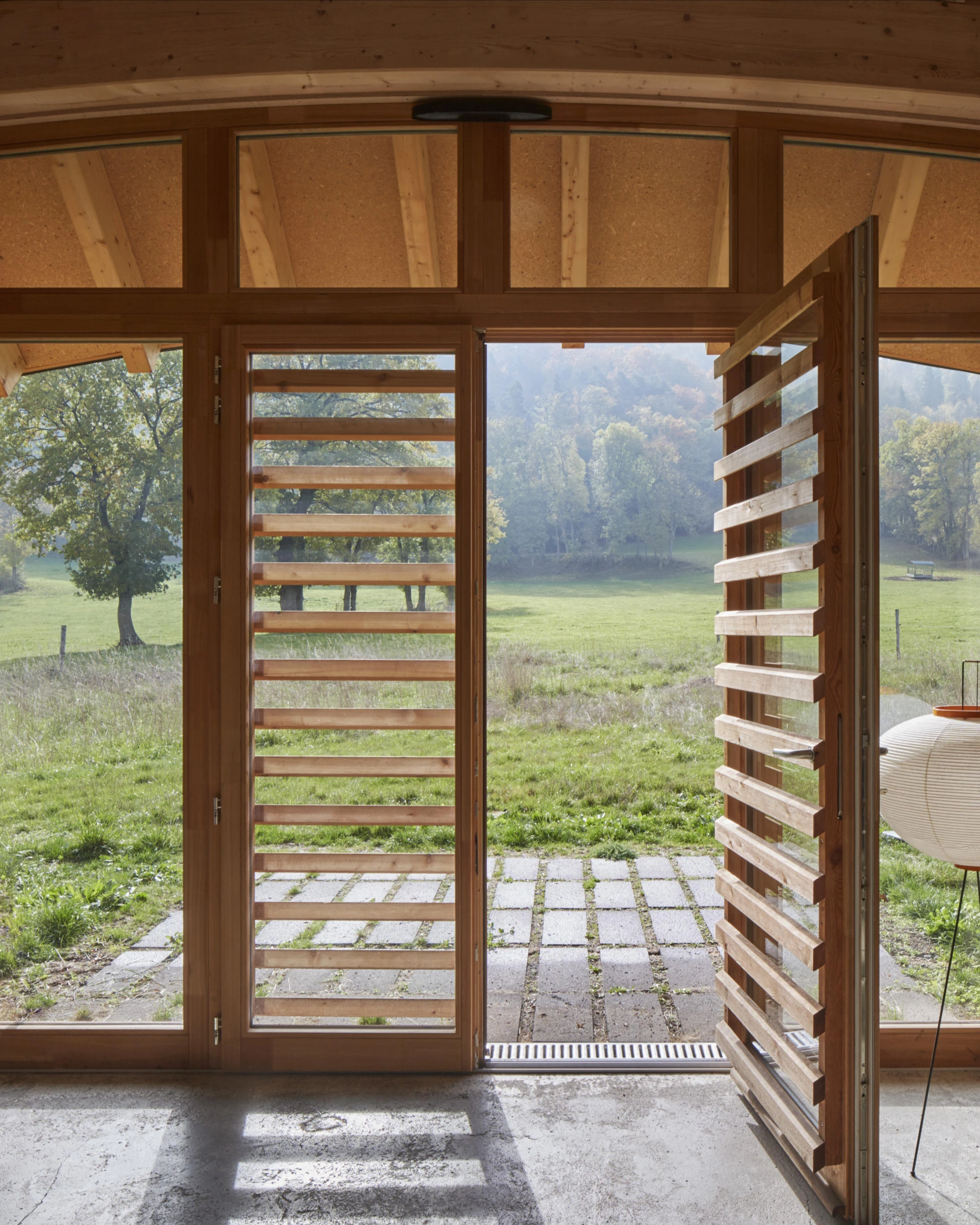
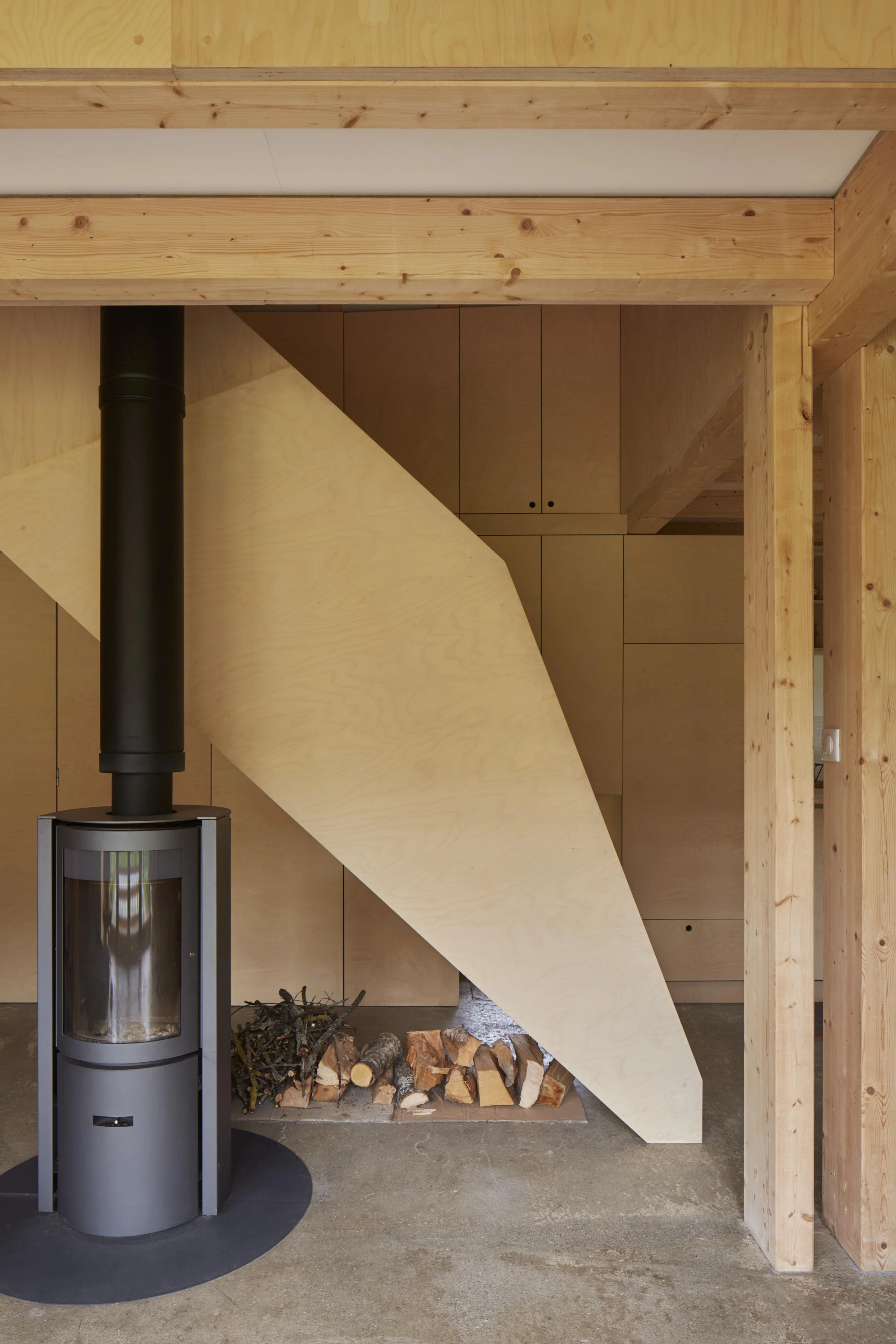
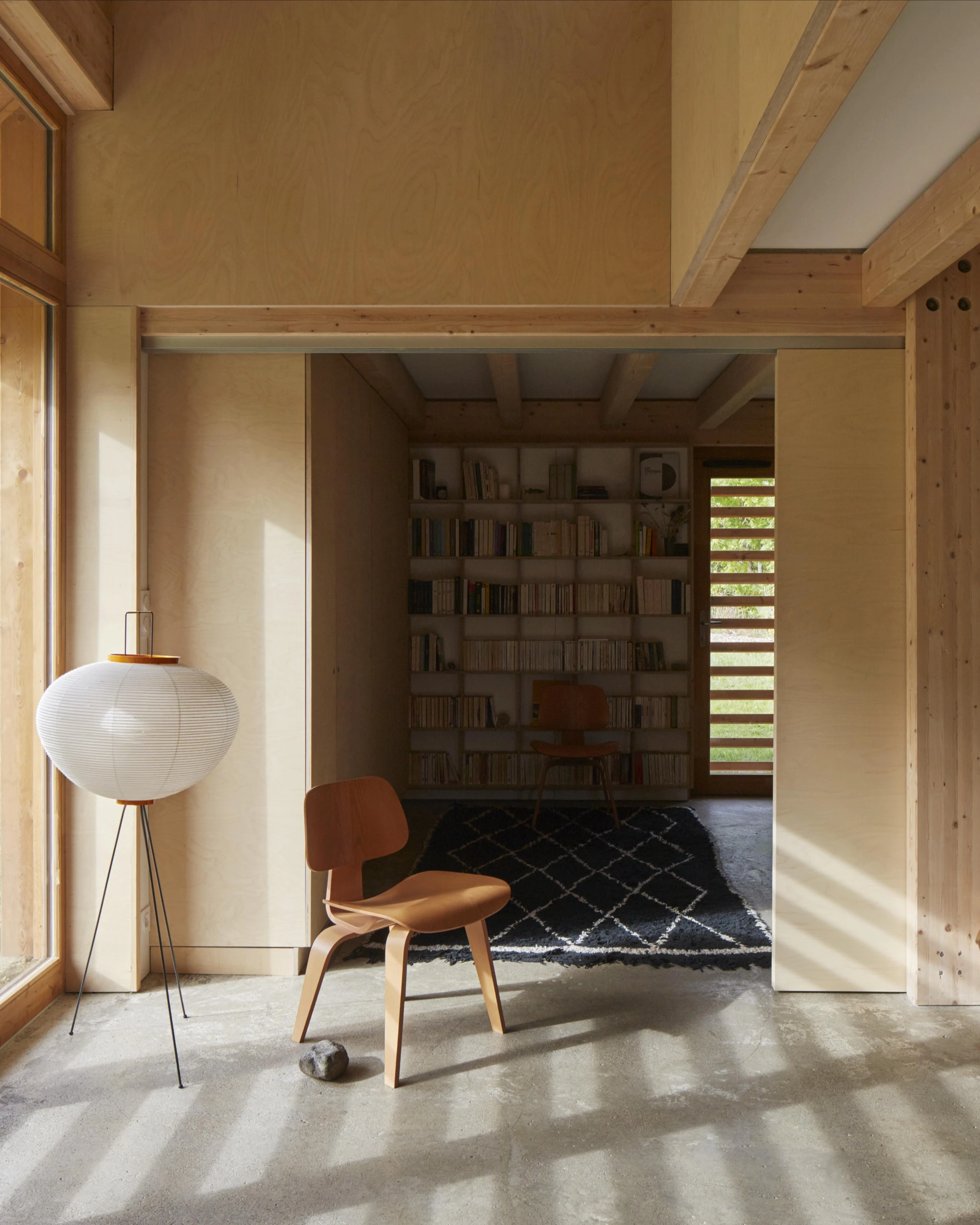
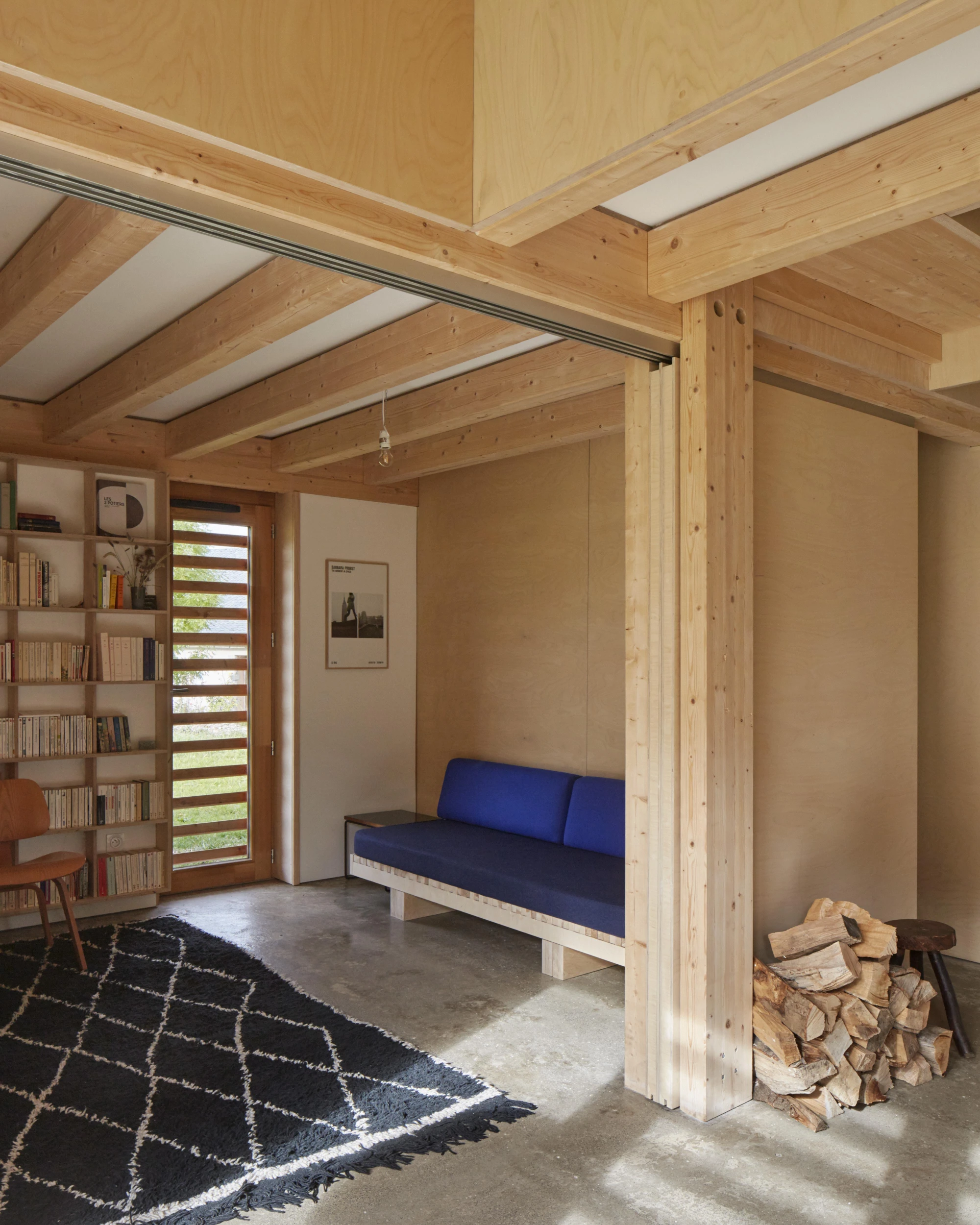
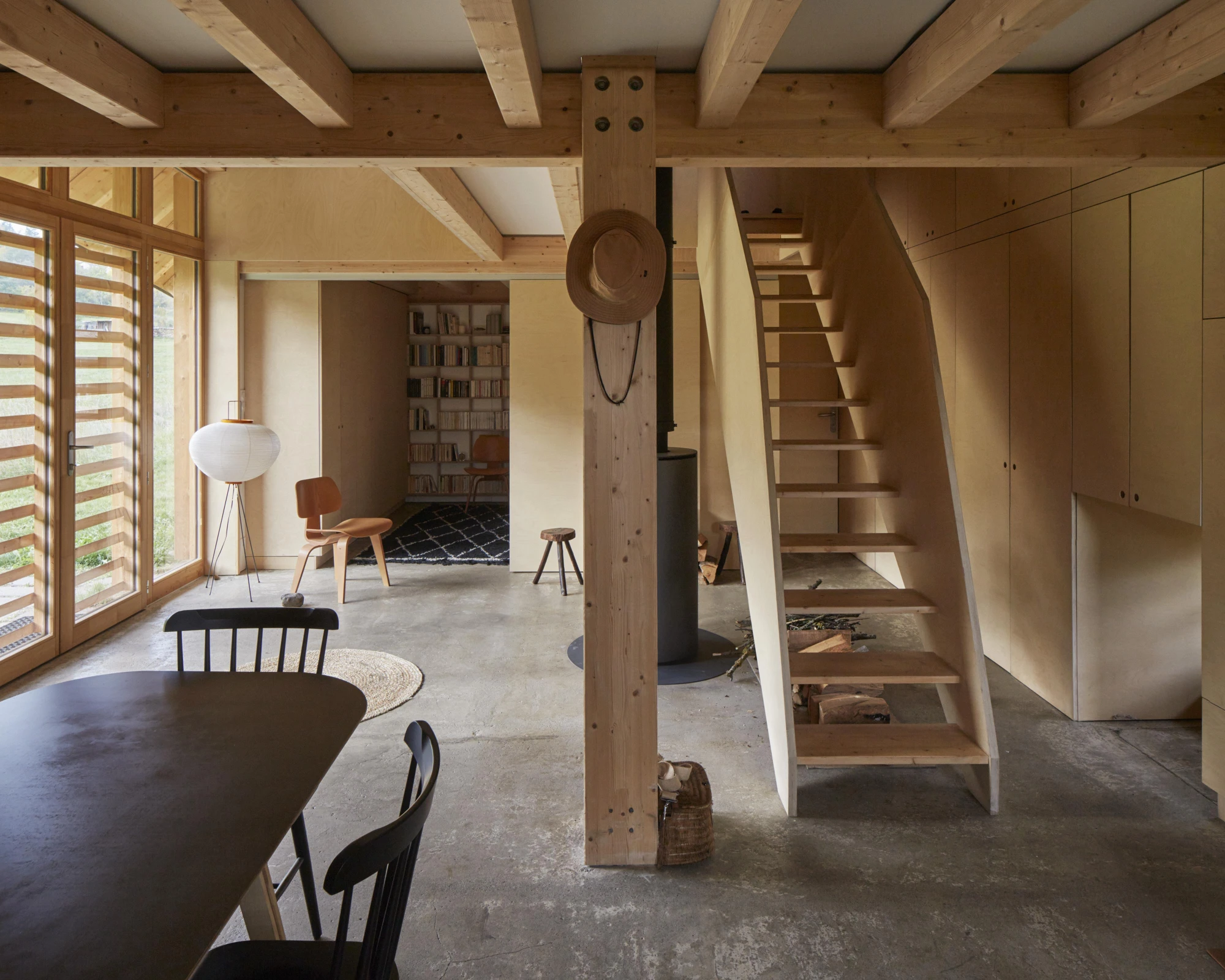
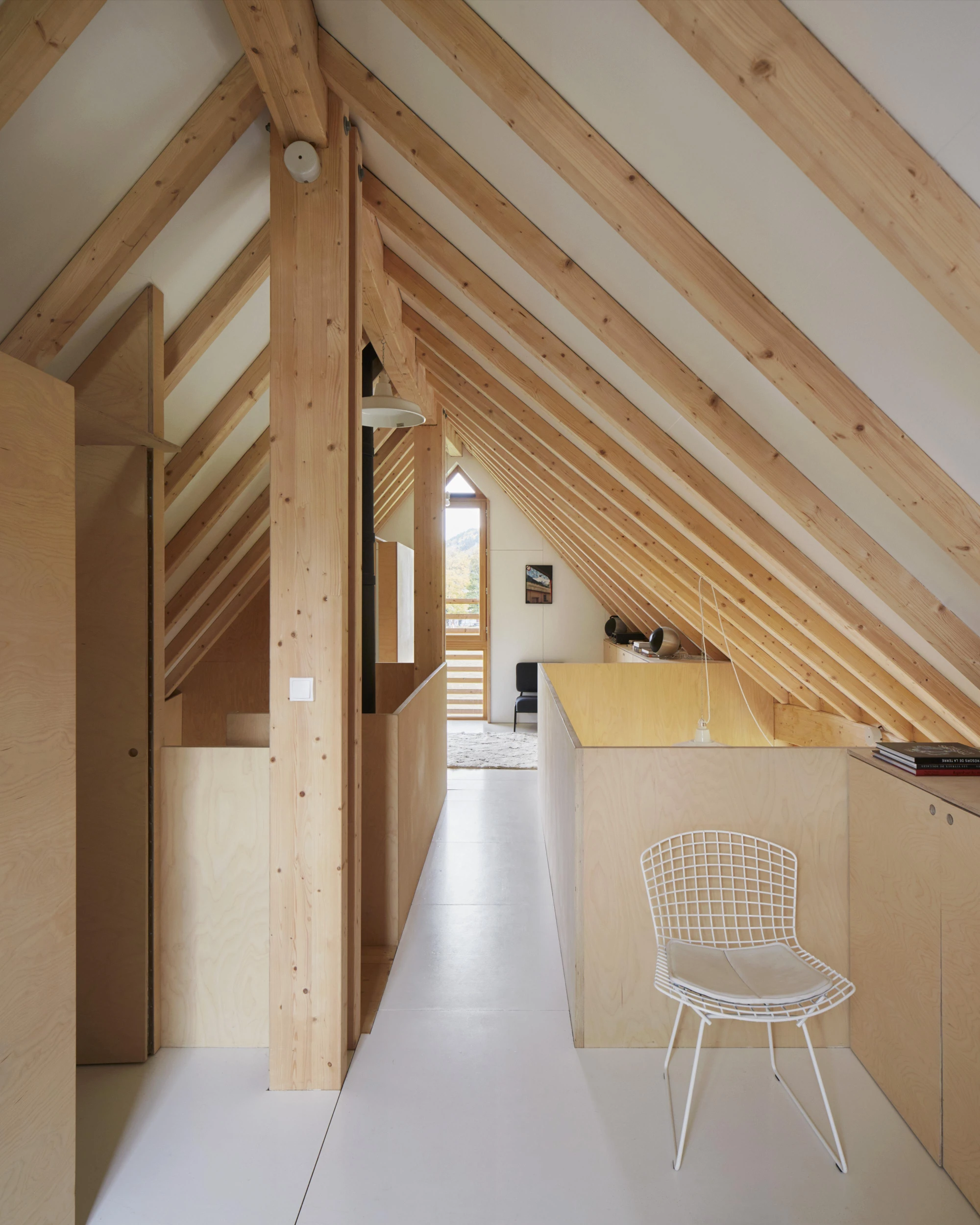
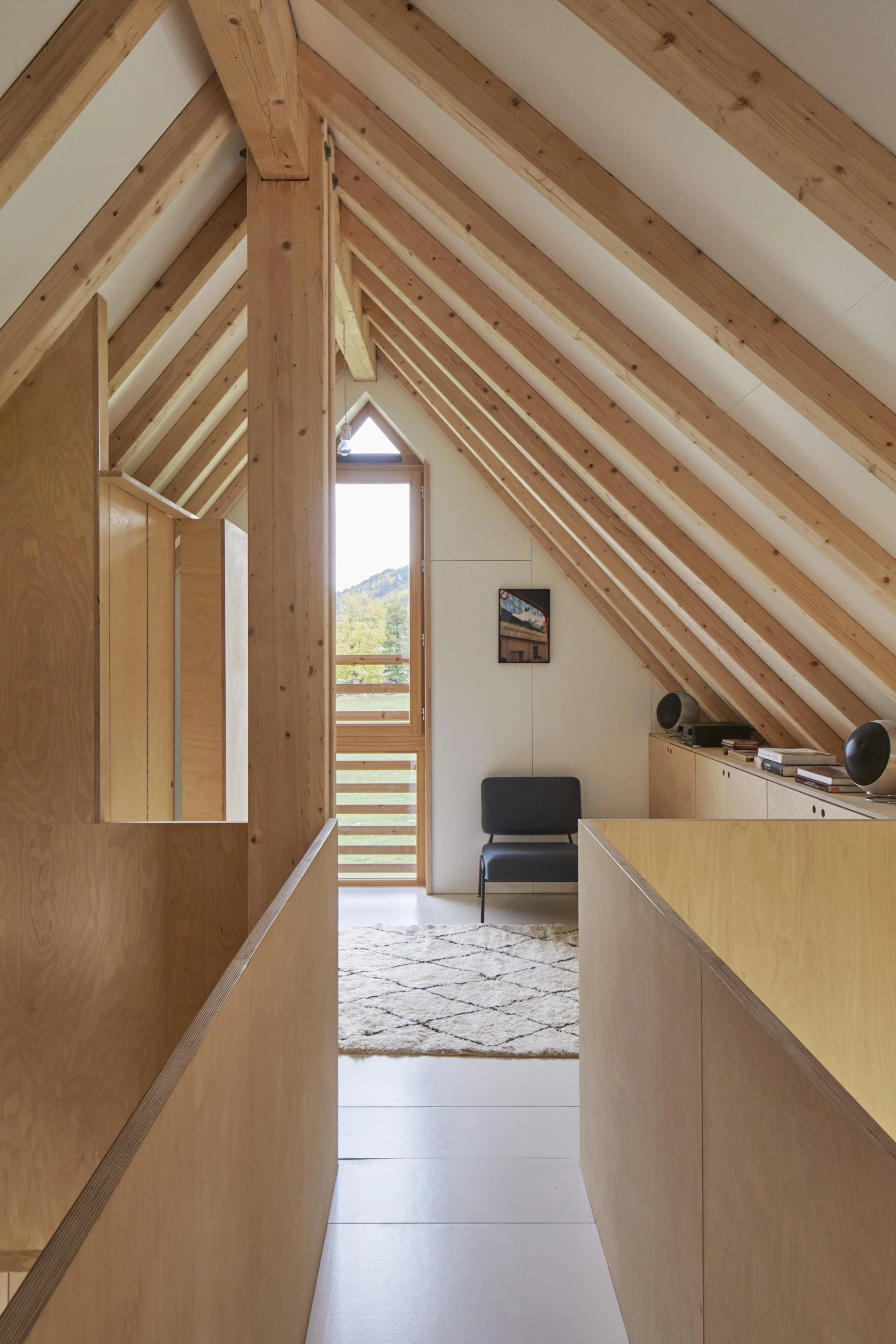
Inside, the volume under the rafters is felt everywhere but never handed to you in one reveal. You catch the slope, then the stair and built-ins interrupt it; the space stays open but doesn't put you on display. The plan runs long and narrow — living spaces to one end, sleeping to the other — with the staircase acting as a hinge between the two registers. Light enters from both ends and from above, filtered by the varying depth of the eaves.
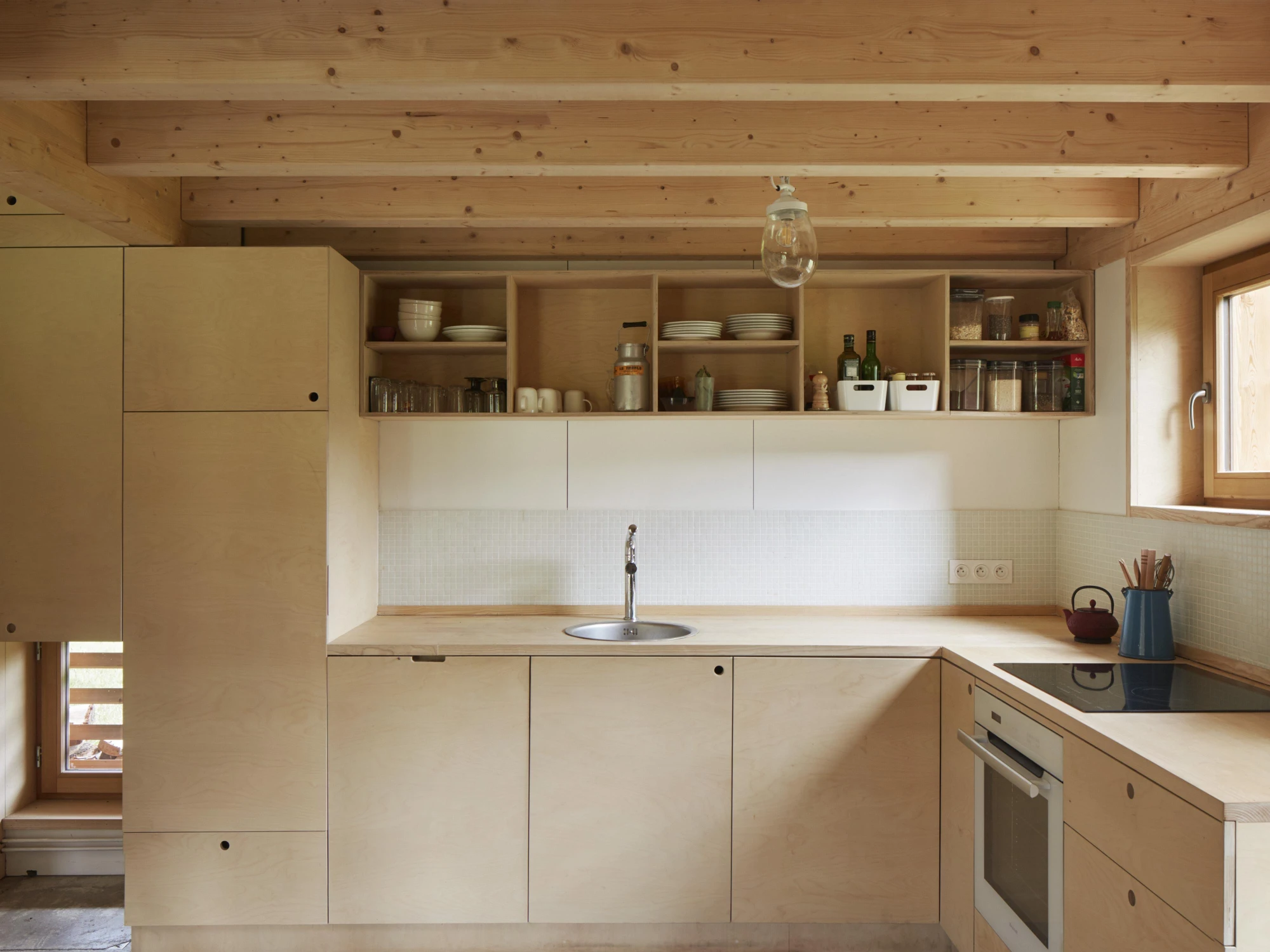
Materials remain few: larch boards, pre-patinated zinc, concrete for the base. The larch will silver with time, converging eventually with the zinc above. This is a house built with the expectation of weather — of freeze and thaw, of wind and accumulation — and the palette reflects that patient calculus. Nothing here is chosen to stay pristine; everything is chosen to age well.
L'Onde is the French word for "wave," and the roof earns the name — a single continuous undulation that gives the house its identity without requiring any further formal ambition. In a landscape of volcanic pasture and wide sky, arba offers an architecture that is both modest and precisely resolved: a house that knows when to stop.