Thisispaper Community
Join today.
Enter your email address to receive the latest news on emerging art, design, lifestyle and tech from Thisispaper, delivered straight to your inbox.
Oops! Something went wrong while submitting the form.
Instant access to new channels
The top stories curated daily
Weekly roundups of what's important
Original features and deep dives
Exclusive community features
Hitoshi Arato
Mar 24, 2026

In the medieval village of Aurignac, in the foothills of the French Pyrénées, Les Ateliers Permanents finds a ruined castle house and adds to its centuries of accumulated layering one more — quiet, contemporary, precisely placed.

Aurignac sits in the Haute-Garonne, in the rolling terrain of the pre-Pyrenean foothills of southern France — a village whose medieval castle and narrow stone-paved streets have remained largely intact across centuries of occupancy and neglect. The house arrived on the market with only its stone facades and load-bearing walls standing. A client discovered the village by chance and decided to settle there. Together with Les Ateliers Permanents, a Paris-based studio, they undertook a transformation that would become an exercise in working with a site that has been worked on many times before.

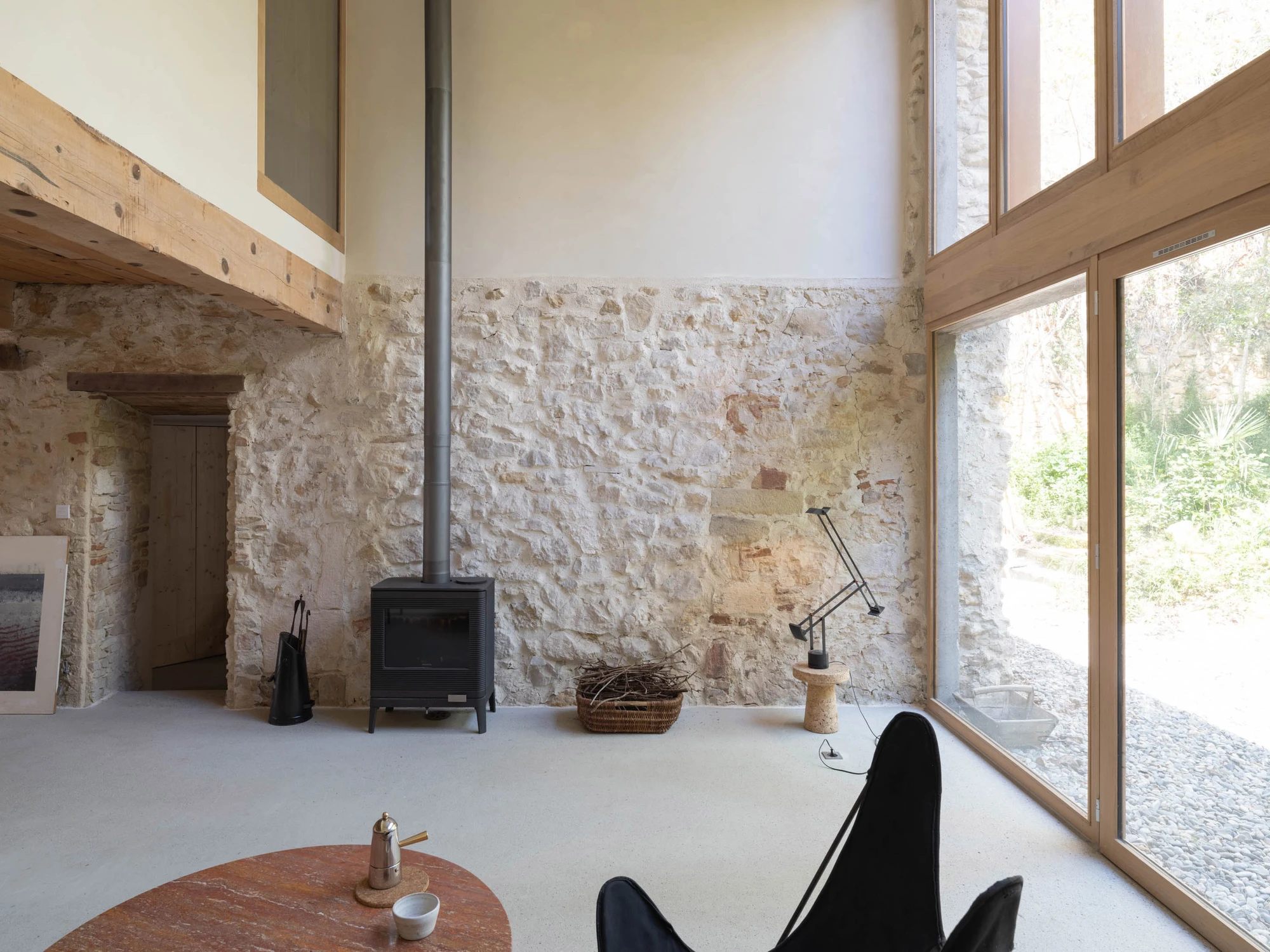
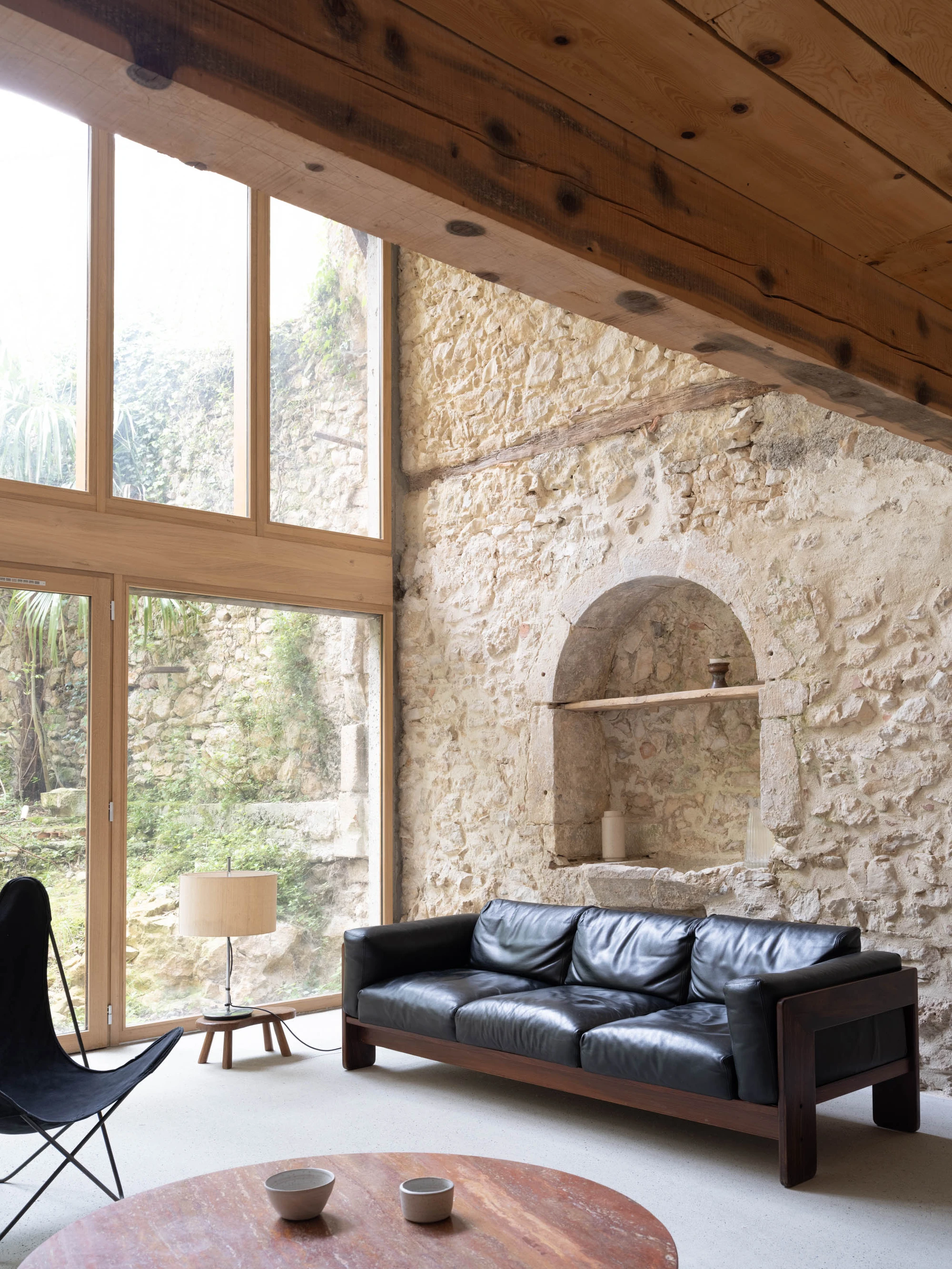
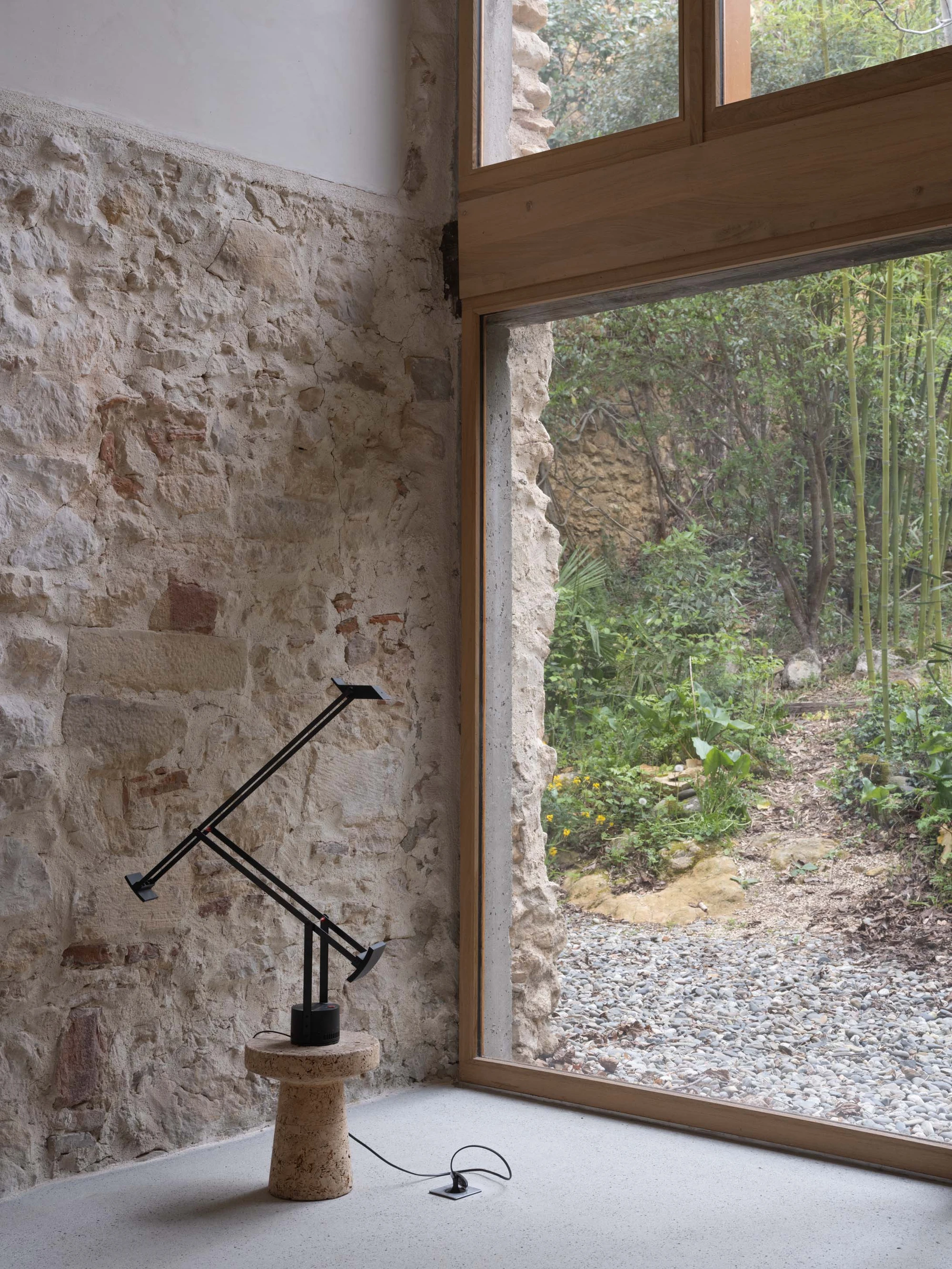
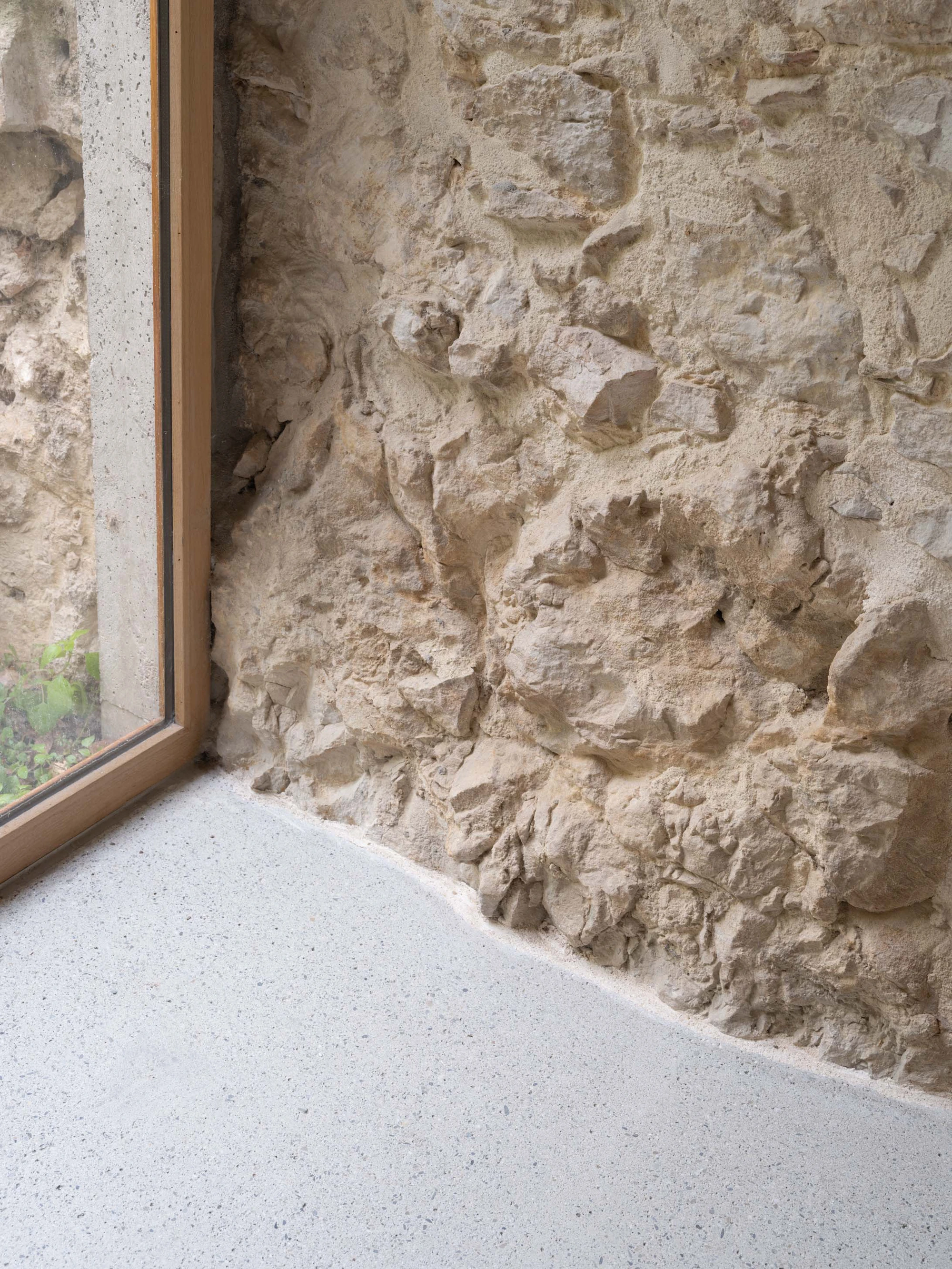
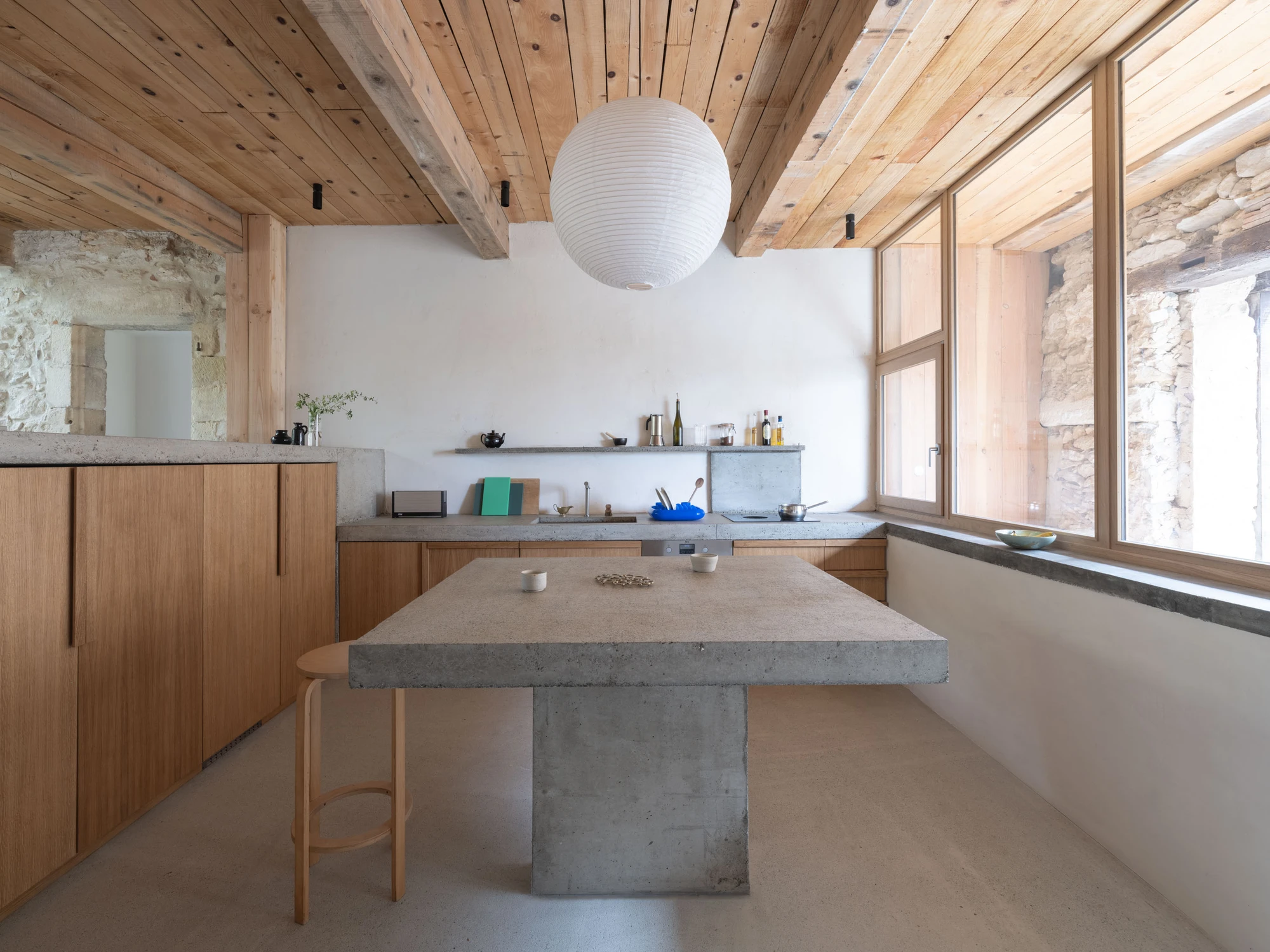
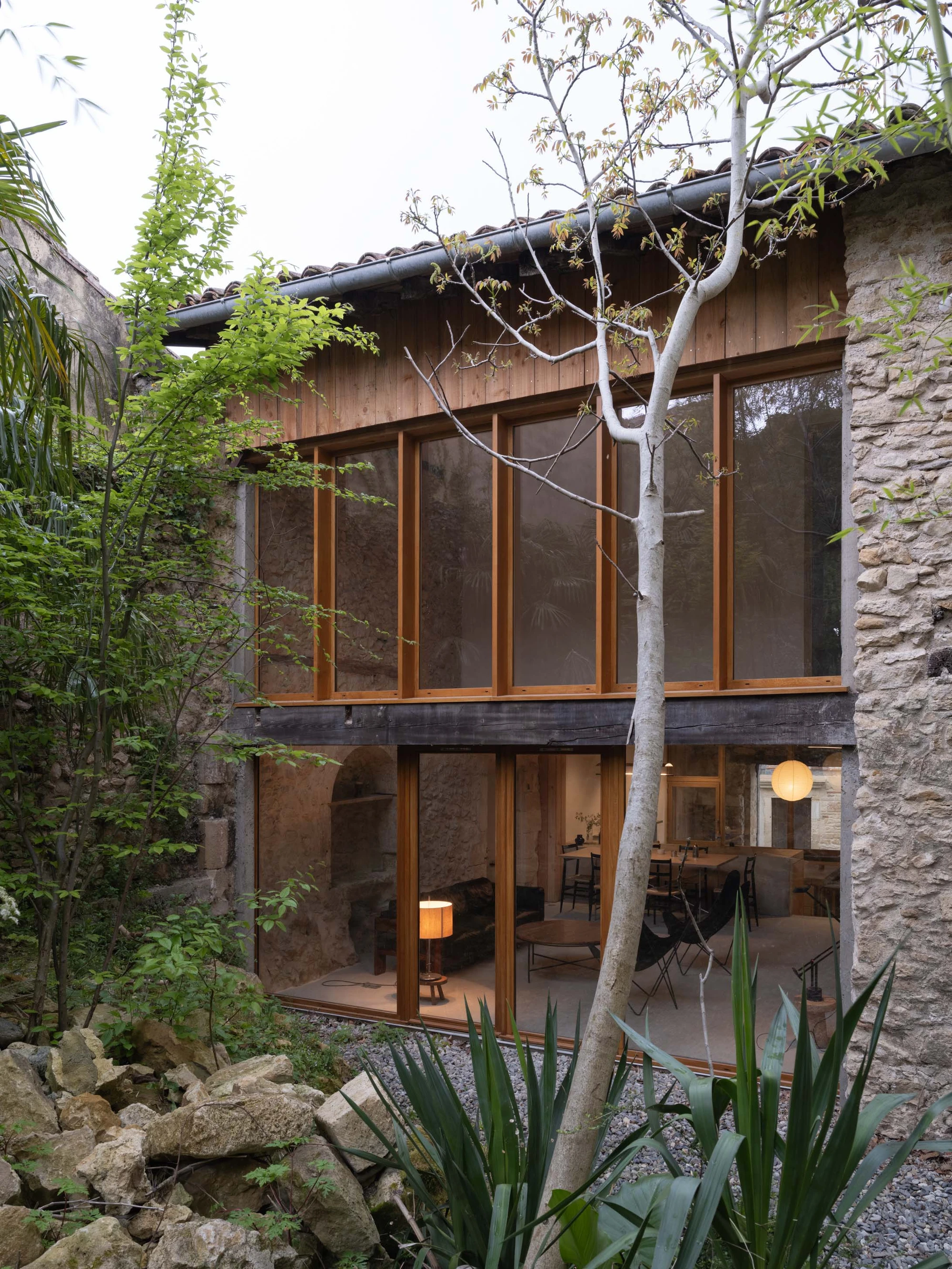
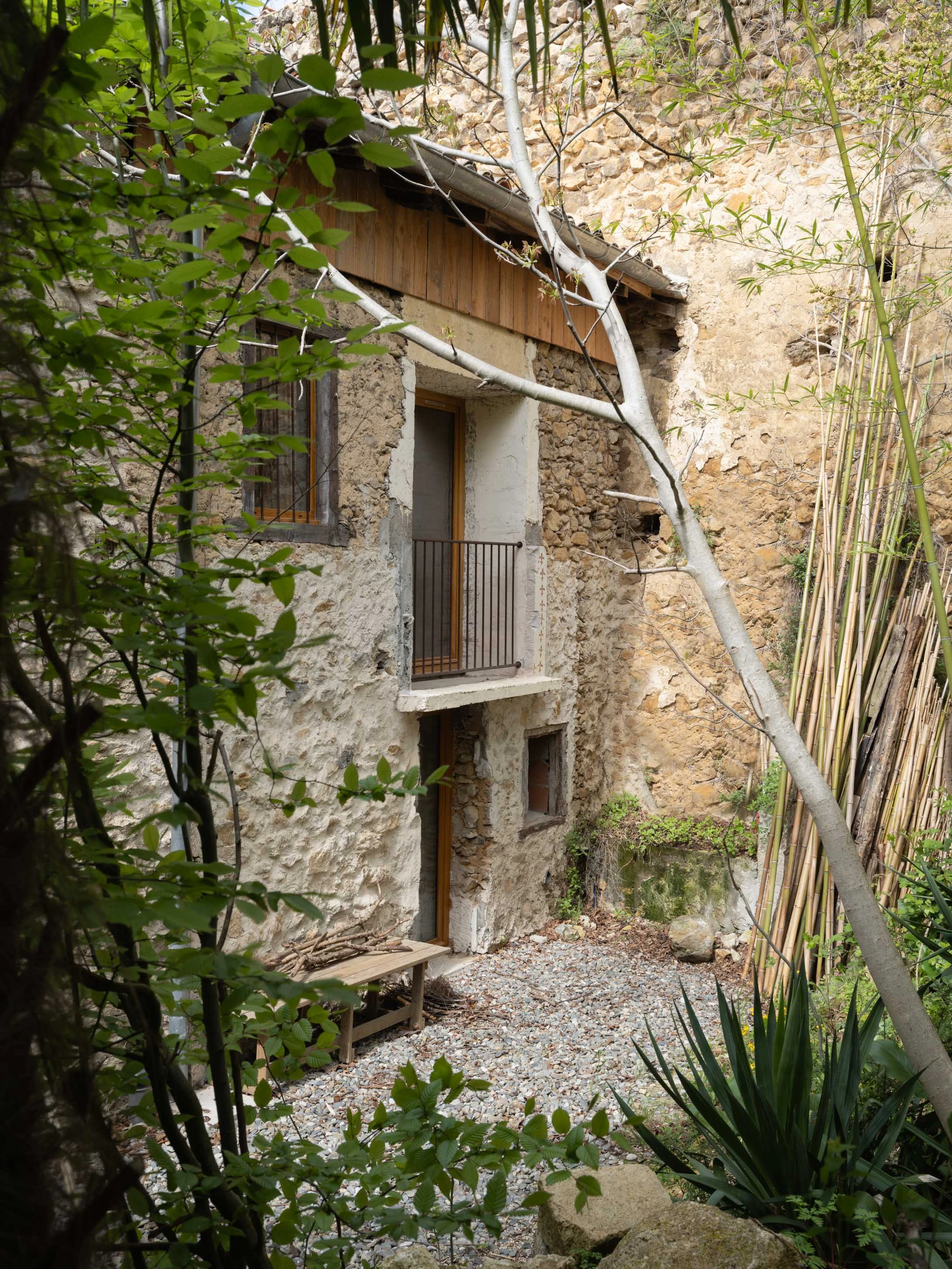
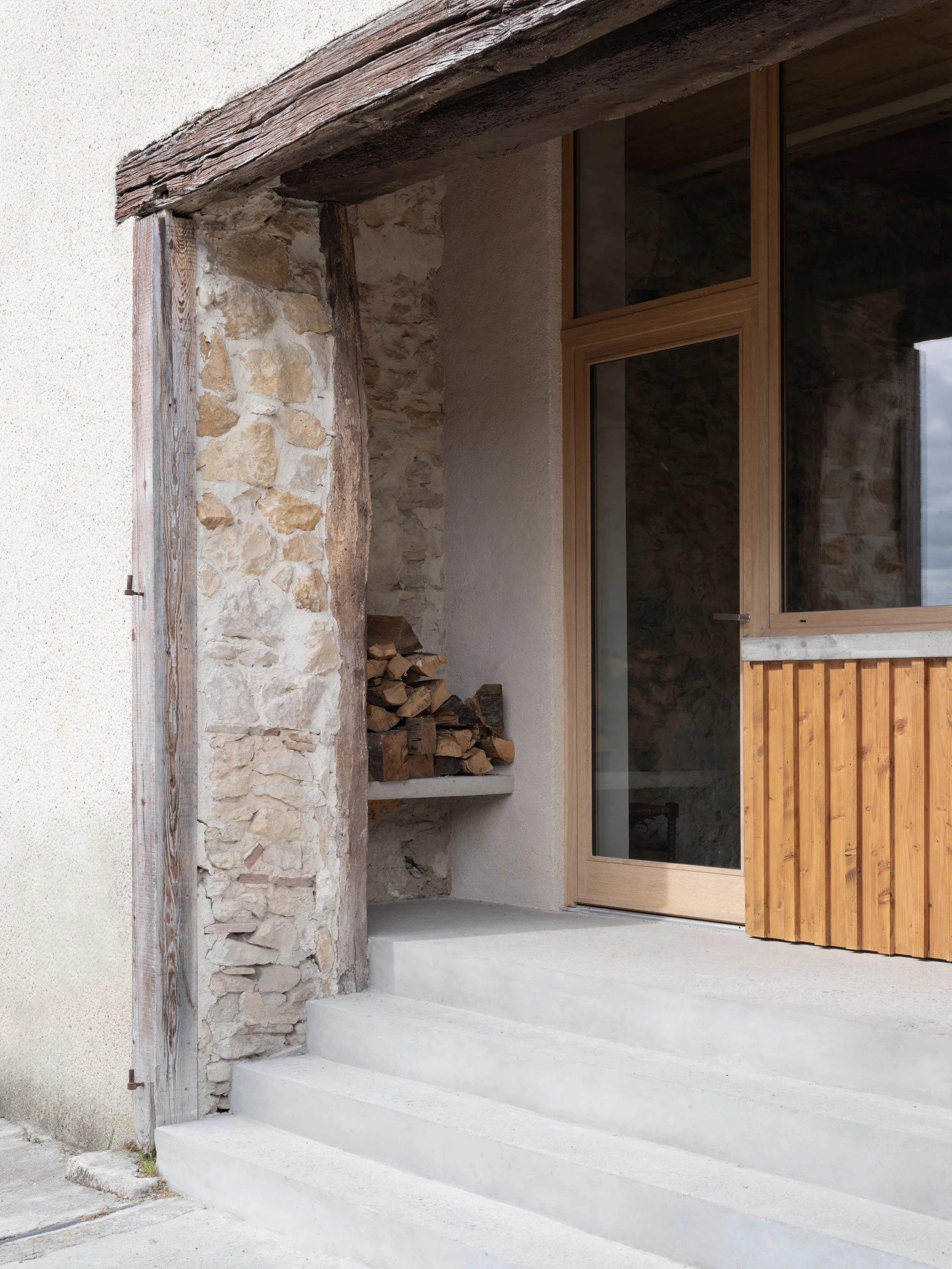
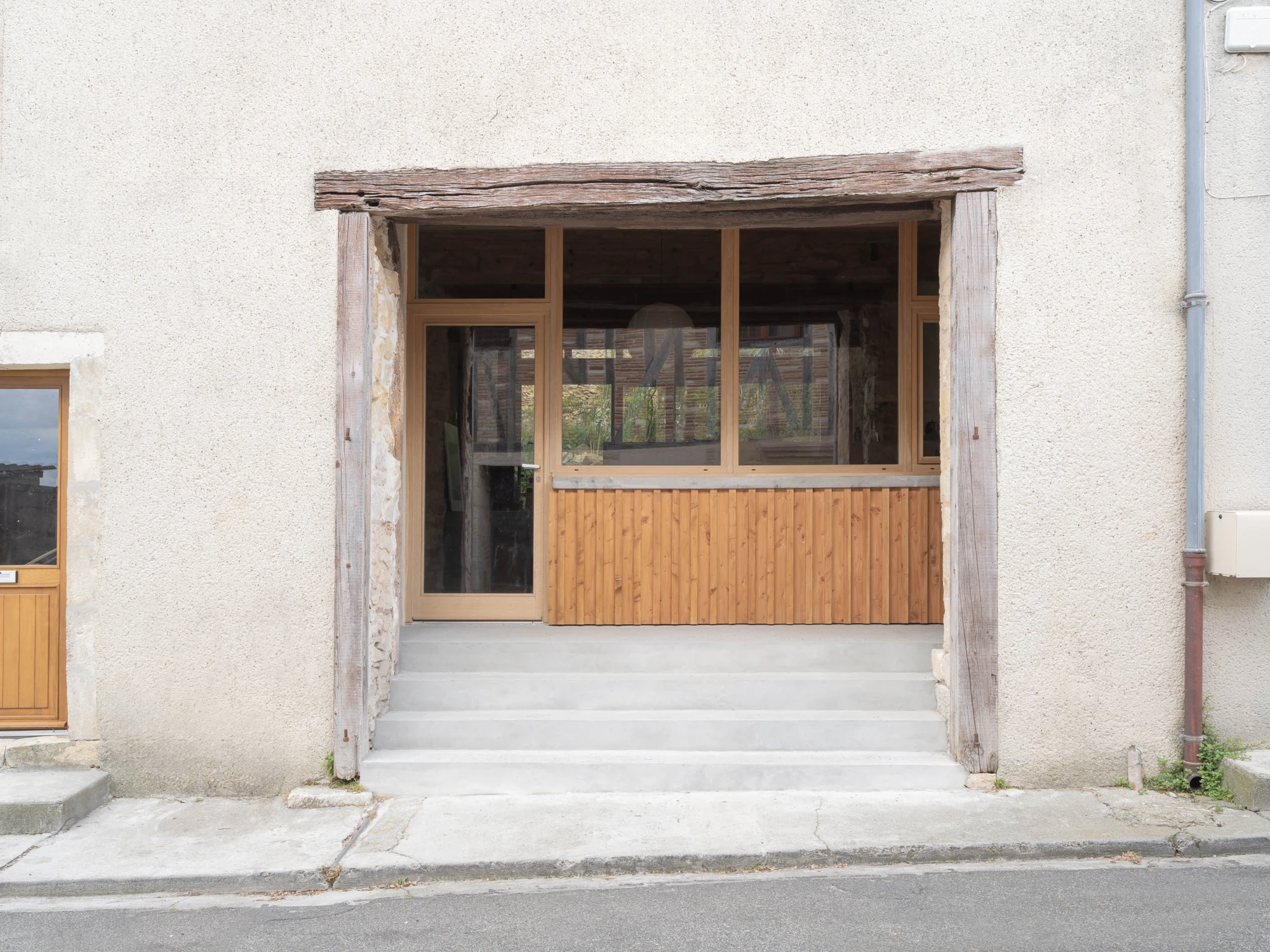
The approach was to understand the building as a document: to read what remained and respond in kind. The roof was rebuilt, volumes reimagined, floors drained and relaid. Where existing stone walls could be preserved, they were — and the photographs by Sandrine Iratcabal make clear just how much value those walls carry. Their irregular coursework of local limestone, the gaps and repairs that index different epochs of construction, the texture that no new surface could replicate — all of it is brought into dialogue with new oak framing, large picture windows, and polished concrete floors that introduce a contemporary layer without competing with the old.

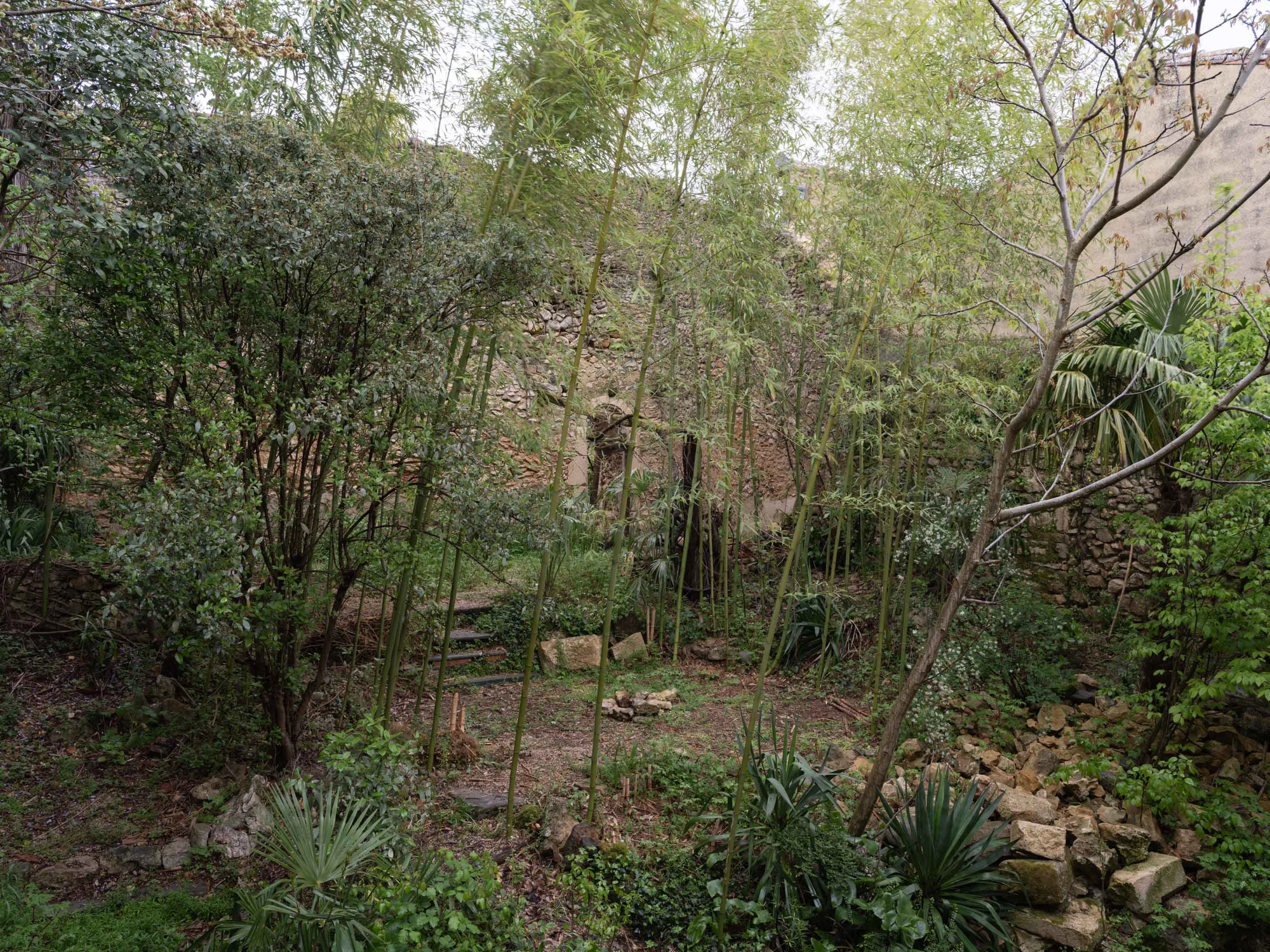
The kitchen now opens onto an enclosed garden — a threshold between the medieval density of the street and the cultivated enclosure behind the house, where bamboo and subtropical plants create a scene of unexpected lushness. This inside-outside relationship, mediated by large glazed openings in heavy timber frames, is central to the spatial experience: the house is both very old and very permeable, holding the garden as much as it is held by the village.

"A new, contemporary architectural layer is added, respectfully aligning with the past," the studio writes — and the restraint of that sentence is reflected in every decision. Les Ateliers Permanents work within the logic of the existing rather than against it, producing spaces whose quality derives from the accumulated depth of what was already there. Maison Enzo is, in this sense, less a renovation than a long conversation — one in which the new voice has the confidence to speak clearly without raising it.
Interested in Showcasing Your Work?

If you would like to feature your works on Thisispaper, please visit our Submission page and sign up to Thisispaper+ to submit your work. Once your submission is approved, your work will be showcased to our global audience of 2 million art, architecture, and design professionals and enthusiasts.
No items found.
We love less
but there is more.
Become a Thisispaper+ member today to unlock full access to our magazine, advanced tools, and support our work.
Get two months FREE
with annual subscription
We love less
but there is more.
Become a Thisispaper+ member today to unlock full access to our magazine, advanced tools, and support our work.
Get two months FREE
with annual subscription
No items found.
Hitoshi Arato
Mar 24, 2026

In the medieval village of Aurignac, in the foothills of the French Pyrénées, Les Ateliers Permanents finds a ruined castle house and adds to its centuries of accumulated layering one more — quiet, contemporary, precisely placed.

Aurignac sits in the Haute-Garonne, in the rolling terrain of the pre-Pyrenean foothills of southern France — a village whose medieval castle and narrow stone-paved streets have remained largely intact across centuries of occupancy and neglect. The house arrived on the market with only its stone facades and load-bearing walls standing. A client discovered the village by chance and decided to settle there. Together with Les Ateliers Permanents, a Paris-based studio, they undertook a transformation that would become an exercise in working with a site that has been worked on many times before.

The approach was to understand the building as a document: to read what remained and respond in kind. The roof was rebuilt, volumes reimagined, floors drained and relaid. Where existing stone walls could be preserved, they were — and the photographs by Sandrine Iratcabal make clear just how much value those walls carry. Their irregular coursework of local limestone, the gaps and repairs that index different epochs of construction, the texture that no new surface could replicate — all of it is brought into dialogue with new oak framing, large picture windows, and polished concrete floors that introduce a contemporary layer without competing with the old.

The kitchen now opens onto an enclosed garden — a threshold between the medieval density of the street and the cultivated enclosure behind the house, where bamboo and subtropical plants create a scene of unexpected lushness. This inside-outside relationship, mediated by large glazed openings in heavy timber frames, is central to the spatial experience: the house is both very old and very permeable, holding the garden as much as it is held by the village.

"A new, contemporary architectural layer is added, respectfully aligning with the past," the studio writes — and the restraint of that sentence is reflected in every decision. Les Ateliers Permanents work within the logic of the existing rather than against it, producing spaces whose quality derives from the accumulated depth of what was already there. Maison Enzo is, in this sense, less a renovation than a long conversation — one in which the new voice has the confidence to speak clearly without raising it.

Interested in Showcasing Your Work?

If you would like to feature your works on Thisispaper, please visit our Submission page and subscribe to Thisispaper+. Once your submission is approved, your work will be showcased to our global audience of 2 million art, architecture, and design professionals and enthusiasts.
Thisispaper+
Set in Stone
40+ Projects
Web Access
Link to Maps
An edition exploring architecture’s deepest material relationship. From Portuguese schist walls to Alpine masonry, Greek island limestone to Japanese quarried stone—projects where the building and the ground beneath it speak the same language. A growing collection.
Explore
Set in Stone

Join Thisispaper+
Unlock access to 2500 stories, curated guides + editions, and share your work with a global network of architects, artists, writers and designers who are shaping the future.
Get two months FREE
with annual subscription
Travel Guides
Immerse yourself in timeless destinations, hidden gems, and creative spaces—curated by humans, not algorithms.
Explore All Guides +
Submission Module
Submit your project and gain the chance to showcase your work to our worldwide audience of over 2M architects, designers, artists, and curious minds.
Learn More+
Curated Editions
Dive deeper into carefully curated editions, designed to feed your curiosity and foster exploration.
Off-the-Grid
Jutaku
Sacral Journey
minimum
The New Chair
Explore All Editions +
Atlas
A new and interactive way to explore the most inspiring places around the world.
Interactive map
Linked to articles
300+ curated locations
Google + Apple directions
Smart filters
Subscribe to Explore+
Become a Thisispaper+ member today to unlock full access to our magazine, submit your project and support our work.
Join Thisispaper+Join Thisispaper+
€ 9 EUR
/month
Cancel anytime
Get two months FREE
with annual subscription