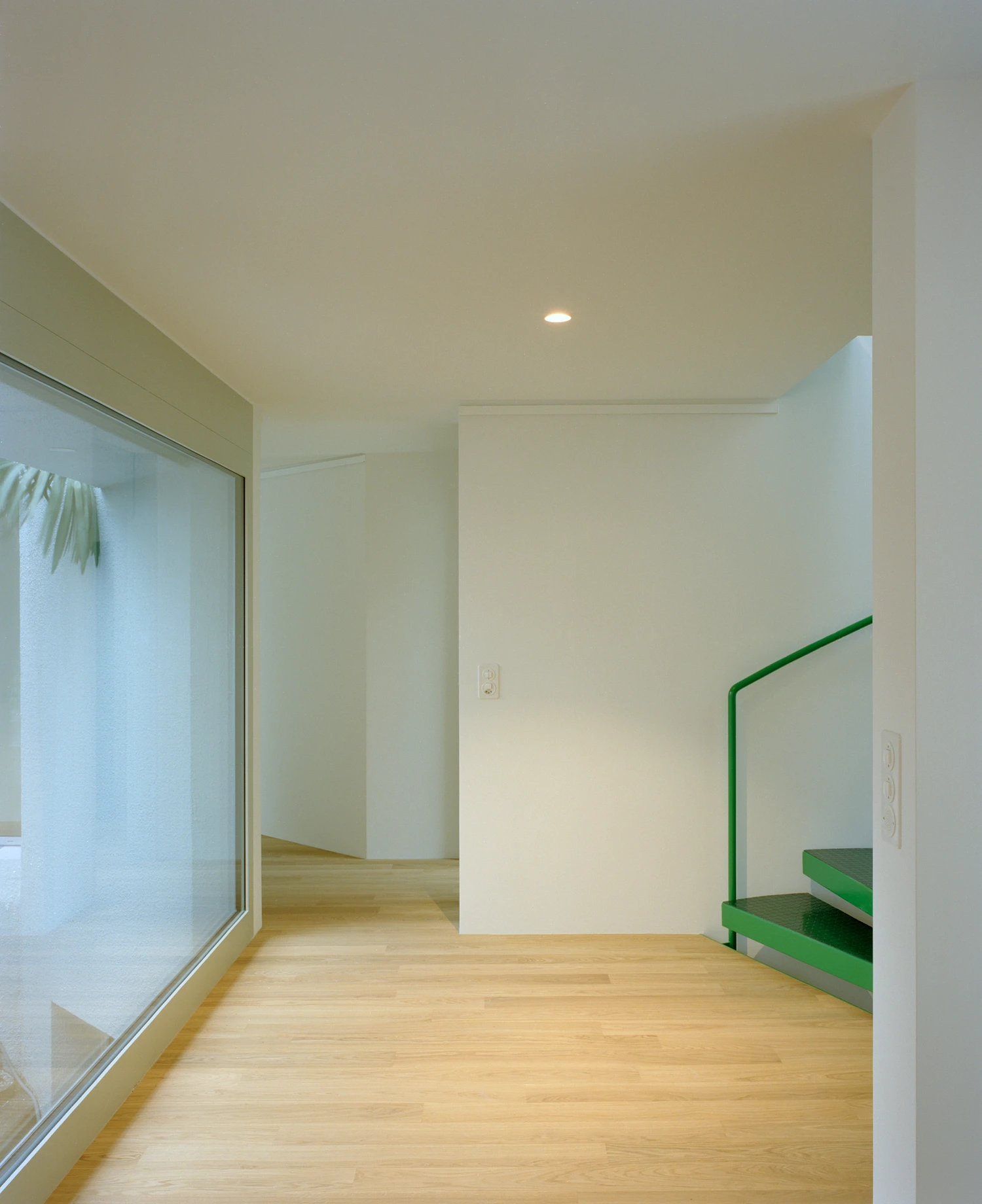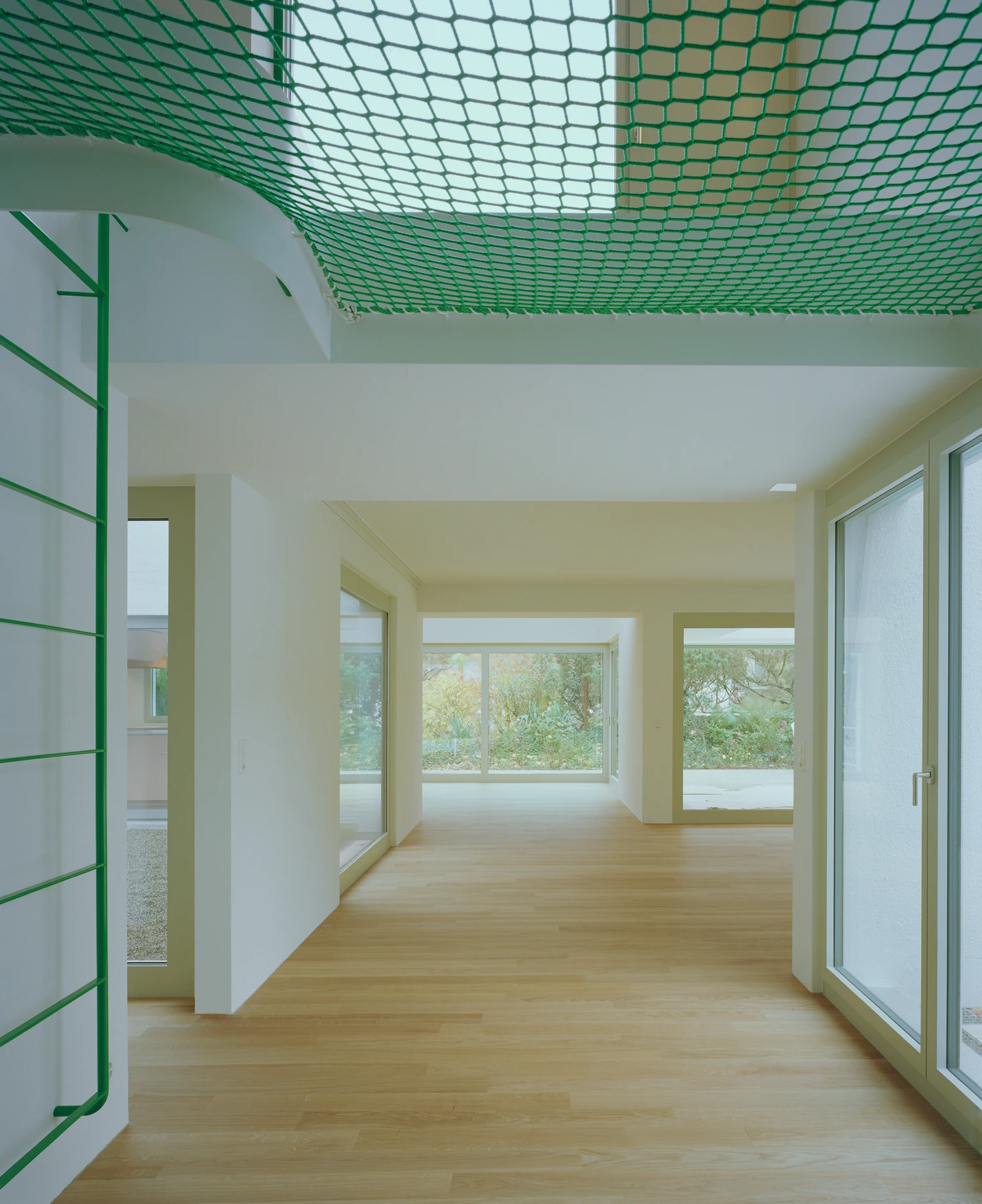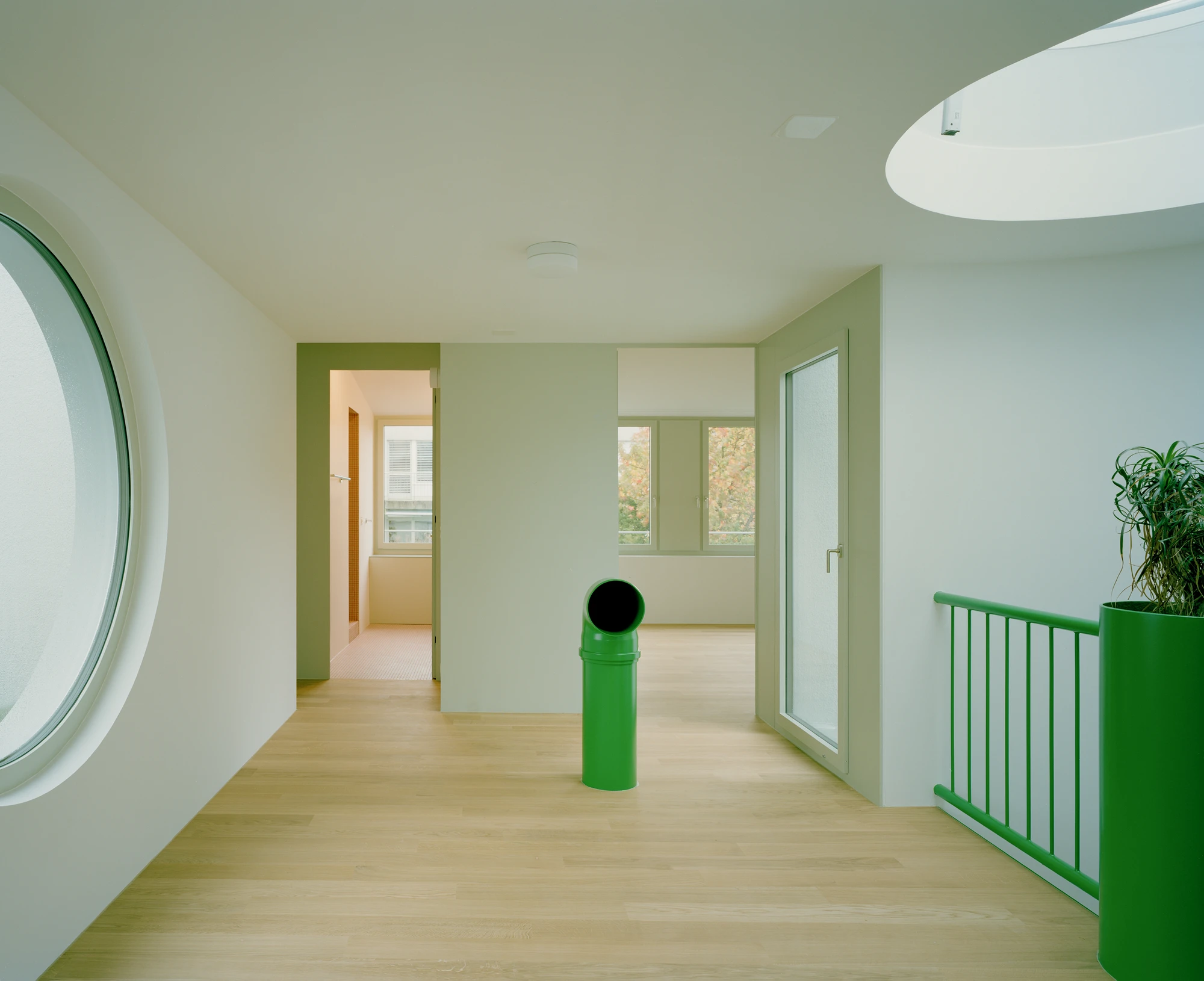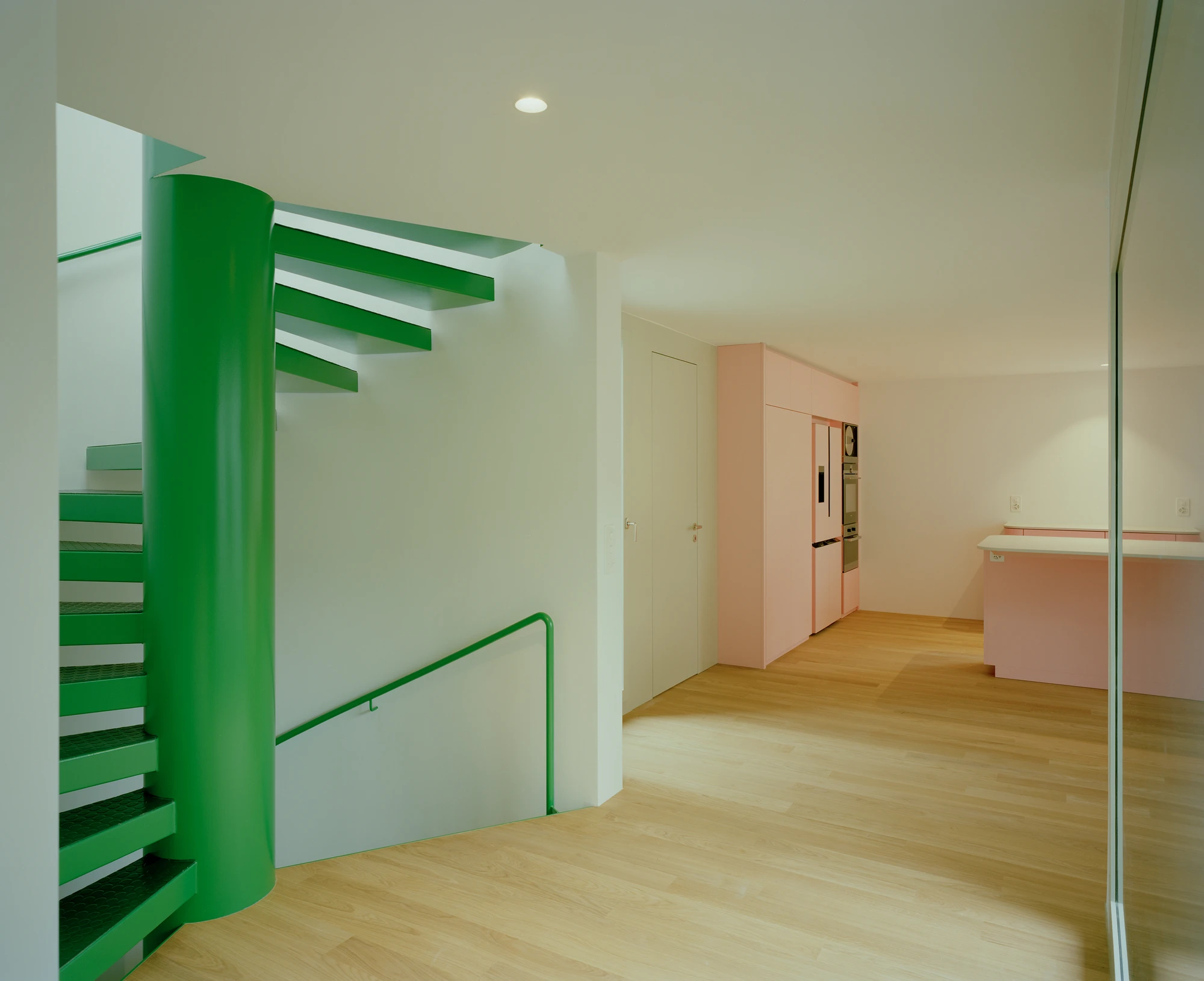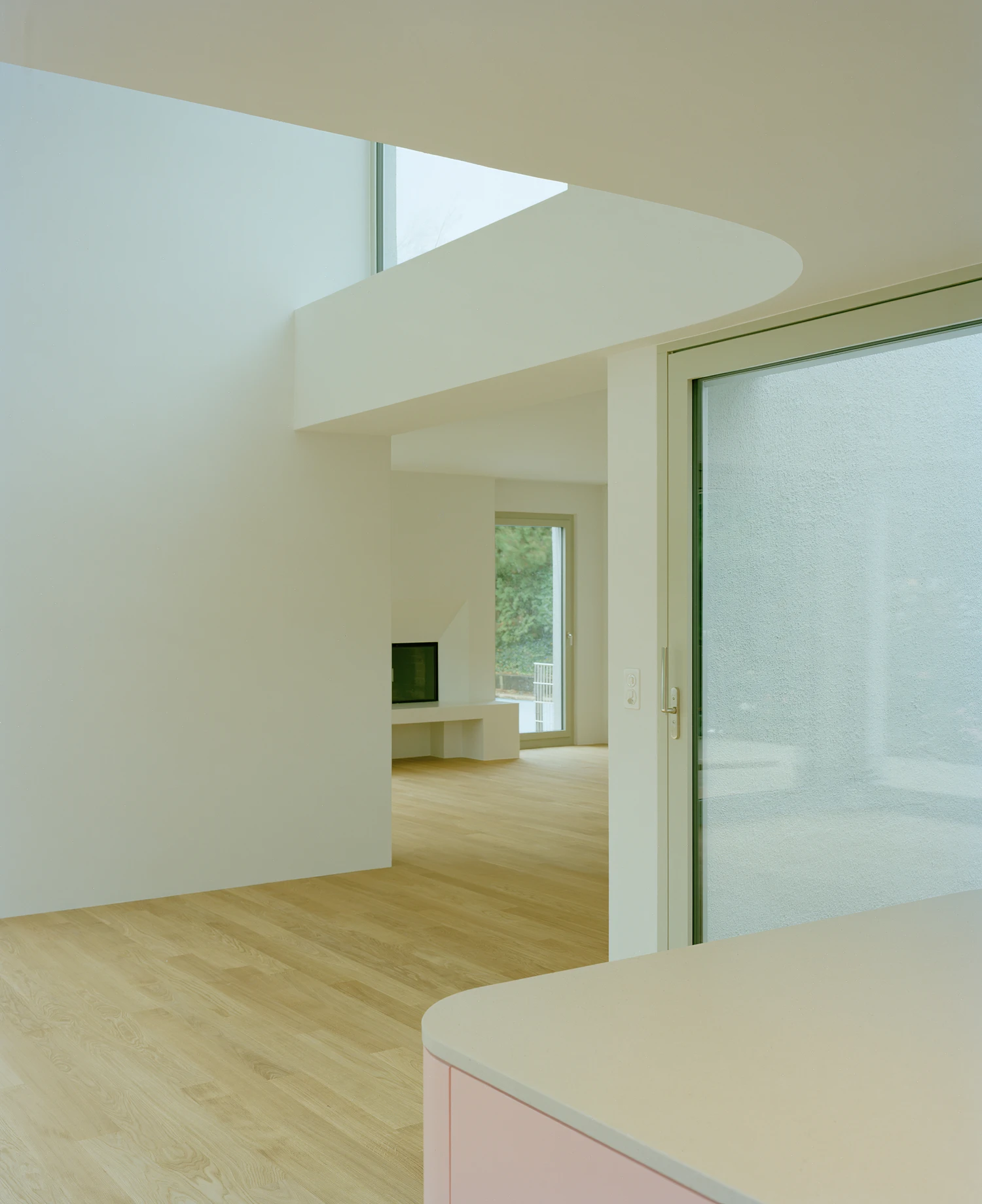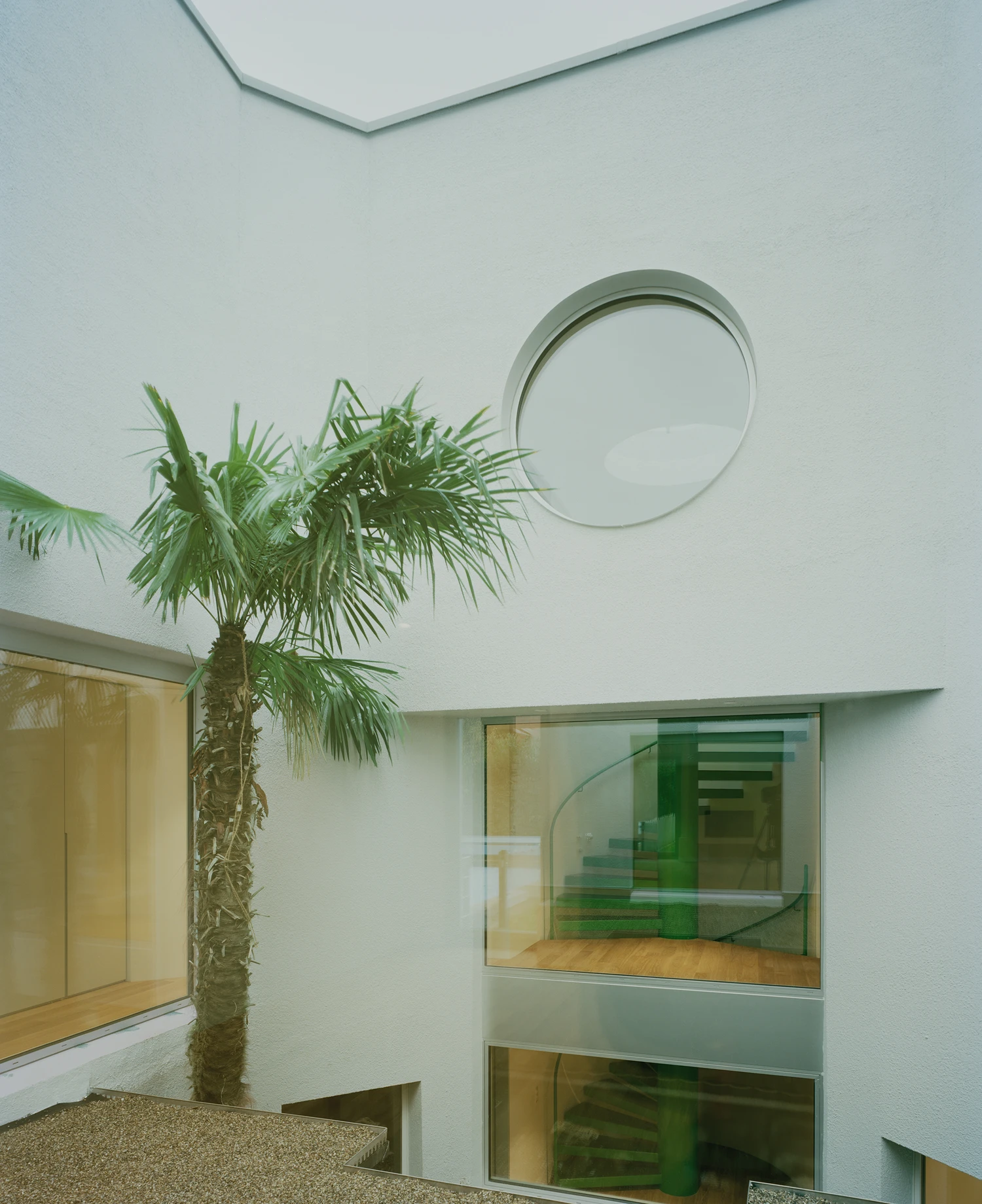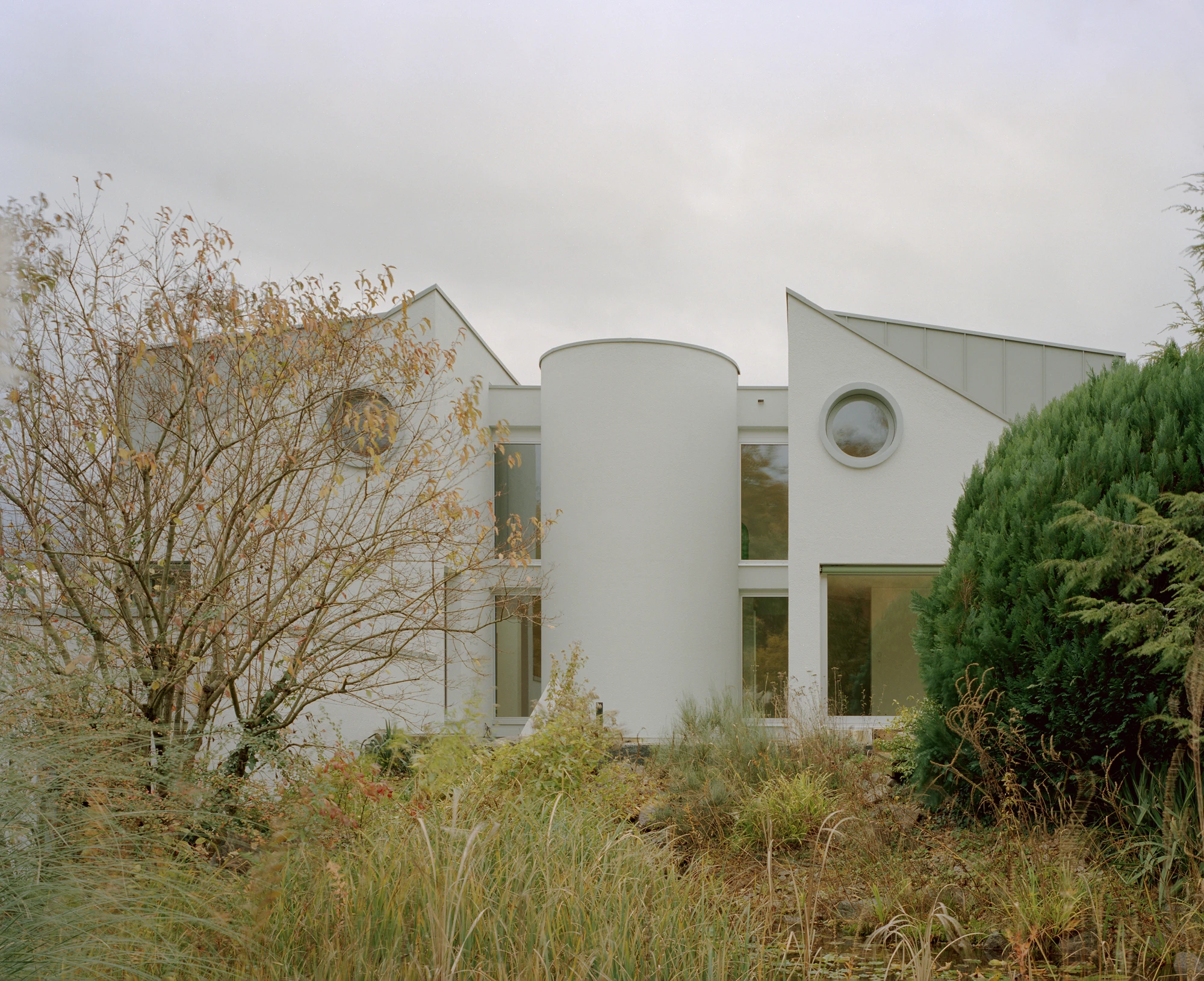
In the suburbs of Basel, a detached house from the 1990s photographed by Barbara Buehler sits on a generous plot in Bottmingen. The existing building had notable qualities—a symmetrical cubature with two round windows facing east, a large fireplace, roof terraces, and a flowing ground-floor plan distributed around an inner courtyard. Staehelin Meyer Architektur set out to preserve these qualities while enhancing the house architecturally and generating the additional space a growing family of three children required.
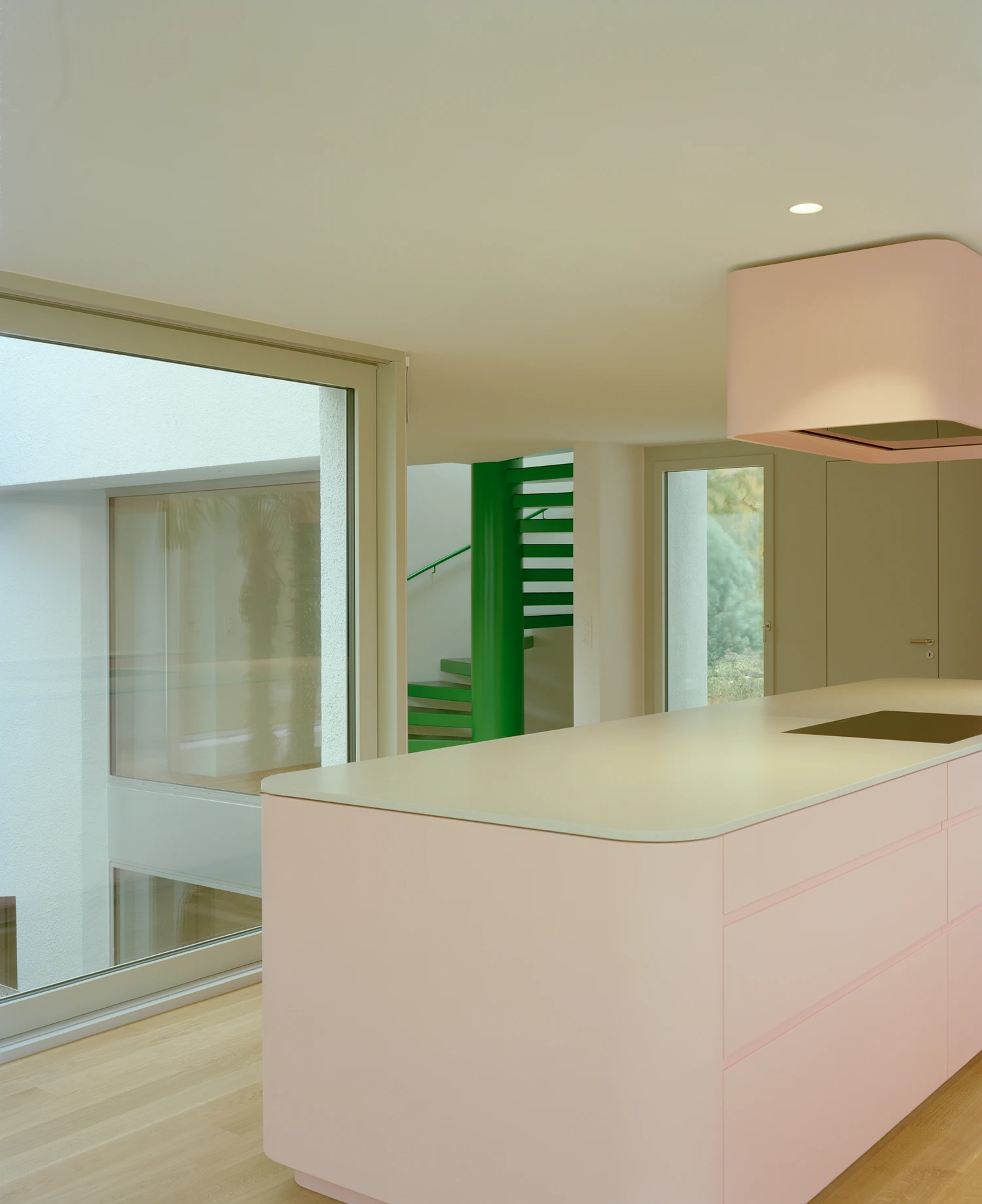
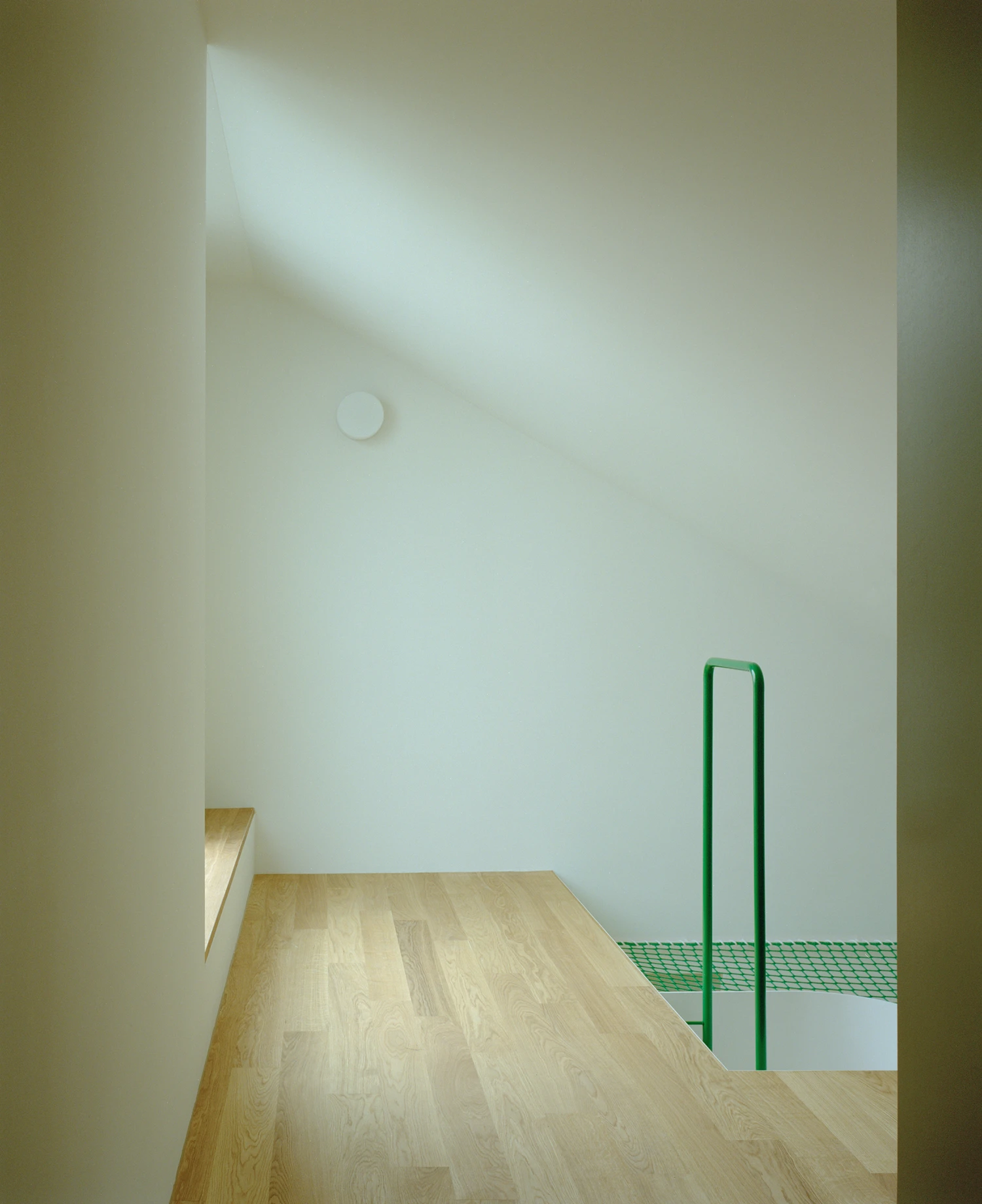
The key move is the raised upper floor—a new timber construction with wide dormers that allows for spacious, light-filled children’s rooms and creates a clear spatial separation between communal areas and bedrooms. A new metal roof covering extends over the individual roof surfaces, connecting the pitched roof with the dormers and carefully integrating them into the overall appearance. The central element of the existing spiral staircase was retained and carefully renovated—a decision that anchors the new within the old.
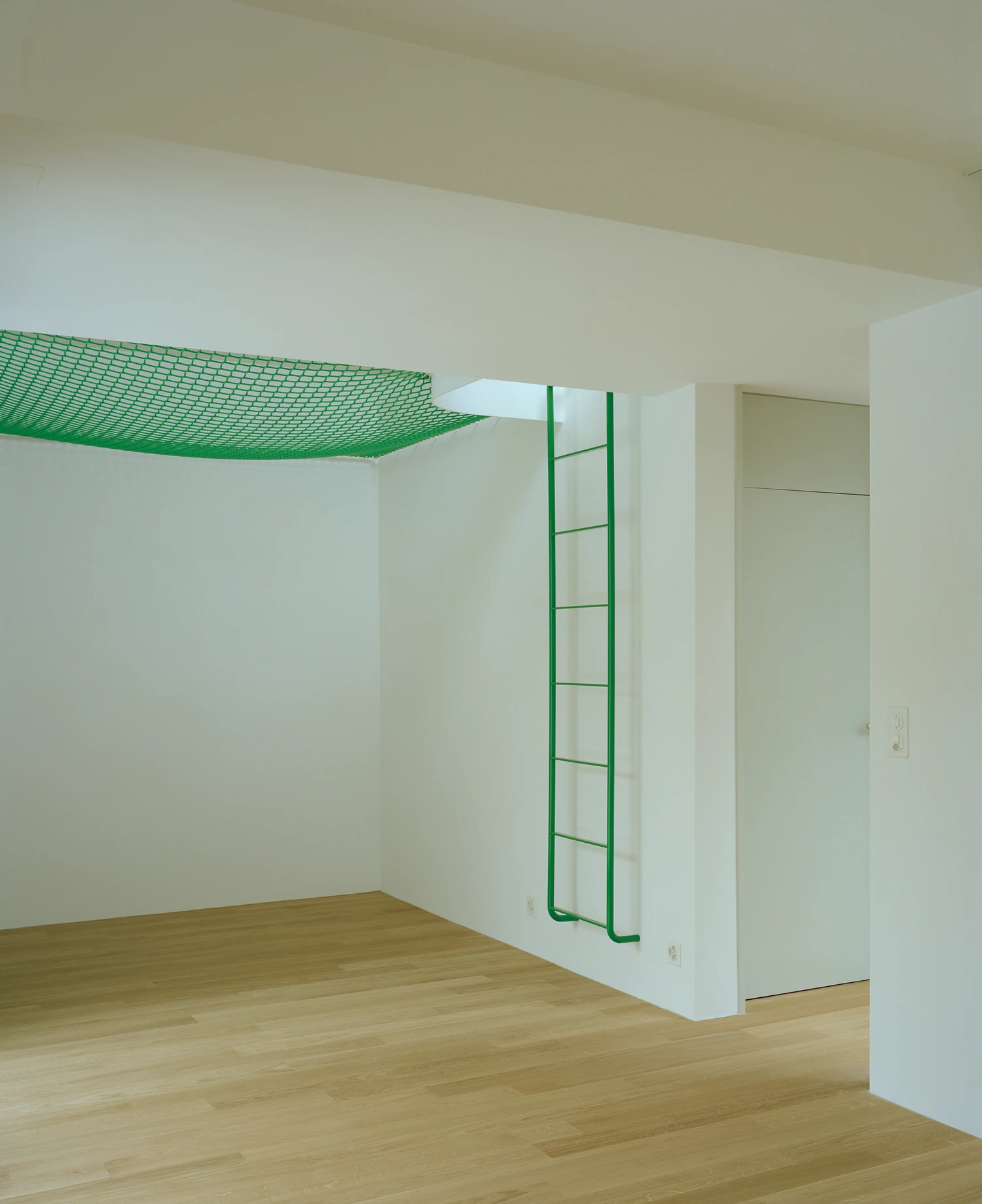
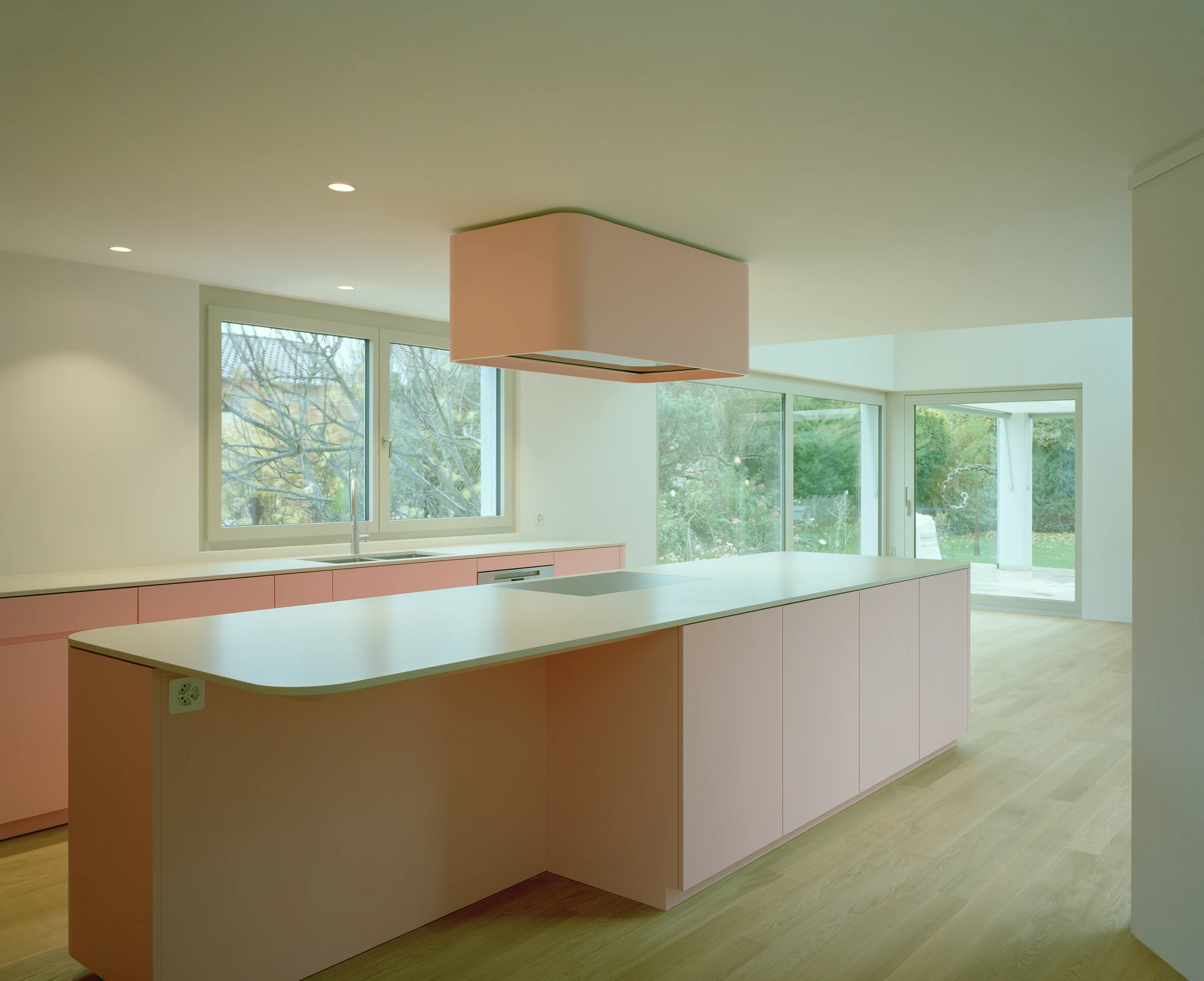
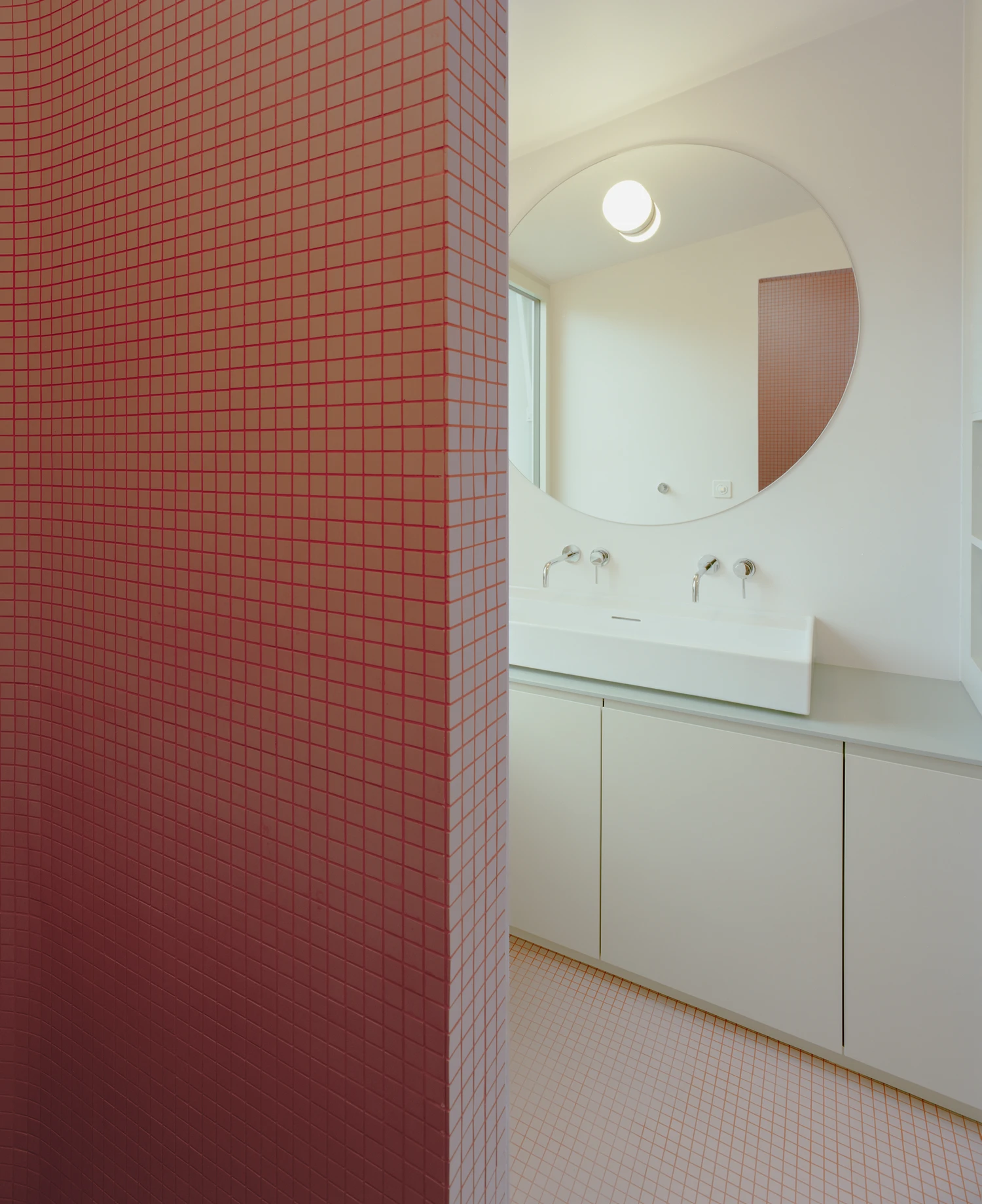
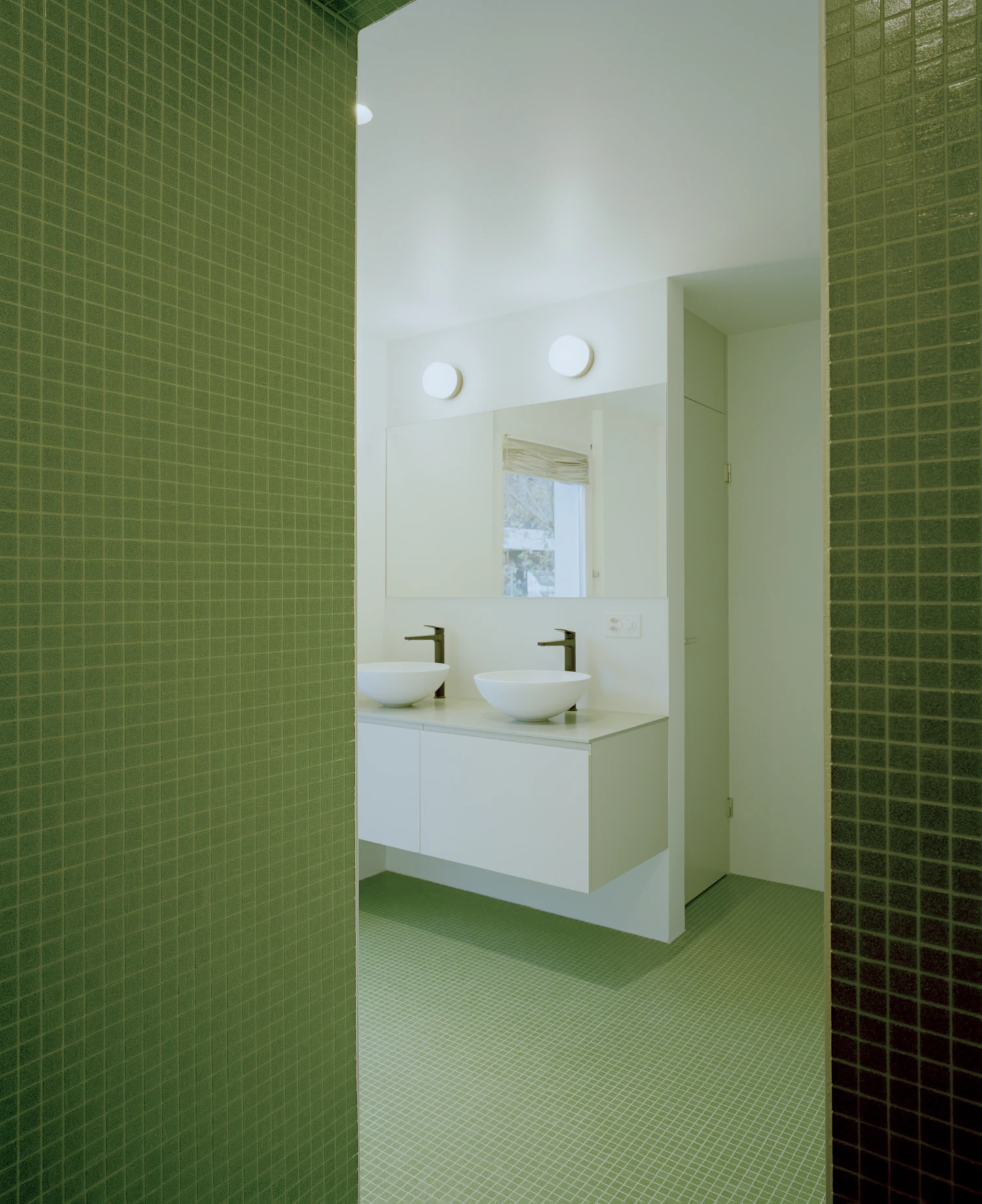
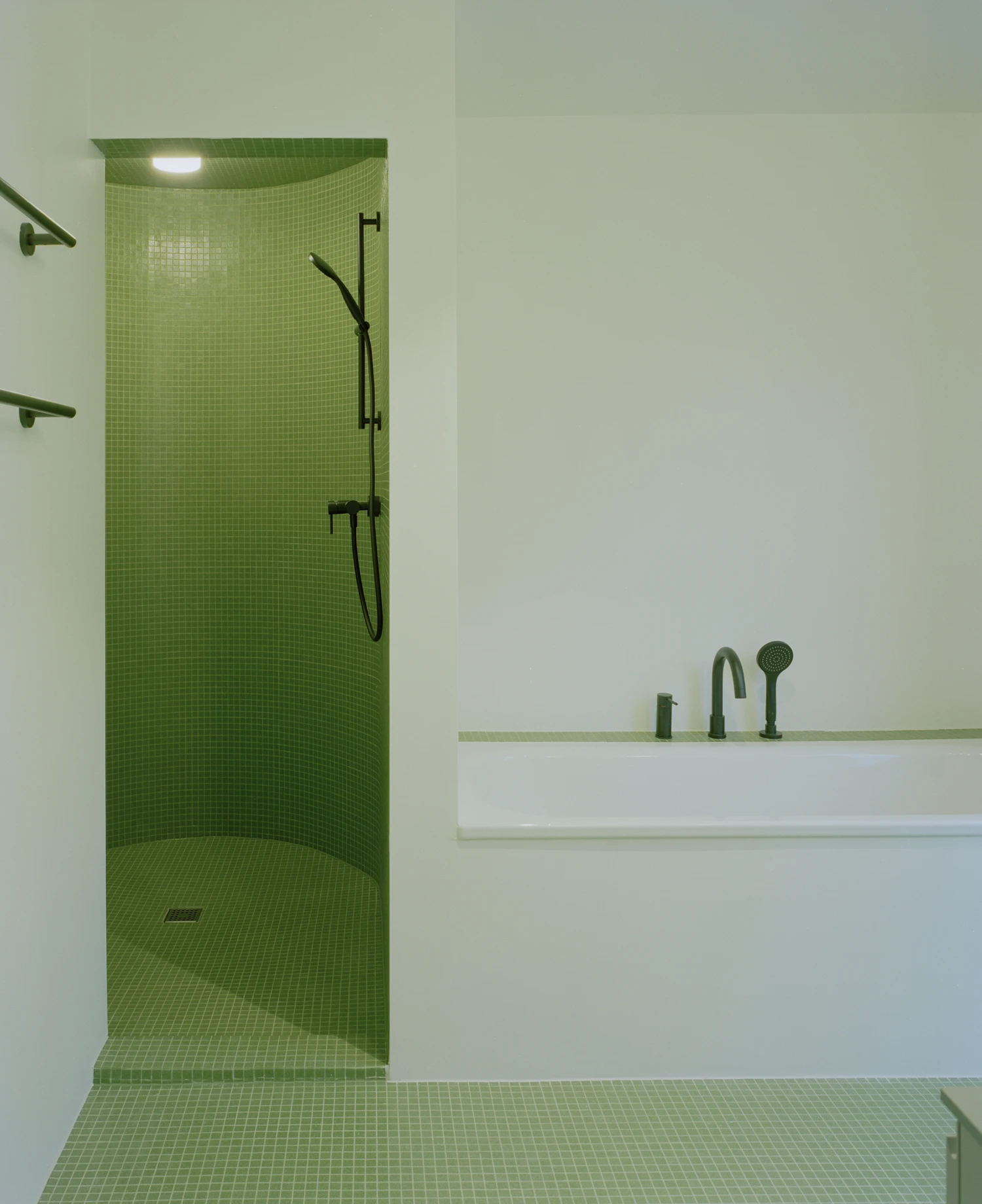
The original building featured playful details in blue, with the colour recurring in the staircase, blinds, and railings. The architects chose a new green shade to preserve the house’s typical character while giving it a fresh, contemporary look. The resulting colour concept, based on the complementary pairing of pink and green, carries through both interior and exterior—a confident and cheerful palette that honours the 1990s spirit without irony. While the existing building was characterised by cool and hard surfaces, the renovation introduces warm materials throughout to create a more welcoming atmosphere.
Perhaps the most telling detail is the lounger net—a playful element that reactivates an existing double-height space, transforming dead vertical volume into a place of rest and play. Existing spatial potentials like these are complemented throughout by small, considered gestures that together produce a house warmer, lighter, and more alive than before. In Kirschbaumweg, Staehelin Meyer demonstrates that renovation is not about erasing what came before but about listening to it carefully enough to know where it wanted to go.