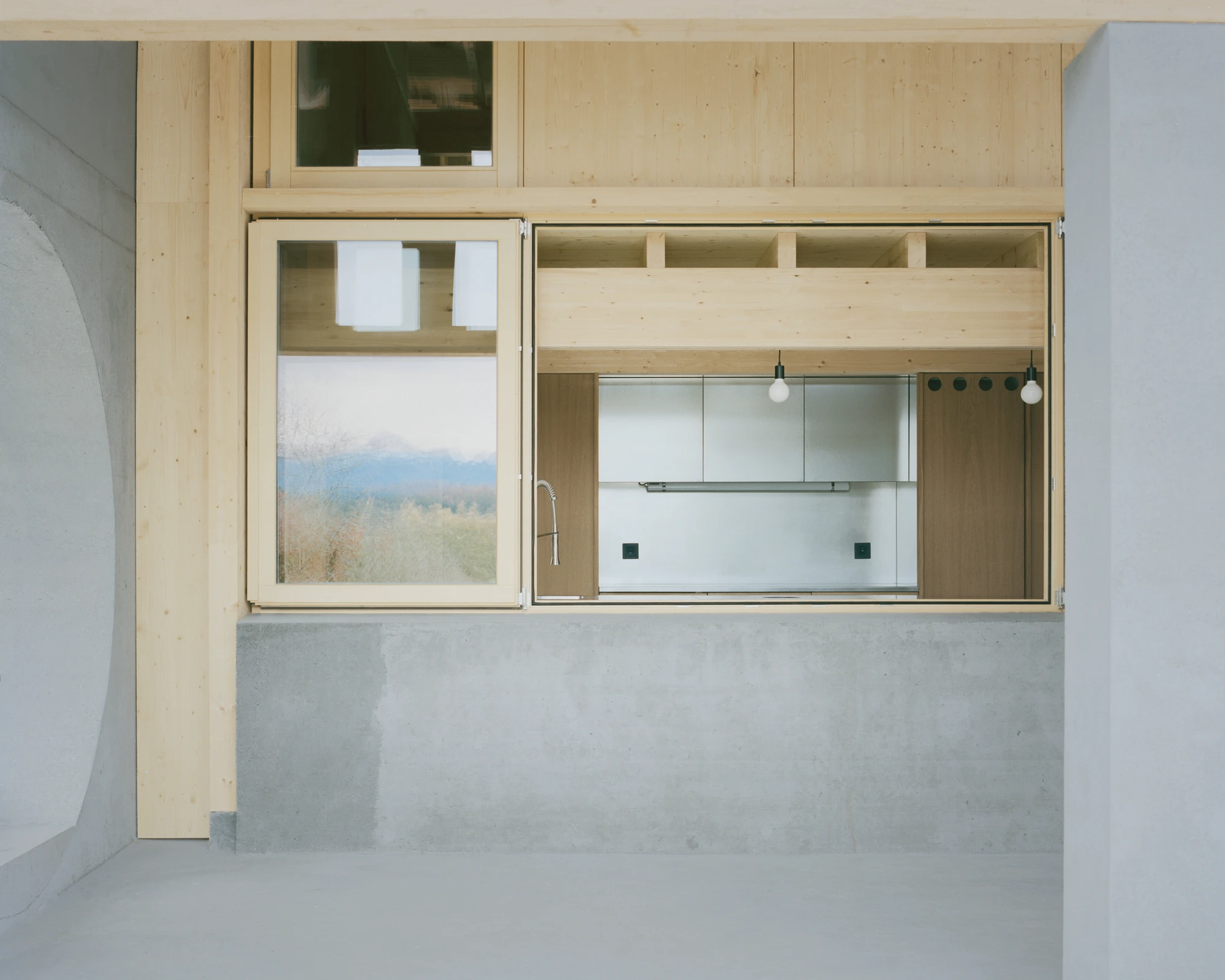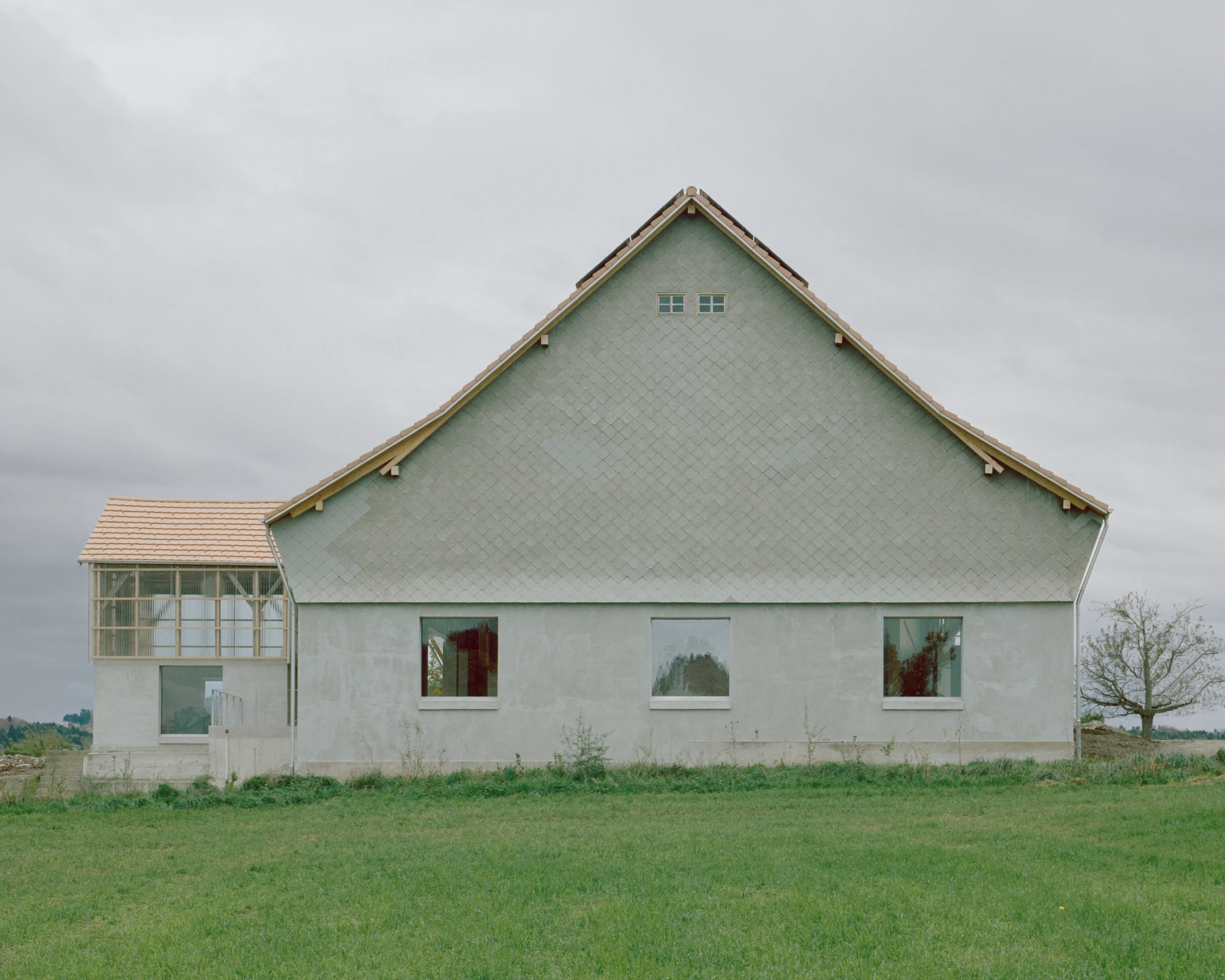
The Inverted Farm by BARD YERSIN Architectes in Vuisternens-devant-Romont, Switzerland reverses a nineteenth-century farmhouse—the barn becomes home, the home becomes greenhouse.
The Swiss farmhouse traditionally combined dwelling and agricultural function under a single roof, their proportions reflecting the economic balance between human habitation and livestock shelter. By the twenty-first century, that balance had shifted irreversibly; the barns stood empty while the dwellings remained occupied but undersized for contemporary expectation. BARD YERSIN Architectes confronted this inheritance with a proposition both logical and radical: swap the uses entirely.
The former barn—north-facing, double-height, constructed to shelter cattle—now contains the family's living spaces. A self-contained timber structure, set back from the existing envelope, creates the new dwelling within the old volume. The gap between new and original walls establishes visual and thermal separation; the barn's massive stone remains visible as interior landscape, present but no longer load-bearing in the domestic sense.
The south-facing portion of the building, originally the dwelling, becomes a permaculture greenhouse. Its better solar orientation, once valued for human comfort, now serves plant production. Terracotta brick cores—containing kitchen, bathrooms, and storage—anchor the new plan while maintaining the building's original structural rhythm. The old and new systems coexist legibly.
The inversion carries conceptual weight beyond spatial efficiency. Agriculture returns to the farmhouse not as nostalgic reference but as active program; the greenhouse produces food that the family consumes. The dwelling retreats into the barn's protective mass, its relationship to climate mediated by the surrounding greenhouse's thermal buffer. Inside and outside exchange their historical positions.
What BARD YERSIN have achieved is renovation understood as argument. The Inverted Farm proposes that heritage buildings need not preserve original uses to honor original intelligence. The nineteenth-century farmers who built this structure understood their climate; the twenty-first-century architects who transformed it understand theirs. Between them, the building continues its work.