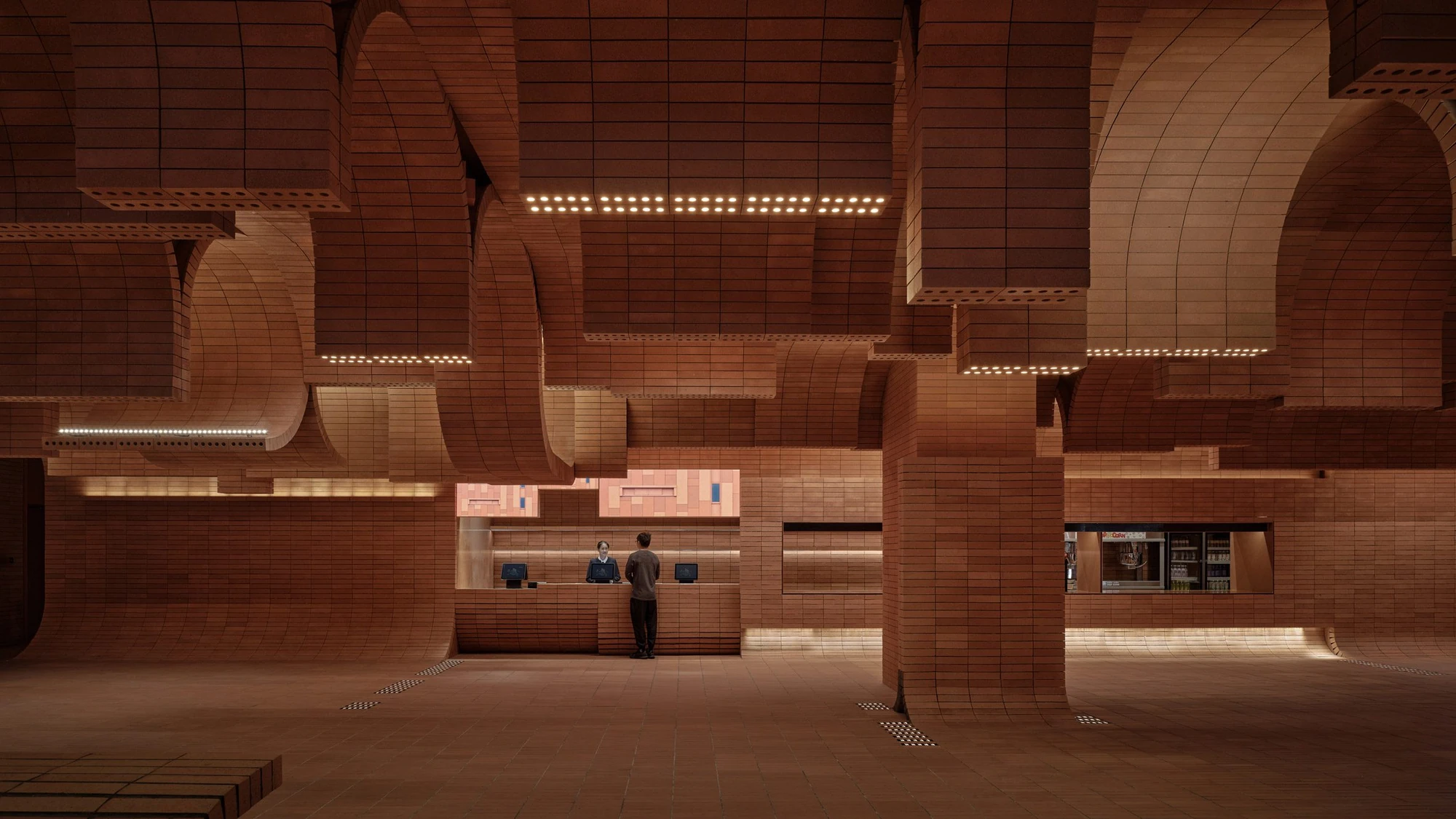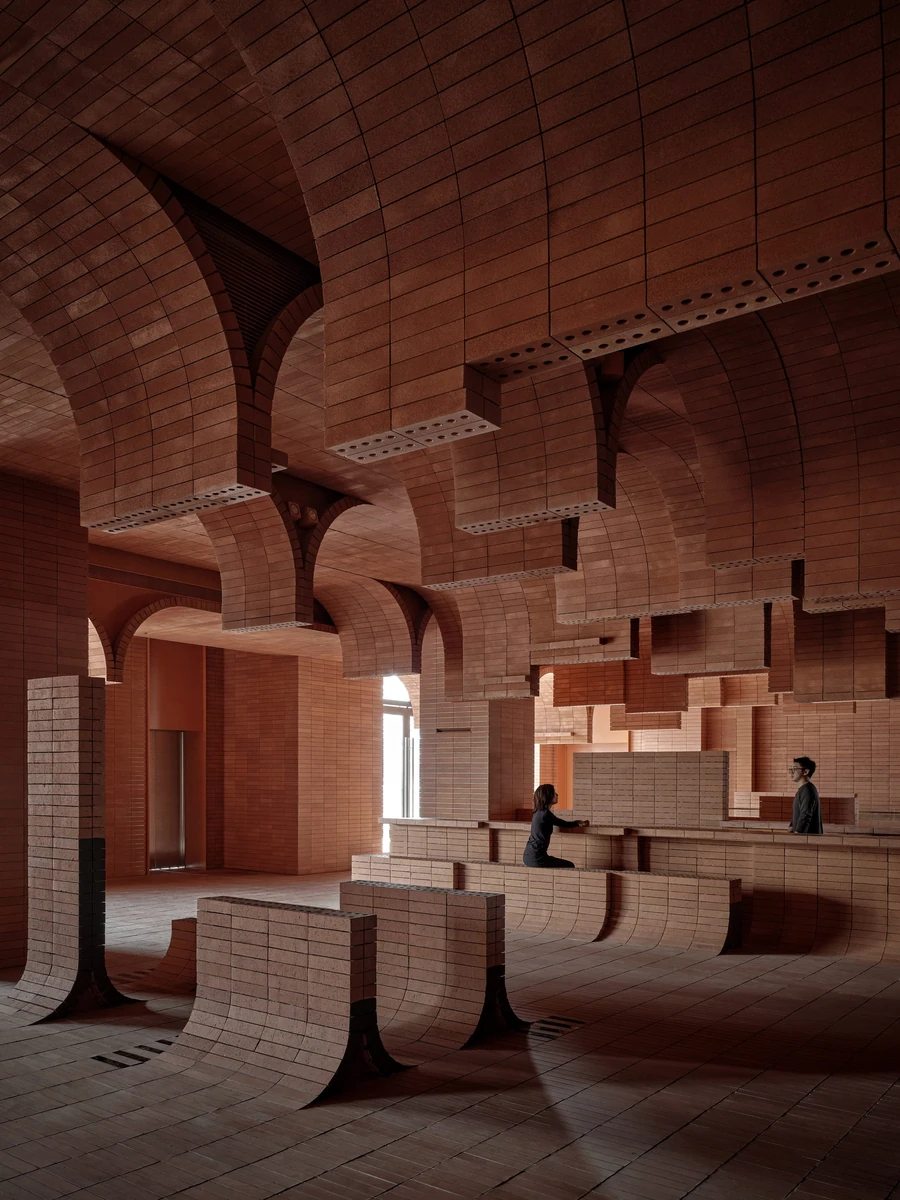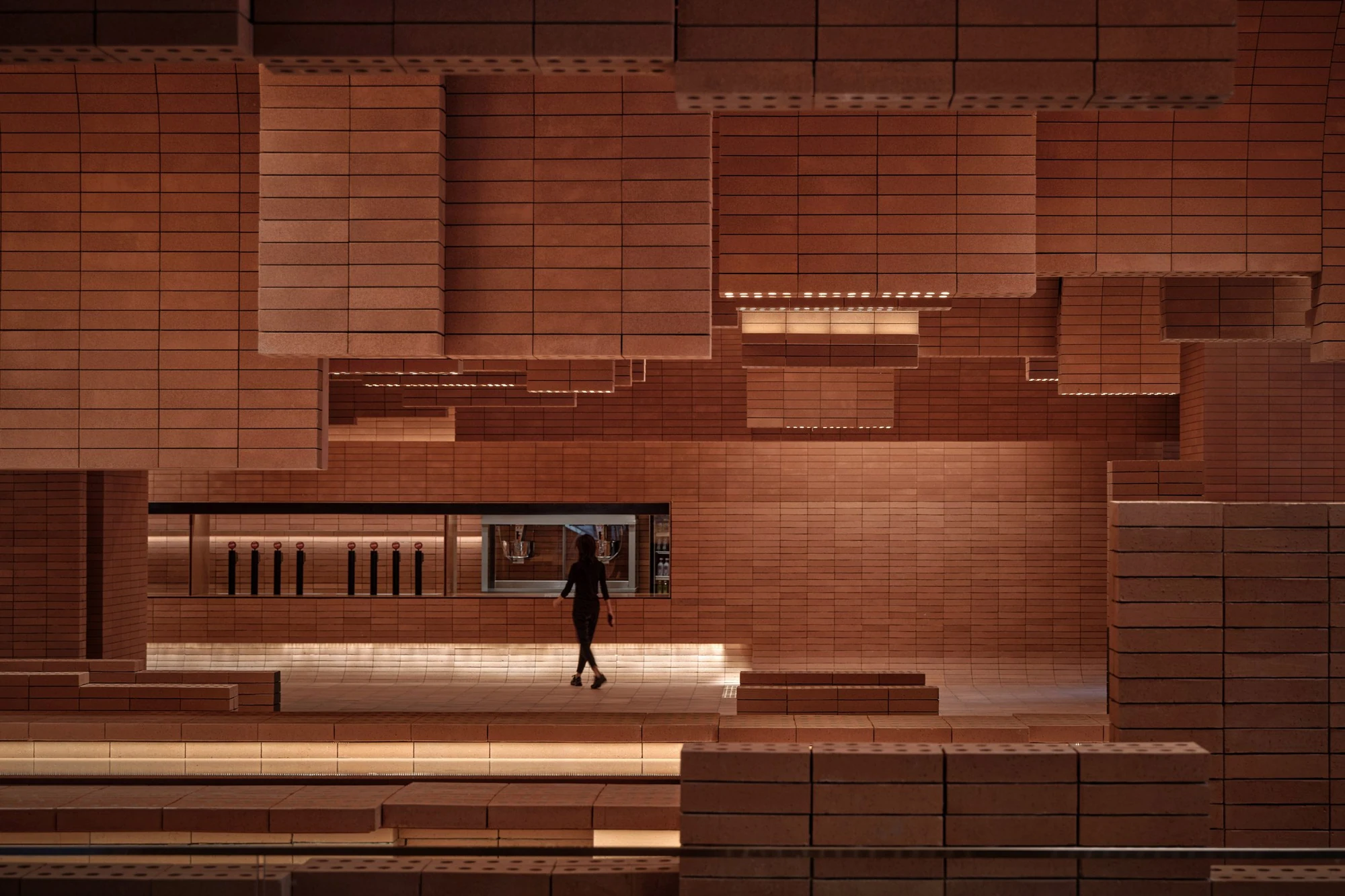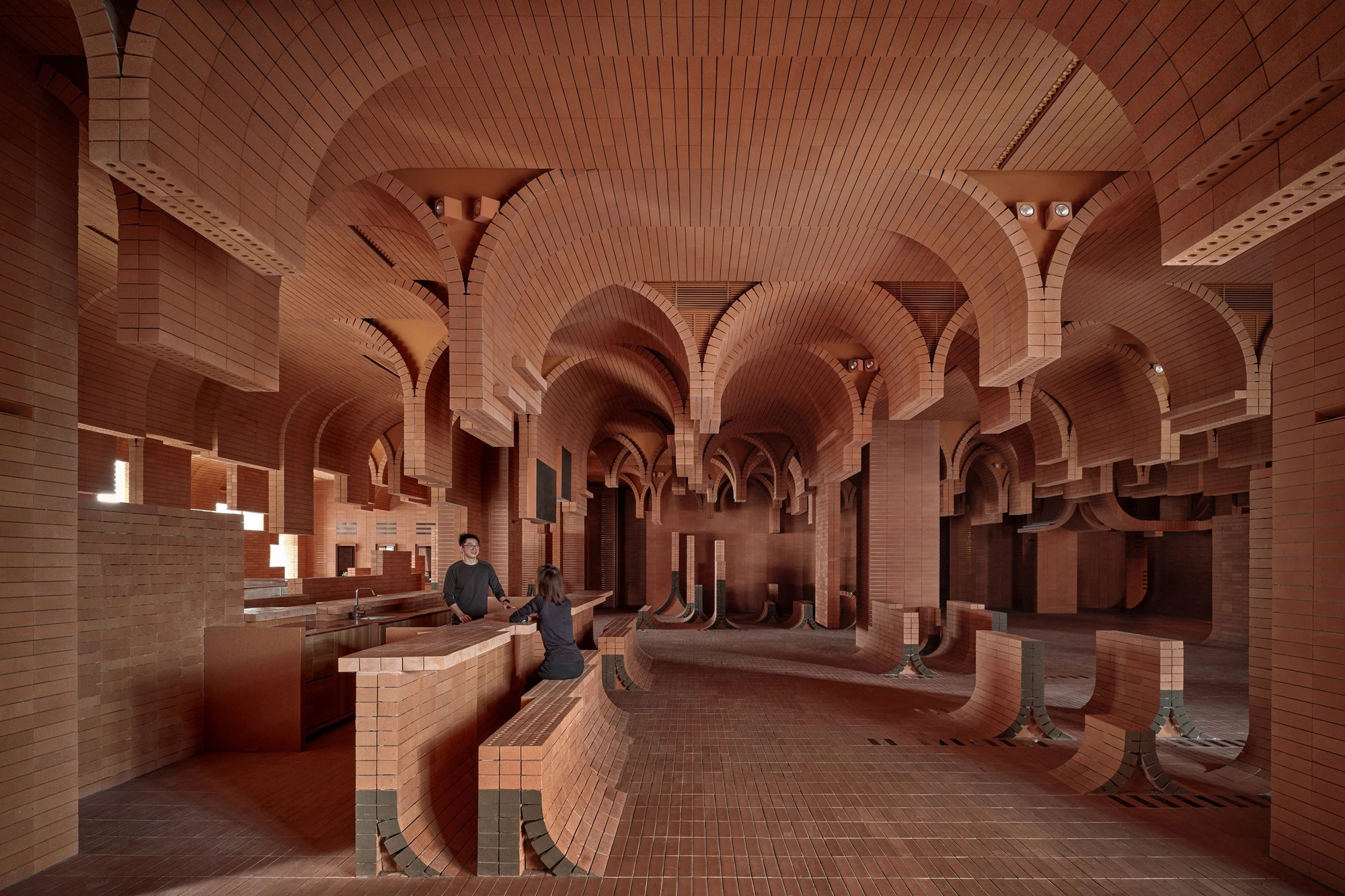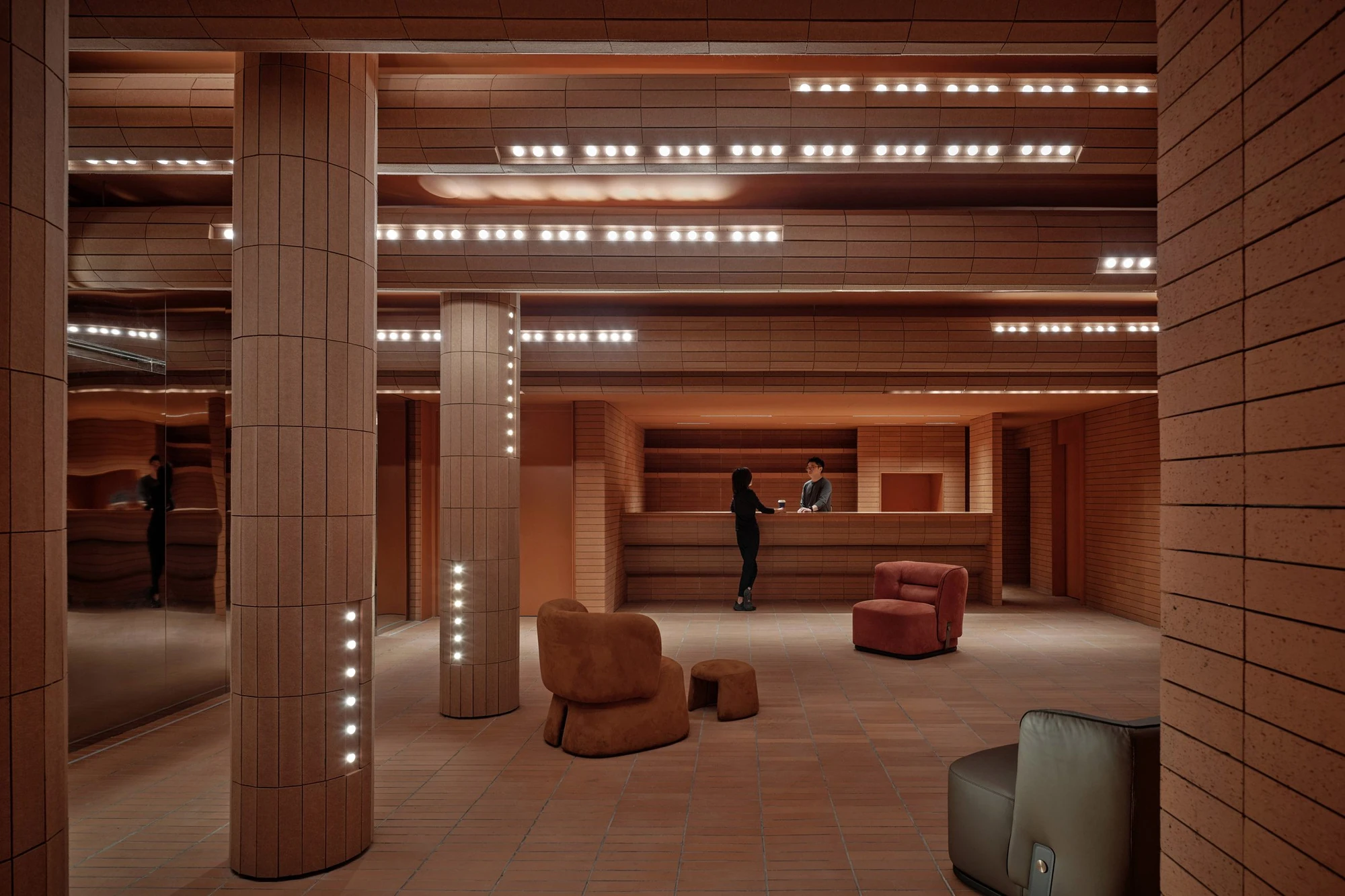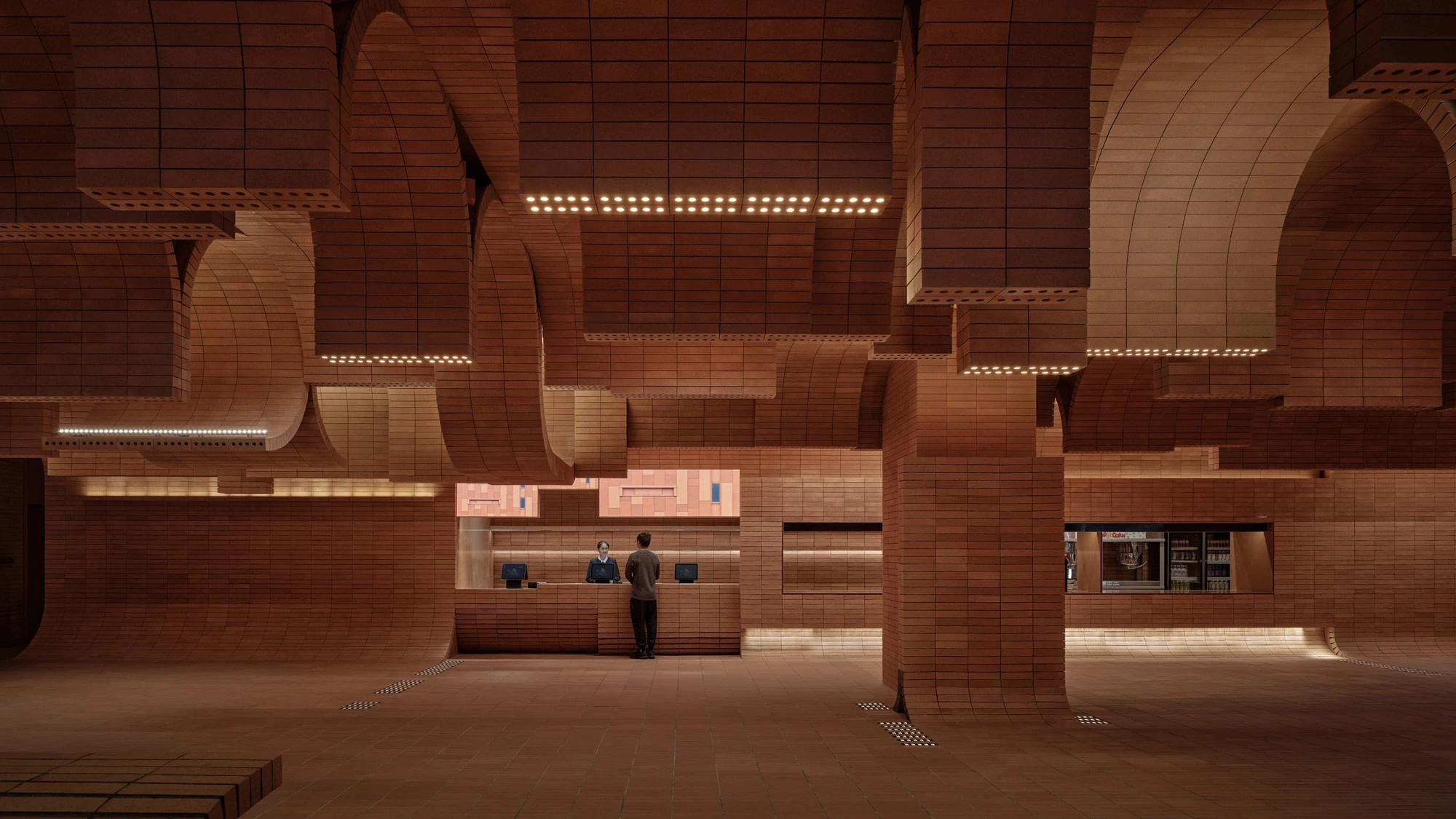
In Haikou, China, the coastal capital of Hainan Island, One Plus Partnership lines the lobby of this cinema in red brick, bending it into waves that rise from the floor and hang overhead.
Haikou sits on the northern edge of Hainan Island, water on almost every side of it. One Plus Partnership took the setting as a starting point and then refused the obvious move. Blue was out. The Hong Kong based studio chose red brick instead, on the logic that the material already comes from the coast: bricks are made of sand, which lies on the beach.
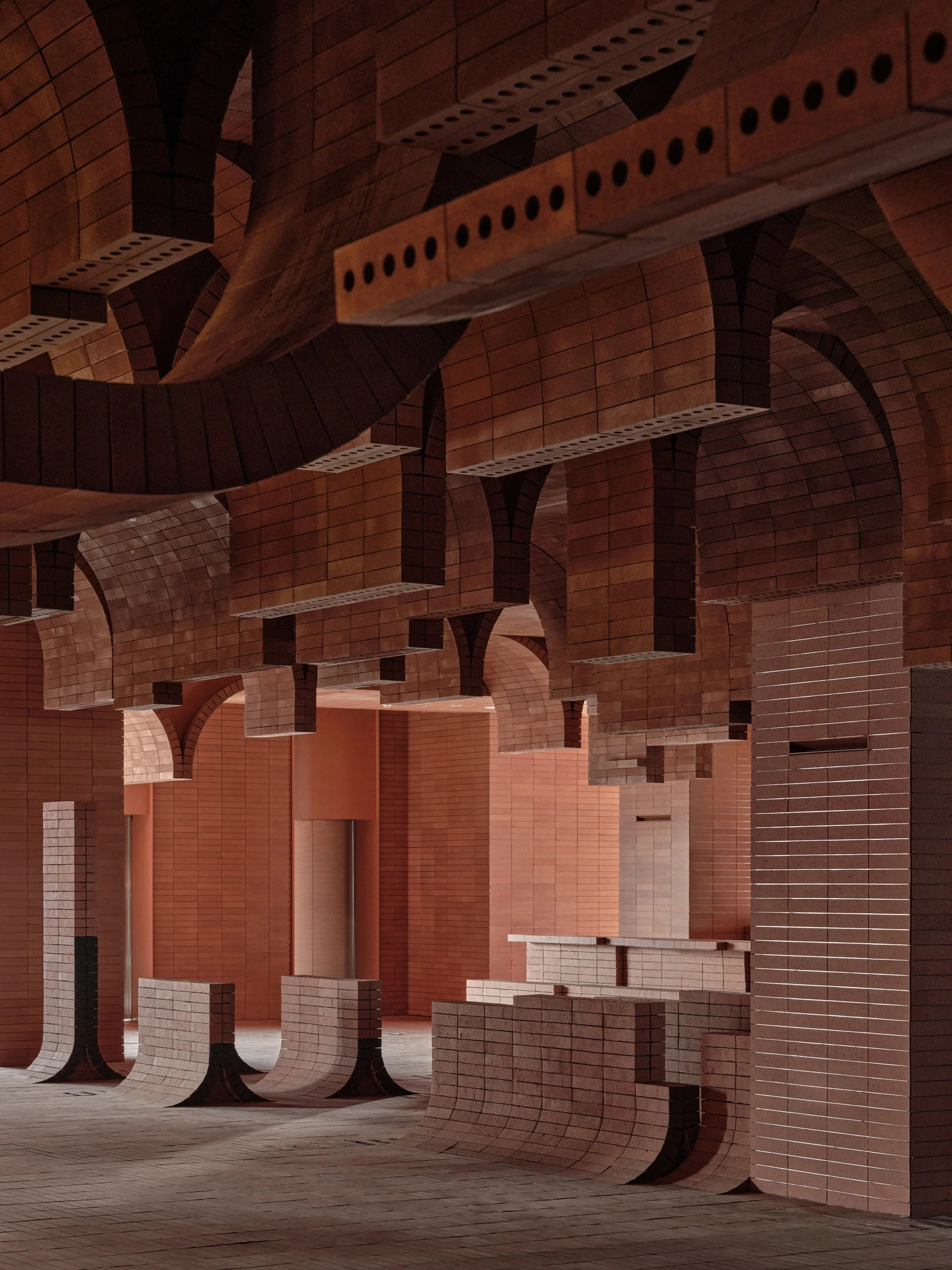
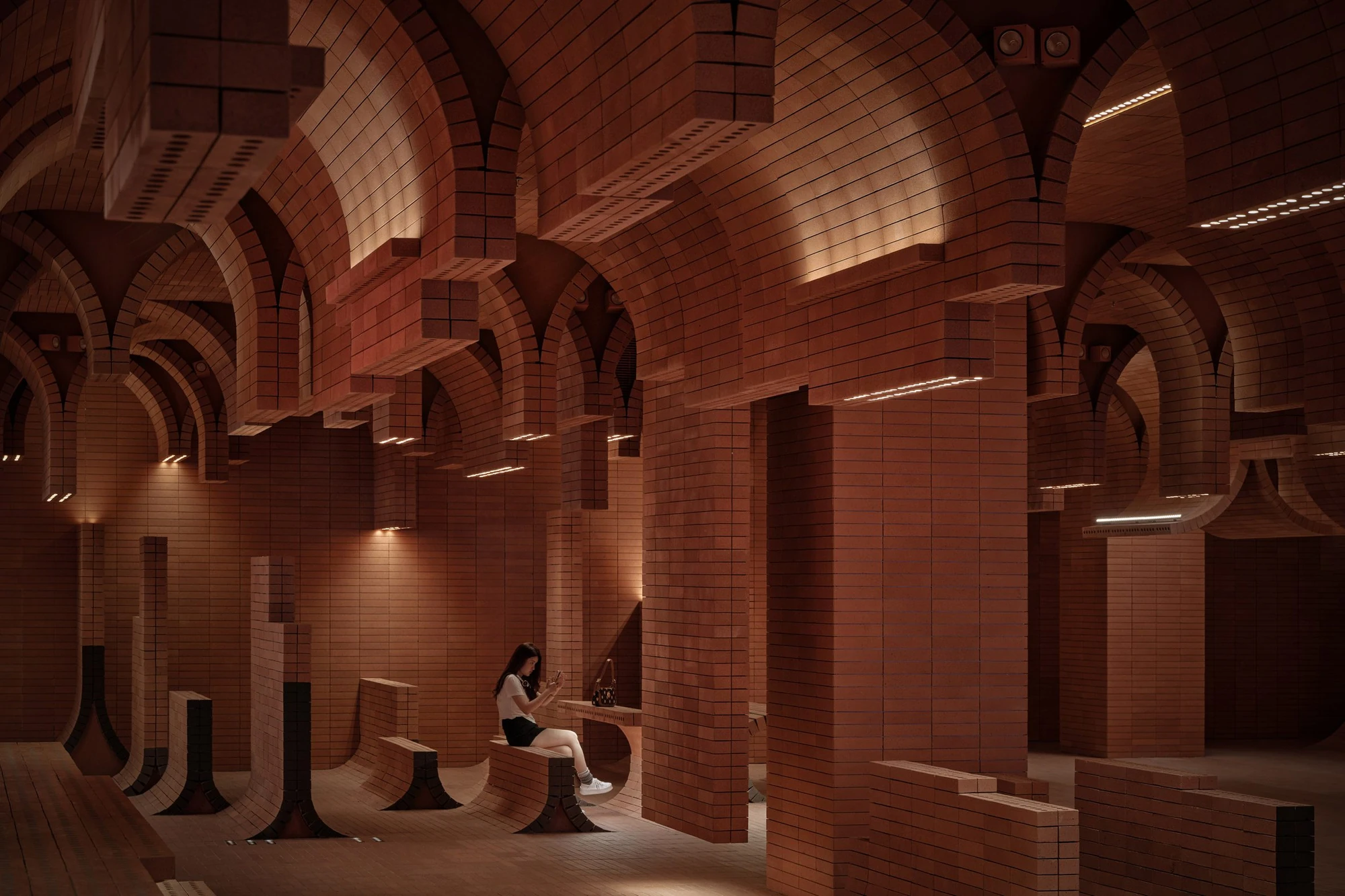
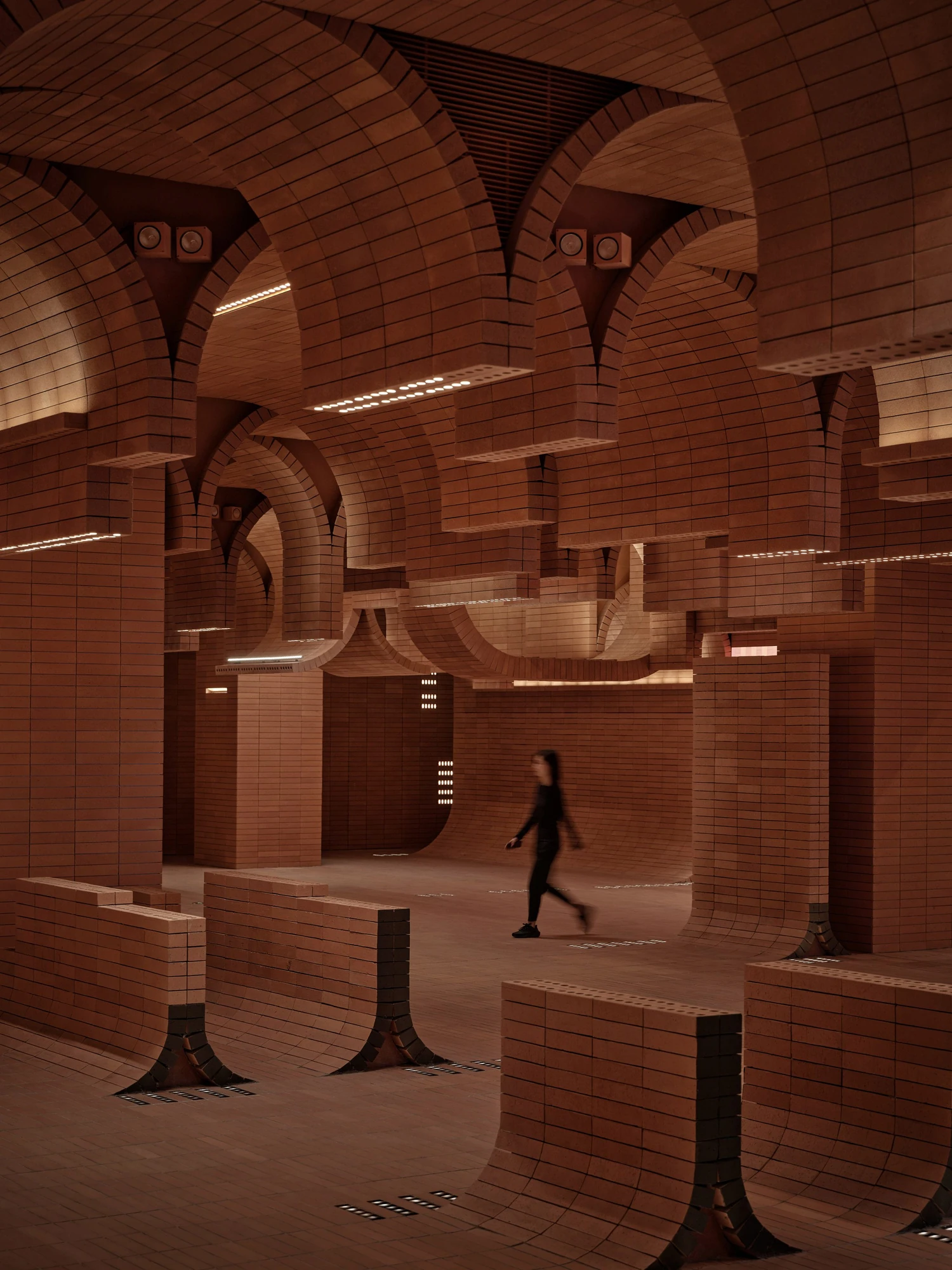
What follows is a single material doing every job in the room. Brick rises out of the lobby floor and curls over into countertops, booths and low benches, the ends of each wave rolling back under themselves so the seating reads as ground that has lifted. Overhead, the same brick hangs in arched slabs that stop short of the walls, stalactite fashion, with light fittings and air vents buried in their thickness.
Cinema lobbies are usually sealed against daylight. This one is not. Openings let the sun into the lobby and the cafe, and shadows travel across the coursing through the day. After dark the logic inverts: bricks set into the floor and the ceiling are lit from within and push light back out through their own perforations, while uplighting washes the undersides of the arches.
The grey is the tell. Wherever a wave turns edge on toward a walking body, or an overhead slab drops far enough to meet a head, that face is painted grey so it separates from the red around it. A collision measure first, a drawing device second, and the only other colour in the place.
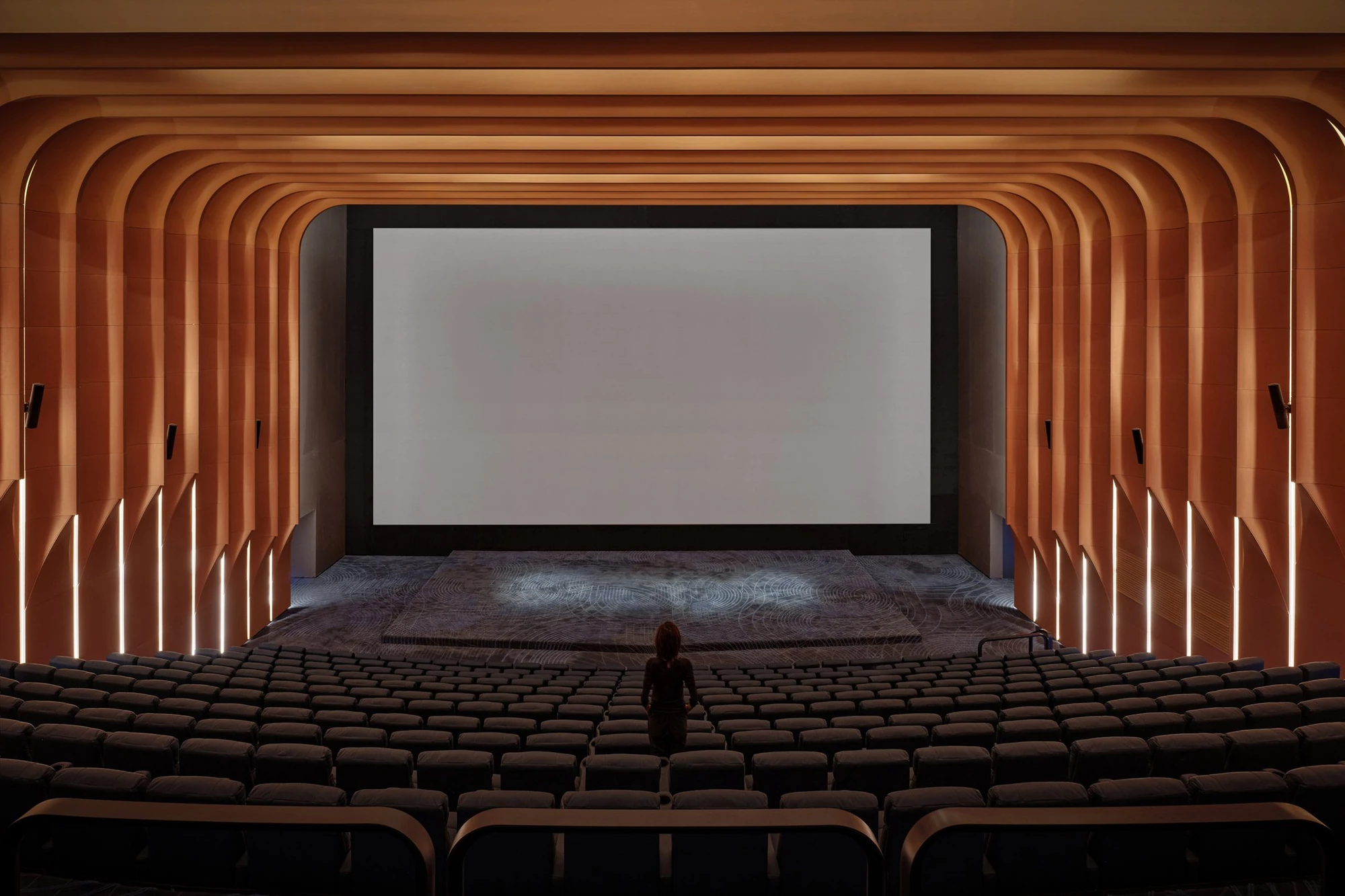
The main auditorium leaves brick behind for curving wooden bands that tighten around the screen, a reference to the way the South China Sea wraps the island, with lighting set between the layers. The argument holding the room together is plain enough: a film at home is a film, and a room like this is a reason to leave the house.