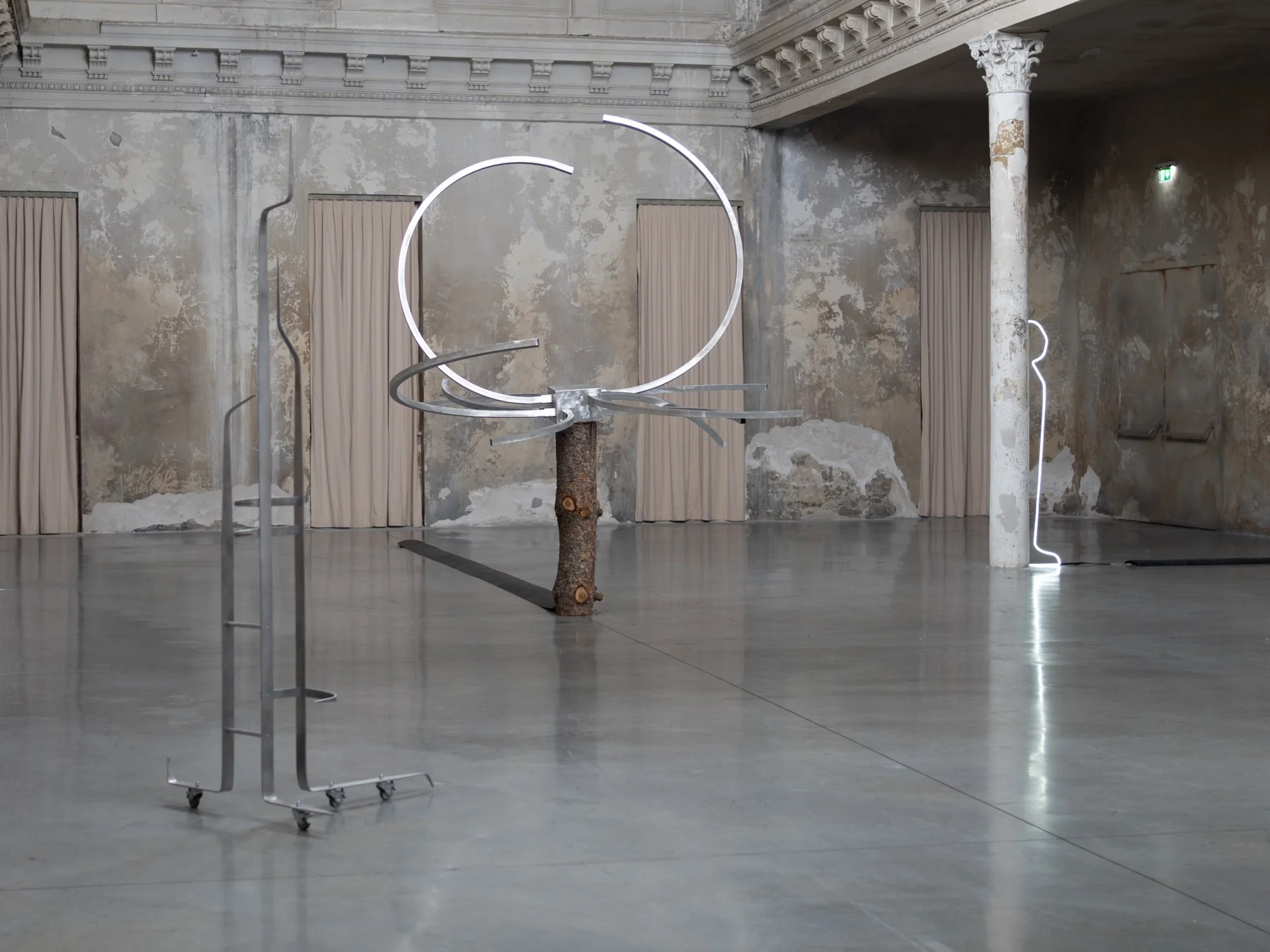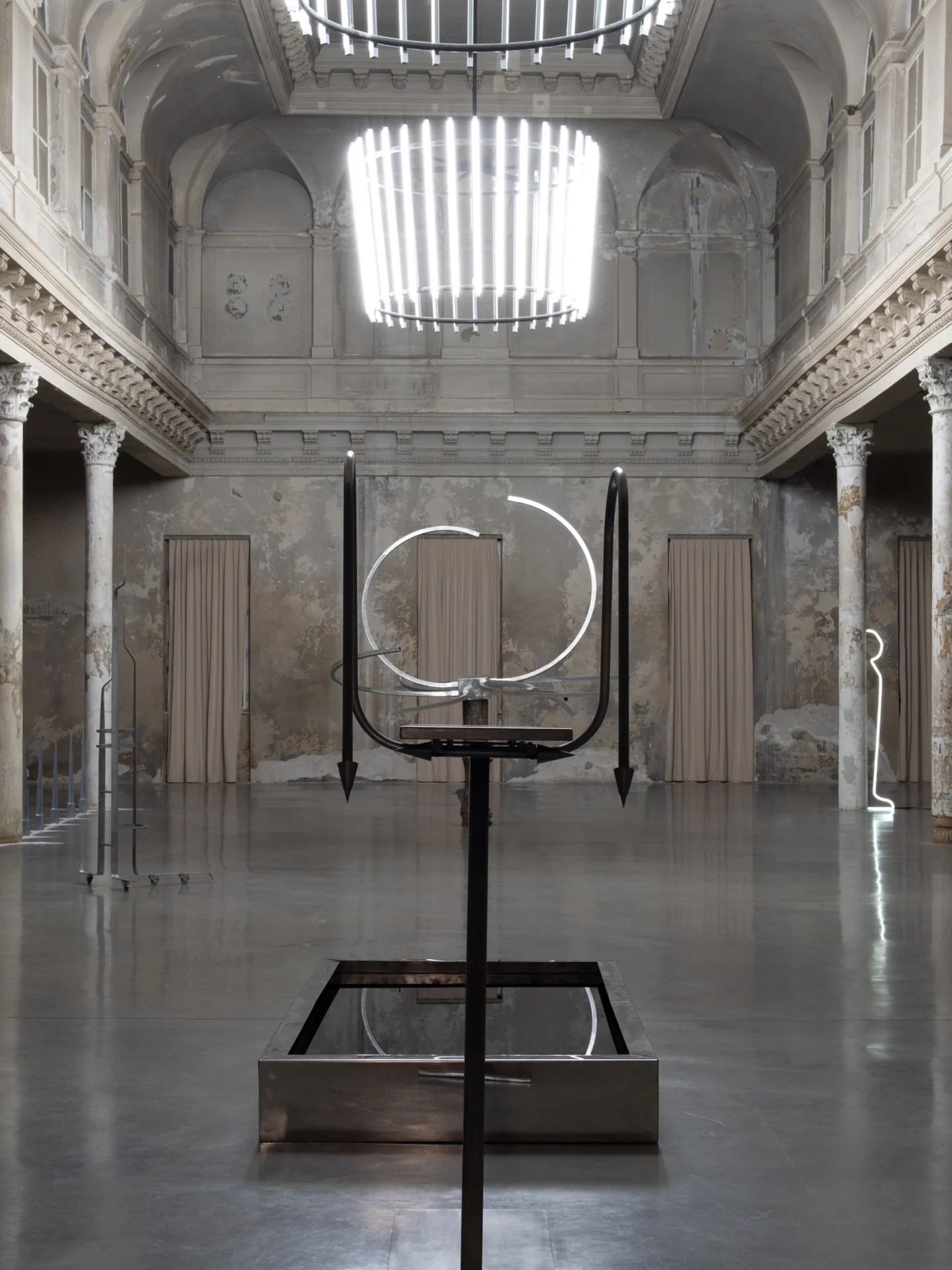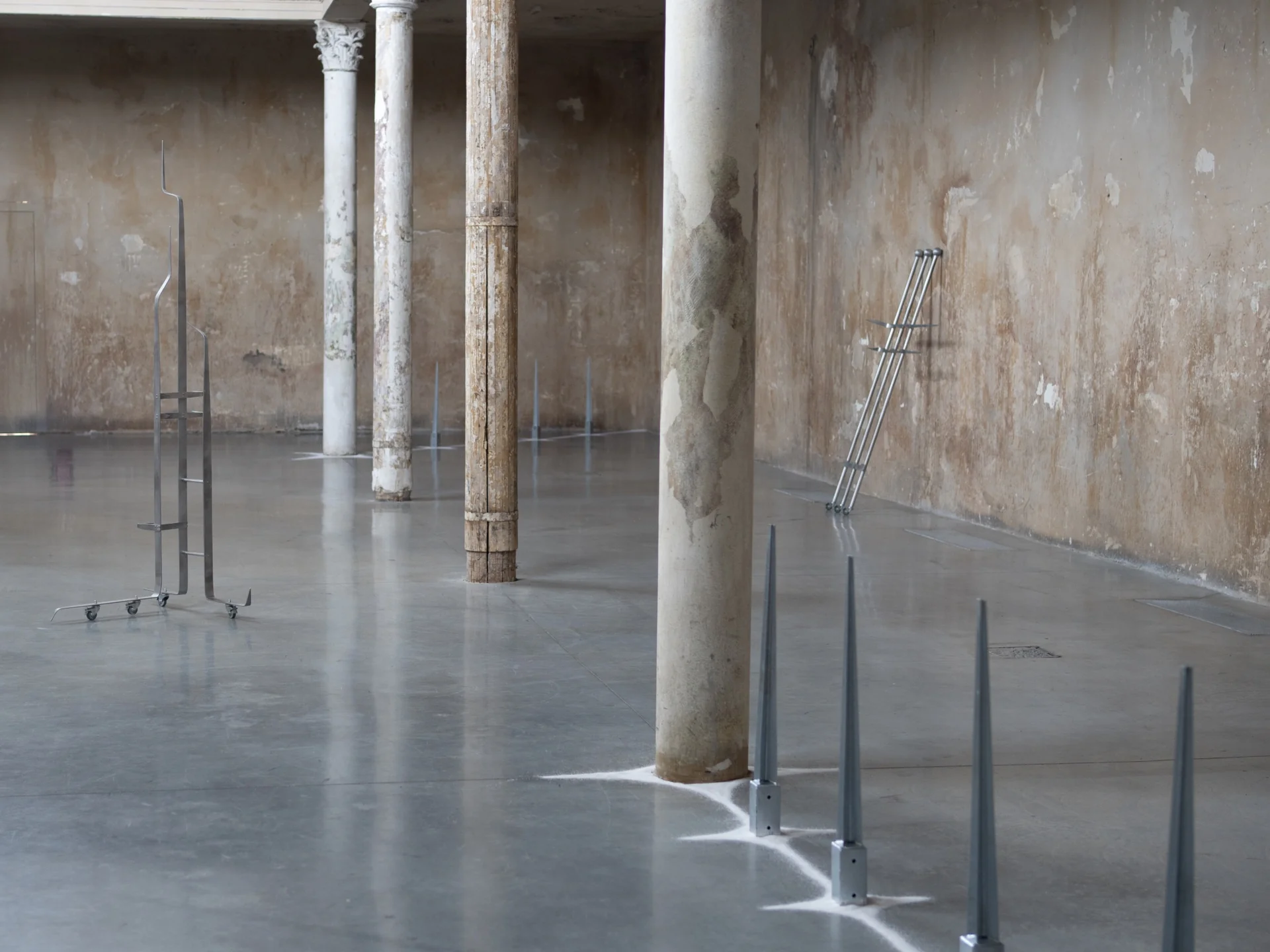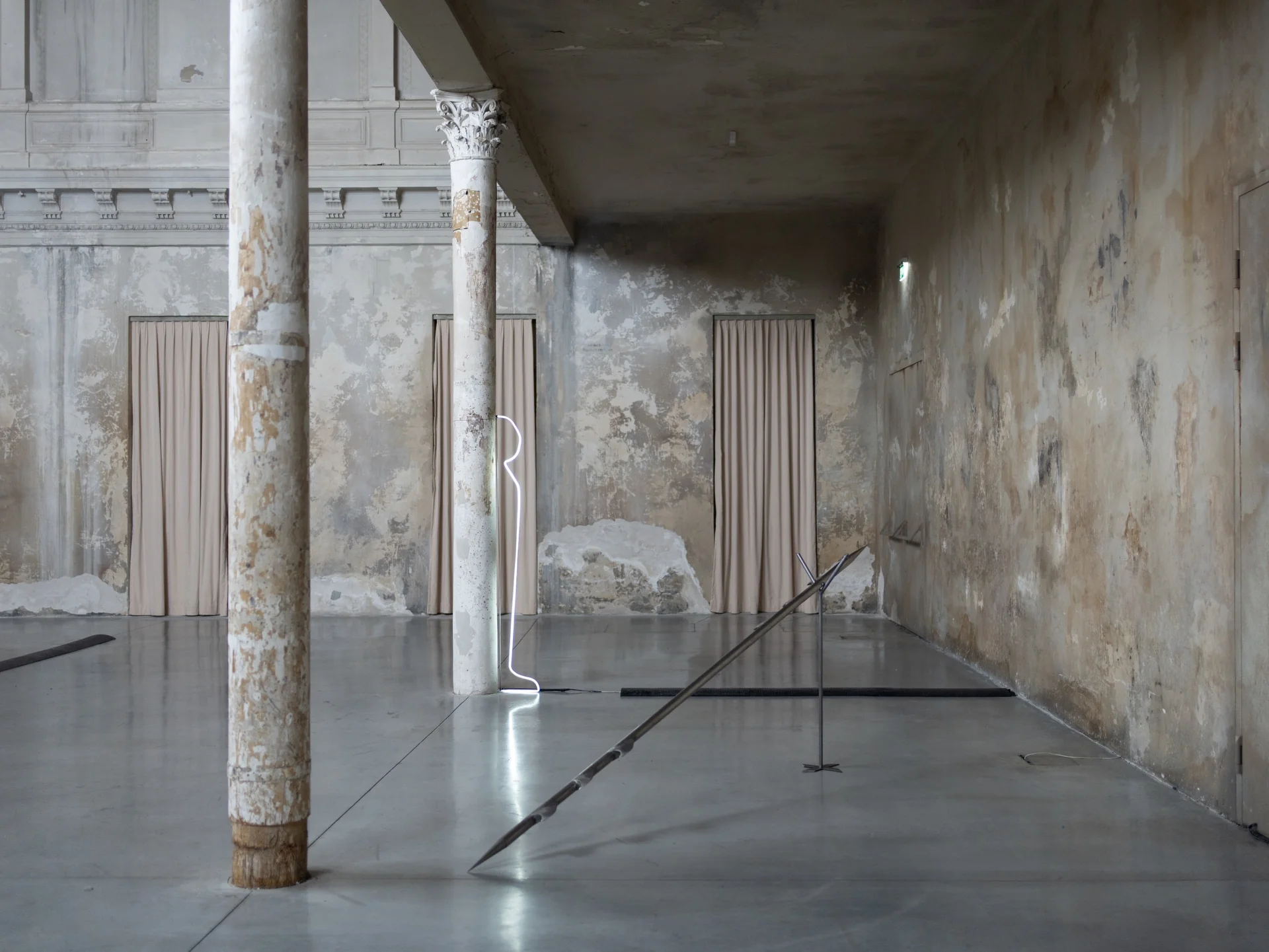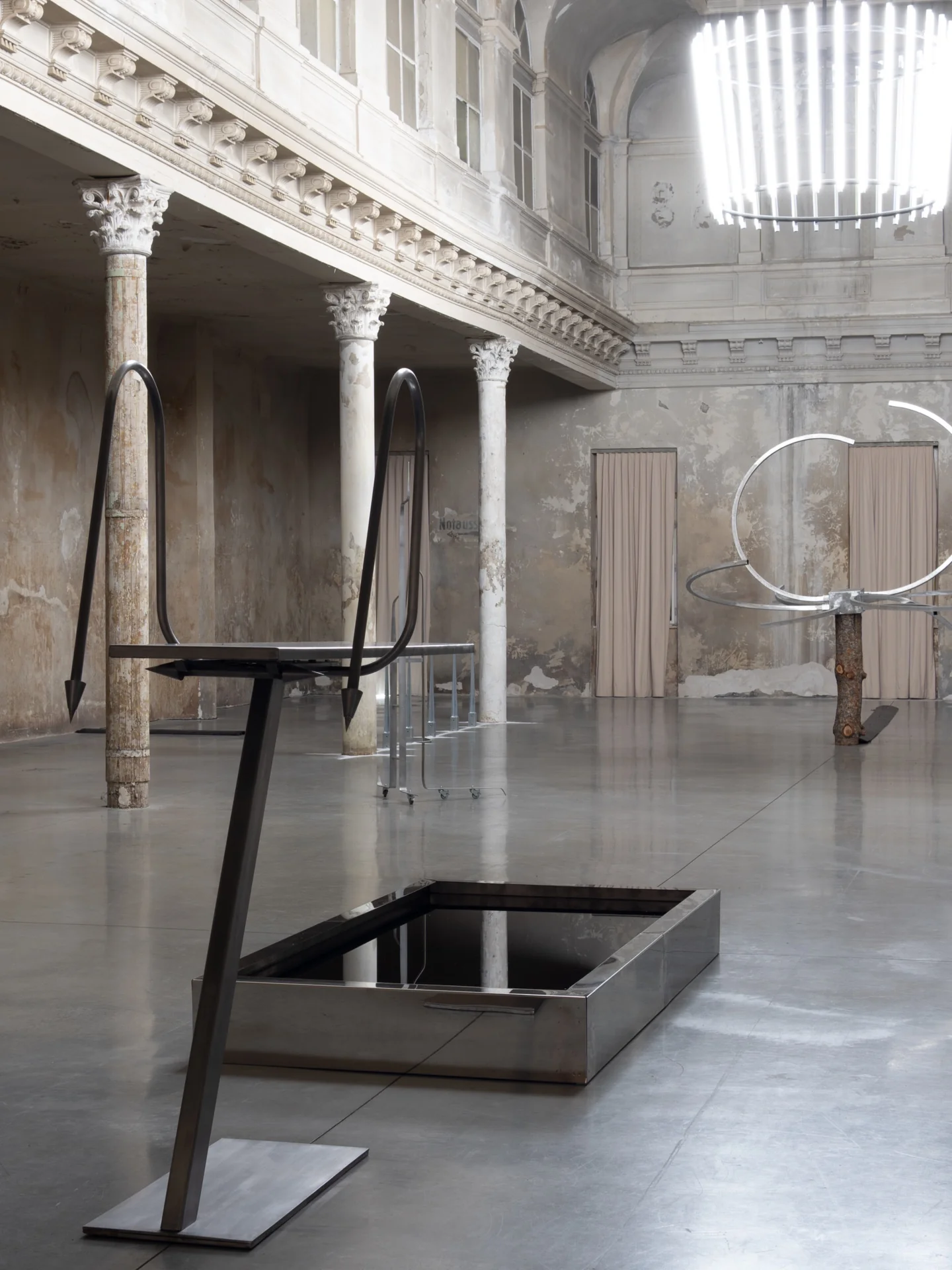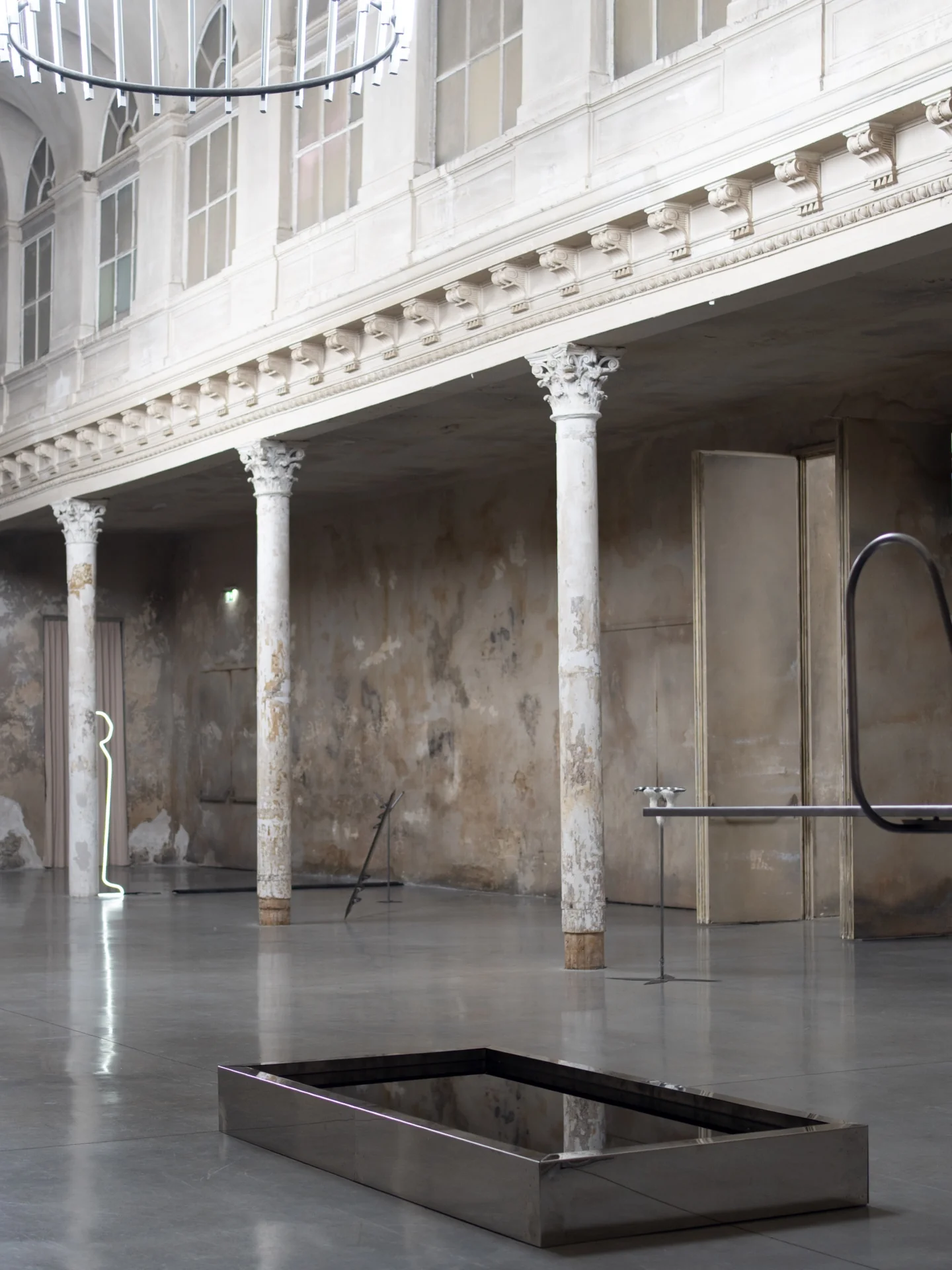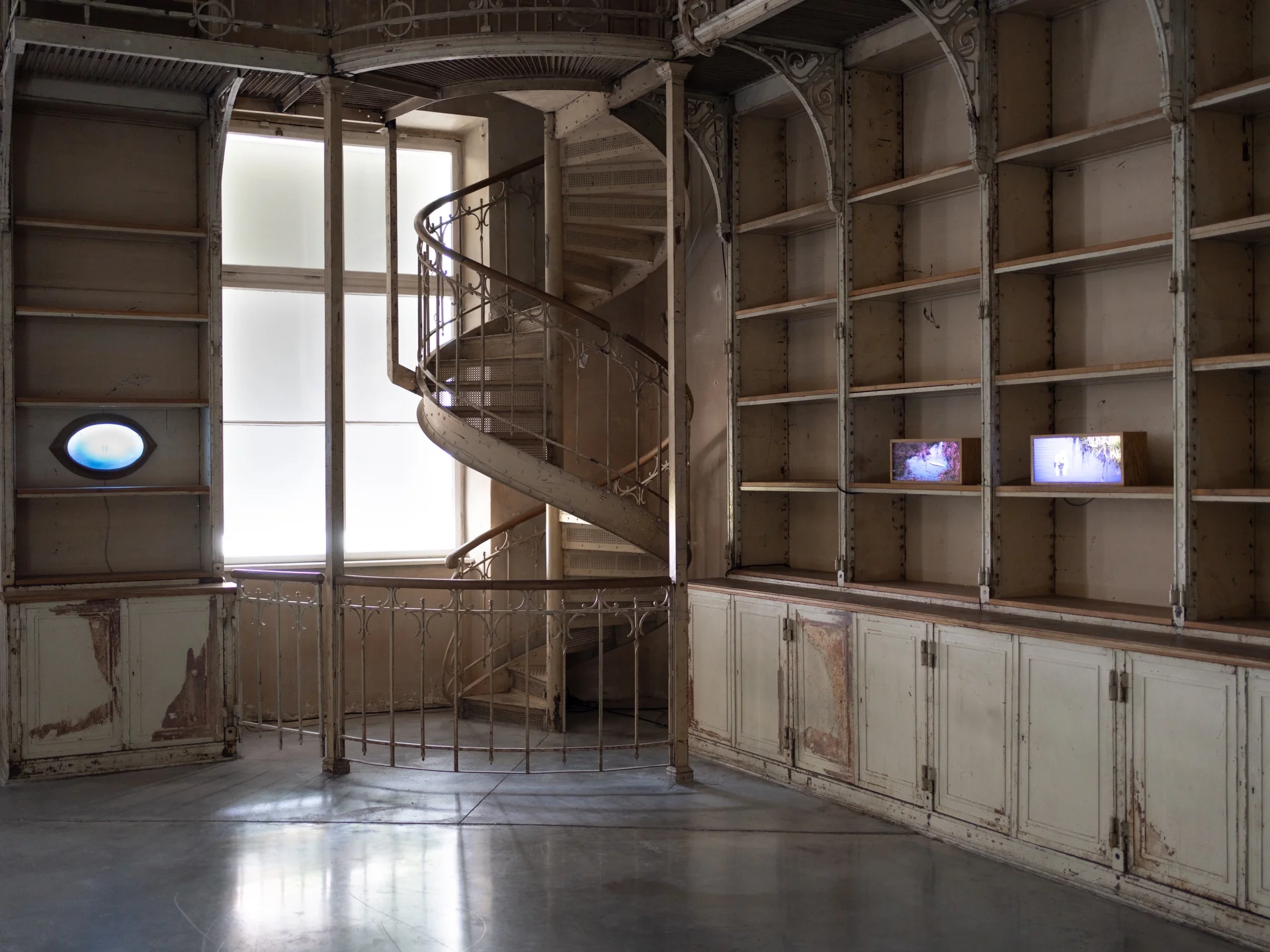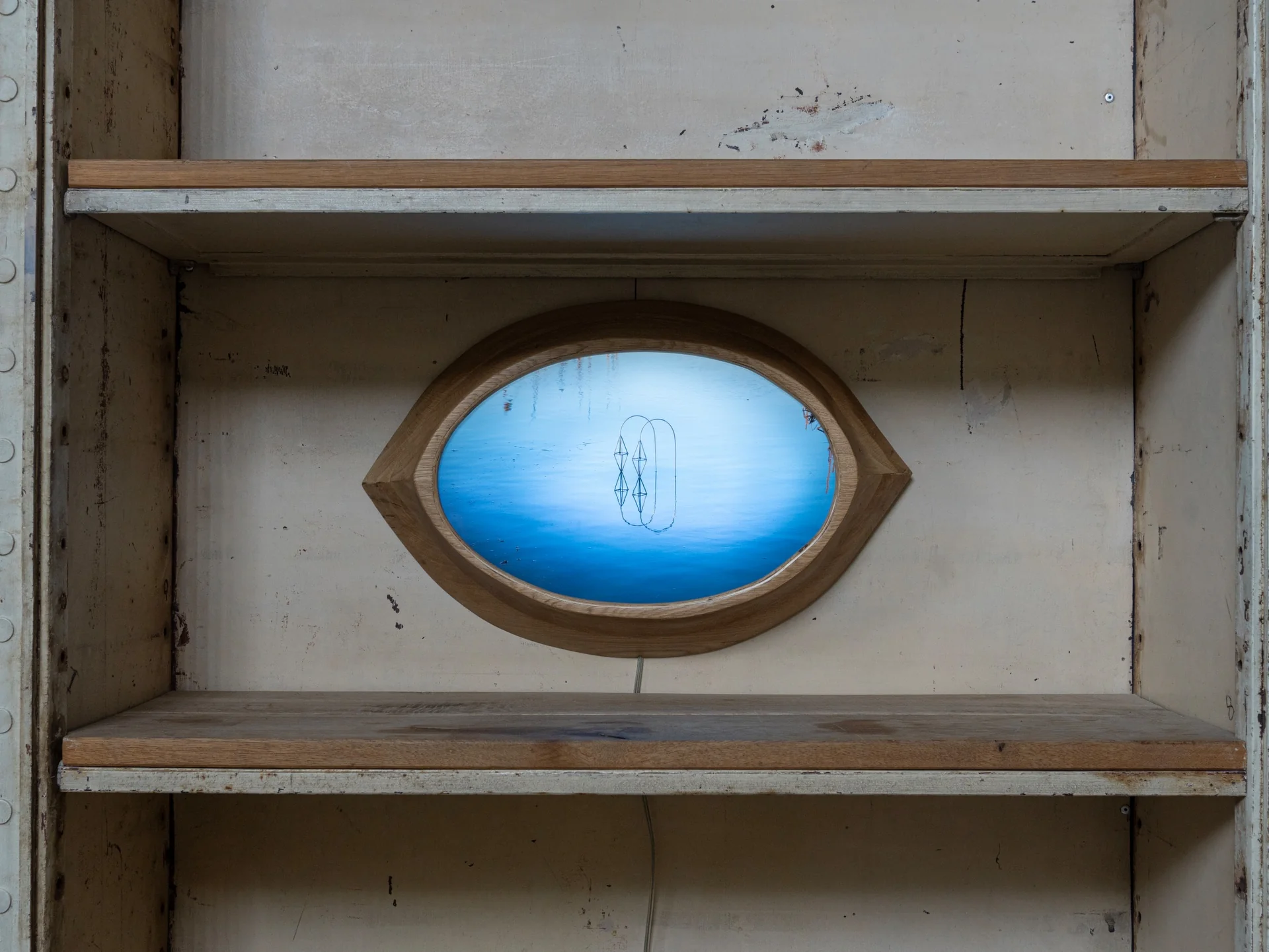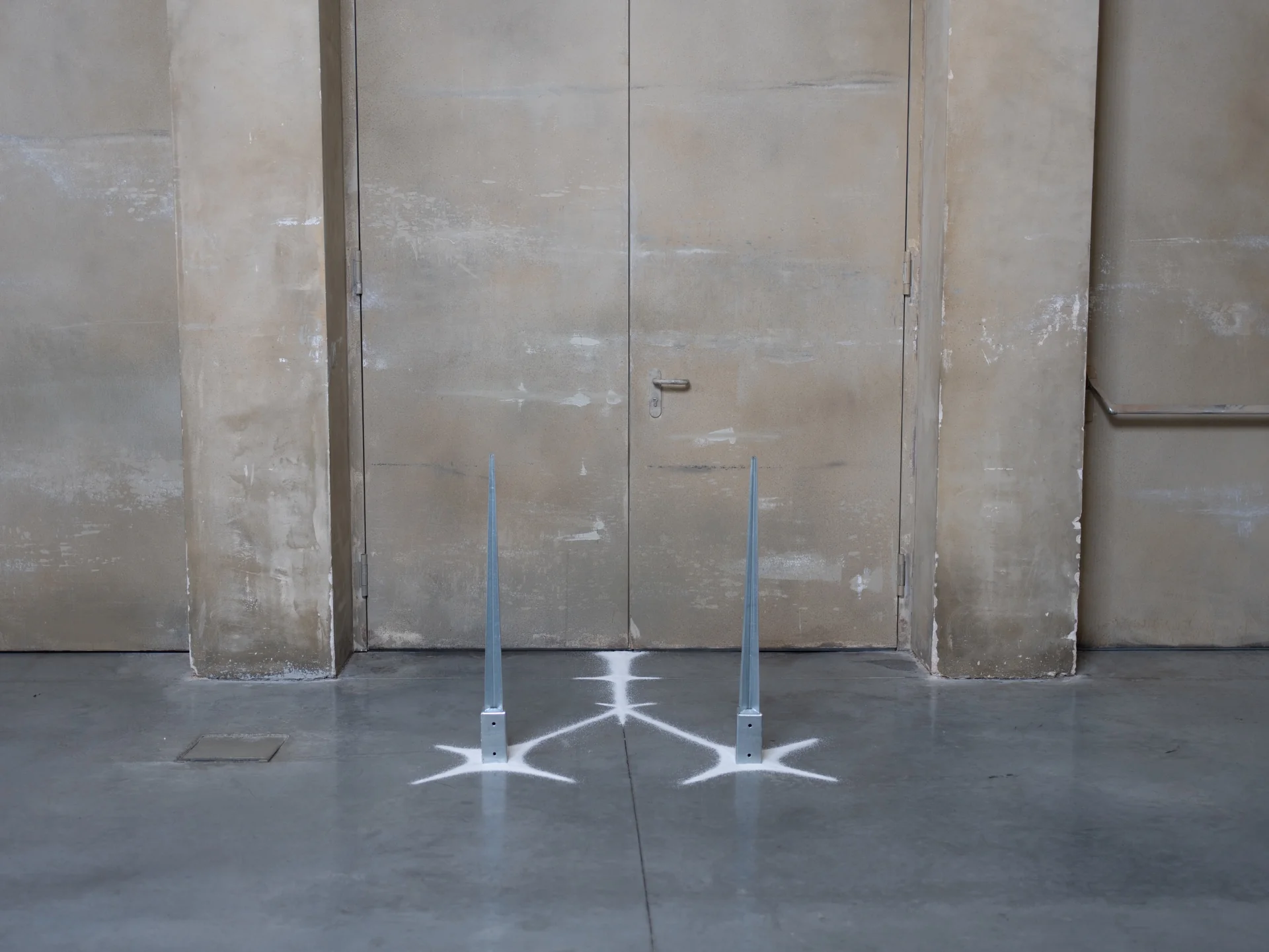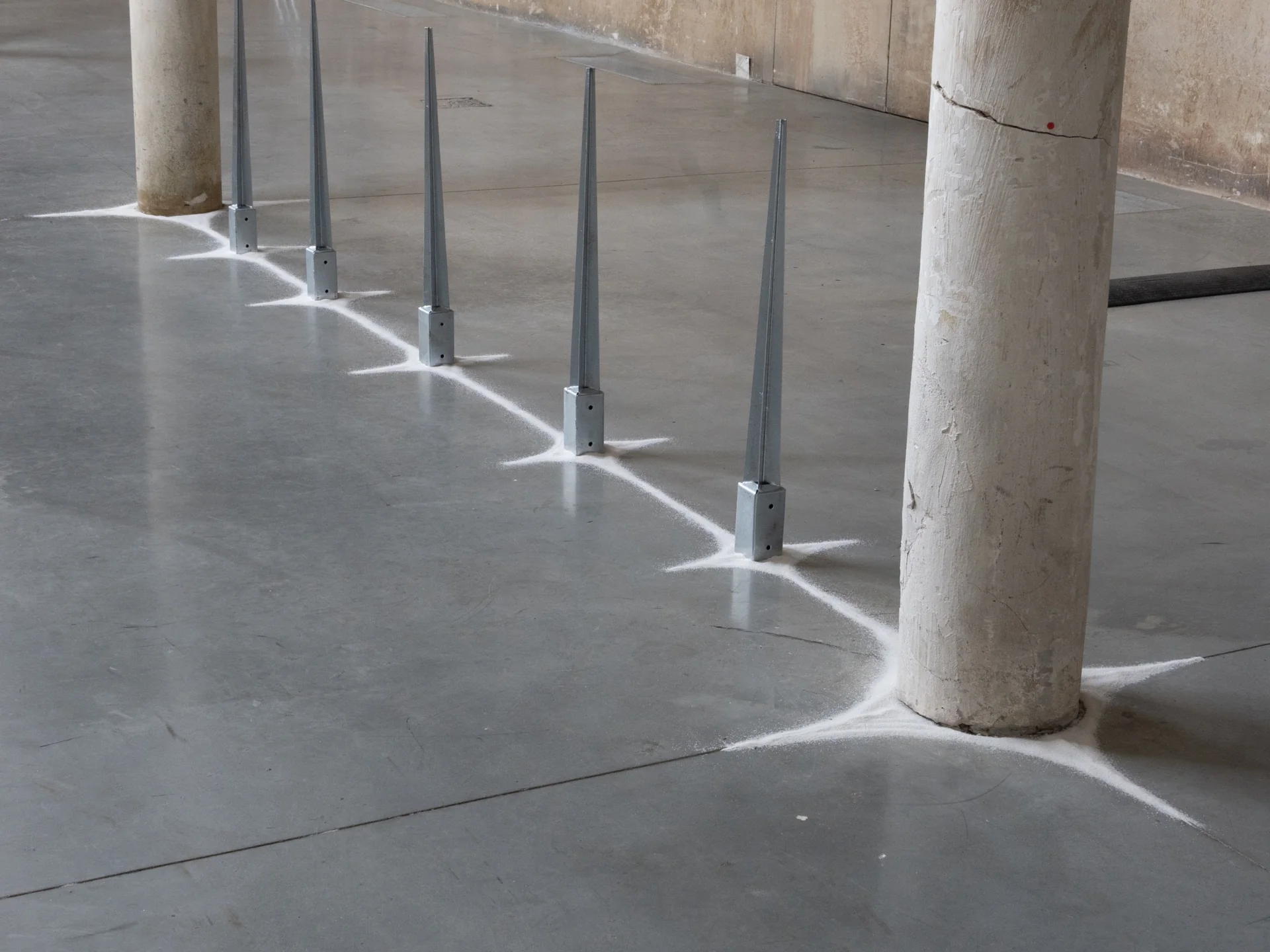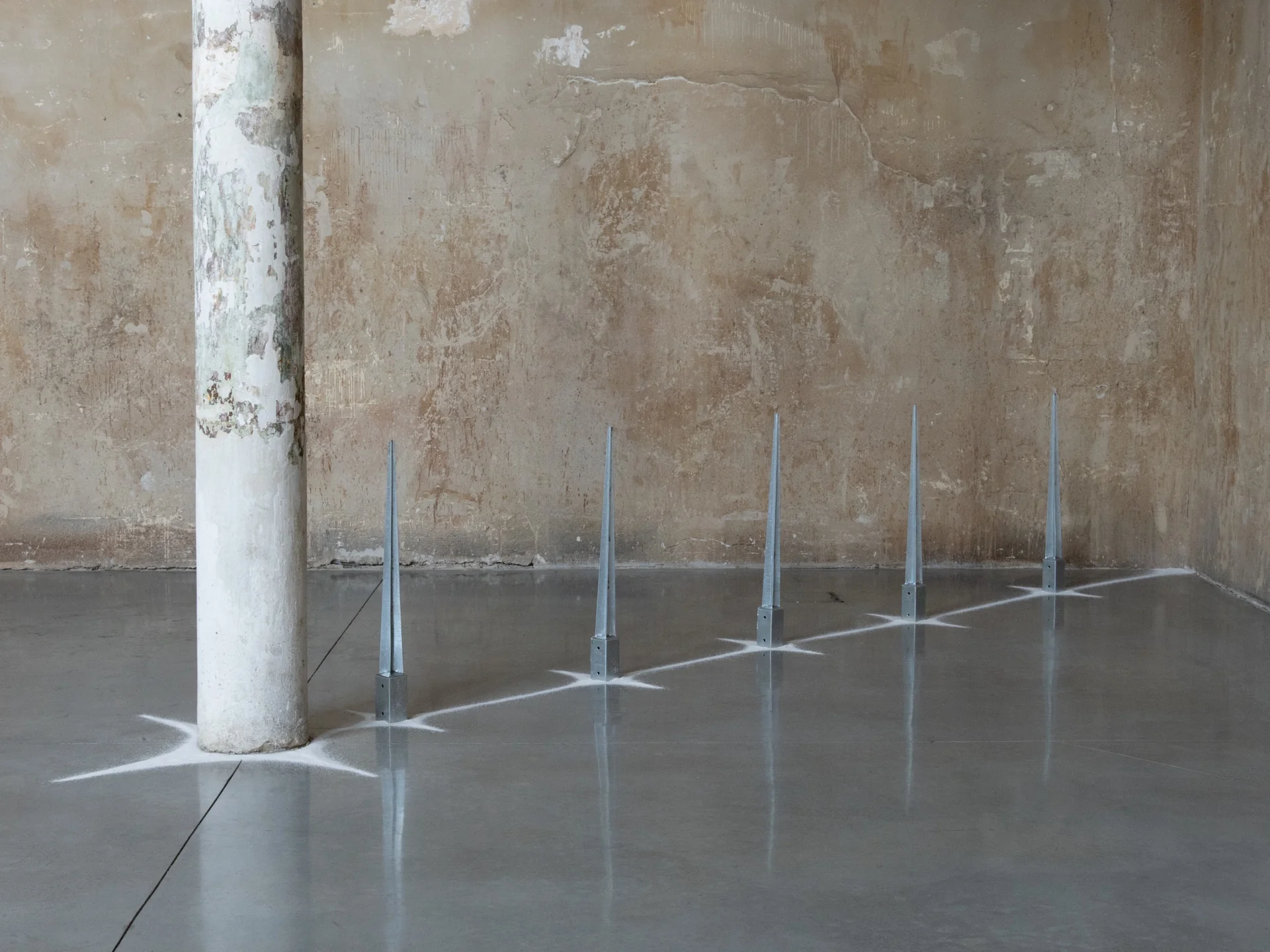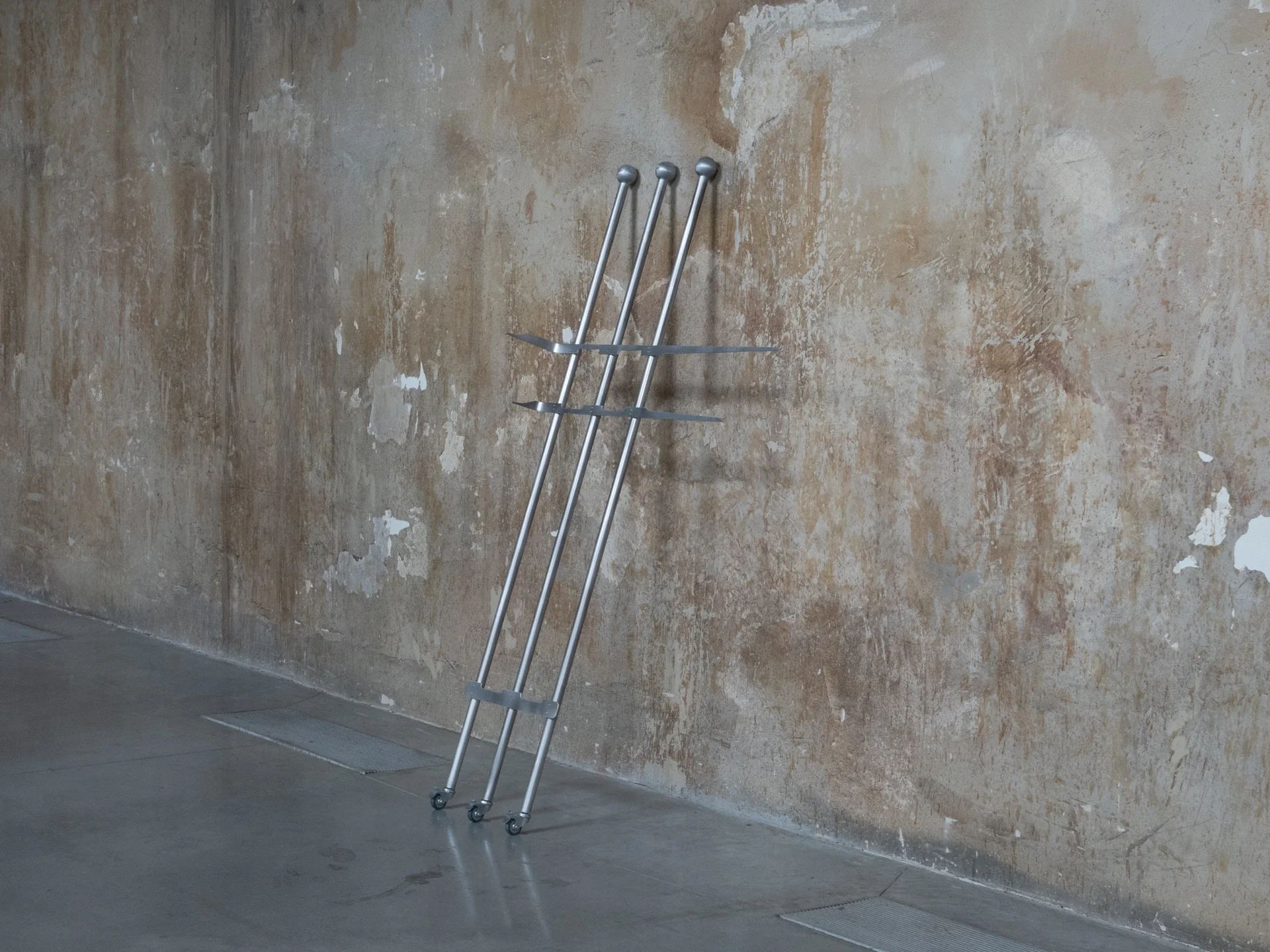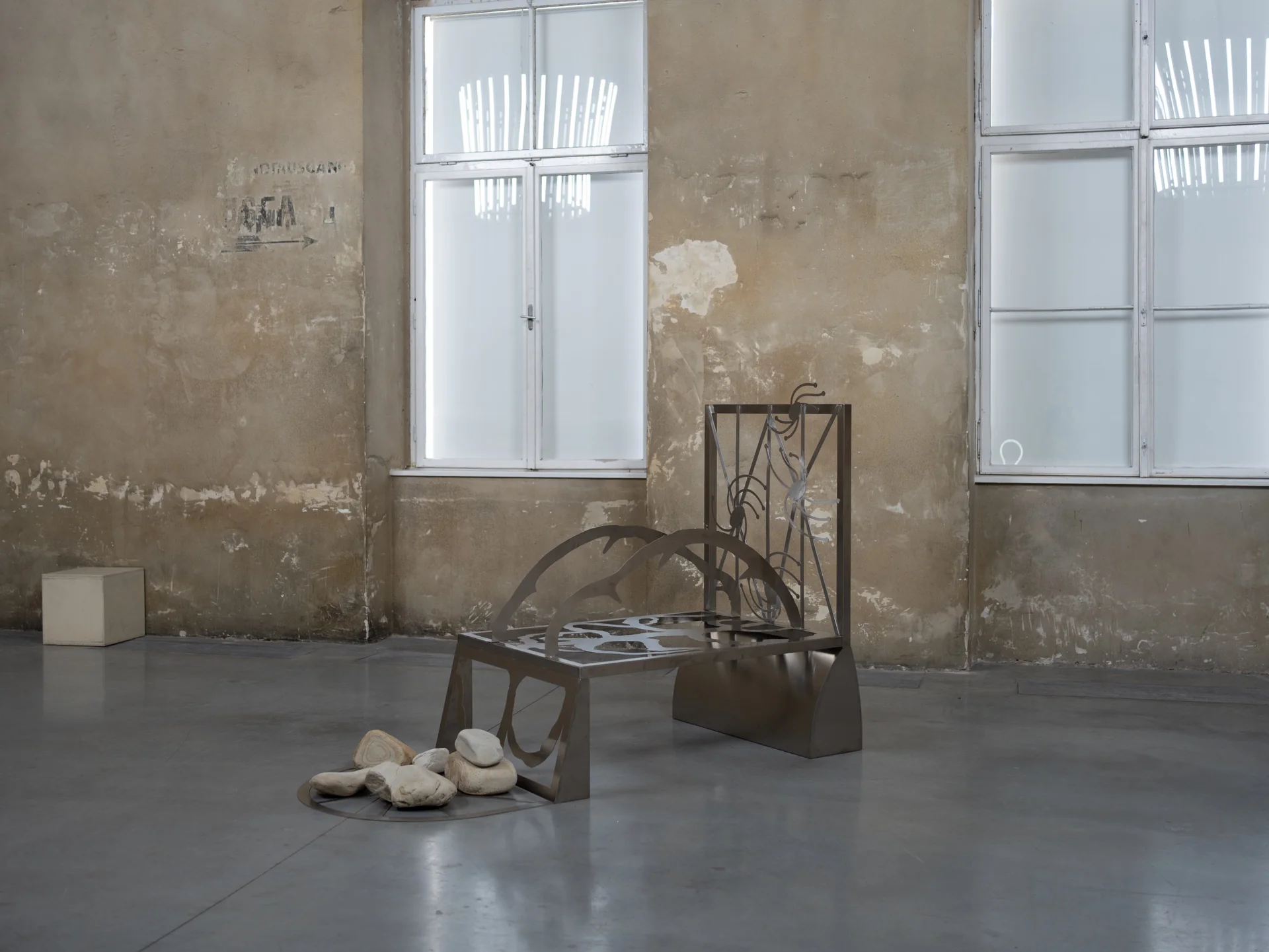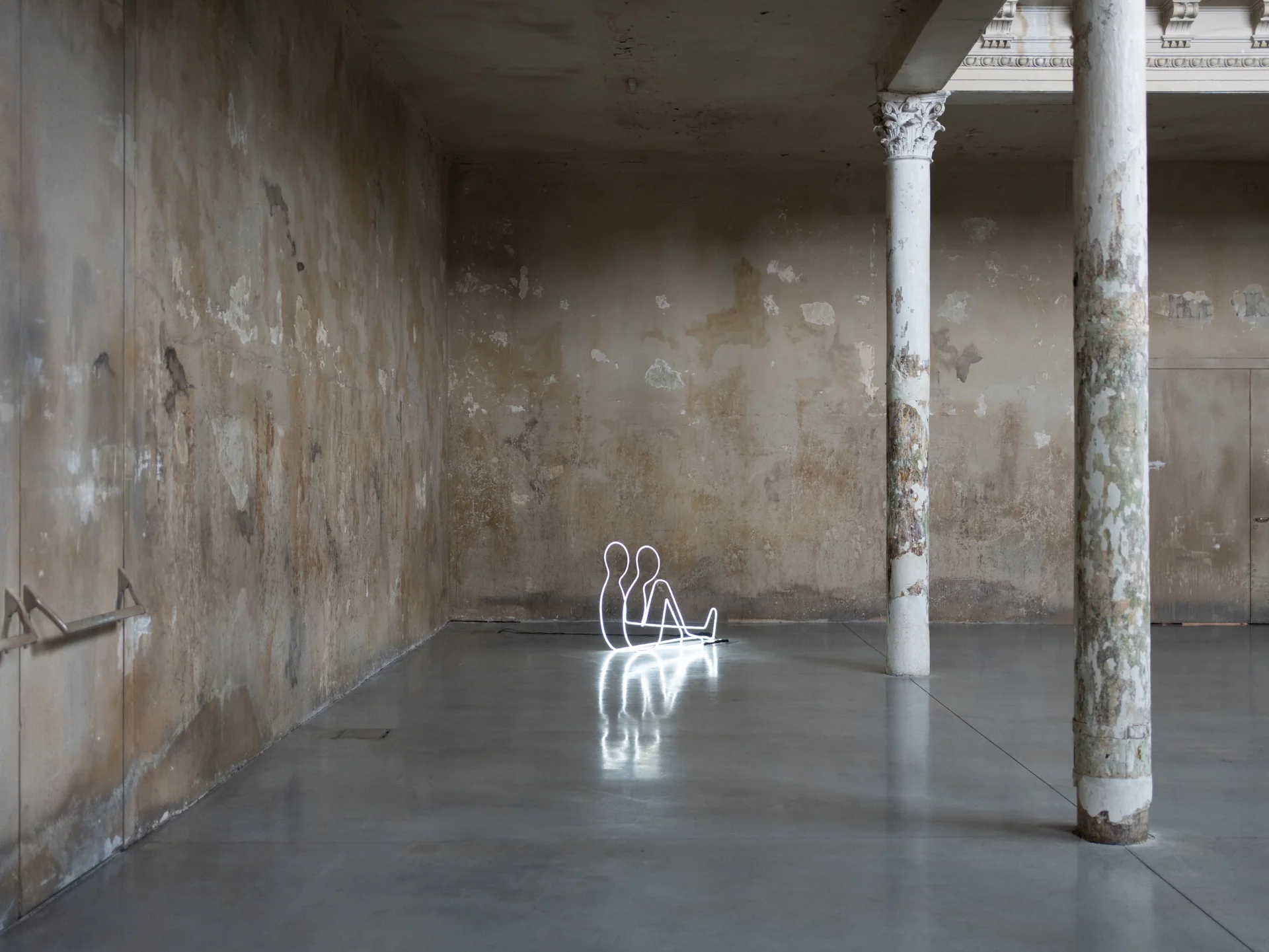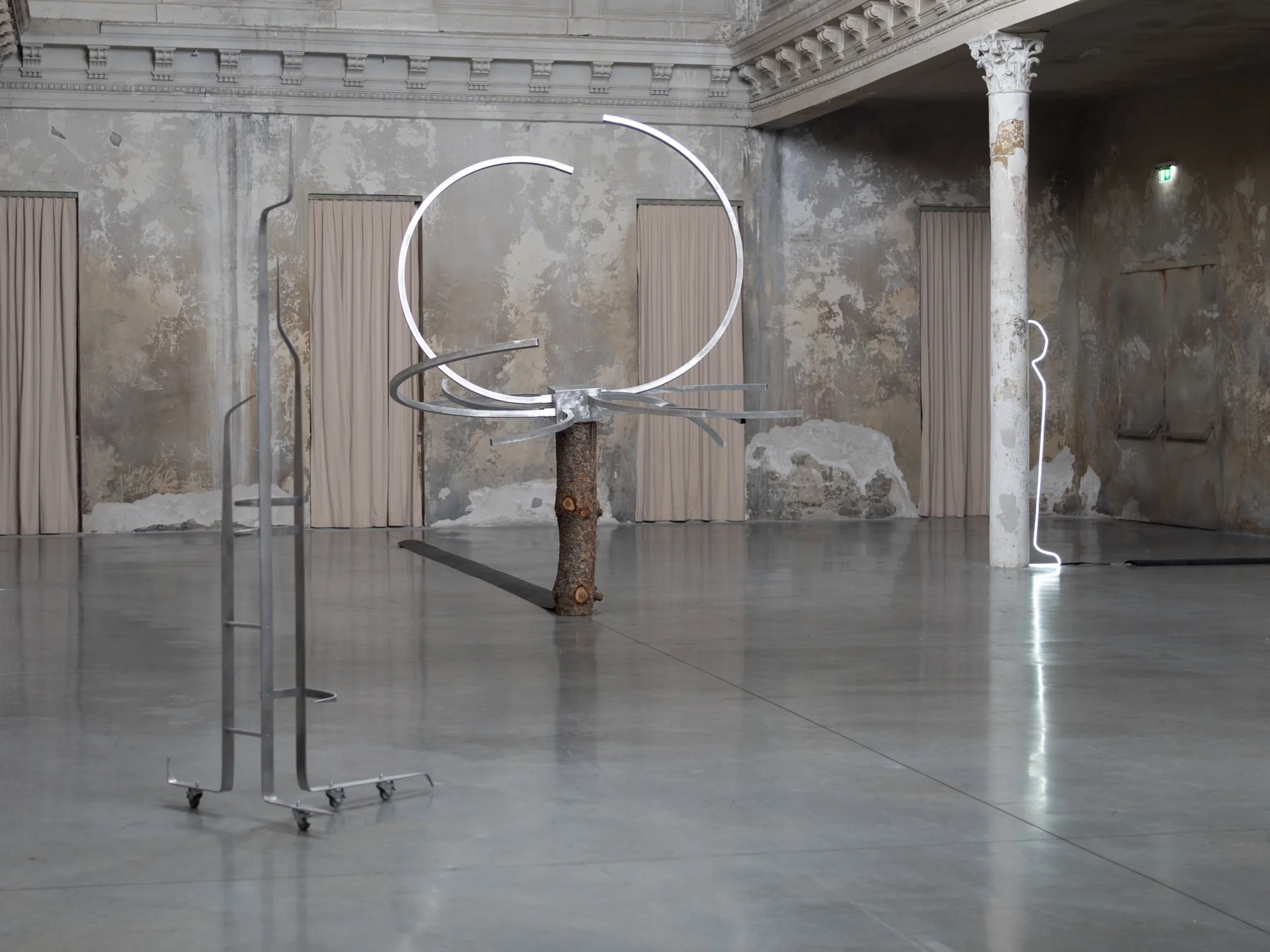
At Reaktor Wien in Vienna, curator Roxana Morar gathered five artists around a single material question: what happens when metal becomes the only shared rule.
The exhibition gathered Albert Kaan, Andrei Arion, Ana Ionescu, Claudiu Lazar, and Ana Petrovici — five practices working in metal, brought into proximity inside the Beaux-Arts hall at Reaktor Wien. Curated by Roxana Morar, the show ran from 3 to 10 June 2026.
Morar set the premise as a material condition: metal as a shared language, each artist diverging into a separate territory of meaning, sensation, and spatial logic. The image she used to describe it was the action-force of a cue ball sent into a tight cluster of marbles, sending everything outward in different directions. The hall became the cluster; the practices became the directions.
Every piece in the show emerged from the same rigid, surface-tense, industrially legible resource, but no two pieces resolved it the same way. The proposition wasn't to harmonise the five practices around the medium — it was to make the tension between them legible. Morar's framing kept distances generous: the viewer was invited to walk between the works and join the elastic collision rather than read it from outside.
What the exhibition proposed, in Morar's words, was not resolution but a highlight of a coexistence that is already structural, already operative — paradoxical, unusable, briefly made legible through the specific tensions of five practices brought into proximity. After eight days the works came down. The proposition stayed.