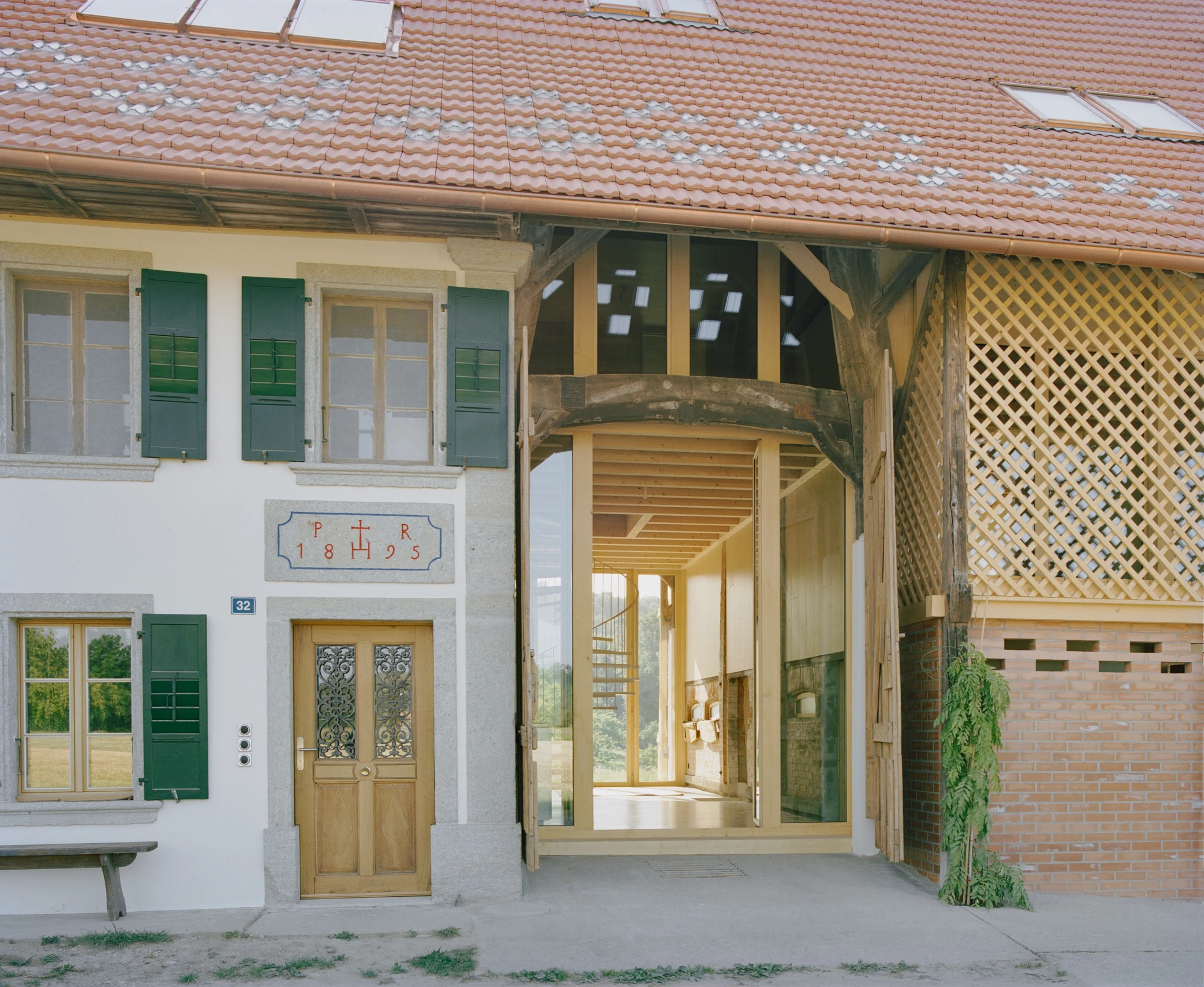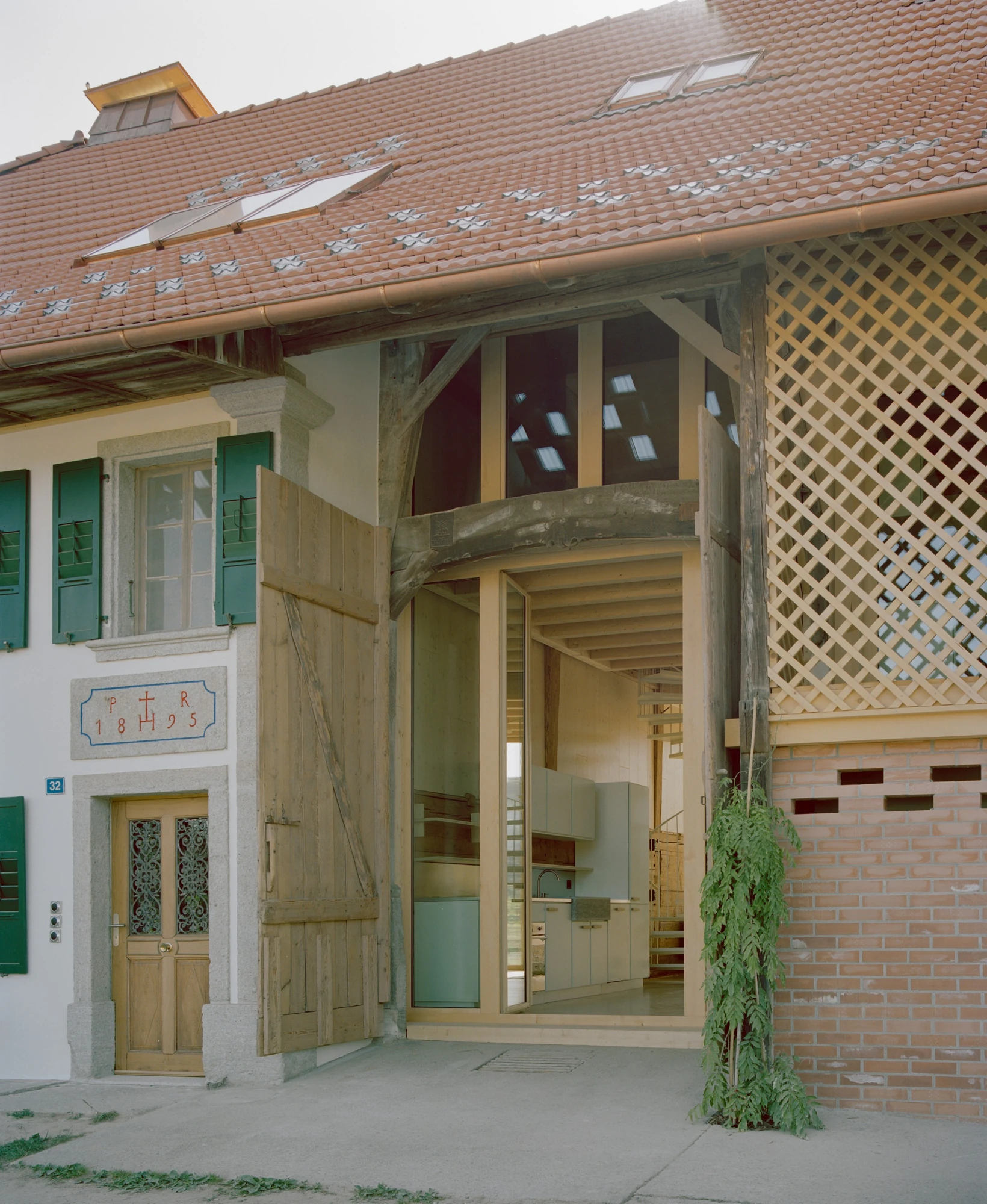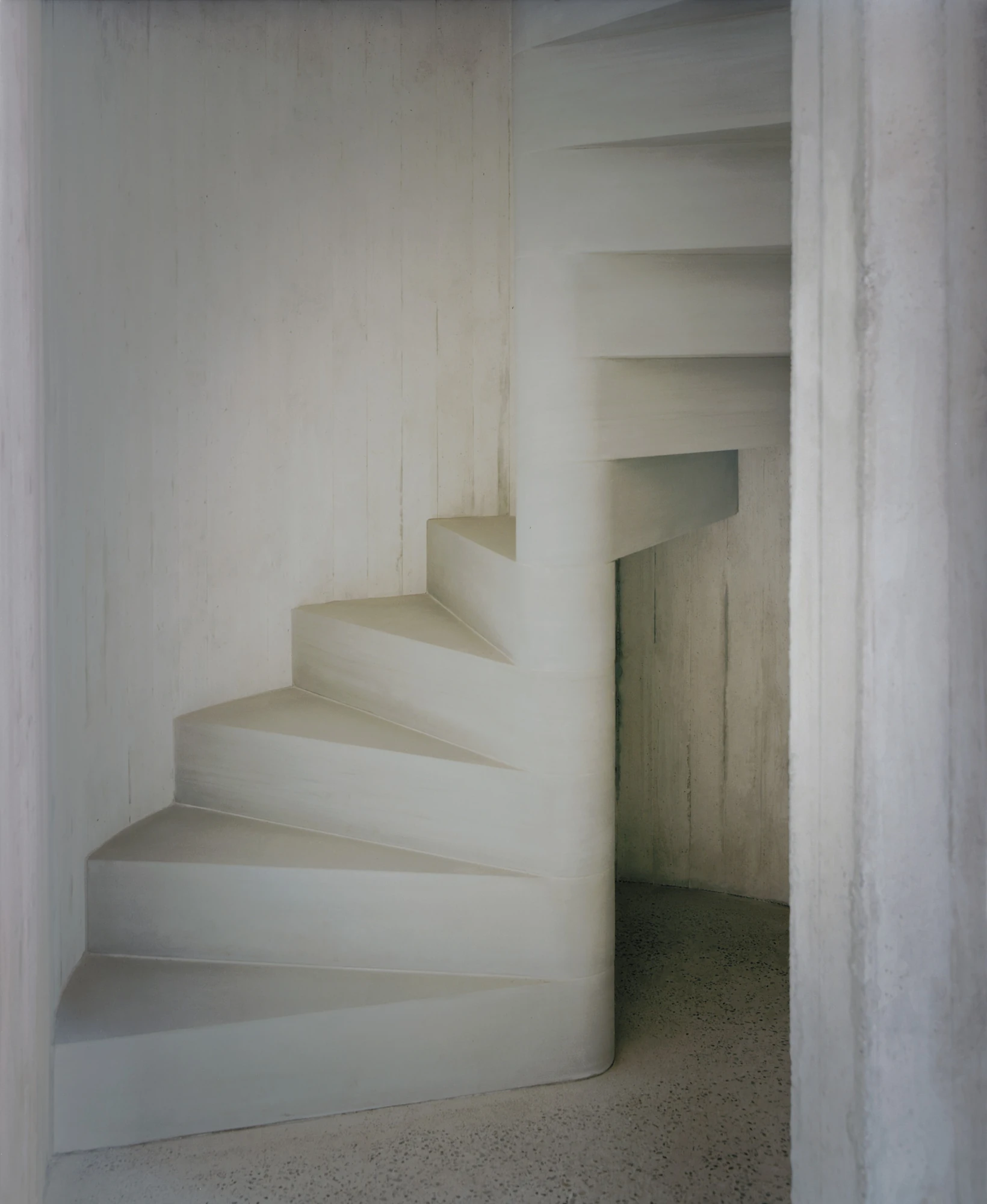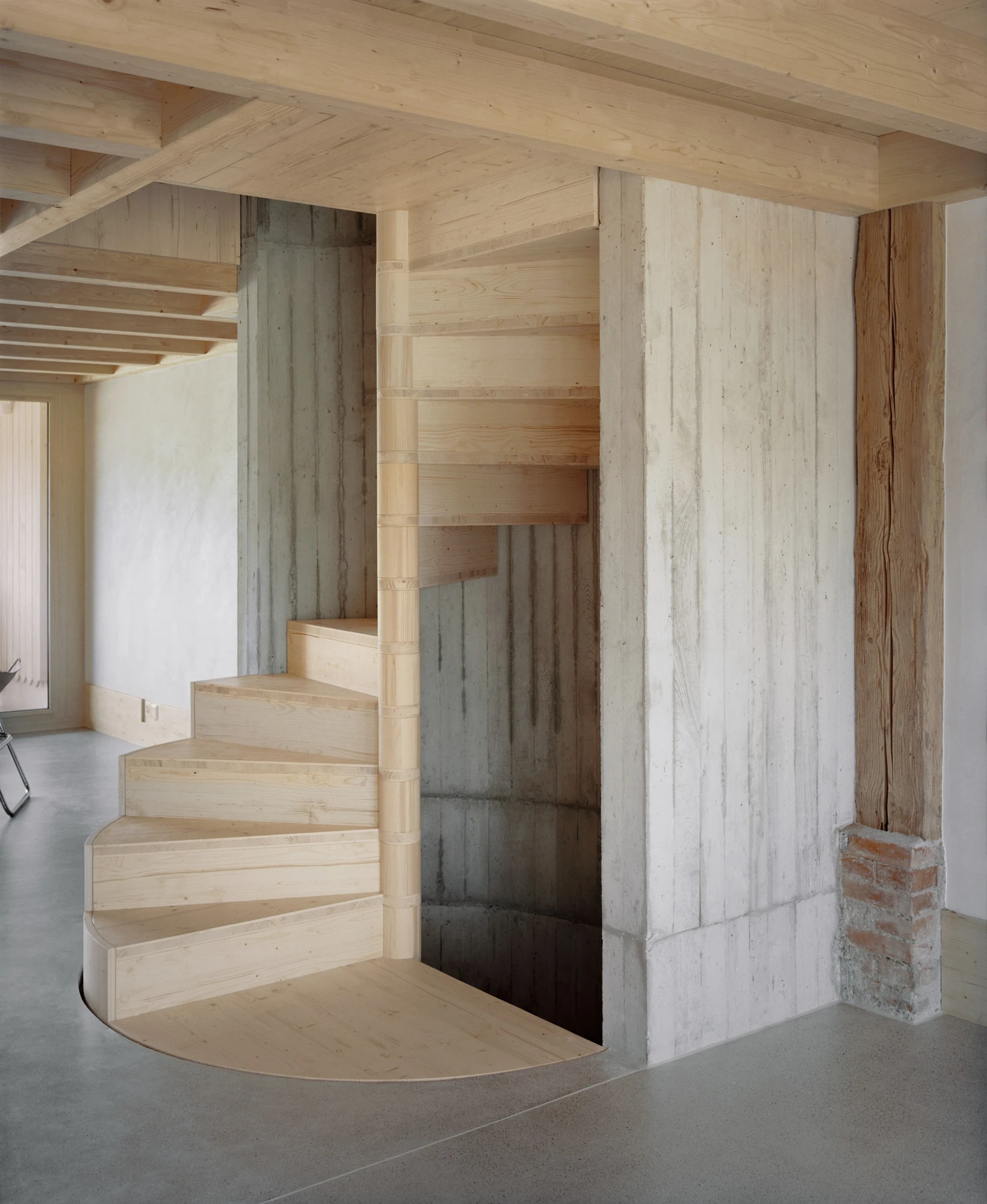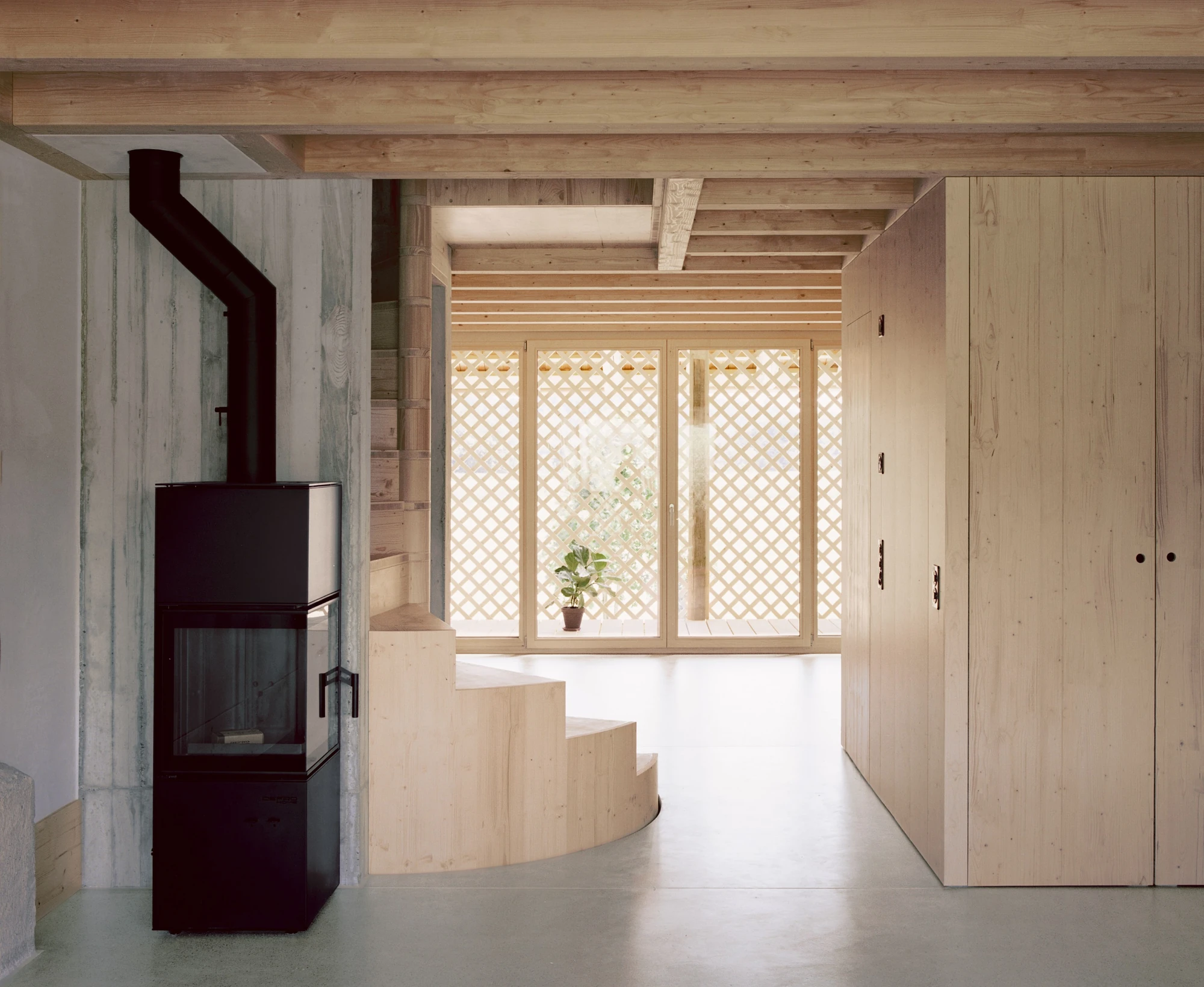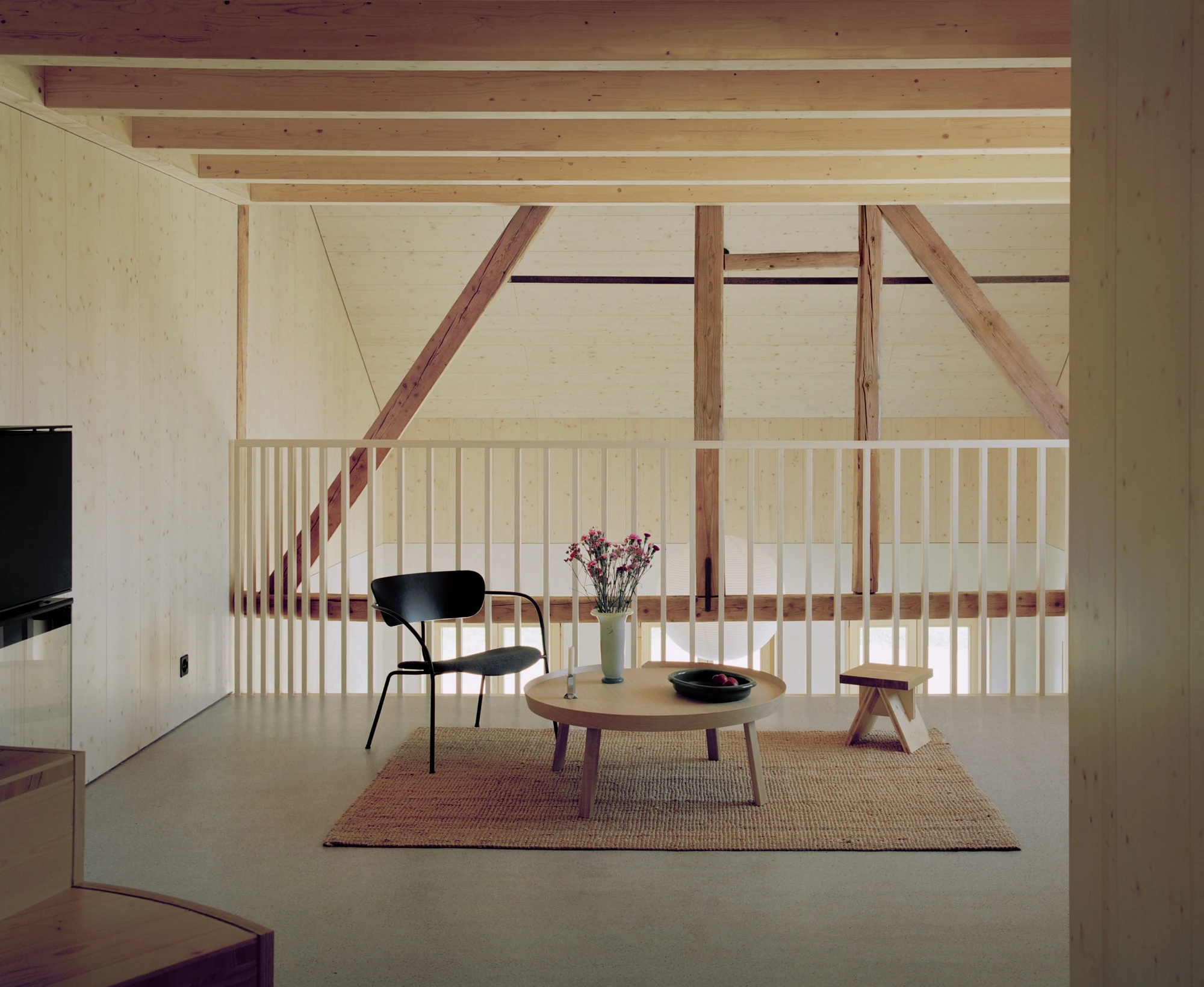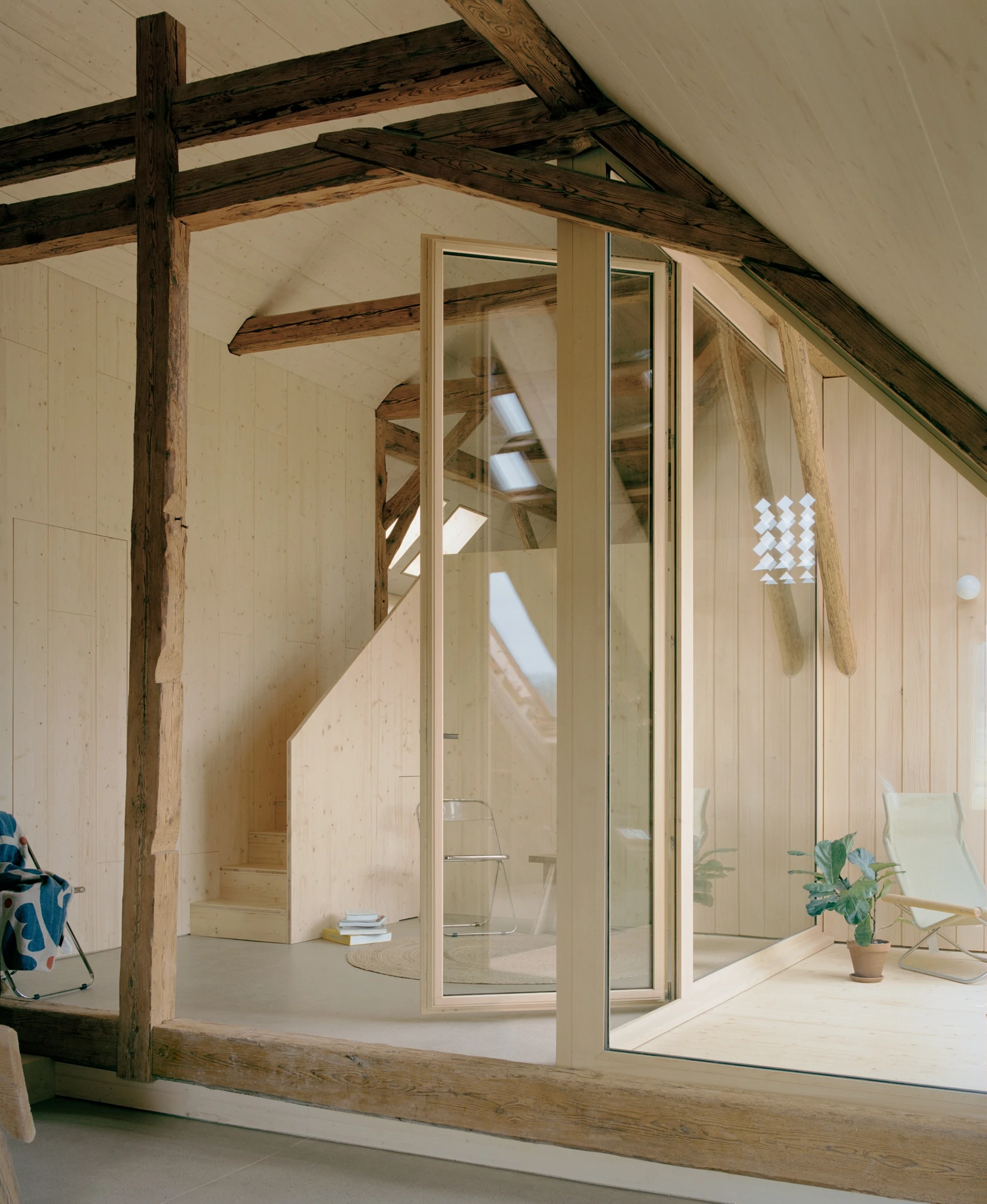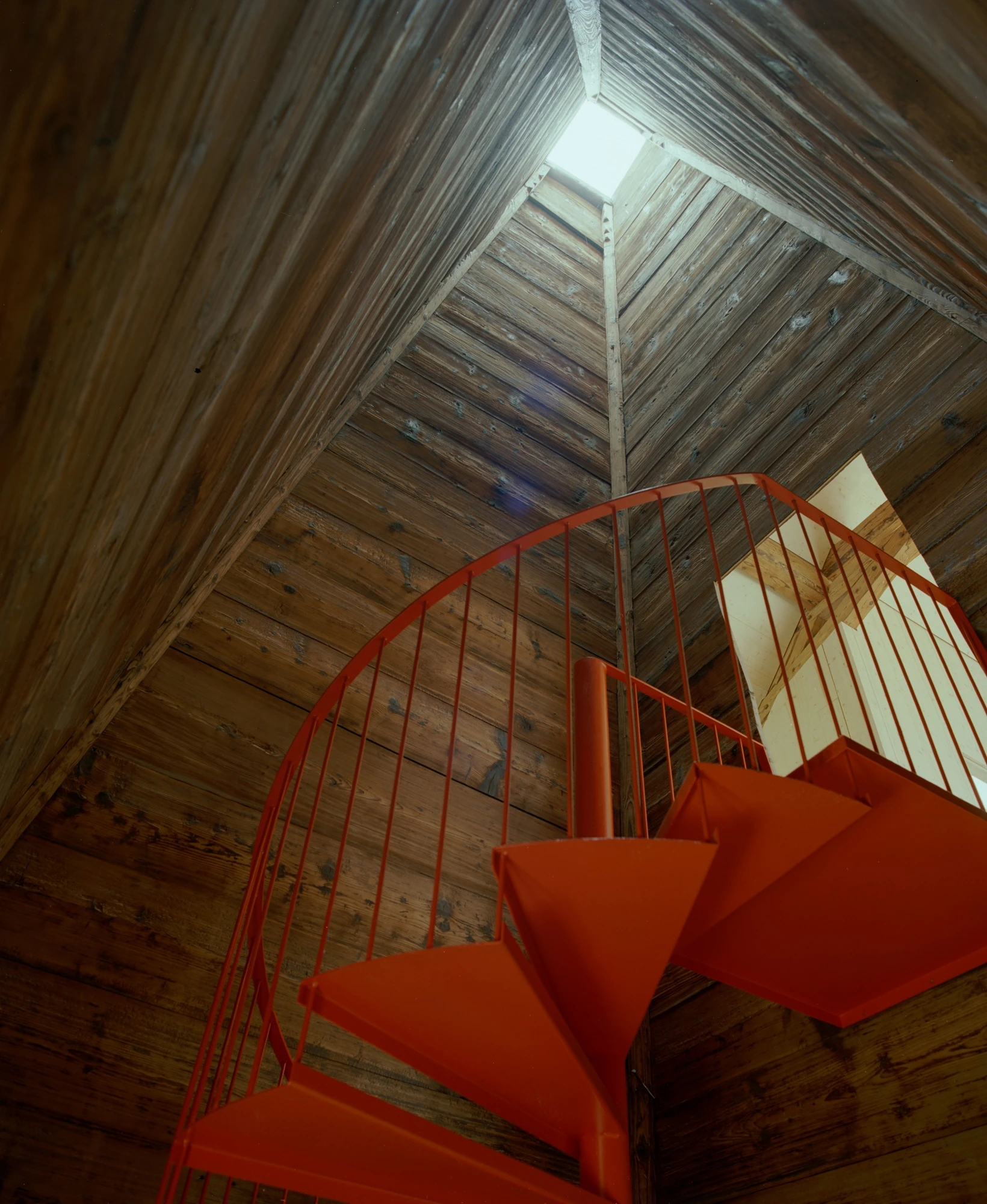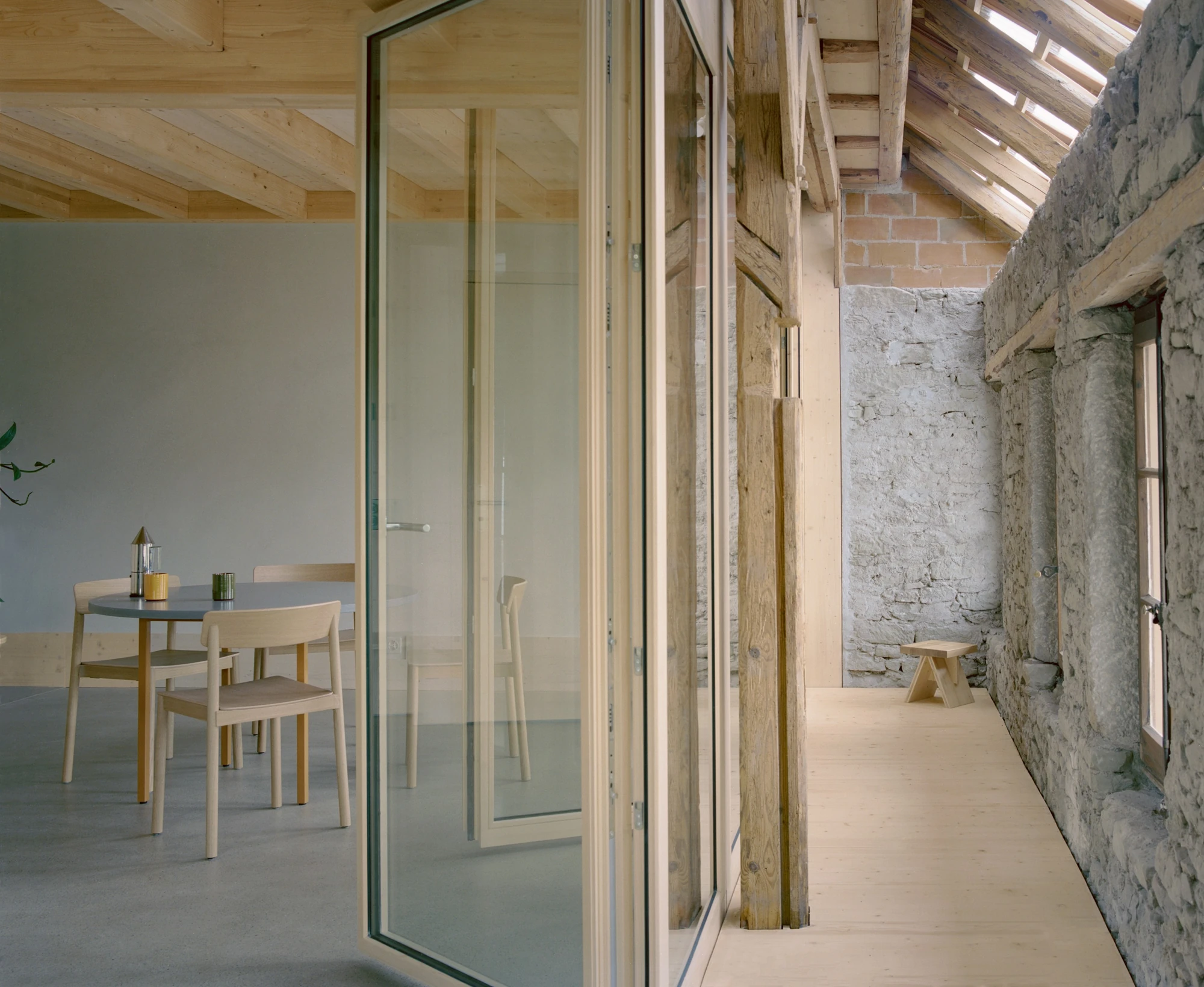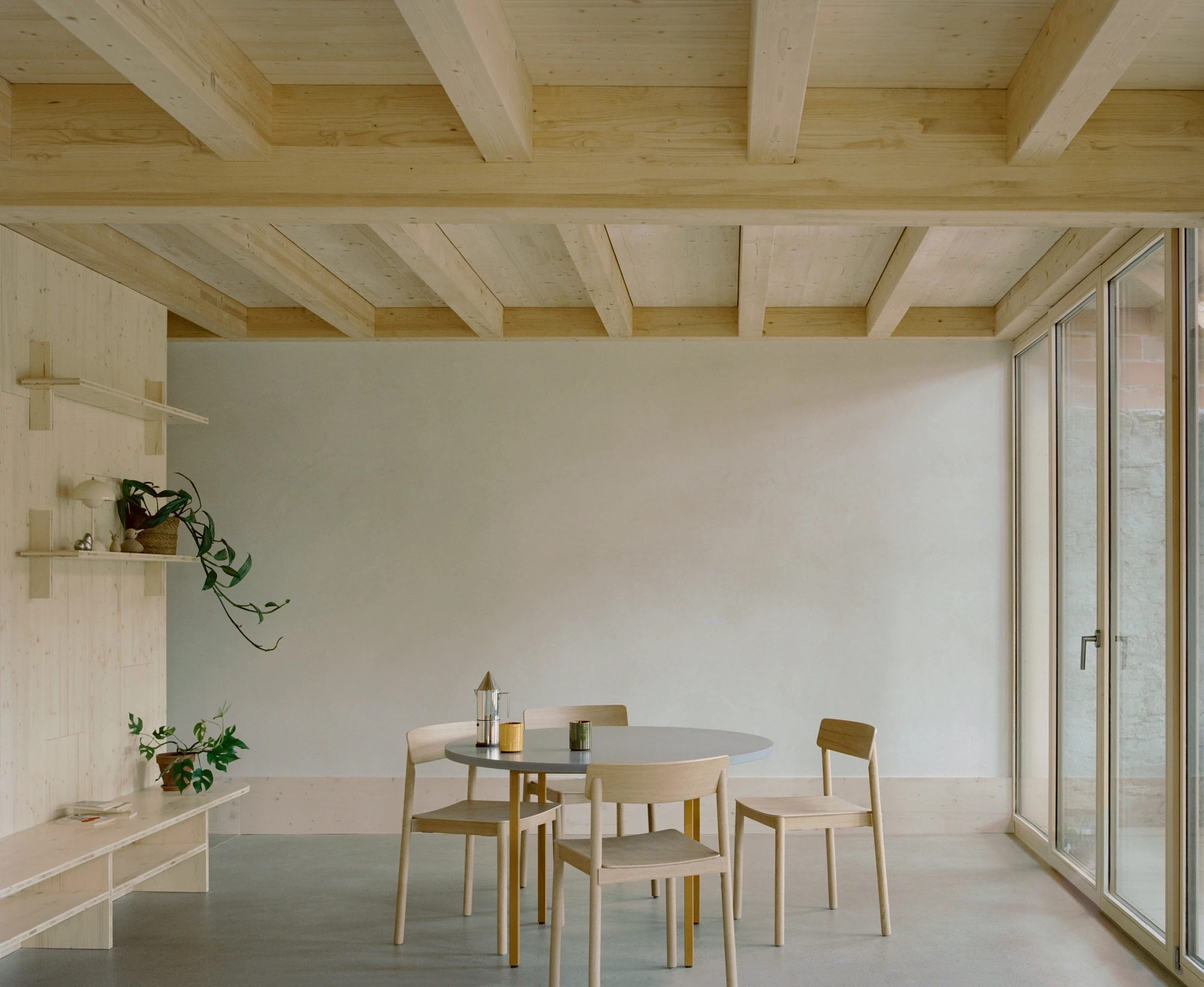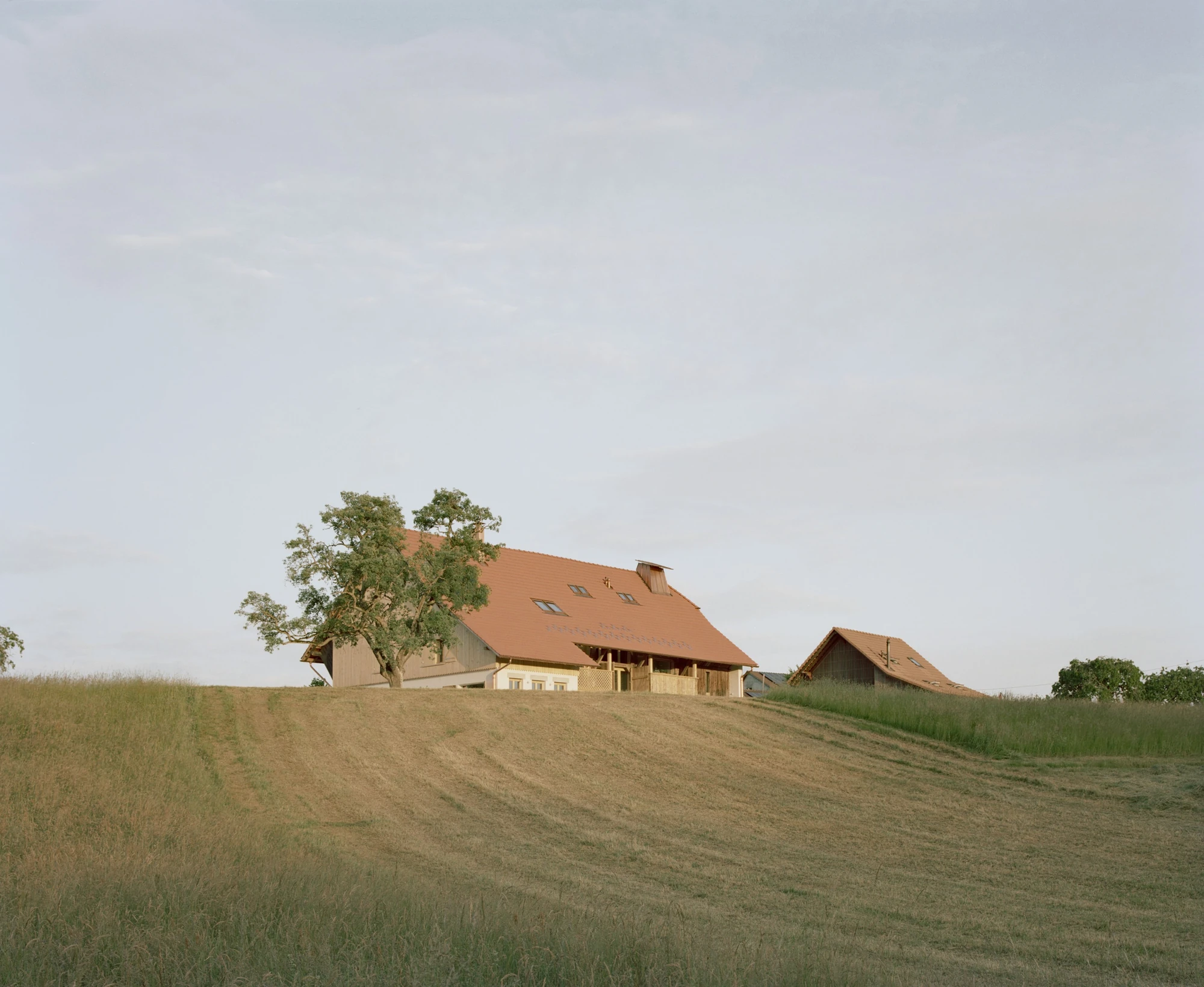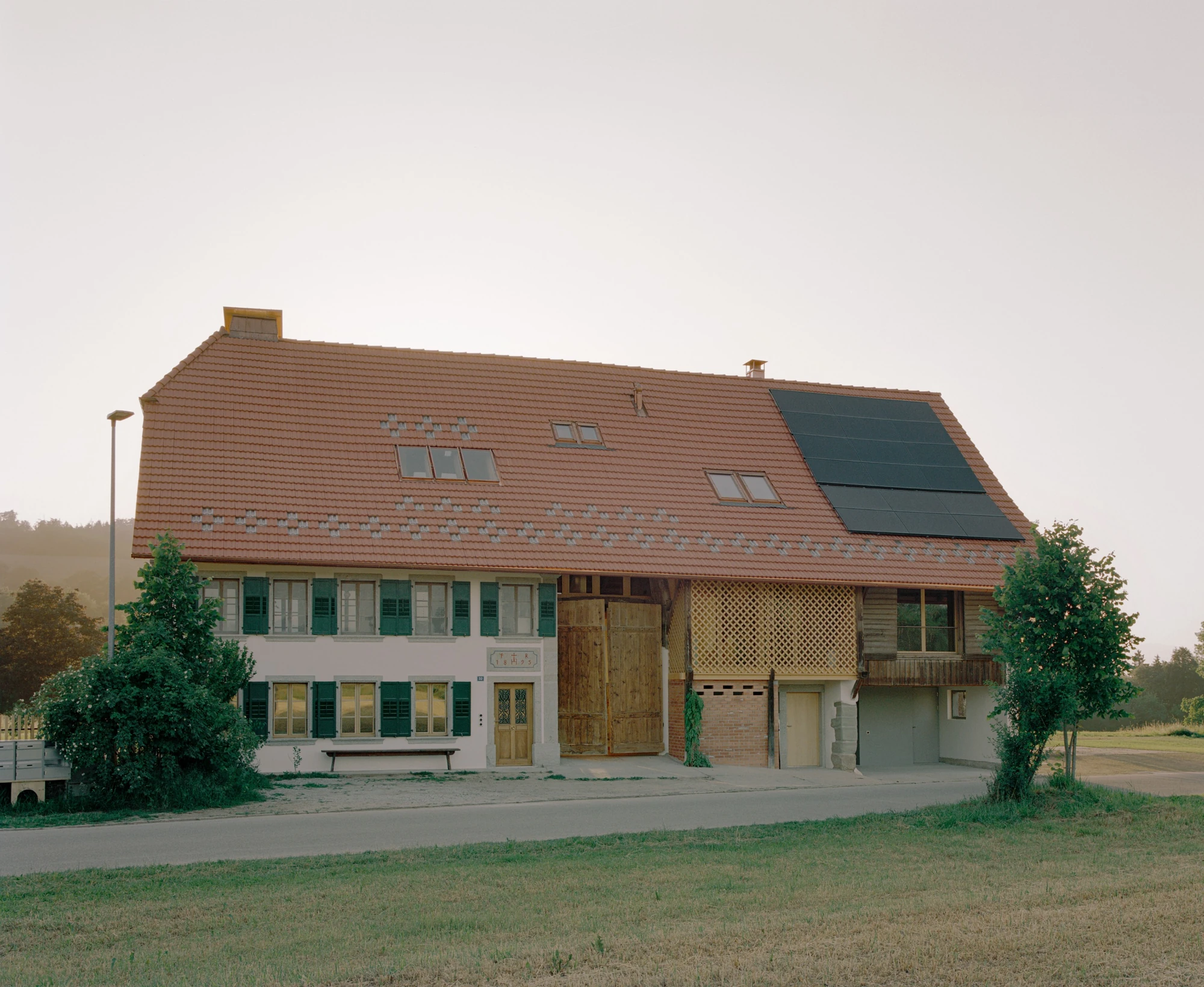
The old fabric sets the terms: Noue Studio carves Conversion of a Farmhouse into Six Apartments out of a former farmhouse and its Category B protected dwelling at Montagny, in Fribourg, Switzerland.
The premise is simple and strict: the existing building comes first. Noue Studio takes a former farmhouse and its Category B protected dwelling at Montagny as the point of departure, one where “the existing building forms the starting point of the project.” Its worth, the studio argues, lies not only in appearance but in its construction system, its materiality, and its capacity to hold new uses without losing what it is.
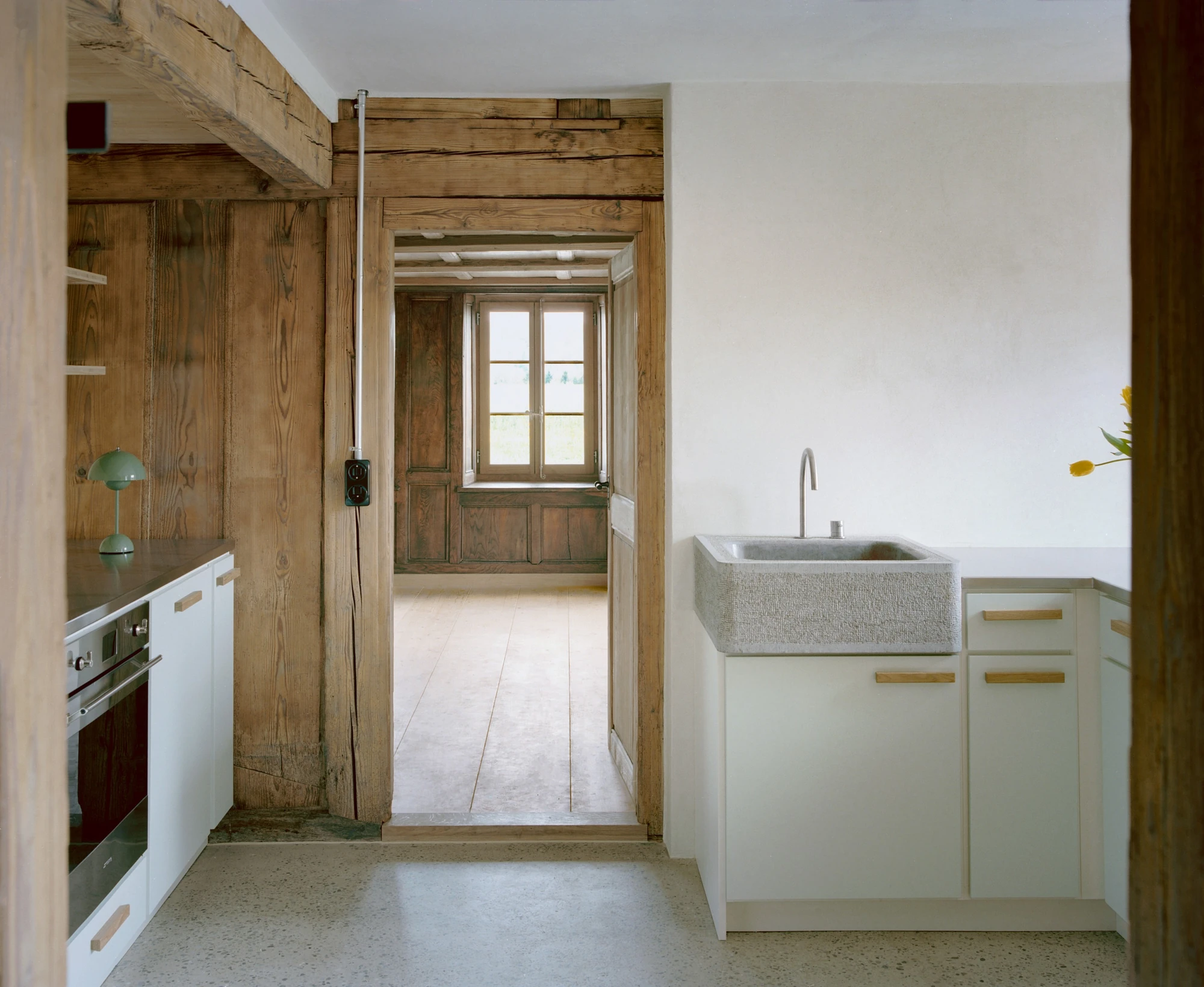
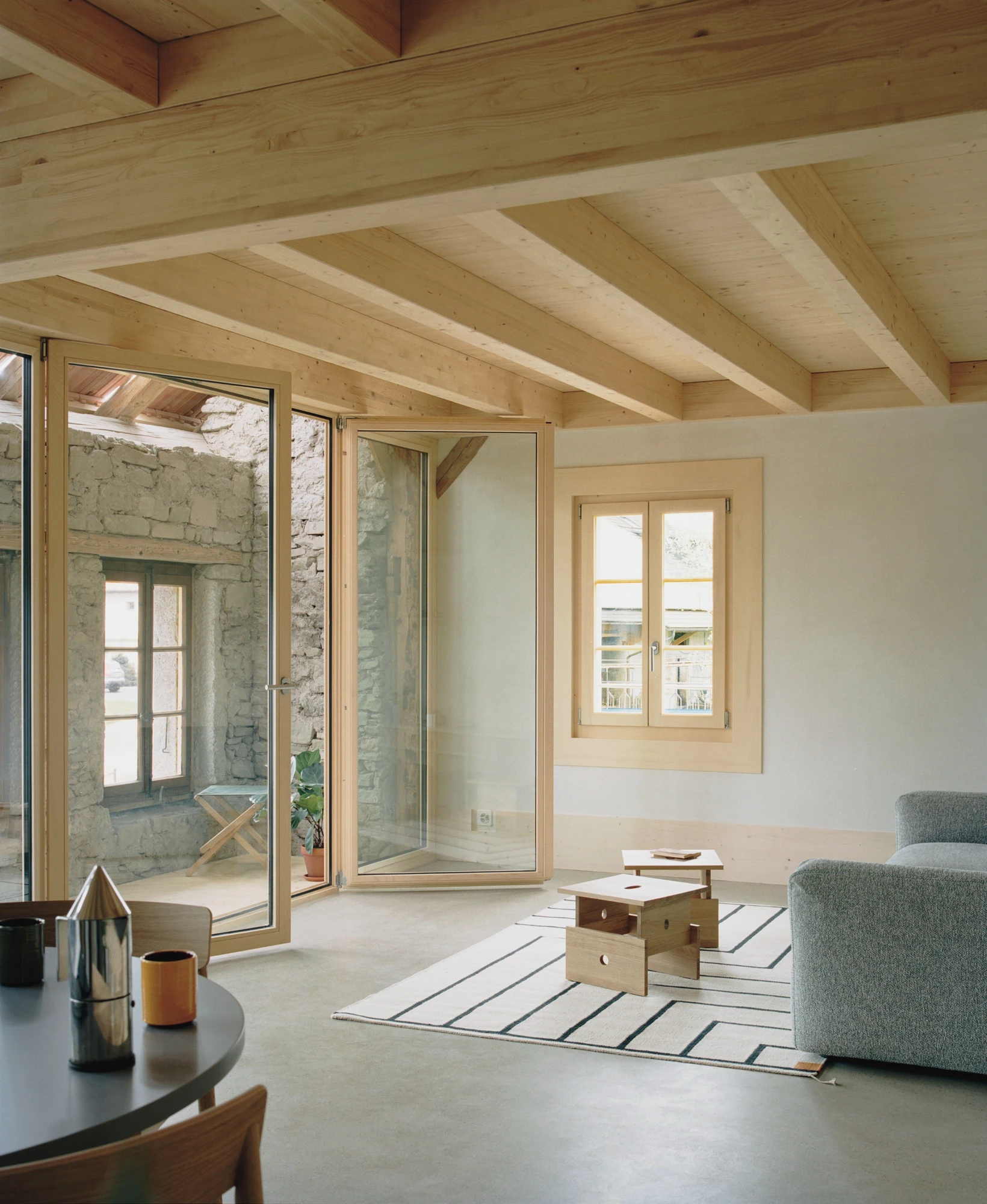
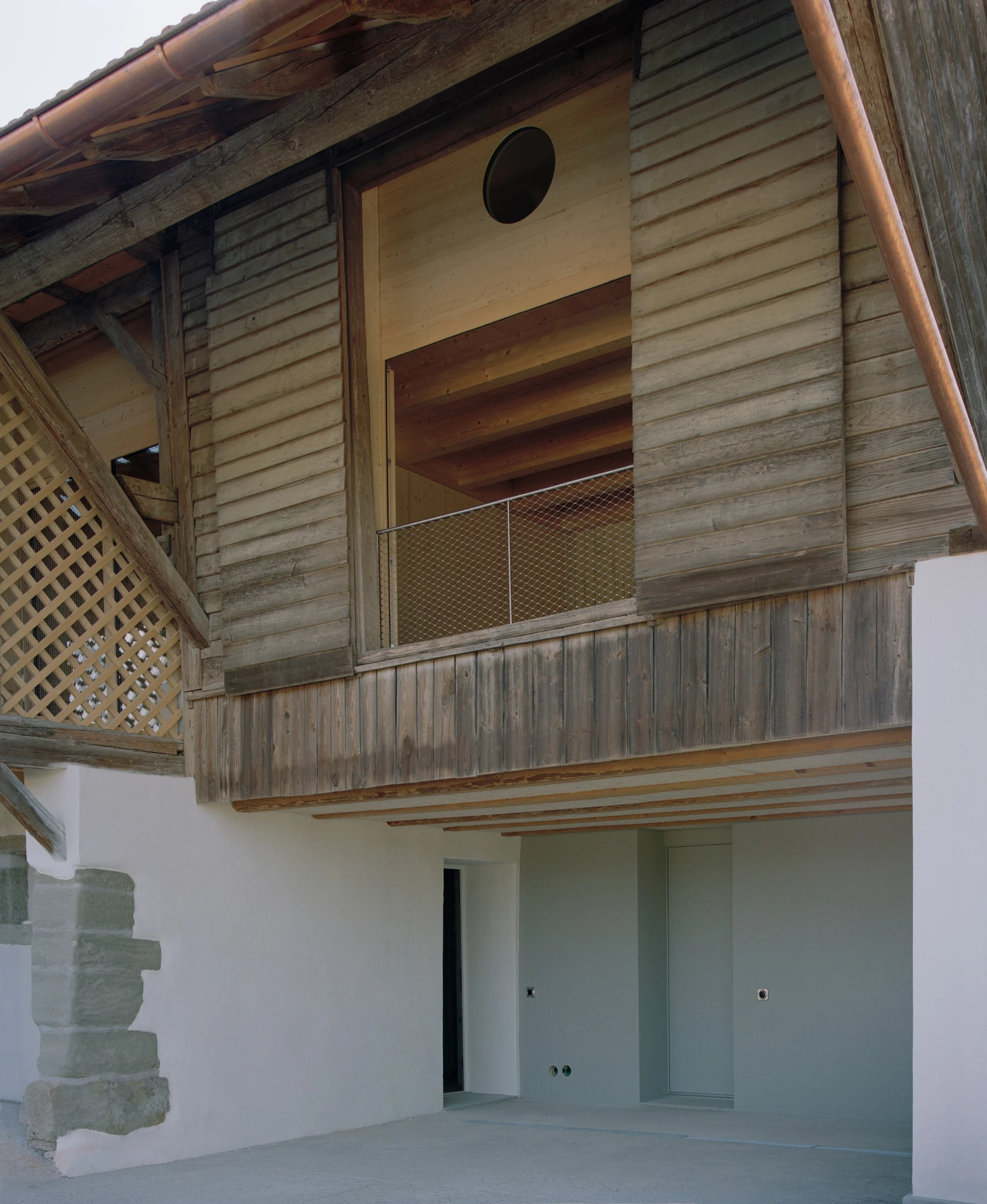
The timber frame and the rubble stone walls do the organising. Together they read as “the defining element of the new organisation,” and the building’s existing structural grid sets where the six apartments fall. That grid also makes dual-aspect homes possible, each one open to daylight and to the landscape on more than one side, so the plan follows the old bones rather than cutting across them.
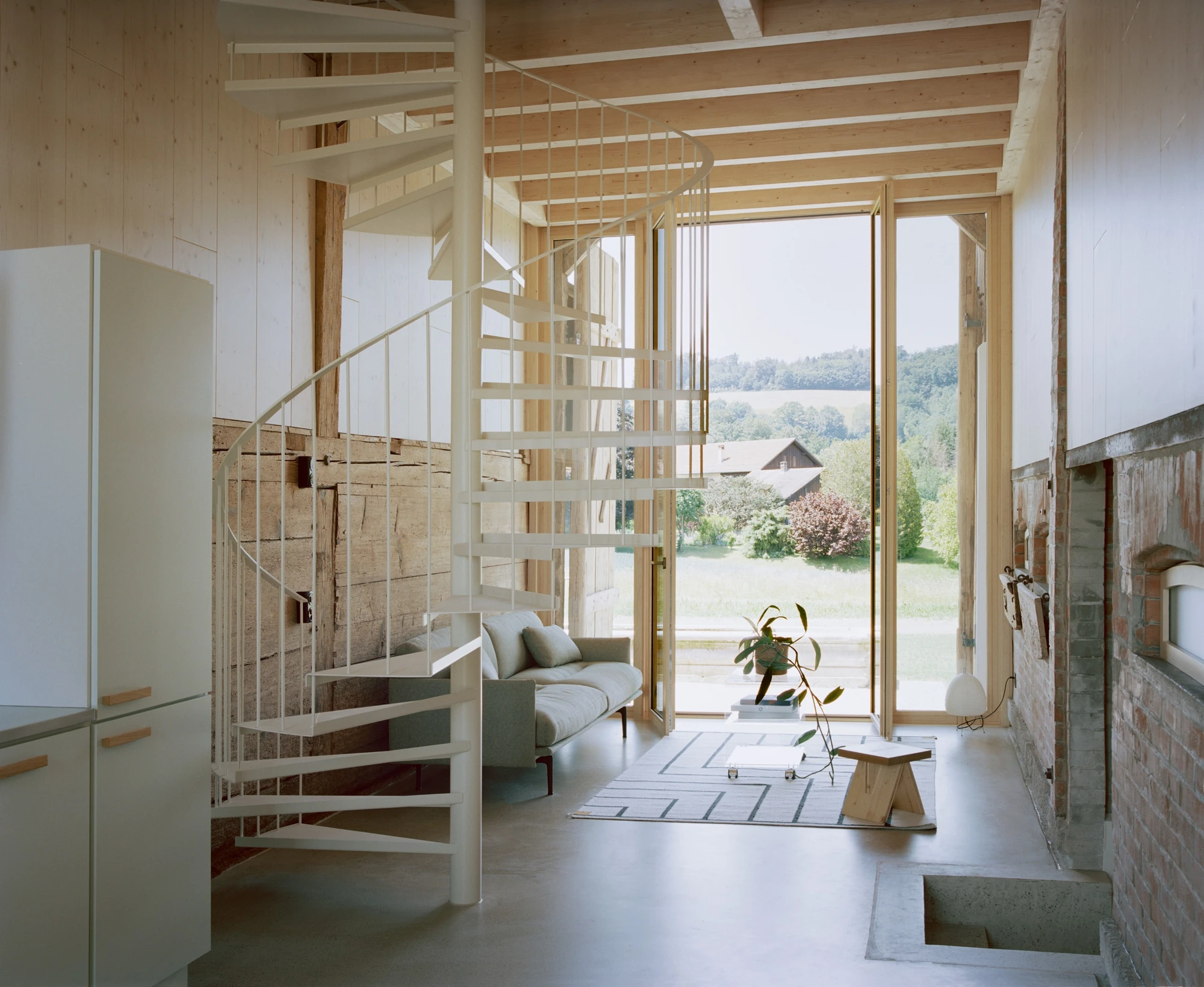
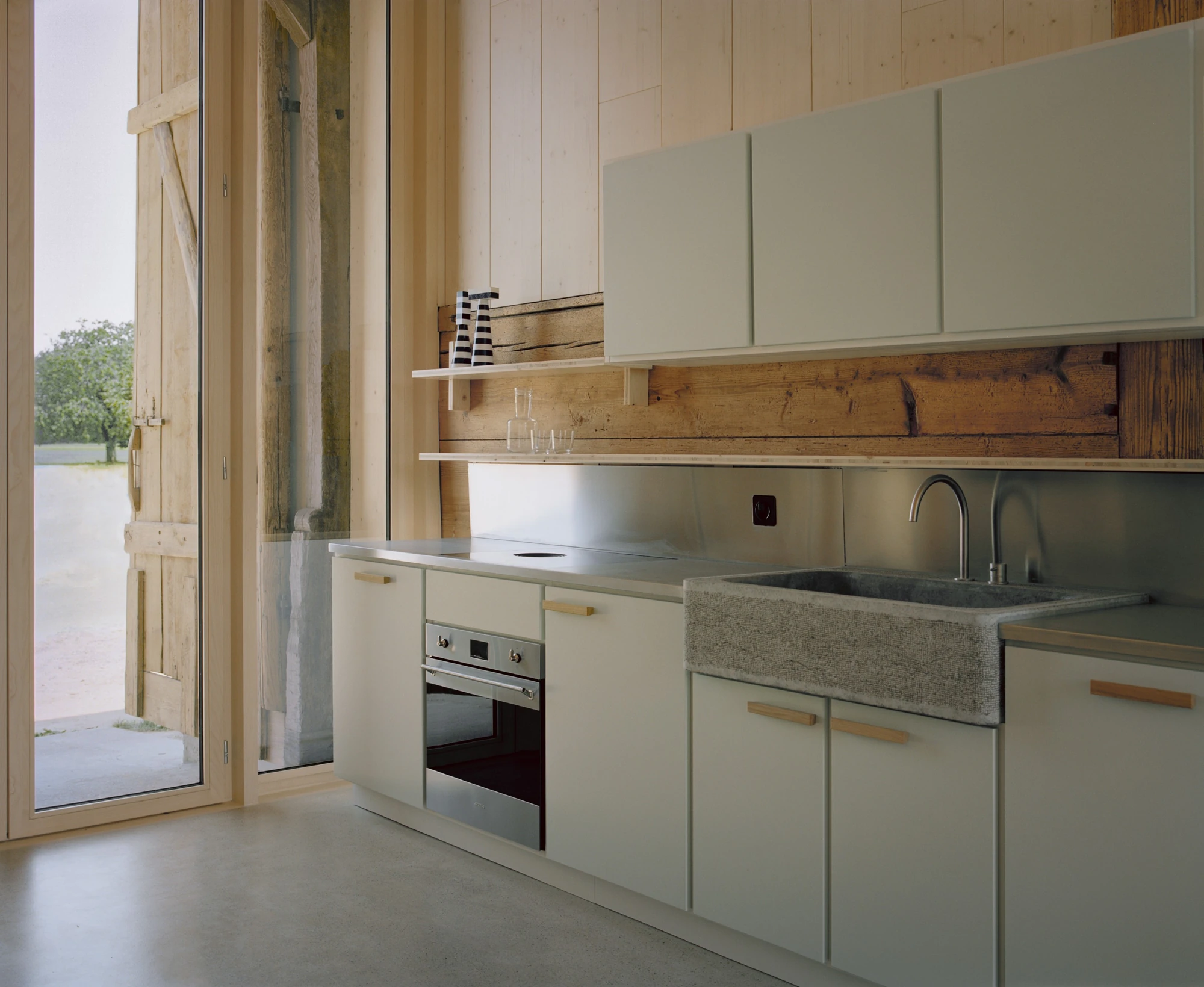
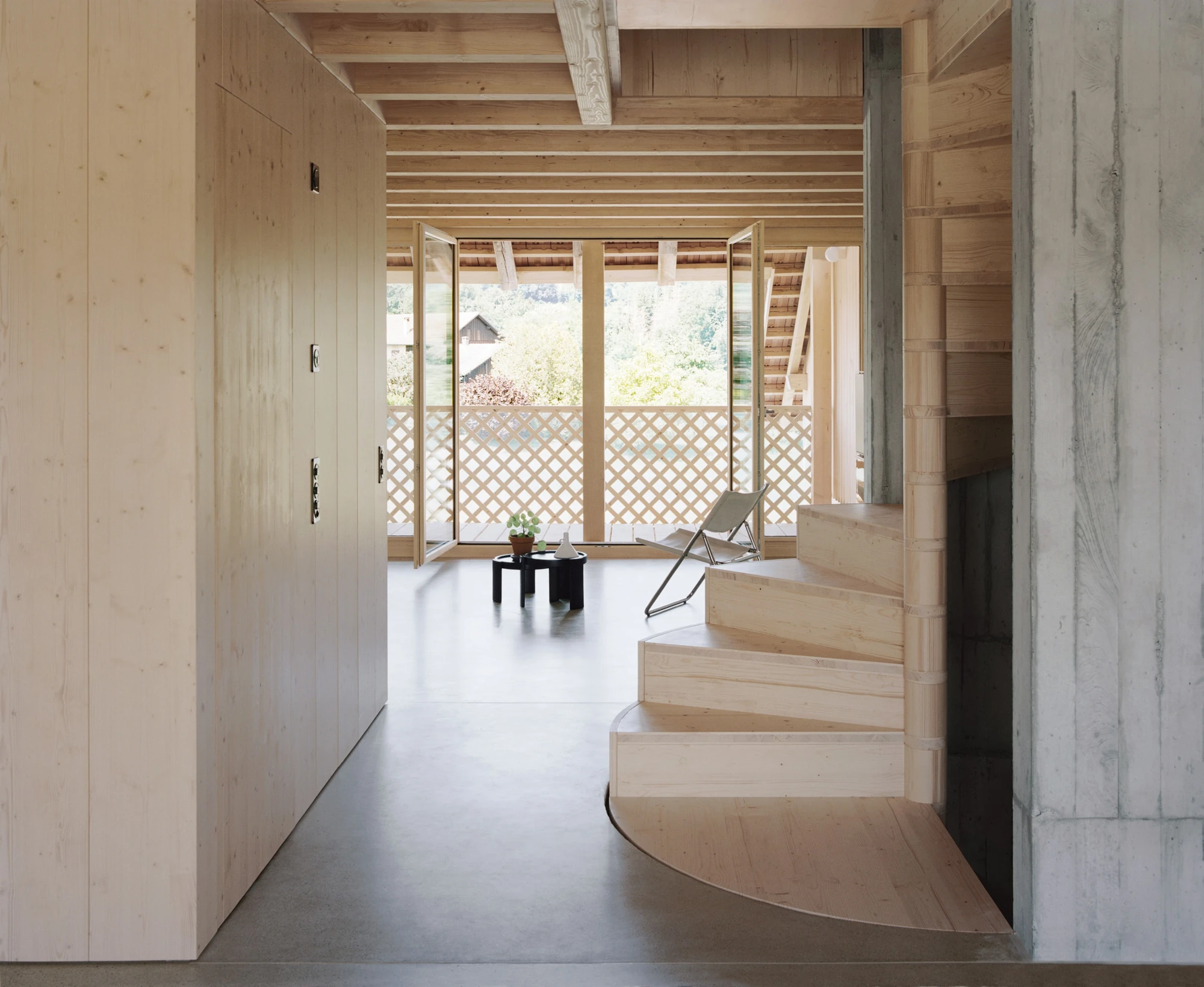
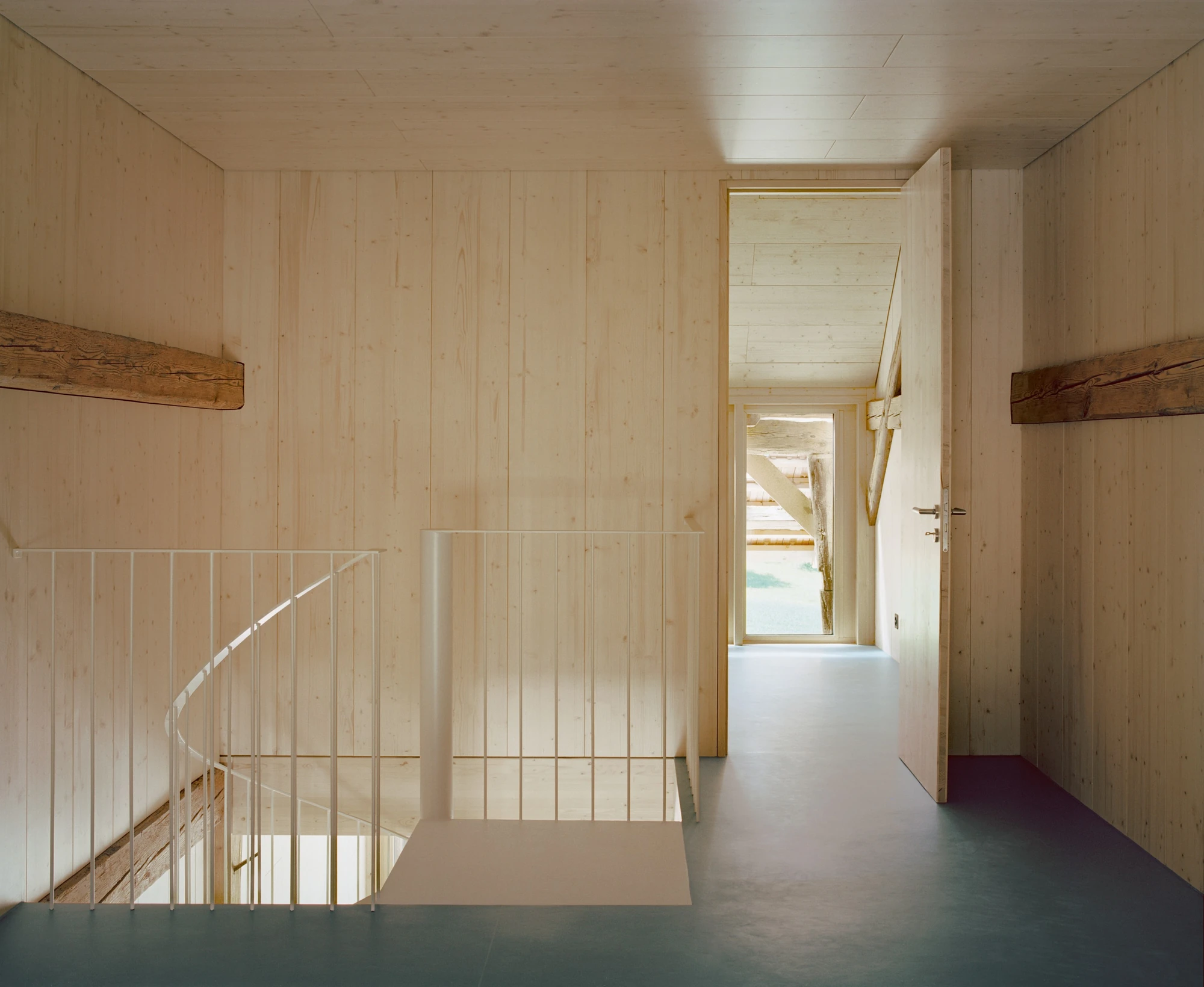
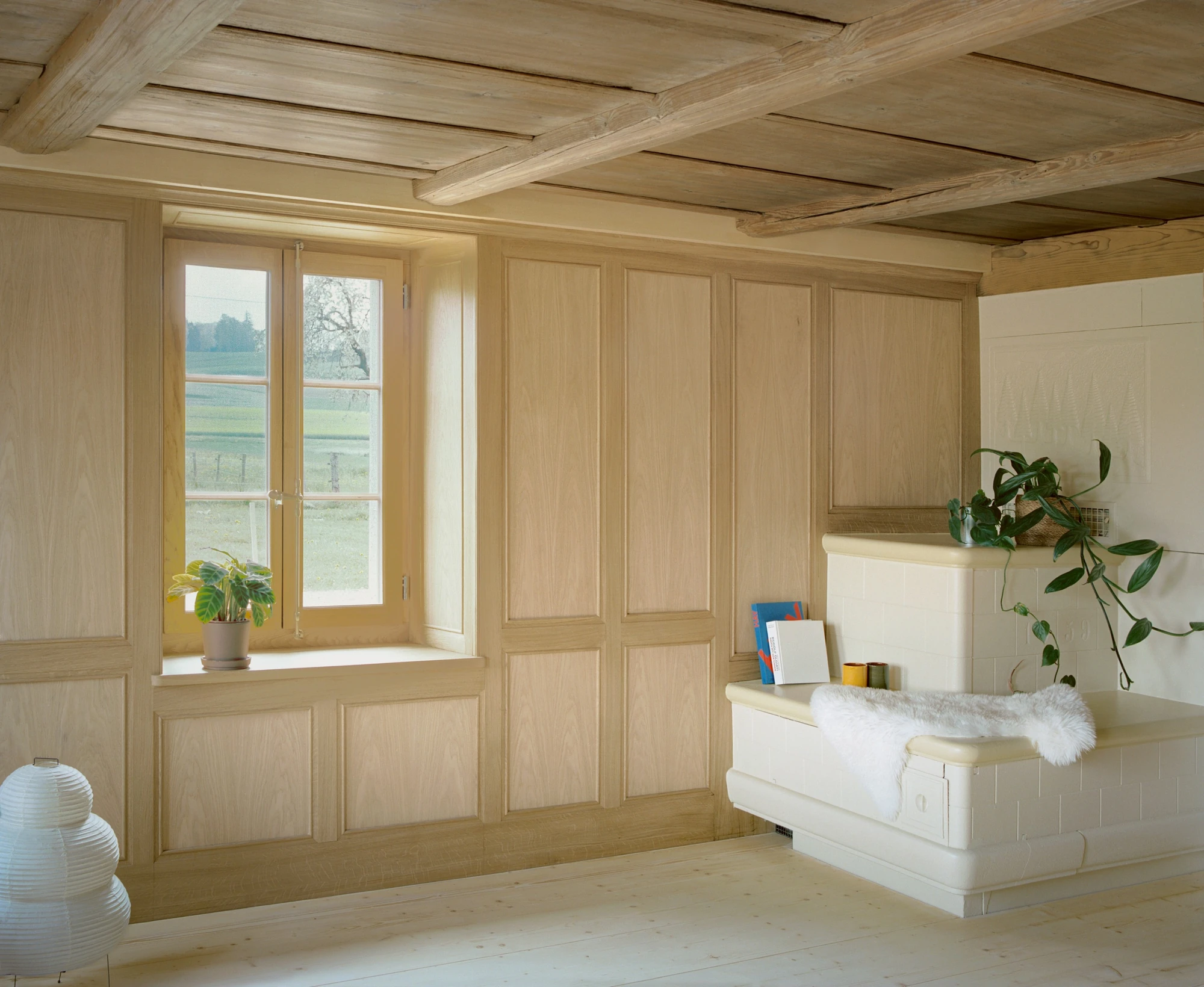
The moves stay deliberately plain. Stone walls are kept and lined with a lime-based insulating render, so they go on breathing instead of being sealed away. New partitions are solid timber. Where fire regulations demand it, the required elements are folded in without announcing themselves. New timber floors, combined with an anhydrite screed, cut the amount of concrete the project uses and make the most of its resources.
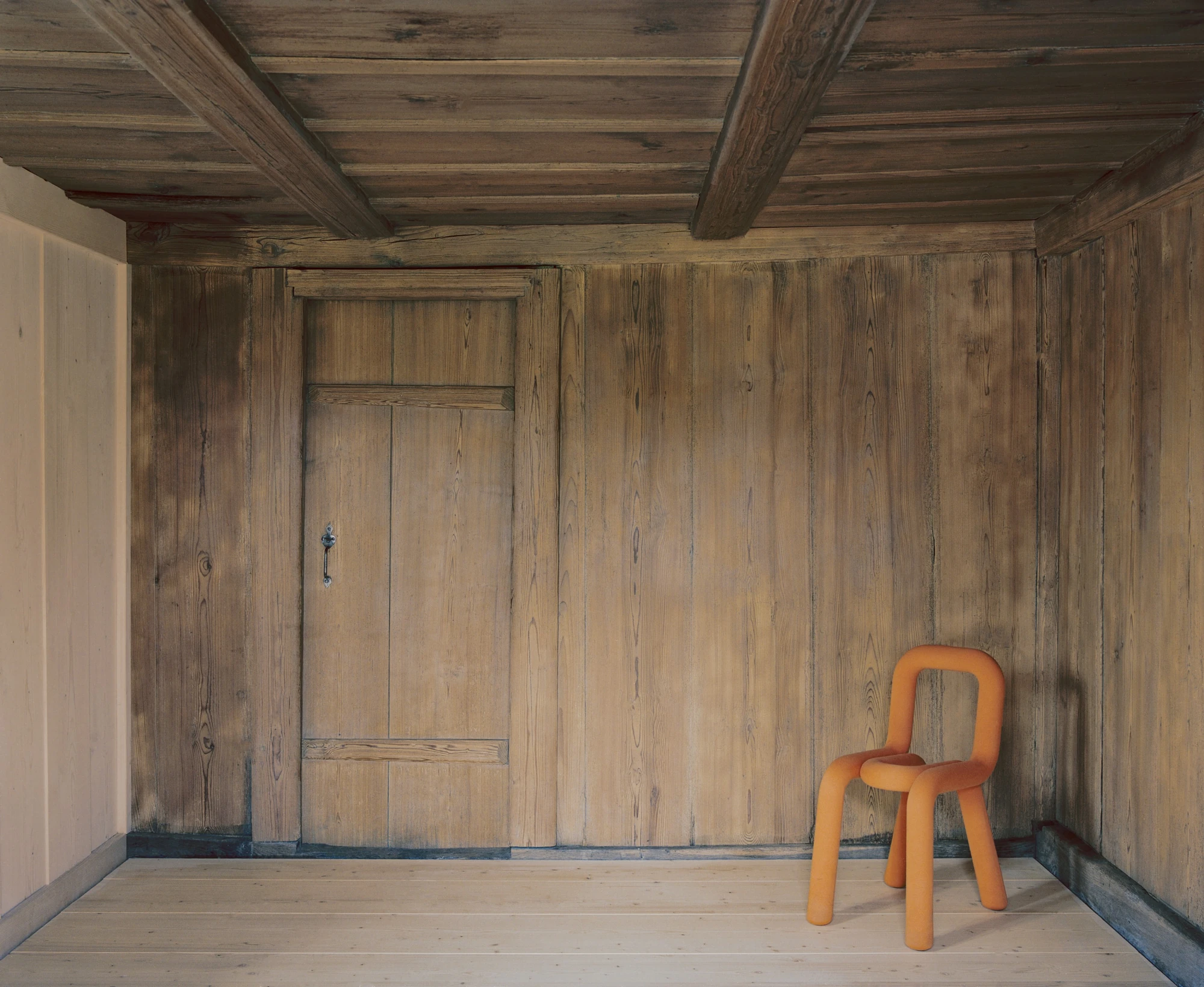
Reuse runs through the whole job, as a design principle and as an environmental choice at once. Timber recovered on site goes back into walls, floors and built-in elements, “extending the material memory of the farmhouse” while lowering the impact of the work. New interventions lean on a short list of materials, timber, lime and aerated concrete, picked to sit well against old fabric and to last.
None of it stages a contrast between old and new. Instead the conversion holds to a constructive continuity, where each intervention stays legible without upsetting the balance of the whole. What the work is really after is modest and exact: care for what the building already carries, an economy of means, the reuse of resources, and the plain quality of the spaces people will live in.