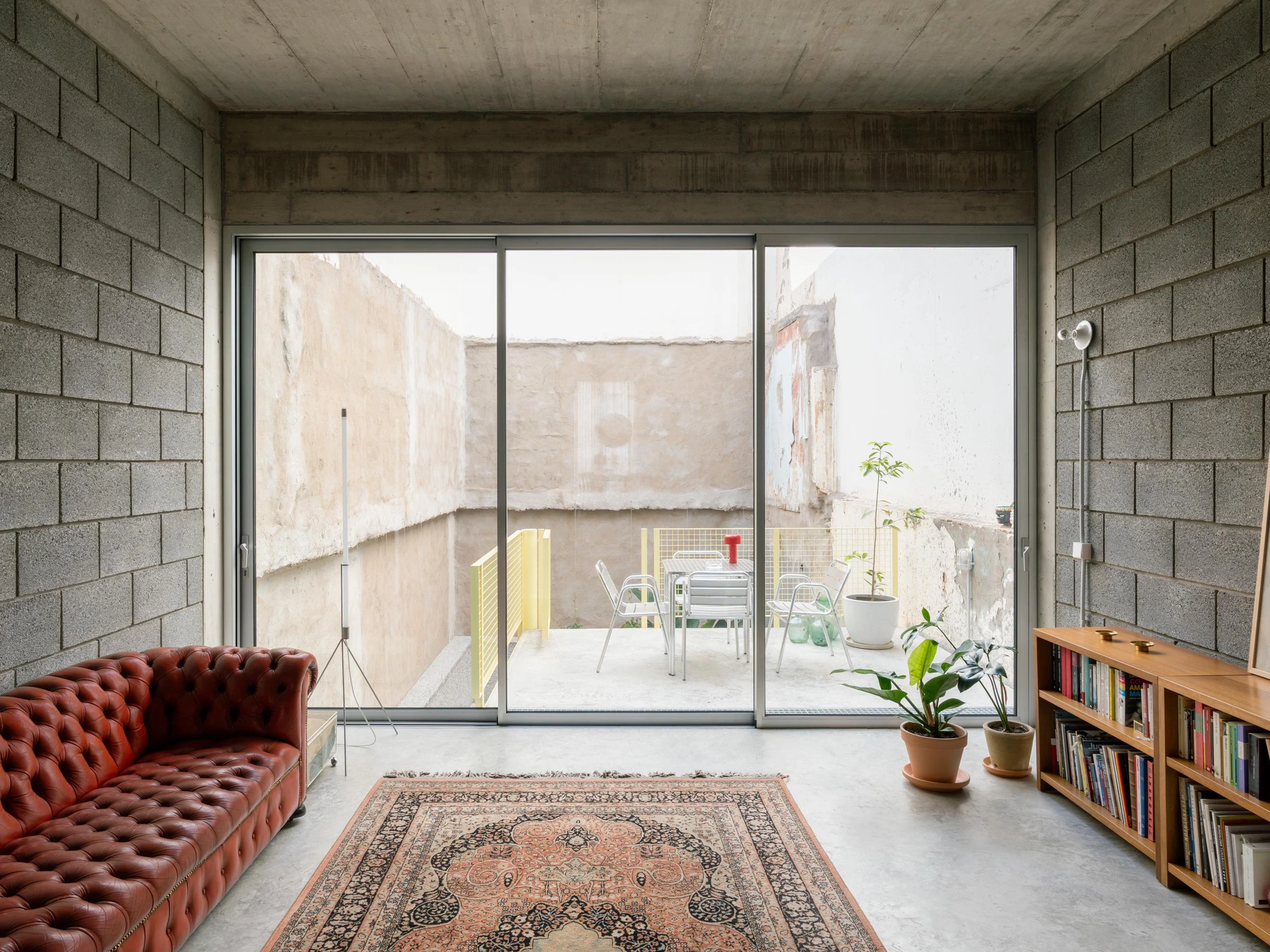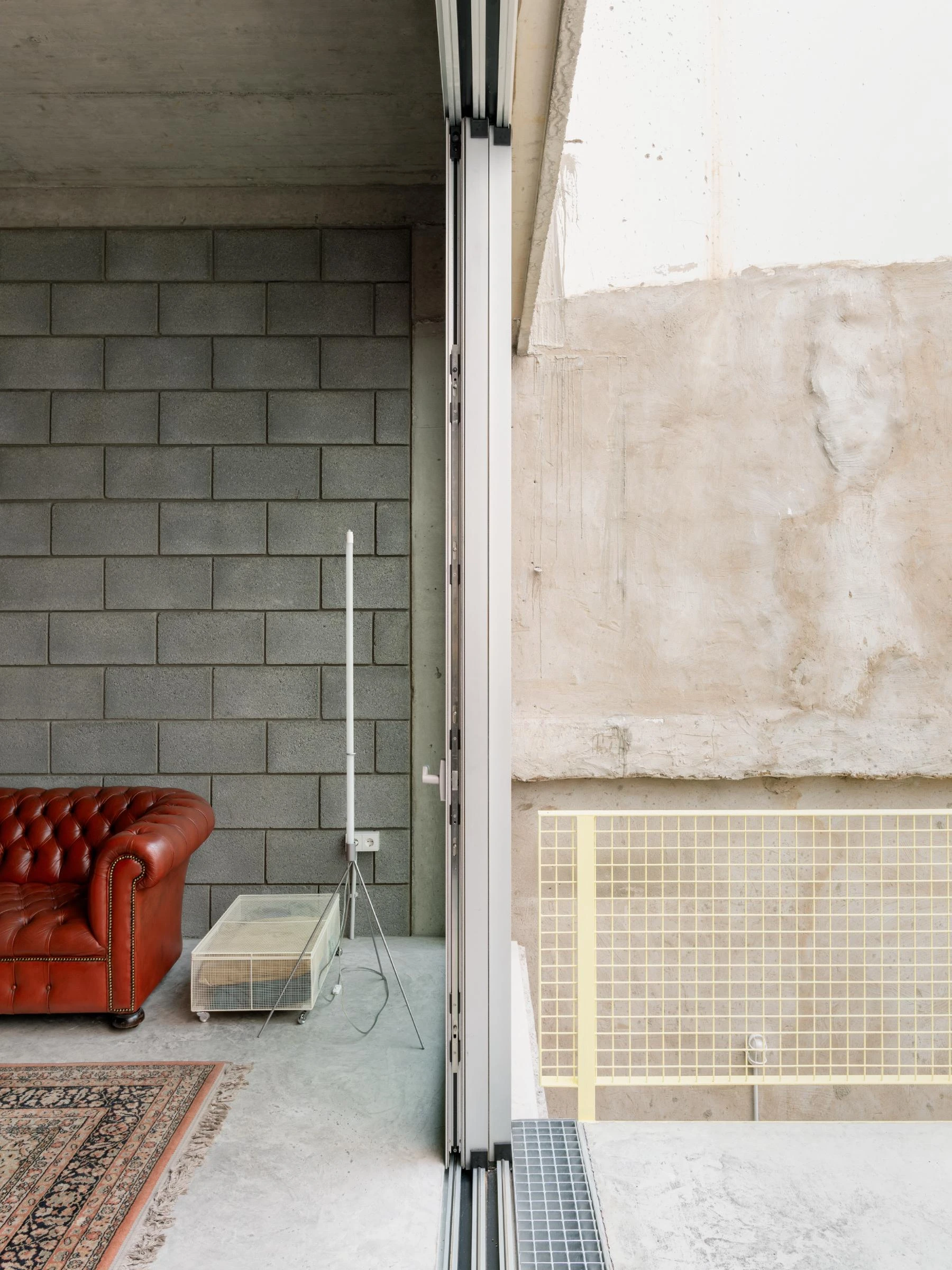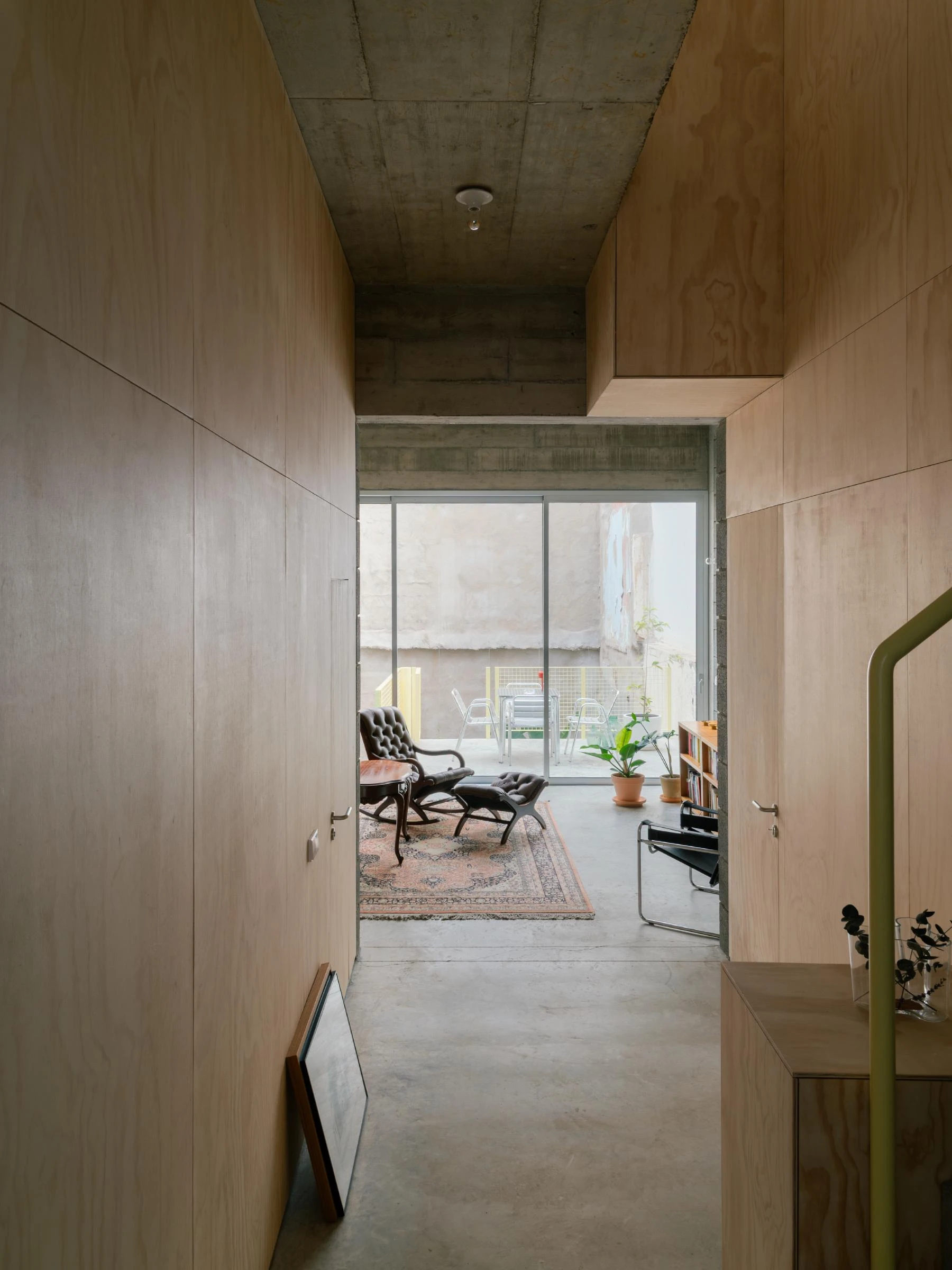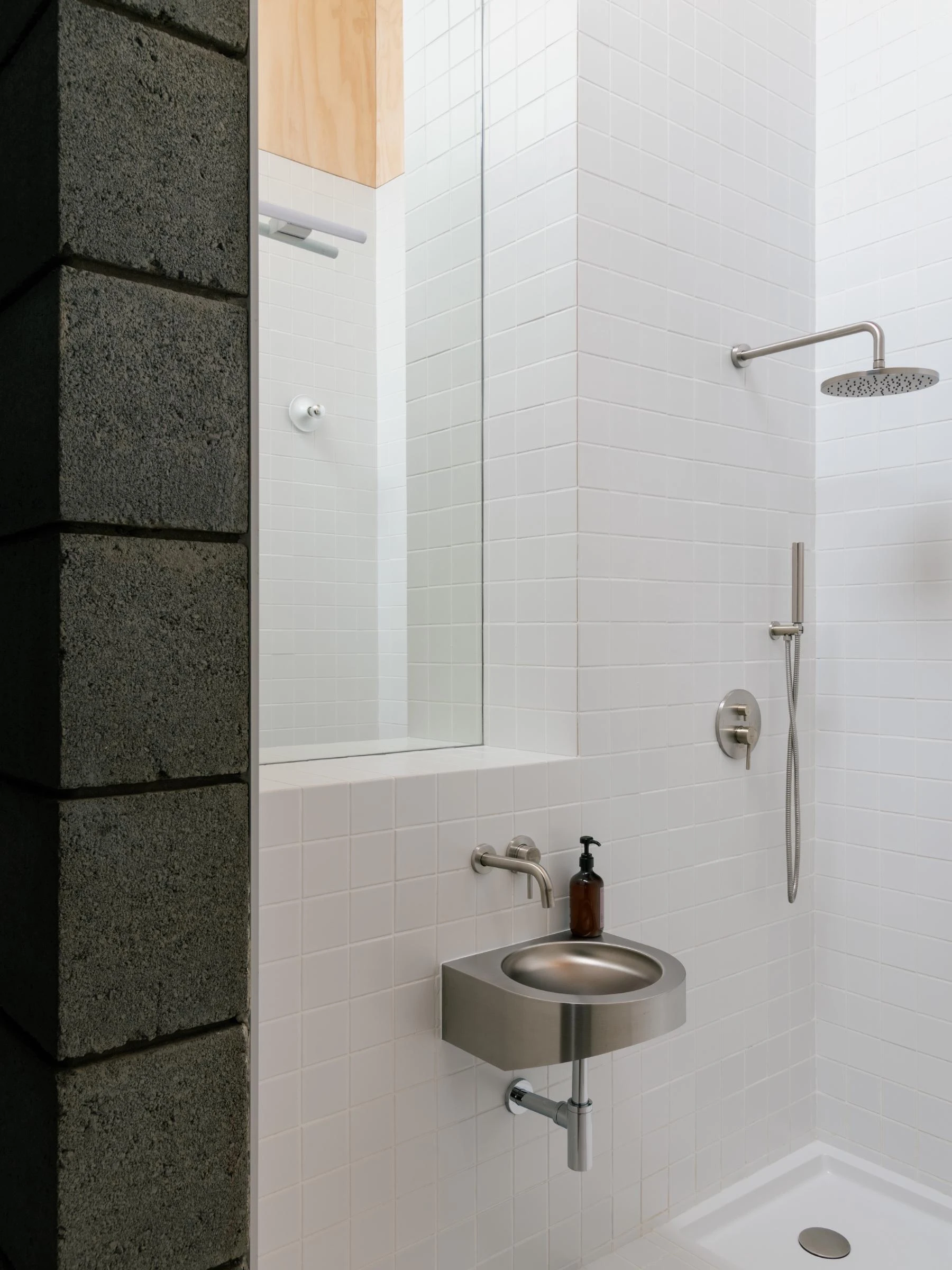
On a sliver of plot in Las Palmas de Gran Canaria, SOCO Estudio design Casa Iriarte, a narrow concrete house tuned to a fifty-year horizon.
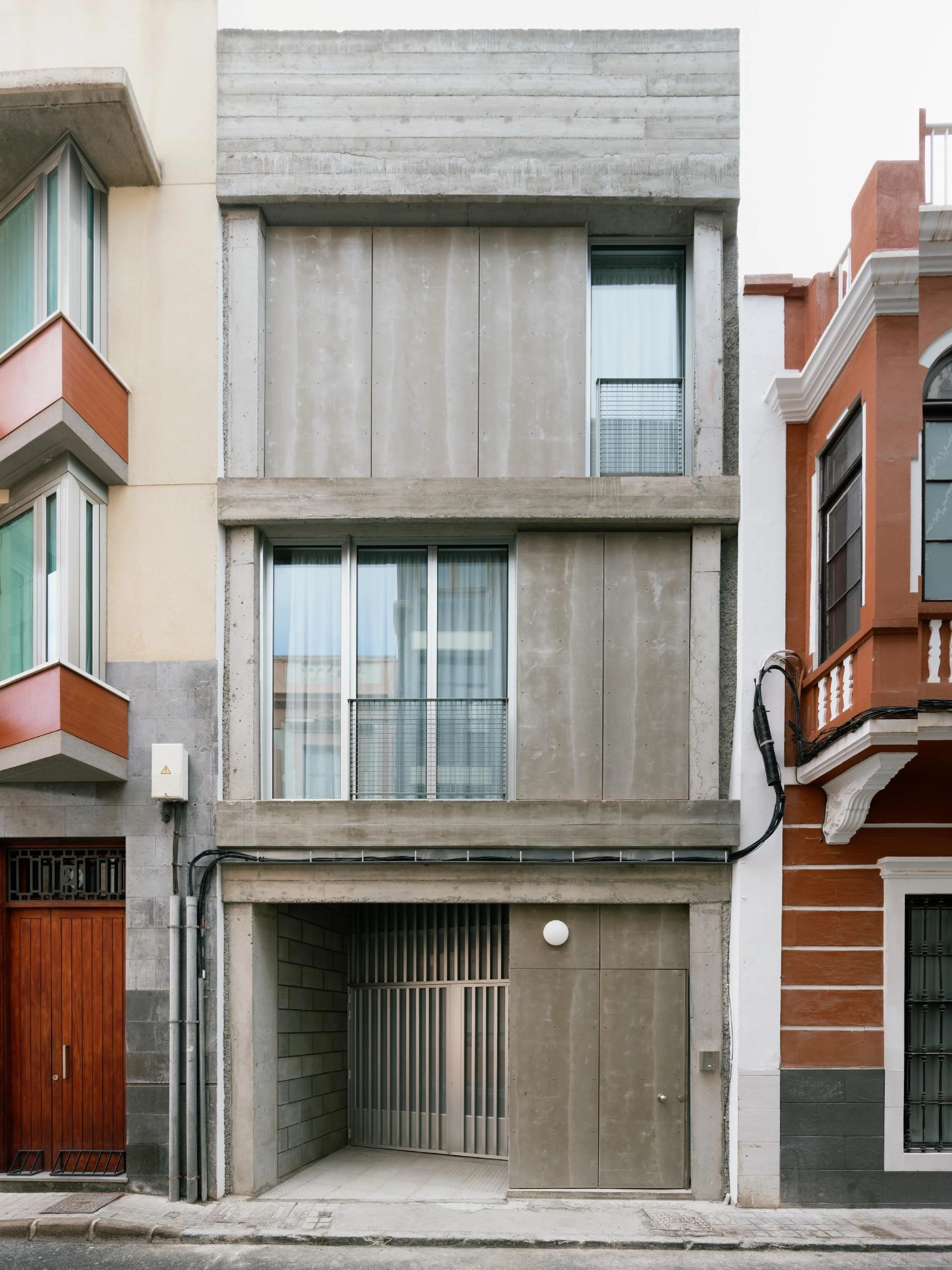
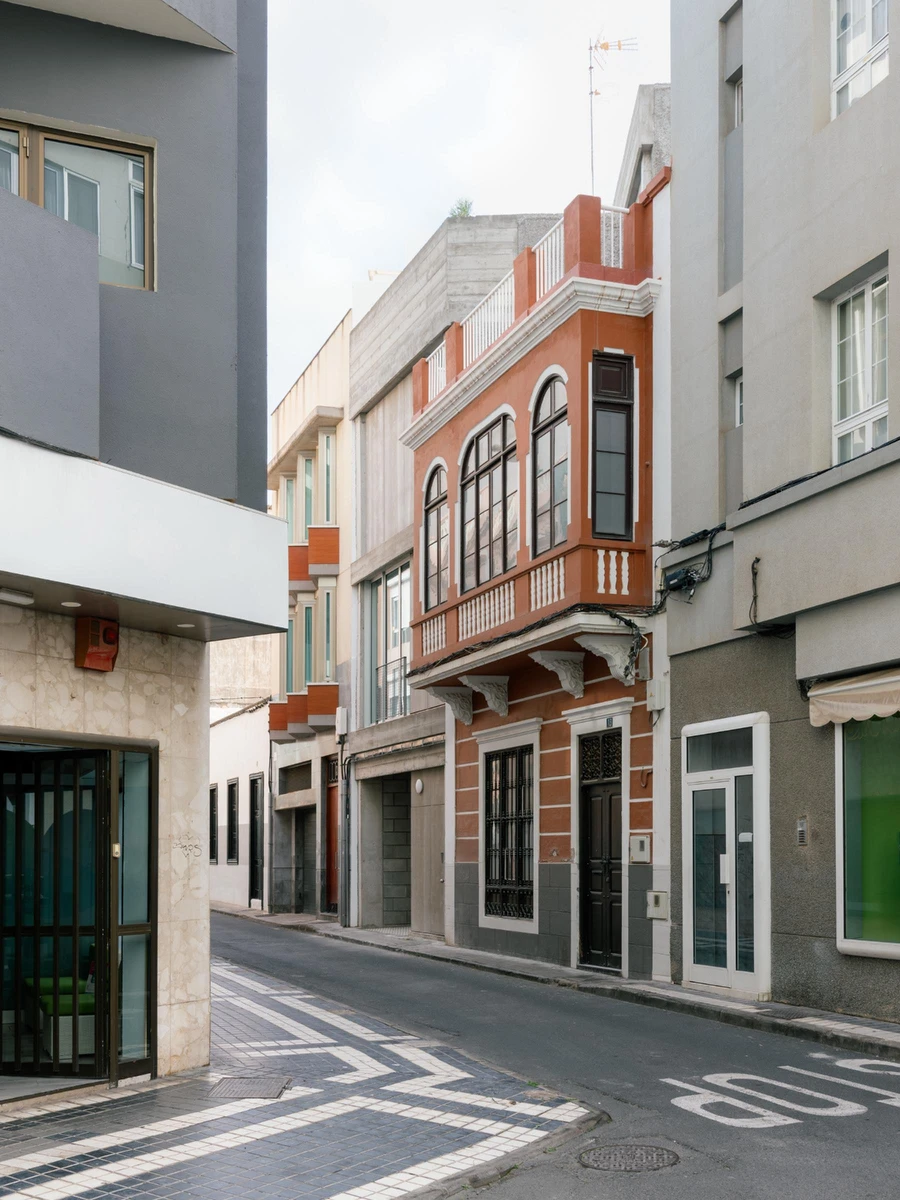
The plot is the width of a hallway. Between a red colonial casa with timber balconies and a flat-faced apartment block, SOCO Estudio and Simone Marcolin have wedged Casa Iriarte: a three-storey volume of board-formed concrete and grey Canary block, the kind of urban infill most cities now produce as a problem rather than a chance to be precise. The studios treat it as the latter. The street facade carries the imprint of its pine shuttering like a record of its own making, and a single recessed bay frames the upper windows in shadow.
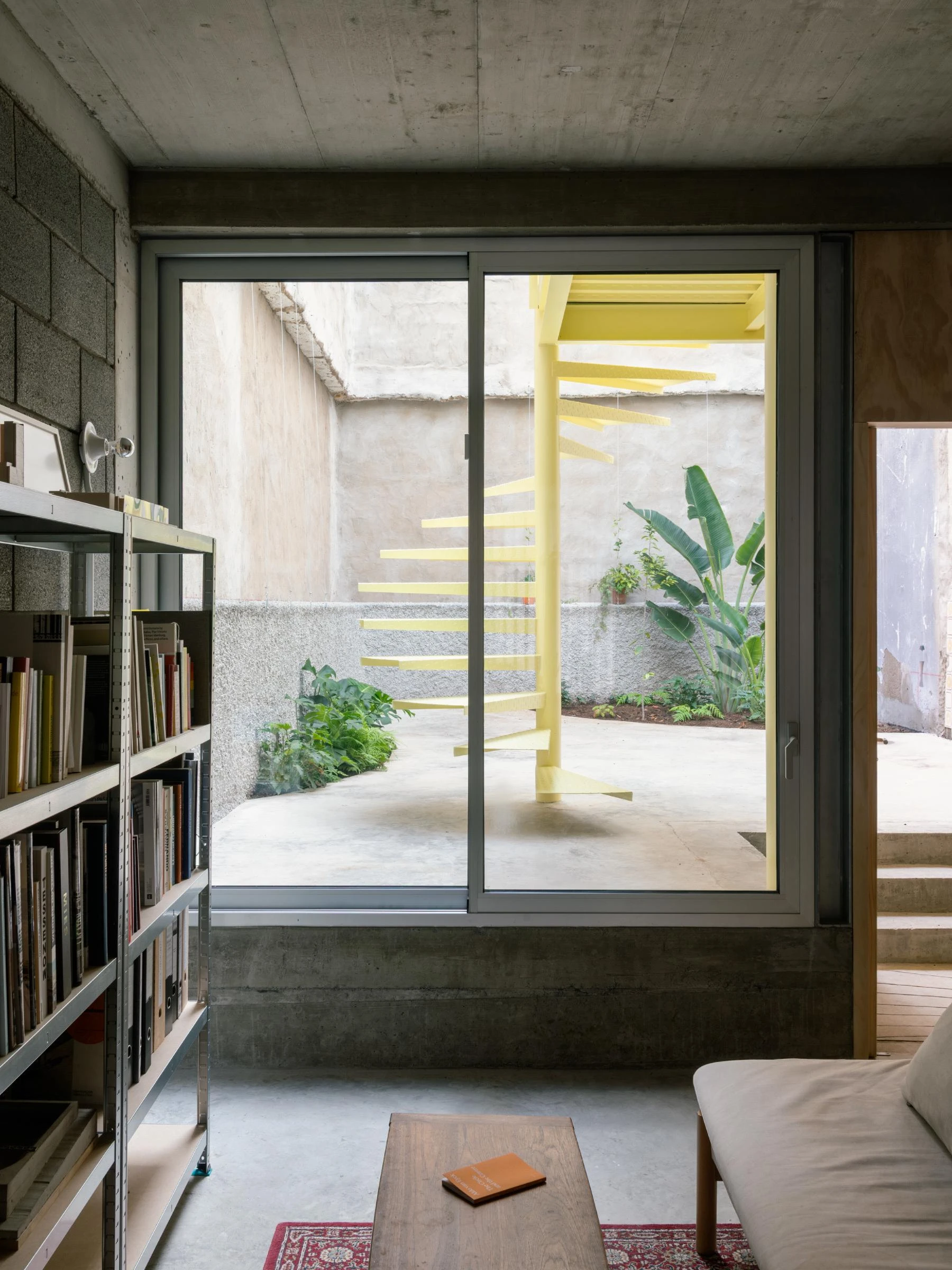
Behind the door, the plan refuses to do what narrow houses usually do. Rather than running a corridor the length of the lot, the project slips a courtyard inward off the rear party wall, displacing the void from the back garden into the body of the house. On an island where every square metre and every breeze counts, the courtyard pulls light into rooms that would otherwise be tunnels and lets the trade winds cross-ventilate without mechanical help.
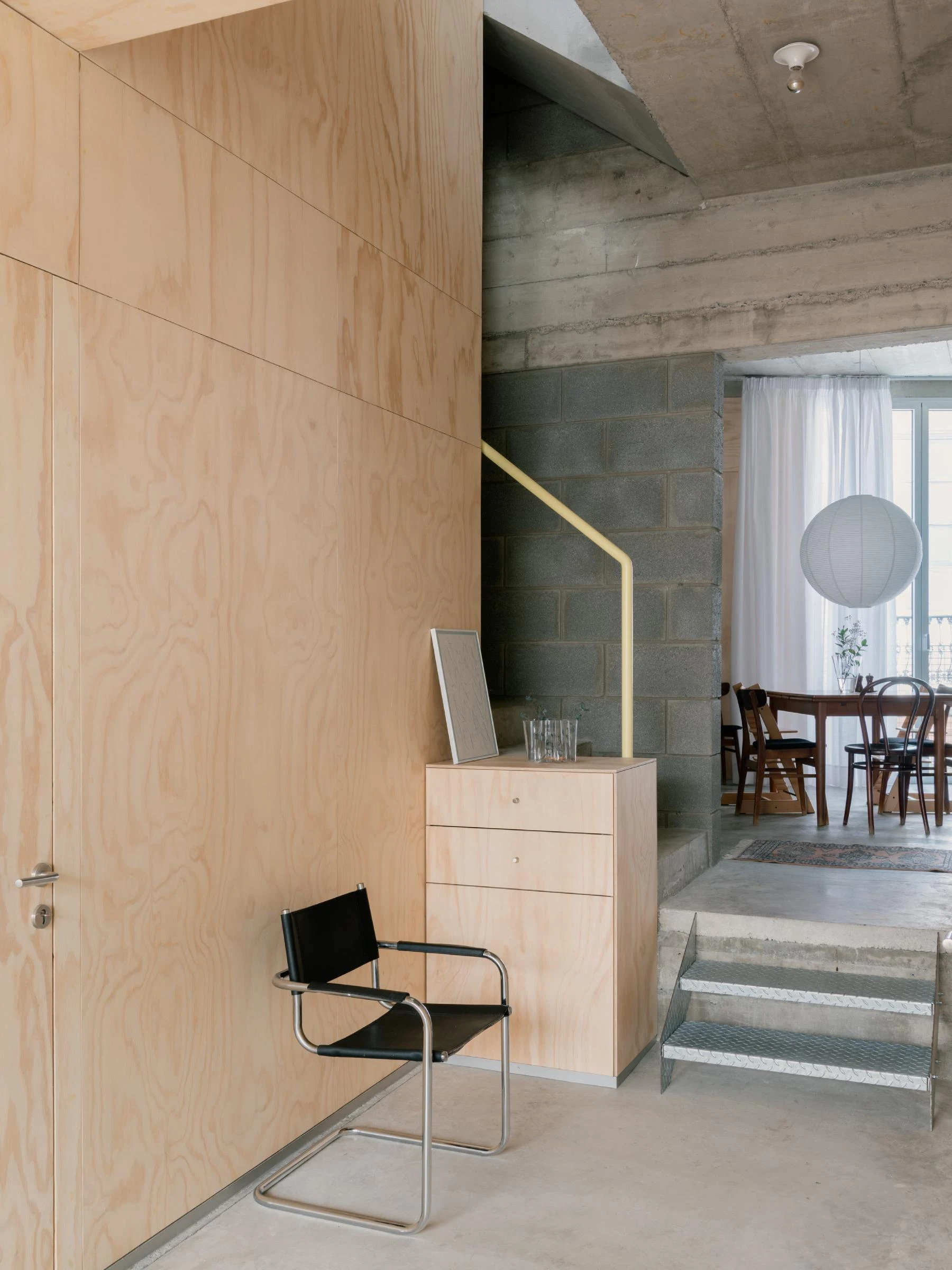
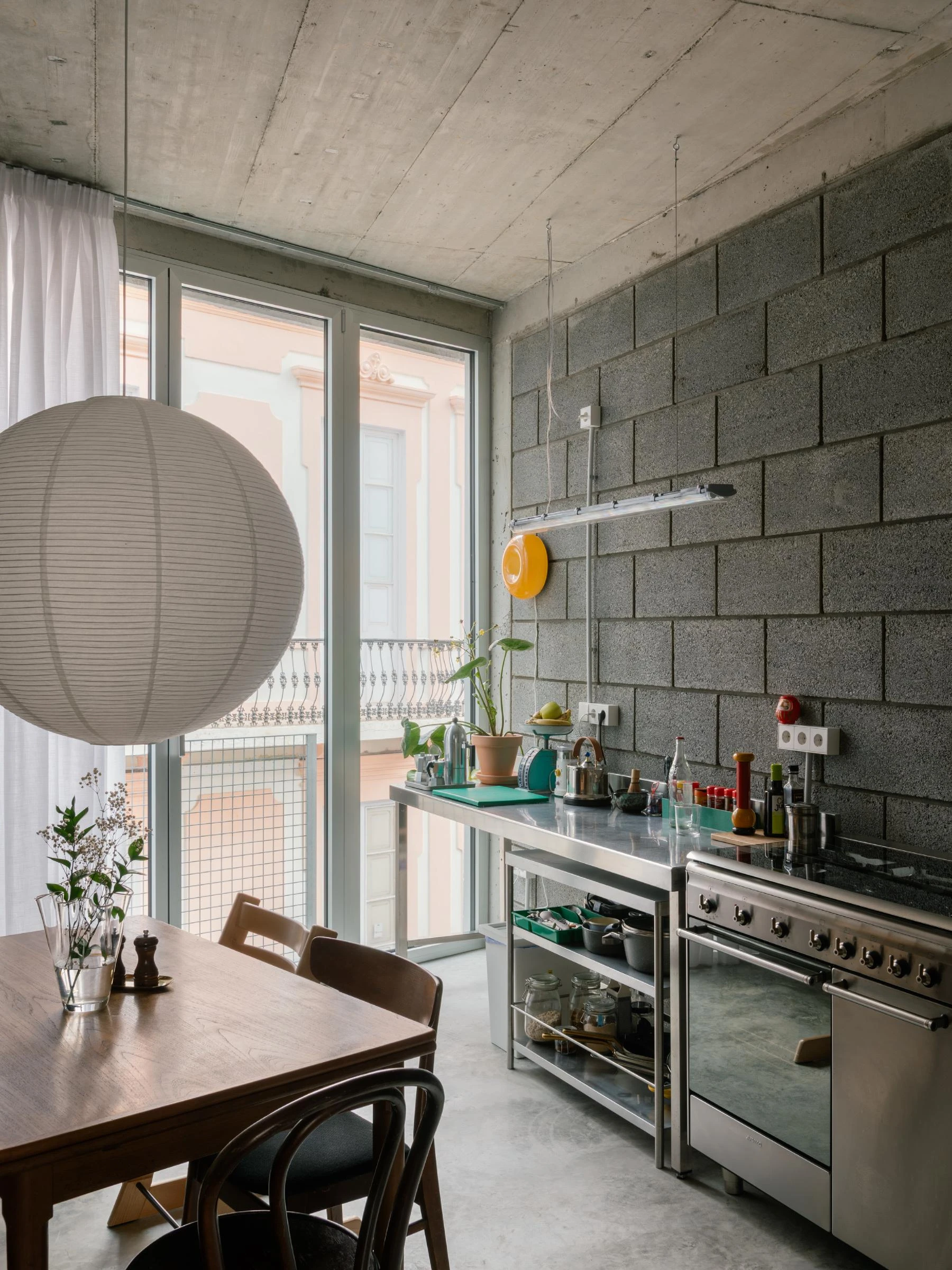
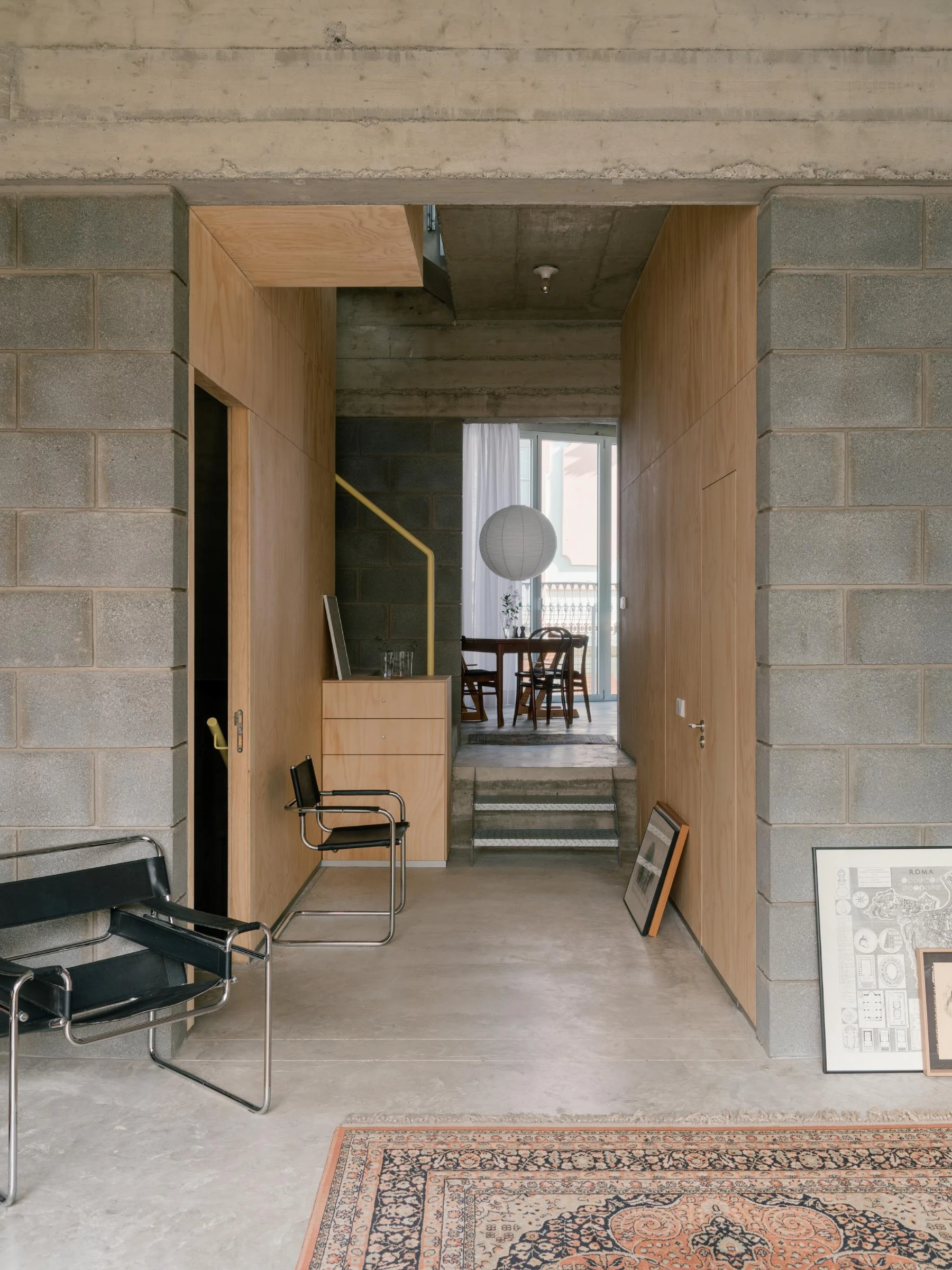
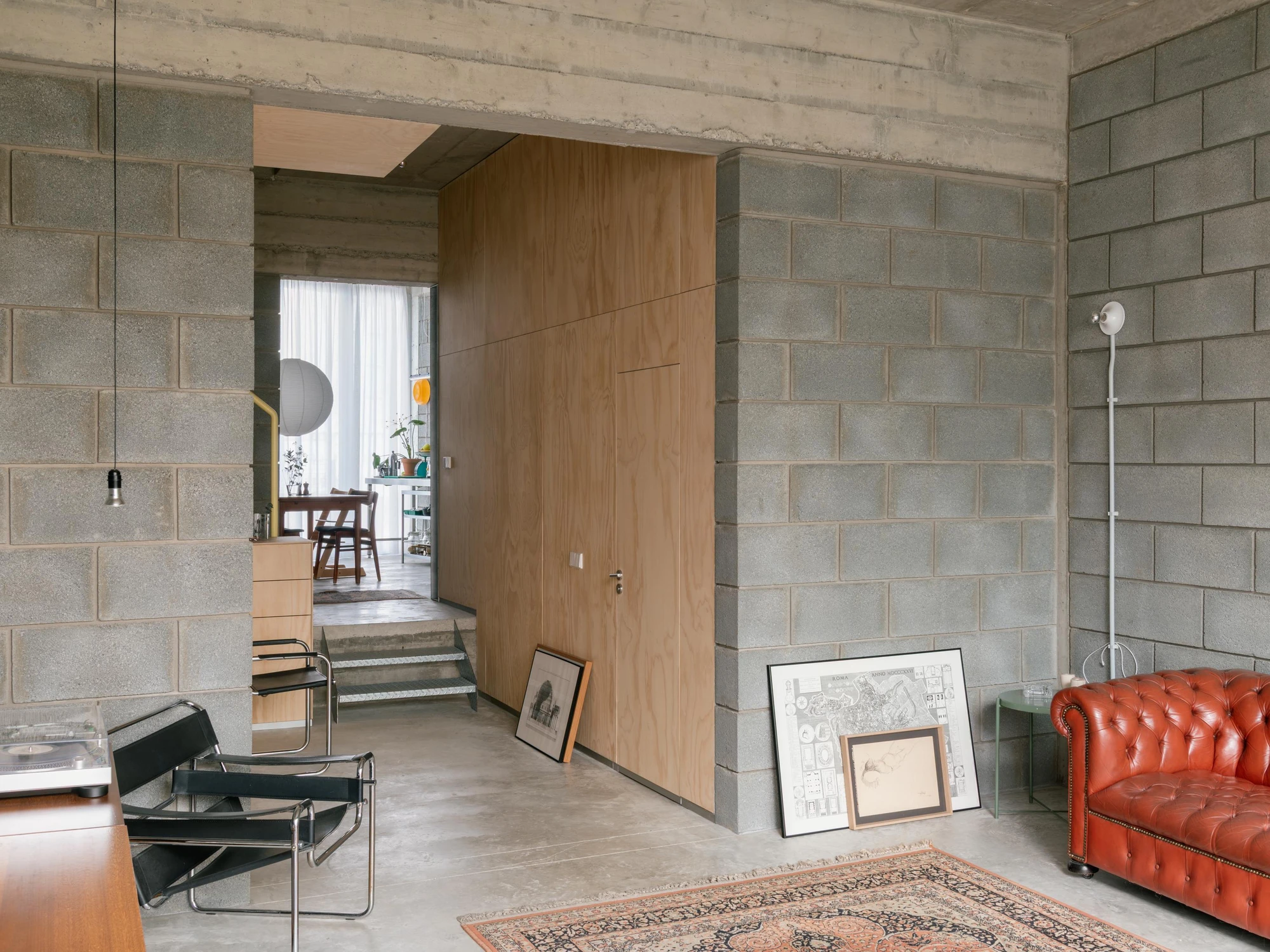
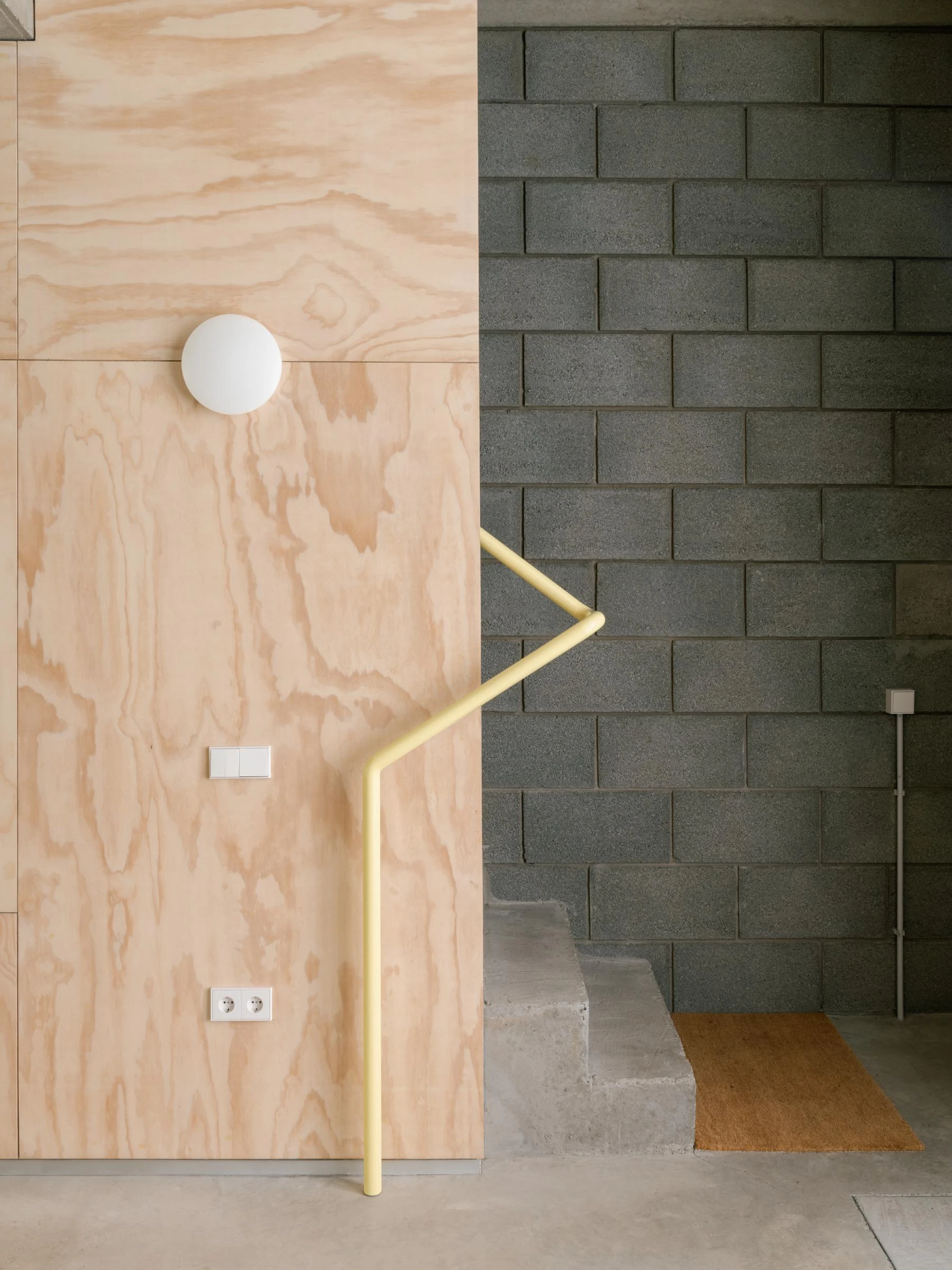
The construction logic is openly stated, almost diagrammatic. A concrete frame is set to last more than fifty years. Infill walls of picón block, the volcanic aggregate Canarians have built with for centuries, and wood-cement facade panels are scheduled as renewable layers across thirty to forty. The interior linings, raw pine plywood wrapping the stairs and concealing storage in flush sheets, are designed to be unscrewed and replaced within fifteen to twenty-five. A house, in other words, built as three nested clocks.
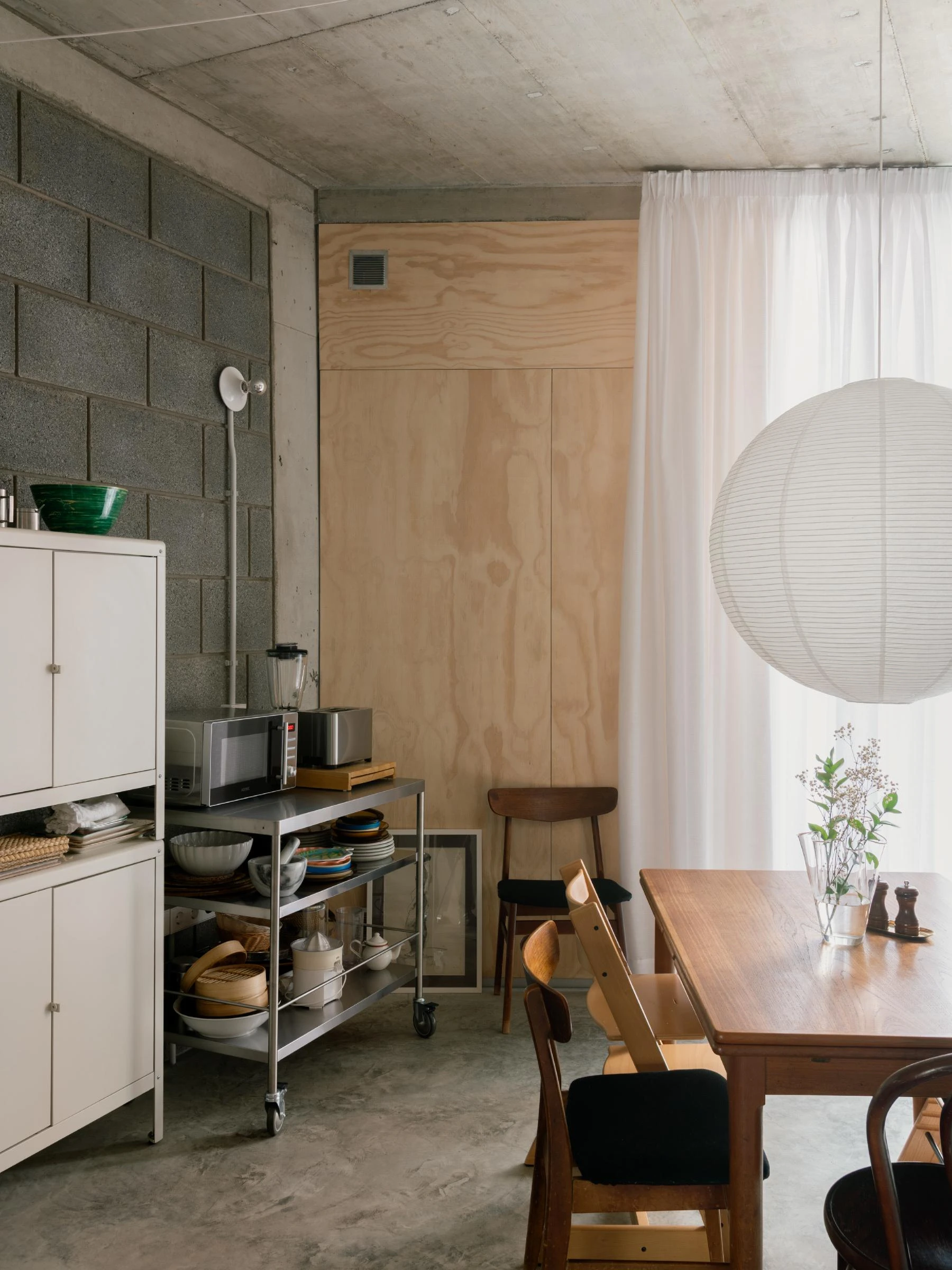
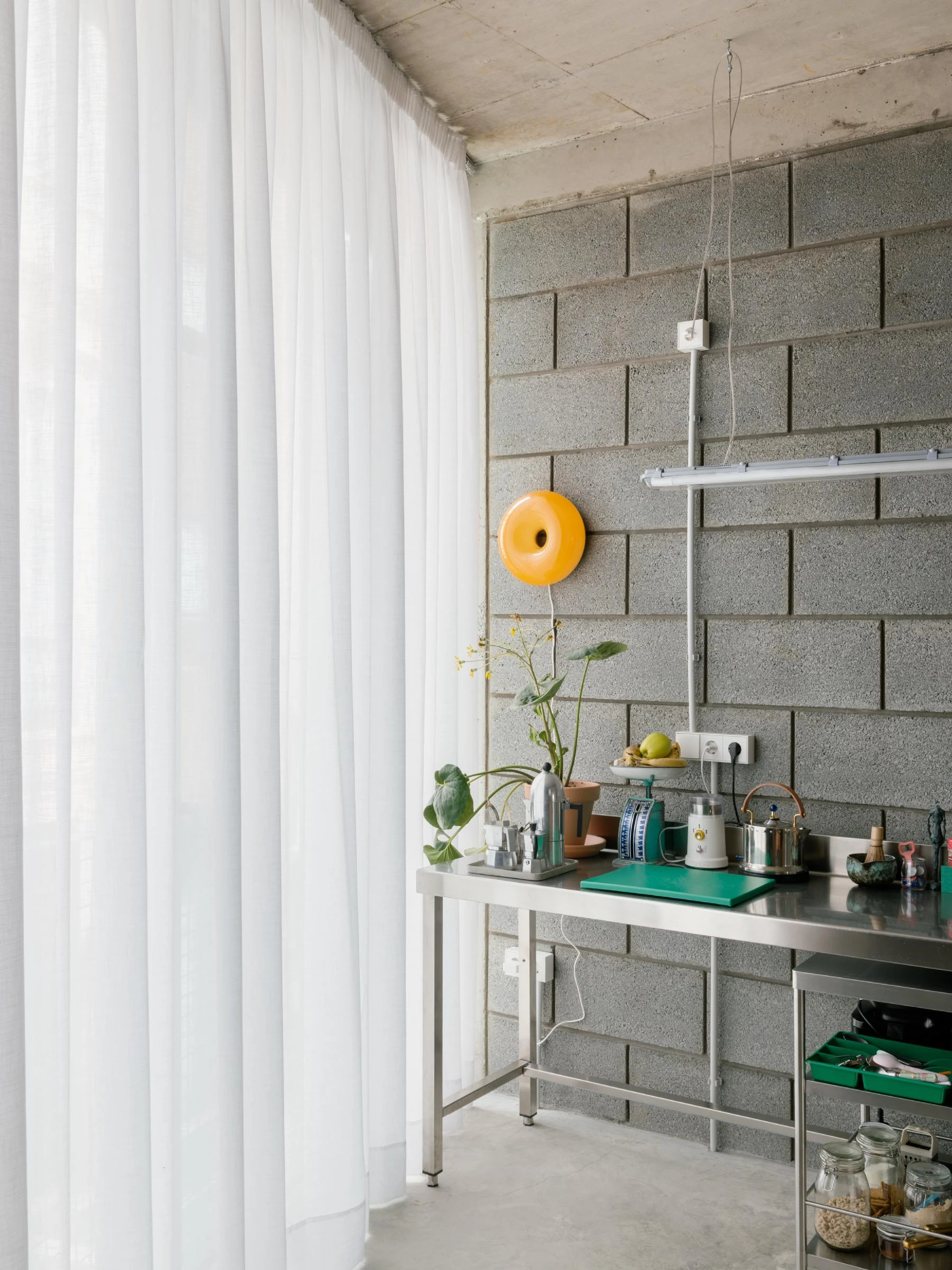
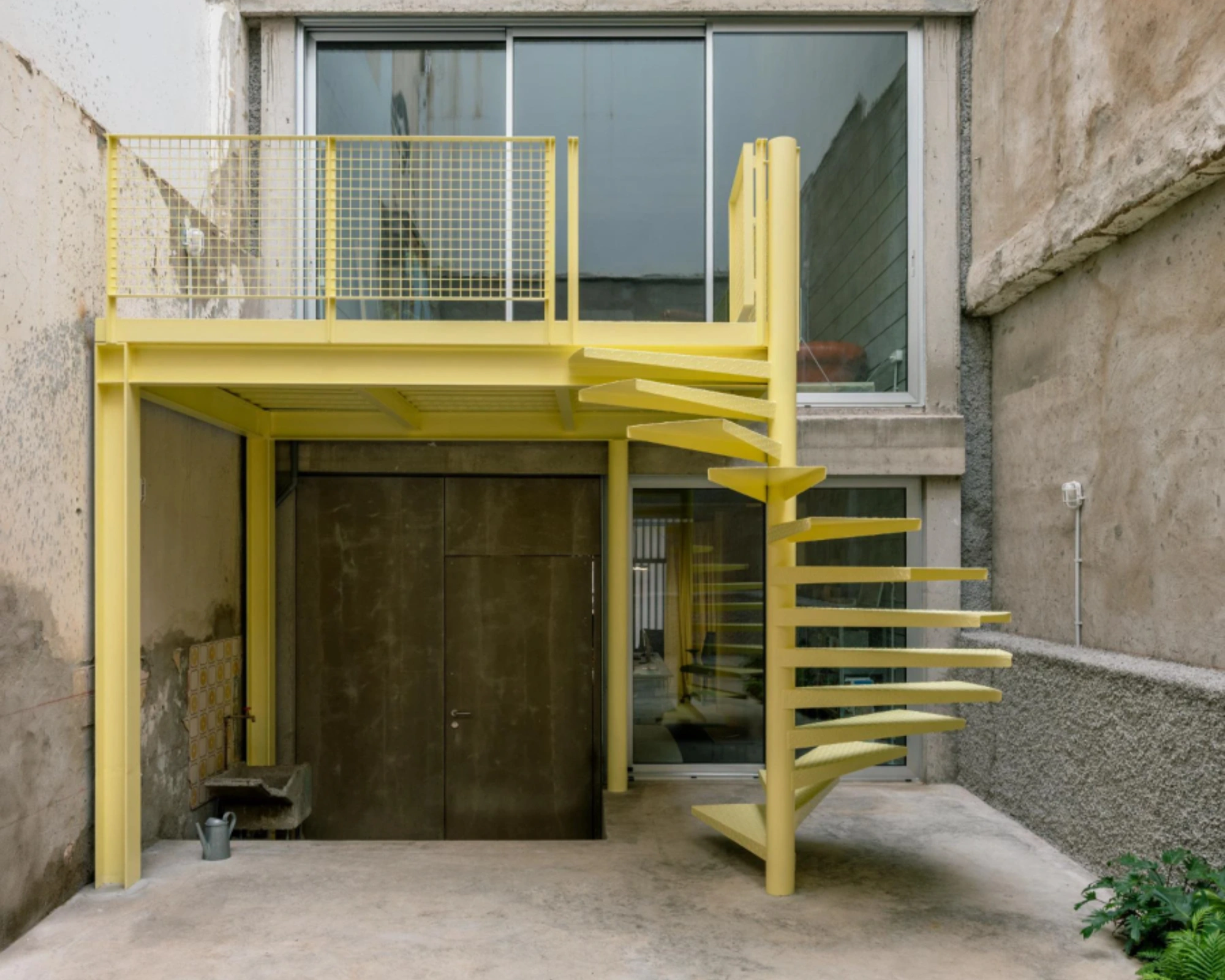
What gives the interior its charge is how unfinished it is allowed to look. The concrete ceiling shows its formwork; the block walls are left bare; the courtyard preserves the patinated render of the demolished neighbour as a found surface, blotched in apricot and grey. Against this, a single chrome-yellow runs through the house as a tuning fork: a powder-coated handrail bent along a plywood wall, a spiral stair coiling up through the courtyard, a balcony, a pool edge. Nothing else asks for attention.
Furniture admits the same logic. A red leather Chesterfield, a Wassily chair, Persian rugs, a paper lantern, a stainless trolley repurposed as a kitchen island; the rooms host objects without absorbing them. Bedrooms sit behind sliding plywood panels rather than fixed walls. The bathroom is white tile dropped into a shaft of cinderblock. Programs swap easily because none of the spaces were named in the first place.
The displaced courtyard is the project's argument made visible. Climbing the yellow spiral, you read the section: garage at street, living rooms opening to the void, sleeping above, the sky cut into a rectangle held by three patinas of wall. Casa Iriarte is not a house dressed for its photograph. It is a structure built to be inhabited by people not yet born, and repaired by hands that haven't learned the trade. Sufficiency, the studios call it. It looks like patience.