Thisispaper Community
Join today.
Enter your email address to receive the latest news on emerging art, design, lifestyle and tech from Thisispaper, delivered straight to your inbox.
Oops! Something went wrong while submitting the form.
Instant access to new channels
The top stories curated daily
Weekly roundups of what's important
Original features and deep dives
Exclusive community features
Thisispaper+ Member

New House in San Nazzaro by Wespi de Meuron Romeo

Dates:
✧ Collect Post
Concrete Stories
under the patronage of
DwellWell
under the patronage of
New House in San Nazzaro by Wespi de Meuron Romeo
Alexander Zaxarov
Jun 5, 2026

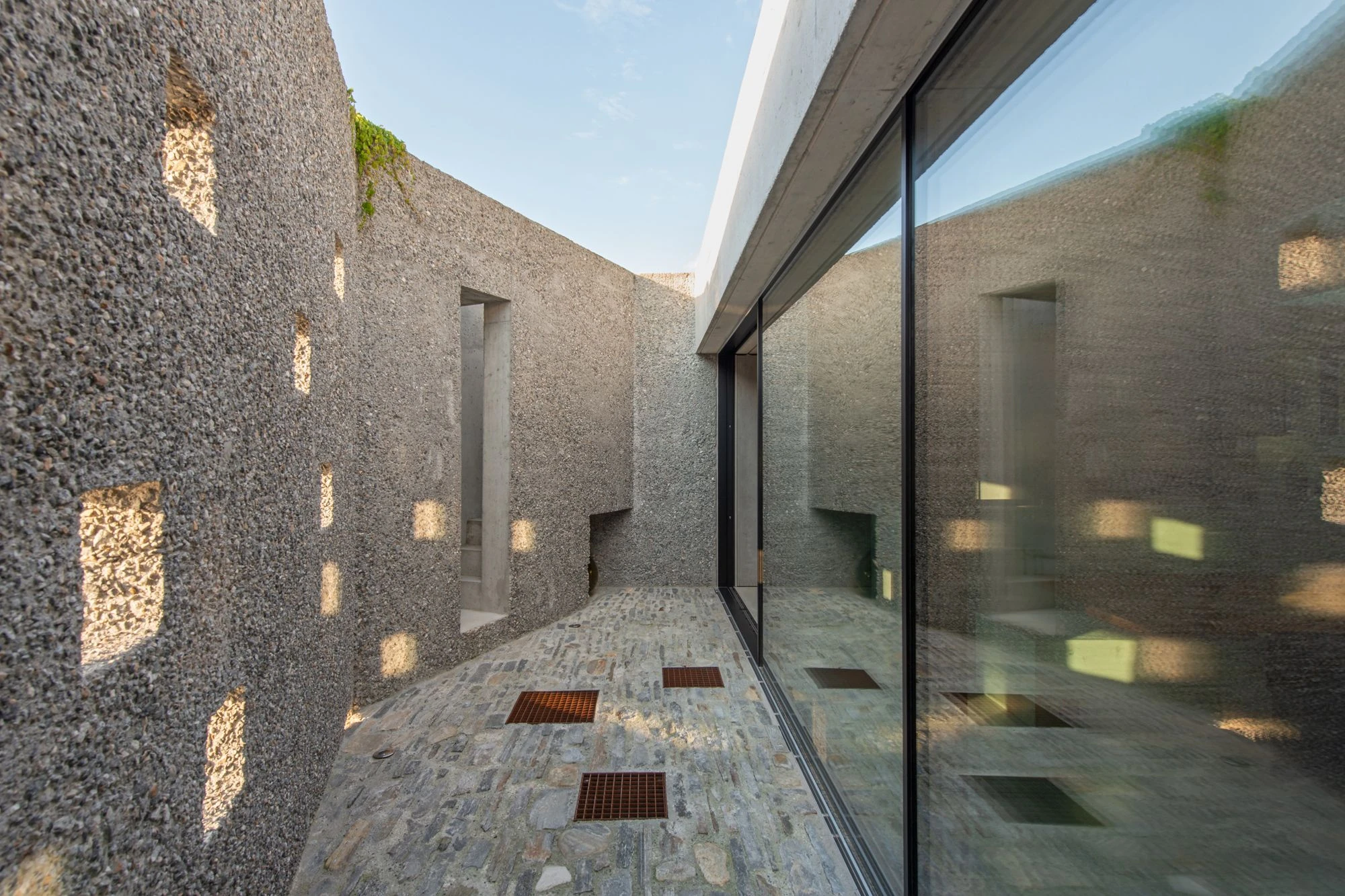
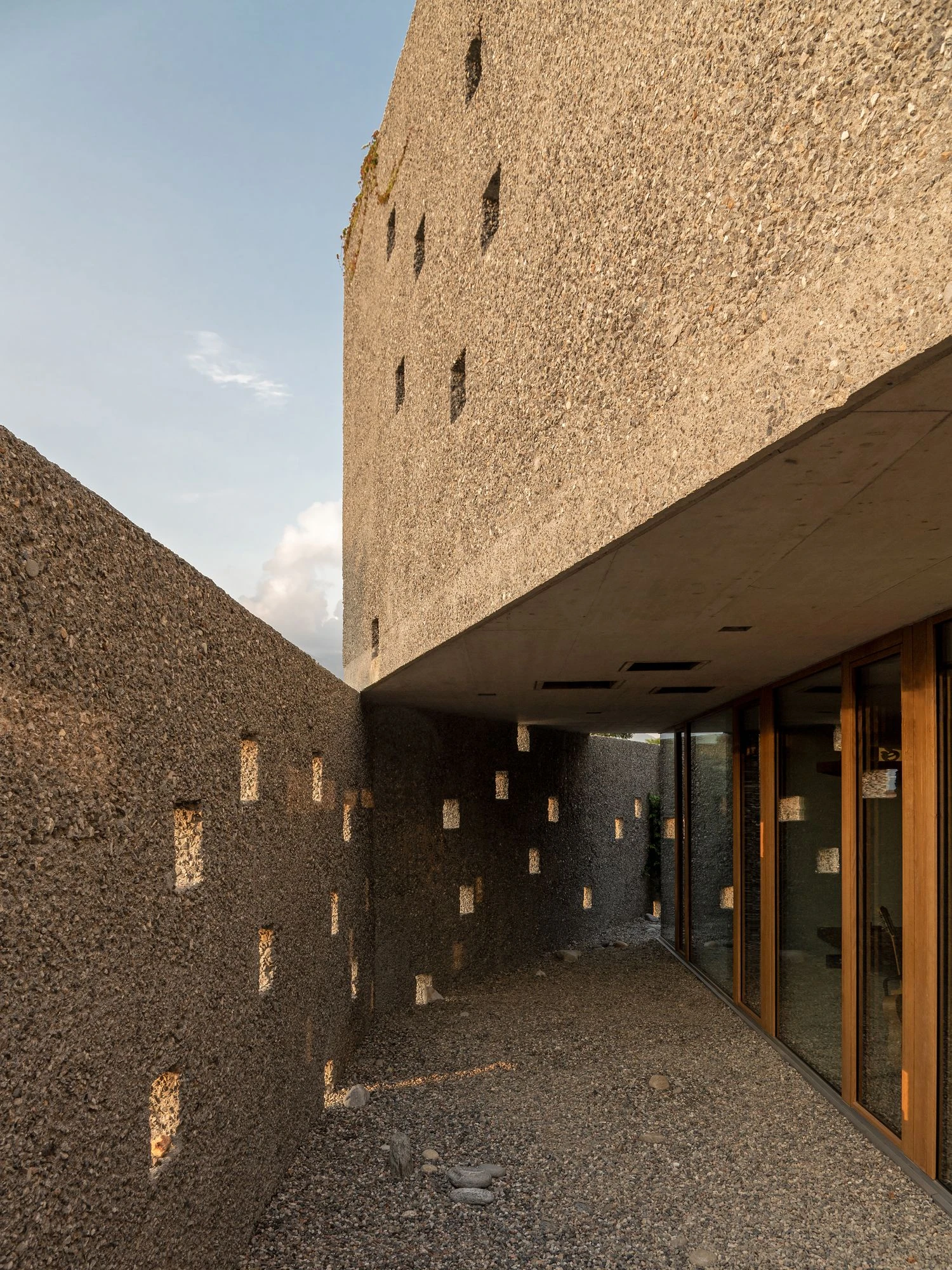
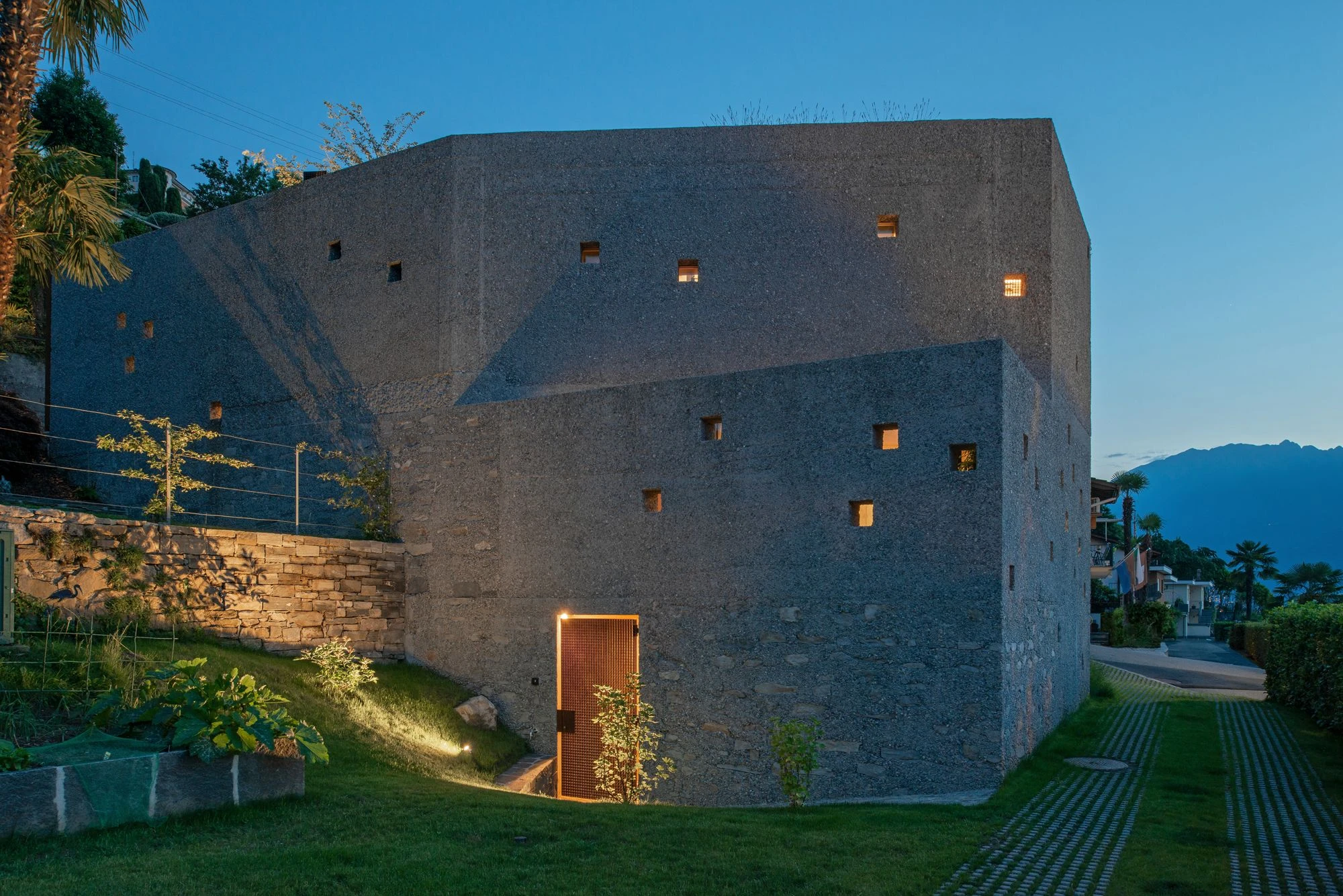
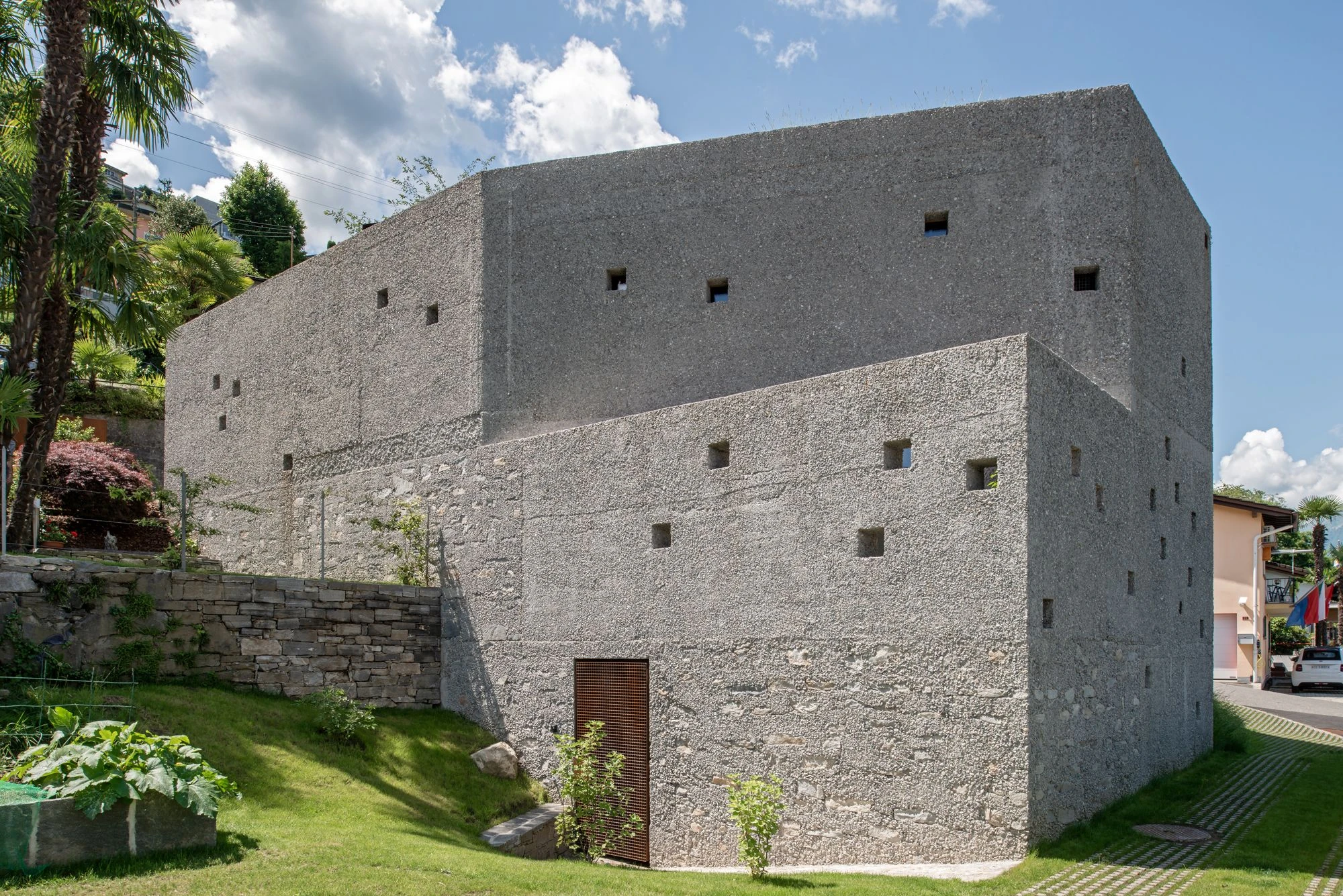
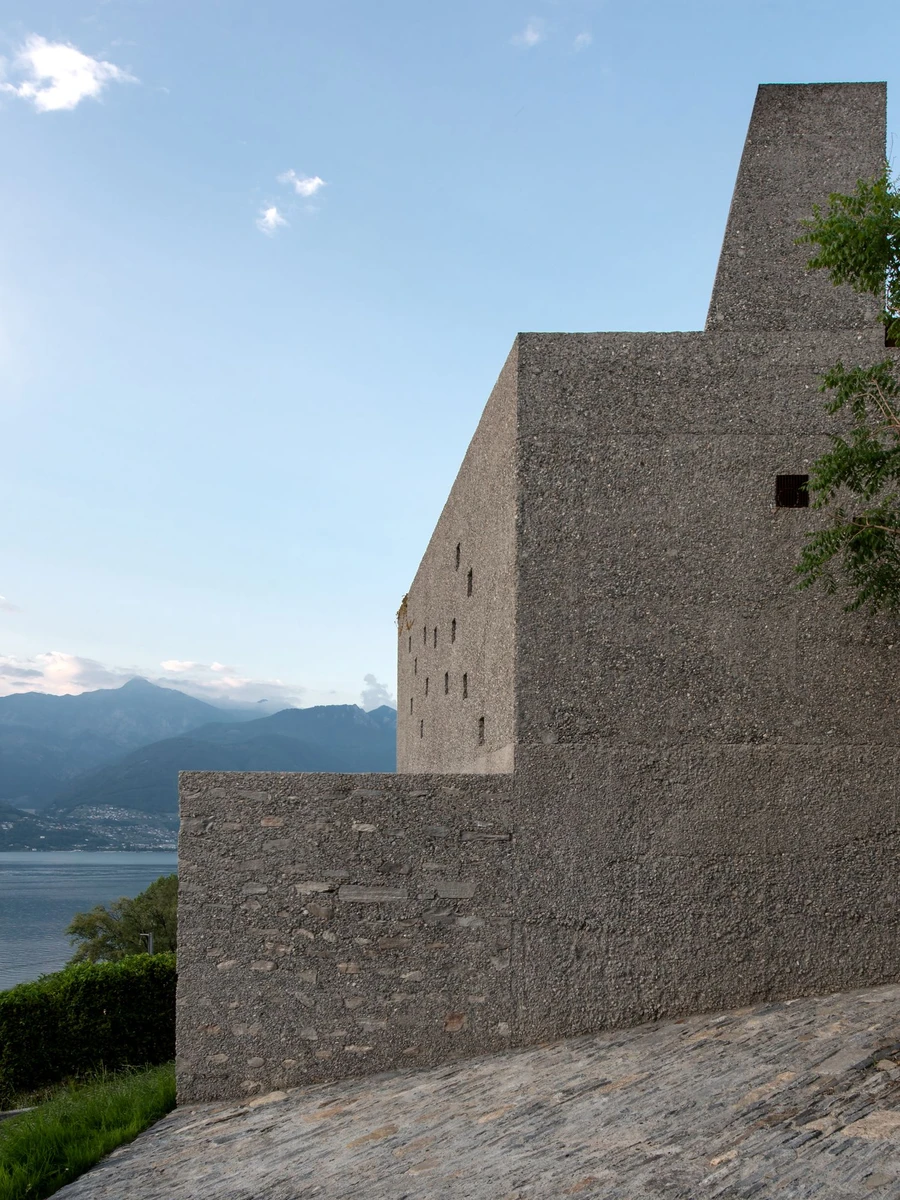
On the eastern shore of Lago Maggiore in Switzerland, Wespi de Meuron Romeo shapes New House in San Nazzaro as a polygonal washed-concrete volume cut by two inner courtyards.

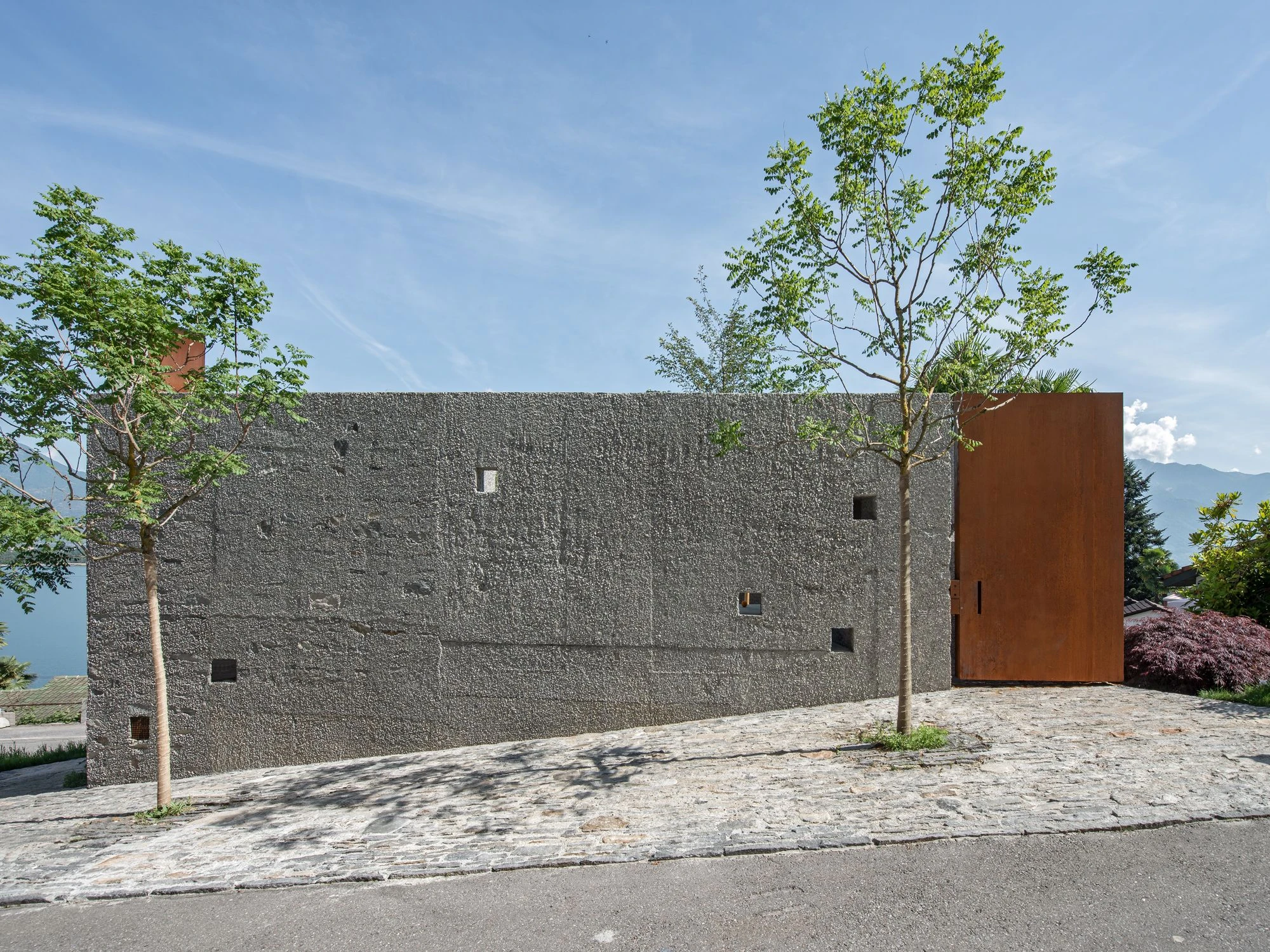
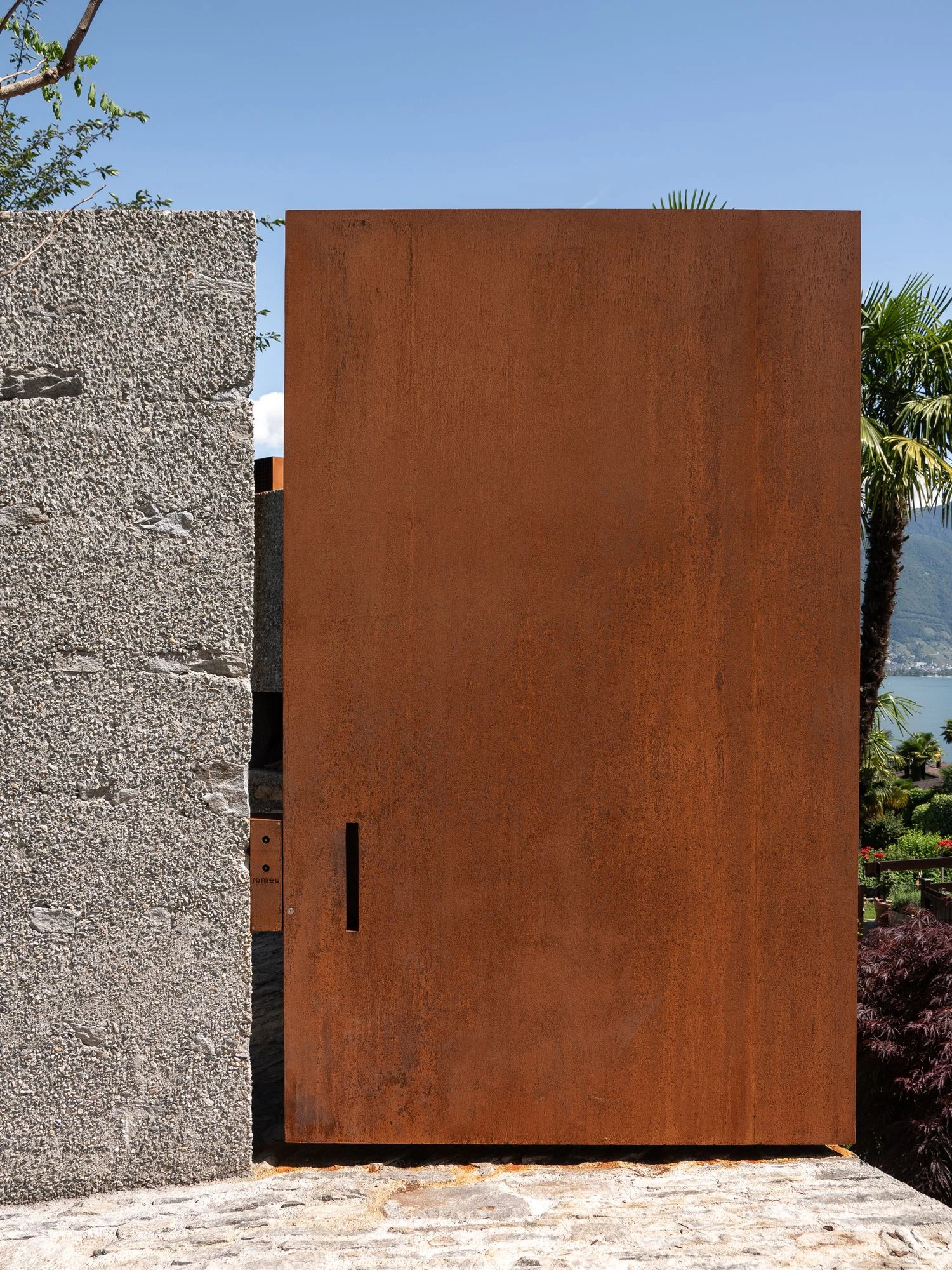
The plot dictates the form. Border setbacks pull the outer wall into an irregular polygon, and Wespi de Meuron Romeo inscribe a clean heated rectangle inside it, leaving the leftover triangles as open-air rooms on the valley and mountain sides. From the private street above, the house reads as a single closed storey, a low blind wall broken only by a steel gate. The stepped section toward the lake side is reserved for those already inside.

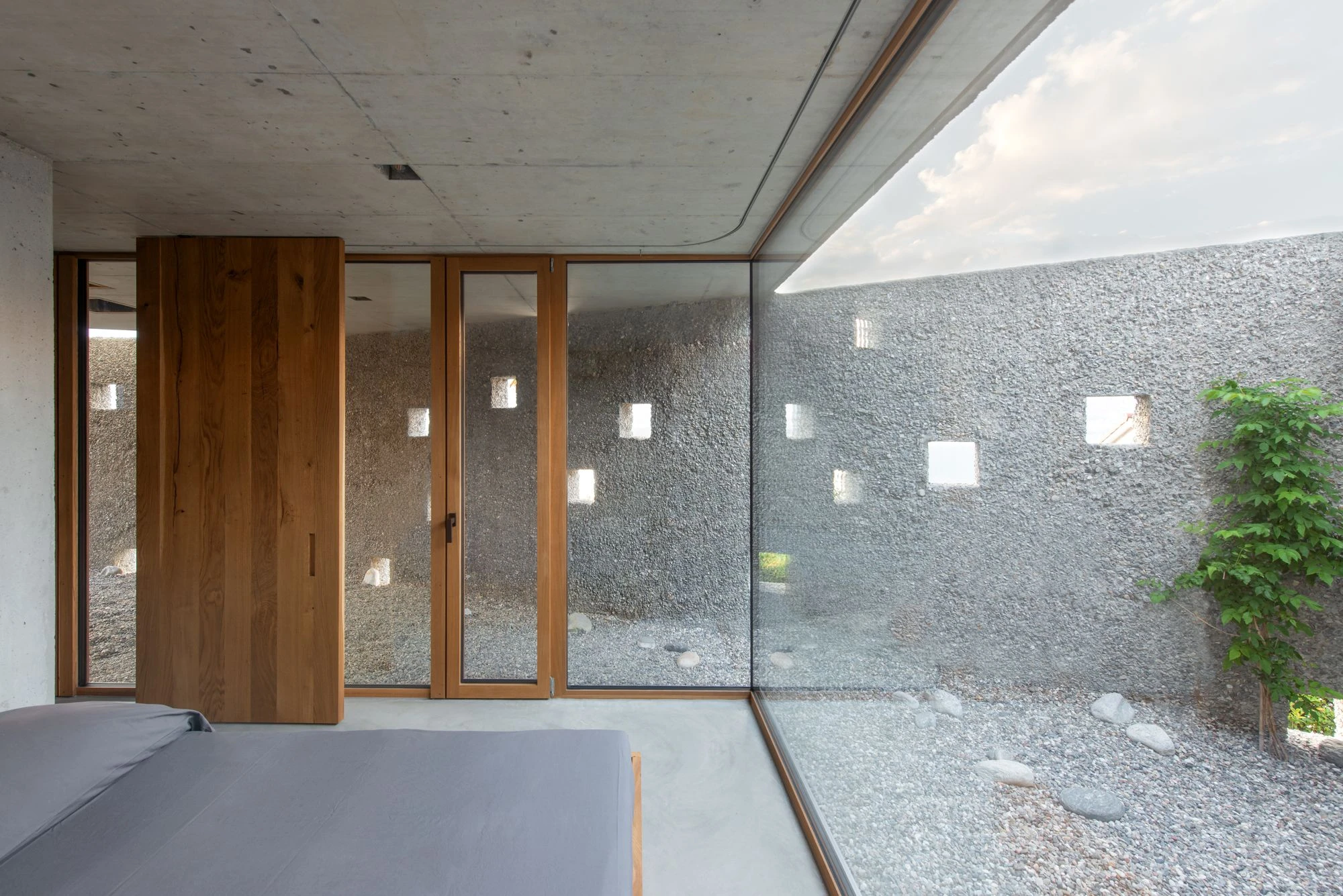
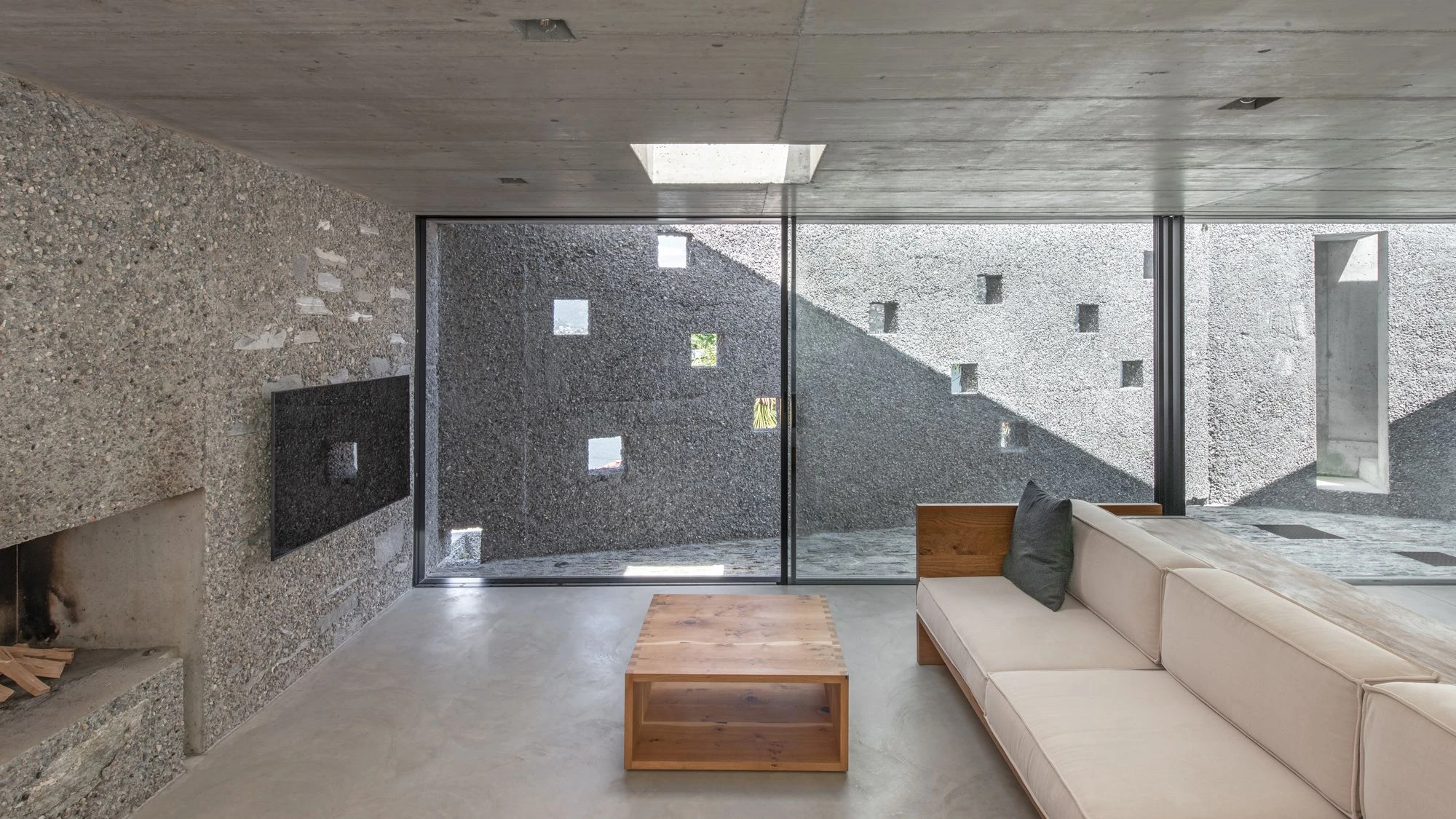
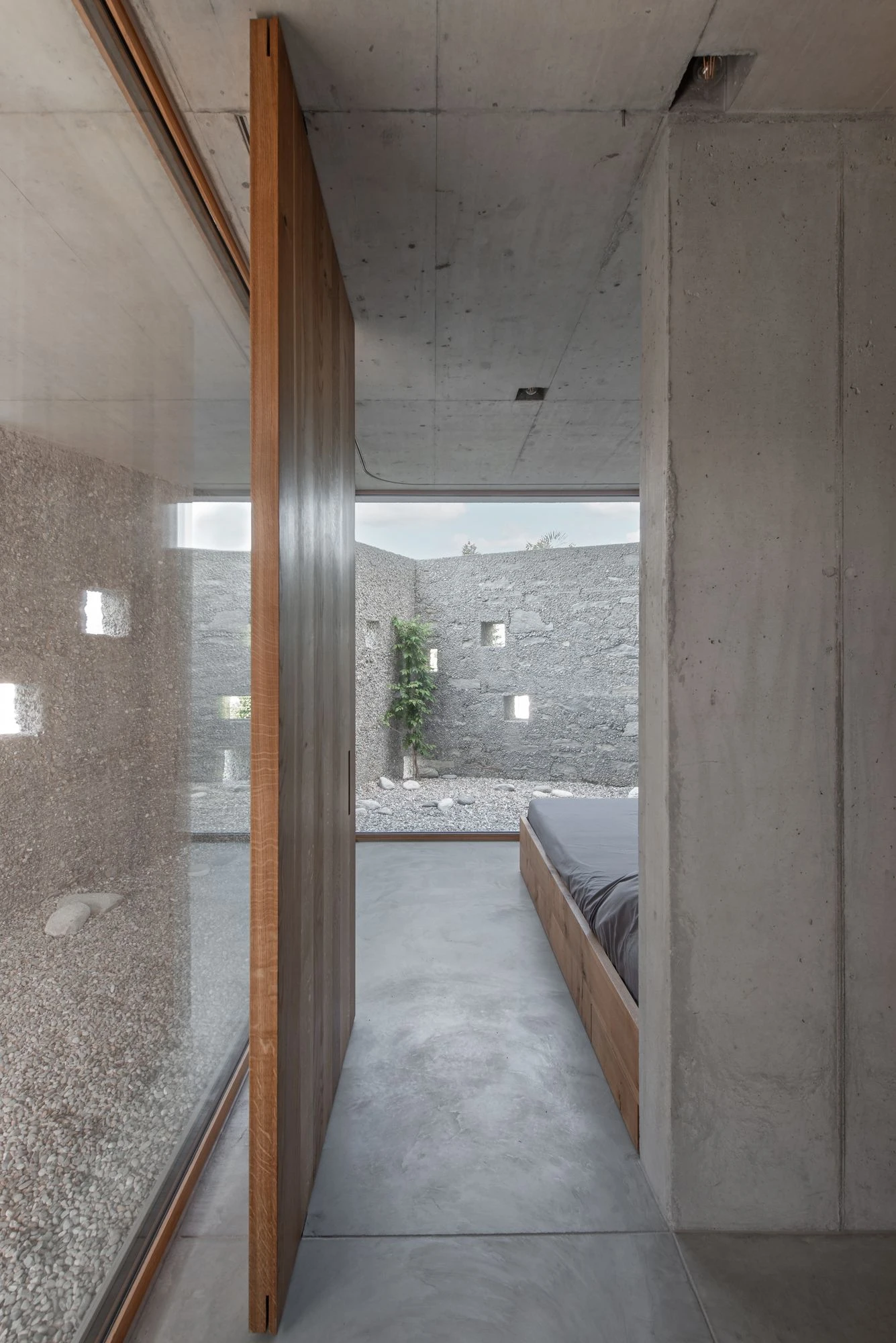
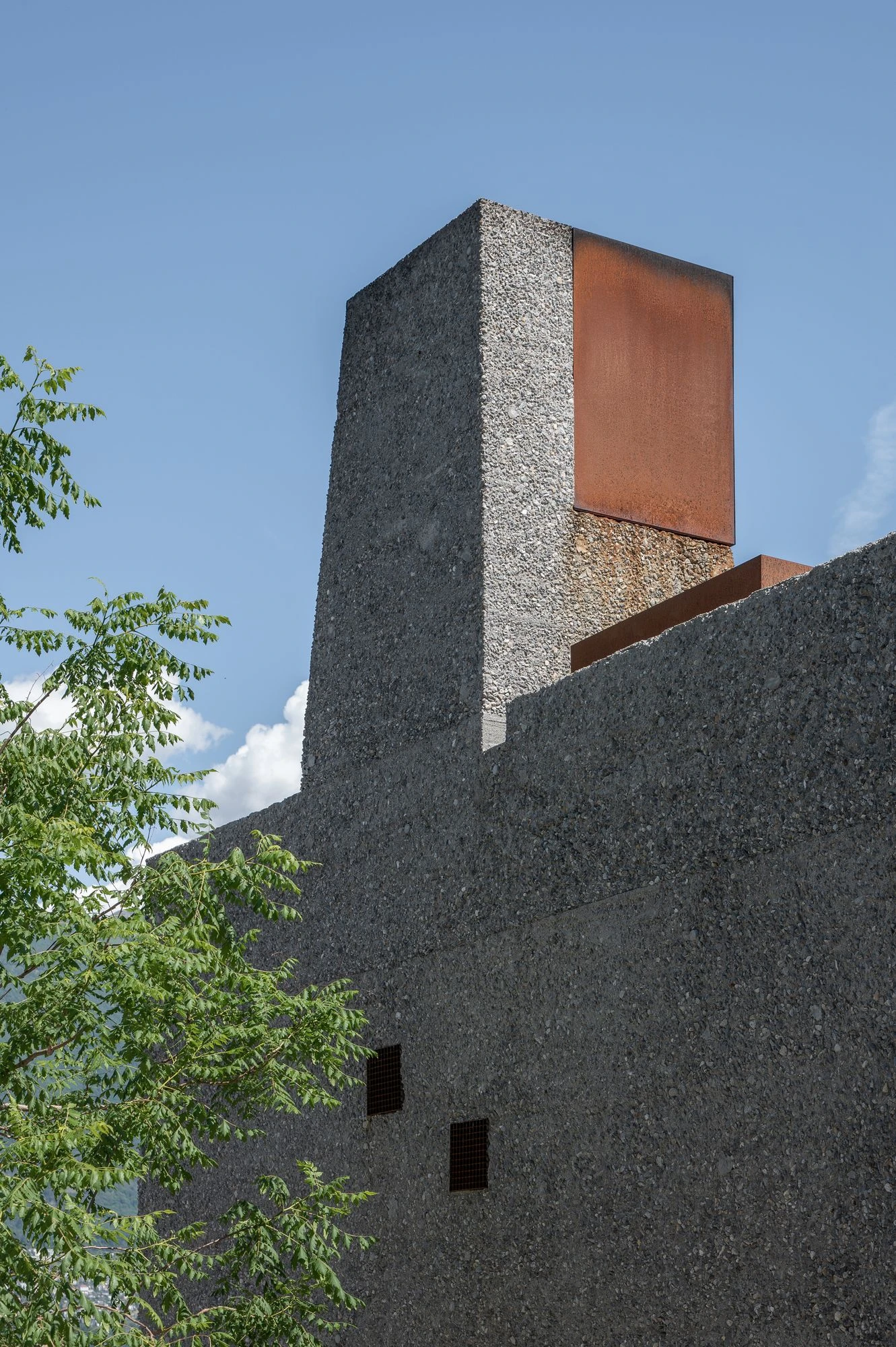
The skin is rough washed concrete, an aggregate-exposed surface that the studio expects to darken over time through weathering. Climbing plants are already finding the wall. Small square openings, set in loose constellations rather than rows, puncture the mass at irregular intervals. A coursed grey stone plinth meets the ground on the lake-facing flank, and a single corten chimney breaks the silhouette. The studio compares the result to an archaic rock; the immediate Ticino vernacular of rusticos and lakeside masonry sits in the same vocabulary.

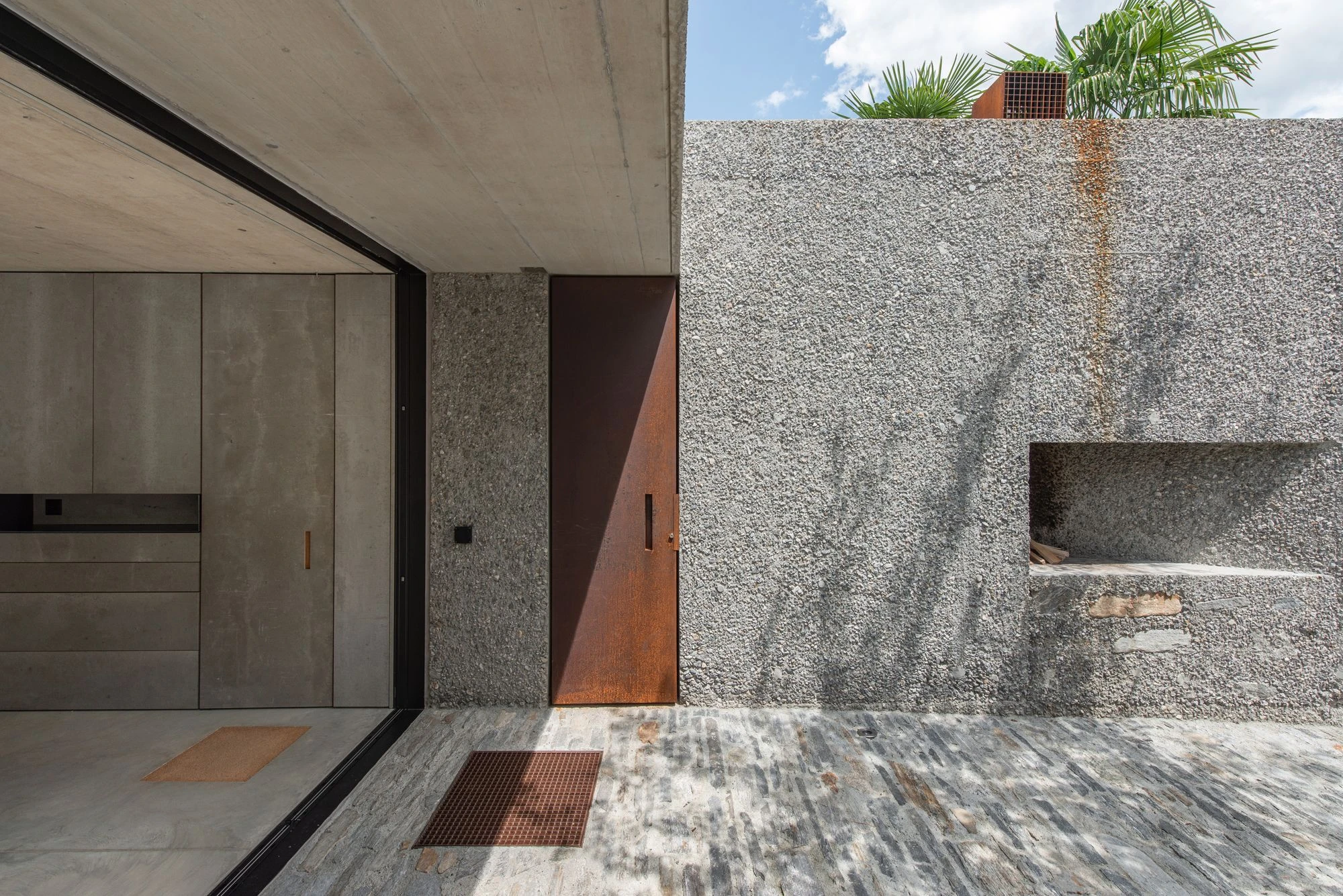
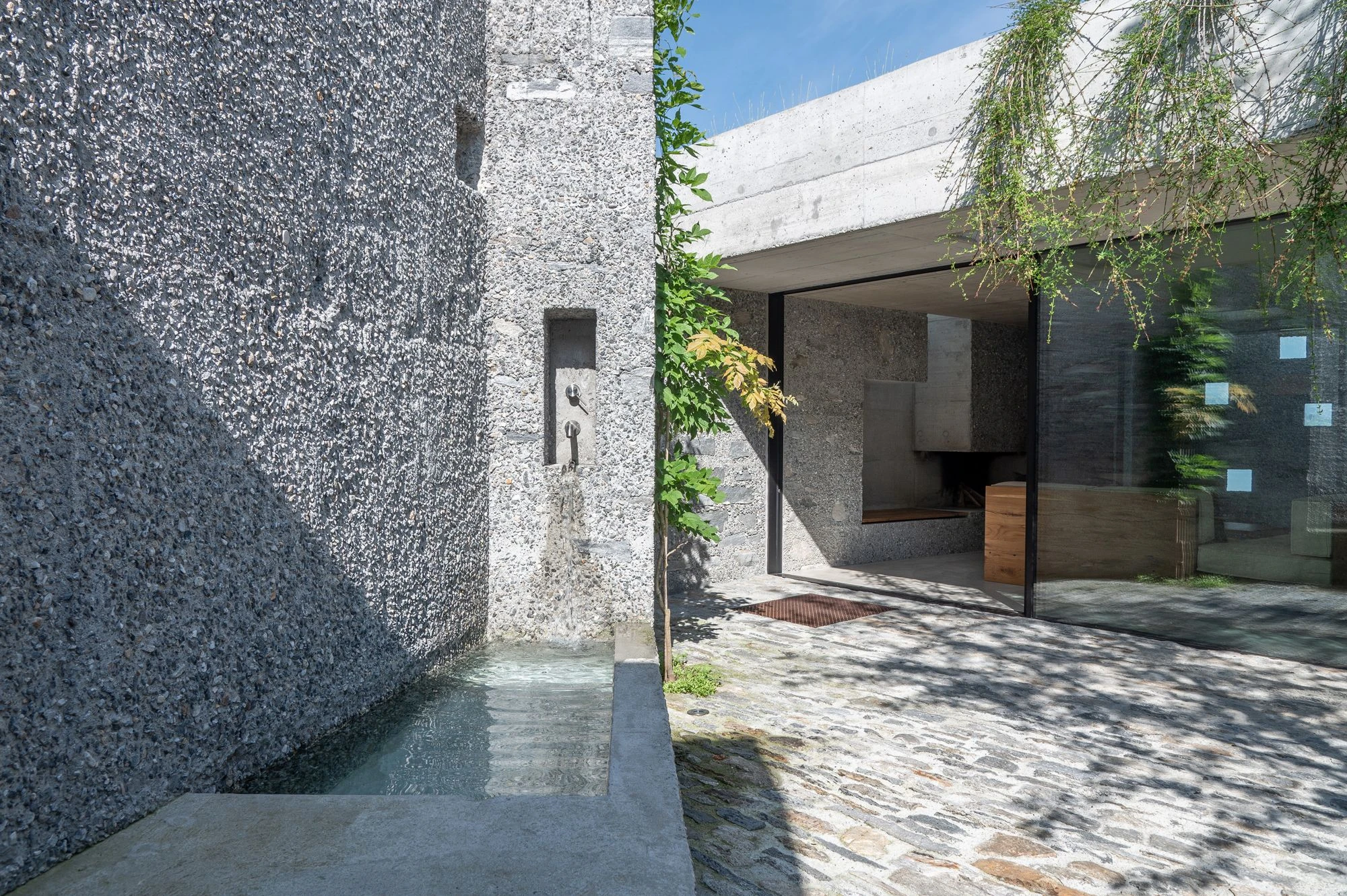
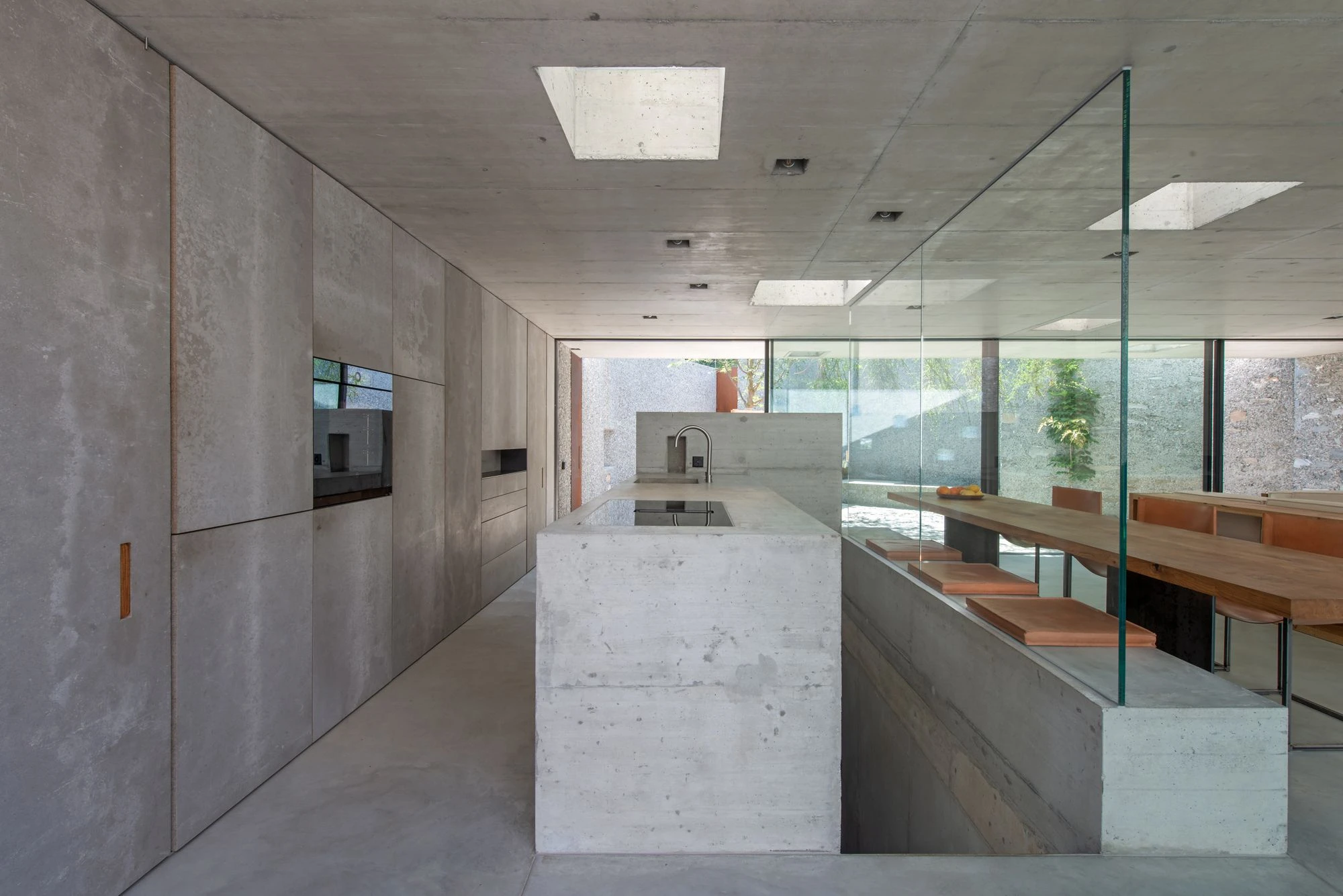
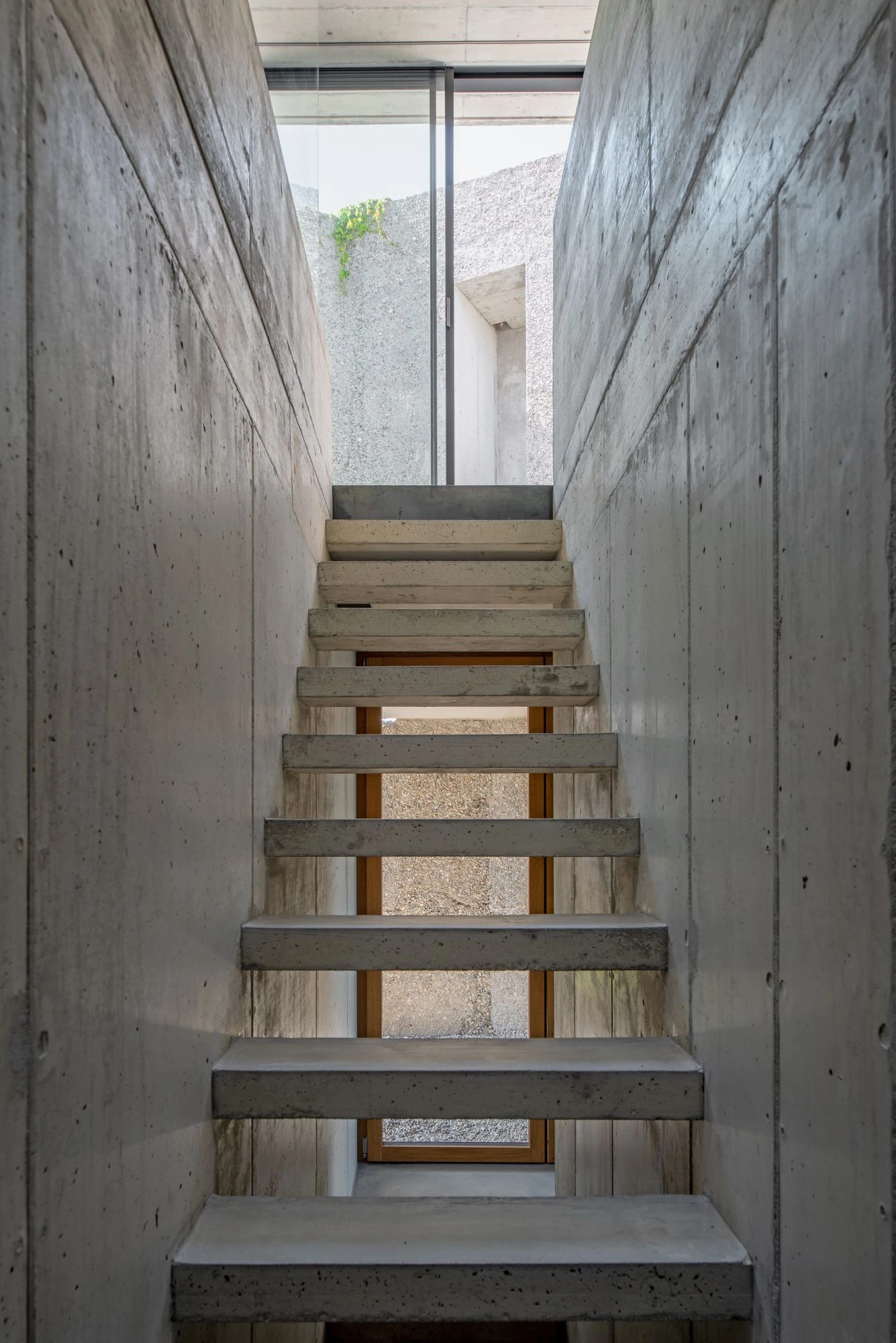
Inside the perimeter, the rectangle holds an upper-level living-dining room with open kitchen. Two walls are sealed; the other two open in full sheets of glass onto the two courtyards. The mountain-side court screens the living space from the street while throwing direct sunlight into the room. The lake-side court works the opposite way, its closed walls catching sunlight and bouncing it inward. A staircase carved into a thick wall climbs to a small roof terrace that opens, finally, to the unbroken view of the lake.

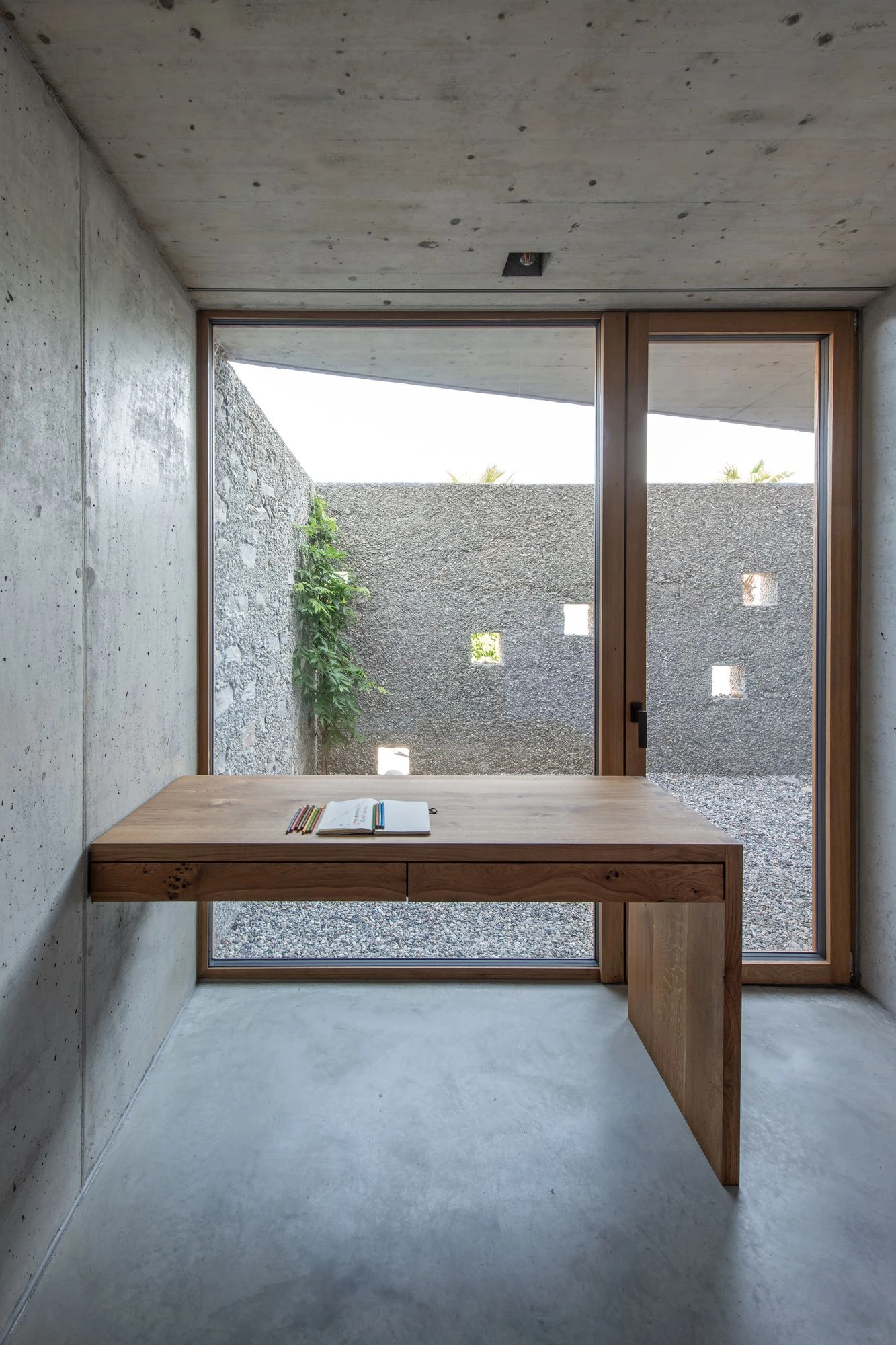
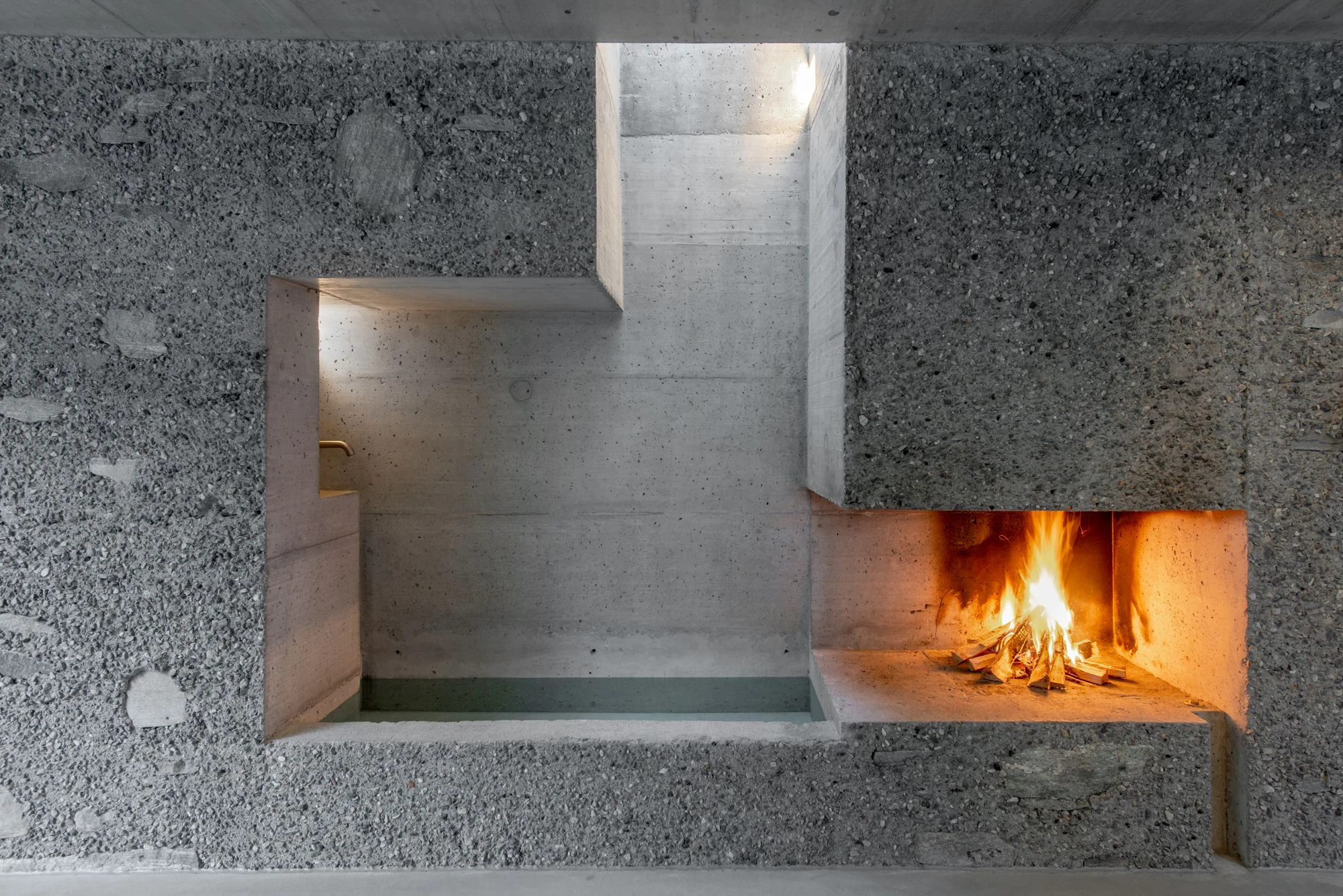
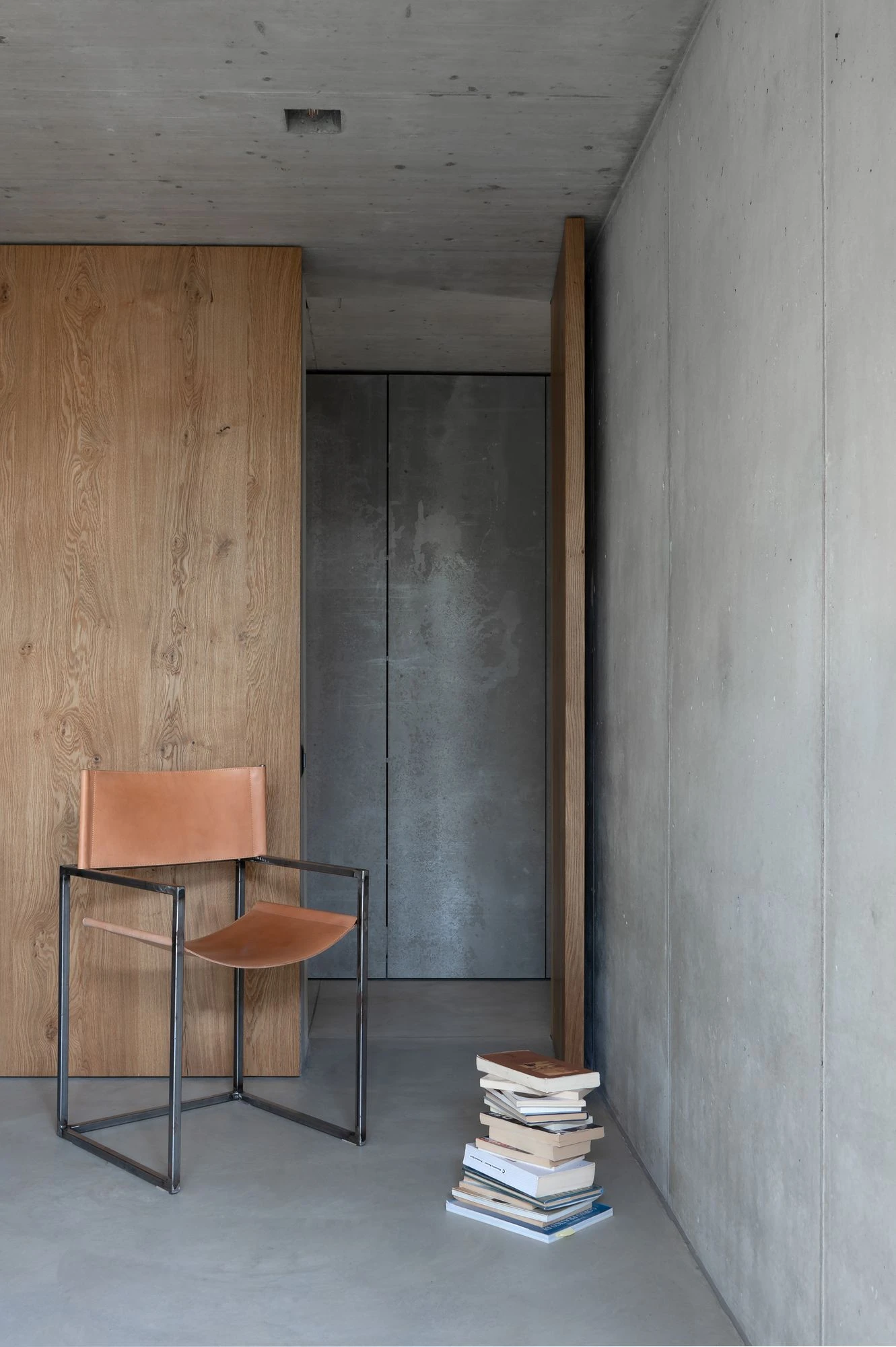
The interior shifts register without breaking the material logic. Outside walls are coarse aggregate; inside, board-formed concrete is poured smooth, with the timber grain still legible in the surface. Floors are polished concrete. Cabinetry and pivot doors are solid oak. Skylights drop overhead into the kitchen and corridor, and the courtyards push the changing weather and time of day into the centre of the plan. Four bedrooms and bathrooms occupy the middle floor, lit again by courtyards that punch down into the section. The lowest level holds storage, services and a secondary garden exit.

The project belongs to a long Ticinese line of mass-wall houses tuned to topography, and it extends a body of work the studio has been refining across the canton. It accepts the constraints of the plot as the generator of form rather than working against them, and withholds the lake view entirely until the climb to the roof.
Interested in Showcasing Your Work?

If you would like to feature your works on Thisispaper, please visit our Submission page and sign up to Thisispaper+ to submit your work. Once your submission is approved, your work will be showcased to our global audience of 2 million art, architecture, and design professionals and enthusiasts.
No items found.
We love less
but there is more.
Become a Thisispaper+ member today to unlock full access to our magazine, advanced tools, and support our work.
Get two months FREE
with annual subscription
We love less
but there is more.
Become a Thisispaper+ member today to unlock full access to our magazine, advanced tools, and support our work.
Get two months FREE
with annual subscription
No items found.
Alexander Zaxarov
Jun 5, 2026

On the eastern shore of Lago Maggiore in Switzerland, Wespi de Meuron Romeo shapes New House in San Nazzaro as a polygonal washed-concrete volume cut by two inner courtyards.

The plot dictates the form. Border setbacks pull the outer wall into an irregular polygon, and Wespi de Meuron Romeo inscribe a clean heated rectangle inside it, leaving the leftover triangles as open-air rooms on the valley and mountain sides. From the private street above, the house reads as a single closed storey, a low blind wall broken only by a steel gate. The stepped section toward the lake side is reserved for those already inside.

The skin is rough washed concrete, an aggregate-exposed surface that the studio expects to darken over time through weathering. Climbing plants are already finding the wall. Small square openings, set in loose constellations rather than rows, puncture the mass at irregular intervals. A coursed grey stone plinth meets the ground on the lake-facing flank, and a single corten chimney breaks the silhouette. The studio compares the result to an archaic rock; the immediate Ticino vernacular of rusticos and lakeside masonry sits in the same vocabulary.

Inside the perimeter, the rectangle holds an upper-level living-dining room with open kitchen. Two walls are sealed; the other two open in full sheets of glass onto the two courtyards. The mountain-side court screens the living space from the street while throwing direct sunlight into the room. The lake-side court works the opposite way, its closed walls catching sunlight and bouncing it inward. A staircase carved into a thick wall climbs to a small roof terrace that opens, finally, to the unbroken view of the lake.

The interior shifts register without breaking the material logic. Outside walls are coarse aggregate; inside, board-formed concrete is poured smooth, with the timber grain still legible in the surface. Floors are polished concrete. Cabinetry and pivot doors are solid oak. Skylights drop overhead into the kitchen and corridor, and the courtyards push the changing weather and time of day into the centre of the plan. Four bedrooms and bathrooms occupy the middle floor, lit again by courtyards that punch down into the section. The lowest level holds storage, services and a secondary garden exit.

The project belongs to a long Ticinese line of mass-wall houses tuned to topography, and it extends a body of work the studio has been refining across the canton. It accepts the constraints of the plot as the generator of form rather than working against them, and withholds the lake view entirely until the climb to the roof.
Interested in Showcasing Your Work?

If you would like to feature your works on Thisispaper, please visit our Submission page and subscribe to Thisispaper+. Once your submission is approved, your work will be showcased to our global audience of 2 million art, architecture, and design professionals and enthusiasts.
Thisispaper+
Concrete Stories
100+ Projects
Web Access
Link to Maps
Architecture that treats concrete as an extension of ground rather than an object placed on it. Houses half-buried in dunes, cantilevered over forest, rammed back from the stone of their own ruins, domed over fields. Cultural centres, motorway chapels, tram stops, residences, pavilions — projects where mass, cure time, and formwork texture are the subject, not the by-product of construction.
Explore
Concrete Stories

Join Thisispaper+
Unlock access to 2500 stories, curated guides + editions, and share your work with a global network of architects, artists, writers and designers who are shaping the future.
Get two months FREE
with annual subscription
Travel Guides
Immerse yourself in timeless destinations, hidden gems, and creative spaces—curated by humans, not algorithms.
Explore All Guides +
Submission Module
Submit your project and gain the chance to showcase your work to our worldwide audience of over 2M architects, designers, artists, and curious minds.
Learn More+
Curated Editions
Dive deeper into carefully curated editions, designed to feed your curiosity and foster exploration.
Off-the-Grid
Jutaku
Sacral Journey
minimum
The New Chair
Explore All Editions +
Atlas
A new and interactive way to explore the most inspiring places around the world.
Interactive map
Linked to articles
300+ curated locations
Google + Apple directions
Smart filters
Subscribe to Explore+
Become a Thisispaper+ member today to unlock full access to our magazine, submit your project and support our work.
Join Thisispaper+Join Thisispaper+
€ 9 EUR
/month
Cancel anytime
Get two months FREE
with annual subscription