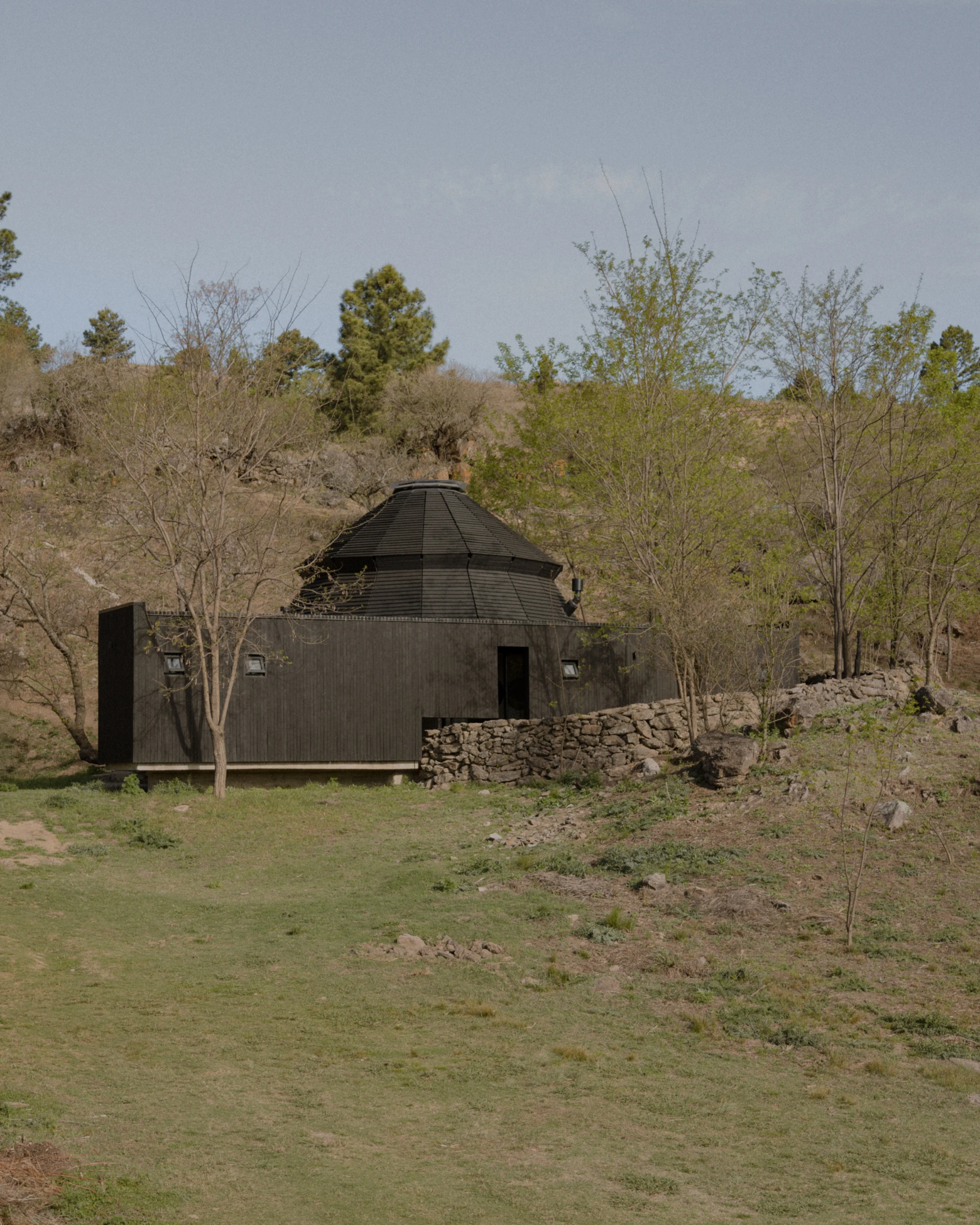
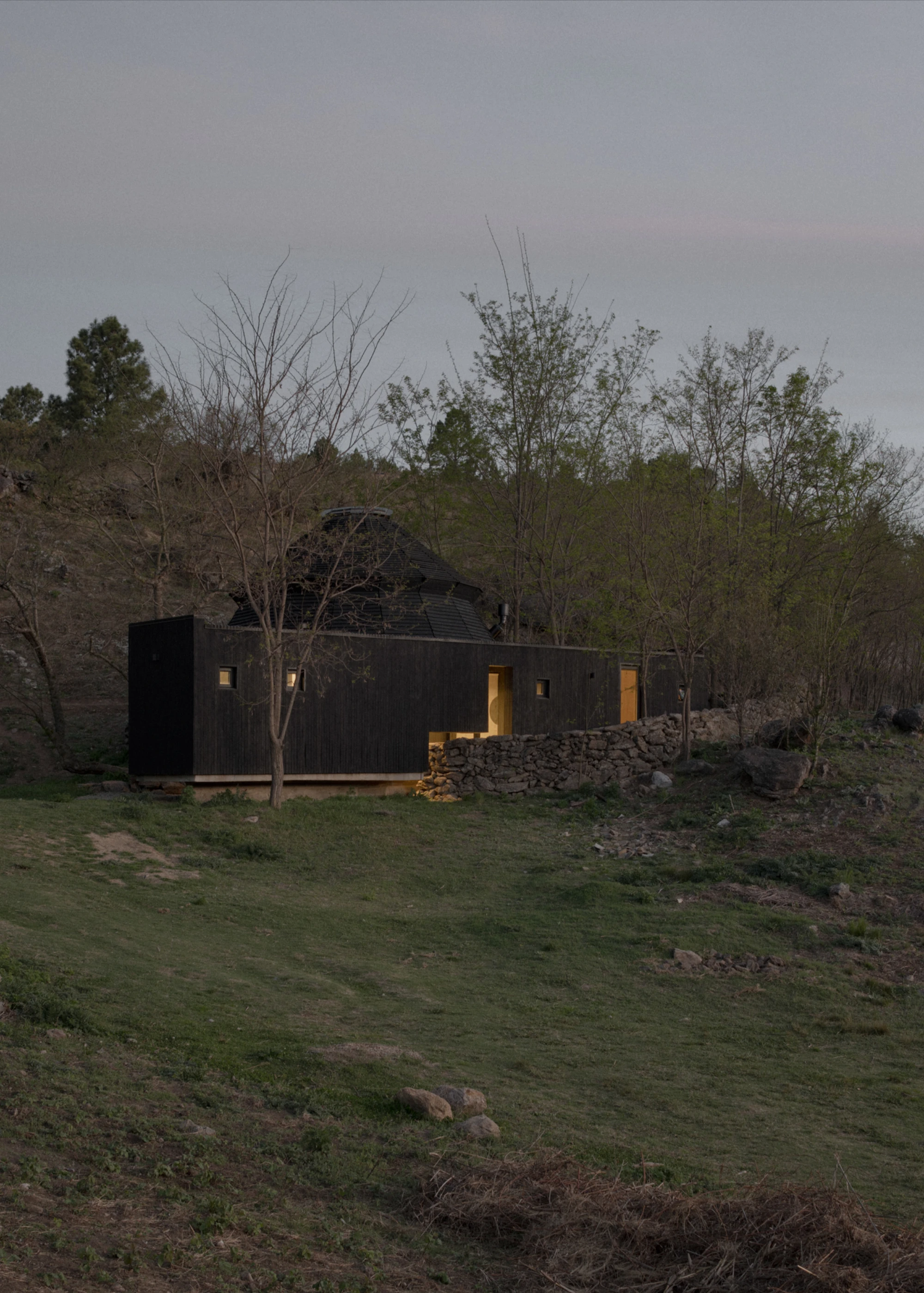
In the Sierras Grandes of Córdoba Province, Nicolás Oks places a 70 m² pavilion — an eighteen-sided charred-timber volume sitting inside a stone-walled landscape without disturbing it.
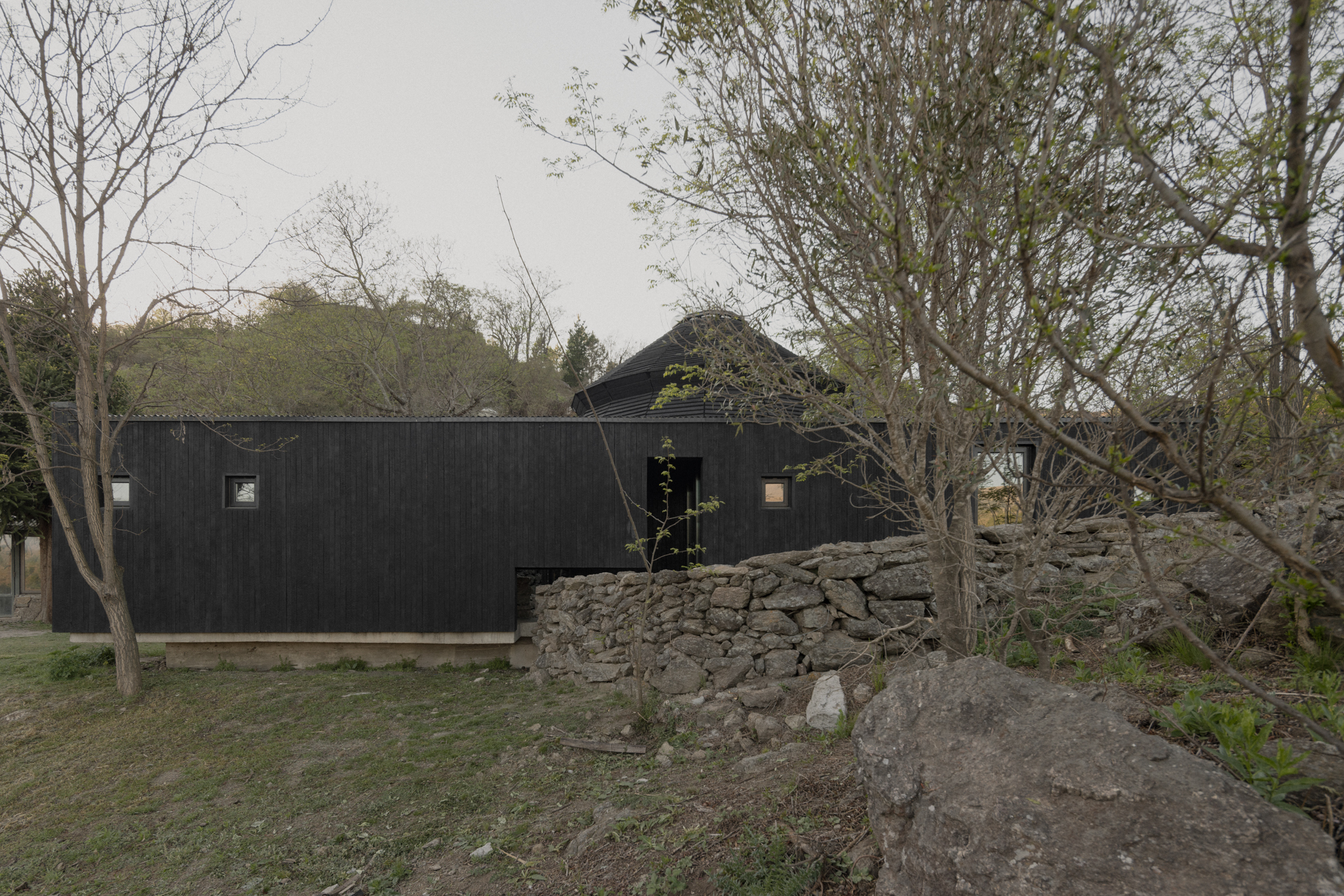
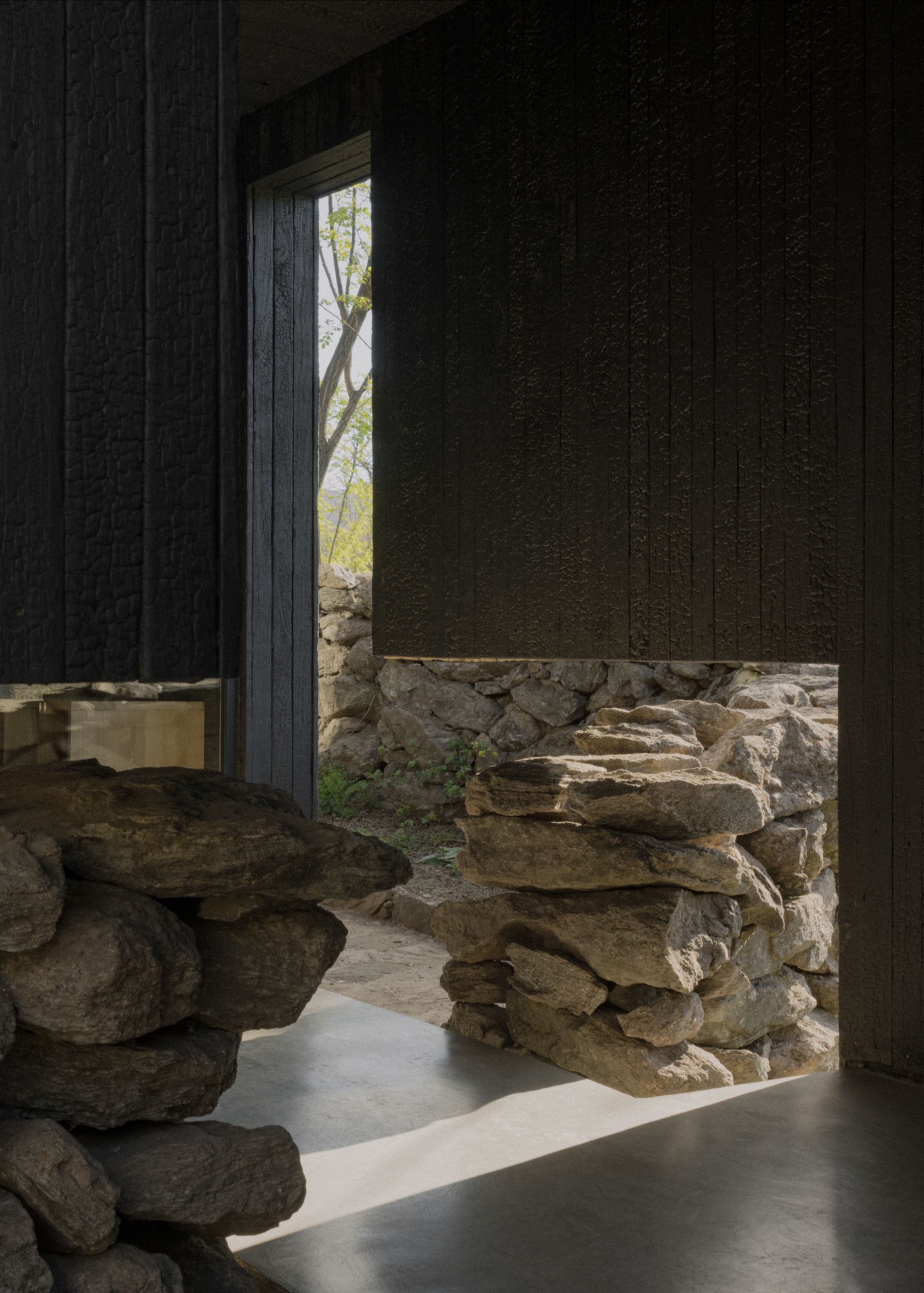
The site in Villa Yacanto was already a room before anything was built: irregular stone walls, laid up in the Jesuit manner from the local fieldstone, divide the sloped ground near the El Durazno River into enclosures. Molle and espinillo trees filter the sightlines toward the Sierras Grandes, and on clear days the distant mass of Champaquí Peak closes the view to the south. Nicolás Oks treated this pre-existing geometry as the first layer of the design, placing the building inside the enclosure rather than clearing it away.
The project splits into two volumes. A long flat prism of charred timber contains the service rooms and entry, its concrete slab rising from the slope to pass through an existing gap in the stone wall. From there a short corridor leads to the main pavilion — an eighteen-sided body whose exterior, clad in wood treated with the Shou Sugi Ban technique, reads as a dark faceted object among the pale rocks and dry grasses. The roof builds up in three stepped tiers, terminating in a small circular skylight at the apex. Seen from above in the aerial photograph, the circle of the pavilion and the long bar of the service volume describe the two geometries of the site: round and rectilinear, enclosed and extended.
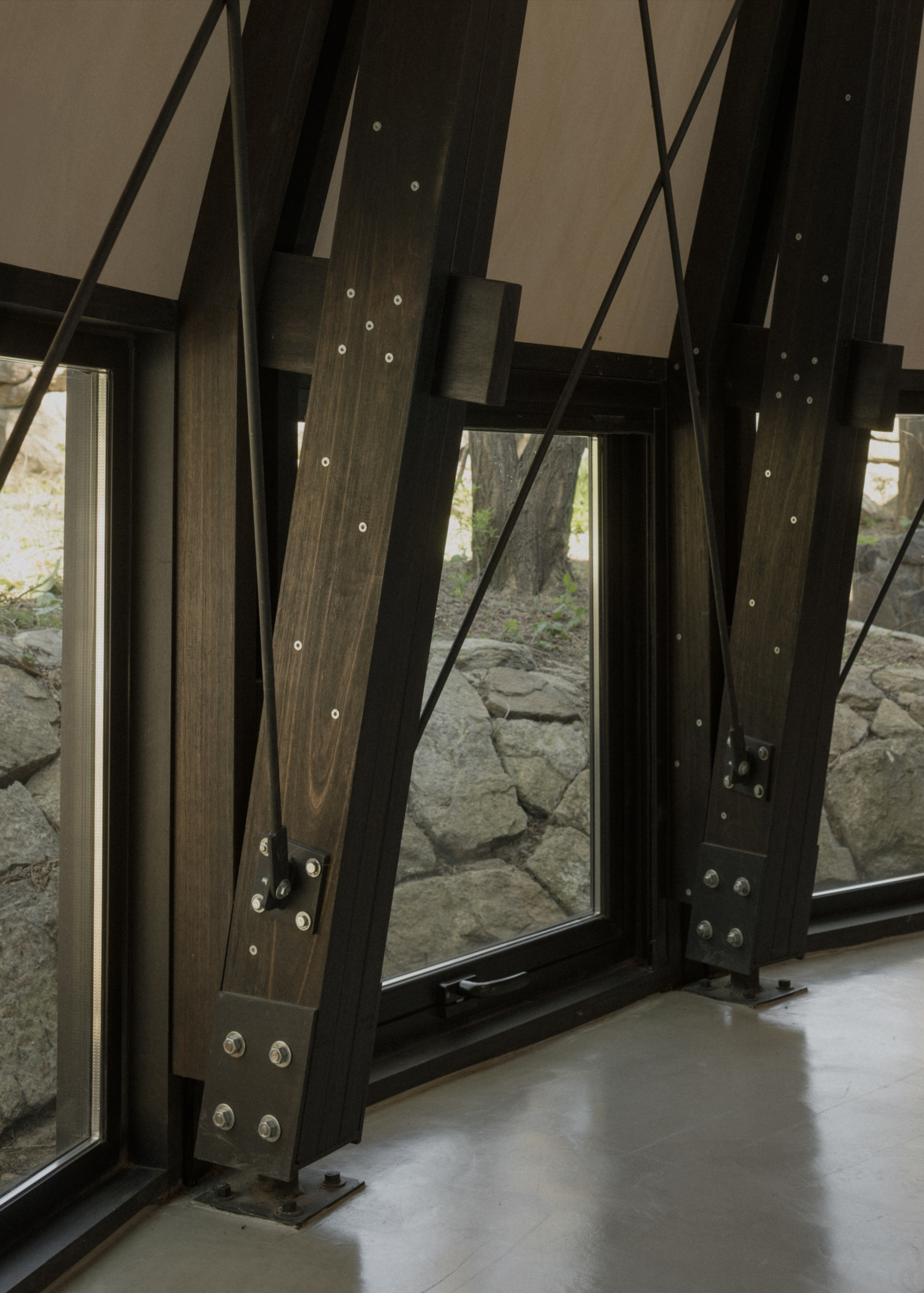
Inside, the palette reverses completely. The charred exterior gives way to pale, unfinished timber panels that line the perimeter of the central room. Dark steel members (diagonal tension rods, bolts, ribbed cross-bracing) are laid over the pale wood in a steady rhythm, readable as both structure and pattern. Low windows run between each structural bay at ground level, keeping the old stone wall framed within each opening and the landscape never quite out of reach.
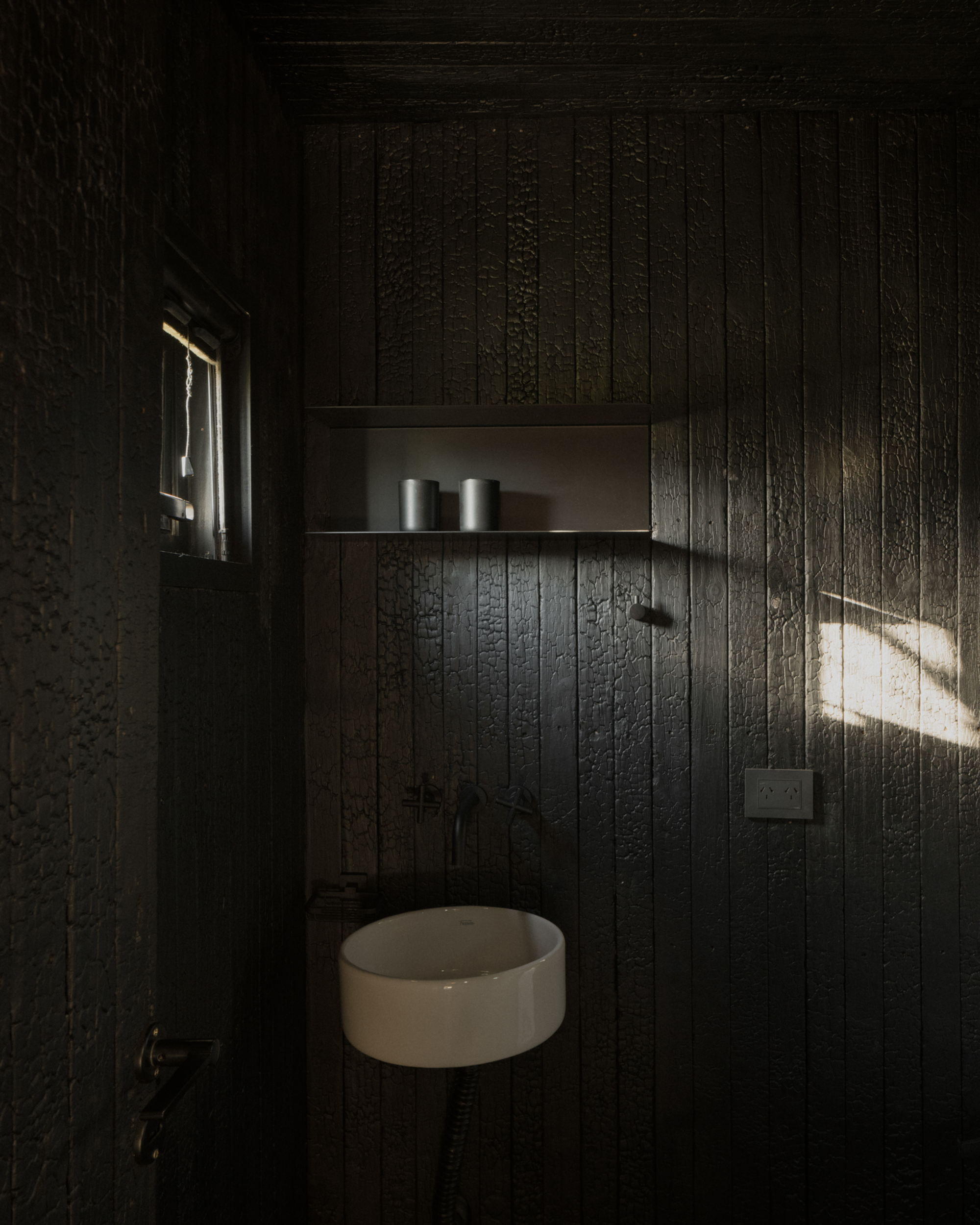
The service prism holds the bedroom and bathroom in a compact, dark-lined corridor leading to the bed alcove, a small pale wood box, flanked on both sides by full-height black-framed glazing that looks directly into the stone-and-tree enclosure. It is a different kind of dwelling from the main room: close-grained, private, the scale of a berth rather than a chamber.
The project is less a retreat from the landscape than a set of calibrated positions within it. "A small black room between rocks, trees, river, and mountain" is not a bad summary of what Oks achieved — a building that holds the site's existing meaning rather than replacing it with its own.