Thisispaper Community
Join today.
Enter your email address to receive the latest news on emerging art, design, lifestyle and tech from Thisispaper, delivered straight to your inbox.
Oops! Something went wrong while submitting the form.
Instant access to new channels
The top stories curated daily
Weekly roundups of what's important
Original features and deep dives
Exclusive community features
Thisispaper+ Member

Heide by McGlashan and Everist photographed by Danny Kai

Dates:
✧ Collect Post
No items found.
Heide by McGlashan and Everist photographed by Danny Kai
Alexander Zaxarov
Jun 8, 2026

On the Birrarung in Melbourne, McGlashan and Everist built Heide for John and Sunday Reed in 1967, a Mt Gambier limestone gallery designed to outlast fashion and read, eventually, as a ruin.

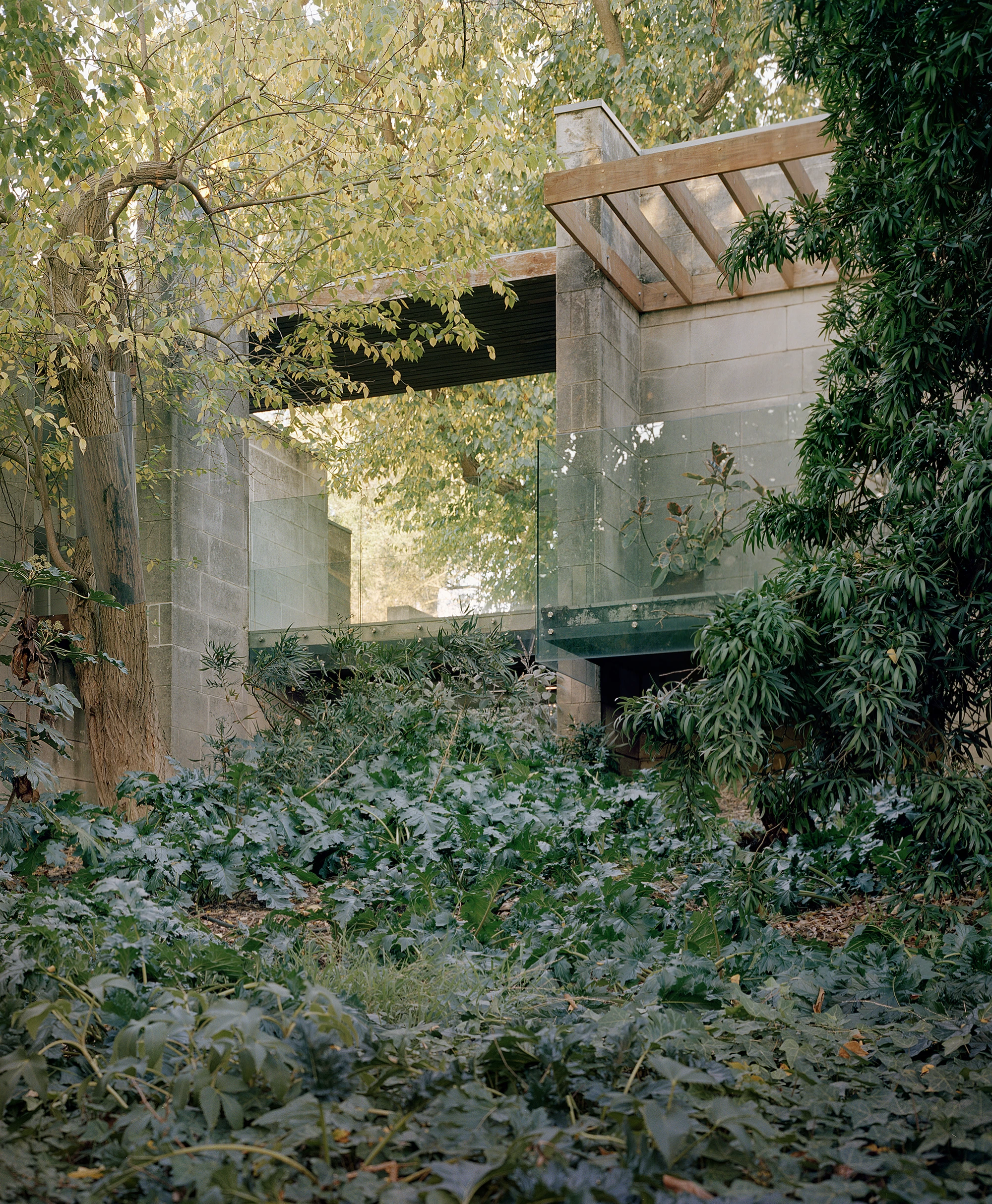
Heide Modern photographed by Danny Kai, sits nine kilometres from central Naarm on a stretch of the Birrarung that has carried meetings and making for far longer than the museum has held them. In 1934 John and Sunday Reed bought fifteen acres at Bulleen and opened the property to the writers and painters who would shape Australian modernism. They were participants, not patrons: kitchen garden, collection and household shared with the artists they believed in. The Contemporary Art Society, the Angry Penguins magazine, the slow accretion of an institution; the museum that exists now was assembled in their lifetimes, decision by decision.

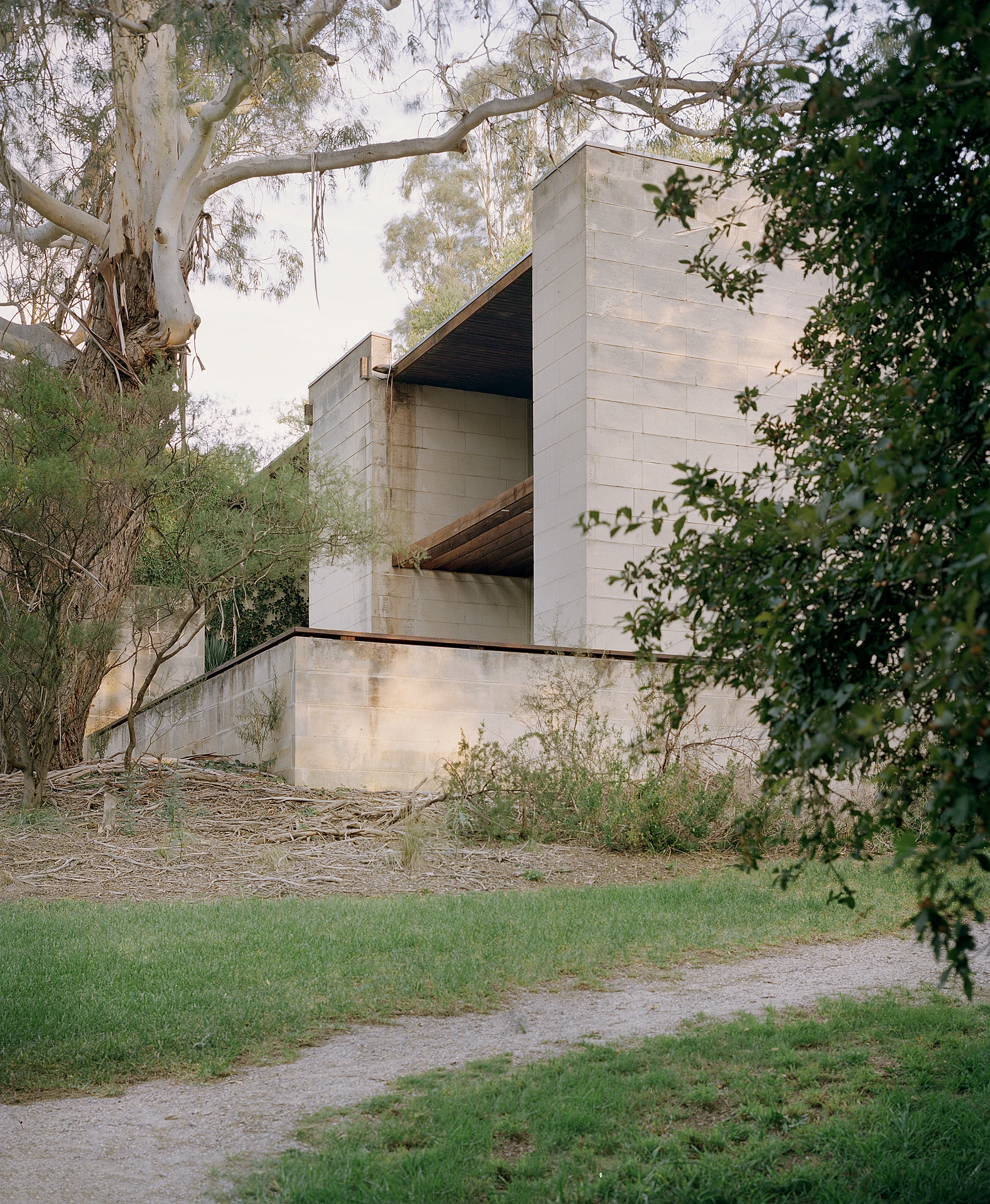
In the early 1960s the Reeds commissioned David McGlashan of McGlashan and Everist to draw a new building lower on the hillside. Their brief read more as poem than specification. It asked for something romantic, ageless, possessed of mystery, indifferent to passing fashion. Walls were to be the primary element, extending inward and out. The building, the brief said, should look as if it had grown from the ground and might one day return to it as a ruin in the limestone landscape. Above all, it had to be "a gallery to be lived in."

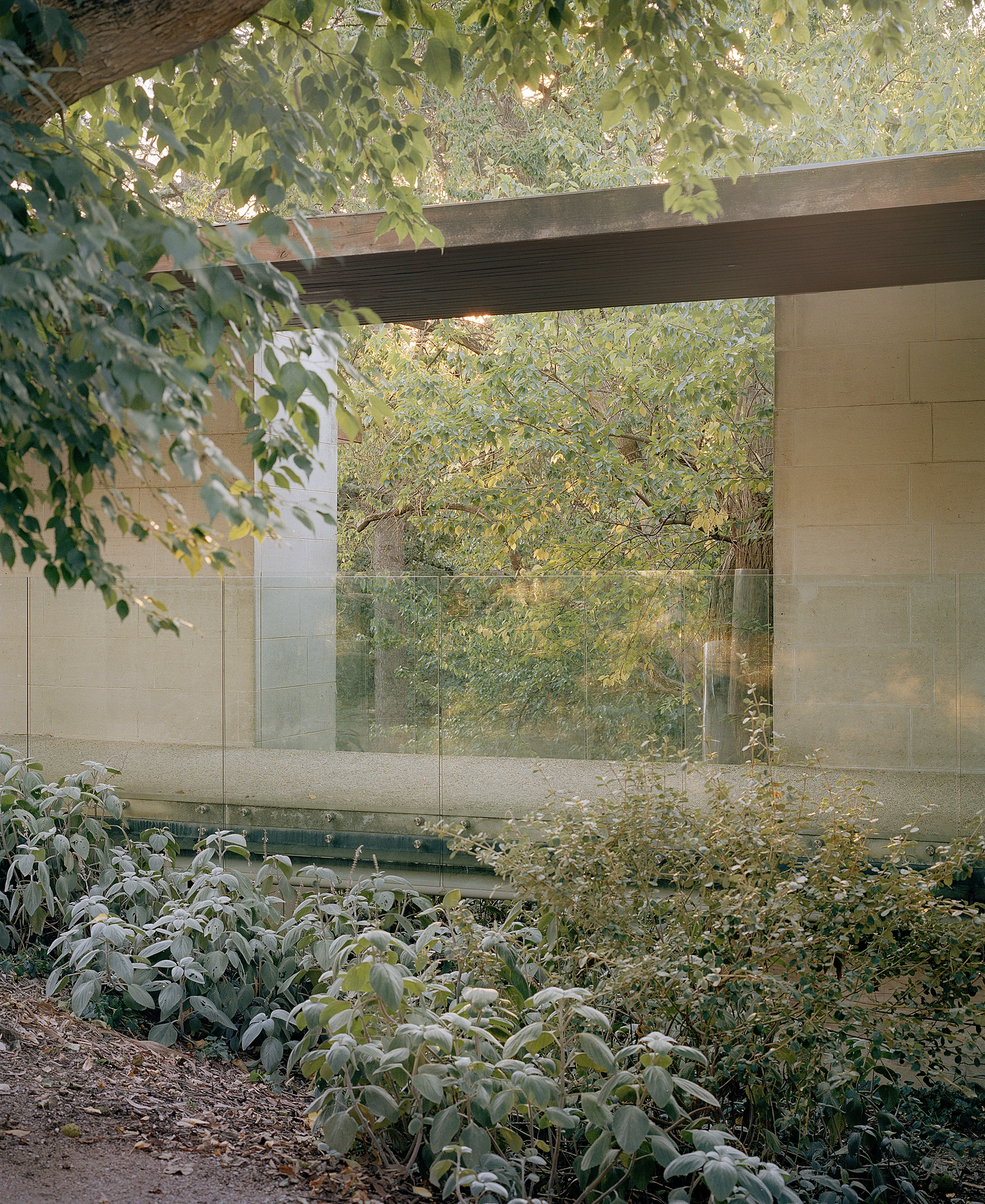
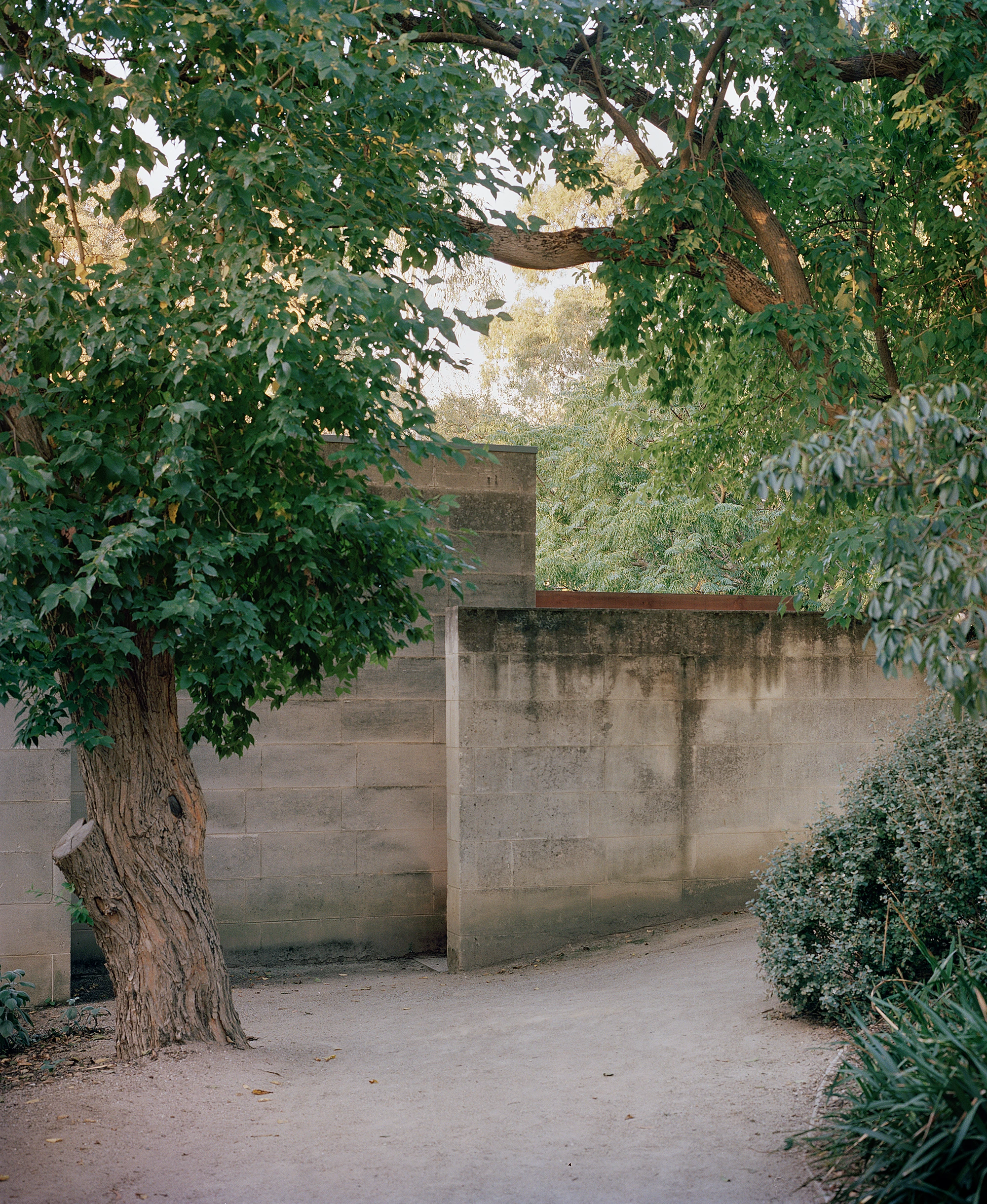
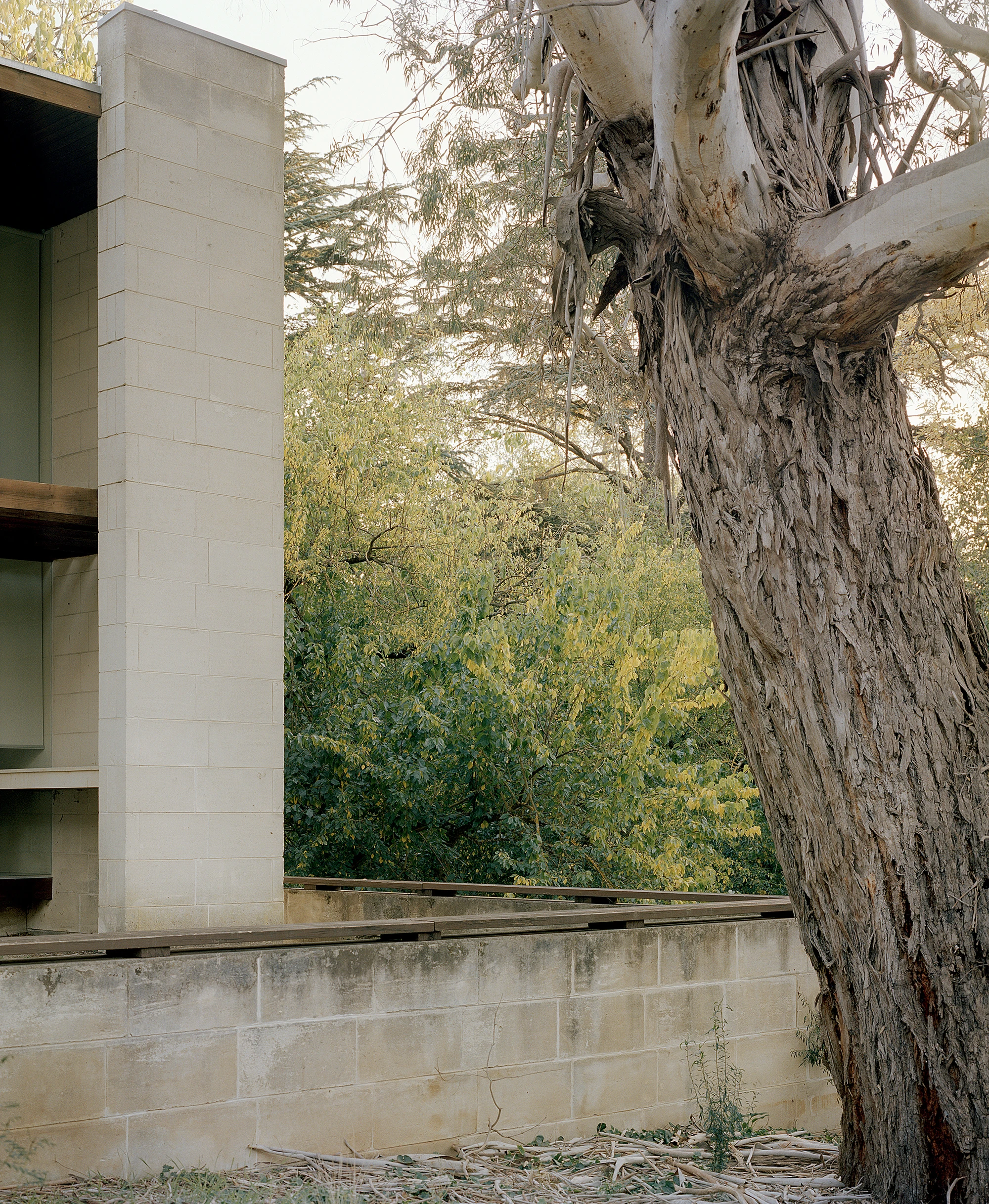
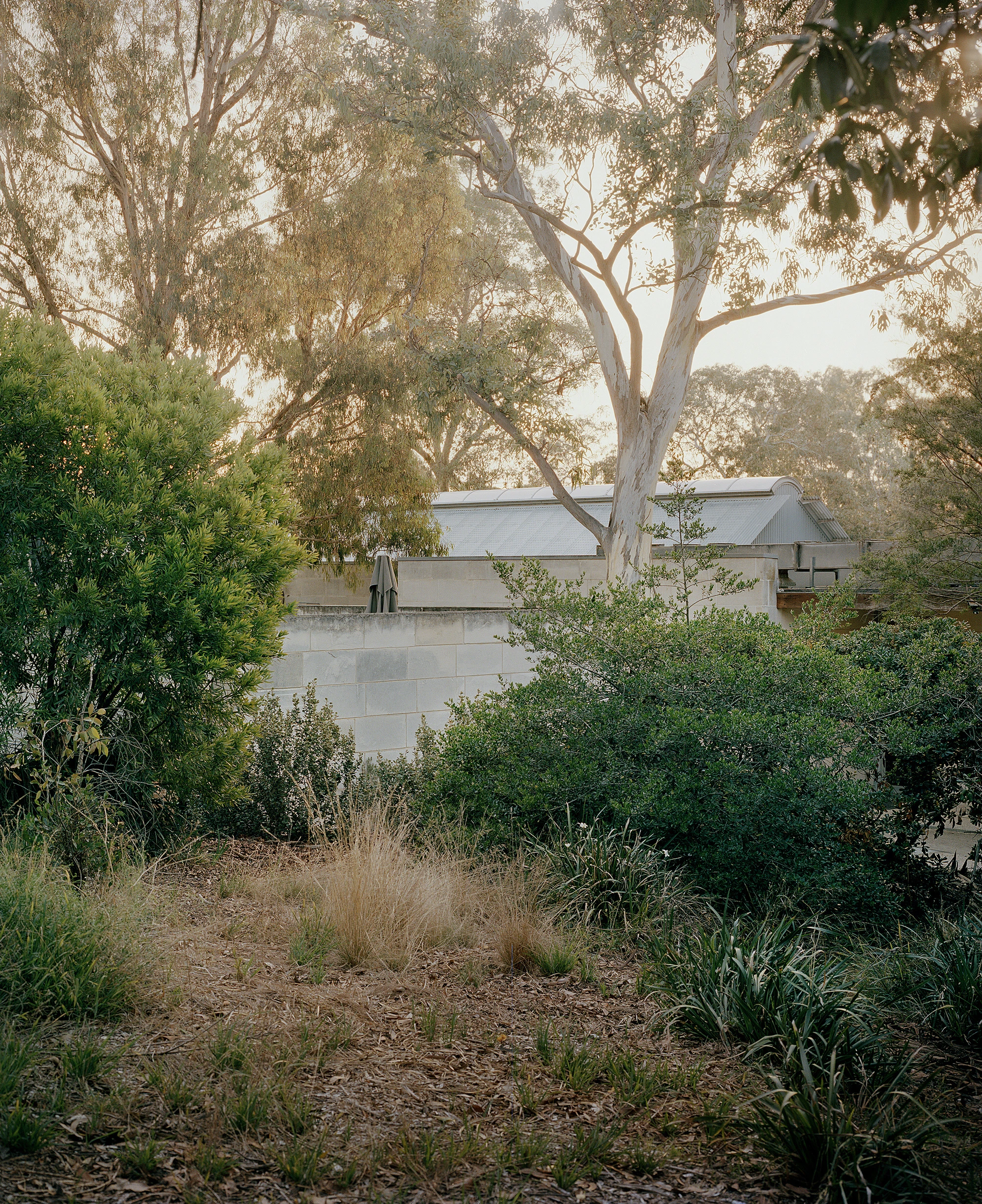
Completed in 1967, Heide Modern answers the brief almost line by line. Mt Gambier limestone on a 12-inch module sets the rhythm of every plan and elevation. There are no internal doors, no paint, and a tight register of concrete, timber, glass and terrazzo. Rooms read as an abstract composition in the de Stijl manner: asymmetrical, intersecting, dispersed from a central hearth. Walls extend past the envelope into terraced courts where pencil cedars and eucalypts hold the planes in place.

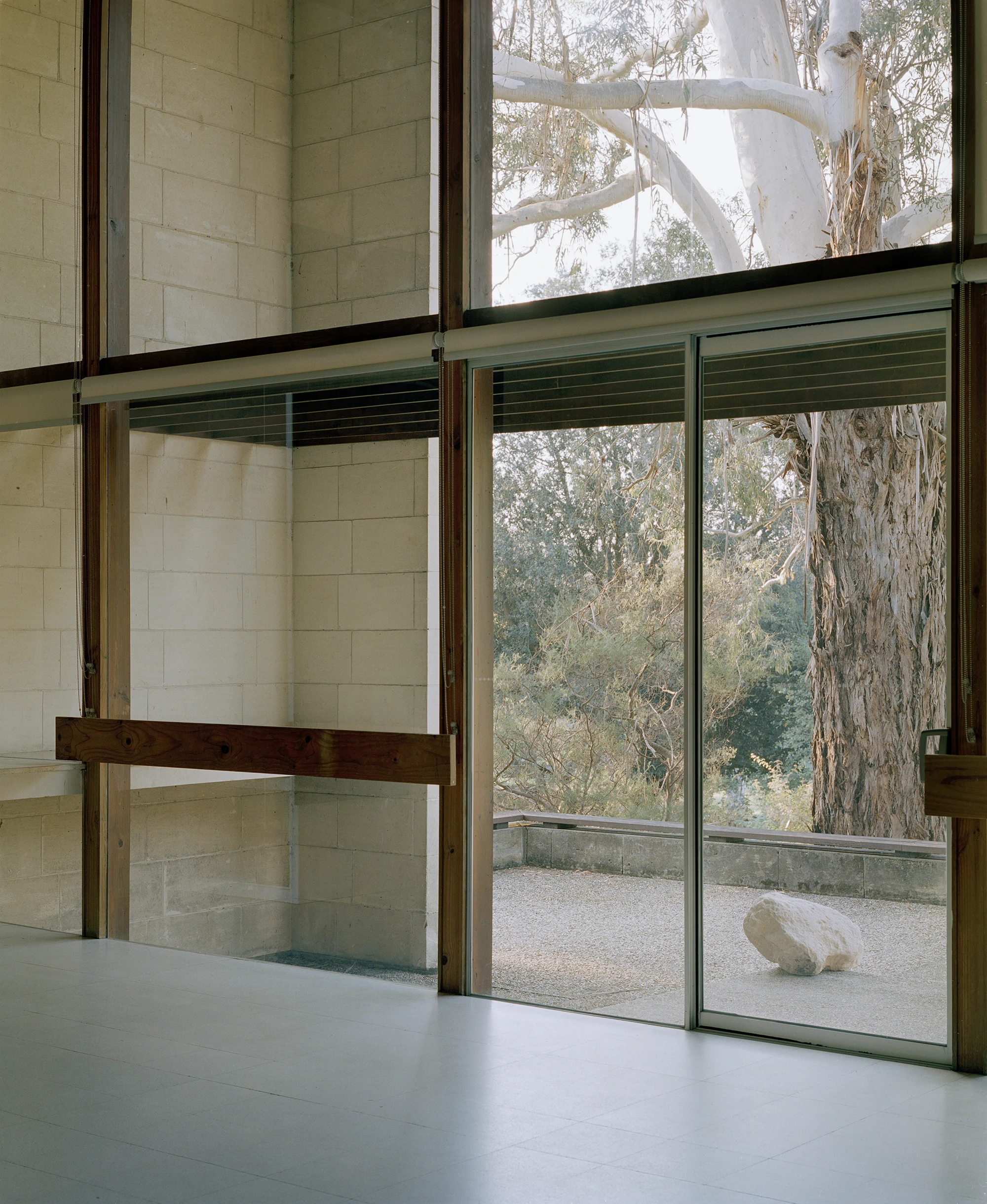
Danny Kai's recent pictures find the building at ease with that intention. North-facing double-height glass opens the living rooms to the parkland. Limestone darkens where rain has fallen against it. The crushed-stone terrace holds a single boulder where a sculpture might sit. Decades on, the wear is part of the argument; the brief asked for a building that would age into the site, and the site has agreed.

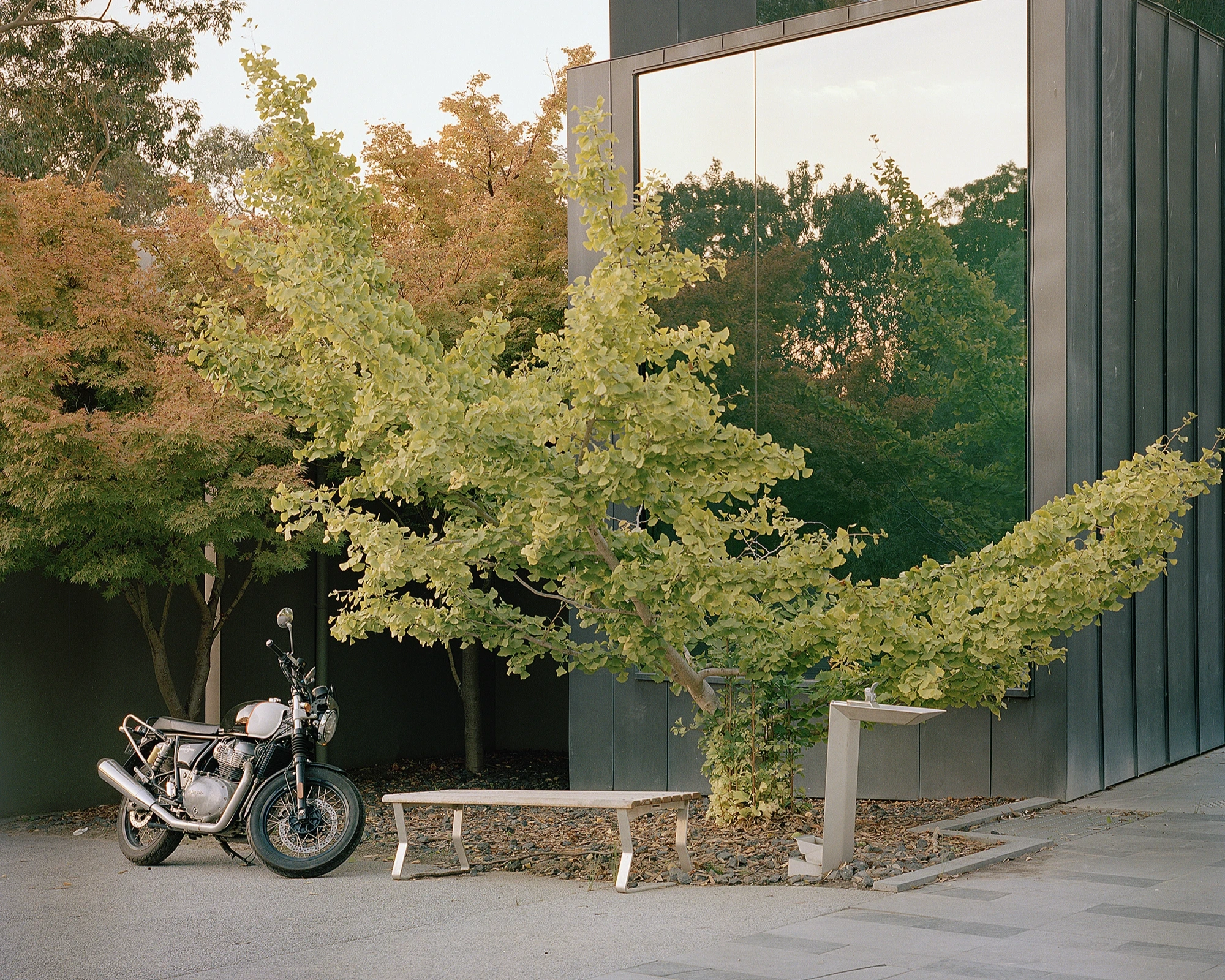
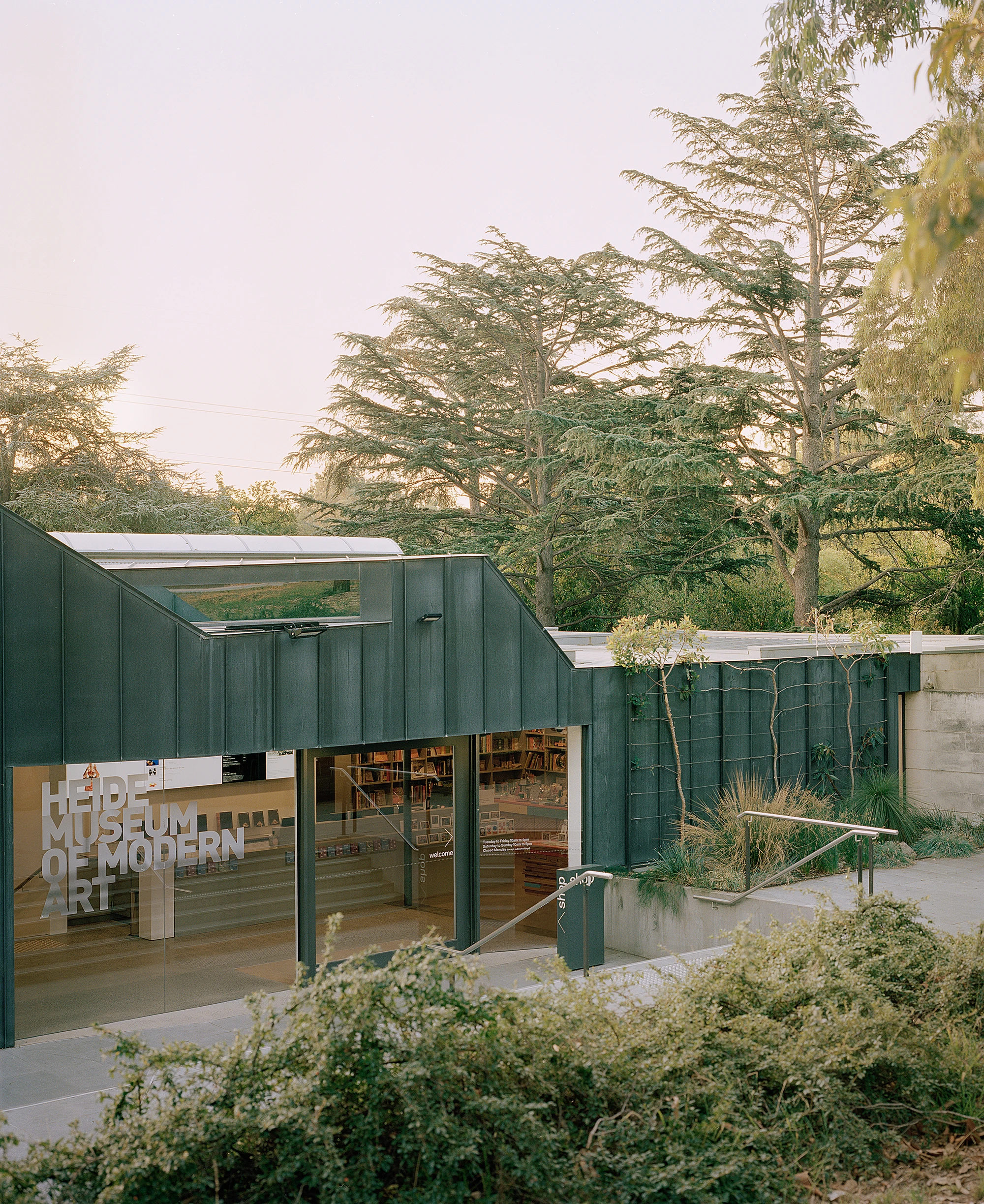
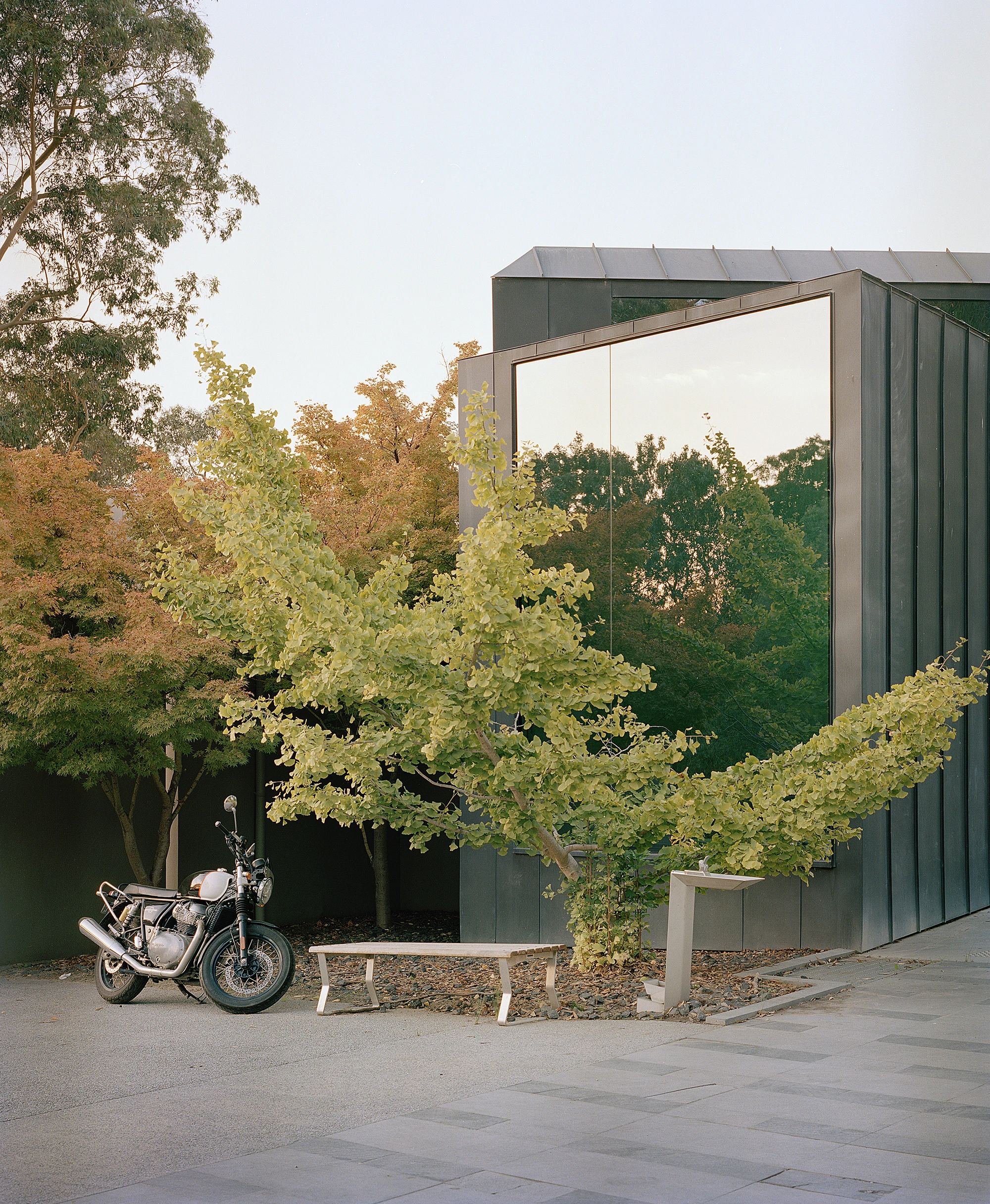
Across the path, the black titanium-zinc galleries added later sharpen the contrast without breaking it. Their dark, faceted volumes throw the limestone back at itself and confirm what the Reeds had built toward all along: a place where museum, garden and house are held in the same hand.
Interested in Showcasing Your Work?

If you would like to feature your works on Thisispaper, please visit our Submission page and sign up to Thisispaper+ to submit your work. Once your submission is approved, your work will be showcased to our global audience of 2 million art, architecture, and design professionals and enthusiasts.
No items found.
We love less
but there is more.
Become a Thisispaper+ member today to unlock full access to our magazine, advanced tools, and support our work.
Get two months FREE
with annual subscription
We love less
but there is more.
Become a Thisispaper+ member today to unlock full access to our magazine, advanced tools, and support our work.
Get two months FREE
with annual subscription
No items found.
Alexander Zaxarov
Jun 8, 2026

On the Birrarung in Melbourne, McGlashan and Everist built Heide for John and Sunday Reed in 1967, a Mt Gambier limestone gallery designed to outlast fashion and read, eventually, as a ruin.

Heide Modern photographed by Danny Kai, sits nine kilometres from central Naarm on a stretch of the Birrarung that has carried meetings and making for far longer than the museum has held them. In 1934 John and Sunday Reed bought fifteen acres at Bulleen and opened the property to the writers and painters who would shape Australian modernism. They were participants, not patrons: kitchen garden, collection and household shared with the artists they believed in. The Contemporary Art Society, the Angry Penguins magazine, the slow accretion of an institution; the museum that exists now was assembled in their lifetimes, decision by decision.

In the early 1960s the Reeds commissioned David McGlashan of McGlashan and Everist to draw a new building lower on the hillside. Their brief read more as poem than specification. It asked for something romantic, ageless, possessed of mystery, indifferent to passing fashion. Walls were to be the primary element, extending inward and out. The building, the brief said, should look as if it had grown from the ground and might one day return to it as a ruin in the limestone landscape. Above all, it had to be "a gallery to be lived in."

Completed in 1967, Heide Modern answers the brief almost line by line. Mt Gambier limestone on a 12-inch module sets the rhythm of every plan and elevation. There are no internal doors, no paint, and a tight register of concrete, timber, glass and terrazzo. Rooms read as an abstract composition in the de Stijl manner: asymmetrical, intersecting, dispersed from a central hearth. Walls extend past the envelope into terraced courts where pencil cedars and eucalypts hold the planes in place.

Danny Kai's recent pictures find the building at ease with that intention. North-facing double-height glass opens the living rooms to the parkland. Limestone darkens where rain has fallen against it. The crushed-stone terrace holds a single boulder where a sculpture might sit. Decades on, the wear is part of the argument; the brief asked for a building that would age into the site, and the site has agreed.

Across the path, the black titanium-zinc galleries added later sharpen the contrast without breaking it. Their dark, faceted volumes throw the limestone back at itself and confirm what the Reeds had built toward all along: a place where museum, garden and house are held in the same hand.
Interested in Showcasing Your Work?

If you would like to feature your works on Thisispaper, please visit our Submission page and subscribe to Thisispaper+. Once your submission is approved, your work will be showcased to our global audience of 2 million art, architecture, and design professionals and enthusiasts.
No items found.

Join Thisispaper+
Unlock access to 2500 stories, curated guides + editions, and share your work with a global network of architects, artists, writers and designers who are shaping the future.
Get two months FREE
with annual subscription
Travel Guides
Immerse yourself in timeless destinations, hidden gems, and creative spaces—curated by humans, not algorithms.
Explore All Guides +
Submission Module
Submit your project and gain the chance to showcase your work to our worldwide audience of over 2M architects, designers, artists, and curious minds.
Learn More+
Curated Editions
Dive deeper into carefully curated editions, designed to feed your curiosity and foster exploration.
Off-the-Grid
Jutaku
Sacral Journey
minimum
The New Chair
Explore All Editions +
Atlas
A new and interactive way to explore the most inspiring places around the world.
Interactive map
Linked to articles
300+ curated locations
Google + Apple directions
Smart filters
Subscribe to Explore+
Become a Thisispaper+ member today to unlock full access to our magazine, submit your project and support our work.
Join Thisispaper+Join Thisispaper+
€ 9 EUR
/month
Cancel anytime
Get two months FREE
with annual subscription