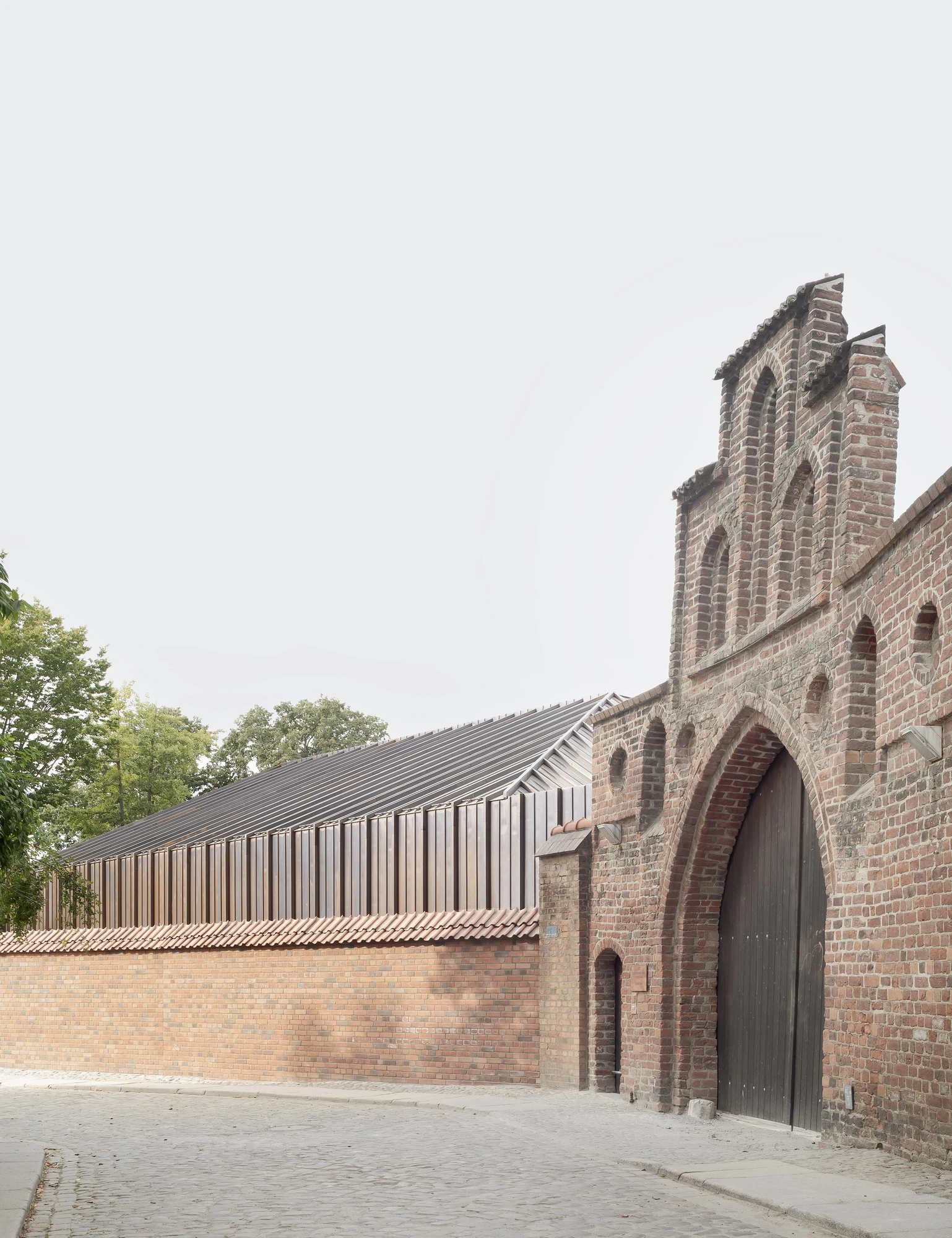
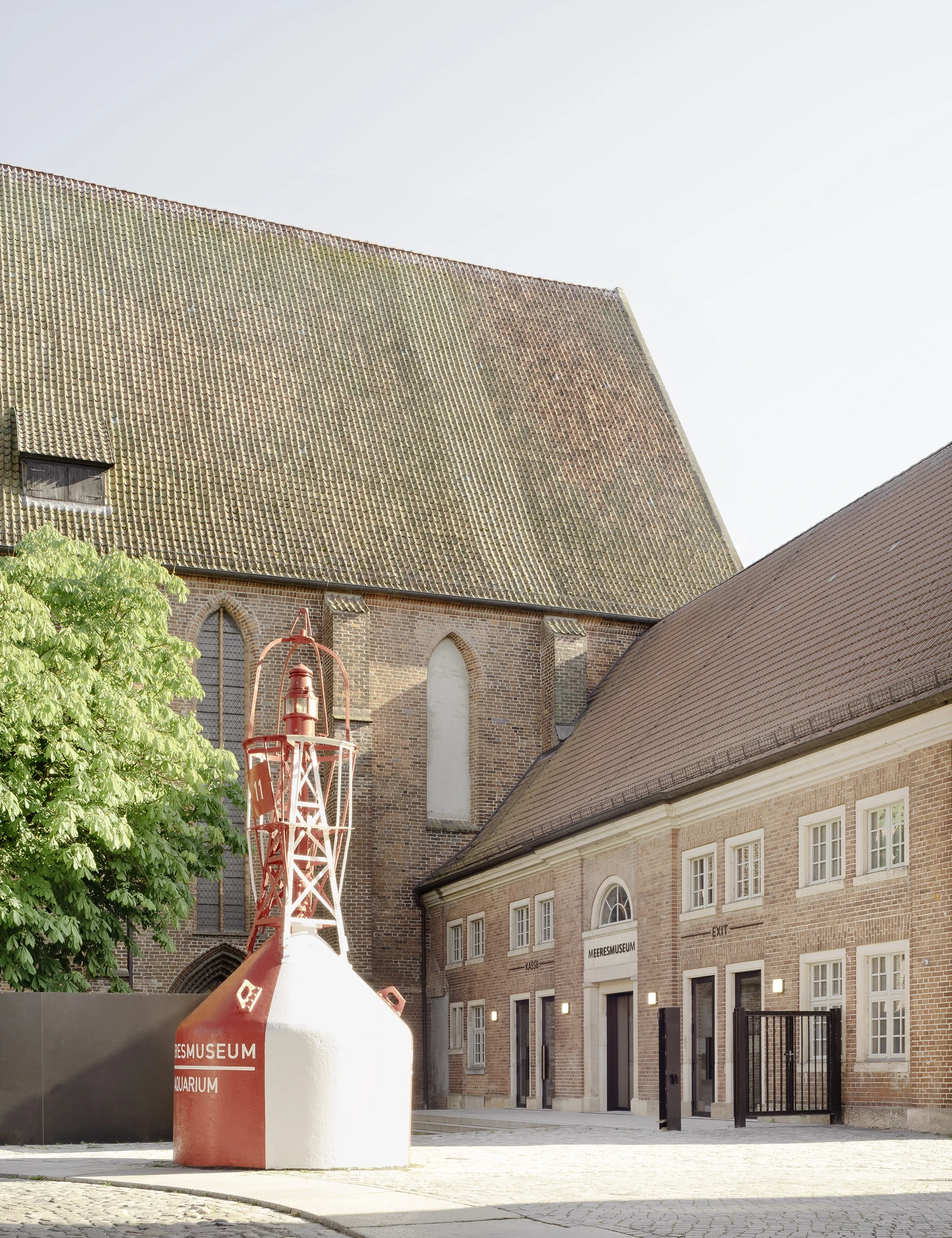
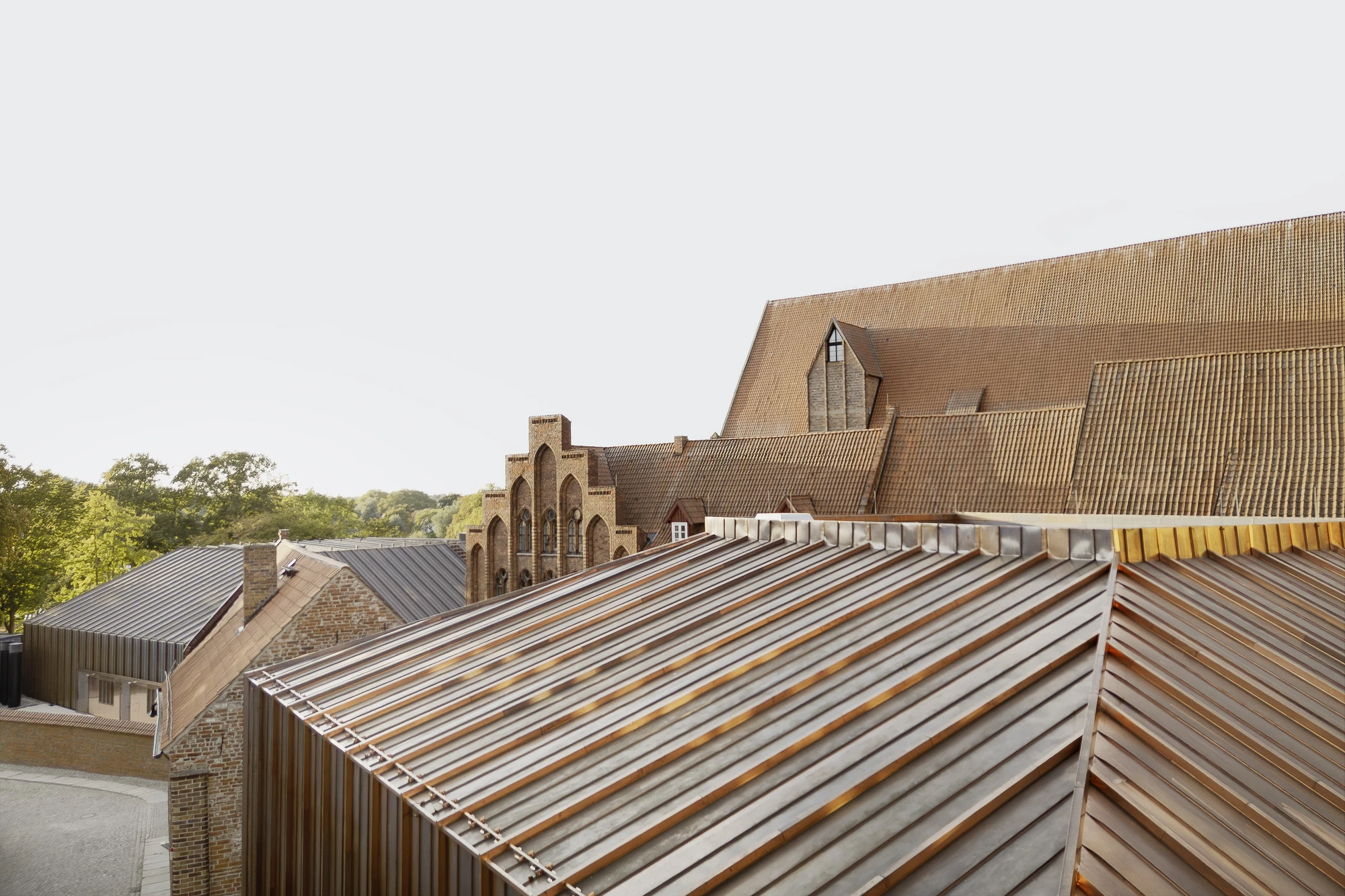
In Stralsund's UNESCO World Heritage Katharinenkloster in Germany, Reichel Schlaier Architekten renovates and extends the German Oceanographic Museum across centuries of accumulated building.
The German Oceanographic Museum in Stralsund is embedded in the city's self-image, grown over decades across four locations: the main building in the historic Katharinenkloster monastery complex, the Natureum at the Darßer Ort lighthouse, the Nautineum open-air museum, and the Ozeaneum on the harbour island, named European Museum of the Year in 2010. The Katharinenkloster is a UNESCO World Heritage site, part of Stralsund's designation as one of the most significant Hanseatic urban structures in the Baltic. When an international competition was launched in 2017 to transform the main building into a contemporary museum, the weight of that context was the brief.
Reichel Schlaier Architekten from Stuttgart won the competition. The challenge was precise: the existing ensemble combines parts and historical layers from different centuries, and any intervention had to find a coherent architectural language that honored what was already there without reproducing it. The jury singled out their concept for preserving, highlighting, and revitalizing the museum's accumulated character rather than replacing it with something new. The building had grown into its identity over time. The architecture needed to continue that growth rather than interrupt it.
The work required what the studio calls "sensitive handling of the building fabric," a phrase that understates the difficulty. Working inside a medieval monastery added to, adapted, and extended across generations means every material decision is read against multiple historical registers simultaneously. The new elements, insertions, extensions, structural interventions, had to be legible as contemporary without being dissonant. The connecting passages between the historic monastery and the newer additions carry this responsibility most visibly.
Stralsund provides the broader frame. The city sits on a peninsula in the Baltic, its medieval street plan largely intact, its brick Gothic churches still the tallest things on the skyline. The Katharinenkloster sits within that urban fabric as one of its organizing elements. Renovating the museum here is an act of urban stewardship as much as museum design: what happens to the building happens to a piece of the city's memory. Photographed by Brigida González.
The project asks a question that heritage architecture always asks, but rarely answers well: how do you make something old continue to function for the present without making it seem like it's trying to be new? Reichel Schlaier's response, built from competition-stage thinking and five years of construction through 2025, is to let the seam show. Where old meets new, neither pretends the other isn't there.