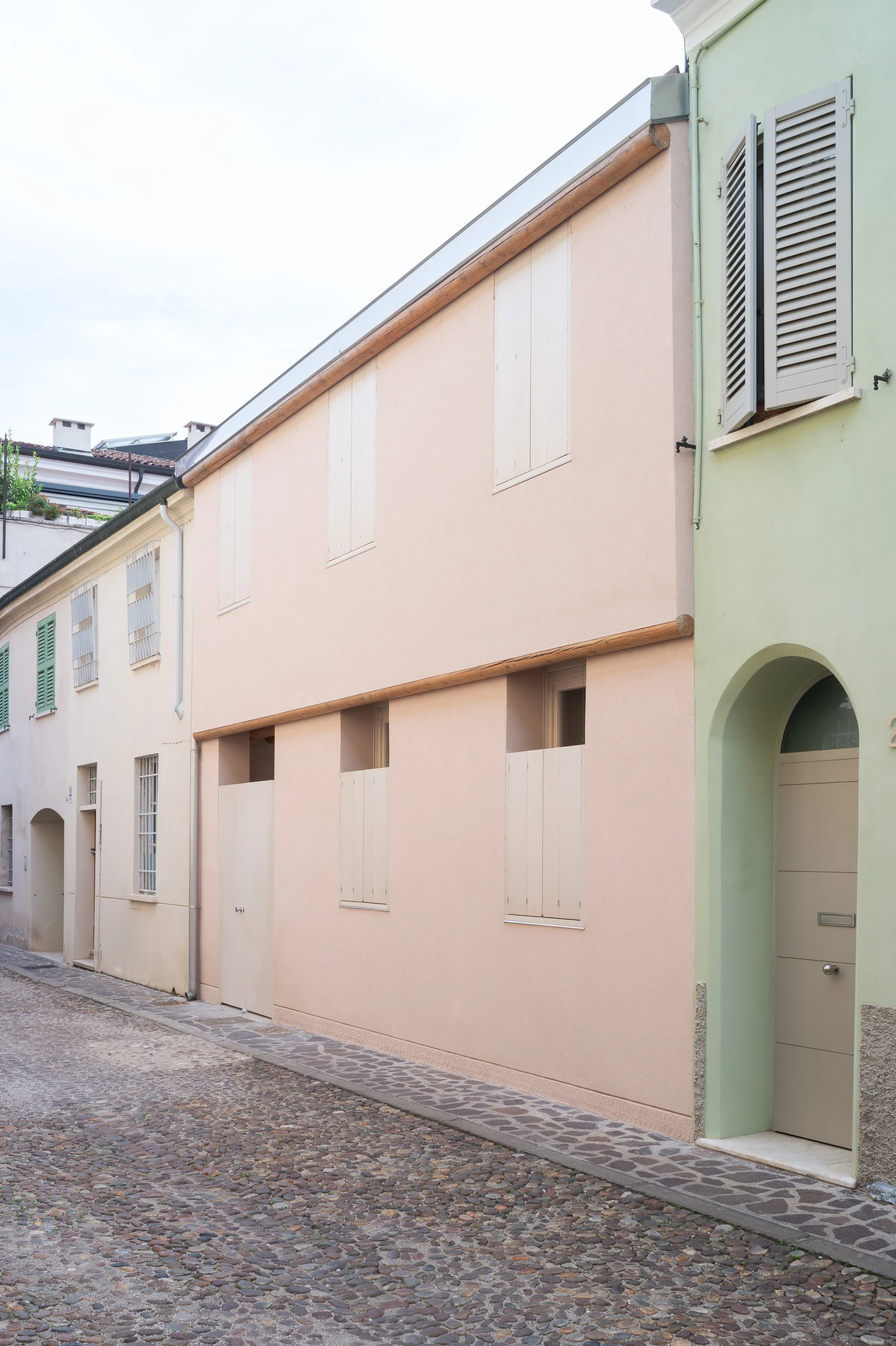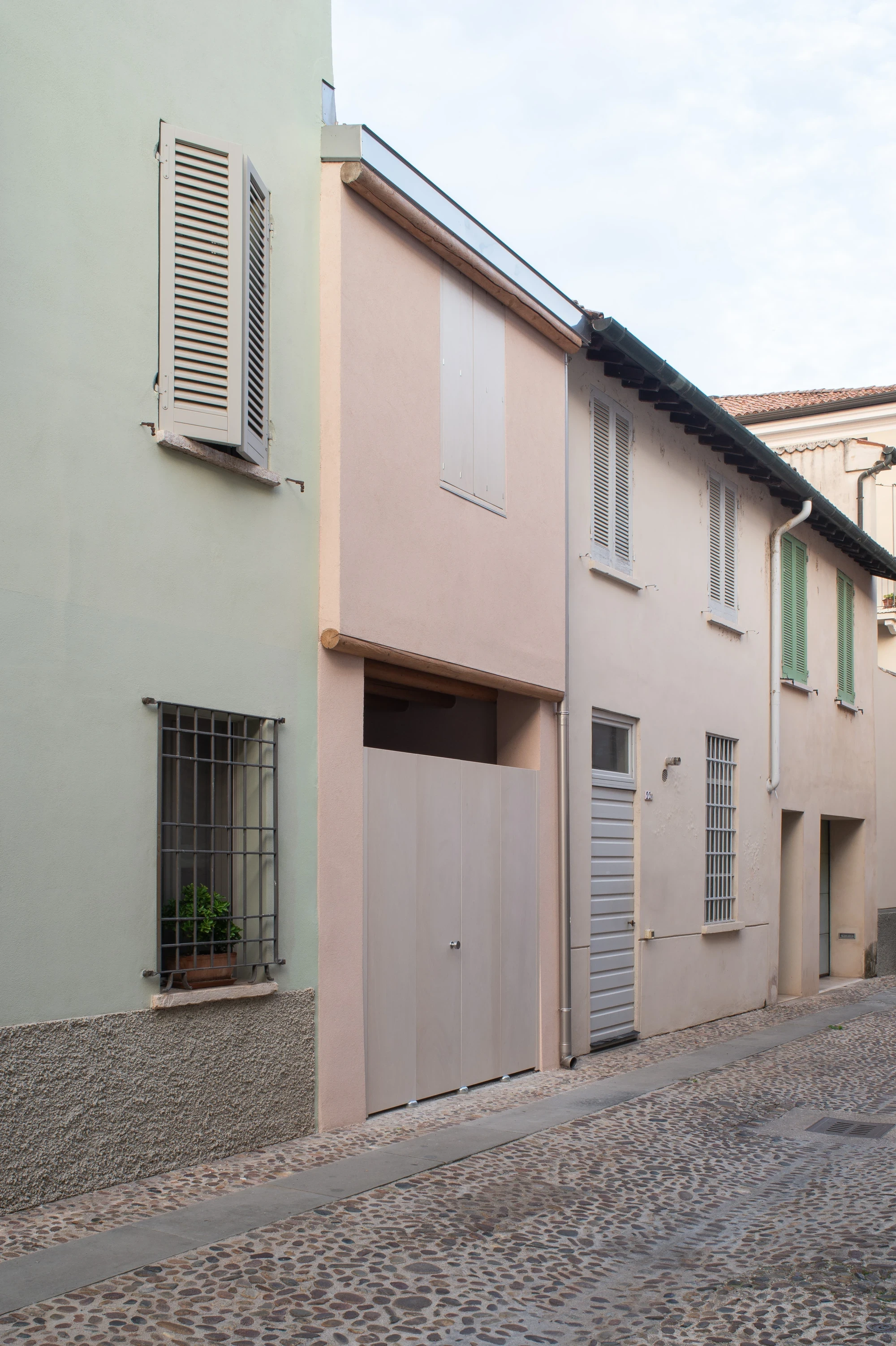
In Mantova's UNESCO-listed historic centre, STUDIOSPAZIO refurbishes a thin-block townhouse with a single defining gesture: a timber beam placed outside the facade wall, dissolving the boundary between private space and the public street.
The house is located in one of the thinnest blocks of the city, and has two facades that face two different alleys. The project displays a new courtyard that relates in size to the small streets of the city centre and connects the two facades. Because of the preserved context — the historic urban fabric of Mantova has been a UNESCO World Heritage Site since 2008 — all the facades must be covered in painted plaster, and all the openings must have the same proportions and arrangement to preserve the appearance of the street.
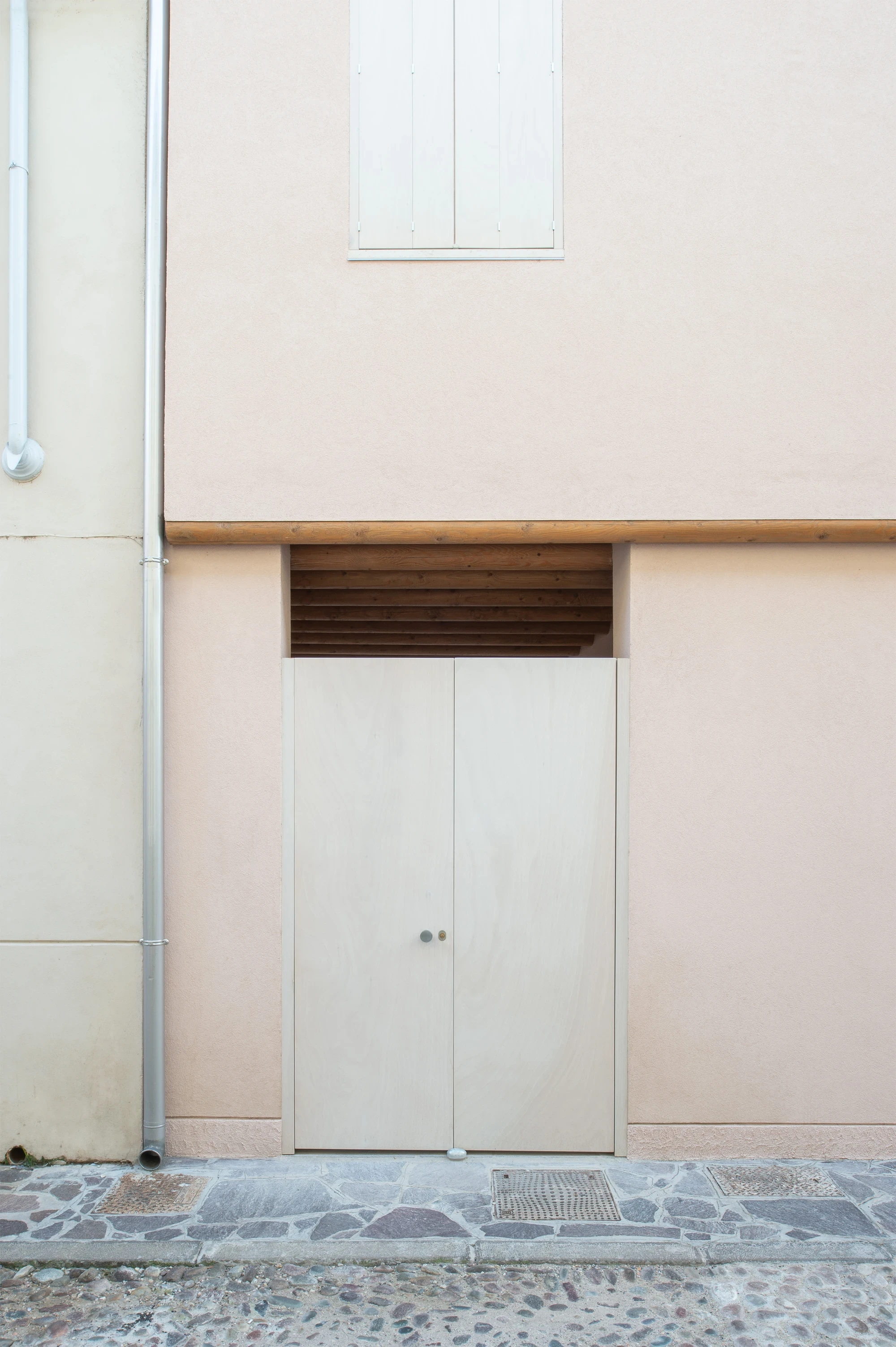
The architects could only work on details to define the character of the new house. By placing the last timber beam outside the facade wall, they extend the boundary of the inner space towards the street and, on the other hand, give a hint of the private space within the city. It is only a detail, but it subverts the way the building is perceived in this context.
The thick facade wall is no longer a clear boundary. The private dimension of the house and the public realm of the street are now closer to each other — separated not by a wall but by the overhang of a single beam, which casts its shadow on the plaster and marks the hours of the day with quiet precision.
The refurbishment of a townhouse embedded in the old city fabric has been an occasion for STUDIOSPAZIO to reflect on how to design contemporary architecture in a highly preserved context. Where regulation constrains formal ambition, the practice finds its expression in the detail — in the precise placement of a structural member that is simultaneously a spatial gesture and a civic one, a conversation between the new house and the centuries of buildings around it.