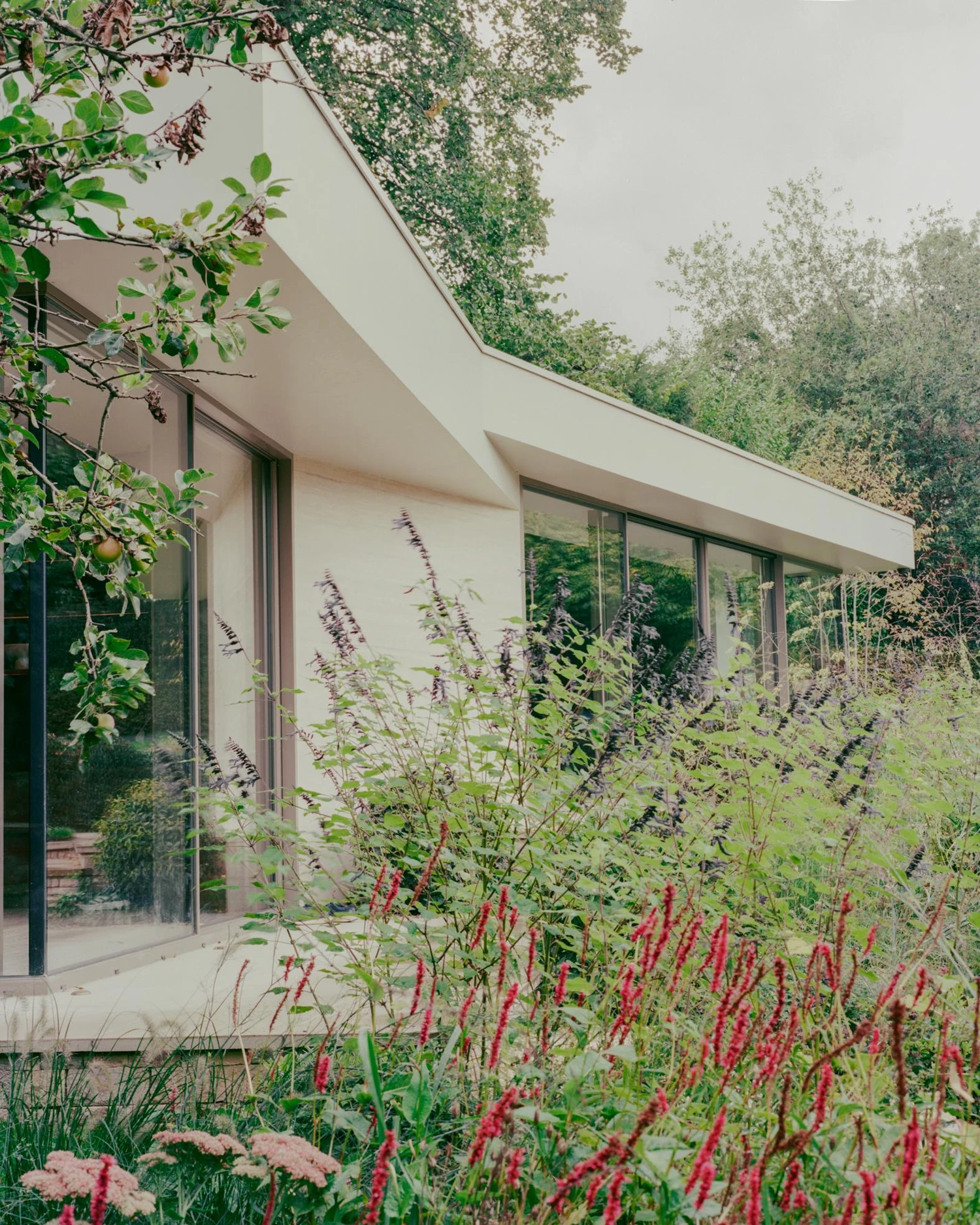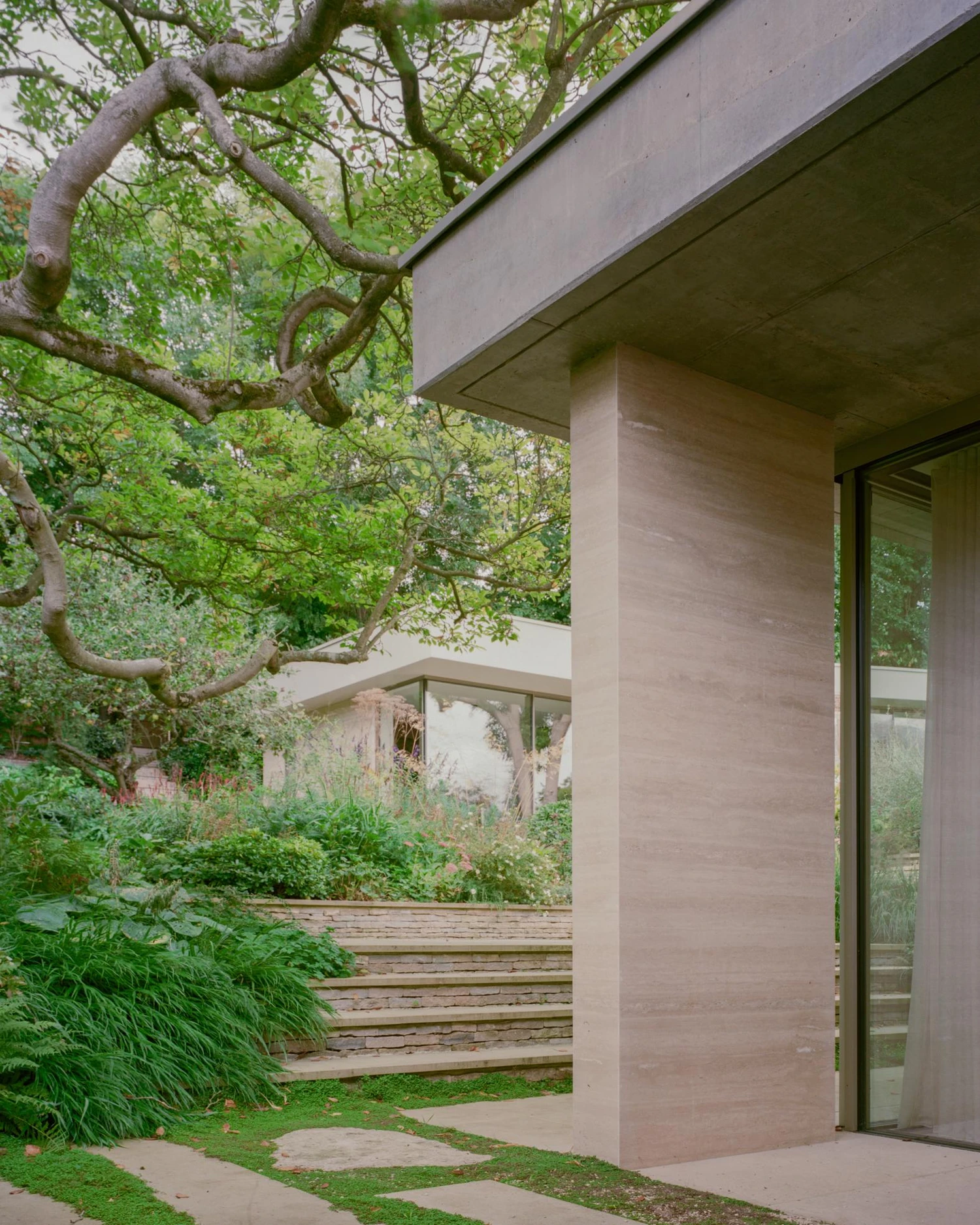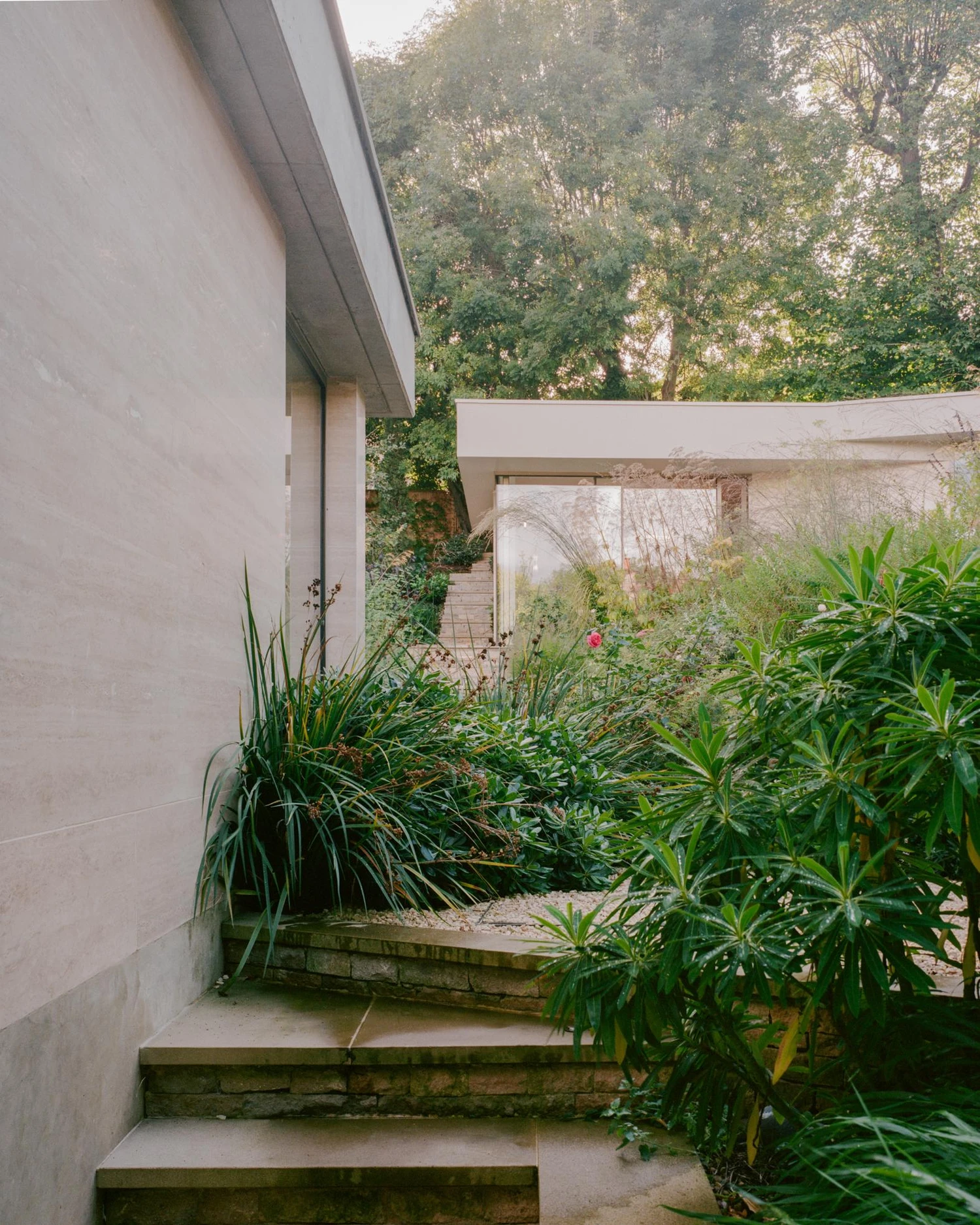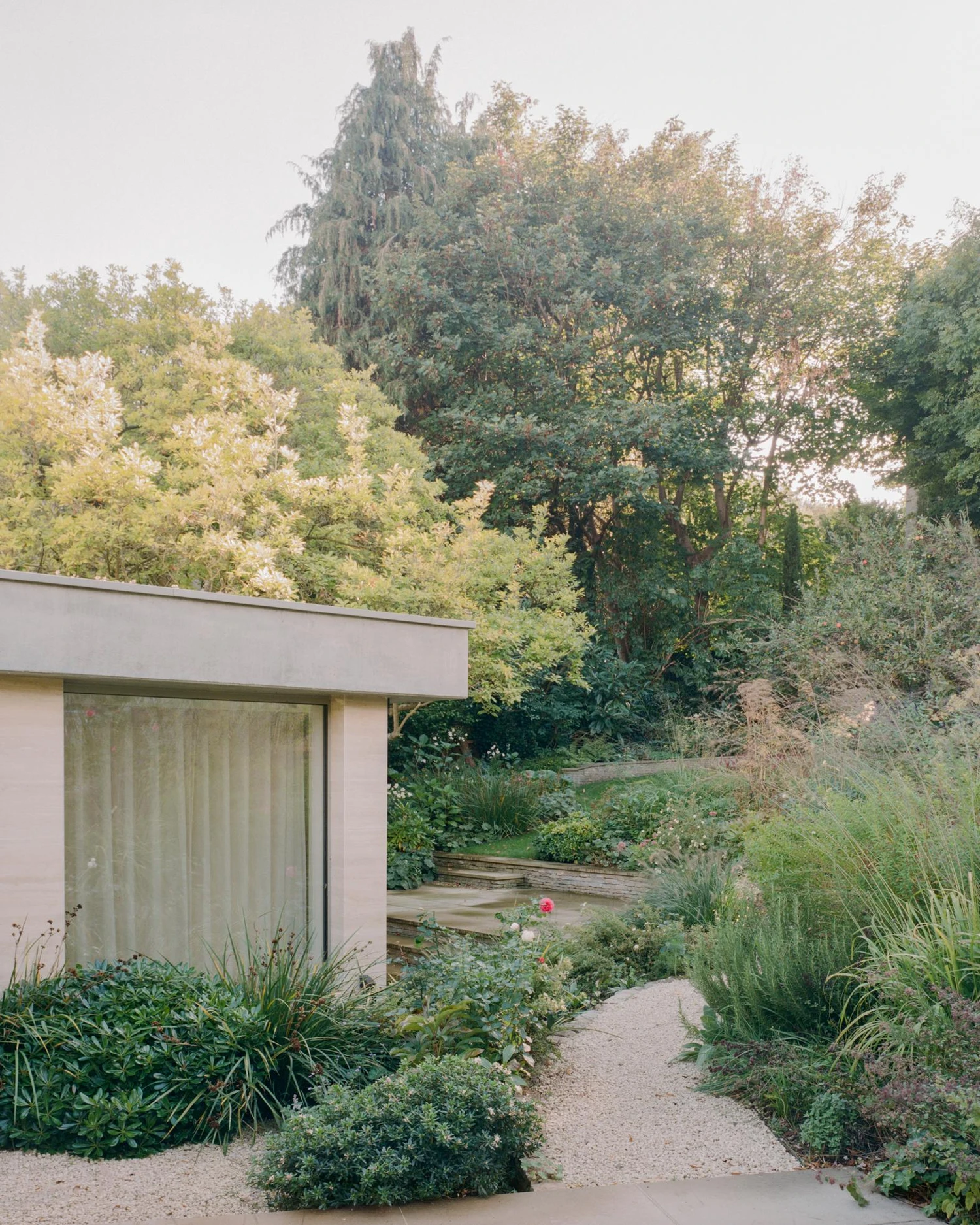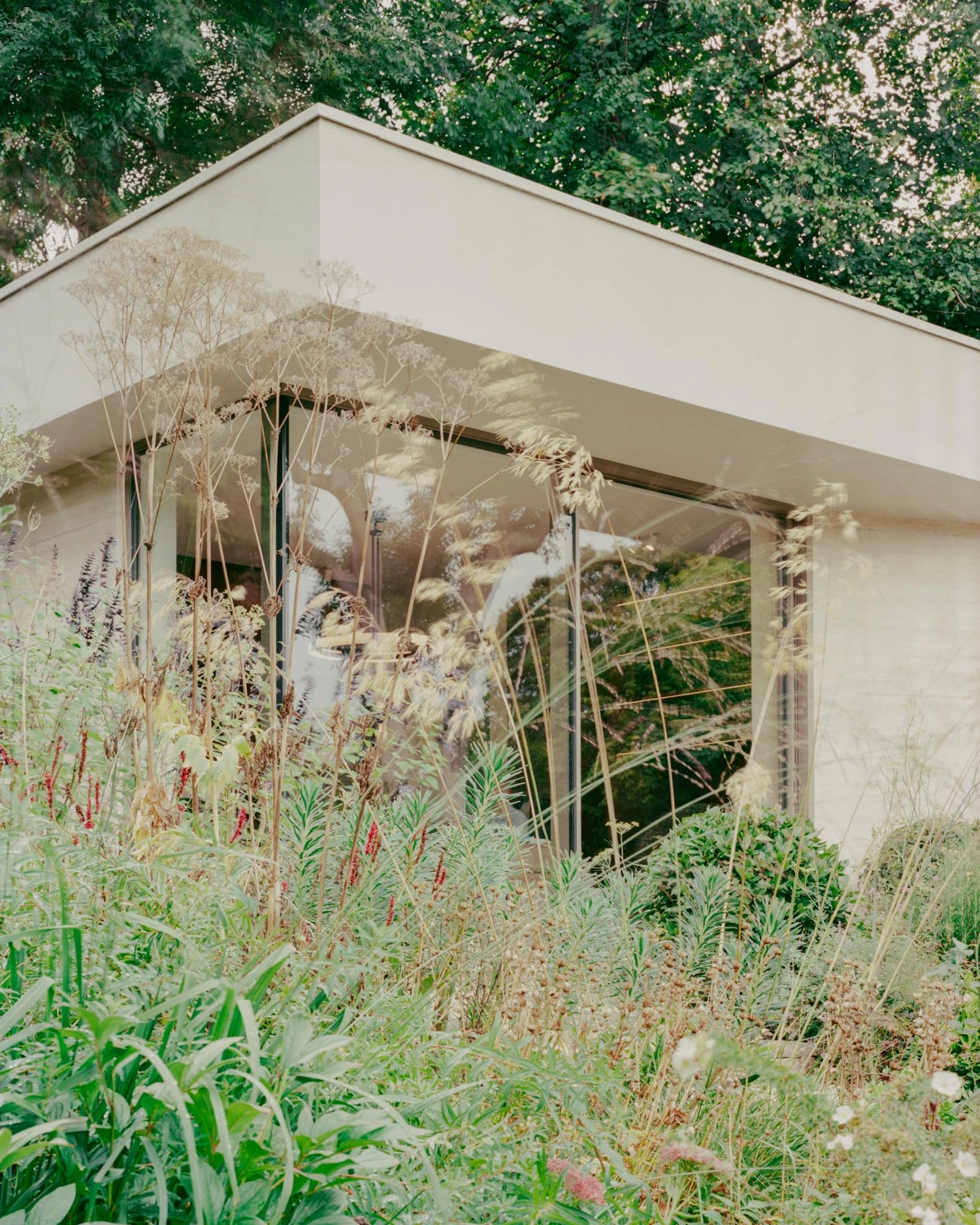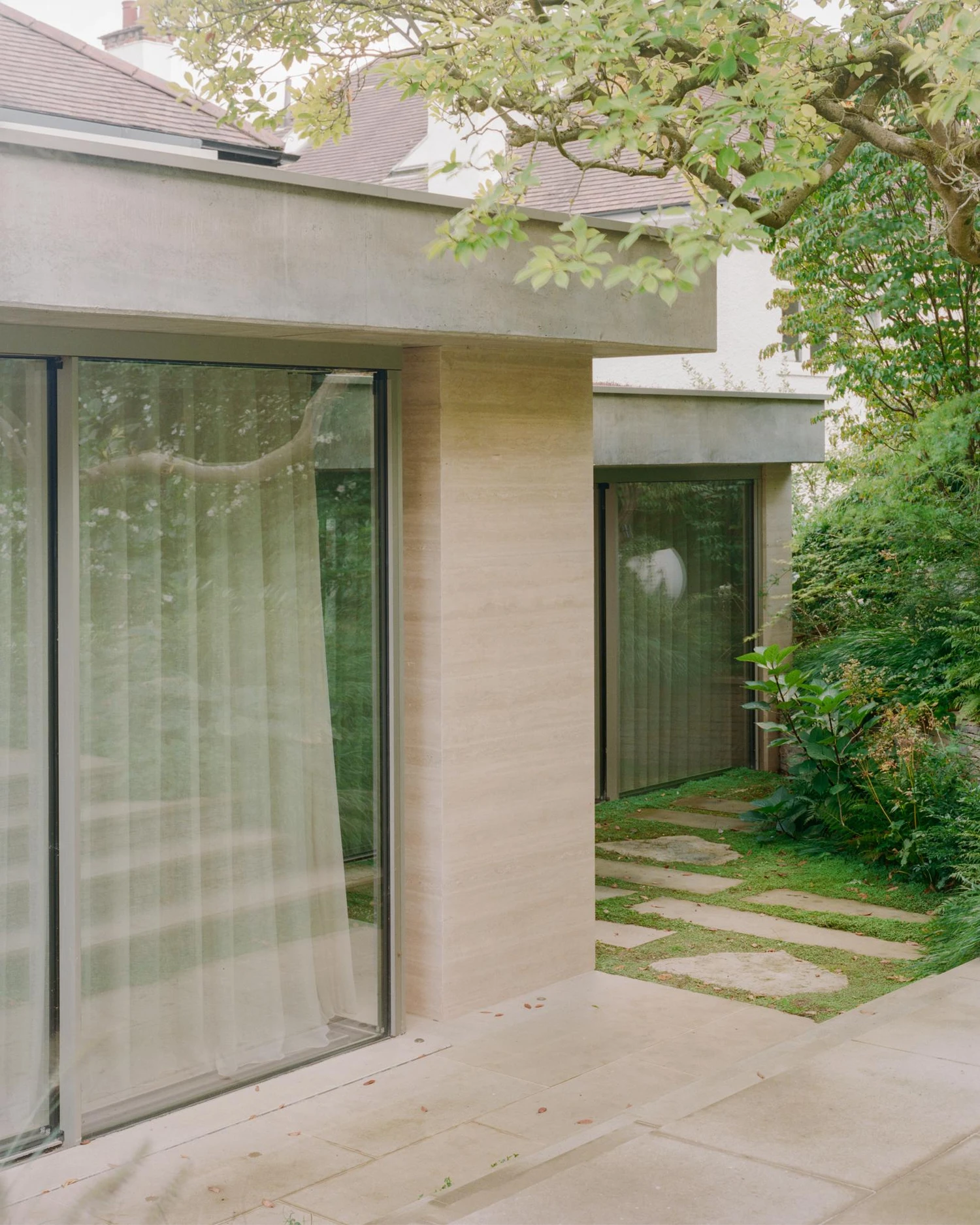
The Space Between by Matthew Giles Architects reimagines a Highgate hillside home in London through stepped volumes and green roofs, choreographing interlocking spaces that fold landscape into domestic life.
The site drops seven metres from driveway to the top of the garden. Most architects would treat that as a problem. Matthew Giles Architects treated it as a score to be read, allowing the terrain of this Highgate hillside to write the programme. The result is a comprehensive retrofit — reorganisation, extension, and full refurbishment of the main house, a new garden annex at the far end, and landscaping across the entire site — that feels less like a renovation and more like a negotiation between architecture and gradient.
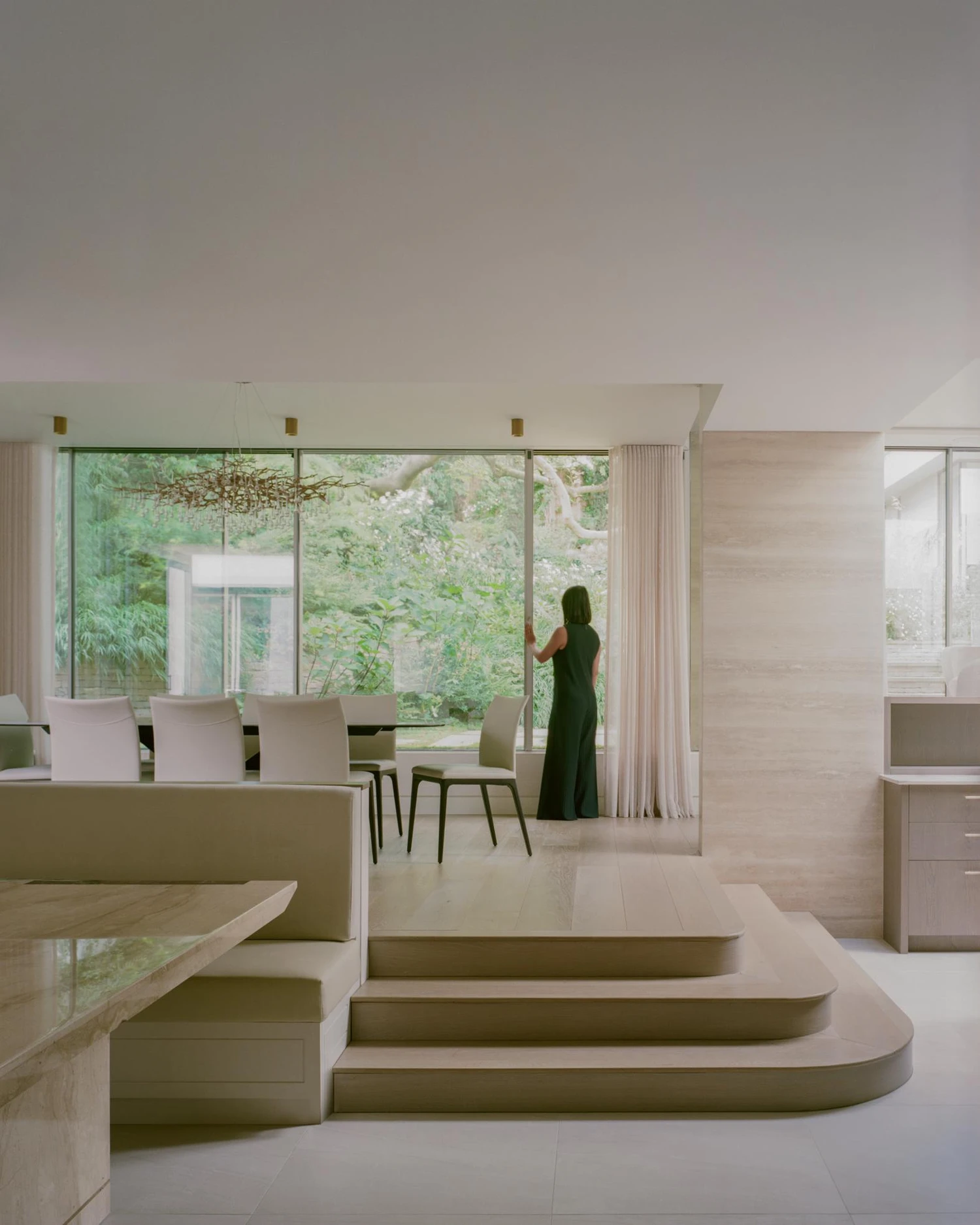
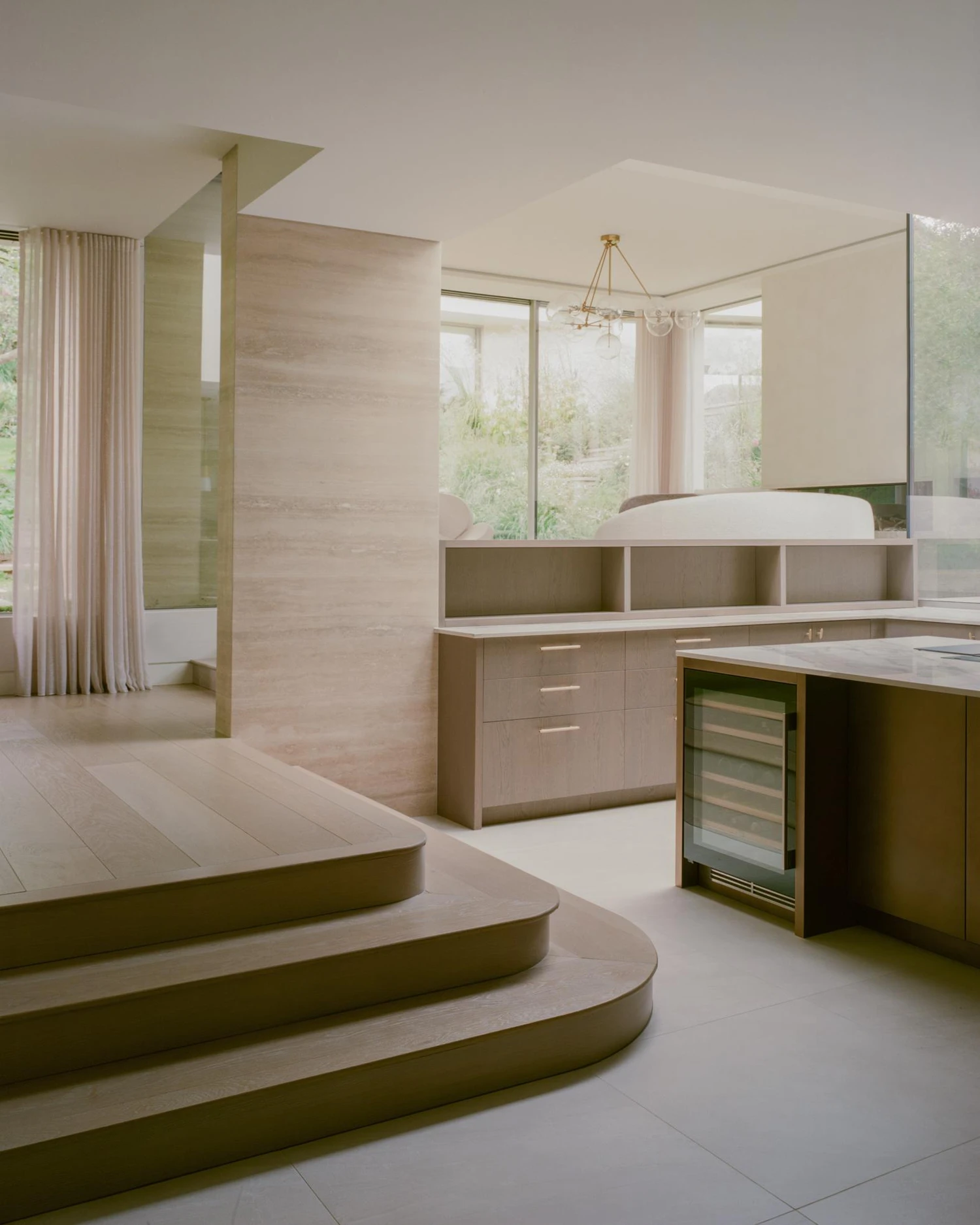
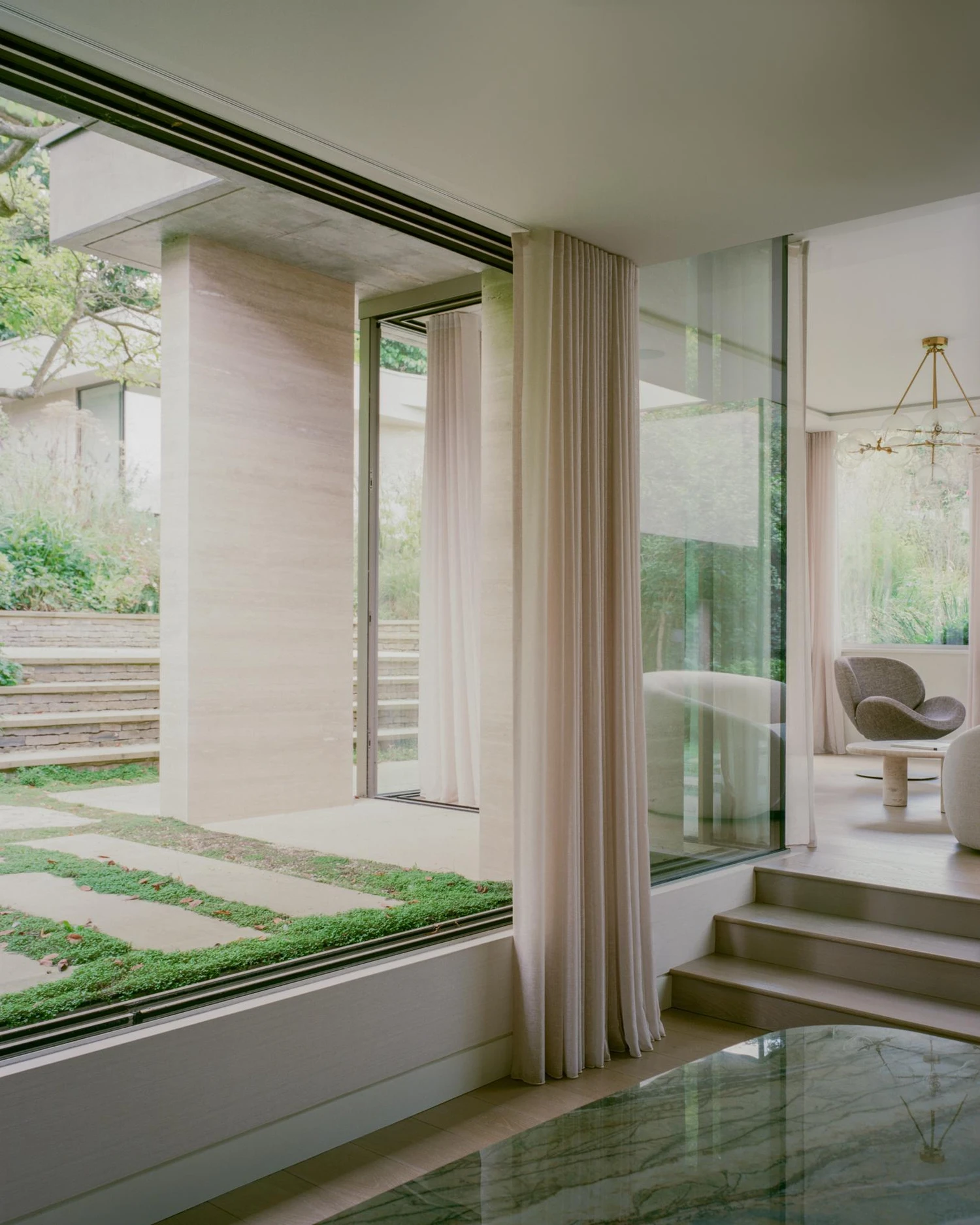
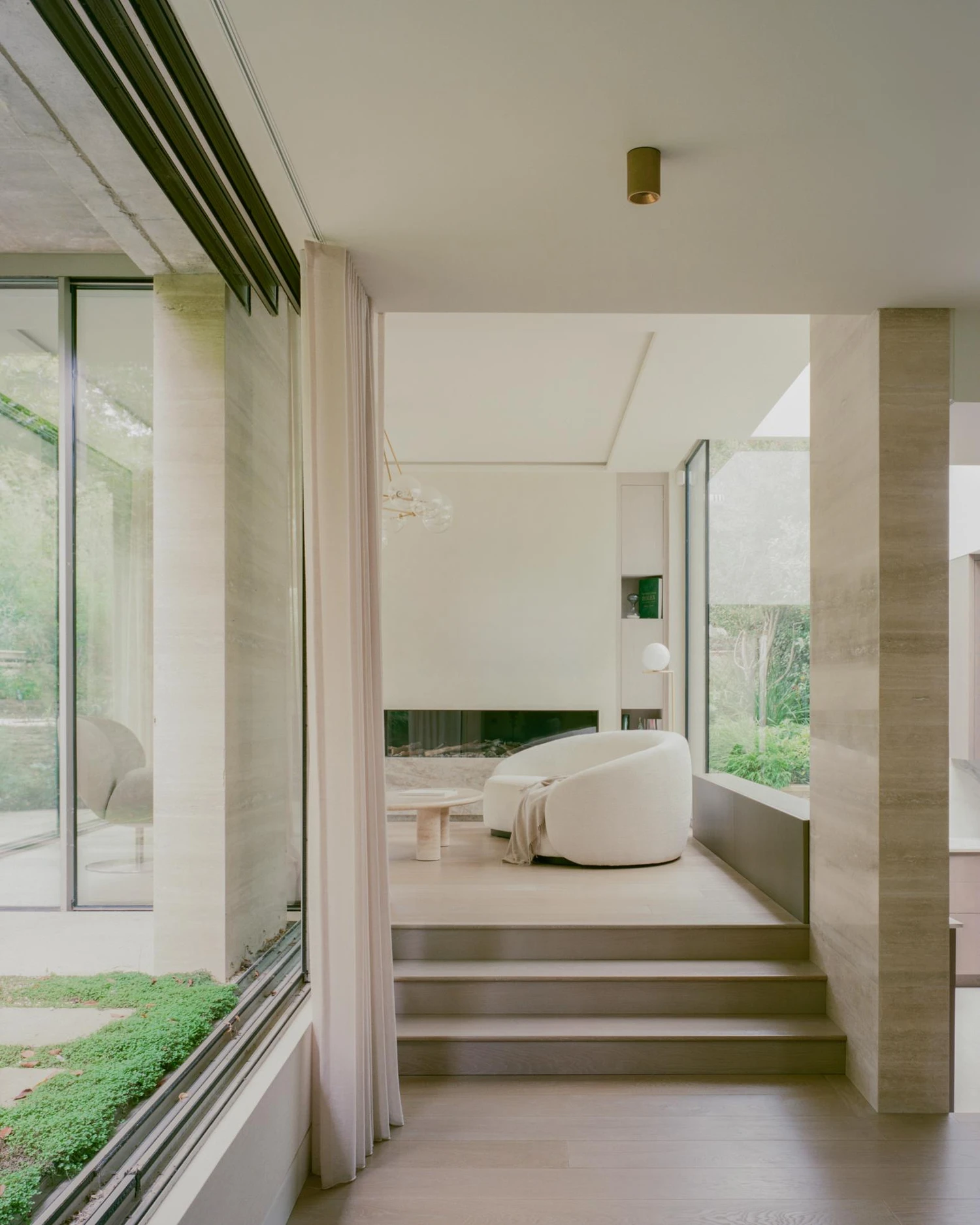
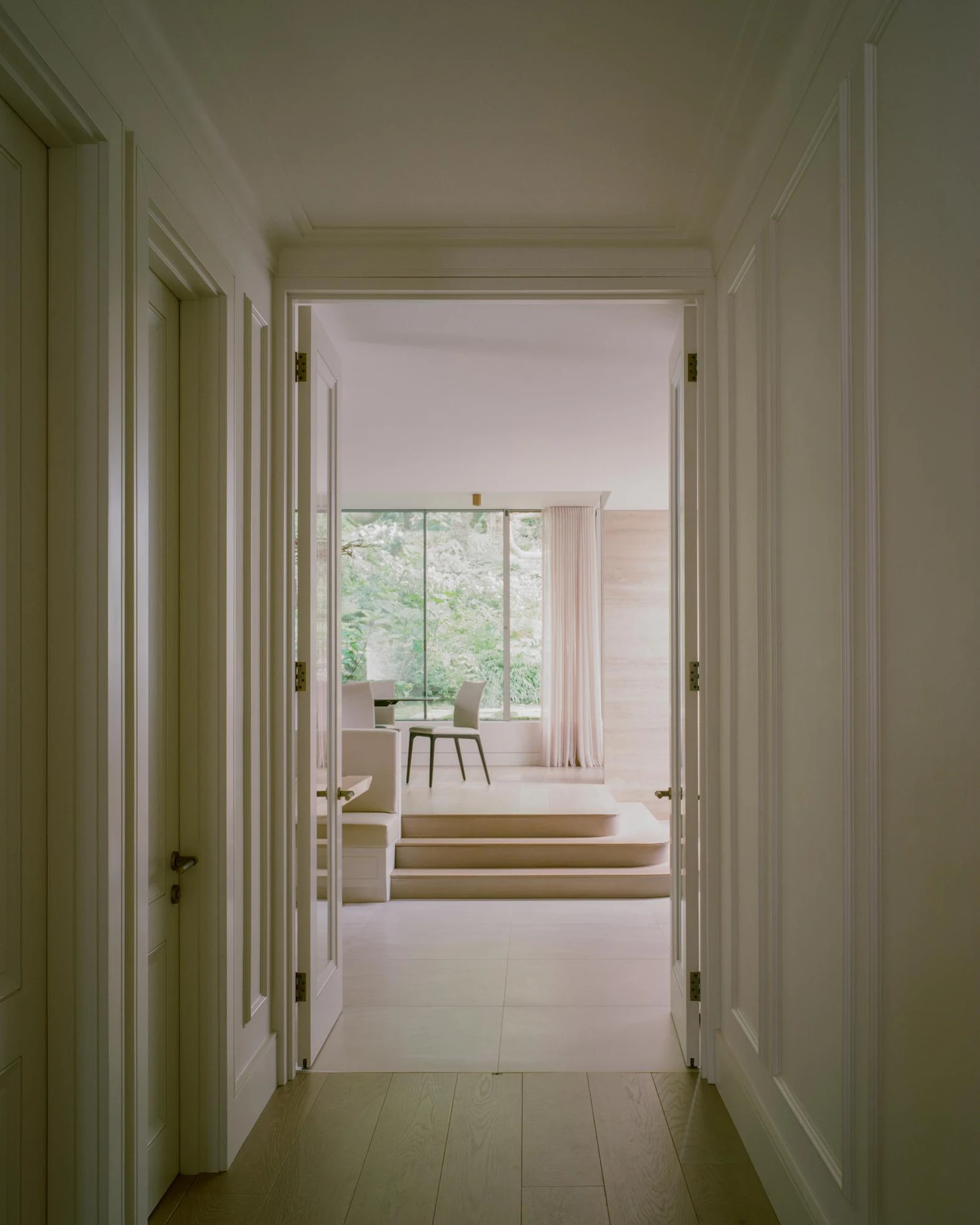
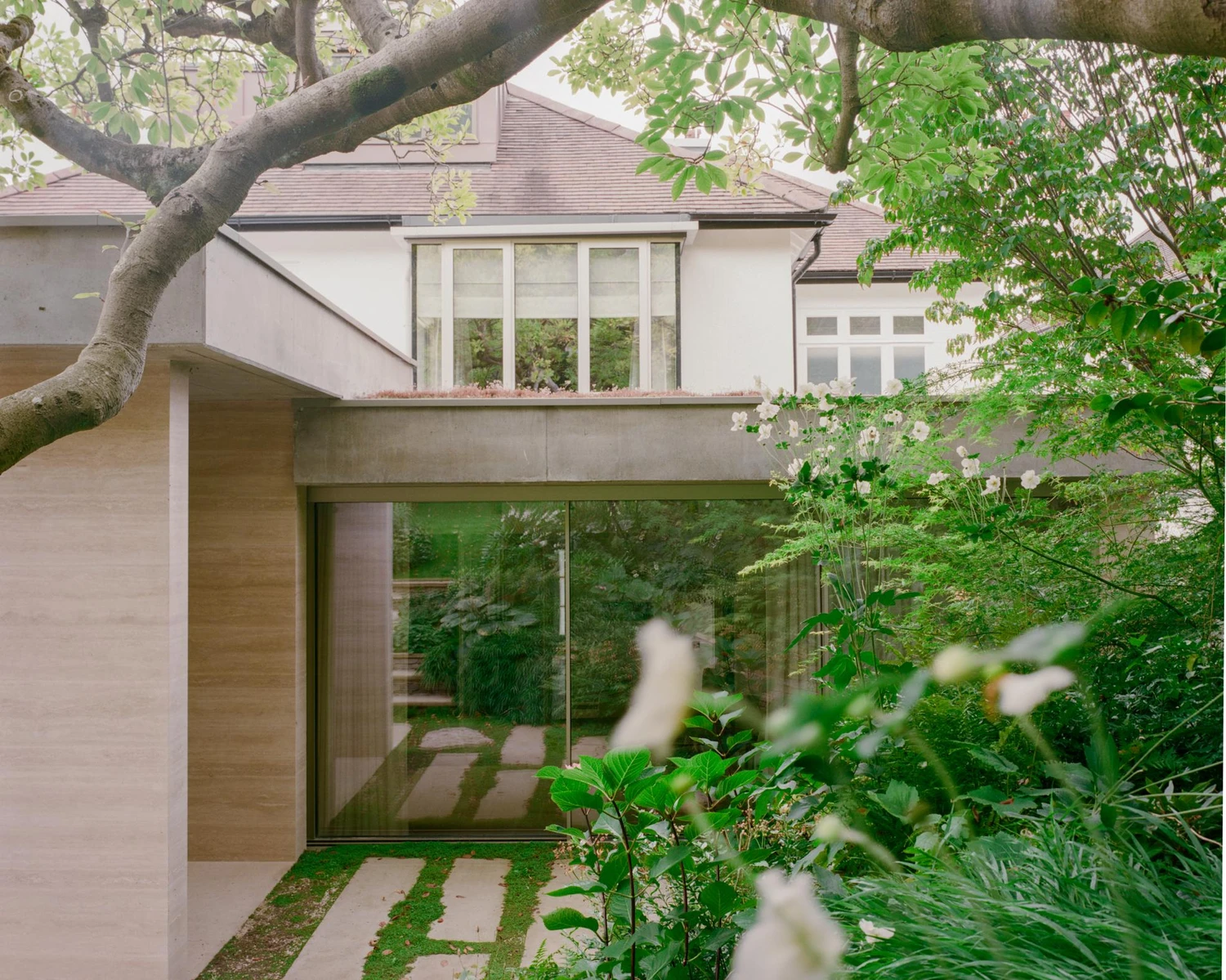
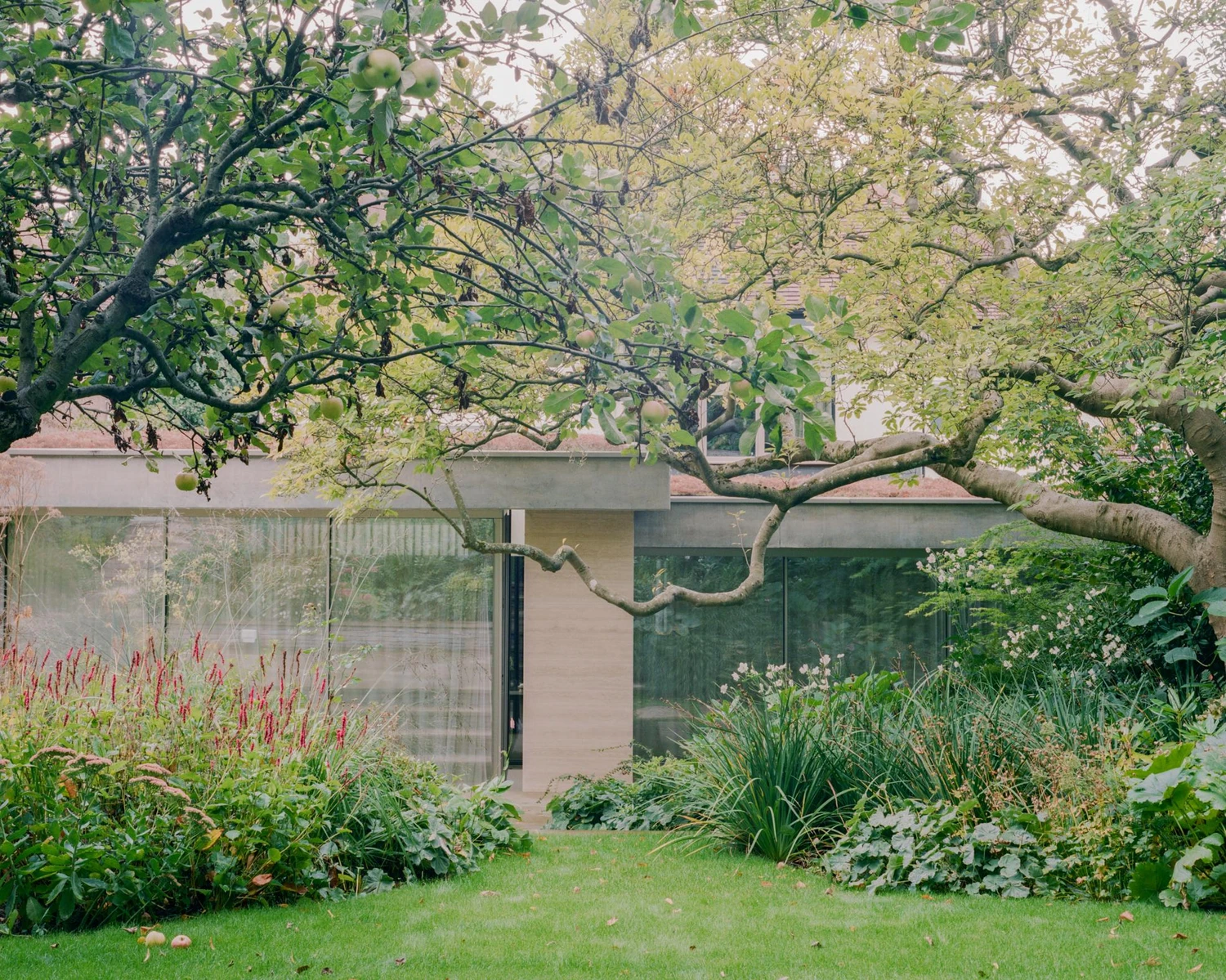
The rear living areas are composed as a sequence of interlocking volumes, each stepping approximately half a metre upward with the natural slope. Kitchen, dining, sitting room: physically distinct yet visually connected, producing a rhythm of compression and release that gives each space its own character without isolating it from the whole. The green roof above completes the trick. Seen from the top of the garden, the extension appears to have been absorbed by the landscape itself — the garden folded over the house like a blanket.
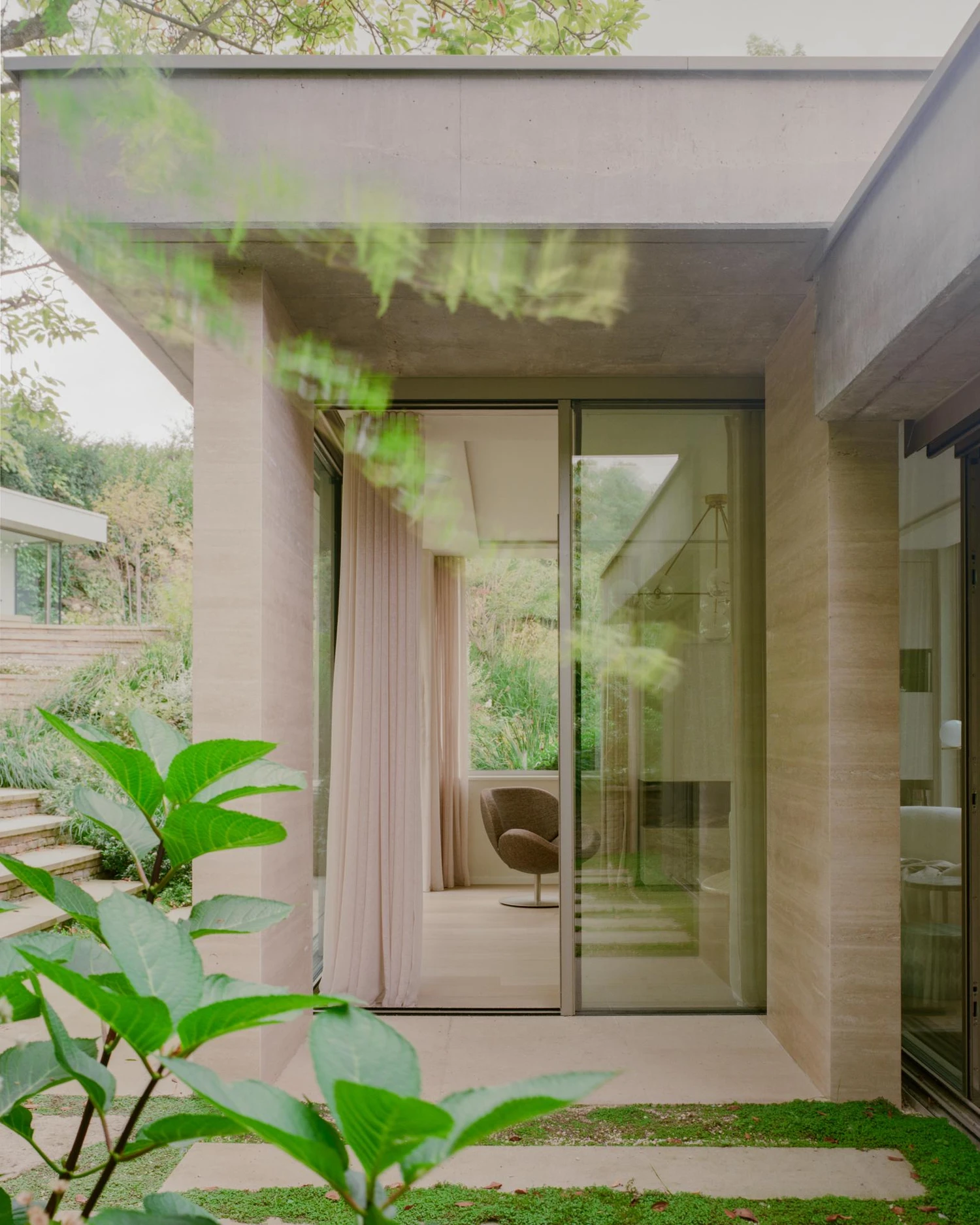
Material choices are blunt in the best sense. Travertine, rough-hewn and polished, pairs with raw concrete and timber in a palette that refuses decoration but allows texture. The interplay lends depth without ornament: spaces feel sculptural and warm simultaneously, which is harder to achieve than either quality alone. At the far end of the site, the new garden annex mirrors the language of the main house, creating a dialogue across the landscape between two structures that share vocabulary without repeating sentences.
The landscaping, developed in parallel with the architecture rather than appended to it, completes the project’s ambition. The site becomes a series of external rooms where inside and outside genuinely interpenetrate. The result is a home that steps lightly yet confidently through difficult terrain — sheltered and open, private yet generous, an architecture that learned to listen to the ground before building on it.