Thisispaper Community
Join today.
Enter your email address to receive the latest news on emerging art, design, lifestyle and tech from Thisispaper, delivered straight to your inbox.
Oops! Something went wrong while submitting the form.
Instant access to new channels
The top stories curated daily
Weekly roundups of what's important
Original features and deep dives
Exclusive community features
Alexander Zaxarov
Aug 24, 2026

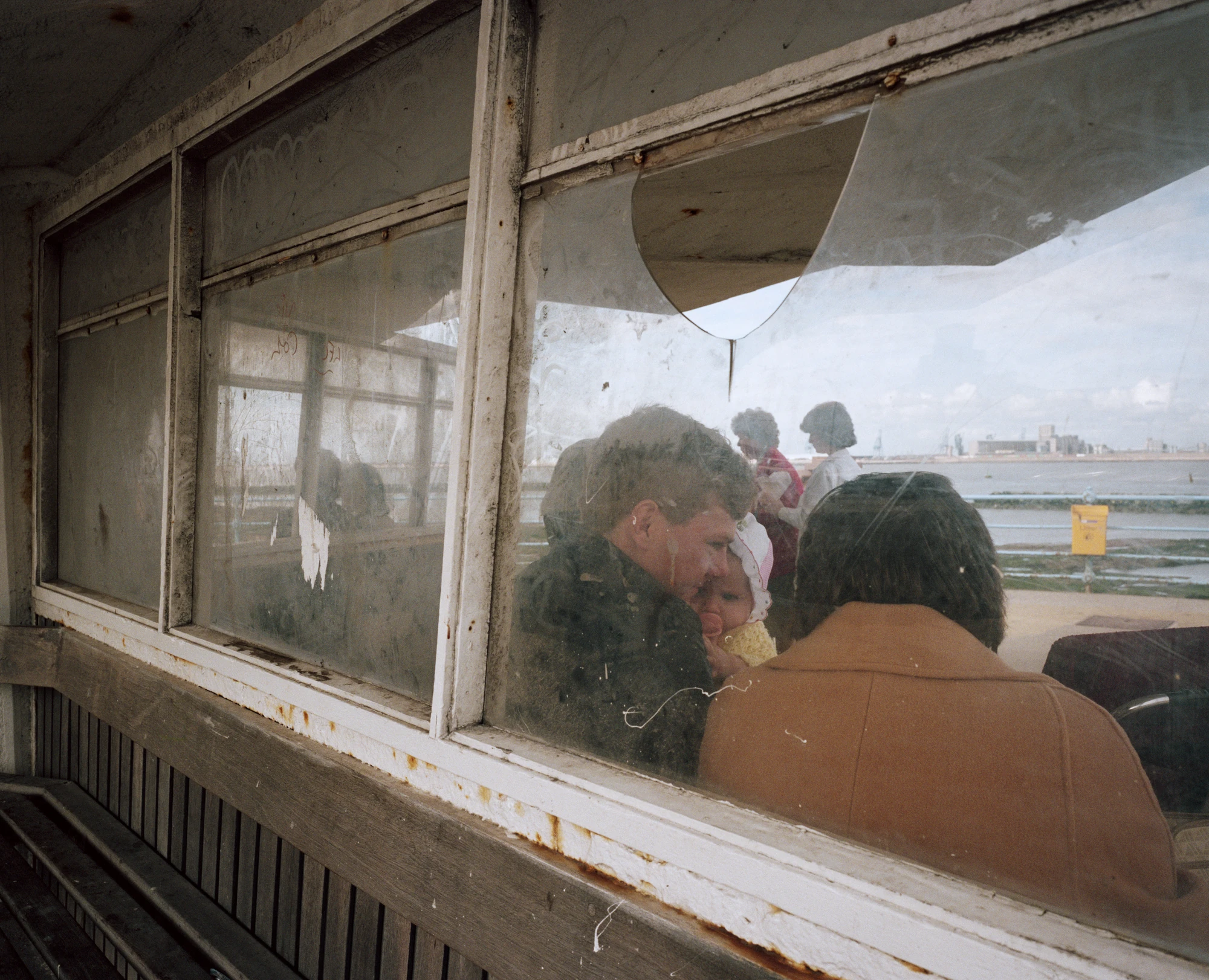
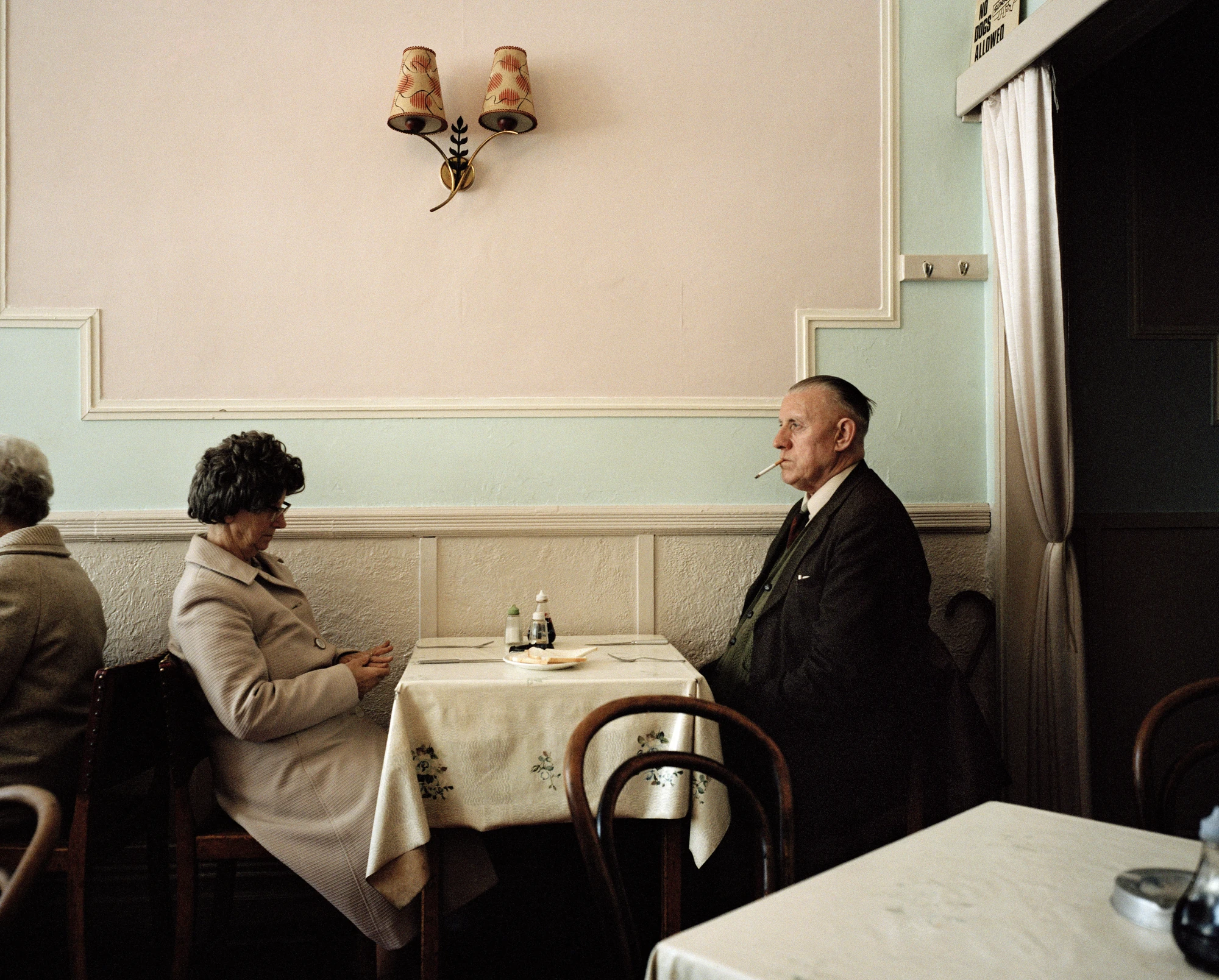
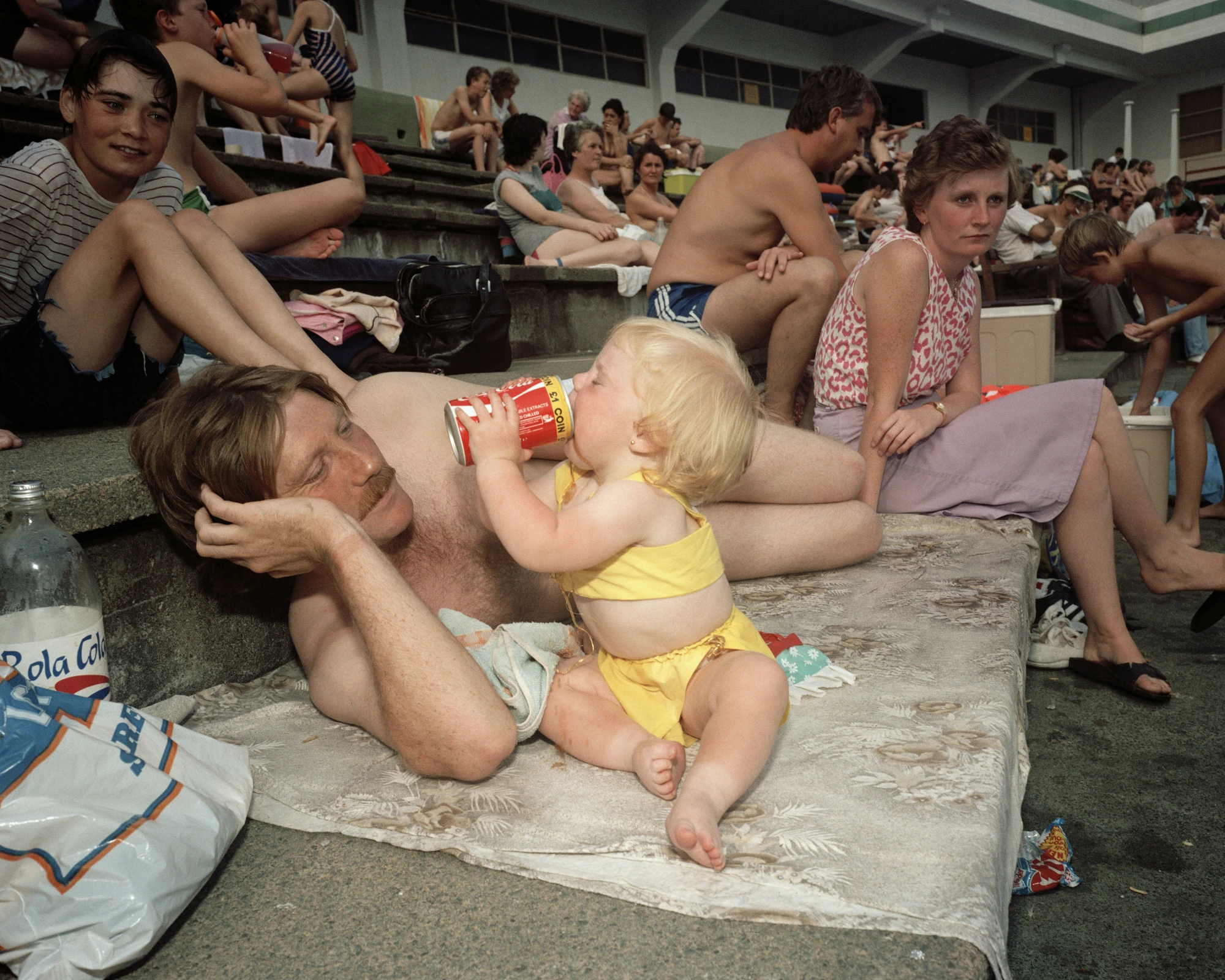
Between 1983 and 1985, Martin Parr took a medium format camera and a flash to New Brighton on the Merseyside coast and made The Last Resort, among his earliest work in colour.

New Brighton lost its golden sands in the 1960s, when tidal changes in the River Mersey took them away and left the concrete behind. What stayed was a working seaside town on the Wirral: a promenade, an open air lido, arcades, a chip shop, and a public who came out from Liverpool regardless, because a hot Saturday is a hot Saturday. Martin Parr arrived in 1983 and kept returning until 1985.

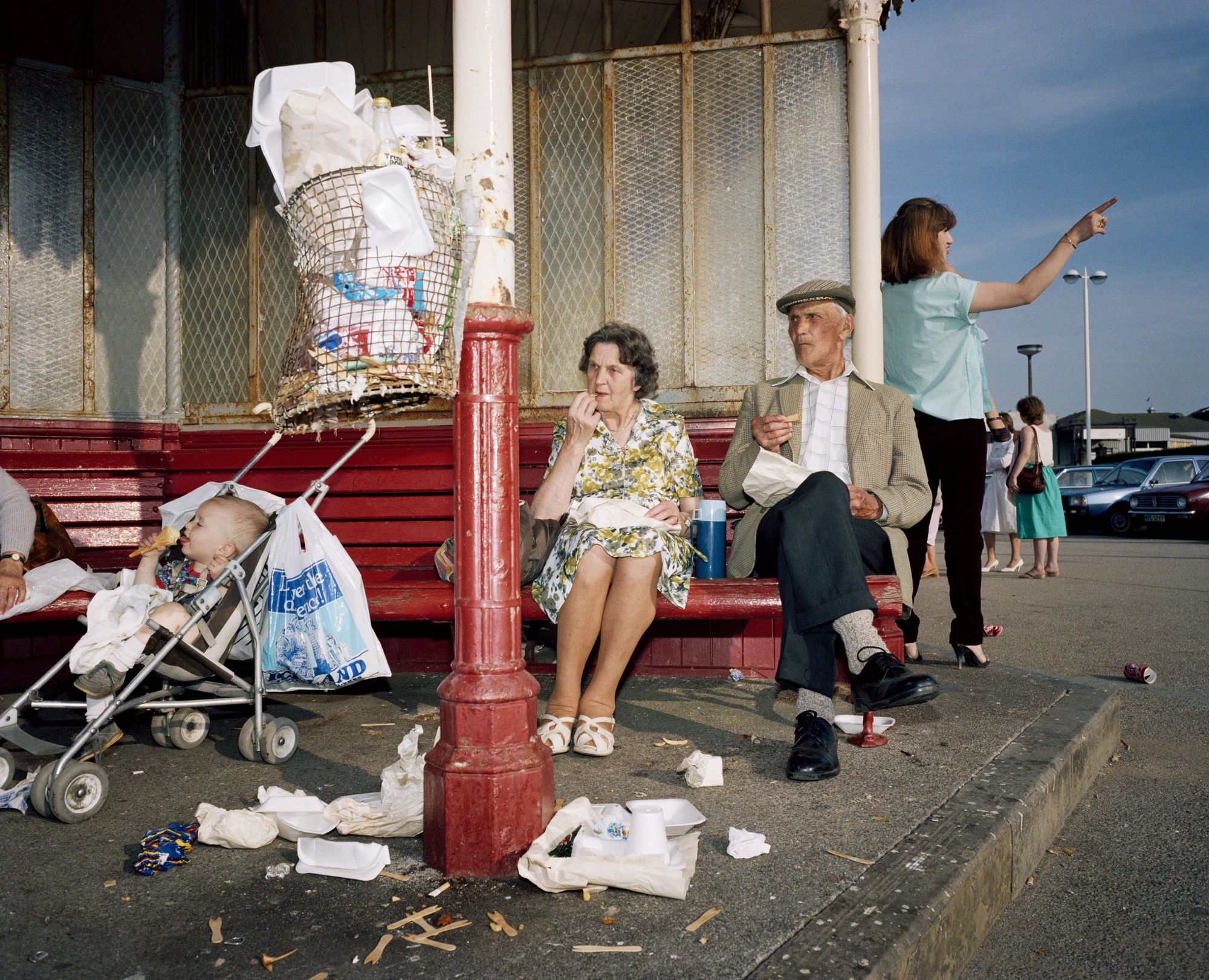
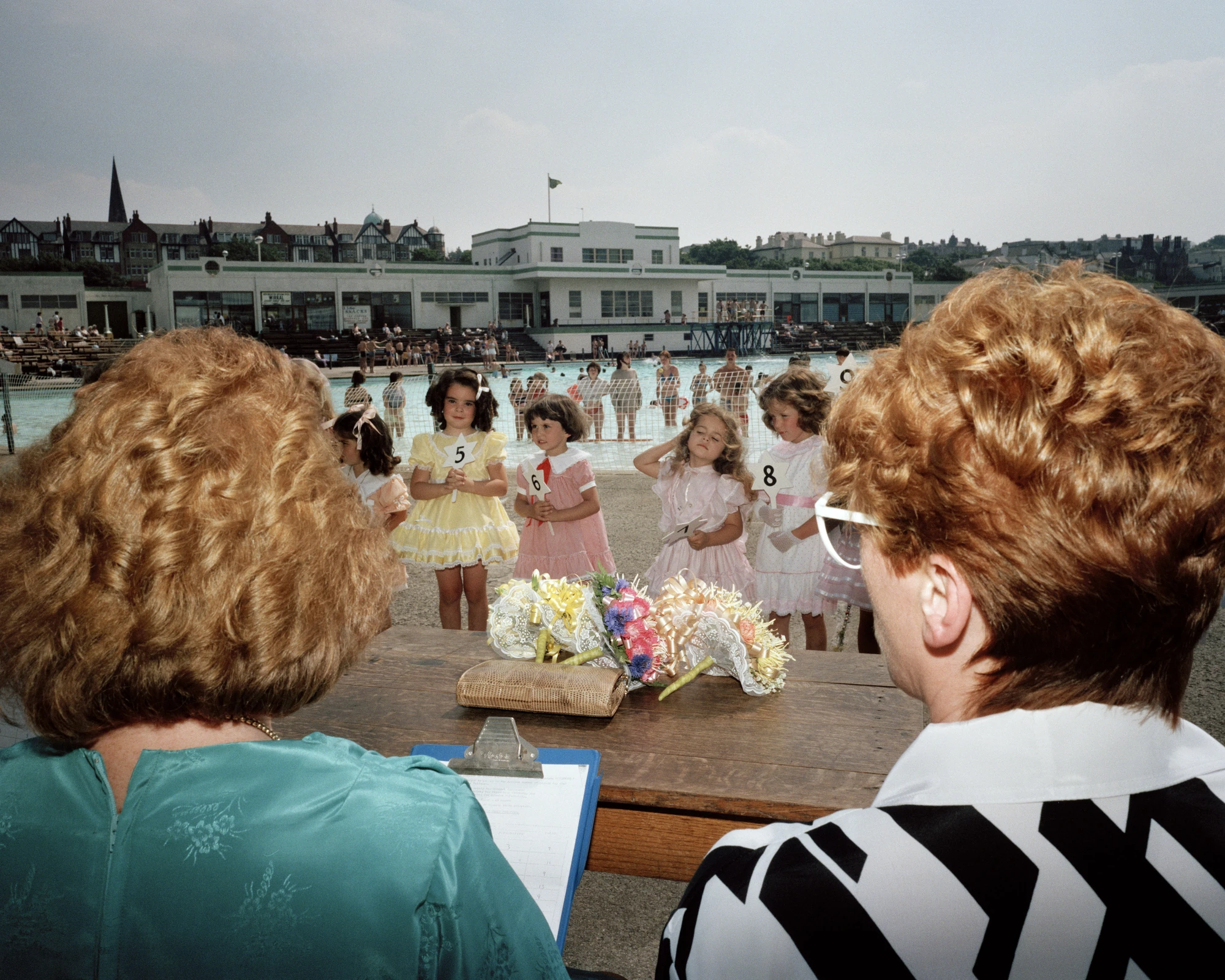
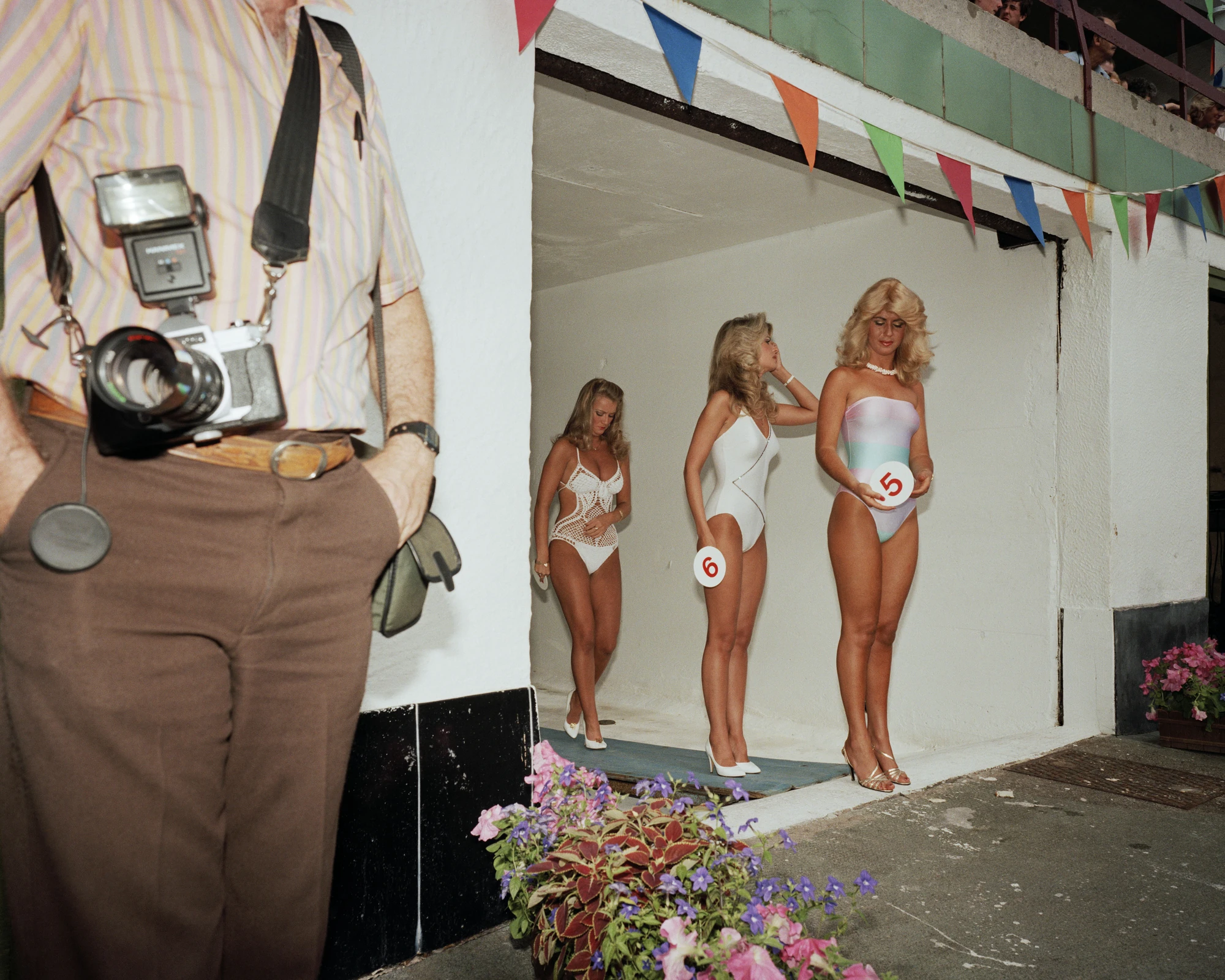
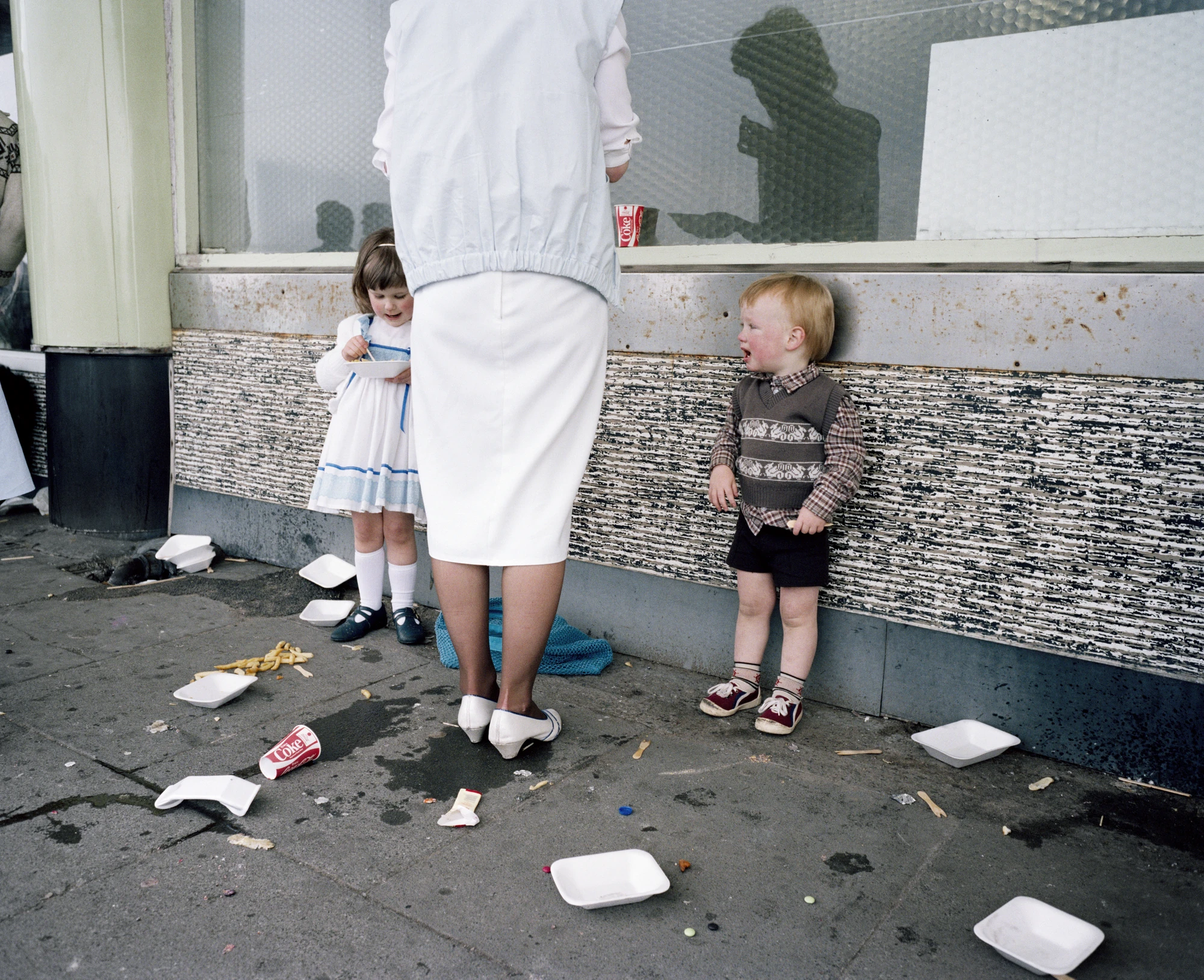
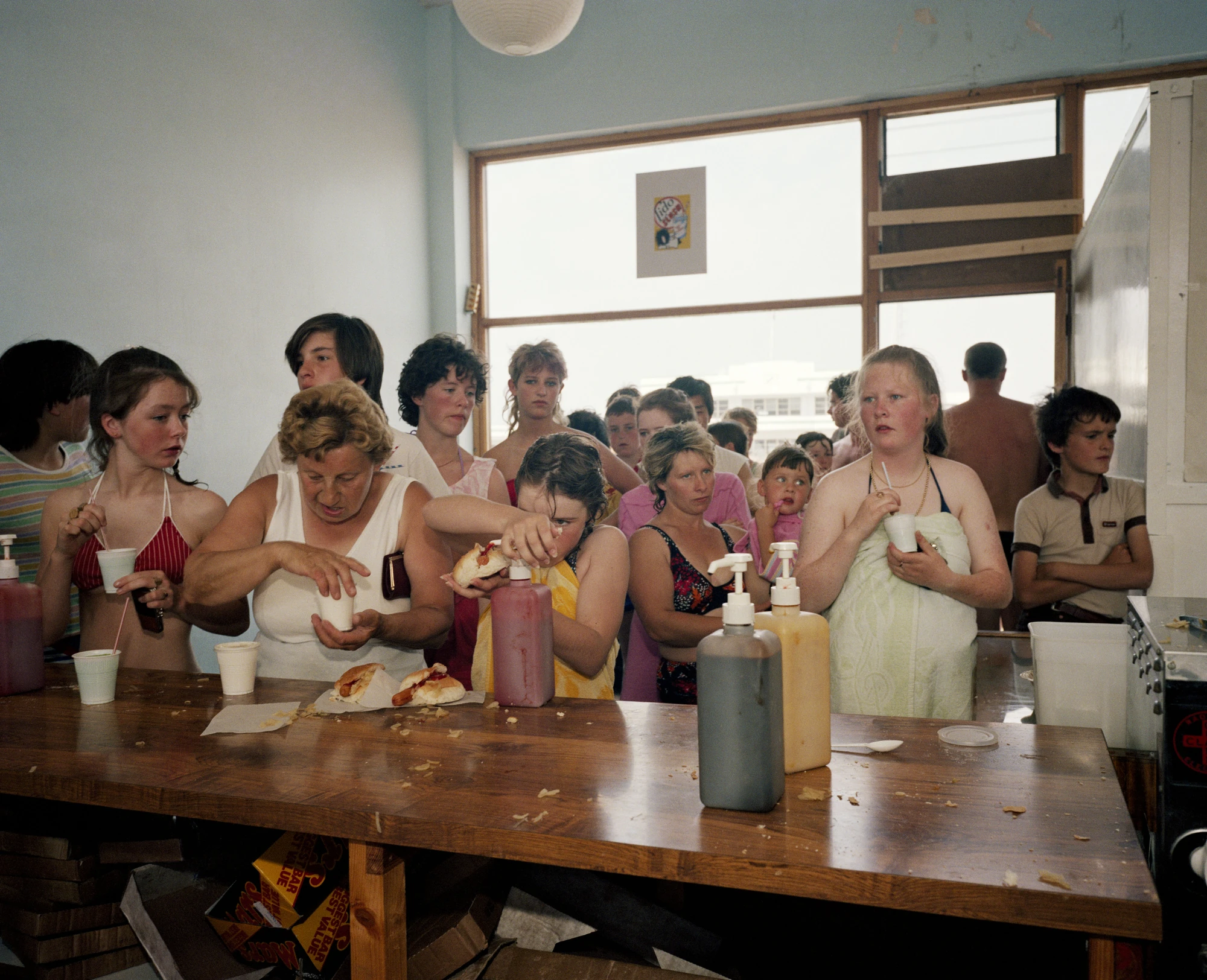
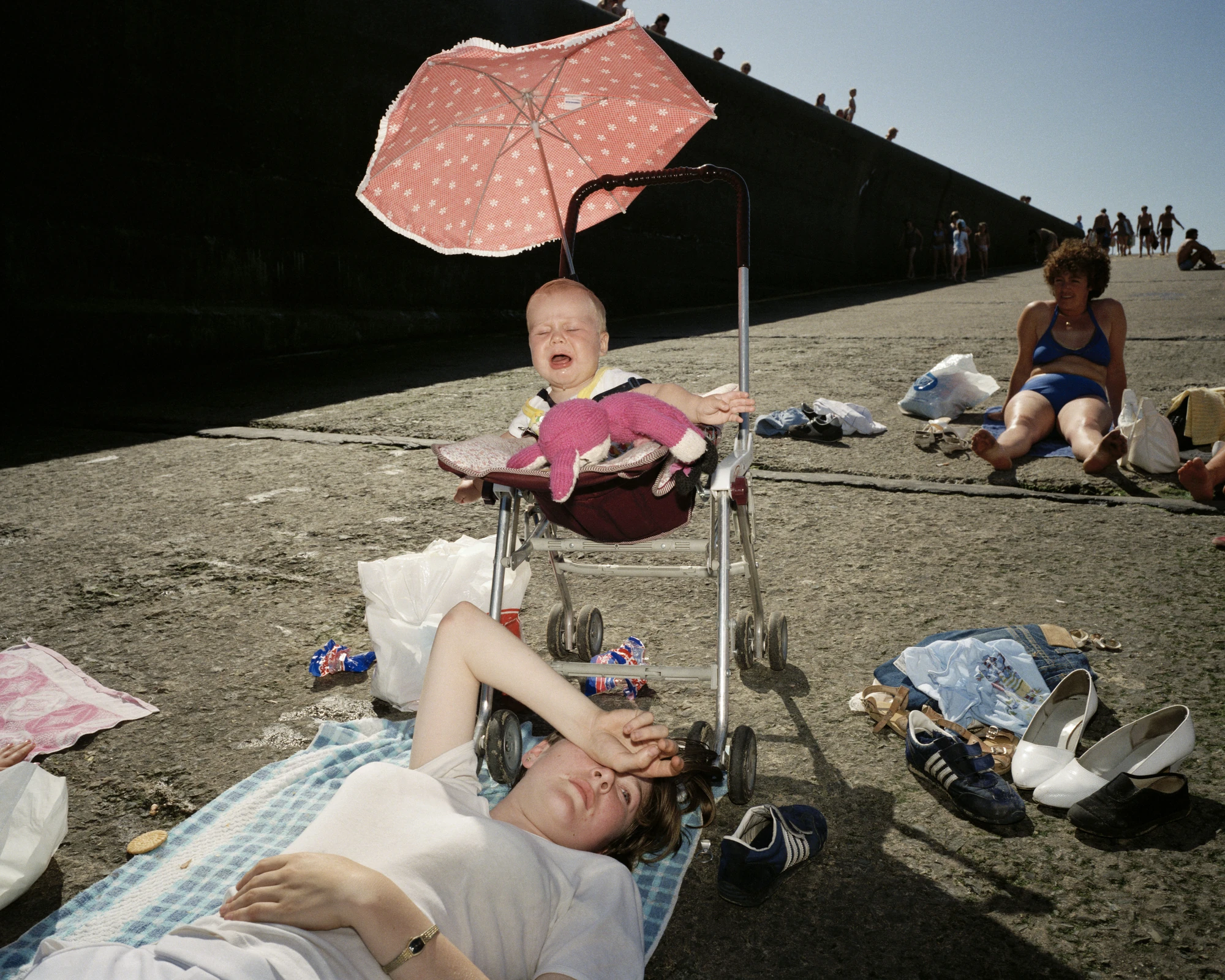
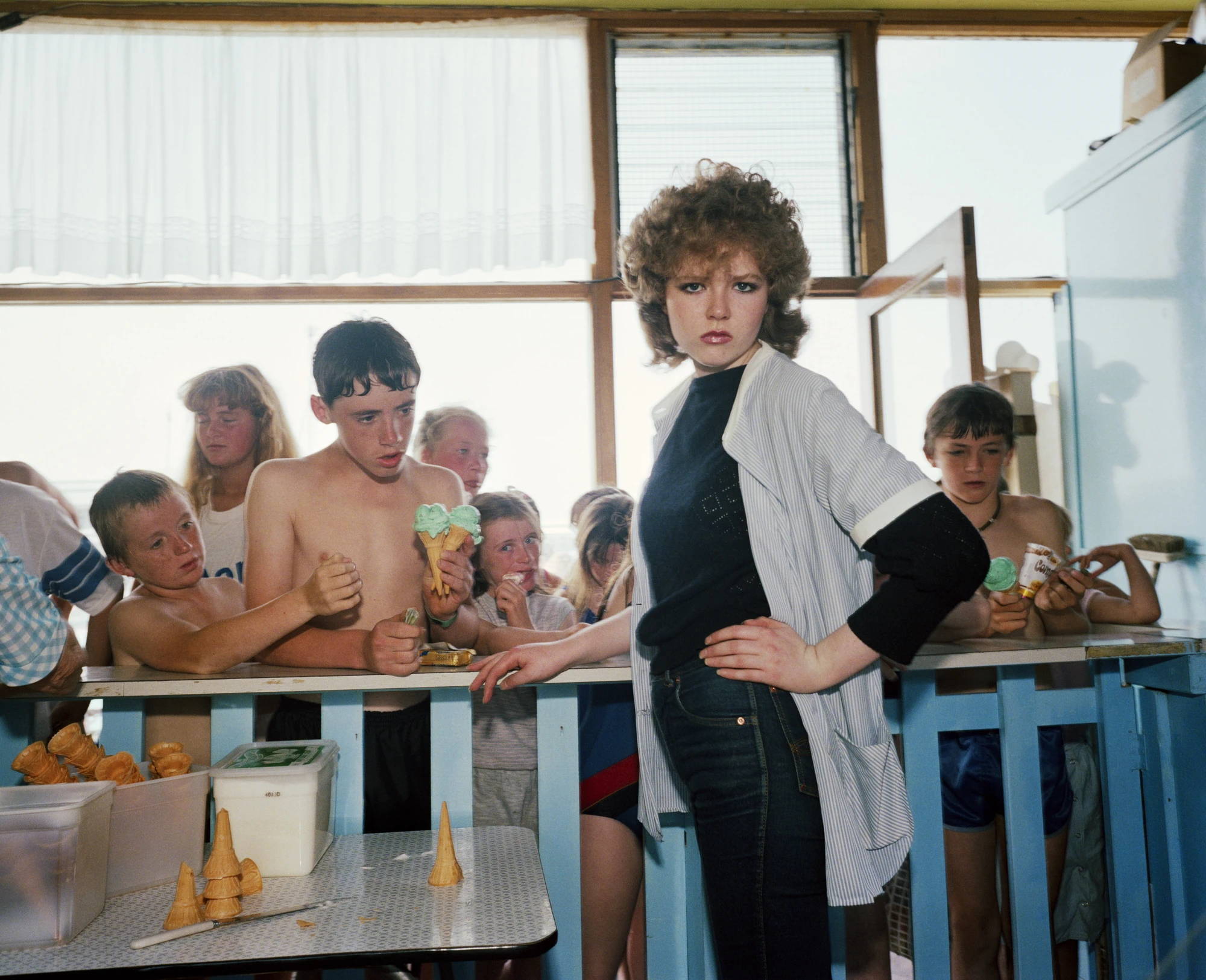
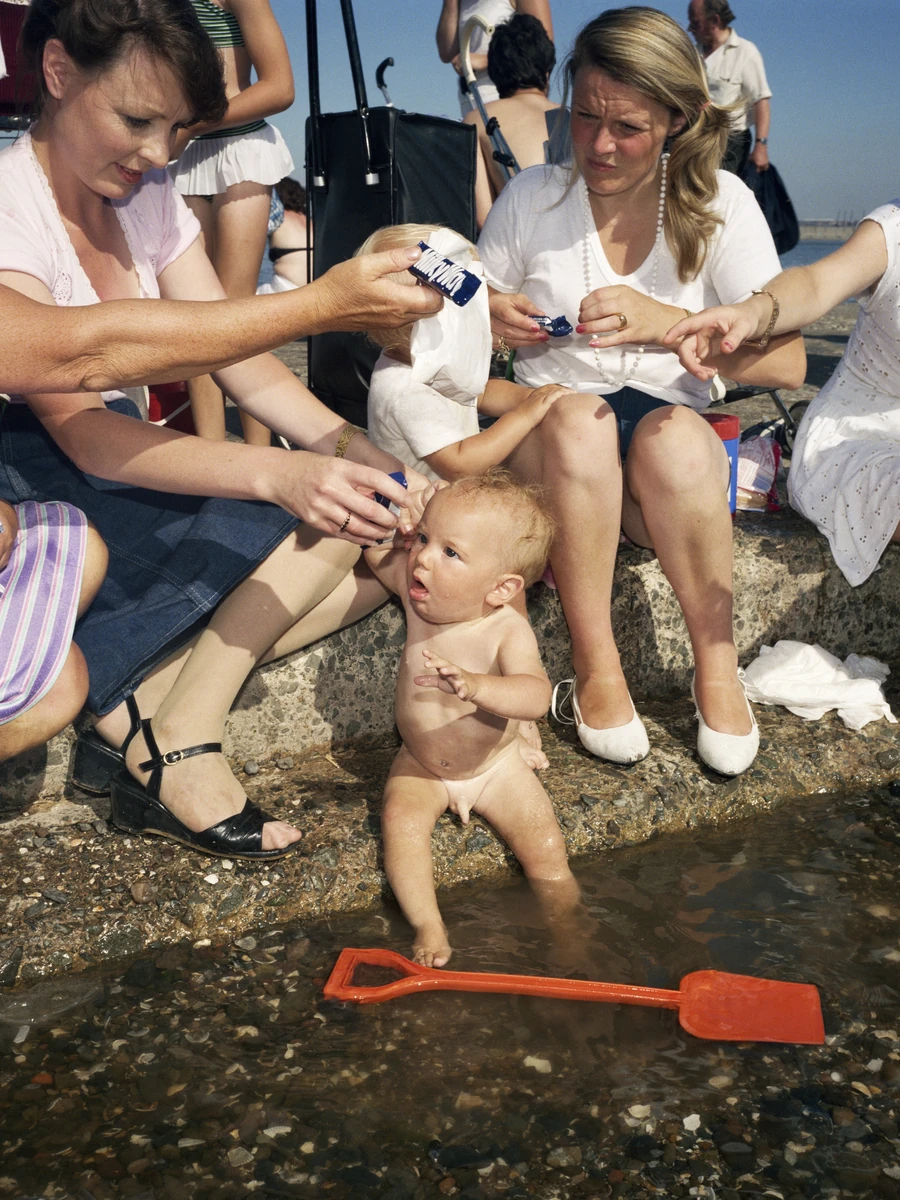
He shot 6x7 medium format with a flash on the camera, and he shot colour, which in British documentary at the time still carried the smell of advertising. The flash does what flash does. It pins everything at one brightness and lets nothing recede: green ice cream melting over a child's fist at a kiosk hatch, ketchup pooling on a bap at a wooden snack counter, polystyrene trays and lolly sticks spread across the paving outside a chip shop. Litter carries the same weight in the frame as a face.

When the work was shown at the Serpentine in London in 1986, critics called it cruel and voyeuristic, an outsider photographing the working class at its least composed. Parr let the row run. Controversy, he said, “didn't do you any harm”, and he held that his subject was never class but the truisms nobody escapes, screaming children and bad weather included. “The contradictions of British life are everywhere to be seen,” he said. The beach was where they surfaced fastest.

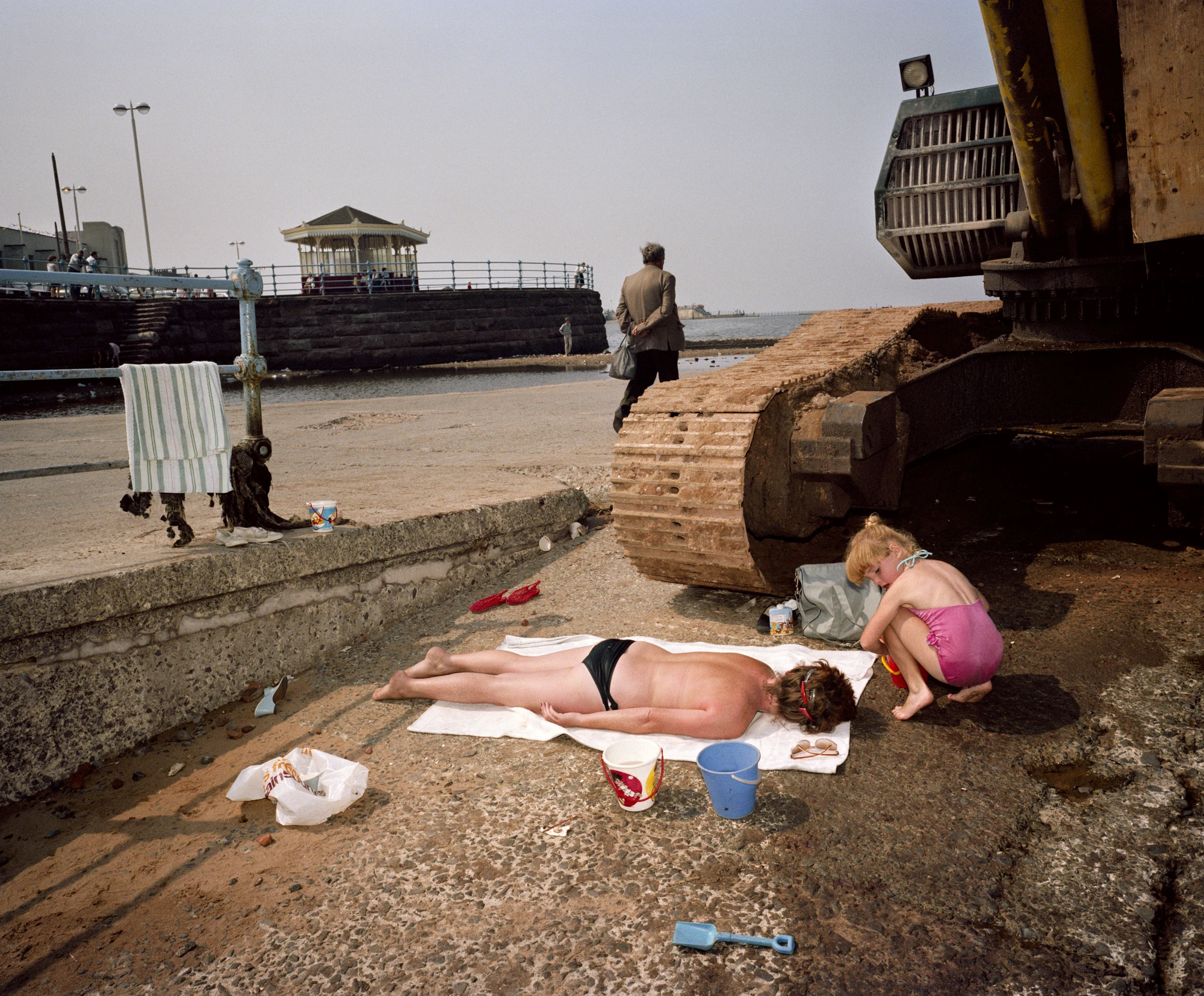
The pictures are not nostalgic either, which is the misreading they attract most. Look at what the frames hold: a woman sunbathing on a towel laid over concrete beside the tracks of an excavator, a baby howling in a pushchair under a pink parasol while its mother covers her eyes, an elderly couple eating chips beneath a wire bin that stopped accepting litter hours ago. Parr had no patience for the Good Old Days. “Well it wasn't,” he said of the belief that everything used to be better. “It just evolves.”

The beach was also where he tested things. New Brighton was the move to 6x7 and the move out of black and white; the macro lens and later the telephoto were each taken to the water first. The reason he gave was flat and practical: on a beach, “people are just lying there waiting to be photographed”. The colour came partly from commercial photography and partly from Stephen Shore and William Eggleston, who between them made the case that colour could be serious.

New Brighton has been tidied and part gentrified since, and Parr, who died in December 2025, said as much himself. The work belongs to a moment, the middle of Thatcherism, just before the lido closed. What survives is less a record of a place than a temperature. The children still queue at the hatch, the ice creams still run over their hands, the light is still hard, and nobody in the frame has been asked to compose themselves first.
Interested in Showcasing Your Work?

If you would like to feature your works on Thisispaper, please visit our Submission page and sign up to Thisispaper+ to submit your work. Once your submission is approved, your work will be showcased to our global audience of 2 million art, architecture, and design professionals and enthusiasts.
No items found.
Less, with more behind it.
Explore guides. Search the archive. Walk the atlas.
Become a Thisispaper+ member today to unlock full access to our magazine, advanced tools, and support our work.
Get two months FREE
with annual subscription
Less, with more behind it.
Explore guides. Search the archive. Walk the atlas.
Become a Thisispaper+ member today to unlock full access to our magazine, advanced tools, and support our work.
Get two months FREE
with annual subscription
No items found.
Alexander Zaxarov
Aug 24, 2026

Between 1983 and 1985, Martin Parr took a medium format camera and a flash to New Brighton on the Merseyside coast and made The Last Resort, among his earliest work in colour.

New Brighton lost its golden sands in the 1960s, when tidal changes in the River Mersey took them away and left the concrete behind. What stayed was a working seaside town on the Wirral: a promenade, an open air lido, arcades, a chip shop, and a public who came out from Liverpool regardless, because a hot Saturday is a hot Saturday. Martin Parr arrived in 1983 and kept returning until 1985.

He shot 6x7 medium format with a flash on the camera, and he shot colour, which in British documentary at the time still carried the smell of advertising. The flash does what flash does. It pins everything at one brightness and lets nothing recede: green ice cream melting over a child's fist at a kiosk hatch, ketchup pooling on a bap at a wooden snack counter, polystyrene trays and lolly sticks spread across the paving outside a chip shop. Litter carries the same weight in the frame as a face.

When the work was shown at the Serpentine in London in 1986, critics called it cruel and voyeuristic, an outsider photographing the working class at its least composed. Parr let the row run. Controversy, he said, “didn't do you any harm”, and he held that his subject was never class but the truisms nobody escapes, screaming children and bad weather included. “The contradictions of British life are everywhere to be seen,” he said. The beach was where they surfaced fastest.

The pictures are not nostalgic either, which is the misreading they attract most. Look at what the frames hold: a woman sunbathing on a towel laid over concrete beside the tracks of an excavator, a baby howling in a pushchair under a pink parasol while its mother covers her eyes, an elderly couple eating chips beneath a wire bin that stopped accepting litter hours ago. Parr had no patience for the Good Old Days. “Well it wasn't,” he said of the belief that everything used to be better. “It just evolves.”

The beach was also where he tested things. New Brighton was the move to 6x7 and the move out of black and white; the macro lens and later the telephoto were each taken to the water first. The reason he gave was flat and practical: on a beach, “people are just lying there waiting to be photographed”. The colour came partly from commercial photography and partly from Stephen Shore and William Eggleston, who between them made the case that colour could be serious.

New Brighton has been tidied and part gentrified since, and Parr, who died in December 2025, said as much himself. The work belongs to a moment, the middle of Thatcherism, just before the lido closed. What survives is less a record of a place than a temperature. The children still queue at the hatch, the ice creams still run over their hands, the light is still hard, and nobody in the frame has been asked to compose themselves first.
Interested in Showcasing Your Work?

If you would like to feature your works on Thisispaper, please visit our Submission page and subscribe to Thisispaper+. Once your submission is approved, your work will be showcased to our global audience of 2 million art, architecture, and design professionals and enthusiasts.
No items found.

Join Thisispaper+
Unlock access to 2500 stories, curated guides + editions, and share your work with a global network of architects, artists and designers who are shaping the future.
Get two months FREE
with annual subscription
Travel Guides
Immerse yourself in timeless destinations, hidden gems, and creative spaces—curated by humans, not algorithms.
Explore All Guides +
Submission Module
Submit your project and gain the chance to showcase your work to our worldwide audience of over 2M architects, designers, artists, and curious minds.
Learn More+
Curated Editions
Dive deeper into carefully curated editions, designed to feed your curiosity and foster exploration.
Off-the-Grid
Jutaku
Sacral Journey
minimum
The New Chair
Explore All Editions +
Atlas
A new and interactive way to explore the most inspiring places around the world.
Interactive map
Linked to articles
450+ curated locations
Google + Apple directions
Smart filters
Subscribe to Explore+
Become a Thisispaper+ member today to unlock full access to our magazine, submit your project and support our work.
Join Thisispaper+Join Thisispaper+
€9/month
Get two months FREE
with annual subscription