On Rua Capelo in Lisbon's Chiado, Lázaro Rosa-Violan and Cristina Matos convert the former Rádio Renascença radio station into The Ivens, a hotel of opposing registers, public maximalism and private restraint.
The address is Rua Capelo 9, where two Lisbon streets named for the Portuguese explorers Hermenegildo Capelo and Roberto Ivens meet at the corner of a 19th-century building. The pair crossed Africa together in the late nineteenth century, mapping the inland lakes of Zaire and the Zambezi, threading the southern interior, reaching the Laca lands in Mozambique. They lost forty-two days to the jungle on one expedition and travelled over eight thousand kilometres. The hotel that occupies the building, once the Rádio Renascença radio station, takes its name from one of them and its compass from both.
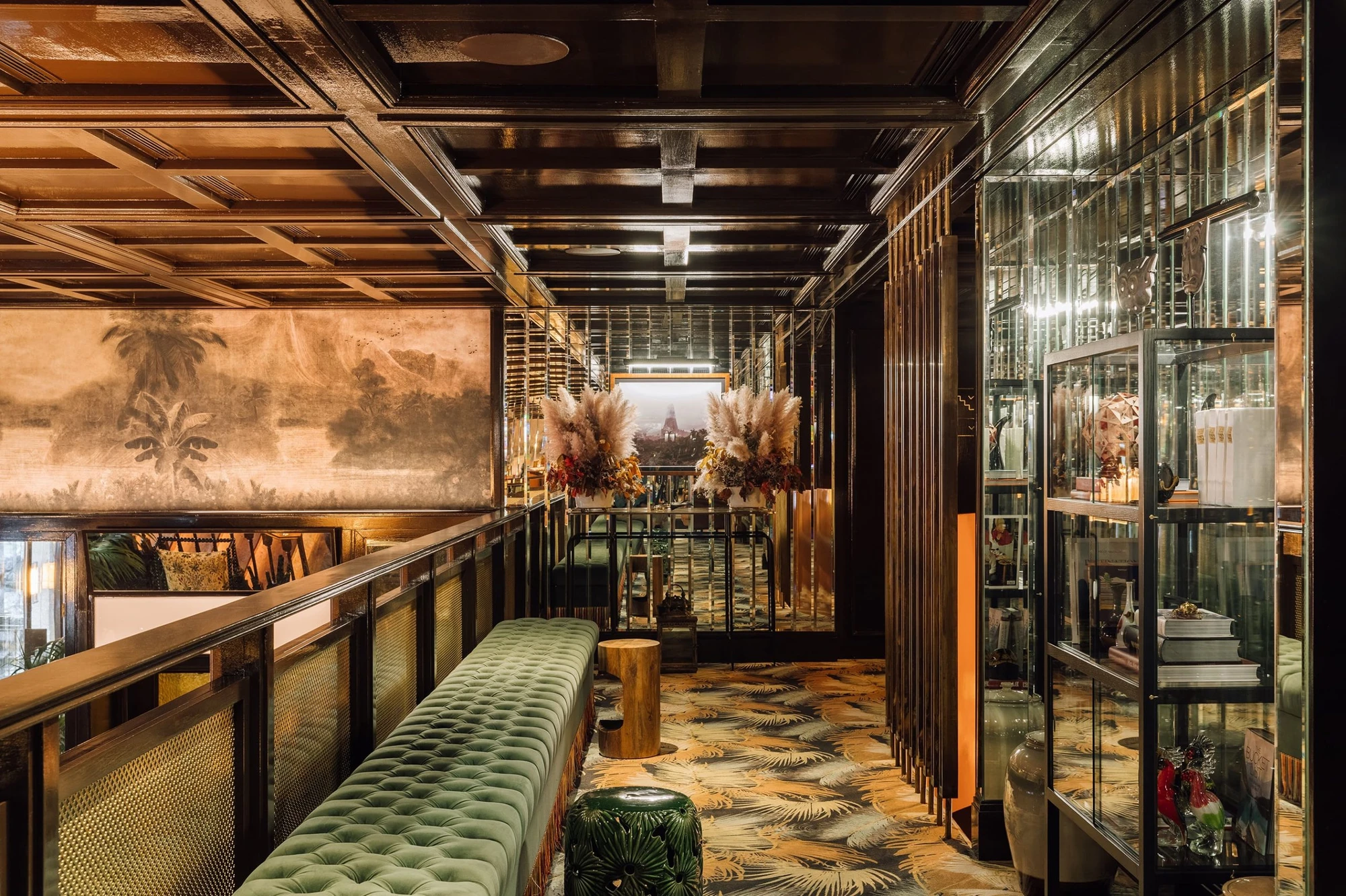
Barcelona-based Lázaro Rosa-Violan runs the common areas as a maximalist travel cabinet. Corridors are painted petroleum blue and hung with period photographs and documents; the floor runs a long carpet of geometric motifs; tables and bookshelves carry travel books, magazines and histories of distant lands. The lobby holds the explorers' library register, velvet armchairs, tropical plants, route maps under glass. Rosa-Violan's Barcelona studio is built around painting and spatial design.
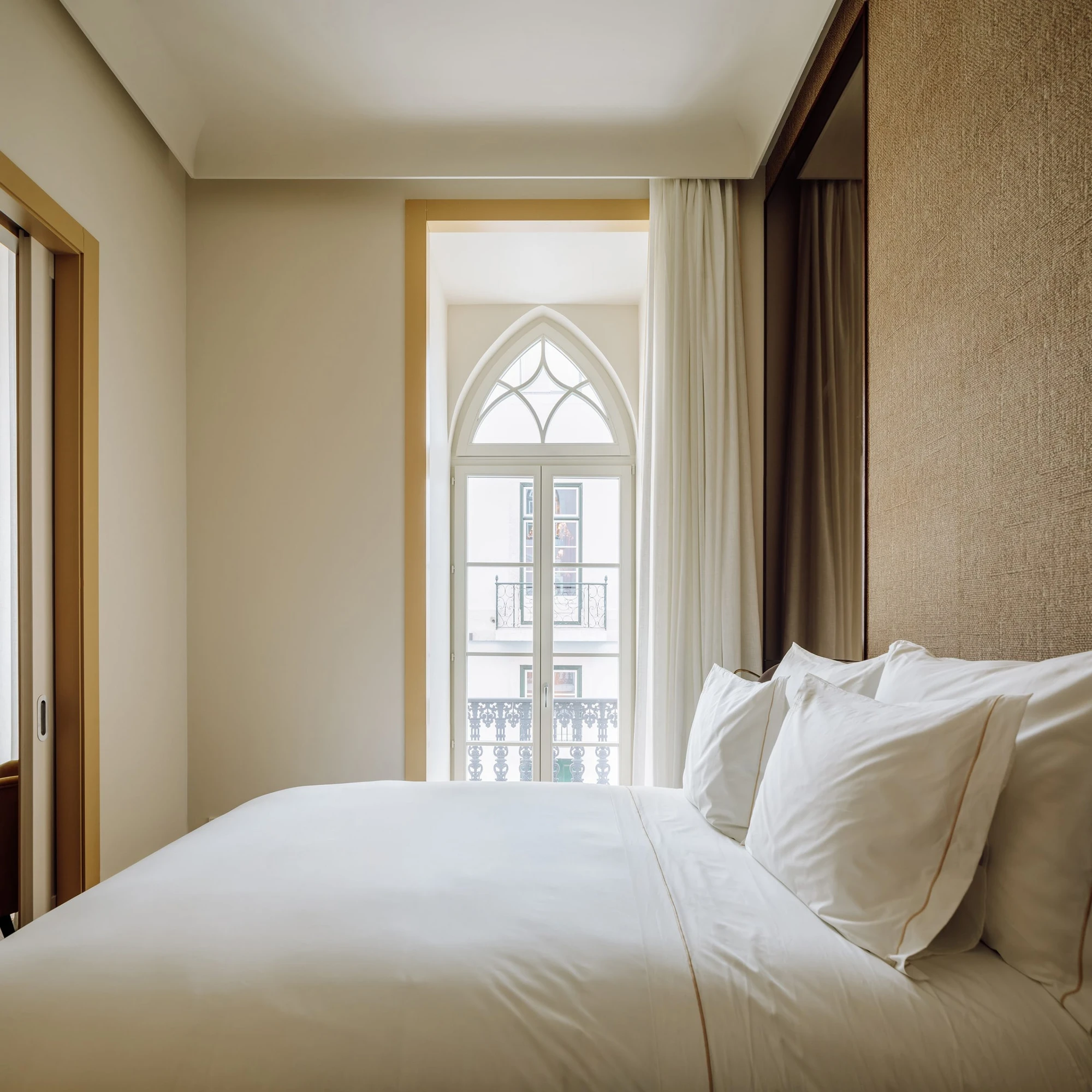
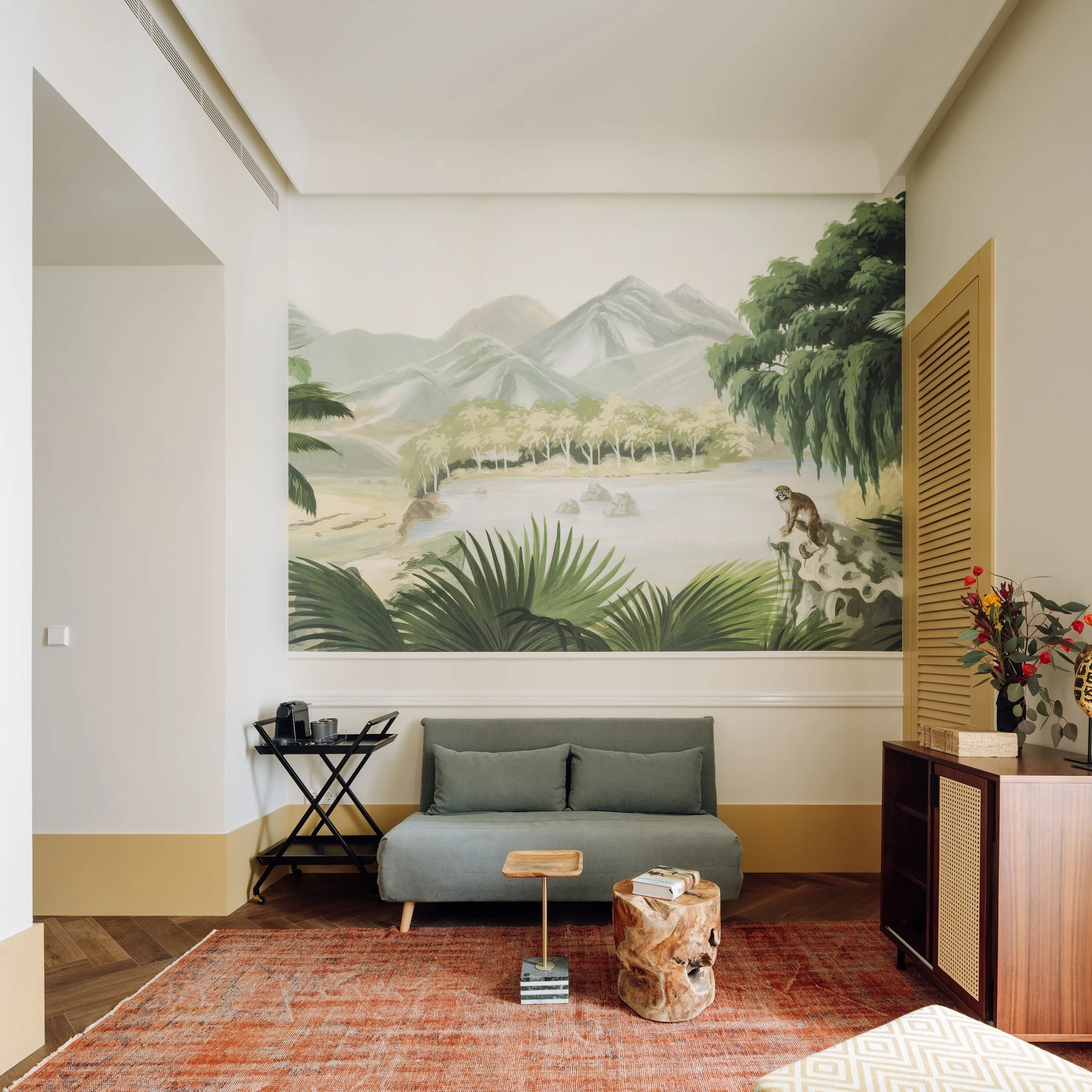
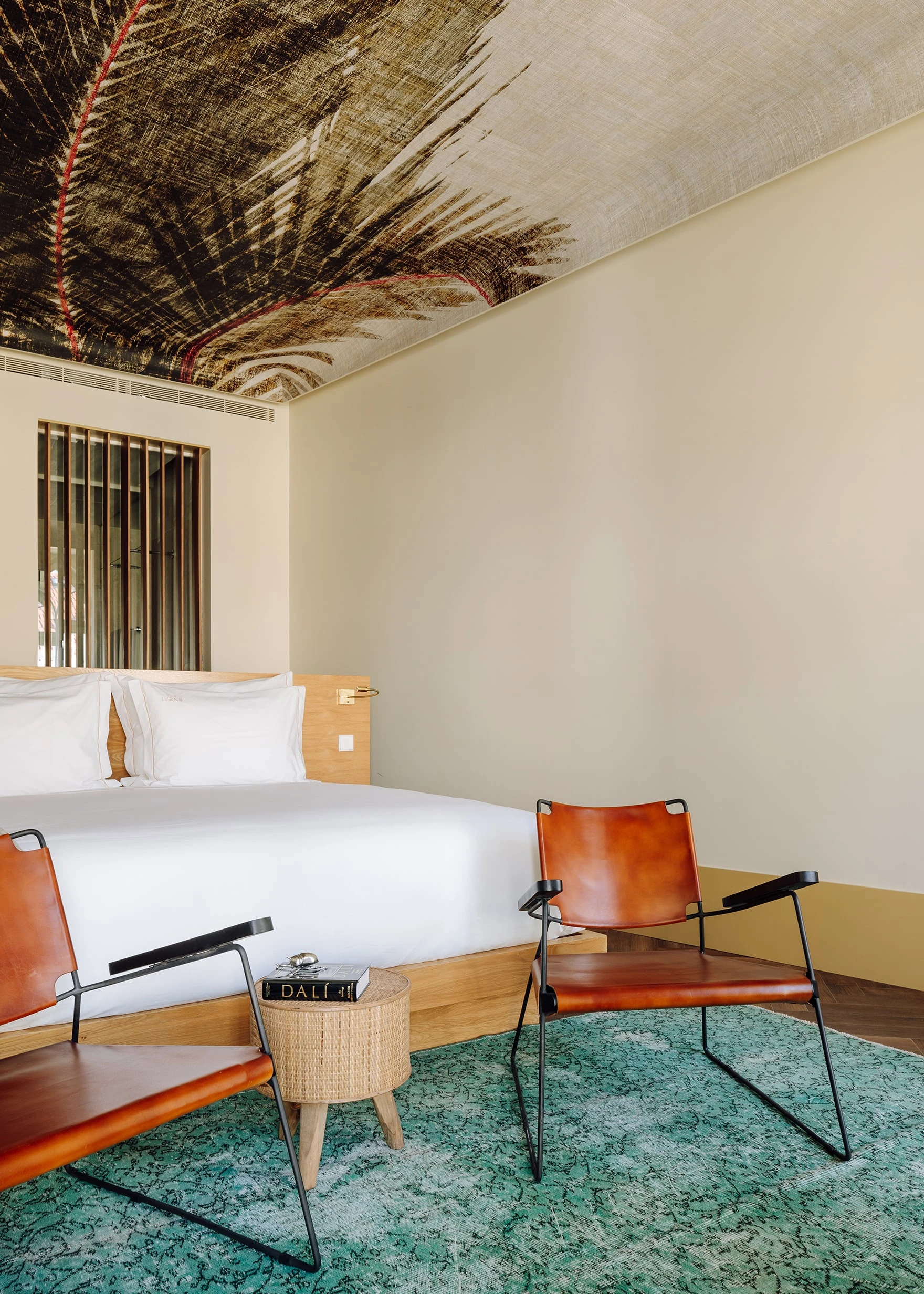
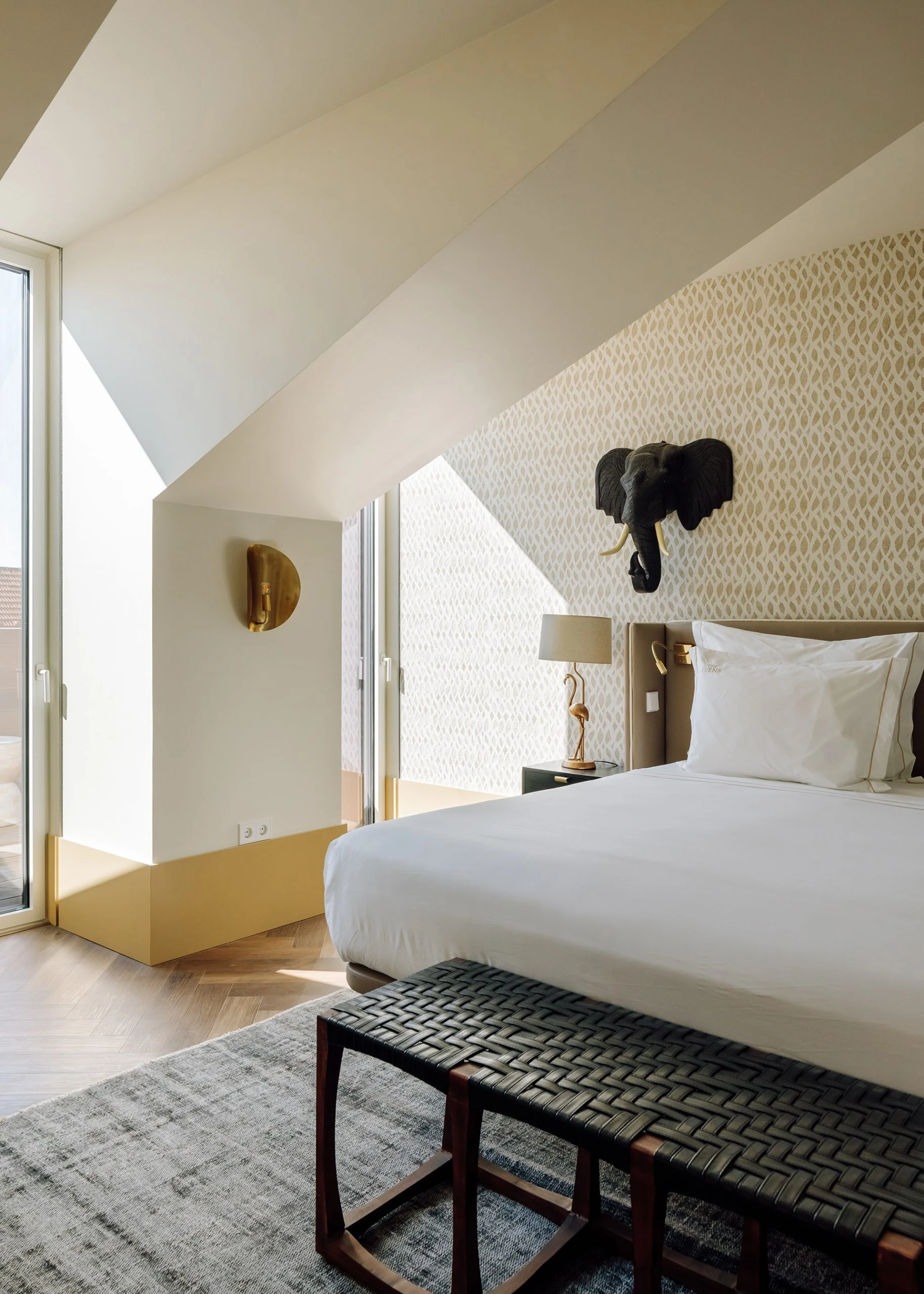
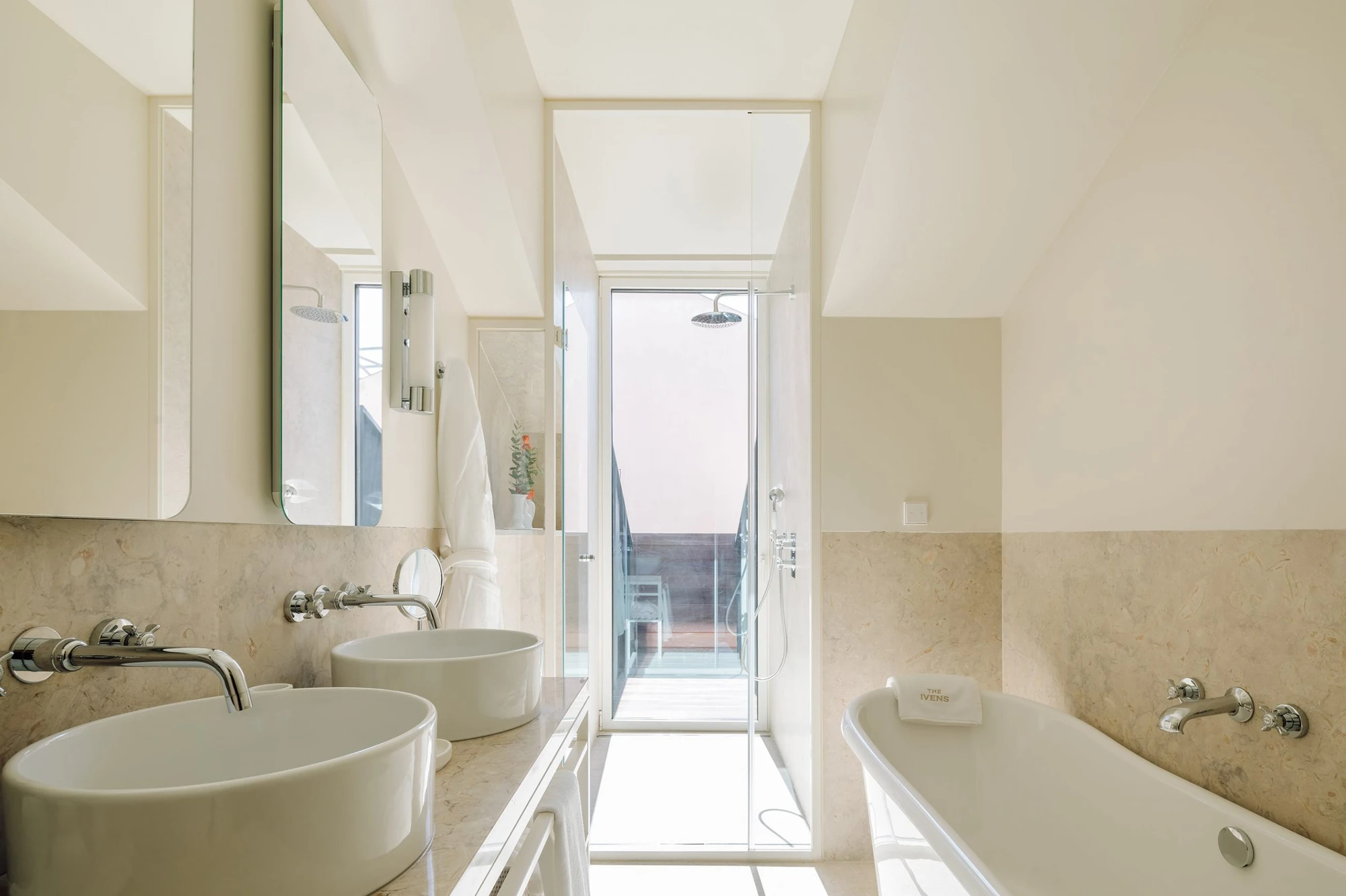
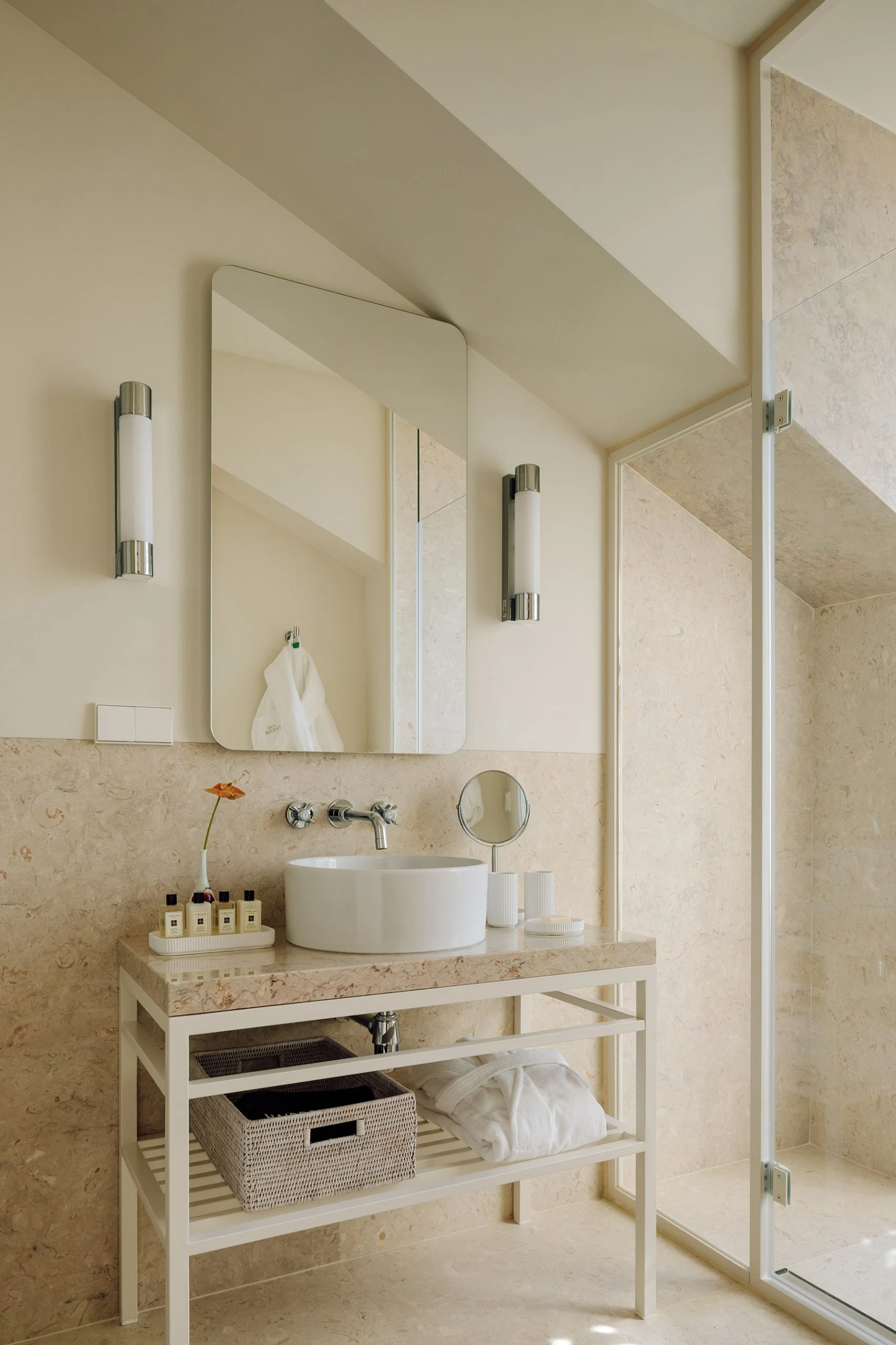
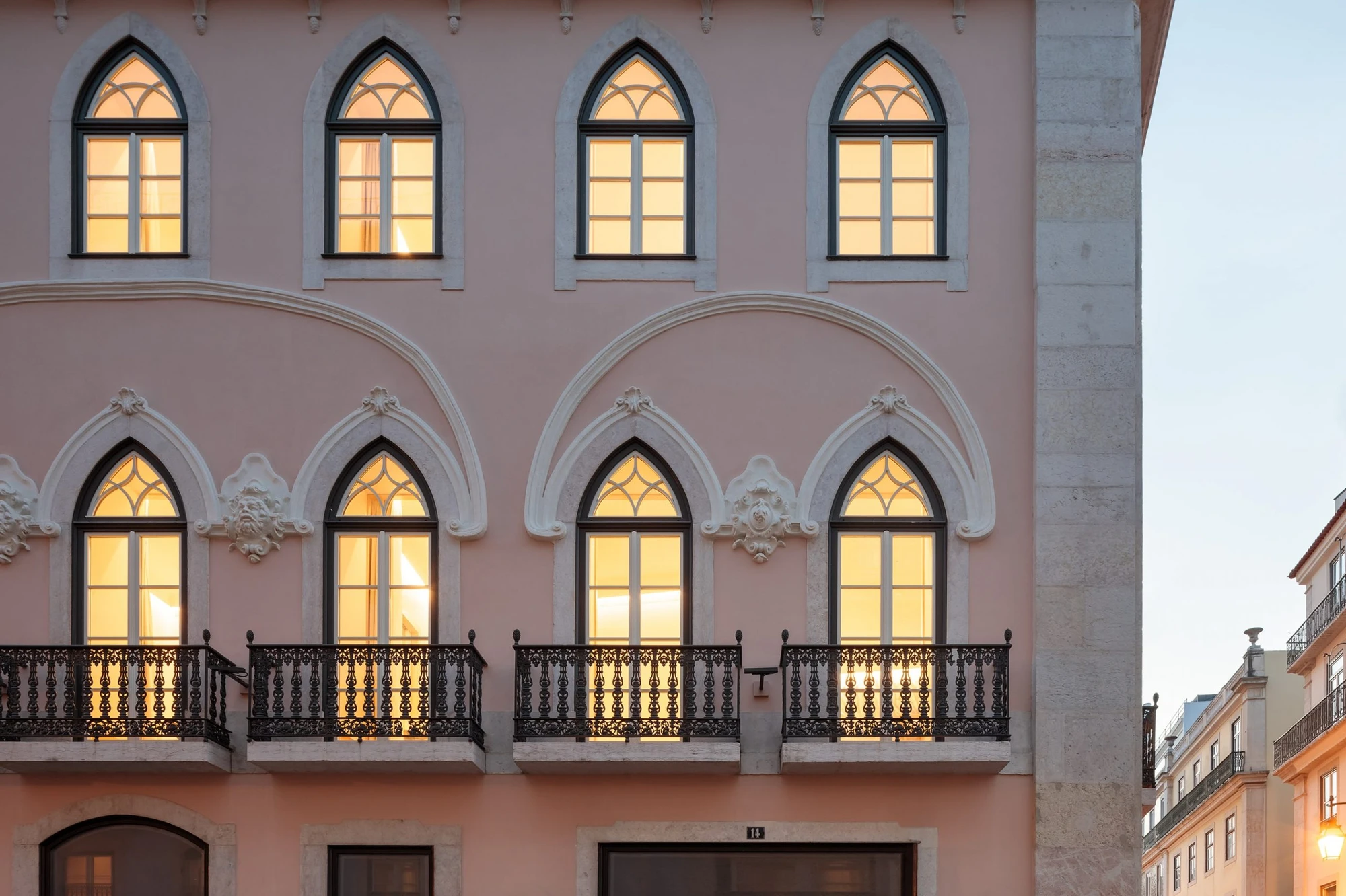
Cristina Matos works the rooms in the opposite register. Beiges, whites and greens hold the palette; wood, marble and straw hold the materials; the colour notes live only in wallpaper and carpets, all of them alluding to fauna and flora. Window frames keep their original pointed arches, oversized enough to flood the rooms with Lisbon light. Bathrooms use classical black-and-white tile in the standard rooms and pale marble in the suites. Matos shapes both the rooms and the reception area, working across hospitality and residential design.
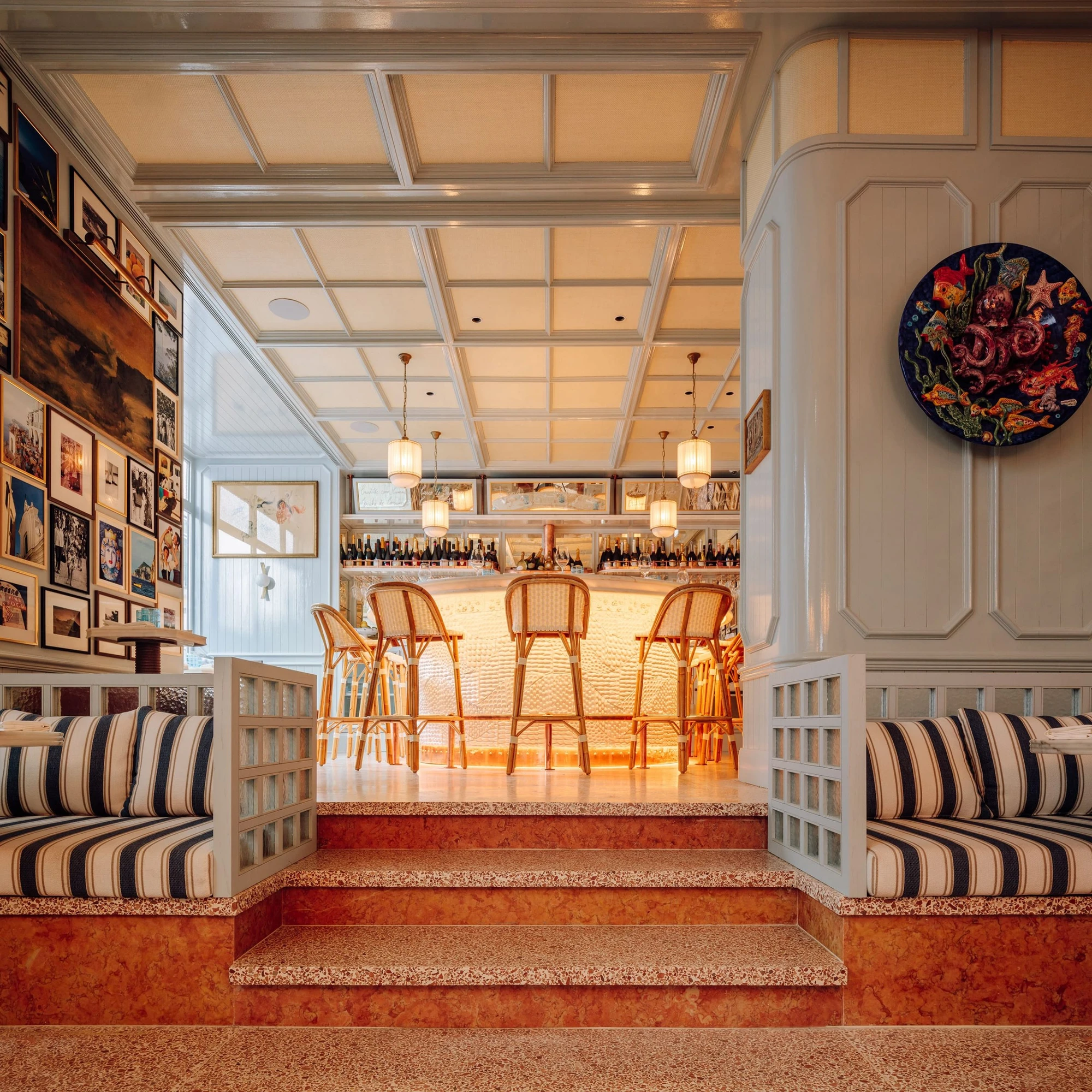
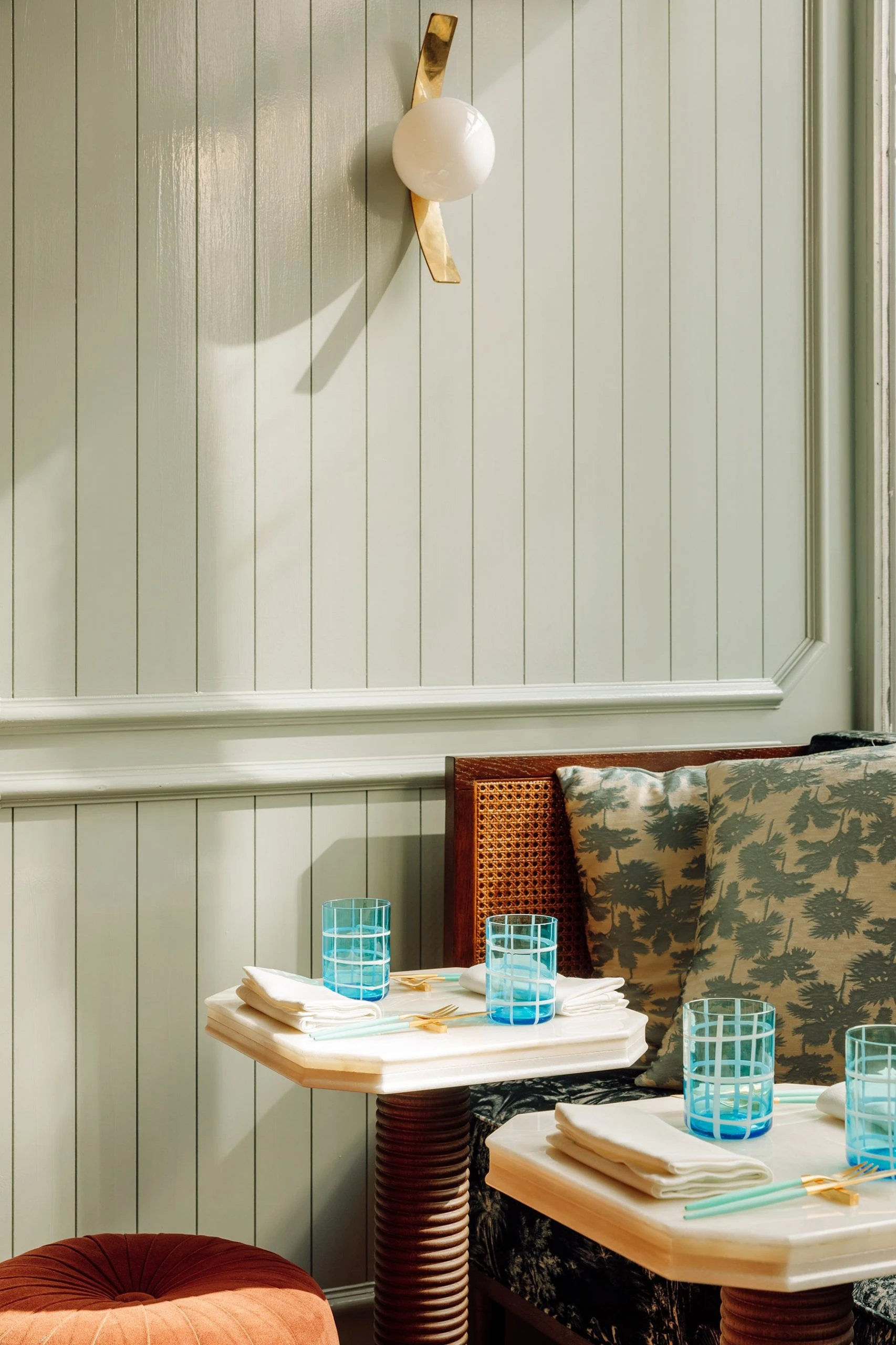
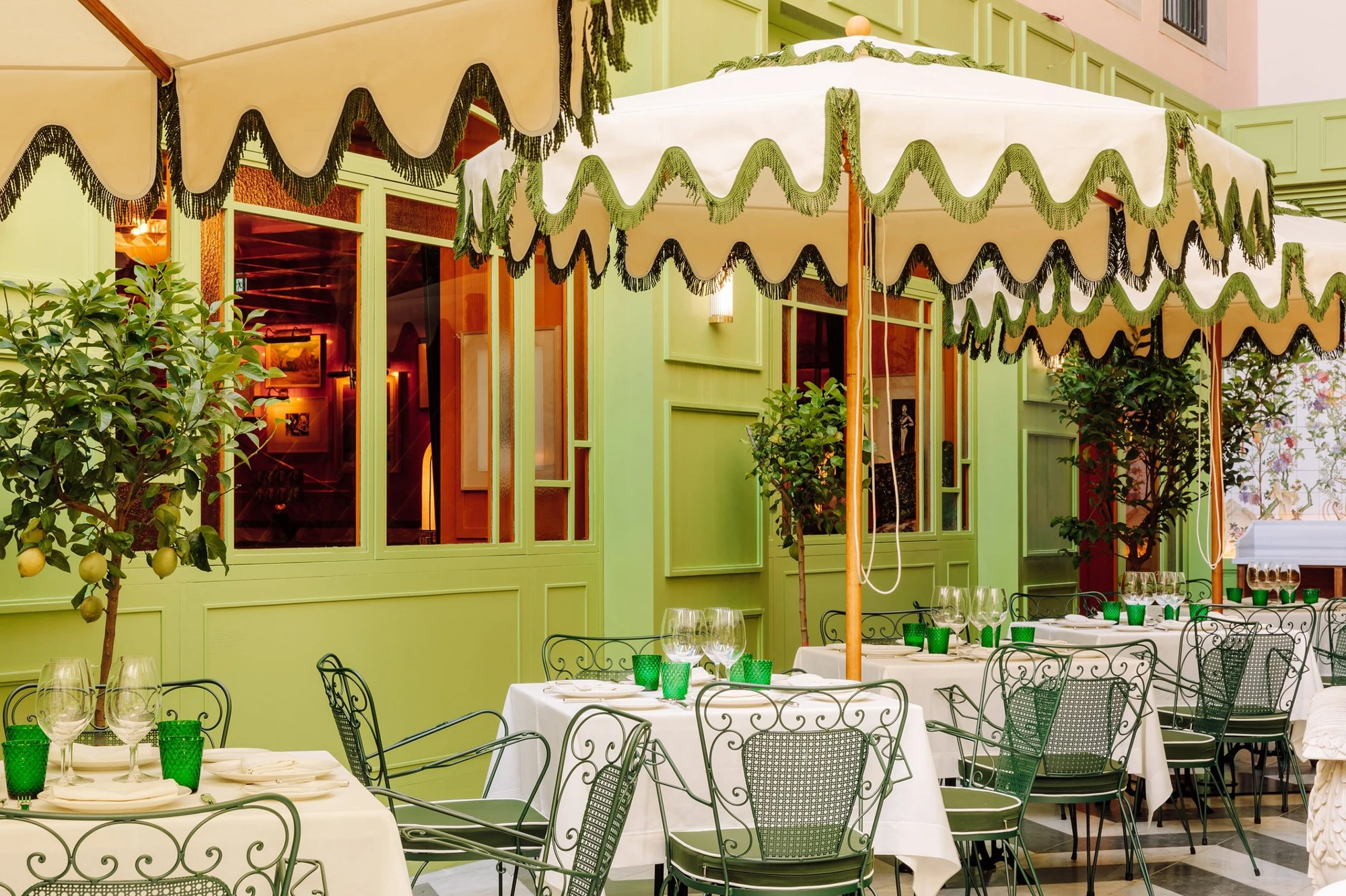
Rocco runs a full-floor footprint across four moods. The Ristorante anchors the centre under warm-coloured walls around an open kitchen with show cooking, grill and aged meats; the Gastrobar climbs the stairs to a wall-tall wine display; the Crudo Bar leans Mediterranean shellfish along the coastal flavours of Italy; the terrace transforms the interior into a green-toned exterior. The concept is deliberately Italian rather than Portuguese, staged across times of day rather than fixed to a single visit.
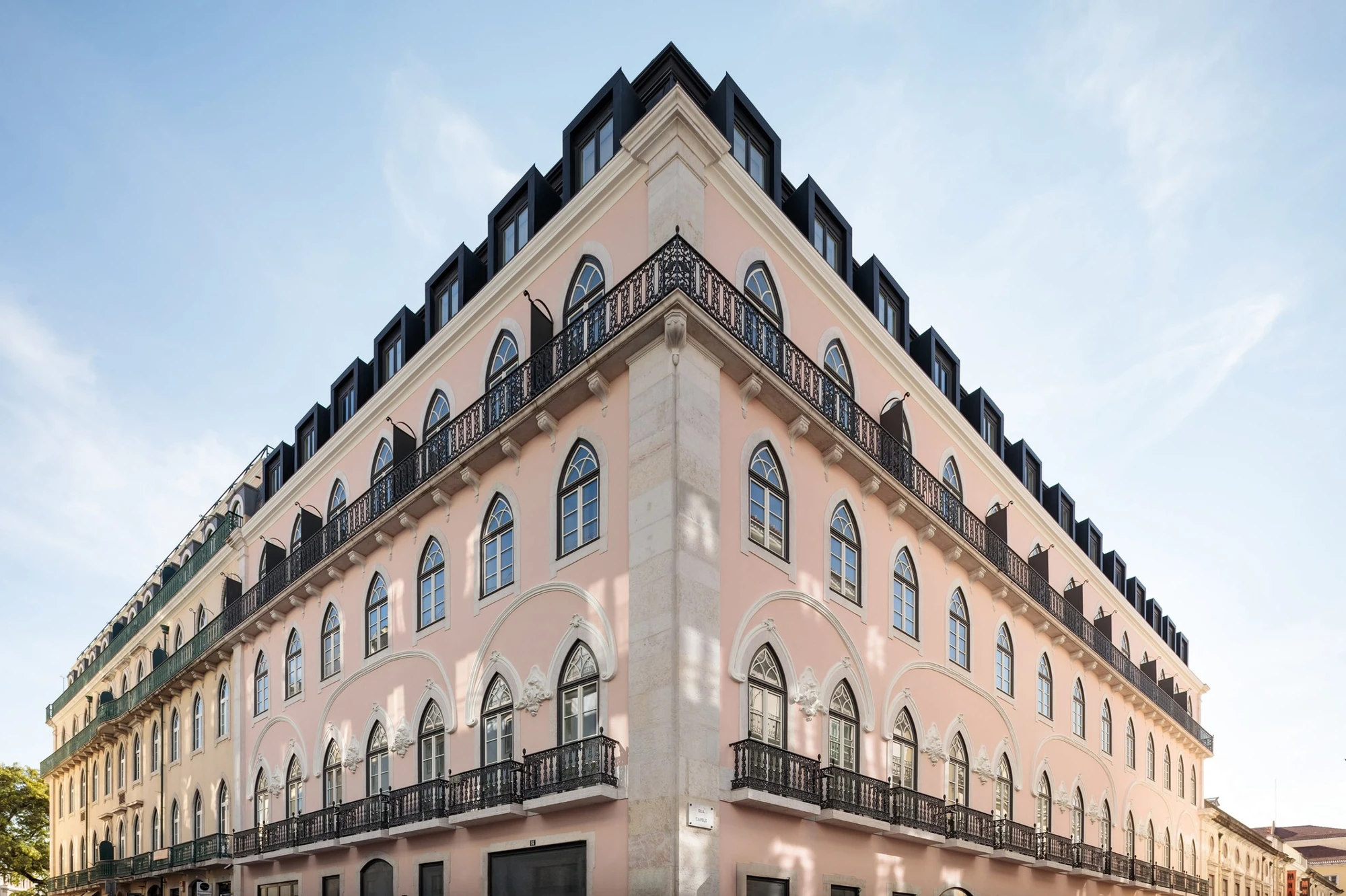
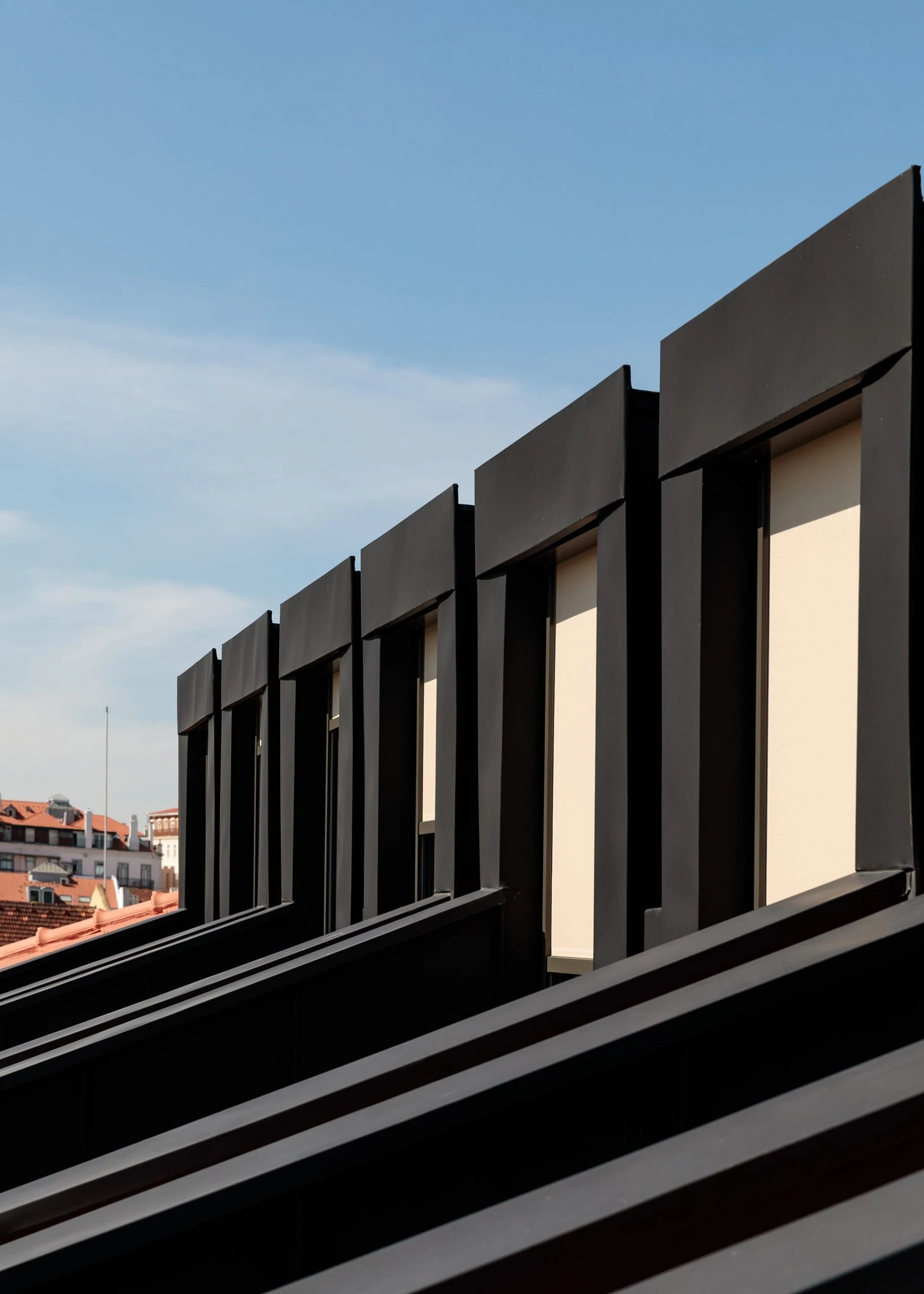
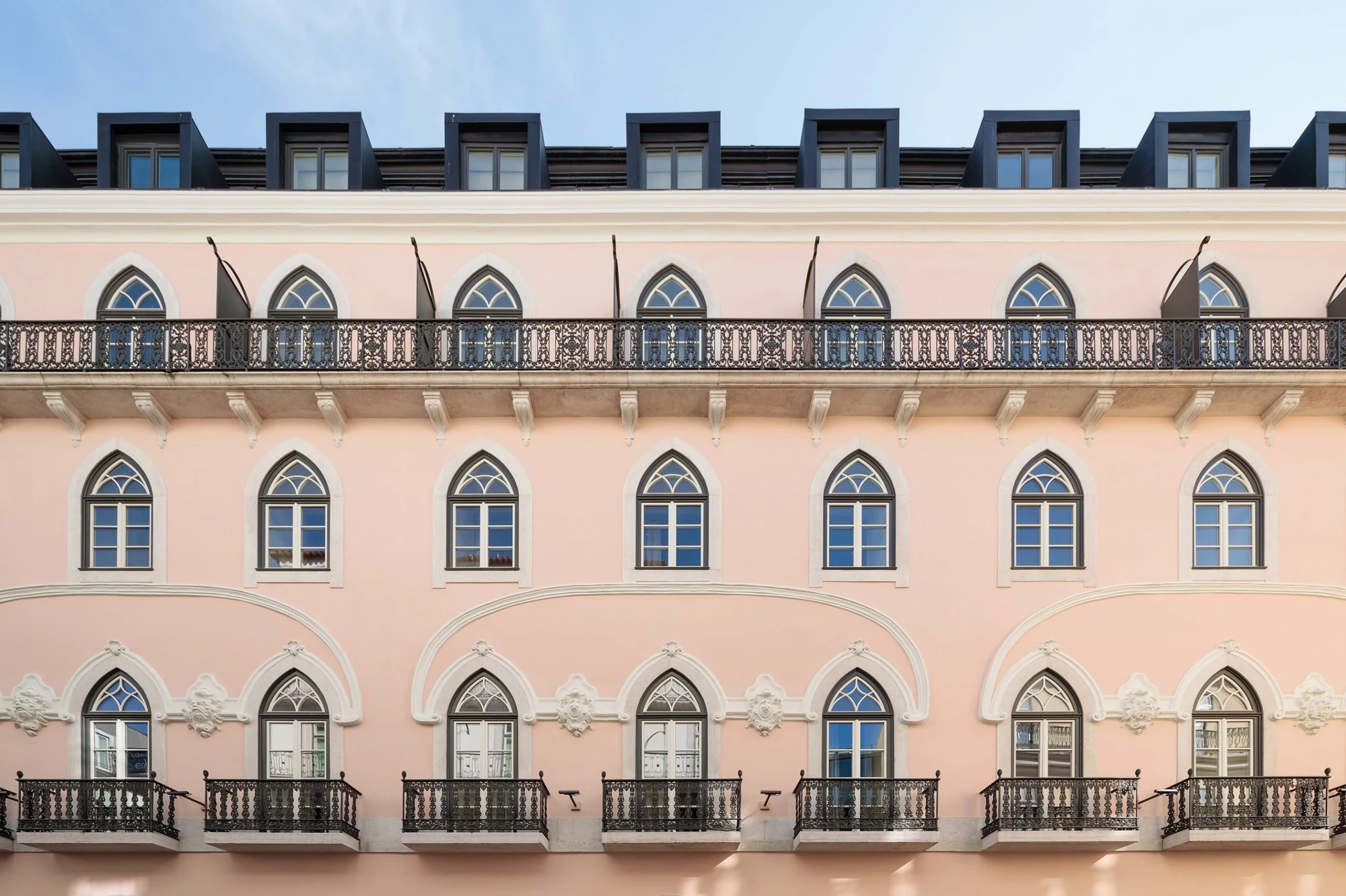
The exterior keeps the 19th-century shell visible. Pink lime-washed plaster sits behind pointed arch windows; black cast-iron filigree balconies catch the line of each opening; the mansard reads as a band of dormers along the corner block. The radio station underneath is gone, but the building's pre-broadcast life has been left to do the period work.
Two designers, one building, a single legible argument: the public floors as the cabinet of an explorer, the rooms as a place to recover before the next departure. Lisbon hospitality has spent a decade oscillating between maximalist period pastiche and bleached minimalism. The Ivens commits to both at once, sets the line at the doorway between corridor and room, and lets the pointed-arch window do most of the explaining.