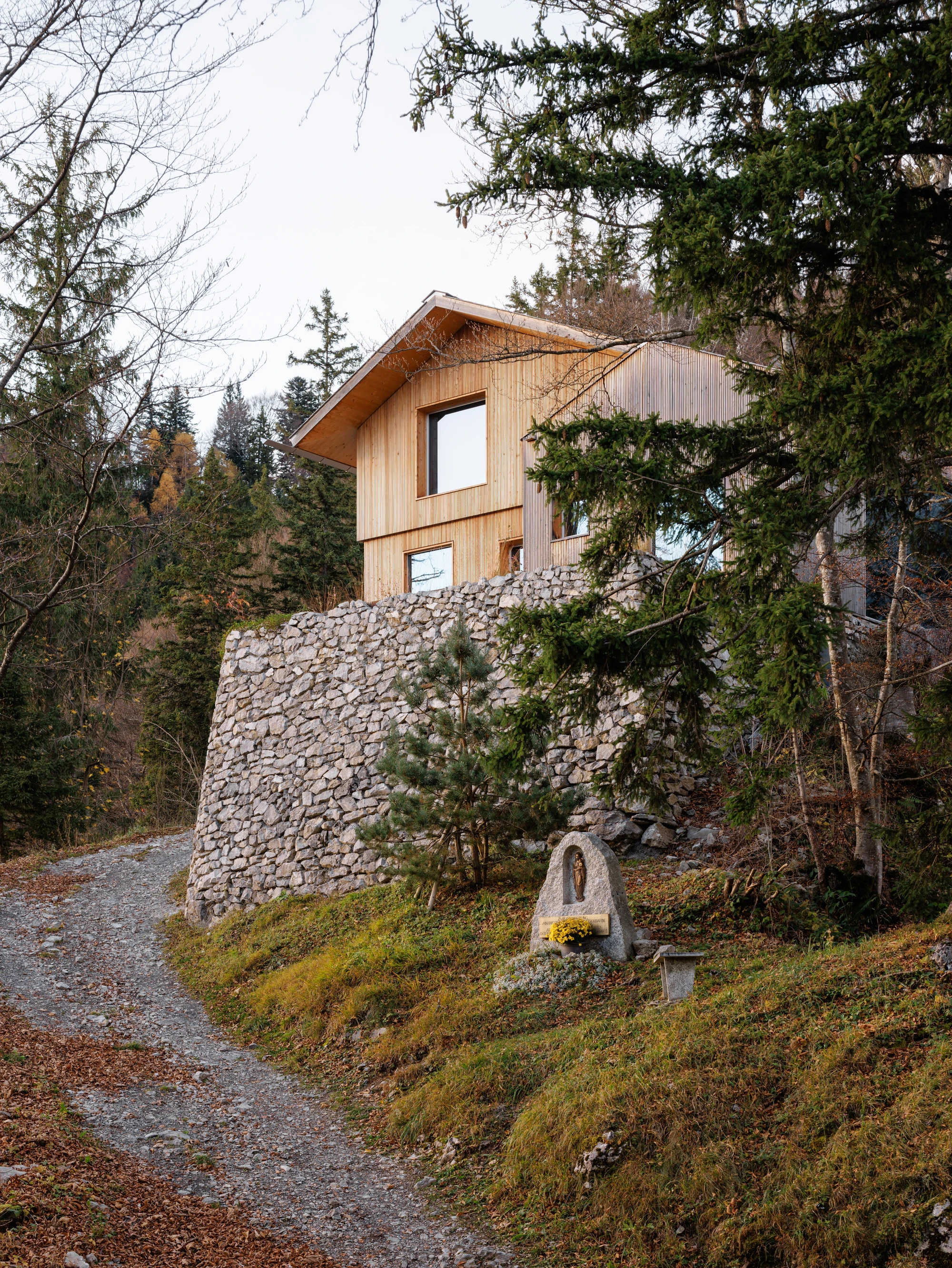
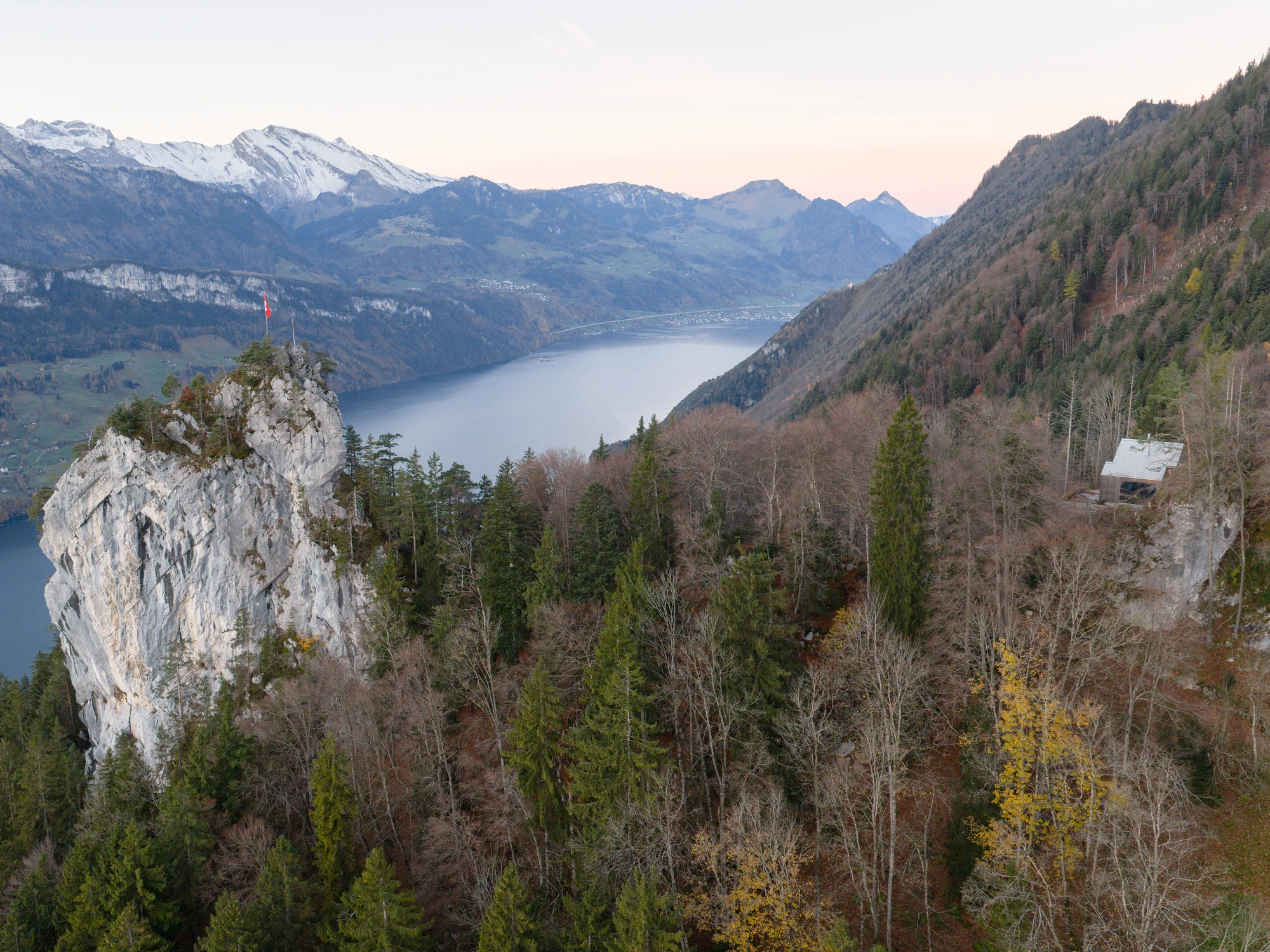
On a protected slope above Lake Uri near Brunnen, Guča arch. rebuilds an Alpine cabin within the same footprint and height, CLT panels and Corten steel replacing structural instability with material clarity.
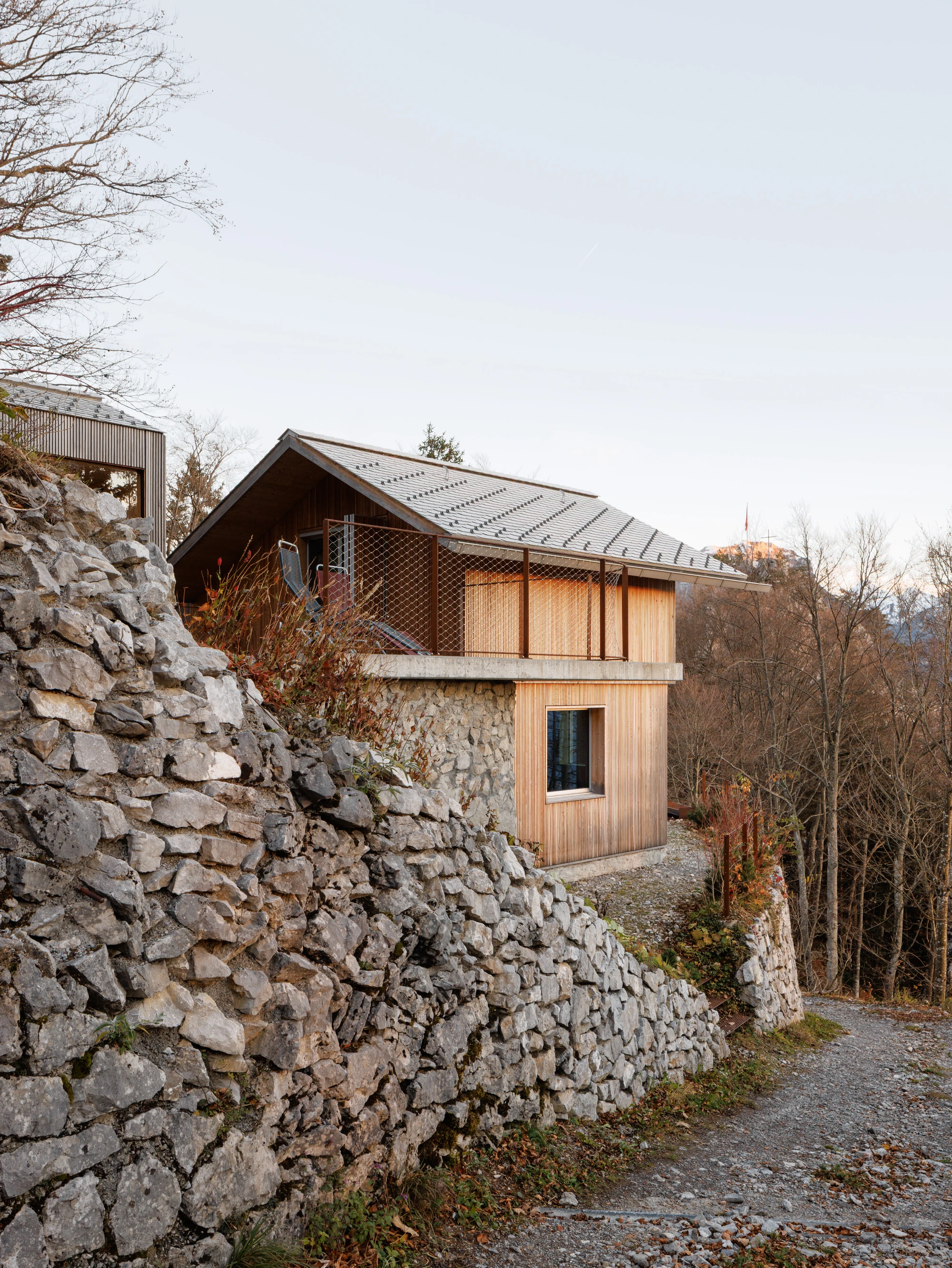
The original cabin was structurally unstable. What began as a renovation became a complete rebuild, constrained by local regulations that required the new structure to occupy the same footprint, match the original height and preserve the same overall character, including strict limits on glazing ratios for facades visible from public areas. The site sits within a protected bird sanctuary adjacent to the Stockflue climbing cliff, on a steep slope overlooking the town of Brunnen in the Canton of Schwyz. There was no room for formal gesture. Every decision had to negotiate between the regulator's memory of what the cabin looked like and the client's requirement for a modern, flexible interior.
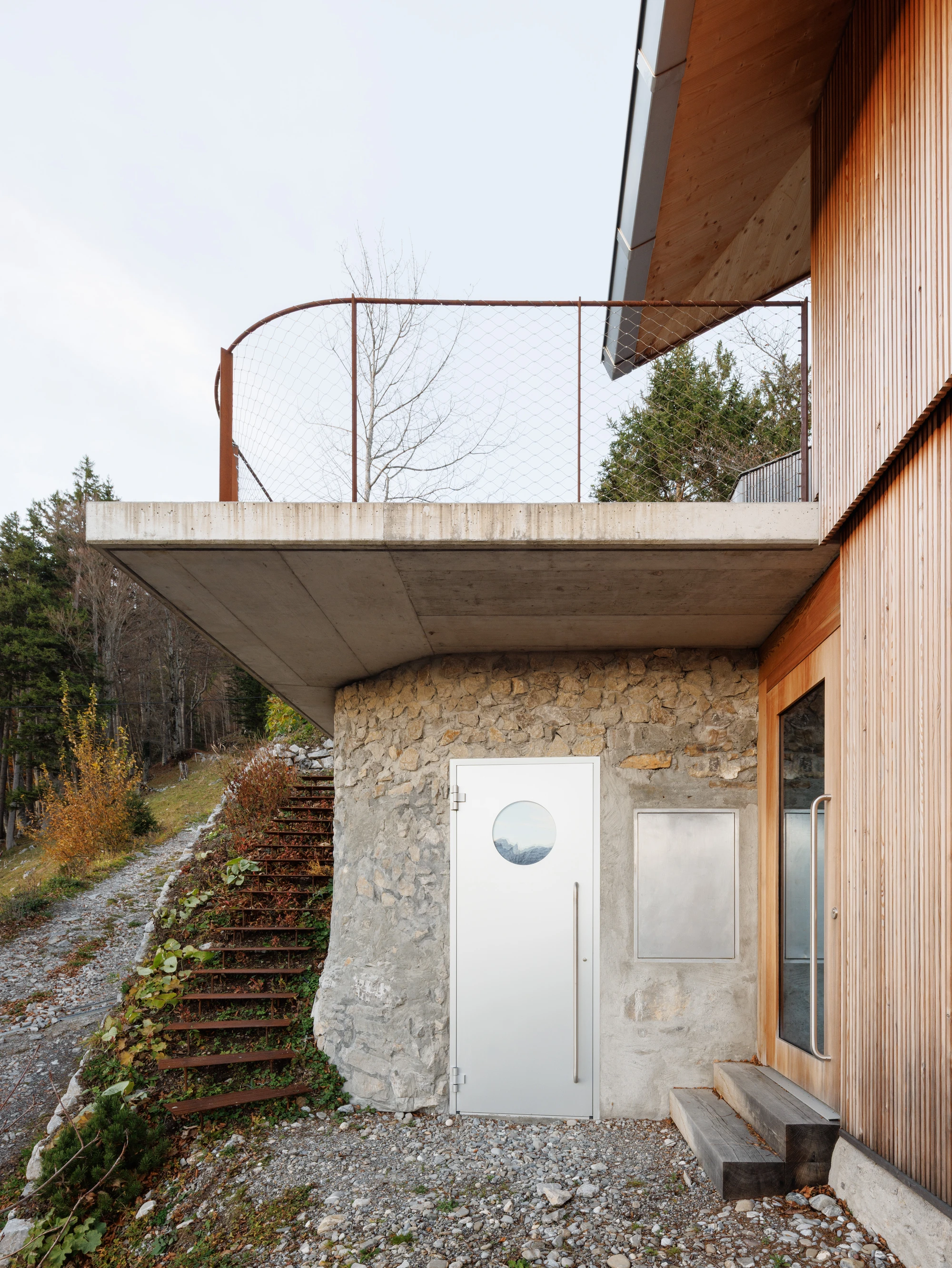
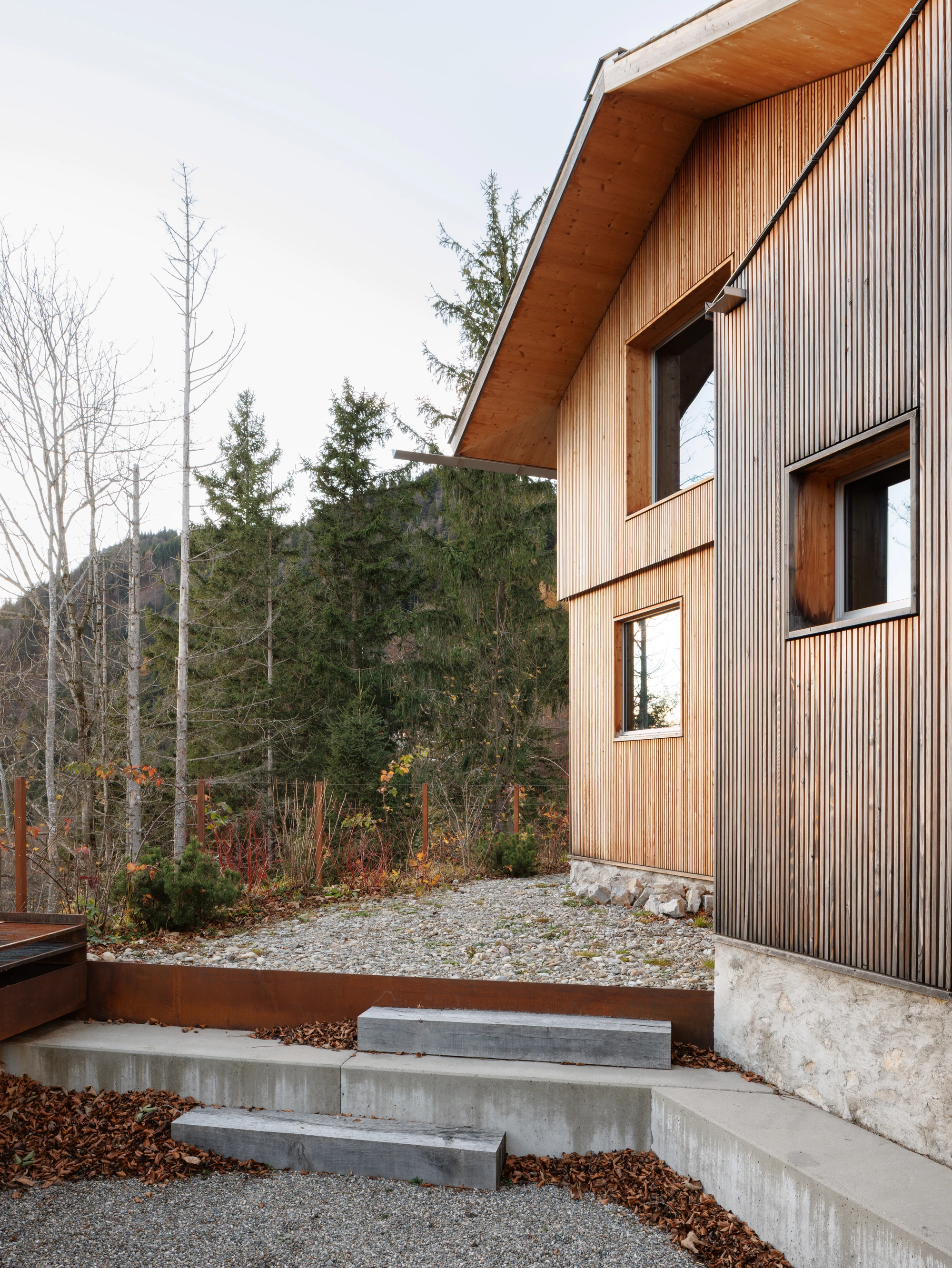
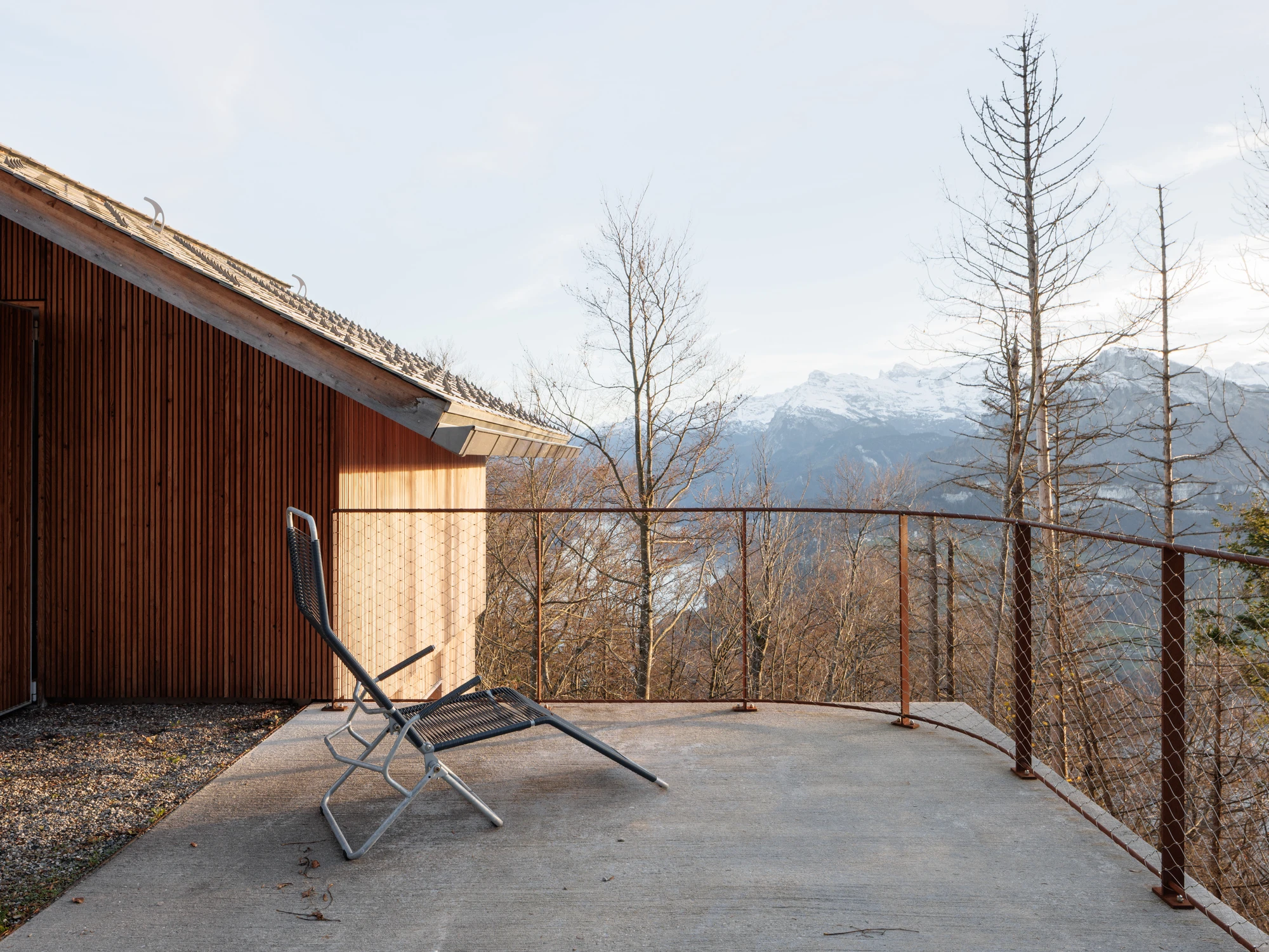
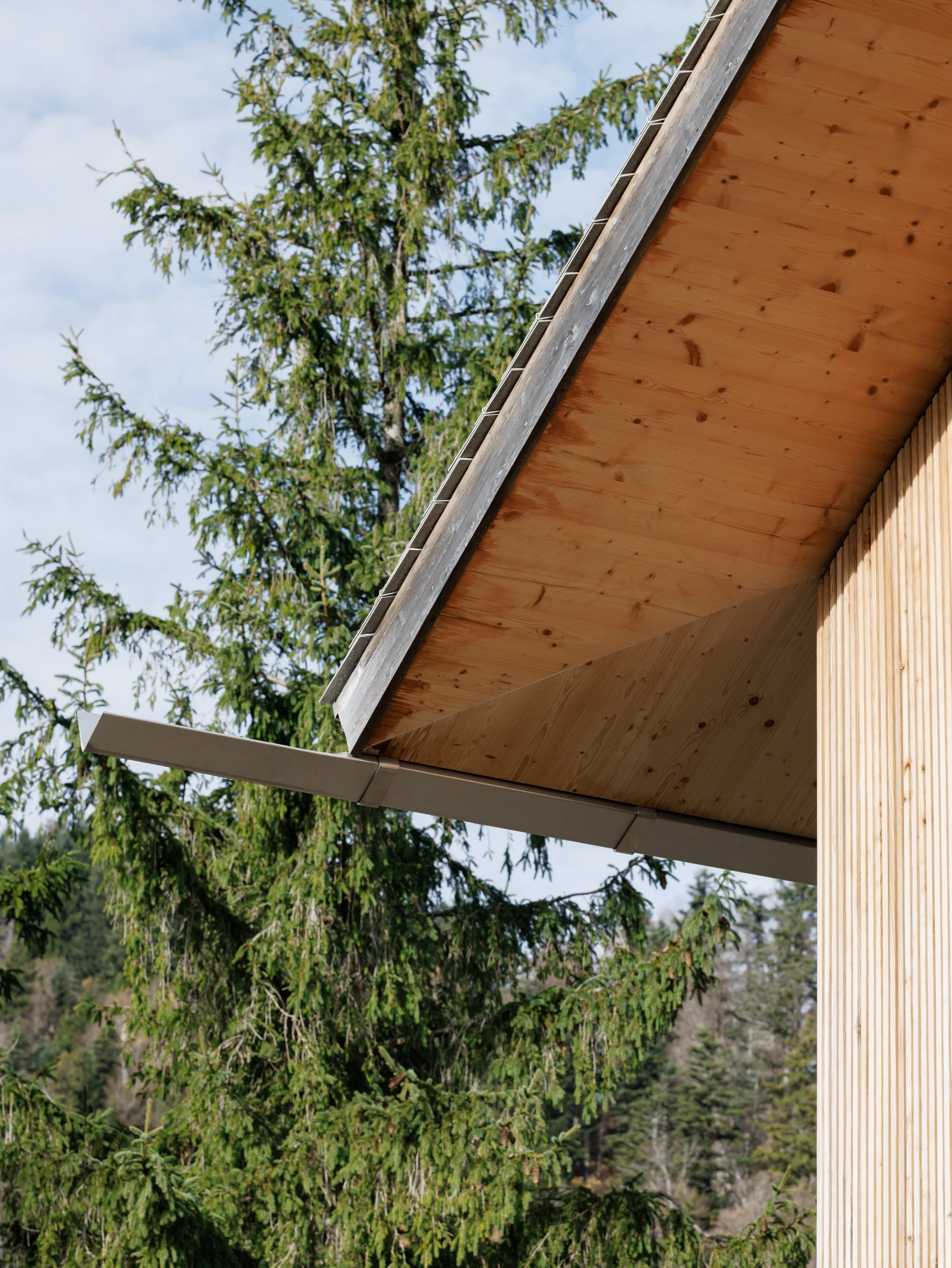
Guča arch. resolved the structural problem by working from the ground up: a concrete base in contact with the terrain, then CLT panels and wooden frame construction above. The exterior is clad in stone, rough plaster and Corten steel, the latter weathering toward the browns and ochres of the Alpine landscape over time. Rebar steel appears at the exterior terrace railing and at details throughout, the industrial material in deliberate contrast to the stone and plaster that dominate the facade reading from the valley below. The south-facing terrace with its raw concrete fireplace sits recessed into the slope, a generous exterior room that the strict glazing limits would have otherwise denied the cabin.
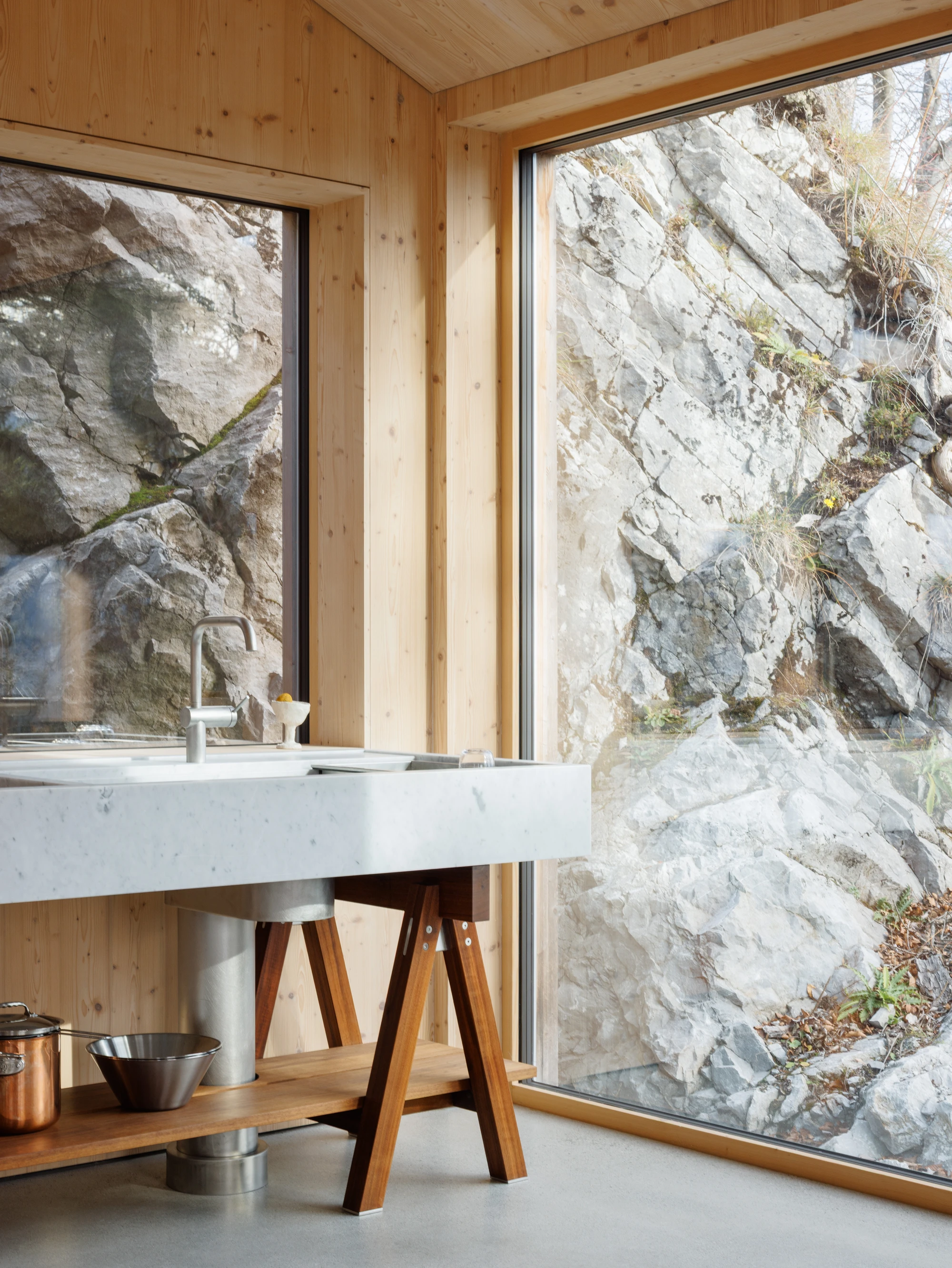
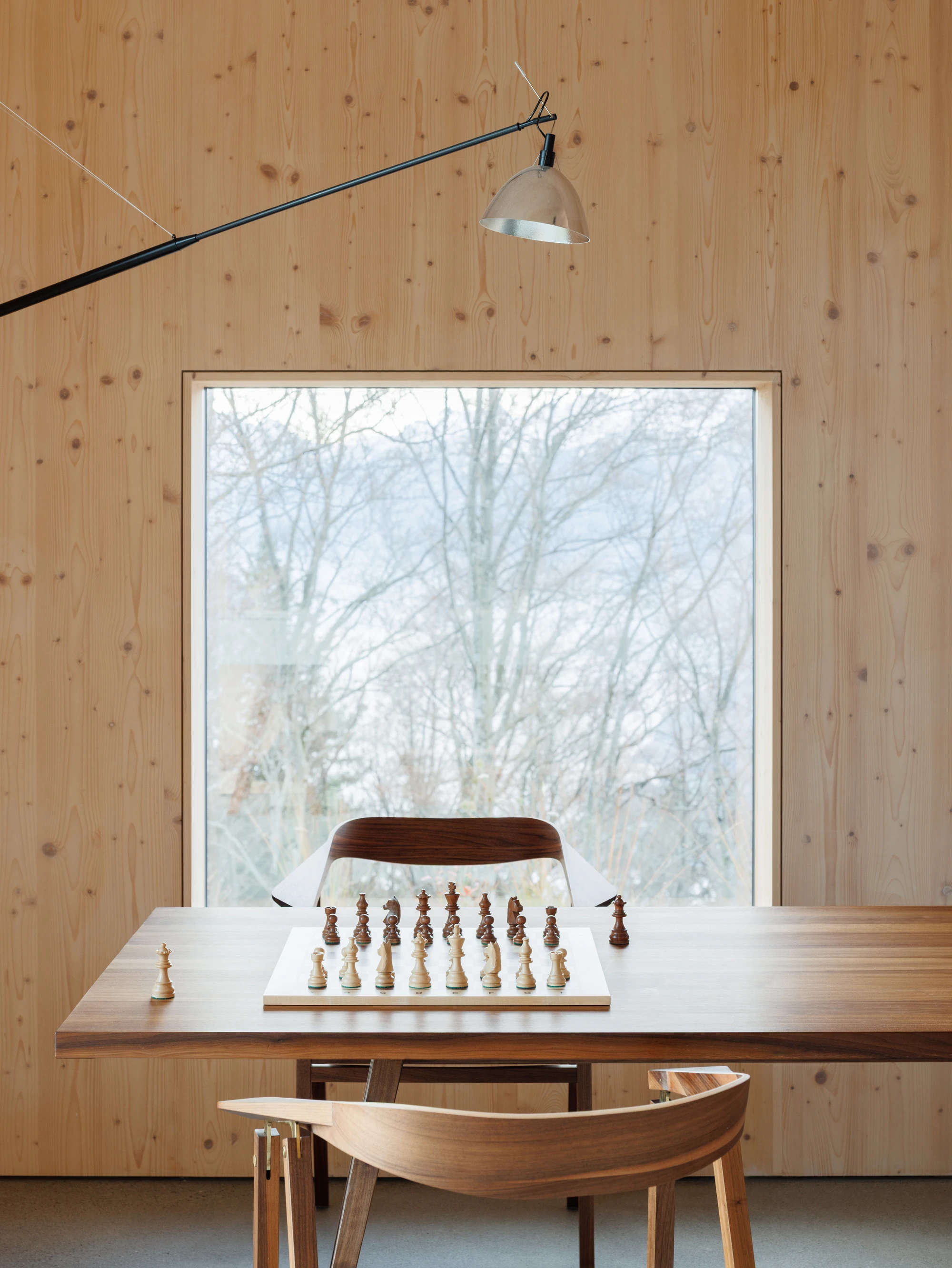
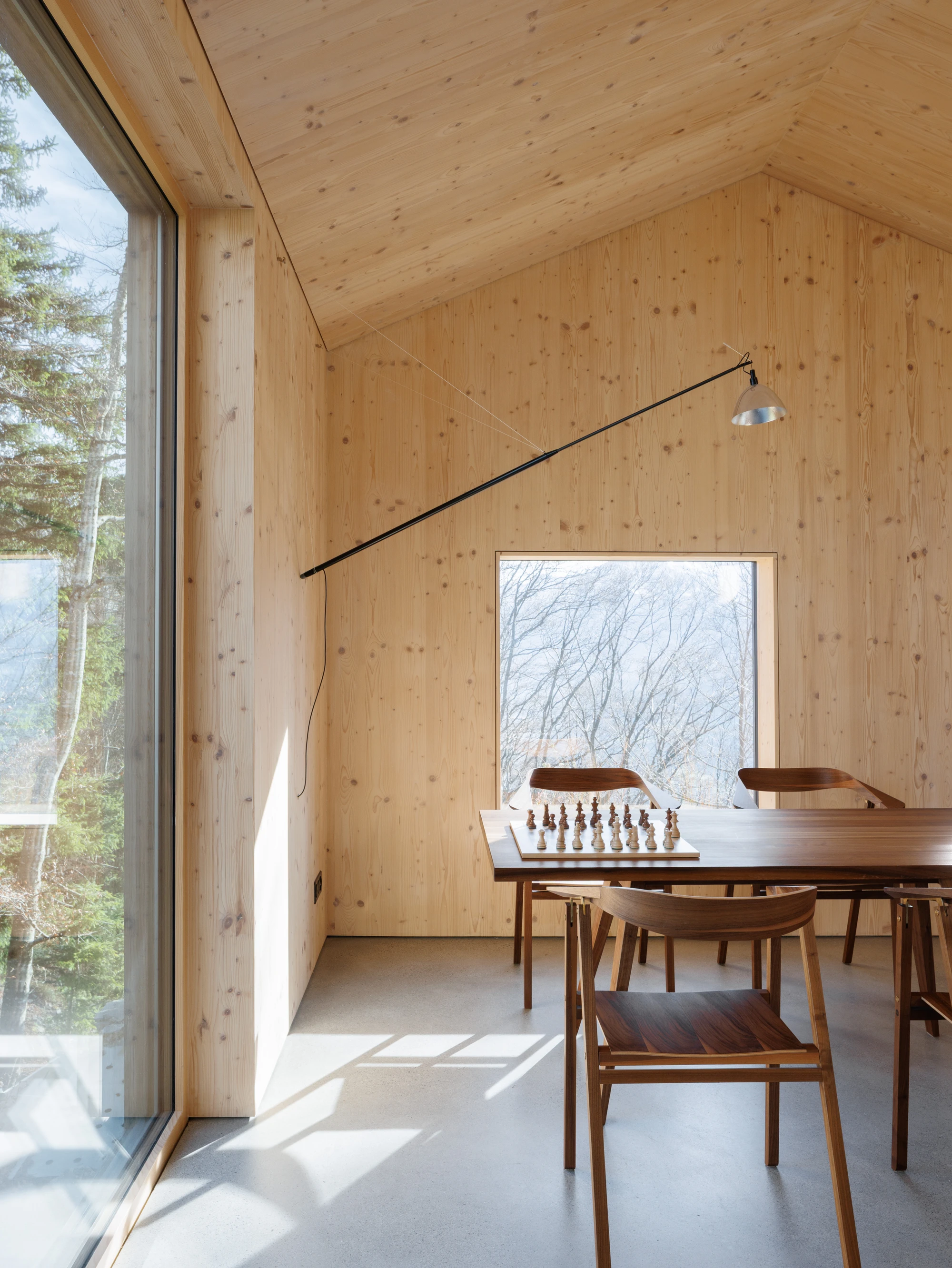
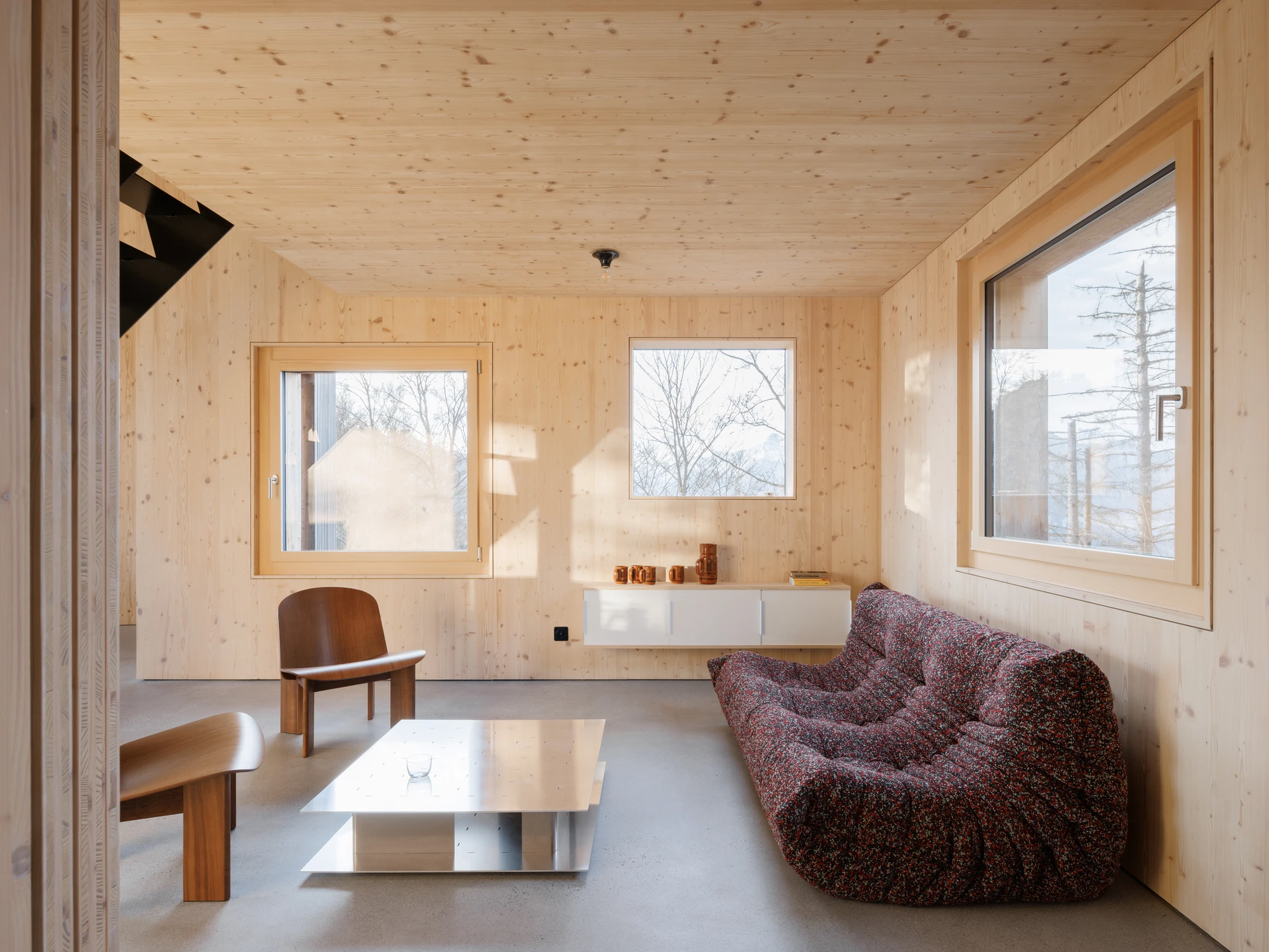
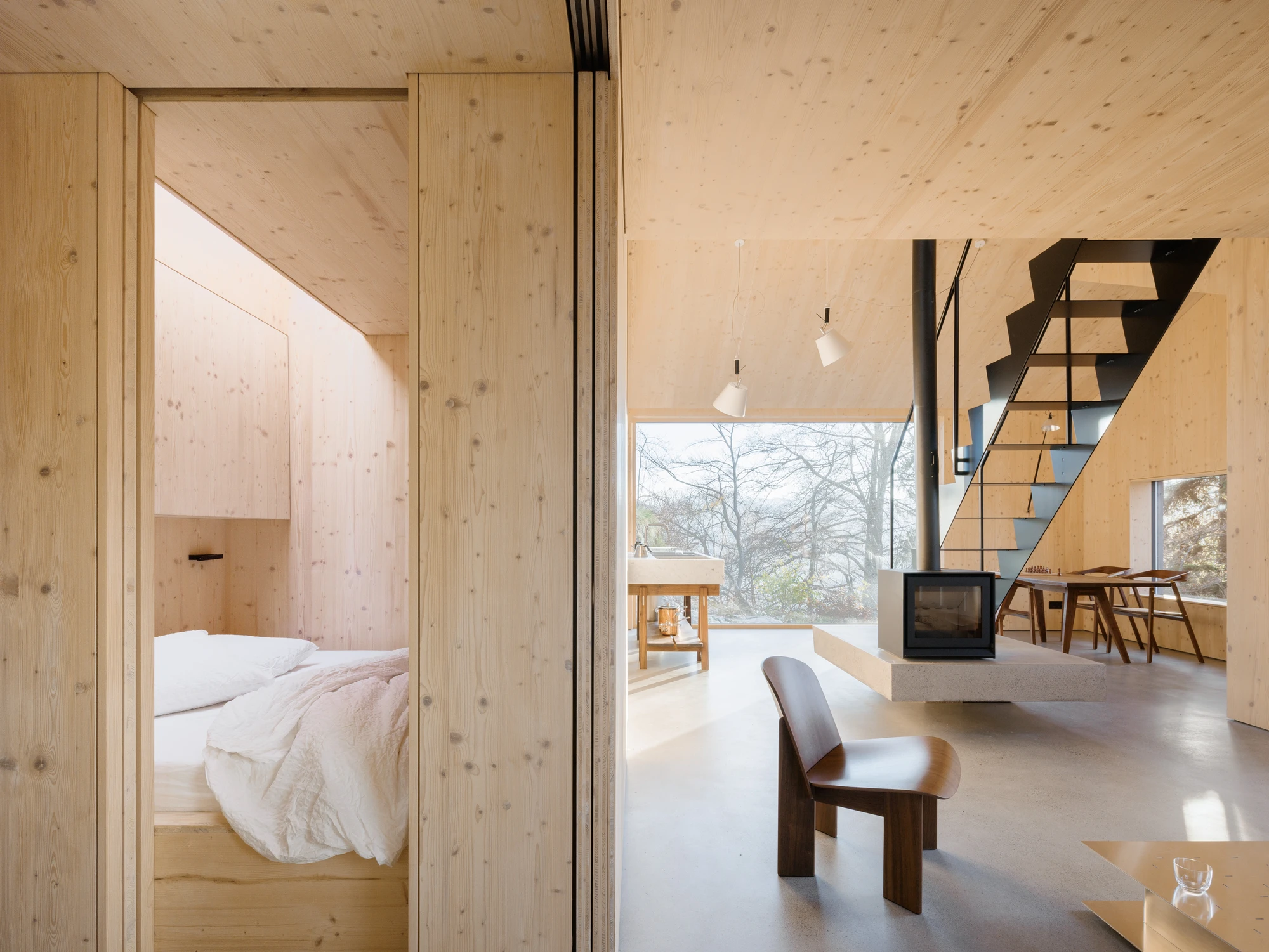
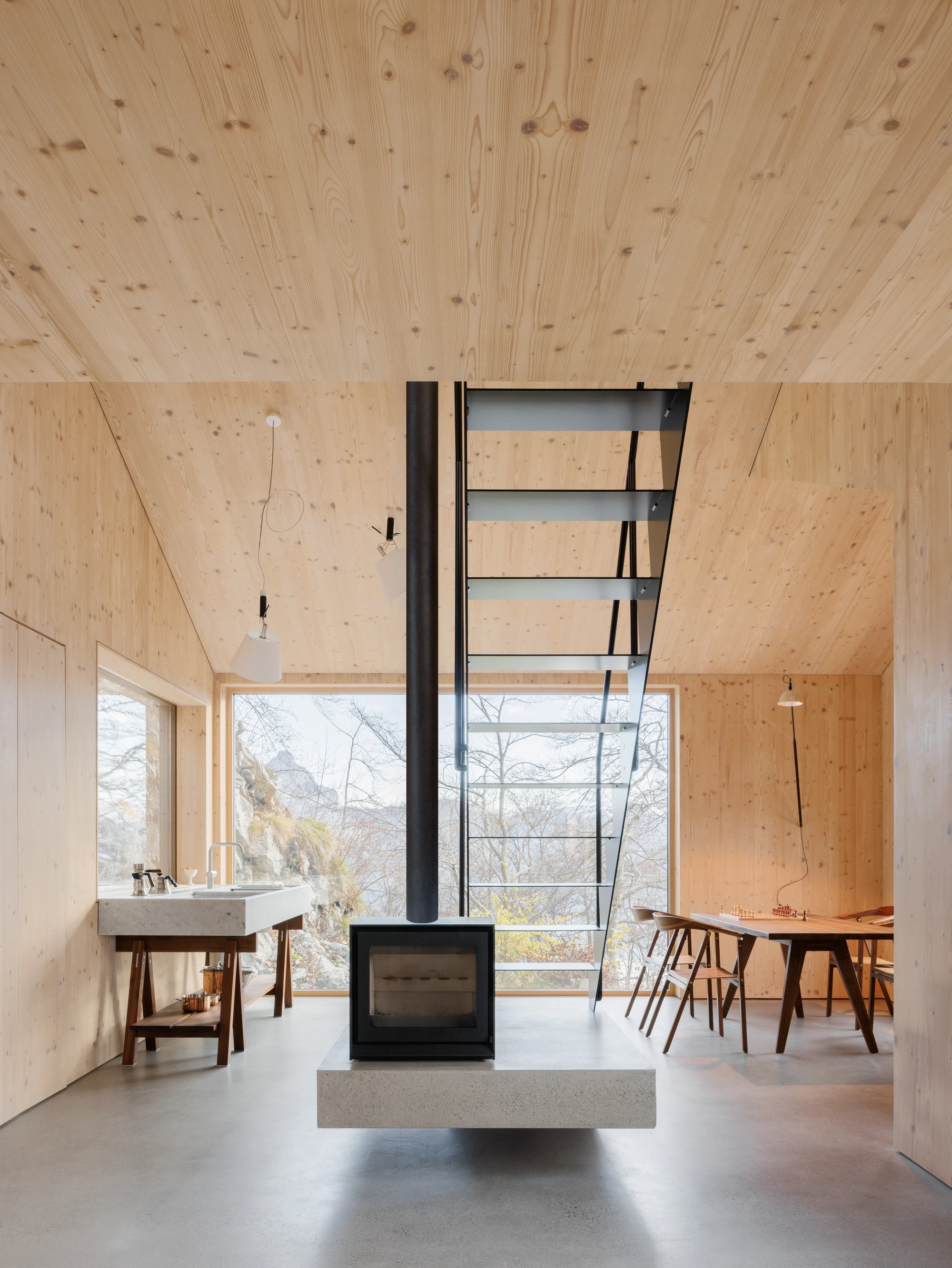
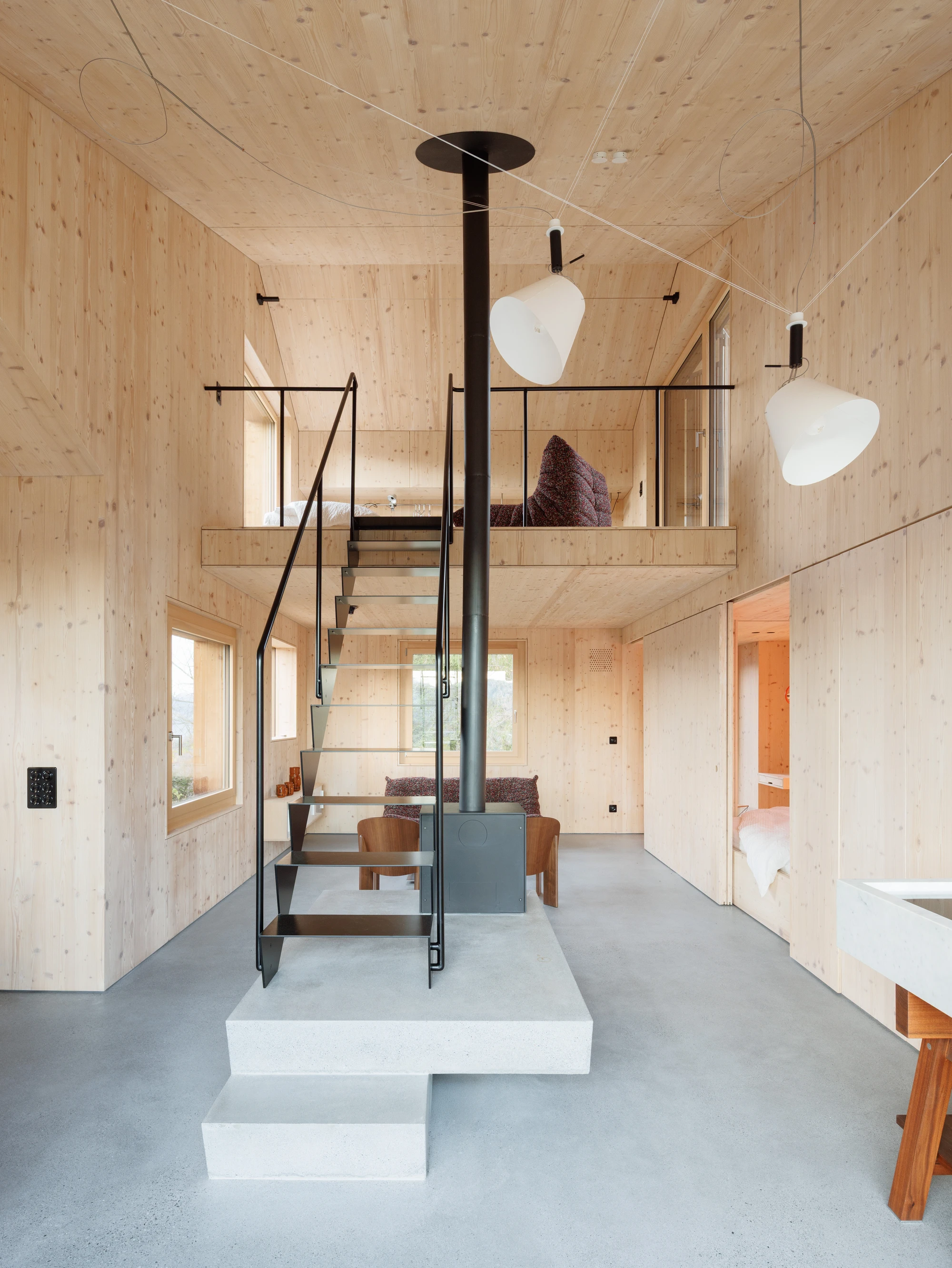
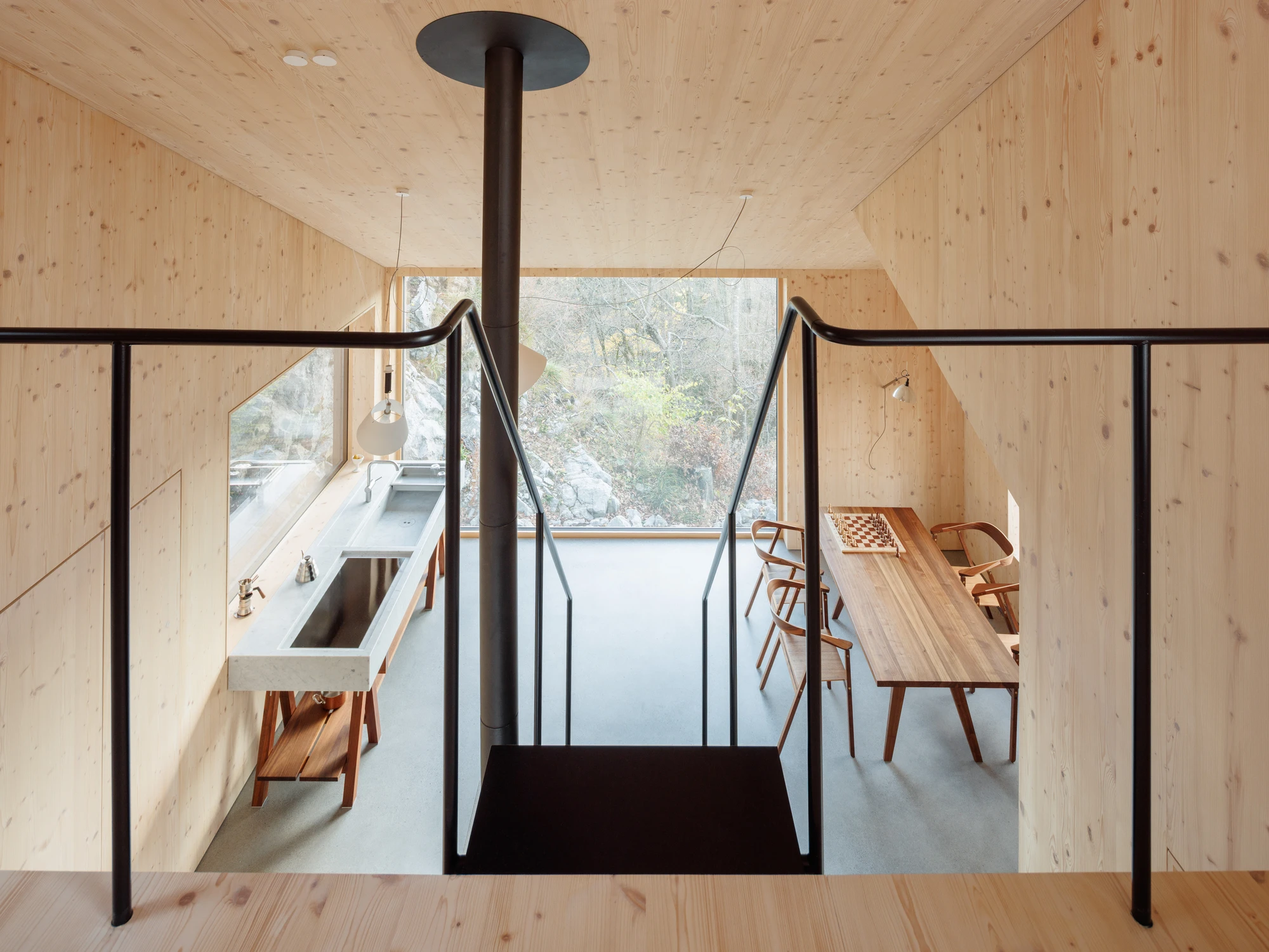
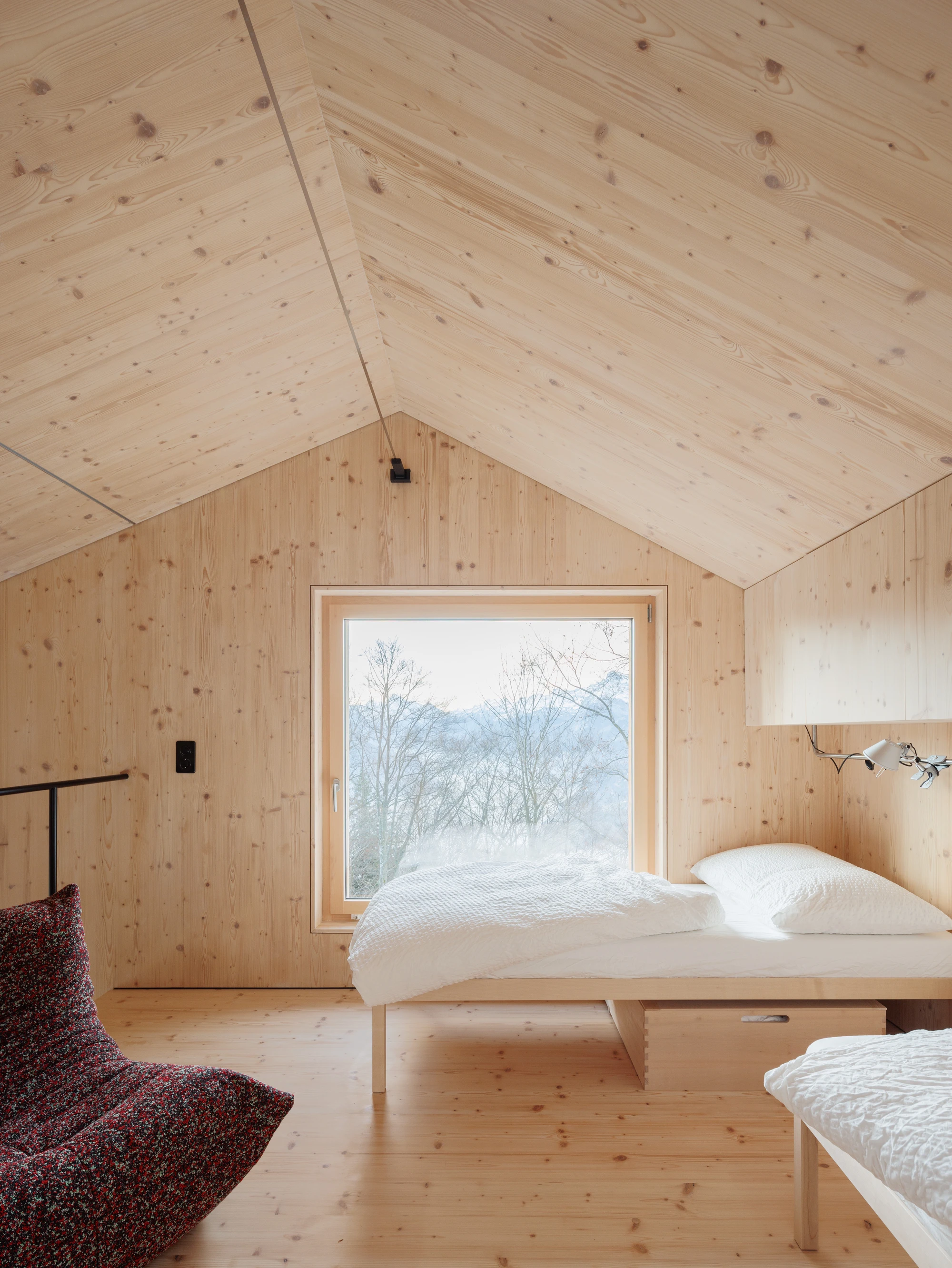
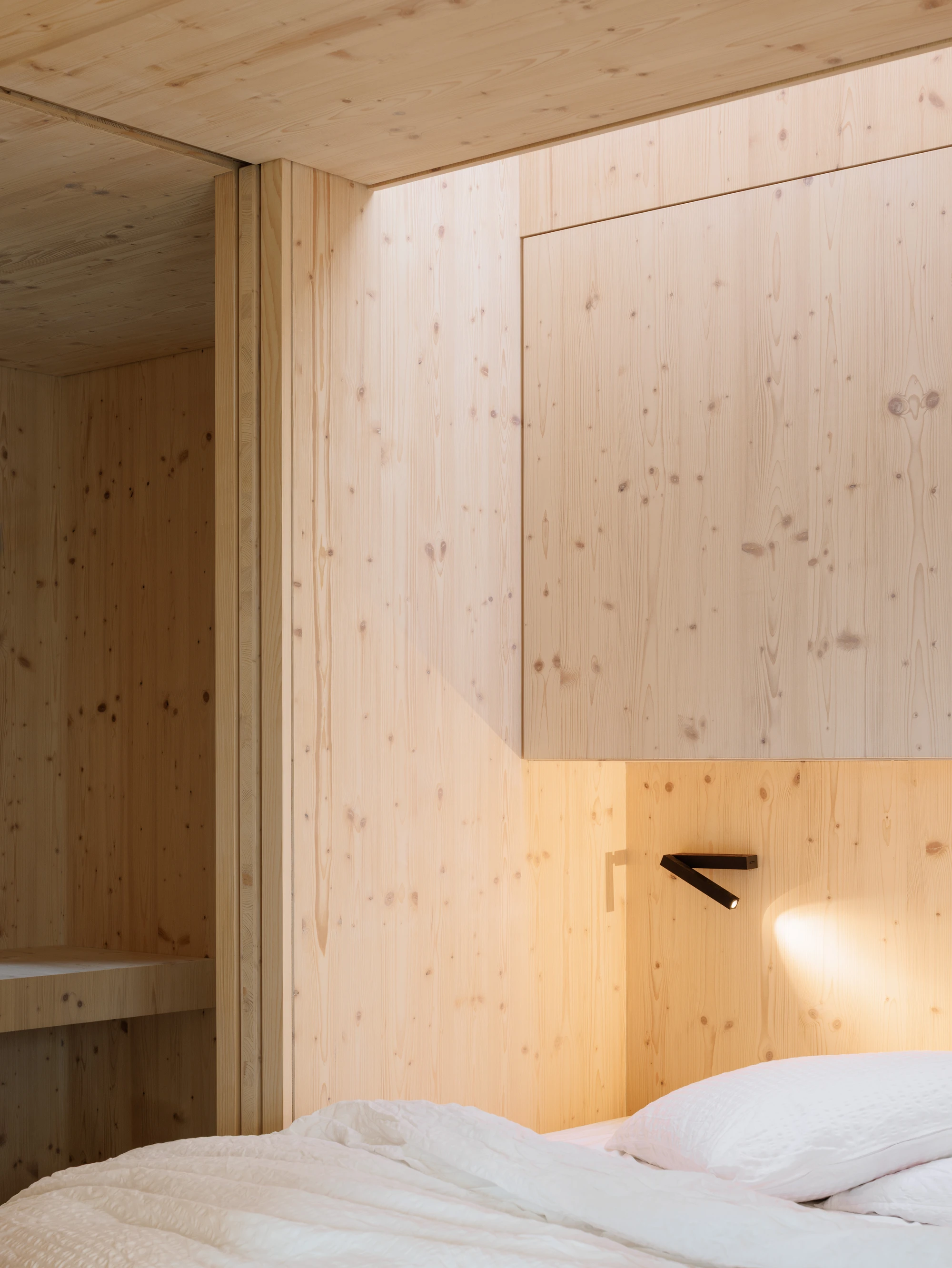
Inside, the palette shifts: CLT panels line walls and ceilings with the even, pale grain of structural timber, the wood-on-wood junction of panels and beams visible throughout. A concrete sculpture at the centre of the plan houses the fireplace and supports a steel staircase whose industrial profile reads cleanly against the pale wood background. Sliding walls allow the sleeping quarters, partially recessed into the hillside and lit from above by walk-on skylights, to open completely into the living space or close to form separate rooms. The largest glass surfaces face toward the steep, inaccessible slope, turning the cabin into what the studio calls an observatory of the Alpine landscape. The view outside those windows is rock at close range and snow-covered peaks at distance: the scale changes abruptly in a way that glass alone can frame.
A northern zone holds a standalone exterior sauna whose geometry mirrors the main house, extending the scheme without expanding the footprint. The site is configured in three zones by the natural morphology of the terrain, modeled to create functional areas from what would otherwise be a difficult, unworkable slope. What the cabin demonstrates is that a tight regulatory brief and a modest structure can produce something that reads as considered rather than compromised, if the constraints are treated as design tools rather than obstacles.