.webp)
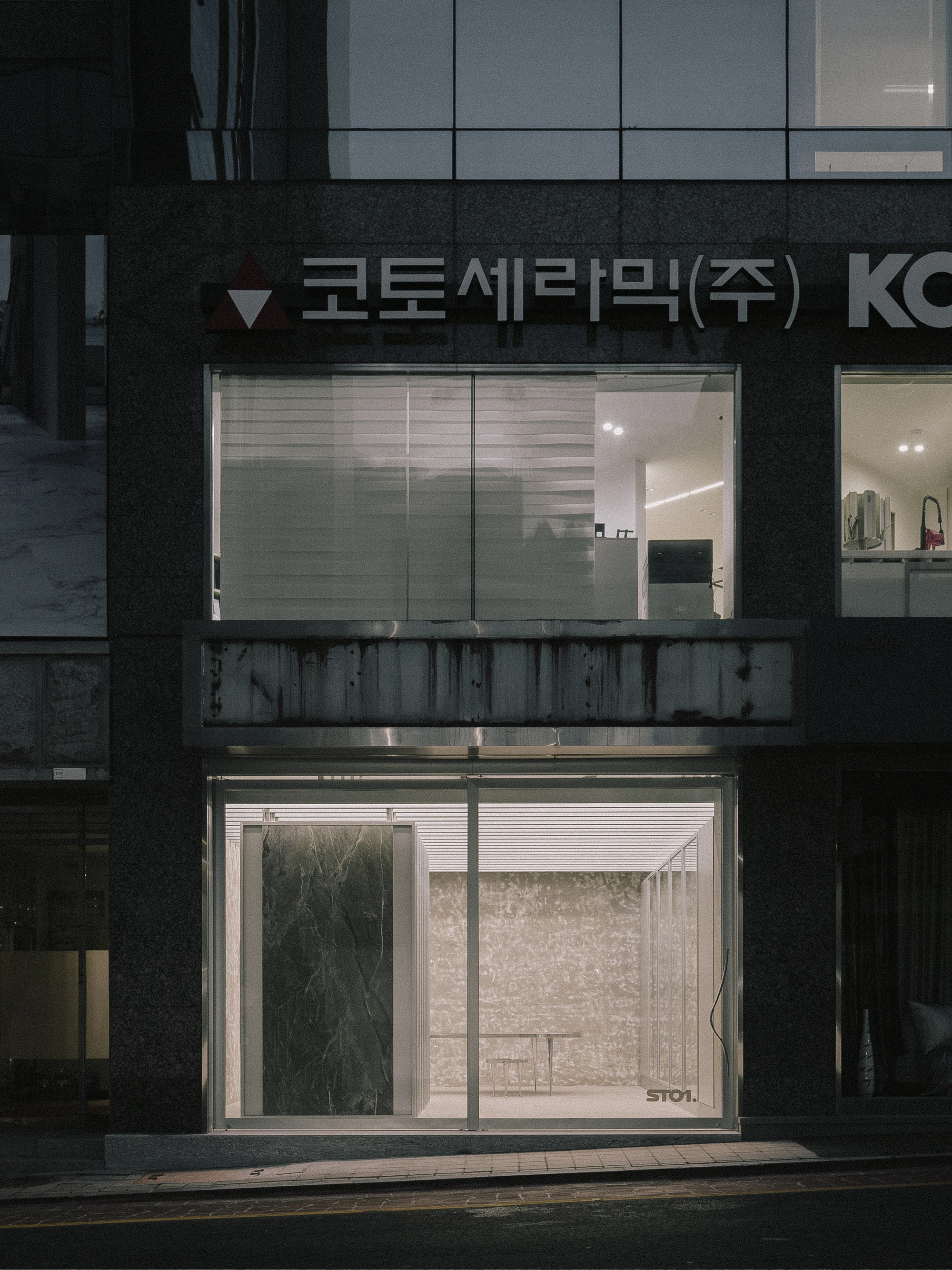
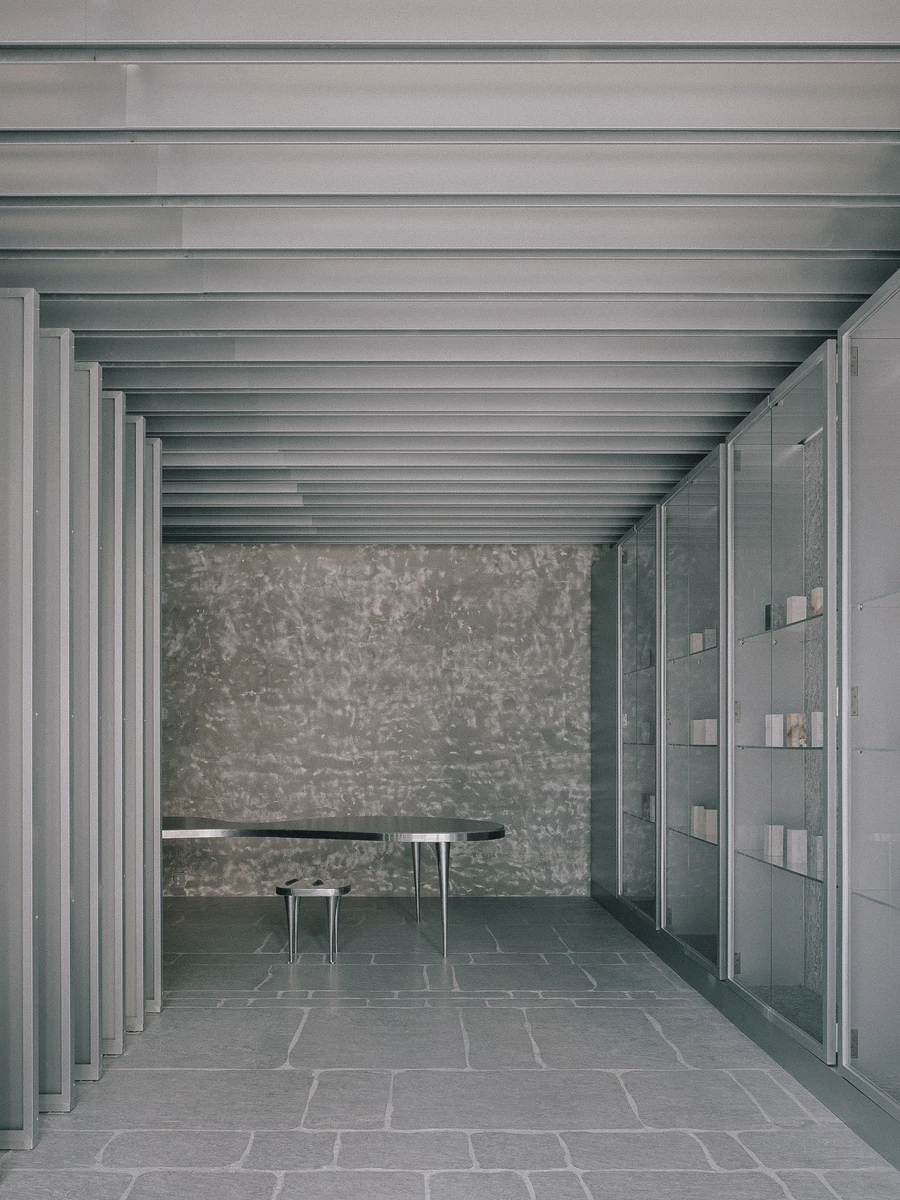
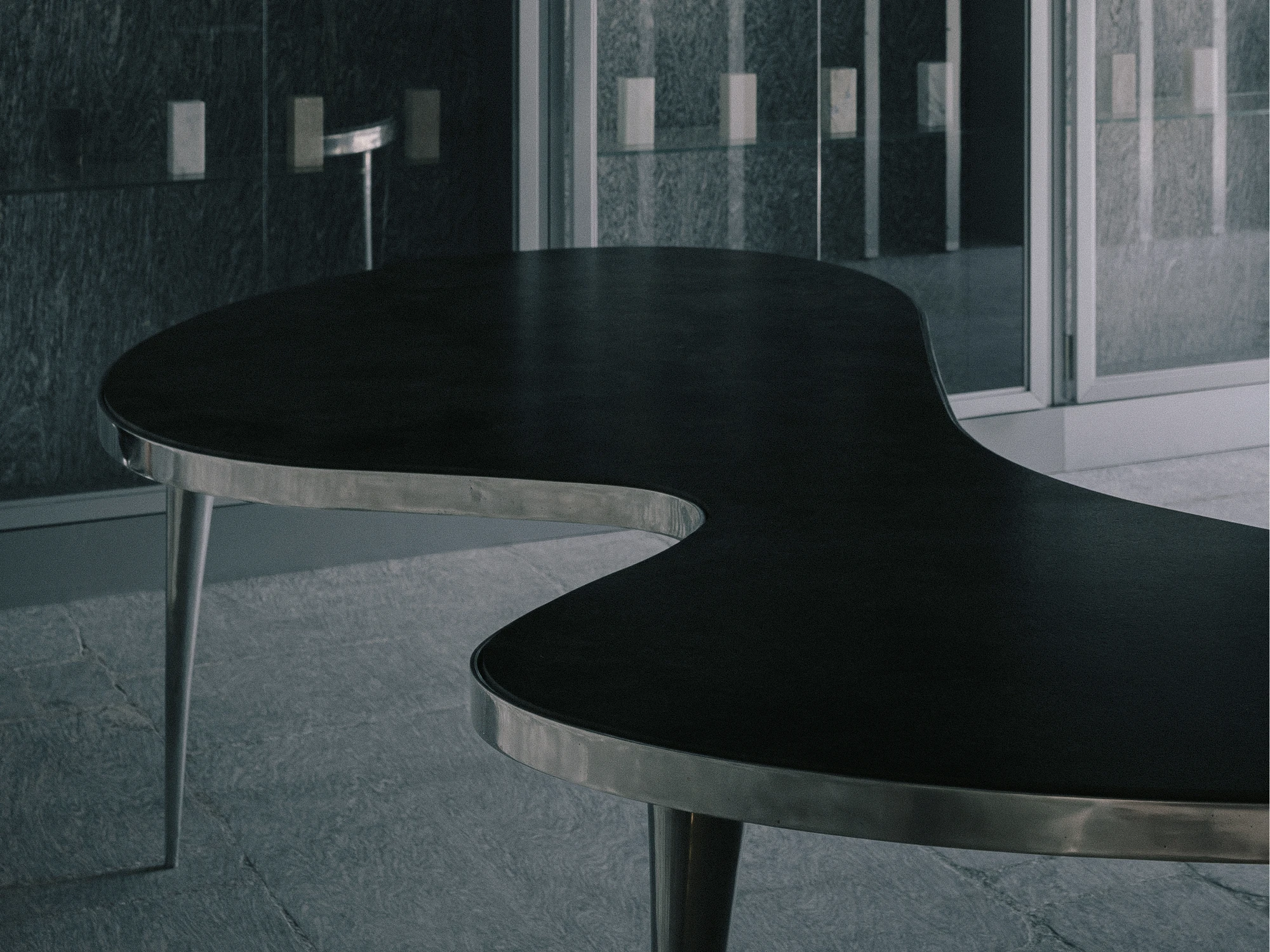
Near Hakdong Station in Seoul, stone brand ST01 designed by Order Matter condenses its entire identity into 39 square metres — ceiling-mounted rail panels, a palladiana floor of CNC-cut fragments, and a spatial logic borrowed from museum archive storage.
The word "flagship" carries its origin in naval terminology: not size, but signal — the ship from which the commanding officer's flag flies in battle. ST01 already operates a large warehouse and exhibition space on the outskirts of Seoul. What it needed downtown, near the cluster of architectural material shops around Hakdong Station in Nonhyeon-dong, was not another showroom but a place of concentrated identity: a small, precise space in which its curatorial attitude toward stone could be experienced directly.
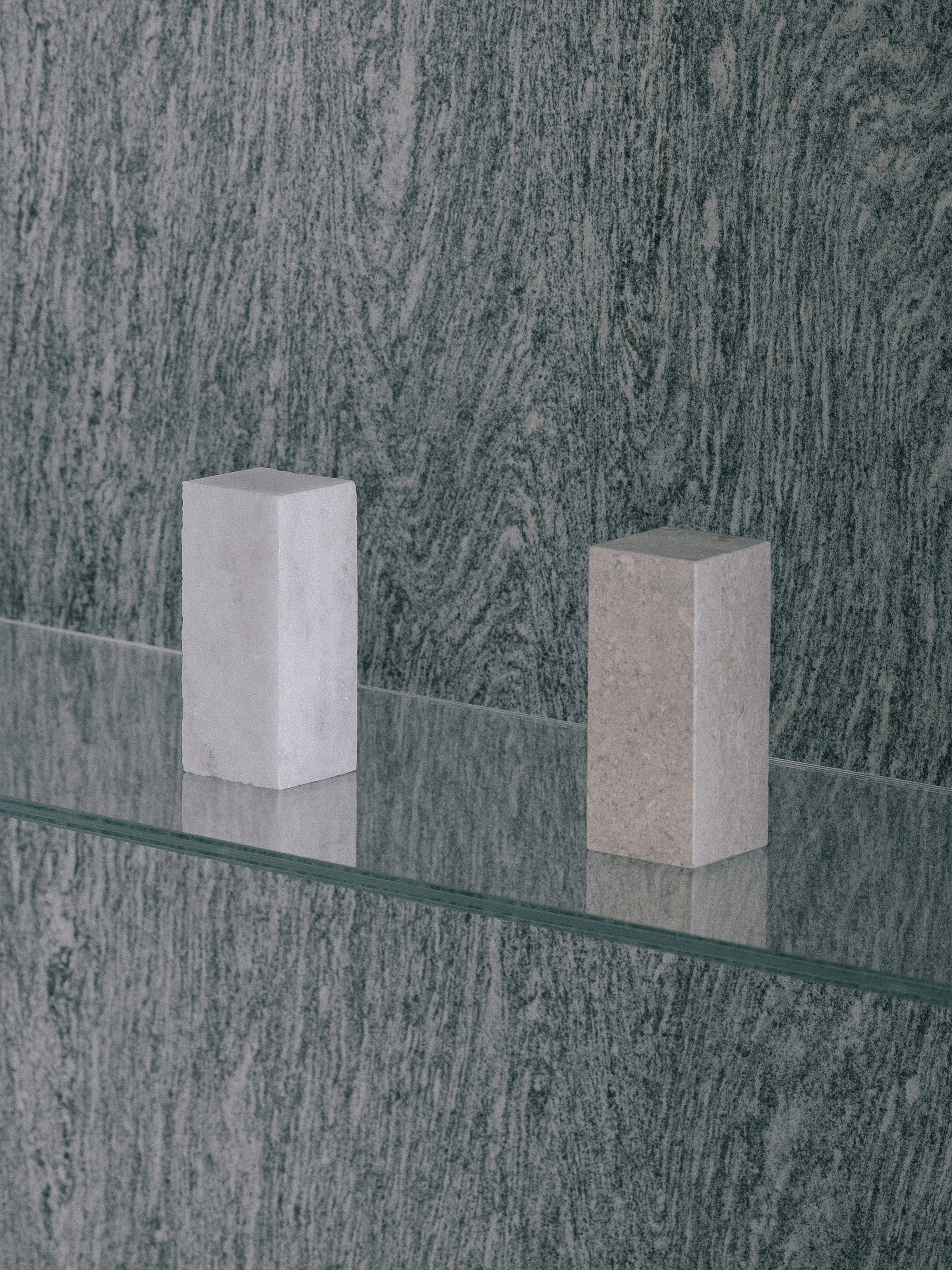
ST01's motto is "Classic stone, nothing else." The brand works closely with the Italian company Bagnara and focuses on materials that reveal depth over time rather than demanding immediate visual attention — stones that embed themselves quietly in a space rather than announcing their presence. This attitude shapes the design from its first principle: every element that is not stone must recede as completely as possible, so that the material itself can become the room's protagonist.
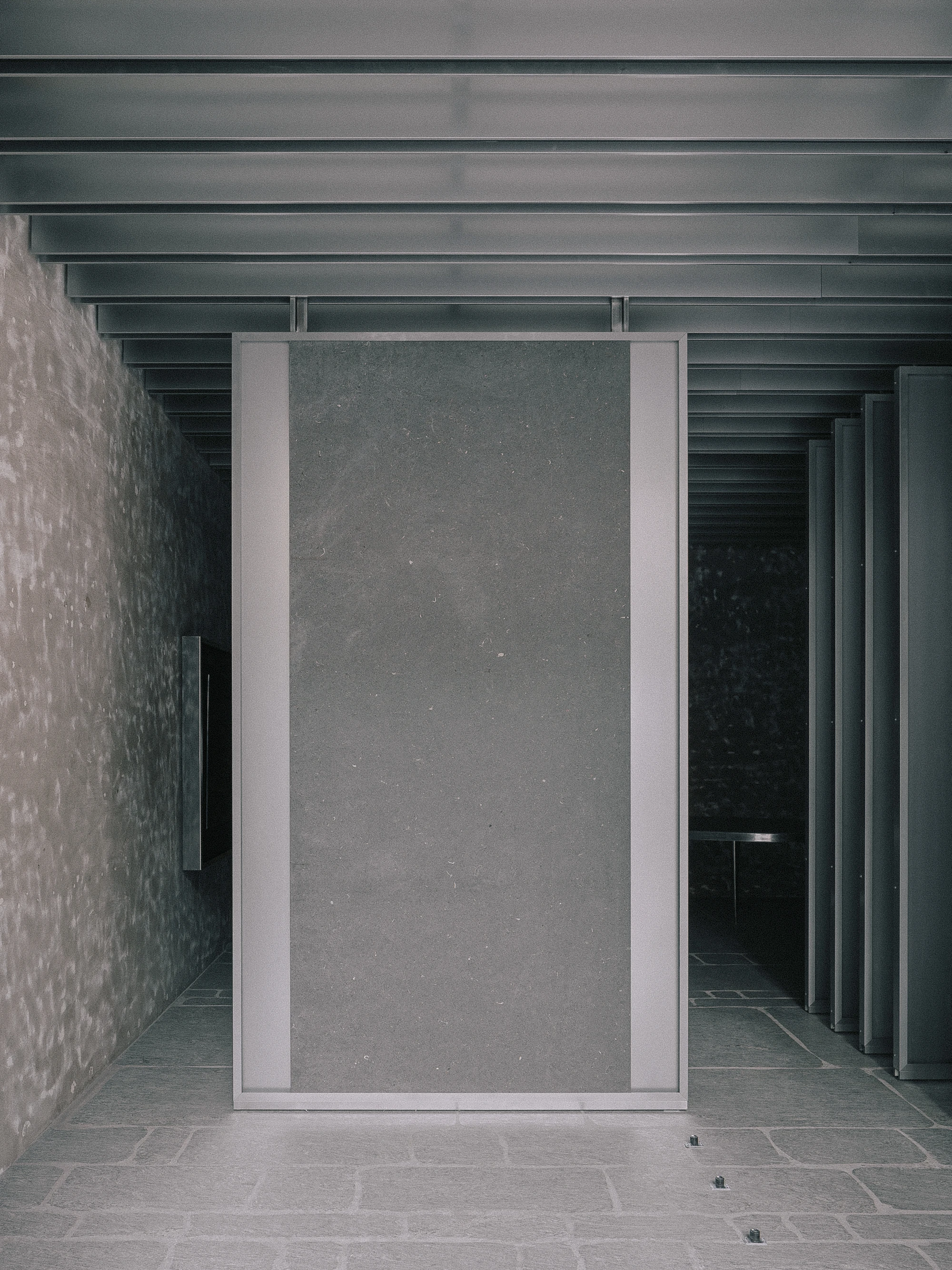
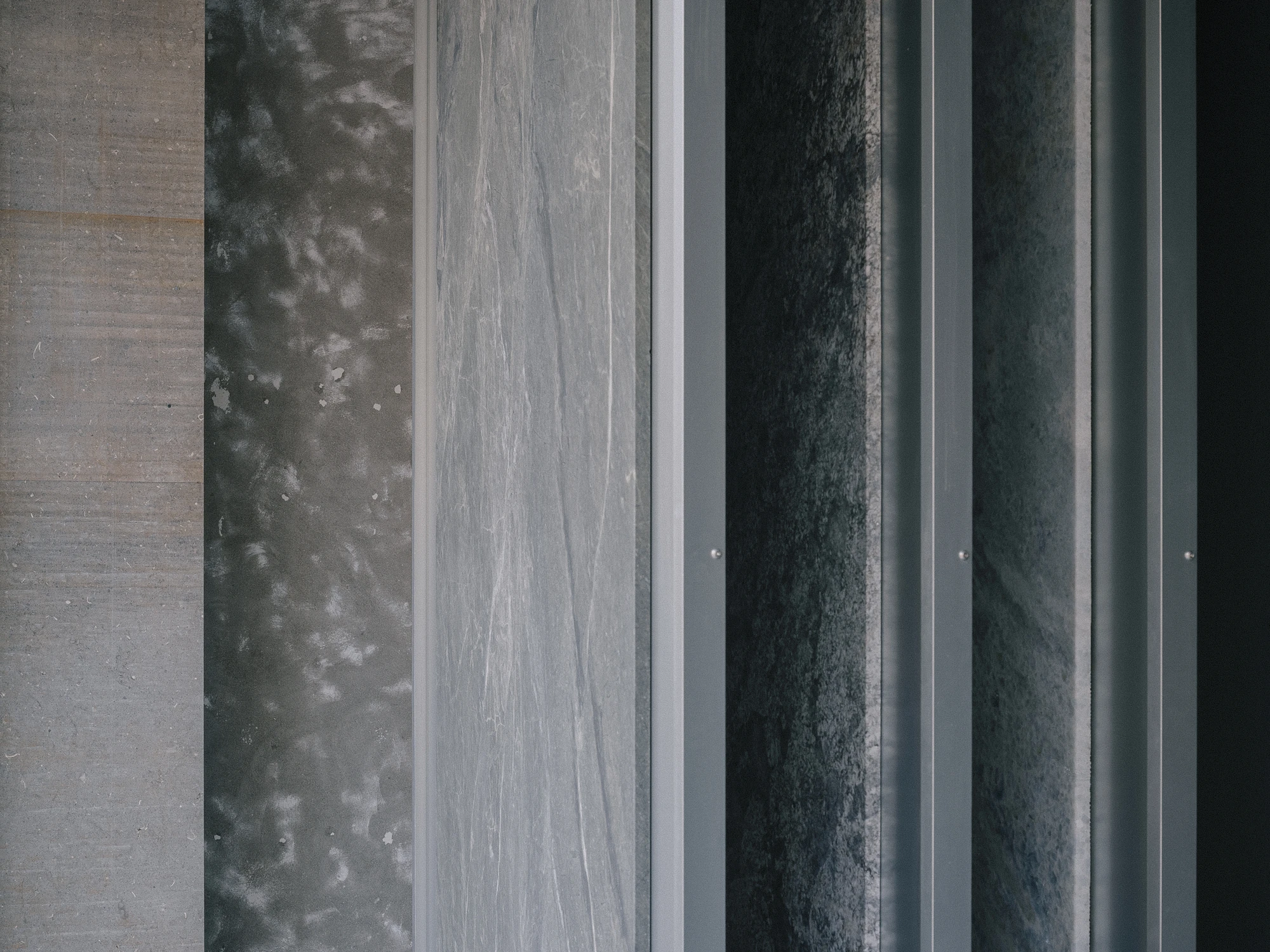
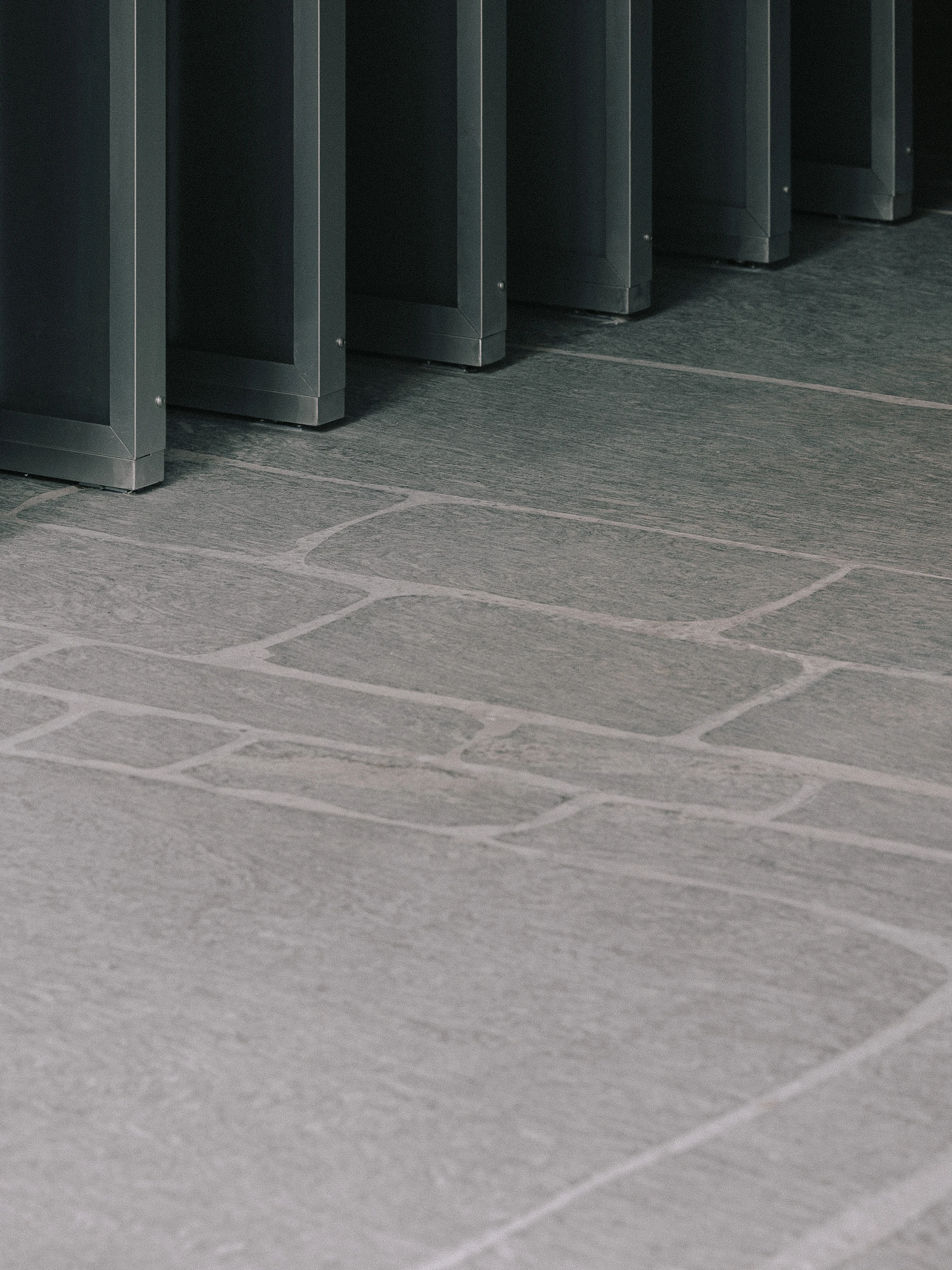
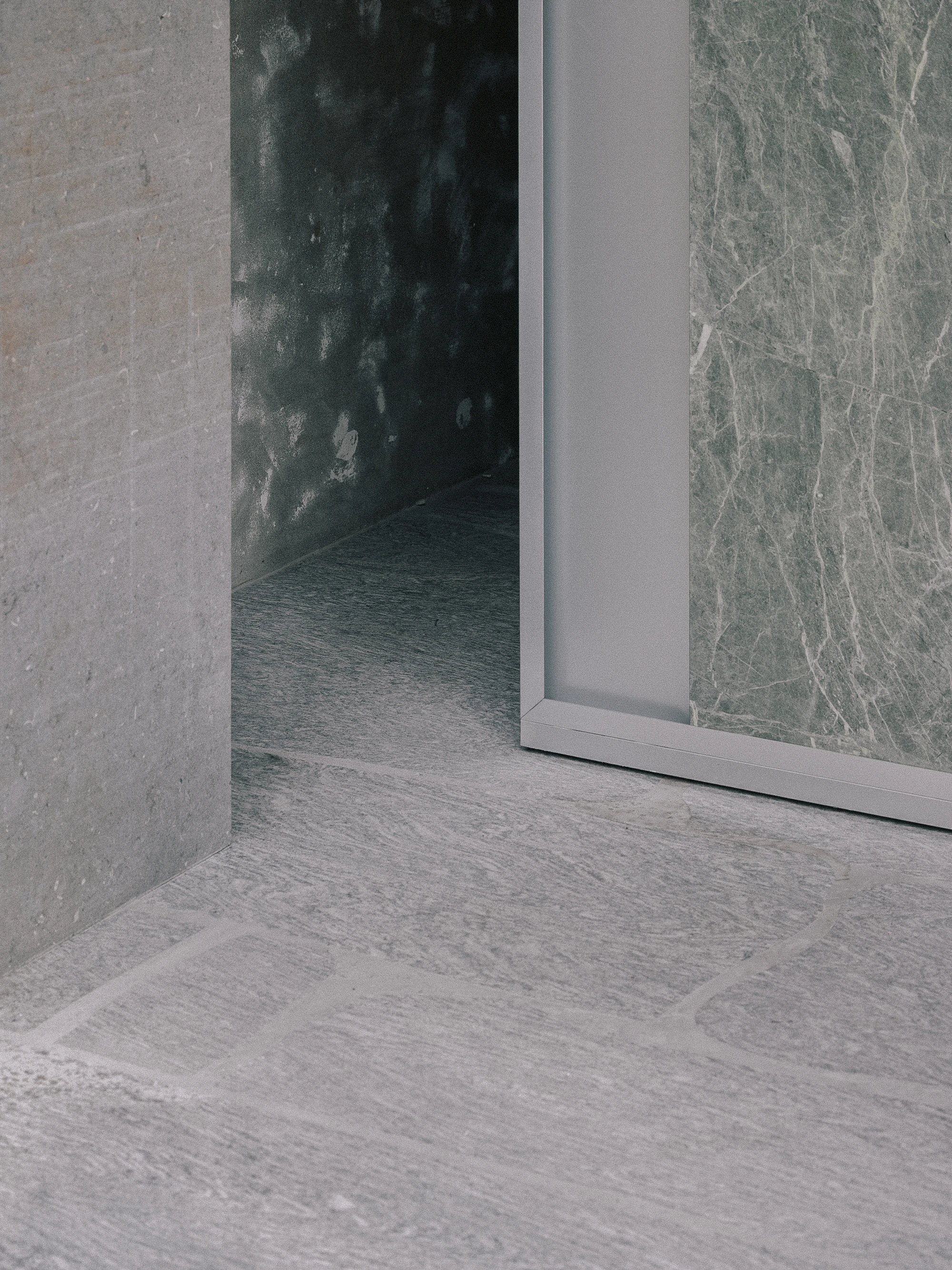
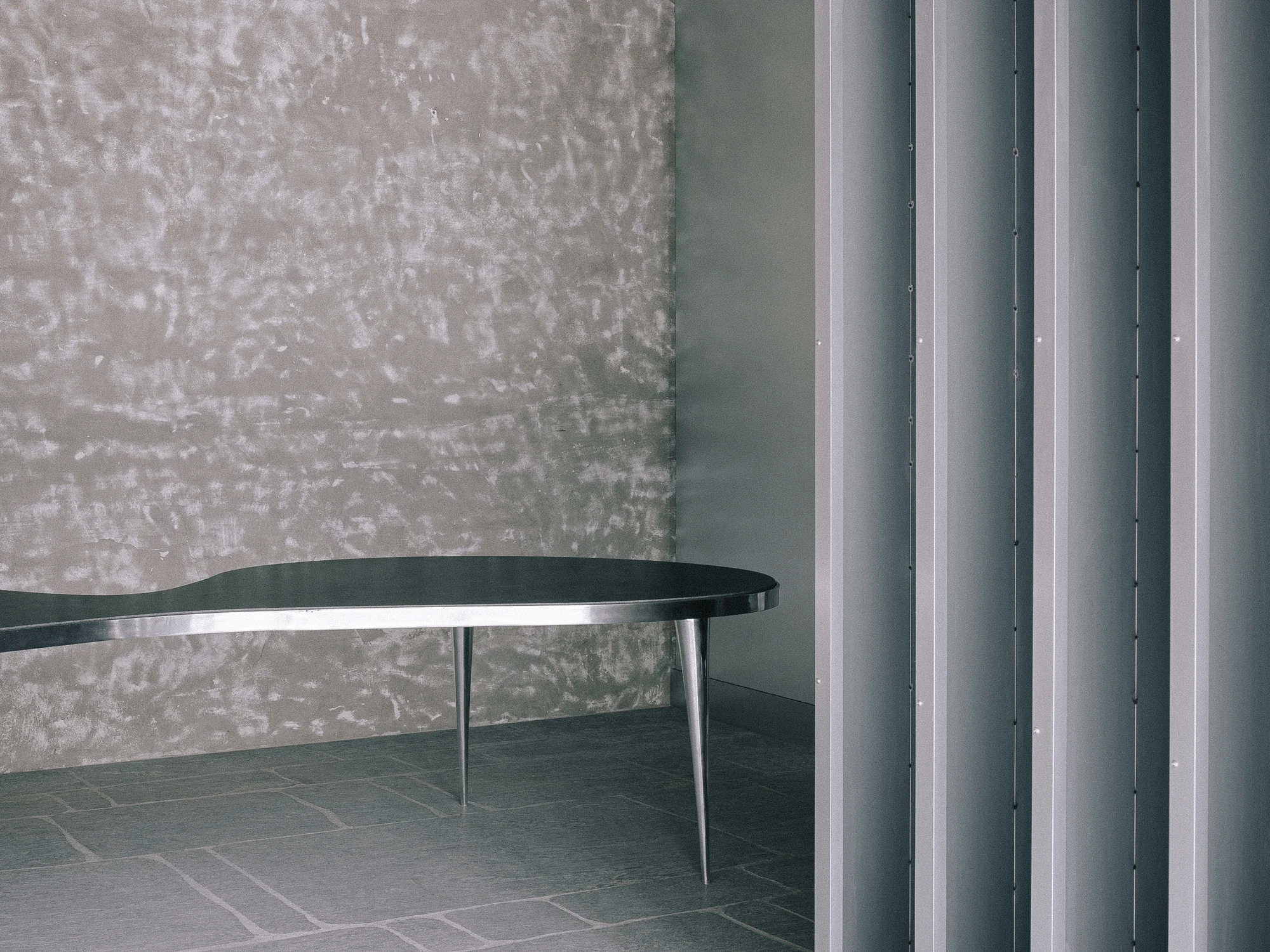
The spatial concept is drawn from museum archive storage, where artworks are mounted on panels attached to ceiling-mounted track systems, retrievable when needed. Here, steel panels measuring 1600 by 2750 millimetres are suspended from a ceiling rail, each carrying a full stone slab inserted into its metal frame in a detail adapted from glazing construction. The panels can be moved, rotated, and viewed from multiple distances and angles — from close range inside the store, or from across the street under natural southern light. A full slab seen at scale, in natural light, is a different material from the small mounted sample that constitutes most urban stone retail experience.
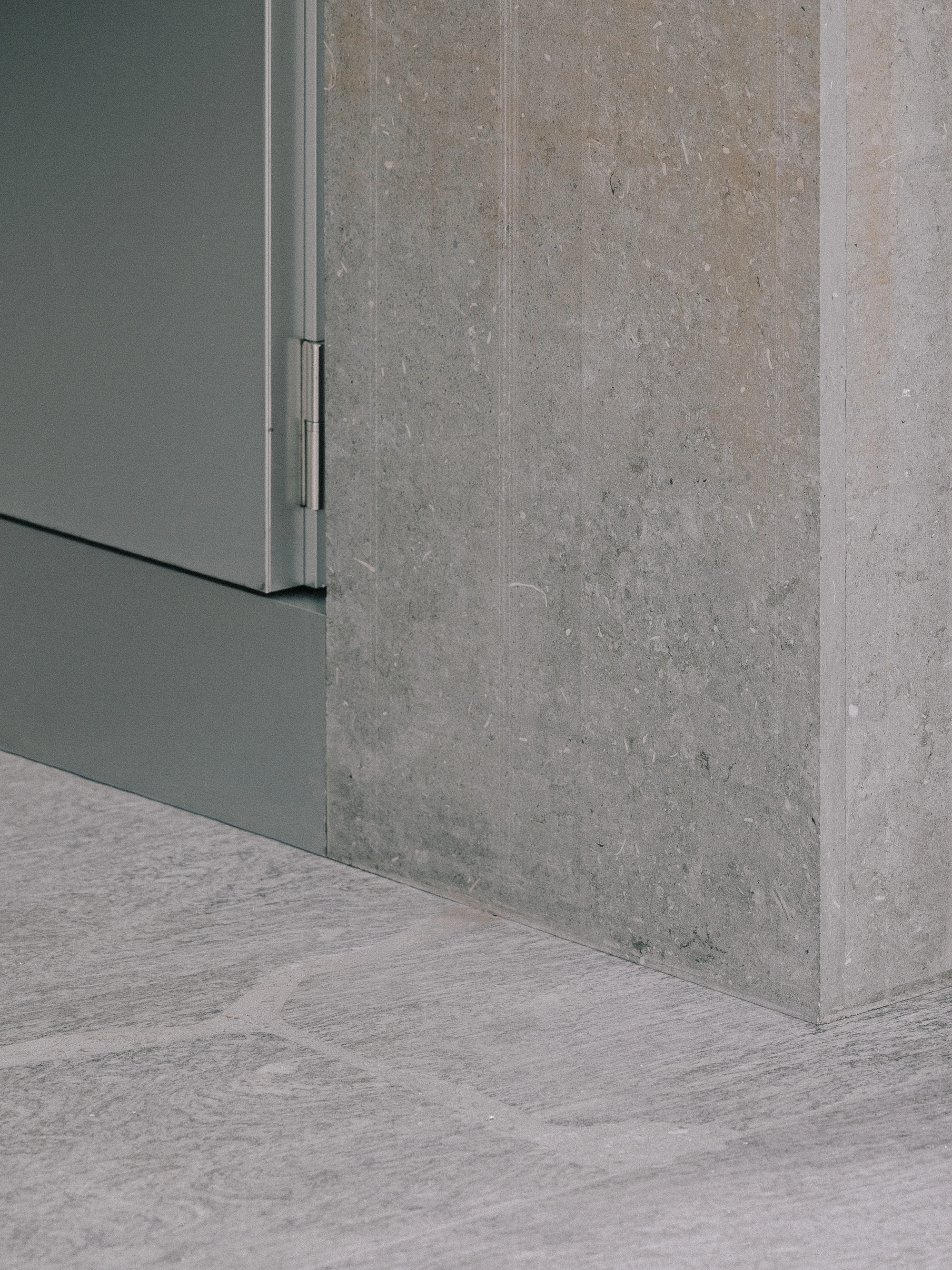
The floor is constructed as a contemporary palladiana: each stone piece individually drawn, digitally refined in CAD, and CNC-cut to tolerance. Irregular fragments are placed over a strict 300-millimetre grid, so that order and looseness coexist across the same surface — a principle that runs through every spatial decision in the store. Stone fragments remaining from the cutting process were crushed and reused as aggregate within concrete infill. The column at the storefront was clad with the reverse face of Blue Grey stone, its oxidation marks kept intact, so that the threshold between street and interior is marked by the material turned inside out.
"Rather than a conventional retail showroom," the designers write, "this small flagship store operates as an urban archive where materials selected through ST01's criteria briefly reside before moving on to their next destination." The early conceptual reference was the small travel bookshop in Notting Hill: a place where a curated collection is browsed in conversation with its keeper, before the selected item continues its journey. Stone, like a book, is always in transit.