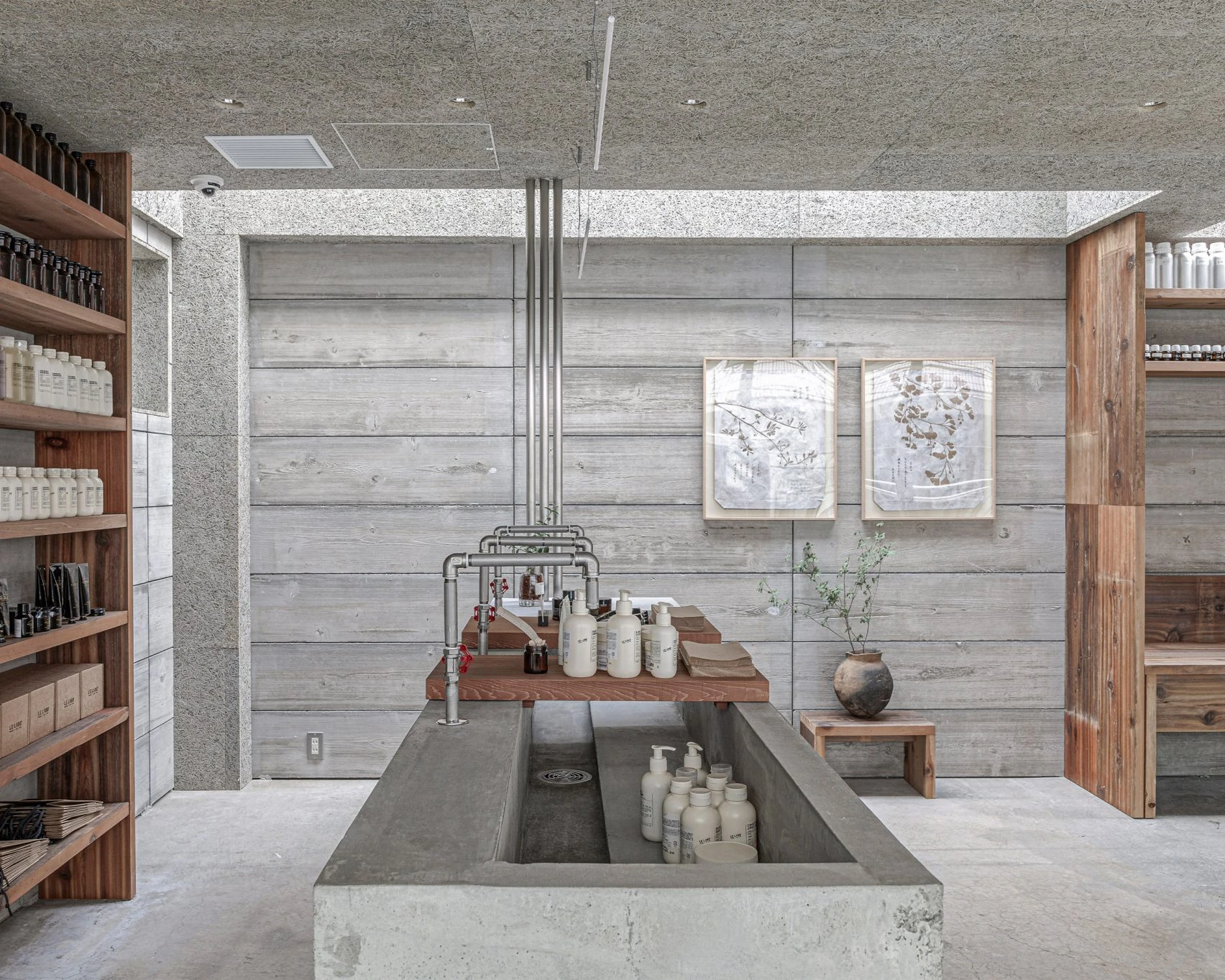
In Daikanyama, Schemata Architects redesigns Le Labo's Tokyo flagship through a single act of material circularity: the cedar formwork used to cast the concrete walls is repurposed, after demolding, as the shelving that lines them.
Le Labo's first store outside the United States opened in Daikanyama eighteen years ago — a neighbourhood in Tokyo where the grain of the street is intimate and unhurried, in quiet contrast to the city's more hyperactive registers. After nearly two decades of operation, the space required a thorough reinvention, and the brief returned to Schemata Architects, founded by Jo Nagasaka, who had previously transformed a traditional machiya townhouse in Kyoto into a store for the same fragrance brand. The directive this time was to develop a design rooted in the material character of the existing building — a reinforced concrete structure — while introducing warmth and the quality of craft.
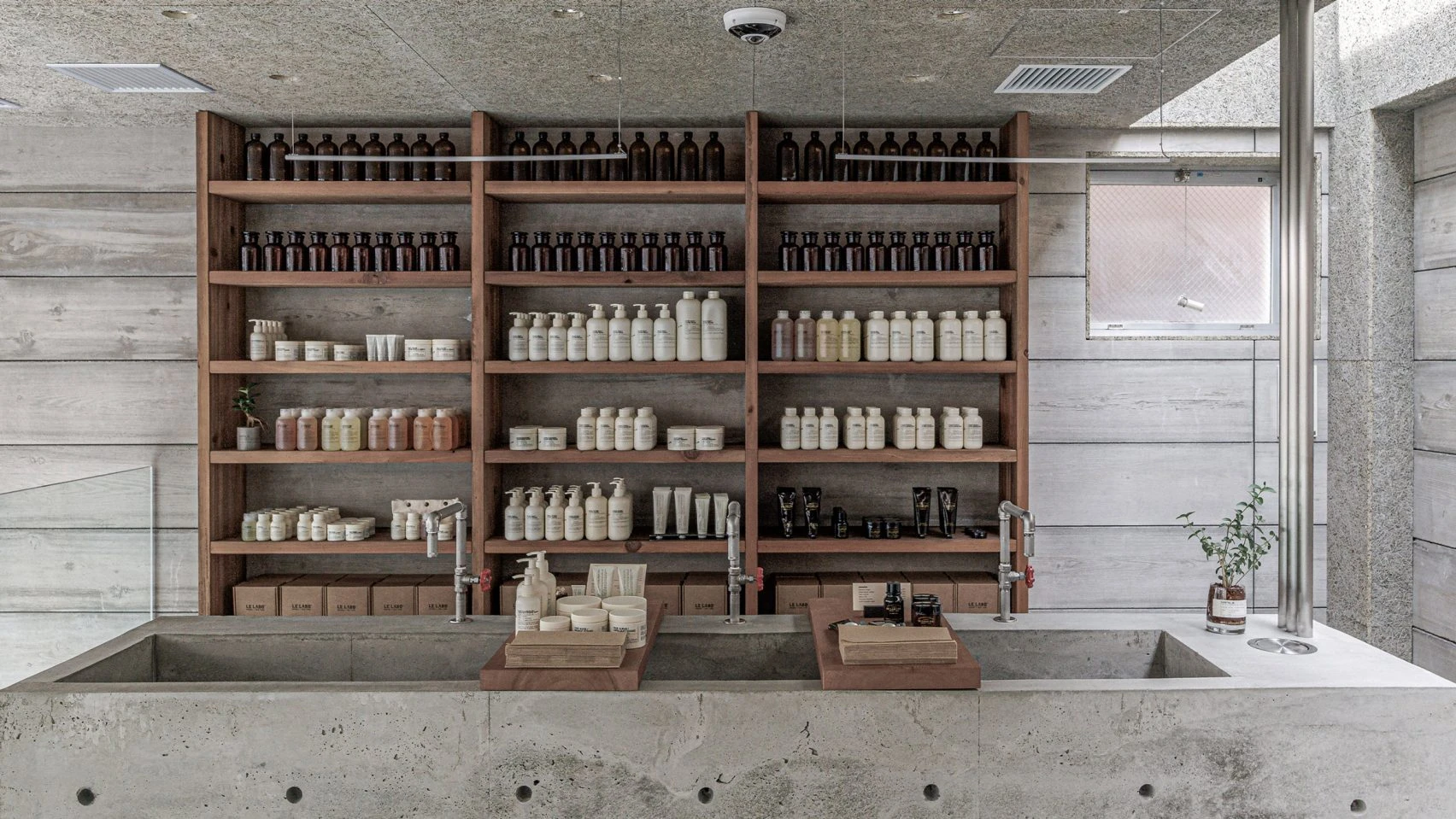
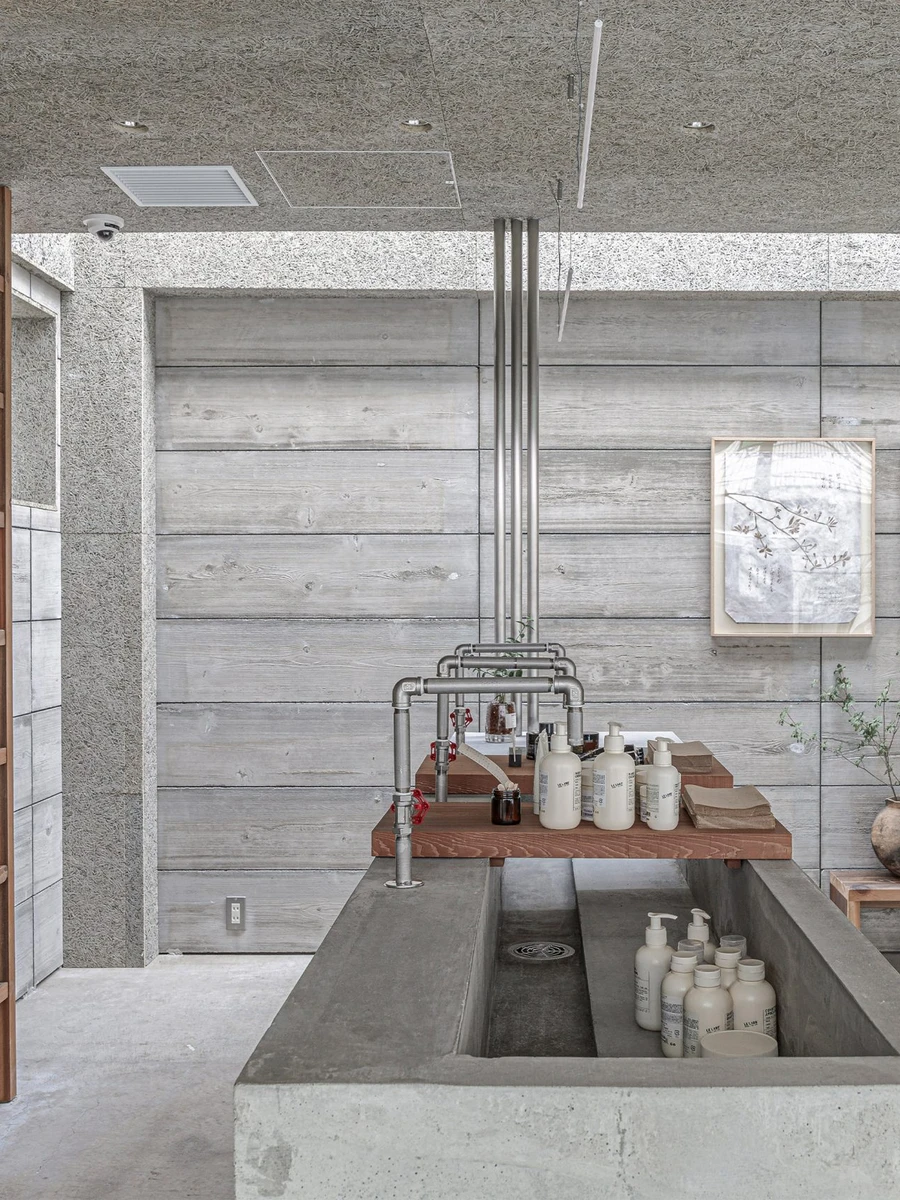
"Le Labo proposed wood and concrete as materials," the architects explained, "suggesting that the city's defining characteristic lies in the blending of opposing forces: intense energy and profound tranquillity." Rather than apply these materials as a simple contrast of surfaces, Schemata found a way to make the wood and the concrete speak to one another structurally. New interventions were cast using formwork made from red cedar treated with uzukuri — a traditional woodworking technique that exposes the harder grain by rubbing away the softer early wood — with the result that the texture of the cedar is transferred directly onto the concrete surface as the panels are demolded.
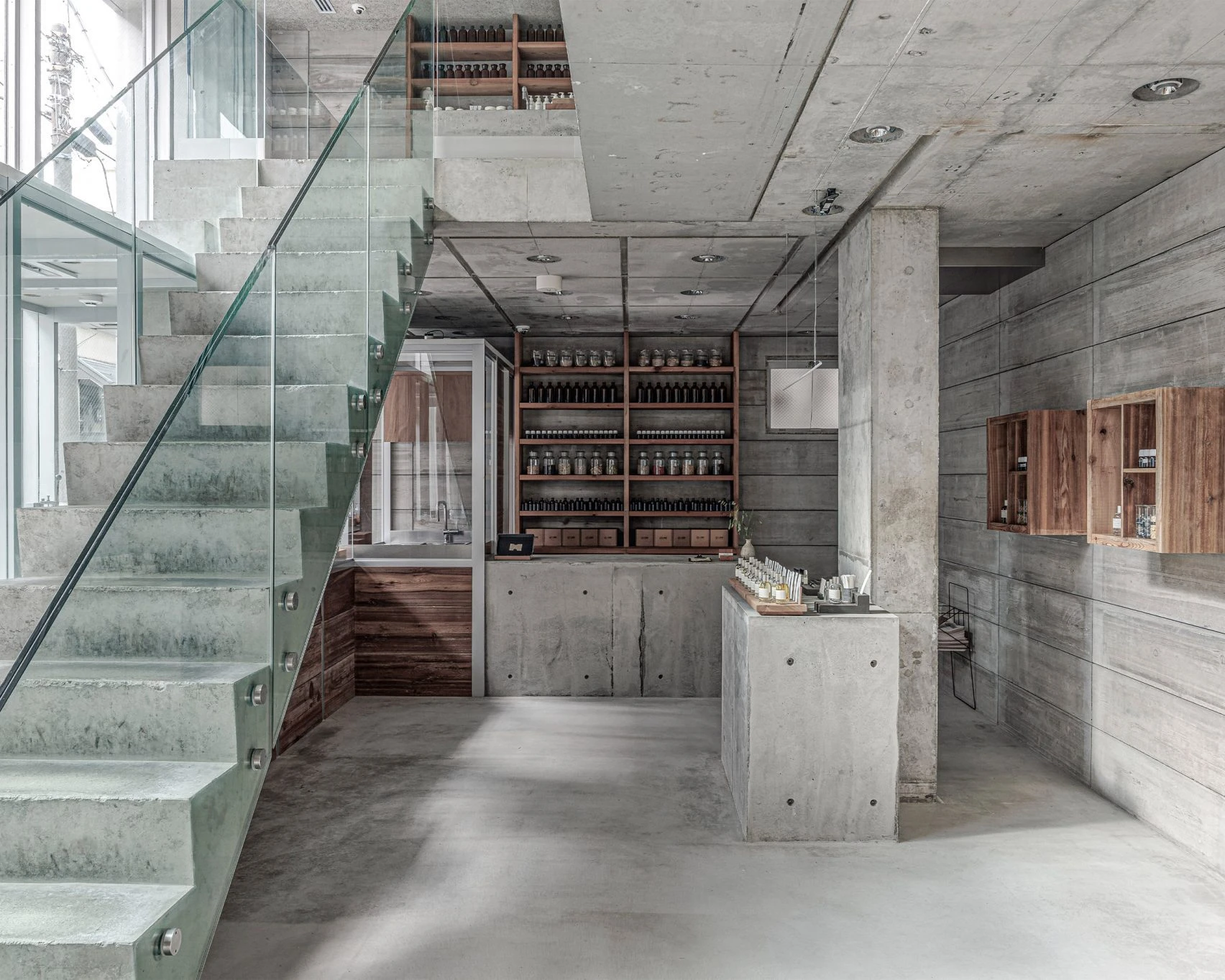
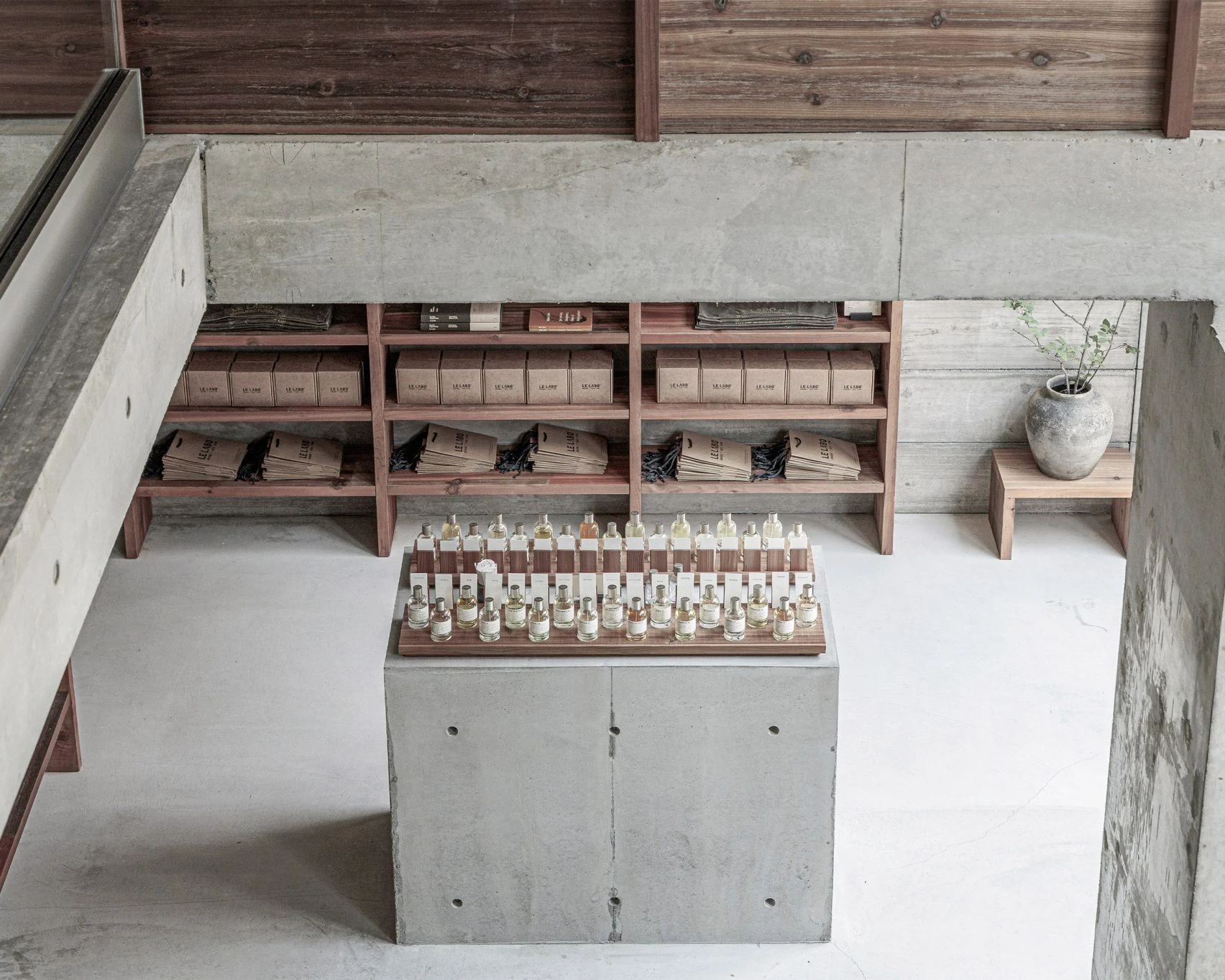
"By pouring concrete into formwork that emphasised the wood grain's uneven texture, we produced precast panels where the grain was transferred onto the surface, which we then employed as walls," the team noted. The technique produces a surface with a quality neither purely mineral nor purely vegetal: the concrete records the memory of the wood that shaped it. Following demolding, the cedar boards were not discarded but repurposed as display shelving and furniture throughout the store — so that the surfaces that formed the walls continue to live in the space in a different form, creating a sense of cohesion that runs through every element.
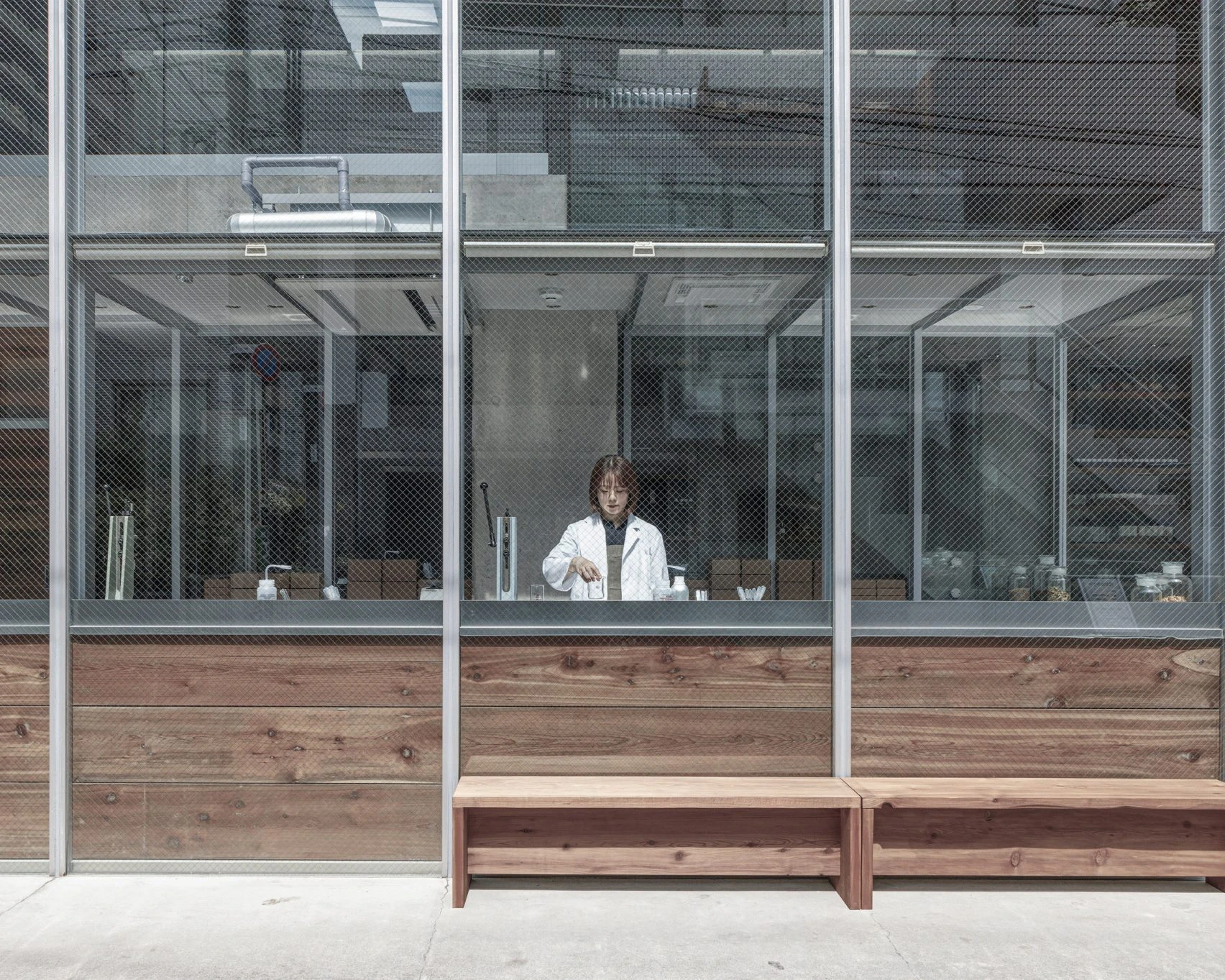
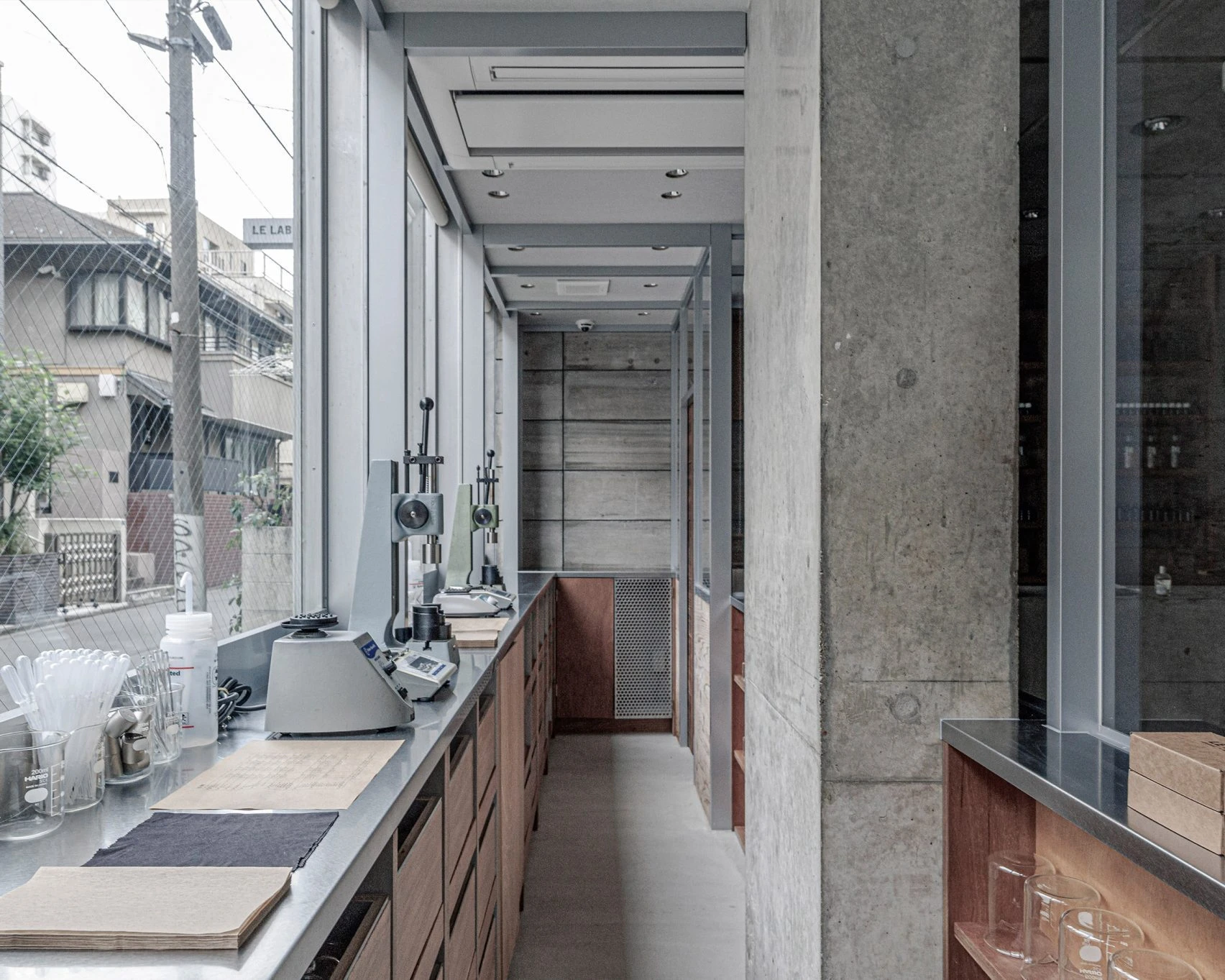
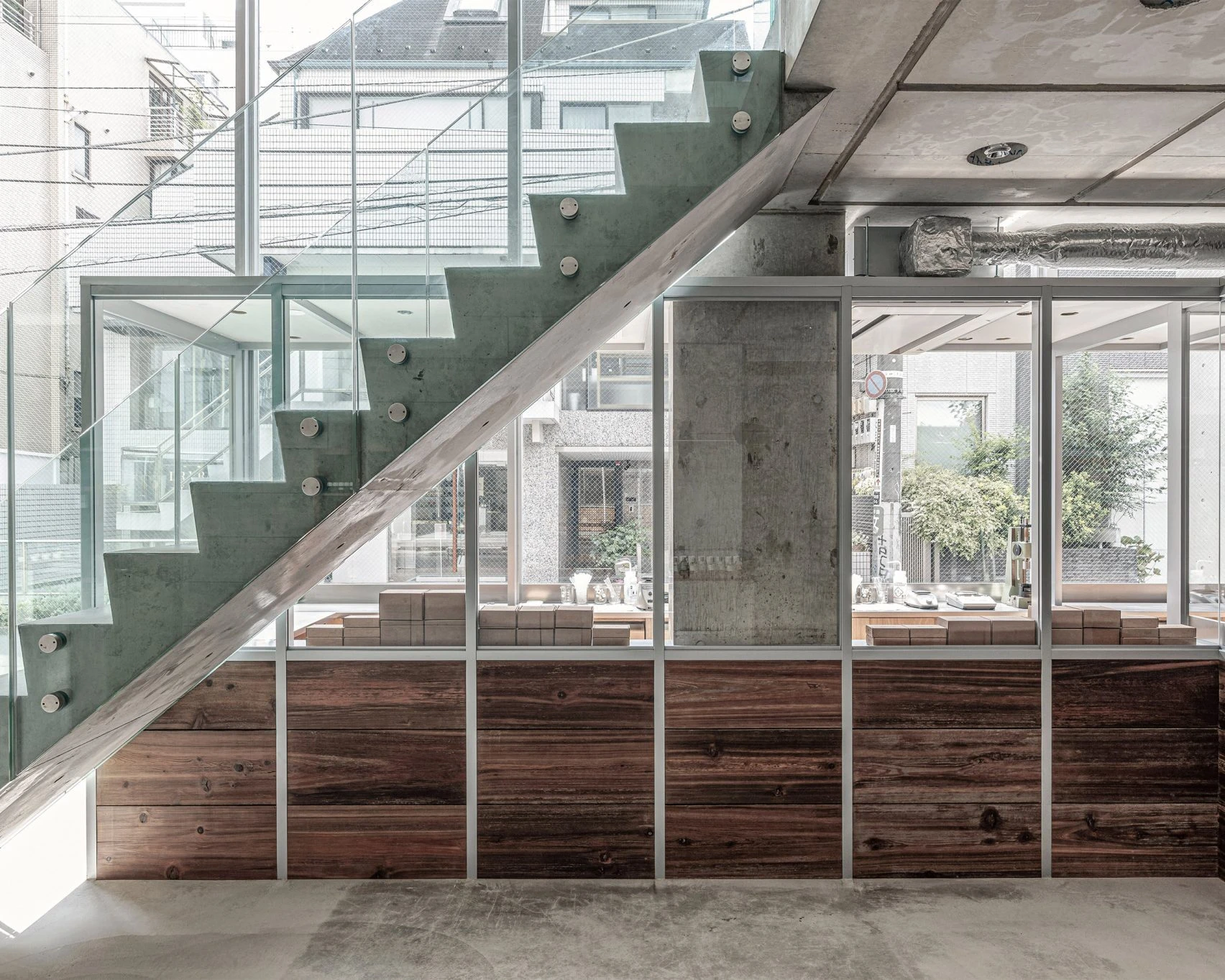
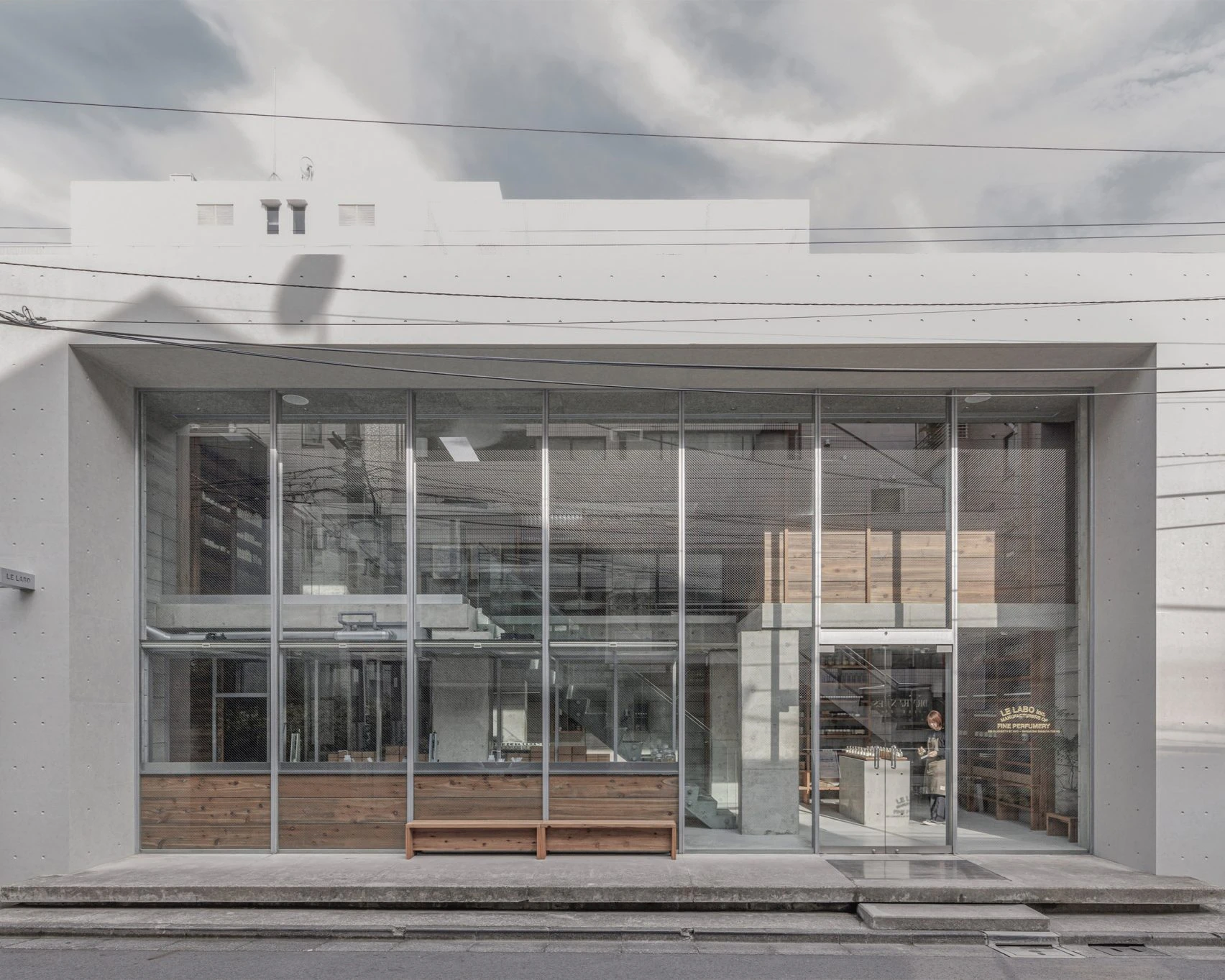
The interior layout was reorganised to expose the process of perfume-making. The fragrance lab, previously concealed at the rear, was relocated to the front, where it is visible through the full-width glazed elevation — perfumers at work becoming part of the street scene as customers approach. The existing ceiling was stripped back to reveal the original lighting recesses and formwork marks of the building's construction, so that traces of making and unmaking layer themselves across every surface. In a store dedicated to the craft of scent, the decision to make the craft of architecture legible feels precisely right.
Schemata Architects have spent decades finding in the ordinary and the existing the raw material for spaces of great particularity. In the Le Labo Daikanyama redesign, they arrive at a space that is coherent in a way few retail interiors manage: not through uniformity, but through a logic of material transformation that runs, quietly and completely, from the walls to the shelves to the objects placed upon them.