.webp)
In the mountains above Tateyama on the Sea of Japan coast, Kengo Kuma & Associates sinks IWA Sake Brewery under one vast yakisugi roof, built around a central hearth.
IWA is a new sake brand from Richard Geoffroy, the former Dom Pérignon chef de cave, who spent a career in Champagne learning how to assemble and blend. For his kura in the mountains near Tateyama, in Toyama prefecture, he wanted a building that felt less like a plant and more like a place people live. Kengo Kuma was his first choice, and Kuma in turn found him the sake master, Ryuichiro Masuda, whose family brewery sits on the ocean side of the old town. This site does the opposite, climbing into the hills where some of the heaviest snowfall in the world filters down into pure local water.
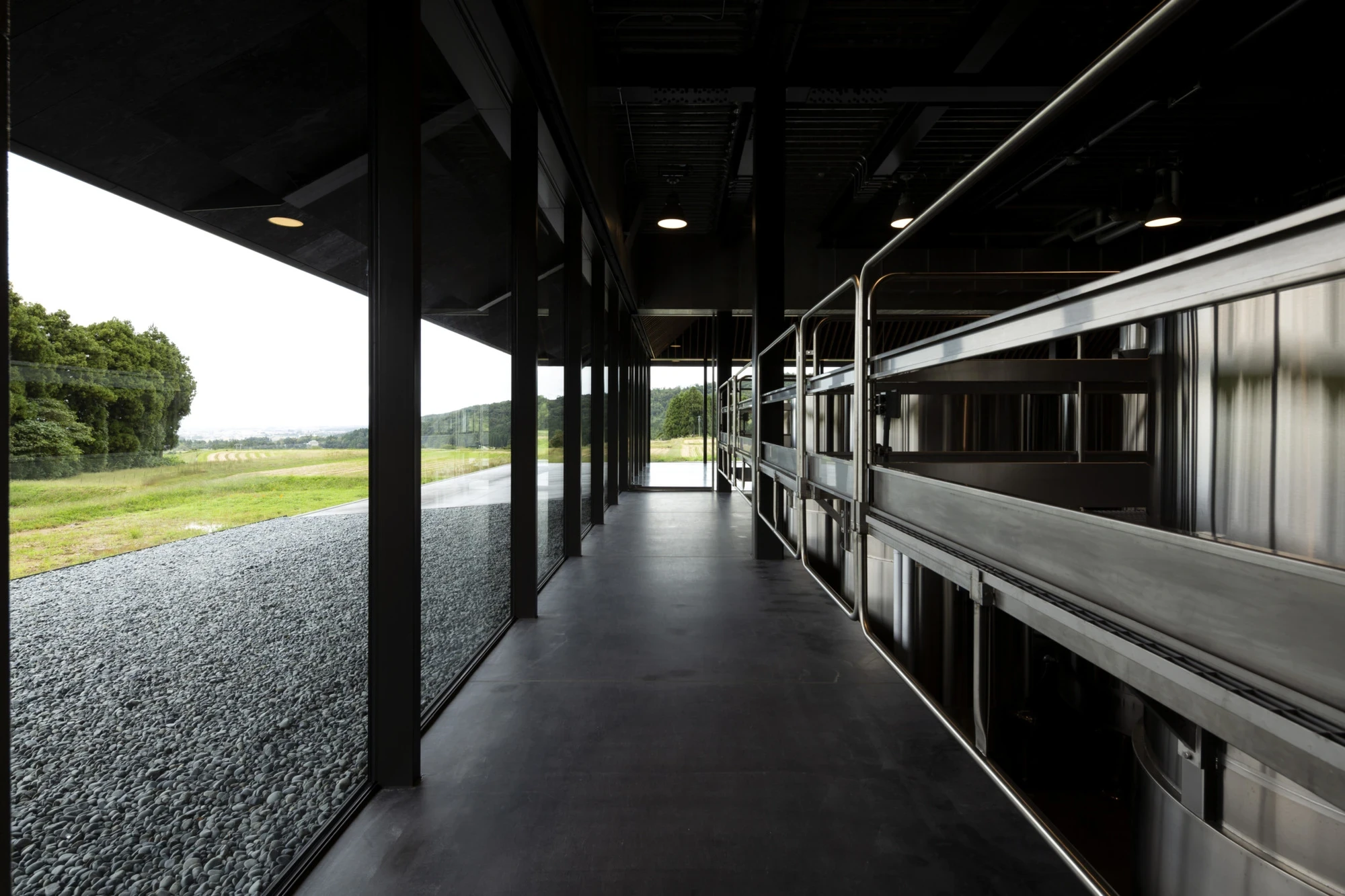
Geoffroy calls Kuma the man who reset the fundamentals of Japanese building, and the kura is a clear argument for that reputation. From the rice fields it reads as almost nothing: a single low black roof pressed against the horizon, its ridge barely lifting above the paddies before the eaves drop back toward the ground. The pyramid pulls tight to a point when seen head-on, then flattens into a long shed from the side. Everything is subordinated to that one gesture.
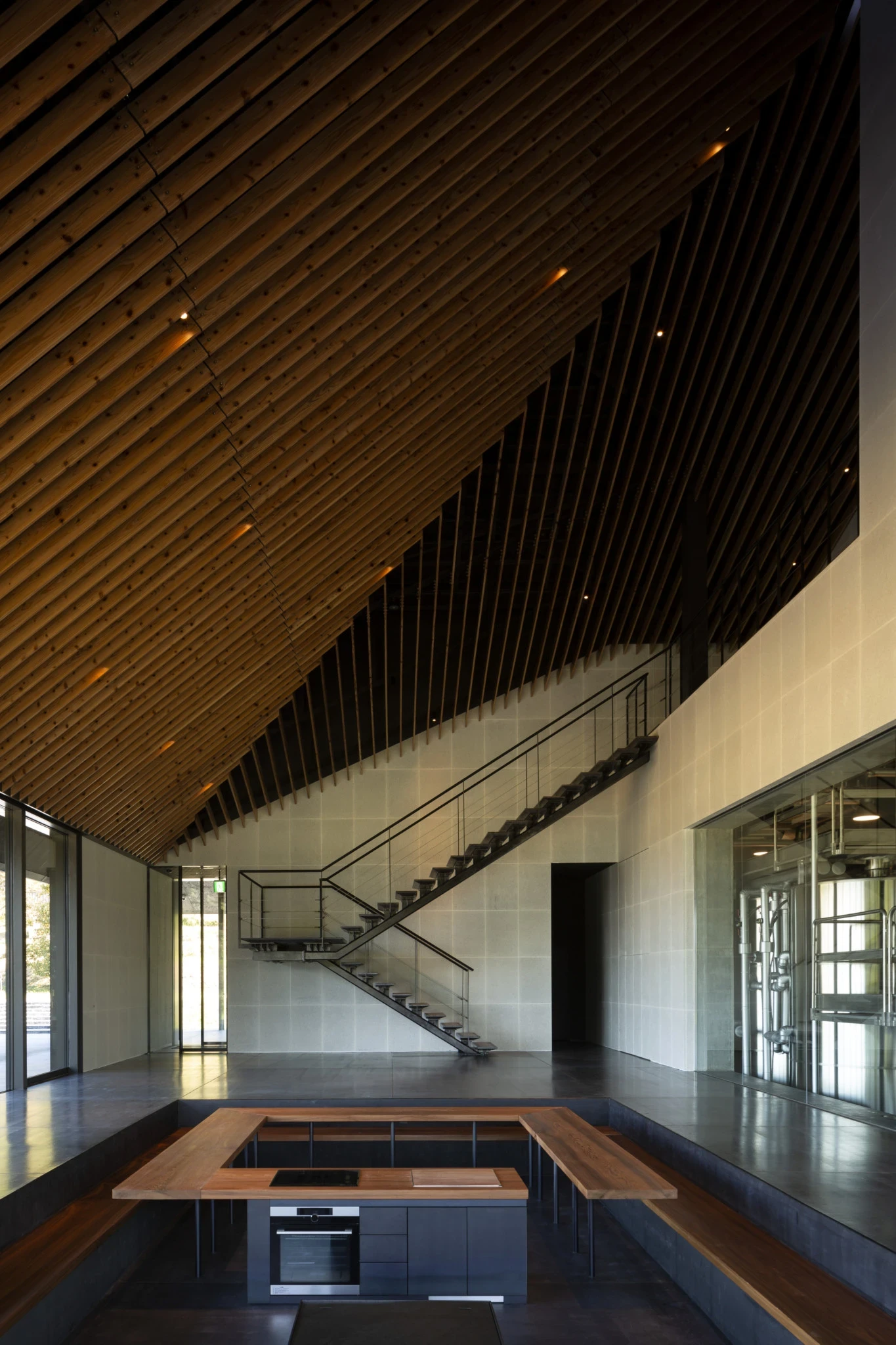
The roof and walls are clad in yakisugi, cedar charred until the surface turns to matte carbon, a traditional Japanese method that weatherproofs the wood and gives the building its depth of black. Kuma looked back to the Edo period, when this region made silk and sake was often brewed inside the family house. At the centre of those houses stood a large hearth that warmed the private rooms and dried the silk at once. The kura rebuilds that logic. Workers, executives, production, reception and guests all sit under the same roof and gather around a sunken hearth set into a floor of dark stone.
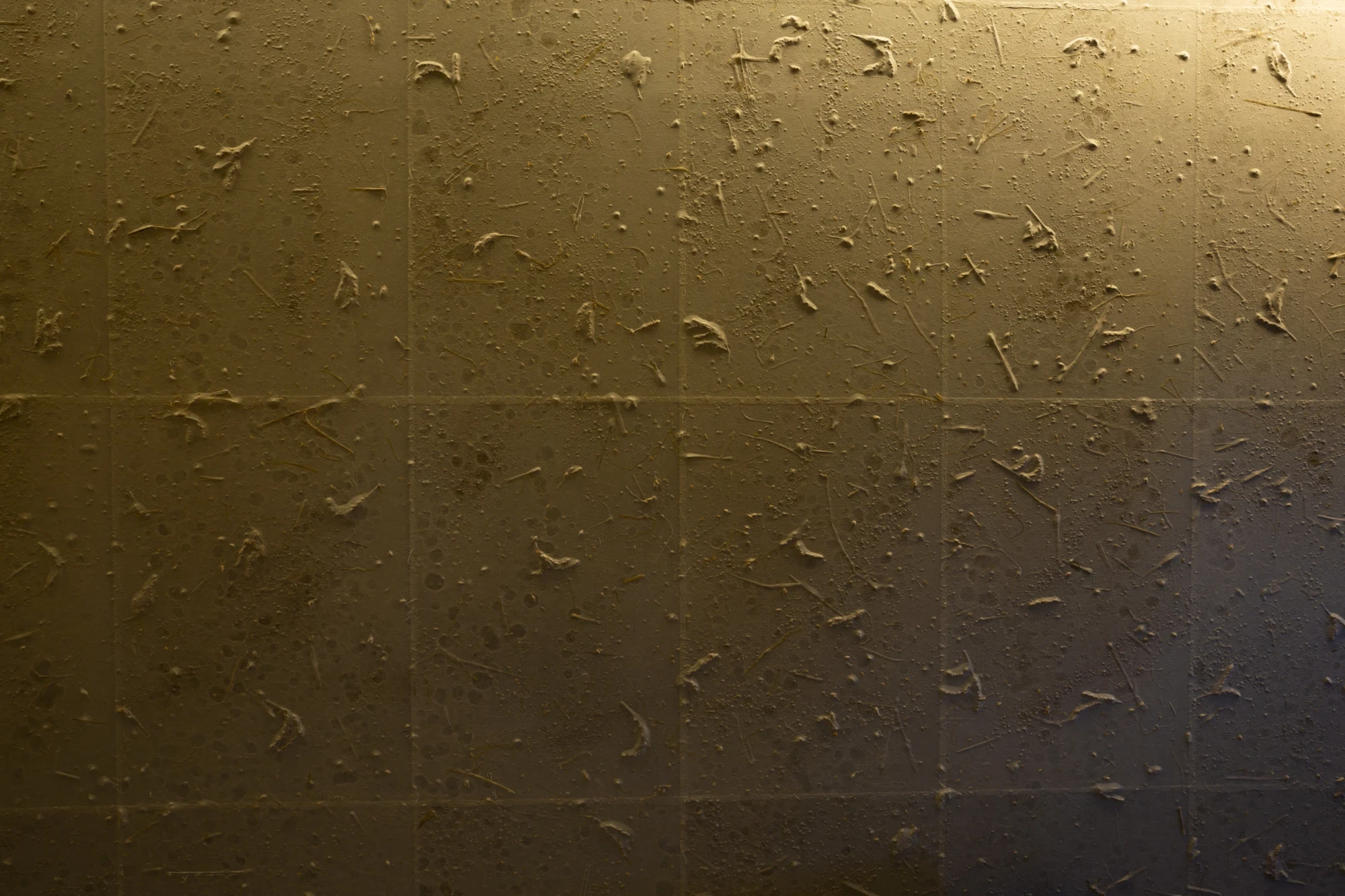
Inside, the section does the work. A ceiling of Japanese sugi cedar rakes up along the roofline in fine parallel battens, warm and close over the hearth, then opens to full-height glazing that frames the surrounding fields. Washi paper wallcoverings, made to order by local craftspeople, catch the light in a gold sheen pocked with flecks and fibres. In the tank room, polished steel vessels line up against the same glass wall, so the view of the rice terraces becomes part of the machinery of brewing.
This is Kuma’s first sake brewery, and he treats the parallel between the two crafts as the point. “Both the making of sake and the making of building require attention to detail and the pursuit of perfection,” he says, citing the combination of tradition, craftsmanship and contemporary technology. Geoffroy frames it in his own terms: rooted in Japan, but with an international reach.