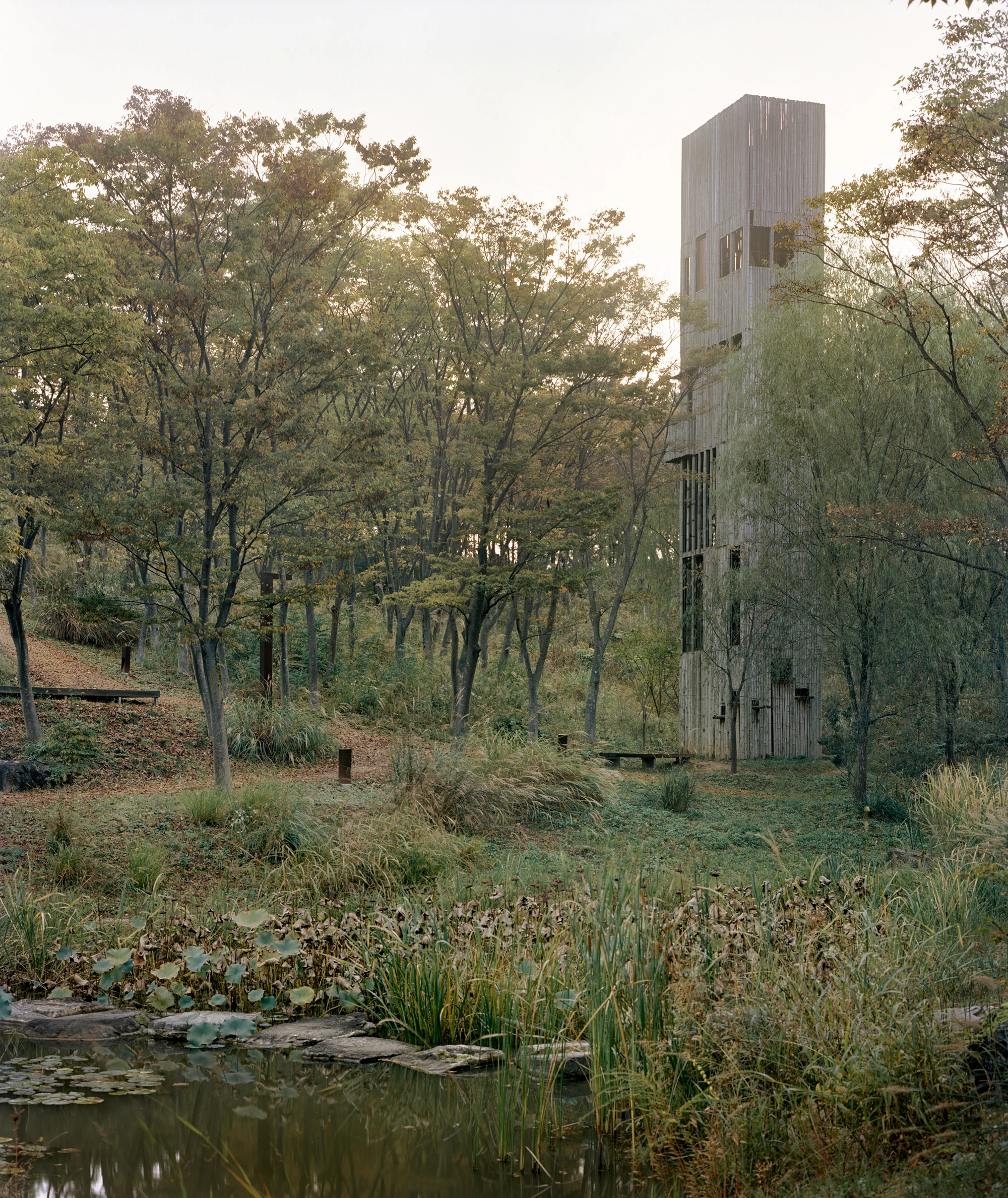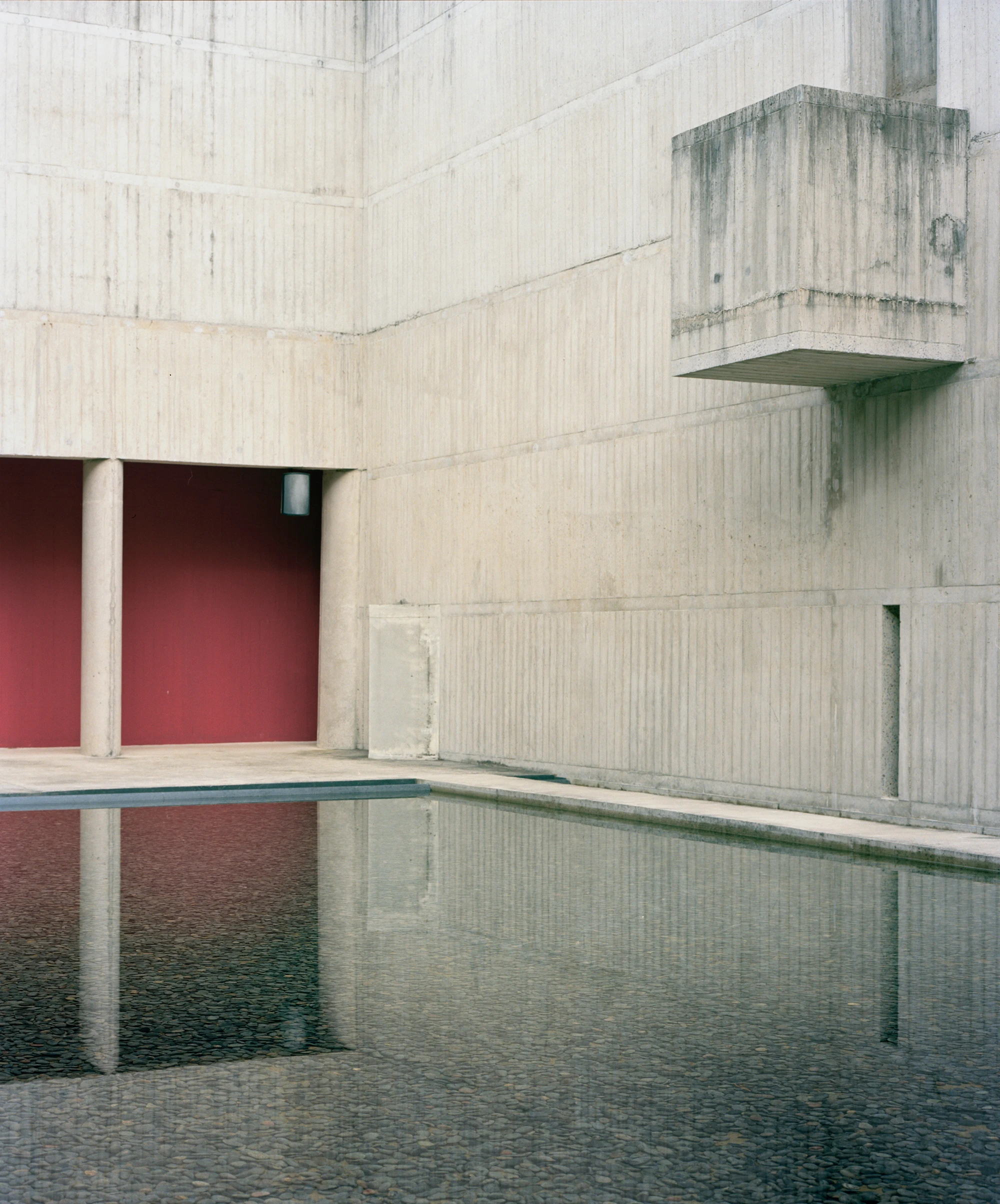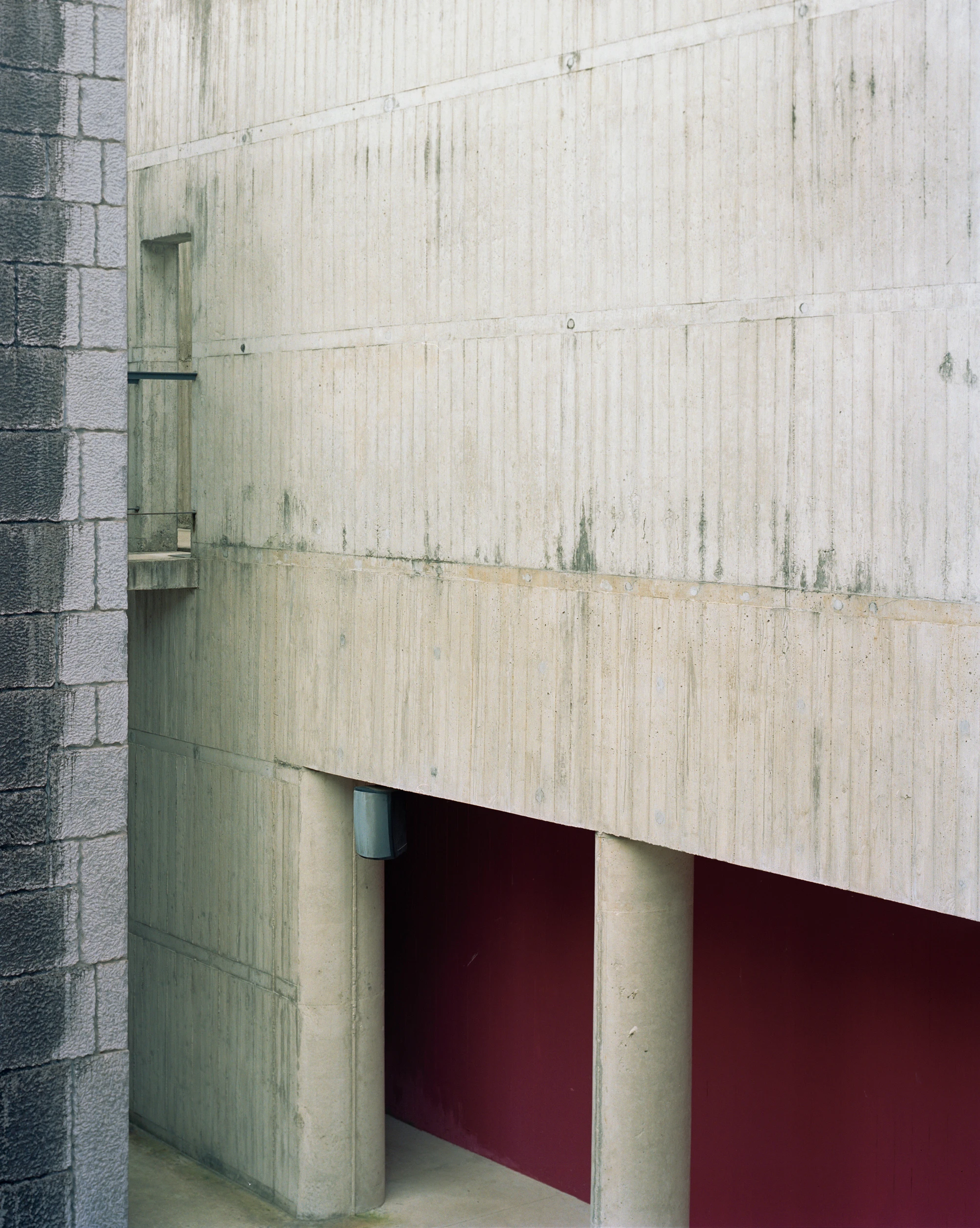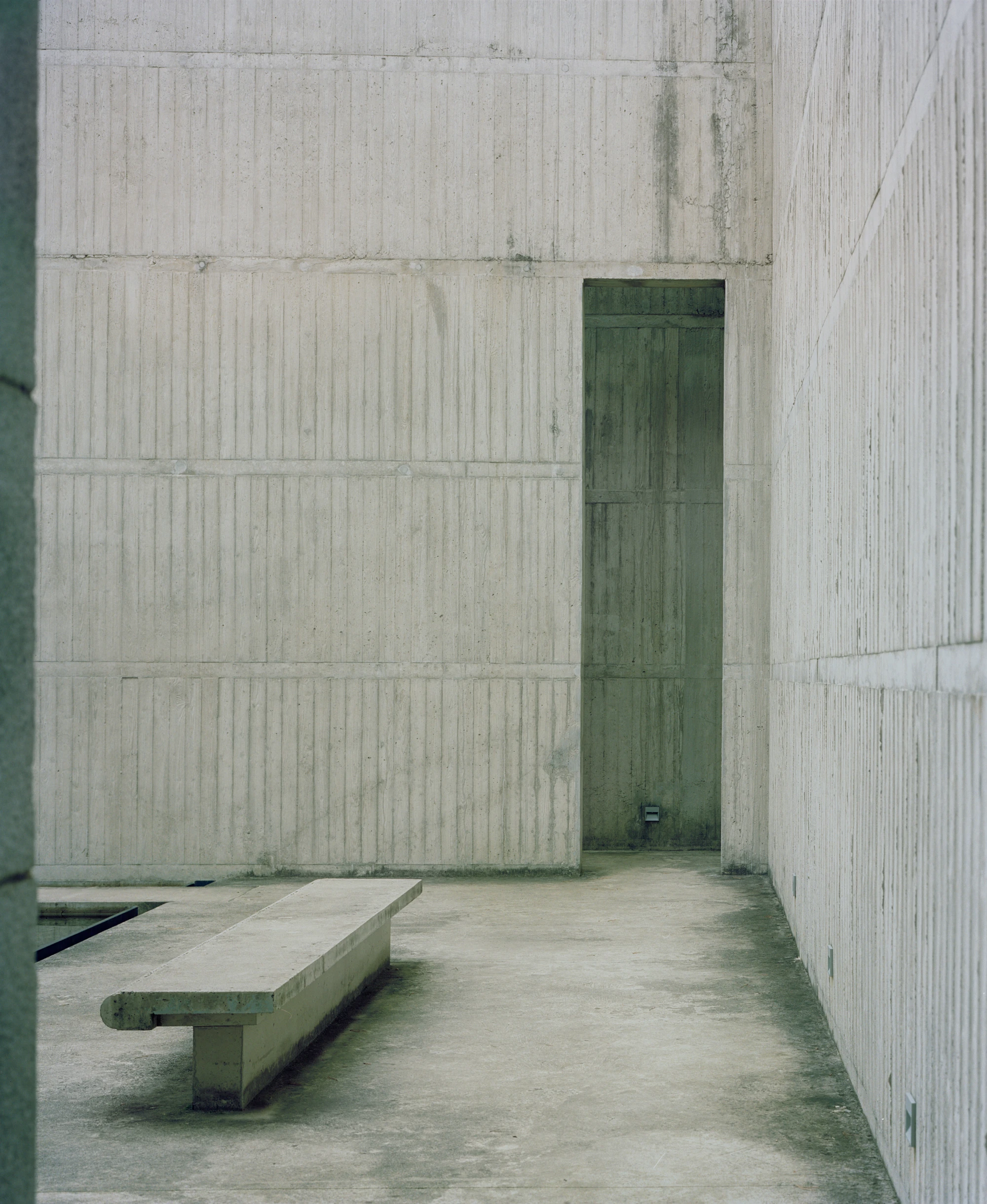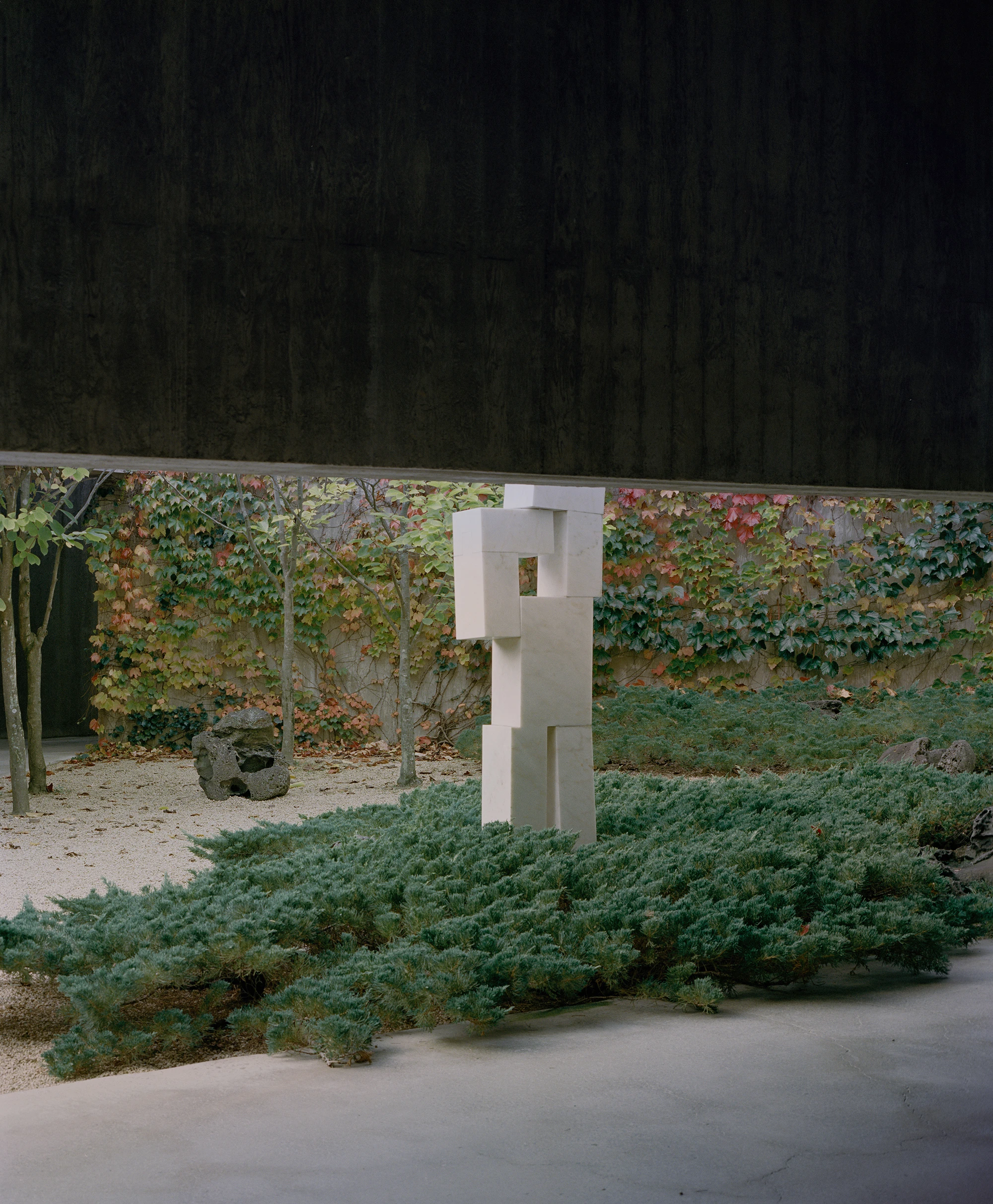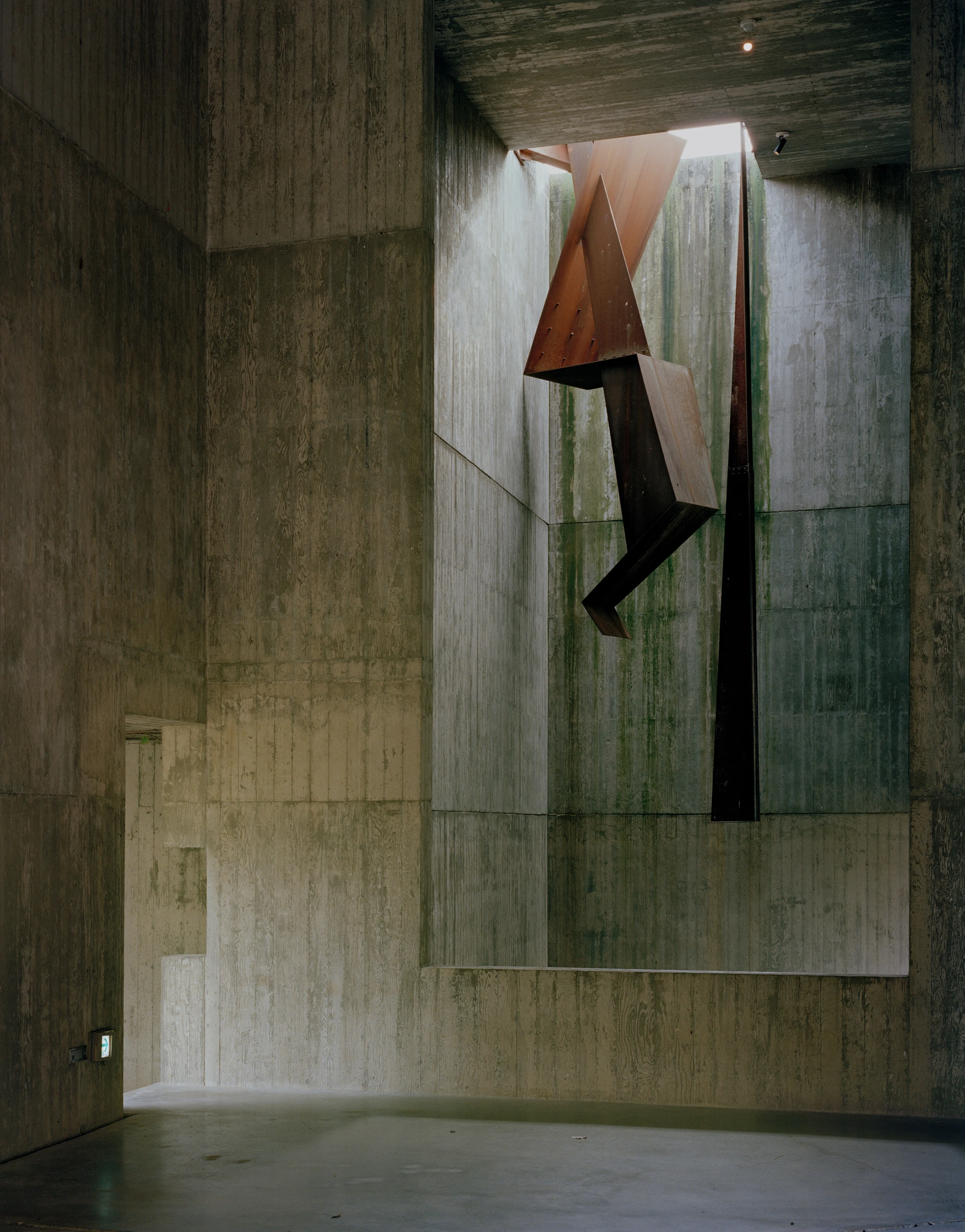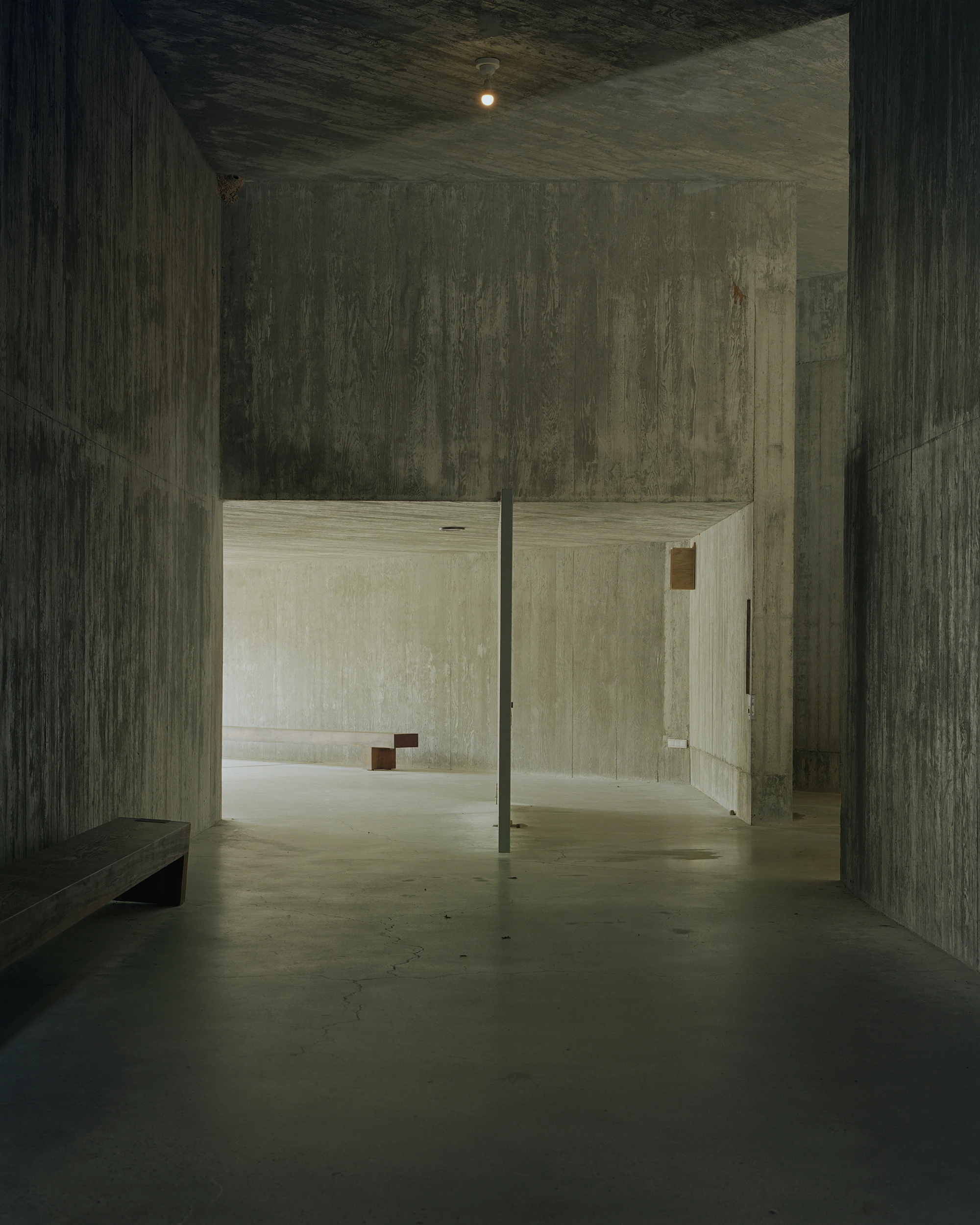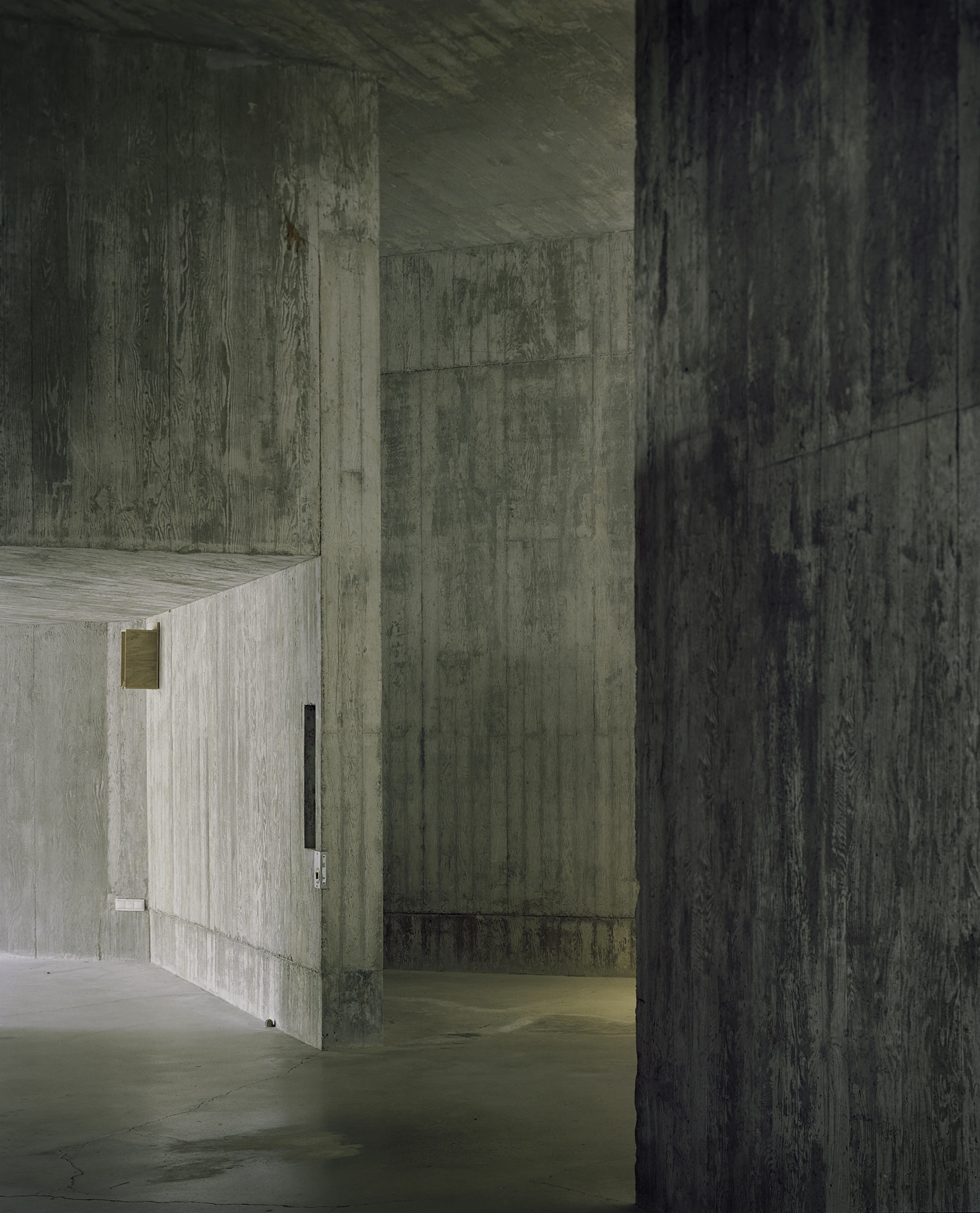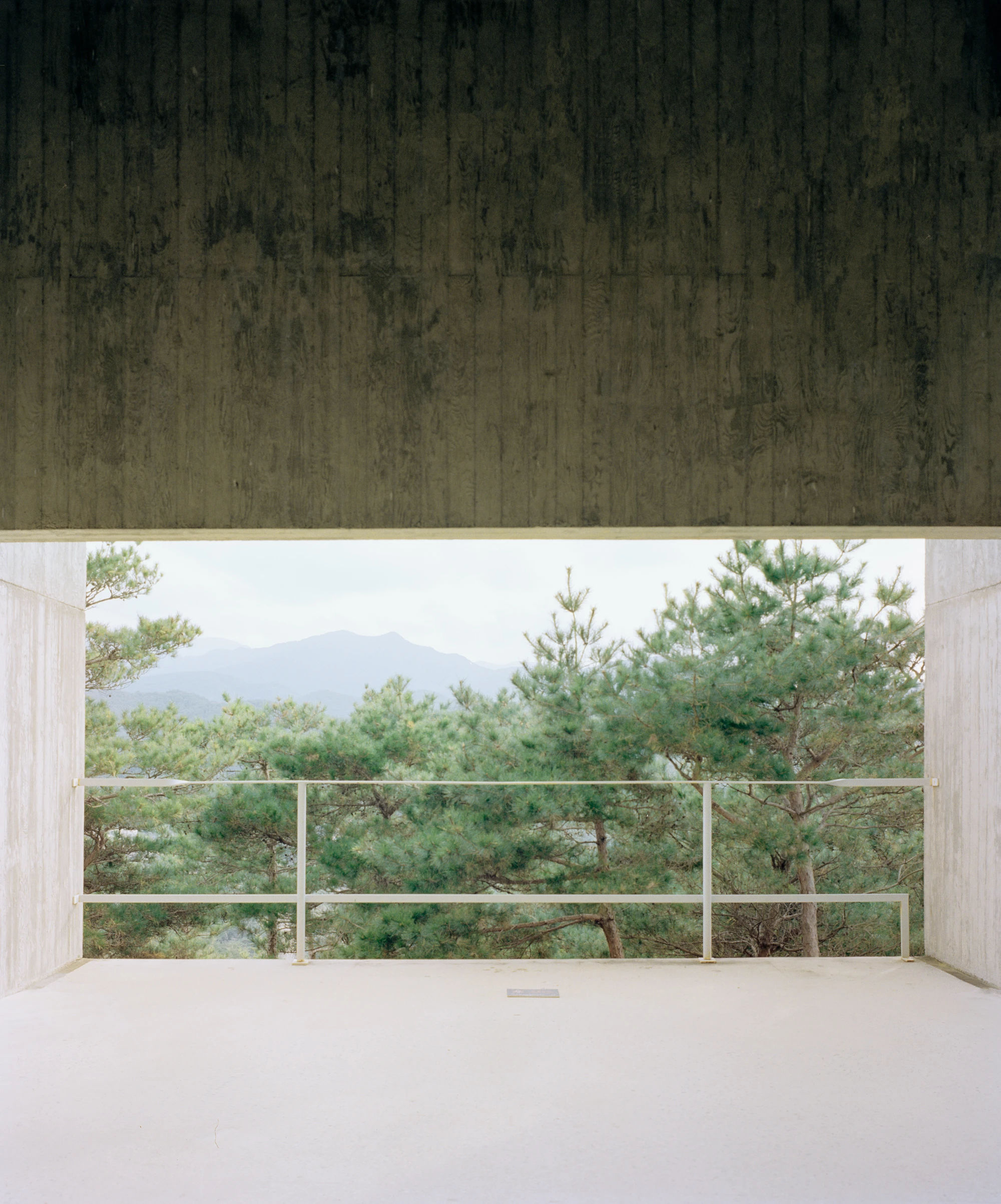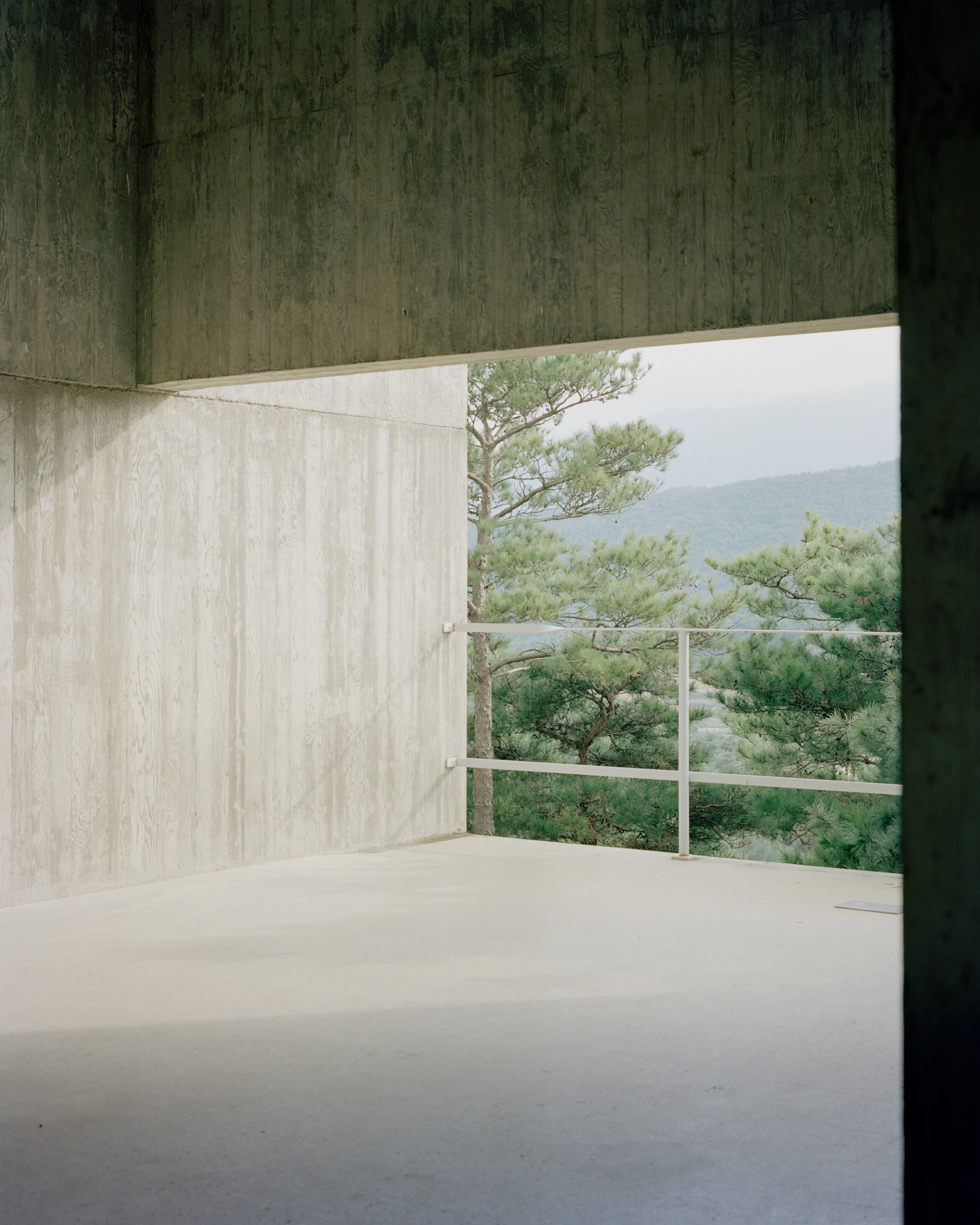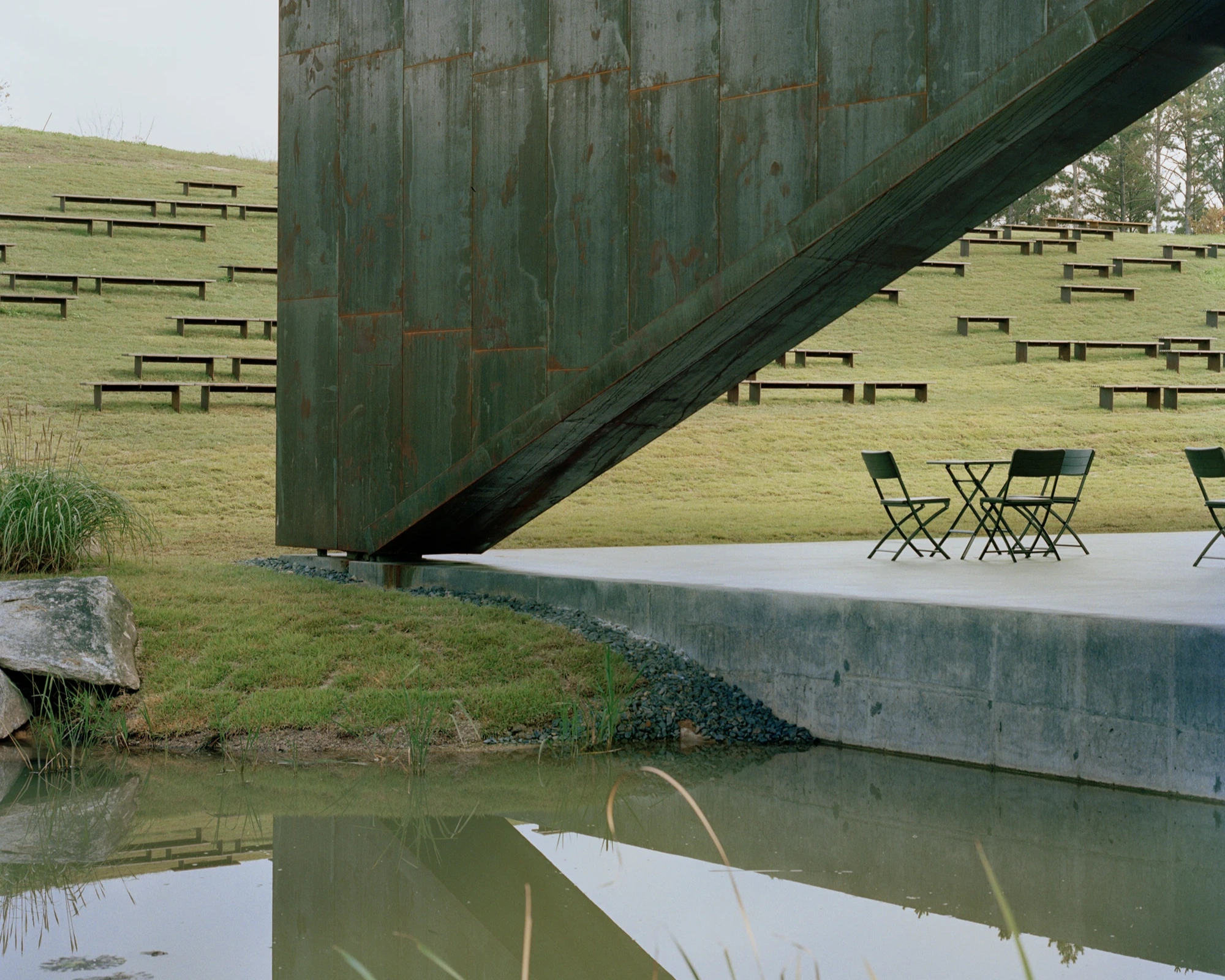
Sayuwon by photographed by Danny Kai in Daegu, South Korea captures a constellation of architectural interventions—works by Álvaro Siza, Seung H-Sang, and others distributed through forest and meadow.
The Bugye Arboretum near Daegu operates on a different model of architectural exhibition. Rather than concentrating significant buildings in a single complex, Sayuwon—the arboretum's cultural wing—scatters structures by leading designers across its landscape. Each building appears almost unexpectedly, a formal proposition encountered amid pine and bamboo.
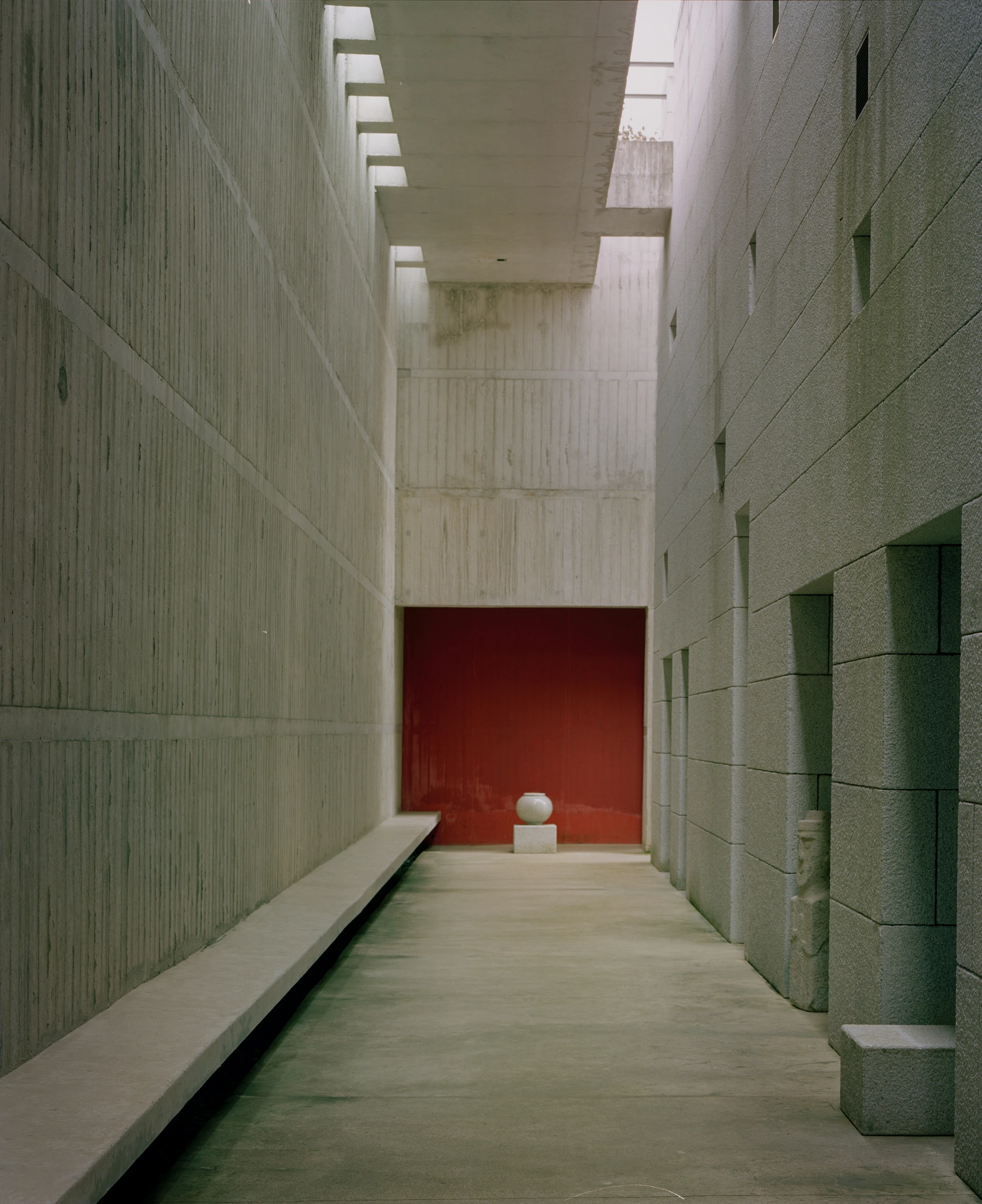
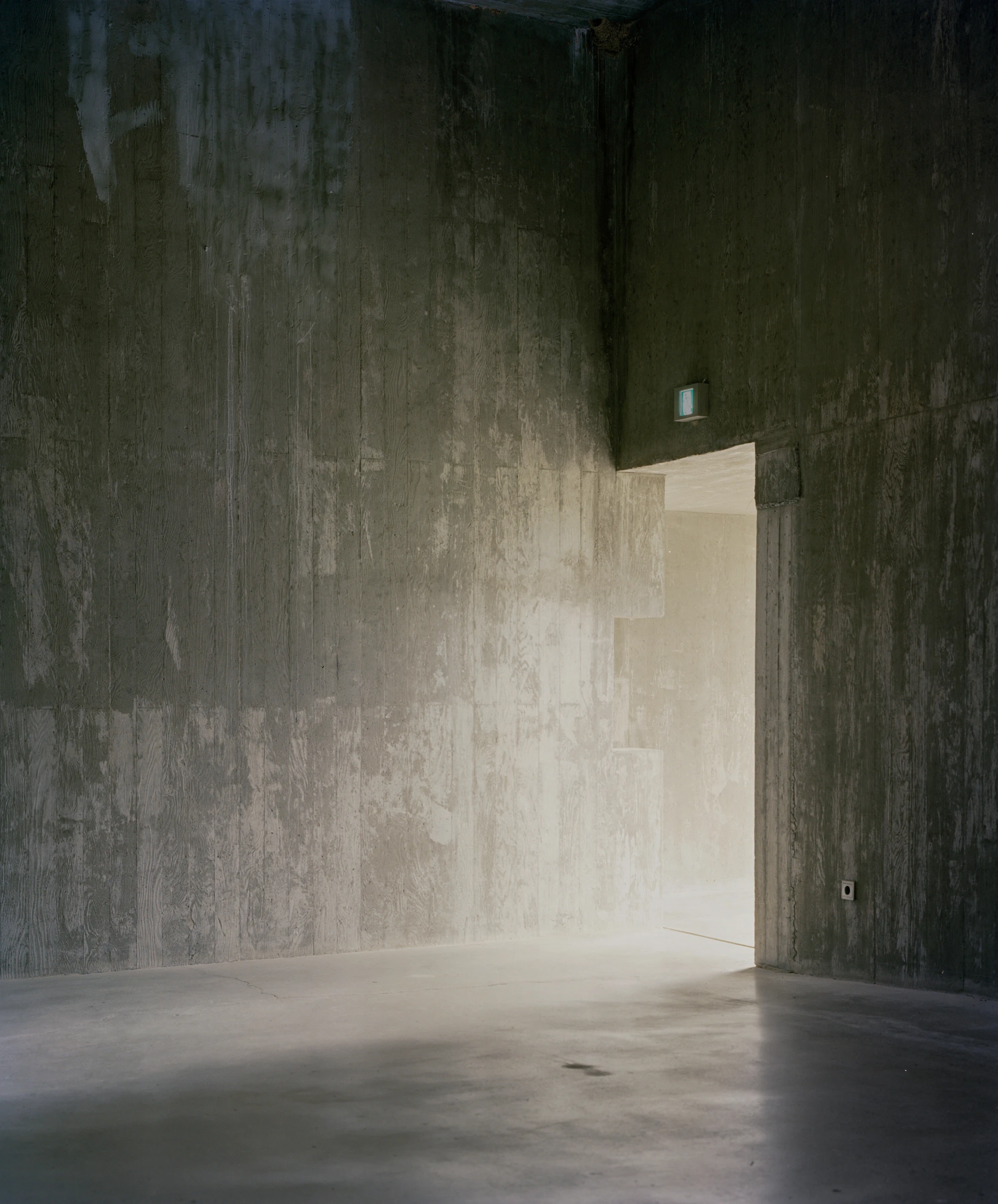
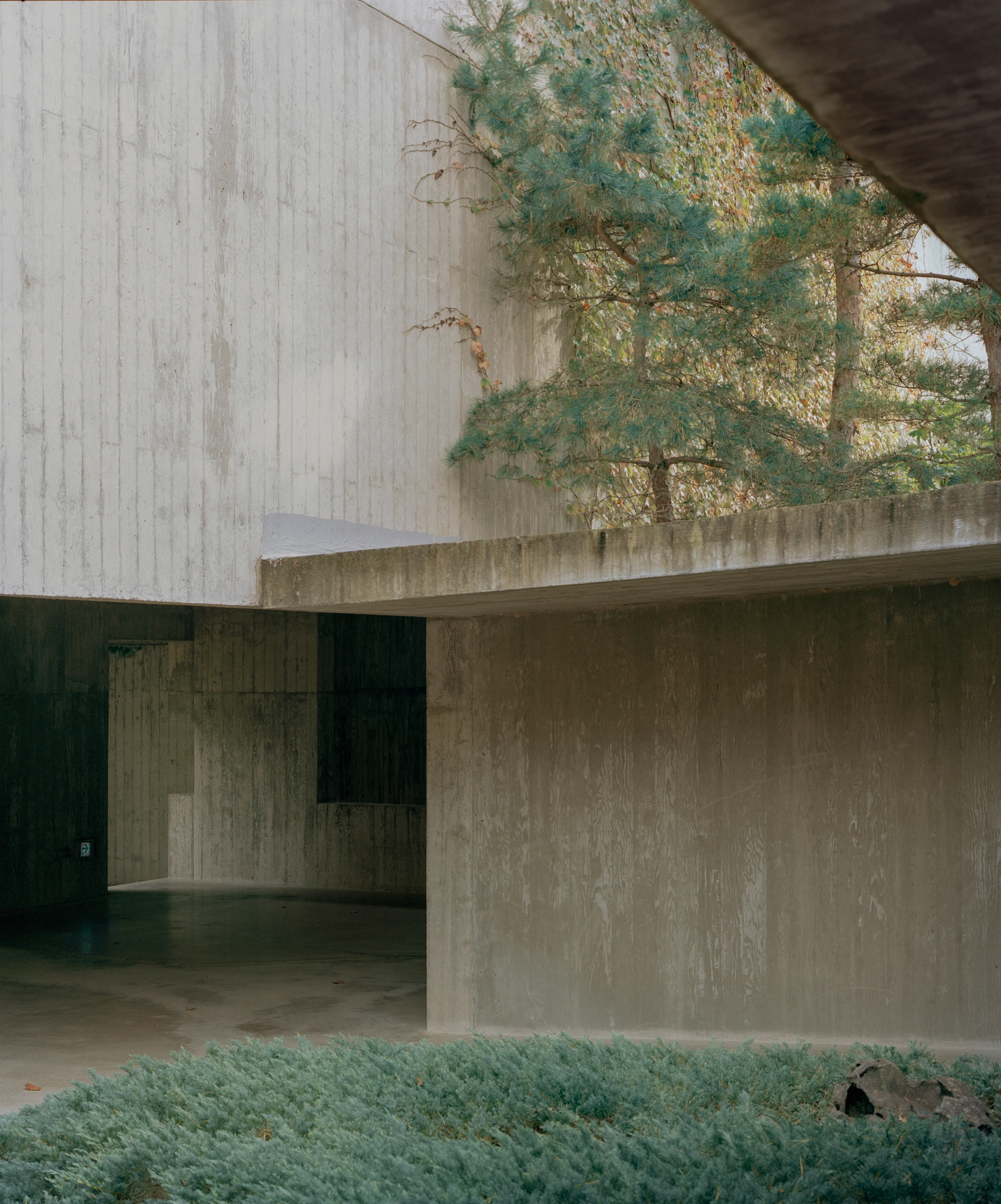
Photographer Danny Kai has documented this dispersed collection with the patience it requires. His images capture the Soyoheon Art Pavilion by Álvaro Siza and Carlos Castanheira—a concrete meditation space built to commemorate the Korean War—in the quiet light that suits its purpose. The building's board-formed surfaces carry the texture of their making, softened now by weather and time.
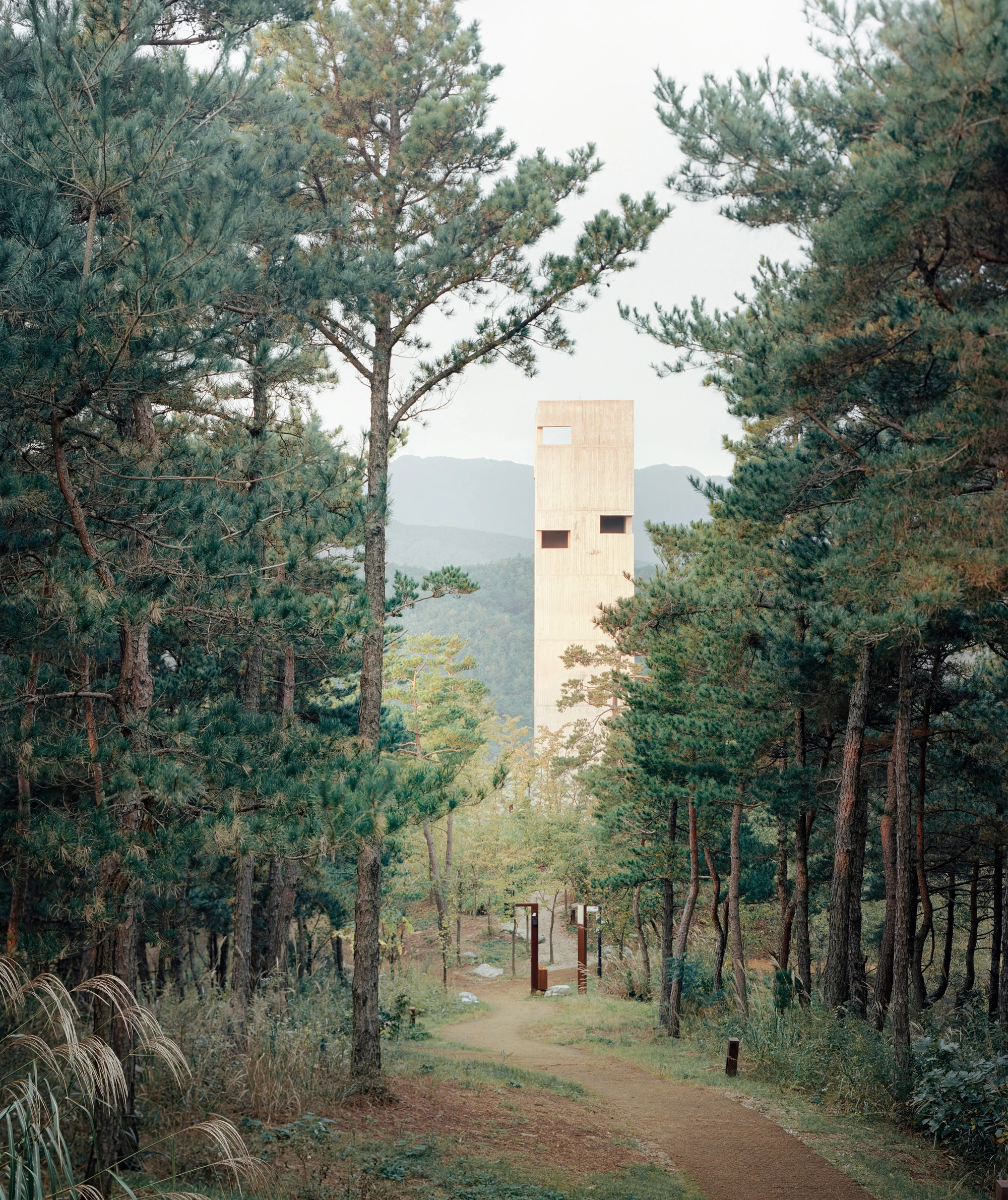
Nearby, Siza and Castanheira's Sodae observation tower tilts twenty meters into the sky, its inclined form offering views across the canopy that shift as visitors climb. The same architects worked at two scales—intimate pavilion and landmark tower—with characteristic rigor, their Portuguese minimalism adapting to Korean forest without concession.
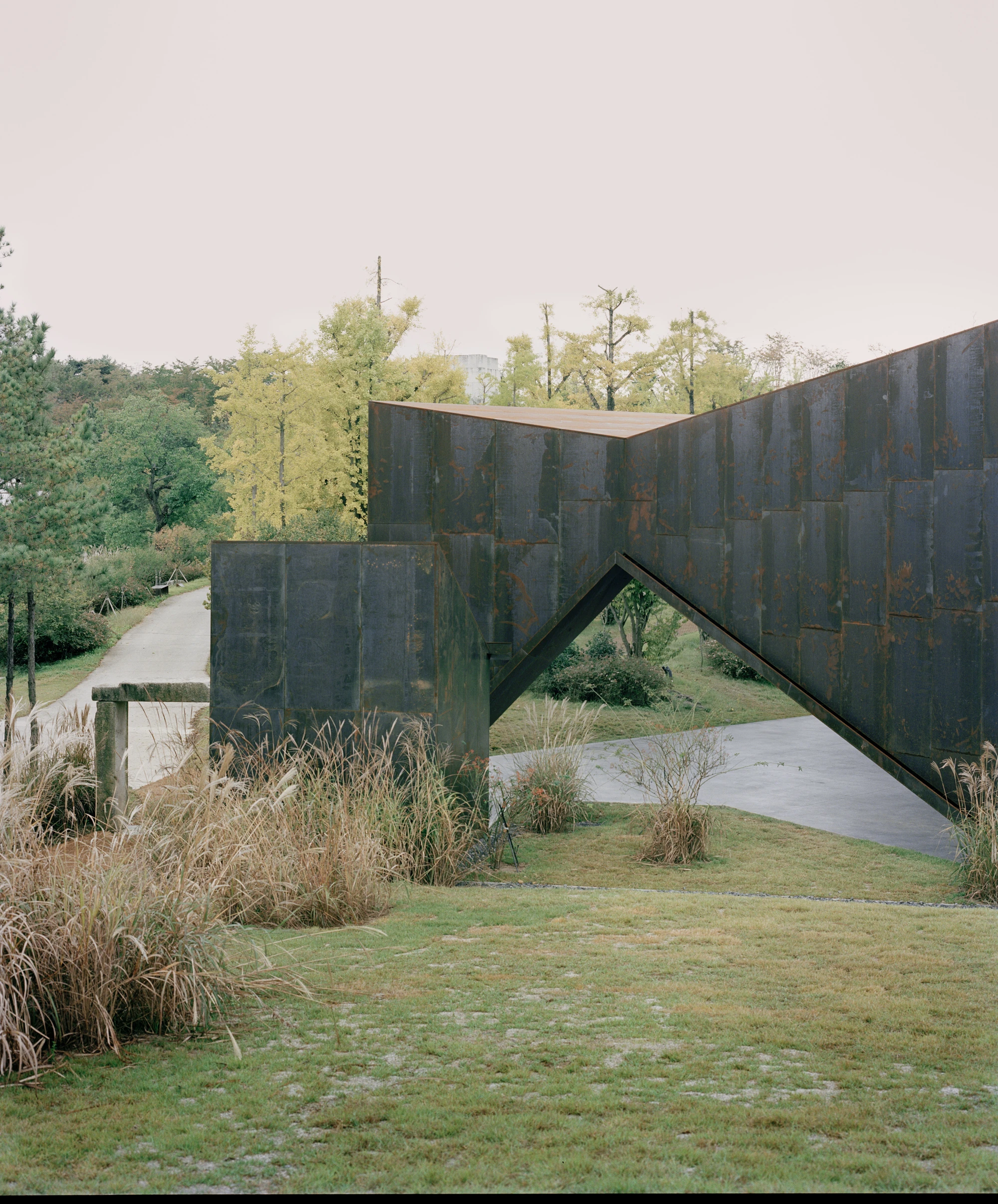
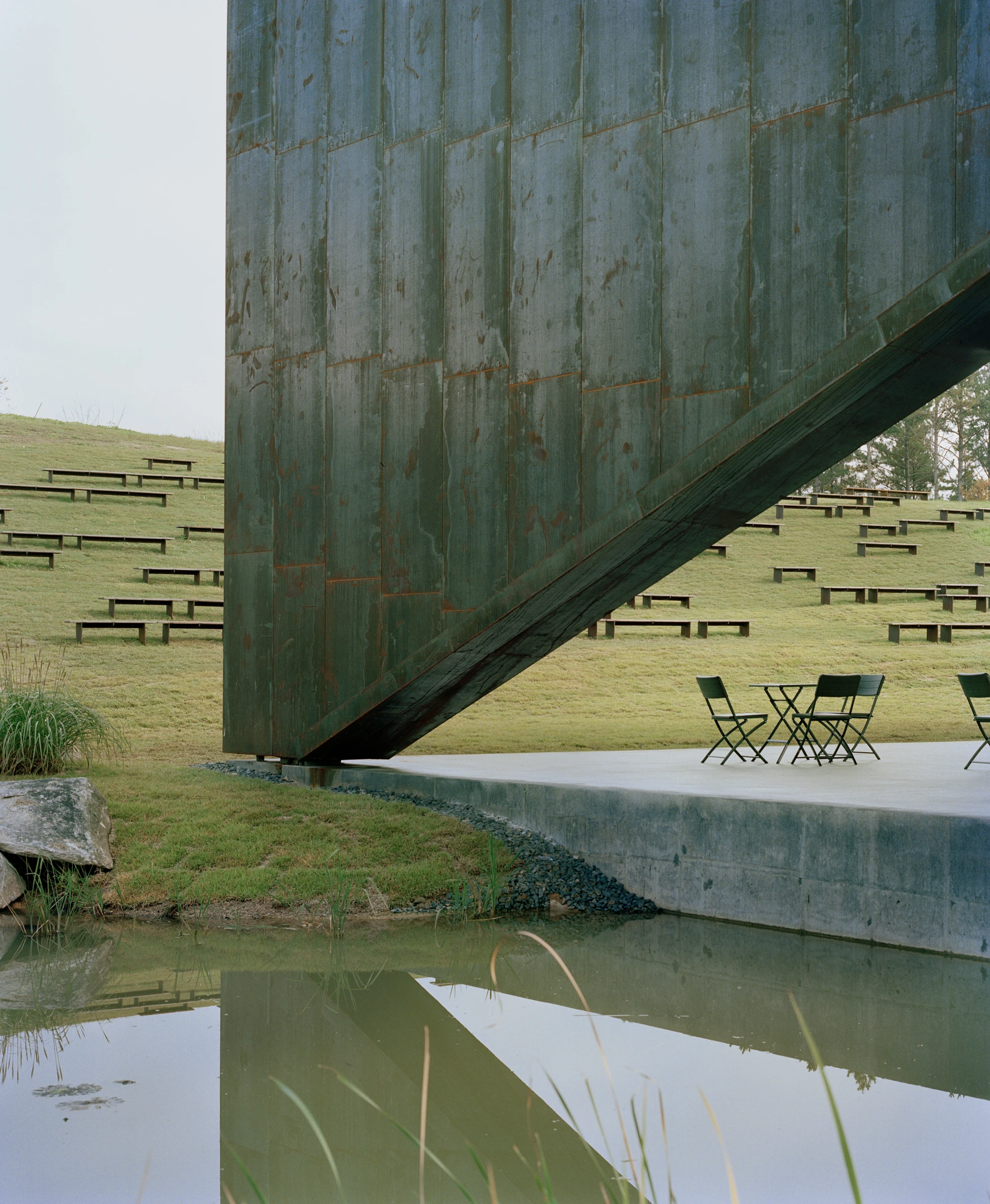
Other voices enter the conversation. Seung H-Sang's Myeongjeong provides a contemplative space where life and afterlife are meant to intersect—architecture as threshold. Iroje's Birds' Monastery, a bamboo structure originally designed for an installation at the DMZ, arrived at Sayuwon as a kind of architectural refugee. Andrea Liverani's Symphony 6, a 250-seat performance venue in folded Corten steel, introduces industrial muscle to the otherwise organic landscape.
What Kai's photographs reveal is the cumulative effect of these dispersed encounters. No single building dominates; each arrives as a discrete event in a longer walk. The arboretum functions as both garden and gallery, nature and architecture in ongoing negotiation. The trees have their own timelines; the buildings, for all their permanence, remain guests.