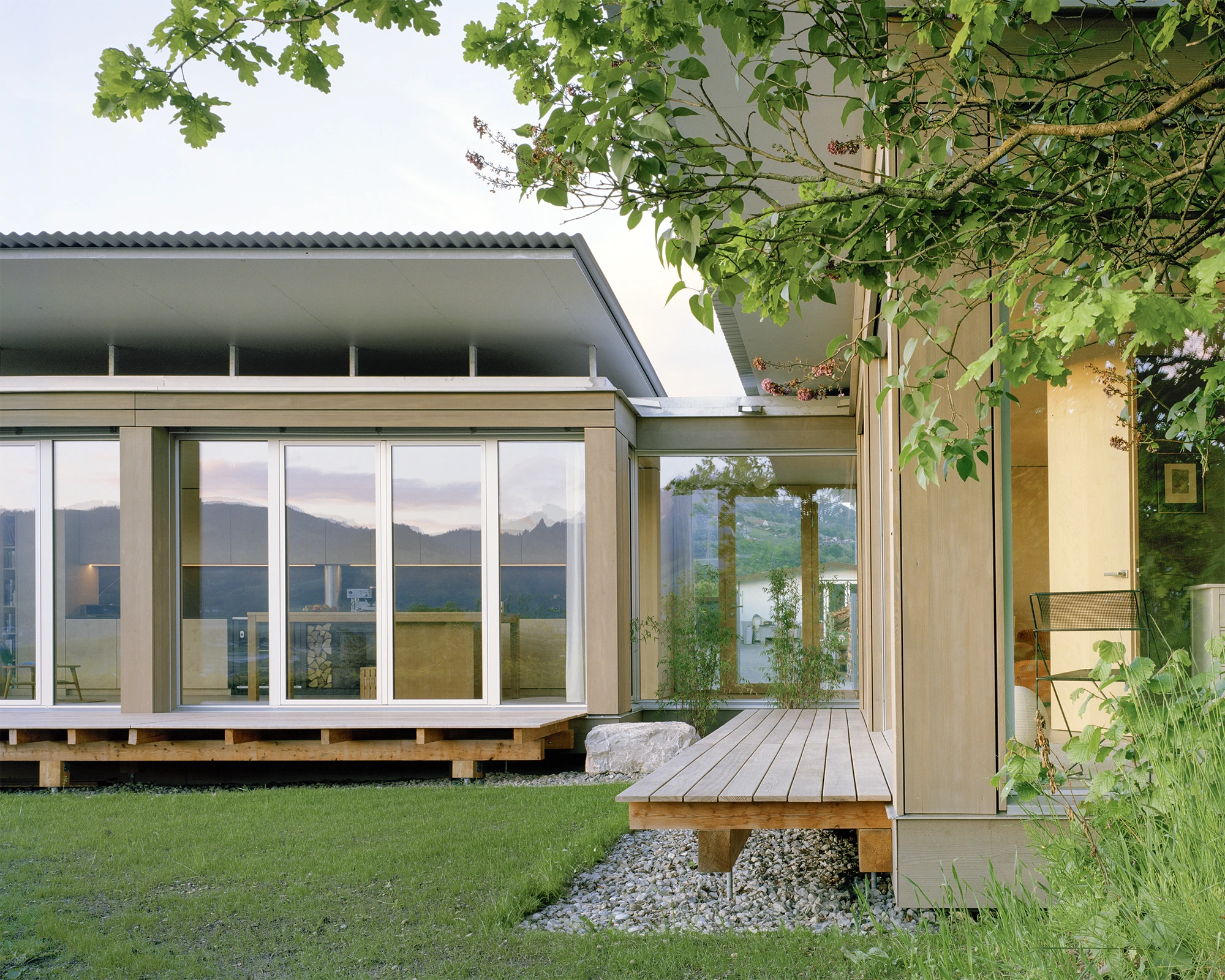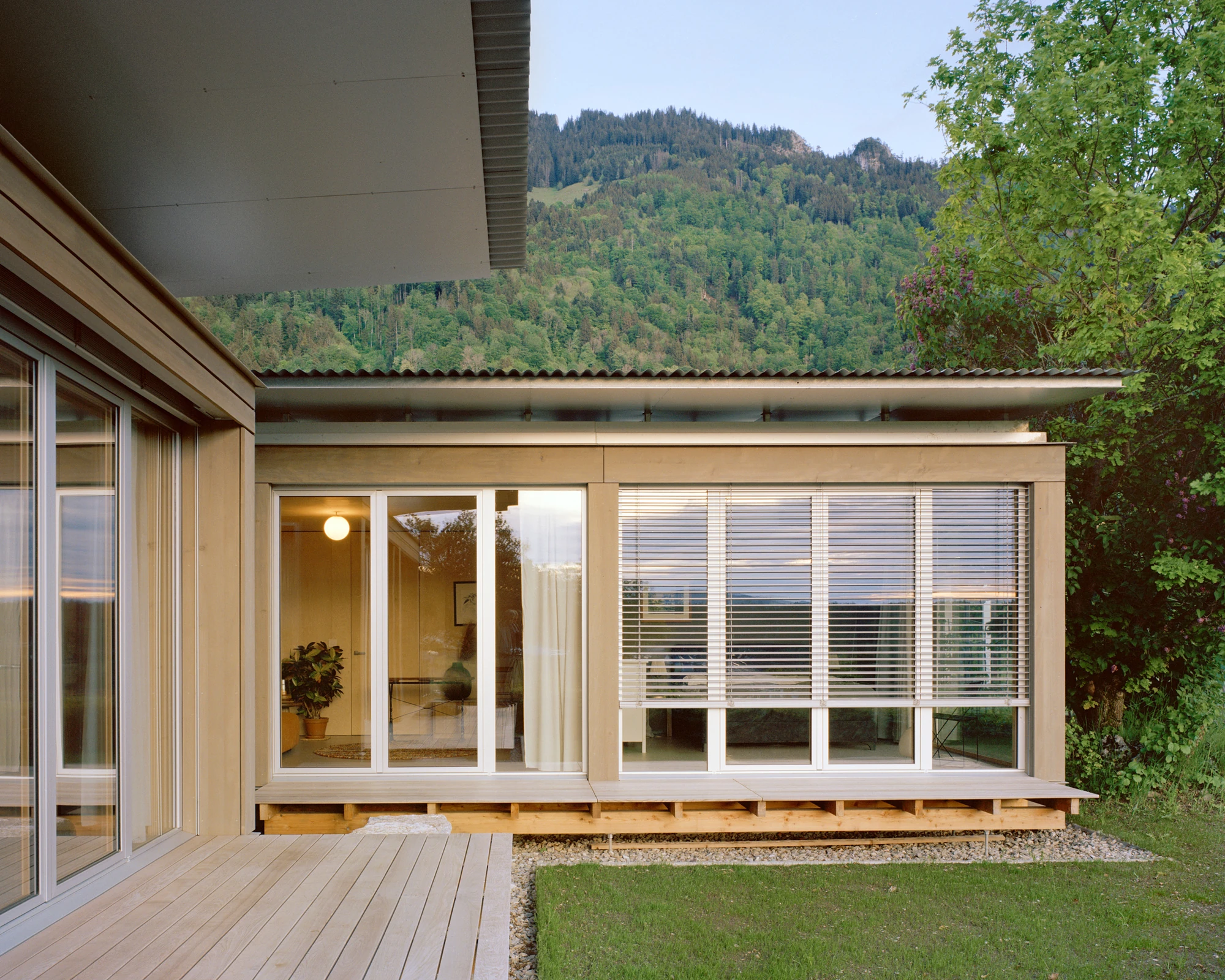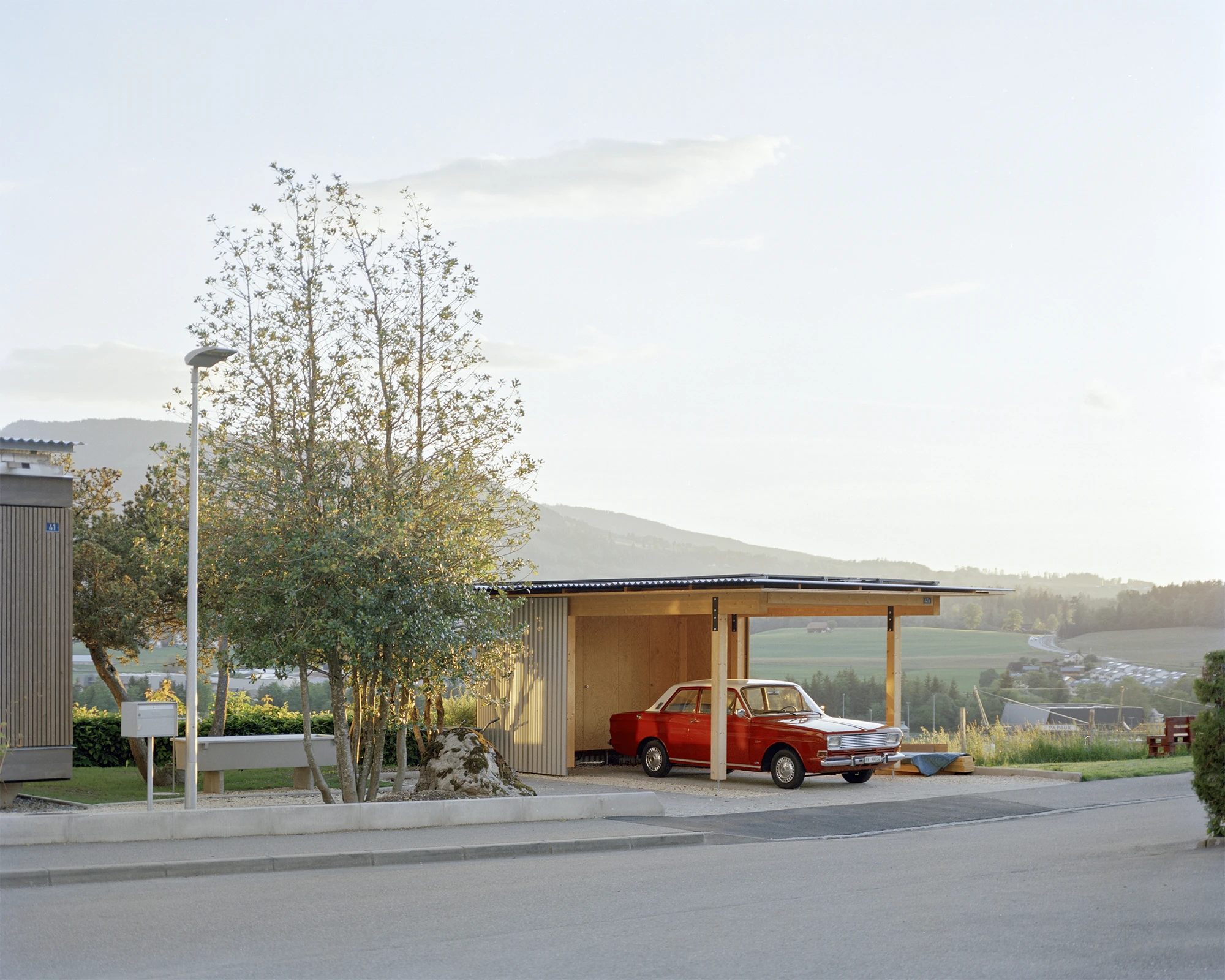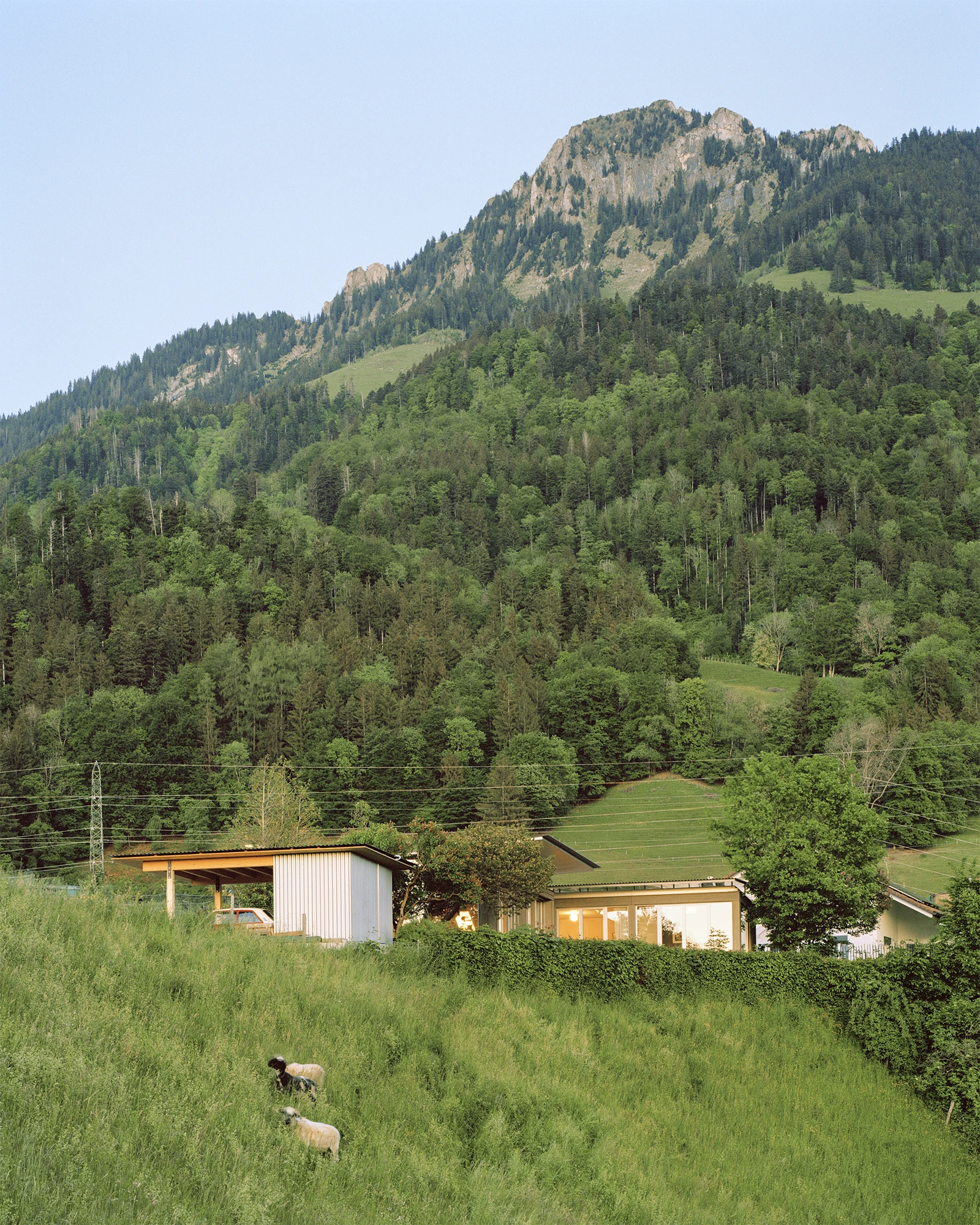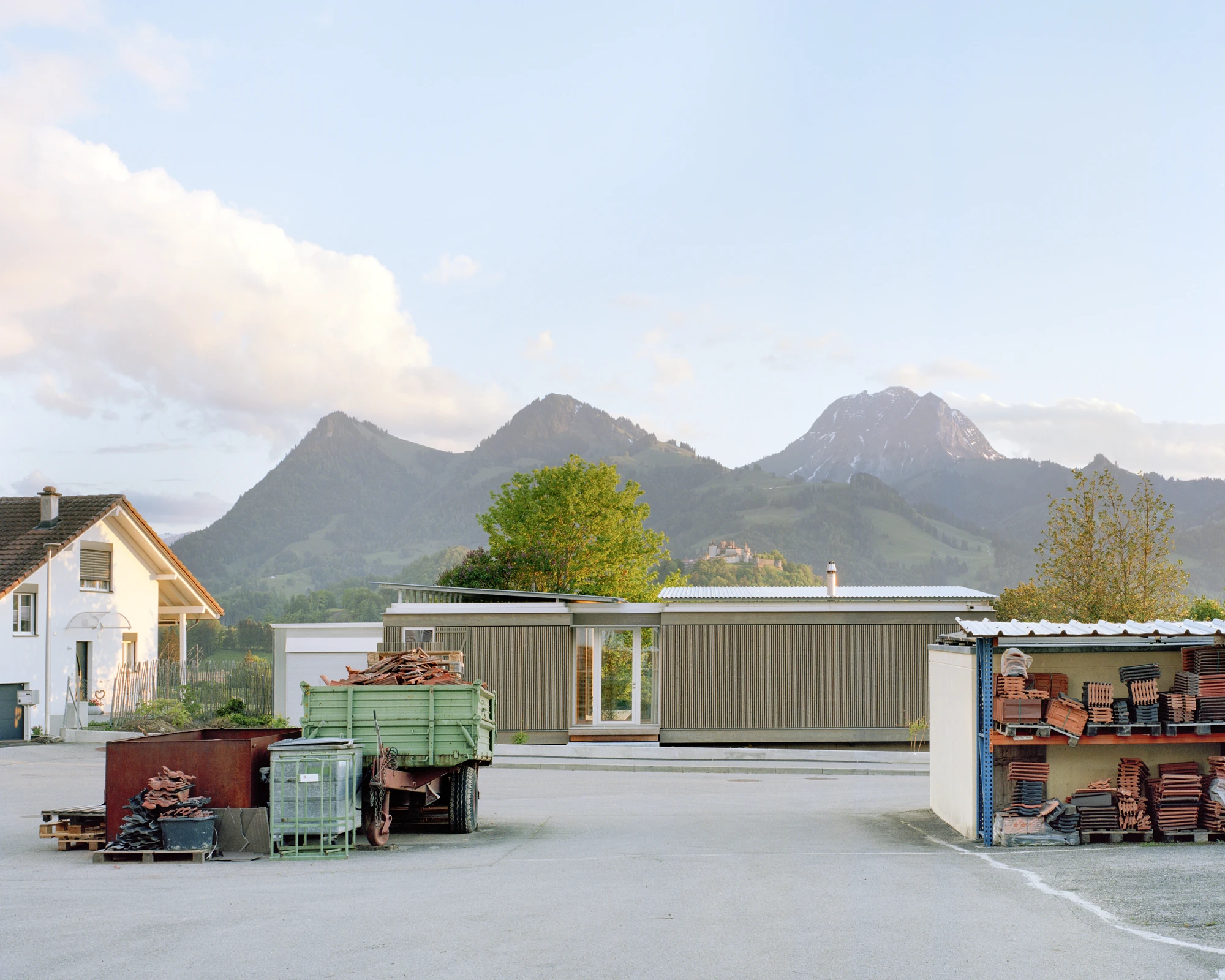
On a former garden plot above Broc, in Switzerland's Gruyère valley, Charly Jolliet Architecte raises Plywood House on timber piles, its two low volumes split between sleeping under an oak and living toward the valley.
The Plywood House begins with what was already here. The plot once worked as a garden, occupied by two small cabins, and the gap between them framed a straight line down to the Gruyère valley. Charly Jolliet takes that reading and builds it back into the house, drawing on the ease of postwar American domestic building for a structure that sits lightly rather than settles in.
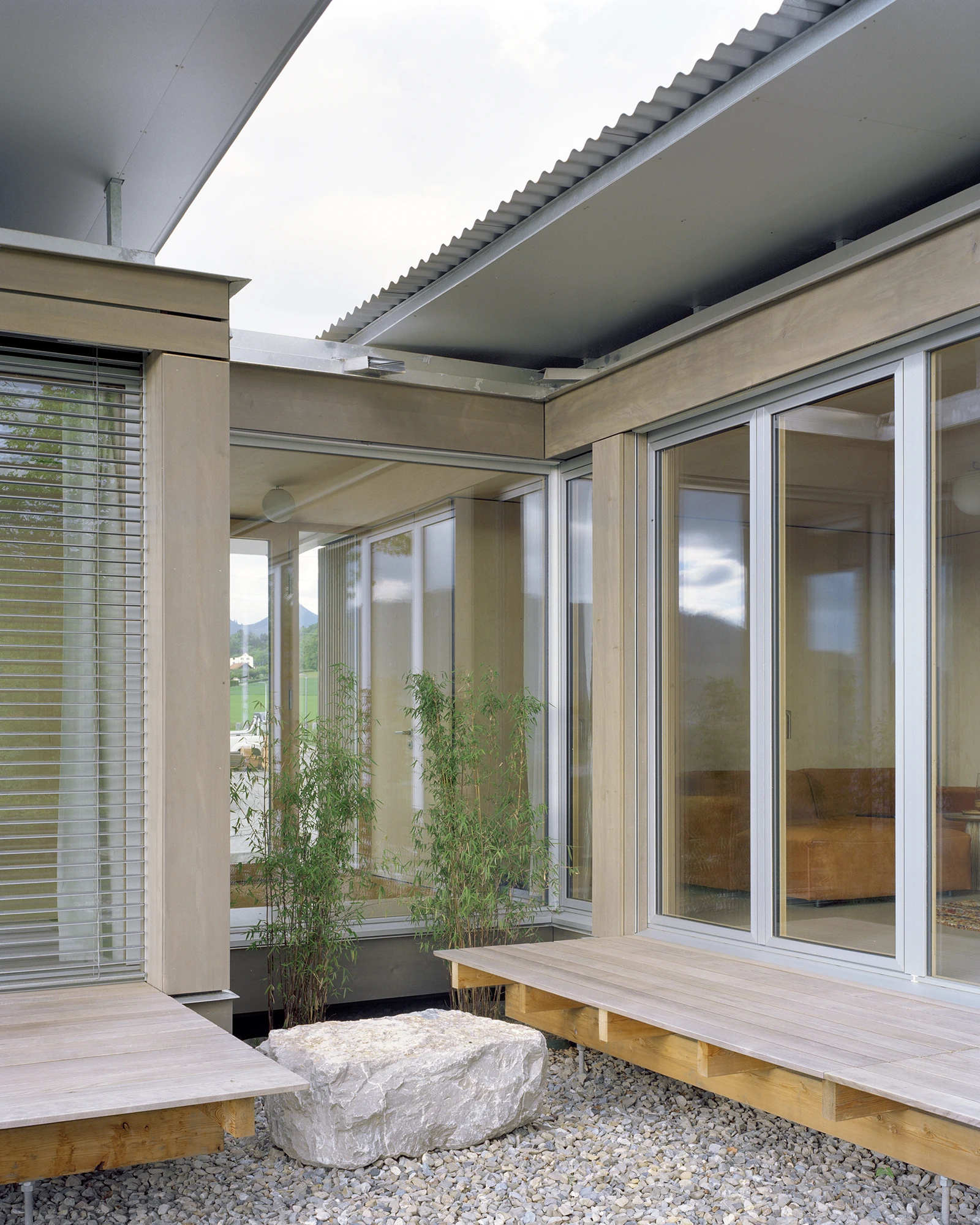
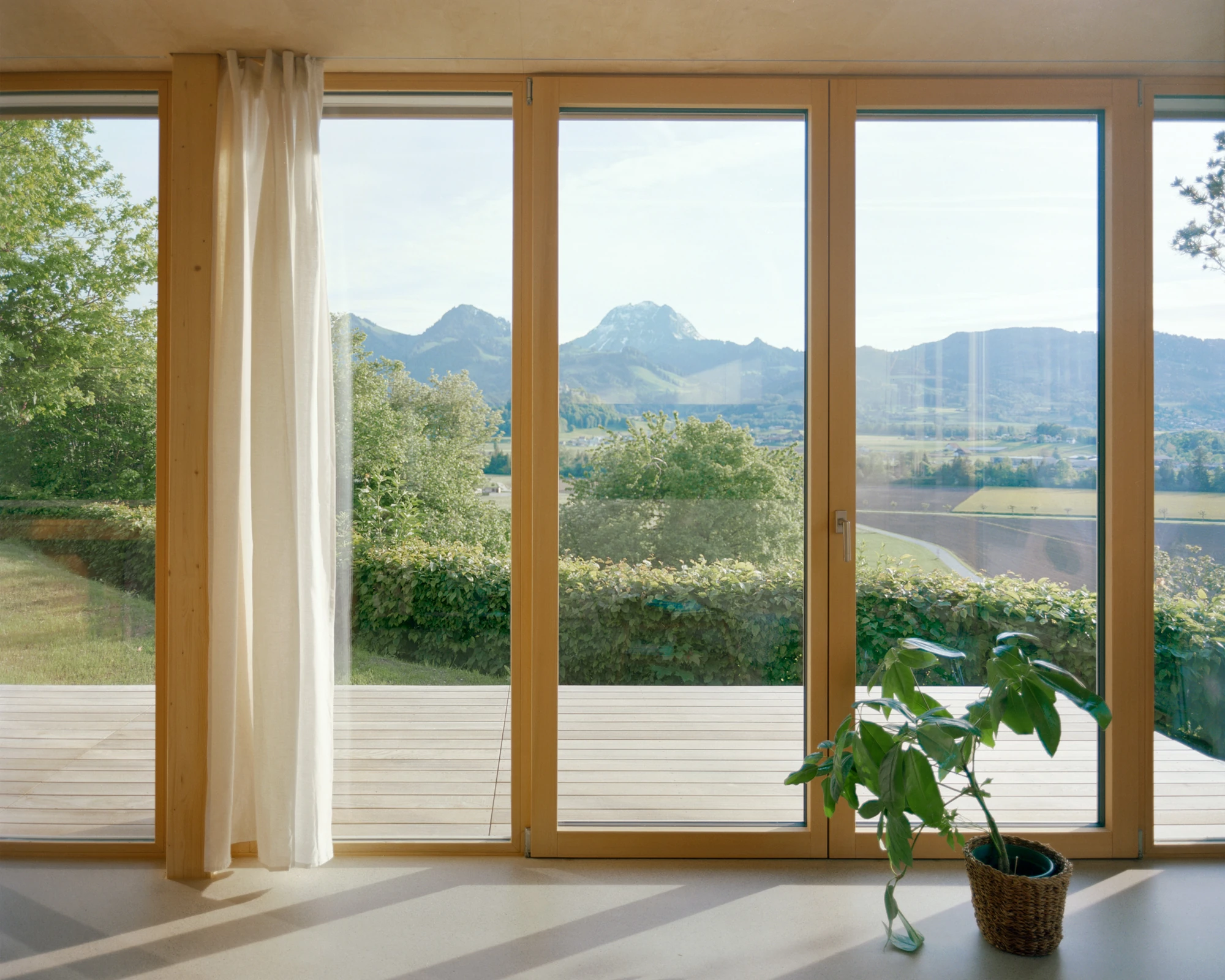
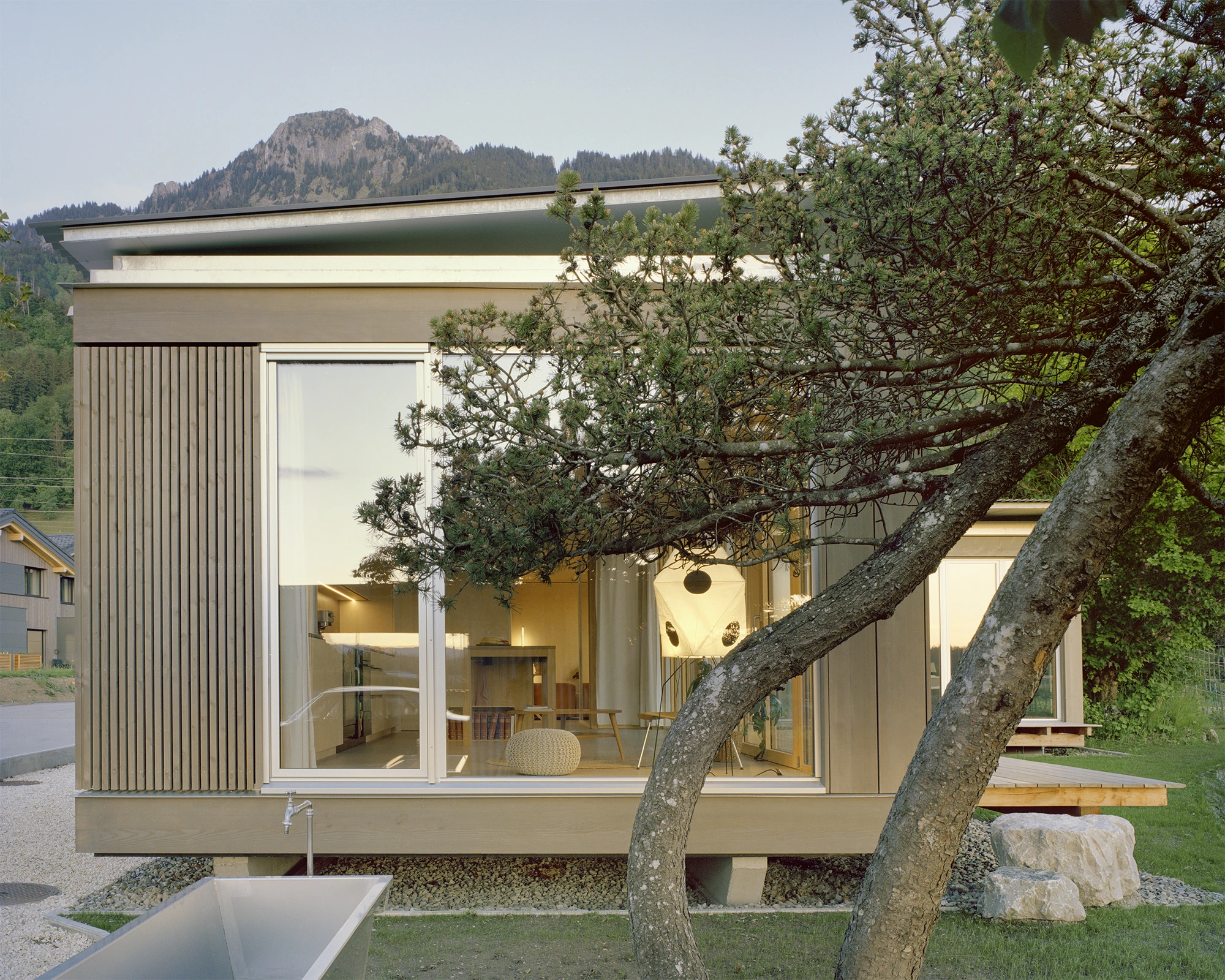
The plan splits in two along the old logic. “One volume dedicated to sleeping, placed beneath the shade of the existing oak tree, and the other oriented towards the Gruyère valley, accommodating the daytime living spaces,” the practice writes. A cold roof reads across both, holding the two primary volumes together while the remaining rooms take on their own geometries and finishes.
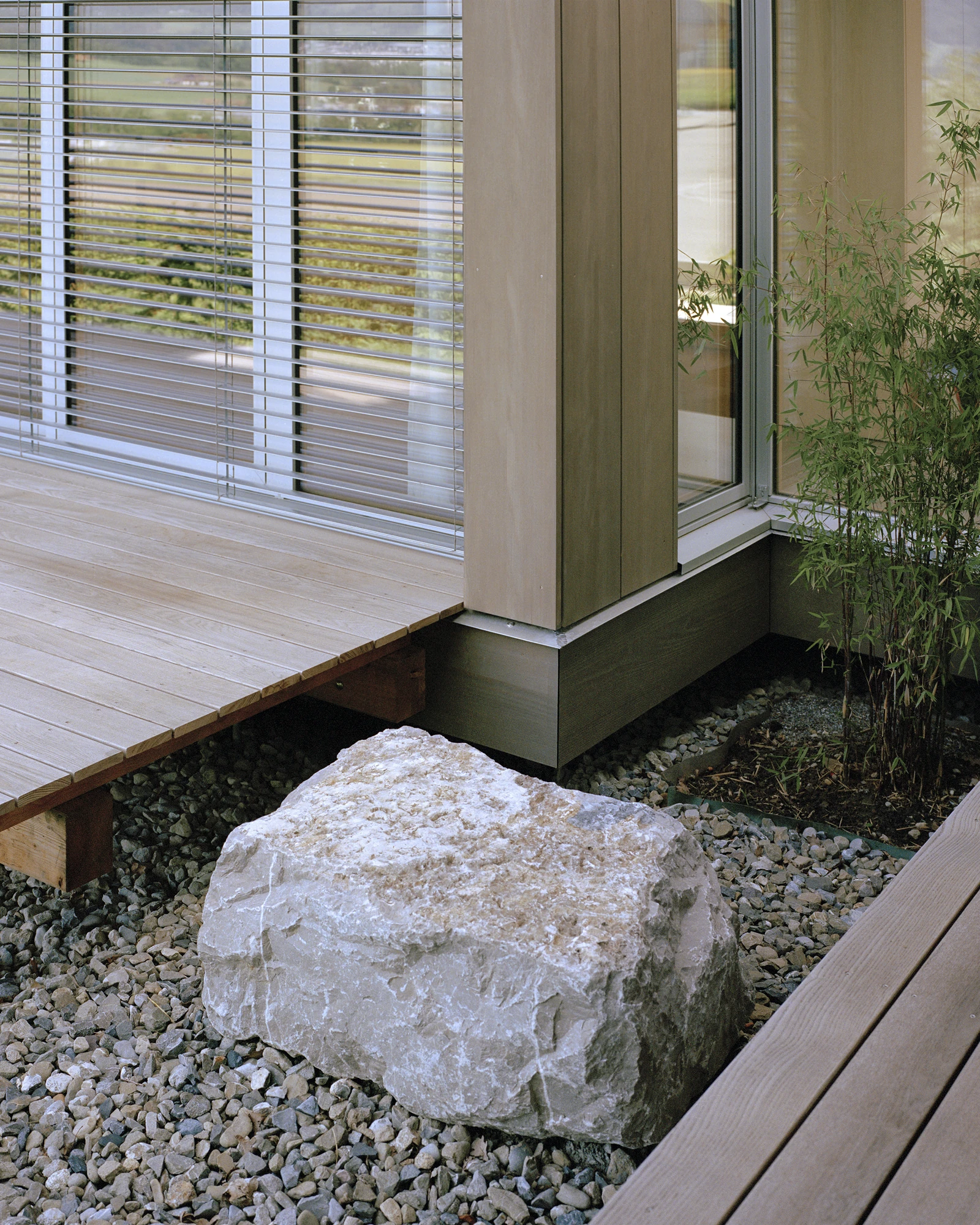
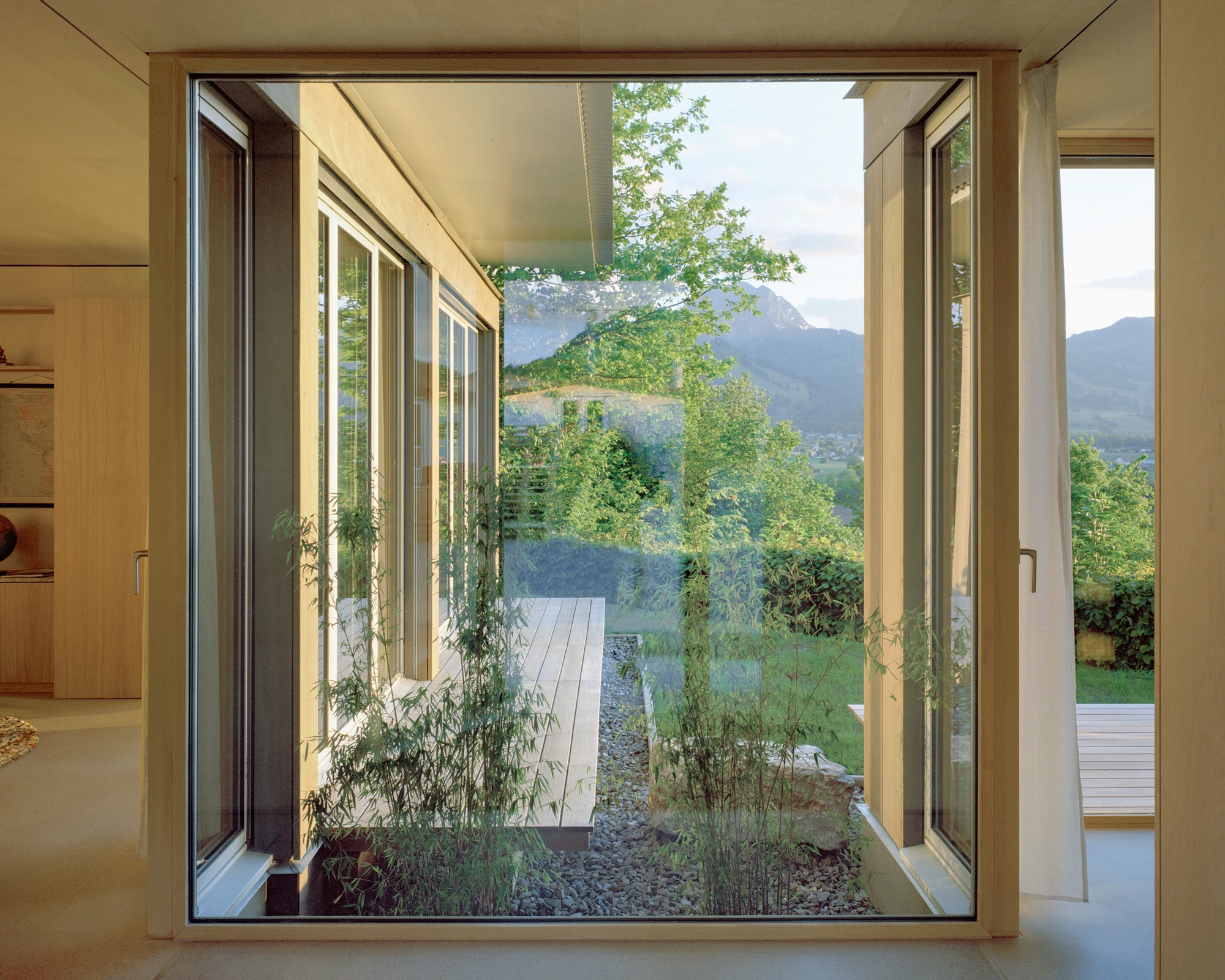
The ground is unstable, so the house stands on piles and lifts slightly clear of the terrain. That move lets the whole structure, floor included, stay in timber, engaging the earth with the same lightness as the cabins it replaces. The practice keeps the touch deliberately soft: “the intervention remains minimally invasive, allowing all existing vegetation to be preserved, including in direct proximity to the façades.”
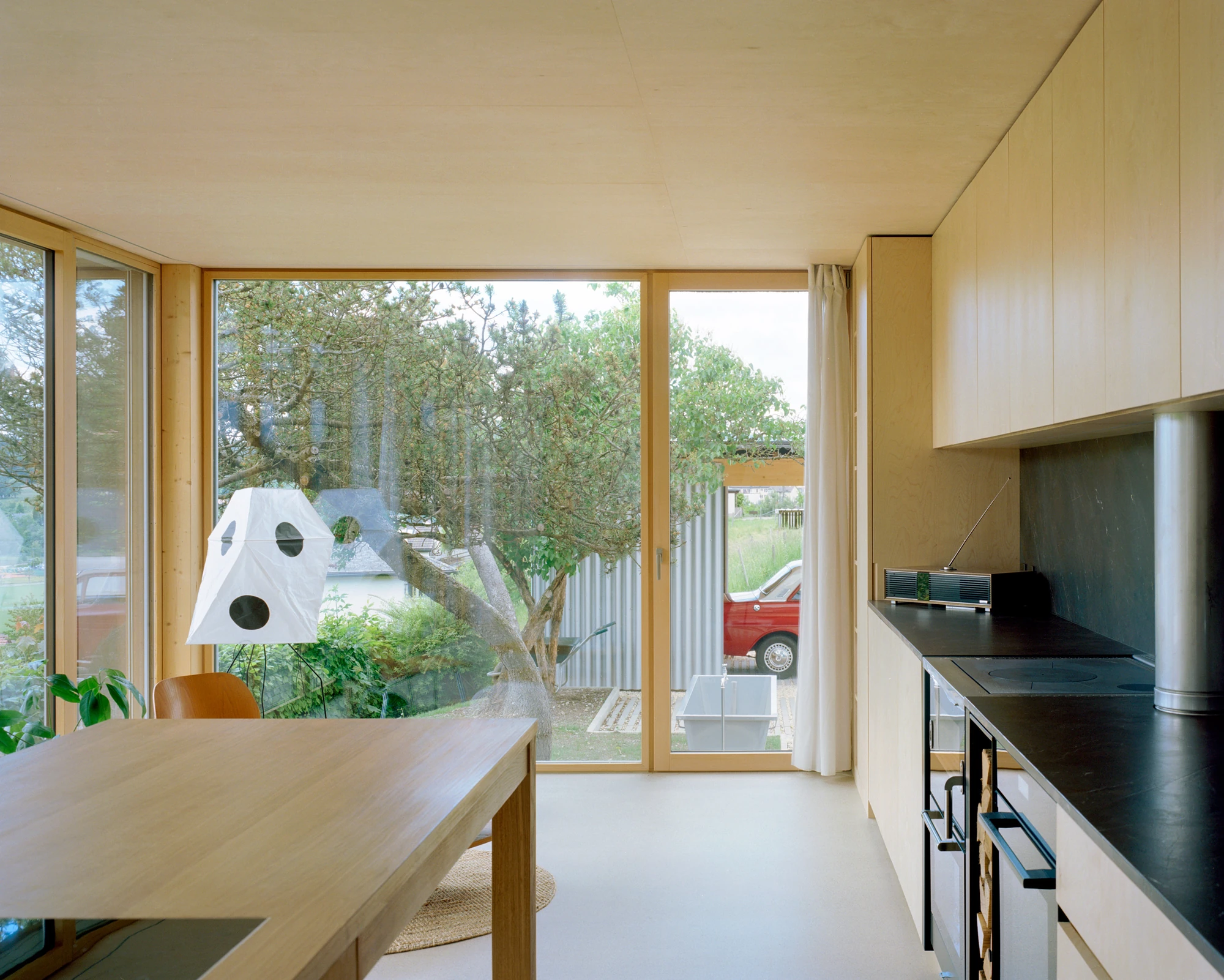
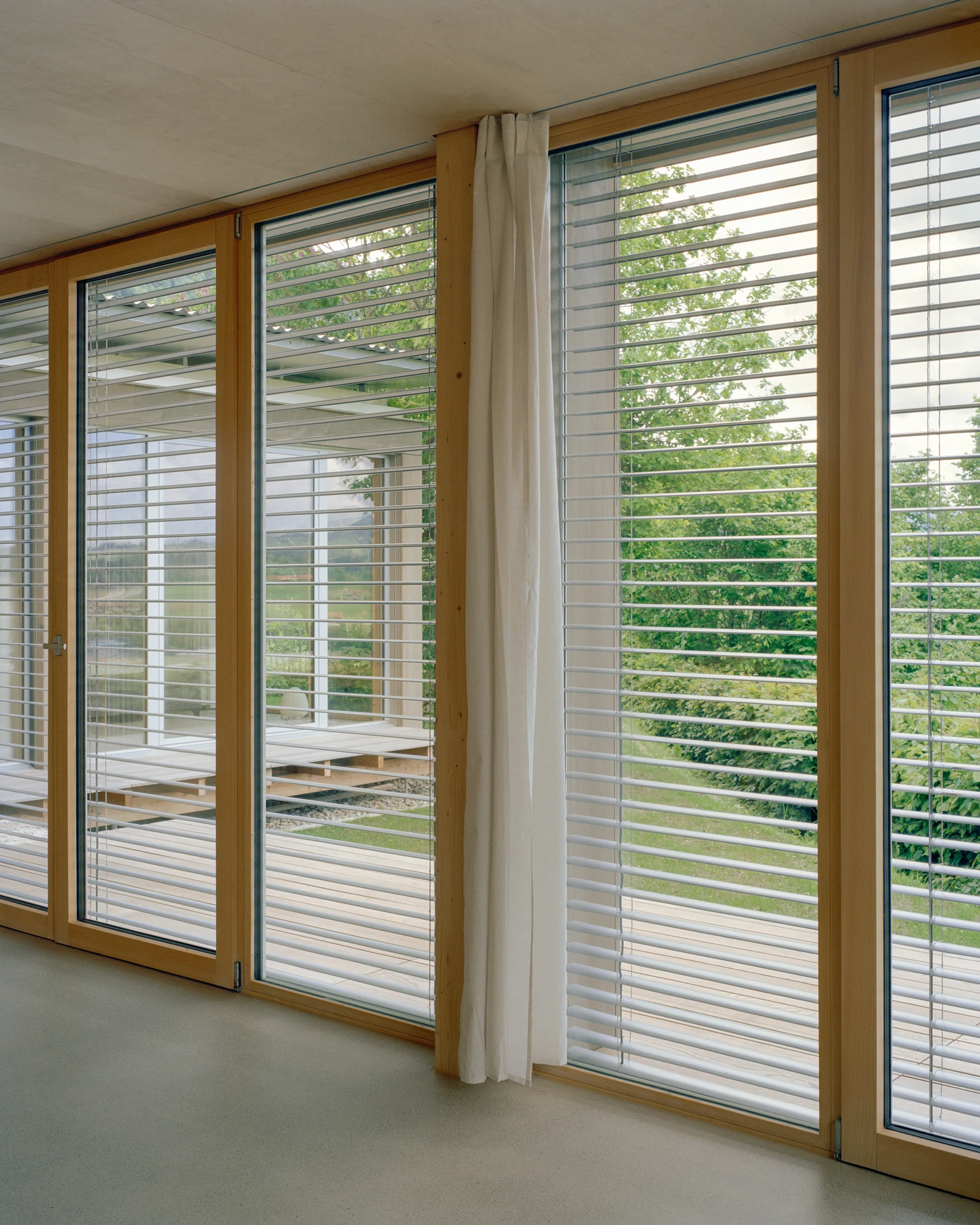
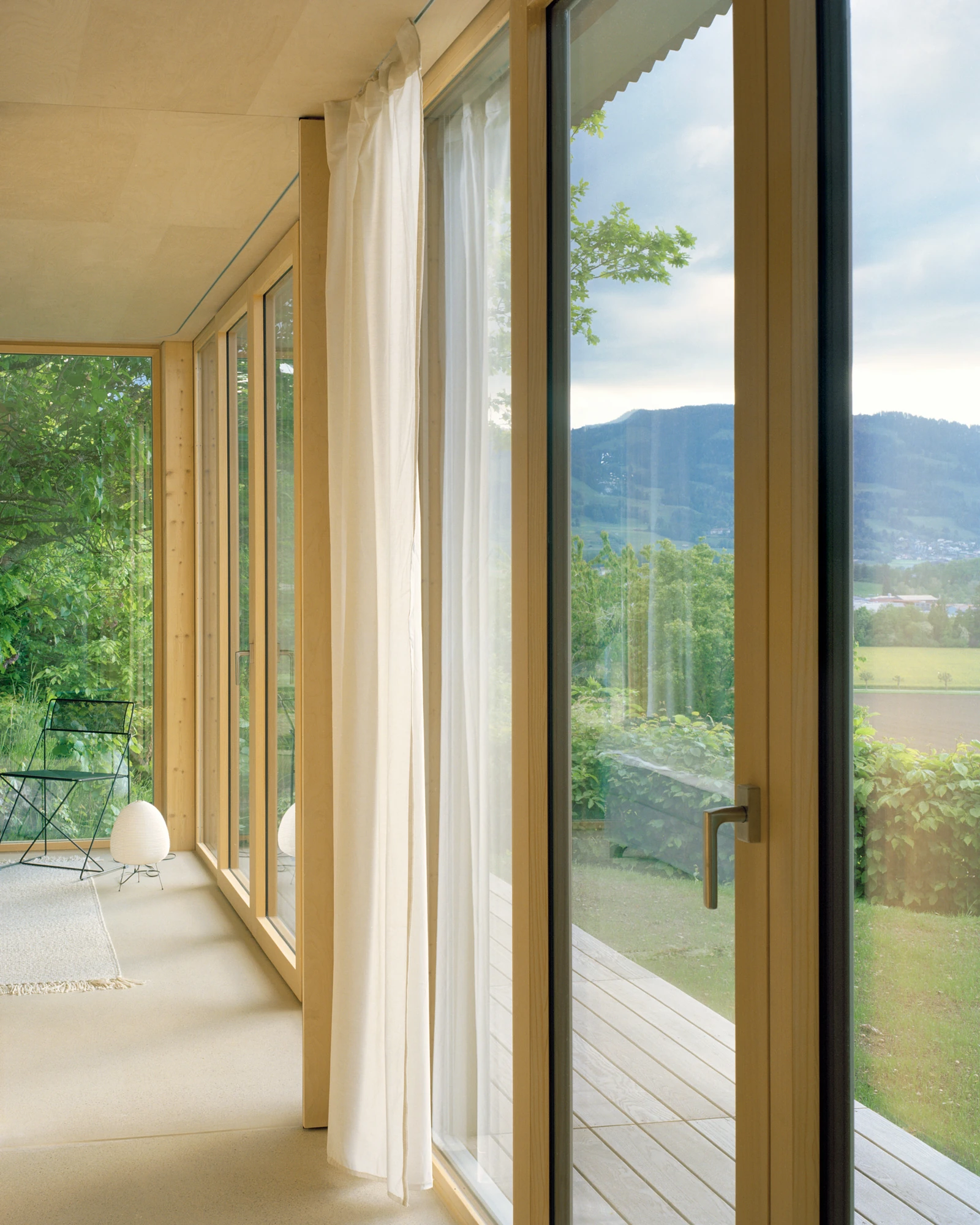
Orientation does the rest of the work. “The house remains closed towards the industrial side of the site while opening entirely towards the landscape on the opposite side,” the practice notes, and the glazed elevations turn their backs on the yards and machinery to face the fields, the oak and the mountains.
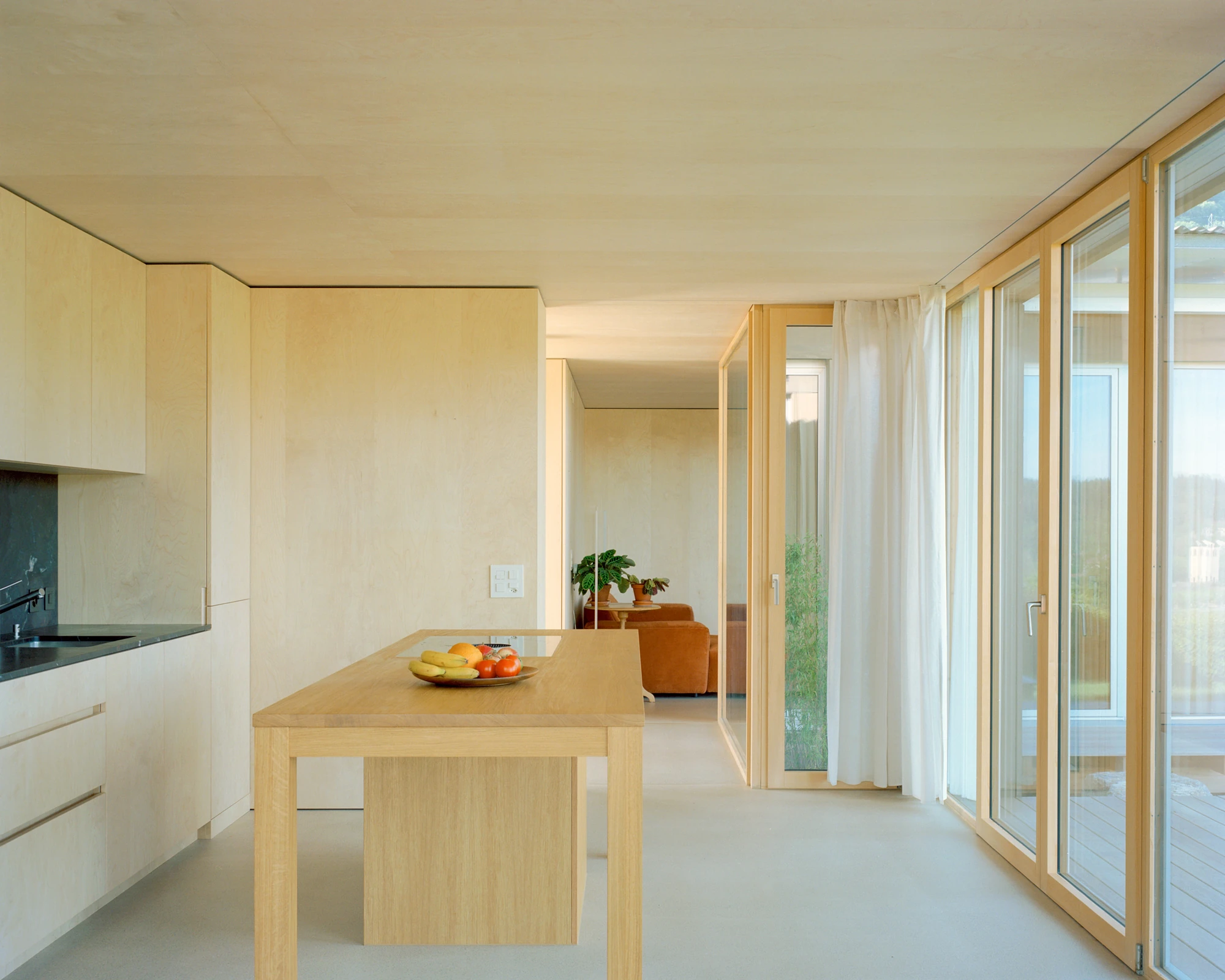
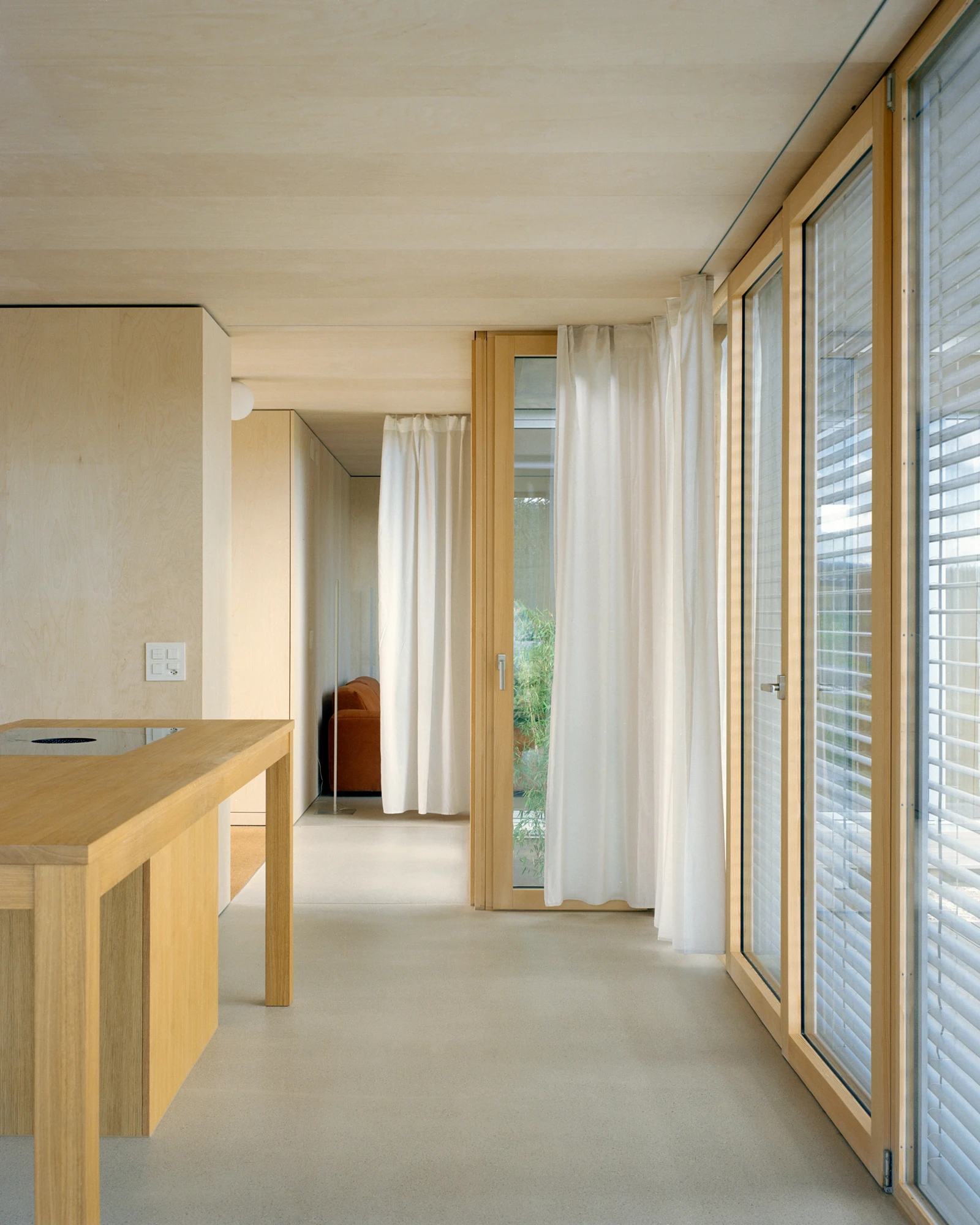
Inside, the material argument narrows to almost nothing. The interior is wrapped entirely in plywood, and the only contrasts come from shifts between wood species rather than any change of material. Rooms are left loosely defined, so living, dining and working can migrate between the two volumes as the years ask for it, a bid to keep the house useful long after it is built.