.webp)
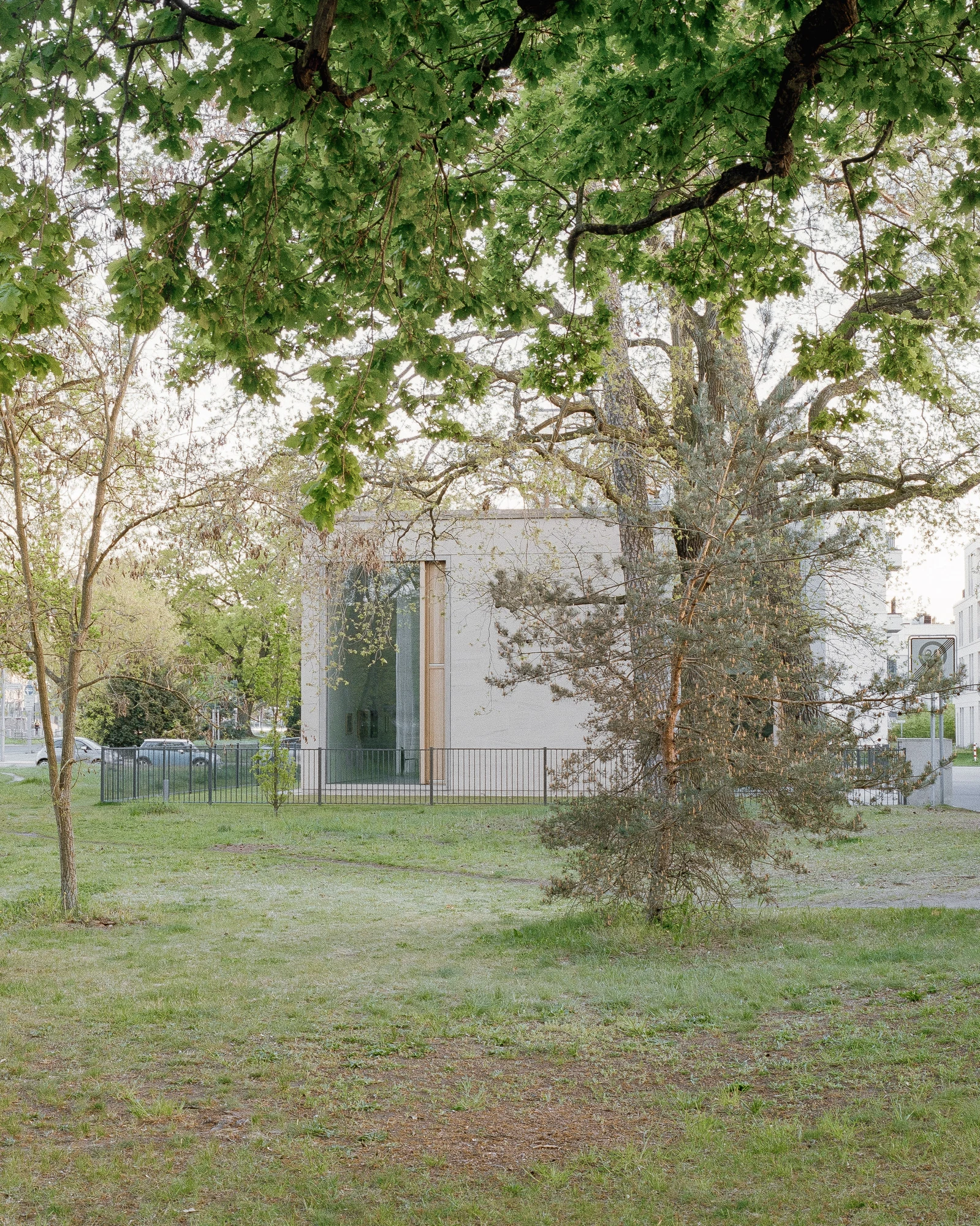
In Berlin's Dahlem park, John Pawson completes a private gallery whose sandstone facades and full-height oak-edged openings treat the space for viewing art as a problem equal to the works it holds.
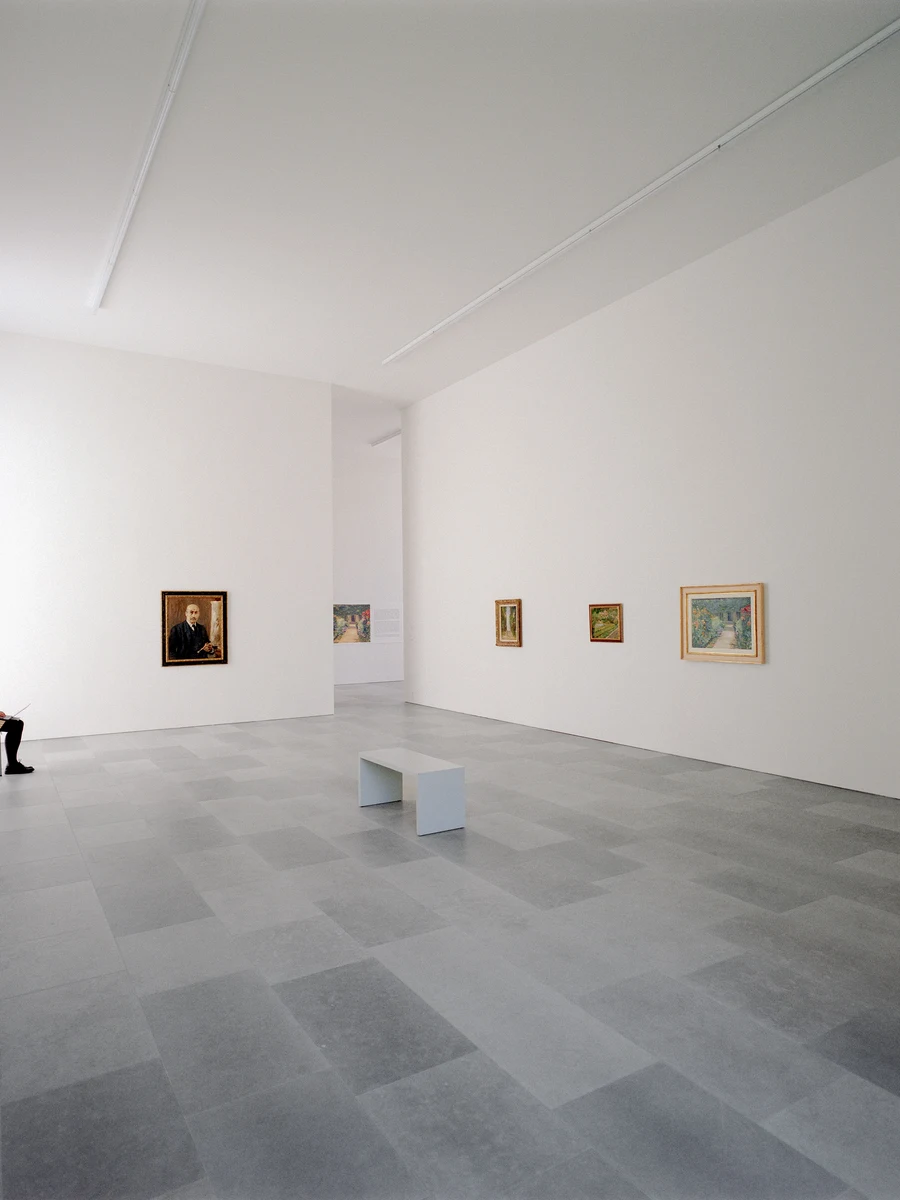
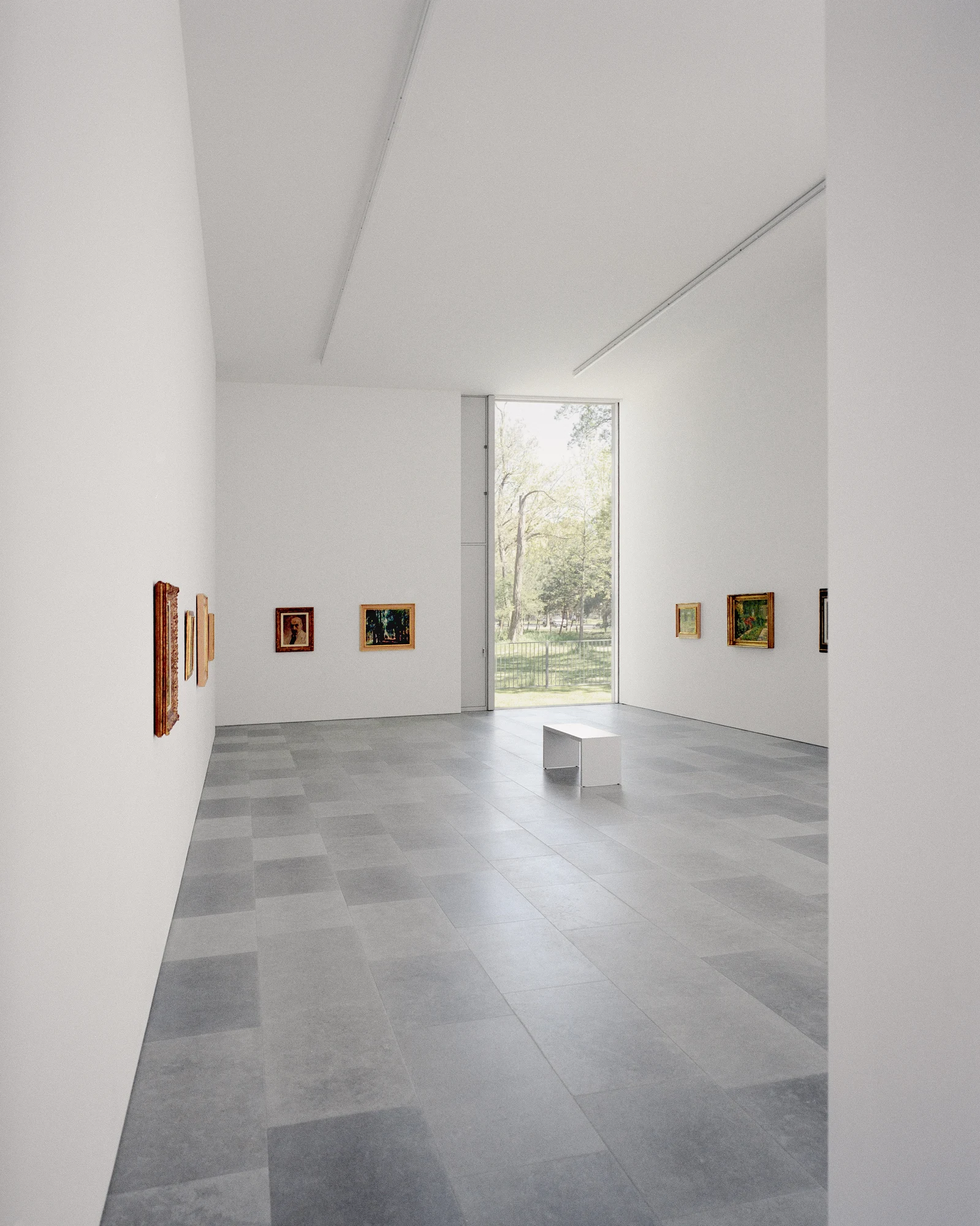
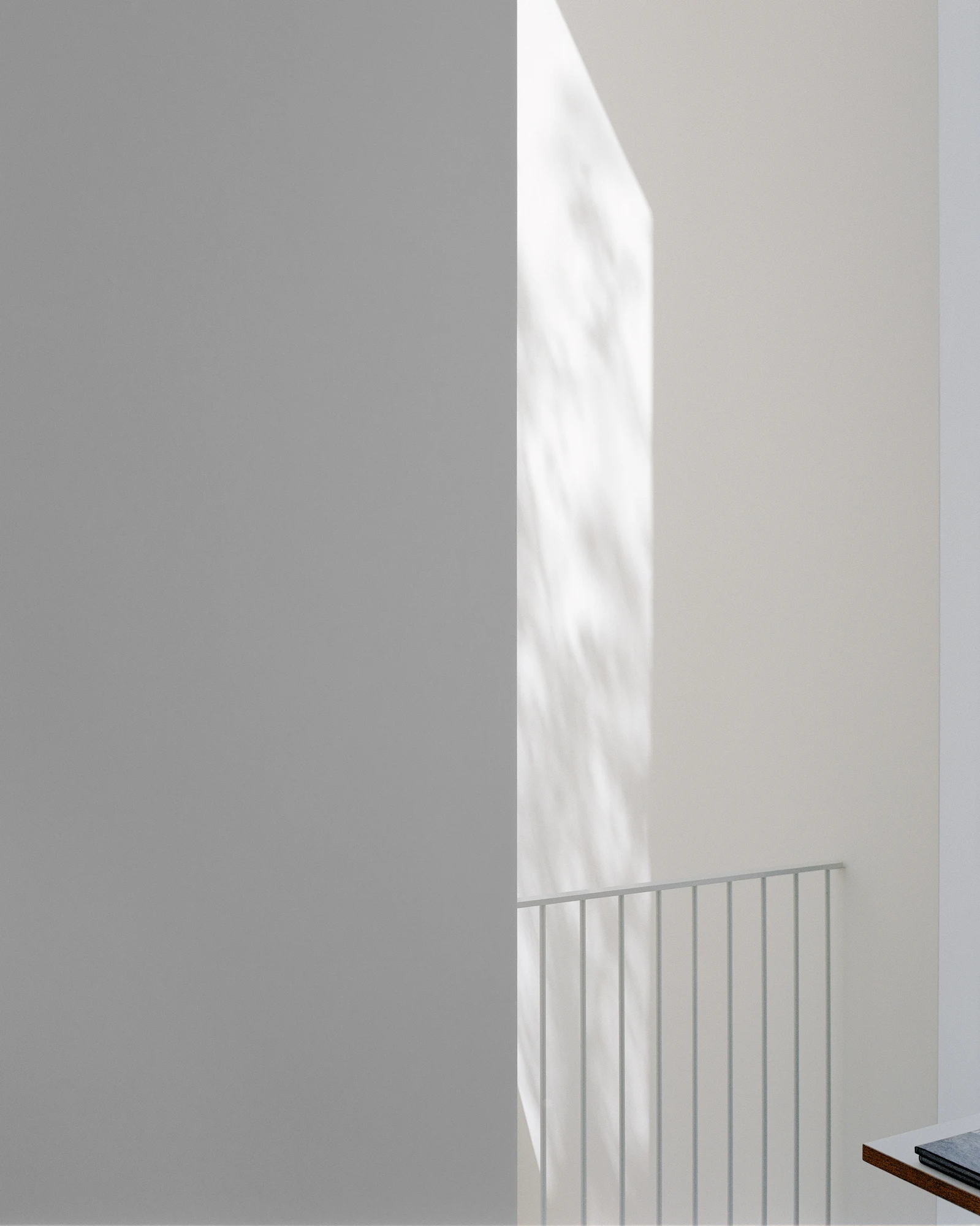
The building captured by Julian Holzwarth refuses the white cube on principle. John Pawson's brief for the Bastian Gallery was to re-examine what constitutes appropriate space for the viewing of art. The interior is not neutral. The stone tile floor, laid in large-format blued-grey slabs, reads as a single horizontal plane that never interrupts a work or a sightline. Two gallery rooms open off each other without corridor or threshold. A white bench, low and monolithic, sits at the centre of the main hall. The paintings on the walls need nothing from the room, which is exactly the point.
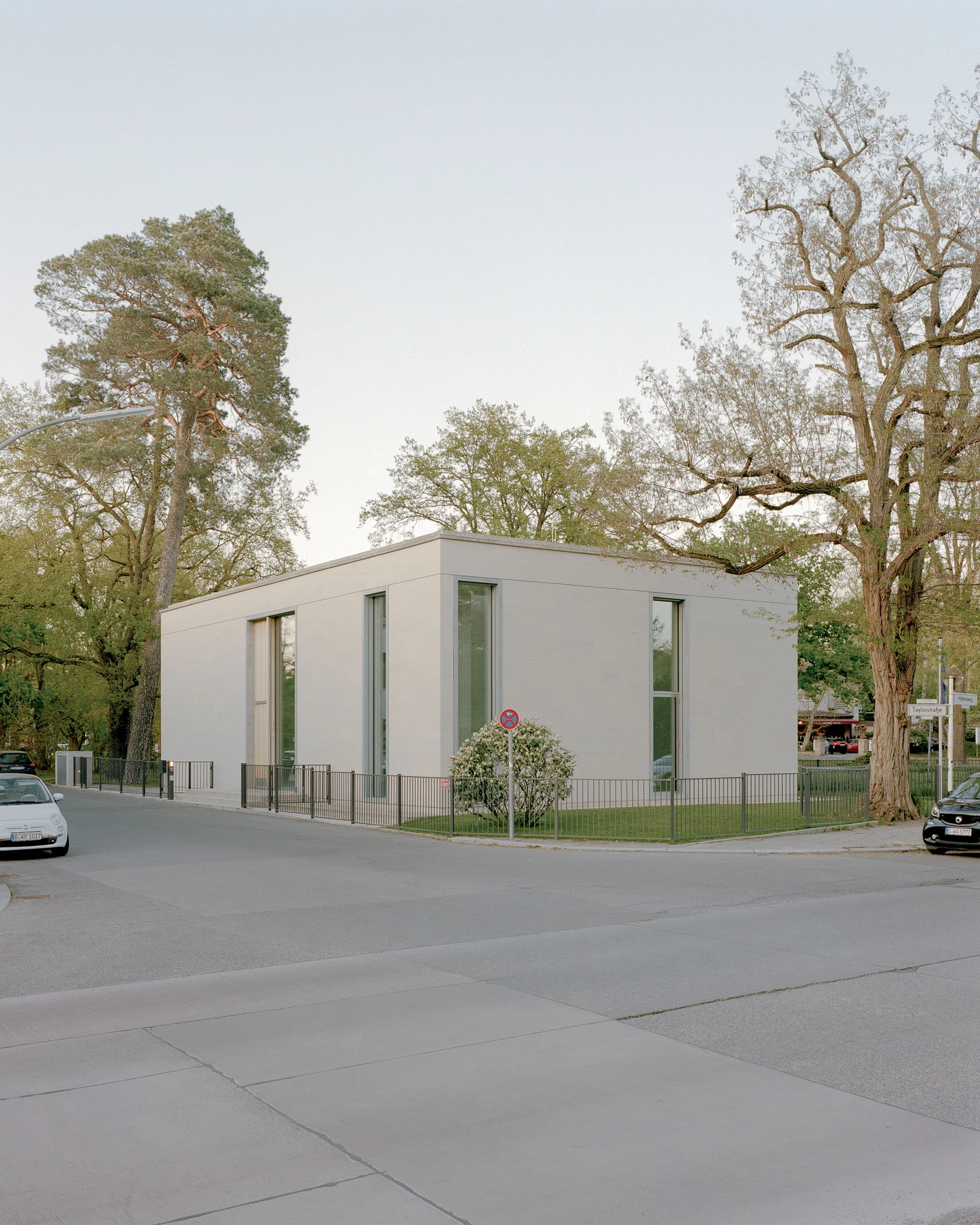
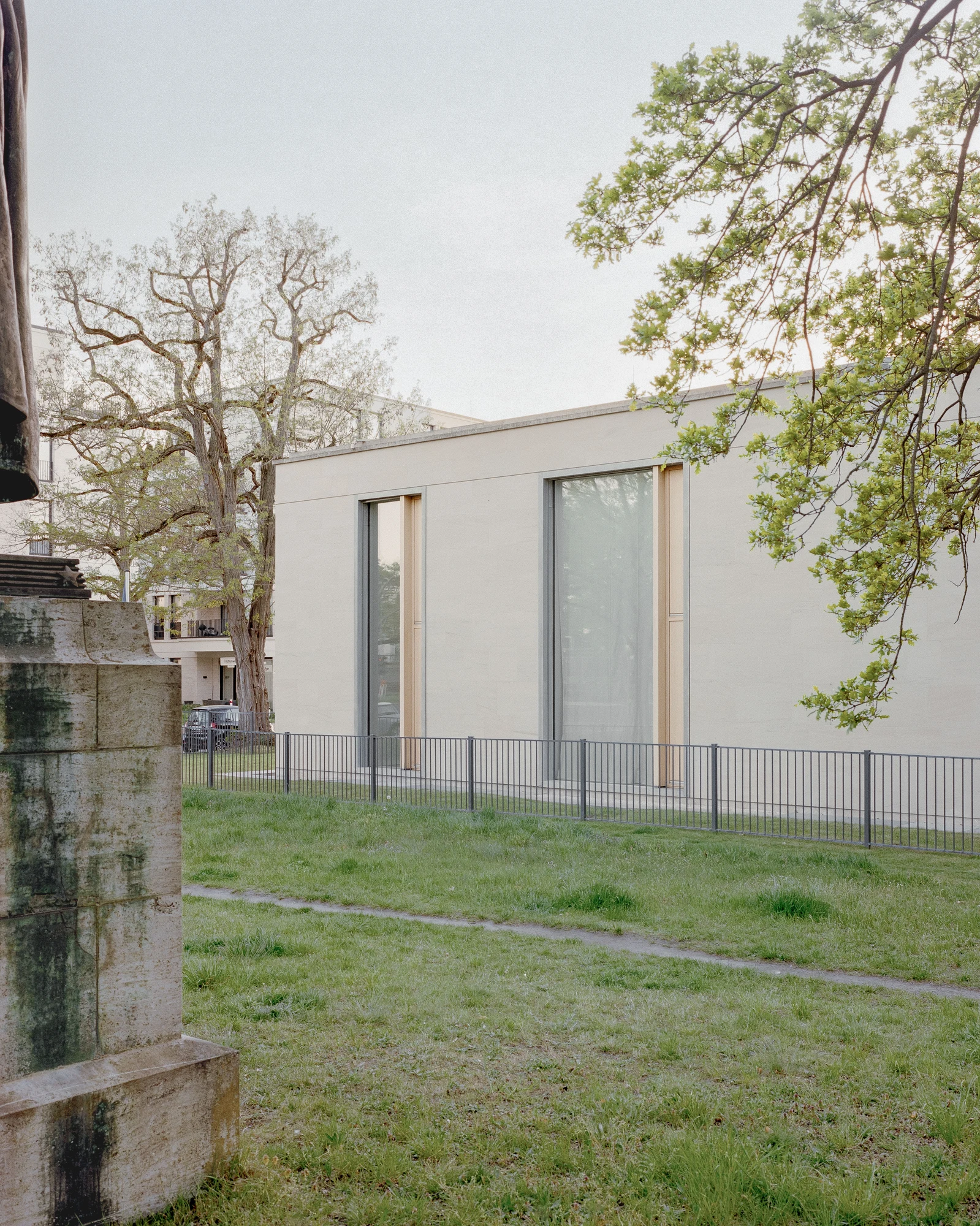
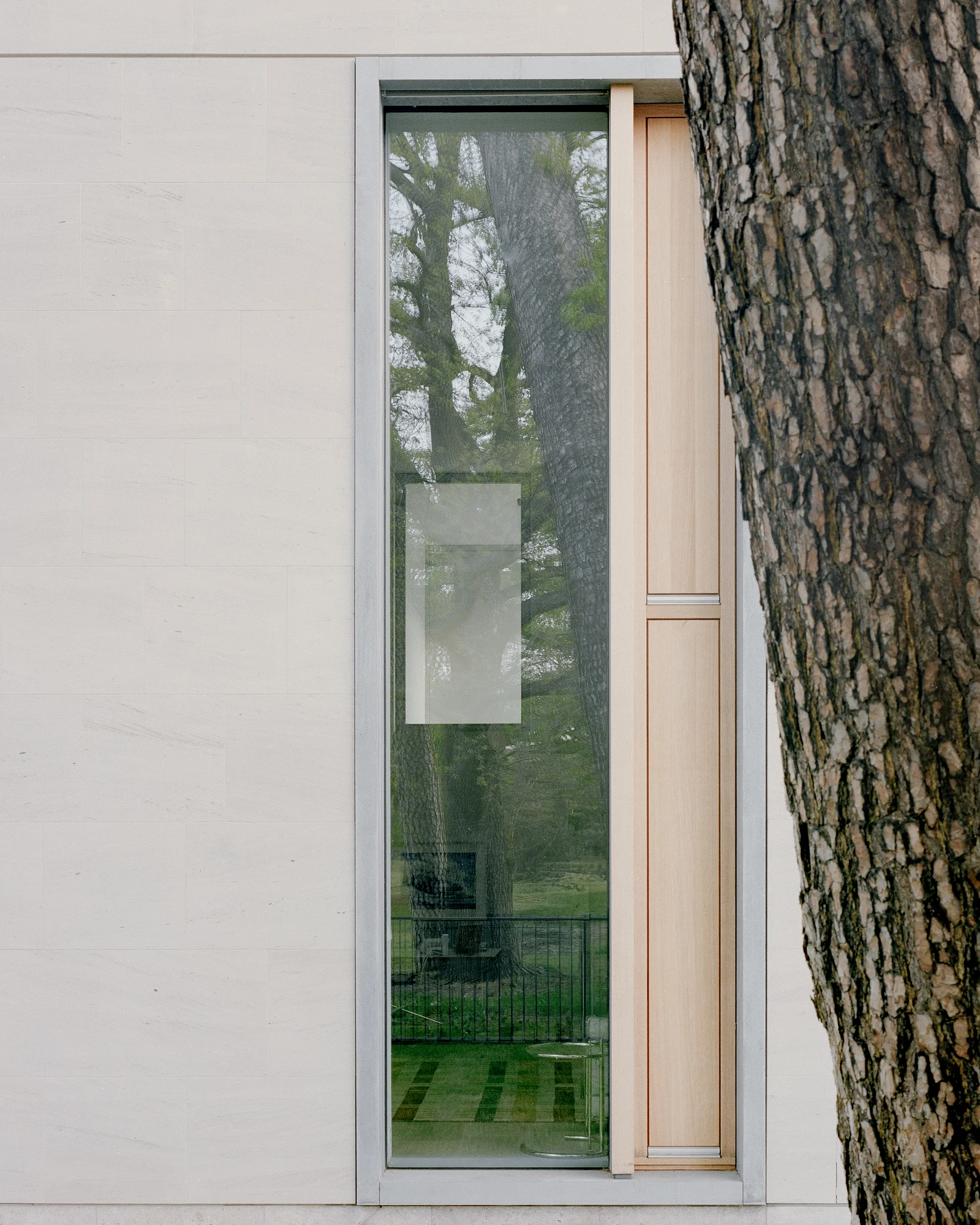
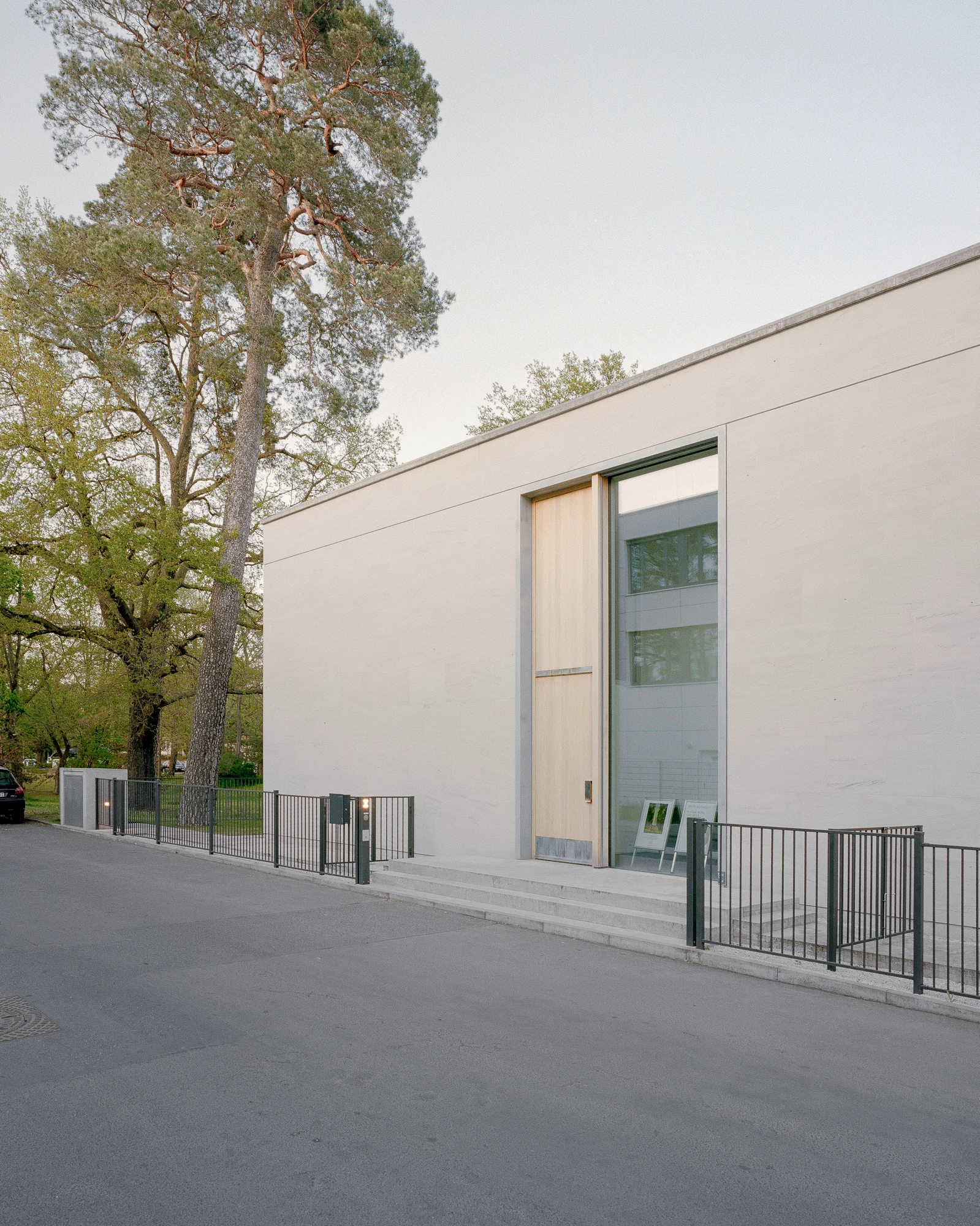
From outside, the building reads as a rectilinear volume of direct proportions: sandstone-clad walls on three sides, the mass low enough to clear the canopy of the mature park trees that ring the site. The full-height openings are framed in galvanised steel, a detail chosen for its resistance to patina rather than any industrial reference. Oak doors and ventilation elements run floor-to-ceiling in the same proportional system, their vertical grain a tactile counterpoint to the planar stone.
The decision to site the gallery in a residential park rather than an art district is not incidental. The Bastian collection is long-established and non-commercial, and Pawson's building is calibrated accordingly. At street level, the building presents a closed, undemonstrative face. The entrance is a single oak panel set into the stone. Inside, the park reappears: the full-height glass panels bring trees and afternoon light directly into both rooms, the outside visible but filtered, never competing with the plaster walls and what hangs on them.
What the images make clear that drawings cannot is how the stone floor changes tonality across the day. In direct sun it reads almost silver; in overcast light it deepens toward charcoal. That shift means the space is never identical from one visit to the next, which is also what good gallery lighting does to the works themselves. The materials are few, and each does only what it must. Sandstone, oak, galvanised steel, plaster, stone tile: five elements, no applied finishes. "The design," Pawson has said, "has been shaped by the idea of re-examining prevailing contemporary notions of what constitutes appropriate space" and the building's restraint is the only answer it gives to that question.