Set on an eight-thousand-square-meter plot near Todos Santos, Baja California, studiofont builds Nereidas, a pigmented-concrete framework the studio treats as a contemporary ruin.
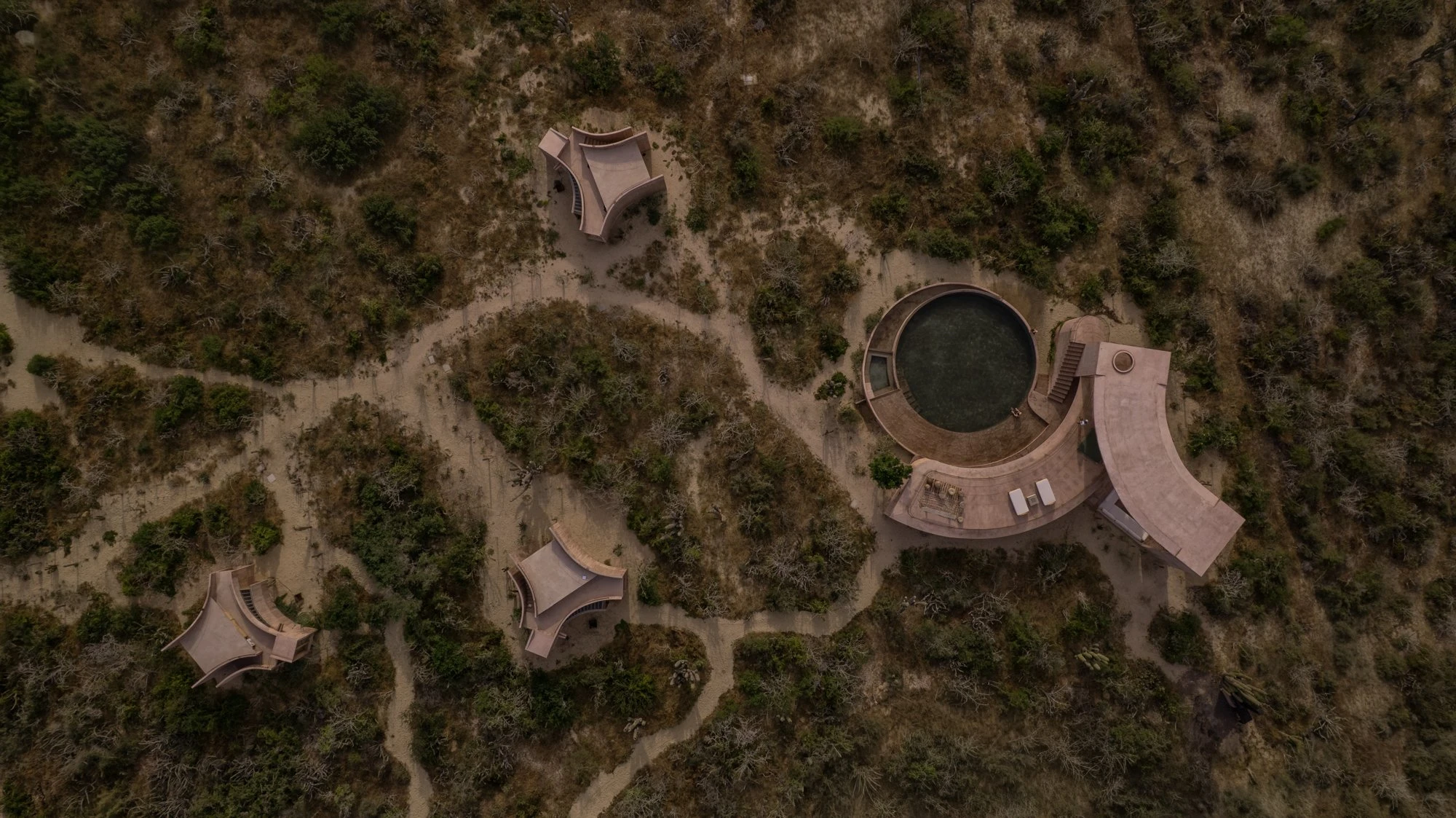
Nereidas stands on high desert north of the Pacific, a plain of cardon cactus and low scrub running unbroken to the Sierra de la Laguna. Four detached cabins scatter across the plot, connected by sand paths worn into the brush, while a shared pavilion anchors the composition. Seen from above, the plan reads as a loose constellation rather than a compound, each volume set where the existing vegetation allowed it to land.
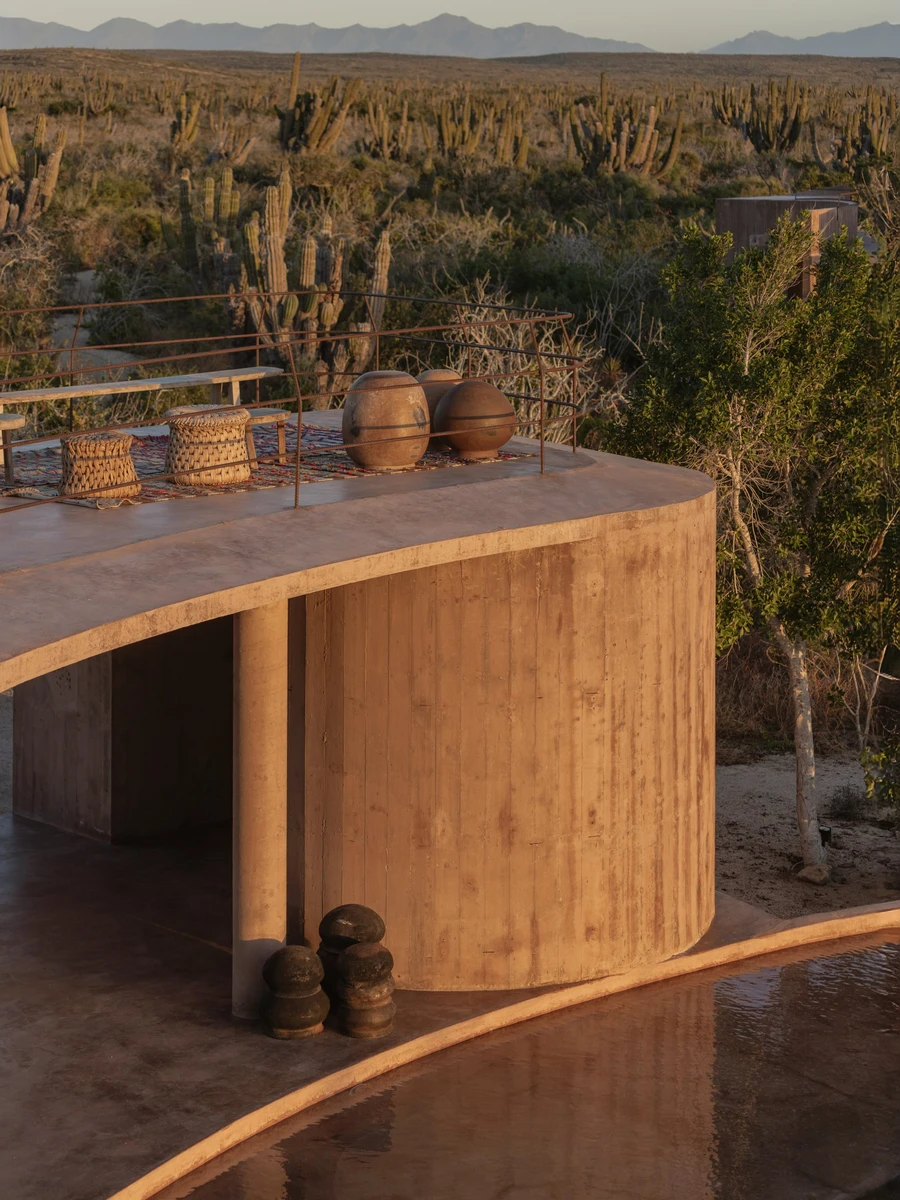
The pavilion is the collective heart. Two curved roofs cross overhead, sliding past one another to open a double-height sunken fire pit on one side and a cylindrical pool that spills over its rim on the other. Nothing closes. The structure stays open along its full length, so the desert reads as a continuous horizon through the columns, and the shifting roof heights move a body through dining, gathering, and rest without a single partition.
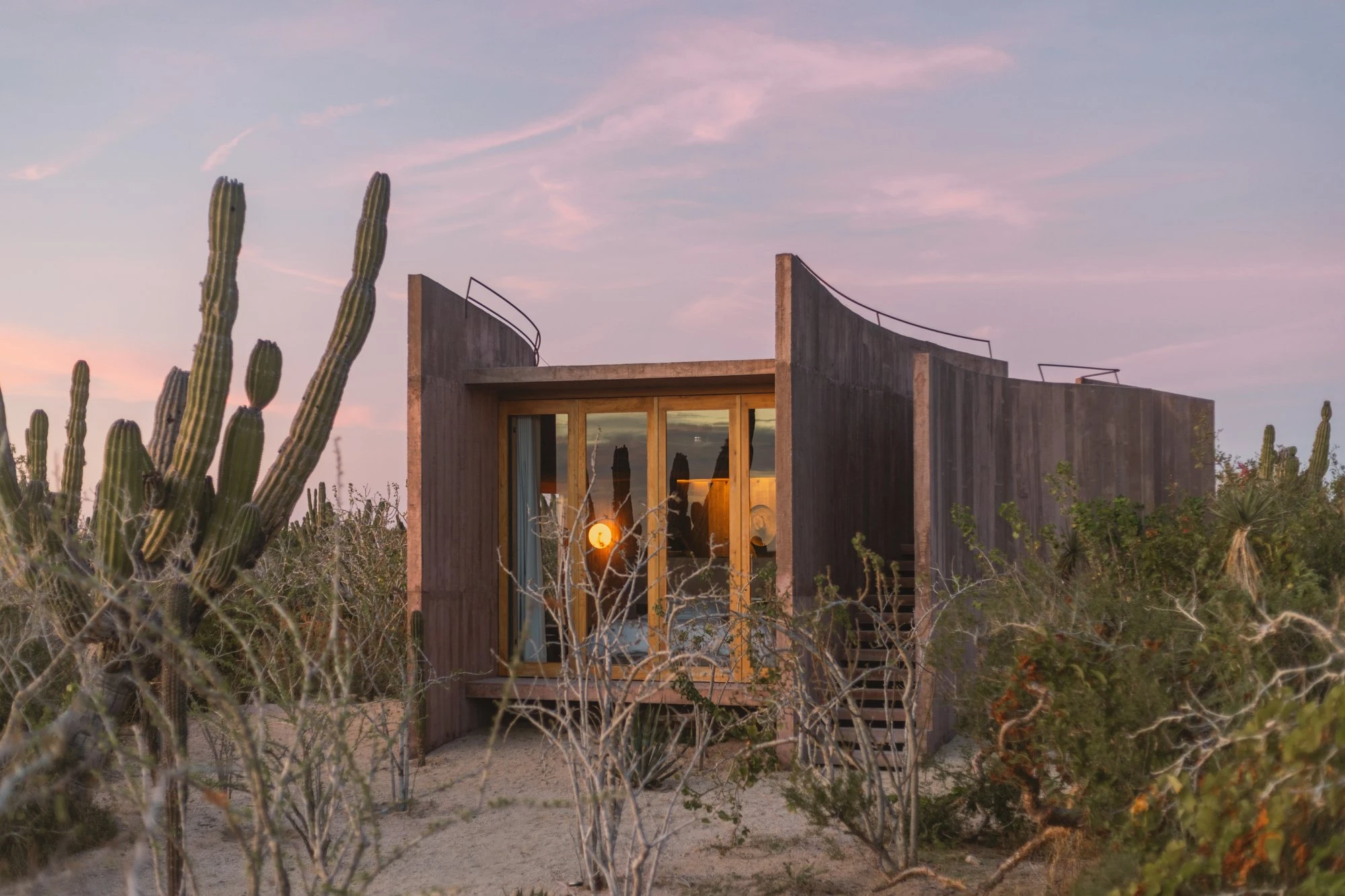
Everything is pigmented concrete, poured as both structure and finish. The board-formed surfaces carry the grain of their timber shuttering, and the pink cast warms as the sun crosses it, deepening at dusk against the green that follows the rains. Round columns, a spiralling stair, and the drum of the pool all come from the same material, so the building holds together as one continuous cast rather than an assembly of parts.
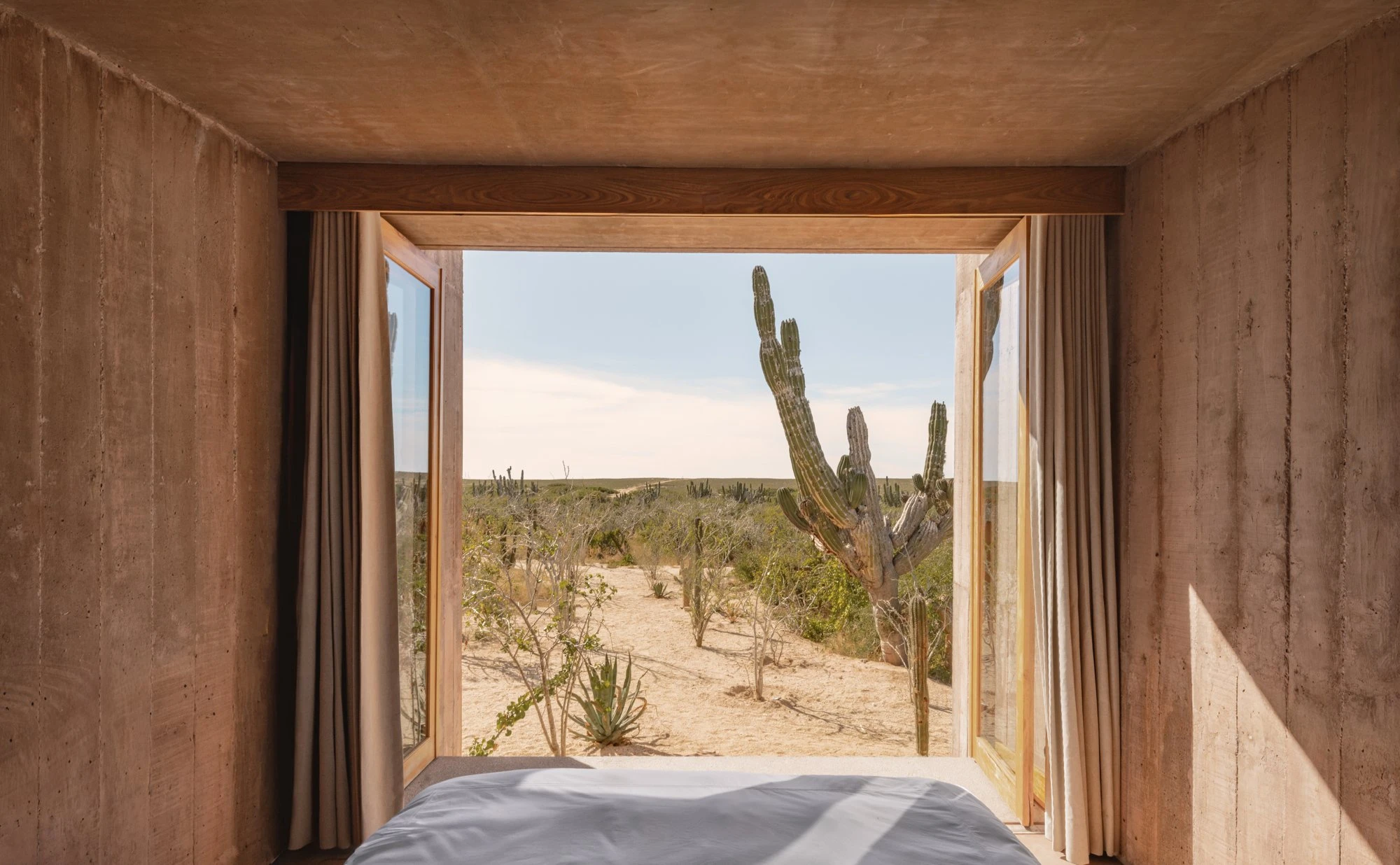
The cabins turn inward and private. Board-marked walls curve around a bed, oak-framed sliding glass pulls a wall of cardon into the room, and a monolithic concrete basin sits under a brass tap. Curtains soften the raw shell; a woven rug and green cushion warm the floor. Each cabin frames a single cactus the way a house elsewhere might frame a painting.
The project runs fully off-grid. Photovoltaic panels carry the electrical load, a thermosolar system heats the water, and reuse strategies keep demand off the local aquifer. Every plant displaced during construction was replanted on site, so the desert closes back over the paths rather than surrendering to a manicured clearing.
What studiofont proposes is a way of staying in a place that does not soften it. The house is built to endure and to weather at once, a permanent frame that shelters habitation while letting light, heat, and time work on its surfaces. It reads less as a finished object than as a ruin arriving early, already handing itself to the landscape.