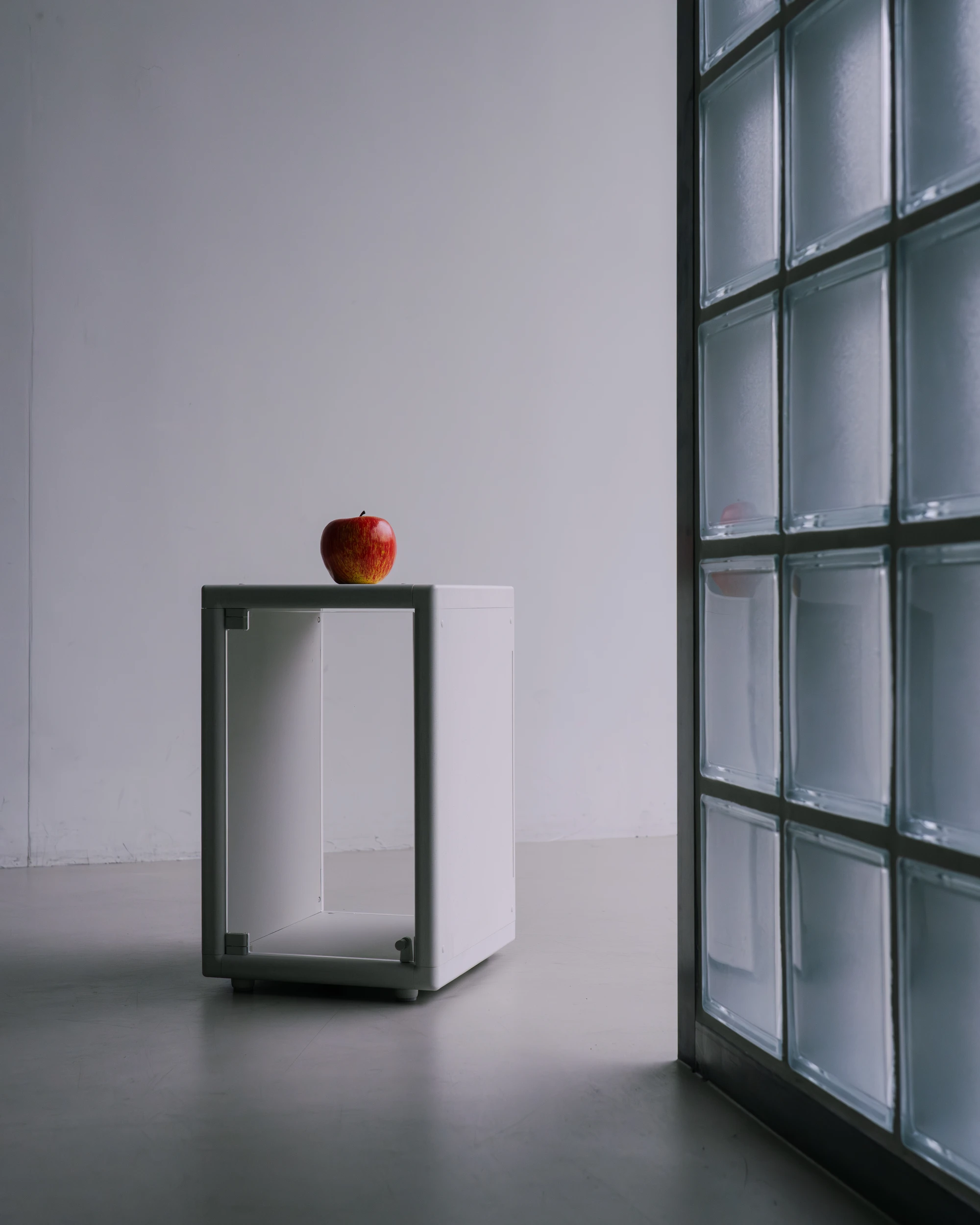
From Seoul, reol builds a modular furniture system from recycled plastic, lightweight and stackable, joints intentionally exposed, the surface irregularities read as aesthetic rather than defect.
The system starts from a position that most furniture design avoids: recycled plastic as it actually arrives, not as it might be made to look. The colour variations, where different source plastics bleed different tones into the same batch, are not smoothed out or hidden. The surface irregularities, the slight shifts in texture and density that come from material with a previous life, stay in the final piece. reol treats this as an archive: each module carrying the accumulation of what it was before it became furniture.
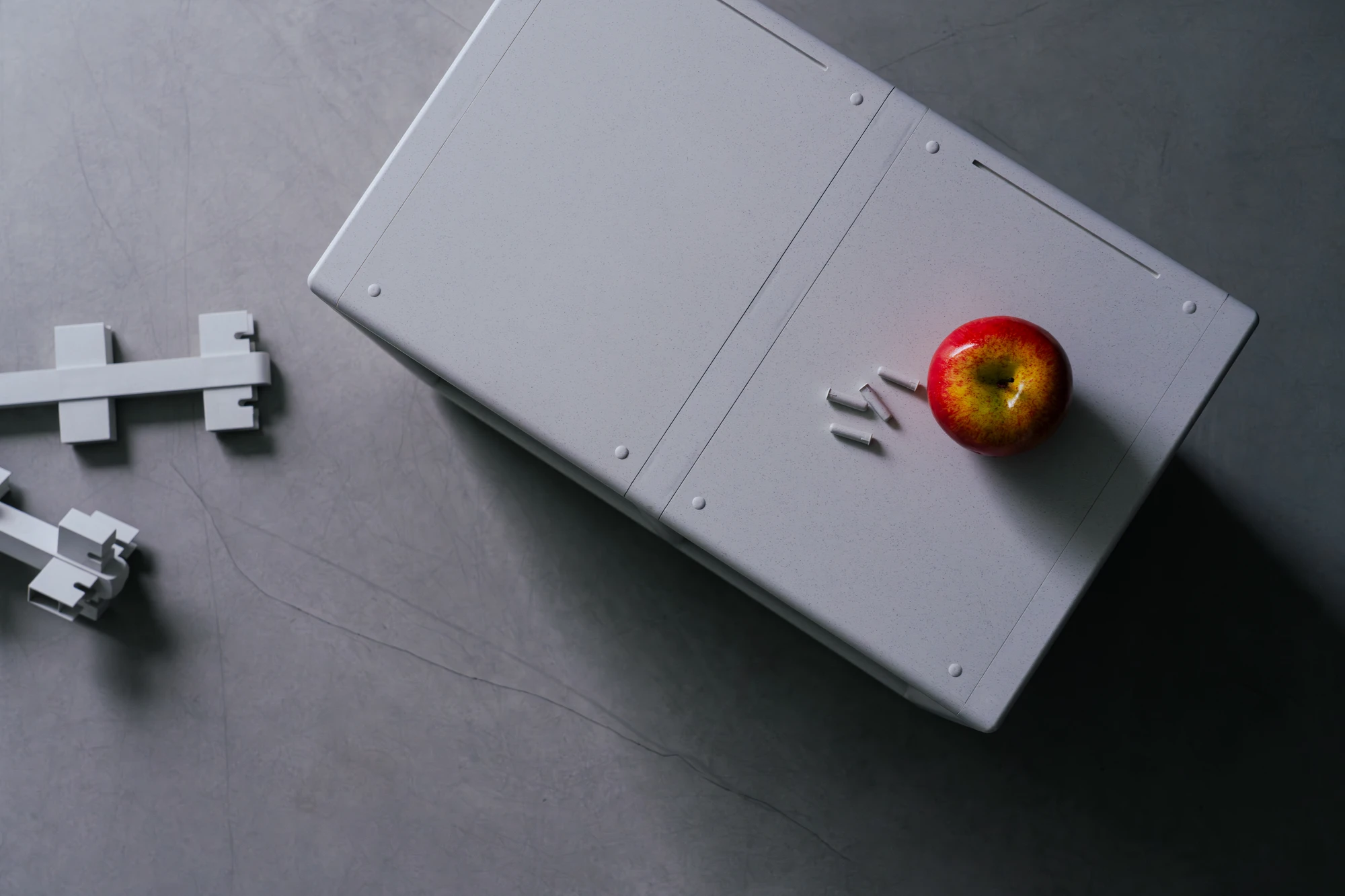
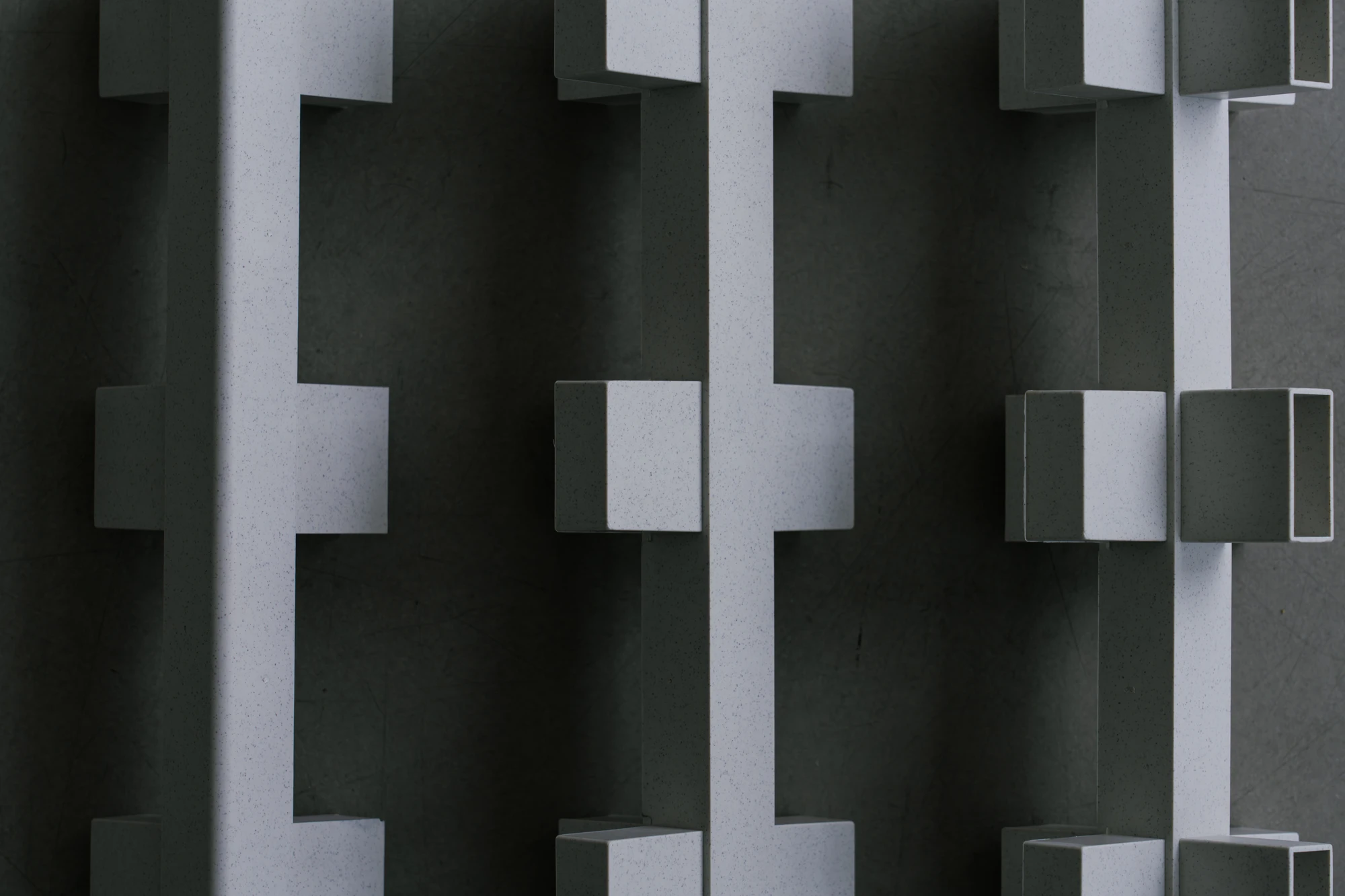
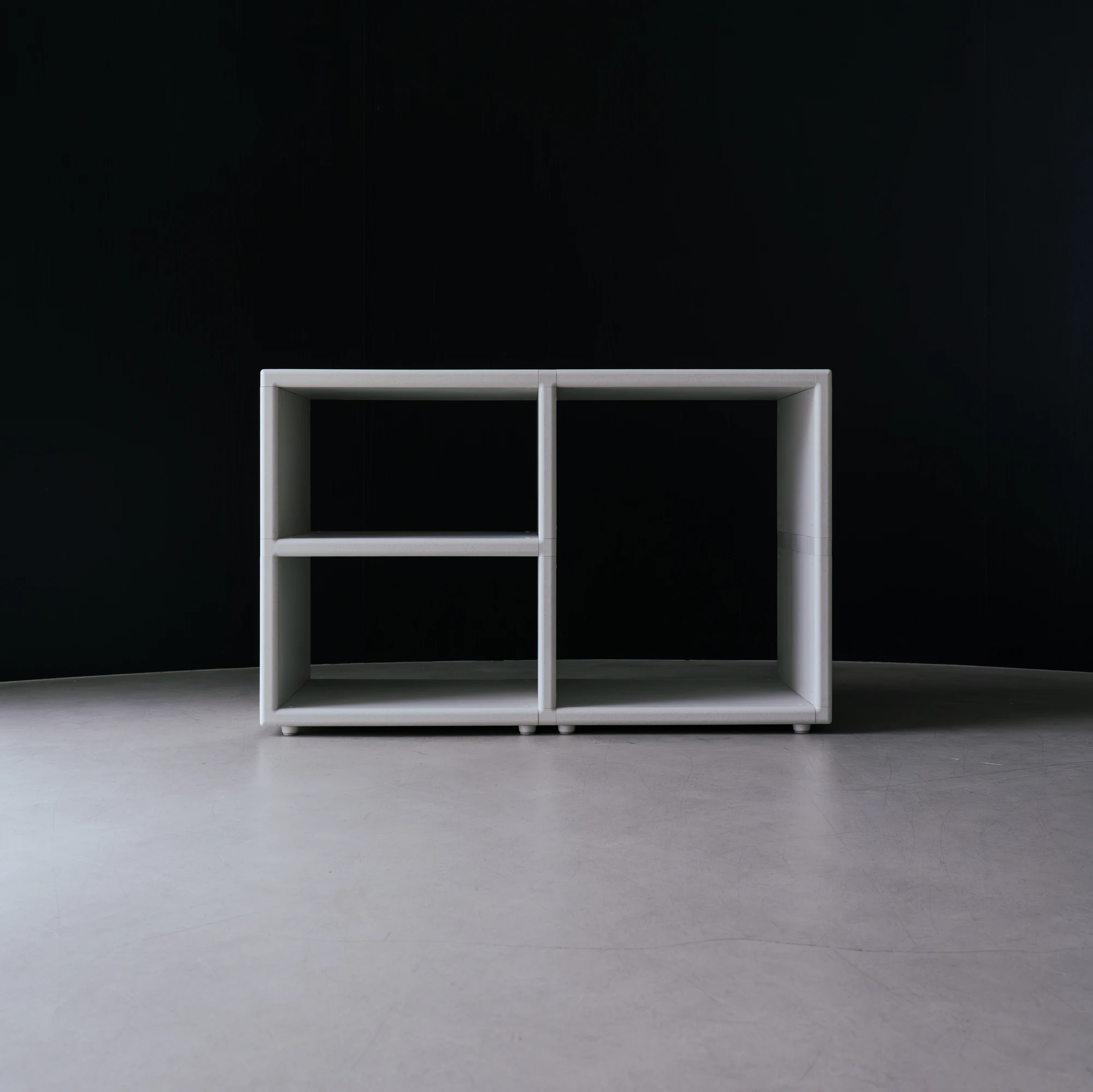
The modules themselves are simple rectangular volumes, open on one face, two heights and one wide variant, that can be stacked, inverted, clustered. Joints are exposed: corner brackets in contrasting material, screws visible at connection points, the logic of assembly legible from across the room. The studio describes this as a framework logic, and the analogy holds. You can read how it is made, which means you can also imagine taking it apart and making it differently. The flexibility is structural and spatial simultaneously, single units for domestic use, multiples clustered for public or commercial settings.
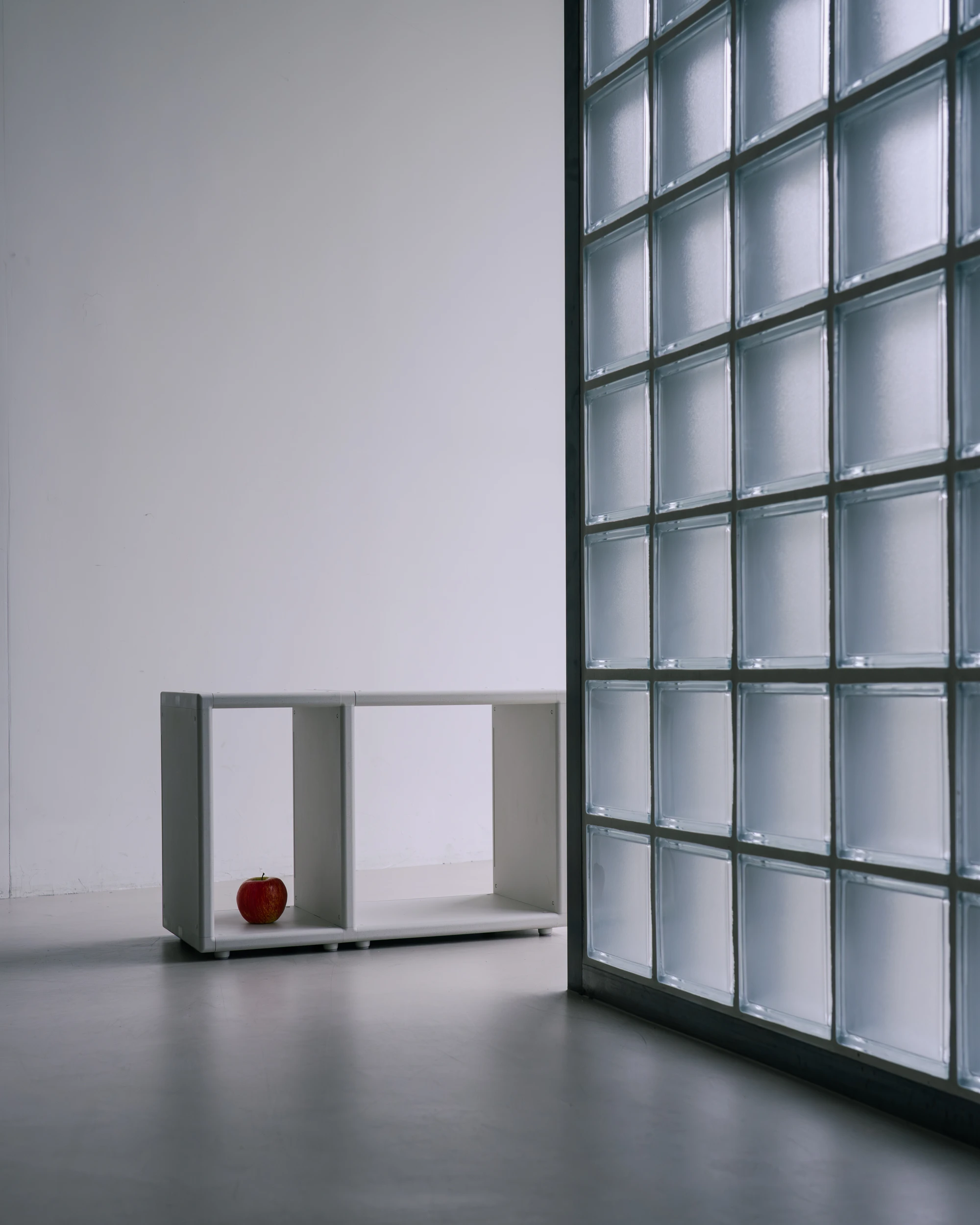
The palette is grey-white, the finish somewhere between moulded and cast, with the characteristic slightly-uneven surface of recycled stock rather than virgin polymer. Light catches differently across adjacent units even when they are the same batch, which reads as richness rather than inconsistency. Set against post-industrial backdrops of concrete and glass block, the units carry a deadpan still-life logic: a single small box on the floor, a red apple on top, the material spoken for without anything added.
The brand's position is stated directly: sustainability here is cultural as much as it is technical, and reol makes that visible. Where most sustainable design hides its origins behind a clean surface, reol makes the origin the primary visual fact. The modularity allows the system to adapt: configuration changes without waste, components accumulate without obsolescence. As a proposition for how recycled material might function in domestic space, reol's system is more direct than most: the material is the argument, and the argument is visible in every joint.