Thisispaper Community
Join today.
Enter your email address to receive the latest news on emerging art, design, lifestyle and tech from Thisispaper, delivered straight to your inbox.
Oops! Something went wrong while submitting the form.
Instant access to new channels
The top stories curated daily
Weekly roundups of what's important
Original features and deep dives
Exclusive community features
Thisispaper+ Member

Main de fer, gant de velours by Agurto + Fiedler at Espace Brownstone

Dates:
✧ Collect Post
Paris Guide
under the patronage of
Main de fer, gant de velours by Agurto + Fiedler at Espace Brownstone
May 21, 2026

Matter held in unstable equilibrium: at Espace Brownstone in Paris, Marinés Agurto and Katherinne Fiedler stage Main de fer, gant de velours, sculptures that test the threshold between what sustains and what spills.

The French proverb gives the exhibition its title: une main de fer dans un gant de velours, an iron fist in a velvet glove. What looks soft conceals something harder. What holds together might also break apart. Peruvian artists Marinés Agurto and Katherinne Fiedler developed this body of work during residencies at the Cité internationale des arts, drawing on the material history of the Paris basin to build sculptures that exist at the threshold of stability.

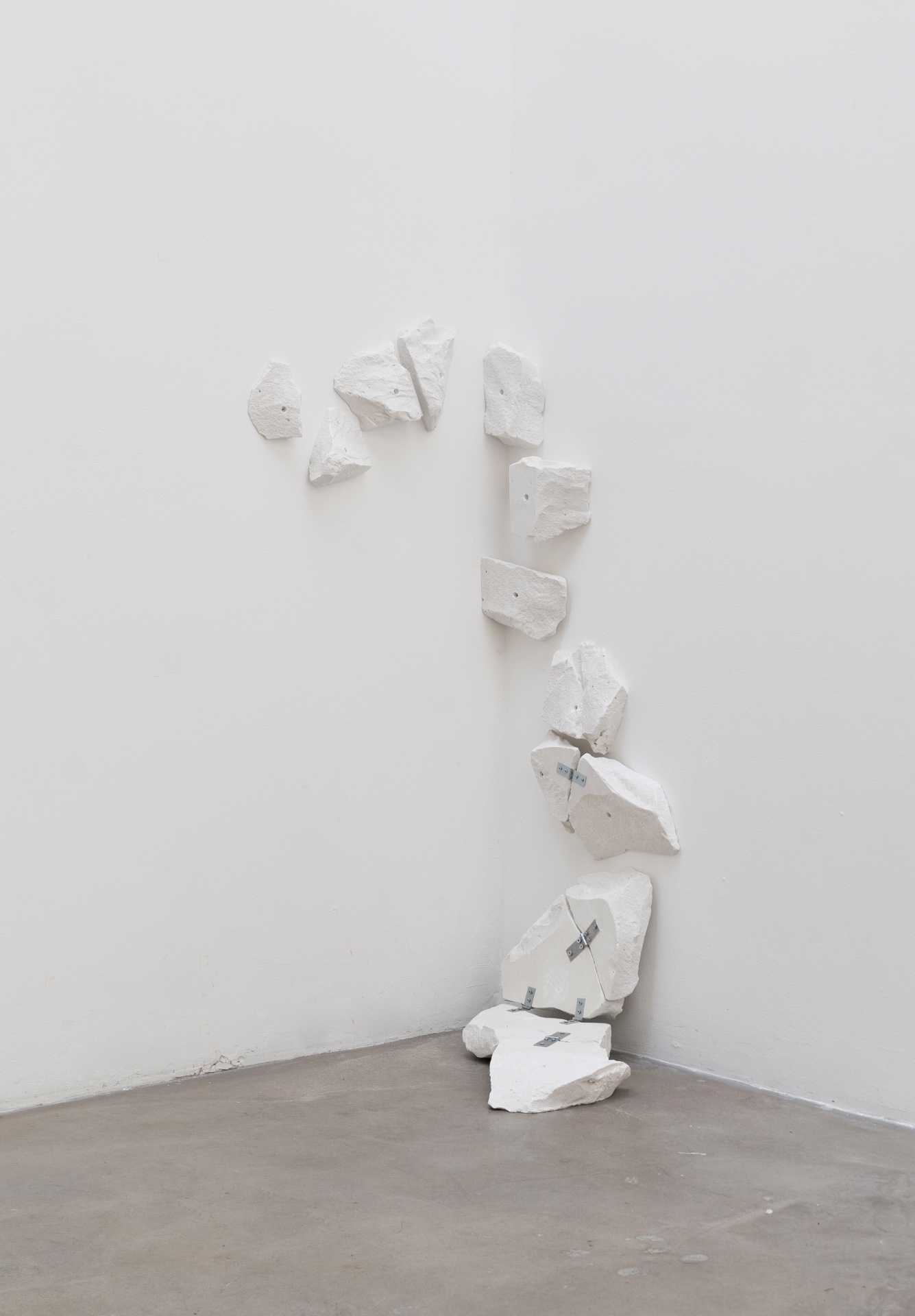
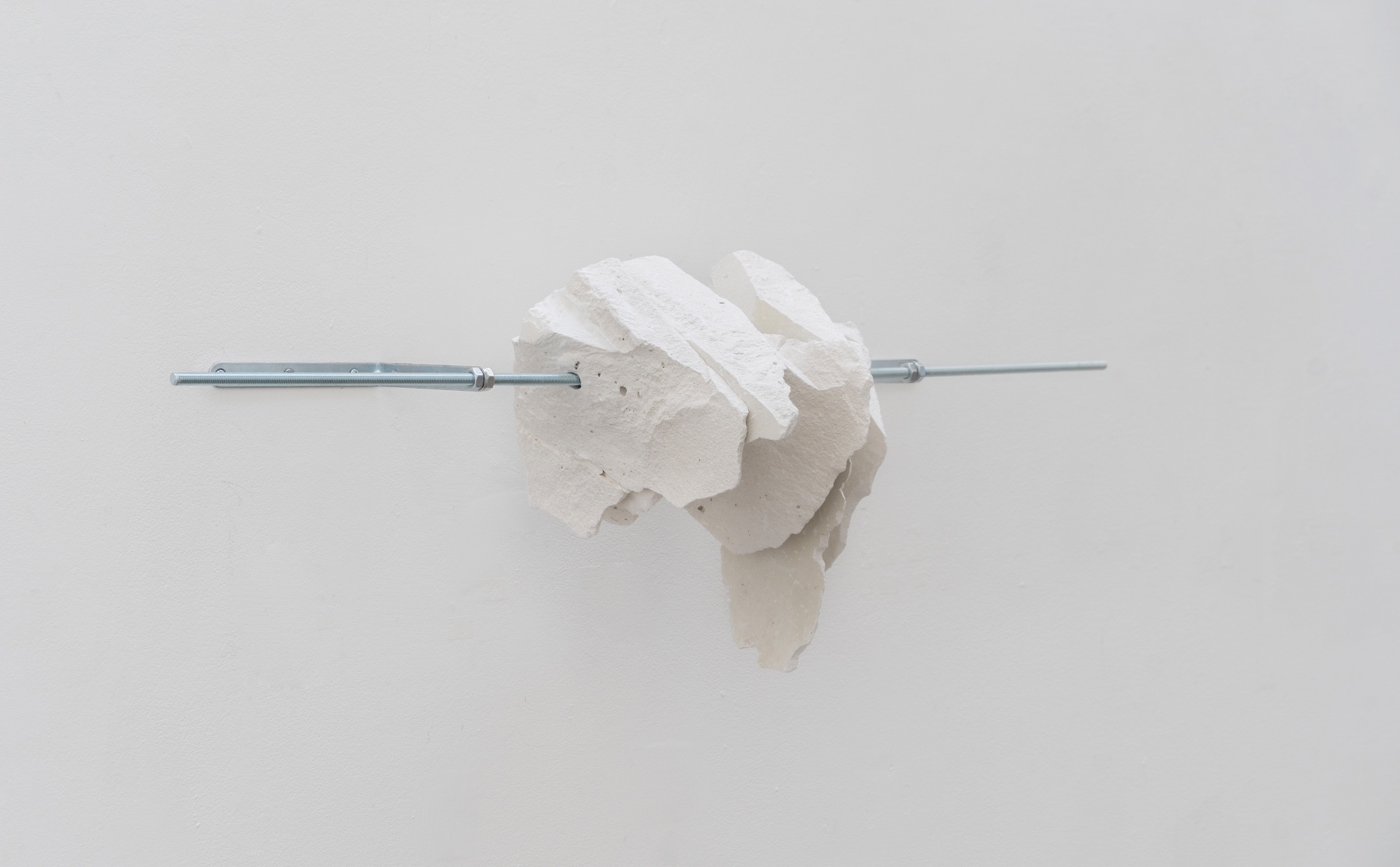
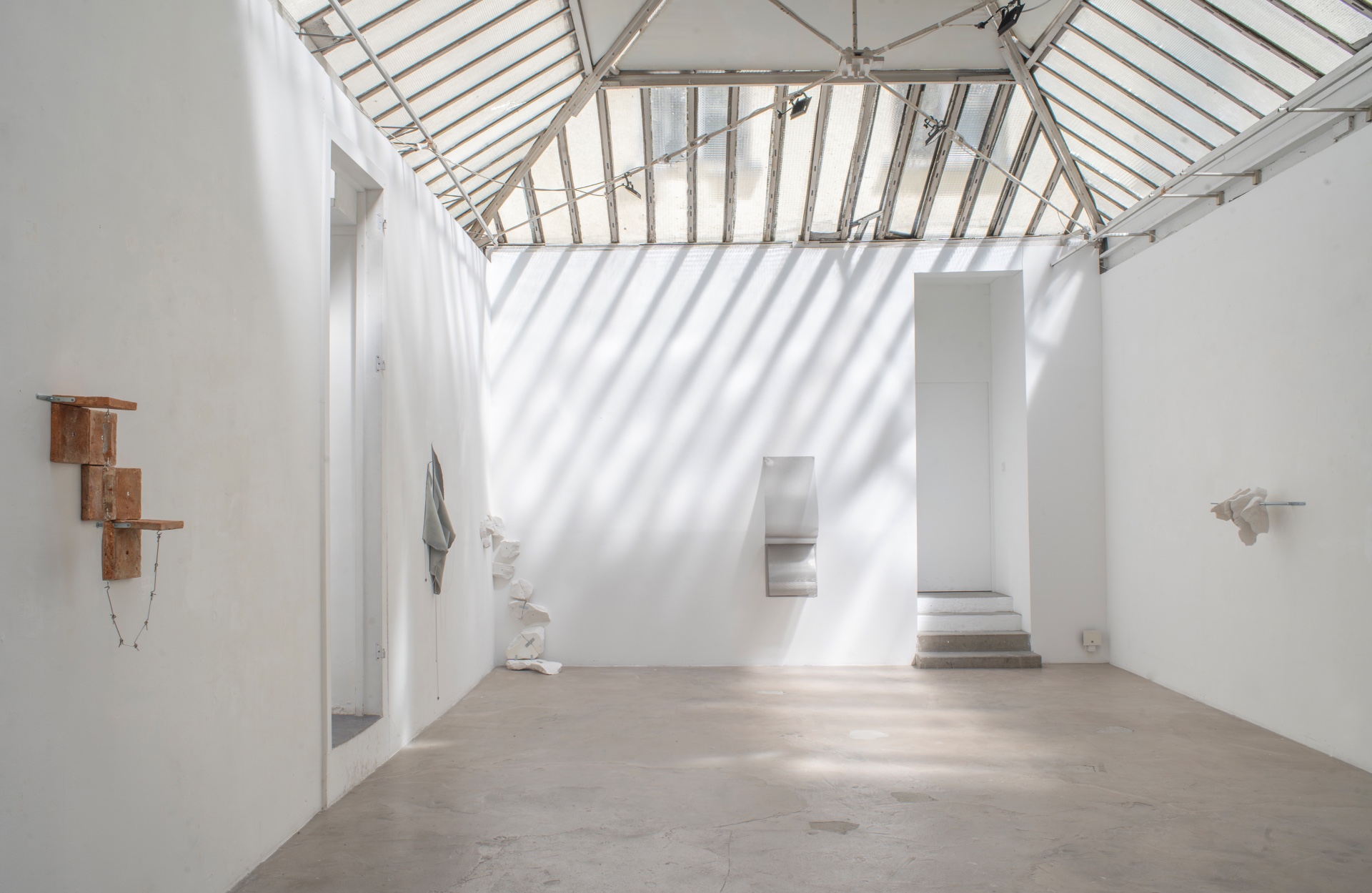
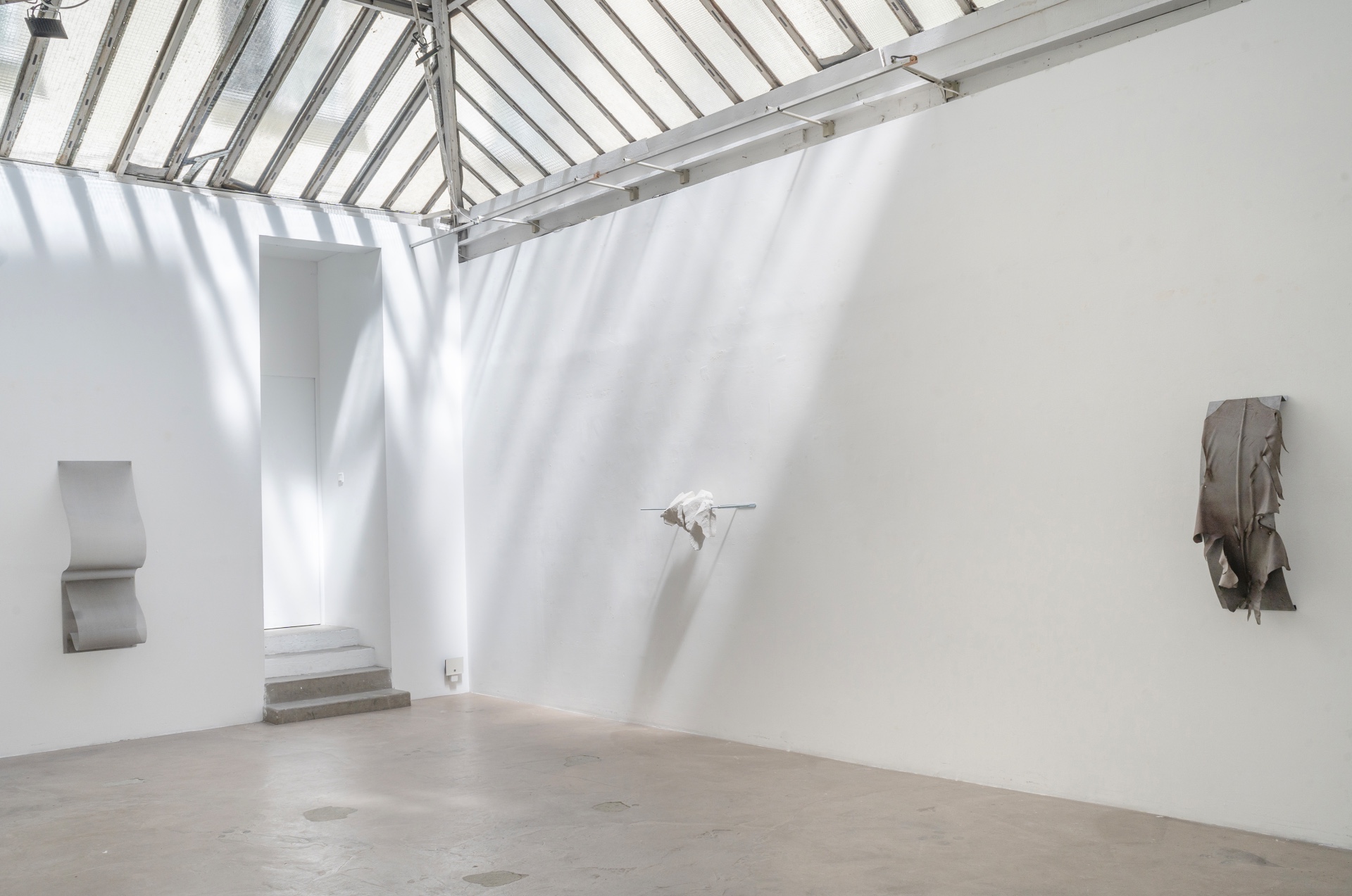
Agurto works with reclaimed plaster blocks salvaged from Parisian demolition sites. In Serpentin, fragments of this chalky white stone cascade down a gallery corner, connected by zinc hinges and screws that make the structural logic of the assemblage visible. The fasteners do not hide. They announce themselves: this thing is being held together, and the forces that hold it could let go. A threaded rod pierces through the clustered forms of L'Enveloppe-cœur, the steel passing through plaster like a surgical pin through bone.

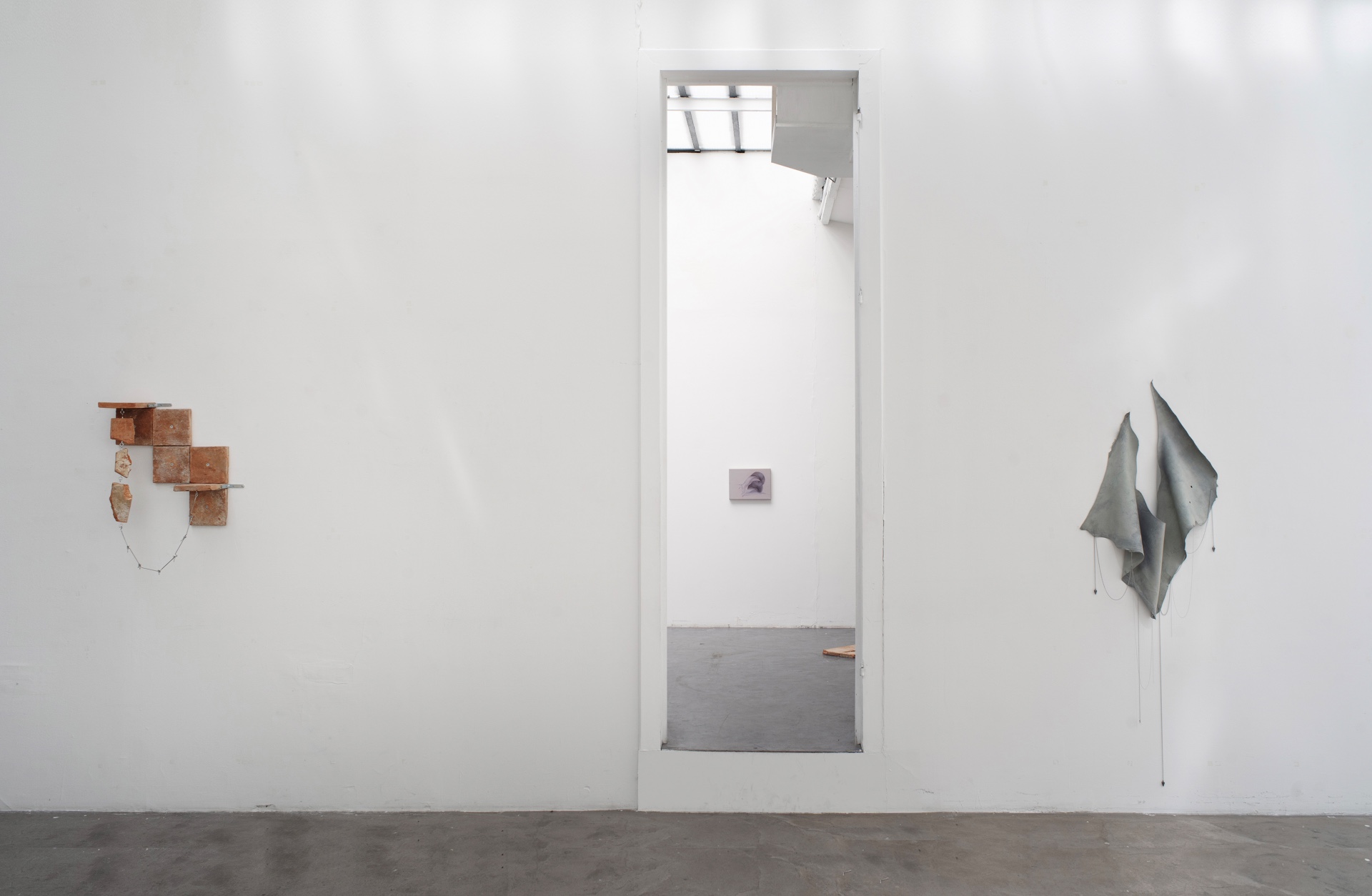
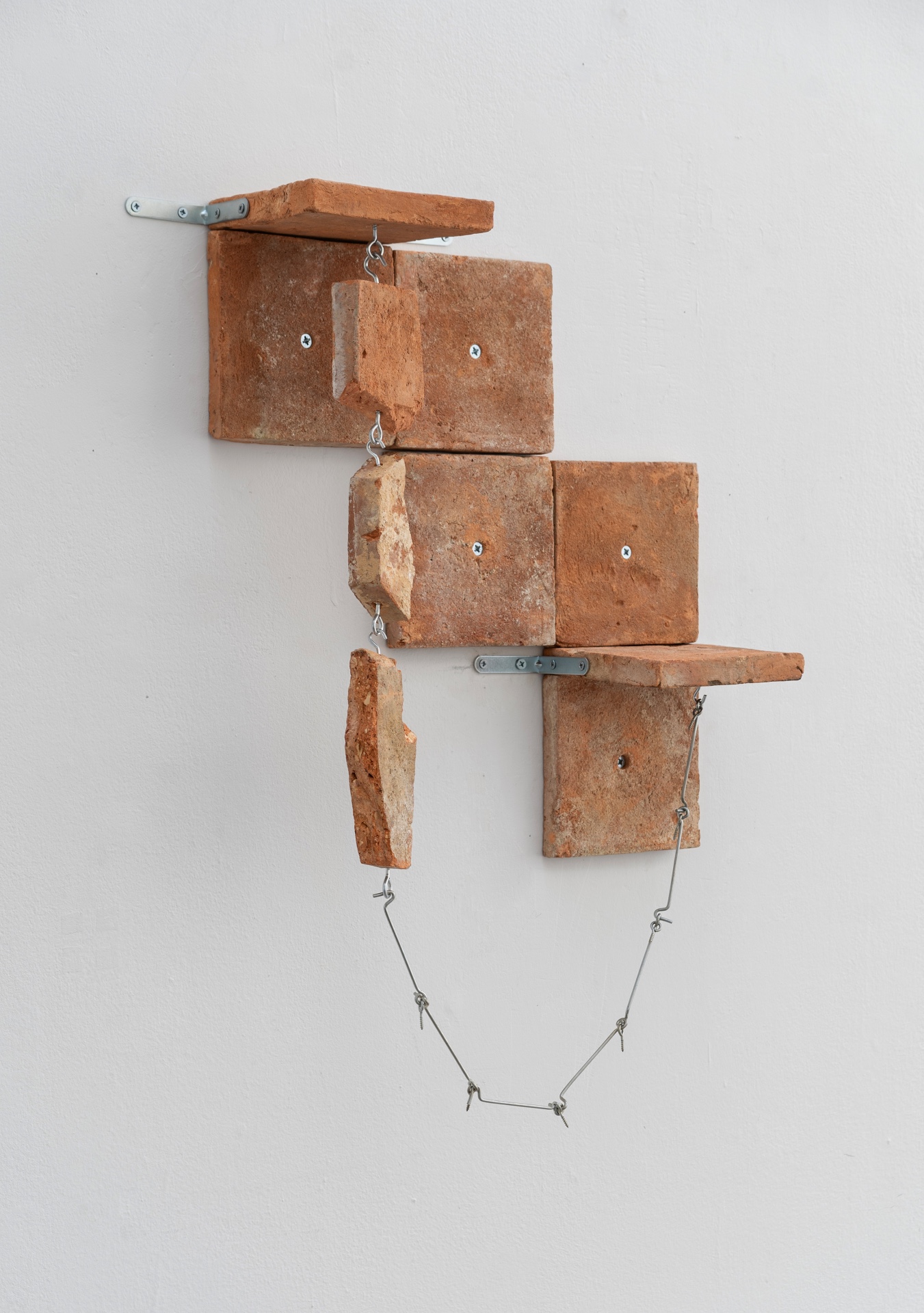
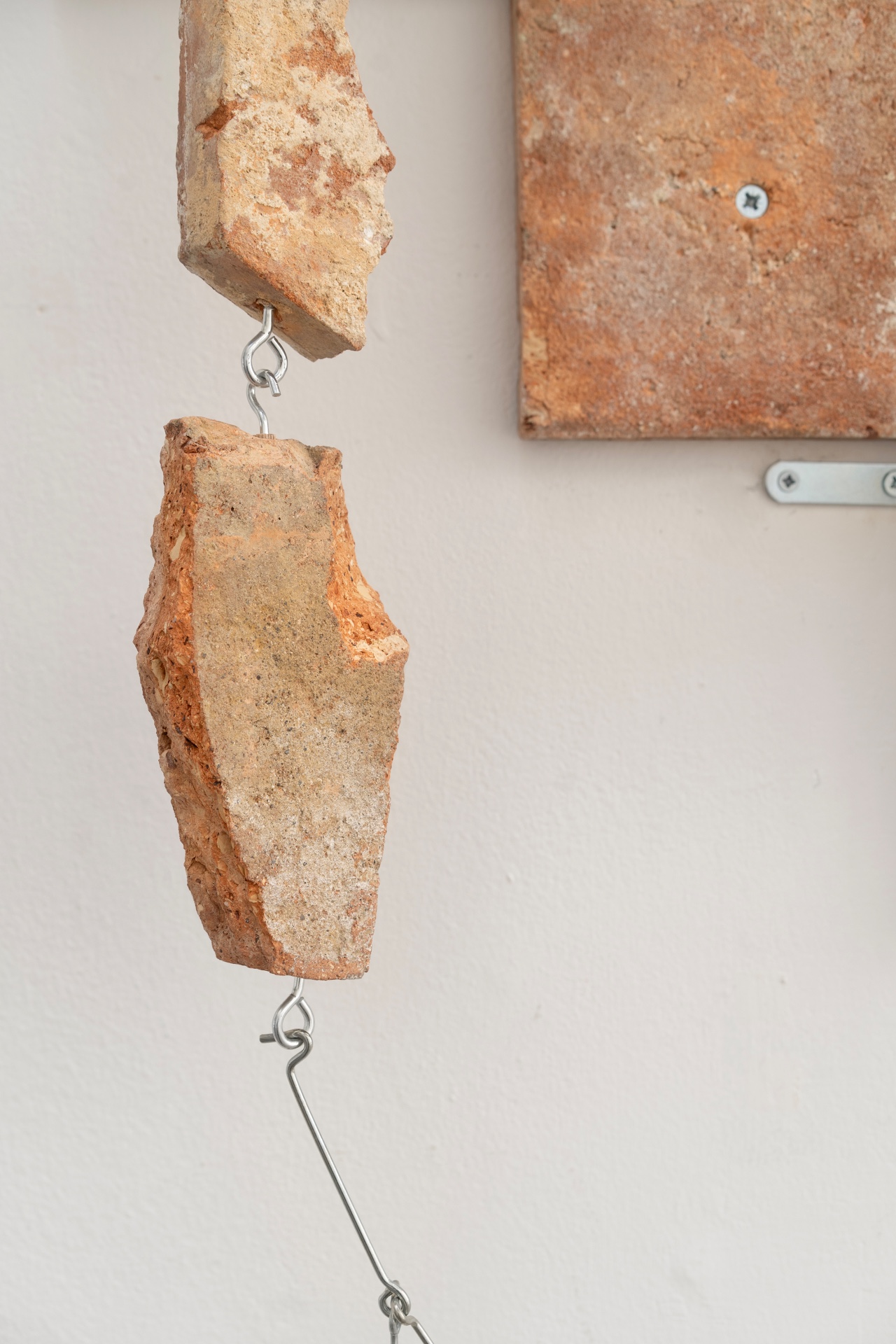
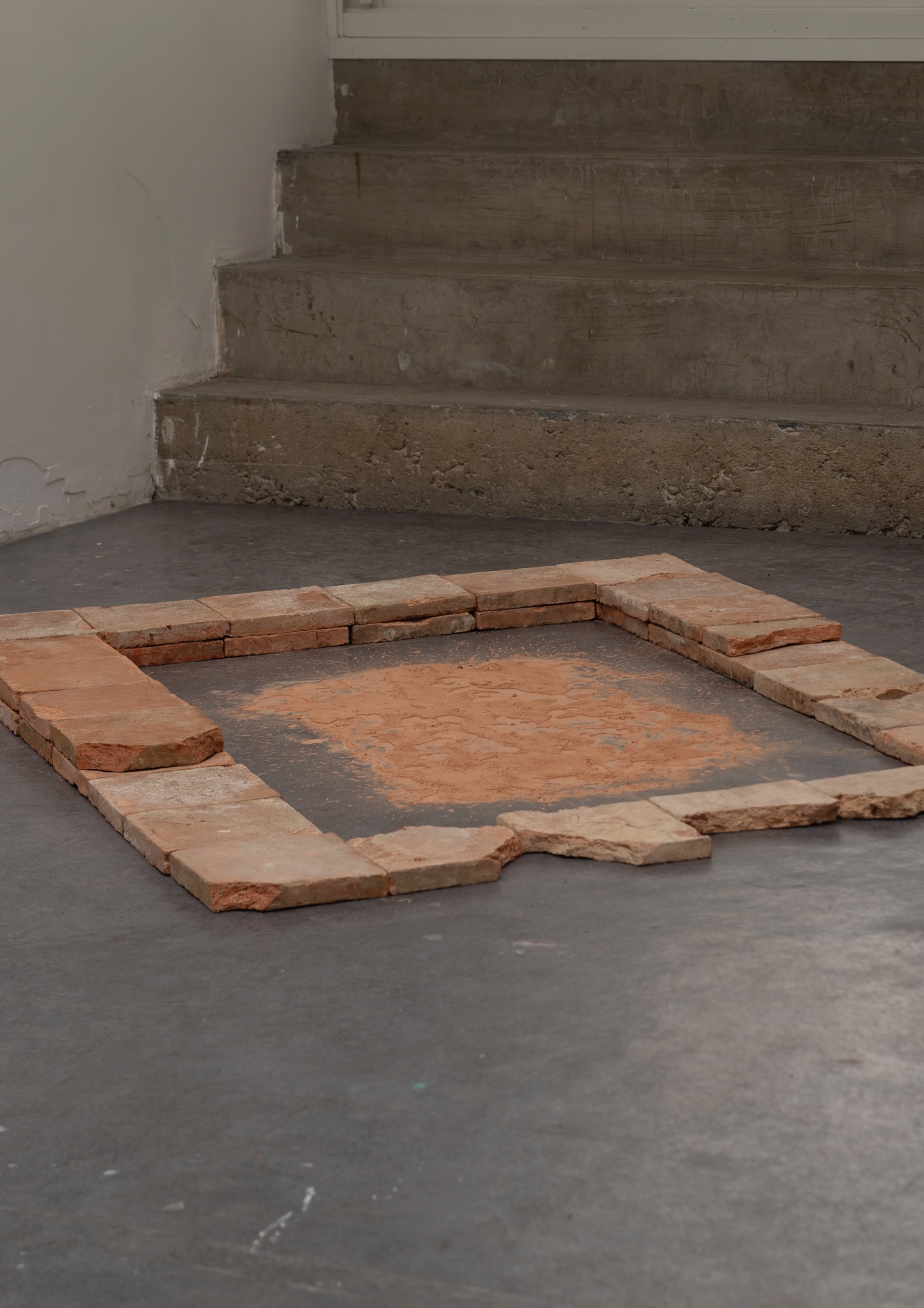
The tomettes, hexagonal terracotta tiles that once paved Parisian floors, appear in Bedrock as a wall-mounted assemblage of rust-orange fragments connected by brackets, eyebolts, and a looping wire. Below, Huaka frames a rectangle of terracotta pigment on the concrete floor, the powdered residue of ground tiles forming a kind of sediment. A second terracotta piece, Huaka II, uses the same pigment transfers onto heavy cotton paper, the ochre stain spreading like a watermark or a map of something buried.

Fiedler approaches water as a material presence and a political subject. Her starting point is the Bièvre, a river that once ran through Paris before being covered over in the nineteenth century, its waters channeled underground to serve the tanneries and textile workshops of the Gobelins. In Camouflage, a grey leather hide hangs from a metal bracket, its surface slashed and folded, the cuts revealing the flesh side of the skin. The material that once required water to become supple now hangs suspended, neither rigid nor flowing.

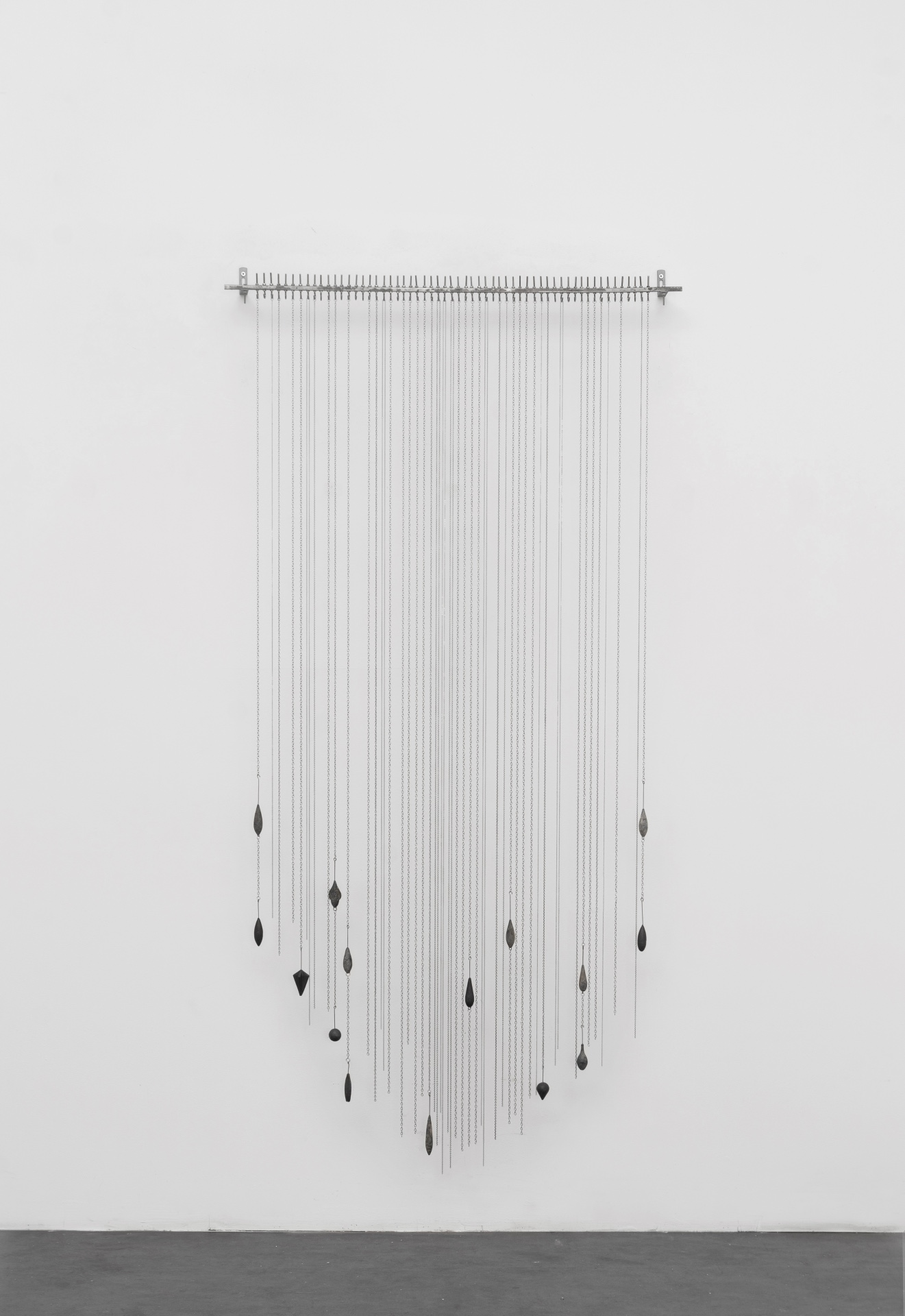
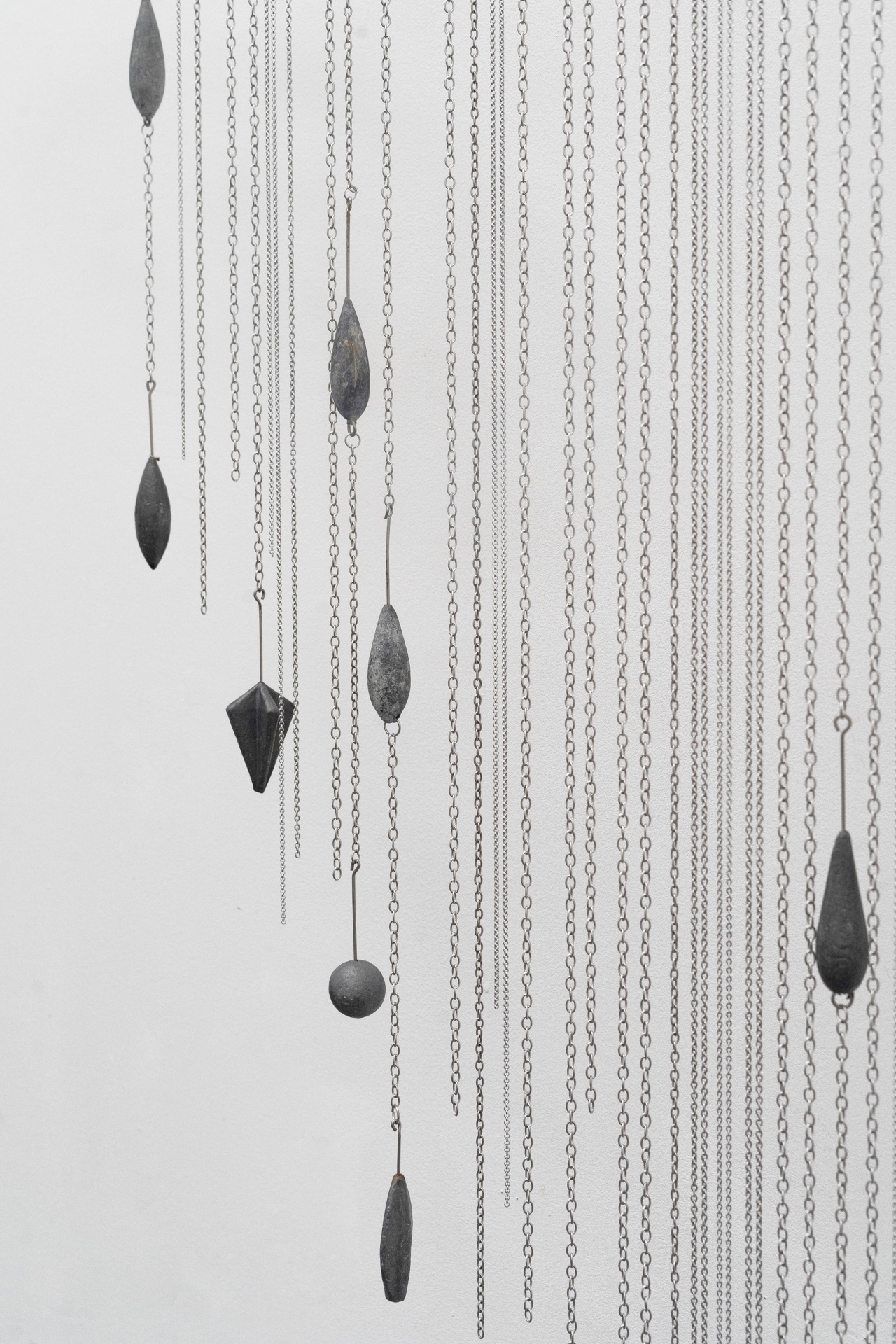
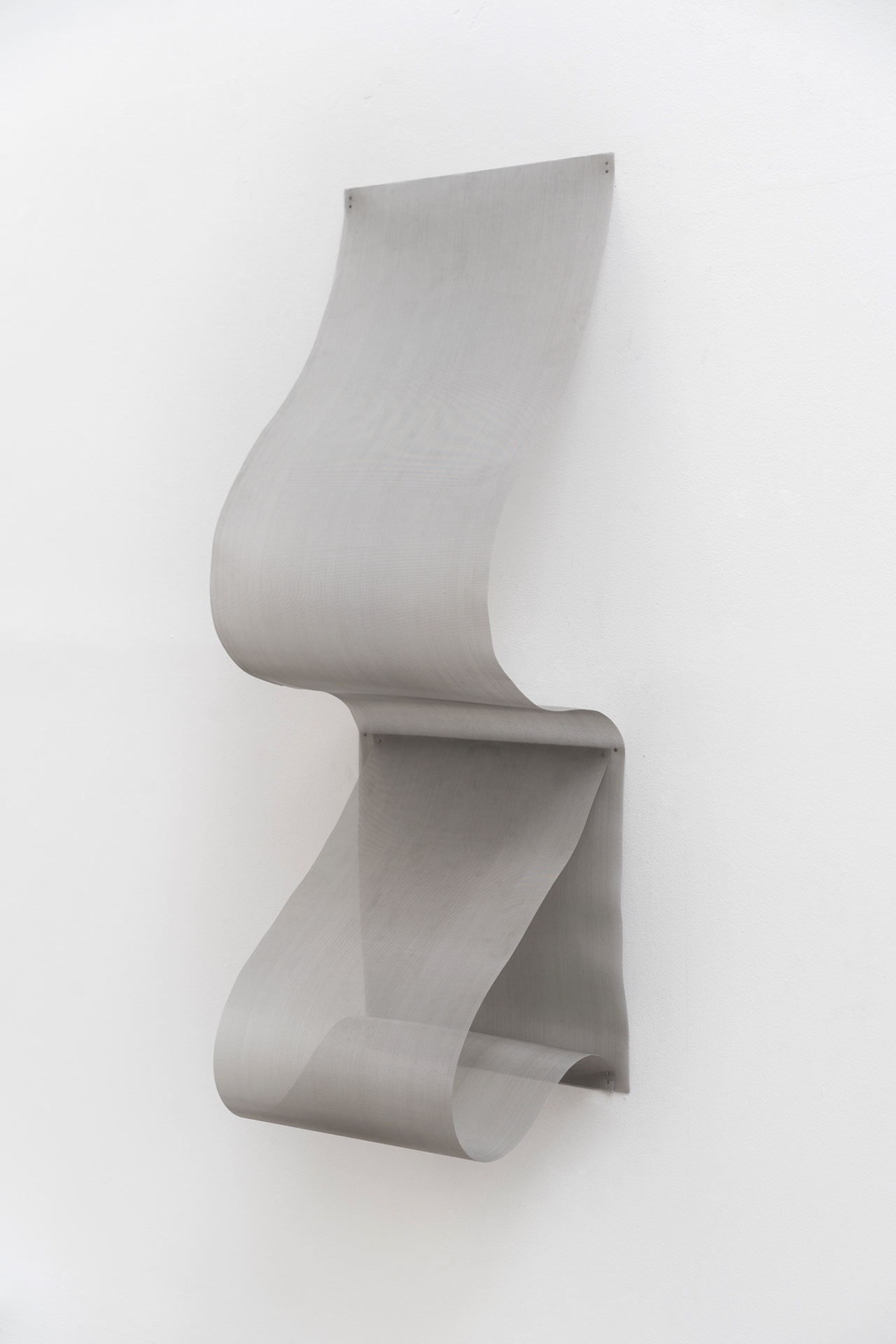
Caudal translates this tension into stainless steel mesh. The woven metal bends into an S-curve, its surface catching light and shadow as it undulates away from the wall. It reads as fabric, as liquid frozen mid-pour. In Garúa, chains descend from a horizontal bar, their lengths weighted by lead plumb bobs that pull the vertical lines taut. The title references the coastal fog of Lima, a mist so fine it never quite becomes rain. The chains evoke both stretched threads and falling water, held between the two states.

The exhibition title names a duality that the works refuse to resolve. The iron and the velvet do not separate into distinct objects. They occupy the same forms, the same materials. Plaster can crumble. Leather can tear. Steel can bend. What looks like control contains the possibility of overflow, and what looks like softness conceals a harder structure beneath.
Interested in Showcasing Your Work?

If you would like to feature your works on Thisispaper, please visit our Submission page and sign up to Thisispaper+ to submit your work. Once your submission is approved, your work will be showcased to our global audience of 2 million art, architecture, and design professionals and enthusiasts.
No items found.
We love less
but there is more.
Become a Thisispaper+ member today to unlock full access to our magazine, advanced tools, and support our work.
Get two months FREE
with annual subscription
We love less
but there is more.
Become a Thisispaper+ member today to unlock full access to our magazine, advanced tools, and support our work.
Get two months FREE
with annual subscription
No items found.
May 21, 2026

Matter held in unstable equilibrium: at Espace Brownstone in Paris, Marinés Agurto and Katherinne Fiedler stage Main de fer, gant de velours, sculptures that test the threshold between what sustains and what spills.

The French proverb gives the exhibition its title: une main de fer dans un gant de velours, an iron fist in a velvet glove. What looks soft conceals something harder. What holds together might also break apart. Peruvian artists Marinés Agurto and Katherinne Fiedler developed this body of work during residencies at the Cité internationale des arts, drawing on the material history of the Paris basin to build sculptures that exist at the threshold of stability.

Agurto works with reclaimed plaster blocks salvaged from Parisian demolition sites. In Serpentin, fragments of this chalky white stone cascade down a gallery corner, connected by zinc hinges and screws that make the structural logic of the assemblage visible. The fasteners do not hide. They announce themselves: this thing is being held together, and the forces that hold it could let go. A threaded rod pierces through the clustered forms of L'Enveloppe-cœur, the steel passing through plaster like a surgical pin through bone.

The tomettes, hexagonal terracotta tiles that once paved Parisian floors, appear in Bedrock as a wall-mounted assemblage of rust-orange fragments connected by brackets, eyebolts, and a looping wire. Below, Huaka frames a rectangle of terracotta pigment on the concrete floor, the powdered residue of ground tiles forming a kind of sediment. A second terracotta piece, Huaka II, uses the same pigment transfers onto heavy cotton paper, the ochre stain spreading like a watermark or a map of something buried.

Fiedler approaches water as a material presence and a political subject. Her starting point is the Bièvre, a river that once ran through Paris before being covered over in the nineteenth century, its waters channeled underground to serve the tanneries and textile workshops of the Gobelins. In Camouflage, a grey leather hide hangs from a metal bracket, its surface slashed and folded, the cuts revealing the flesh side of the skin. The material that once required water to become supple now hangs suspended, neither rigid nor flowing.

Caudal translates this tension into stainless steel mesh. The woven metal bends into an S-curve, its surface catching light and shadow as it undulates away from the wall. It reads as fabric, as liquid frozen mid-pour. In Garúa, chains descend from a horizontal bar, their lengths weighted by lead plumb bobs that pull the vertical lines taut. The title references the coastal fog of Lima, a mist so fine it never quite becomes rain. The chains evoke both stretched threads and falling water, held between the two states.

The exhibition title names a duality that the works refuse to resolve. The iron and the velvet do not separate into distinct objects. They occupy the same forms, the same materials. Plaster can crumble. Leather can tear. Steel can bend. What looks like control contains the possibility of overflow, and what looks like softness conceals a harder structure beneath.
Interested in Showcasing Your Work?

If you would like to feature your works on Thisispaper, please visit our Submission page and subscribe to Thisispaper+. Once your submission is approved, your work will be showcased to our global audience of 2 million art, architecture, and design professionals and enthusiasts.
Thisispaper+
Paris Guide
20+ Locations
Web Access
Link to Maps
Architecture in Paris — behind the limestone facades, a quiet revolution. Apartment renovations that reveal hidden volumes, concept stores in former workshops, cultural spaces carved from industrial shells, and the work of studios transforming the city from within.
Explore
Paris Guide

Join Thisispaper+
Unlock access to 2500 stories, curated guides + editions, and share your work with a global network of architects, artists, writers and designers who are shaping the future.
Get two months FREE
with annual subscription
Travel Guides
Immerse yourself in timeless destinations, hidden gems, and creative spaces—curated by humans, not algorithms.
Explore All Guides +
Submission Module
Submit your project and gain the chance to showcase your work to our worldwide audience of over 2M architects, designers, artists, and curious minds.
Learn More+
Curated Editions
Dive deeper into carefully curated editions, designed to feed your curiosity and foster exploration.
Off-the-Grid
Jutaku
Sacral Journey
minimum
The New Chair
Explore All Editions +
Atlas
A new and interactive way to explore the most inspiring places around the world.
Interactive map
Linked to articles
300+ curated locations
Google + Apple directions
Smart filters
Subscribe to Explore+
Become a Thisispaper+ member today to unlock full access to our magazine, submit your project and support our work.
Join Thisispaper+Join Thisispaper+
€ 9 EUR
/month
Cancel anytime
Get two months FREE
with annual subscription