Embedded into rocky cliffs beside an old lighthouse, this island hotel designed by SZ-Architects unfolds through stone, light, and movement, offering a slow architectural experience shaped by terrain, climate, and the quiet rhythms of the sea.
Embedded into the rocky crown of Huanglong Island in China, the project resists the language of destination luxury in favor of something more geological and patient. Rather than announcing itself against the horizon, the building reads as an extension of the island’s stone mass, its presence discovered gradually through movement, light, and material continuity.
The site’s proximity to the historic lighthouse establishes a quiet dialogue between past and present. A connecting walkway frames this relationship less as heritage preservation than as lived continuity, turning arrival into a sequence of measured transitions. Moving through the complex feels closer to navigating a maritime landscape than entering a hotel, with views opening and closing toward sea, rock, and sky. The architecture does not compete with the lighthouse; instead, it borrows its authority from endurance and restraint.
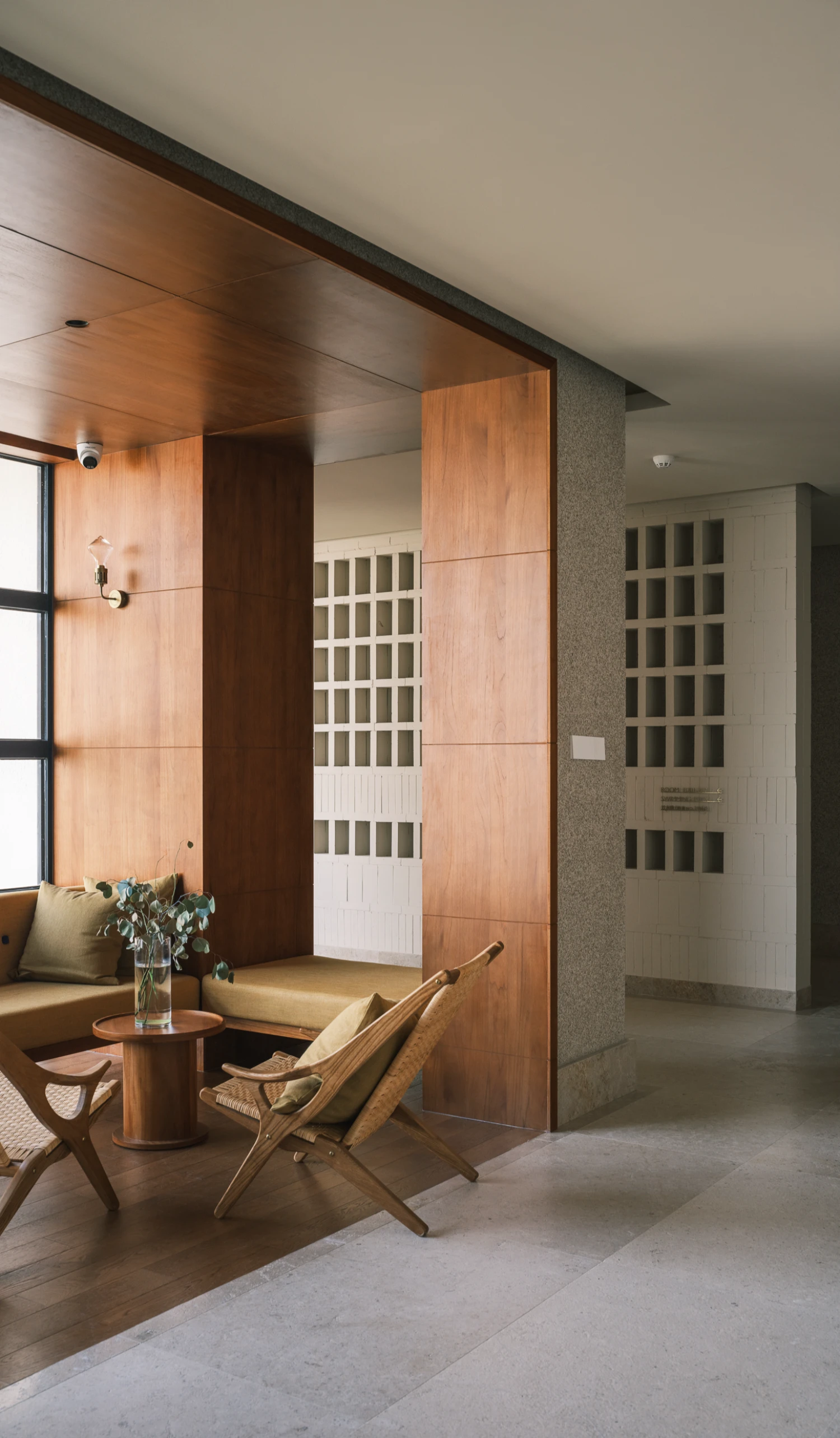
Material decisions are anchored in the island’s construction traditions and logistical realities. With no access for heavy machinery, every element had to be reduced to human scale, handled by pairs of workers and transported across steep, narrow paths. Fire bricks, granite references, and beige textured finishes echo the island’s stone dwellings while introducing a subtle abstraction. The brick collages in the lobby translate the rough logic of stacked stone into a more deliberate rhythm, where recessed and protruding surfaces catch light and animate otherwise solid walls.
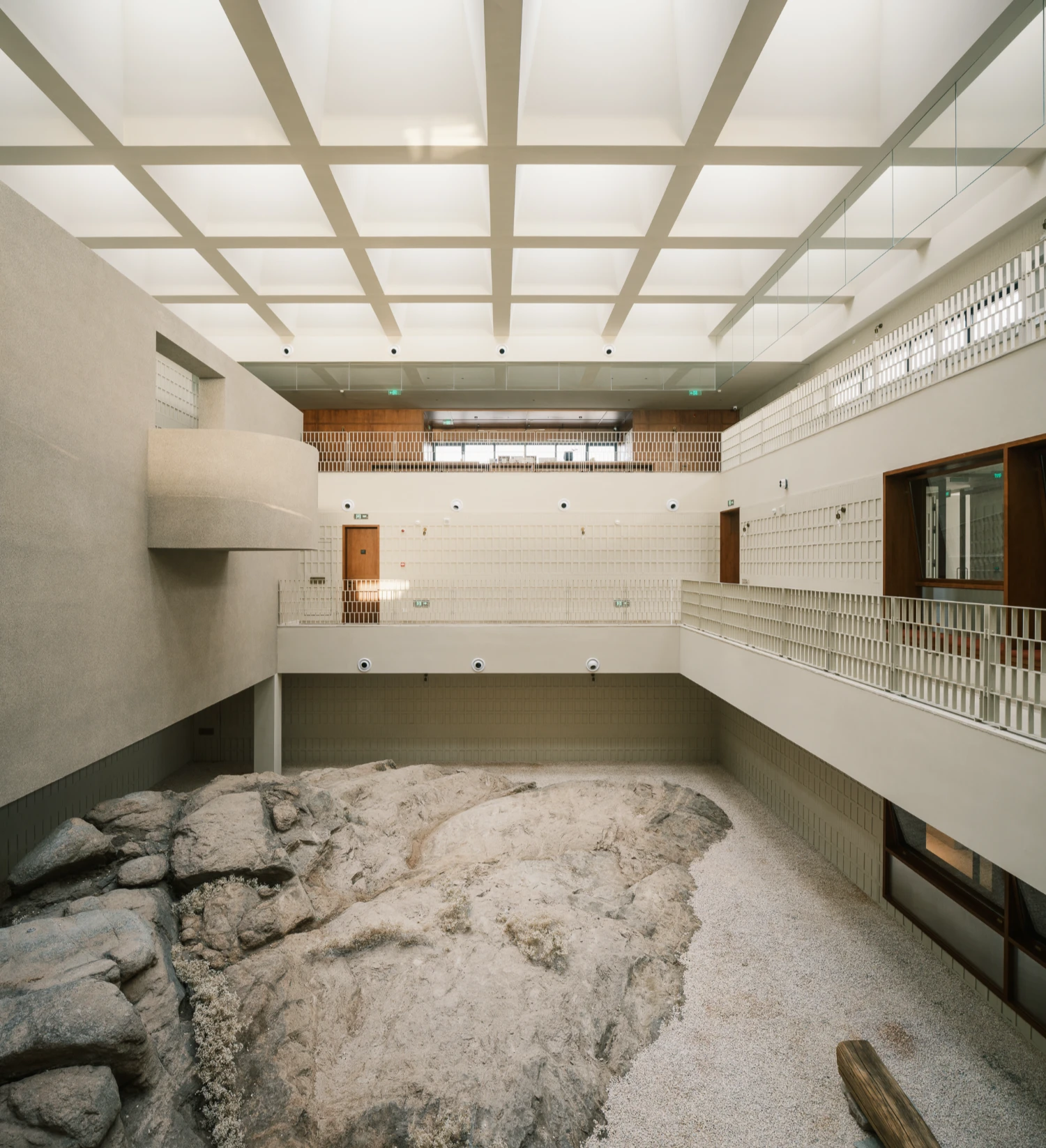
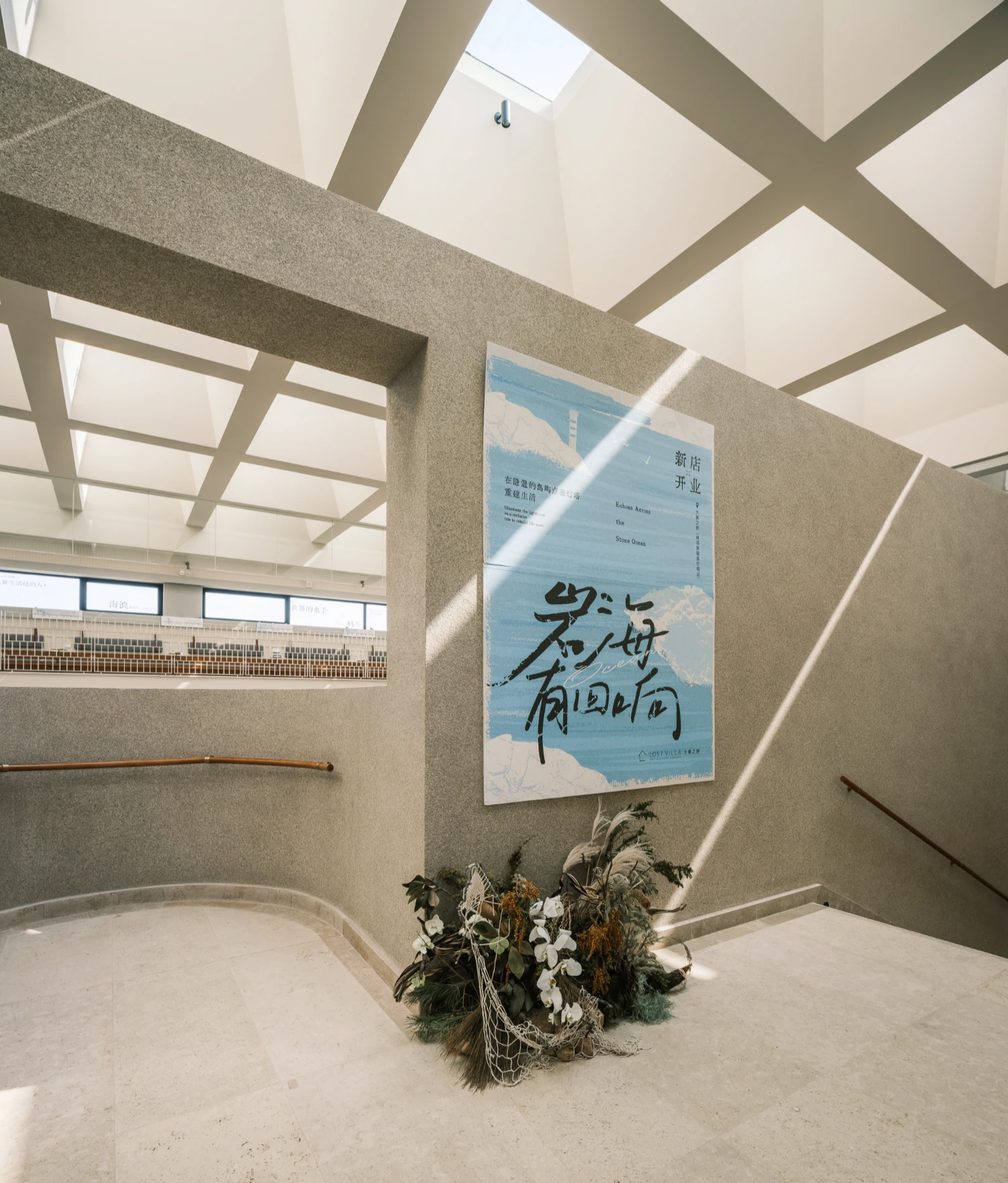
At the heart of the hotel, the atrium becomes a carefully staged encounter with raw geology. Existing rock formations are not concealed but elevated, surrounded by gravel paths and stepping stones made from leftover construction material. The transition from flat surfaces to uneven rock heightens bodily awareness, allowing guests to register shifts in scale and gravity. Overhead, grid-like beams filter daylight onto stone, producing a constantly changing choreography of shadow that brings the island indoors.
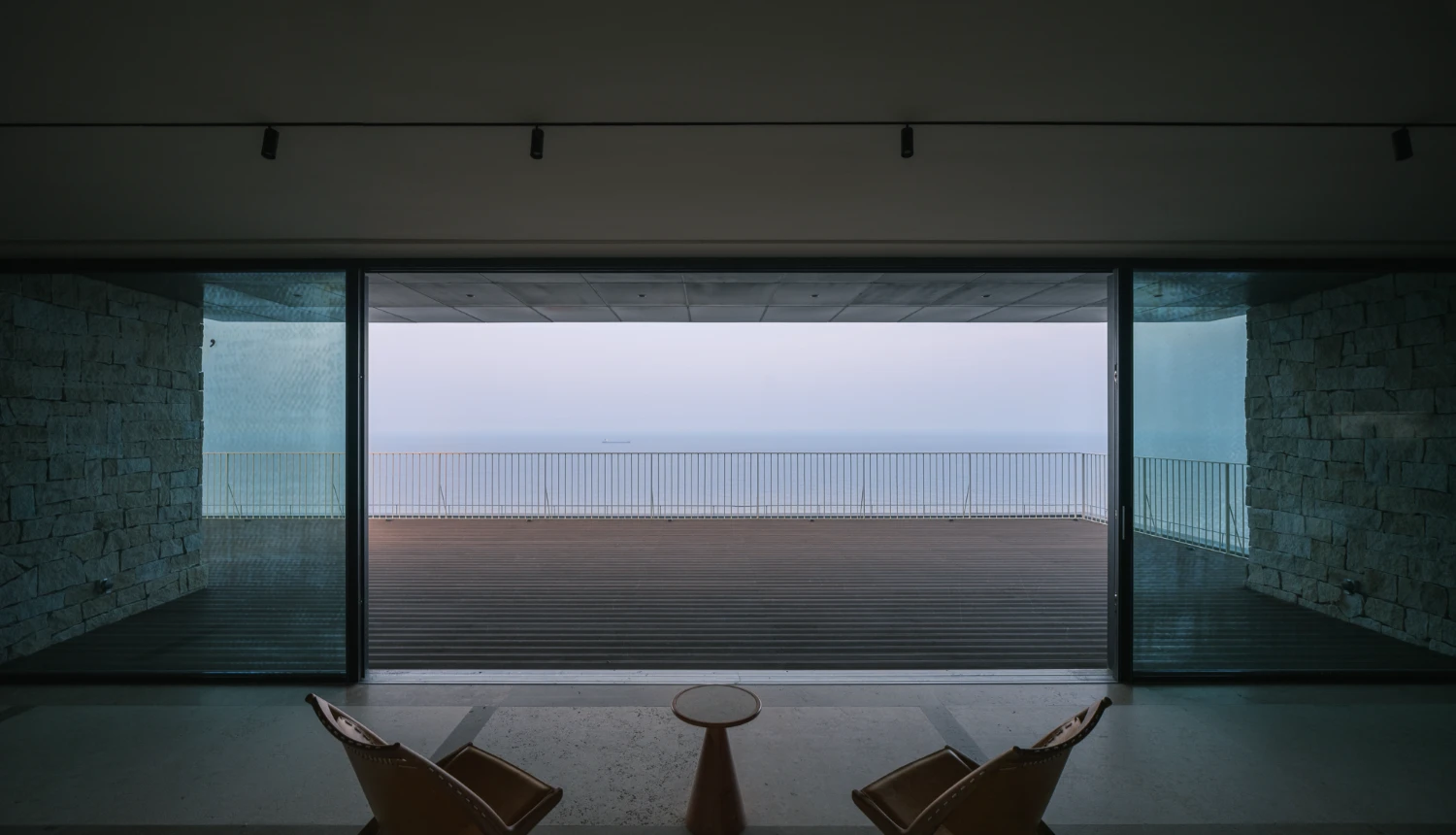
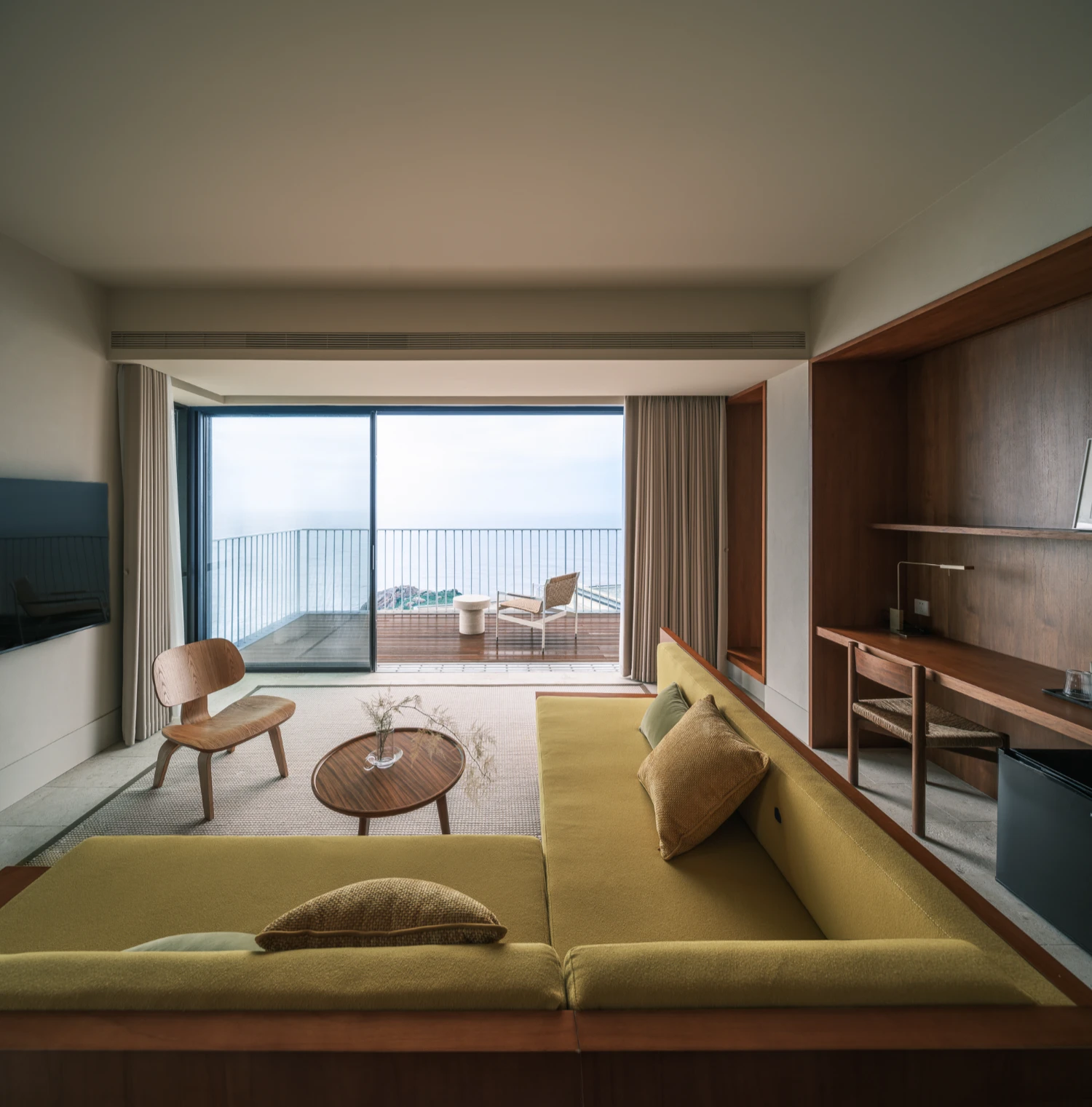
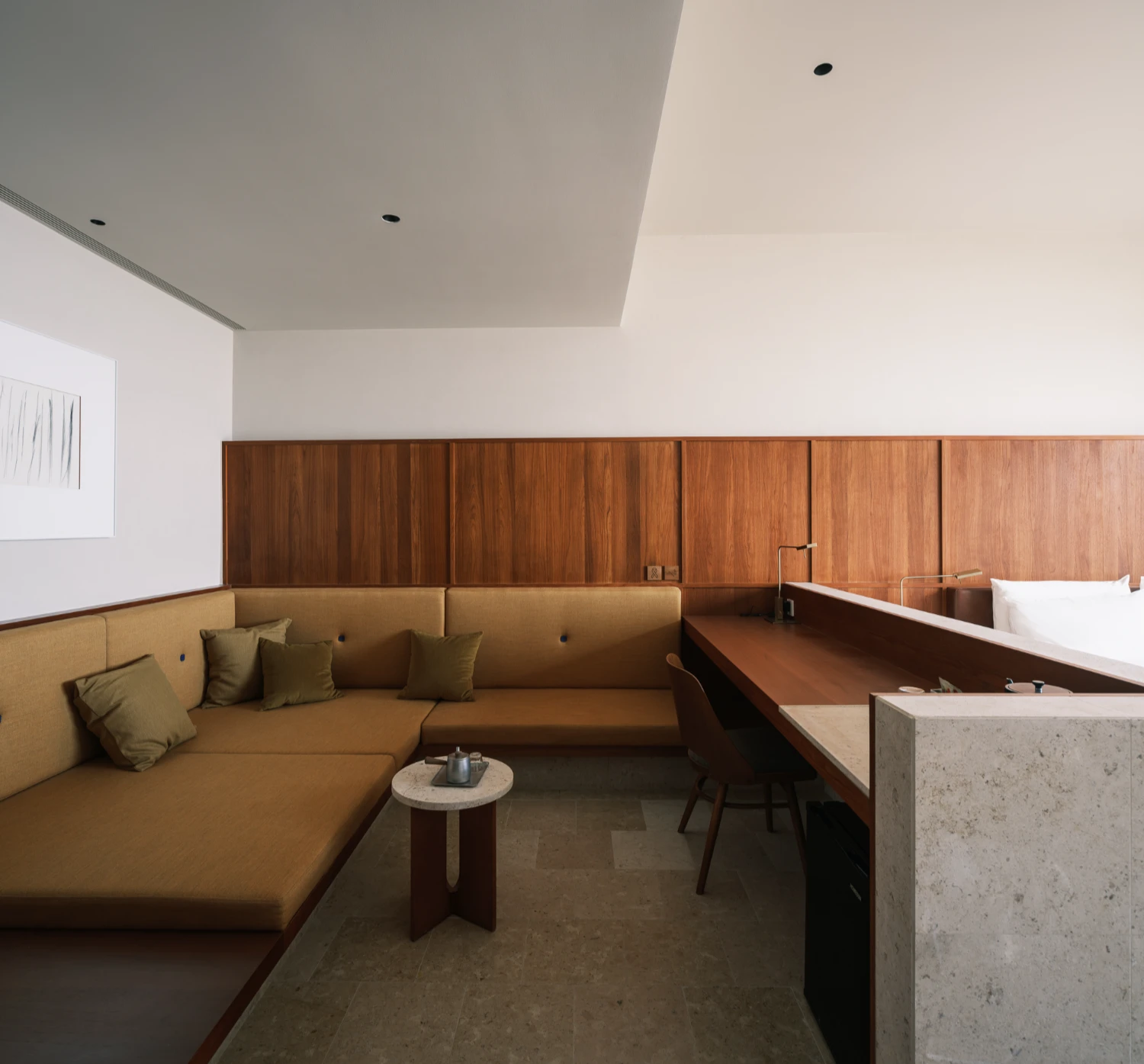
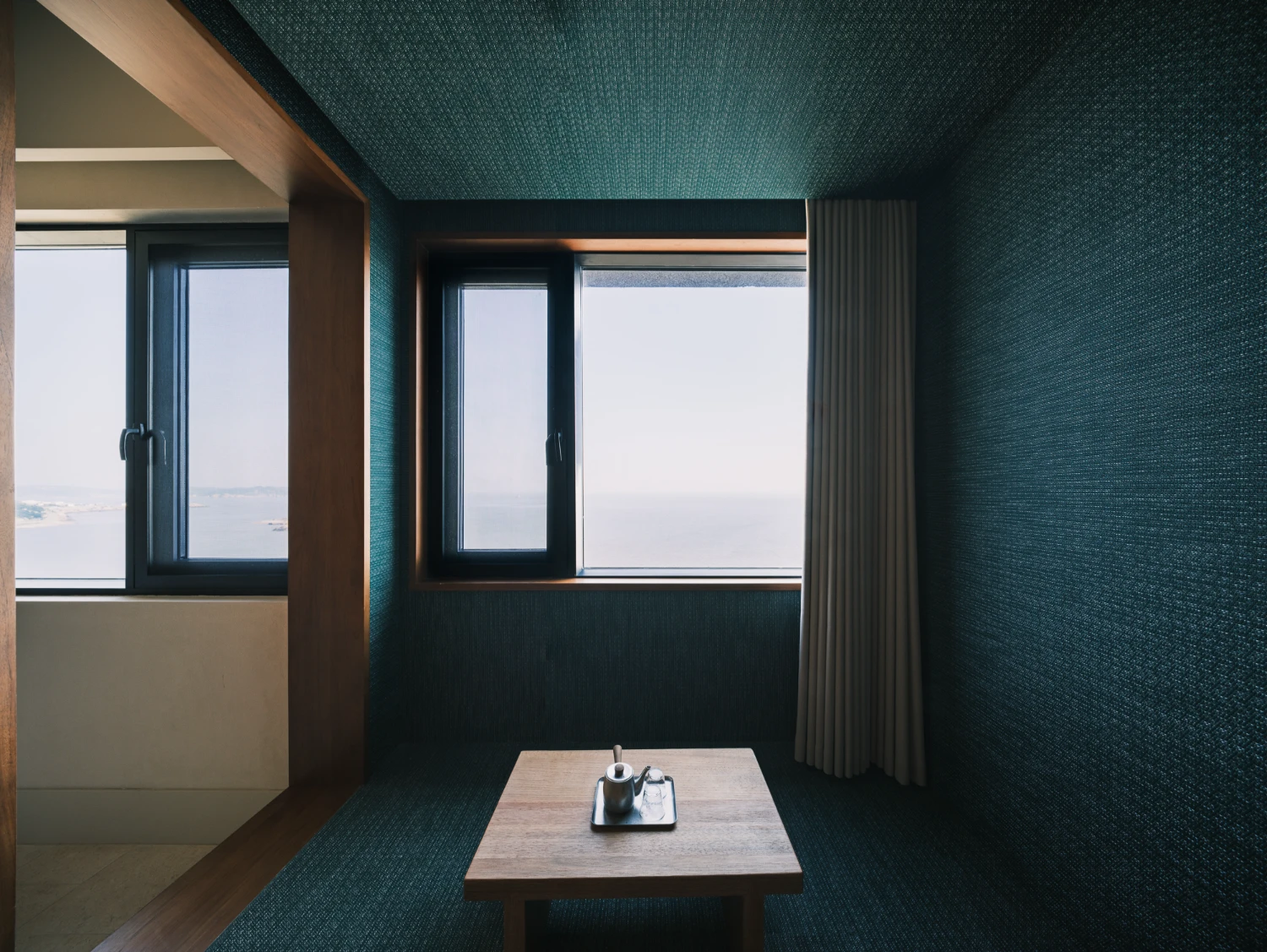
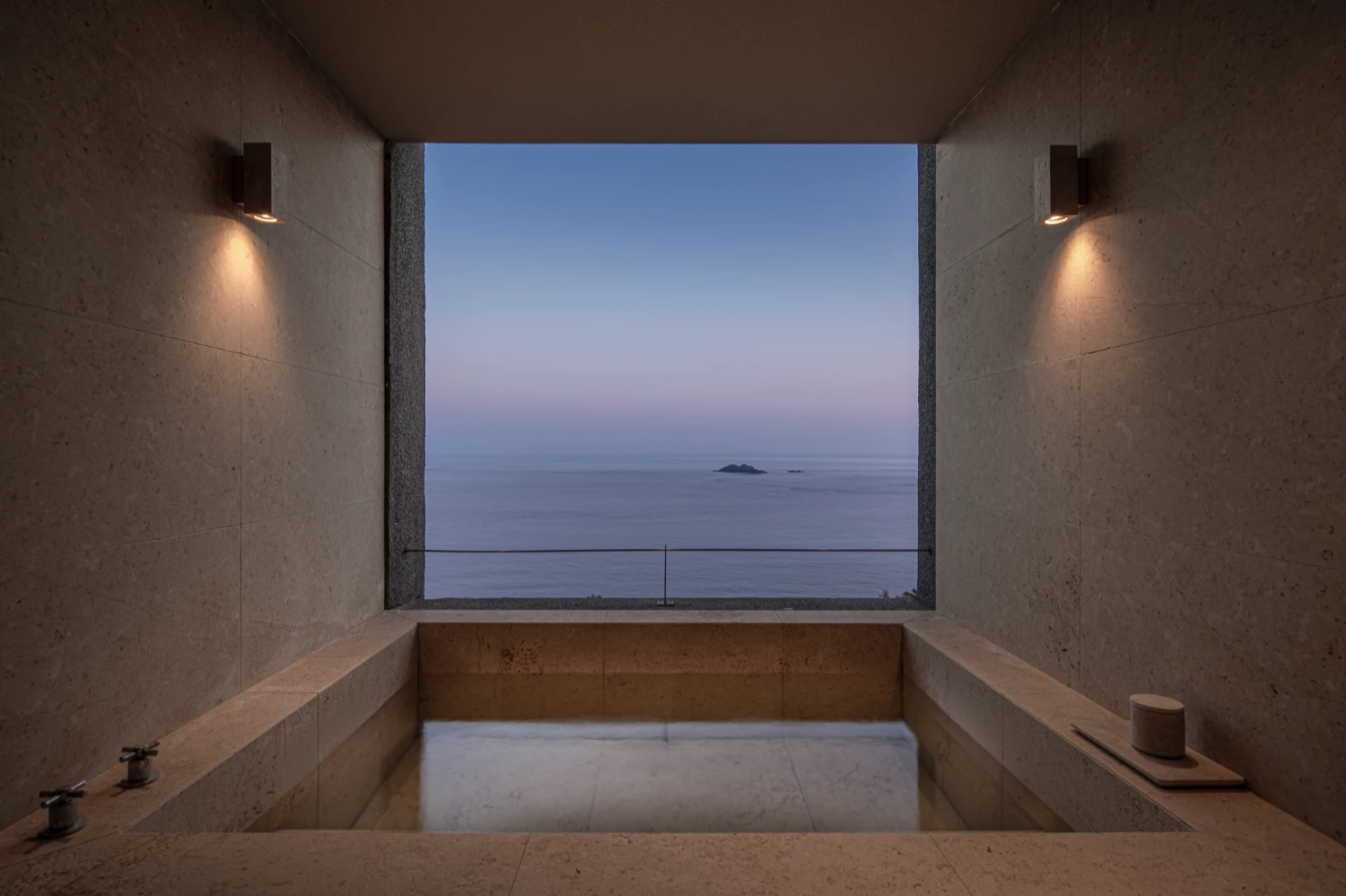
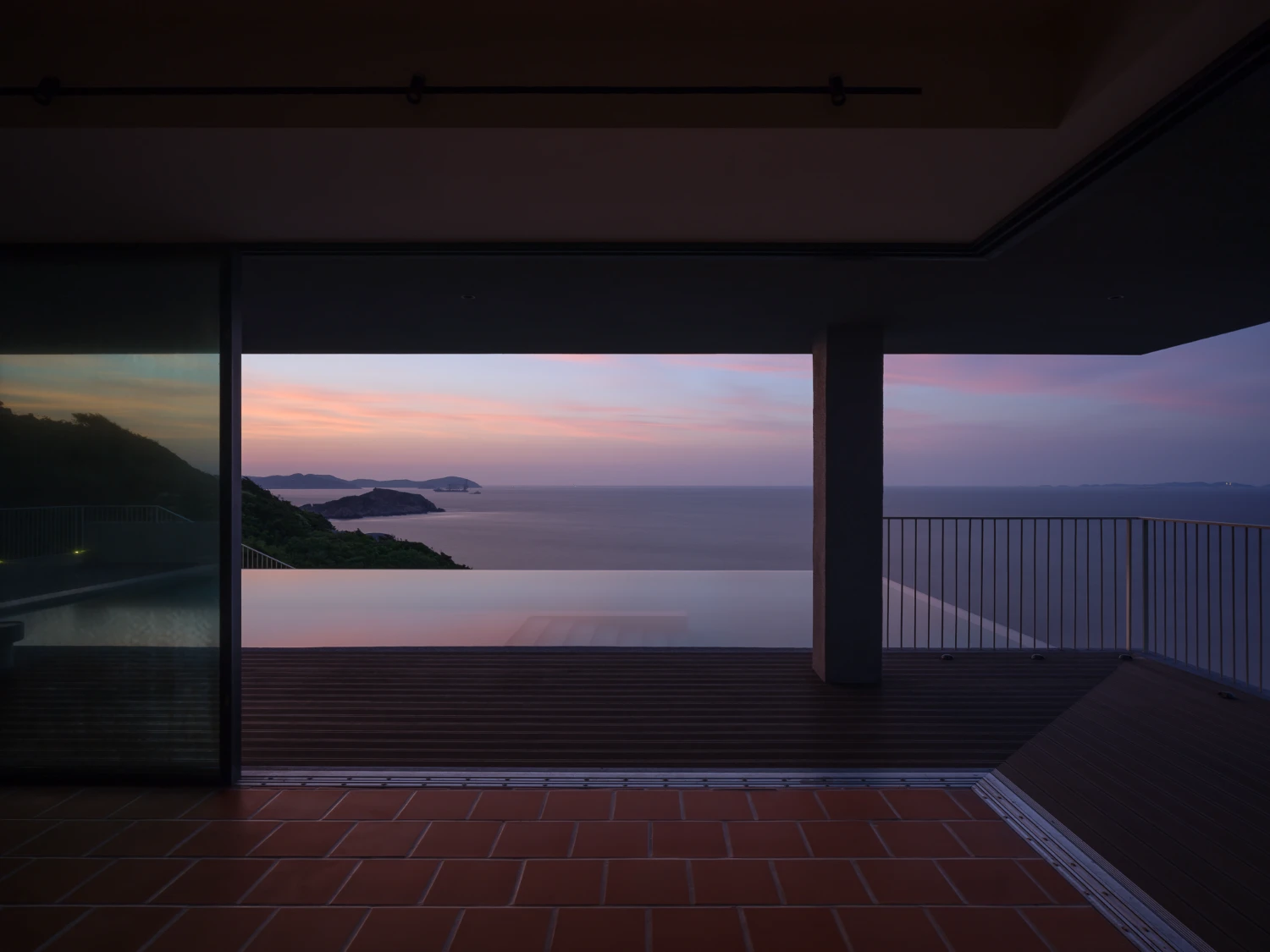
Guest rooms and communal interiors continue this dialogue between control and exposure. Warm wood, muted textiles, and measured proportions temper the severity of stone, while expansive openings frame uninterrupted sea views. These interiors feel neither rustic nor overtly refined; instead, they maintain a steady balance between shelter and openness, inviting prolonged occupation rather than fleeting spectacle.
Lost Villa Shengsi Huanglong Island Lighthouse Hotel ultimately proposes a form of hospitality grounded in coexistence. By working with the island’s constraints—its climate, terrain, and isolation—the project transforms limitation into character. It offers a slowed-down spatial experience where architecture becomes a mediator between human presence and a larger geological narrative, allowing visitors to inhabit the island not as observers, but as temporary participants.