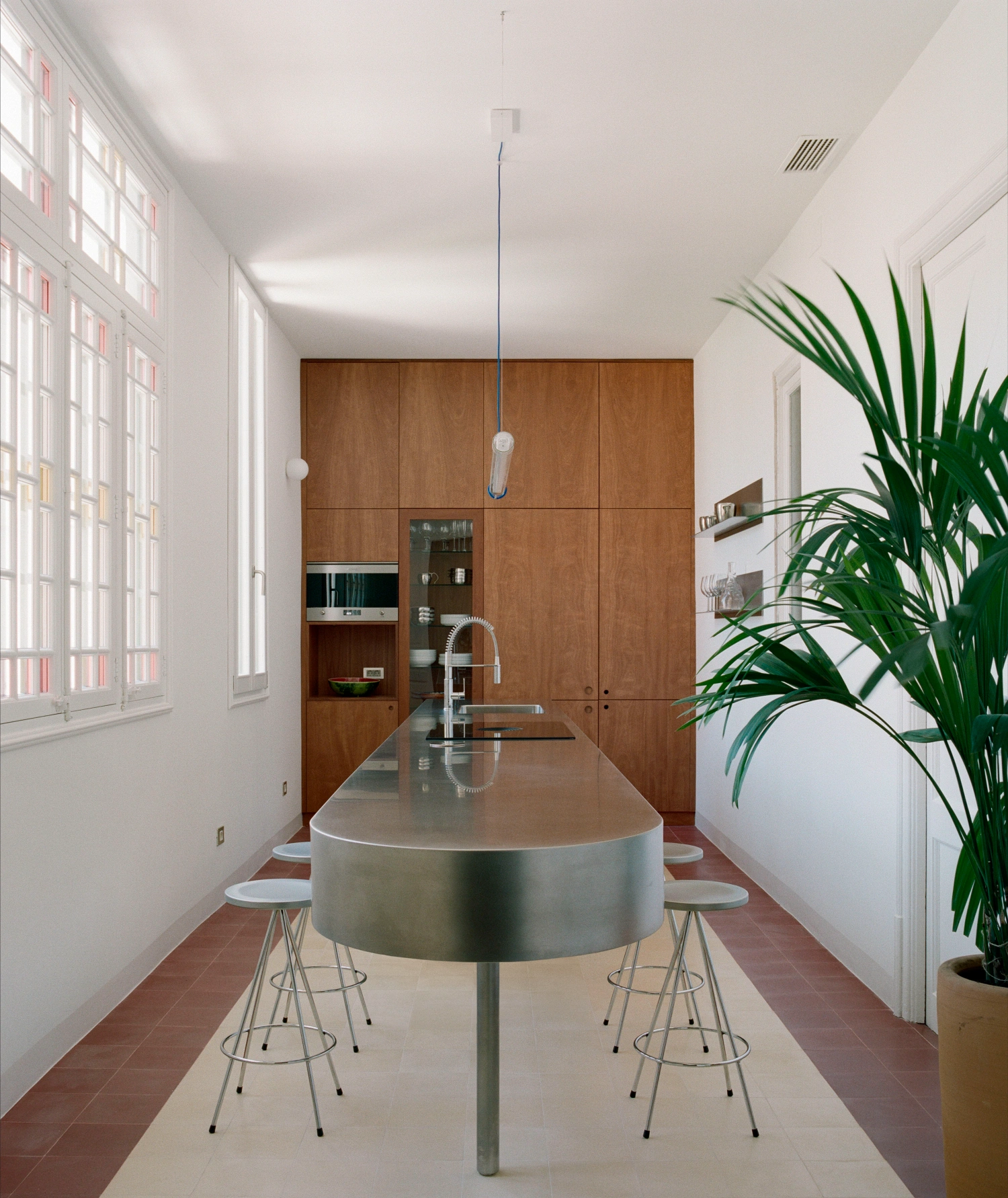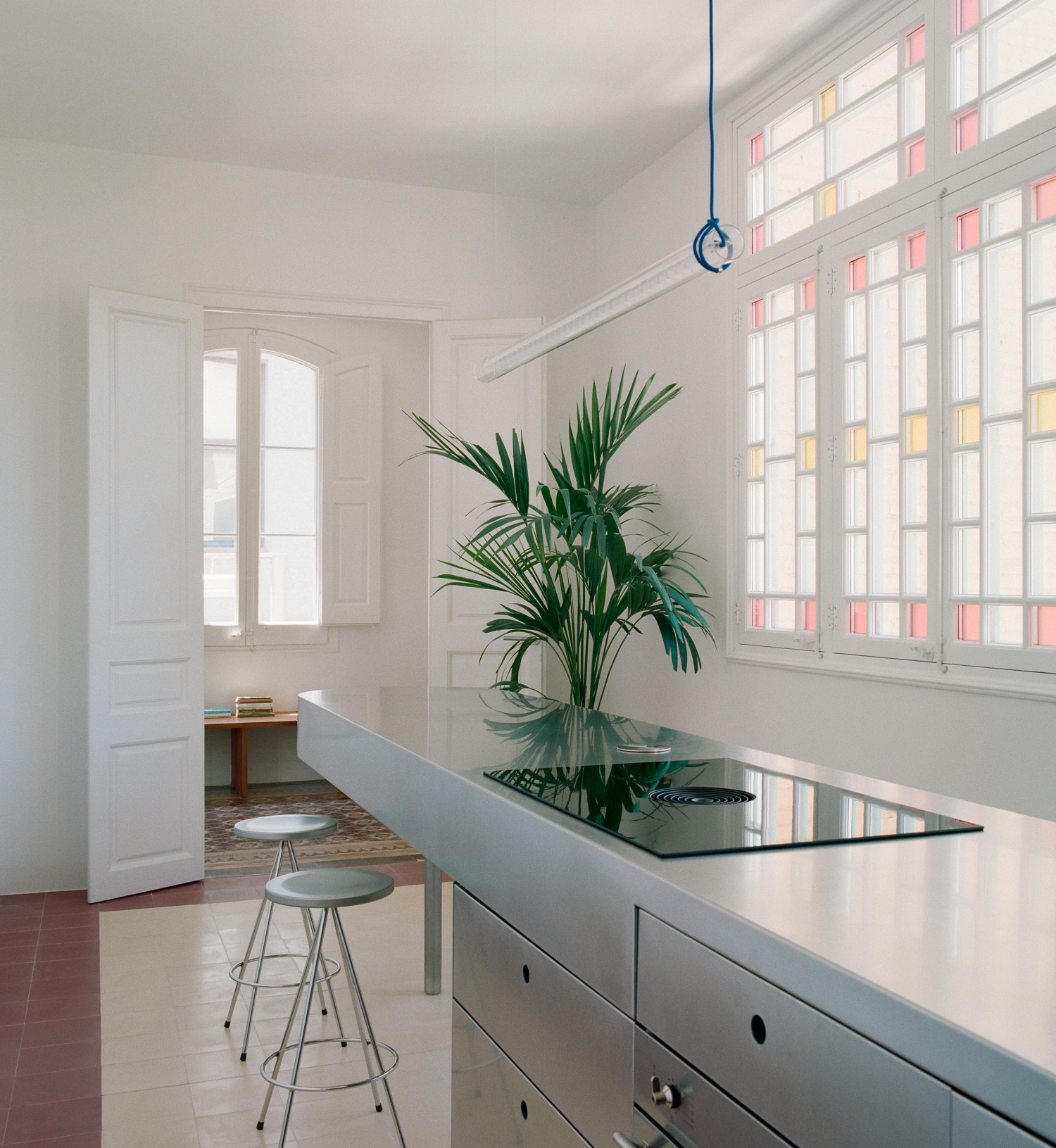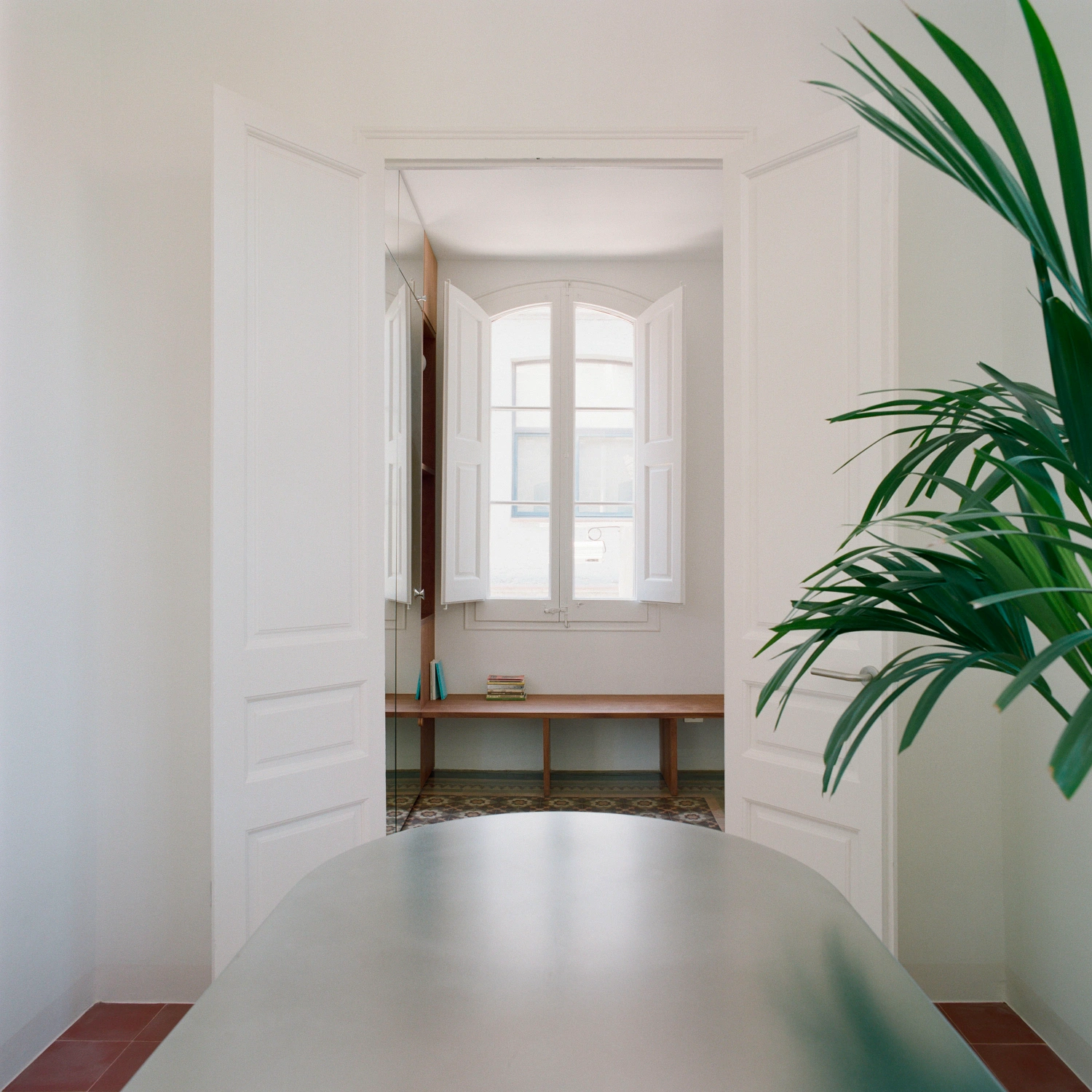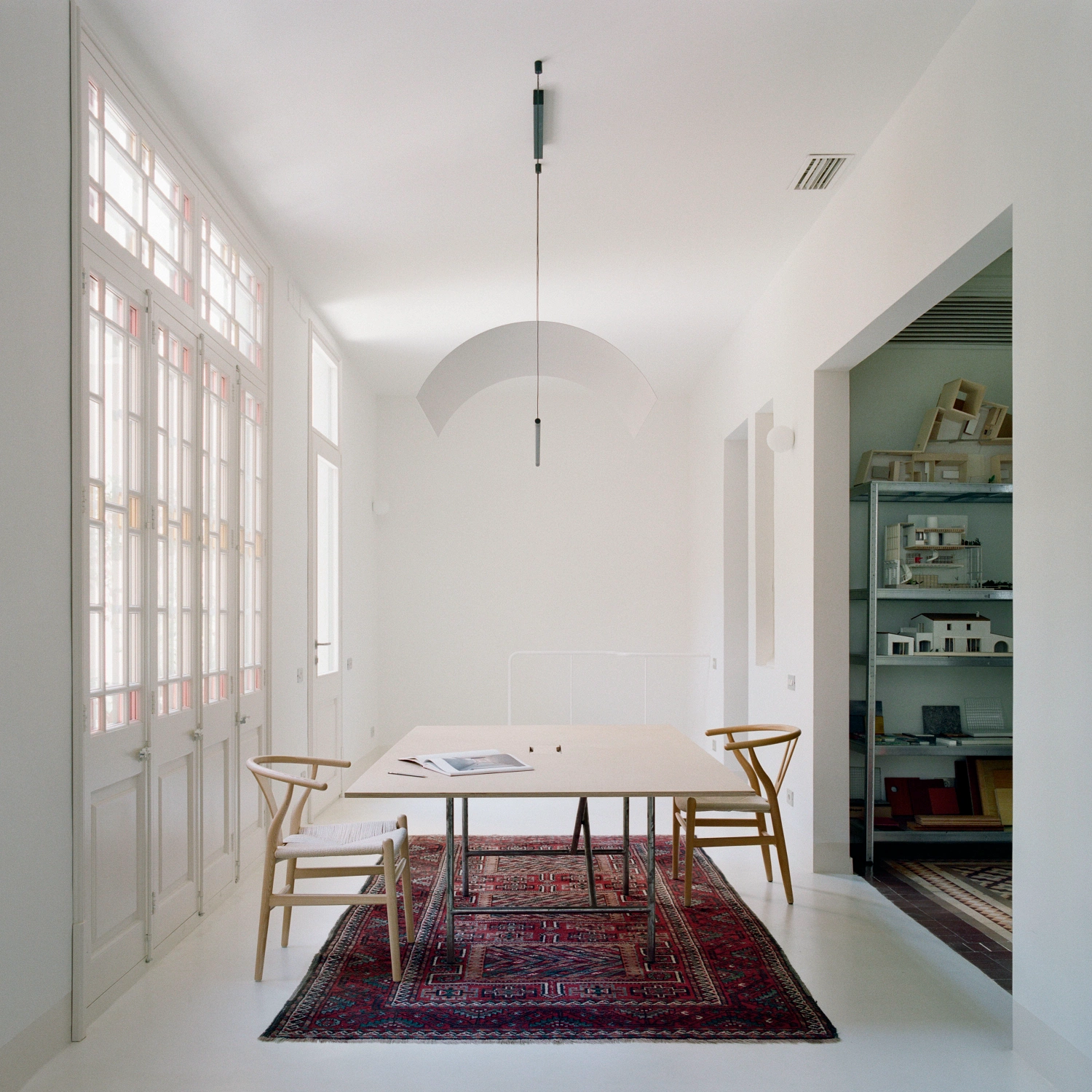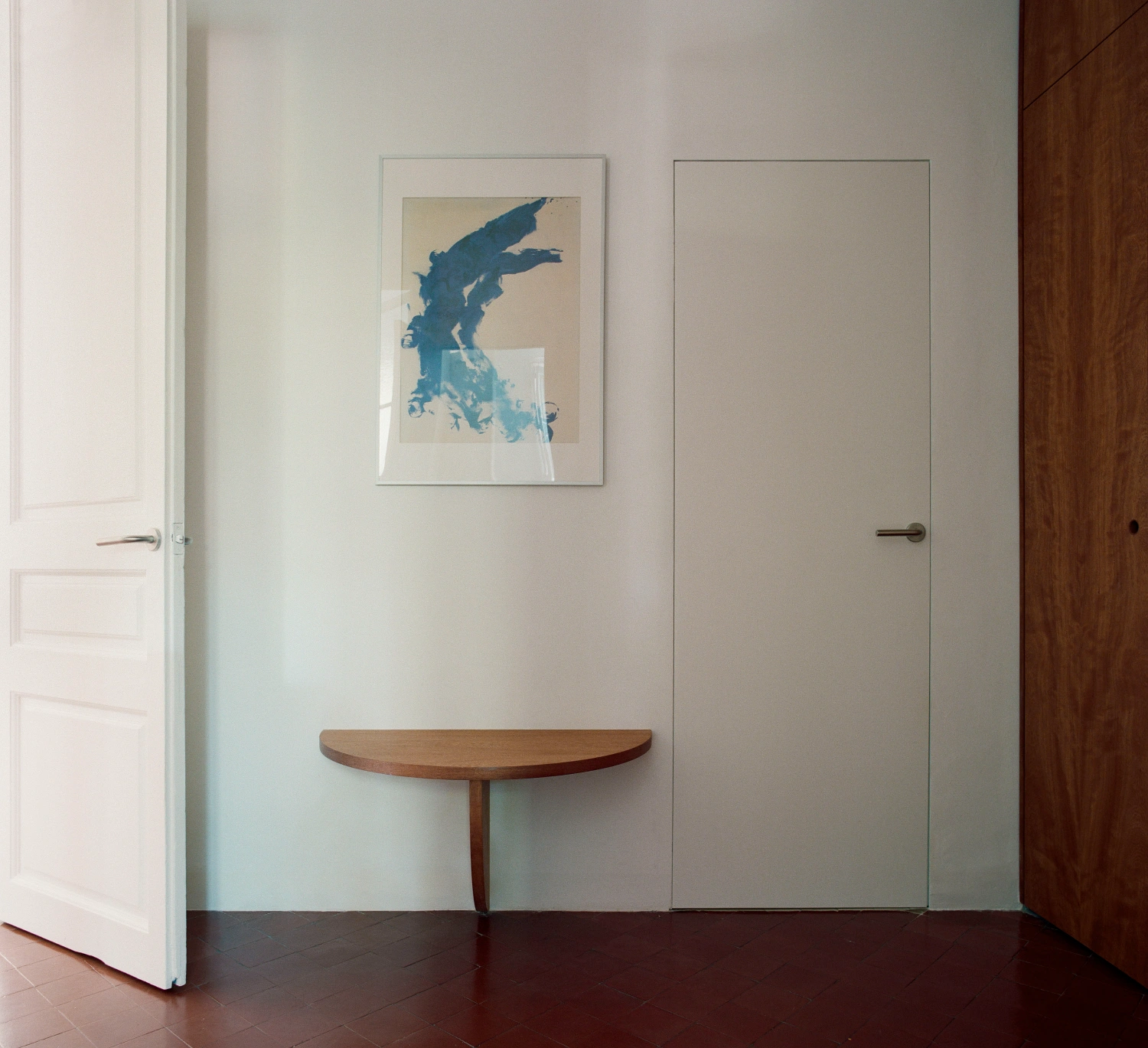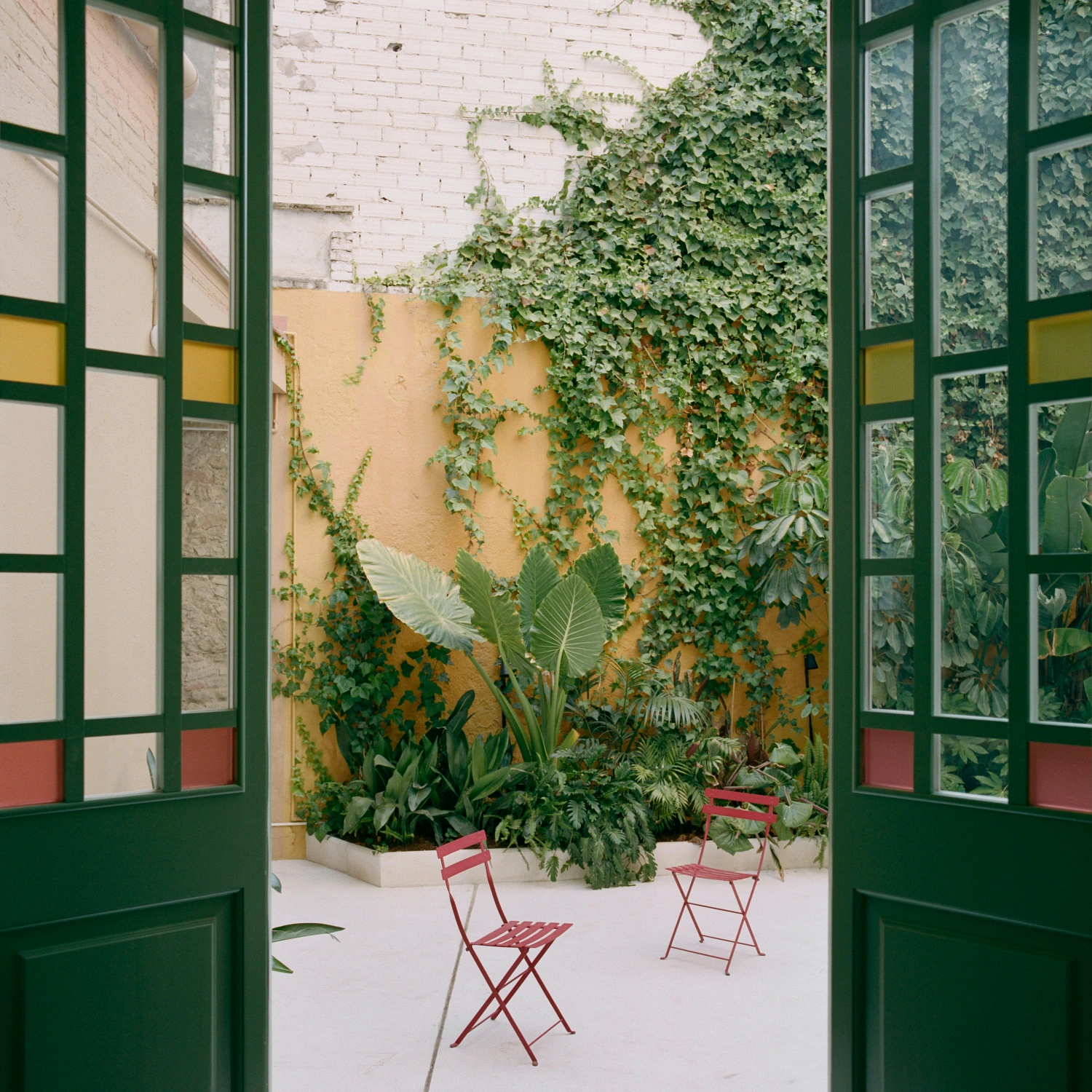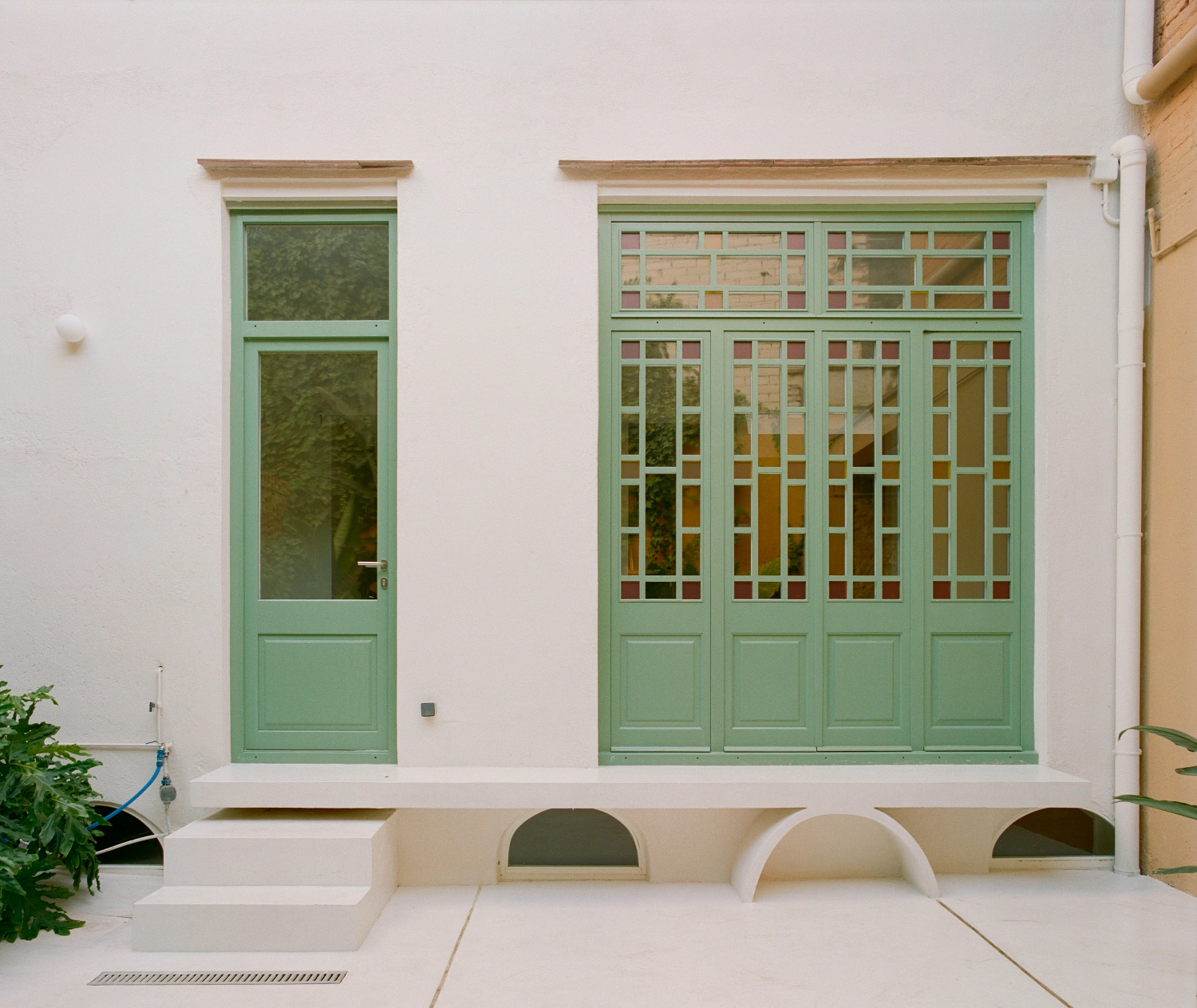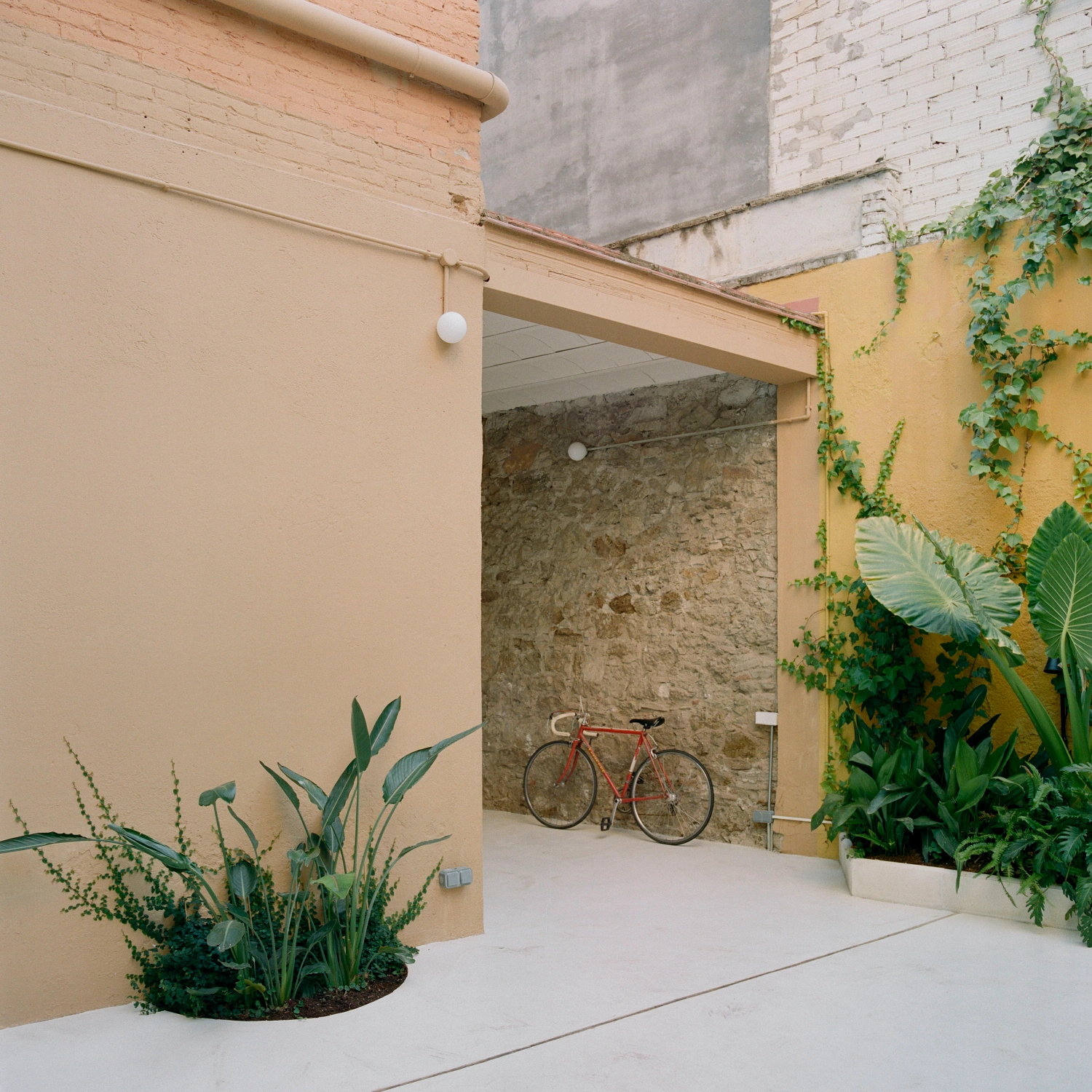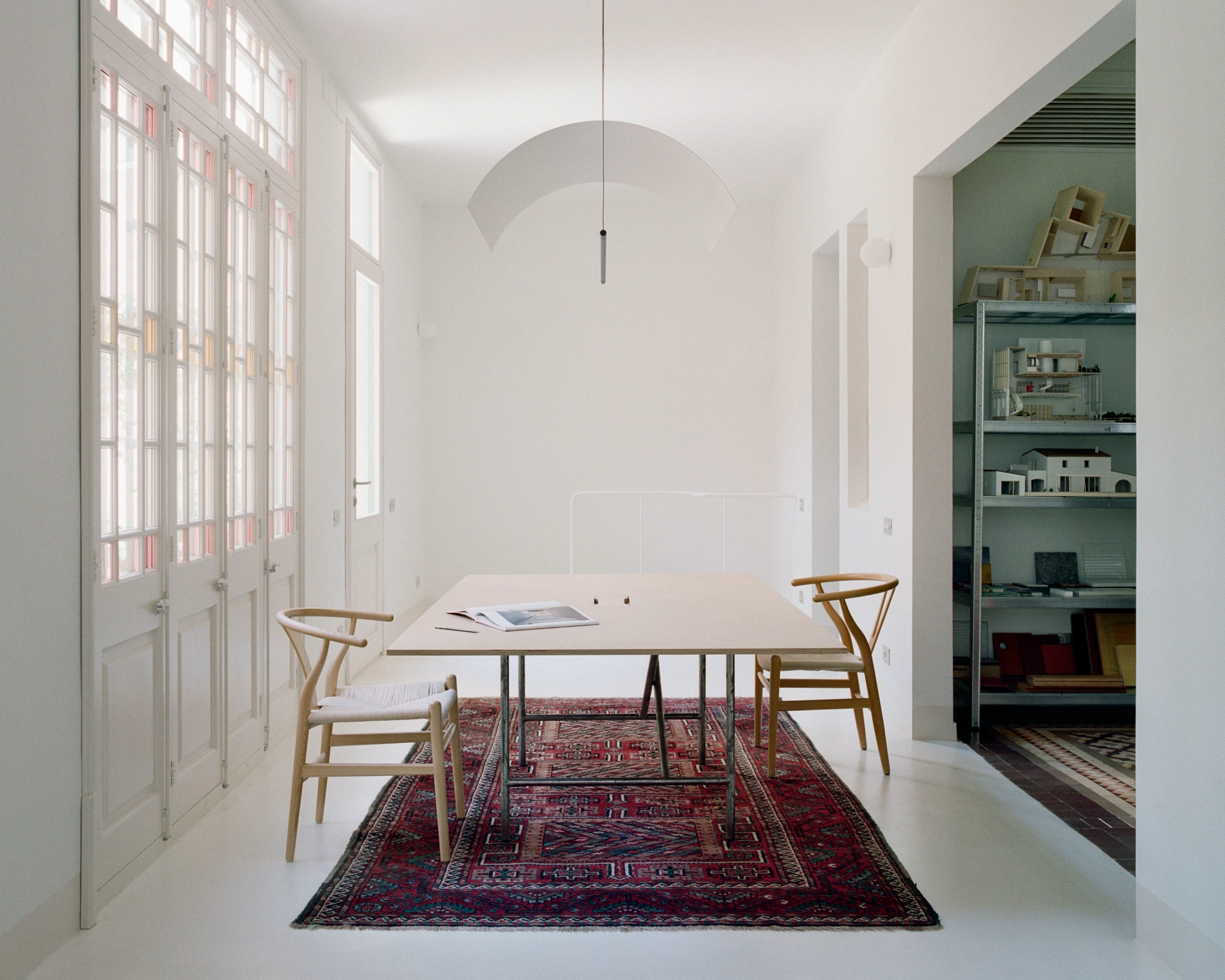
Aramé Studio’s renovation of the early-20th-century Casa Jaume Bach Esteve in Poblenou, Barcelona operates with a kind of calibrated restraint, allowing the existing bones of the 1903 structure to hold their presence while introducing an unexpectedly precise contemporary vocabulary.
The home, once two separate apartments, is now conceived as a continuous, fluid organism: a space where circulation replaces hierarchy and where furniture becomes an architectural tool rather than a decorative afterthought.
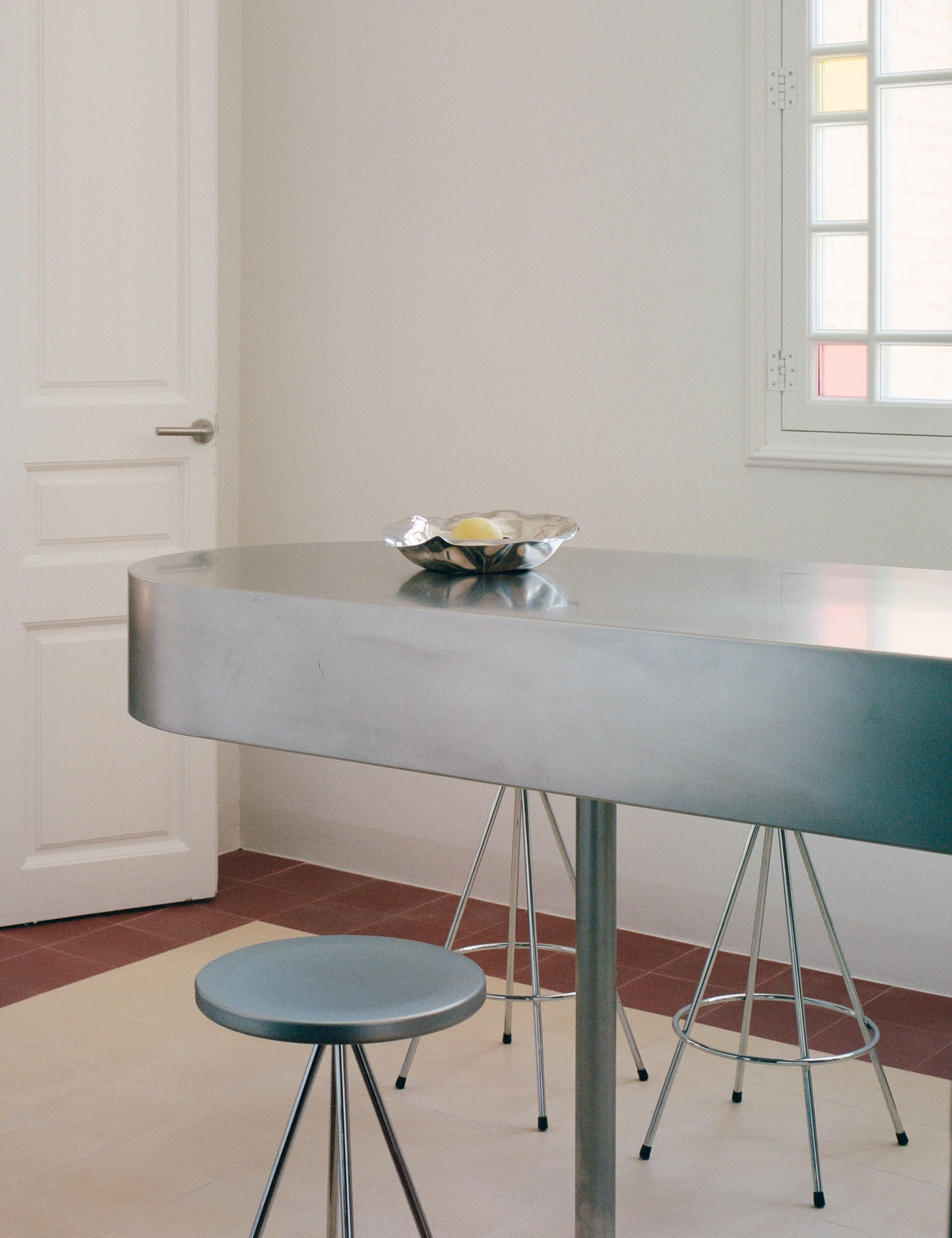
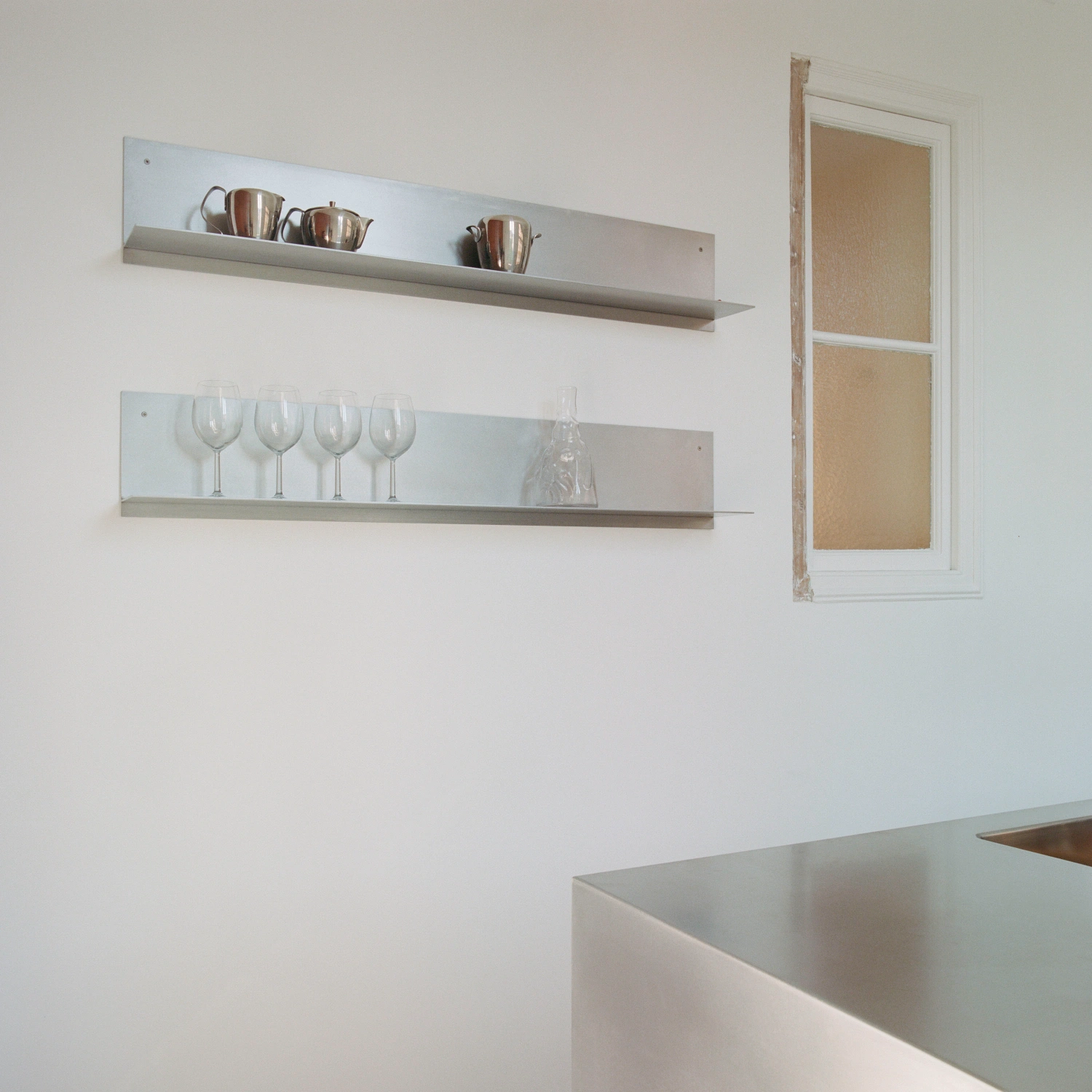
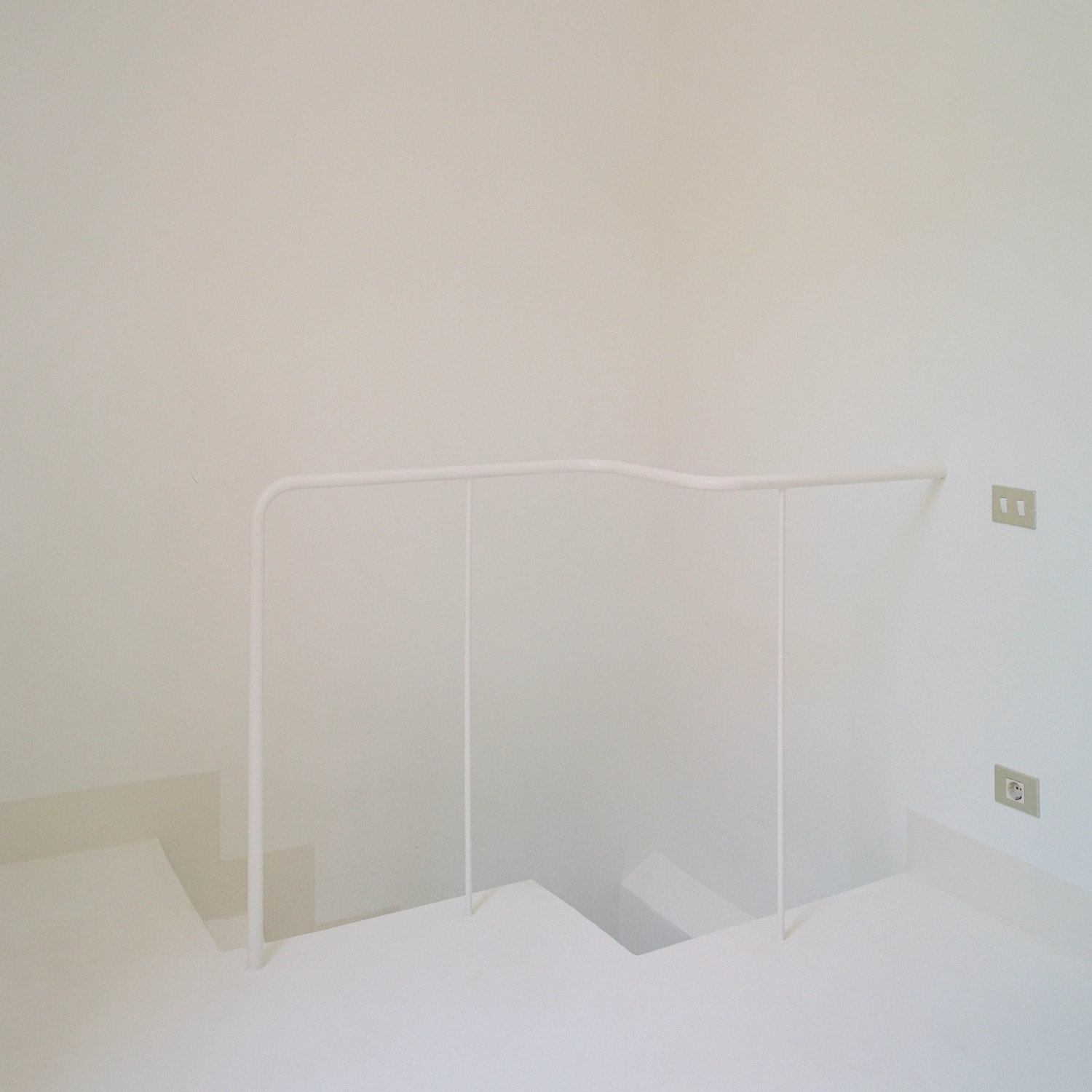
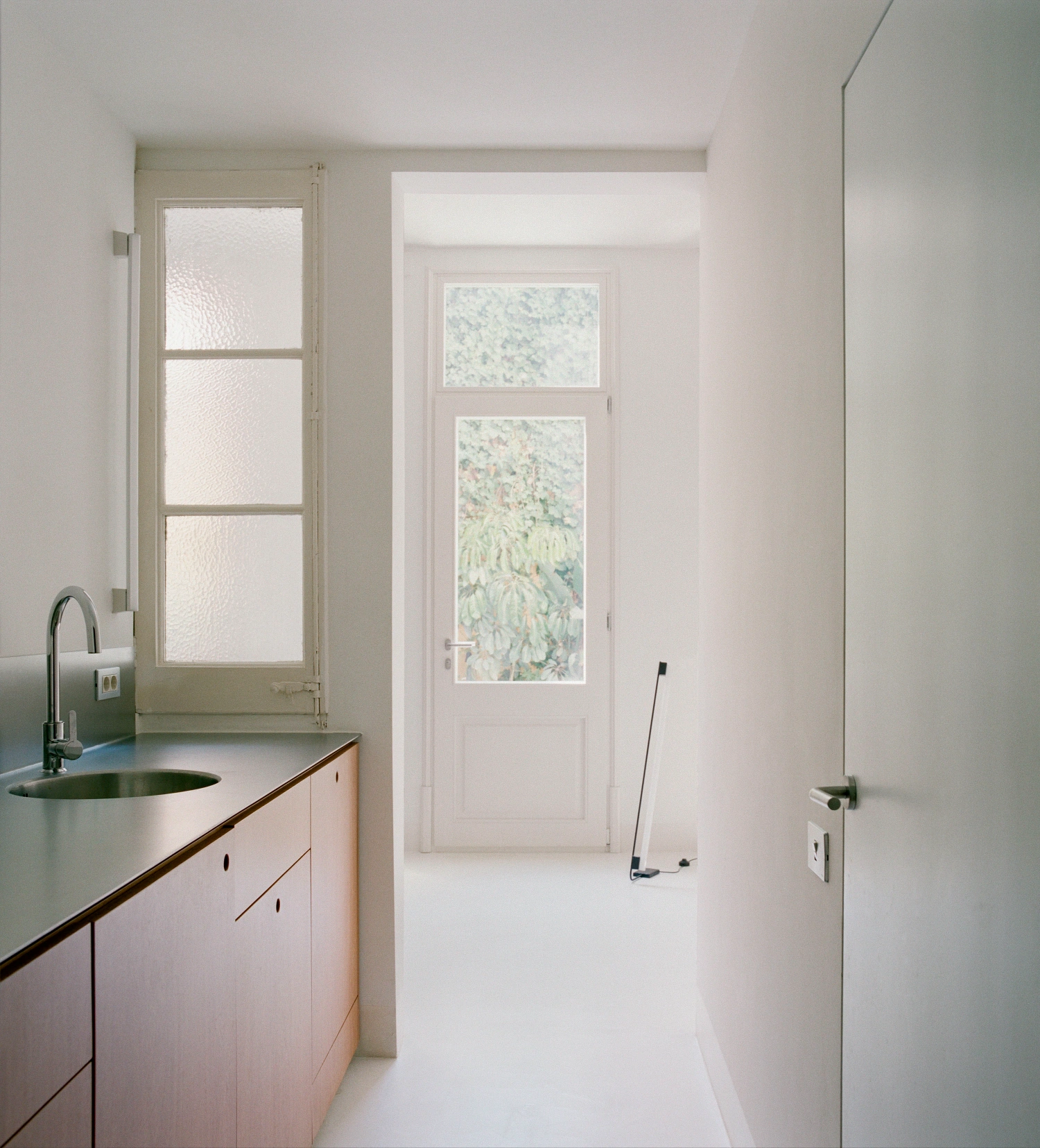
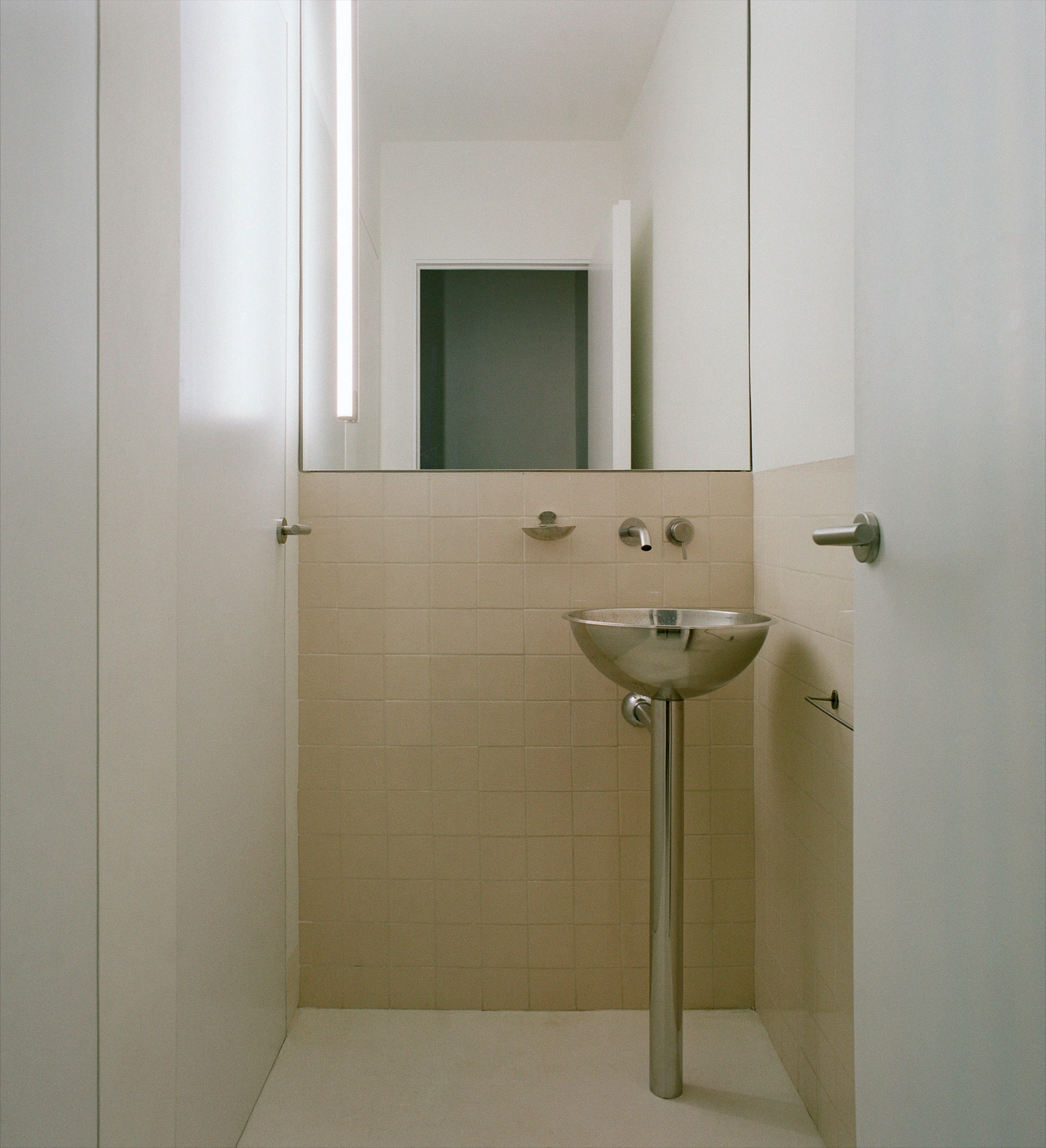
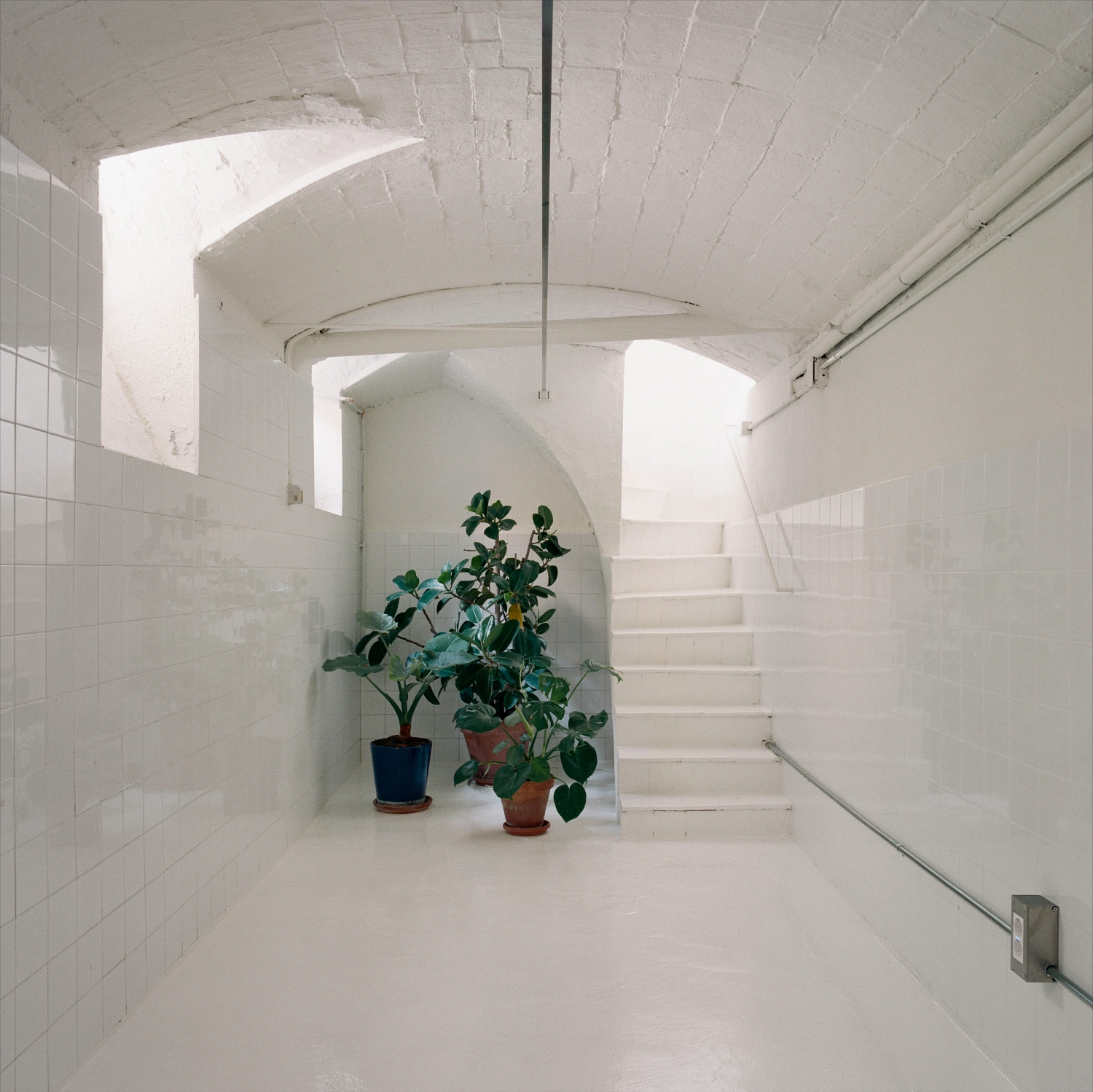
Throughout the upper living spaces, the studio composes a sequence of quietly charged moments. Stainless-steel surfaces and custom fixtures stretch into the rooms like sculptural interventions, their industrial sheen amplified by the soft, colored refractions from the restored window panes. The long, aerodynamic kitchen island feels almost infrastructural, a piece of domestic engineering that anchors the interior without weighing it down. In contrast, the whitewashed vaults of the stairwell and the silent generosity of the landing produce a monastic lightness, as if the house were inhaling between rooms.
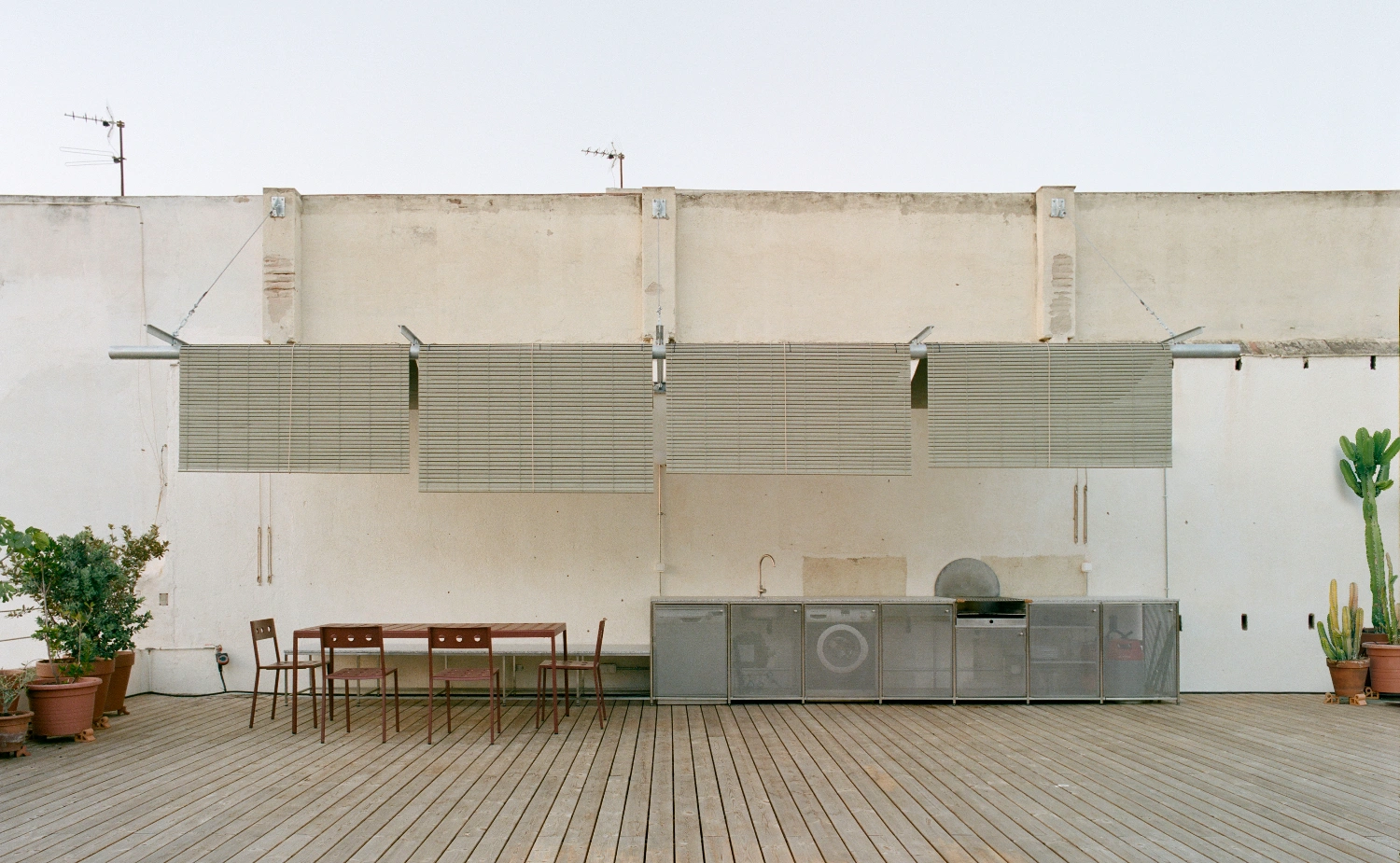
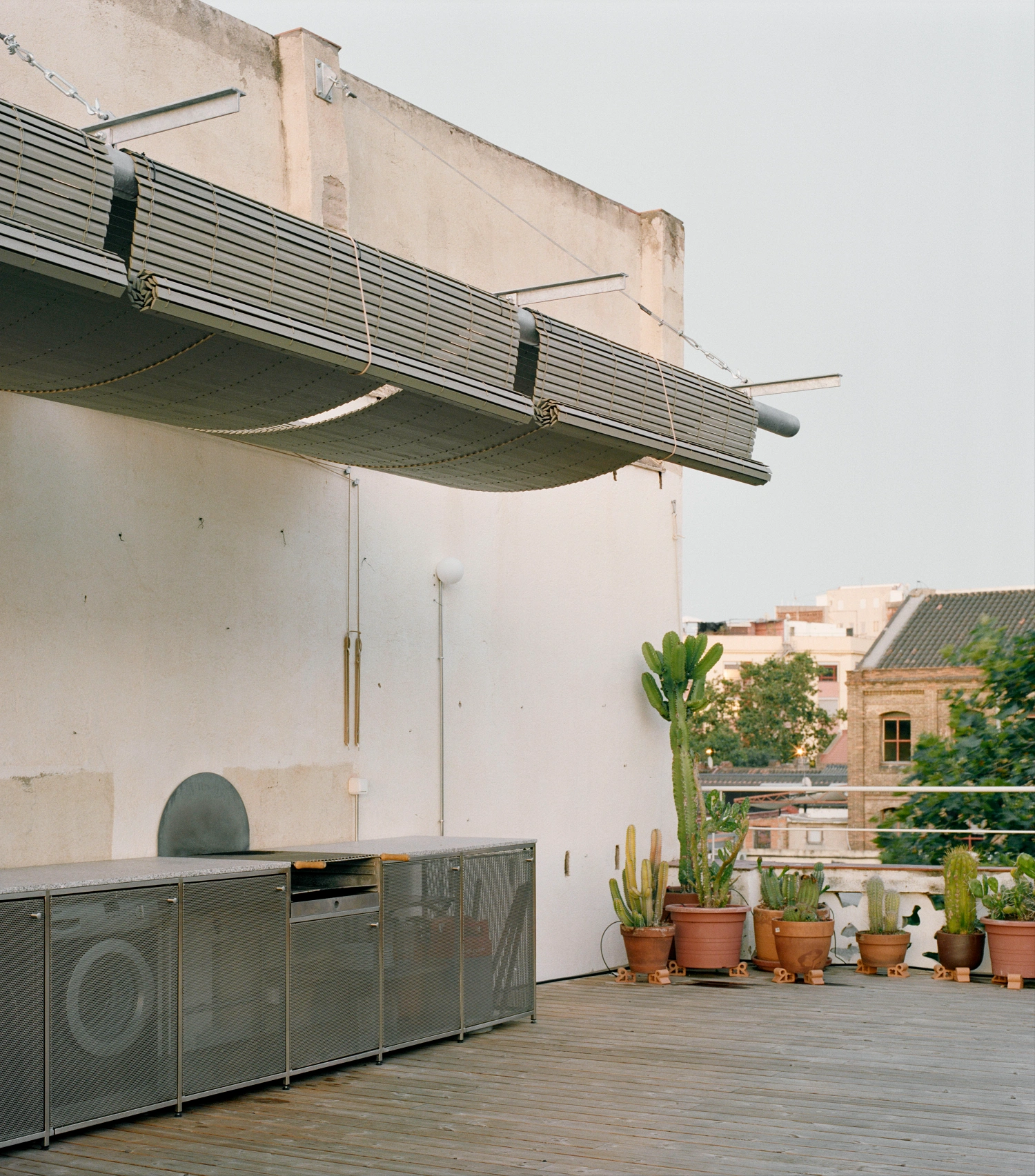
The outdoor terrace extends the project’s logic of functional minimalism. A slender line of cabinetry sits against the raw wall, partially veiled by adjustable blinds that form a kinetic façade. This interplay of exposure and privacy echoes the project’s overarching theme: old masonry and new insertions cohabiting in near-symbiotic tension. Even the smallest decisions—an exposed conduit, a precisely bent handrail, a basin supported by a single column—signal an aesthetic that favors clarity over spectacle.
Aramé Studio threads a contemporary language through the building’s historical memory, creating a home that feels both anchored and newly unbound. LL731 becomes less a renovation than a re-articulation: a re-tuning of space where each room learns to speak again.