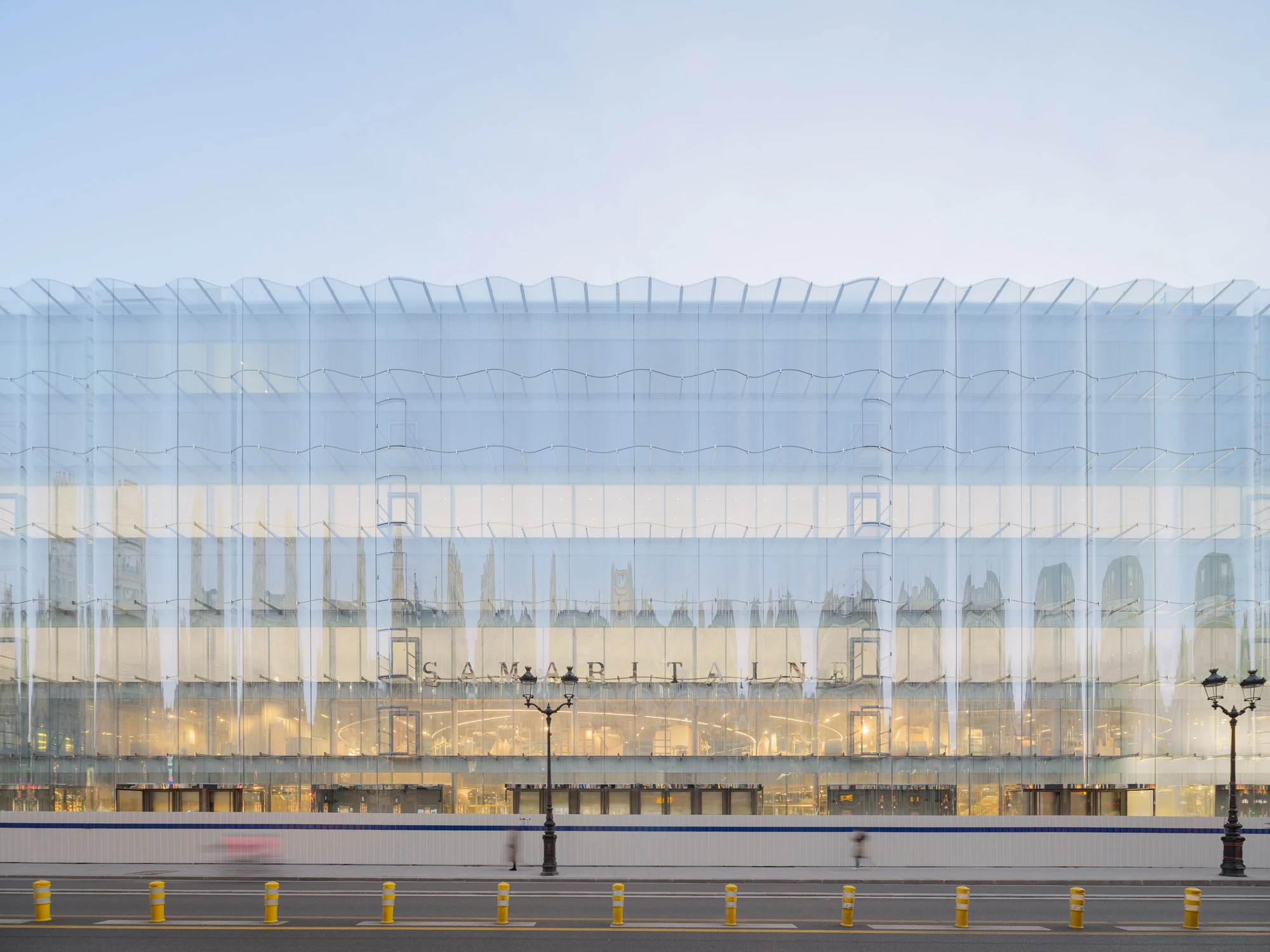
Between the Rue de Rivoli and the Seine in Paris, SANAA reworks La Samaritaine, threading a public passage through the old Grand magasin behind a facade of soft, undulating glass.
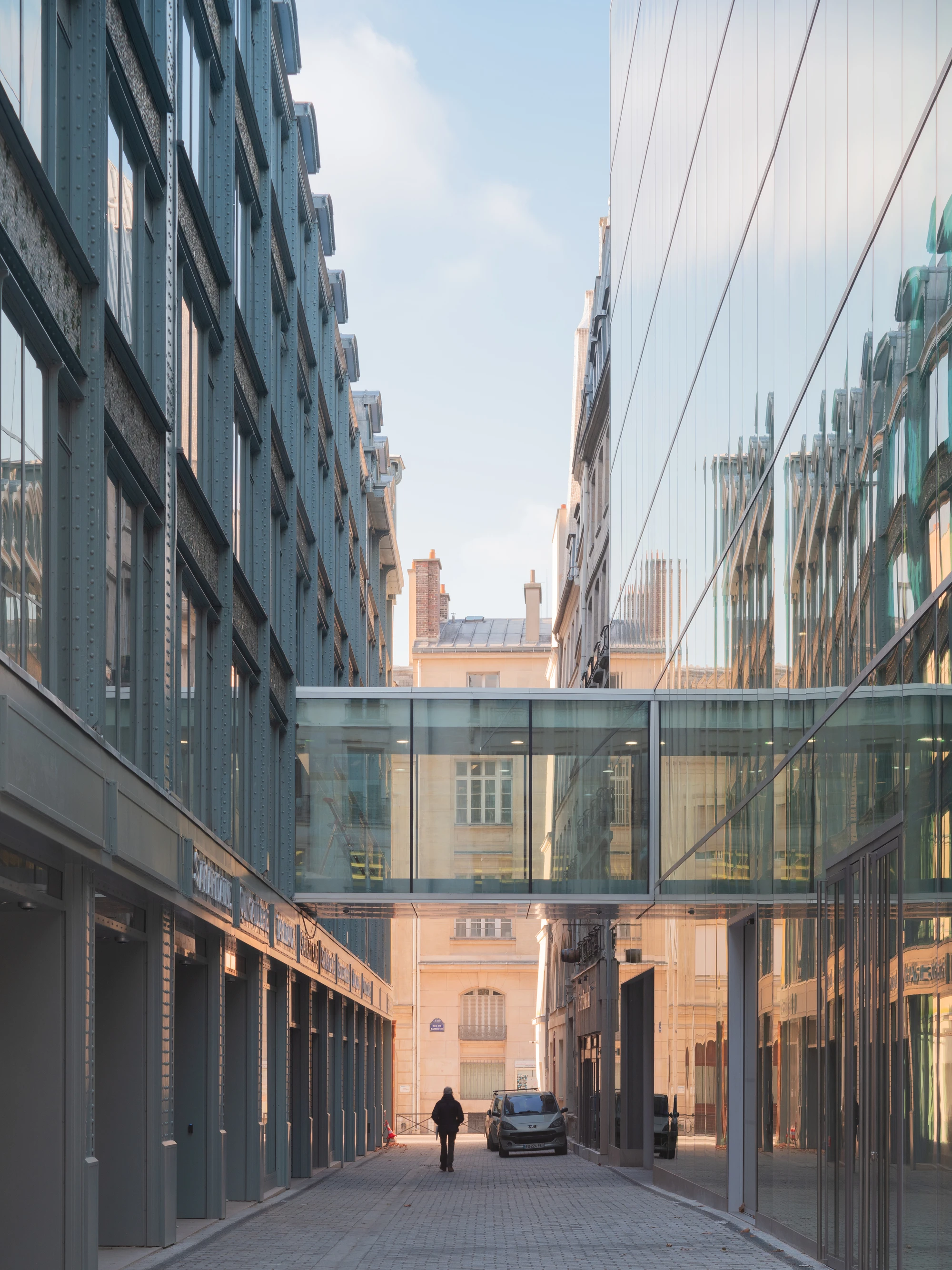
La Samaritaine has stood on the Right Bank since the late 19th century, a Grand magasin whose footprint runs the full block from the Rue de Rivoli to the Quai du Louvre, overlooking the Seine. SANAA treats the site less as a single building than as a piece of the city. The design cuts a new street through its length, the passage de La Samaritaine, lined with shops and social uses and open along its route to the sky.
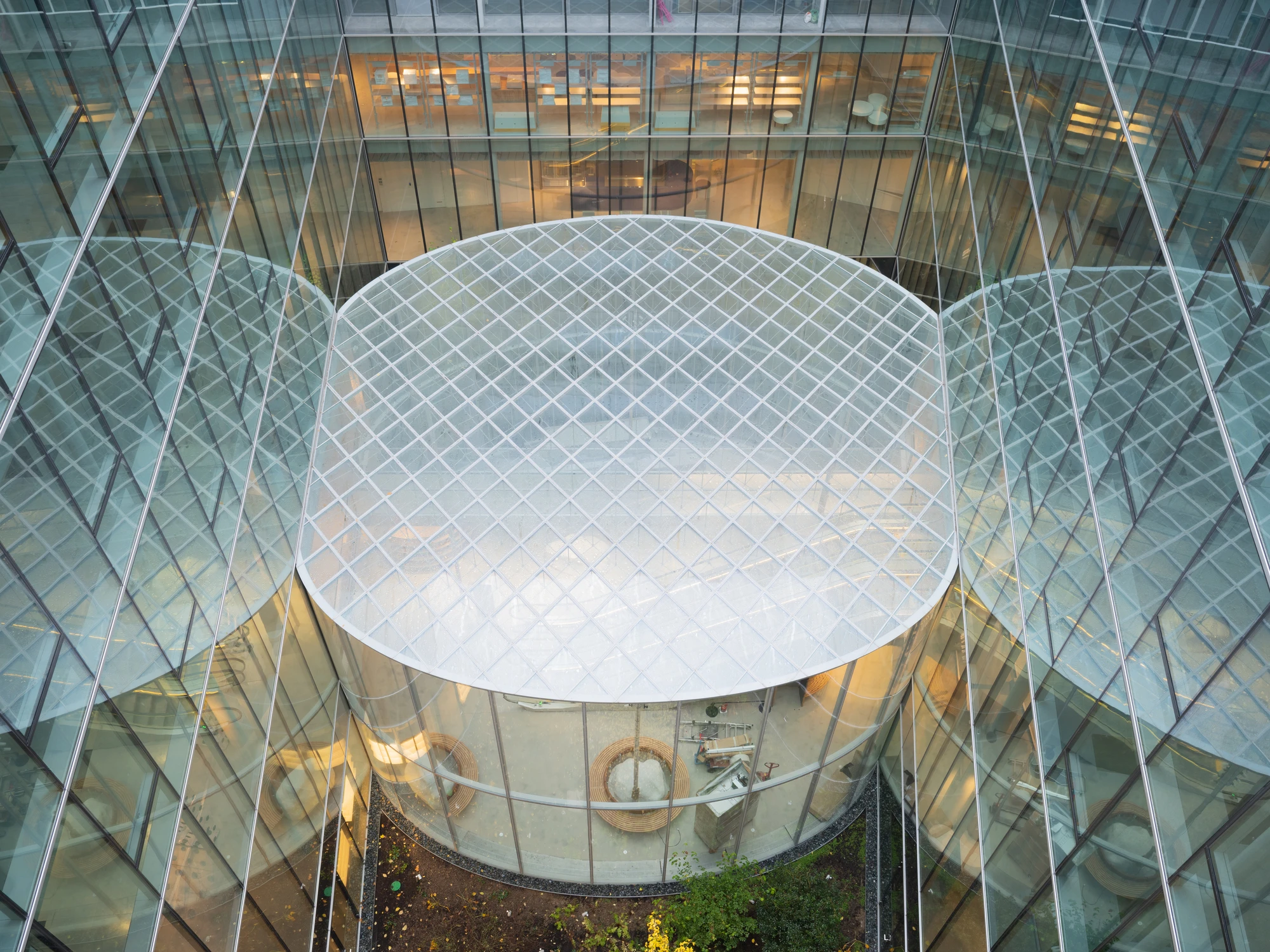
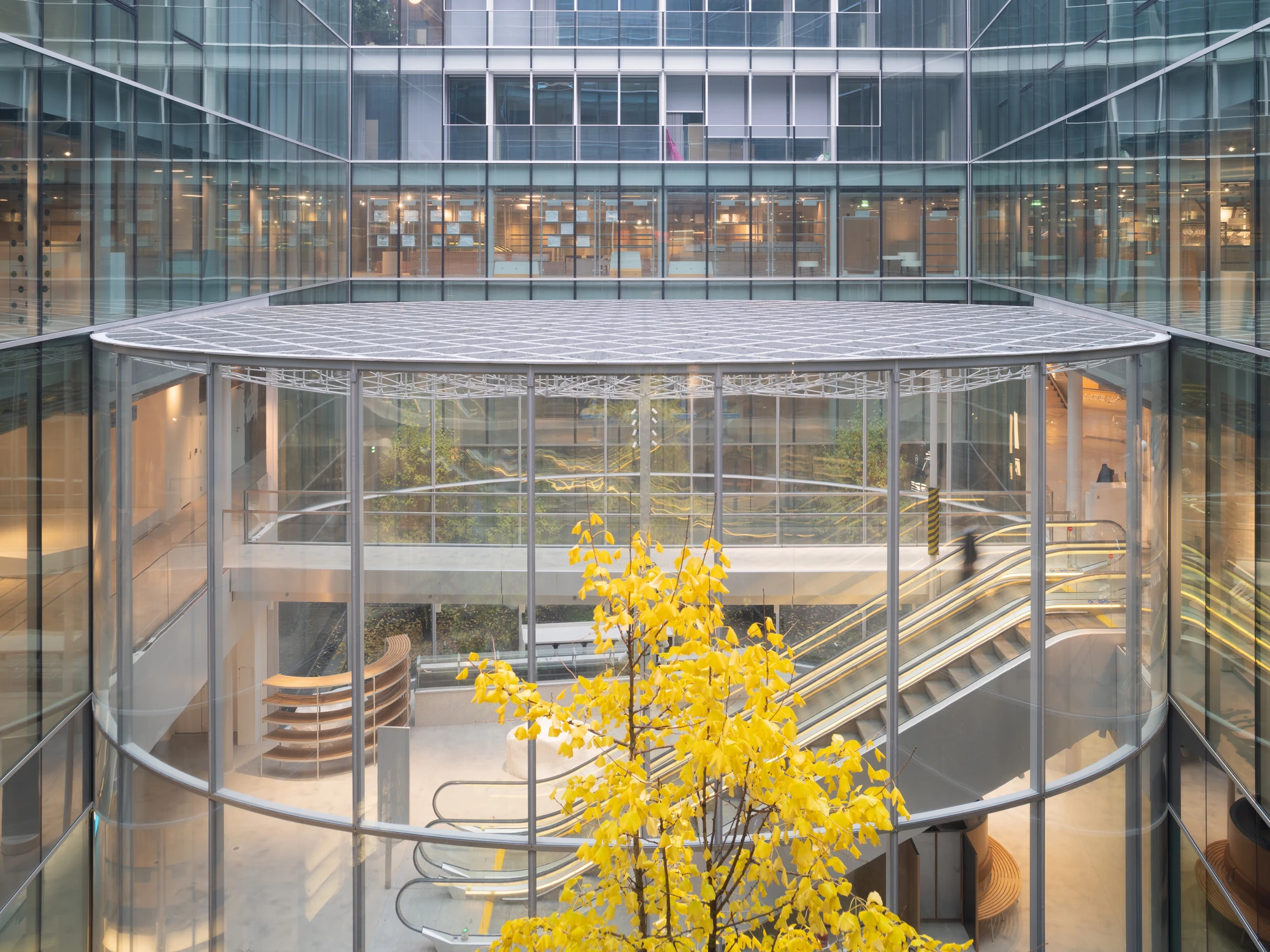
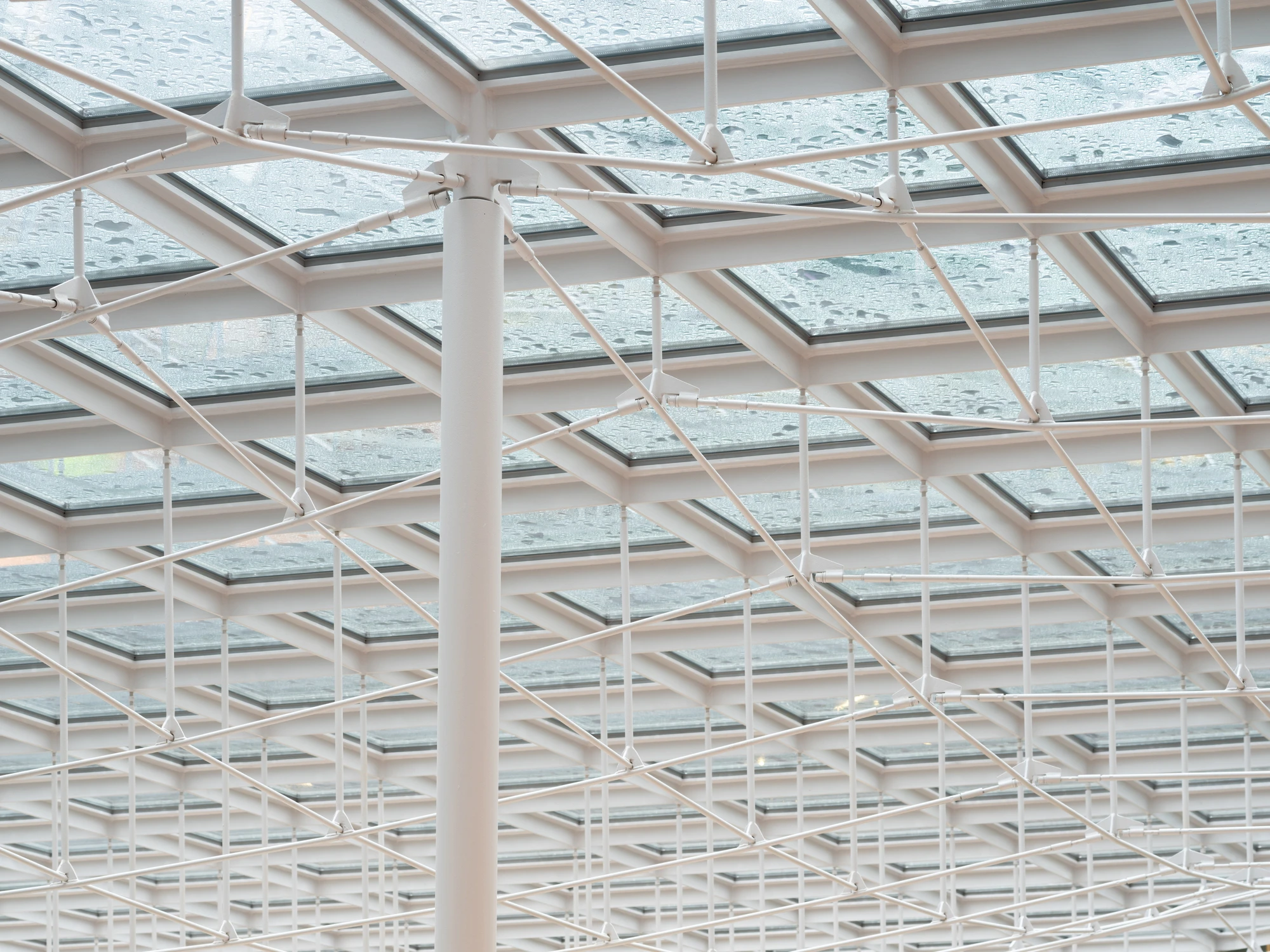
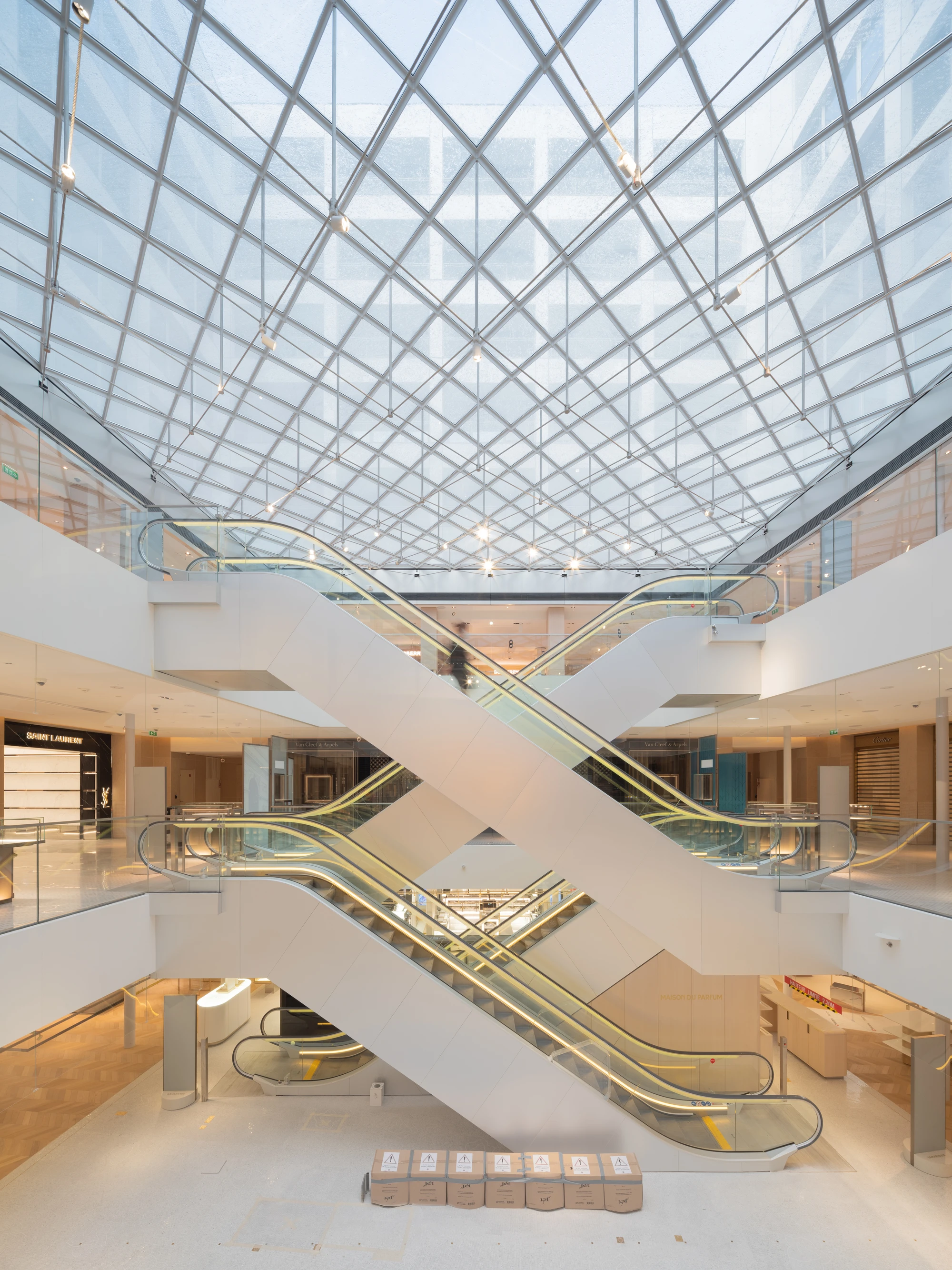
The passage links three full-height courtyards, one inherited and two carved from the existing structure. Each is worked differently, so that crossing the block becomes a sequence of covered rooms and openings to daylight. One is a glass cylinder wrapped in a fine steel net, a ginkgo rising at its base and spiral escalators turning around it. Another sits under a diagonal grid of glazing, its escalators scissoring in an X beneath white steel trusses.
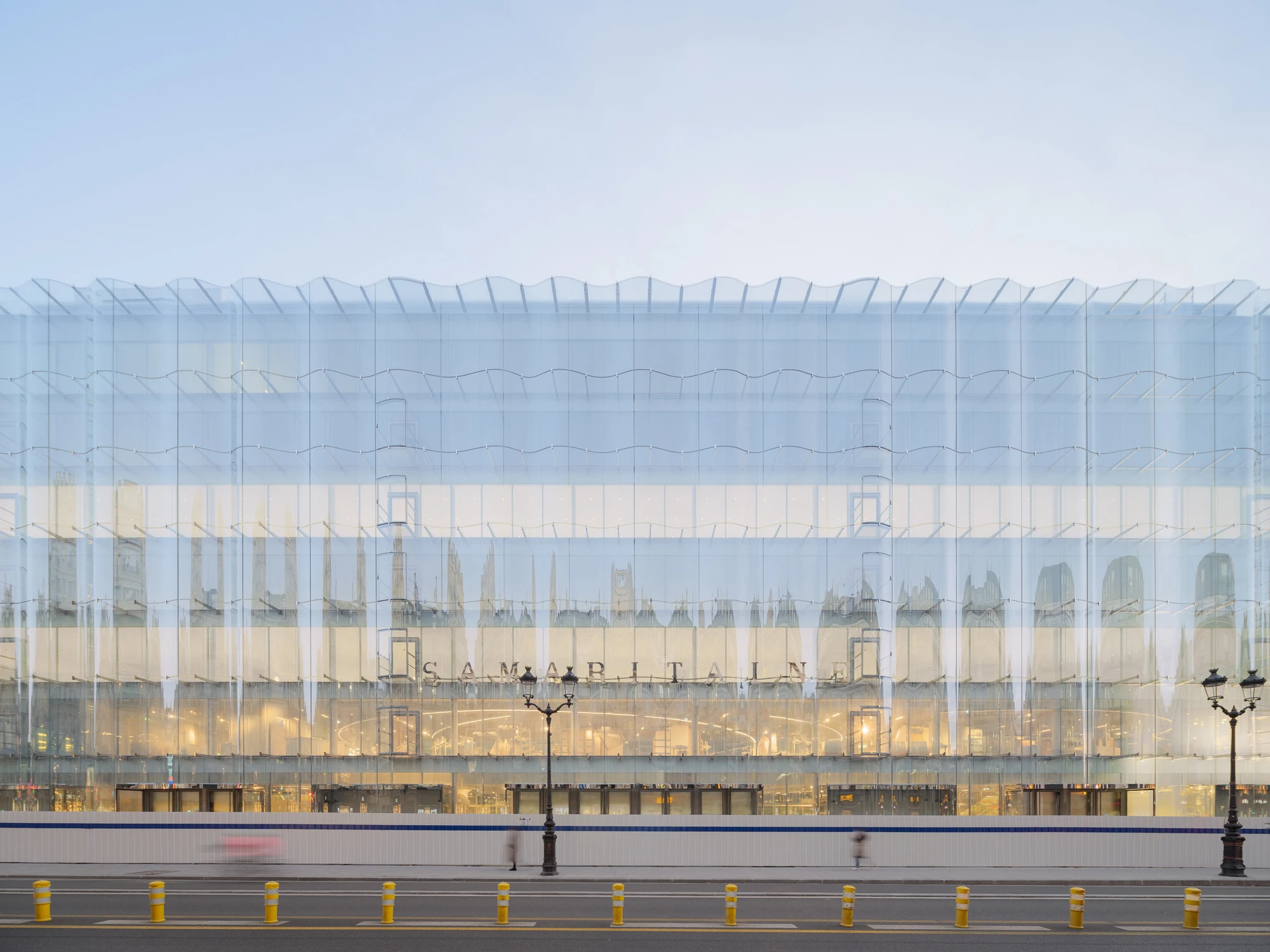
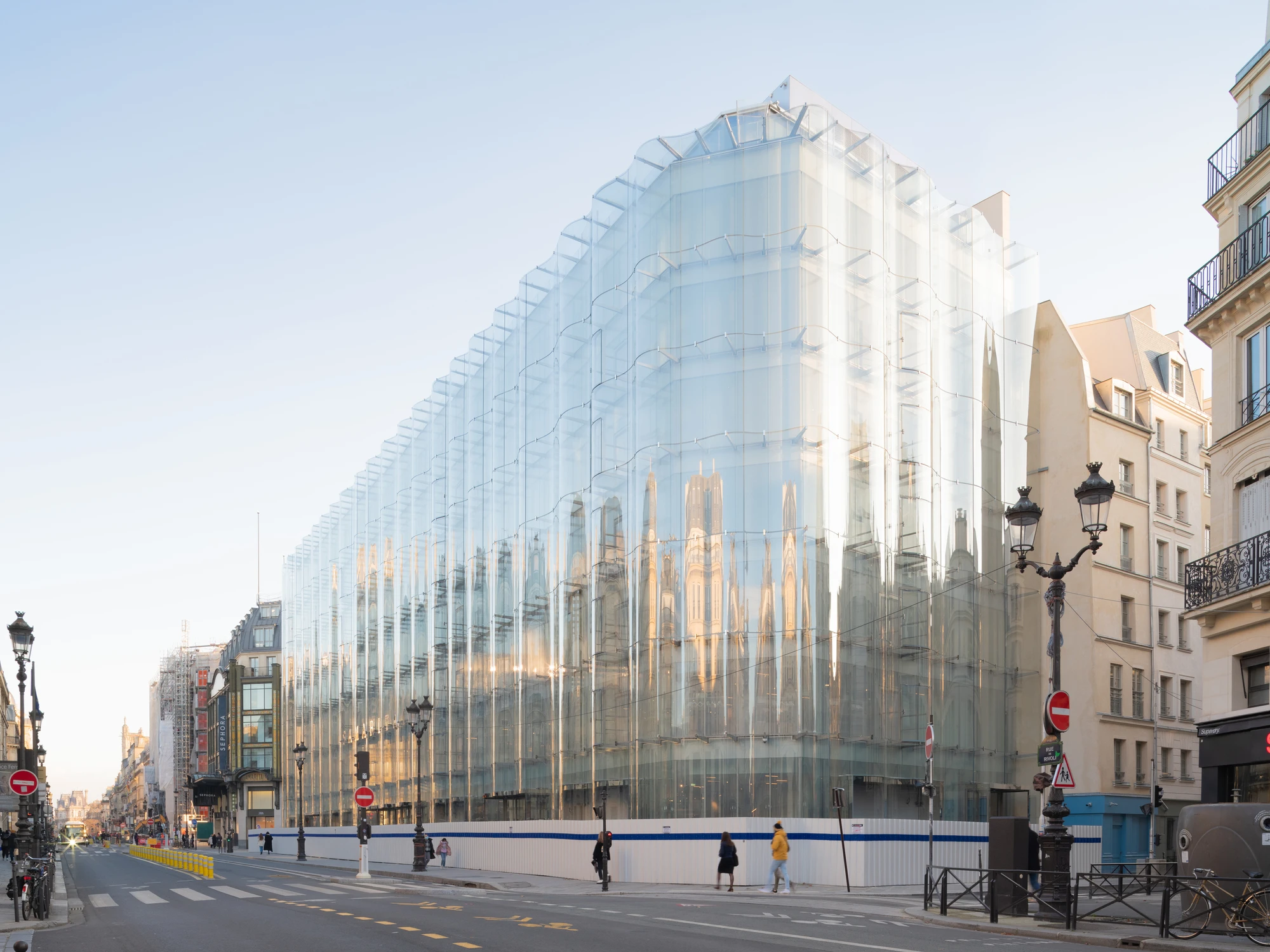
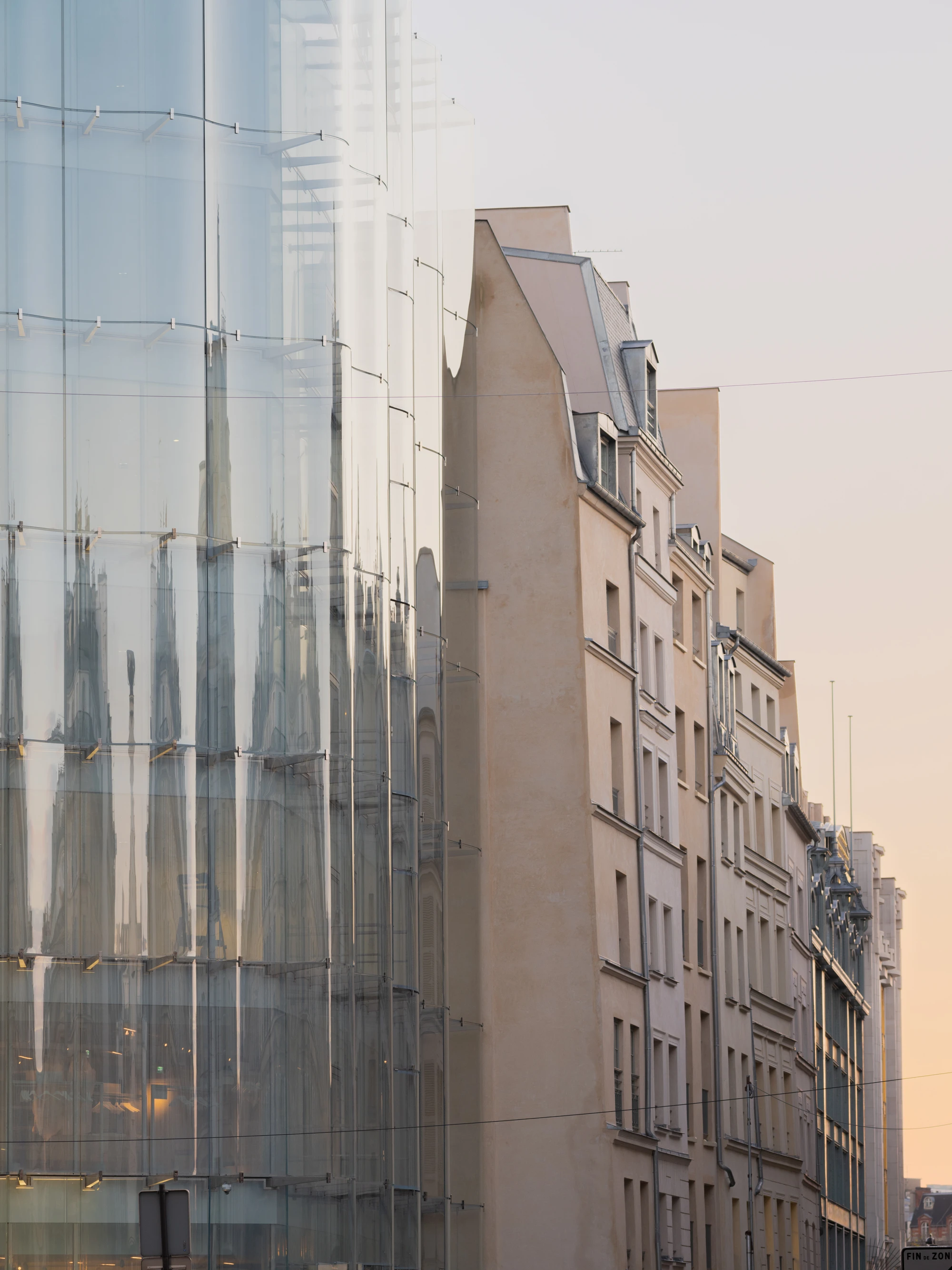
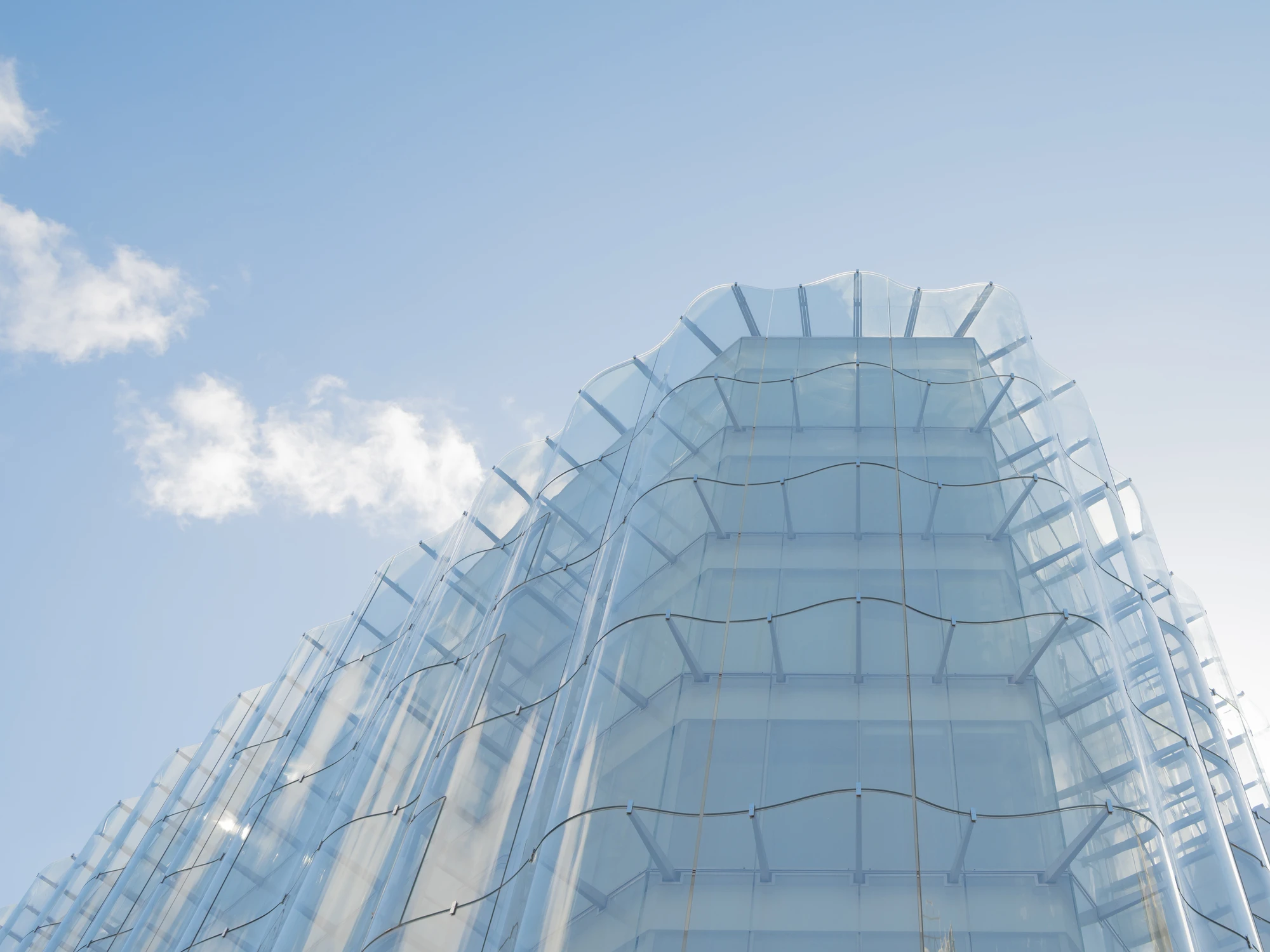
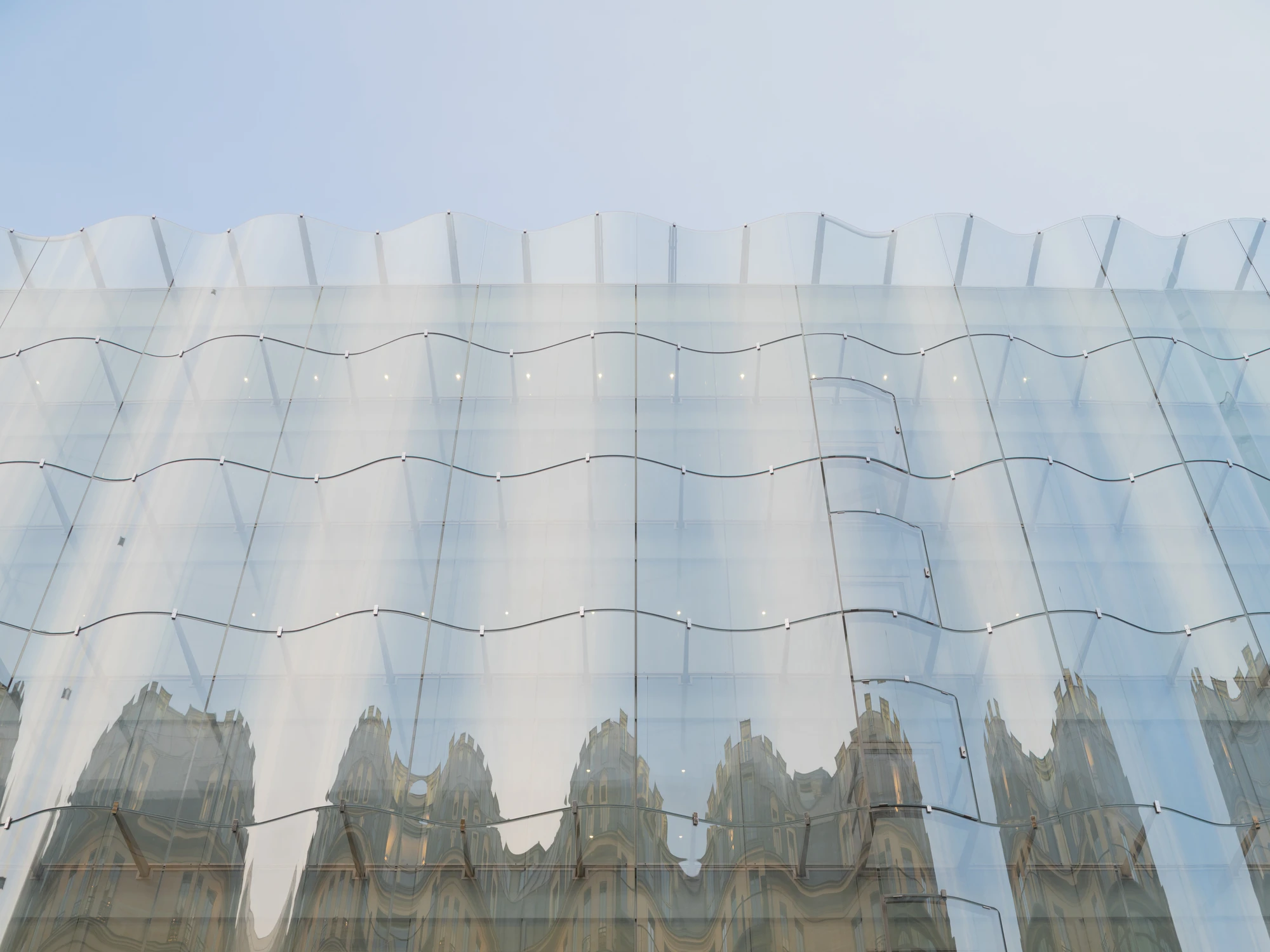
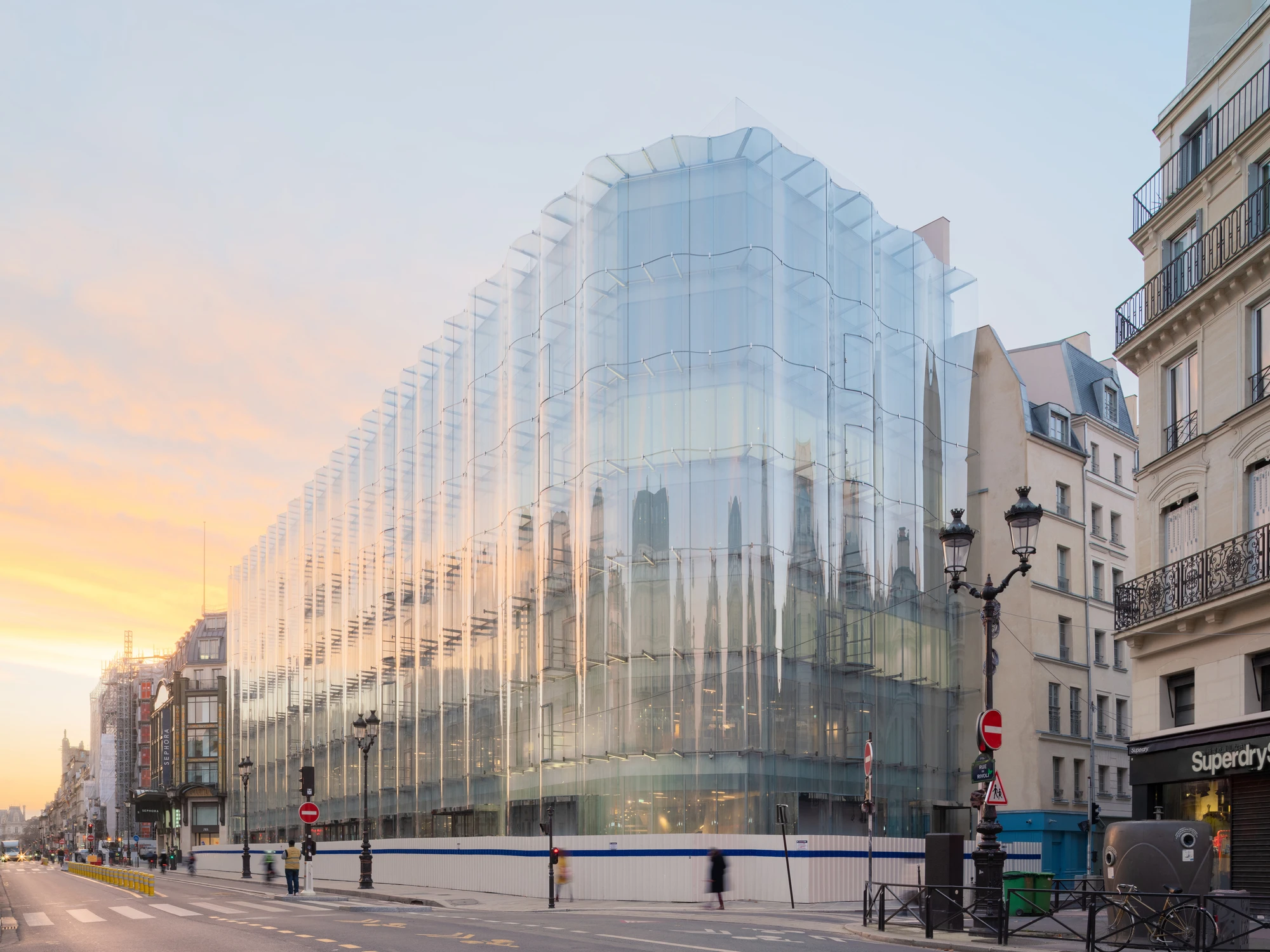
The face SANAA gives to the Rue de Rivoli is the project's most argued gesture. A curtain of glass runs the length of the street, each pane bent into a shallow vertical wave so the whole surface ripples. The undulation is not decoration. Its rhythm and height track the window bays of the Haussmann blocks on either side, and the glass catches their cream stone and cast-iron balconies, folding the old street into a soft, moving reflection. From the corner the building reads as a single translucent wedge. Up close the panes reveal their steel clips and the horizontal cables that hold the wave in tension.
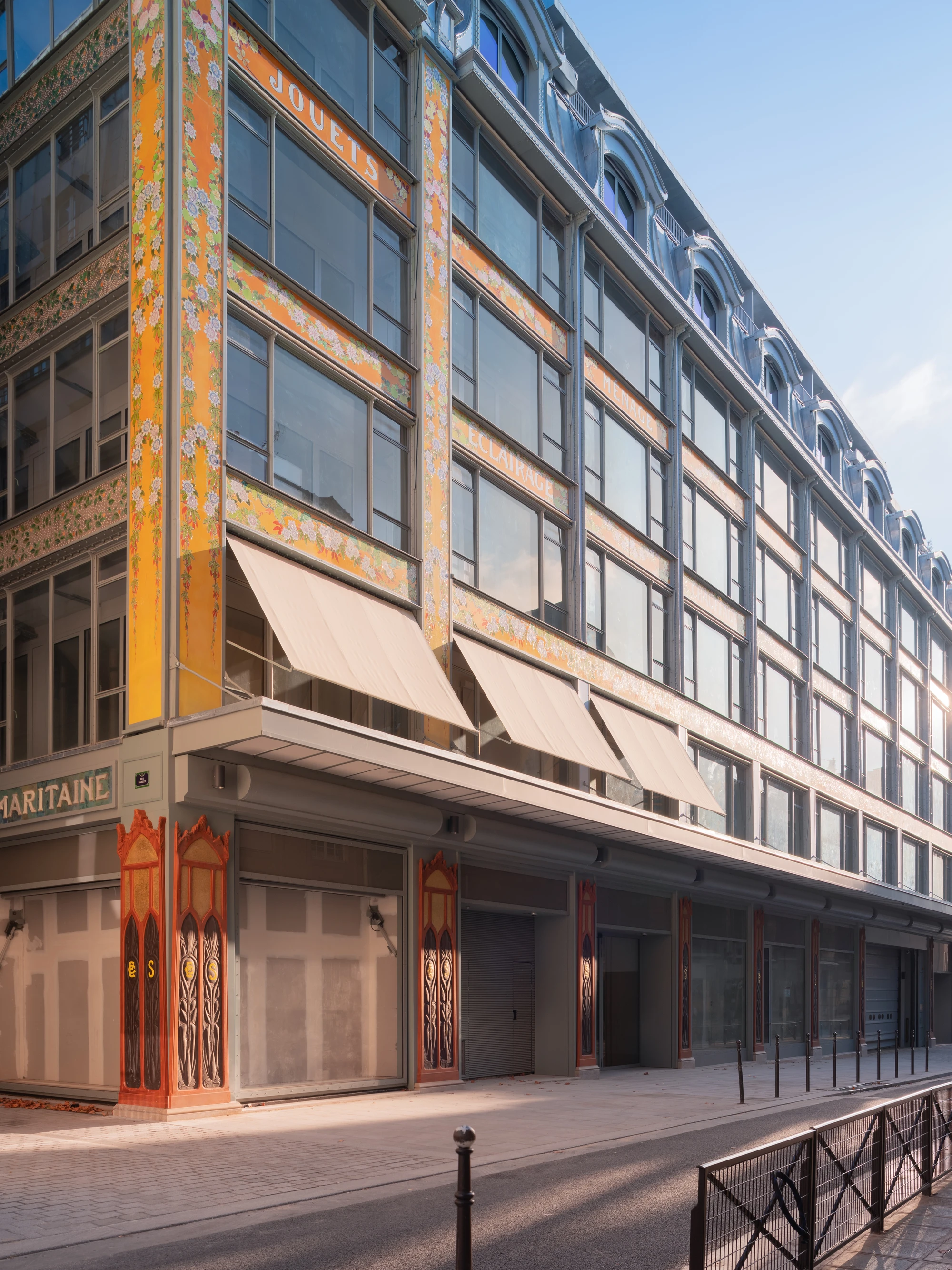
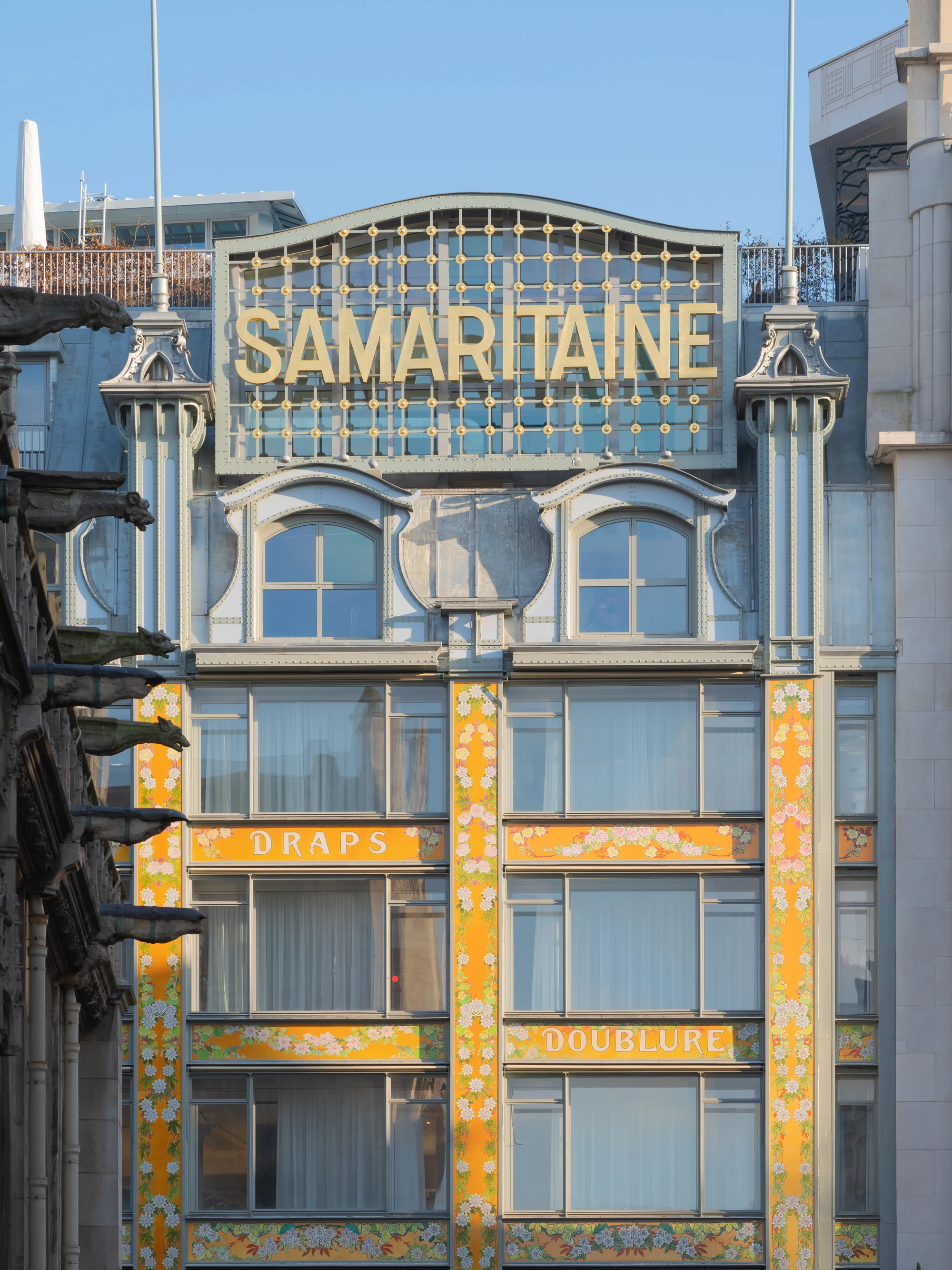
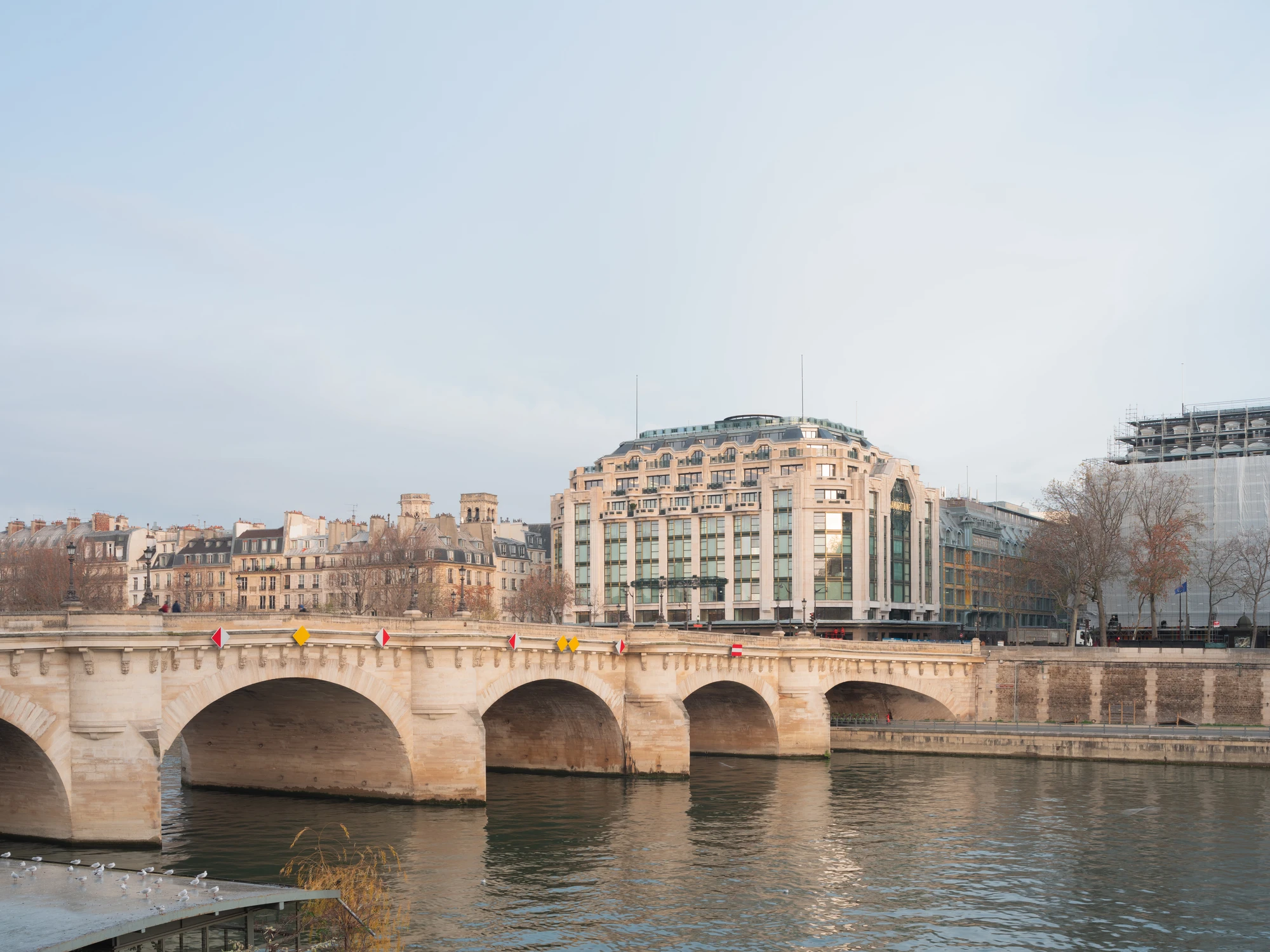
On the Seine, the older order is left to speak. Henri Sauvage's stone frontage on the Quai du Louvre keeps its Art Deco weight, and around the corner the enamelled floral panels and gilt lettering of the historic shopfront, DRAPS, DOUBLURE, JOUETS, have been cleaned back to their original colour. The passage becomes the hinge between these two registers, the printed glass of Rivoli at one end and the worked stone of the river at the other.
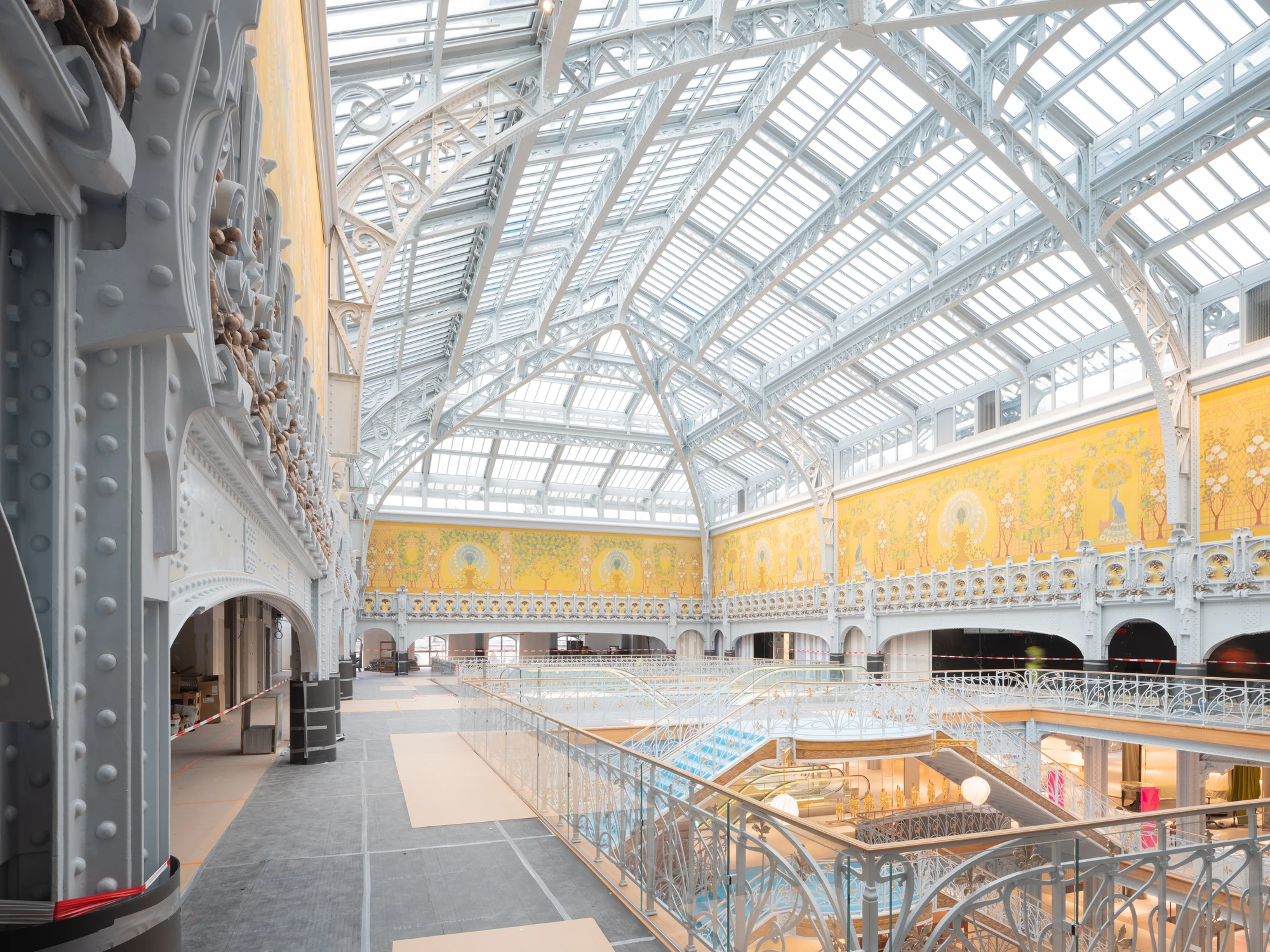
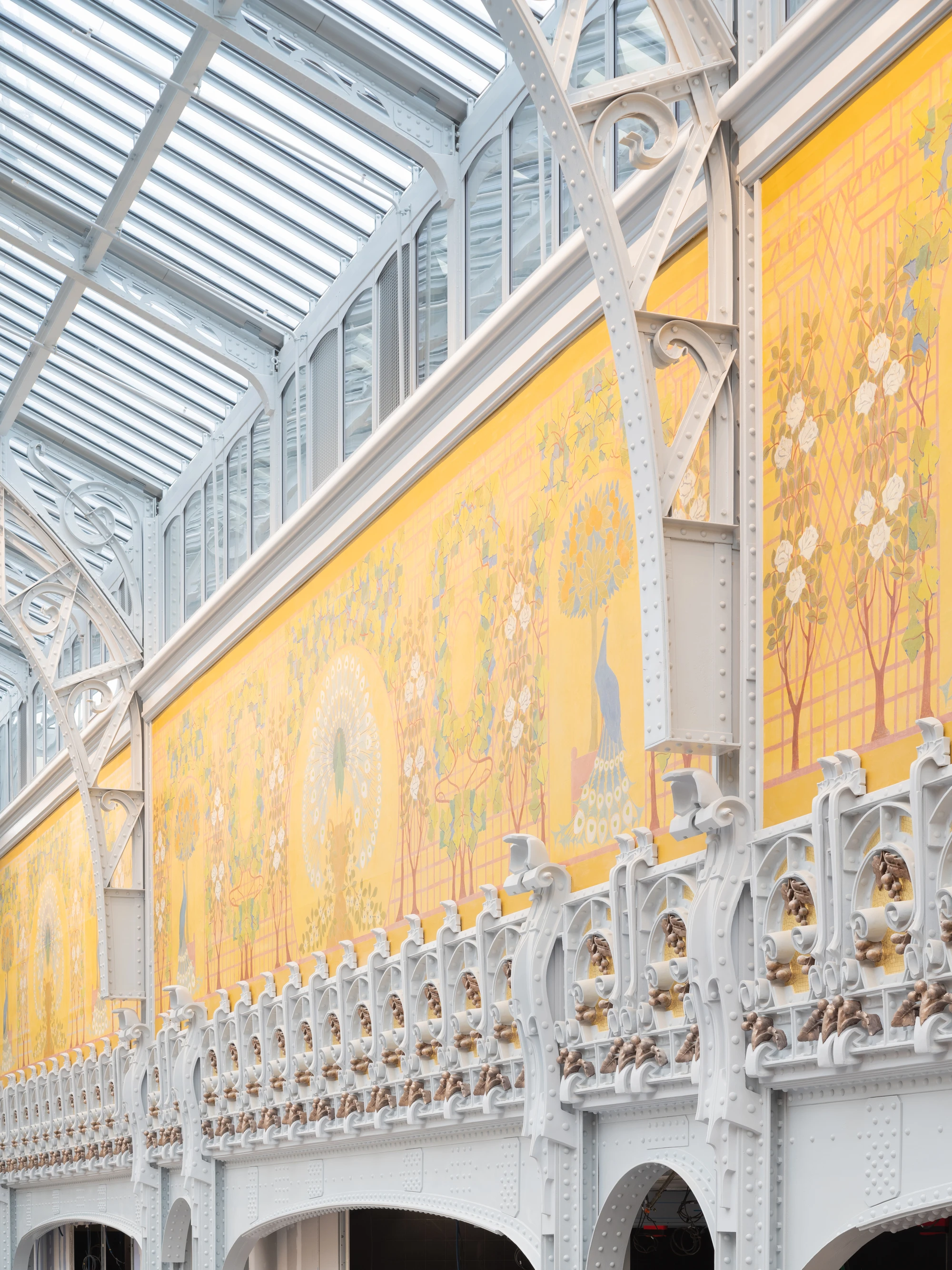
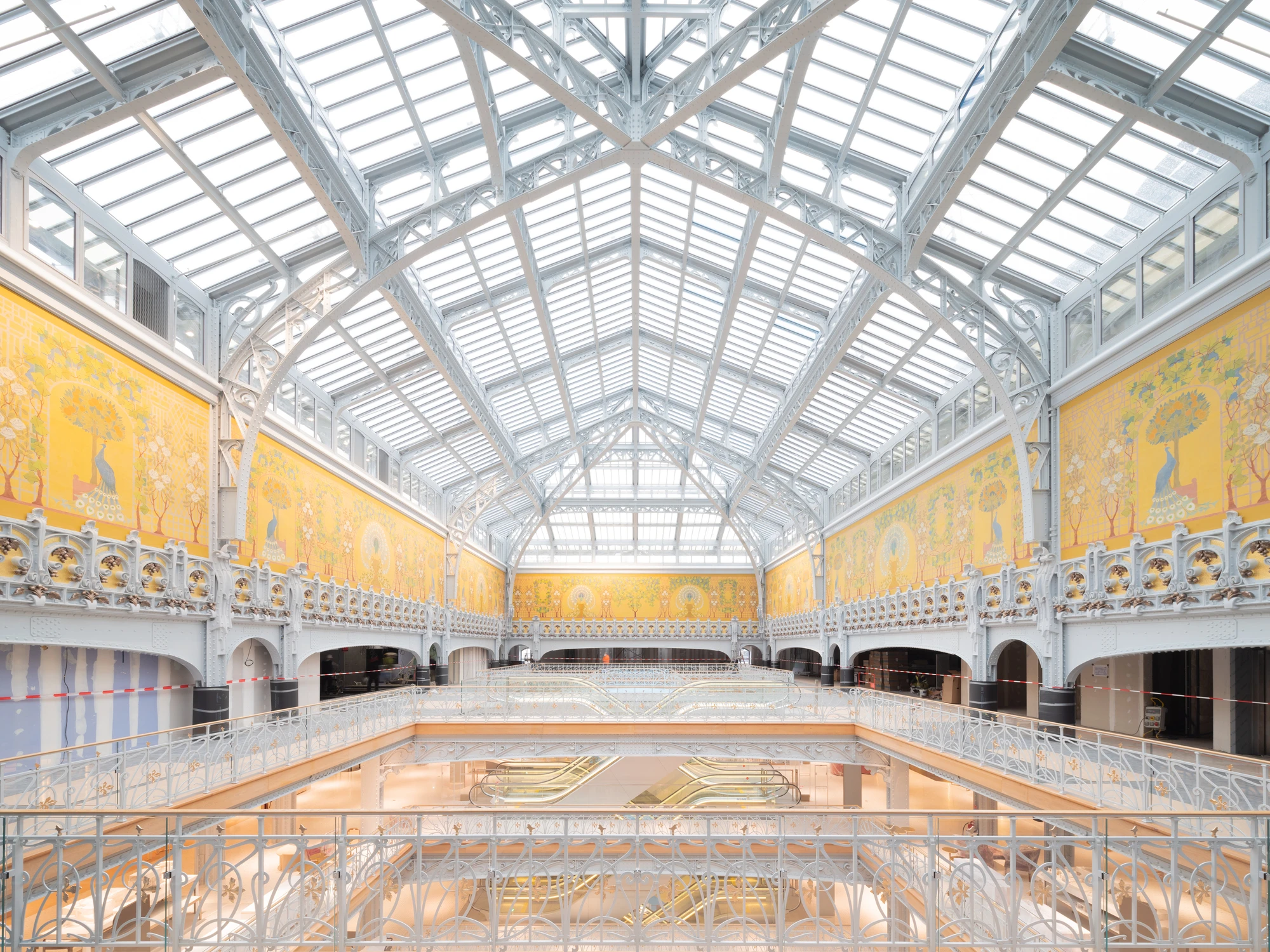
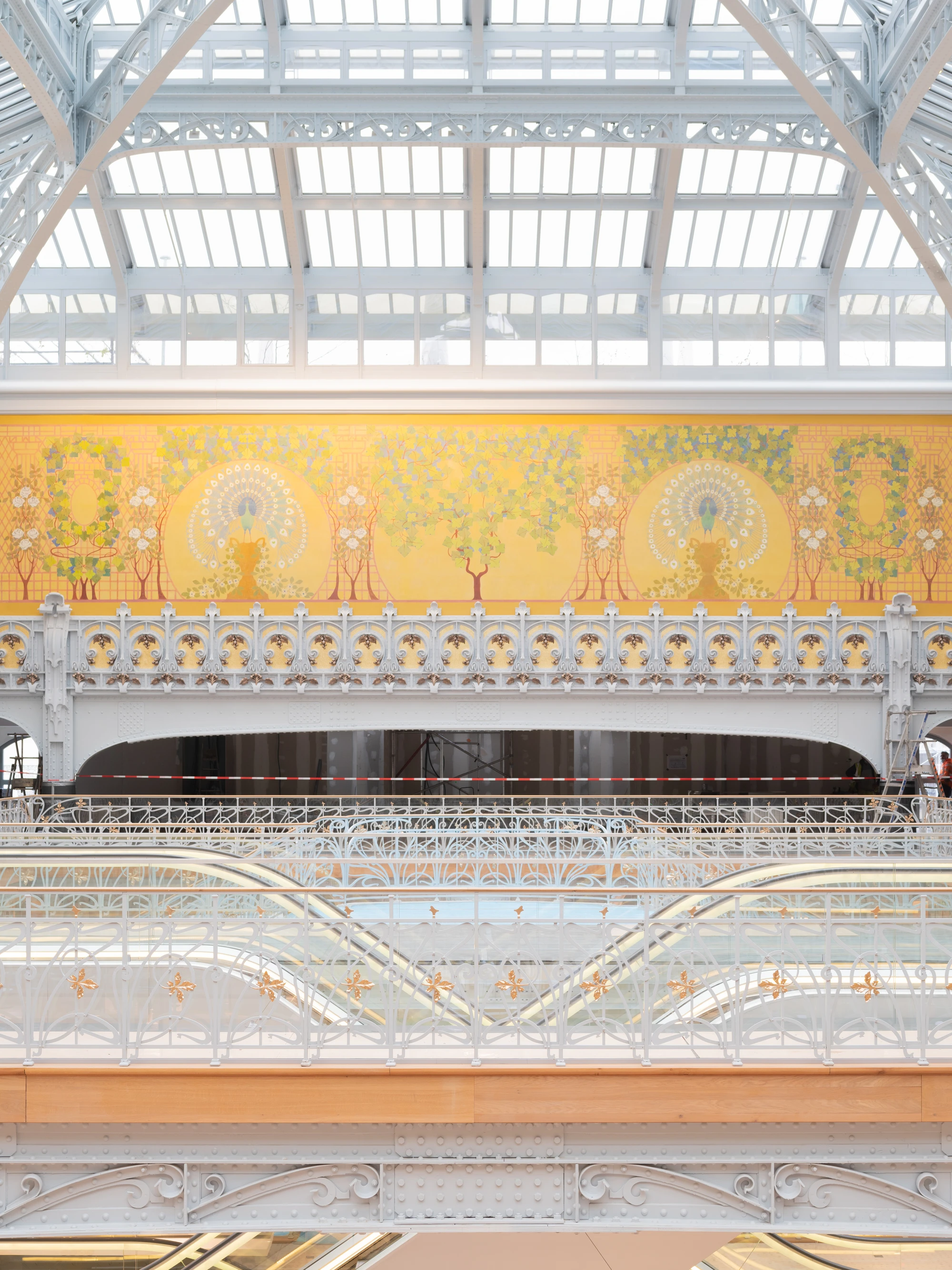
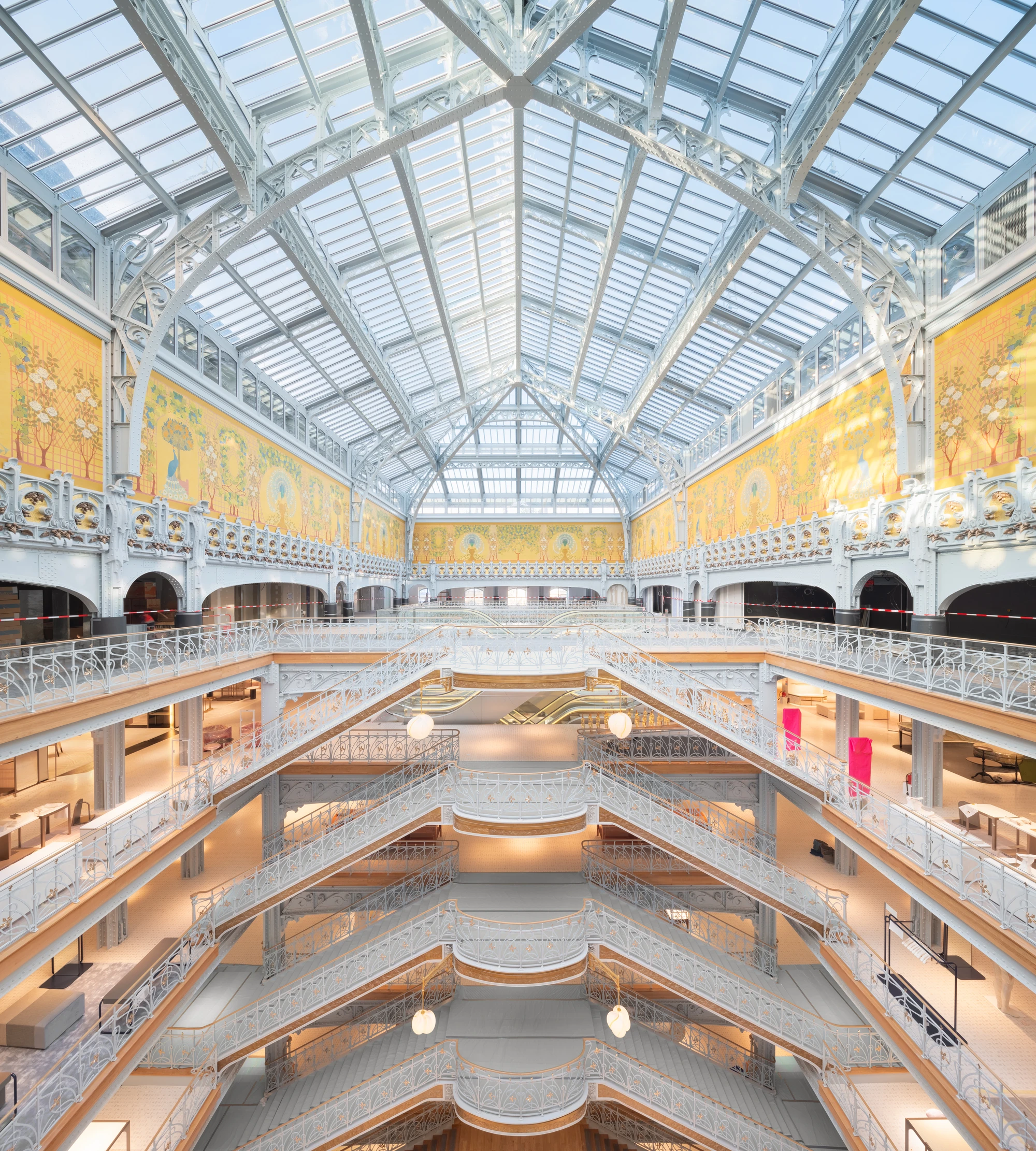
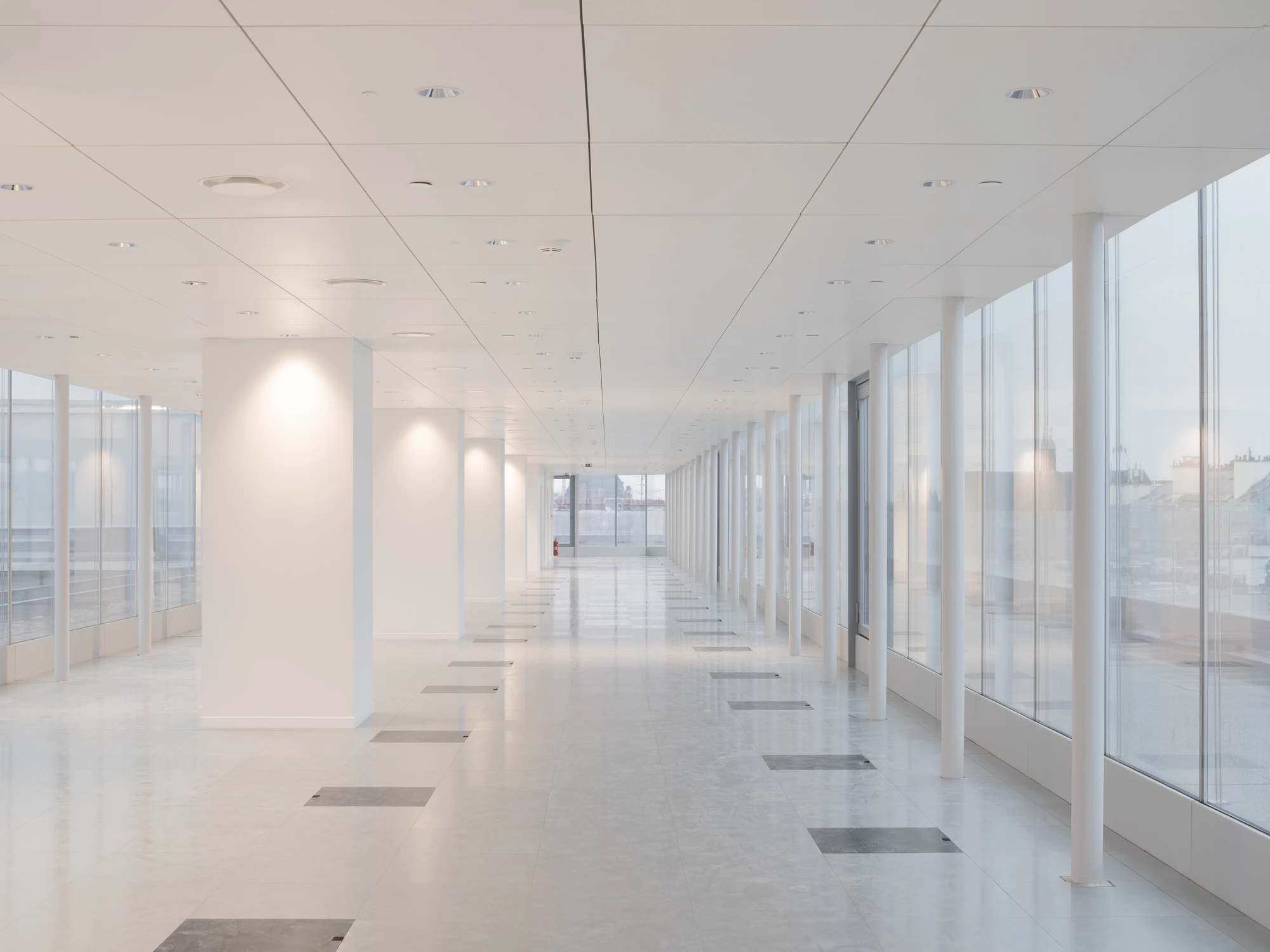
Inside, the restoration reaches its pitch in the great hall designed by Frantz Jourdain. Its glazed roof floods a room ringed by balconies of pale ironwork, their undersides tiled in painted ceramic, milk-glass globes hung from the brackets. Above the top gallery runs the famous frieze of peacocks and blossoming trees, its yellow ground brought back to a near-acid brightness. The new white floors and slender columns of the retail levels hold back below, a plain modern base carrying a preserved crown.
What SANAA builds here is an argument about how a department store survives its own history. Nothing is disguised. The wave of glass never pretends to be old, the peacocks never pretend to be new, and the passage lets a visitor pass from one to the other without a seam. In a city that guards its facades as fiercely as any, La Samaritaine offers a model for adding to Paris in the open.