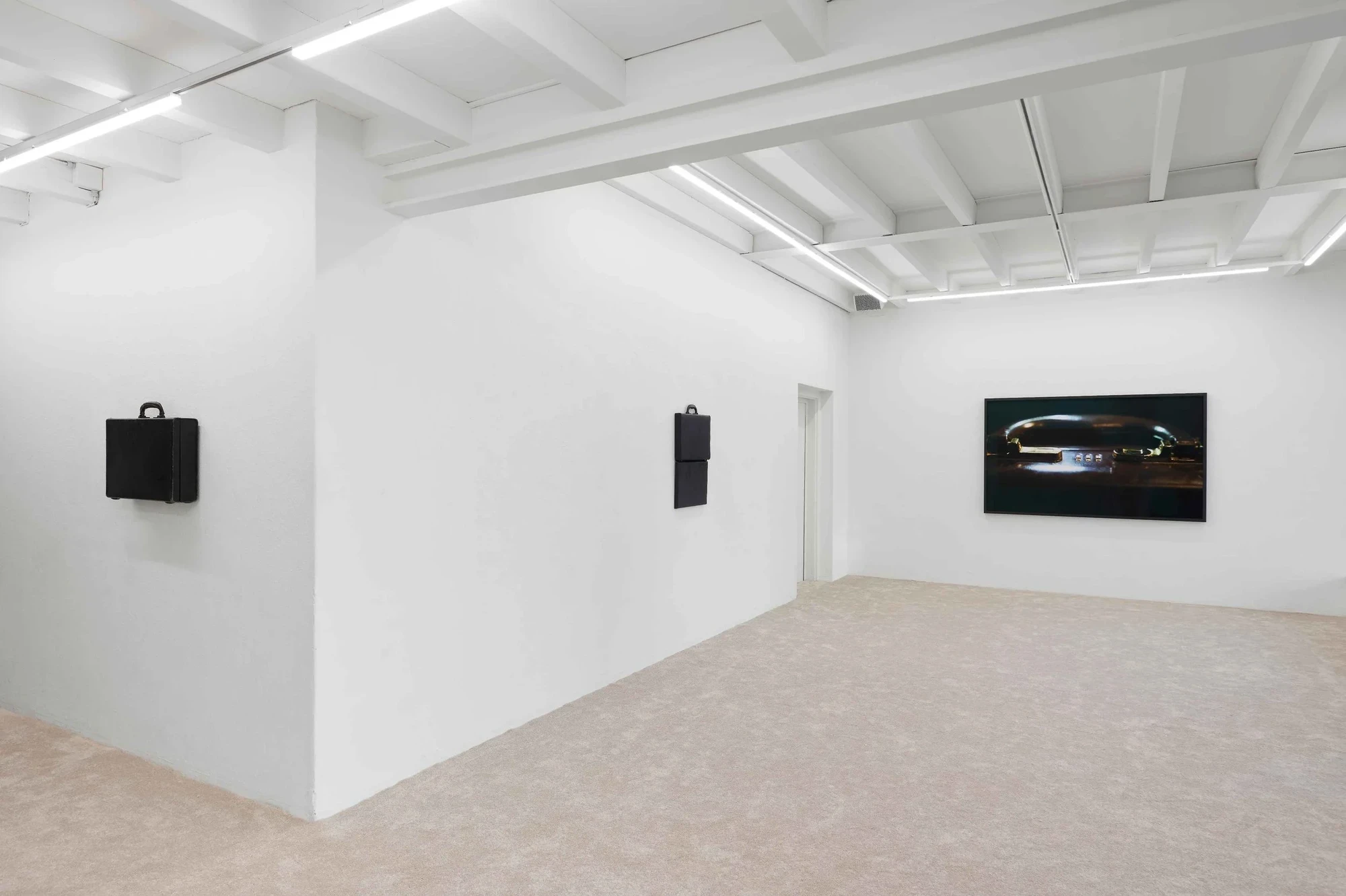
Inside Blue Velvet Projects, a converted apartment in Zürich, Julian-Jakob Kneer mounts Gestalt, a body of work that treats the executive attaché case as portable law and prosthesis of self-control.
The attaché case arrives already overdetermined. It is authority with a handle, executive drag, portable law, a prosthesis of self-control. In Gestalt, Julian-Jakob Kneer takes that prosthesis and pushes it until the surface begins to leak. The works on view at Blue Velvet Projects in Zürich are less objects than scenes mounted to the wall, each one closed and yet somehow already disclosed.
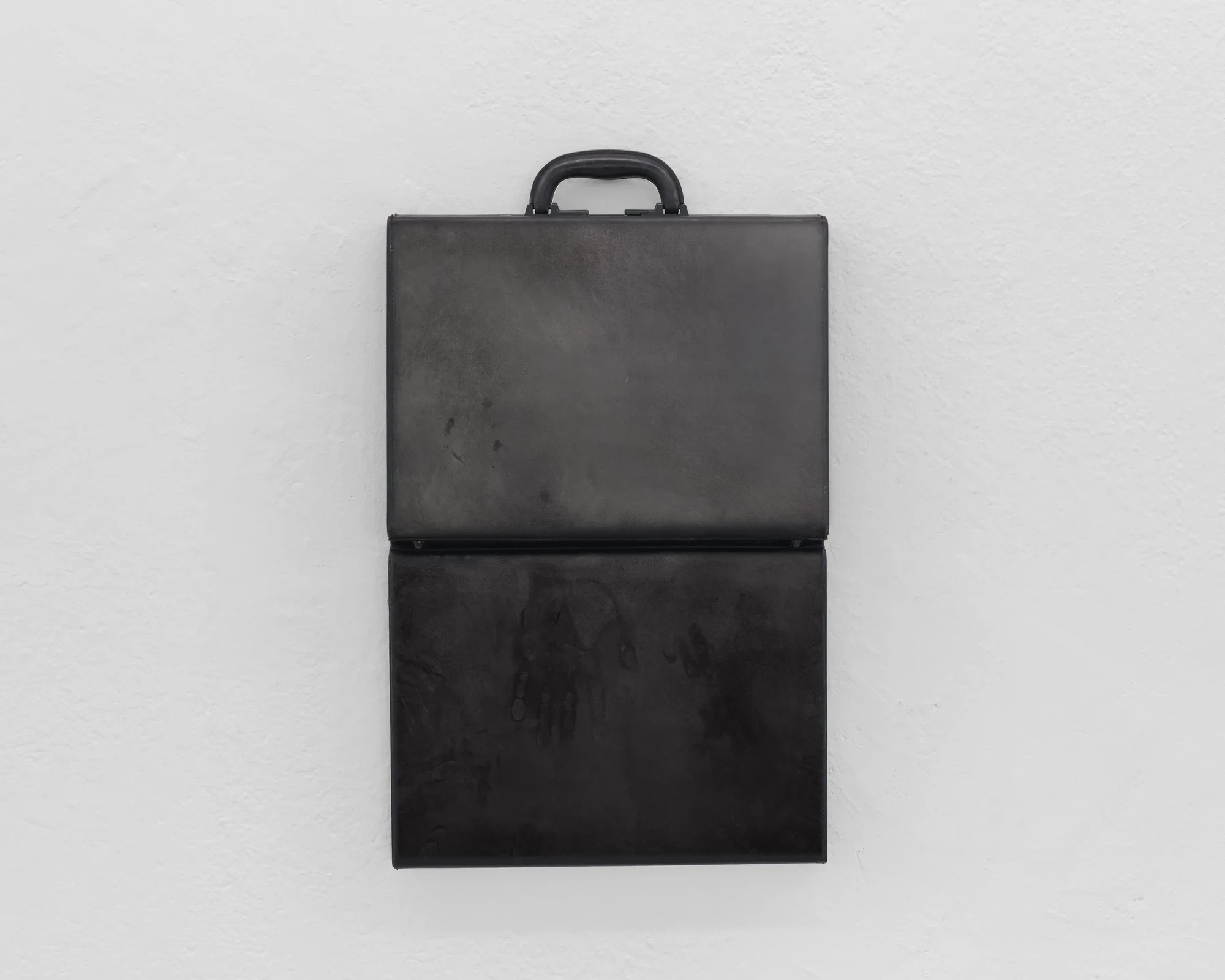
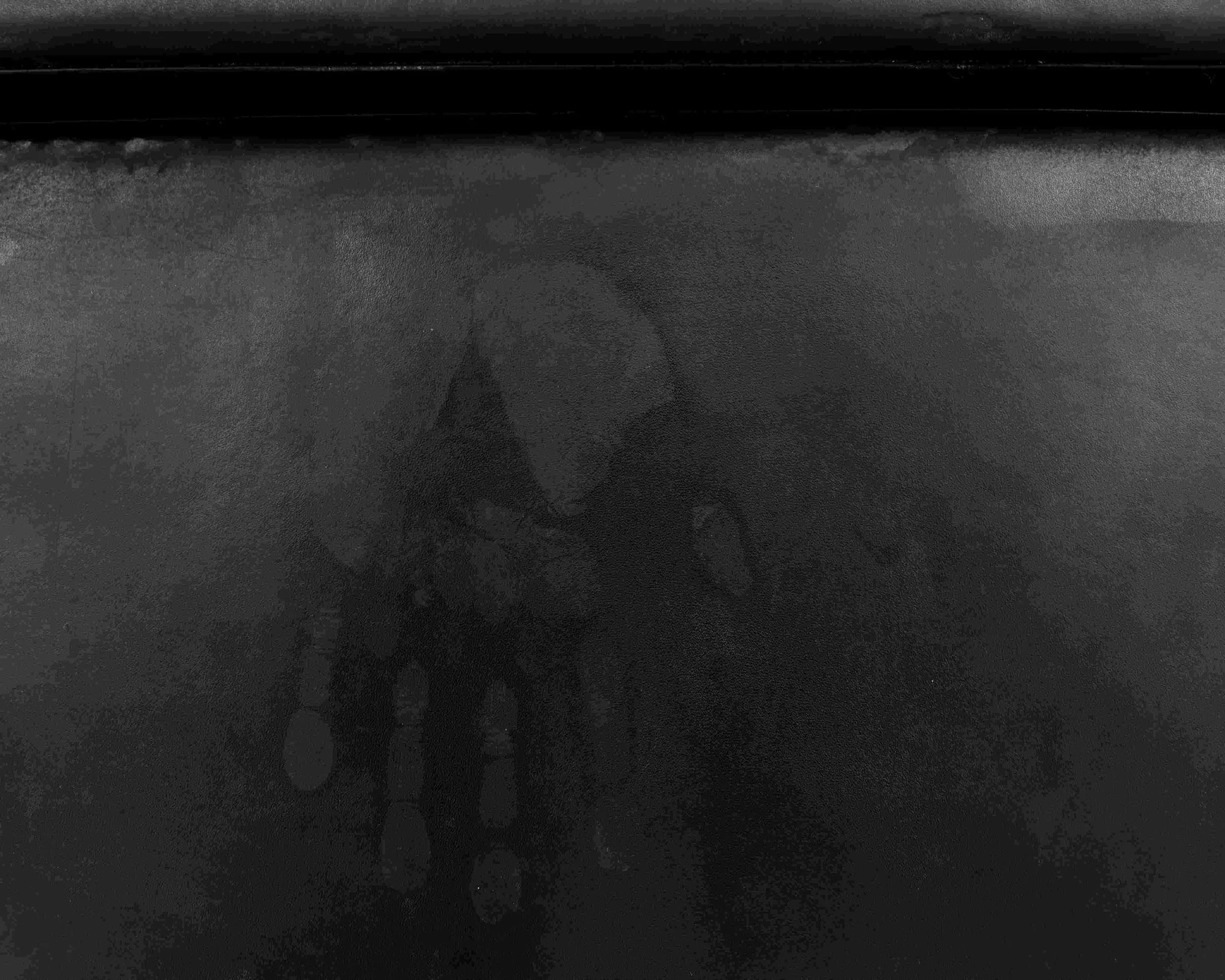
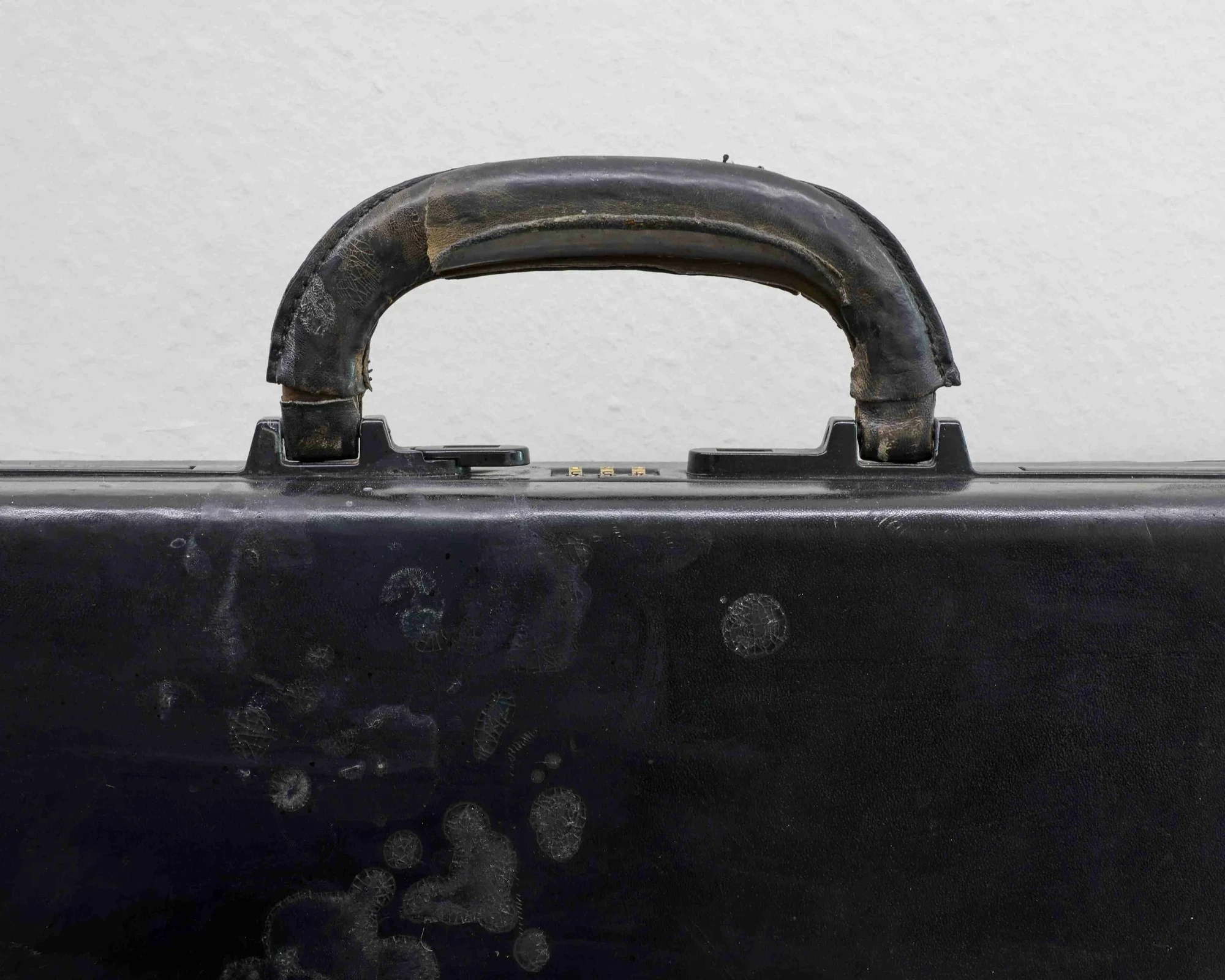
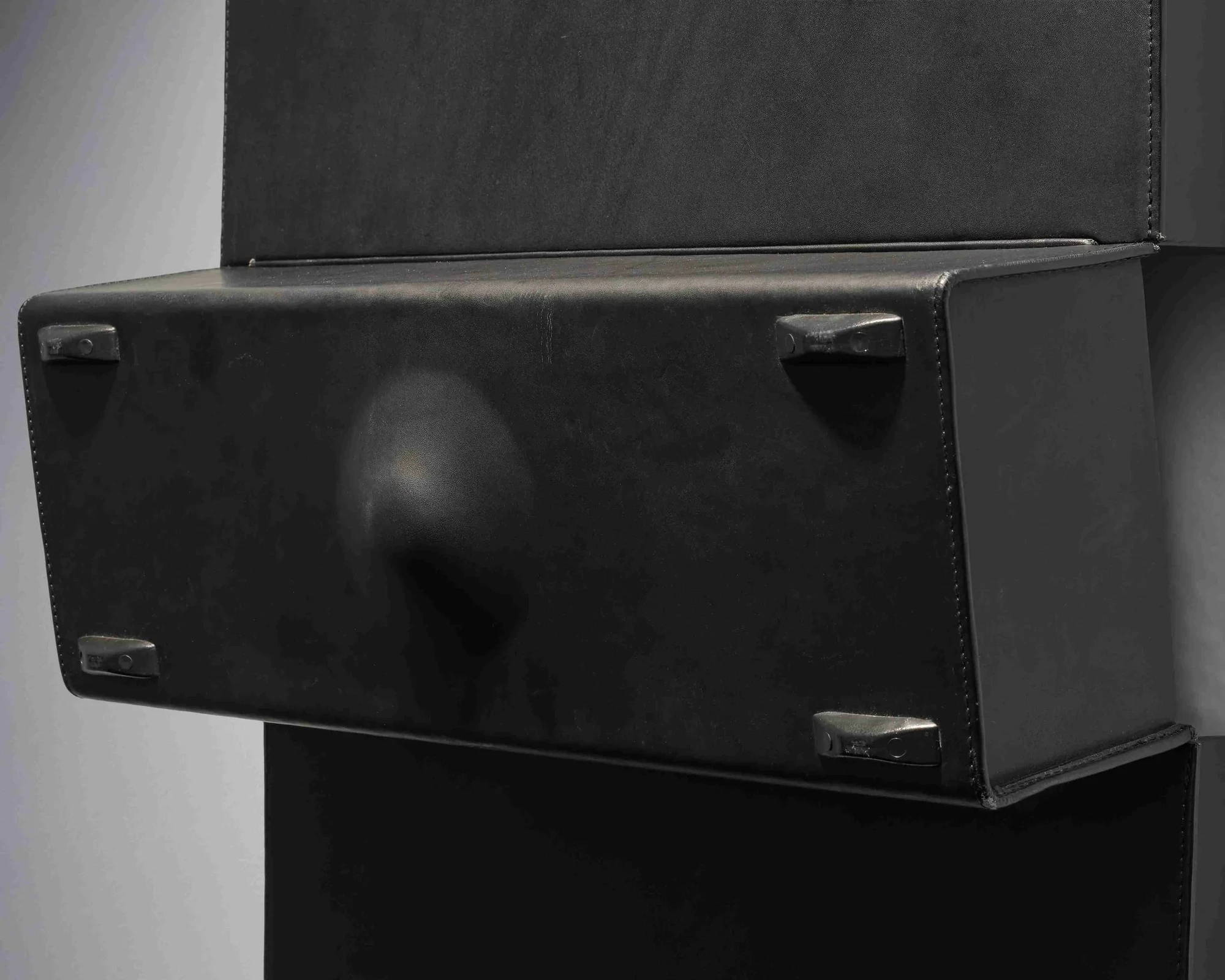
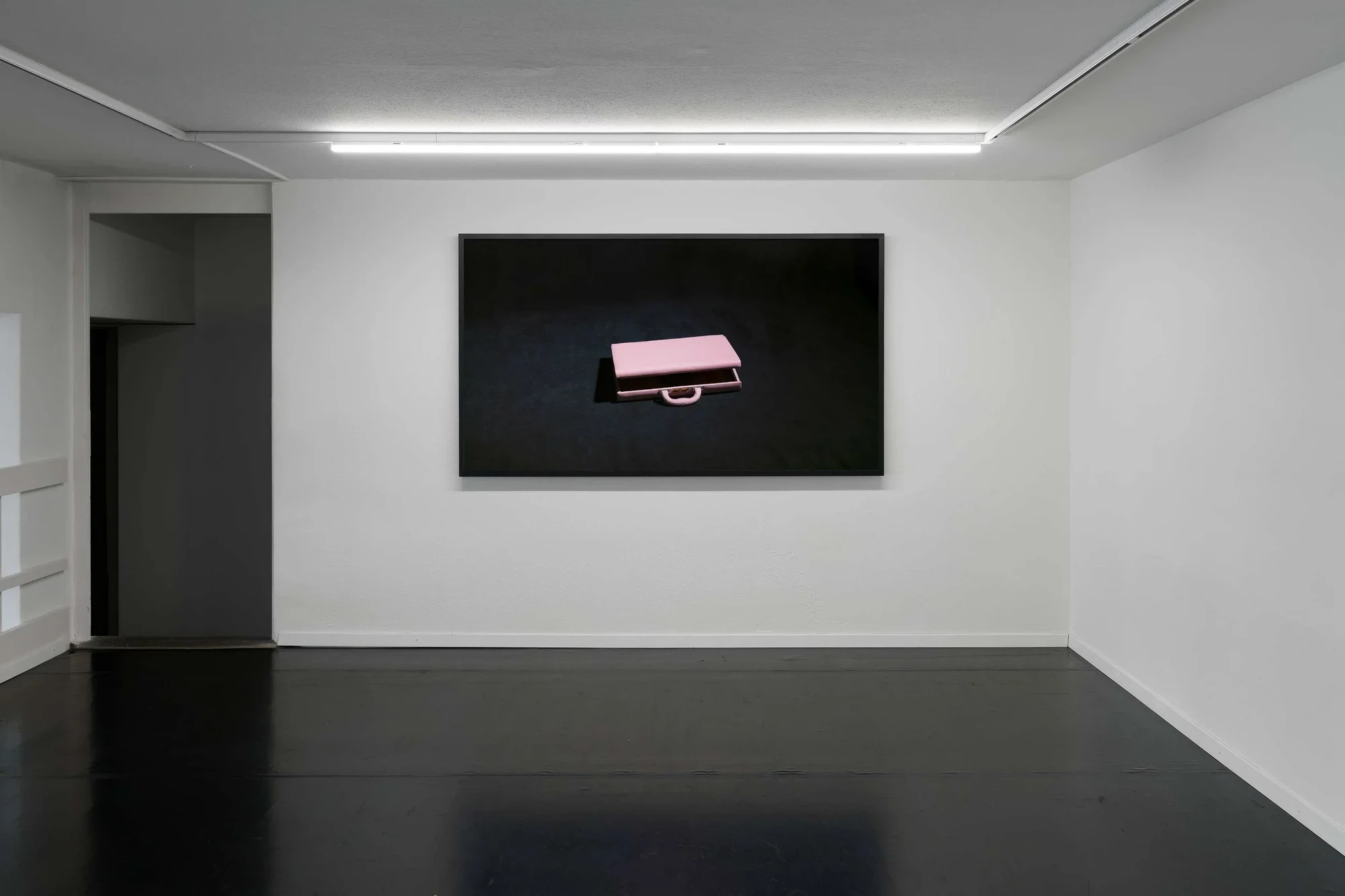
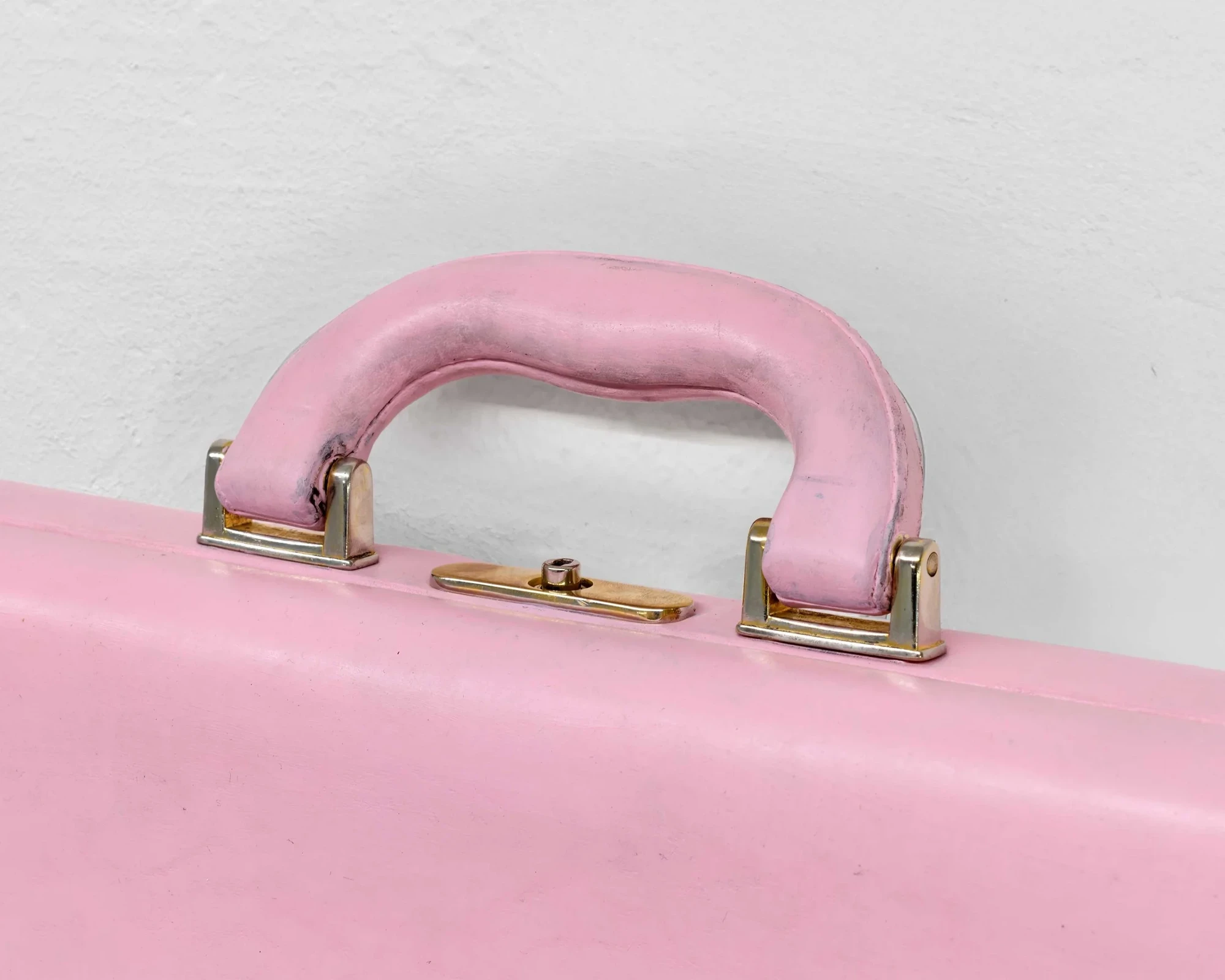
Vintage cases line the rooms. Most are black, hard-shelled, their leather and Naugahyde surfaces bearing the dull patina of long custodianship. Three-dial brass combination locks set to a row of zeros catch the track lighting. Some carry the residue of handling: faint palm prints, lip-like smudges, the dry trace of fluids that may have once been semen, may have been gloss, may have been added in the studio. One case is candy pink with chrome hardware, the carbohydrate cousin of the Wall Street briefcase. Another, in taupe, presses outward in two soft swells, as if a torso had been packed inside and then forgotten.
Closure here is not negation. The cases stay shut, but Kneer calls that shutting an intensification, and standing in front of the works the line lands. The less the object gives, the more violently it solicits fantasy. Authority, ambition, secrecy, discipline accumulate on the surface alongside something camp and lascivious. The briefcase as document holder becomes the briefcase as fetish, the kind of object that in cinema would be carried by a man whose face is never shown.
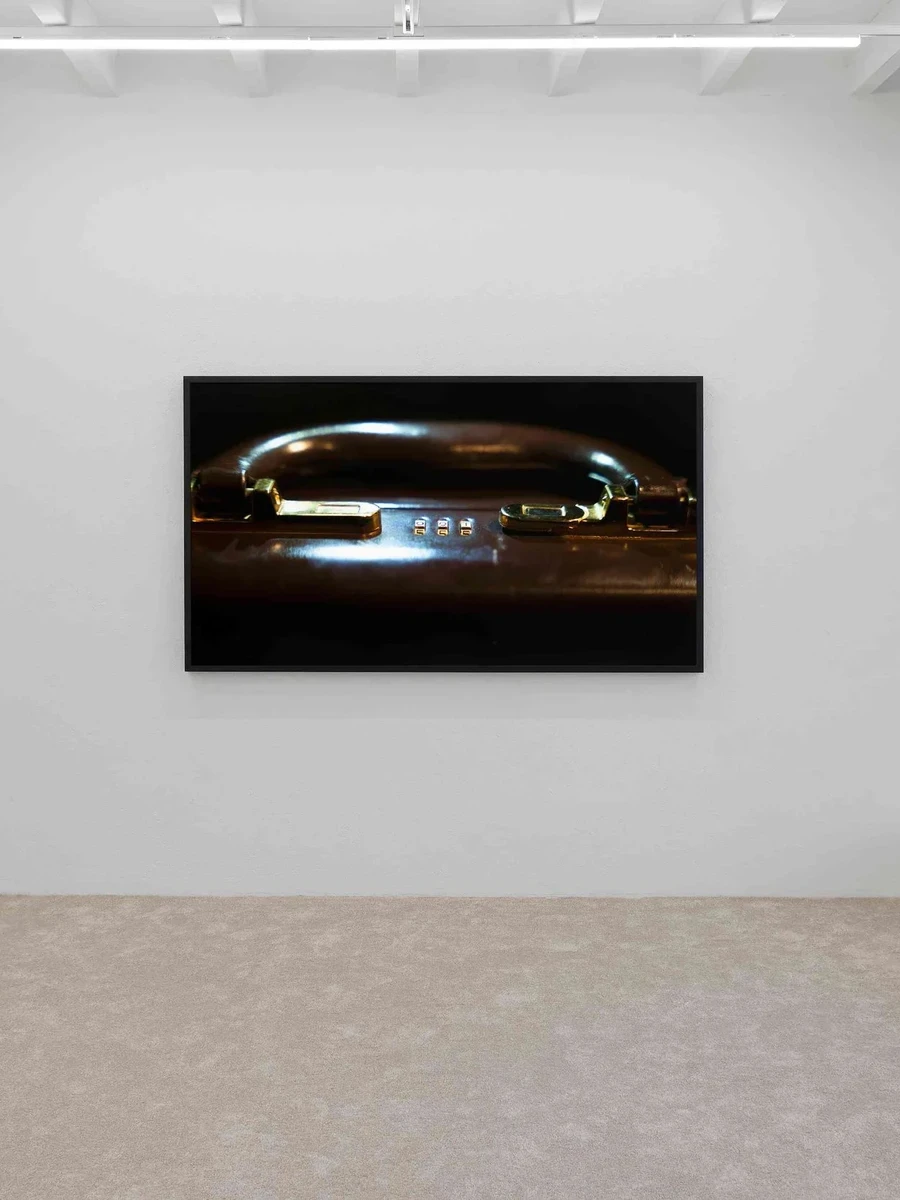
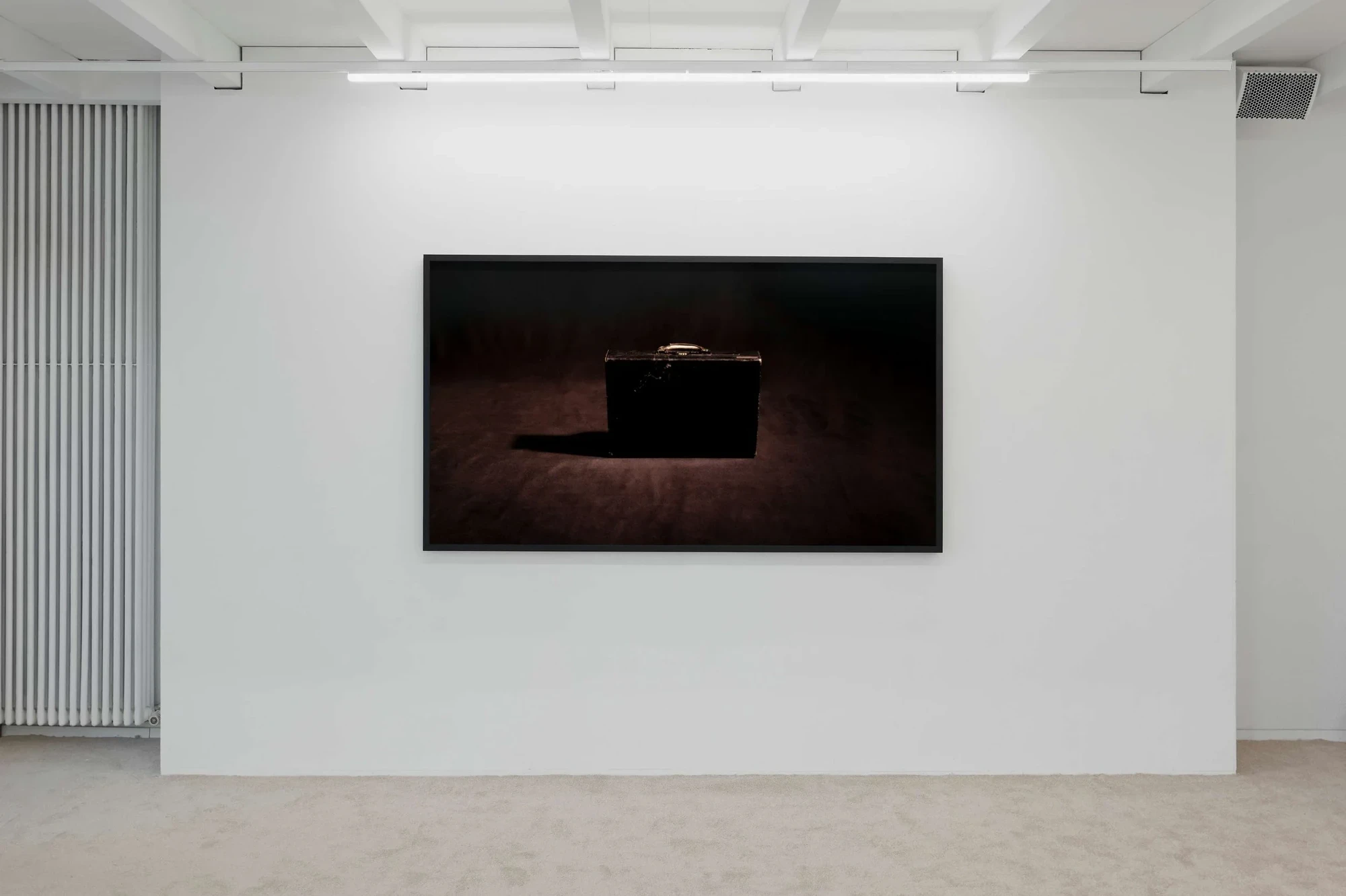
The photographs in the show refuse the documentary contract. Black ground, single object, low key. A brass handle glints like jewellery. A stain becomes a constellation. The stills do not catalogue the sculptures; they radicalise them, as Kneer puts it, generating a split screen where the briefcase returns as both object and image. The viewer ends up doubled too, looking at the thing, looking at the picture of the thing, unable to decide which is the source.
What lands hardest is how little narrative is offered. Kneer extracts from cinema not plot but residue: atmosphere without resolution, suspense without disclosure, the afterlife of an action that may never have taken place. A stain is not yet evidence. A trace is not yet a fact. The room fills with evidence and no crime, or perhaps a crime with no evidence, depending on which side of the case the viewer projects onto.
The cases themselves do not resolve. One opens vertically into three folded panels with a teardrop-shaped swell pushing from inside the middle layer. Another stays mute behind chrome corners and a pink that no boardroom would sanction. Nothing here resolves into confession or clear symbol. The briefcases remain sealed, exact, strangely exposed, beauty doing the work of corruption. On show at Blue Velvet Projects from 24 April to 30 May 2026.