Thisispaper Community
Join today.
Enter your email address to receive the latest news on emerging art, design, lifestyle and tech from Thisispaper, delivered straight to your inbox.
Oops! Something went wrong while submitting the form.
Instant access to new channels
The top stories curated daily
Weekly roundups of what's important
Original features and deep dives
Exclusive community features
Hitoshi Arato
Dec 12, 2025

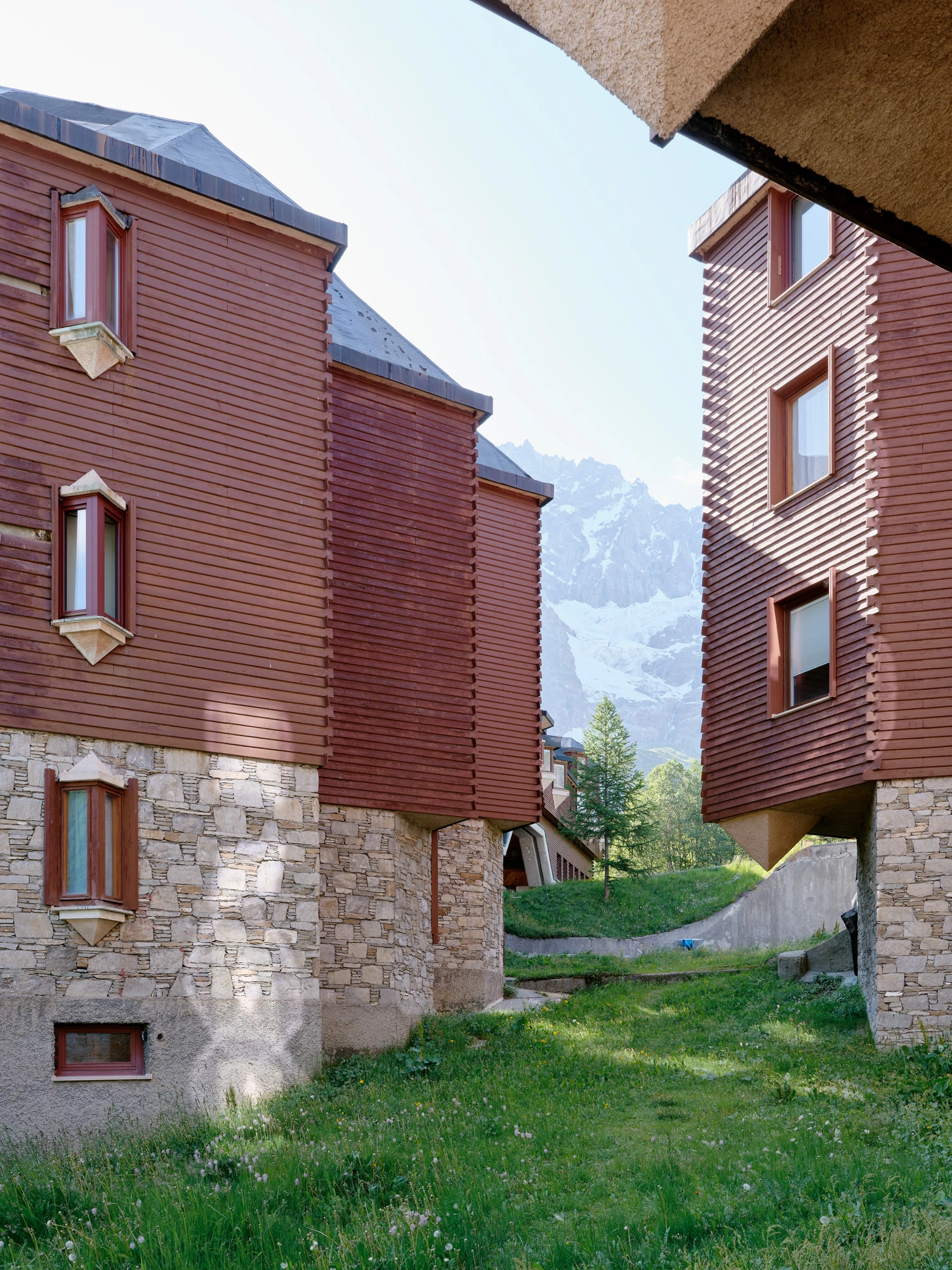
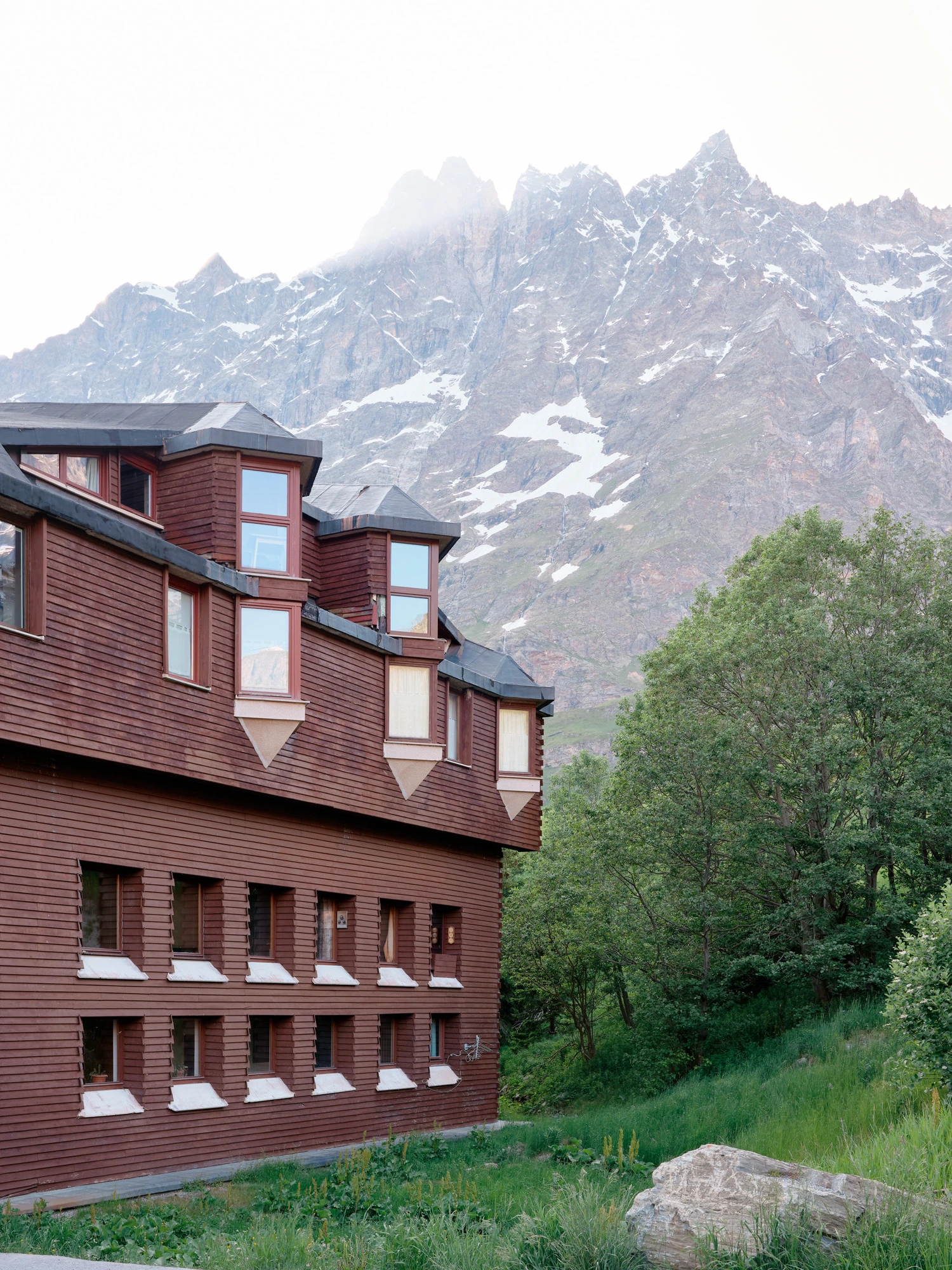
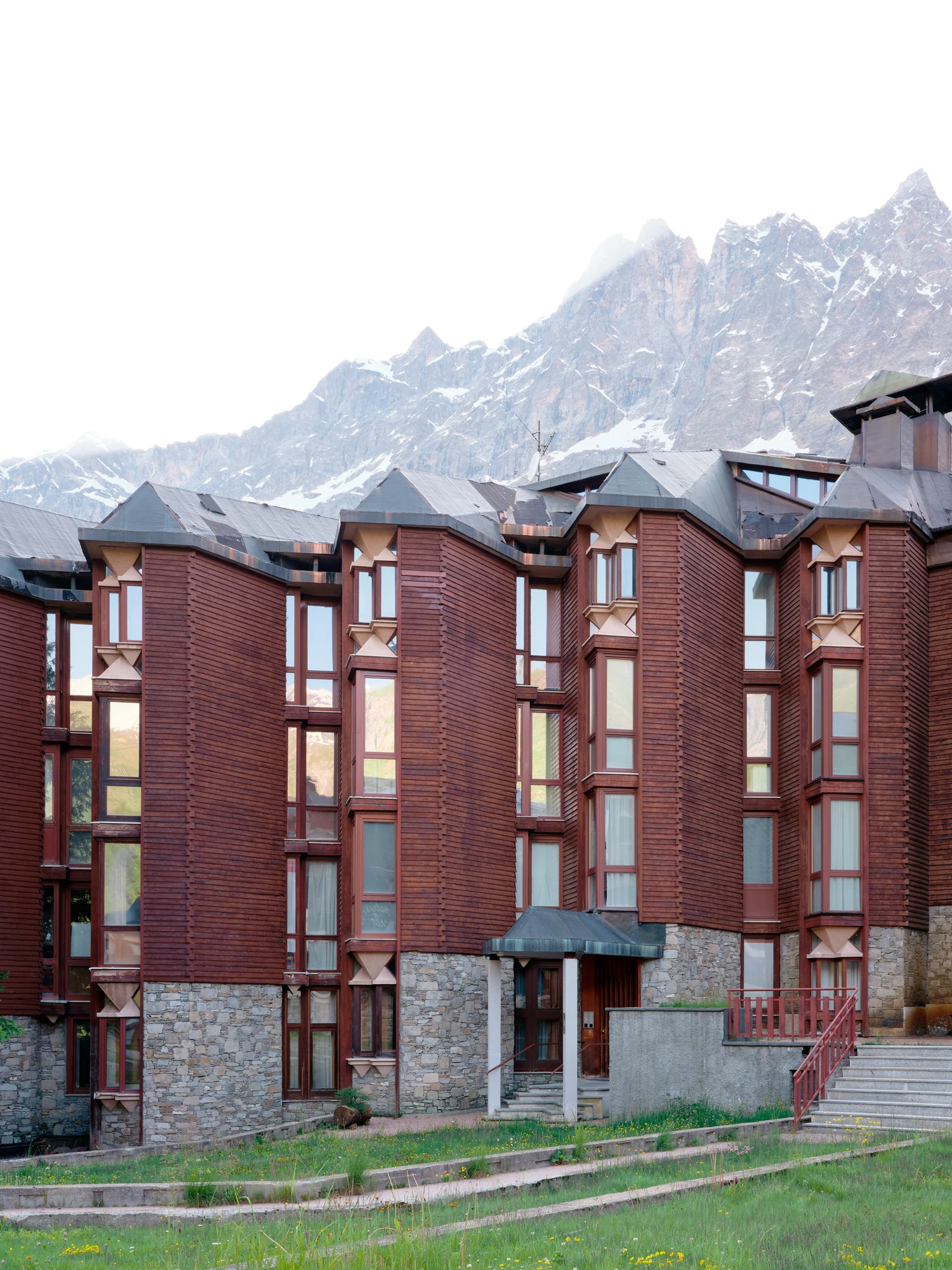
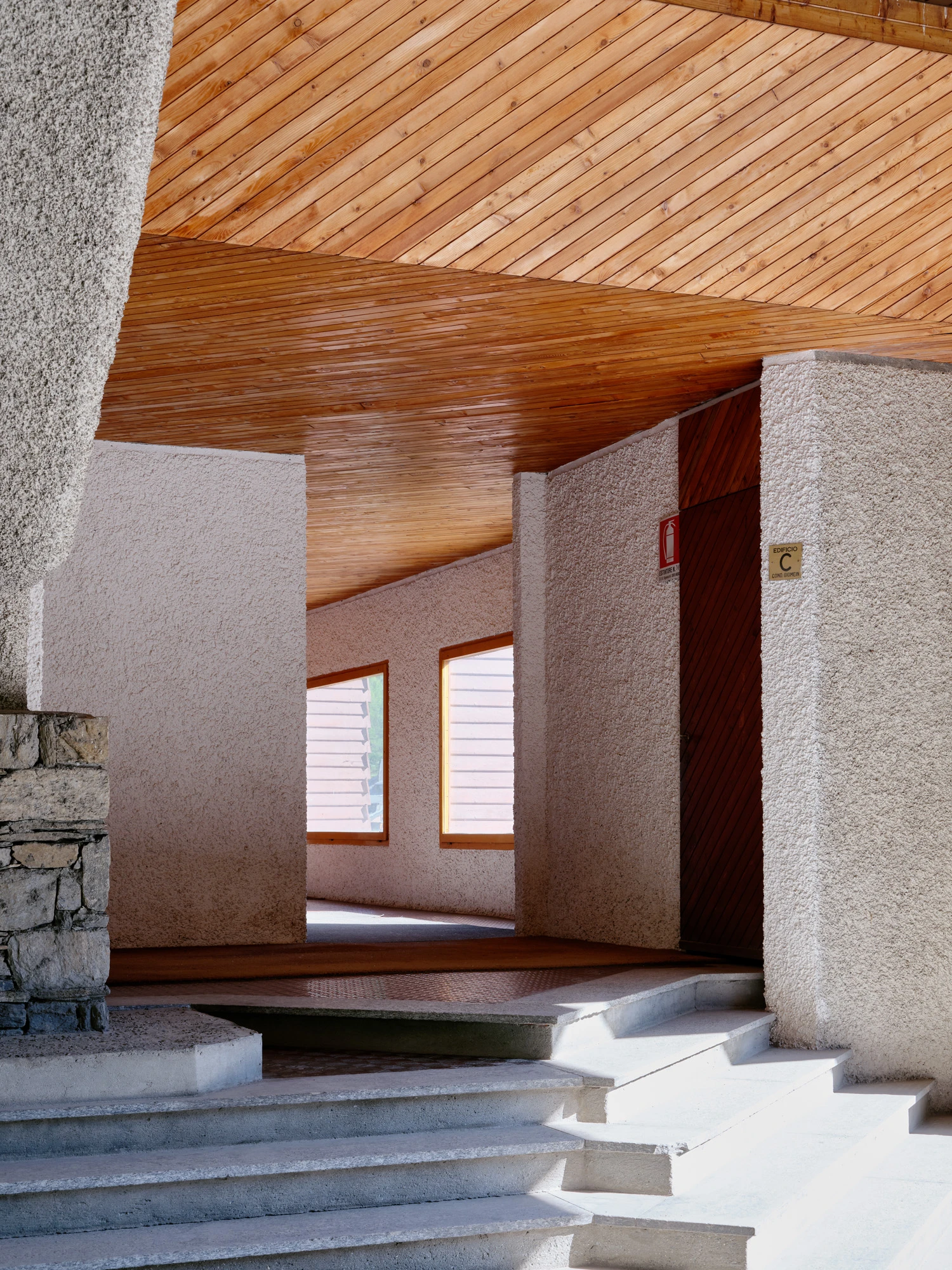
co.arch’s refurbishment of a duplex inside Mario Galvagni’s 1972 Giomein complex doesn’t treat the Alpine context as décor but as a structural force.

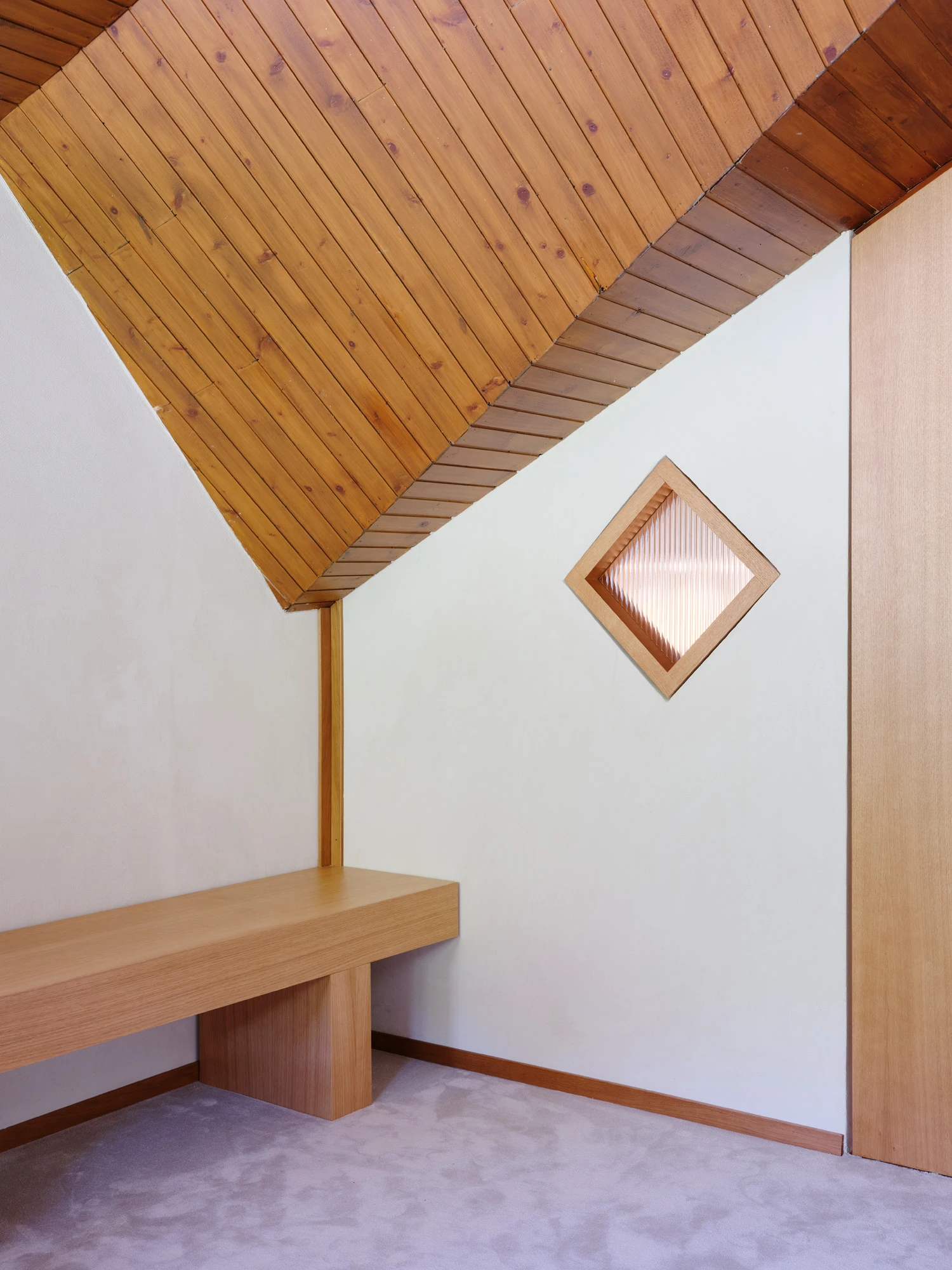
The original apartment—sheathed in jacquard fabric, plush carpeting, mirrors and timber—was a time capsule whose coherence risked collapsing under any additive gesture. Instead, the architects began by stripping it back, uncovering the broken roof planes, shifting pitches and eccentric geometries that reveal how Galvagni once translated the mountain’s topography into domestic space. This re-exposure of the structure became the project’s true foundation.

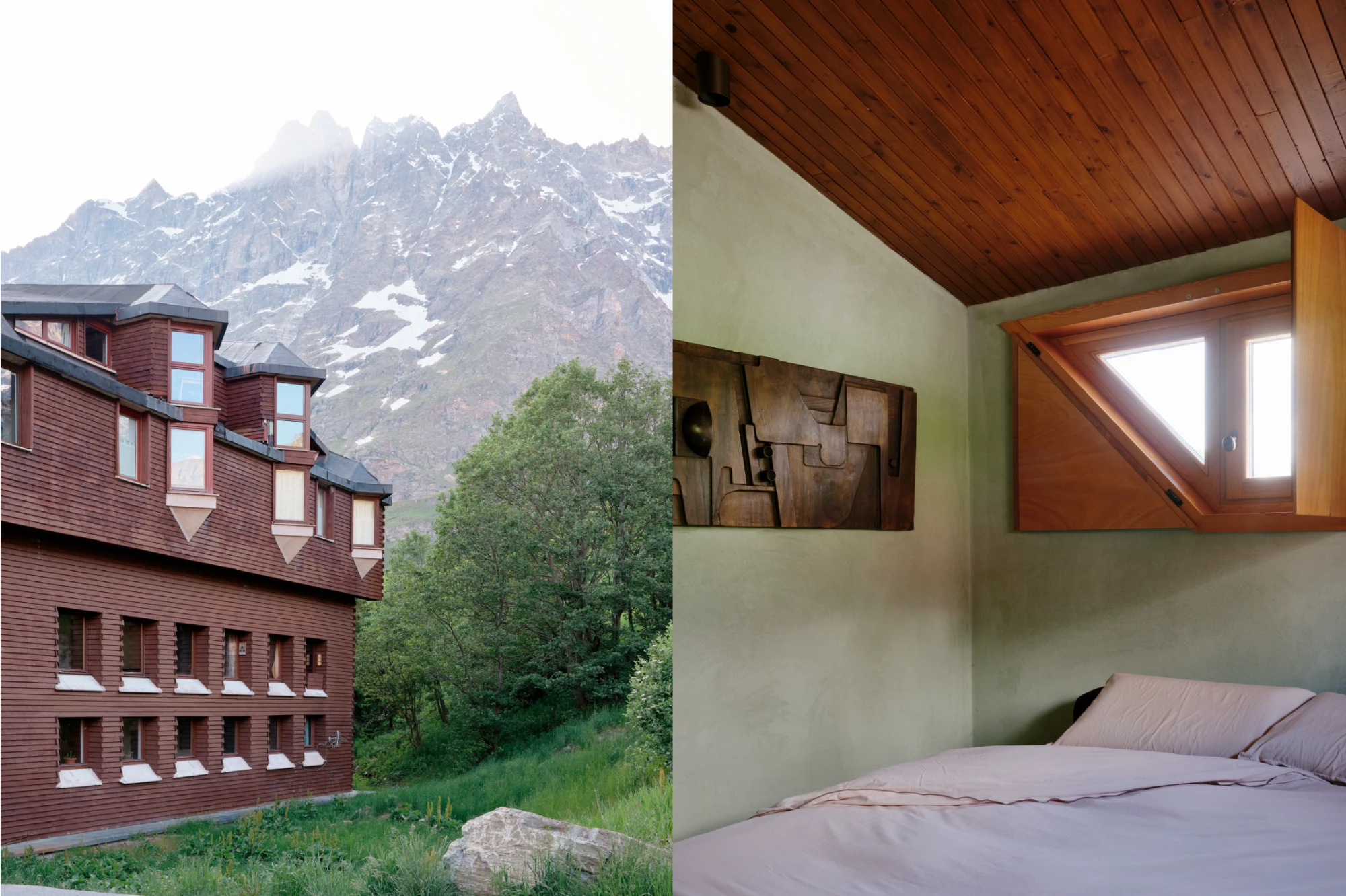
Once the compromised surfaces were removed, the interior’s essential elements surfaced with a renewed sharpness: the copper-clad roof lined in larch, the bow windows acting as calibrated optical devices, and the interlocking volumes that modulate light like Alpine weather fronts. co.arch’s approach treats these existing conditions not as relics but as active instruments—Galvagni’s analogon at work, turning the Matterhorn into a spatial collaborator. The redesign acknowledges this legacy while refusing nostalgic mimicry, grafting a quiet contemporary language onto the architecture’s underlying tension.

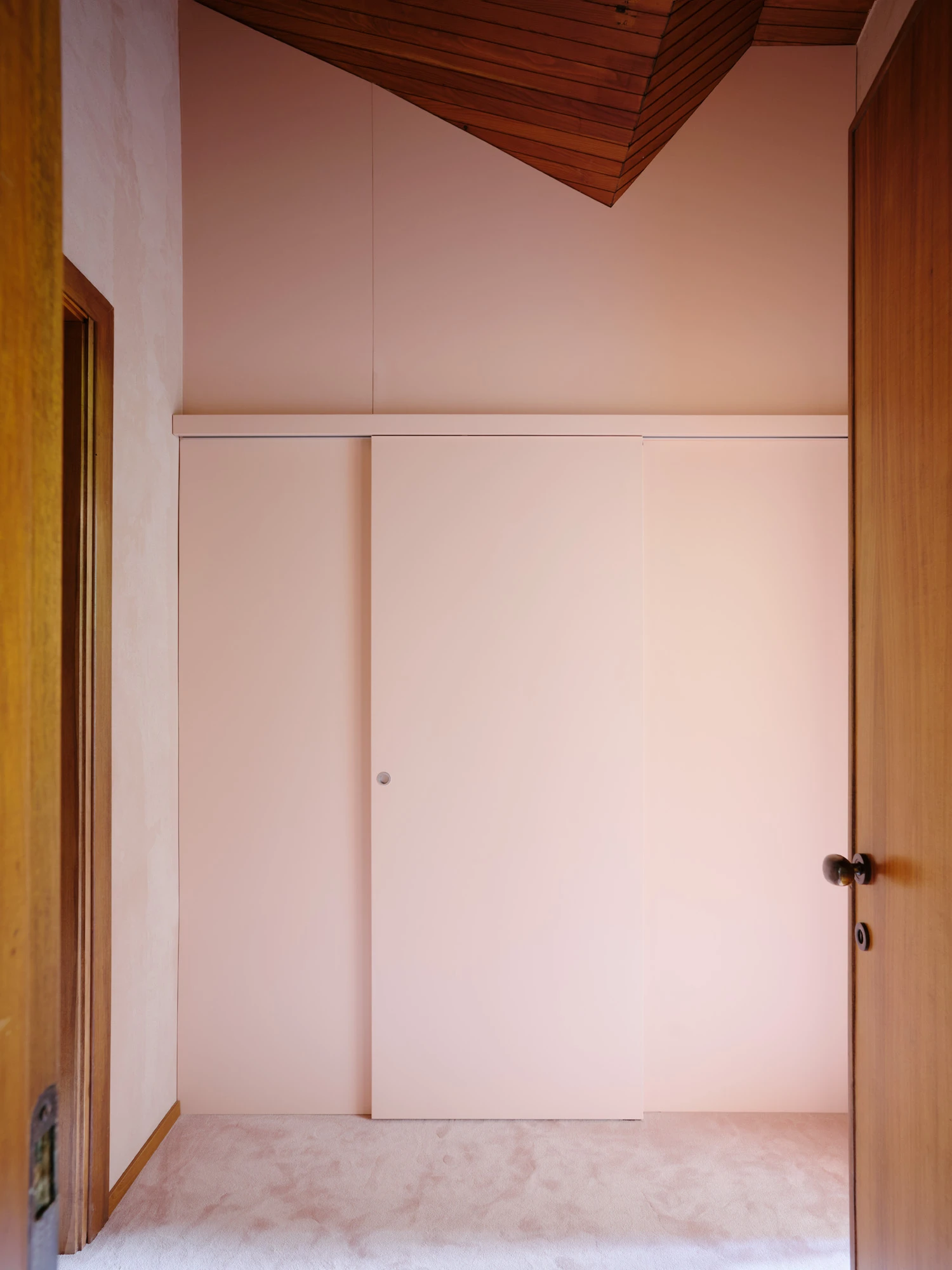
Materially, the project moves with a measured softness. Besana carpeting reinstates a sense of warmth without reviving the overload of the original, its tone shifting subtly from public to private rooms. Where function demands clarity—kitchen and bathrooms—beige limestone introduces a cooler register that still speaks to the surrounding palette. The use of Calce del Brenta across the walls draws a thread between past and present; its refined texture holds light in ways that recall the old boiserie without recreating it. Scarpa’s Casa Tabarelli hovers in the background as an intellectual companion rather than a template, informing devices like contrangoli that sharpen the reading of thresholds.

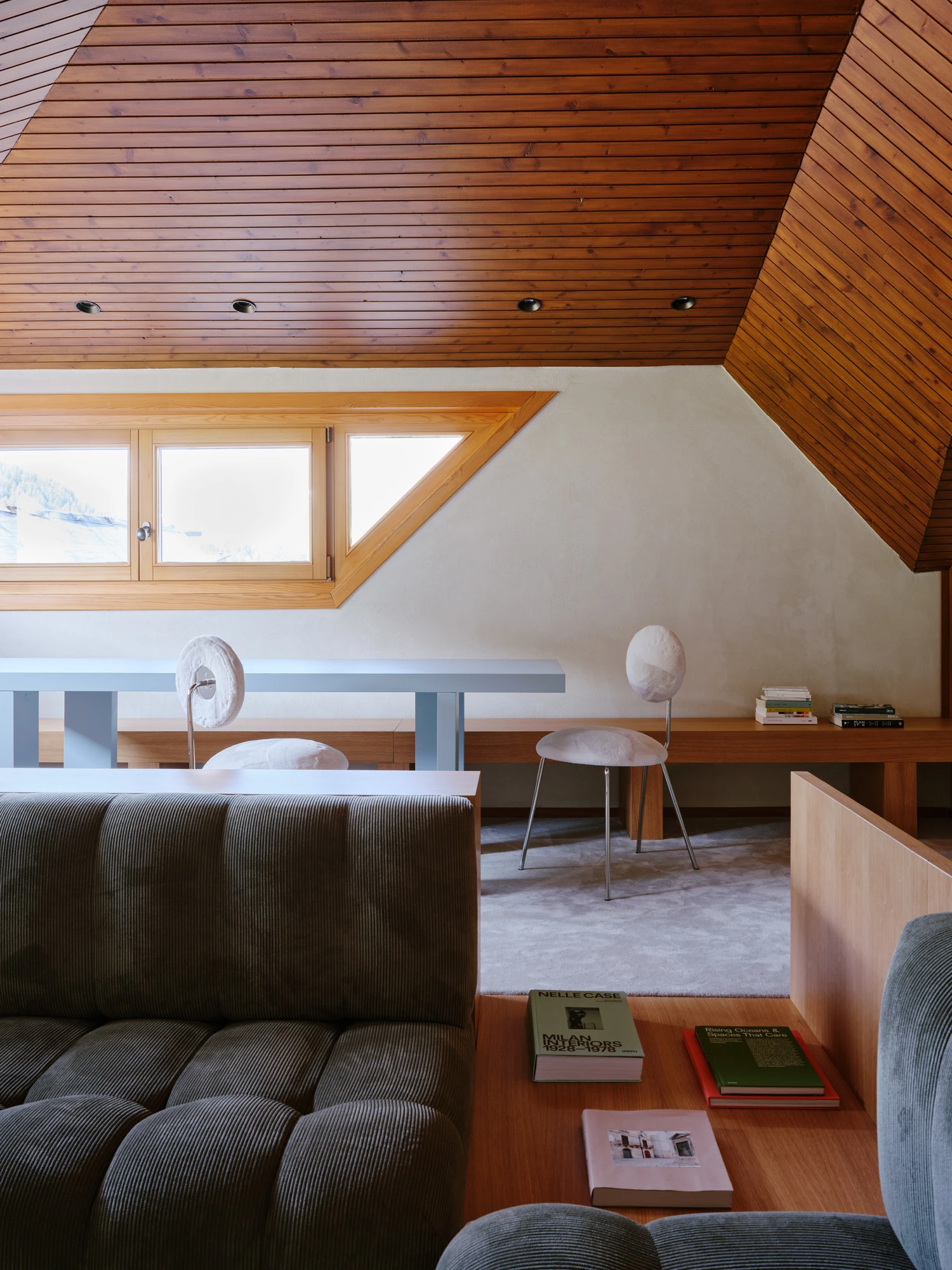
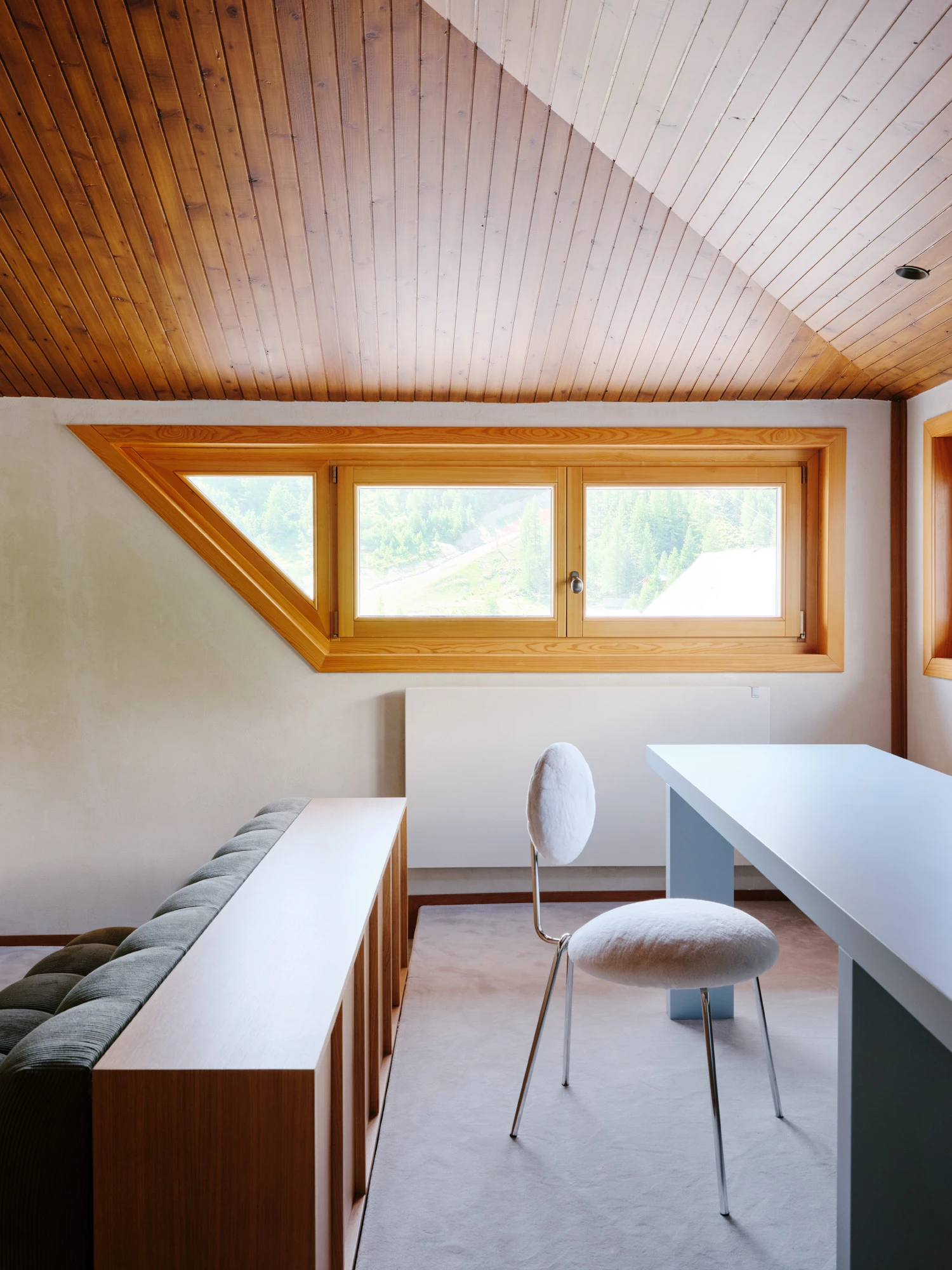
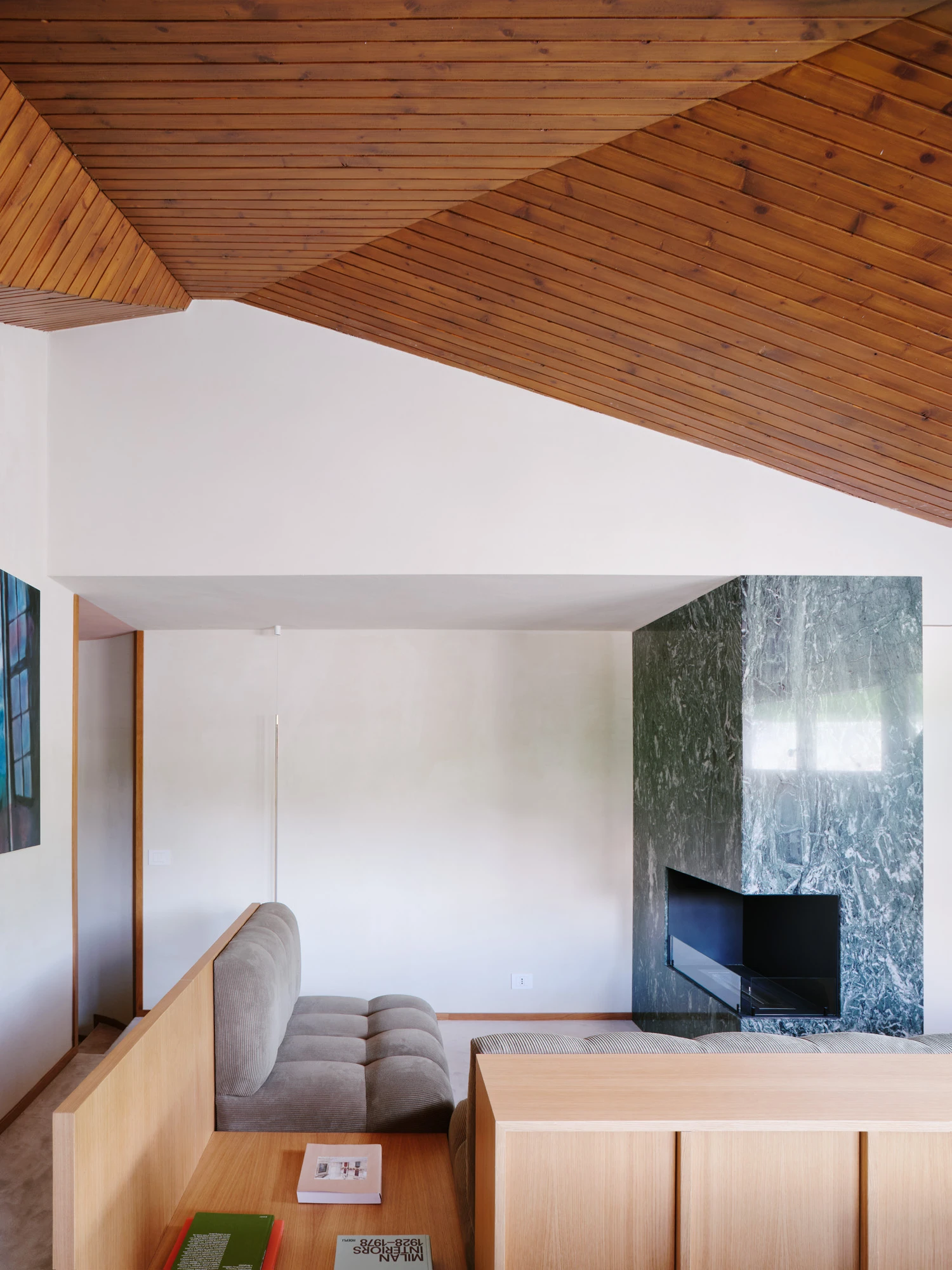
The living area crystallises co.arch’s strategy of calibrated reinterpretation. The conversation pit—a quintessential 1970s motif—is neither fetishised nor erased; instead, it becomes a lowered terrain of bespoke seating, loosely echoing Bellini’s Camaleonda without quoting it. A perimeter in oak gathers the space inward, its geometry oriented toward a Verde Alpi marble fireplace that anchors the room with a sculptural calm. One step up, the dining area introduces a pale blue refectory-style table and bench, drawing the eye toward the windows where high-altitude light becomes the true protagonist.

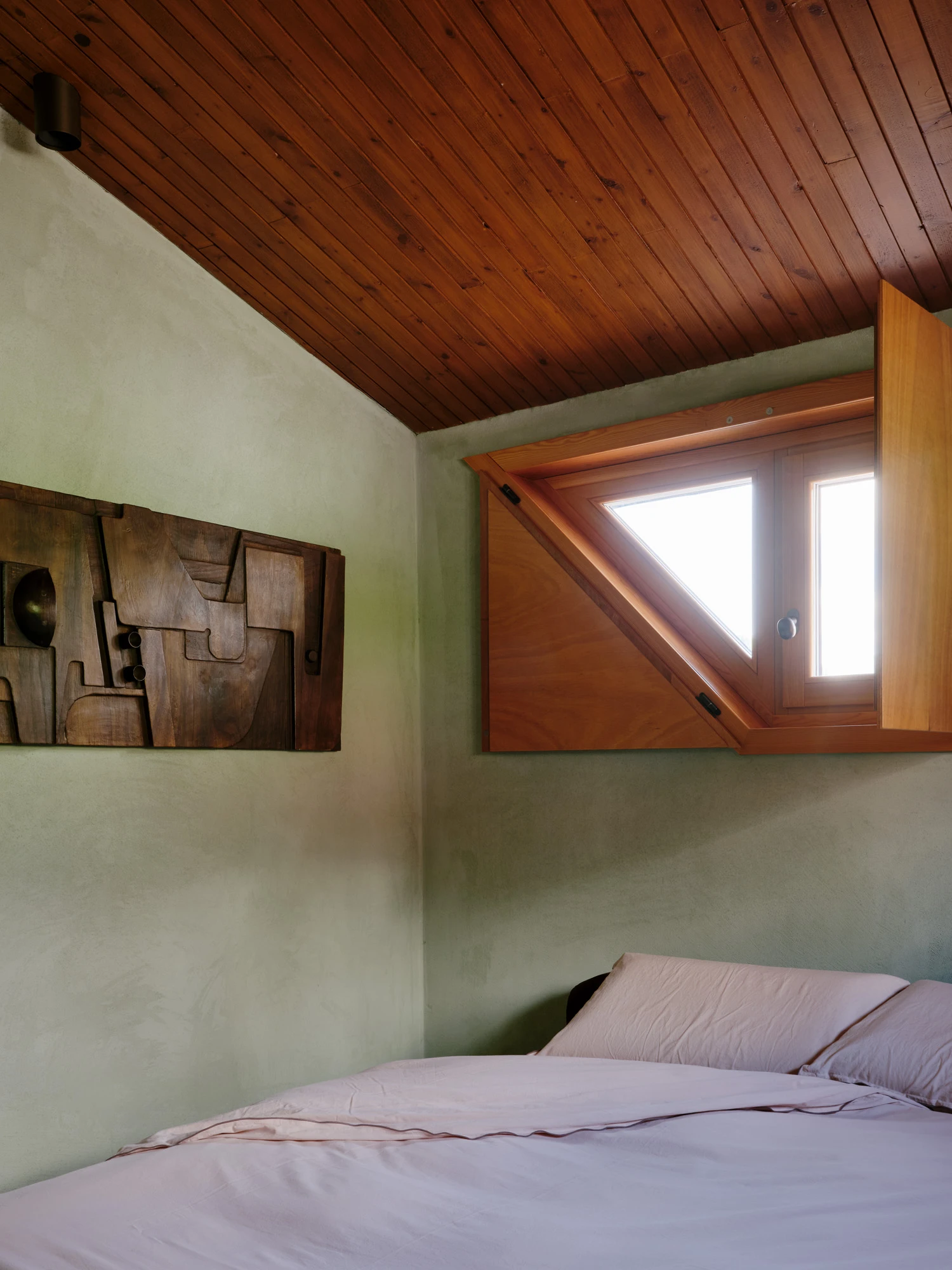
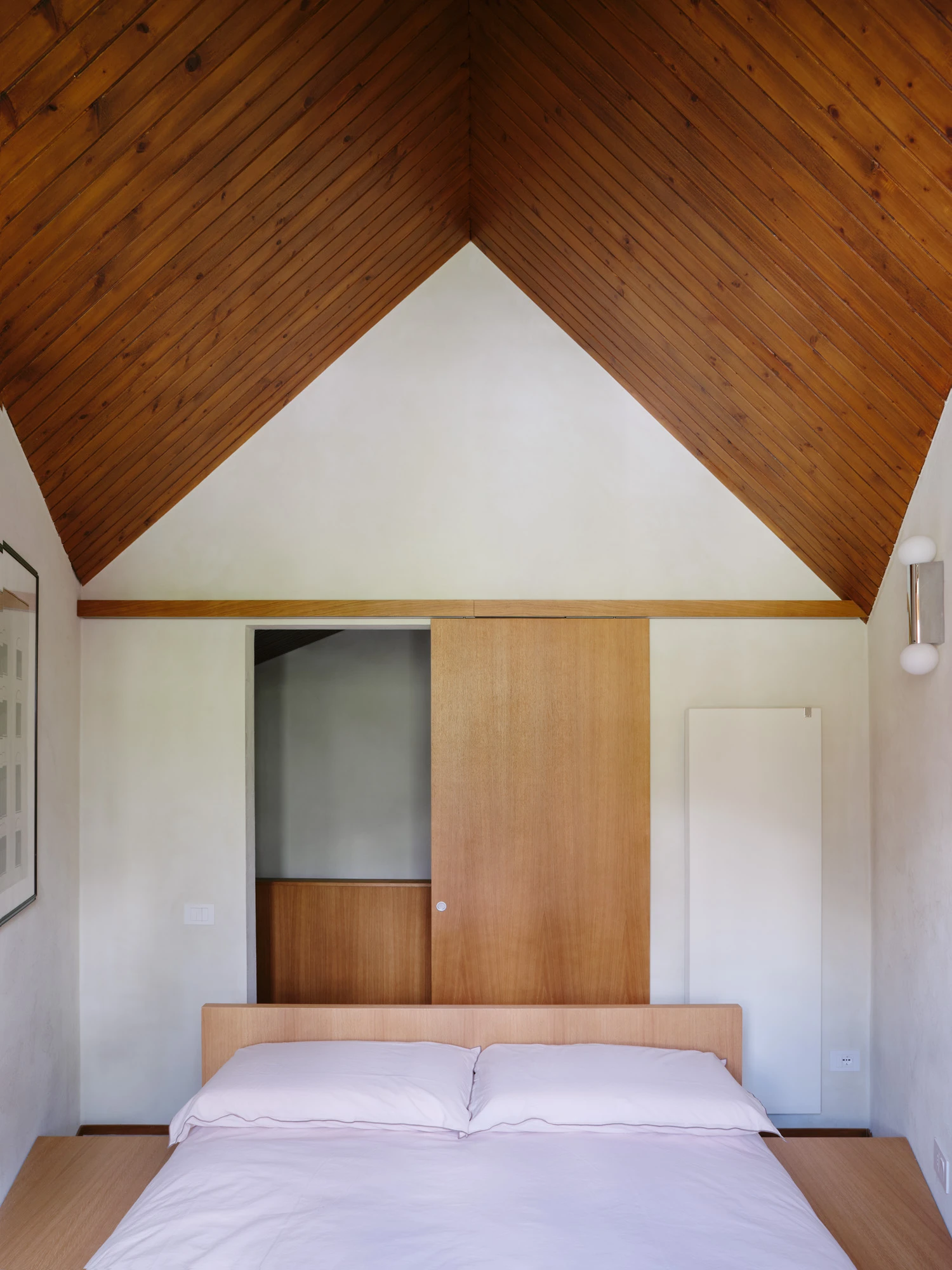
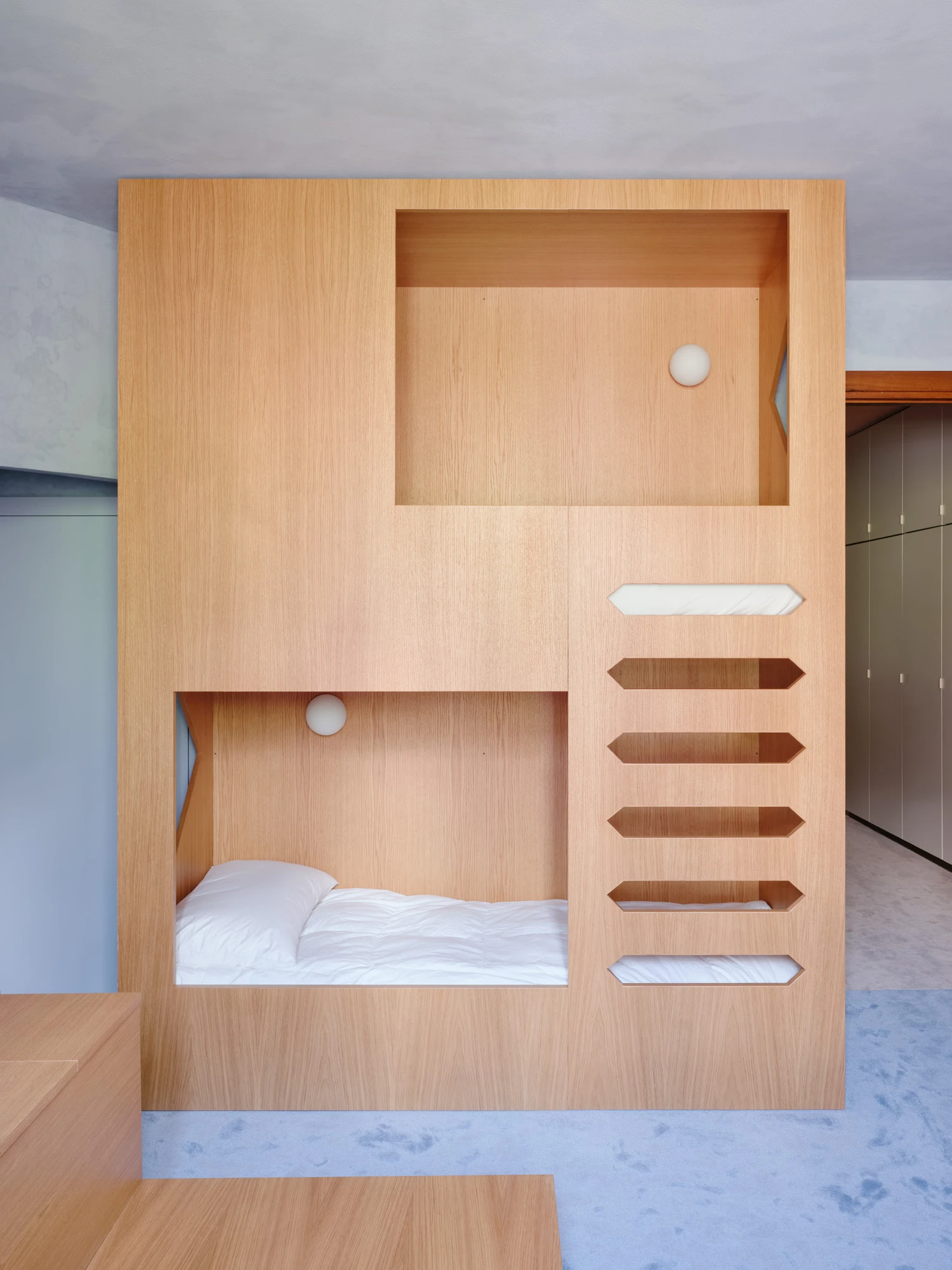
Across the apartment, micro-architectures animate domestic life: a rotated-square aperture framing the kitchen in a subtle nod to Galvagni’s luminous geometries; a Verde Alpi threshold leading toward earth-green cabinetry and stainless steel; a corridor that choreographs the transition to the sleeping quarters. The children’s bunk bed reads almost as an Alpine bivouac folded indoors, while the master room in the attic—set on a timber platform evoking a ship’s cabin—turns rest into an act of orientation toward the Matterhorn. Wooden shutters refine this dialogue, modulating both privacy and the mountain’s constant presence.

What emerges is an interior that operates through quiet precision. co.arch remove what has decayed, protect what remains vital, and stitch a contemporary domesticity into the bones of Galvagni’s experimental architecture. Rather than smoothing out the building’s idiosyncrasies, they let its inherent tensions breathe—allowing the mountain to speak through the lines, volumes and calibrated cuts of light.
Interested in Showcasing Your Work?

If you would like to feature your works on Thisispaper, please visit our Submission page and sign up to Thisispaper+ to submit your work. Once your submission is approved, your work will be showcased to our global audience of 2 million art, architecture, and design professionals and enthusiasts.
No items found.
We love less
but there is more.
Become a Thisispaper+ member today to unlock full access to our magazine, advanced tools, and support our work.
Get two months FREE
with annual subscription
We love less
but there is more.
Become a Thisispaper+ member today to unlock full access to our magazine, advanced tools, and support our work.
Get two months FREE
with annual subscription
No items found.
Hitoshi Arato
Dec 12, 2025

co.arch’s refurbishment of a duplex inside Mario Galvagni’s 1972 Giomein complex doesn’t treat the Alpine context as décor but as a structural force.

The original apartment—sheathed in jacquard fabric, plush carpeting, mirrors and timber—was a time capsule whose coherence risked collapsing under any additive gesture. Instead, the architects began by stripping it back, uncovering the broken roof planes, shifting pitches and eccentric geometries that reveal how Galvagni once translated the mountain’s topography into domestic space. This re-exposure of the structure became the project’s true foundation.

Once the compromised surfaces were removed, the interior’s essential elements surfaced with a renewed sharpness: the copper-clad roof lined in larch, the bow windows acting as calibrated optical devices, and the interlocking volumes that modulate light like Alpine weather fronts. co.arch’s approach treats these existing conditions not as relics but as active instruments—Galvagni’s analogon at work, turning the Matterhorn into a spatial collaborator. The redesign acknowledges this legacy while refusing nostalgic mimicry, grafting a quiet contemporary language onto the architecture’s underlying tension.

Materially, the project moves with a measured softness. Besana carpeting reinstates a sense of warmth without reviving the overload of the original, its tone shifting subtly from public to private rooms. Where function demands clarity—kitchen and bathrooms—beige limestone introduces a cooler register that still speaks to the surrounding palette. The use of Calce del Brenta across the walls draws a thread between past and present; its refined texture holds light in ways that recall the old boiserie without recreating it. Scarpa’s Casa Tabarelli hovers in the background as an intellectual companion rather than a template, informing devices like contrangoli that sharpen the reading of thresholds.

The living area crystallises co.arch’s strategy of calibrated reinterpretation. The conversation pit—a quintessential 1970s motif—is neither fetishised nor erased; instead, it becomes a lowered terrain of bespoke seating, loosely echoing Bellini’s Camaleonda without quoting it. A perimeter in oak gathers the space inward, its geometry oriented toward a Verde Alpi marble fireplace that anchors the room with a sculptural calm. One step up, the dining area introduces a pale blue refectory-style table and bench, drawing the eye toward the windows where high-altitude light becomes the true protagonist.

Across the apartment, micro-architectures animate domestic life: a rotated-square aperture framing the kitchen in a subtle nod to Galvagni’s luminous geometries; a Verde Alpi threshold leading toward earth-green cabinetry and stainless steel; a corridor that choreographs the transition to the sleeping quarters. The children’s bunk bed reads almost as an Alpine bivouac folded indoors, while the master room in the attic—set on a timber platform evoking a ship’s cabin—turns rest into an act of orientation toward the Matterhorn. Wooden shutters refine this dialogue, modulating both privacy and the mountain’s constant presence.

What emerges is an interior that operates through quiet precision. co.arch remove what has decayed, protect what remains vital, and stitch a contemporary domesticity into the bones of Galvagni’s experimental architecture. Rather than smoothing out the building’s idiosyncrasies, they let its inherent tensions breathe—allowing the mountain to speak through the lines, volumes and calibrated cuts of light.
Interested in Showcasing Your Work?

If you would like to feature your works on Thisispaper, please visit our Submission page and subscribe to Thisispaper+. Once your submission is approved, your work will be showcased to our global audience of 2 million art, architecture, and design professionals and enthusiasts.
Thisispaper+
Alps Guide
50+ Locations
Web Access
Link to Maps
A destination favoured by lovers of mountain landscapes and outdoor activities, the Alps and their exceptional natural heritage is a paradise not only for hikers and fans of adventure sports but also for architecture lovers in terms of cabins, huts, museums, wellness and local attractions.
Explore
Alps Guide

Join Thisispaper+
Unlock access to 2500 stories, curated guides + editions, and share your work with a global network of architects, artists, writers and designers who are shaping the future.
Get two months FREE
with annual subscription
Atlas
A new and interactive way to explore the most inspiring places around the world.
Interactive map
Linked to articles
300+ curated locations
Google + Apple directions
Smart filters
Subscribe to Explore+
Travel Guides
Immerse yourself in timeless destinations, hidden gems, and creative spaces—curated by humans, not algorithms.
Explore All Guides +
Curated Editions
Dive deeper into carefully curated editions, designed to feed your curiosity and foster exploration.
Off-the-Grid
Jutaku
Sacral Journey
minimum
The New Chair
Explore All Editions +
Submission Module
Submit your project and gain the chance to showcase your work to our worldwide audience of over 2M architects, designers, artists, and curious minds.
Learn More+
Become a Thisispaper+ member today to unlock full access to our magazine, submit your project and support our work.
Join Thisispaper+Join Thisispaper+
€ 9 EUR
/month
Cancel anytime
Get two months FREE
with annual subscription