.webp)
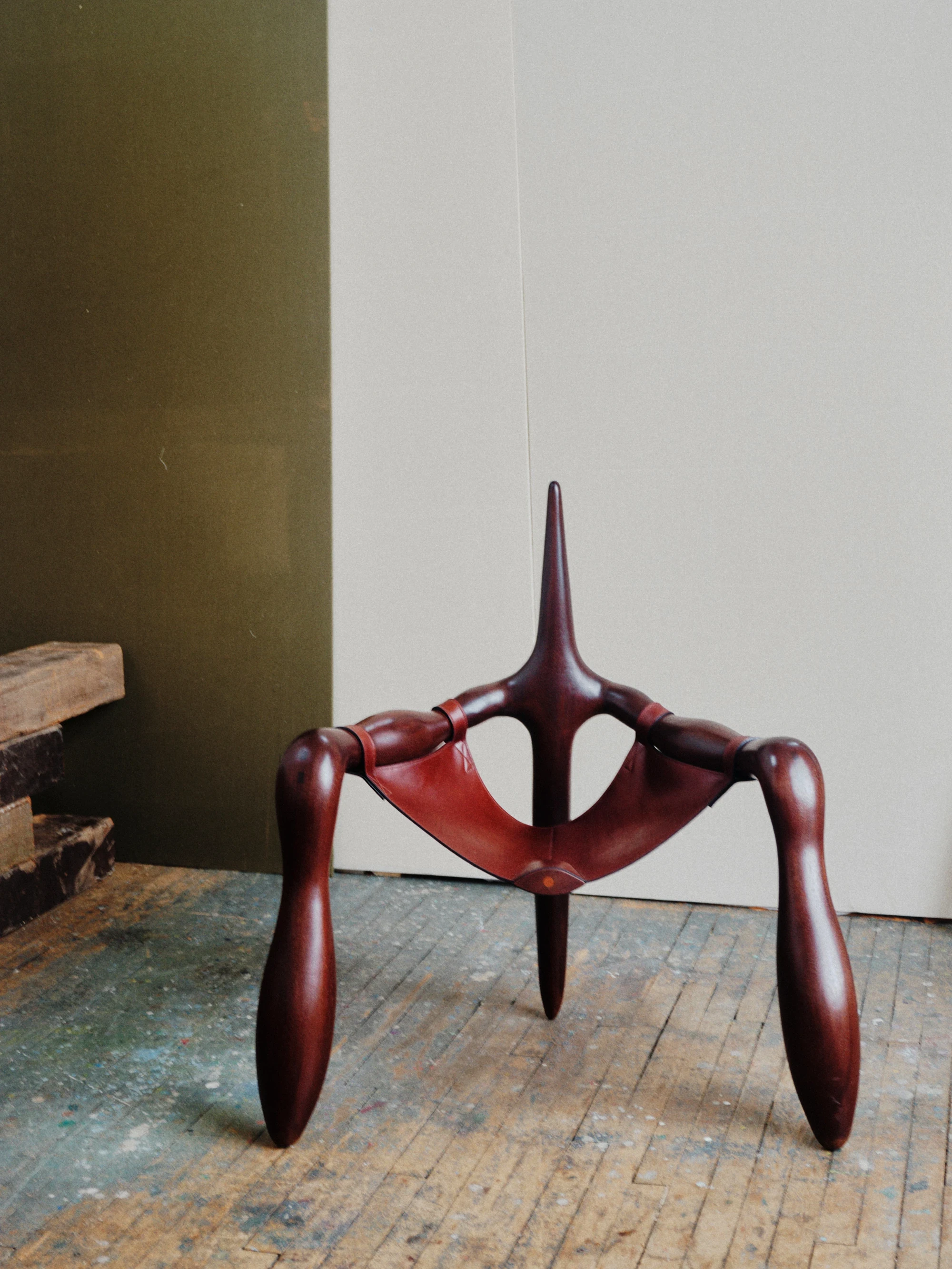
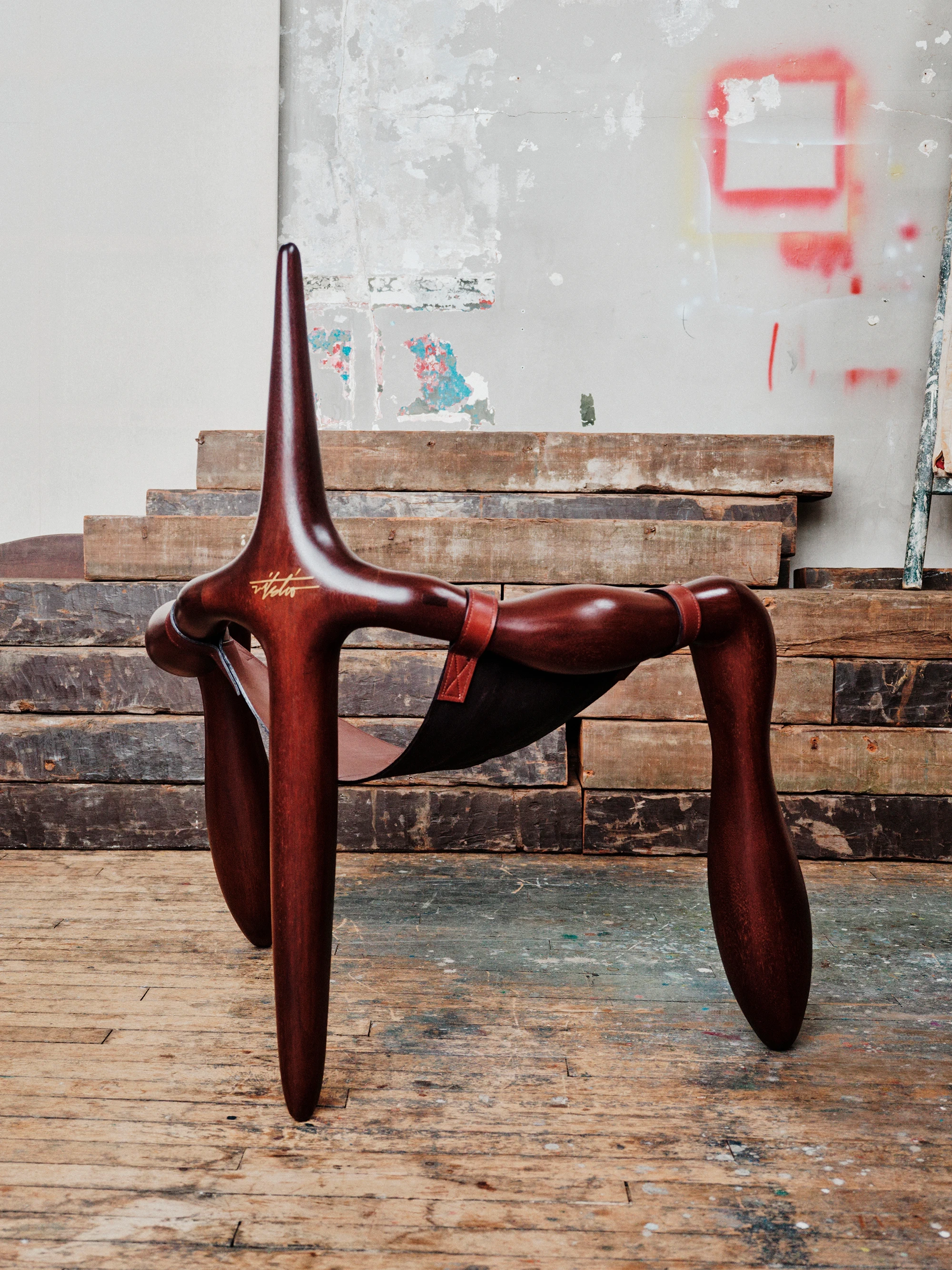
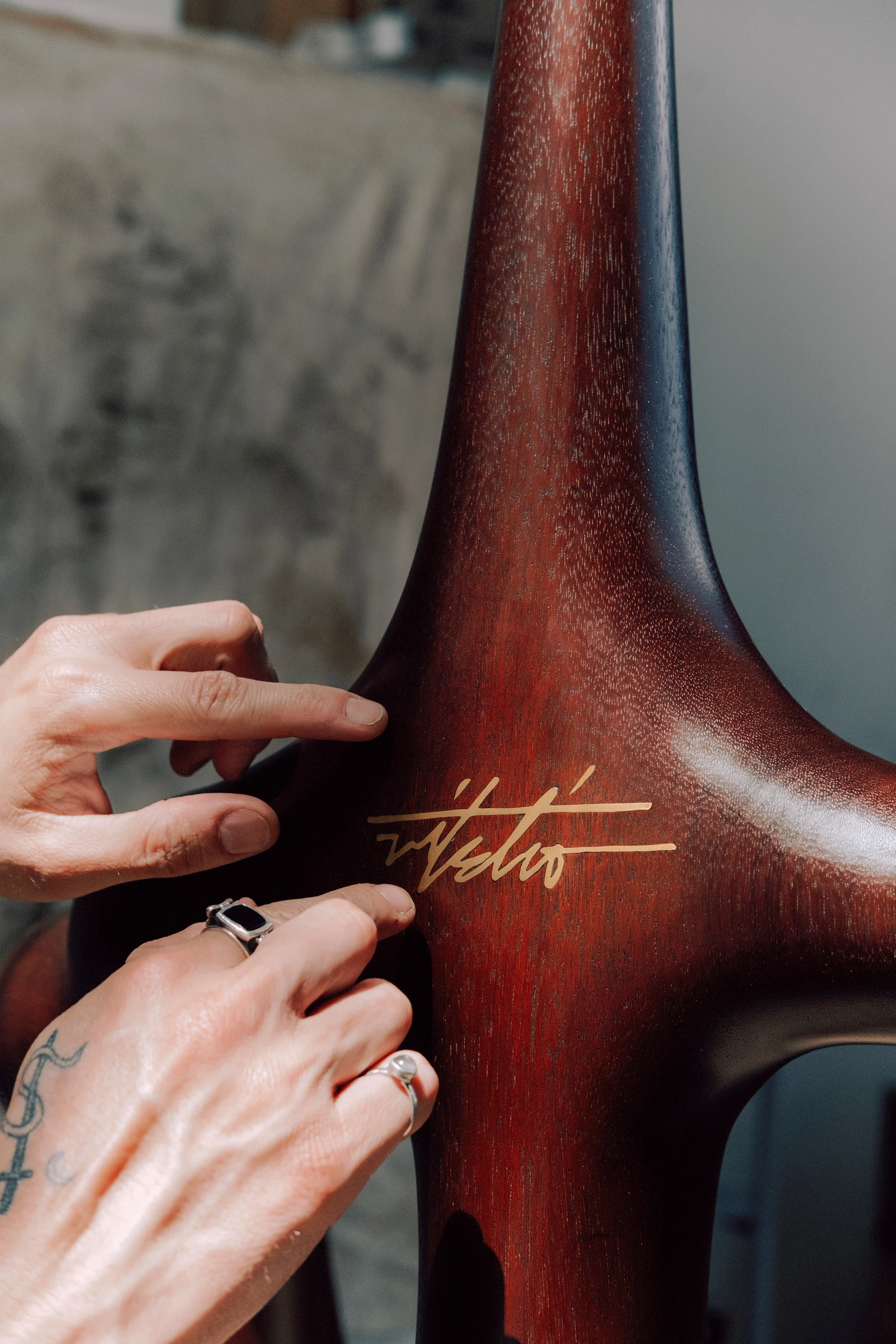
Instructions is a chair by Alberto Vitelio that proposes contact over utility — hand-carved from reclaimed Doussié in a Paris studio on Boulevard Saint-Marcel, its oxblood spine signed in gold cursive.
Alberto Vitelio belongs to a generation of makers who were trained in design but practice closer to sculpture. The Chilean artist, now based in Paris, works alone, by hand, in a studio on Boulevard Saint-Marcel in the 5th arrondissement. Instructions is his most recent piece, carved entirely from reclaimed Doussié wood salvaged from demolished buildings, the seat a suspended panel of saddle-tanned leather held to the frame by hand-stitched straps. It took shape not from a drawing, Vitelio implies, but from the process of listening to what the material wanted to become.
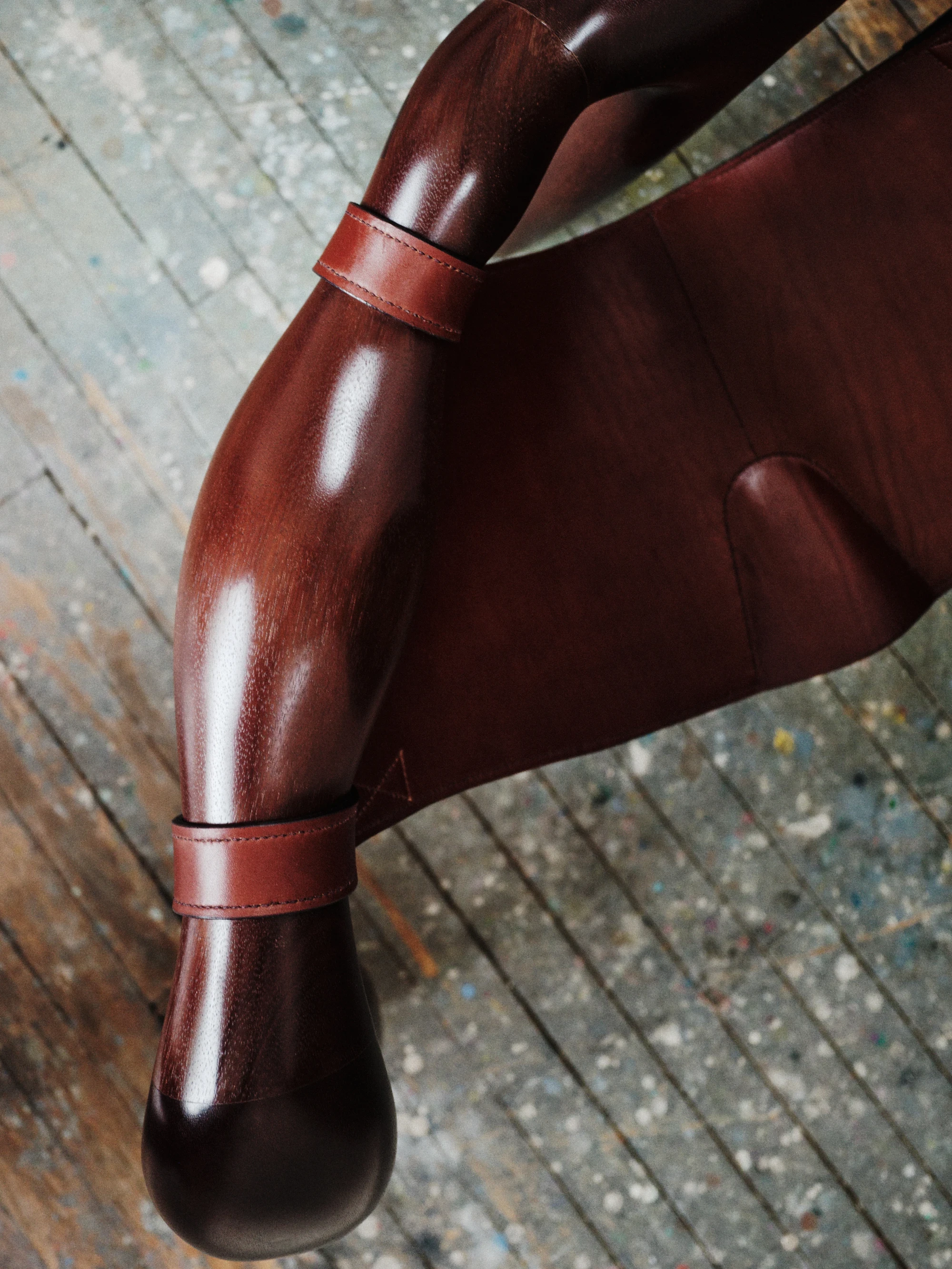
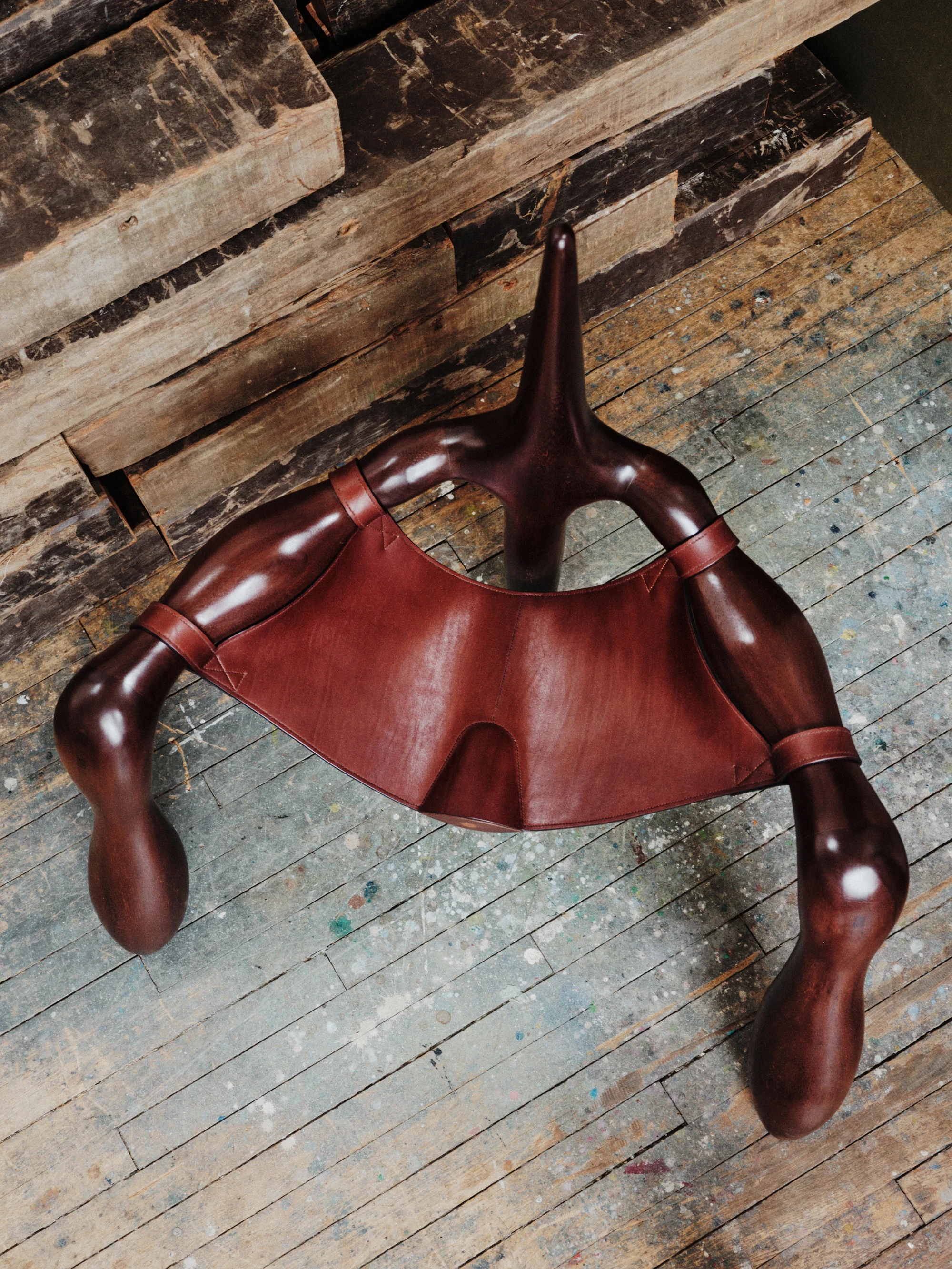
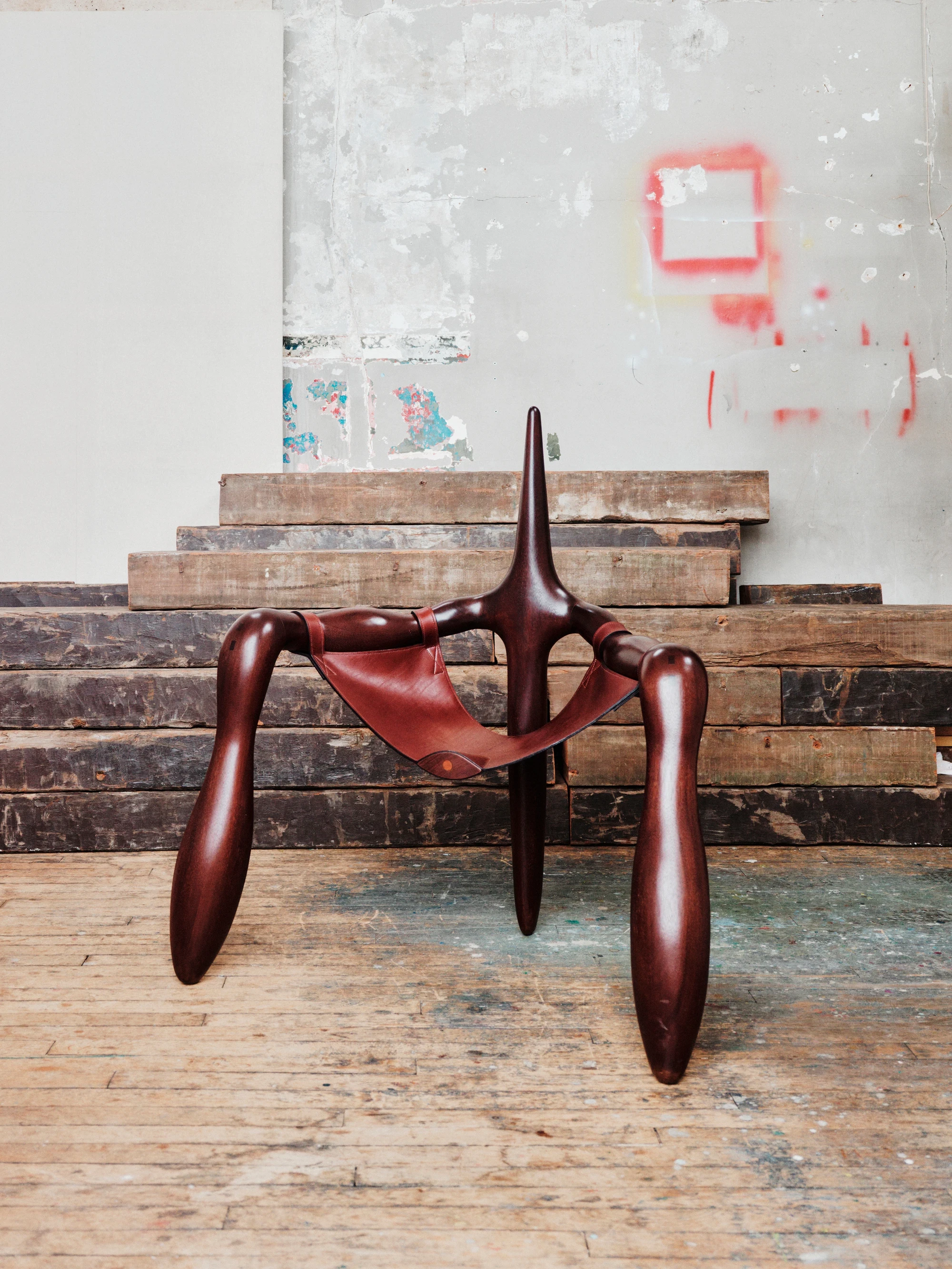
The Doussié is oxblood, almost mahogany in certain light, and Vitelio has brought the surface to a high polish that shows every shift in grain. Up close the wood is not smooth: the marks of the gouge and the rasp survive beneath the finish, evidence that the form was arrived at through removal rather than addition. Three legs swell from ankle-thin junctions into bulging, club-like feet that hover just above the floor. The spine rises from the seat junction to a narrow thorn at the top, a form Vitelio describes alternately as a branch, a needle, and a person who has finally remembered to lift their head.
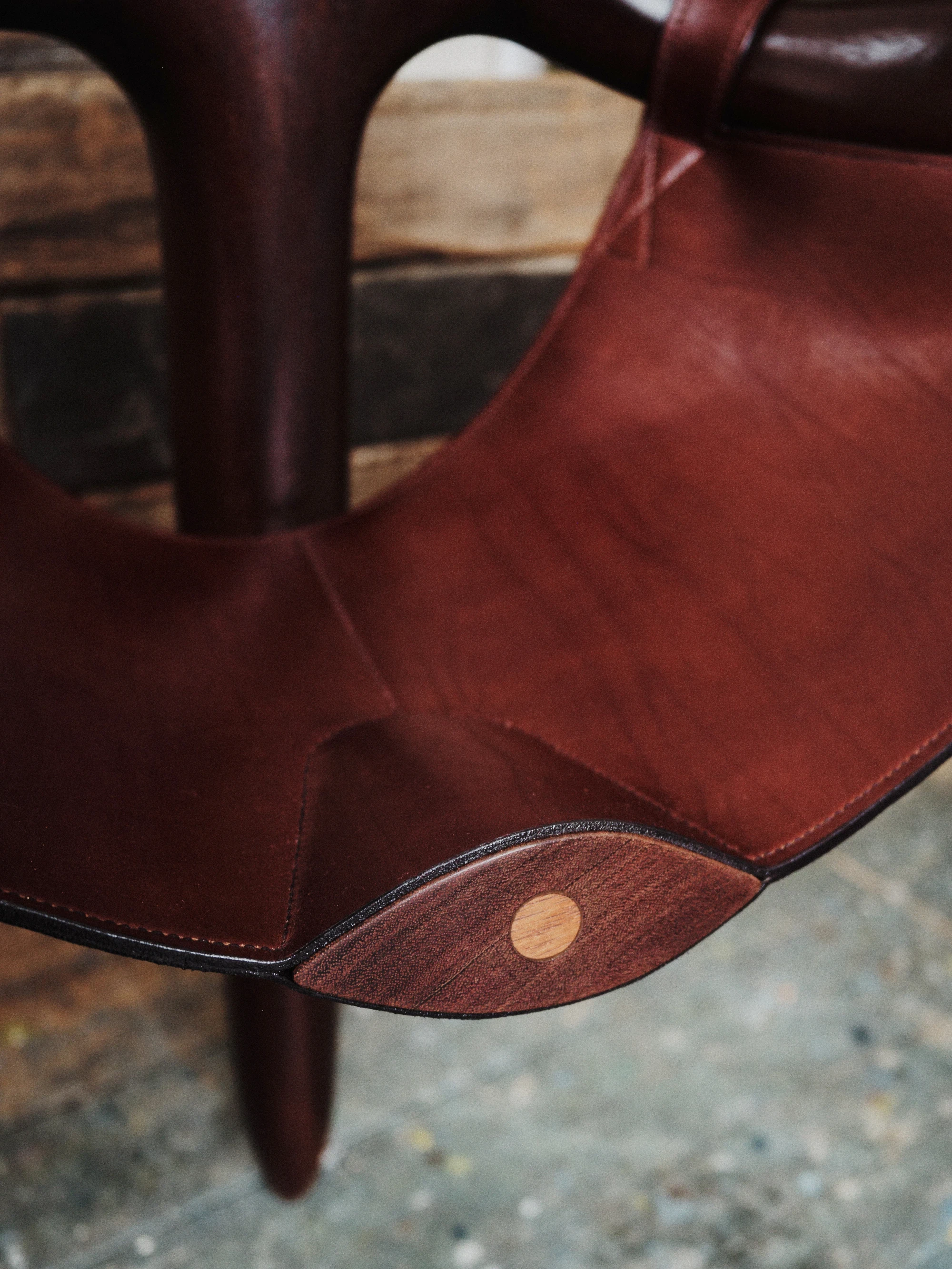
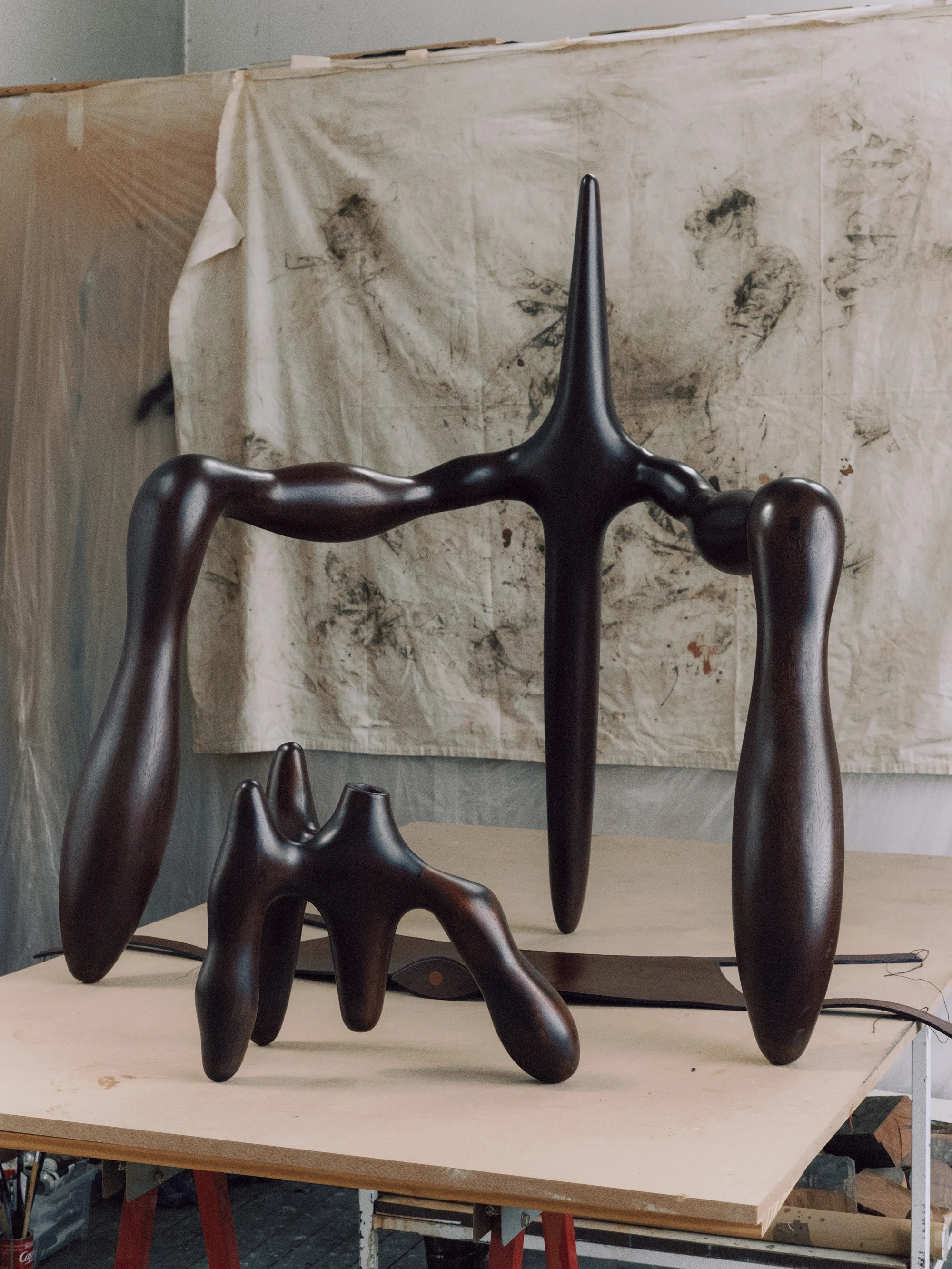
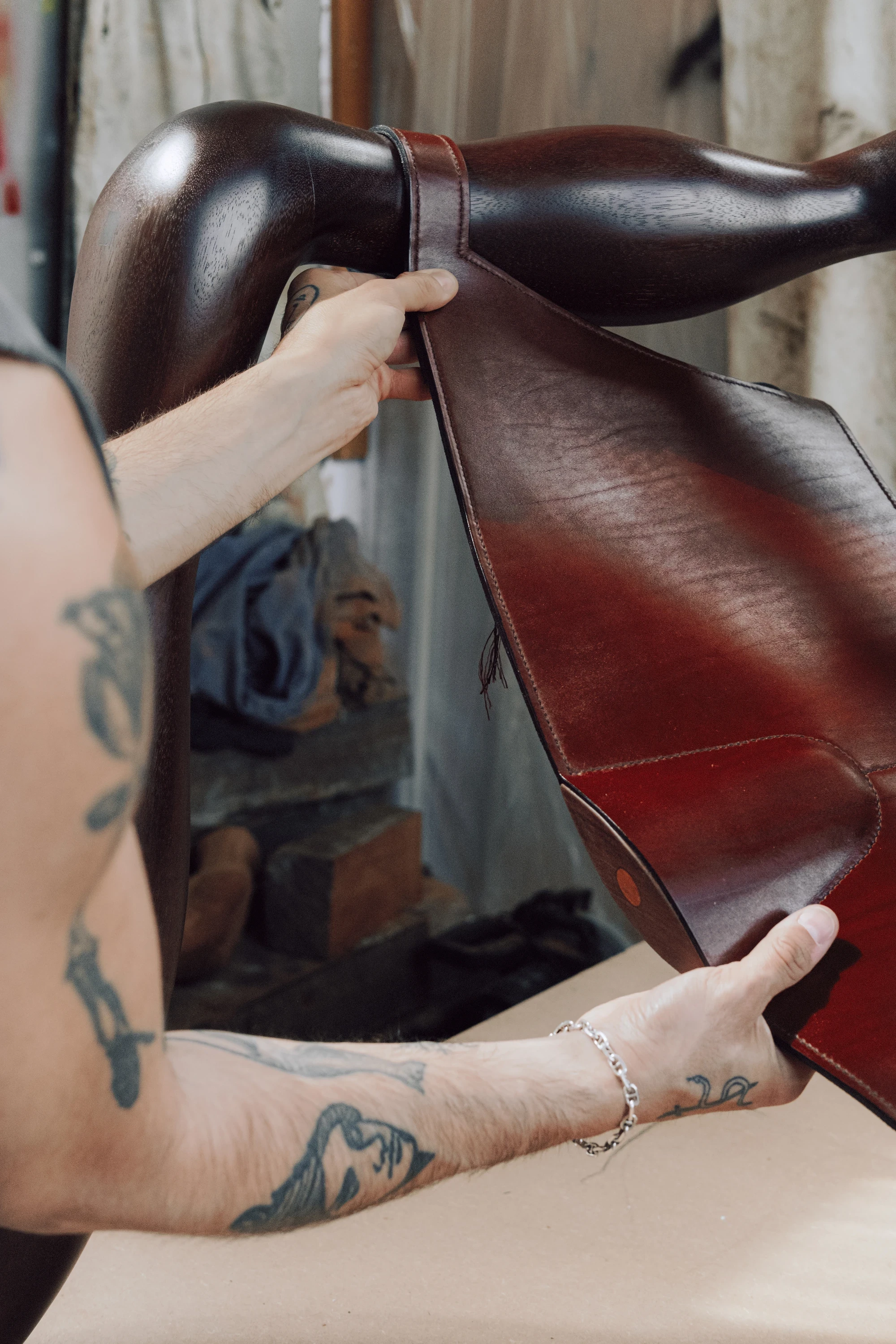
The leather seat is cut from a single thick hide, raw-edged and stitched at the perimeter, pinned at each corner to the Doussié frame with a circular wooden plug rather than a metal fastener. It sags when empty, taking a form that is not quite flat, not quite a bowl. At the studio, the chair sits alongside a near-black maquette and the bare wood armature before the leather is mounted, revealing how much the final piece depends on the tension between two materials pulling against each other.
Vitelio titled the work Instructions, and published a text alongside it that reads less like an artist statement and more like a set of directions for encountering a thing that does not quite behave. Some objects, he writes, accept being used. Others prefer to be visited. The chair does not support the body so much as the body, in settling onto it, completes the chair. It is a generous inversion: the furniture as incomplete until touched, rather than the other way around.
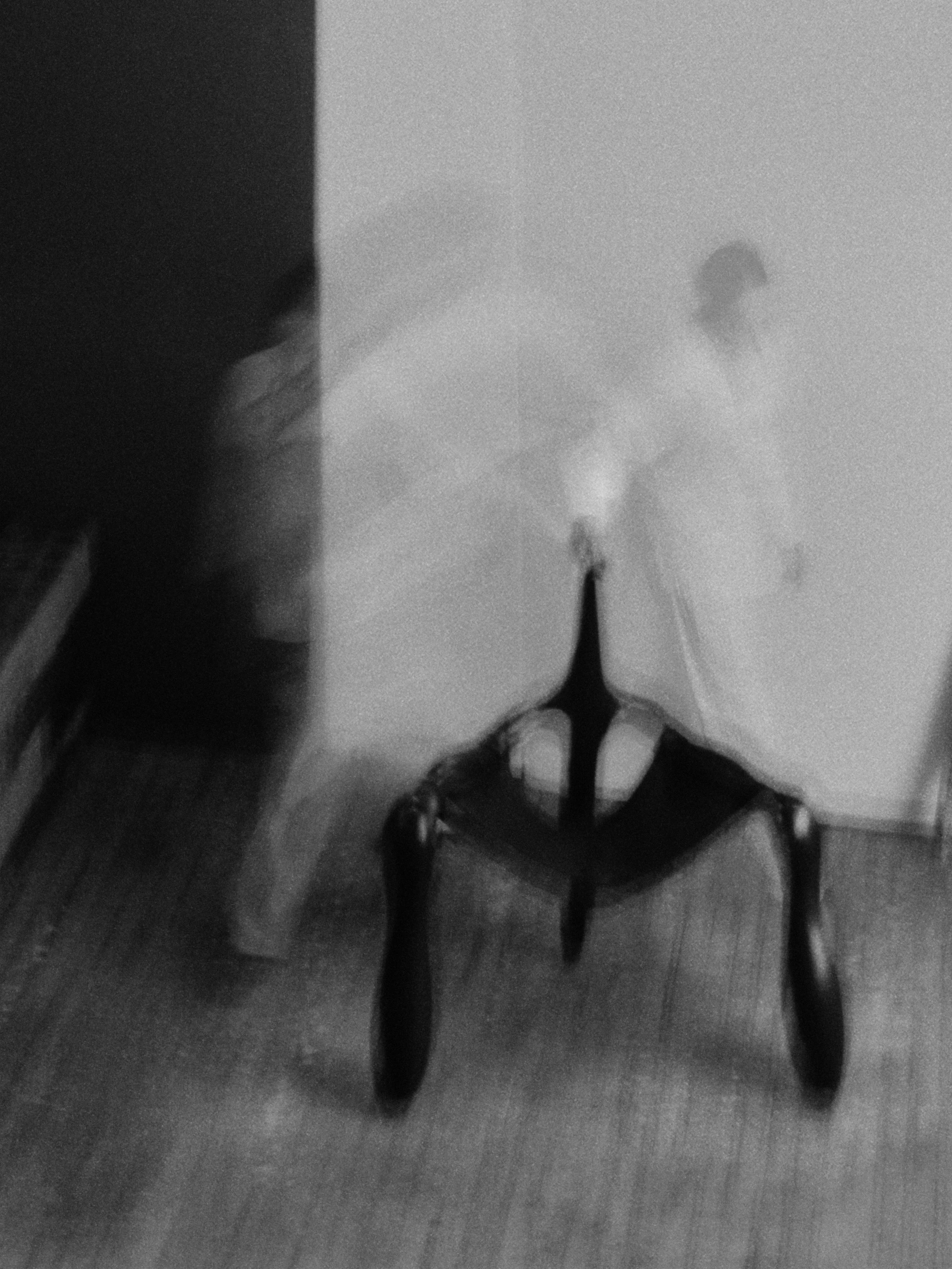
What Instructions refuses is the easy category. It is not a design object in the functional sense, not a sculpture in the static sense. The studio images show it alive with context: the artist signing the central spine in gold cursive, tattooed hands pulling the leather panel away from the frame to check its tension, a blurred figure in white moving around it as though in a slow negotiation. The chair participates in all of this. It holds its ground.