.webp)
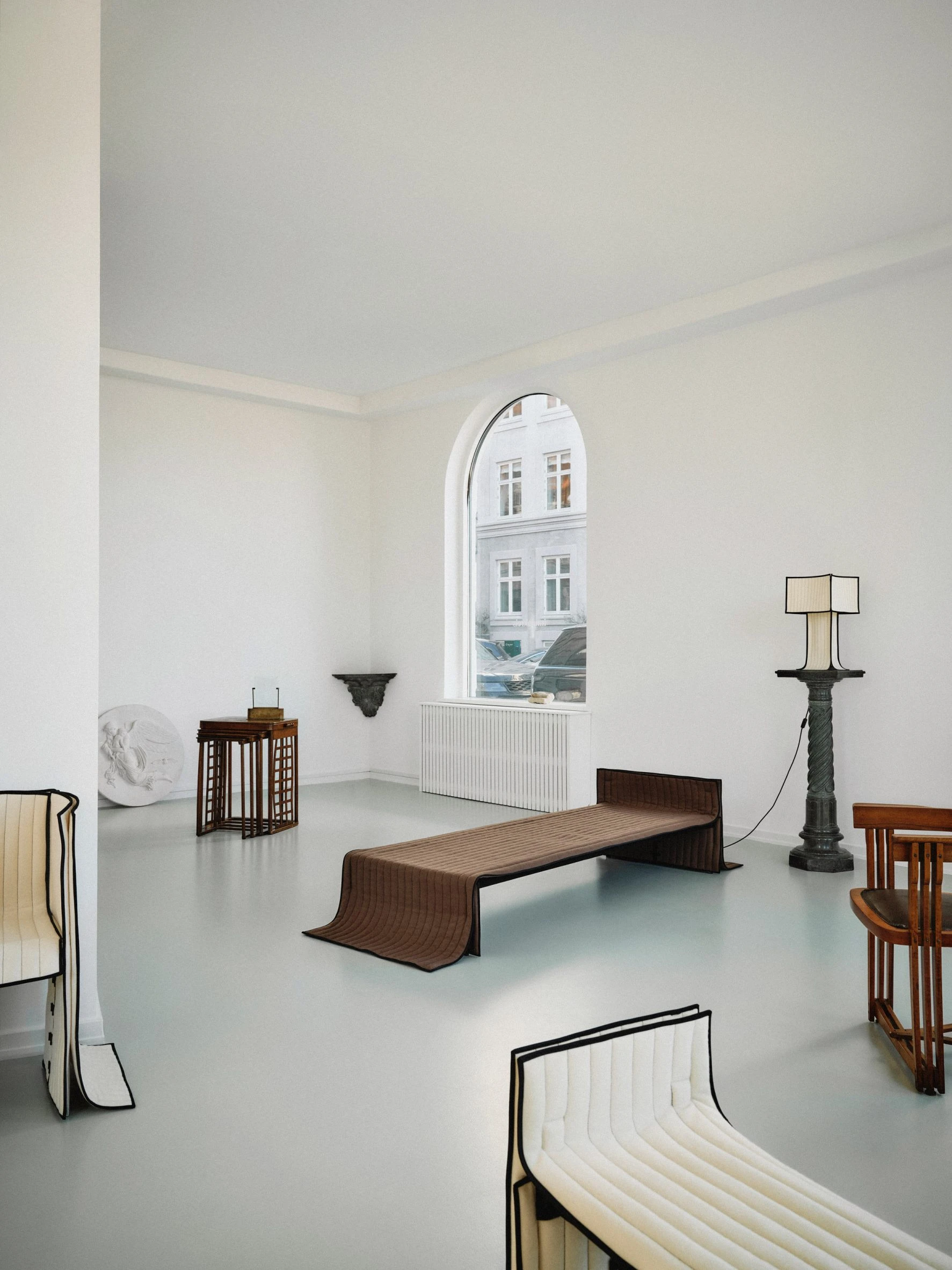
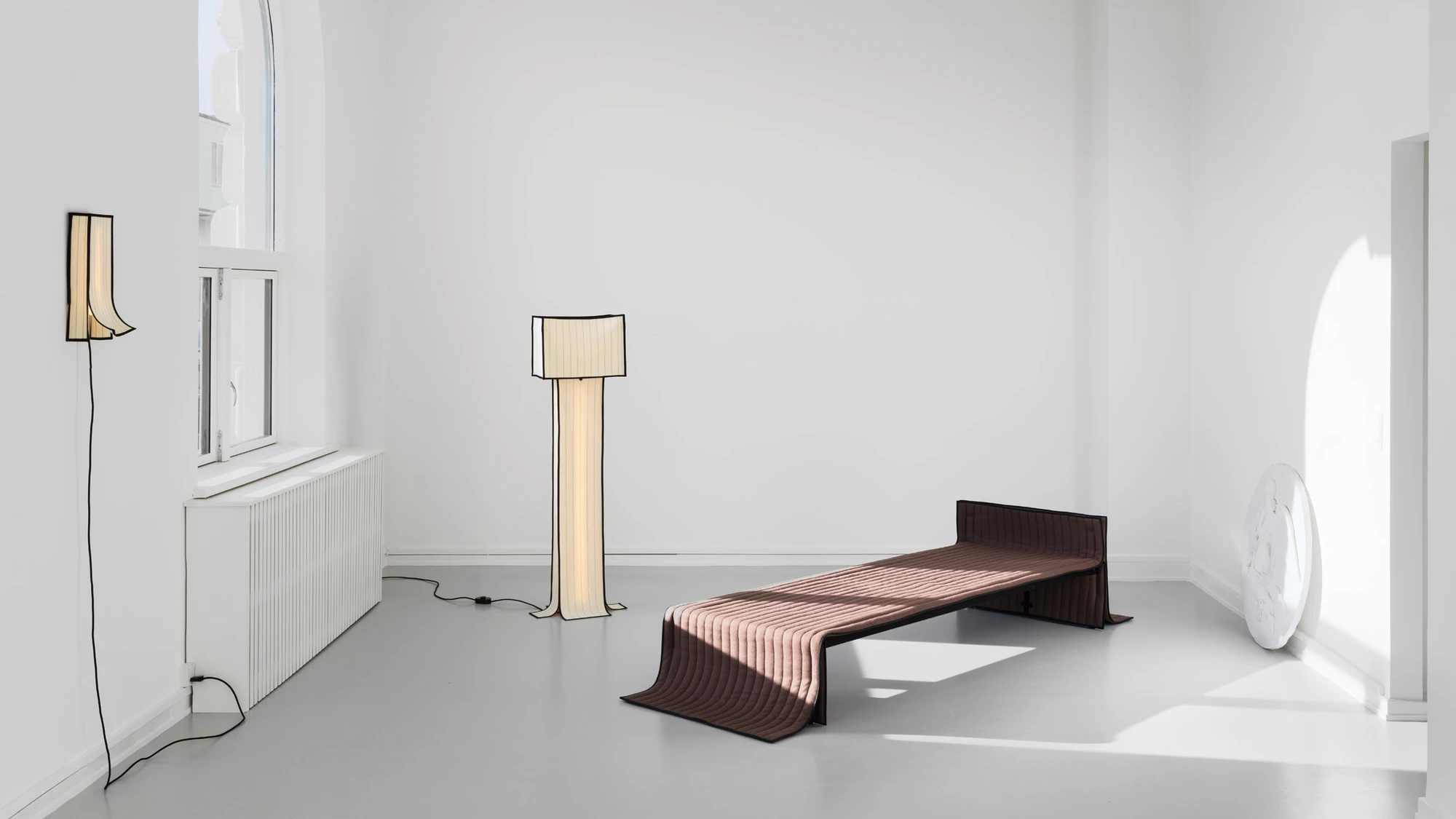
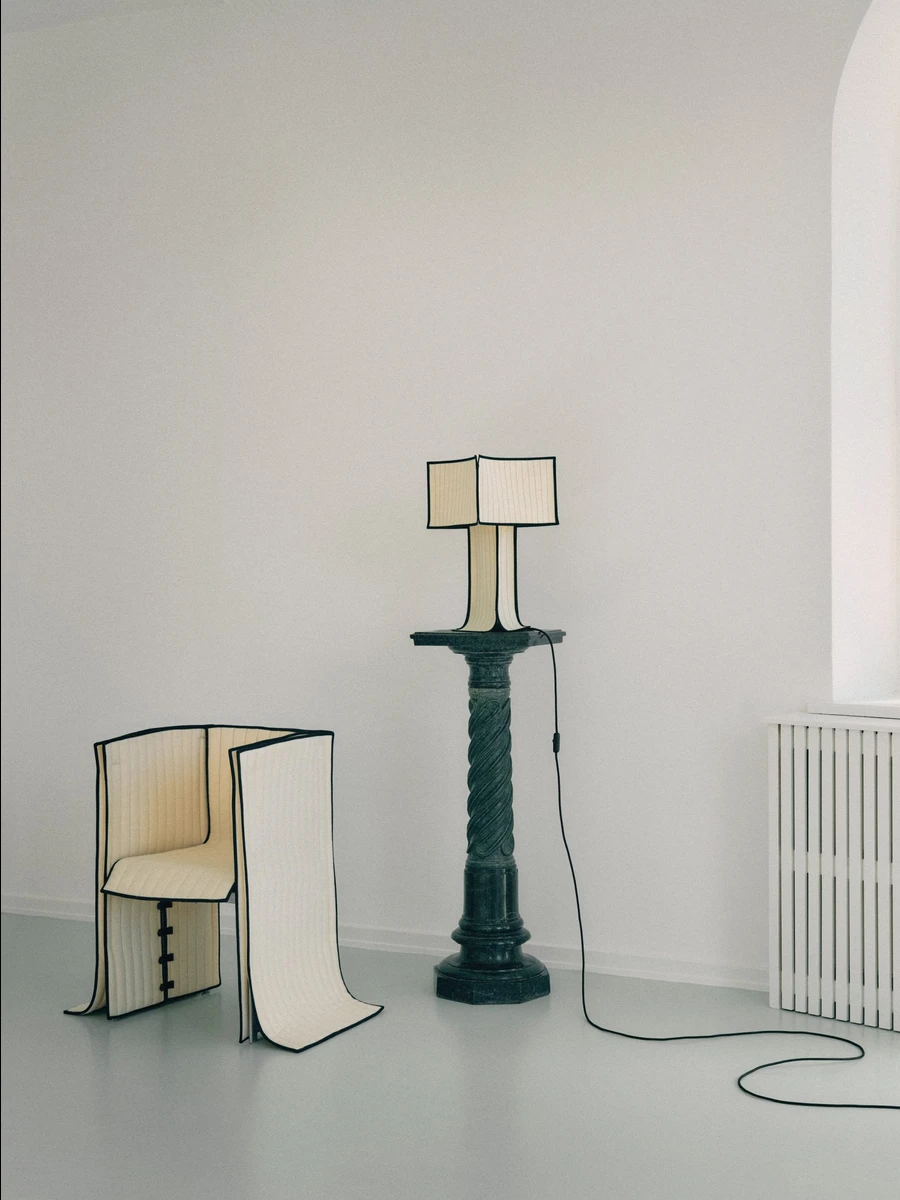
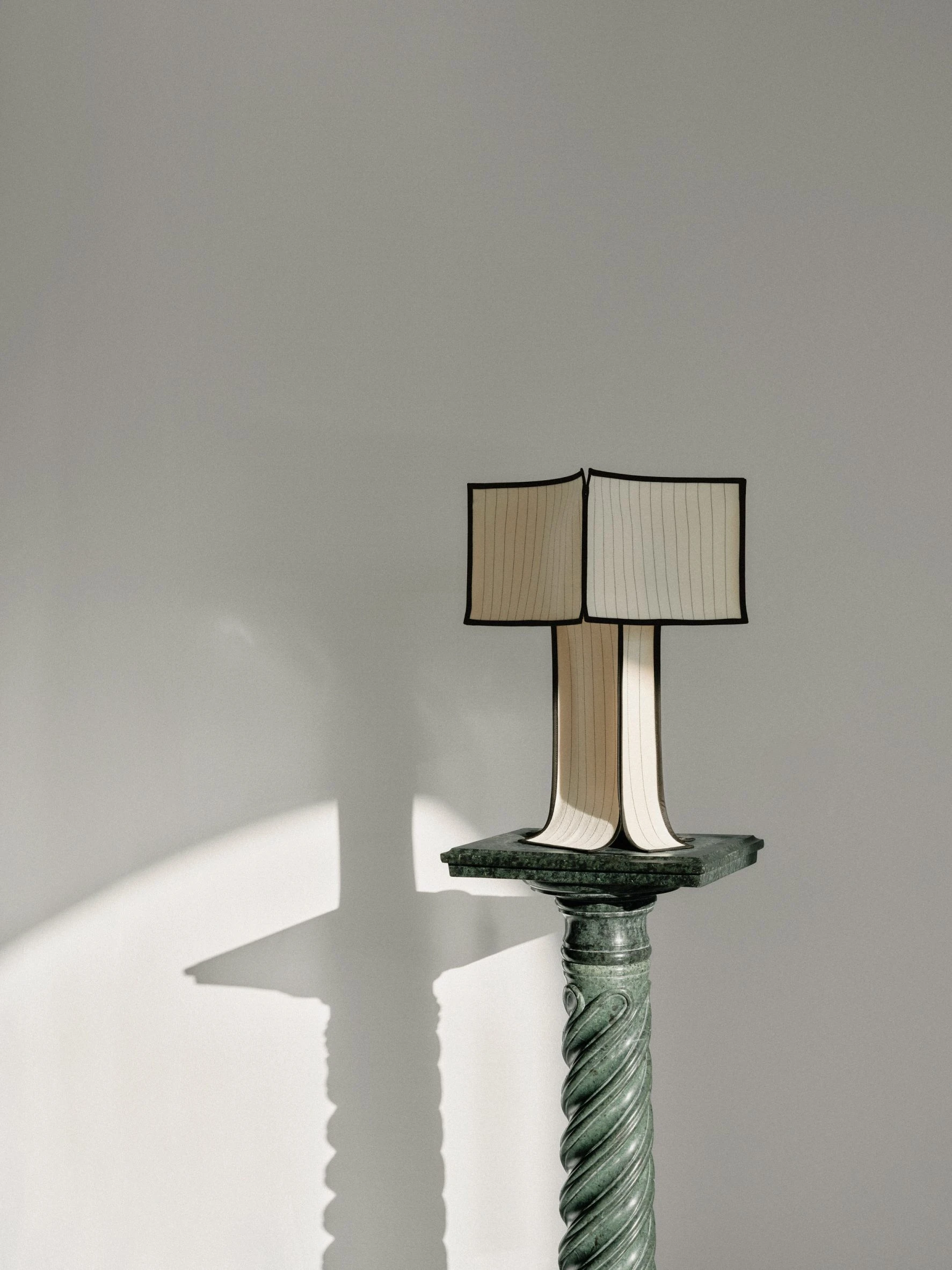
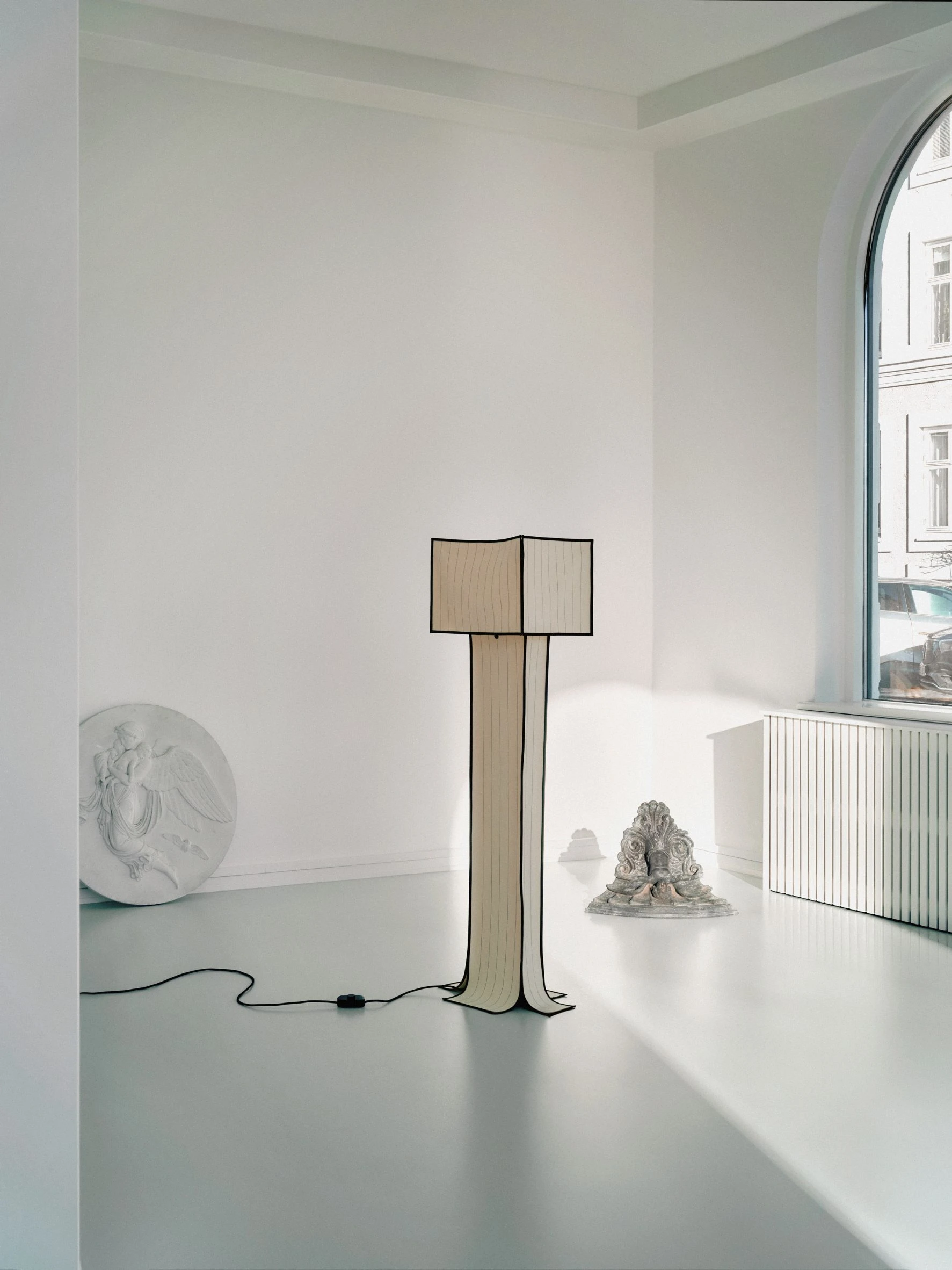
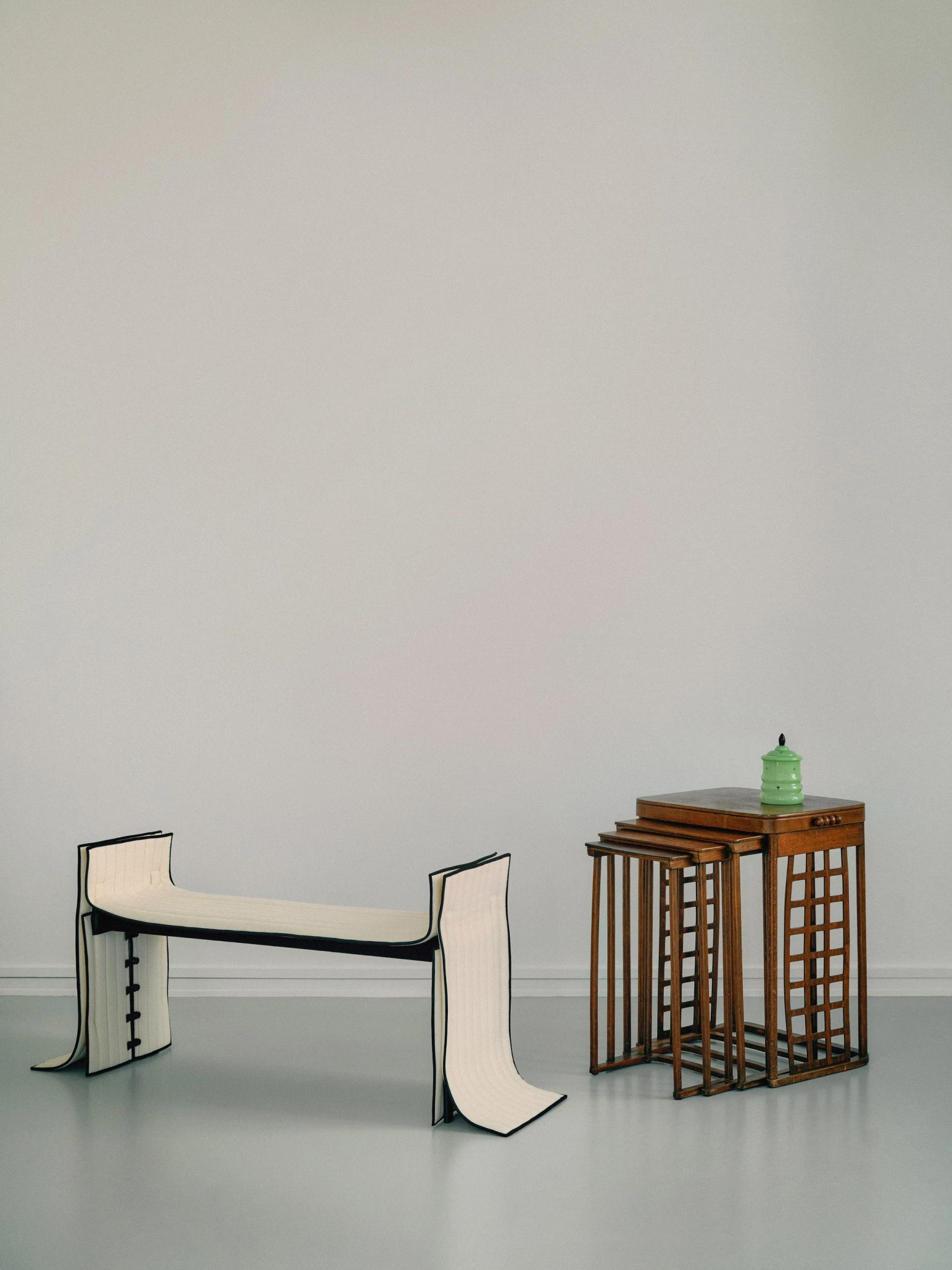
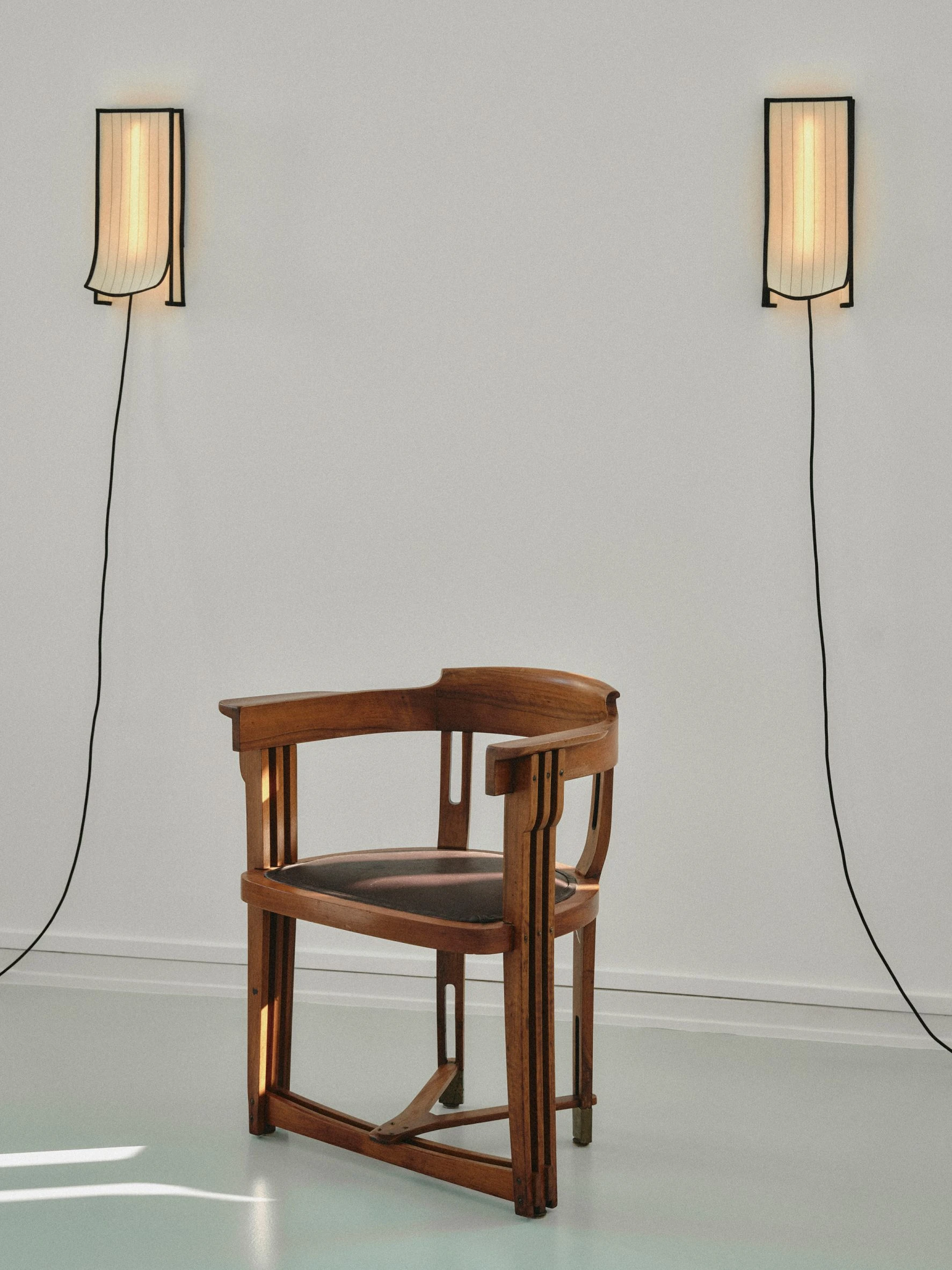
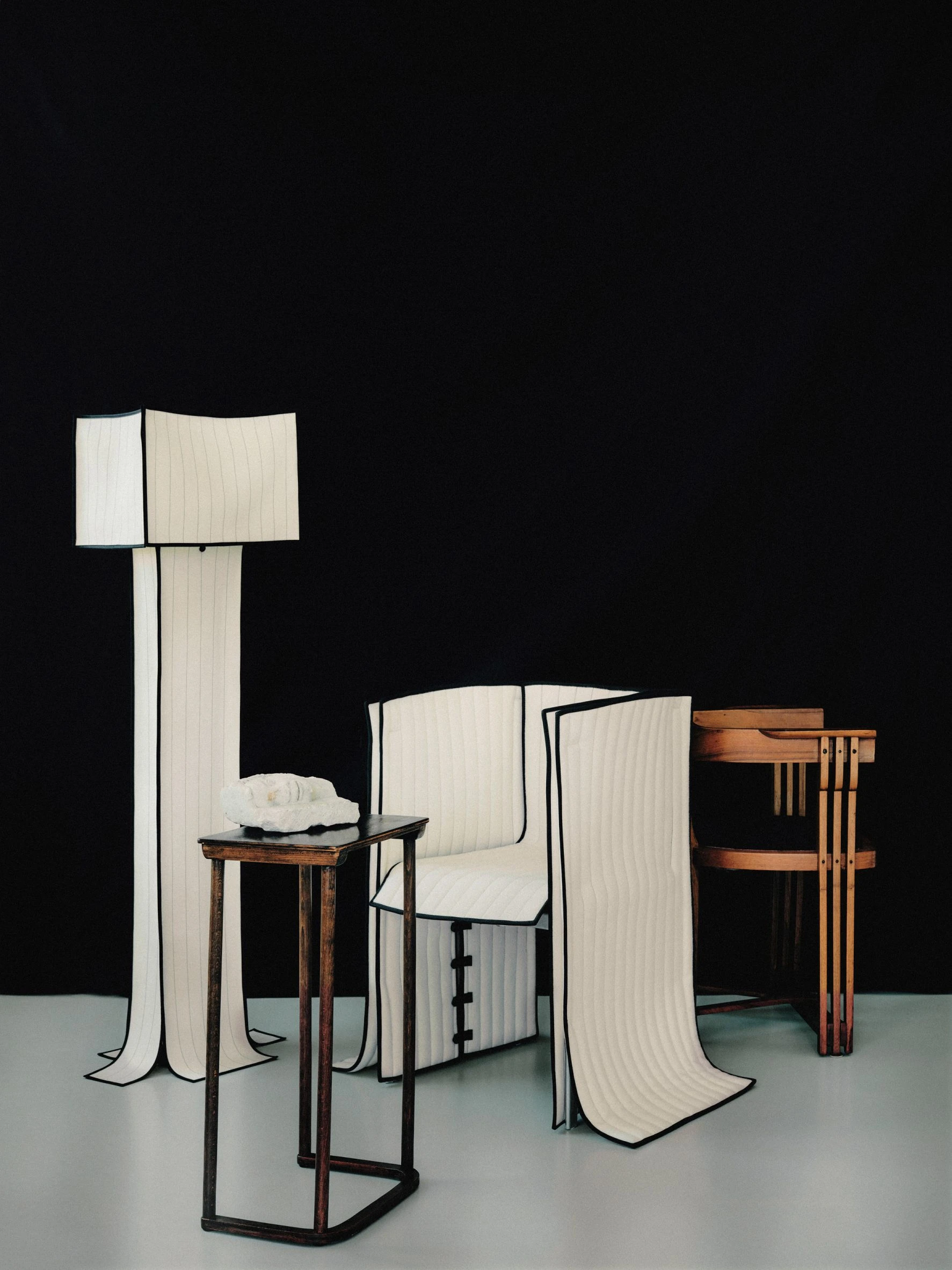
From Copenhagen, Laerke Ryom presents Raiments — a furniture series that treats upholstery as something closer to dressing than covering, shifting the relationship between object and material from fixed to fluid.
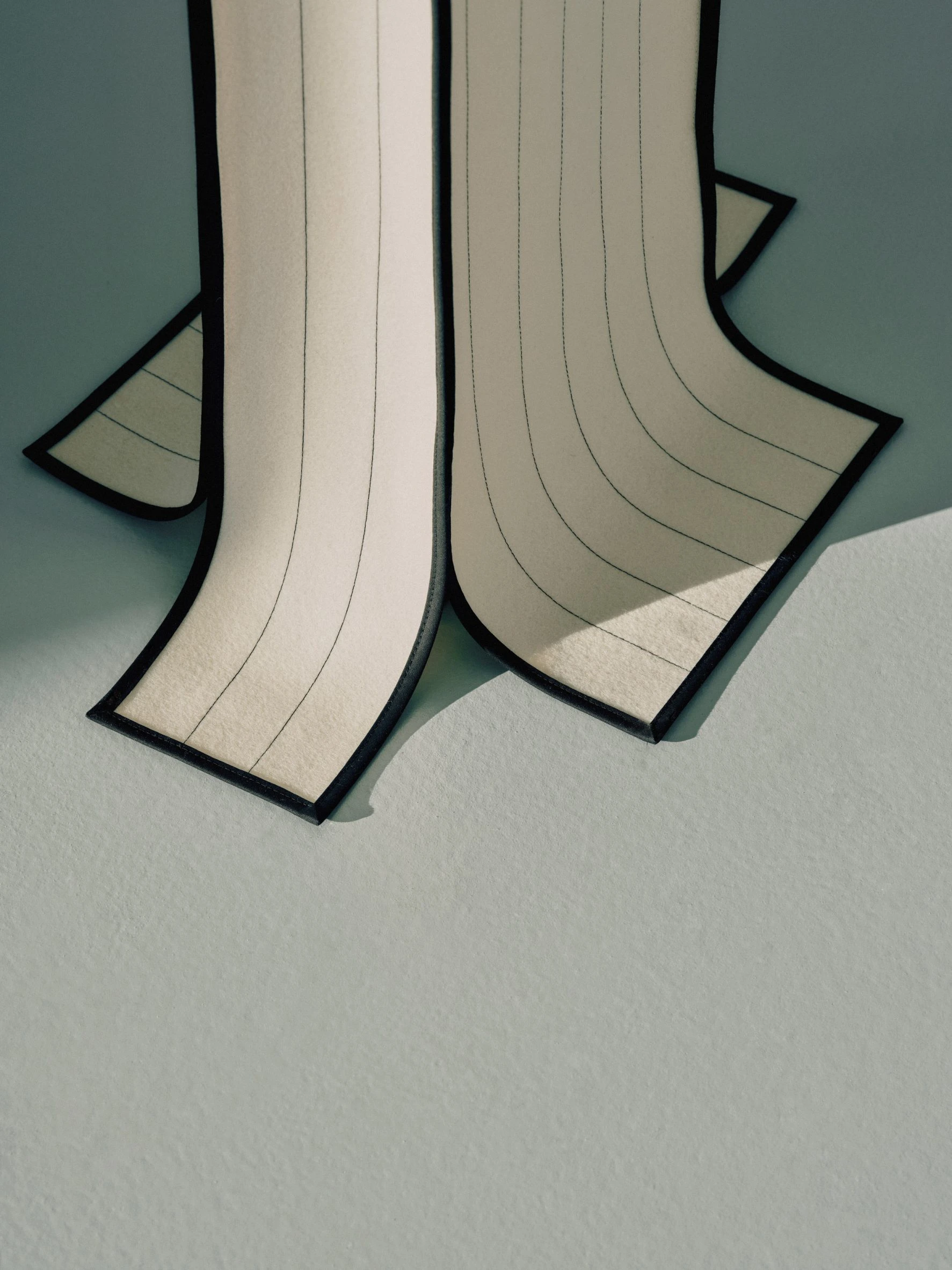
Traditional upholstery proceeds from a logic of permanence: foam, wadding, and fabric are attached to a frame and the result is considered finished. The fabric is the surface through which you read the furniture. Raiments works differently. The textiles here are conceived as garments in the literal sense — pieces that fit around the furniture rather than adhere to it, carrying the logic of cut and construction that belongs to clothing rather than to conventional soft furnishing.
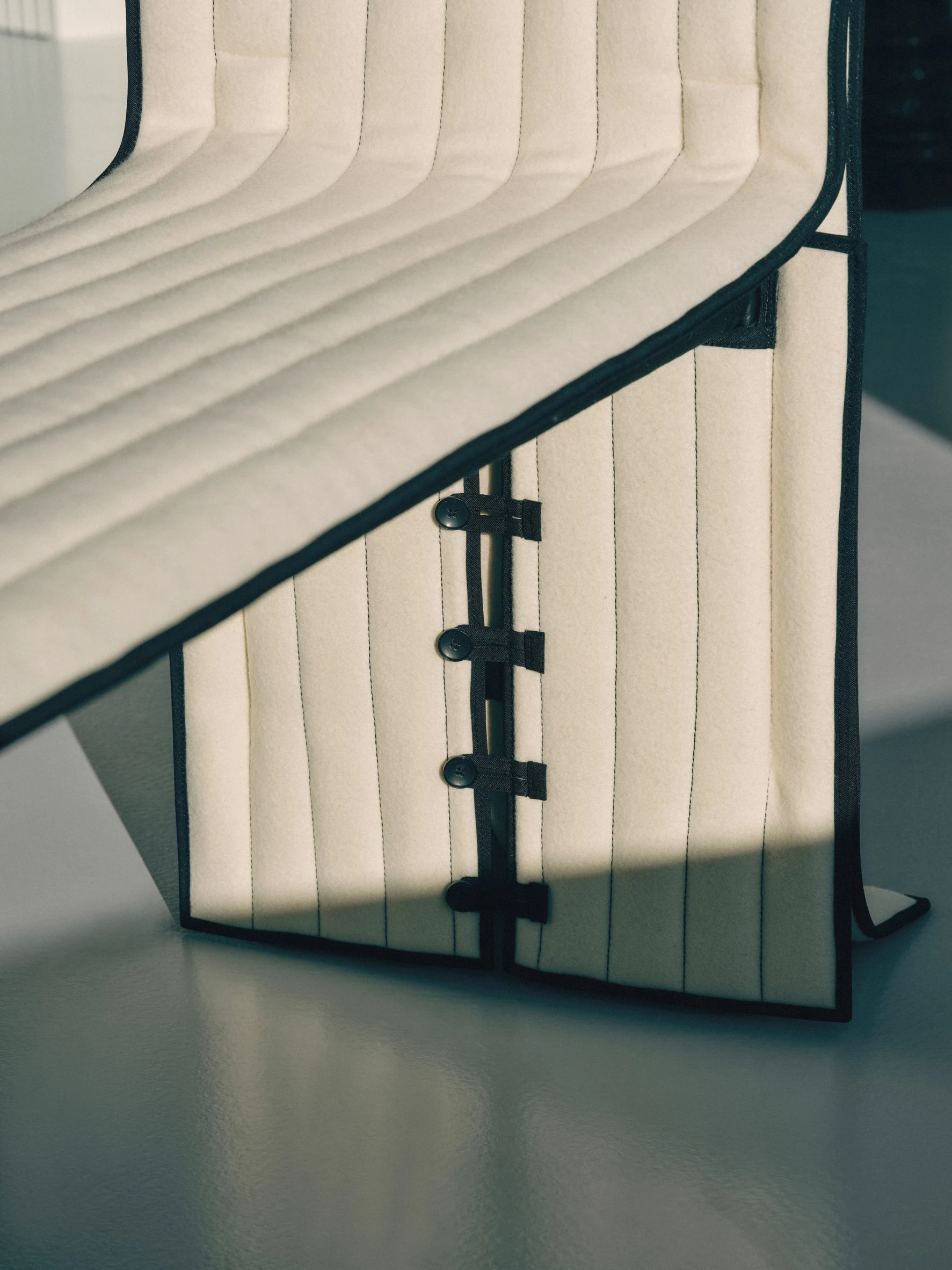
This is not merely conceptual. The practical consequence is furniture that can be changed, that ages differently because its outer layer is designed to be removed and replaced. The relationship between user and object shifts accordingly: one chooses the fabric of a chair the way one chooses a coat, with the knowledge that the choice is not irrevocable. The chair exists beneath; the garment changes over it.
Ryom's background in fashion informs the construction throughout. The seaming, the way fabric corners are resolved, the visible finishing details that on conventional upholstery would be hidden because they are understood as structural failures — here they are present and deliberate, borrowed from tailoring. The result is furniture that reads as having been dressed rather than manufactured, and that carries the specificity of someone who understands both disciplines working across them without confusion.
The new chair conversation has long asked what furniture can be when the object itself is reconsidered. Raiments asks a different question entirely: what changes when the surface is the subject.