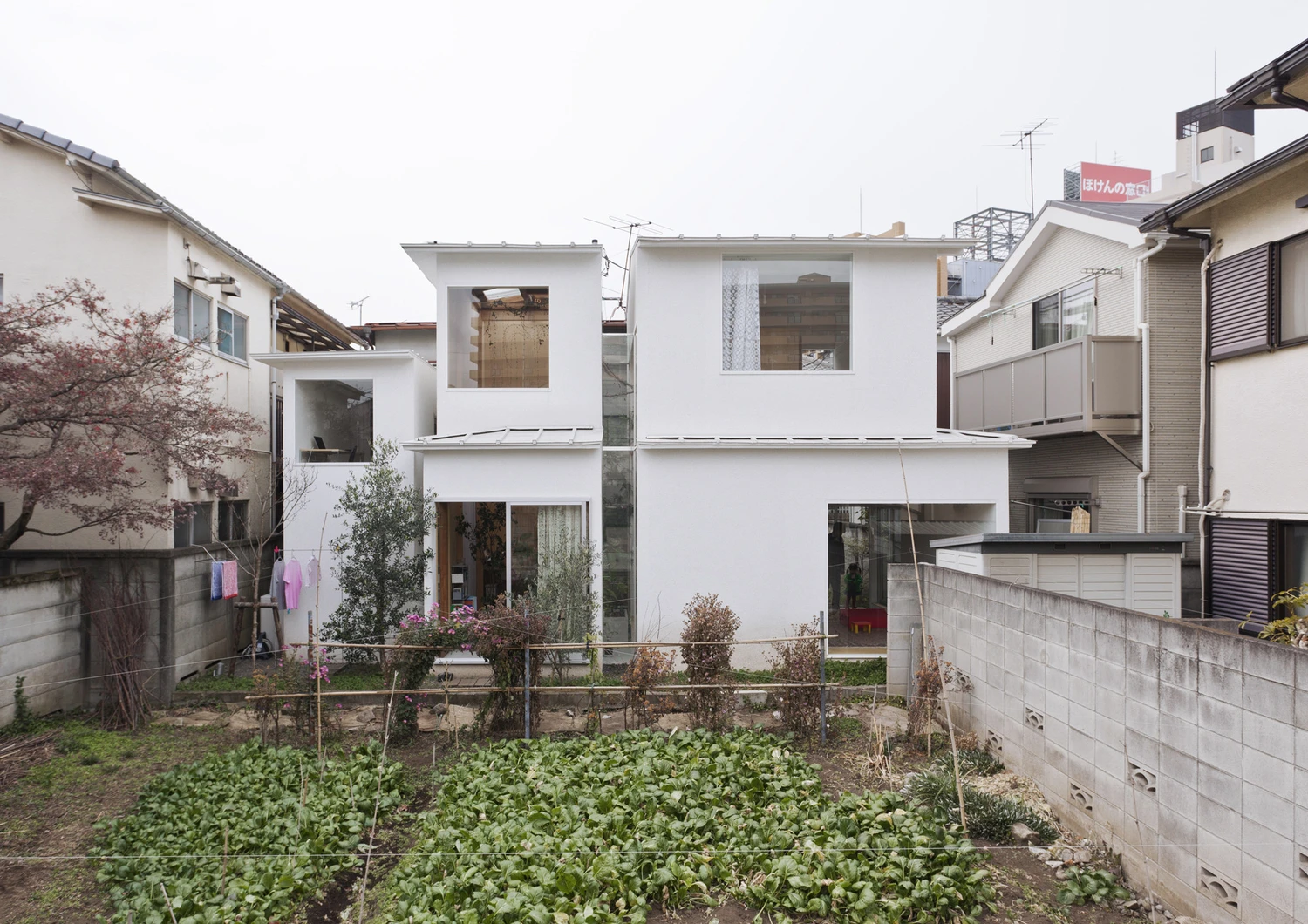
In a quiet residential neighbourhood near Tokyo’s Komazawa Park, this compact house by miCo offers a study in the gentle tension between containment and openness. From the street, the building presents itself with characteristic Japanese restraint—a clean white volume, modestly scaled, revealing almost nothing of what lies inside.
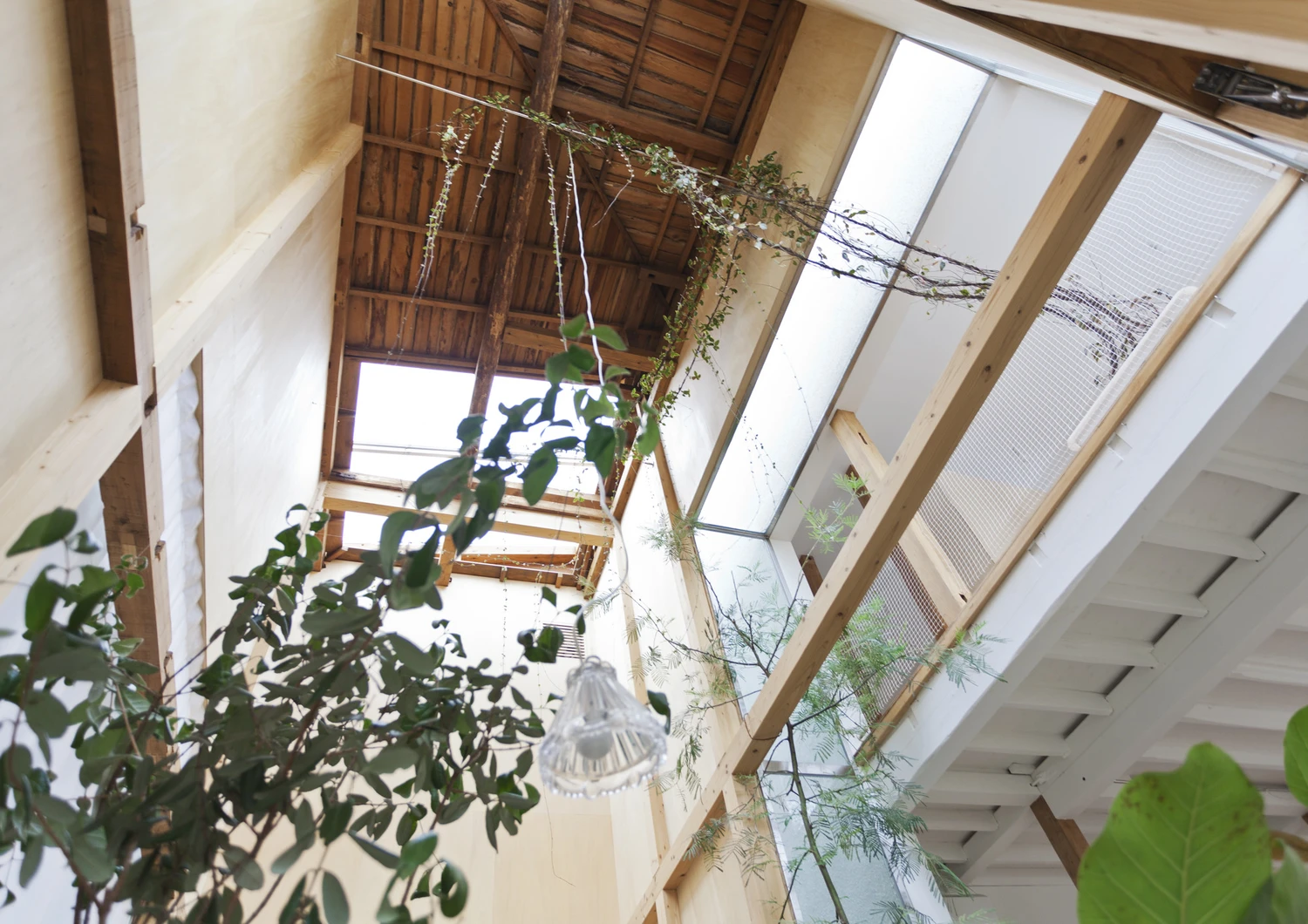
Step through the entrance and the mood shifts entirely. The interiors are lined in light-toned plywood and timber, with the structural framework left deliberately exposed—columns, beams, and bracing become part of the visual language rather than something to conceal. The effect is honest and warm, a domestic space that wears its construction openly and invites close reading of how it was made.
Generous glazing on the upper levels draws daylight deep into the plan, while carefully placed openings frame views of the surrounding greenery. Plants appear throughout—on shelves, in corners, along windowsills—blurring the boundary between interior and garden. The spatial sequence moves between intimate, low-ceilinged areas and moments of vertical release where double-height voids pull the eye upward.
There is a quietness to the house that feels both deliberate and lived-in. The material palette stays narrow—plywood, white plaster, steel connections—but each element earns its place. Storage is built into the structure, furniture is minimal, and the overall impression is of a home where nothing competes for attention. Near one of Tokyo’s best-loved parks, House Komazawa Park is the kind of architecture that recedes to let daily life take the lead.