Thisispaper Community
Join today.
Enter your email address to receive the latest news on emerging art, design, lifestyle and tech from Thisispaper, delivered straight to your inbox.
Oops! Something went wrong while submitting the form.
Instant access to new channels
The top stories curated daily
Weekly roundups of what's important
Original features and deep dives
Exclusive community features
Jutaku
under the patronage of
Vertical Living
under the patronage of
Bay Window Tower House by Takaaki Fuji + Yuko Fuji Architecture
Alexander Zaxarov
Feb 26, 2026

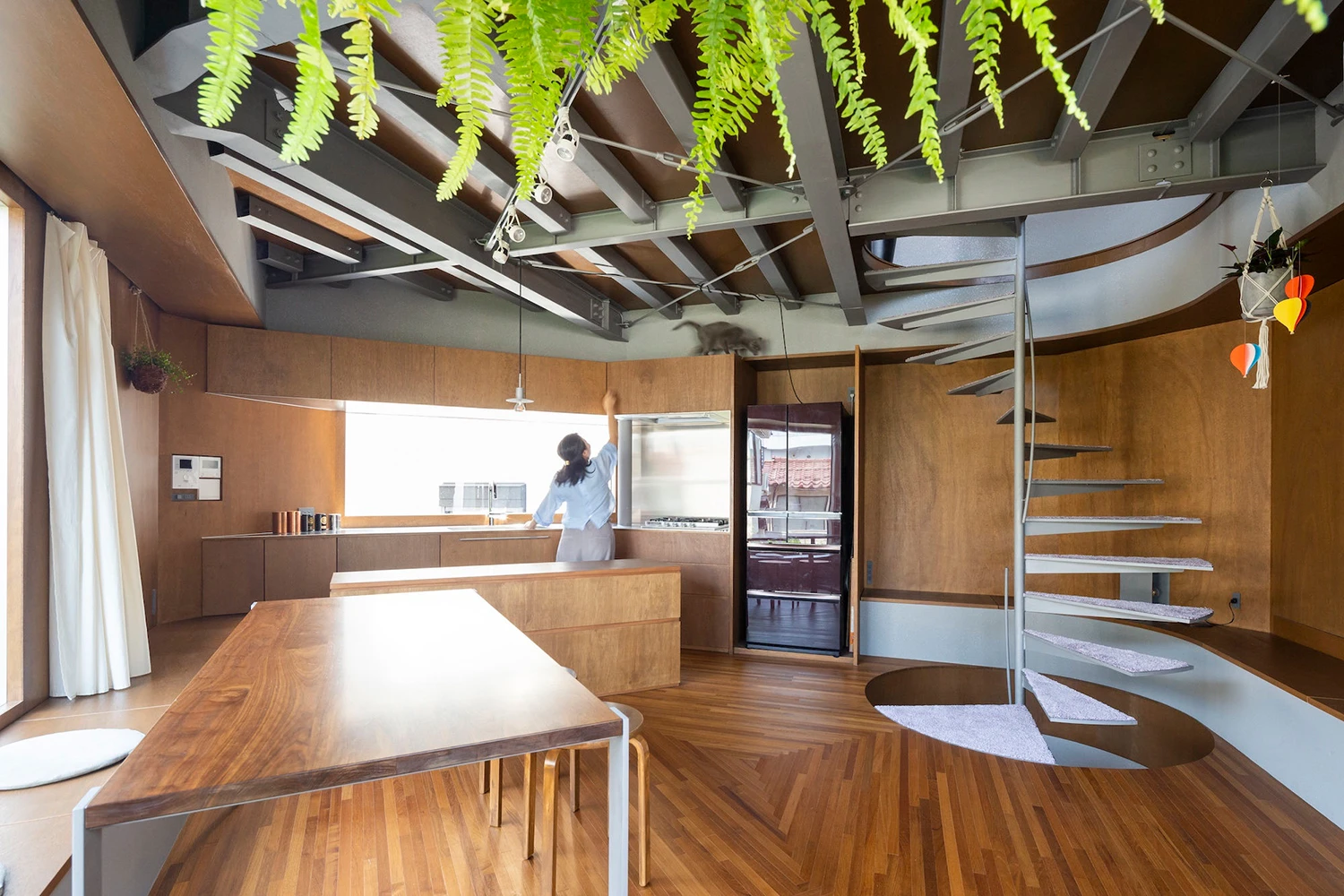
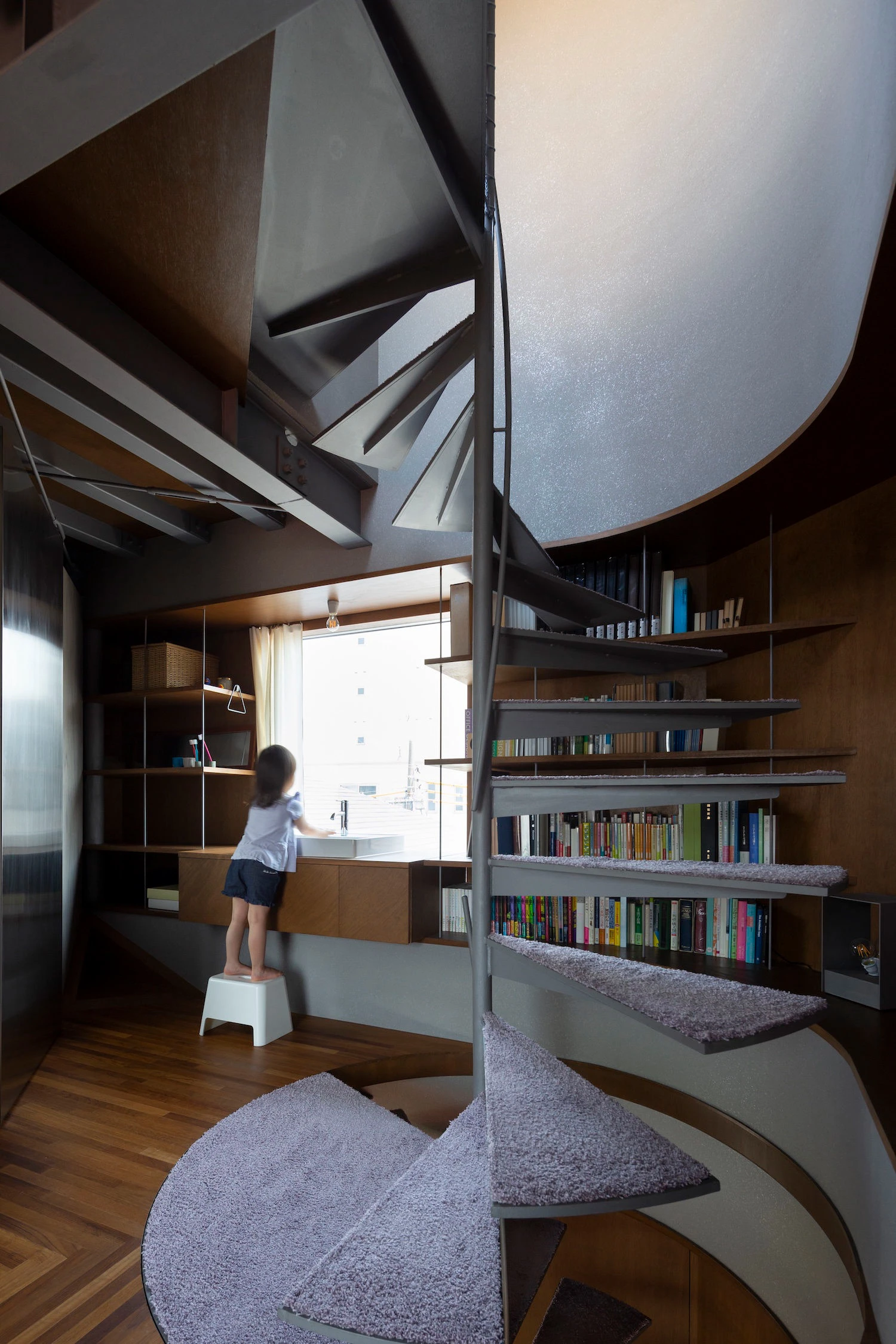
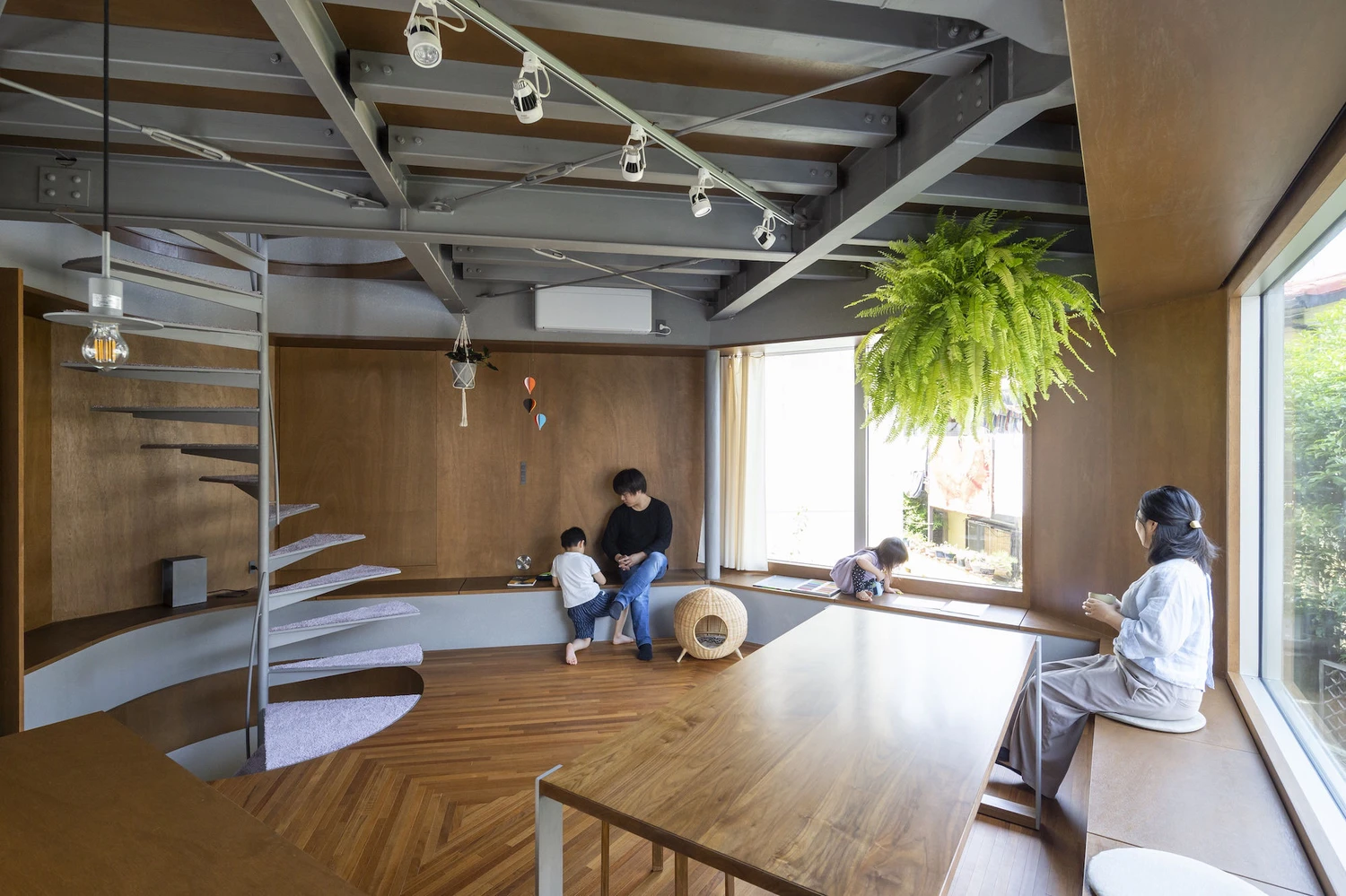
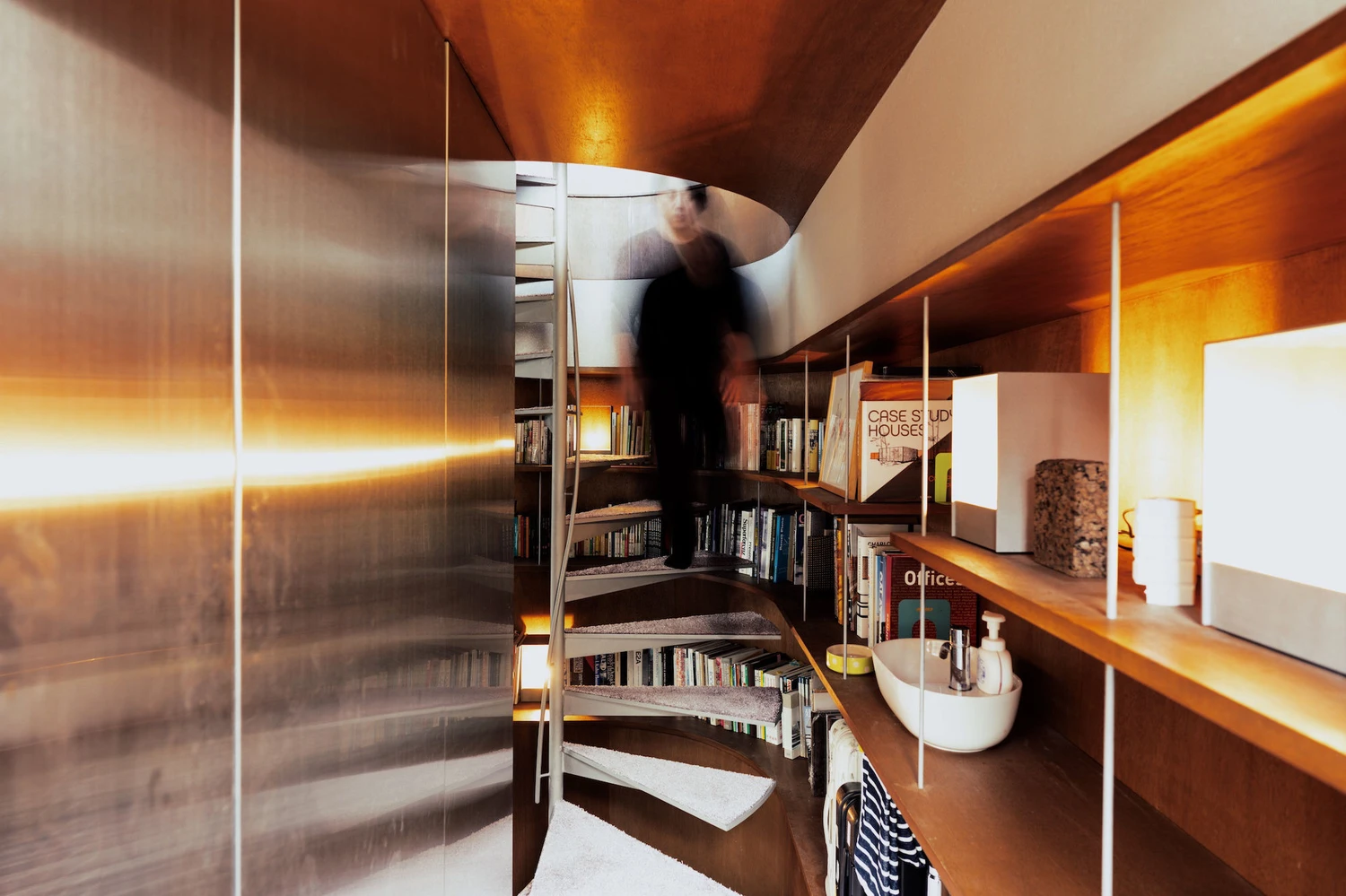
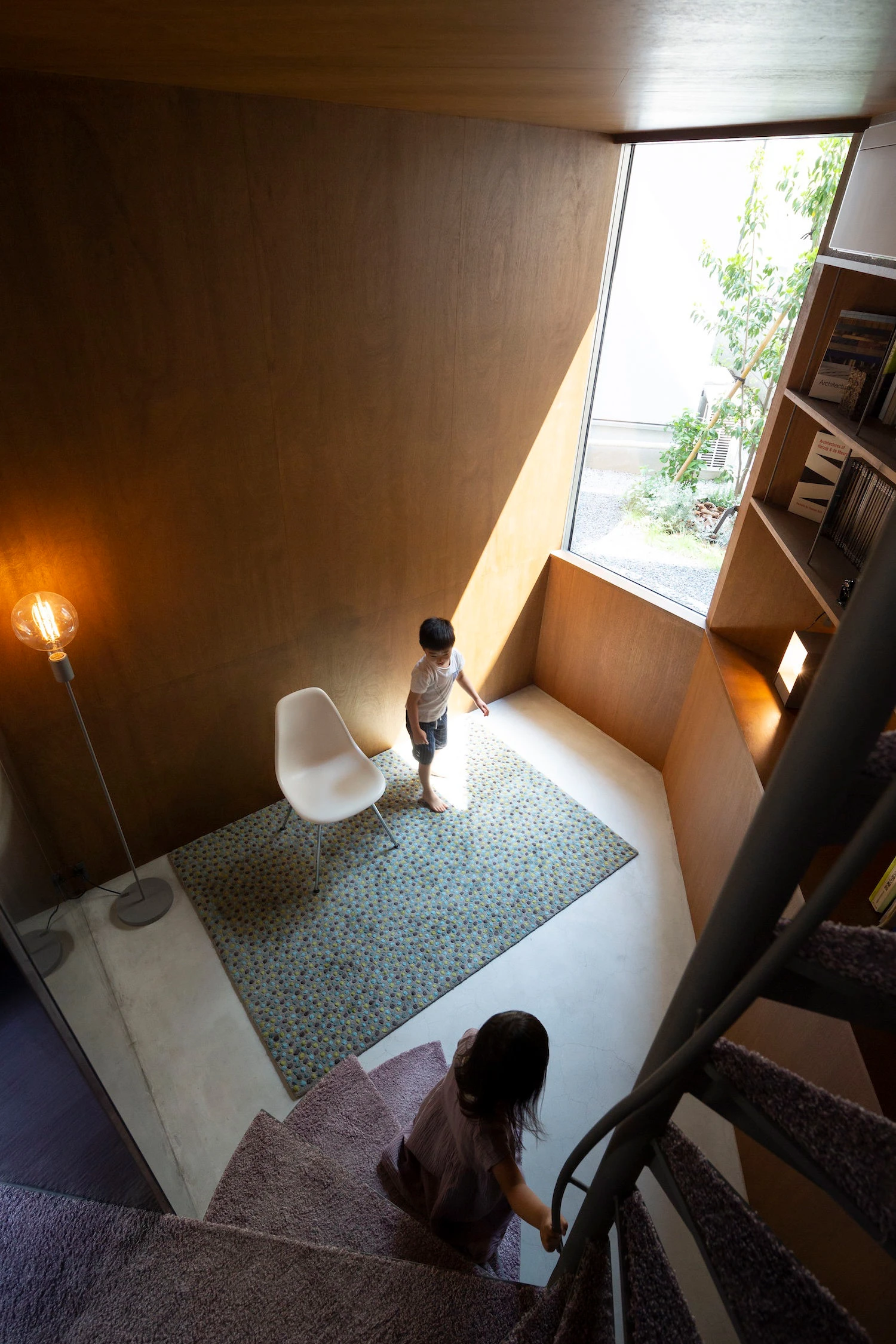
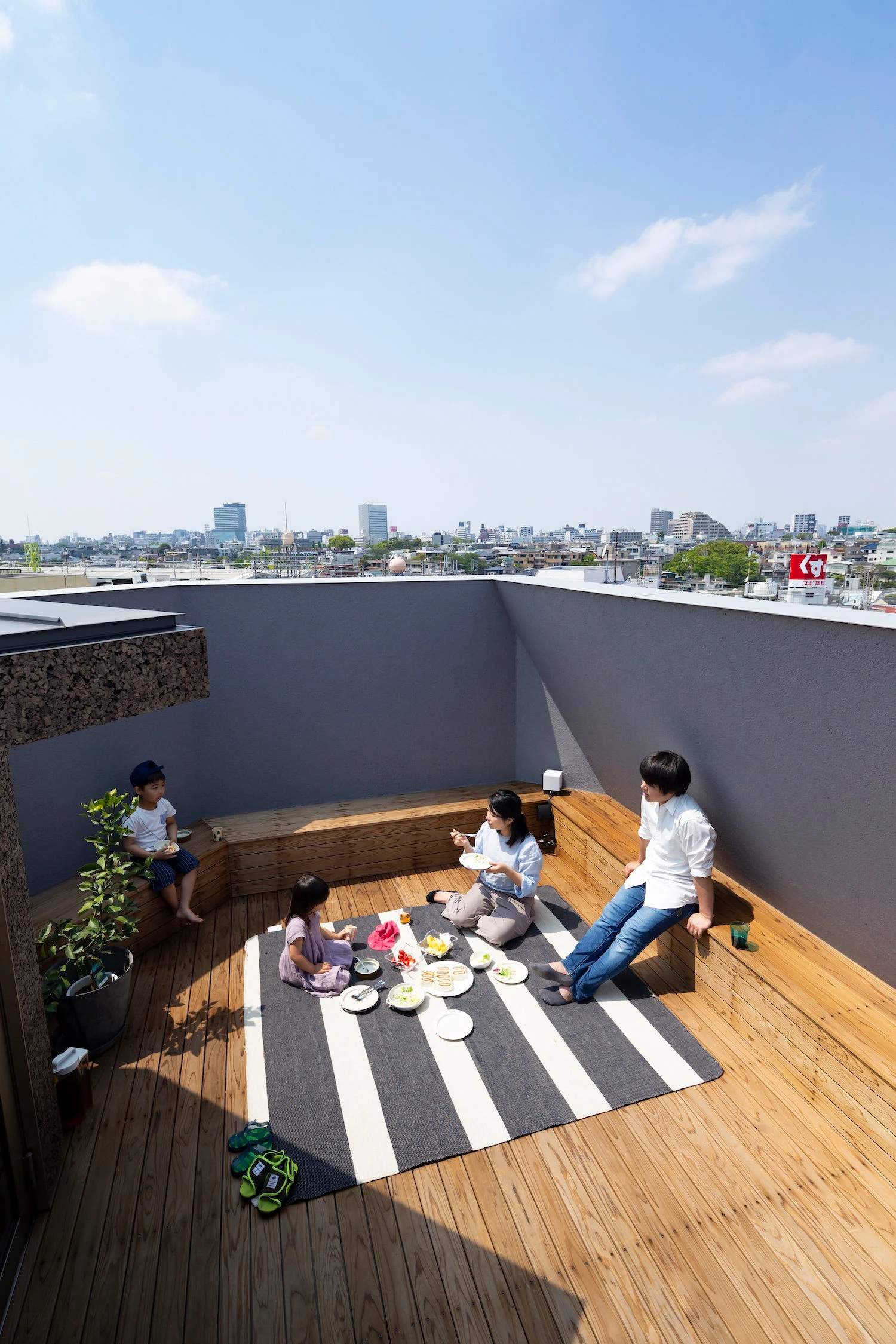
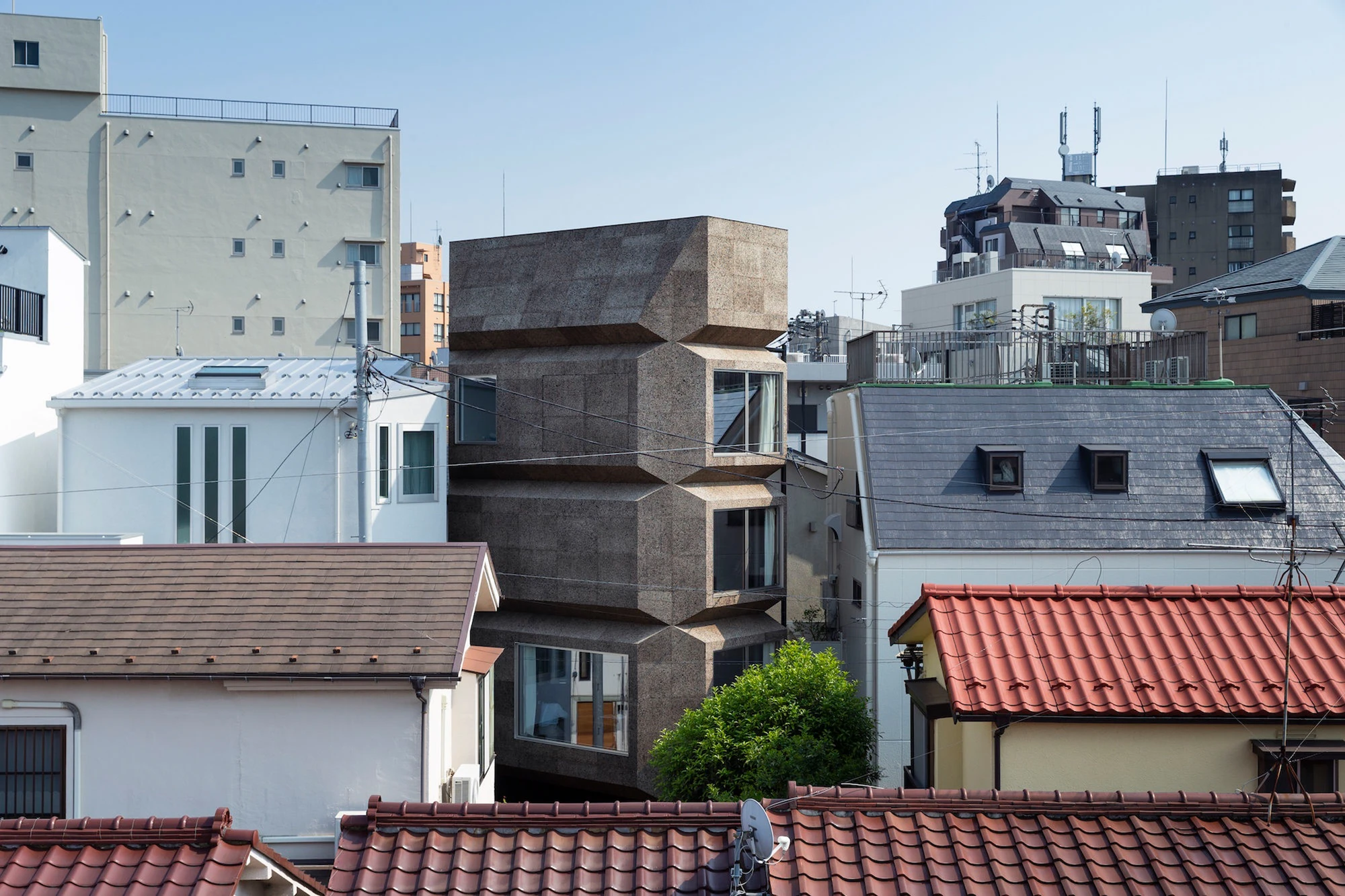
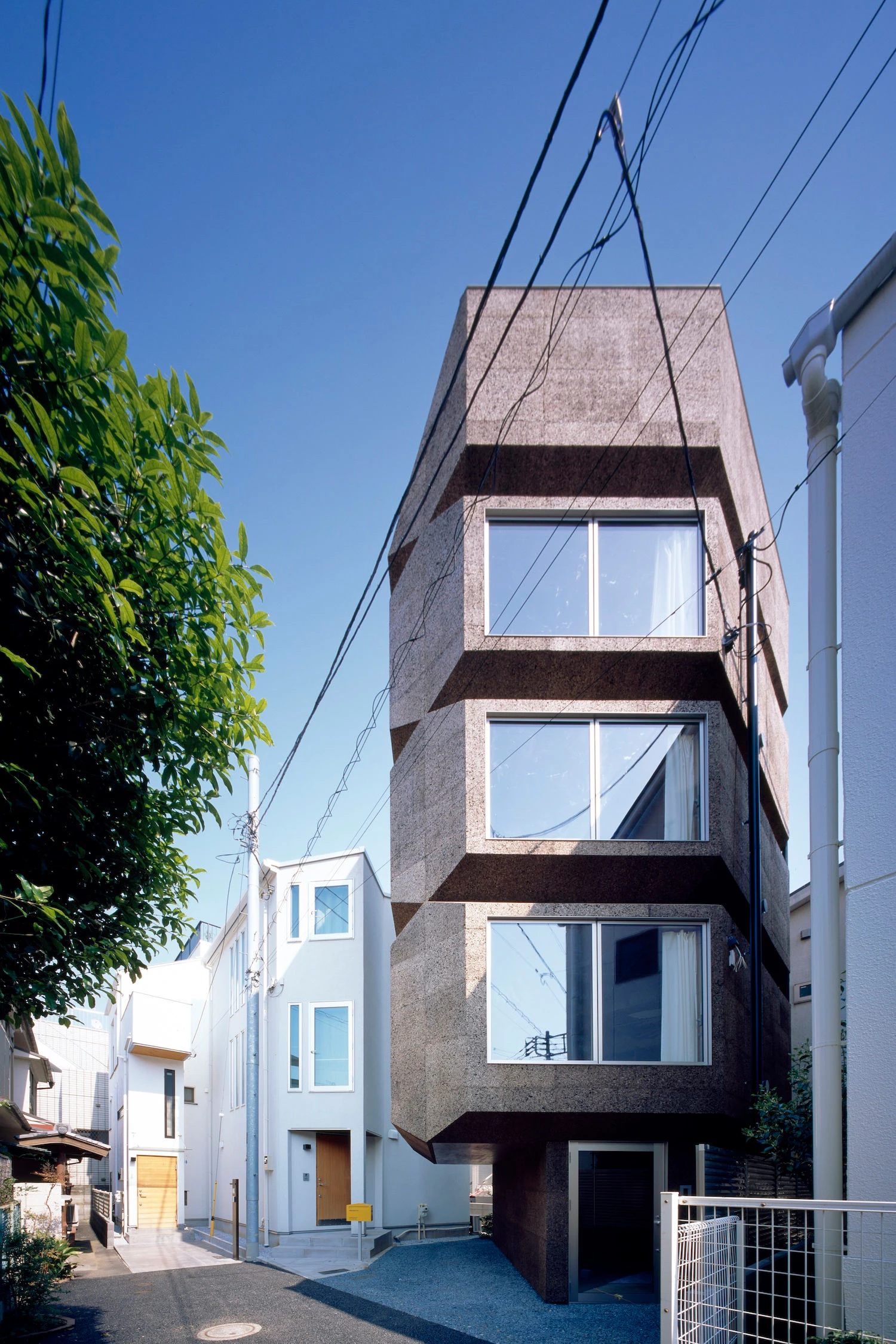
On a narrow lot in Tokyo where old and new streets tangle together, Takaaki Fuji + Yuko Fuji Architecture (tyfa) have designed their own residence and office as something they call not a house but "a place of whereabouts"—the Bay Window Tower House, an octagonal structure wrapped entirely in bay windows and clad in carbonized cork.

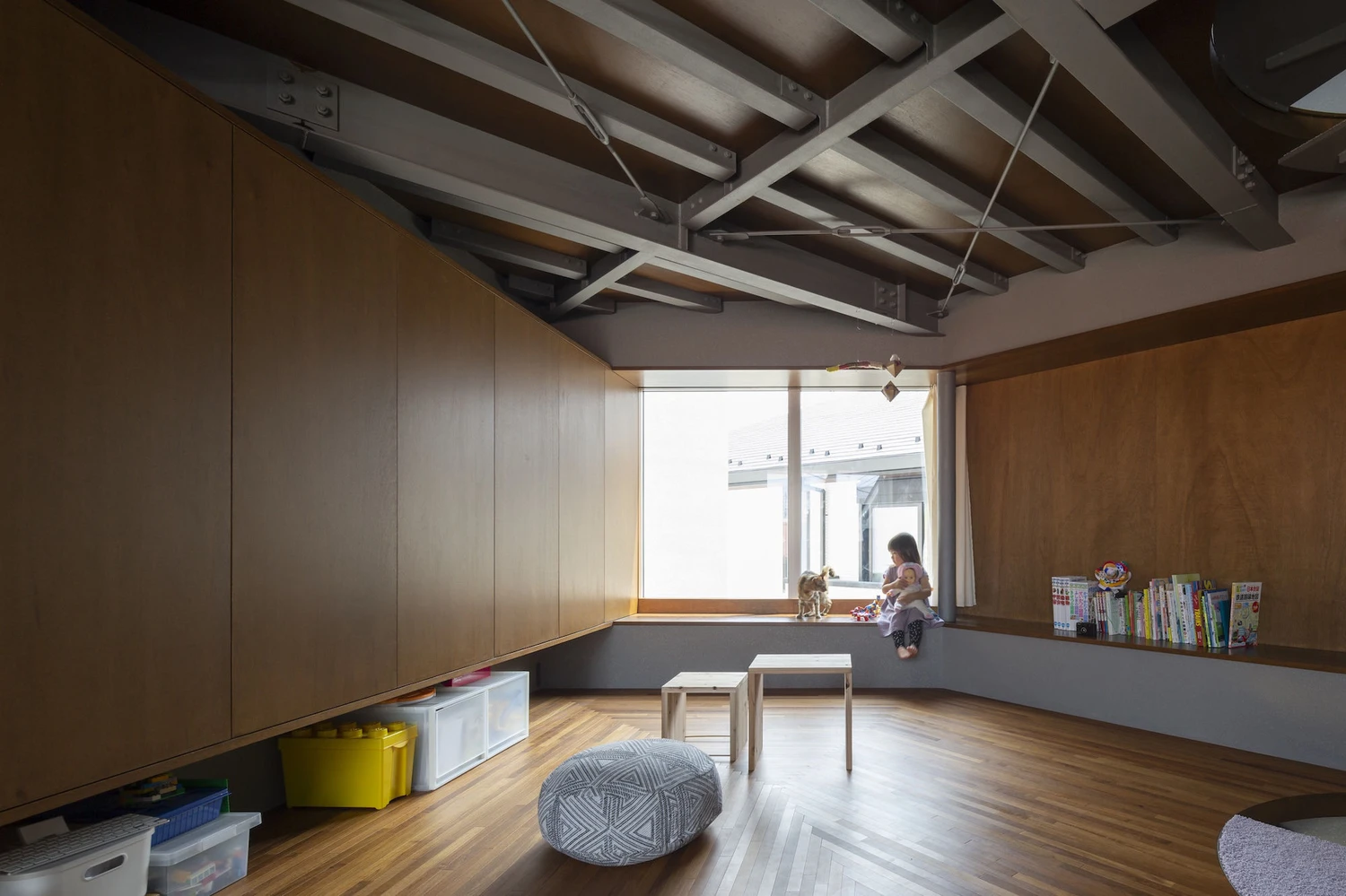
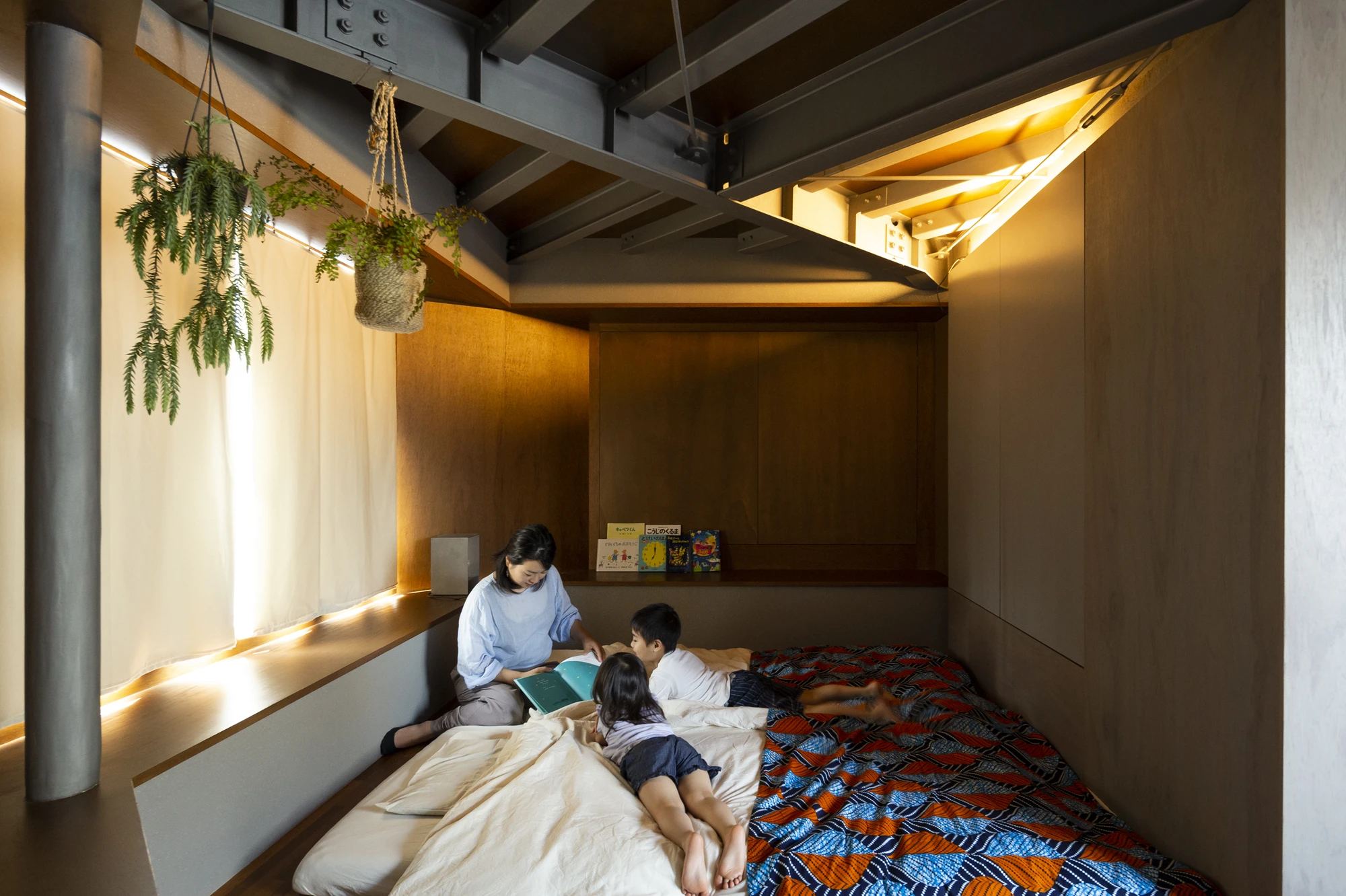
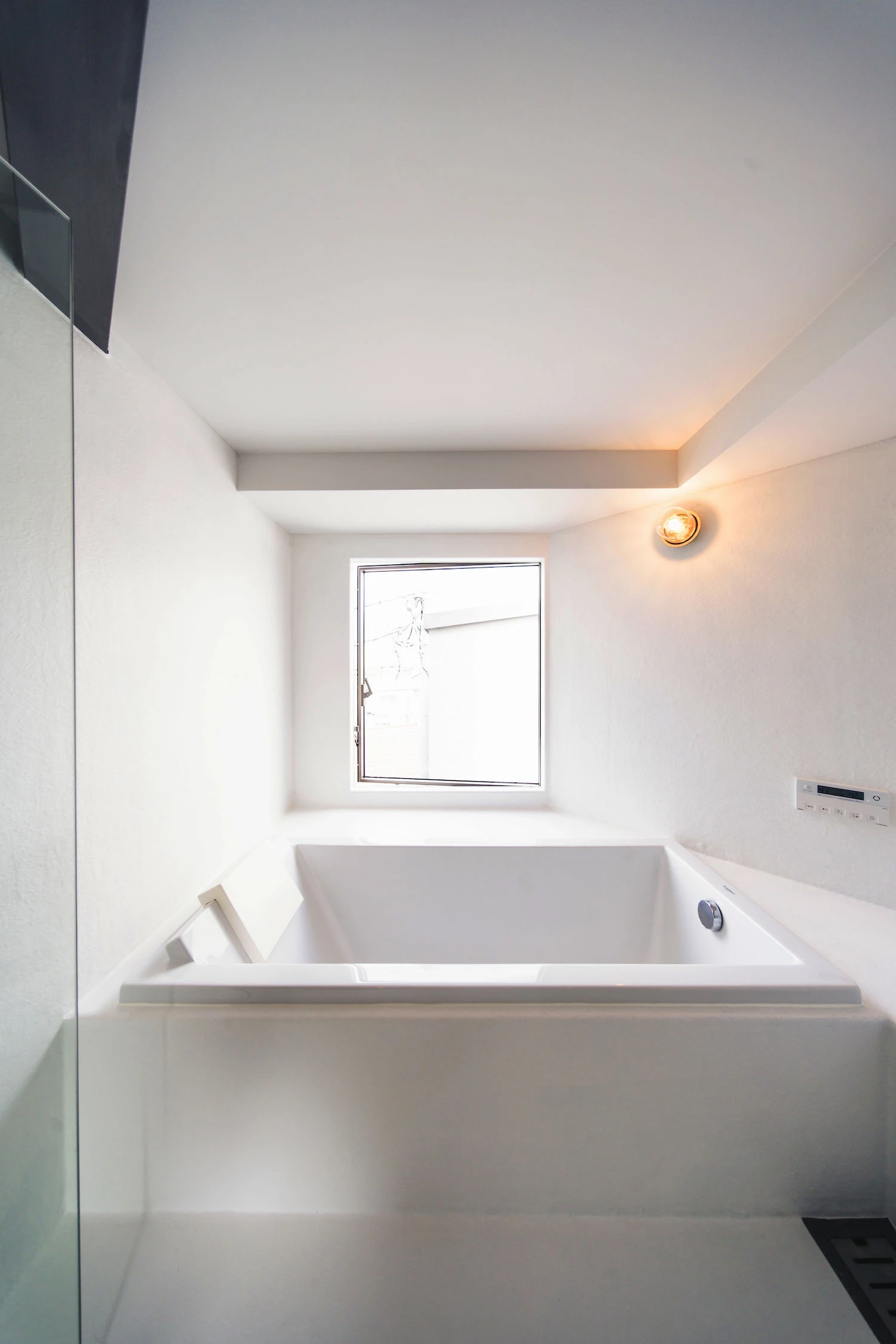
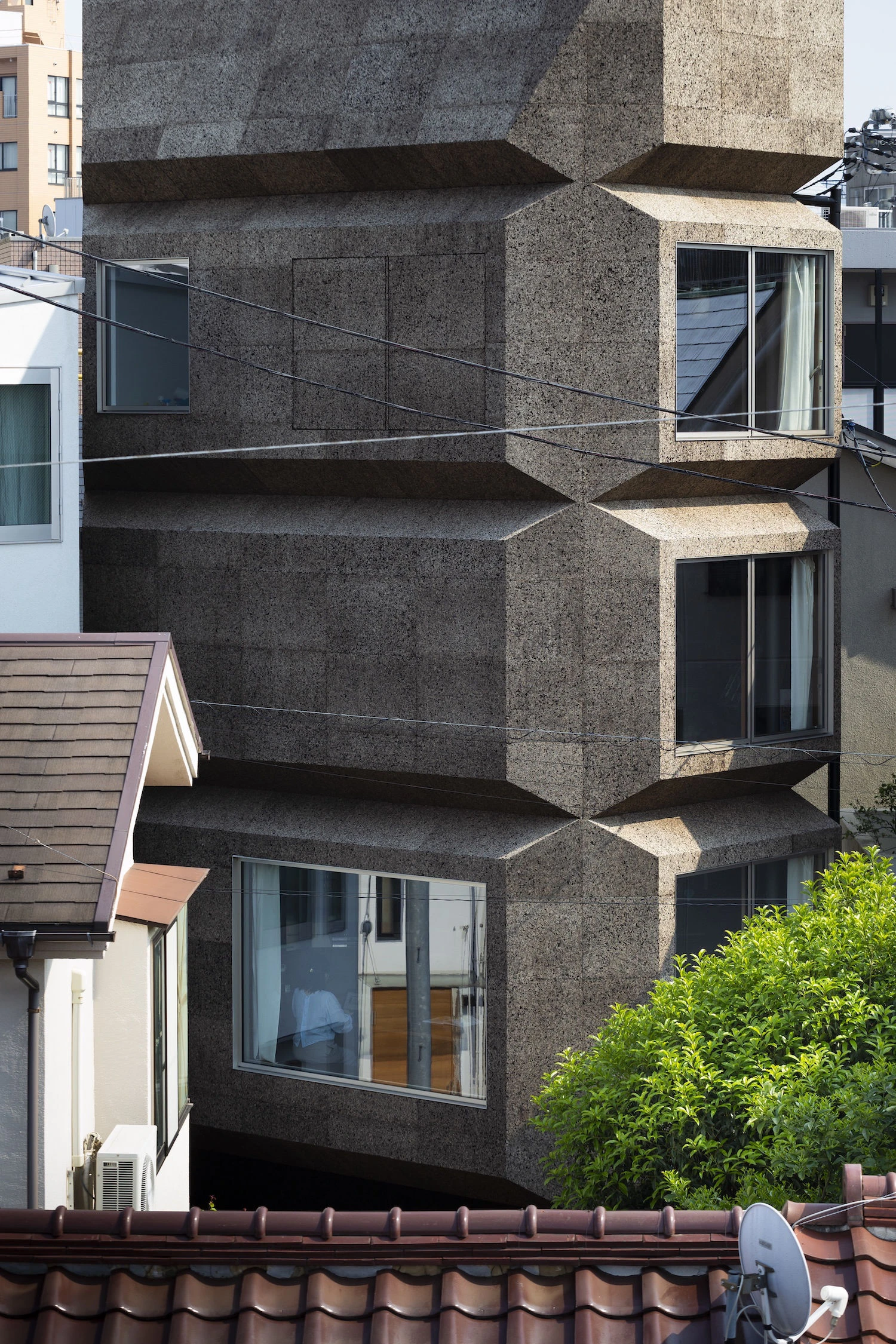
The idea is disarmingly simple. In Japan, building code treats the bay window as furniture: its width cannot exceed 500mm, its sill must rise at least 300mm from the floor, its upper frame must touch the ceiling. The architects seized on this legal classification and made it the entire building strategy. They wrapped bay windows around each floor and stacked them vertically, so that the boundary of the house is not wall but a continuous band of inhabitable furniture. "Sitting, laying down, washing hands, cooking, bathing, writing," they note, "many daily activities can be done with the bay windows." The result is a tower whose skin is not enclosure but a series of intimate ledges—a building you live inside the edges of.

The octagonal plan came from generosity toward the neighbors. On a tight urban lot, any rectangular volume would wall off adjacent windows and choke the airflow. By dropping the building's corners at 45 degrees, the architects opened pockets of ground at each corner of the site, giving neighboring houses back their light and breeze. Wind simulations confirmed it: the octagonal shape causes less turbulence than a box. There is something touching about a house that begins by asking what it can give to the houses around it.

Three kinds of window punctuate the facade—a light window for illumination, a wind window for ventilation, a wall window that blocks heat and drafts—each placed according to careful observation of the local microclimate. Where thermal loads remain stubborn in midsummer or midwinter, the exterior is insulated with carbonized cork, "an environmentally friendly material that does not use chemical substances," produced by pressing the bark of the cork oak until its own sap solidifies it. Once made domestically for refrigerator insulation, it now has to be imported, but the architects are working with Japanese manufacturers to restart local production.

The steel structure separates vertical loads from seismic ones—the bay window frames absorb all earthquake forces, their non-parallel walls suppressing eccentricity and allowing free placement across the facade. It is engineering that enables architecture, not the other way around.

What stays with you is the patience built into the materials. The carbonized cork will fade and soften over time; seeds might lodge in its porous surface and sprout. Inside, plastered walls contain mica, wood surfaces age unevenly, and iron parts painted with mica-infused lacquer will grow dull and then faintly luminous. "The lifespan of an architecture is longer than that of a human being," the architects write. "If it is to live for a long time, we want the changes over time to become its charm." The Bay Window Tower House is designed not to resist time but to welcome it—a building that will keep becoming itself long after its makers have moved on.
Interested in Showcasing Your Work?

If you would like to feature your works on Thisispaper, please visit our Submission page and sign up to Thisispaper+ to submit your work. Once your submission is approved, your work will be showcased to our global audience of 2 million art, architecture, and design professionals and enthusiasts.
No items found.
We love less
but there is more.
Become a Thisispaper+ member today to unlock full access to our magazine, advanced tools, and support our work.
Get two months FREE
with annual subscription
We love less
but there is more.
Become a Thisispaper+ member today to unlock full access to our magazine, advanced tools, and support our work.
Get two months FREE
with annual subscription
No items found.
Alexander Zaxarov
Feb 26, 2026

On a narrow lot in Tokyo where old and new streets tangle together, Takaaki Fuji + Yuko Fuji Architecture (tyfa) have designed their own residence and office as something they call not a house but "a place of whereabouts"—the Bay Window Tower House, an octagonal structure wrapped entirely in bay windows and clad in carbonized cork.

The idea is disarmingly simple. In Japan, building code treats the bay window as furniture: its width cannot exceed 500mm, its sill must rise at least 300mm from the floor, its upper frame must touch the ceiling. The architects seized on this legal classification and made it the entire building strategy. They wrapped bay windows around each floor and stacked them vertically, so that the boundary of the house is not wall but a continuous band of inhabitable furniture. "Sitting, laying down, washing hands, cooking, bathing, writing," they note, "many daily activities can be done with the bay windows." The result is a tower whose skin is not enclosure but a series of intimate ledges—a building you live inside the edges of.

The octagonal plan came from generosity toward the neighbors. On a tight urban lot, any rectangular volume would wall off adjacent windows and choke the airflow. By dropping the building's corners at 45 degrees, the architects opened pockets of ground at each corner of the site, giving neighboring houses back their light and breeze. Wind simulations confirmed it: the octagonal shape causes less turbulence than a box. There is something touching about a house that begins by asking what it can give to the houses around it.

Three kinds of window punctuate the facade—a light window for illumination, a wind window for ventilation, a wall window that blocks heat and drafts—each placed according to careful observation of the local microclimate. Where thermal loads remain stubborn in midsummer or midwinter, the exterior is insulated with carbonized cork, "an environmentally friendly material that does not use chemical substances," produced by pressing the bark of the cork oak until its own sap solidifies it. Once made domestically for refrigerator insulation, it now has to be imported, but the architects are working with Japanese manufacturers to restart local production.

The steel structure separates vertical loads from seismic ones—the bay window frames absorb all earthquake forces, their non-parallel walls suppressing eccentricity and allowing free placement across the facade. It is engineering that enables architecture, not the other way around.

What stays with you is the patience built into the materials. The carbonized cork will fade and soften over time; seeds might lodge in its porous surface and sprout. Inside, plastered walls contain mica, wood surfaces age unevenly, and iron parts painted with mica-infused lacquer will grow dull and then faintly luminous. "The lifespan of an architecture is longer than that of a human being," the architects write. "If it is to live for a long time, we want the changes over time to become its charm." The Bay Window Tower House is designed not to resist time but to welcome it—a building that will keep becoming itself long after its makers have moved on.
Interested in Showcasing Your Work?

If you would like to feature your works on Thisispaper, please visit our Submission page and subscribe to Thisispaper+. Once your submission is approved, your work will be showcased to our global audience of 2 million art, architecture, and design professionals and enthusiasts.
Thisispaper+
Jutaku
90+ Projects
Web Access
Link to Maps
‘Jūtaku’ is the Japanese word for ‘house’. Nowhere in the world have architects built so many small and exceptional homes as in Japan, and nowhere with such ingenuity and success.
Explore
Jutaku

Join Thisispaper+
Unlock access to 2500 stories, curated guides + editions, and share your work with a global network of architects, artists, writers and designers who are shaping the future.
Get two months FREE
with annual subscription
Travel Guides
Immerse yourself in timeless destinations, hidden gems, and creative spaces—curated by humans, not algorithms.
Explore All Guides +
Submission Module
Submit your project and gain the chance to showcase your work to our worldwide audience of over 2M architects, designers, artists, and curious minds.
Learn More+
Curated Editions
Dive deeper into carefully curated editions, designed to feed your curiosity and foster exploration.
Off-the-Grid
Jutaku
Sacral Journey
minimum
The New Chair
Explore All Editions +
Atlas
A new and interactive way to explore the most inspiring places around the world.
Interactive map
Linked to articles
300+ curated locations
Google + Apple directions
Smart filters
Subscribe to Explore+
Become a Thisispaper+ member today to unlock full access to our magazine, submit your project and support our work.
Join Thisispaper+Join Thisispaper+
€ 9 EUR
/month
Cancel anytime
Get two months FREE
with annual subscription