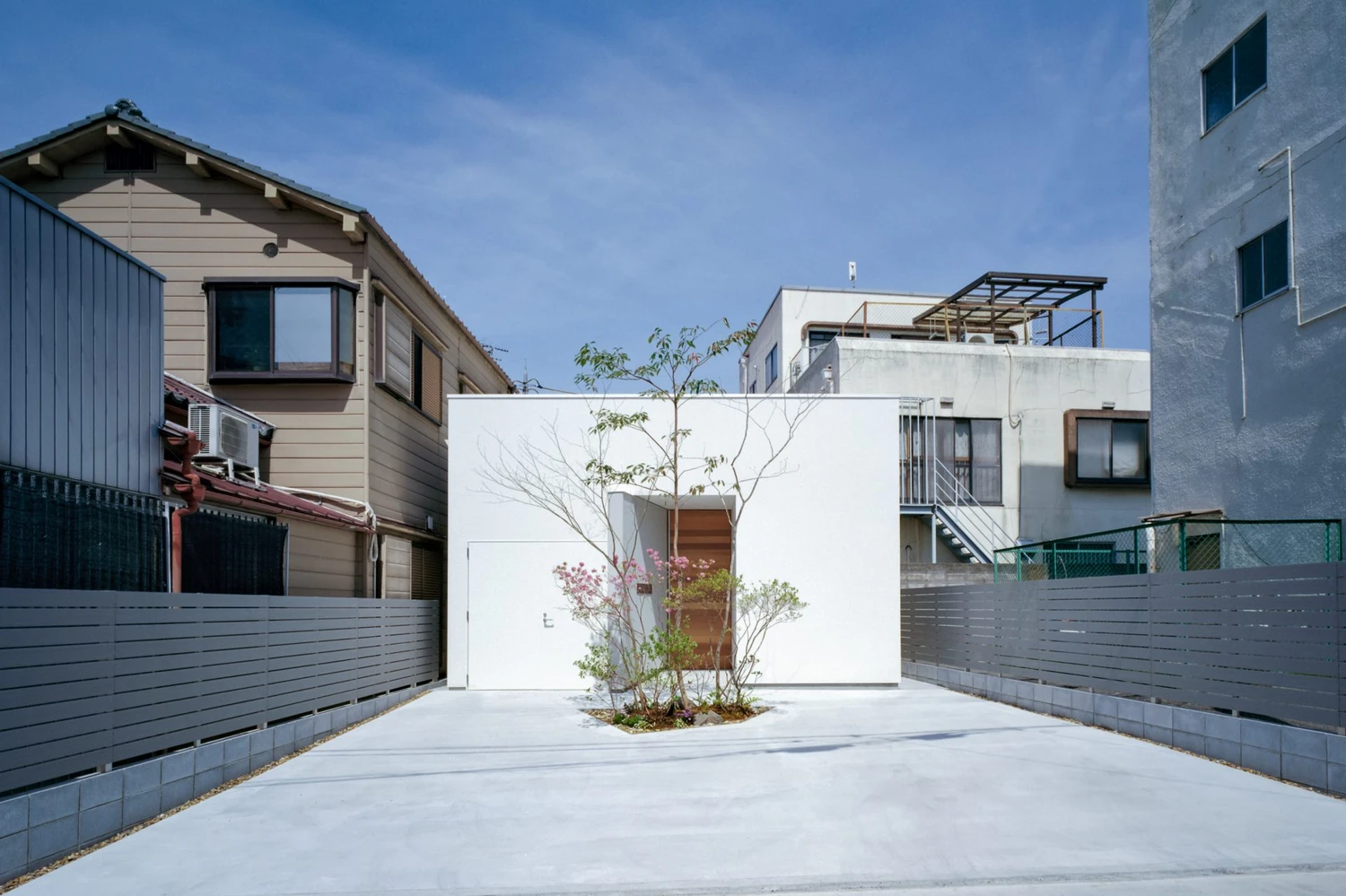
House in Kashiwara by Fujiwaramuro Architects in Osaka transforms a narrow plot beside a trunk road into continuous flow—walls bending to create room where none seemed possible.
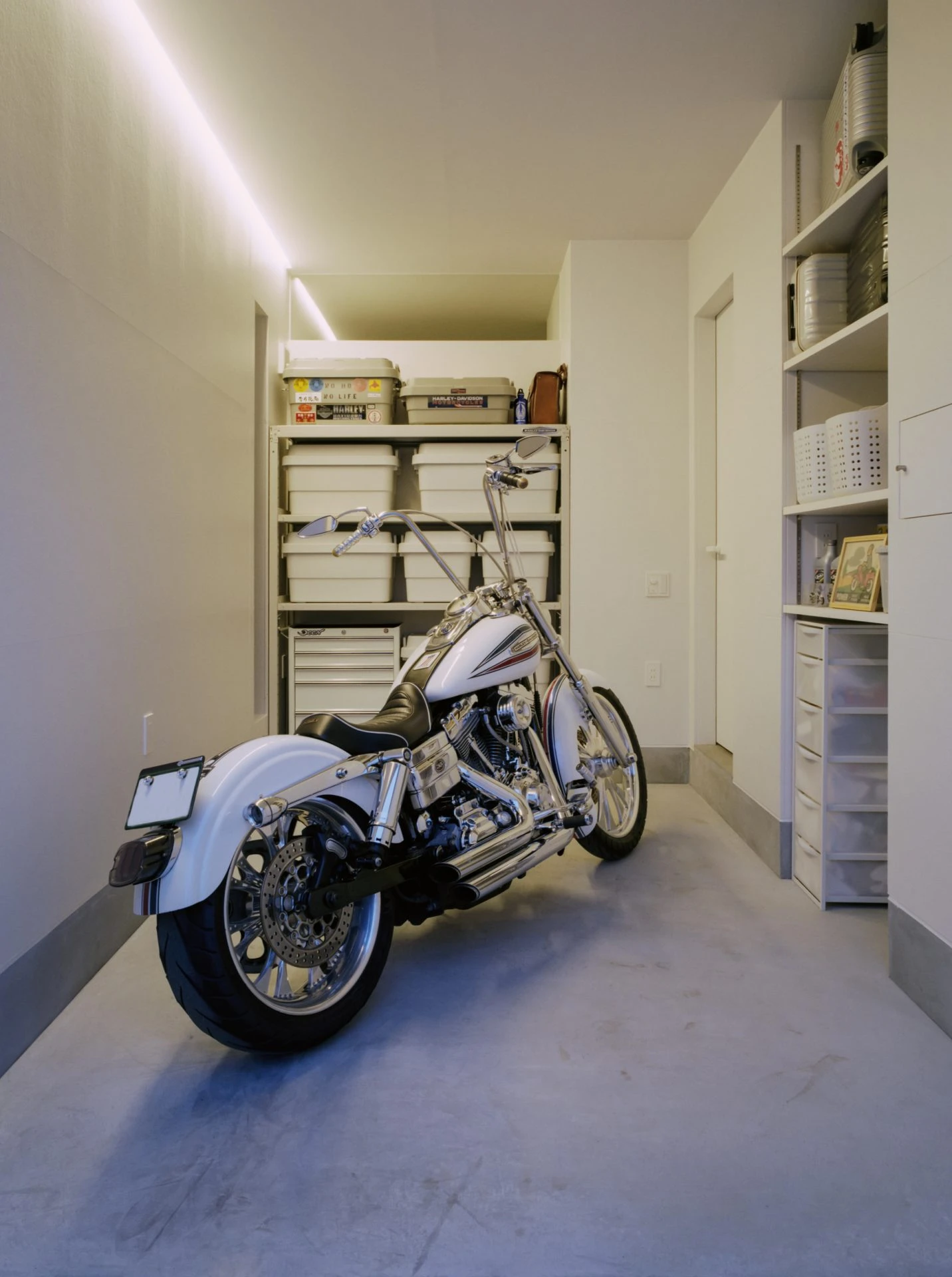
The site presented the kind of constraints that Japanese residential architects have learned to treat as generative rather than limiting: a long, narrow plot in Kashiwara City, Osaka Prefecture, pressed against a busy trunk road whose noise and exhaust precluded conventional orientation. A couple seeking a one-room feeling—openness despite small footprint—also required space for motorcycle storage and the wife's flower arranging practice. The brief contained its own contradictions.
Fujiwaramuro Architects' response begins with a single-story plan that reads as continuous surface rather than divided rooms. Curved walls guide movement from entrance to rear, their radius creating alcoves and thresholds without the interruption of corners. The effect resembles water finding its path around obstacles—domestic life as fluid dynamics.
A sunroom inserted at the plan's midpoint addresses the noise problem with elegant indirection. Rather than thickening the façade or retreating from the street, the architects created a planted buffer zone that absorbs sound while admitting light. This greenhouse space—where the flower arranging occurs—operates as mediator between public road and private interior, translating external hostility into filtered calm.
The corridor sequence that winds through the house inverts typical Japanese spatial hierarchy. Rather than proceeding from entrance through intermediary zones to innermost retreat, the plan offers continuous revelation, each curve promising and delivering something unexpected beyond. At just over eighty-eight square meters of floor area, the house feels substantially larger than its dimensions suggest.
What emerges is architecture as choreography. The curves do not merely contain space; they propel inhabitants through it, creating rhythm and pause through geometric means alone. For a couple whose shared life requires both togetherness and individual pursuit, the house provides both without partition—a single room that accommodates multiplicity.