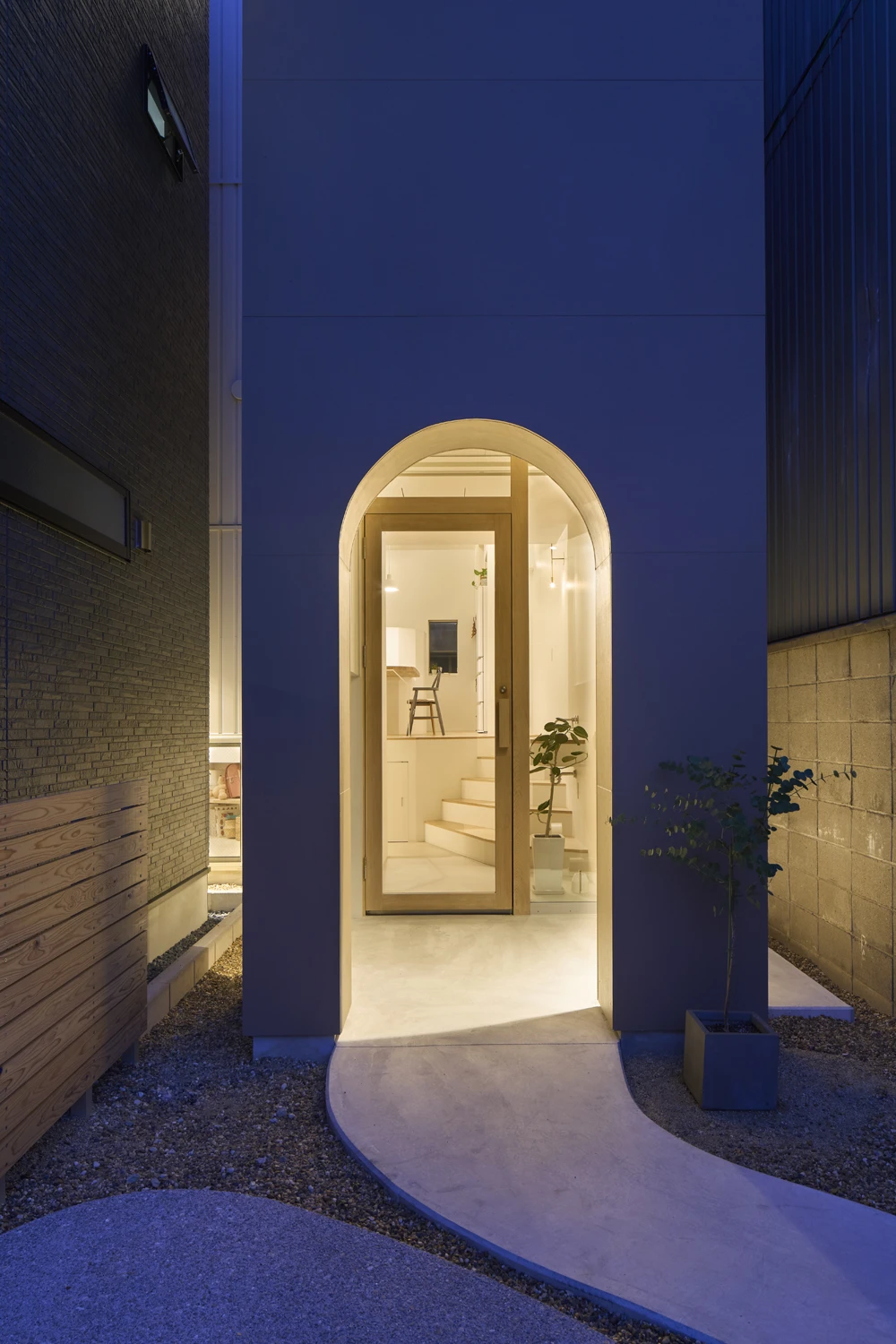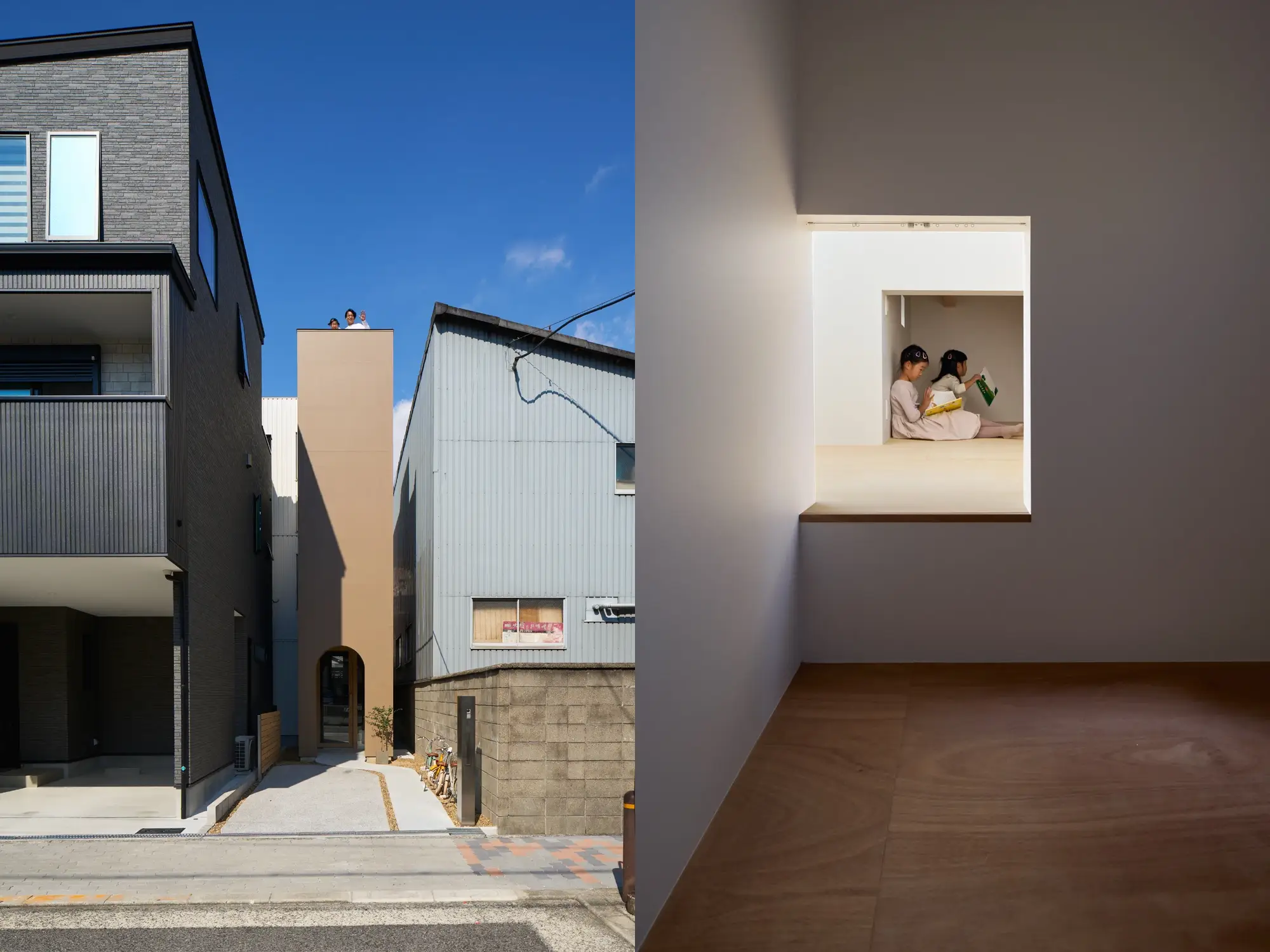
House in Hirano by Fujiwaramuro Architects in Osaka invents topography where none exists—a family home that climbs through itself toward a single opening to the sky.
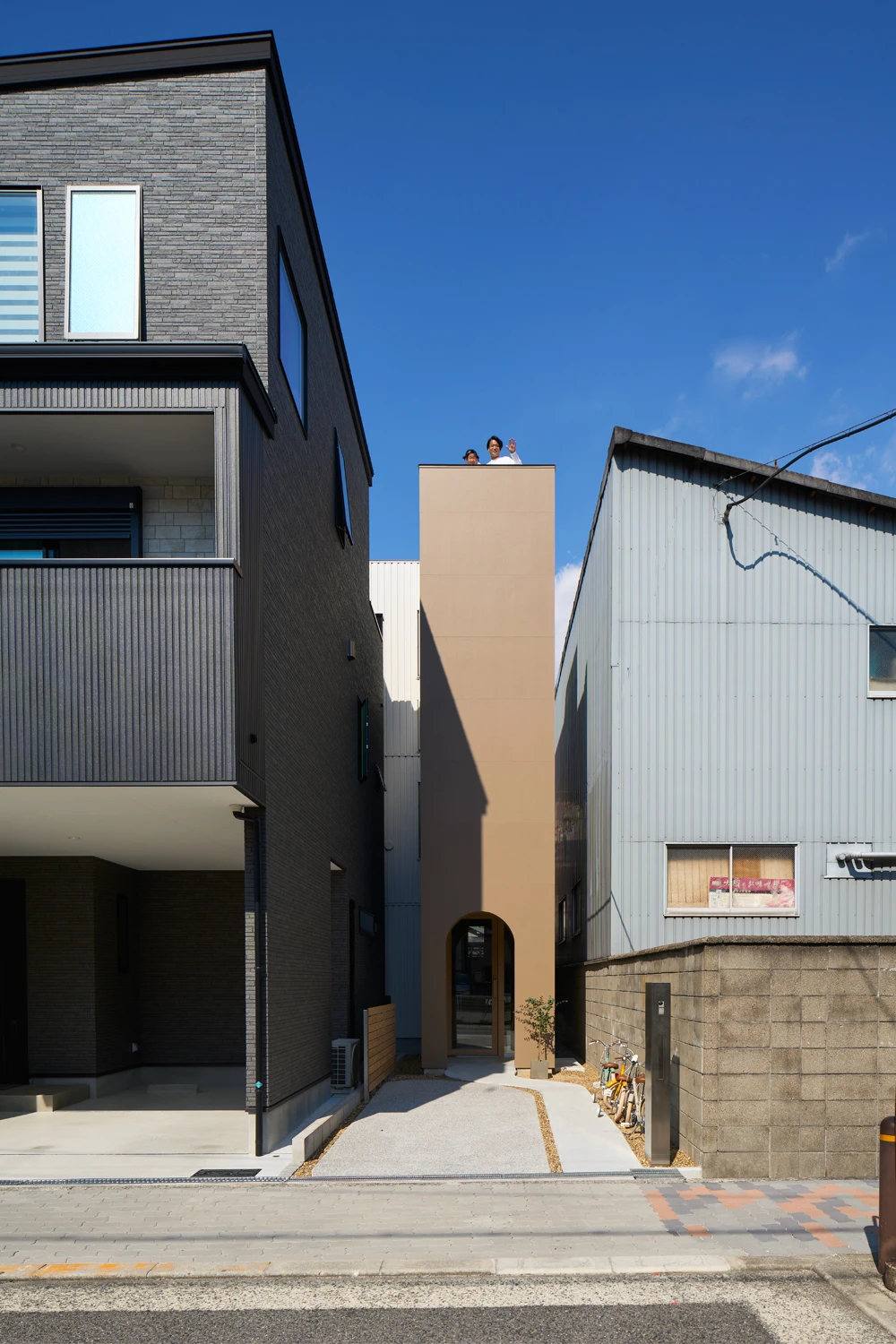
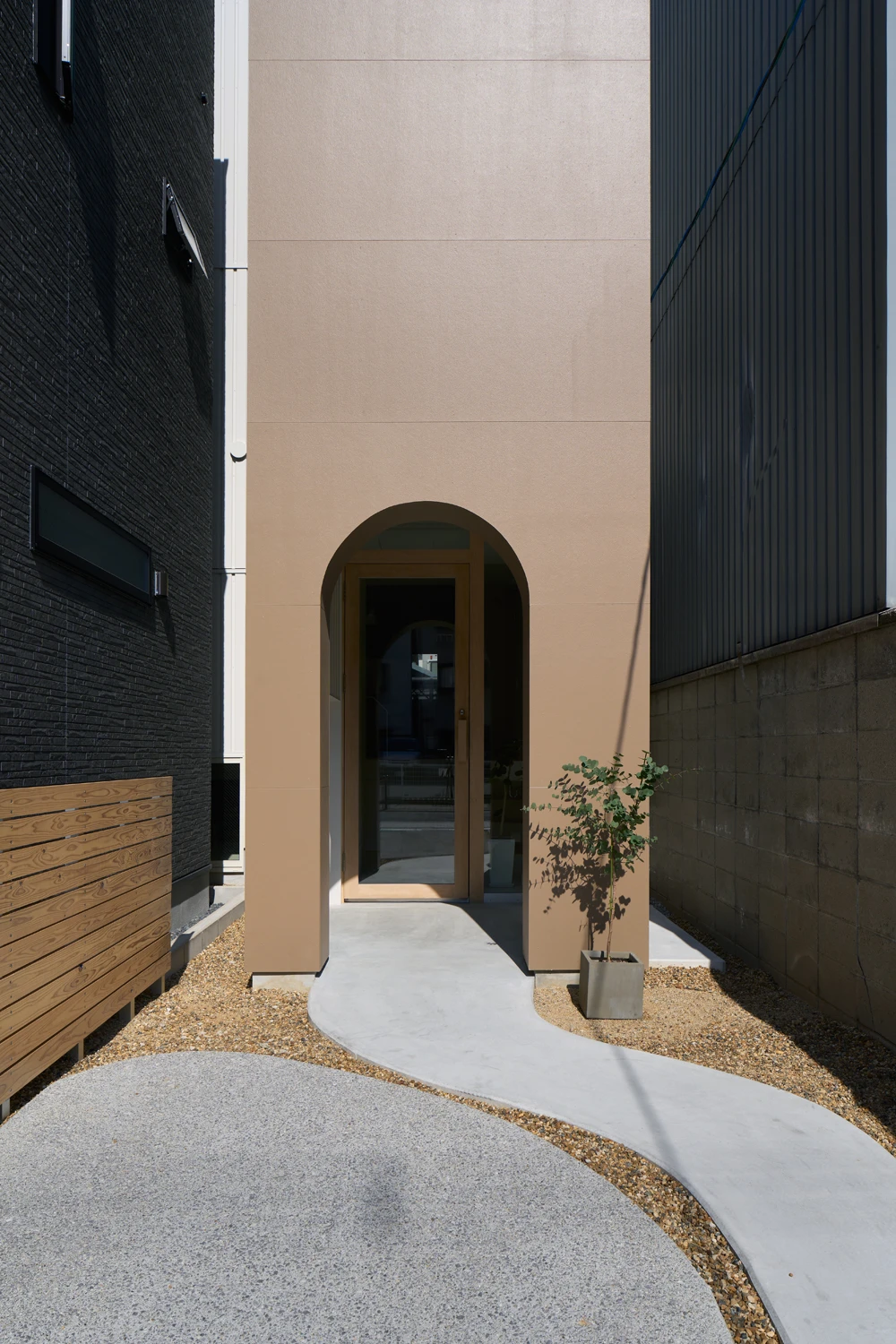
The flagpole lot is a Japanese urban condition so common it has become almost invisible. A narrow access path leads to a building site surrounded entirely by neighboring structures—no views, no natural orientation, no obvious way to bring light or air to interior spaces. For a family of five in Osaka's Hirano district, Fujiwaramuro Architects accepted these constraints as the starting point for something unexpected.
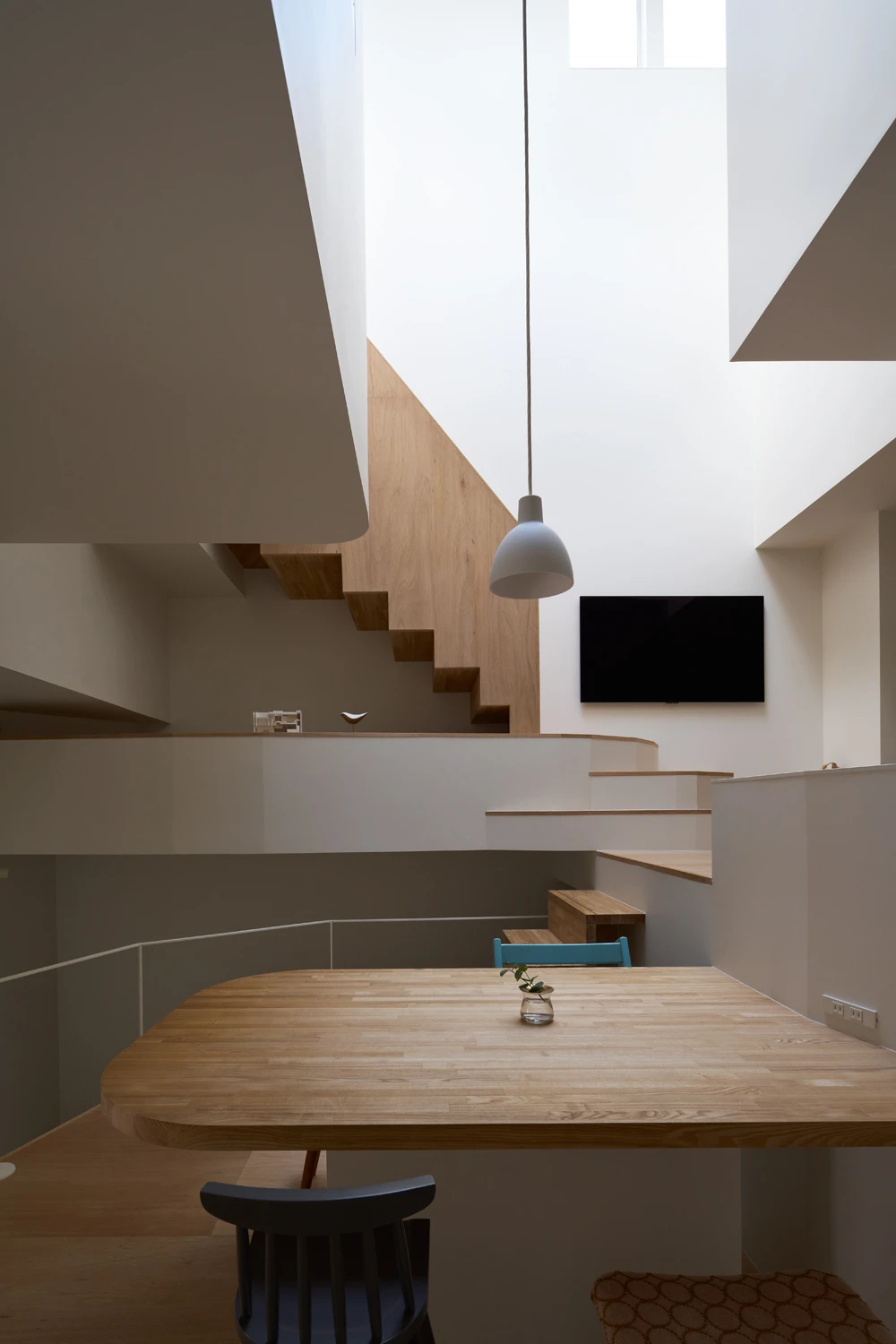
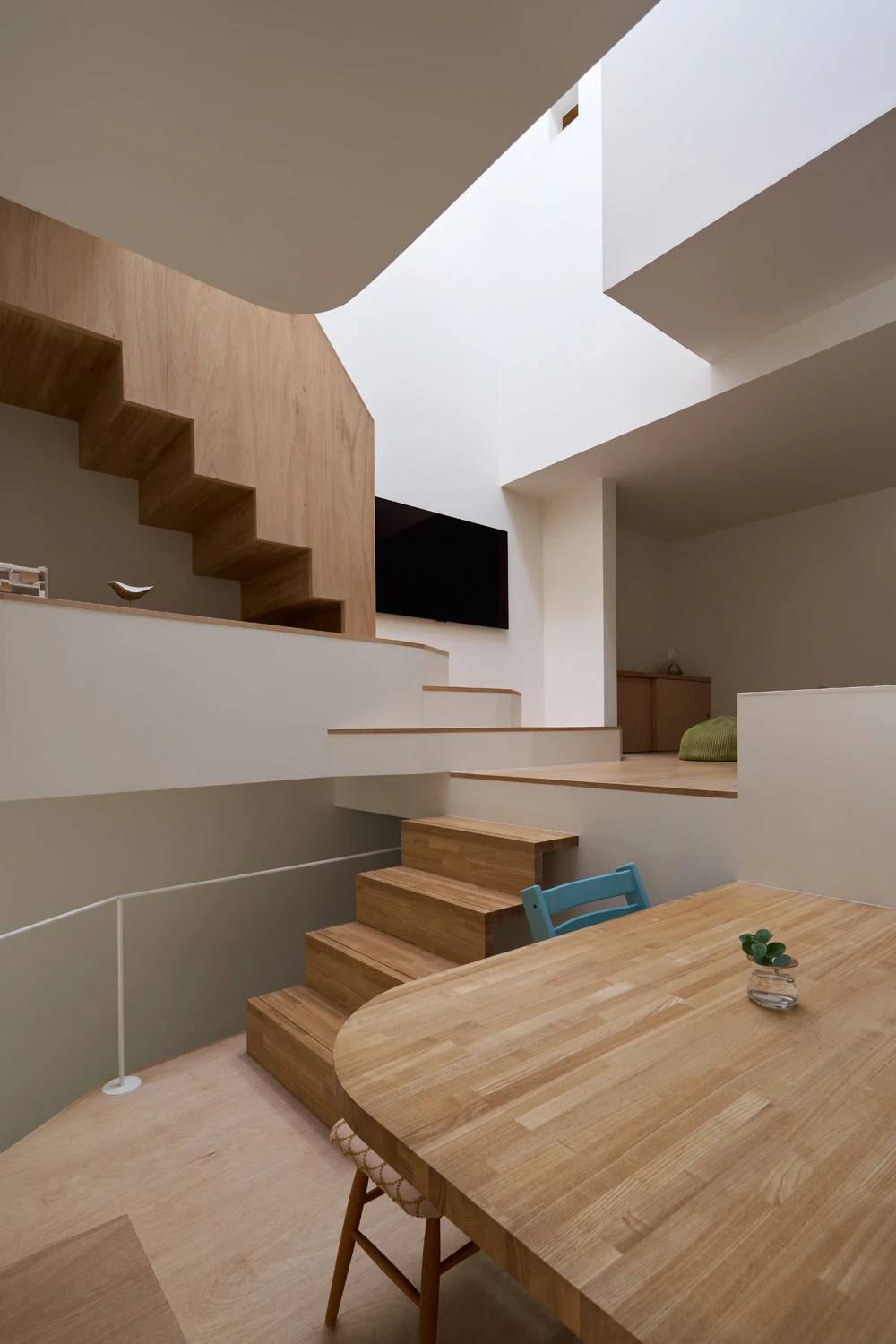
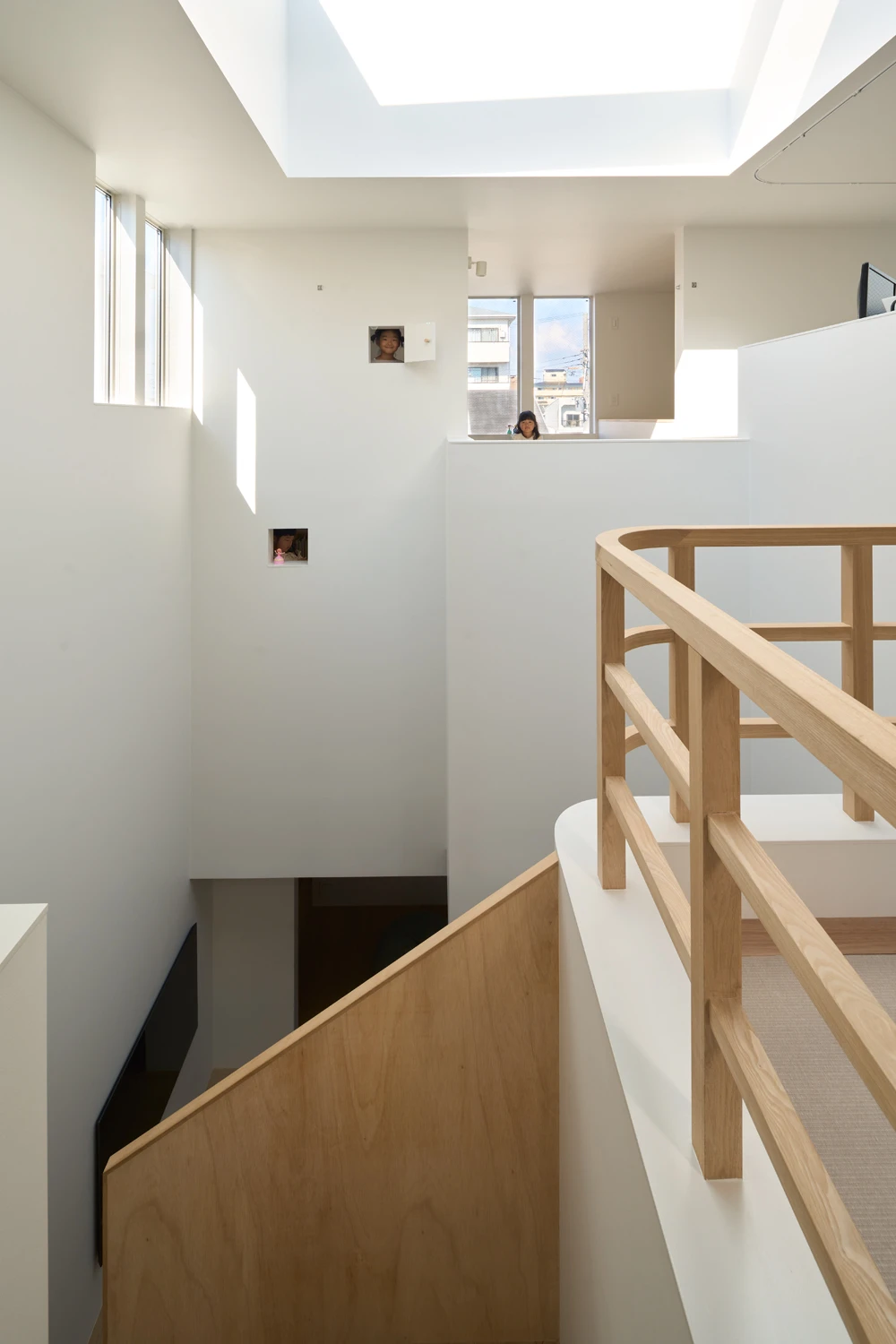
The response begins overhead. A generous skylight, the only significant opening in the building's envelope, admits daylight vertically rather than horizontally. Light falls through the section like water finding its level, pooling in the deepest spaces before reflecting upward again. The result transforms what could have been a cave into something closer to a clearing.
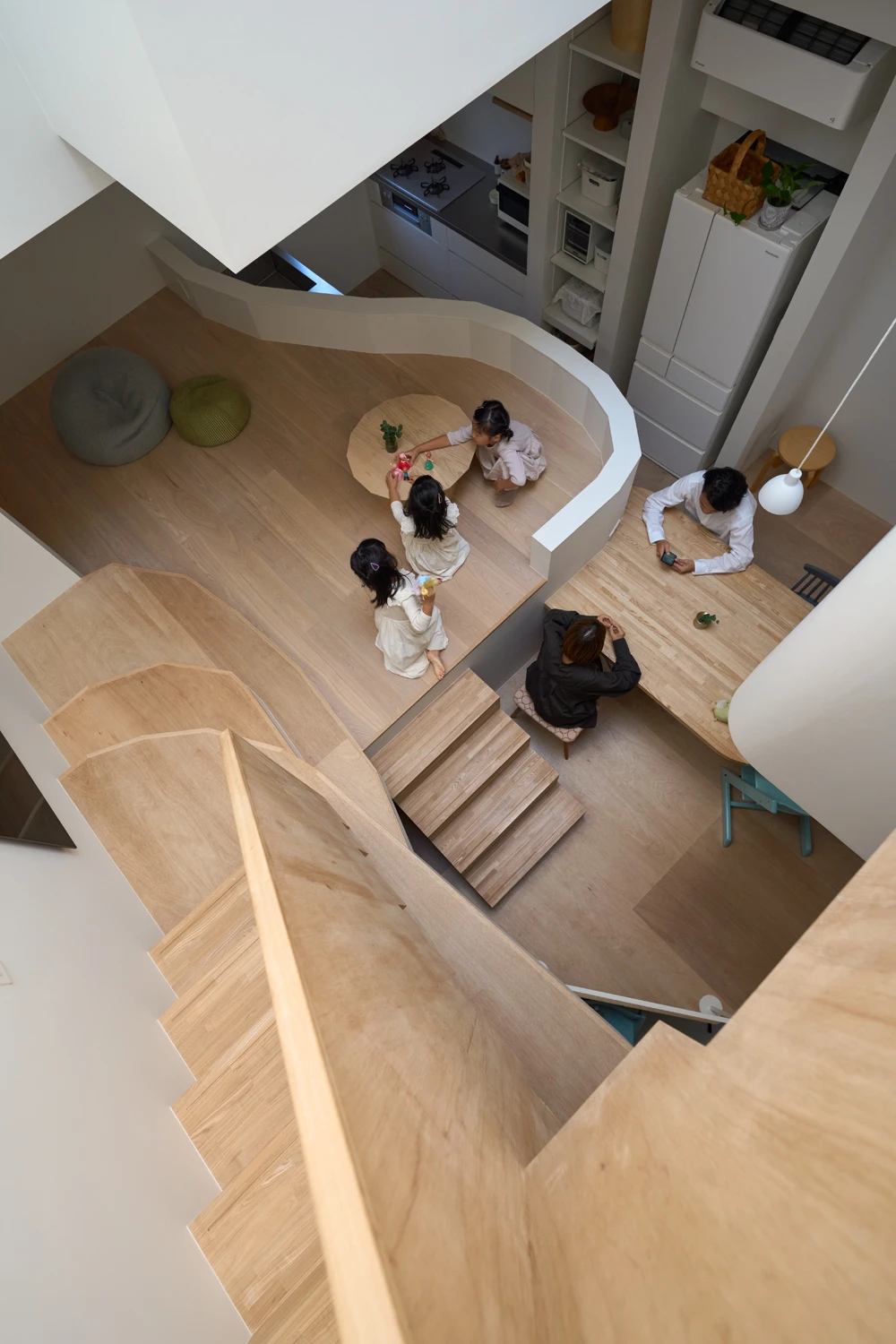
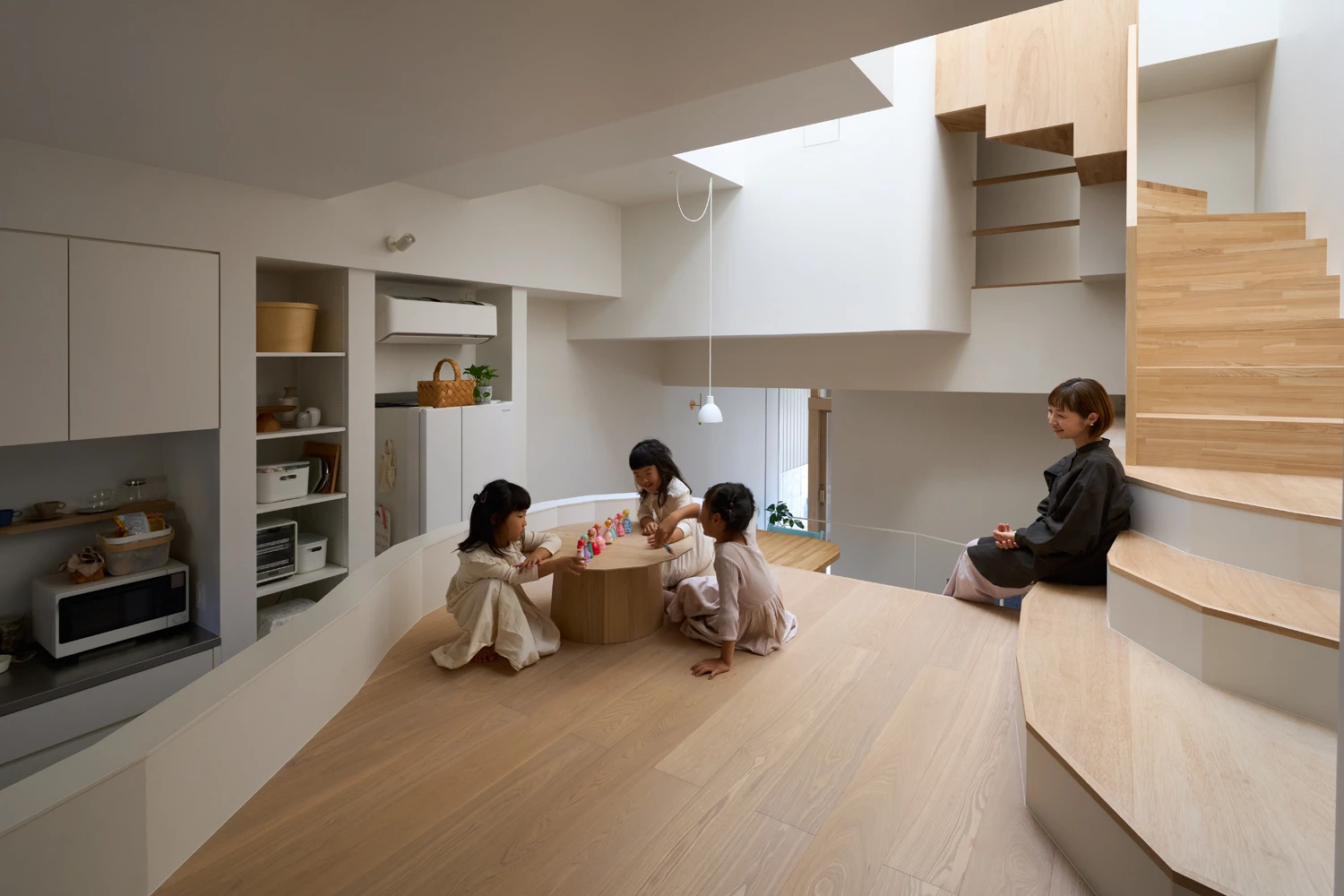
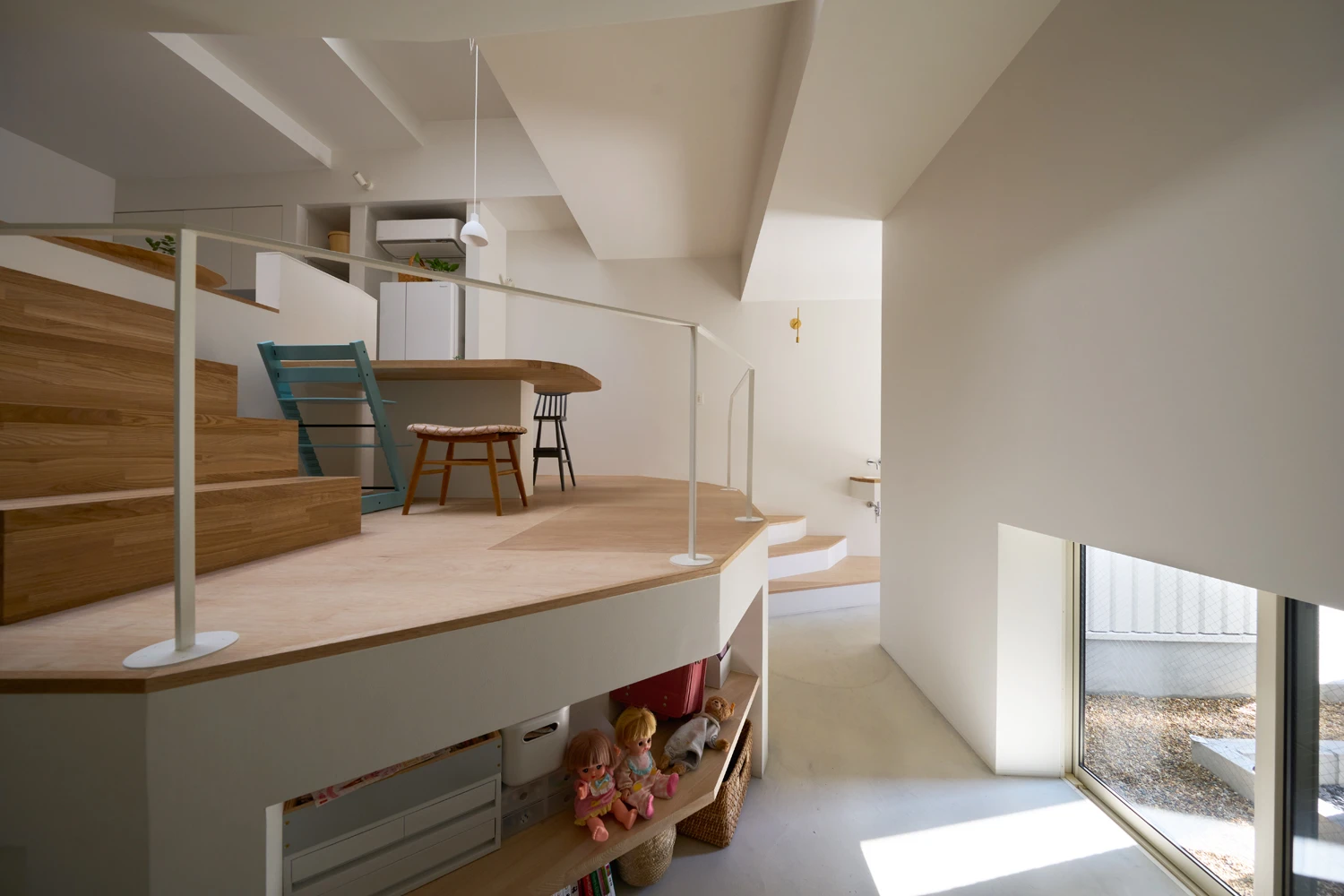
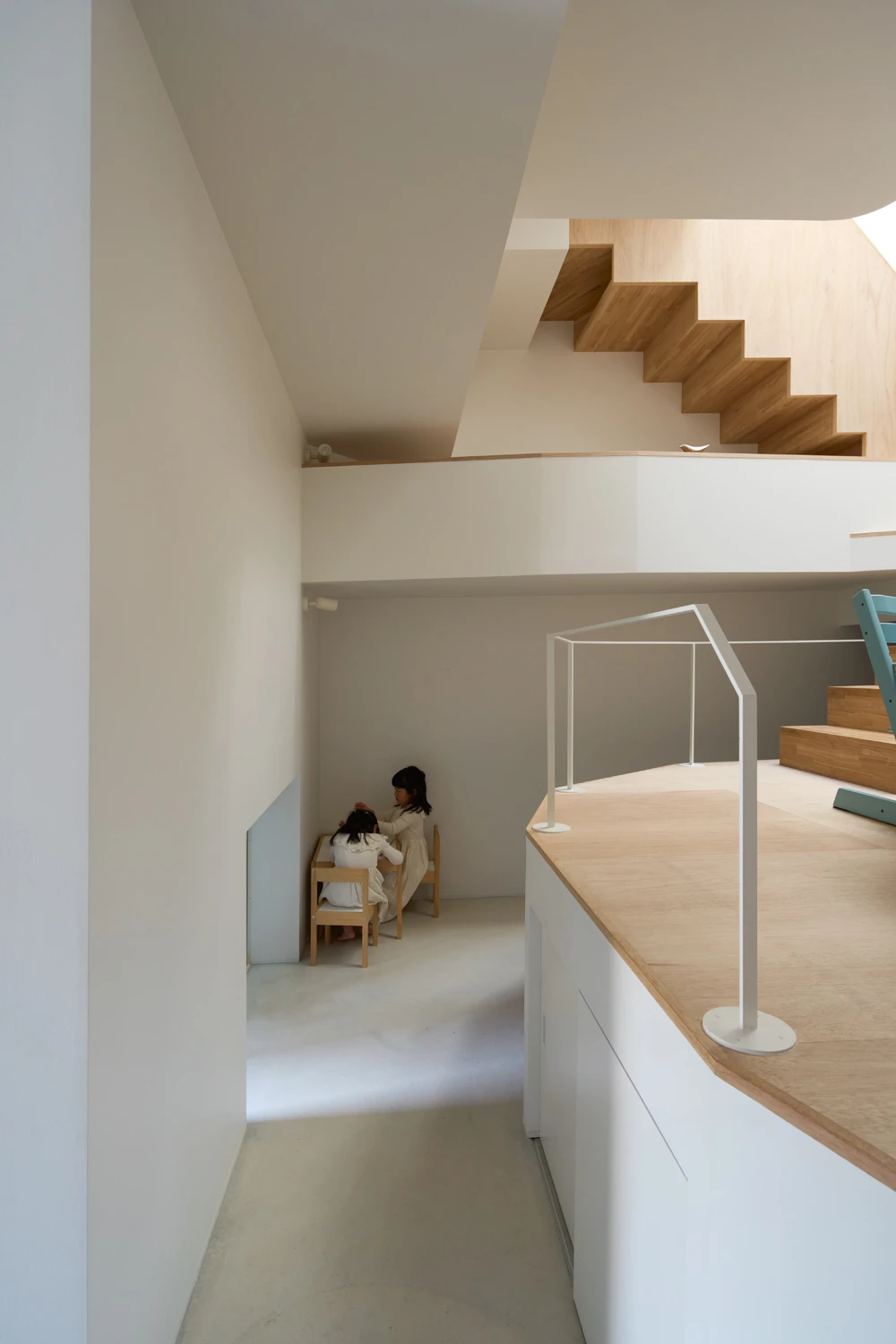
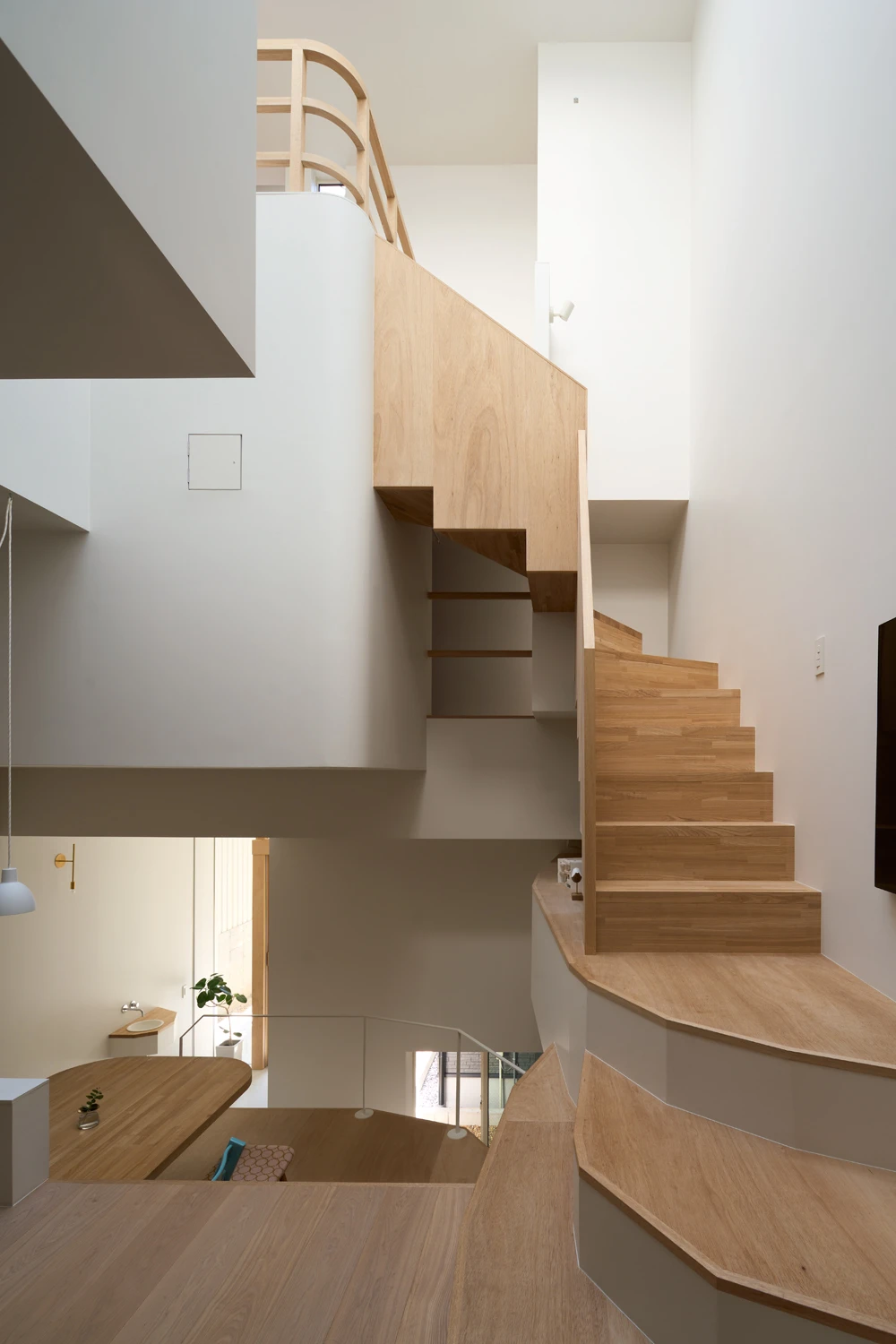
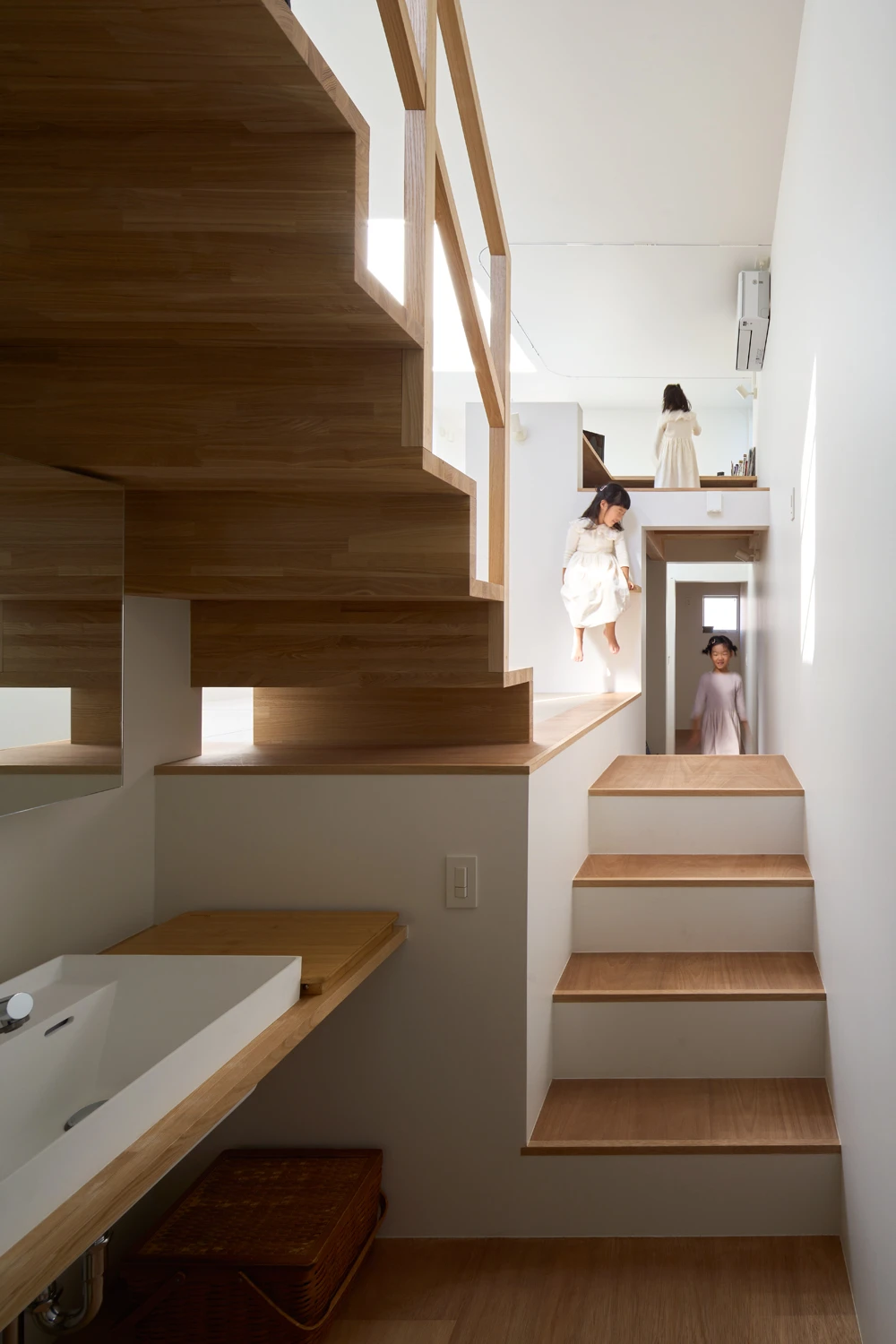
Below the skylight, the floor plate refuses to remain flat. Levels shift and split, creating a continuous terrain of steps, platforms, and half-heights. A child sitting in one zone finds herself at eye level with an adult standing in another. The vertical dimension, typically compressed in Japanese residential construction, expands through sectional manipulation into something approaching landscape.
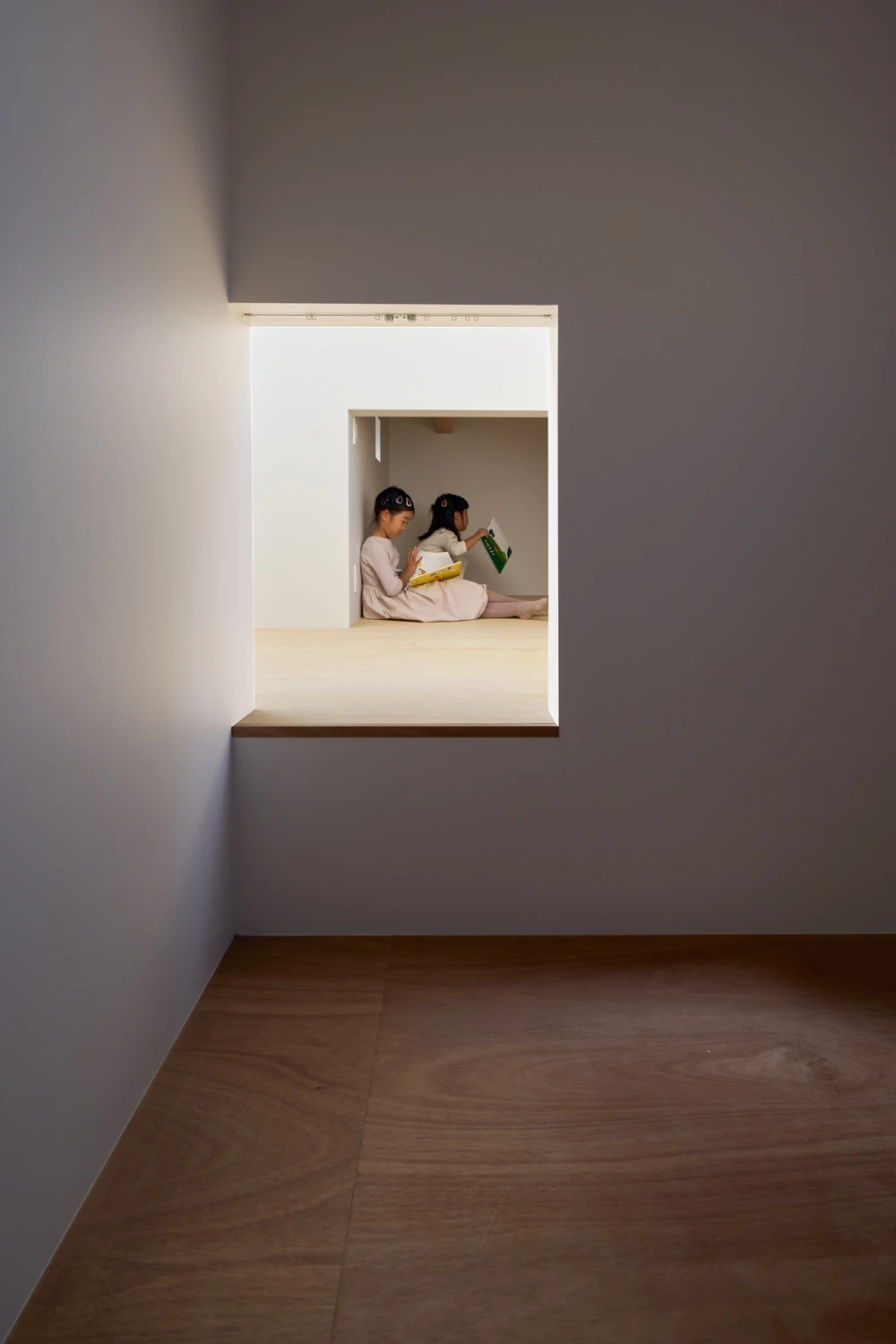
The effect is deliberately disorienting in the most domestic sense. Spaces flow into one another without clear hierarchy. Corners become seating; landings become rooms; the traditional distinction between circulation and occupation dissolves. The five family members—parents and three children—each discover their own territories within the shared topography, claiming nooks and perches according to mood and moment.
At night, the skylight becomes a dark aperture through which stars might occasionally appear. During the day, clouds pass across the opening like slow traffic. The house, sealed against its neighbors on every side, maintains this single vertical connection to the world above—a reminder that even the most constrained sites can accommodate something like sky.