Thisispaper Community
Join today.
Enter your email address to receive the latest news on emerging art, design, lifestyle and tech from Thisispaper, delivered straight to your inbox.
Oops! Something went wrong while submitting the form.
Instant access to new channels
The top stories curated daily
Weekly roundups of what's important
Original features and deep dives
Exclusive community features
Tokyo Guide
under the patronage of
Jutaku
under the patronage of
House H by Sou Fujimoto Architects
Alexander Zaxarov
Jan 22, 2026

In a dense Tokyo neighborhood, House H designed by Sou Fujimoto Architects reimagines family living as a vertical tree, where voids, platforms, and sightlines create an open network of shared yet individual spaces.

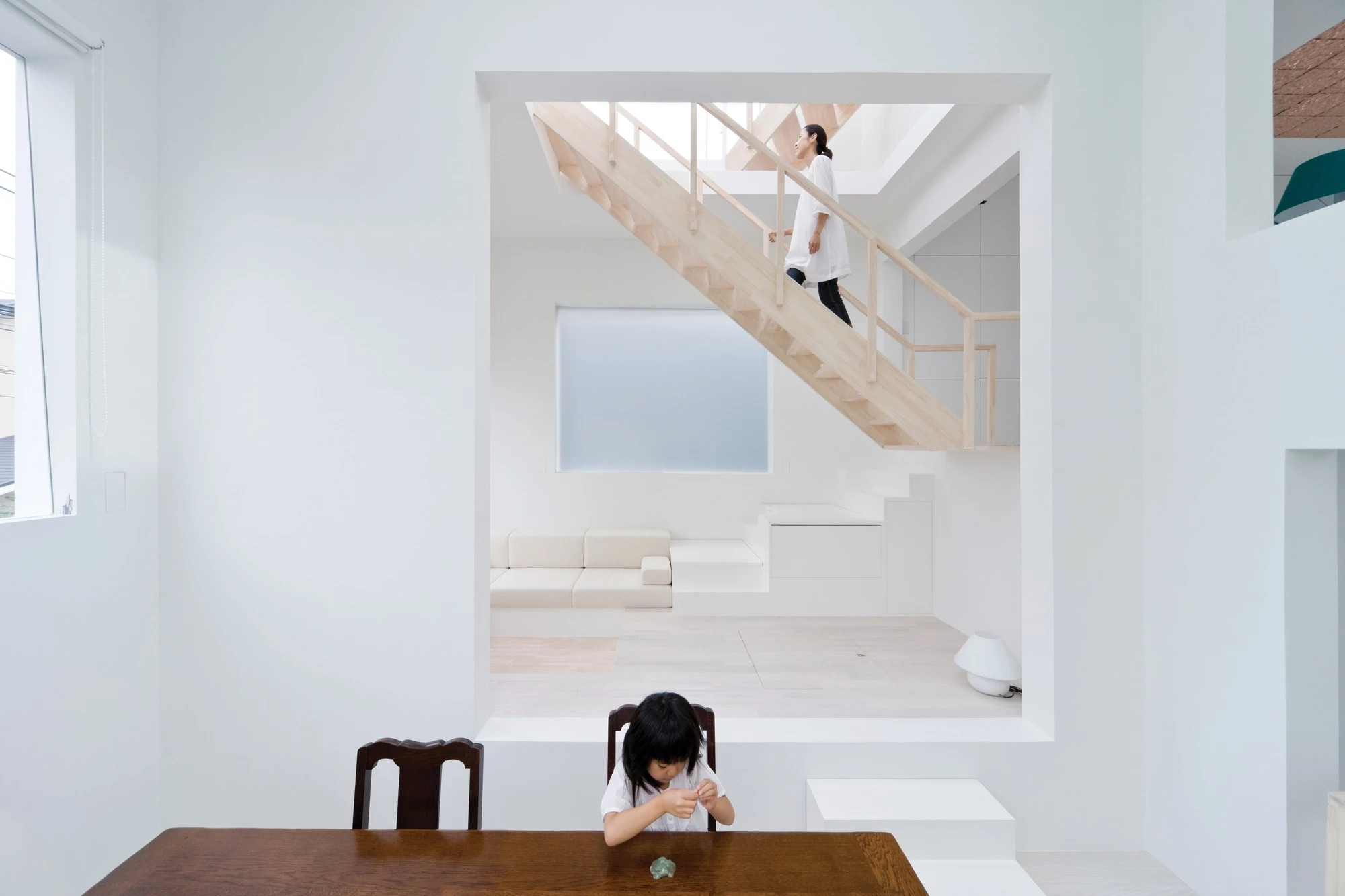
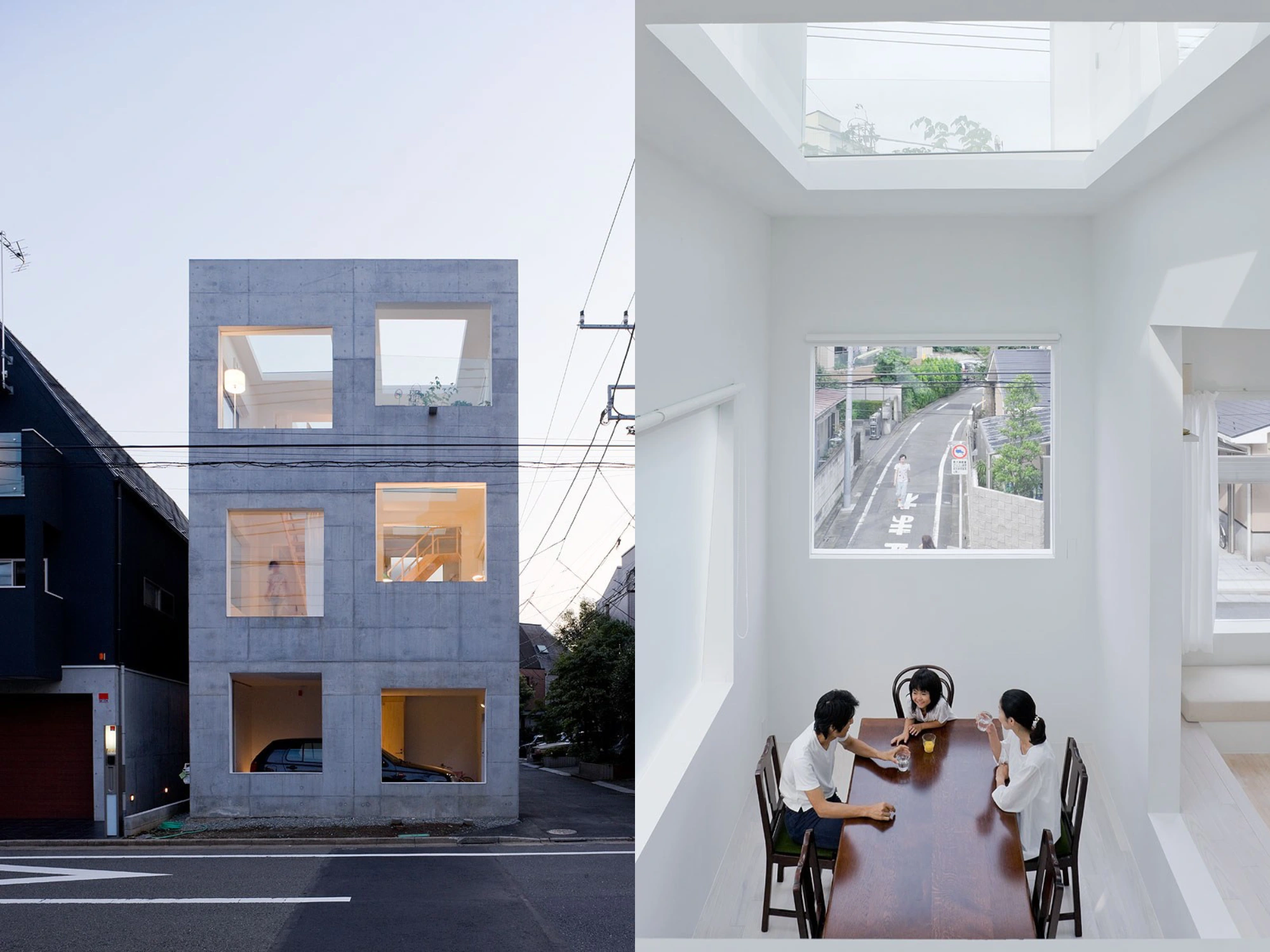
Conceived as a vertical dwelling for a family of three, the house rejects the conventional logic of stacked floors in favor of a porous, tree-like structure. Its concrete volume is punctured with large, square openings that read less as windows than as spatial invitations, framing domestic life as something simultaneously private and shared, sheltered yet exposed.

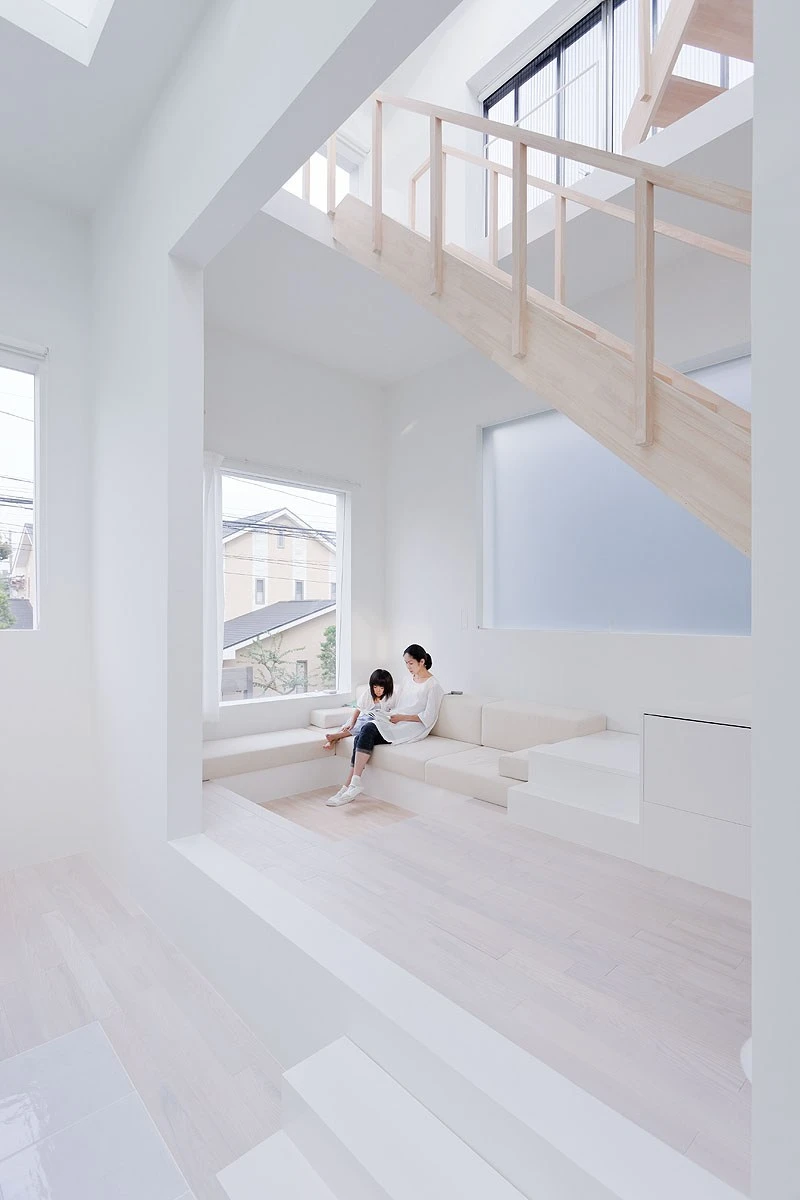
The project’s guiding metaphor of a large tree is not illustrative but organizational. Like branches, each platform within the house offers a distinct condition for living: places to sit, sleep, eat, or simply pause. These platforms are separated enough to maintain individuality, yet constantly connected through sightlines, voids, and sound. Family members remain aware of one another’s presence, sensing movement and activity across levels without direct proximity.

This interconnection is intensified by the house’s radical use of apertures. Floors, walls, and ceilings are cut through and interlocked three-dimensionally, dissolving the hierarchy between vertical and horizontal space. Staircases attach themselves to these voids at varying angles, creating circulation that feels improvised rather than prescribed. Moving through the house is less about transitioning between rooms than navigating a continuous spatial field.

At times, the interior reads like an inhabitable drawing, recalling the spatial paradoxes of Escher or the speculative calm of a future ruin gently occupied. The stark whiteness of the interiors and the pale timber stairs heighten this effect, allowing light to flood deep into the section and flatten distinctions between structure and furniture, architecture and inhabitation.

By relying on artificial materials and strict geometry, House H paradoxically achieves an organic complexity. The succession of voids generates a dense network of relationships that extend beyond the family unit, blurring the boundary between interior life and the surrounding city. In this sense, the project by Sou Fujimoto Architects proposes not just a house, but a prototype for living vertically in Tokyo: a dwelling conceived as an ecosystem of relationships rather than a sealed container. As a built idea, House H remains quietly provocative, imagining domestic space as something grown, not stacked.

Interested in Showcasing Your Work?

If you would like to feature your works on Thisispaper, please visit our Submission page and sign up to Thisispaper+ to submit your work. Once your submission is approved, your work will be showcased to our global audience of 2 million art, architecture, and design professionals and enthusiasts.
No items found.
We love less
but there is more.
Become a Thisispaper+ member today to unlock full access to our magazine, advanced tools, and support our work.
Get two months FREE
with annual subscription
We love less
but there is more.
Become a Thisispaper+ member today to unlock full access to our magazine, advanced tools, and support our work.
Get two months FREE
with annual subscription
No items found.
Alexander Zaxarov
Jan 22, 2026

In a dense Tokyo neighborhood, House H designed by Sou Fujimoto Architects reimagines family living as a vertical tree, where voids, platforms, and sightlines create an open network of shared yet individual spaces.

Conceived as a vertical dwelling for a family of three, the house rejects the conventional logic of stacked floors in favor of a porous, tree-like structure. Its concrete volume is punctured with large, square openings that read less as windows than as spatial invitations, framing domestic life as something simultaneously private and shared, sheltered yet exposed.

The project’s guiding metaphor of a large tree is not illustrative but organizational. Like branches, each platform within the house offers a distinct condition for living: places to sit, sleep, eat, or simply pause. These platforms are separated enough to maintain individuality, yet constantly connected through sightlines, voids, and sound. Family members remain aware of one another’s presence, sensing movement and activity across levels without direct proximity.

This interconnection is intensified by the house’s radical use of apertures. Floors, walls, and ceilings are cut through and interlocked three-dimensionally, dissolving the hierarchy between vertical and horizontal space. Staircases attach themselves to these voids at varying angles, creating circulation that feels improvised rather than prescribed. Moving through the house is less about transitioning between rooms than navigating a continuous spatial field.

At times, the interior reads like an inhabitable drawing, recalling the spatial paradoxes of Escher or the speculative calm of a future ruin gently occupied. The stark whiteness of the interiors and the pale timber stairs heighten this effect, allowing light to flood deep into the section and flatten distinctions between structure and furniture, architecture and inhabitation.

By relying on artificial materials and strict geometry, House H paradoxically achieves an organic complexity. The succession of voids generates a dense network of relationships that extend beyond the family unit, blurring the boundary between interior life and the surrounding city. In this sense, the project by Sou Fujimoto Architects proposes not just a house, but a prototype for living vertically in Tokyo: a dwelling conceived as an ecosystem of relationships rather than a sealed container. As a built idea, House H remains quietly provocative, imagining domestic space as something grown, not stacked.

Interested in Showcasing Your Work?

If you would like to feature your works on Thisispaper, please visit our Submission page and subscribe to Thisispaper+. Once your submission is approved, your work will be showcased to our global audience of 2 million art, architecture, and design professionals and enthusiasts.
Thisispaper+
Tokyo Guide
40+ Locations
Web Access
Link to Maps
Our guide introduces you to the city’s finest examples of minimalism in art, design, and architecture, each space a testament to Tokyo’s unique ability to blend tradition with cutting-edge innovation.
Explore
Tokyo Guide

Join Thisispaper+
Unlock access to 2500 stories, curated guides + editions, and share your work with a global network of architects, artists, writers and designers who are shaping the future.
Get two months FREE
with annual subscription
Atlas
A new and interactive way to explore the most inspiring places around the world.
Interactive map
Linked to articles
300+ curated locations
Google + Apple directions
Smart filters
Subscribe to Explore+
Travel Guides
Immerse yourself in timeless destinations, hidden gems, and creative spaces—curated by humans, not algorithms.
Explore All Guides +
Curated Editions
Dive deeper into carefully curated editions, designed to feed your curiosity and foster exploration.
Off-the-Grid
Jutaku
Sacral Journey
minimum
The New Chair
Explore All Editions +
Submission Module
Submit your project and gain the chance to showcase your work to our worldwide audience of over 2M architects, designers, artists, and curious minds.
Learn More+
Become a Thisispaper+ member today to unlock full access to our magazine, submit your project and support our work.
Join Thisispaper+Join Thisispaper+
€ 9 EUR
/month
Cancel anytime
Get two months FREE
with annual subscription